Skip to content
The ConsciousLibrary

The Conscious Library

Directory of teachers

People whose teaching has left a mark on the human search for meaning. Filter by period, tradition, region or historical status.

110 teachers

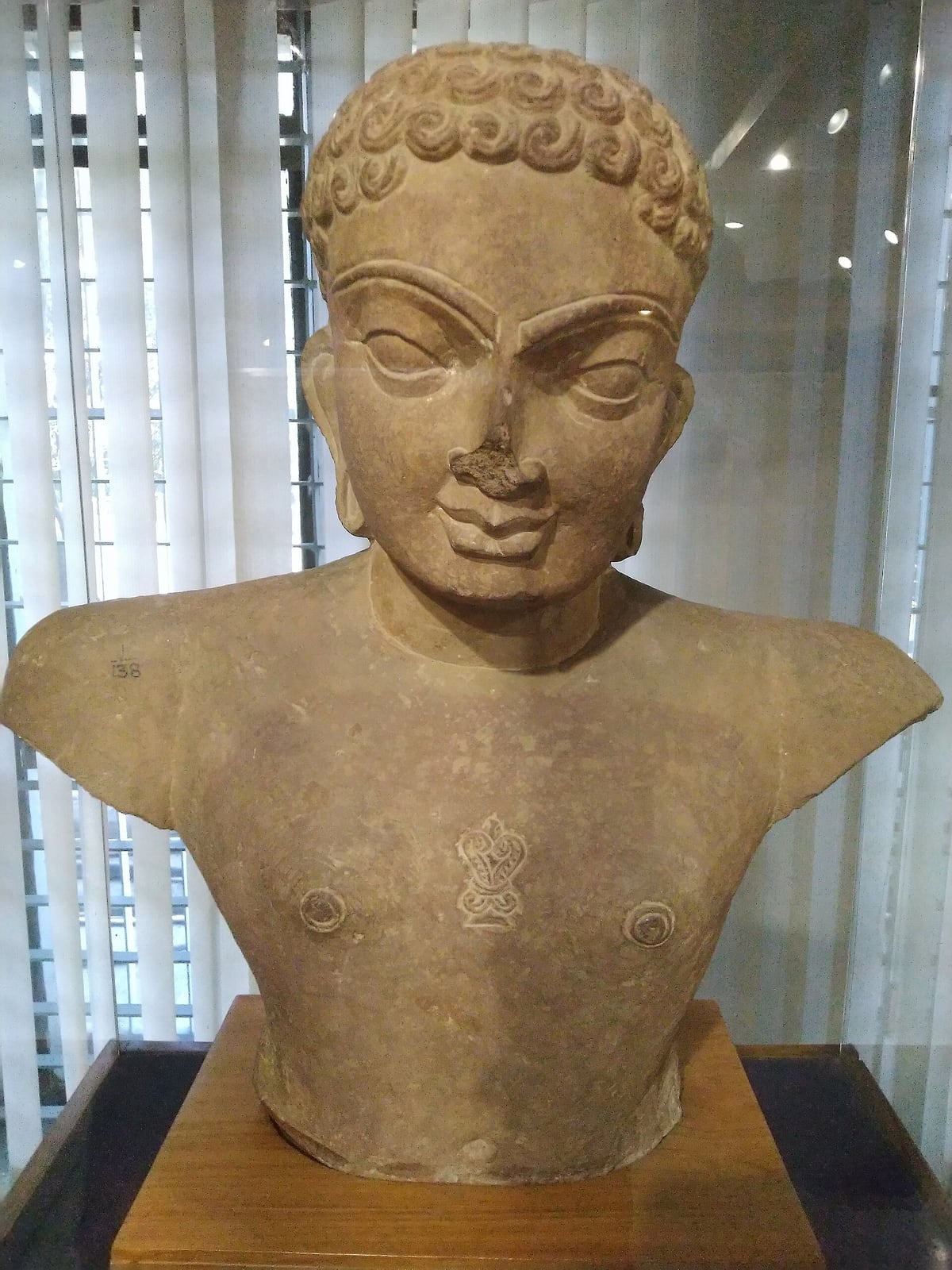
  1. Busto de Mahāvīra, período kuṣāṇa (Museo de Chandigarh)

    c. 599 BCE – c. 527 BCE

    Mahāvīra

    Jainism

    Ascetic and teacher of the Ganges valley, twenty-fourth and last tīrthaṅkara of Jainism, a somewhat older contemporary of the Buddha, who knew him as Nigaṇṭha Nātaputta. Named Vardhamāna, he renounced the world at thirty, attained omniscience after twelve years of asceticism and taught a path of non-violence, vows and austerity to free the soul from karma. He wrote nothing: the Jain canon transmitting his teaching was fixed at Valabhī in the fifth century CE.
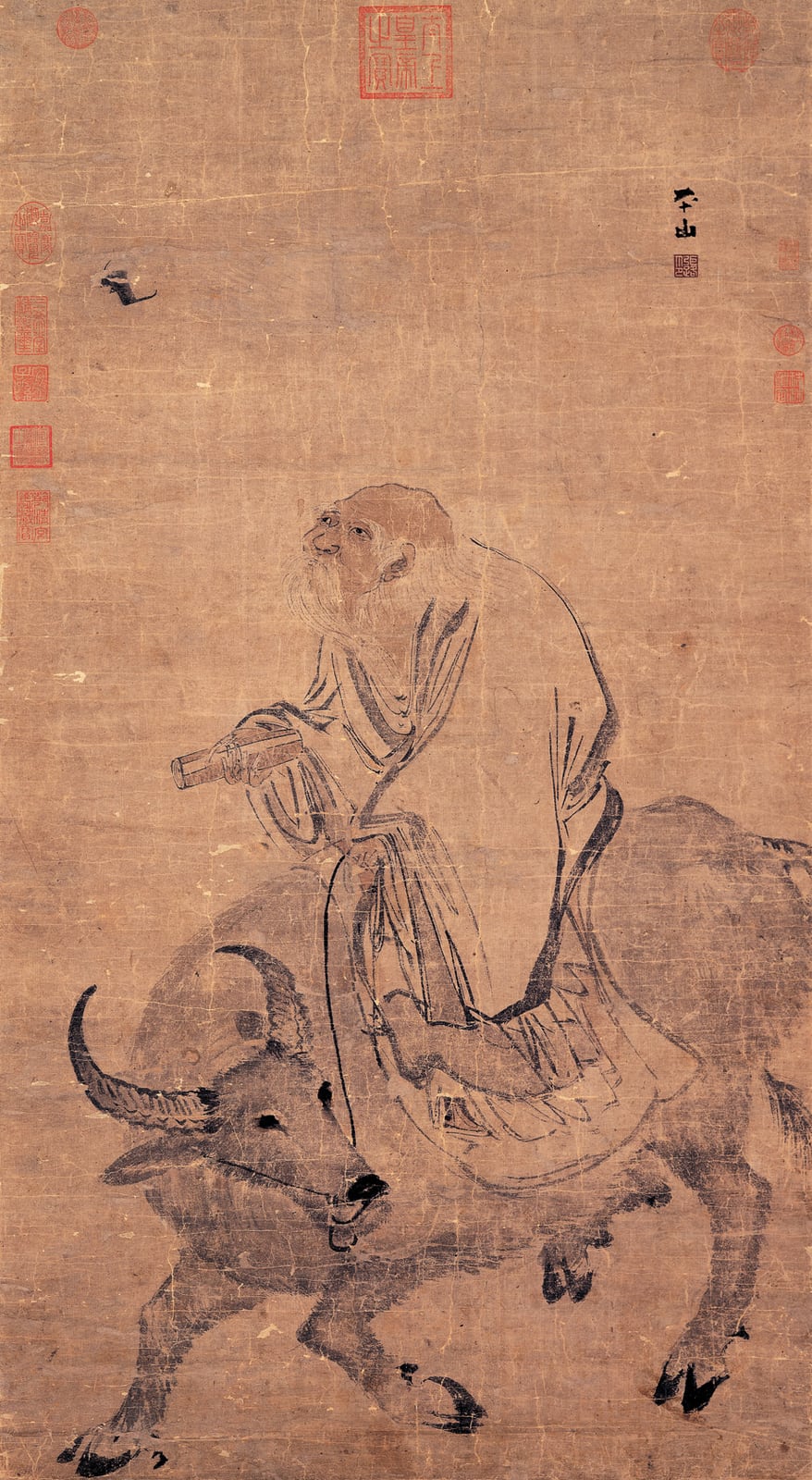
  2. Laozi cabalgando un buey

    c. 571 BCE – ?

    Laozi

    Taoism

    Founding figure of Taoism, to whom Chinese tradition attributes the Daodejing, the short book of the Way and its Virtue. Sima Qian describes him as an archivist at the Zhou court, consulted by Confucius, who vanished westward after dictating five thousand characters. Modern scholarship holds that the text took shape between the fourth and third centuries BCE and that its author is largely a traditional construct; the Guodian and Mawangdui manuscripts are now the firm ground on which the debate rests.

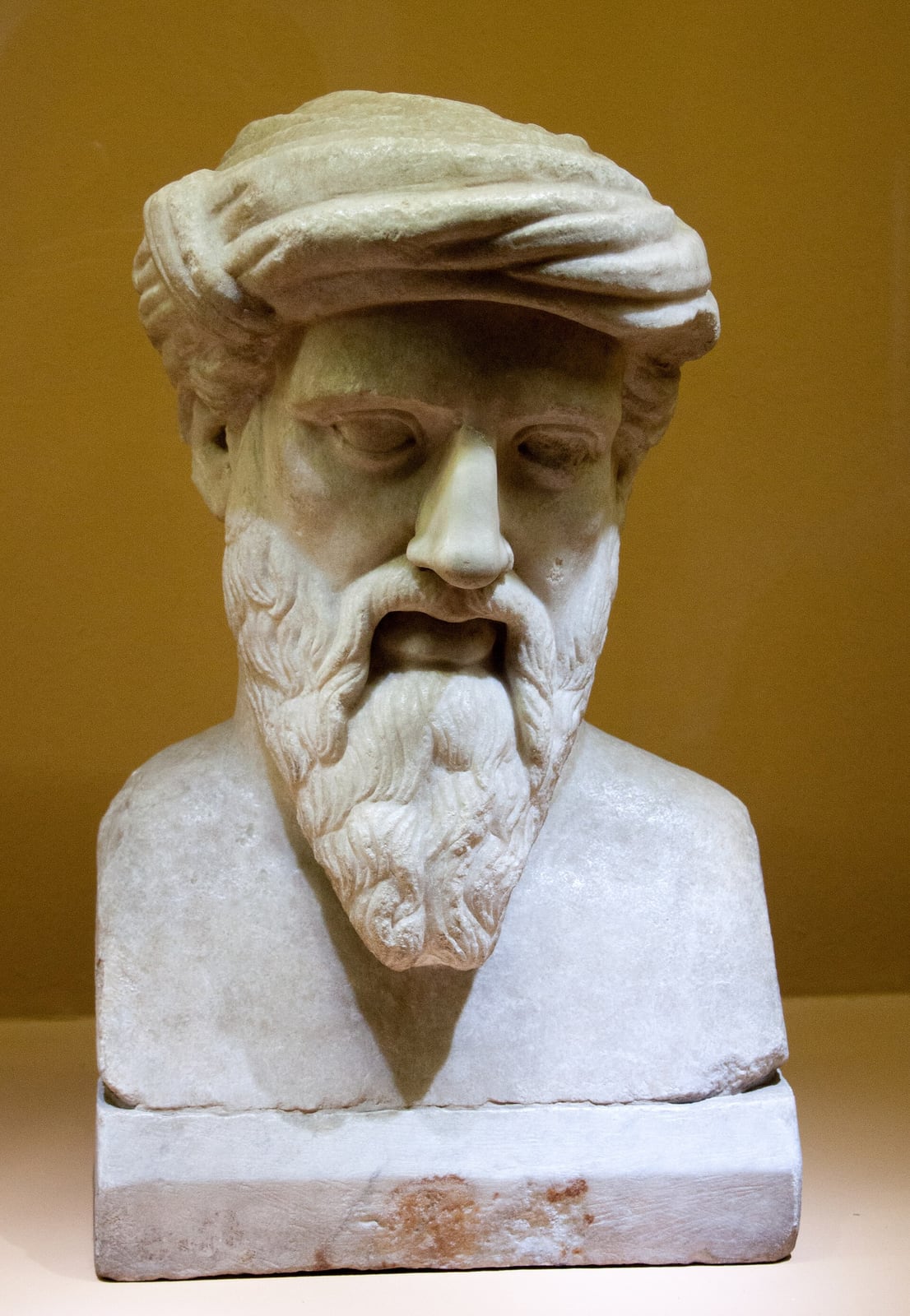
  3. Busto de Pitágoras (Museos Capitolinos)

    c. 570 BCE – c. 495 BCE

    Pythagoras

    Pythagoreanism · Presocratic philosophy

    Greek sage born on Samos around 570 BCE who founded in Croton, in southern Italy, a community of disciples bound by a way of life, belief in the transmigration of souls and, according to tradition, the study of number and harmony. He left no writings. We know him through brief testimonies of contemporaries and through biographies written eight centuries later that made him a divine man: separating fact from legend is the first problem of his history.

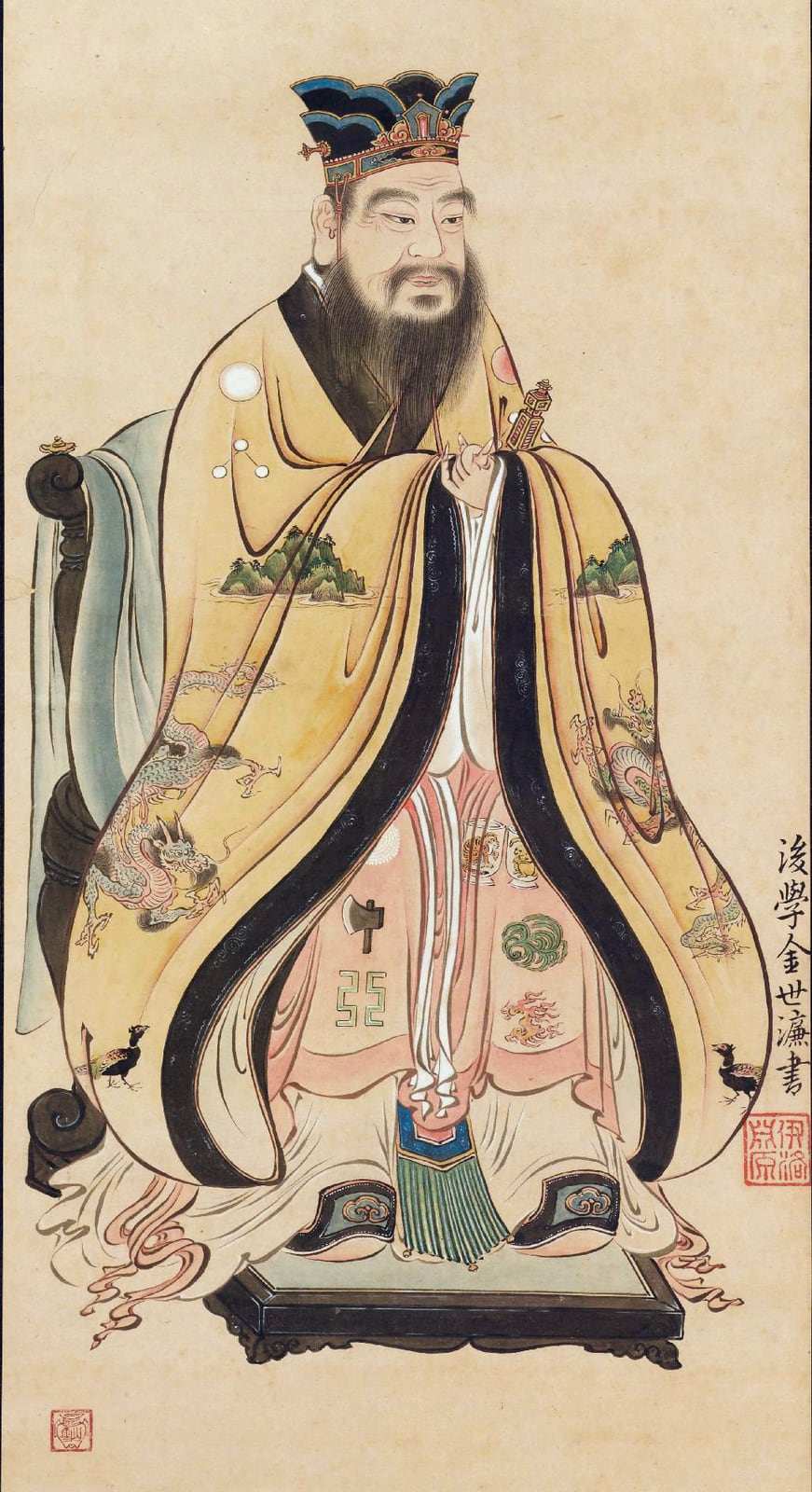
  4. Retrato de Confucio por Kanō Sansetsu

    551 BCE – 479 BCE

    Confucius

    Confucianism

    Teacher, frustrated official and editor of tradition, Kong Qiu (551–479 BCE) is the best-documented figure of ancient Chinese thought and the most influential. He did not write the Analects: his disciples and their disciples compiled them. He taught that the order of the world springs from humaneness (ren) cultivated through ritual (li) and study, and that the gentleman is made, not born. For two millennia he was the "Teacher of ten thousand generations"; his historical figure, beneath layers of hagiography and state ideology, still calls for caution.

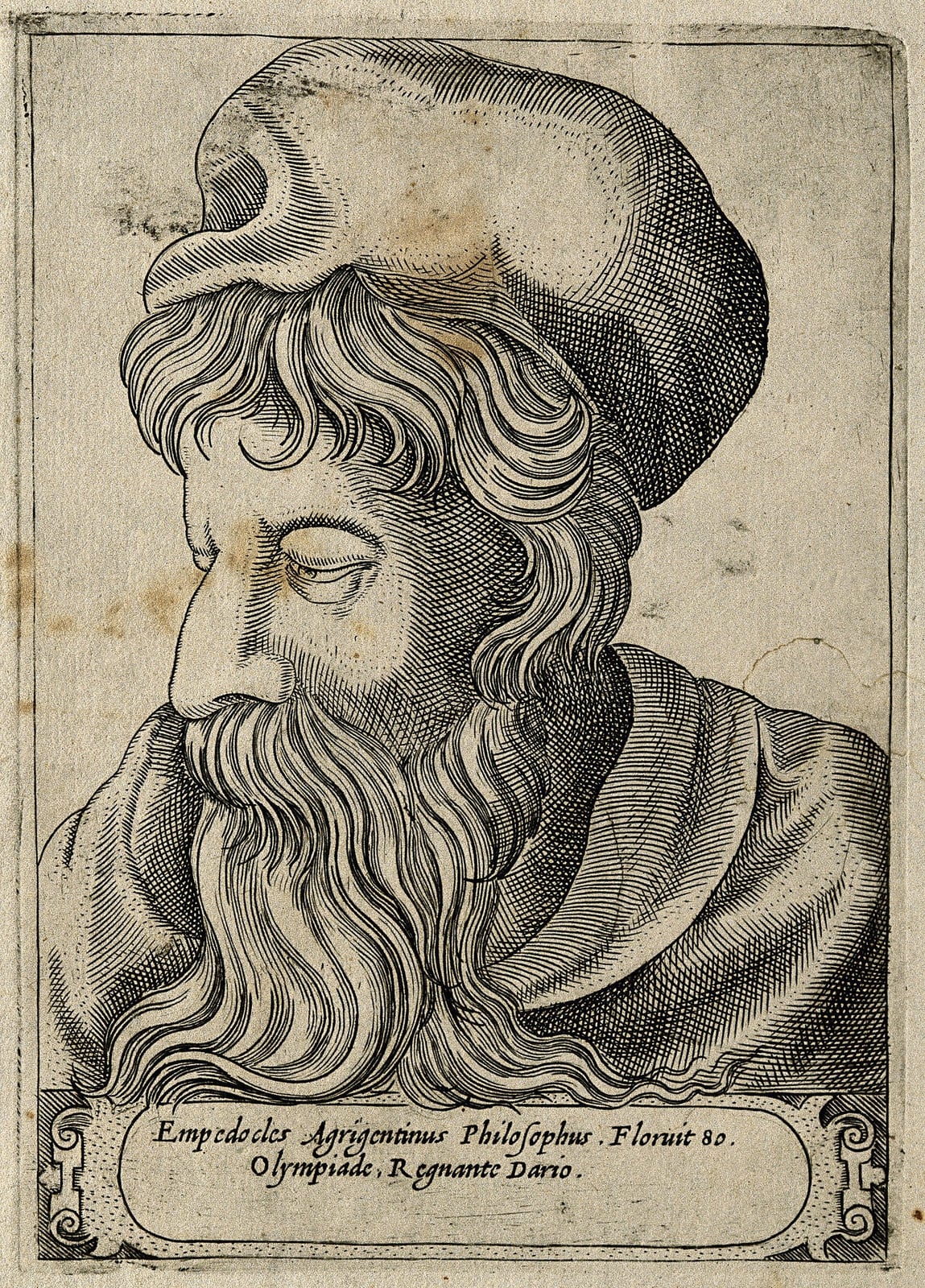
  5. Empédocles, grabado de 1580

    c. 494 BCE – c. 434 BCE

    Empedocles

    Presocratic philosophy

    Philosopher, physician and politician of Acragas in Sicily (c. 494–434 BCE), author of two hexameter poems, On Nature and the Purifications, of which some five hundred lines and the Strasbourg papyrus survive. He taught that everything is made of four eternal roots, mixed by Love and separated by Strife, and that the soul, exiled for shed blood, transmigrates through every living form. The legend of his leap into Etna made him a literary figure.

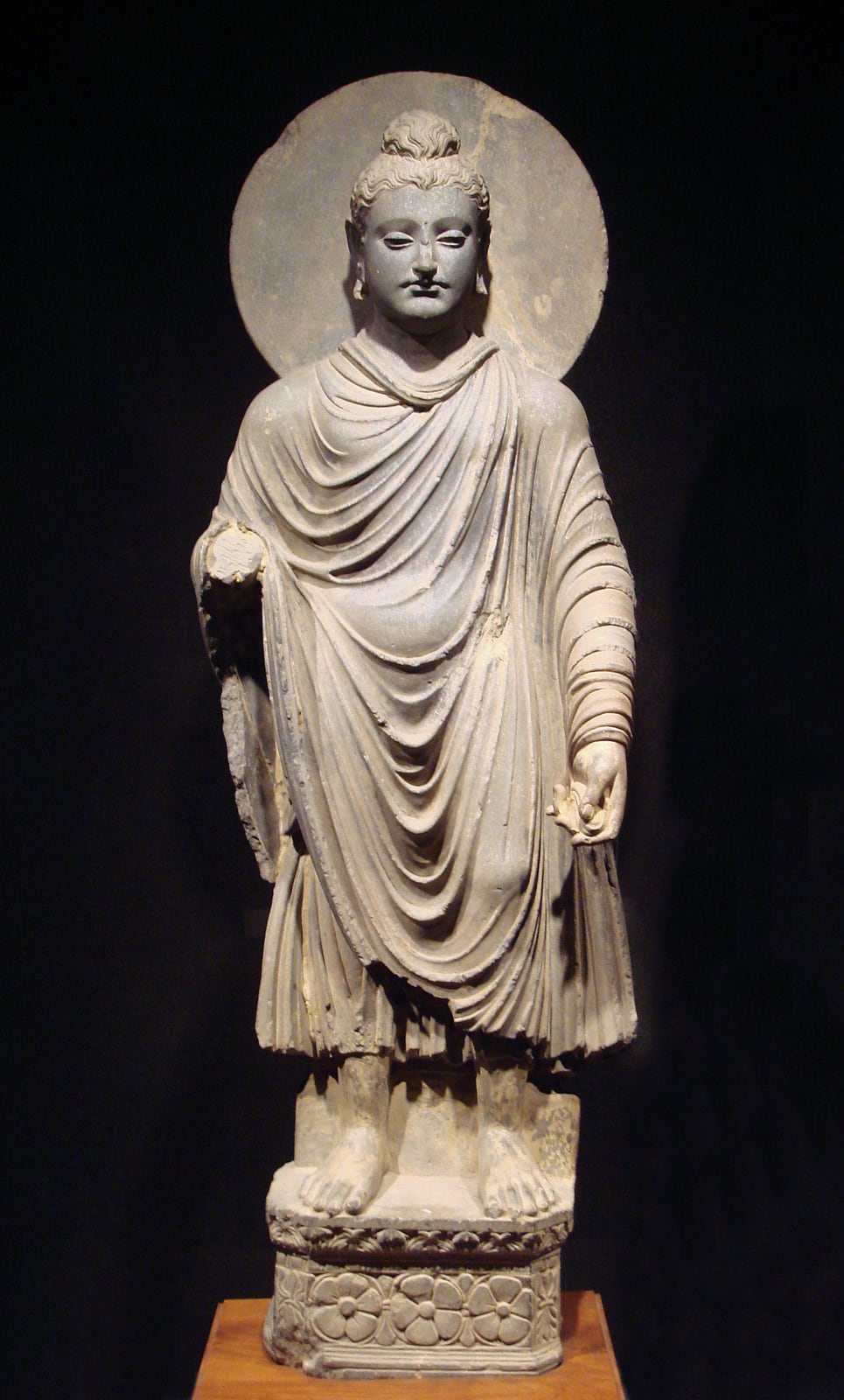
  6. Buda de pie, arte de Gandhara

    c. 480 BCE – c. 400 BCE

    Siddhartha Gautama, the Buddha

    Buddhism · Theravada

    Ascetic and teacher of northern India, born into the Sakya clan, whom tradition calls the Buddha, "the one who has awakened". The canonical sources, committed to writing centuries after his death, show him renouncing a comfortable life, reaching awakening at Bodh Gaya and teaching for forty-five years a middle way to extinguish suffering. Scholarship accepts his historical existence; almost every detail of his life belongs to a religious biography elaborated by the community.

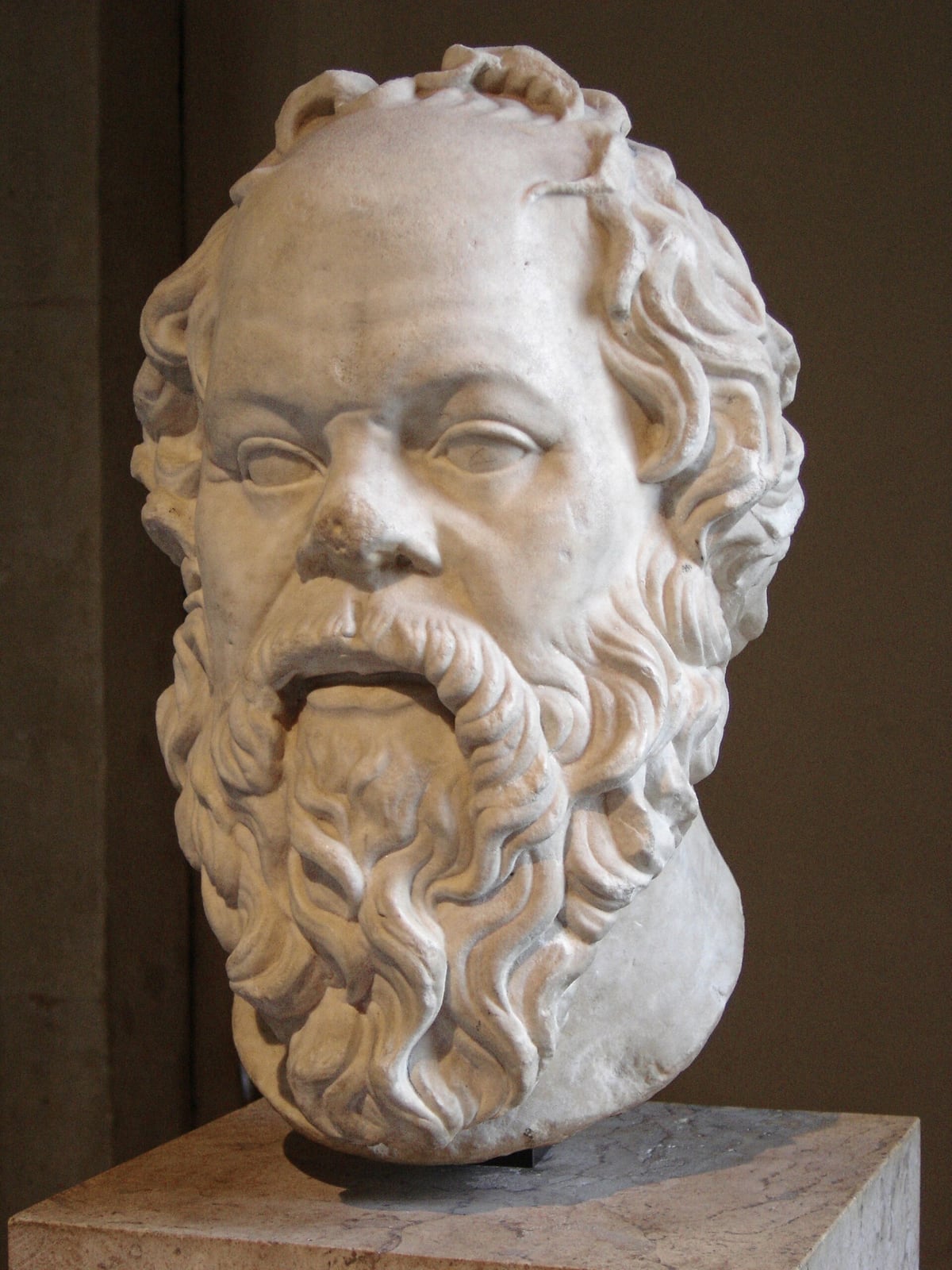
  7. Busto de Sócrates (Louvre)

    c. 469 BCE – 399 BCE

    Socrates

    Socratic philosophy

    Athenian philosopher (c. 469–399 BCE) who wrote nothing and changed the course of philosophy by making the question of how one should live its central concern. He conversed in the agora, examining those who believed they knew, without charging fees. Accused of impiety and of corrupting the young, he was sentenced to death and drank hemlock. We know him through Plato, Xenophon, Aristophanes and Aristotle, whose portraits disagree: the "Socratic problem".

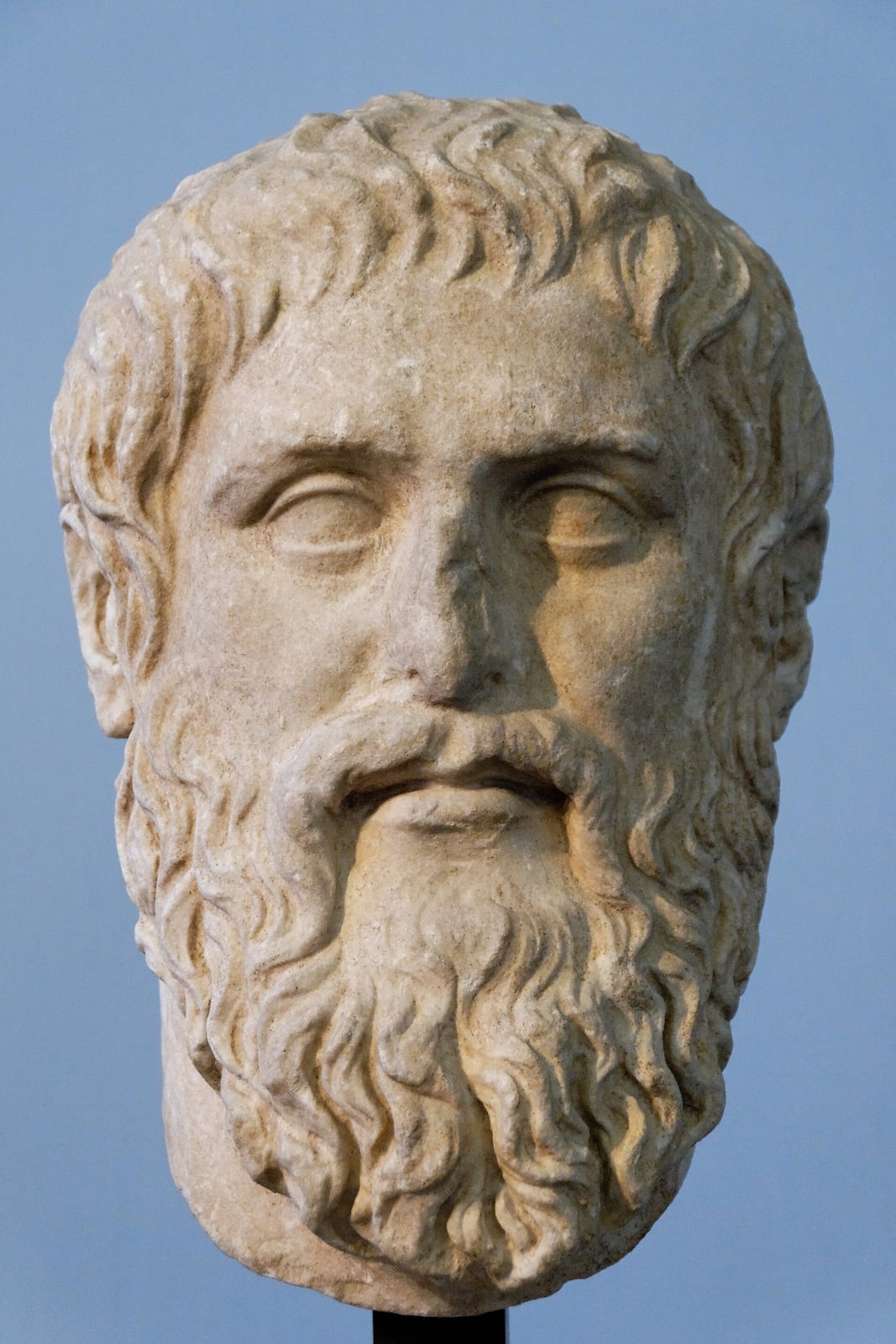
  8. Busto de Platón (Museos Capitolinos, MC 1377)

    c. 428 BCE – c. 348 BCE

    Plato

    Platonism

    Athenian philosopher of the fourth century BC, pupil of Socrates, teacher of Aristotle and founder of the Academy. His surviving work, preserved in full, consists of dialogues in which Socrates usually leads the conversation: they set out the theory of Forms, the immortality of the soul, the ascent through love towards beauty, and the idea of a city governed by those who know the Good. Almost all Western philosophy, and much of Christian, Jewish and Islamic mysticism, has been thought in conversation with him.

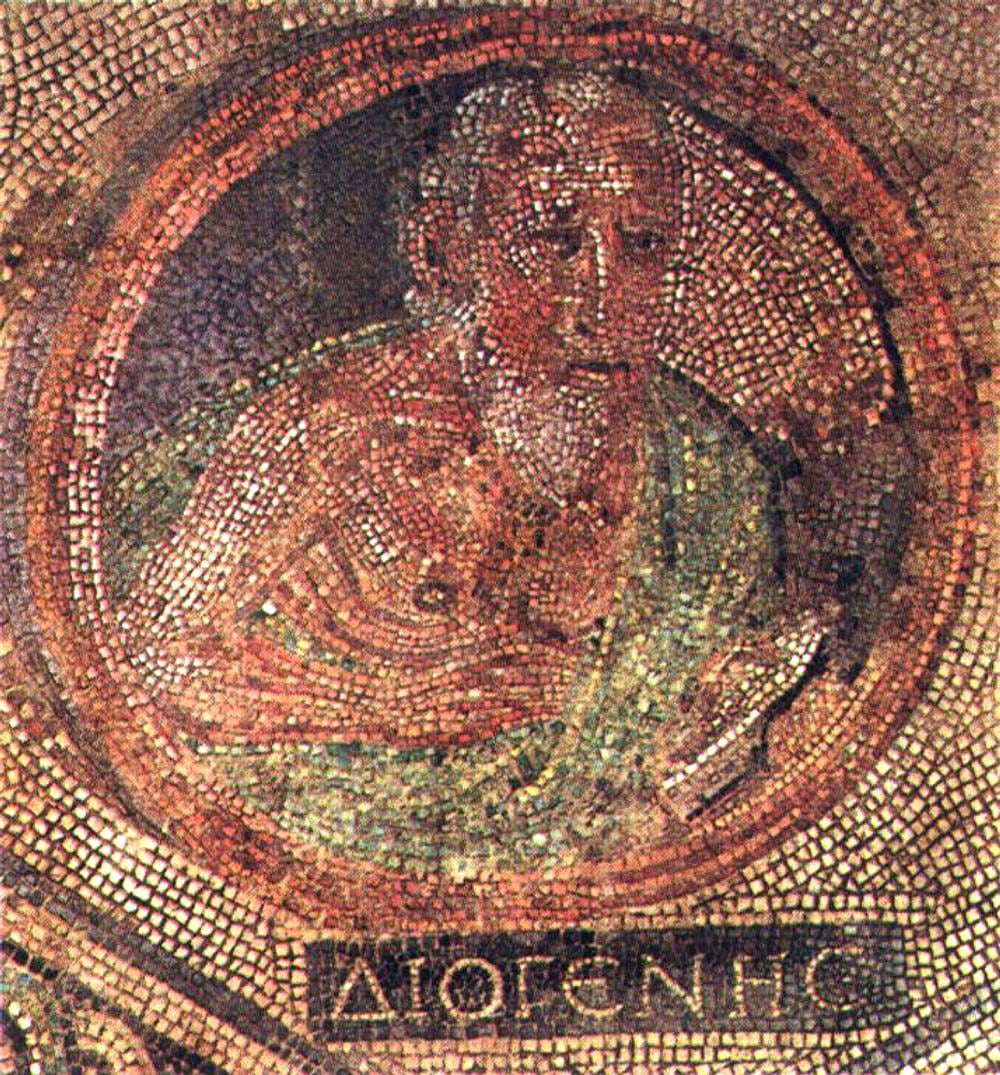
  9. Mosaico de Diógenes (Colonia)

    c. 412 BCE – c. 323 BCE

    Diogenes of Sinope

    Cynicism

    Greek philosopher (c. 412–323 BCE), the central figure of Cynicism. Exiled from Sinope after a scandal over debased coinage, he lived in Athens and Corinth in deliberate poverty, sleeping in a clay storage jar and practising in public a life "according to nature" against convention. Nothing he wrote survives: we know him through hundreds of sayings and anecdotes, many of them legendary, collected above all by Diogenes Laertius. He called himself a "citizen of the world".

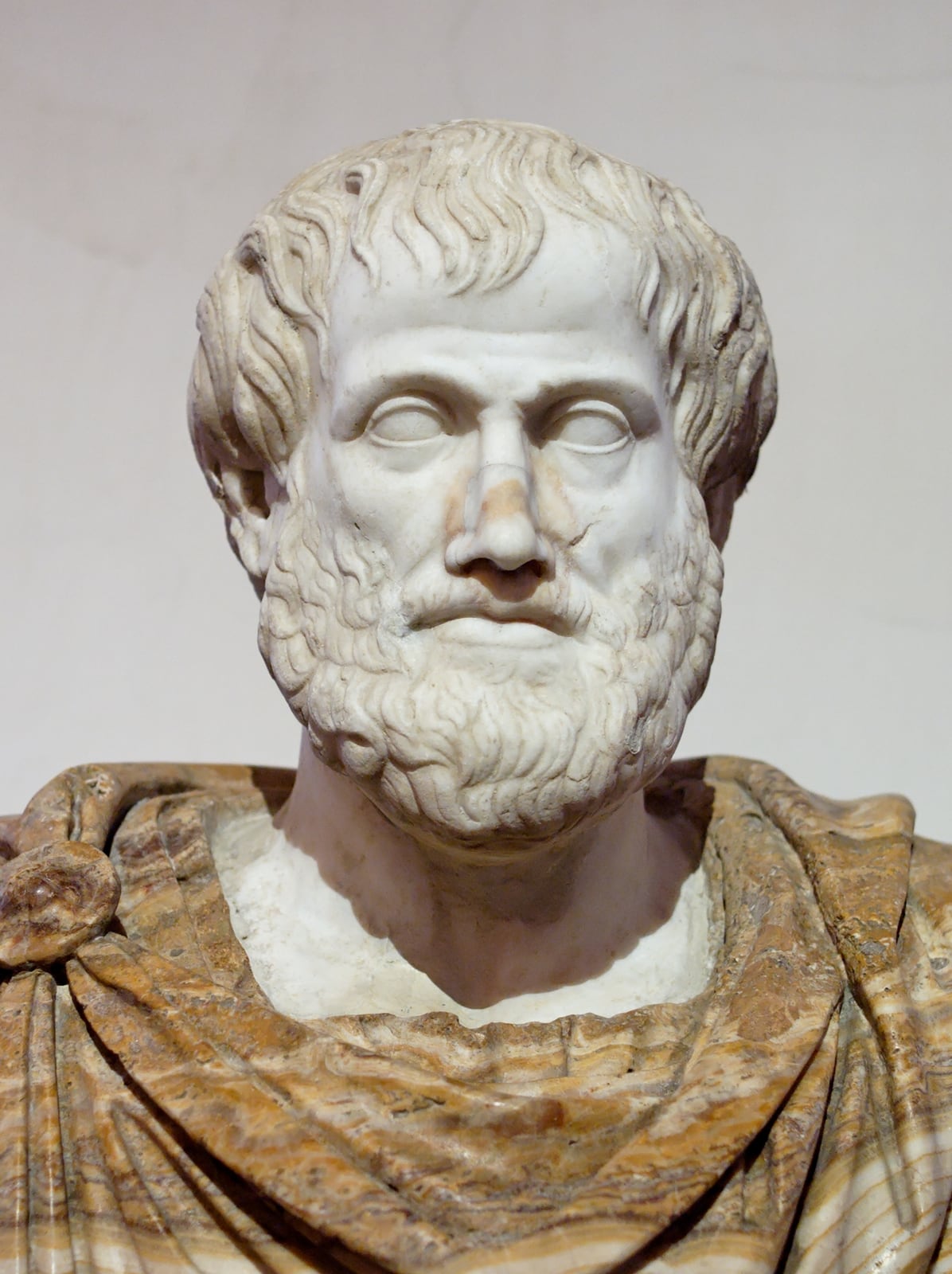
  10. Busto de Aristóteles (Museo Nacional Romano, Palazzo Altemps)

    384 BCE – 322 BCE

    Aristotle

    Aristotelianism

    Greek philosopher and scientist (384–322 BCE), Plato's student for twenty years, tutor to Alexander the Great and founder of the Lyceum in Athens. He created formal logic, organised knowledge into disciplines and left treatises on physics, biology, psychology, metaphysics, ethics, politics, rhetoric and poetics that dominated Greek, Arabic, Jewish and Christian philosophy for two millennia. His idea of the contemplative life as the highest form of happiness remains a central reference.

  11. Cabeza de Epicuro (Metropolitan Museum)

    341 BCE – 270 BCE

    Epicurus

    Epicureanism

    Greek philosopher (341–270 BCE), founder of the school of the Garden in Athens. He joined an atomist physics inherited from Democritus to an ethics that makes pleasure, understood as the absence of pain in the body and of disturbance in the soul, the end of life. He taught people not to fear the gods or death and to cultivate friendship. Of his roughly three hundred rolls only three letters, two collections of maxims and fragments of his major work, On Nature, survive.

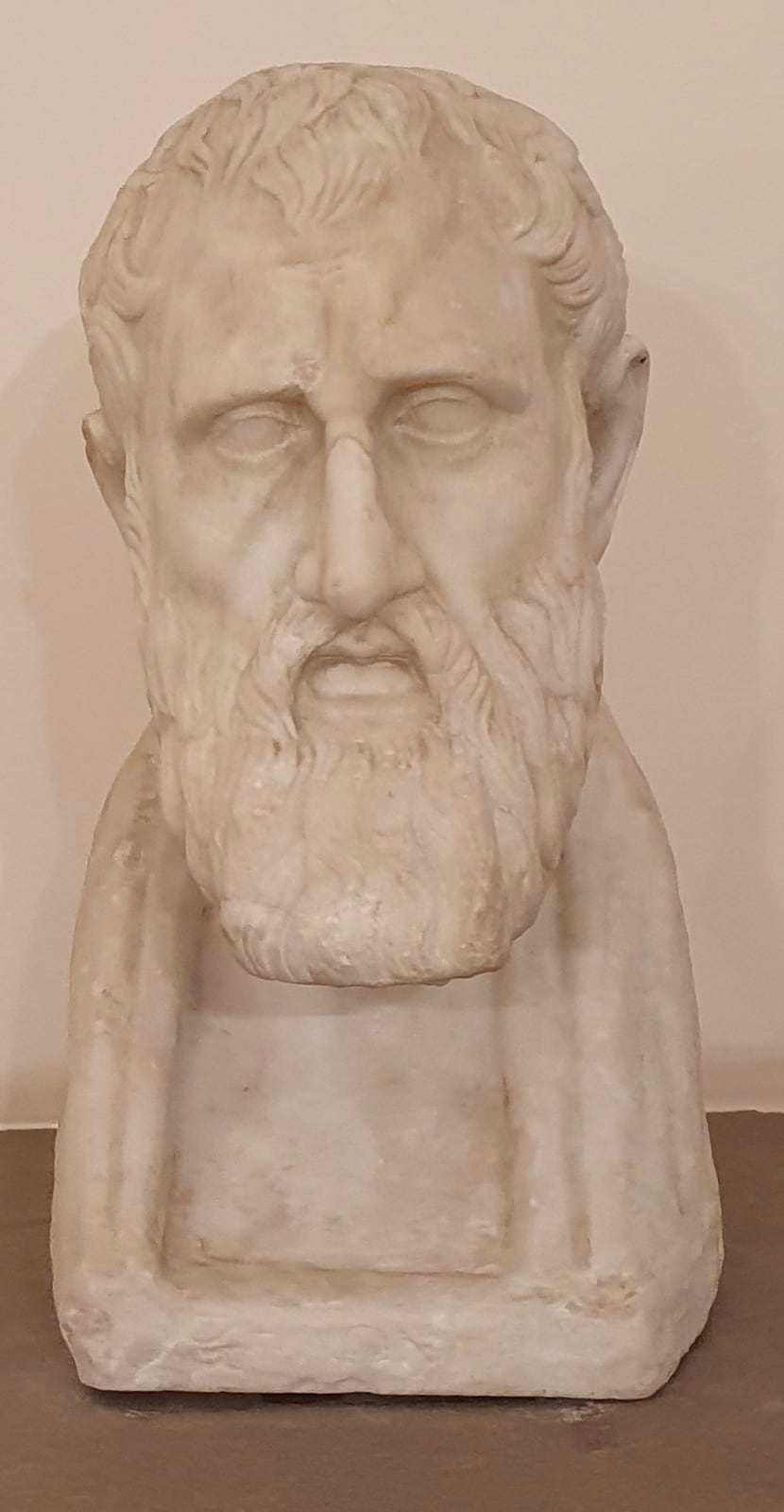
  12. Busto de Zenón de Citio (colección Farnese, Nápoles)

    c. 334 BCE – c. 262 BCE

    Zeno of Citium

    Stoicism

    Greek philosopher born at Citium in Cyprus (c. 334–262 BCE), founder of Stoicism. A merchant who reached Athens after a shipwreck, he trained with the Cynic Crates, with Megarians and with Academics, and around 300 BCE began teaching in the Stoa Poikile, the painted portico that gave the school its name. He defined the end of life as living in agreement and divided philosophy into logic, physics and ethics. His writings, beginning with the Republic, are lost: we know them through fragments and testimonies.

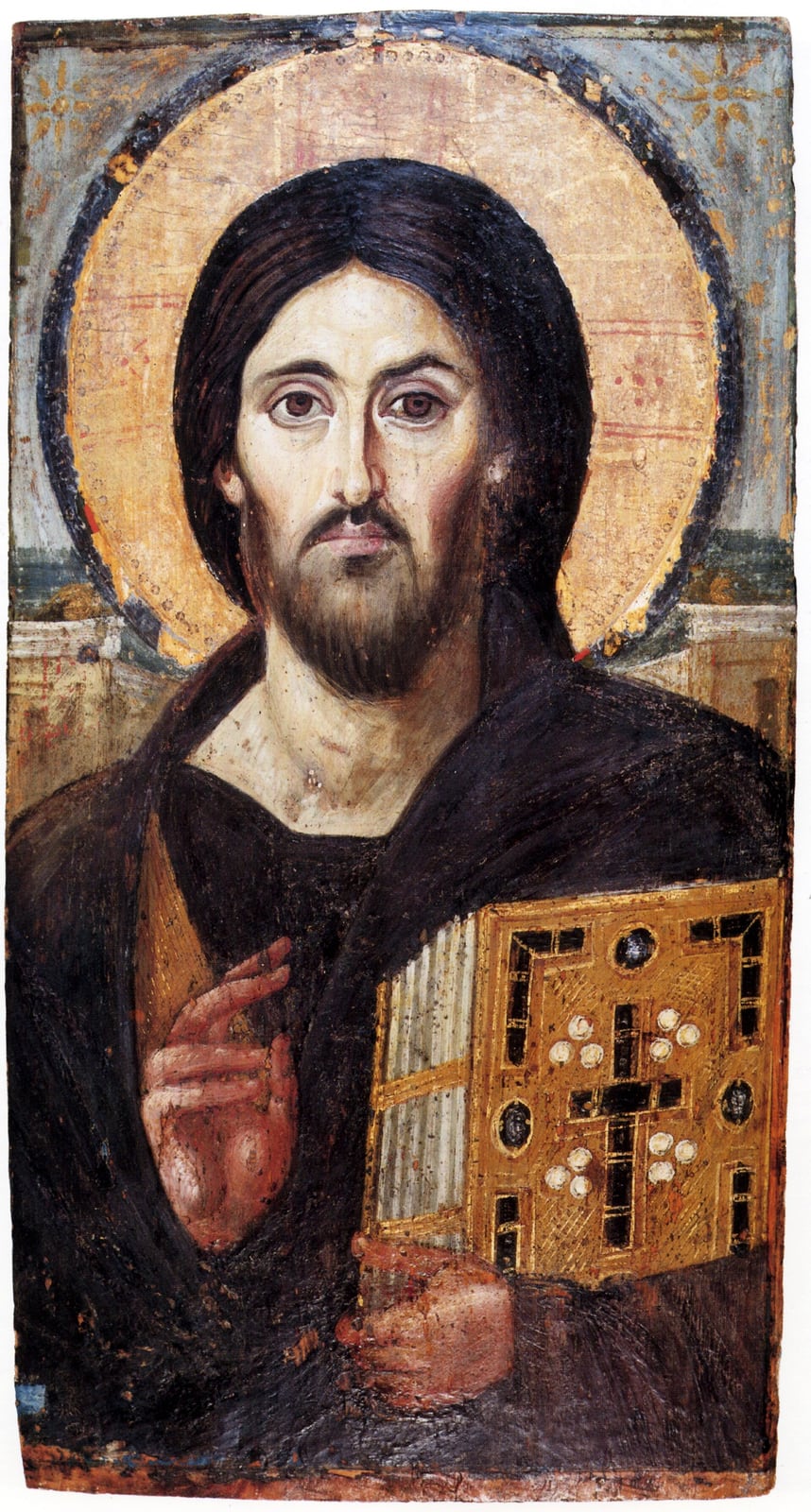
  13. Cristo Pantocrátor del Sinaí

    c. 5 BCE – c. 30

    Jesus of Nazareth

    Christianity · Catholicism

    A Jewish preacher from Galilee, crucified in Jerusalem on the orders of the Roman prefect Pontius Pilate around the year 30, whose movement gave rise to Christianity. What we know of him comes mainly from the gospels, written in Greek forty to seventy years later by authors who believed in his resurrection. Historical criticism accepts his existence, his baptism by John, his proclamation of the kingdom of God and his death on the cross; almost everything else is a matter of theological interpretation and debate.

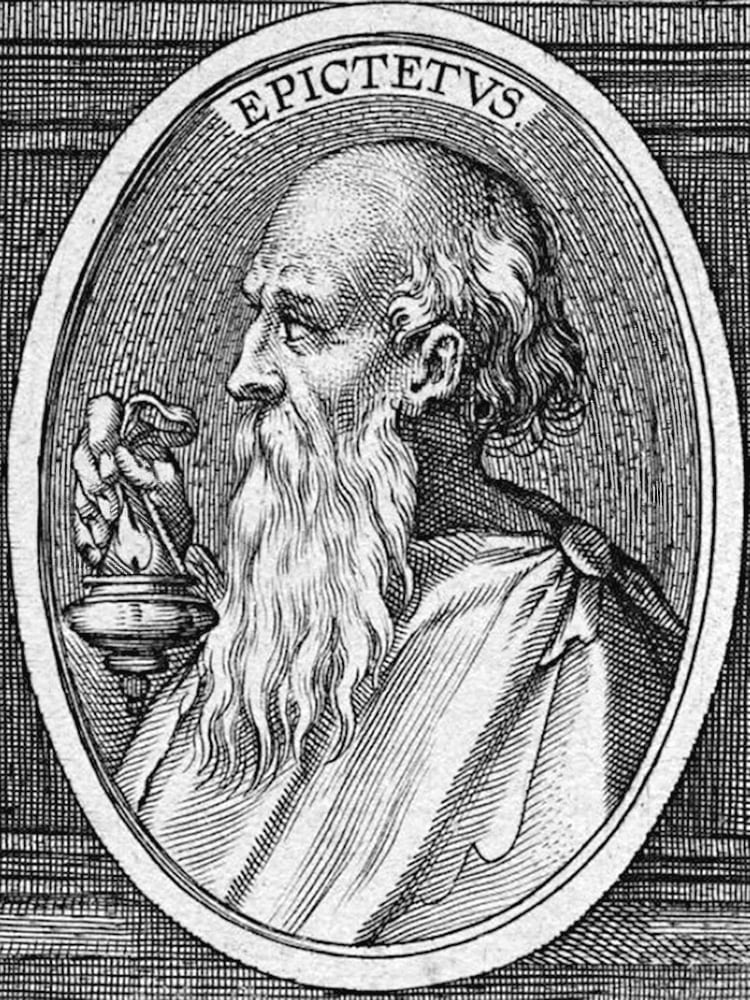
  14. Epicteto en la portada de las obras de Séneca (Amberes, 1605)

    50s – c. 135

    Epictetus

    Stoicism

    Greek Stoic philosopher (c. 50–c. 135), born a slave in Hierapolis in Phrygia. In Rome he served Epaphroditus, a freedman of Nero, studied with Musonius Rufus and, once free, taught philosophy until Domitian expelled the philosophers from Italy. He then founded a school at Nicopolis in Epirus. He wrote nothing: his pupil Arrian recorded his lectures in the Discourses and the Handbook, which placed inner freedom and the distinction between what is and is not up to us at the centre of ethics.

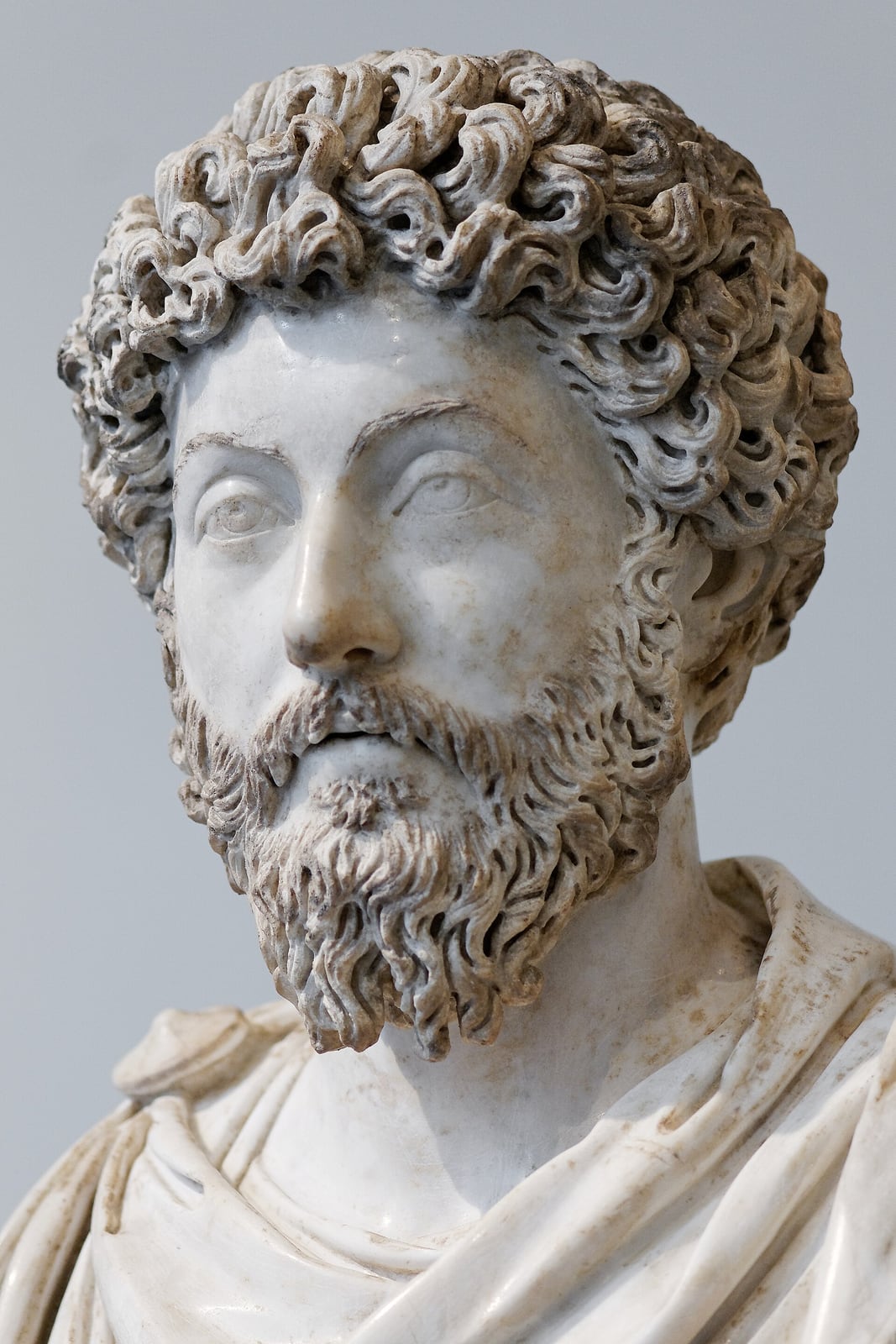
  15. Busto de Marco Aurelio (Louvre, MR 561)

    121 – 180

    Marcus Aurelius

    Stoicism

    Roman emperor (121–180) and Stoic philosopher. He ruled from 161, in the early years together with Lucius Verus, and spent much of his reign on the Danube frontier, at war with the Marcomanni, Quadi and Sarmatians, while plague ravaged the Empire. On campaign he wrote in Greek notes addressed to himself that we know as the Meditations, one of the most widely read books of antiquity. His youthful correspondence with the rhetorician Fronto, recovered in the nineteenth century, completes the portrait.

  16. Nāgārjuna, de la serie de los patriarcas shingon de Tōji

    c. 150 – c. 250

    Nāgārjuna

    Buddhism · Mahayana

    Indian Buddhist philosopher, founder of the Madhyamaka or "middle way" school. He probably lived between 150 and 250 in southern India, perhaps in connection with the Sātavāhana court. His Fundamental Verses on the Middle Way argue that nothing possesses intrinsic nature because everything arises dependently, and that this emptiness is the middle way taught by the Buddha. His life is known only from hagiographies, and works by several later authors, tantric masters and alchemists, gathered under his name.

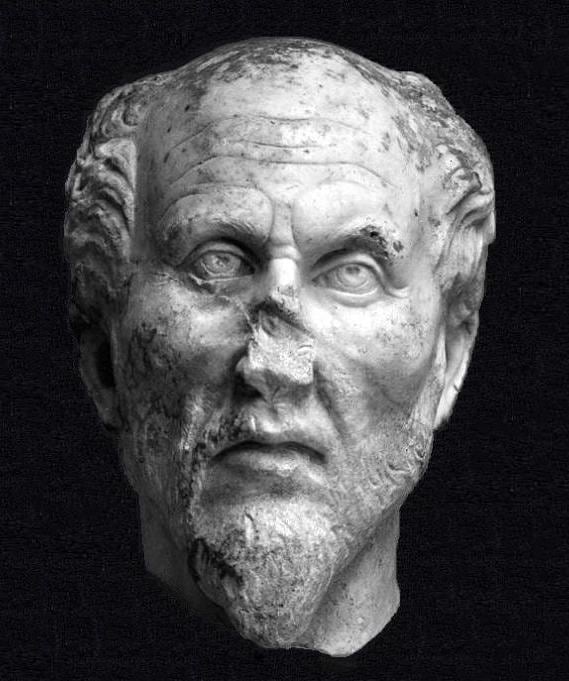
  17. Cabeza de mármol identificada con Plotino (Ostia, inv. 436)

    c. 205 – 270

    Plotinus

    Neoplatonism · Platonism

    Greek philosopher born in Egypt (c. 205–270), regarded as the founder of Neoplatonism. A pupil of Ammonius Saccas in Alexandria, he taught in Rome from 244 and began writing at fifty. His fifty-four treatises, arranged by his pupil Porphyry in six groups of nine, the Enneads, set out a universe that proceeds from the One through Intellect and Soul, and to which the soul can return through contemplation. His influence on pagan, Christian and Islamic mysticism was immense.

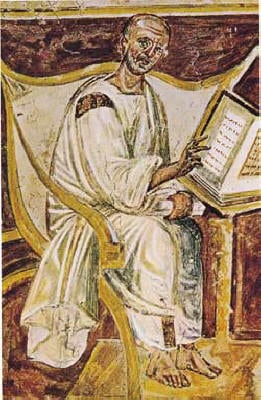
  18. El retrato más antiguo de Agustín (fresco de Letrán, s. VI)

    354 – 430

    Augustine of Hippo

    Christianity · Catholicism

    North African rhetorician, philosopher and bishop (354–430). After years of Manichaeism and scepticism, reading the Platonists and hearing Ambrose led him to conversion in Milan in 386. Bishop of Hippo for thirty-four years, he wrote more than ninety works (the Confessions, The City of God, On the Trinity) as well as hundreds of letters and sermons, and fought Manichaeans, Donatists and Pelagians. His teaching on grace, time, inwardness and the two cities shaped Western theology and philosophy.

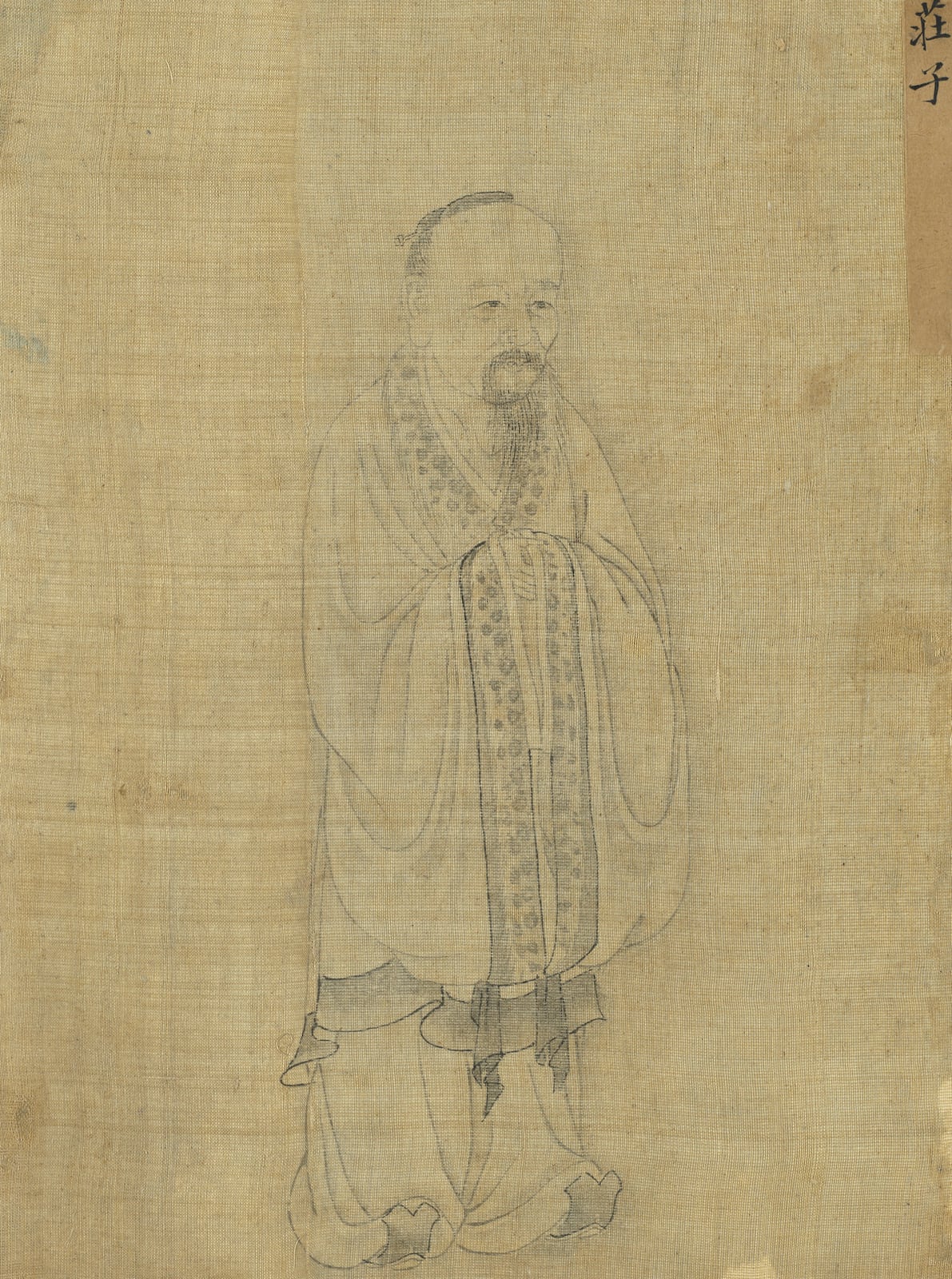
  19. Zhuangzi en el álbum de retratos de soberanos sabios y ministros virtuosos

    c. 369 BCE – c. 286 BCE

    Zhuangzi

    Taoism

    Chinese thinker of the 4th century BCE, from Meng in the state of Song, about whom almost everything we know comes from the book that bears his name. The seven inner chapters of the Zhuangzi are attributed to him with good reason; the rest is the work of disciples and later schools. Through parables, humour and paradox he dismantled the certainties of Confucians and Mohists and proposed a free wandering in harmony with the ceaseless transformation of things. With Laozi, he is the literary founder of Daoism.

  20. Rabia de Basora y su sirvienta en oración

    c. 717 – c. 801

    Rabia al-Adawiyya

    Sufism · Islam

    Eighth-century ascetic and teacher of Basra (d. c. 801), venerated as the first great woman saint of Islam and as the initiator of the mysticism of disinterested love of God. She left no written work: her sayings and the few verses attributed to her reach us through later sources, from Ibn Abi l-Dunya and al-Makki to the legendary biography by the Persian poet Attar four centuries later. Modern scholarship, above all Rkia Cornell, distinguishes the historical Rabia, about whom very little is known, from the one tradition constructed.

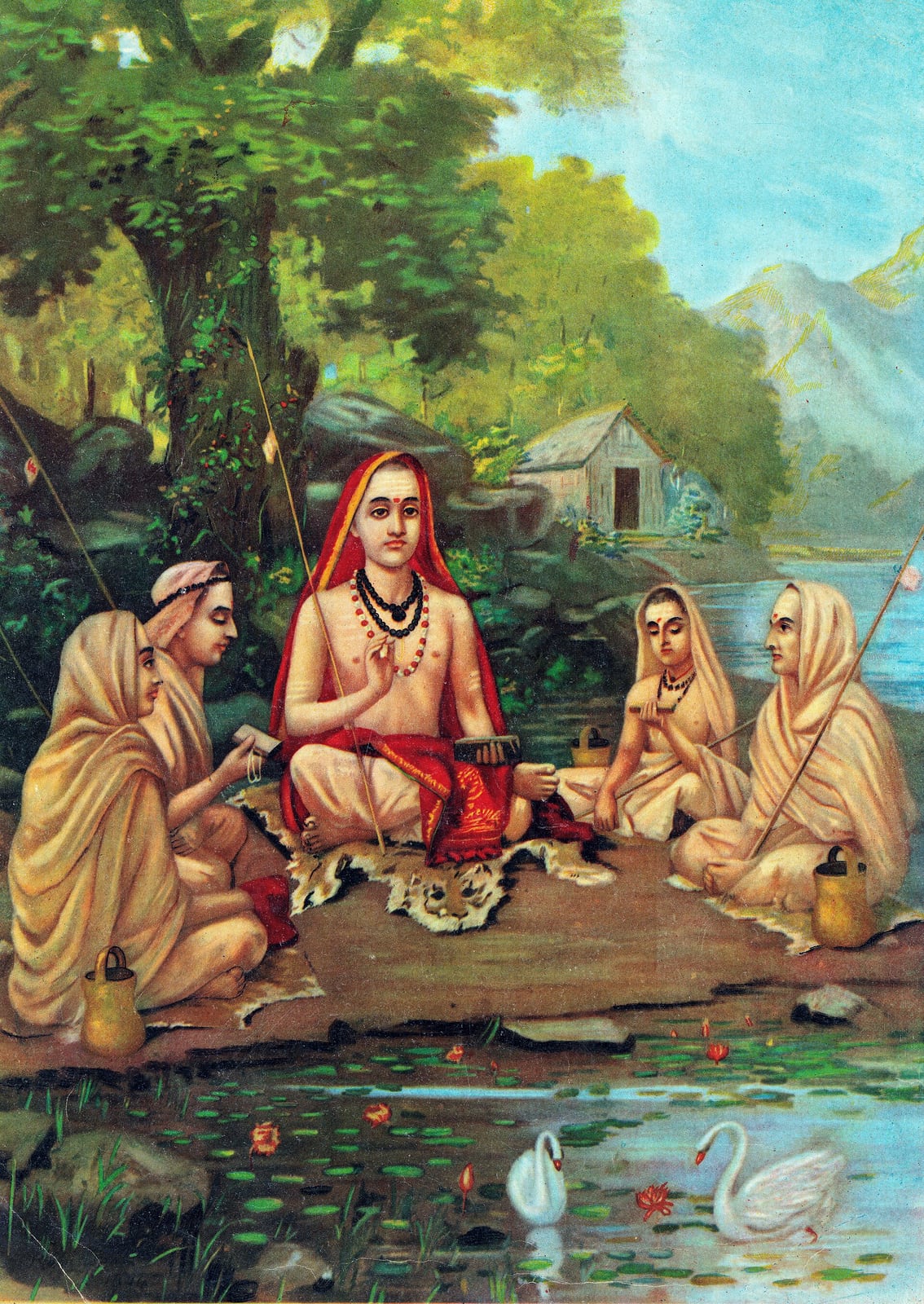
  21. Śaṅkara con sus discípulos, de Raja Ravi Varma

    c. 788 – c. 820

    Adi Shankara

    Advaita Vedanta · Hinduism

    Sanskrit philosopher and exegete, the most influential systematiser of Advaita Vedānta, the doctrine of the non-duality of the self (ātman) and the absolute (brahman). Almost everything about his life comes from late hagiographies; what is certain are his commentaries on the Brahmasūtras, the Bhagavadgītā and the principal Upaniṣads, together with the Upadeśasāhasrī. The traditional date, 788–820, is disputed: much scholarship places him around 700–750. Hundreds of hymns and manuals bear his name without being securely his.

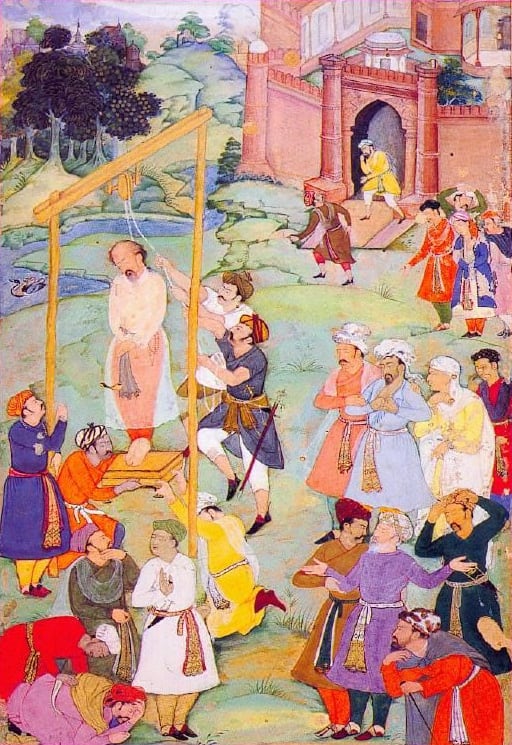
  22. La ejecución de al-Hallaj (1602)

    c. 858 – 922

    Al-Hallaj

    Sufism · Islam

    Mystic and preacher born in Fars (c. 858) and executed in Baghdad in 922, the most controversial Sufi of his generation. A disciple of Sahl al-Tustari and of followers of al-Junayd, he broke with them by preaching the experience of God openly. His phrase "I am the Truth" and his trial for heresy, after nine years in prison, made him the martyr of love of the Persian tradition. He left the Kitab al-Tawasin, a short Diwan and the sayings gathered in the Akhbar al-Hallaj, edited by Louis Massignon.

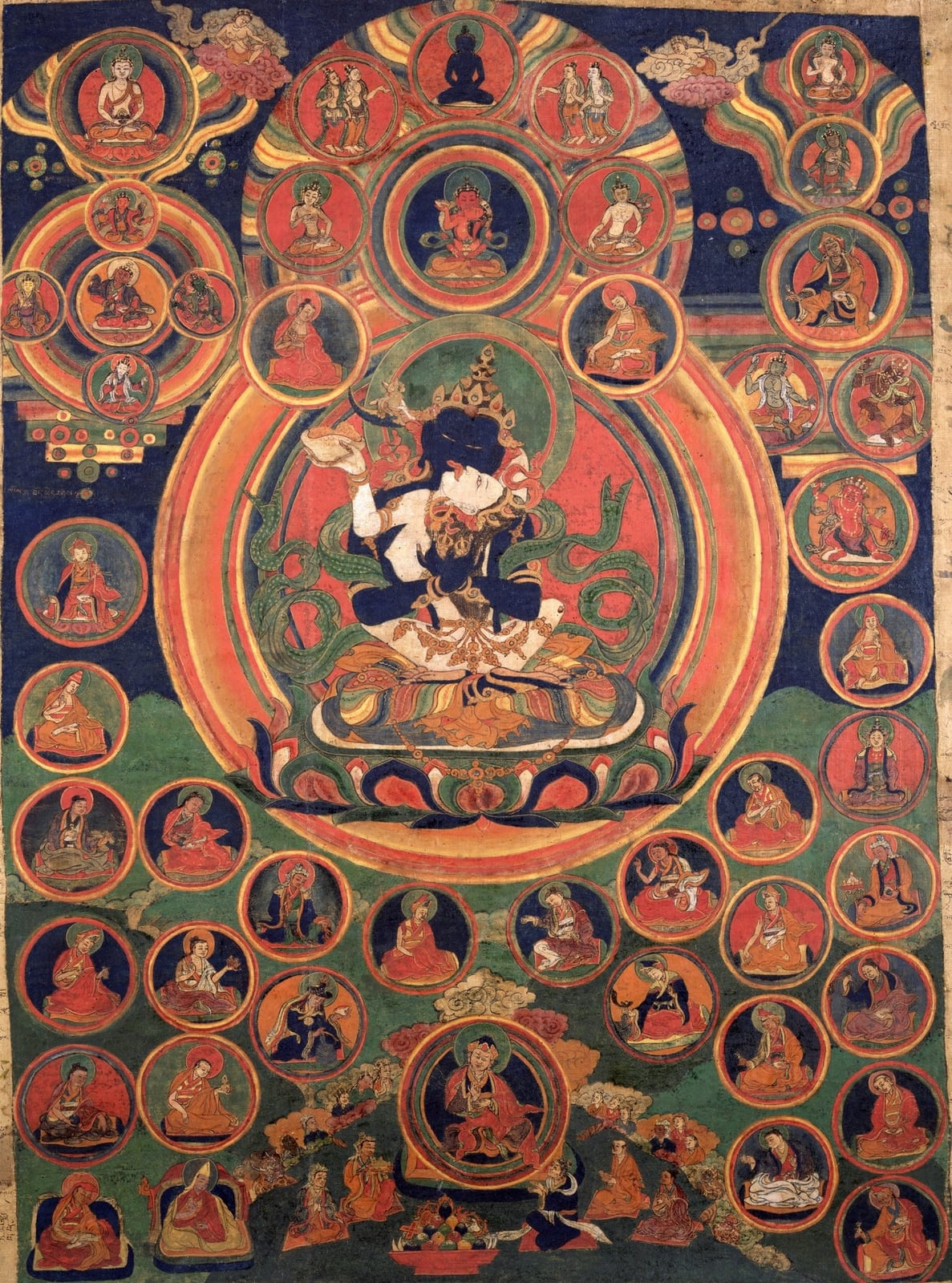
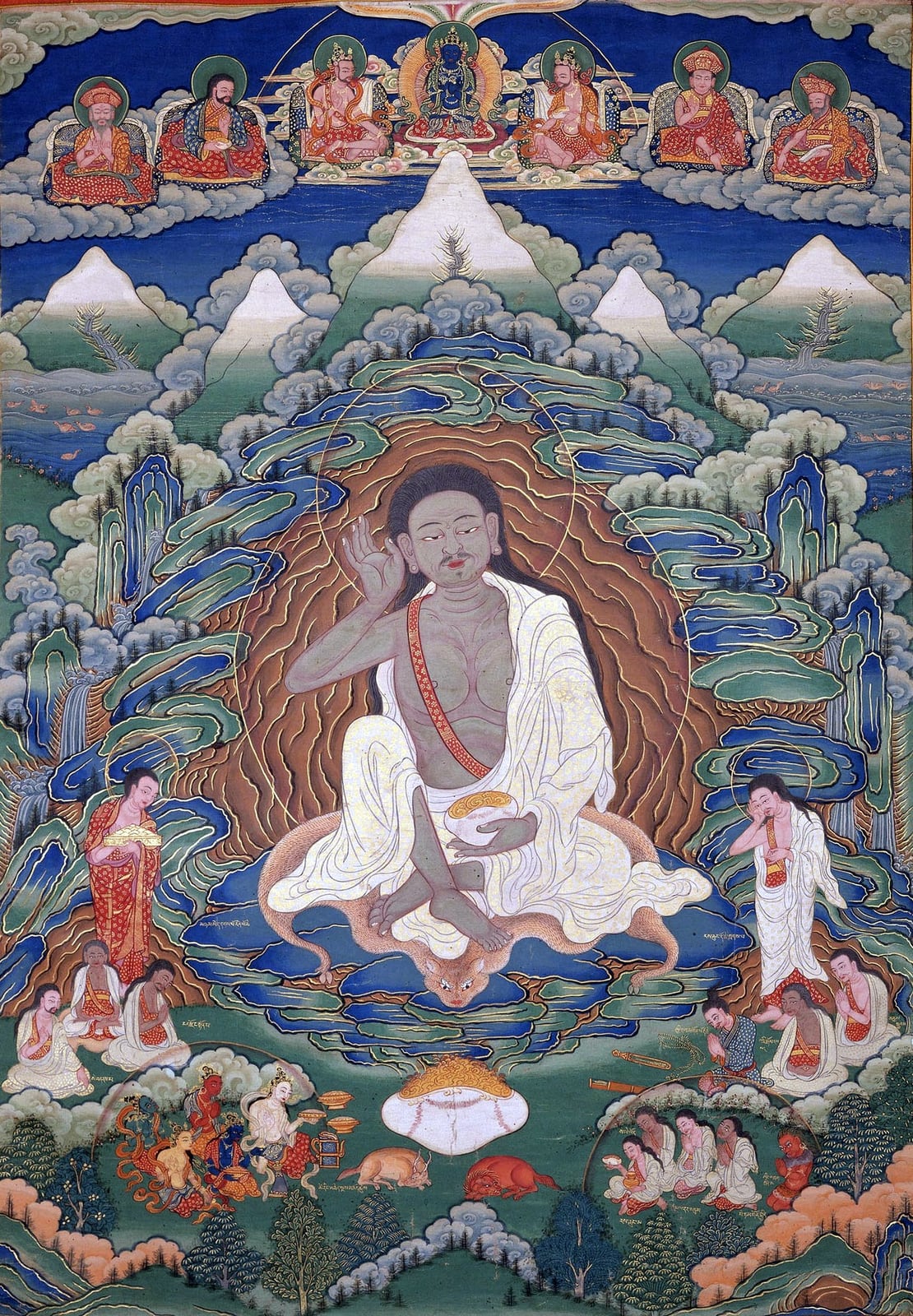
  23. Tangka butanés de Milarepa, finales del s. XIX – principios del XX

    c. 1052 – c. 1135

    Milarepa

    Tibetan Buddhism (Vajrayana) · Buddhism

    Eleventh-century Tibetan yogi, hermit and poet, a founding figure of the Kagyu lineage. According to his hagiography he avenged his family through sorcery, expiated his crimes under the trials set by Marpa the Translator and reached awakening in a life of retreat in Himalayan caves, clad only in cotton and fed on nettles. His “hundred thousand songs” of realisation, fixed by Tsangnyön Heruka in 1488, are Tibet's best-loved book.

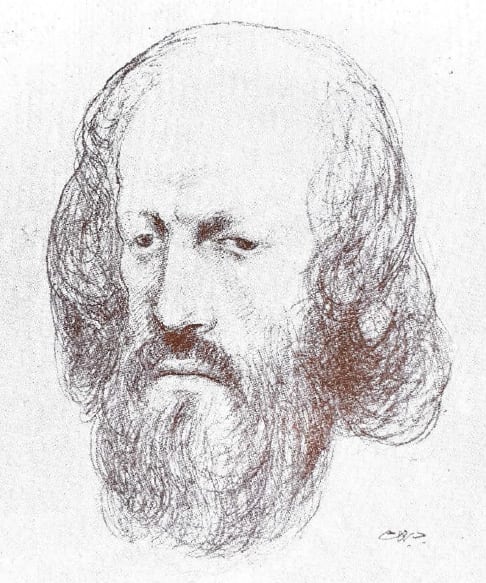
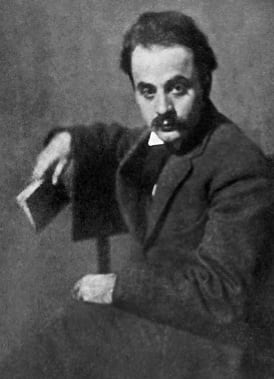
  24. Al-Ghazali según Khalil Gibran

    c. 1058 – 1111

    Al-Ghazali

    Islam · Sufism

    Shafi'i jurist, Ash'ari theologian and Persian mystic (Tus, c. 1058 – Tus, 1111), called "the proof of Islam" and known in Latin Europe as Algazel. Professor at the Nizamiyya of Baghdad, he criticised the philosophers in the Tahafut al-falasifa and, after the crisis he narrates in his autobiography, al-Munqidh min al-dalal, left his chair in 1095 for the Sufi path. His Ihya ulum al-din, in forty books, integrated mysticism into Sunni religious life and is, after the Qur'an and hadith, one of the most widely read books in Islam.

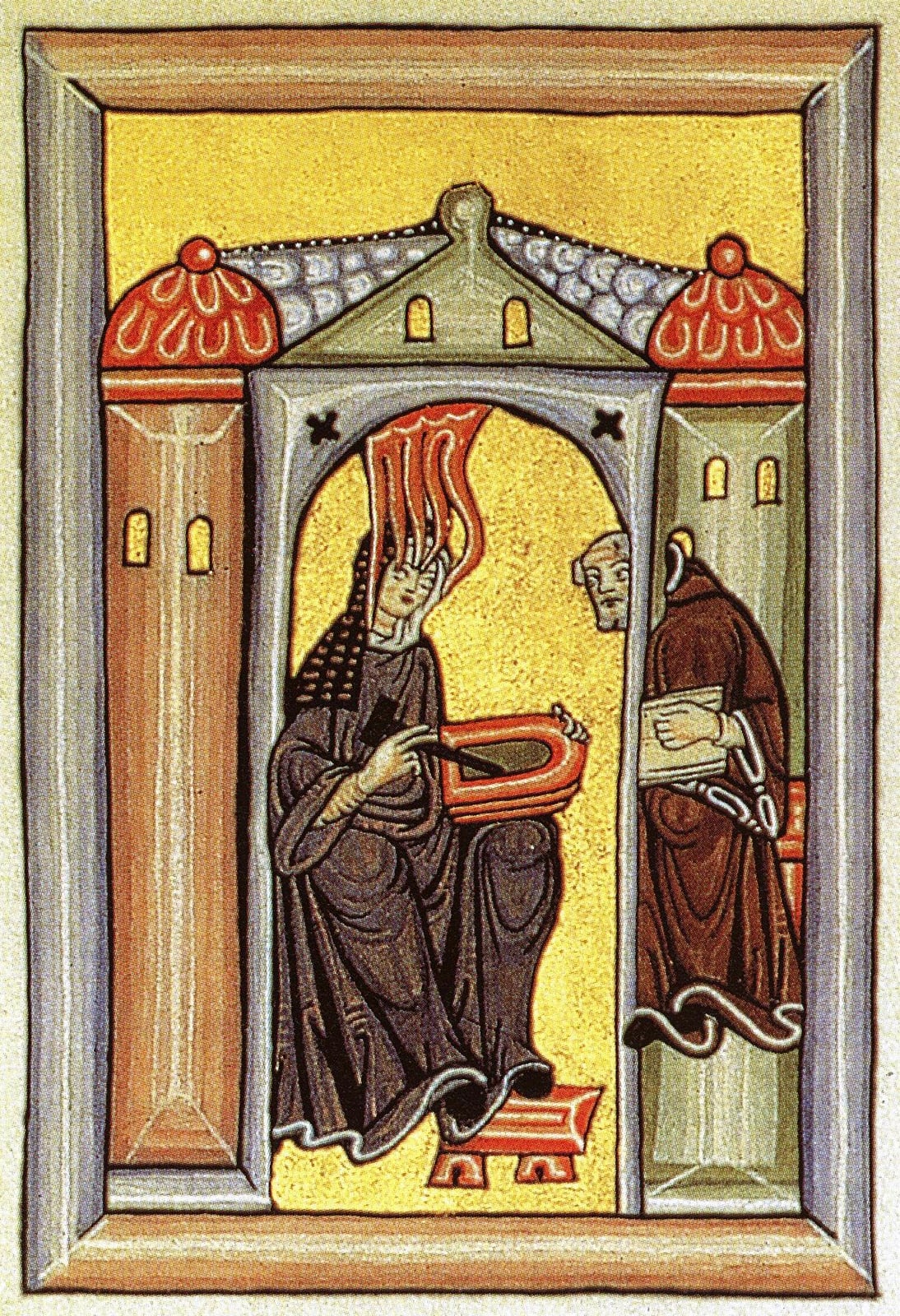
  25. Hildegarda recibe la visión y la dicta a Volmar (Scivias de Rupertsberg)

    1098 – 1179

    Hildegard of Bingen

    Christian mysticism · Catholicism

    Rhenish Benedictine abbess (1098–1179), visionary, composer, naturalist and counsellor to popes and emperors. Enclosed from childhood beside the monastery of Disibodenberg, at forty-two she received the command to write her visions: thus were born Scivias, the Liber vitae meritorum and the Liber divinorum operum. She founded Rupertsberg and Eibingen, wrote two medical treatises, seventy-seven songs, the drama Ordo Virtutum, an invented language and some four hundred letters, and preached in public. Doctor of the Church since 2012.

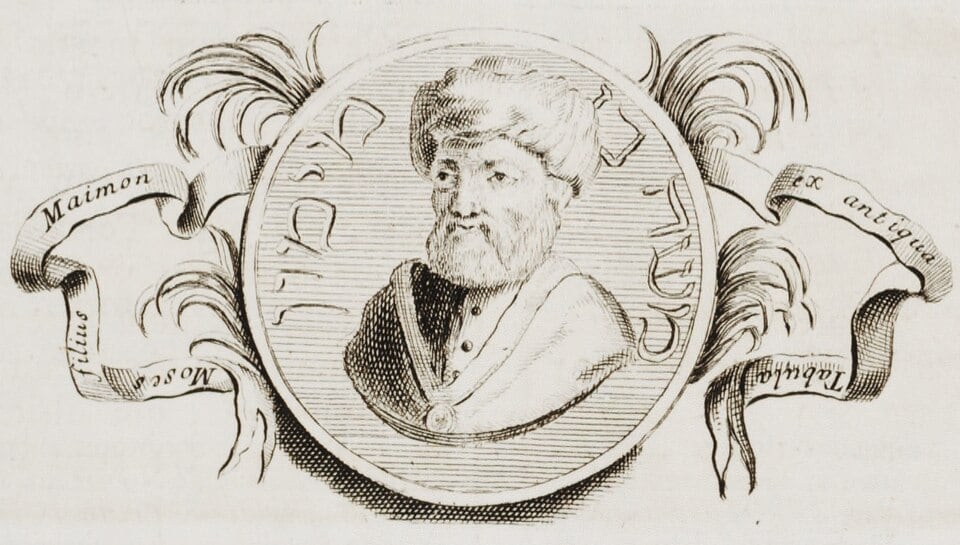
  26. Retrato imaginario de Maimónides (Ugolini, 1744)

    c. 1138 – 1204

    Maimonides

    Judaism · Aristotelianism

    Maimonides (Córdoba, c. 1138 – Fustat, 1204), rabbi, philosopher and physician, is the major figure of medieval Jewish thought. Exiled by the Almohads, he settled in Egypt, where he led the community and served as physician to the Ayyubid court. He wrote the Mishneh Torah, a code of the whole of Jewish law; the Guide of the Perplexed, which reconciles the Bible with Aristotelian philosophy; and the Commentary on the Mishnah with the thirteen principles of faith.

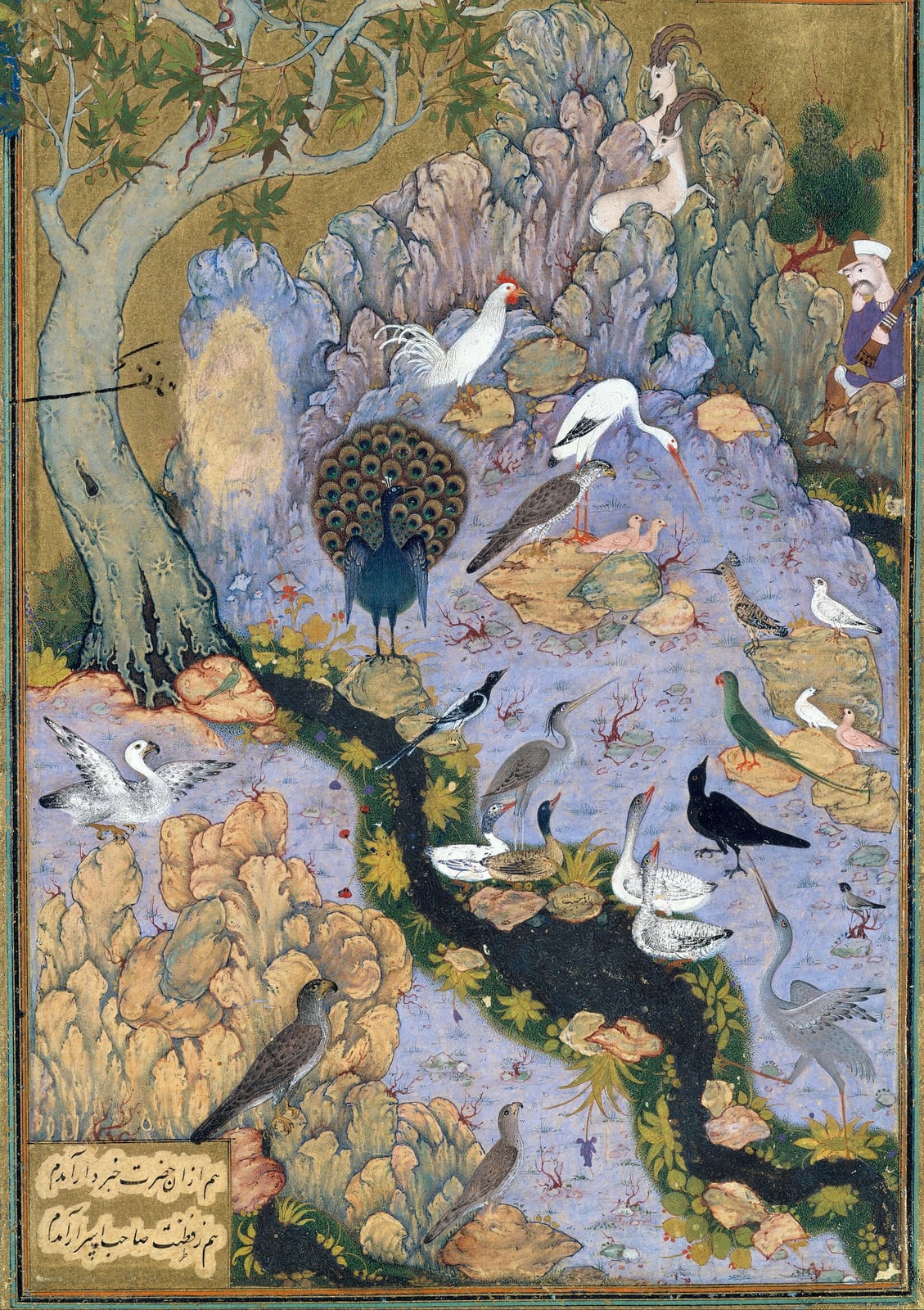
  27. La asamblea de las aves

    c. 1145 – 1221

    Attar

    Sufism · Islam

    Persian poet and hagiographer (Nishapur, c. 1145–c. 1221), a druggist by trade and a major figure of Sufi poetry. His Mantiq al-tayr tells of the birds' journey through seven valleys until they discover that the Simorgh is themselves; with the Ilahi-nama, Musibat-nama and Asrar-nama it forms a cycle of mystical masnavis, and his Tadhkirat al-awliya is the great Persian collection of saints' lives. Many works circulating under his name belong to another Attar. Rumi was his heir.

  28. Ibn Arabi a caballo con dos discípulos (miniatura safaví)

    1165 – 1240

    Ibn Arabi

    Sufism · Islam

    Andalusi mystic, poet and thinker (Murcia, 1165 – Damascus, 1240), called "the Greatest Master". Trained in Almohad Seville, he left al-Andalus in 1201 and travelled the Islamic East until settling in Damascus. His major works, al-Futuhat al-Makkiyya, a visionary encyclopedia of thousands of pages, and the Fusus al-hikam, on the wisdom of each prophet, founded the most influential school of speculative Sufism; the Tarjuman al-ashwaq gathers his love poetry. His thought was later summed up, not always accurately, as "oneness of being".

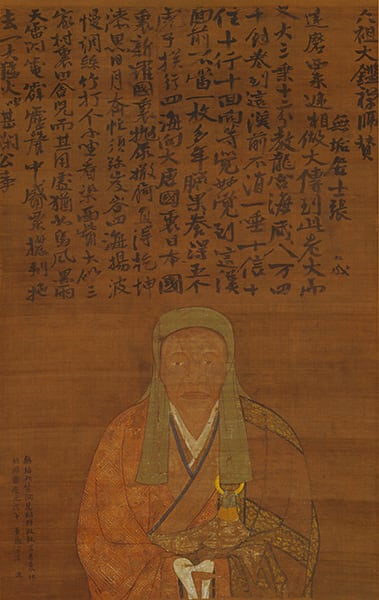
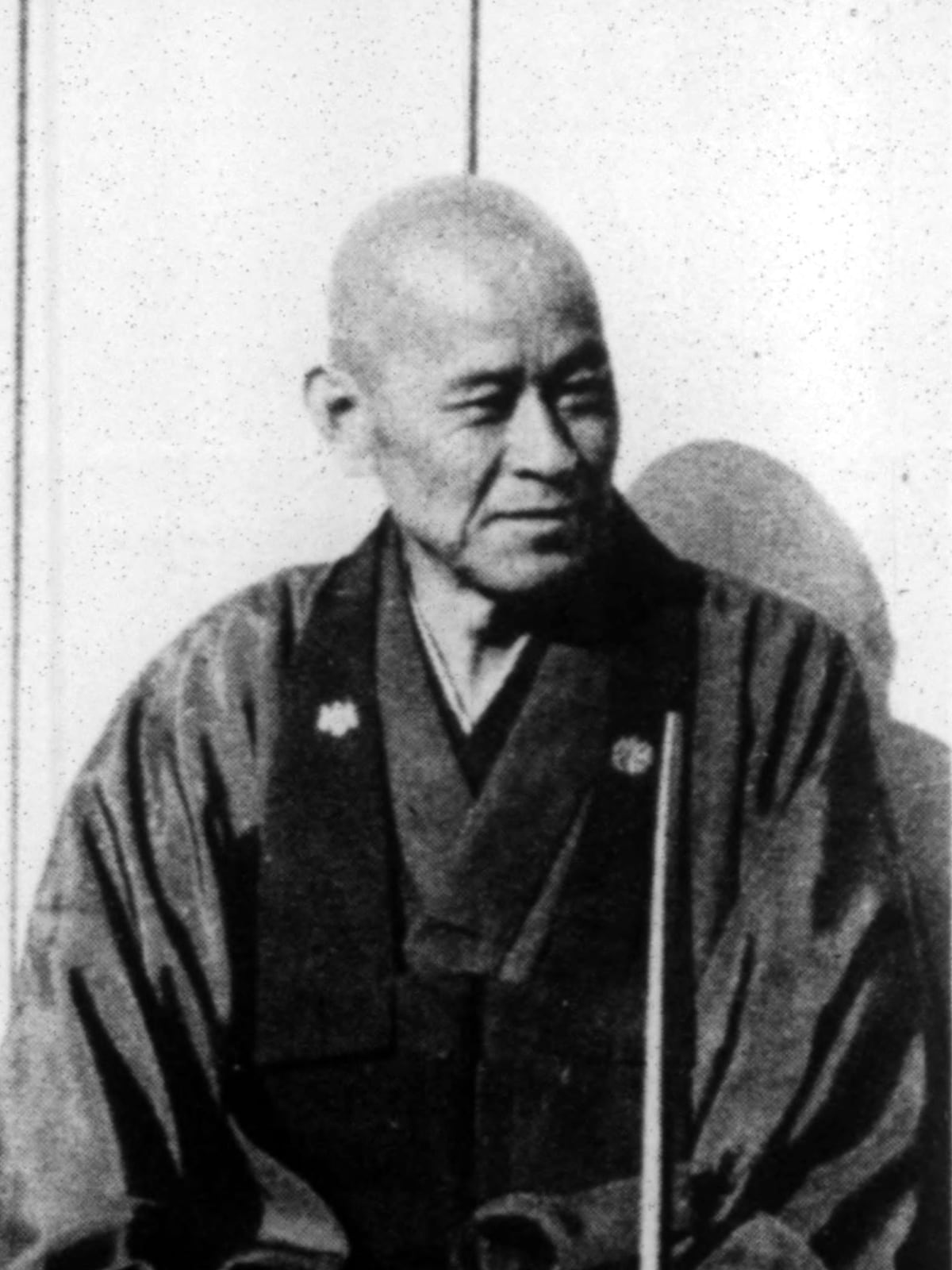
  29. Retrato de Shinran «del espejo» (Kagami no goei)

    1173 – 1263

    Shinran

    Mahayana · Buddhism

    Japanese monk (1173–1263), disciple of Hōnen and posthumous founder of the Jōdo Shinshū, the "true Pure Land school". After twenty years on Mount Hiei he embraced the invocation of Amida's name, was exiled in 1207 and lived thereafter "neither monk nor layman", married and with children. He taught that birth in the Pure Land depends not on one's own effort but on the entrusting (shinjin) bestowed by Amida's Vow. His major work is the Kyōgyōshinshō; his most read words, those of the Tannishō.

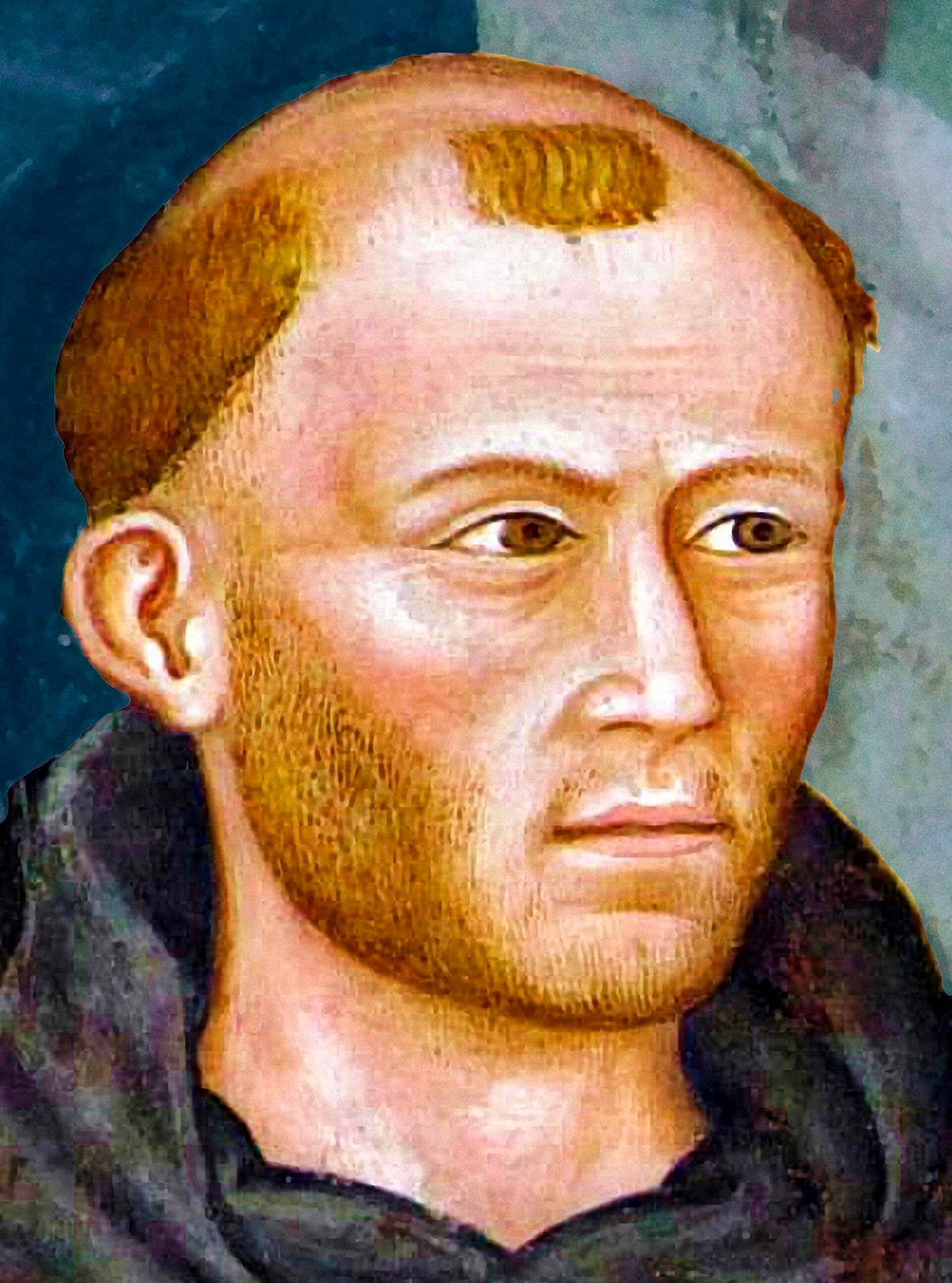
  30. Fresco de «Frater Franciscus» en el Sacro Speco de Subiaco

    c. 1182 – 1226

    Francis of Assisi

    Christian mysticism · Catholicism

    The son of a wealthy Assisi cloth merchant (c. 1182–1226), he abandoned his father's trade to live the Gospel 'to the letter' among lepers and the poor. He founded the Order of Friars Minor, inspired Clare of Assisi and the Third Order, wrote the Canticle of the Creatures, one of the first poems in Italian, and left a handful of authentic writings: rules, admonitions, letters, praises and a Testament. Canonised in 1228, his historical figure coexists with a vast hagiography that must be read in layers.

  31. Dōgen contemplando la luna (Tsukimi no zō)

    1200 – 1253

    Dōgen

    Zen / Chan · Mahayana

    Japanese monk of the Kamakura period (1200–1253), founder of the Sōtō branch of Zen in Japan and of Eiheiji monastery. Trained in Tendai, he travelled to Song China and received the transmission of the Caodong school from Rujing. He taught "just sitting" (shikantaza) as realisation rather than as a means, and left in the Shōbōgenzō, written in Japanese, one of the summits of Buddhist philosophy. Neglected for centuries outside his school, his work was rediscovered in the 20th century.

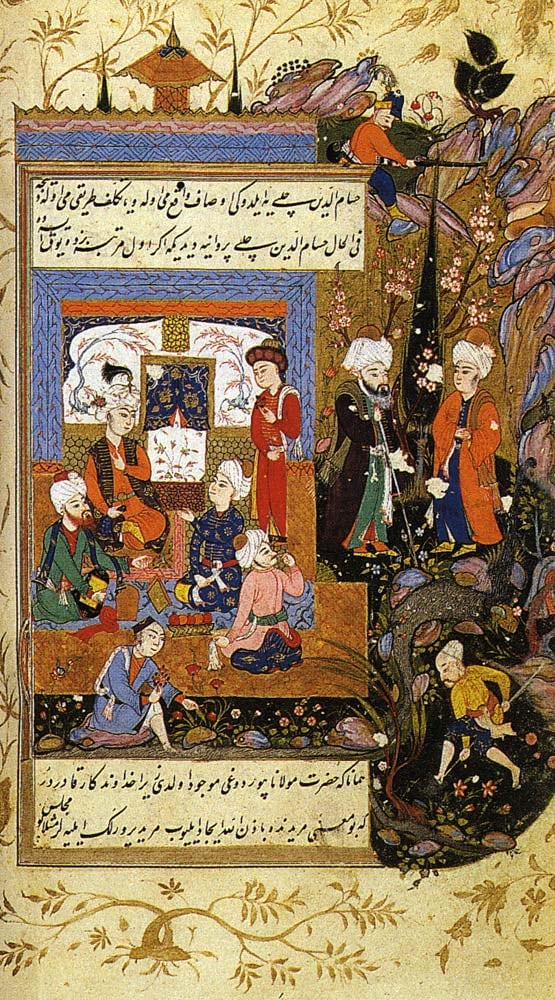
  32. Rumi y su discípulo Husam al-Din Chelebi

    1207 – 1273

    Rumi

    Sufism · Islam

    Hanafi jurist and preacher (1207–1273), born in Khorasan and settled in Konya, the Seljuq capital of Anatolia. At thirty-seven, his encounter with the dervish Shams of Tabriz made him a poet: the Divan-e Shams gathers more than three thousand ghazals written out of the friend's absence, and the Masnavi, six books of commented stories, is the great didactic work of Persian Sufism. His son founded the Mevlevi order of whirling dervishes. Many modern "Rumi quotes" do not come from his work.

  33. Fraile dominico identificado tradicionalmente con Eckhart (Andrea di Bonaiuto, Via Veritatis)

    c. 1260 – 1328

    Meister Eckhart

    Christian mysticism · Catholicism

    A Thuringian Dominican (c. 1260–1328), twice master of theology in Paris, provincial of Saxony and preacher in Strasbourg and Cologne. In Latin he wrote an unfinished scholastic work (the Opus tripartitum, biblical commentaries, sermons) and in German he preached on the ground of the soul, detachment and the birth of God in the soul, forging the abstract vocabulary of the German language. Tried by the archbishop of Cologne, he died before the bull In agro dominico (1329) condemned twenty-eight propositions drawn from his works.

  34. Hafez en una miniatura del siglo XVIII

    c. 1315 – c. 1390

    Hafez

    Sufism · Islam

    Fourteenth-century Persian lyric poet (Shiraz, c. 1315–1390), regarded as the summit of the ghazal. He lived under the Inju and Muzaffarid dynasties, to whose princes he addressed poems, and his Divan, compiled after his death, gathers about five hundred ghazals (495 in the Qazvini-Ghani edition) in which love, wine and the satire of false piety merge in deliberate ambiguity. In Iran it is opened at random to seek an augury. The poems by Daniel Ladinsky circulating under his name are not translations of his work.

  35. Estatua de Juliana en la fachada oeste de la catedral de Norwich (David Holgate)

    c. 1342 – c. 1416

    Julian of Norwich

    Christian mysticism · Catholicism

    English anchoress and writer (c. 1342–after 1416). In May 1373, gravely ill, she received sixteen visions of Christ's passion and of God's love, which she recounted in two versions: a Short Text and, after decades of meditation, a Long Text, the Revelations of Divine Love, the earliest surviving book in English written by a woman. She lived enclosed beside the church of St Julian in Norwich. Her theology of trust ('all shall be well'), of a God without wrath and of the motherhood of Christ has made her a classic author.

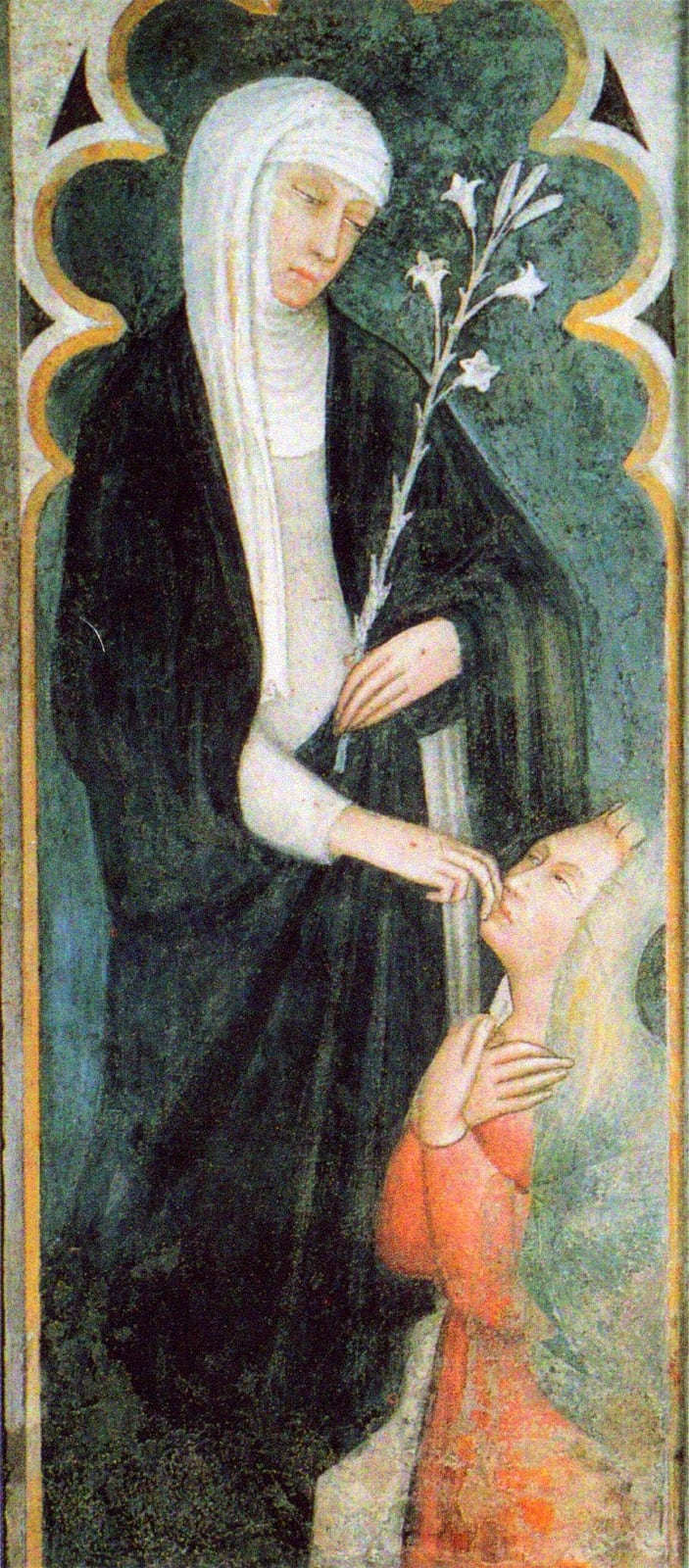
  36. Santa Catalina, por Andrea Vanni (San Domenico, Siena)

    1347 – 1380

    Catherine of Siena

    Christian mysticism · Catholicism

    Sienese mystic, writer and public figure (1347–1380), a Dominican tertiary. A dyer's daughter without schooling, she gathered a 'family' of disciples, tended plague victims and the condemned, mediated between Florence and the papacy and urged Gregory XI to return from Avignon to Rome. She dictated the Dialogue of Divine Providence, some 380 letters to popes, kings, mercenaries and ordinary people, and twenty-six prayers, which make her one of the great prose writers of Italian. She died in Rome at thirty-three. She is a Doctor of the Church (1970) and co-patroness of Italy and of Europe.

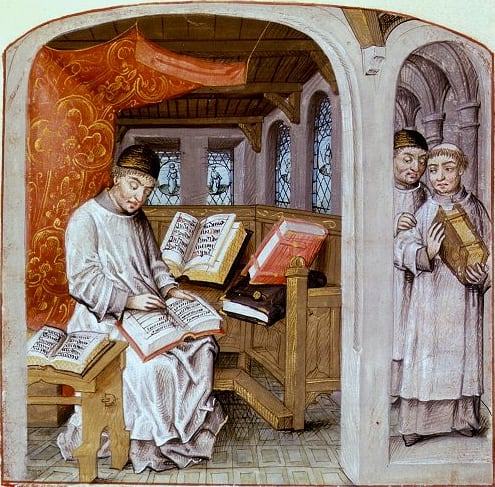
  37. Thomas a Kempis escribiendo (miniatura de la Imitación)

    c. 1380 – 1471

    Thomas à Kempis

    Christian mysticism · Catholicism

    Augustinian canon regular (c. 1380–1471), formed at Deventer in the milieu of Geert Grote's devotio moderna and a monk for more than seventy years at Mount St Agnes, near Zwolle. A tireless copyist, master of novices and chronicler of his house and of the movement's founders, he is, by critical consensus, the author of The Imitation of Christ, the most widely circulated Christian book after the Bible, whose authorship was disputed for centuries by the partisans of Jean Gerson and of a supposed abbot Gersen.

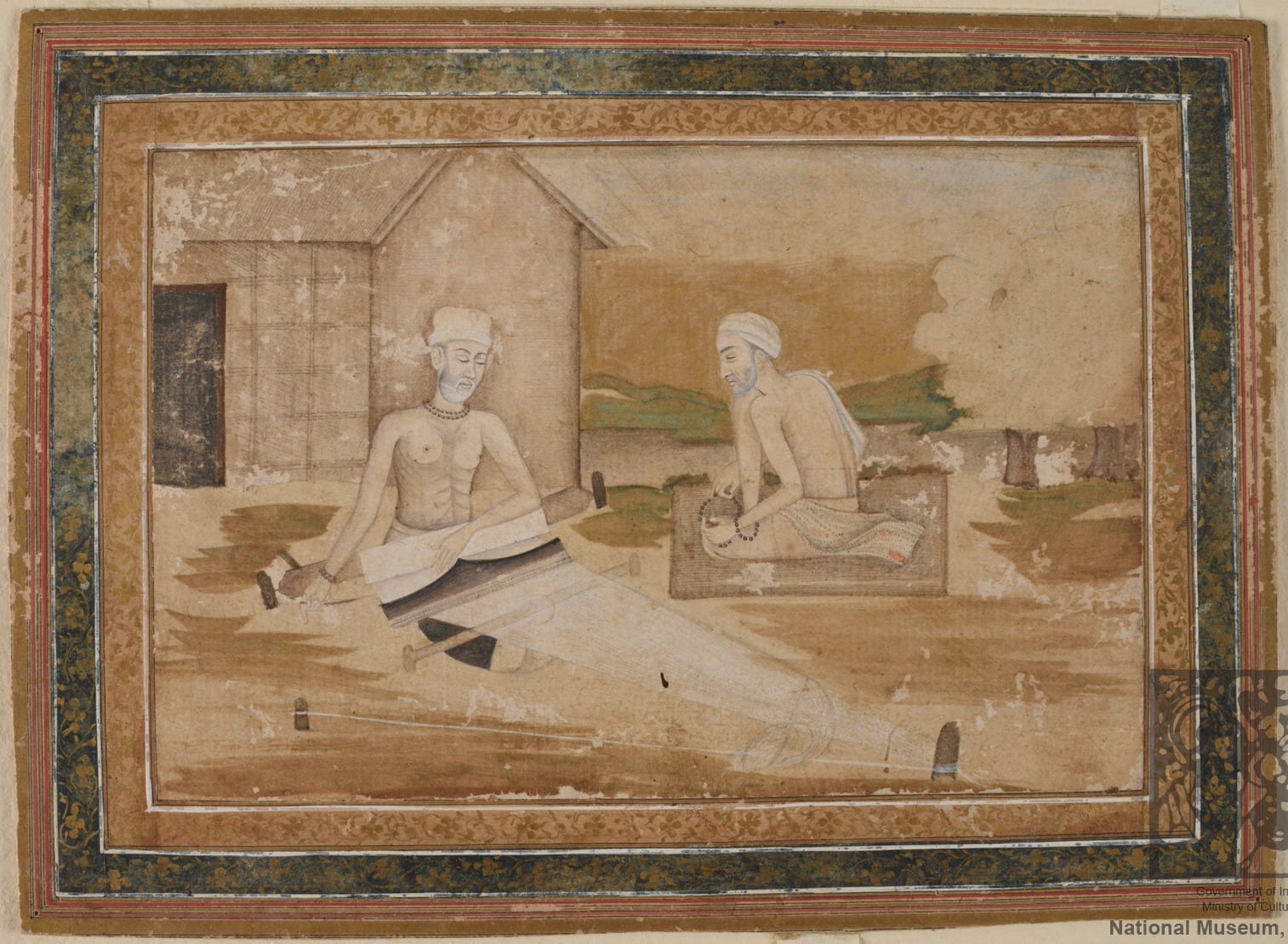
  38. Kabir y Ravidas

    c. 1440 – c. 1518

    Kabir

    Bhakti · Hinduism

    Poet and mystic of northern India (c. 1440–1518, or 1398–1448 according to others), a weaver of Benares of Muslim origin and a major figure of nirguna devotion. His songs and couplets, transmitted orally and fixed in three traditions (the Sikh Adi Granth, the Dadupanthi anthologies from which the Kabir Granthavali derive, and the Kabirpanthi Bijak), criticise Brahmins and mullahs alike. Most of the 'One Hundred Poems' Tagore translated in 1915 are of doubtful authenticity.

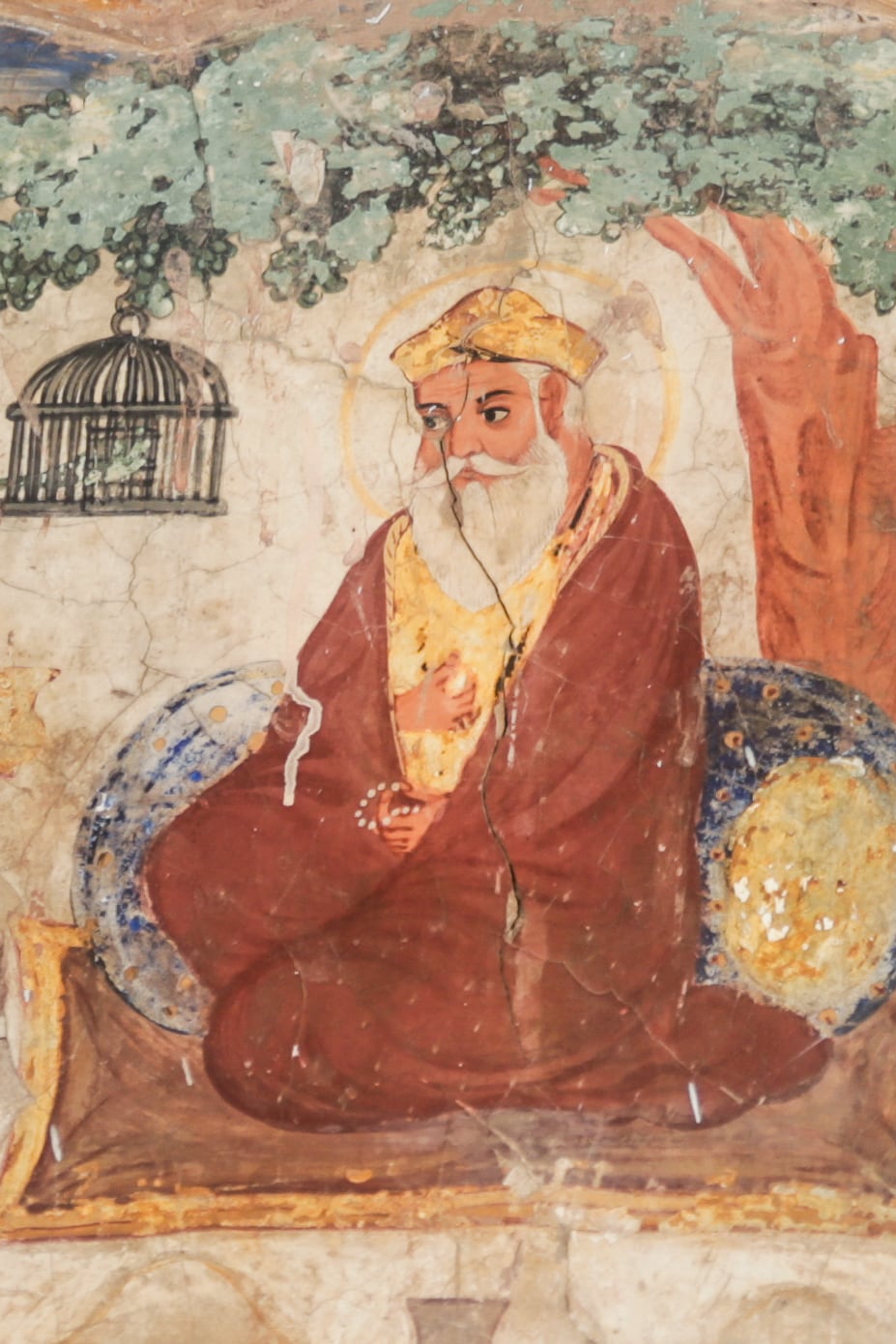
  39. Guru Nanak en un mural del gurdwara Baba Atal Rai

    1469 – 1539

    Guru Nanak

    Sikhism · Bhakti

    Spiritual teacher and poet from the Punjab (1469-1539), first of the ten gurus and founder of the Sikh tradition. After an experience in the Bein river he proclaimed that "there is no Hindu, no Muslim", travelled for two decades with the musician Mardana and founded at Kartarpur a community of disciples who worked, sang and ate together. His 974 compositions, among them the Japji, are preserved in the Guru Granth Sahib; the janamsakhis narrating his life are hagiographic.

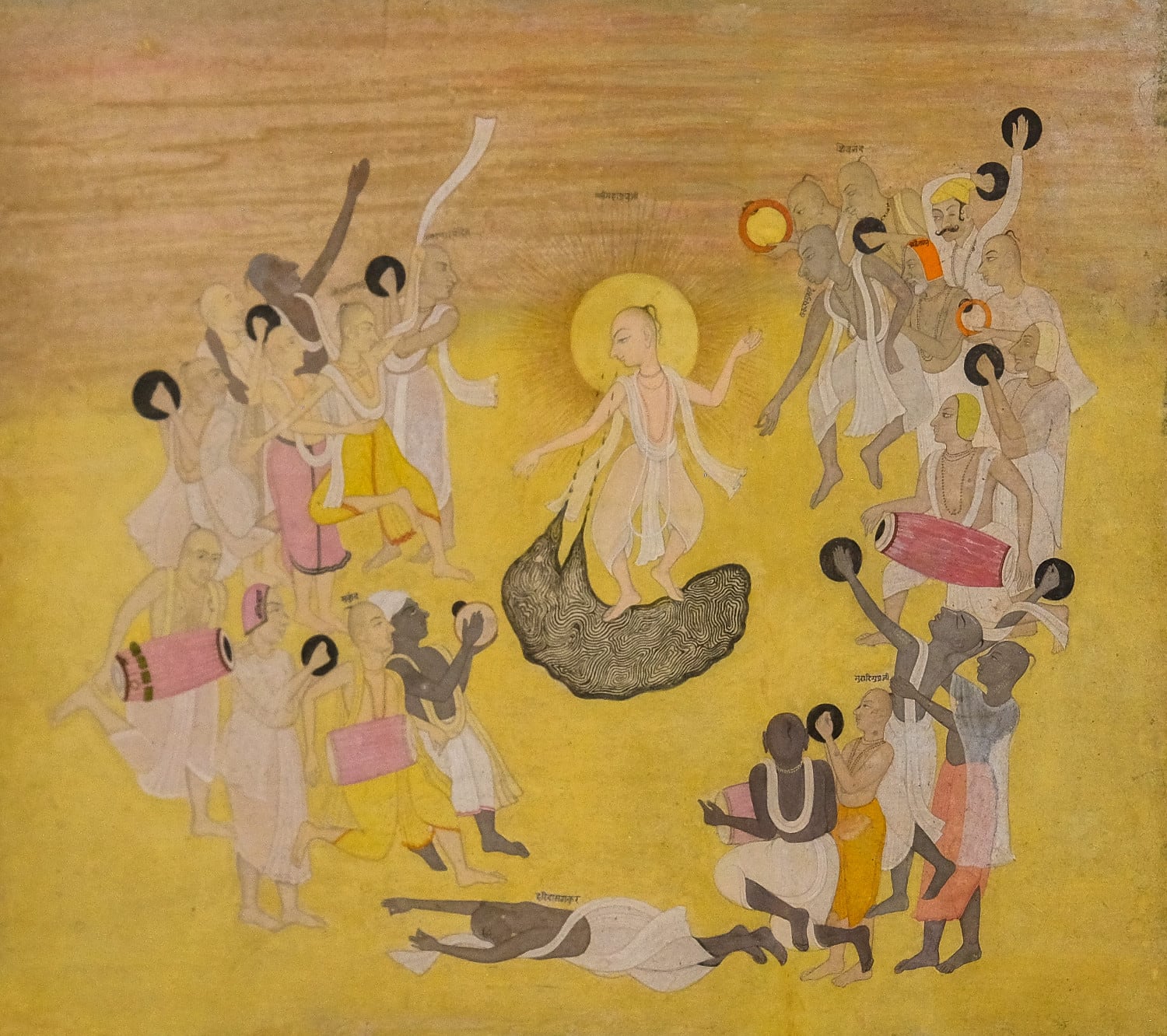
  40. Chaitanya danza entre sus seguidores

    1486 – c. 1533

    Chaitanya Mahaprabhu

    Bhakti · Hinduism

    Bengali religious reformer (1486-1533/34), held by his followers to be the joint incarnation of Radha and Krishna and regarded as the founder of Gaudiya Vaishnavism. A grammarian turned ecstatic after his initiation at Gaya, he popularised the congregational chanting of the divine names, spent his last eighteen years in Puri and, according to scholarship, left in writing only the eight stanzas of the Shikshashtaka. His life is known only through later hagiographies, especially the Chaitanya Bhagavata and the Chaitanya Charitamrita.

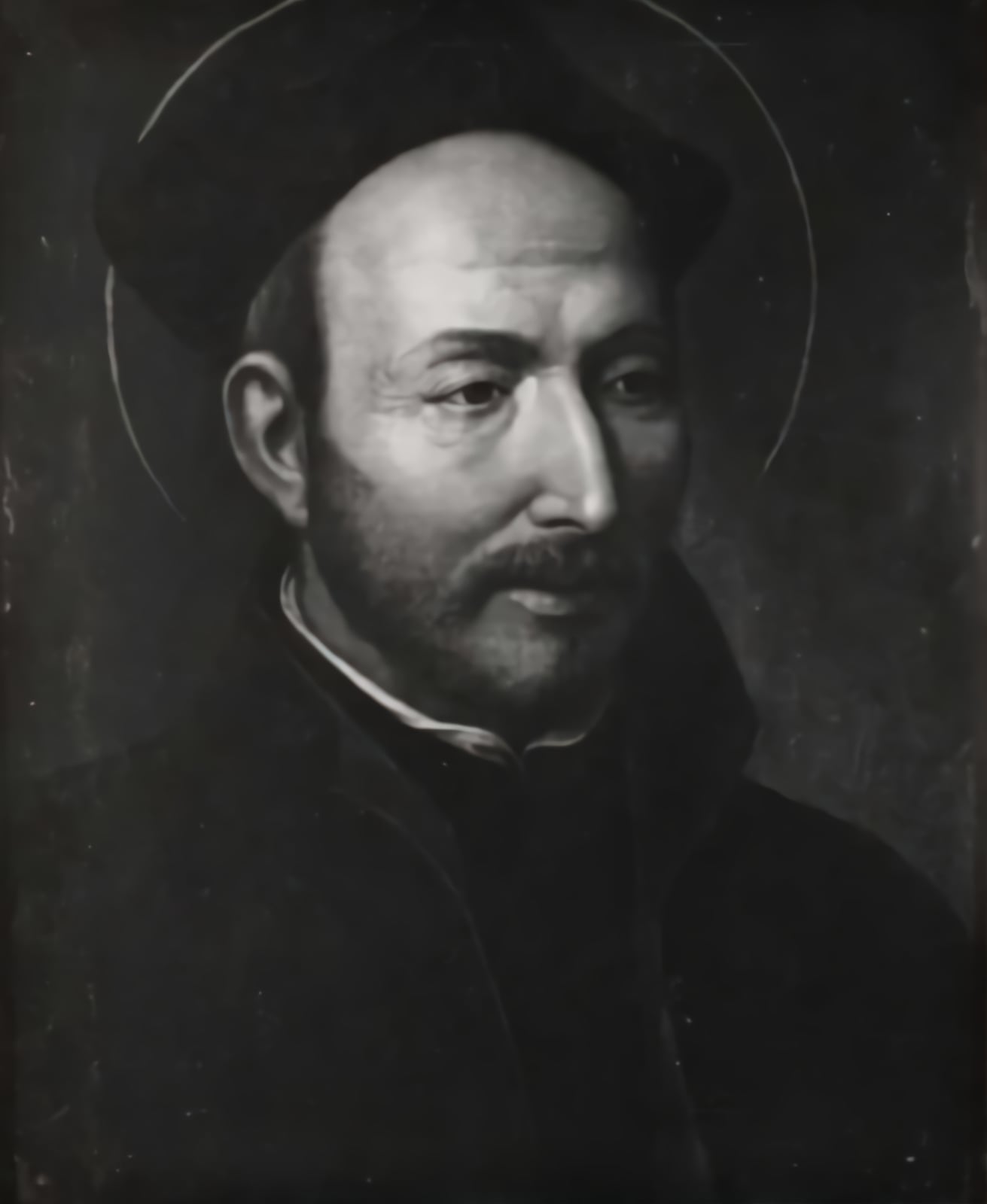
  41. Retrato de Ignacio de Loyola

    1491 – 1556

    Ignatius of Loyola

    Catholicism · Christian mysticism

    Basque nobleman (1491–1556) wounded at Pamplona in 1521 who, converted during his convalescence, became a pilgrim, a student at Alcalá, Salamanca and Paris, and, with his companions, founder of the Society of Jesus (1540), whose first superior general he was. His Spiritual Exercises, born of his experience at Manresa, are a method of prayer and discernment that has shaped religious and lay people for five centuries. He also left the order's Constitutions, a Spiritual Diary, a dictated autobiographical account and some seven thousand letters.

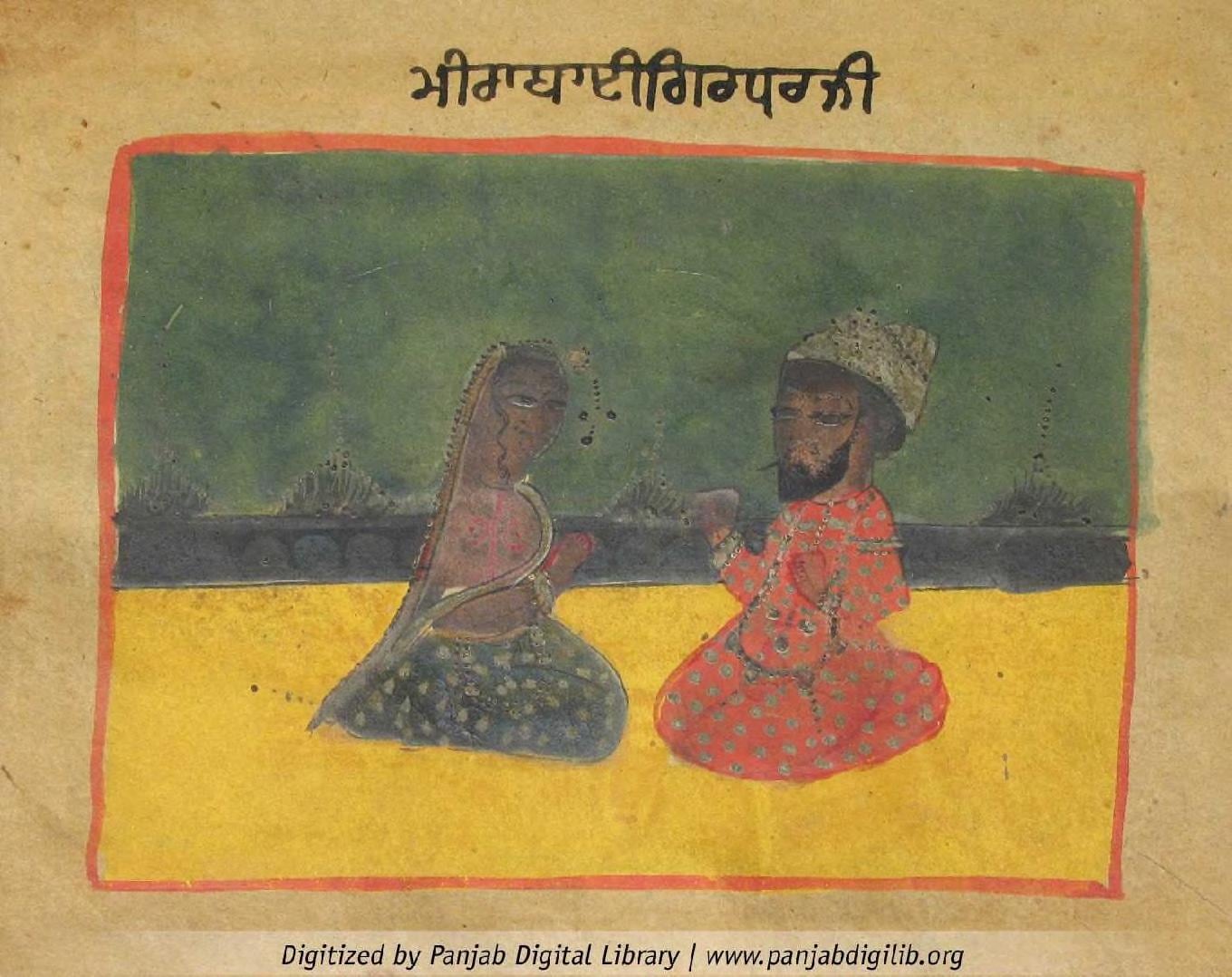
  42. Mirabai y Girdharji en la Prem Ambodh Pothi

    c. 1498 – c. 1547

    Mirabai

    Bhakti · Hinduism

    Sixteenth-century Rajput poet and saint (c. 1498-c. 1547), a devotee of Krishna, to whom she declared herself married. A princess of the Rathor clan of Merta and widow of the heir of Mewar, she defied the norms of her caste and station, and tradition remembers her as persecuted by her in-laws and vanishing at Dwarka. Hundreds of songs (padas) still sung throughout India are attributed to her, although almost none appear in manuscripts earlier than the eighteenth century.

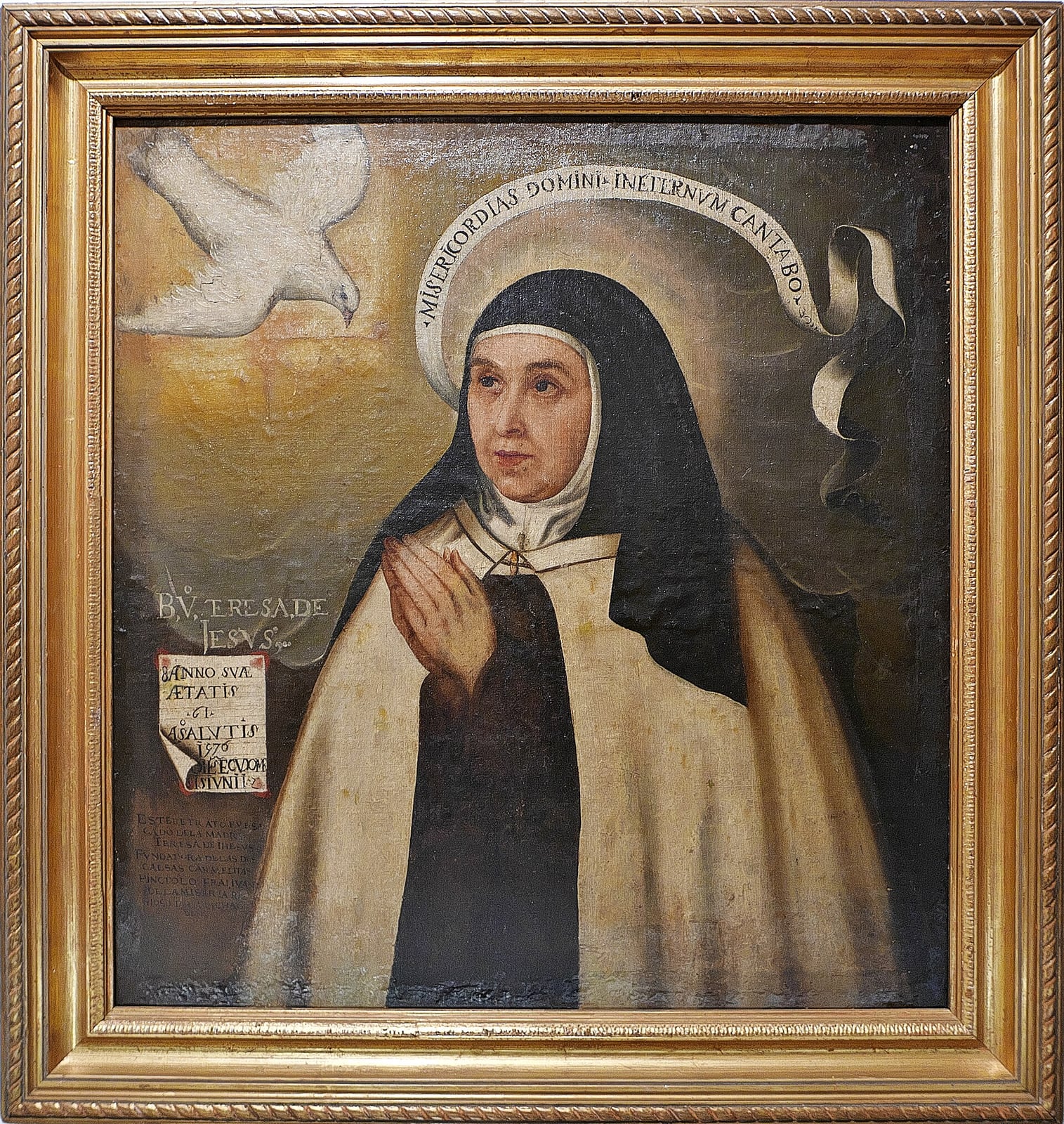
  43. Retrato de Santa Teresa de Jesús por fray Juan de la Miseria (1576)

    1515 – 1582

    Teresa of Ávila

    Christian mysticism · Catholicism

    Castilian Carmelite nun, writer and foundress (1515–1582). After twenty lukewarm years at the convent of the Incarnation, a conversion at thirty-nine led her to an intense mystical life and to reform Carmel: she founded seventeen convents of Discalced nuns and, with John of the Cross, the male branch. Her books (Life, Way of Perfection, Interior Castle, Foundations) and letters are a summit of Castilian prose and a map of prayer as friendship. Canonised in 1622, she was the first woman proclaimed a Doctor of the Church (1970).

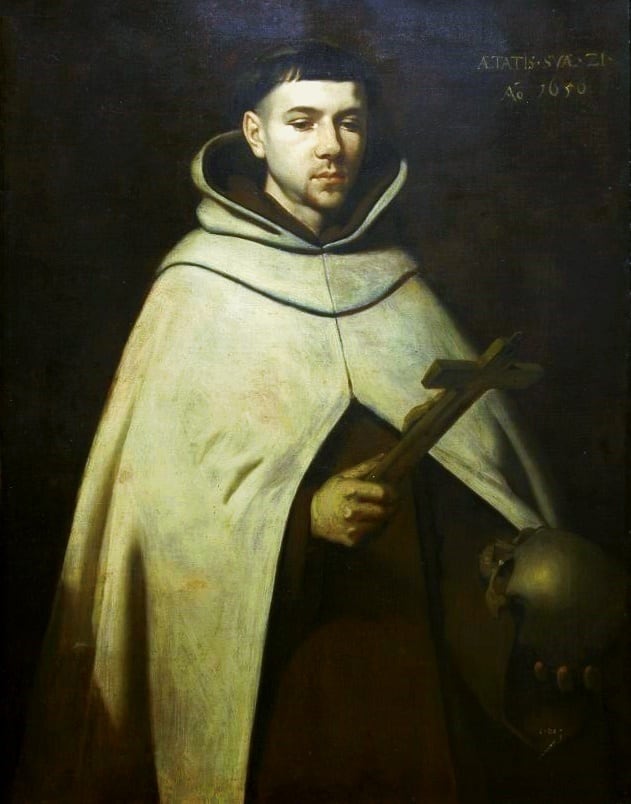
  44. Retrato de san Juan de la Cruz (atribuido a Zurbarán)

    1542 – 1591

    John of the Cross

    Christian mysticism · Catholicism

    A Castilian Carmelite friar (1542–1591), co-founder with Teresa of Ávila of the Discalced Carmelites and one of the greatest poets of the Spanish language. The son of a widowed weaver, he knew poverty, imprisonment by his own order in Toledo and ostracism at the end of his life. His poems (Spiritual Canticle, Dark Night, Living Flame of Love) and the prose treatises that comment on them describe the soul's path to union with God through 'nothingness' and the night. He was canonised in 1726 and proclaimed a Doctor of the Church in 1926.

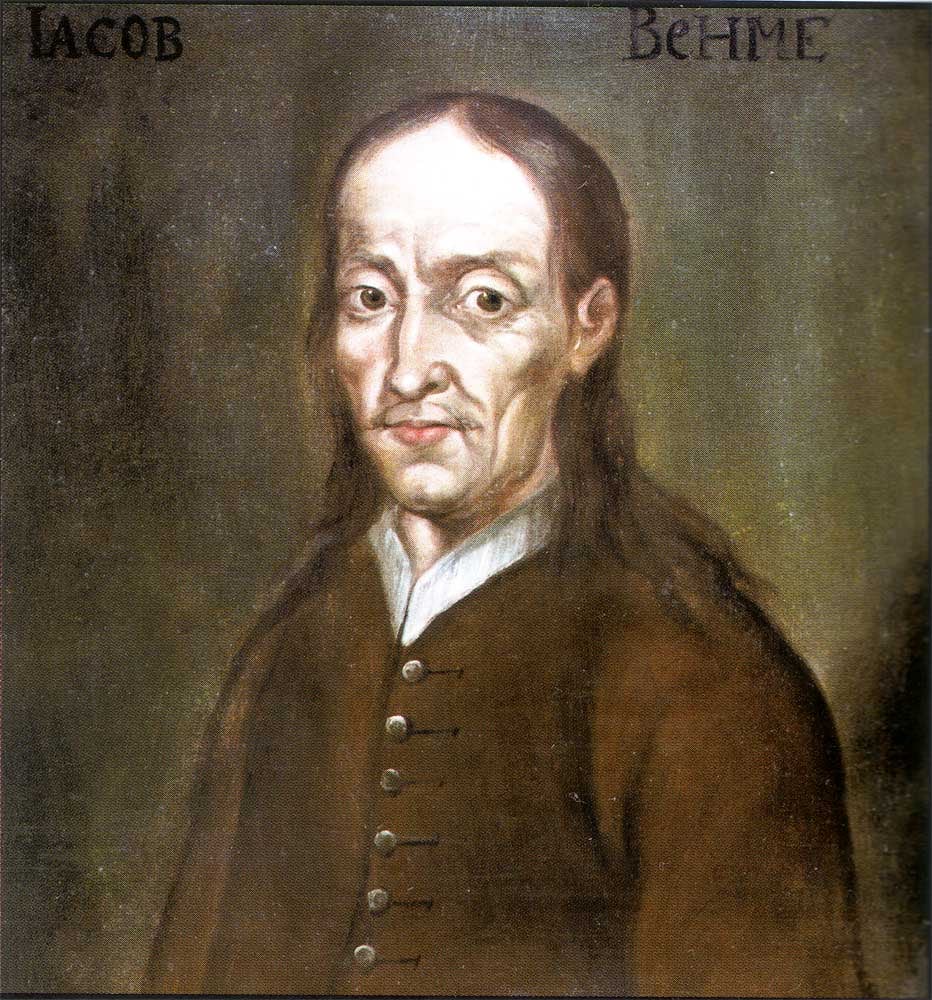
  45. Retrato póstumo de Jakob Böhme

    1575 – 1624

    Jakob Böhme

    Christian mysticism · Protestantism

    Shoemaker of Görlitz (1575–1624) and one of the great speculative mystics of the West. Without schooling or Latin, after an illumination around 1600 he wrote the Aurora (1612), which earned him a ban on writing, and between 1618 and 1624 an immense body of work: The Three Principles, The Threefold Life, the Forty Questions of the Soul, De signatura rerum, the Mysterium Magnum and The Way to Christ, the only book printed in his lifetime. His theosophy of the Ungrund, Sophia and the origin of evil shaped Pietism, German Idealism, Romanticism and Russian religious philosophy.

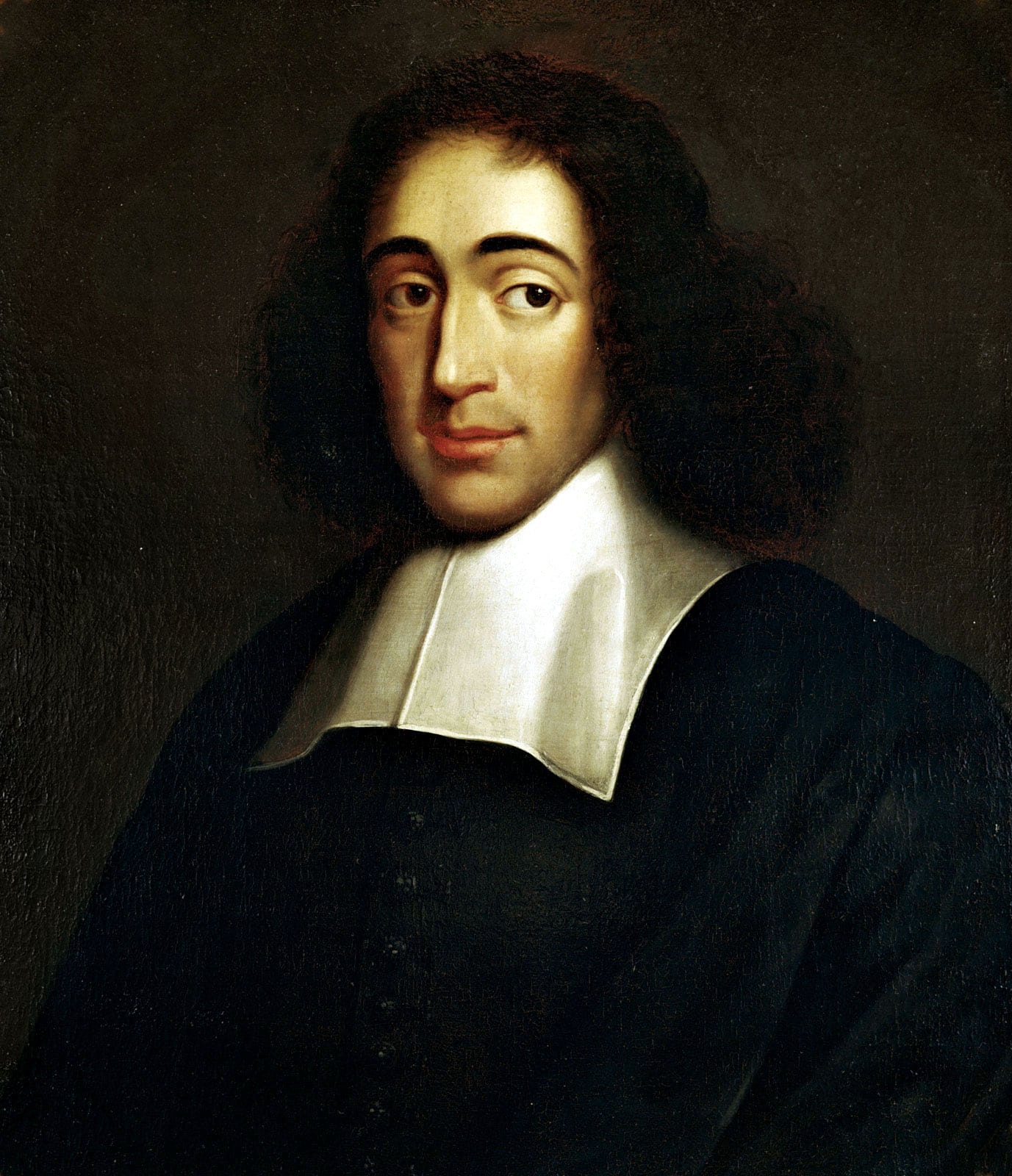
  46. Retrato anónimo de Spinoza (Wolfenbüttel)

    1632 – 1677

    Baruch Spinoza

    Judaism

    Baruch Spinoza (1632-1677), a Dutch philosopher of Portuguese Jewish origin, was expelled from Amsterdam's Jewish community in 1656 and lived by grinding lenses. His Theological-Political Treatise (1670) founded modern biblical criticism and defended freedom of thought; his Ethics, published posthumously in 1677, identifies God with Nature and proposes a path to freedom through knowledge. Considered an atheist for a century, he is one of the central figures of rationalism and the radical Enlightenment.

  47. Retrato de Emanuel Swedenborg a los setenta y cinco años

    1688 – 1772

    Emanuel Swedenborg

    Christian mysticism · Protestantism

    Swedish scientist, engineer and visionary (1688–1772). An assessor of the Board of Mines, ennobled in 1719, he wrote on metallurgy, cosmology (Principia, 1734) and the anatomy of the brain (Oeconomia regni animalis, Regnum animale) before a spiritual crisis between 1743 and 1745. From then on he claimed to converse with angels and spirits, and published in Latin a vast theology: Arcana Coelestia, Heaven and Hell, Angelic Wisdom, Conjugial Love and The True Christian Religion. Kant satirised him; Blake, Balzac, Emerson and Borges read him with passion.

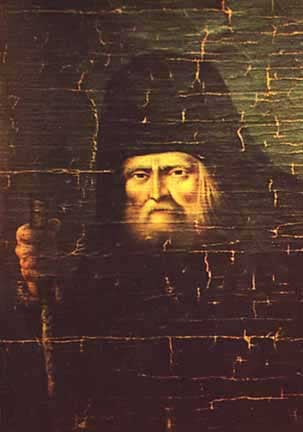
  48. Retrato de Serafín de Sarov pintado en vida

    1754 – 1833

    Seraphim of Sarov

    Orthodox Christianity · Christian mysticism

    Russian monk and starets (1754–1833) of Sarov monastery, spiritual founder of the Diveyevo convent and one of the most venerated saints of Russian Orthodoxy. A forest hermit, a recluse for fifteen years and then spiritual guide to multitudes, whom he greeted with "My joy, Christ is risen!", he wrote nothing: his teaching on the acquisition of the Holy Spirit came down through the Instructions of 1839, the Diveyevo Chronicle and the Conversation with Motovilov, published in 1903 and of disputed literal accuracy. He was canonised in 1903.

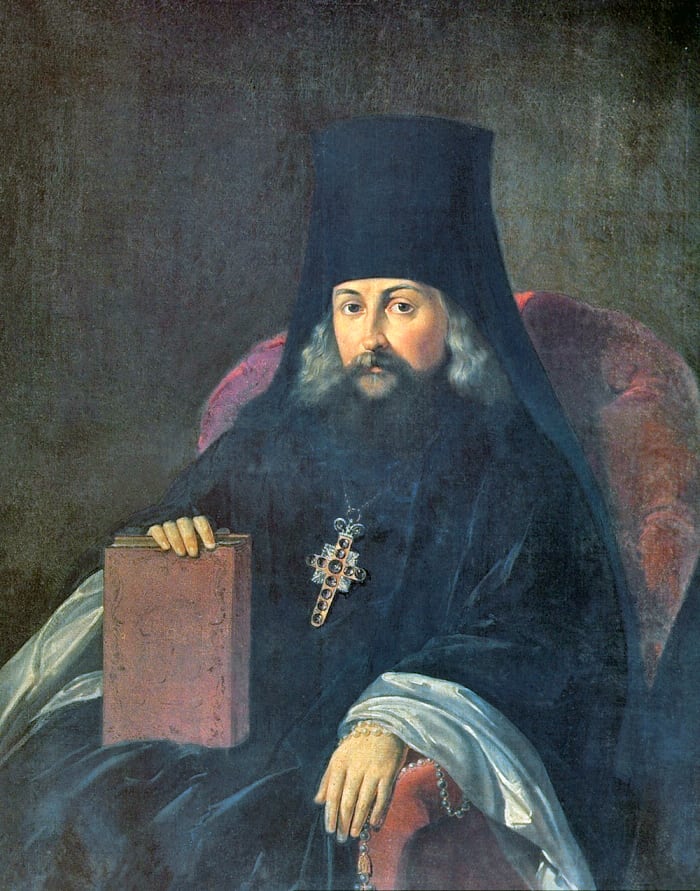
  49. Retrato de Ignati Brianchanínov

    1807 – 1867

    Ignatius Brianchaninov

    Orthodox Christianity · Christian mysticism

    Russian bishop and ascetic writer (1807–1867). A military engineer who refused the career his family and Nicholas I intended for him, he was for twenty-five years archimandrite of the St Sergius hermitage near St Petersburg, then Bishop of the Caucasus and, in retirement at Babayevo, the author of the Ascetic Experiences, An Offering to Contemporary Monasticism, the Word on Death and the writings on the Jesus Prayer and spiritual delusion (prelest) that made him the great master of sobriety of modern Orthodoxy. Canonised in 1988.

  50. Teófano el Recluso en 1891

    1815 – 1894

    Theophan the Recluse

    Orthodox Christianity · Christian mysticism

    Russian bishop, theologian and spiritual writer (1815–1894). Professor and rector of the St Petersburg Academy, member of the Russian mission in Jerusalem and Bishop of Tambov and Vladimir, he resigned in 1866 and spent twenty-two years secluded in the monastery of Vysha, from where he wrote commentaries on all of St Paul, The Path to Salvation, thousands of letters of spiritual direction and the five-volume Russian Philokalia. A master of the prayer of the heart, he was canonised in 1988.

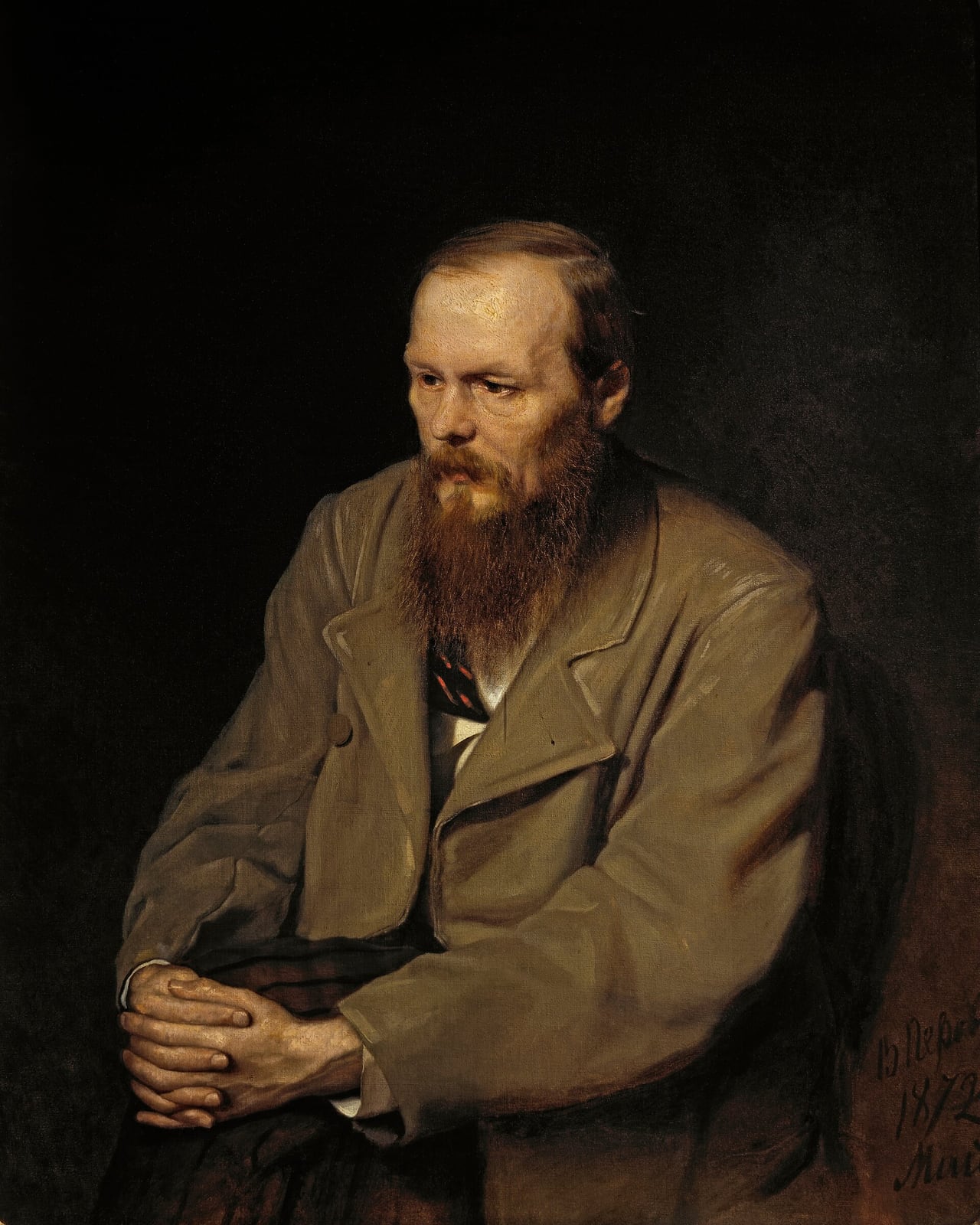
  51. Retrato de Fiódor Dostoievski, por Vasili Perov

    1821 – 1881

    Fyodor Dostoevsky

    Orthodox Christianity · Christianity

    Russian novelist (1821–1881), author of Crime and Punishment, The Idiot, Demons and The Brothers Karamazov. Sentenced to death in 1849 for his part in the Petrashevsky circle, he was reprieved before the firing squad and served four years of penal servitude in Omsk with a Gospel as his only book. Epileptic, gambler, journalist and a believer pierced by doubt, he turned freedom, suffering and the problem of evil into the stuff of fiction, and his Christ and his elder Zosima shaped twentieth-century religious thought and philosophy.

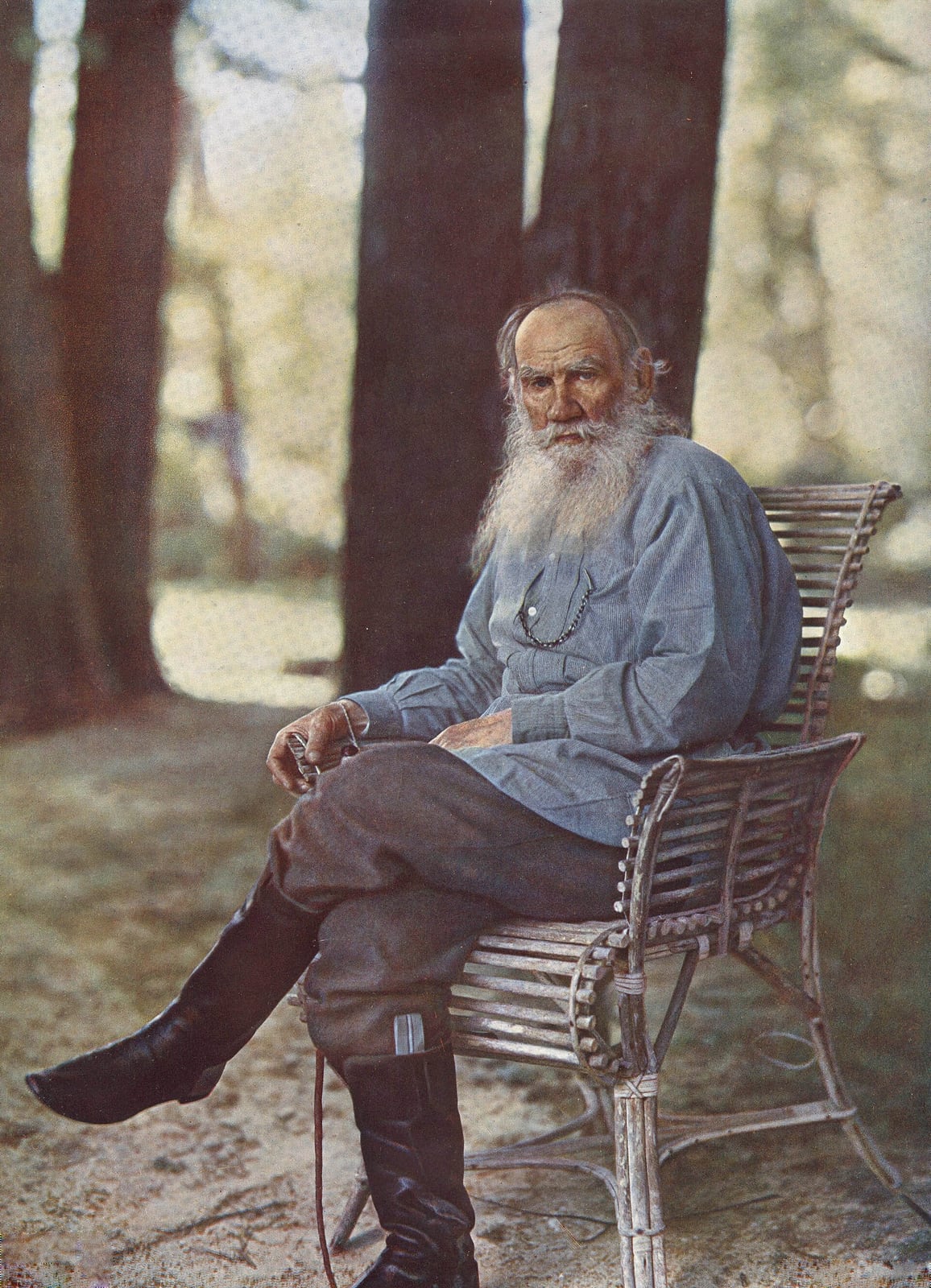
  52. Lev Tolstói en Yásnaia Poliana (1908)

    1828 – 1910

    Leo Tolstoy

    Christianity · Orthodox Christianity

    Russian novelist (1828–1910), author of War and Peace and Anna Karenina, and one of the great religious thinkers of his time. After a crisis of meaning around 1877, told in A Confession, he broke with the Orthodox Church and preached a dogma-free Christianity centred on the Sermon on the Mount and on non-resistance to evil by violence. The Kingdom of God Is Within You decisively influenced Gandhi. He died at Astapovo station after fleeing his home.

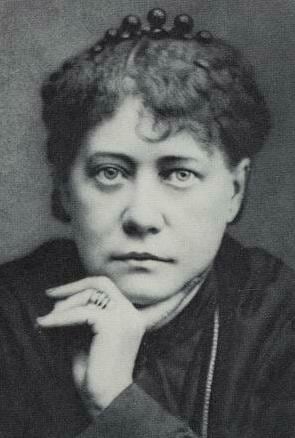
  53. Helena Petrovna Blavatsky, 1877

    1831 – 1891

    Helena Blavatsky

    Theosophy · Hermeticism

    Helena Petrovna Blavatsky (1831–1891), Russian writer and co-founder of the Theosophical Society in New York (1875), is the central figure of modern occultism. In Isis Unveiled and The Secret Doctrine she argued for an ancient wisdom underlying all religions, transmitted by Eastern masters, and introduced the West to notions such as karma and reincarnation. Equally admired and denounced—the 1885 Hodgson Report branded her an impostor—her influence reaches from Anthroposophy to the artistic avant-garde.

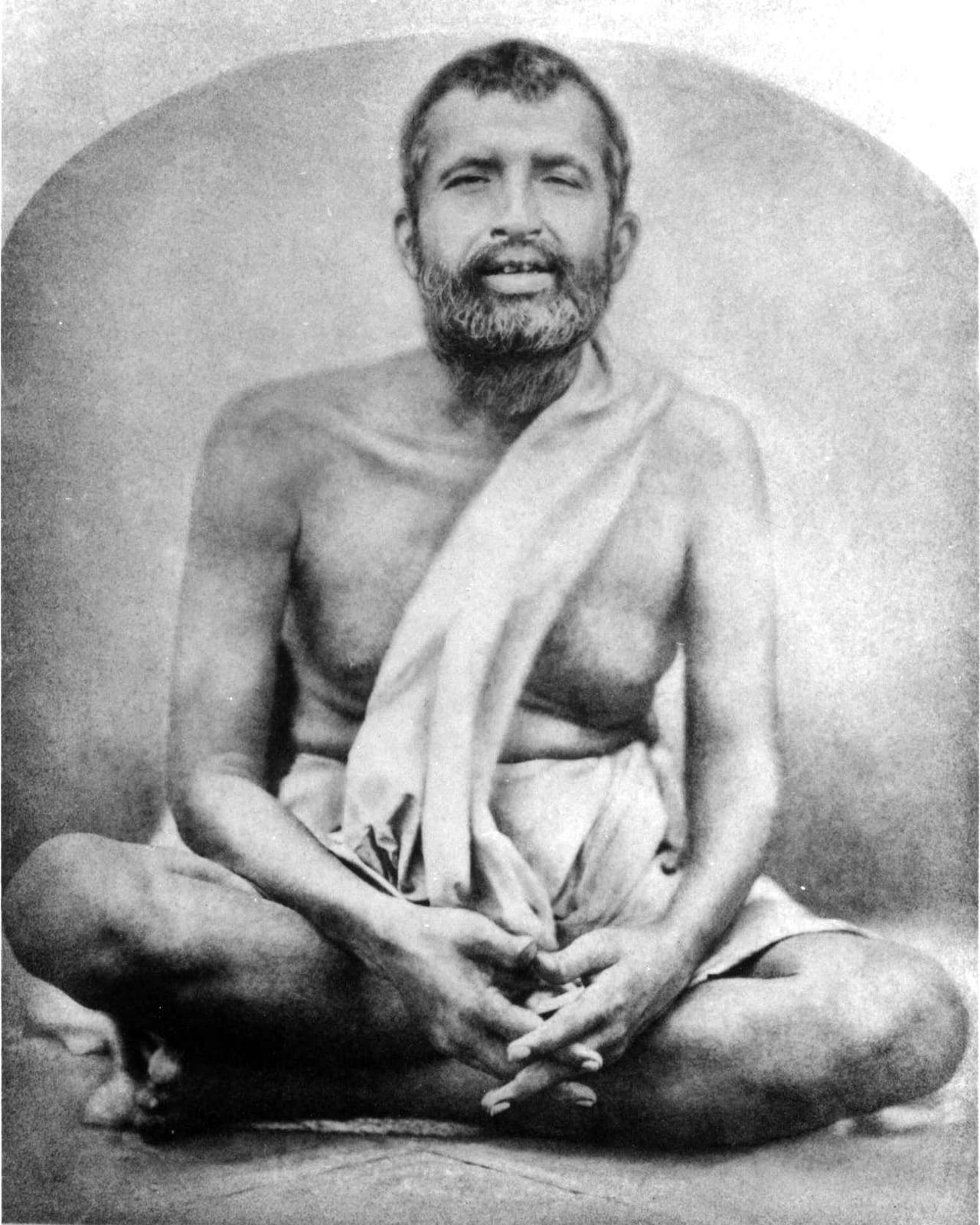
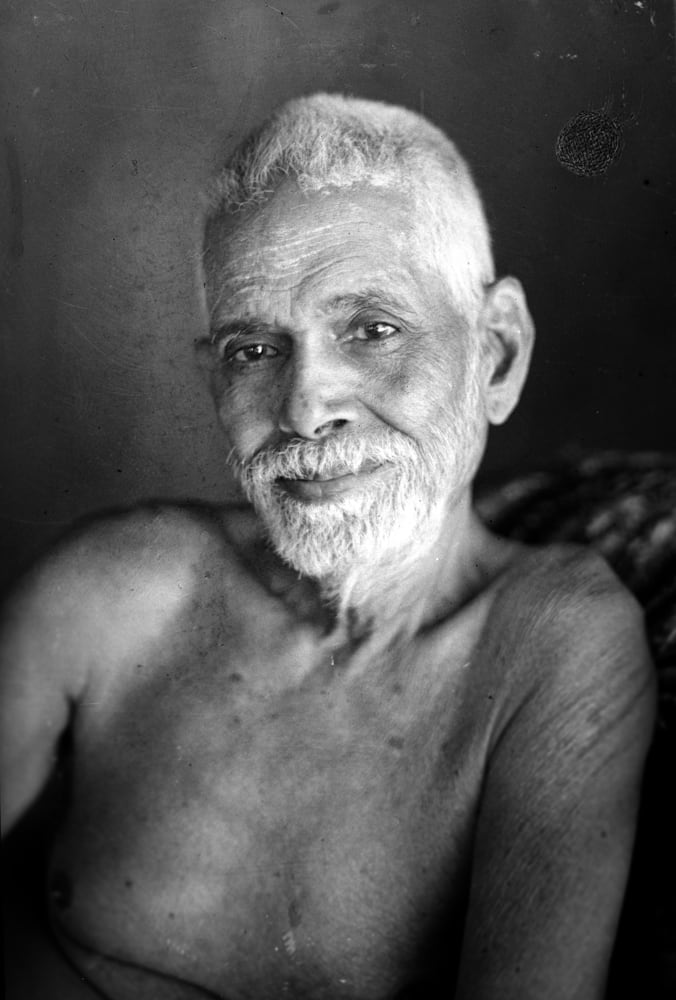
  54. Ramakrishna sentado, la fotografía más difundida

    1836 – 1886

    Ramakrishna

    Hinduism · Bhakti

    Bengali mystic and priest of the Kali temple at Dakshineswar, near Calcutta. Nearly unlettered, he passed through the paths of Tantra, Vaishnava devotion and Advaita Vedanta, and briefly practised Islam and Christianity, from which he drew his famous teaching: as many faiths, so many paths. He wrote nothing: his words reach us through the diaries of Mahendranath Gupta (the Kathamrita) and through his disciples, among them Vivekananda, who founded the Ramakrishna Order and Mission in his name.

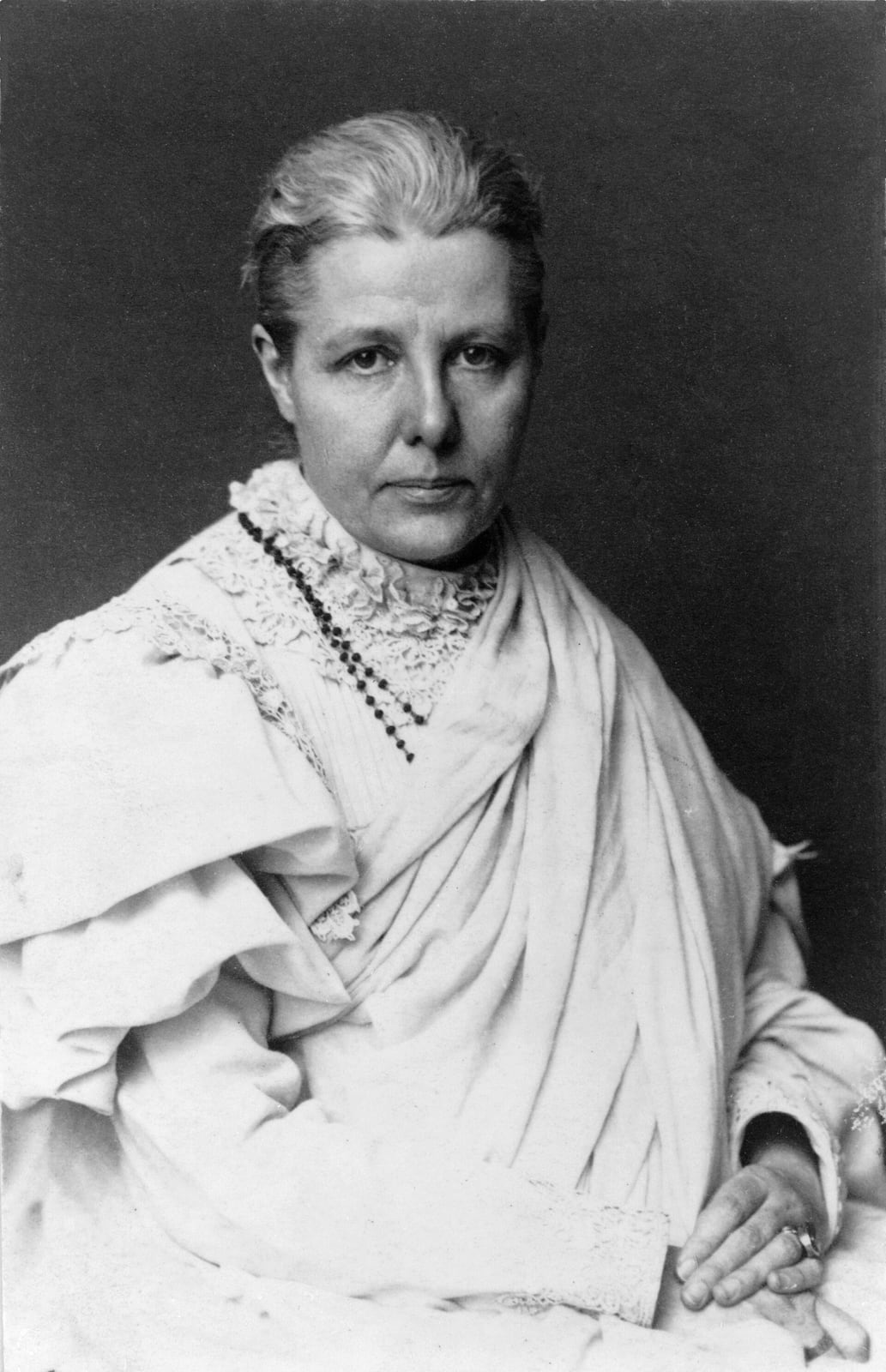
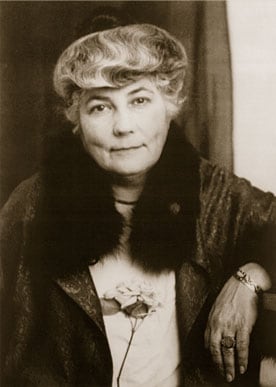
  55. Annie Besant hacia 1897

    1847 – 1933

    Annie Besant

    Theosophy · Hinduism

    Annie Besant (1847–1933), British orator, reformer and Theosophist, lived several lives: a clergyman's wife, a freethinker alongside Charles Bradlaugh, a Fabian socialist who organised the matchgirls' strike of 1888, Blavatsky's disciple from 1889 and president of the Theosophical Society (1907–1933). In India she founded the Central Hindu College, led the Home Rule League and presided over the National Congress in 1917. She raised Jiddu Krishnamurti as the future 'World Teacher' and accepted his renunciation in 1929.

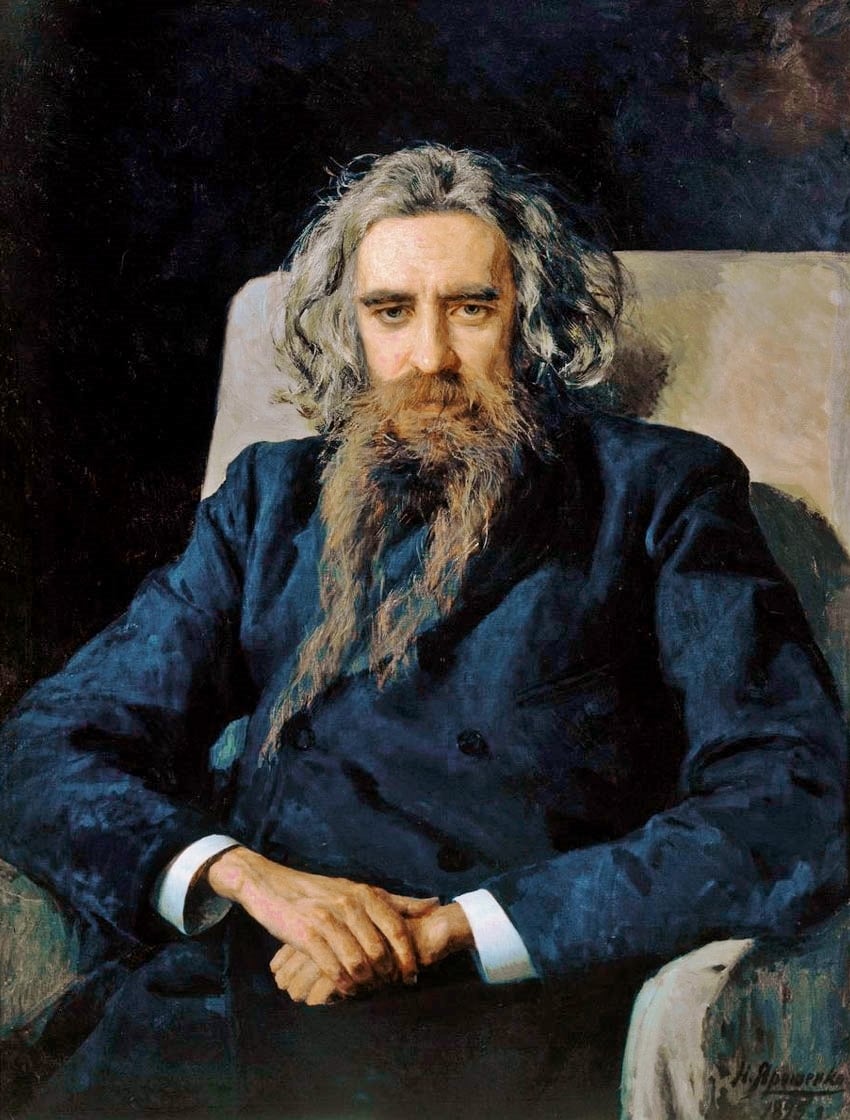
  56. Retrato de Vladímir Soloviov, por Nikolái Yaroshenko

    1853 – 1900

    Vladimir Solovyov

    Orthodox Christianity · Christianity

    Russian philosopher, lay theologian and poet (1853–1900), Russia's first systematic thinker. He formulated 'all-unity', 'Godmanhood' and a mysticism of divine Wisdom, Sophia, whom he said he had seen three times. A friend of Dostoevsky, in 1881 he asked for clemency for the Tsar's assassins and lost his university post; he dreamed of reuniting the Eastern and Western Churches and closed his life with the 'Tale of the Antichrist'. Berdyaev, Bulgakov, Florensky and Symbolist poetry all start from him.

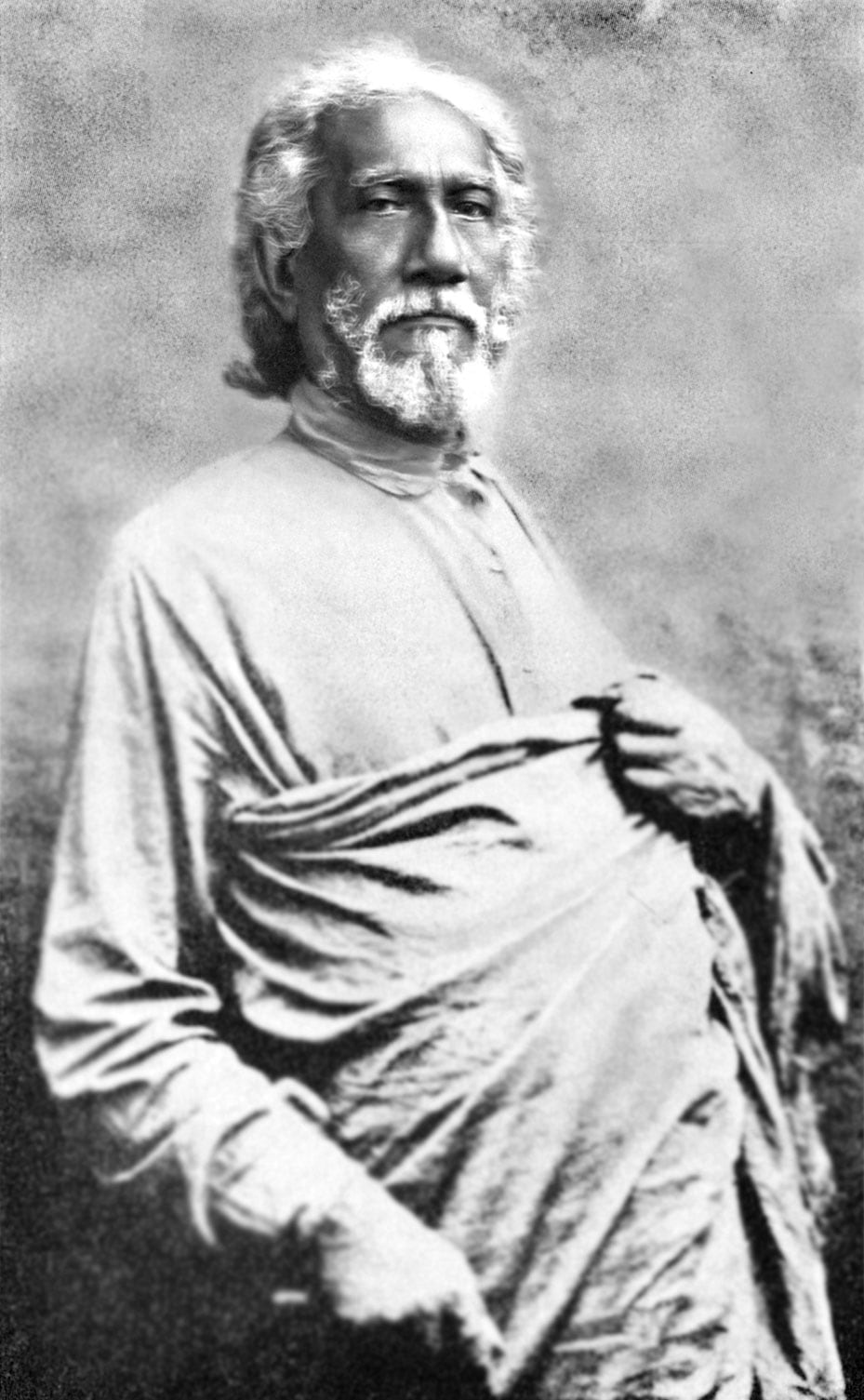
  57. Sri Yukteswar, retrato de la primera edición de la Autobiografía

    1855 – 1936

    Sri Yukteswar

    Yoga · Hinduism

    Sri Yukteswar Giri (1855-1936), born Priya Nath Karar in Serampore, was a disciple of Lahiri Mahasaya, a teacher of kriya yoga and the guru of Paramahansa Yogananda. He wrote Kaivalya Darsanam (The Holy Science, 1894), which seeks the unity of Indian Samkhya and the New Testament and proposes a 24,000-year chronology of the yugas. Astrologer, educator and founder of the Serampore and Puri hermitages, he reaches us above all through Autobiography of a Yogi.

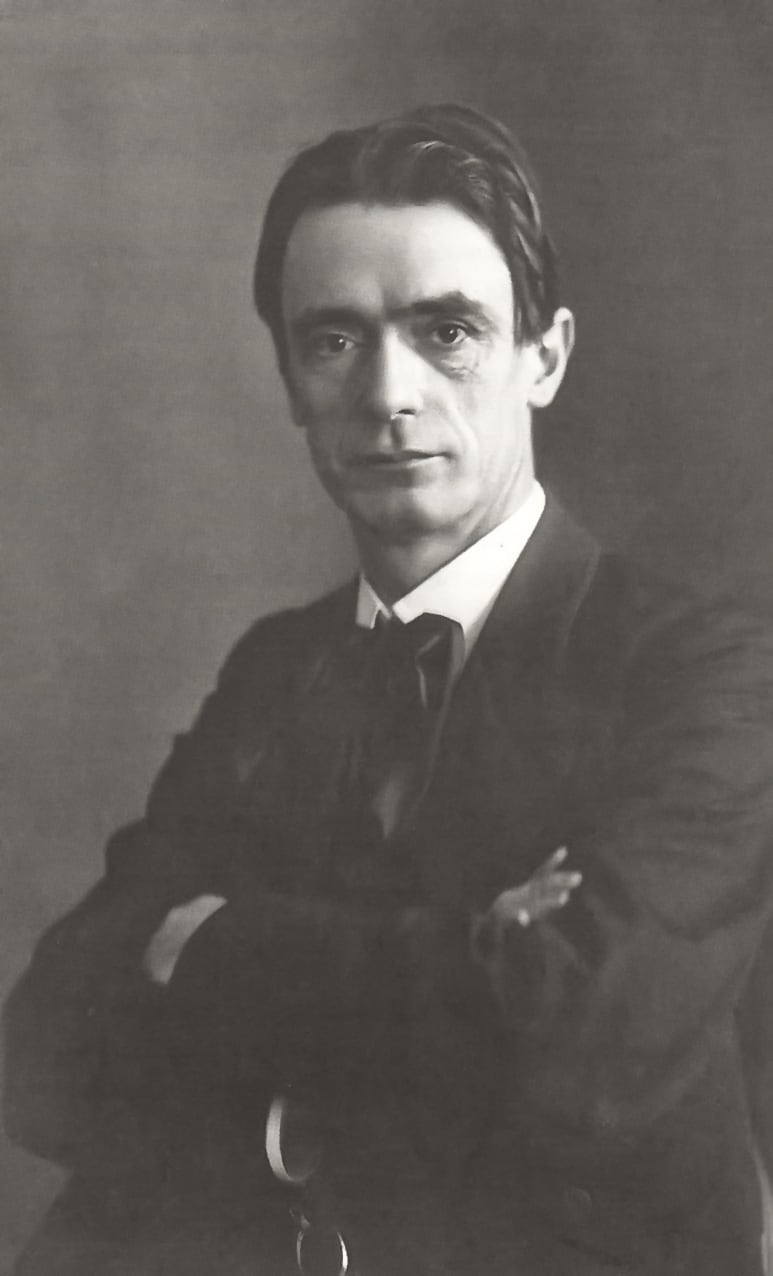
  58. Rudolf Steiner hacia 1905

    1861 – 1925

    Rudolf Steiner

    Anthroposophy · Theosophy

    Austrian philosopher, esotericist and reformer (1861–1925). Editor of Goethe's scientific writings and author of The Philosophy of Freedom (1894), he led the German Section of the Theosophical Society and in 1913 founded Anthroposophy, a Christian and Goethean 'spiritual science'. His work gave rise to Waldorf education, biodynamic agriculture, anthroposophic medicine and eurythmy. He left more than thirty books and some six thousand lectures, disputed for their pseudoscientific character.

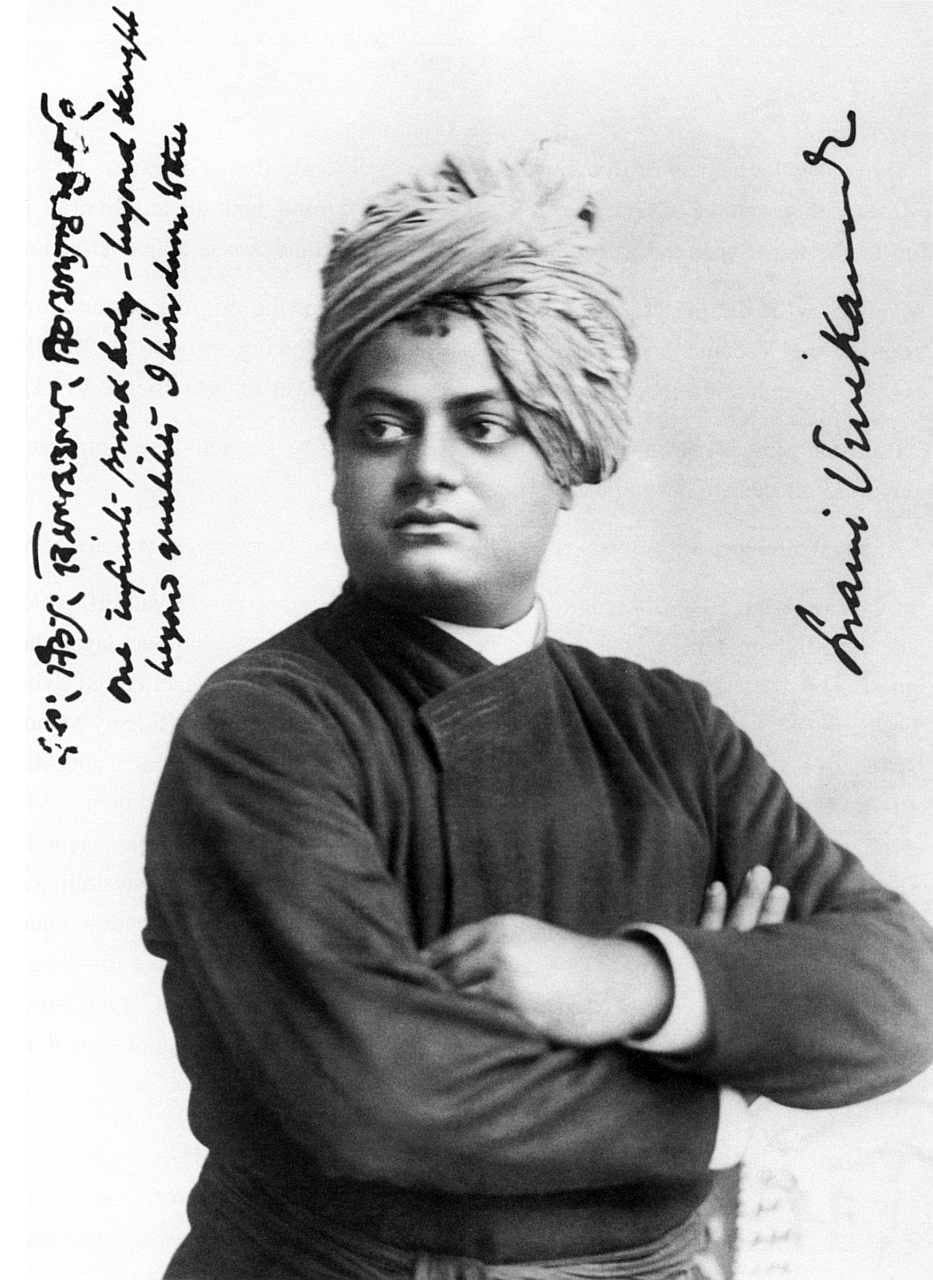
  59. Swami Vivekananda en Chicago, septiembre de 1893 (con dedicatoria autógrafa)

    1863 – 1902

    Swami Vivekananda

    Advaita Vedanta · Hinduism

    Bengali monk, chief disciple of Ramakrishna and founder of the Ramakrishna Order and Mission. His address to the Chicago Parliament of Religions (1893) made him the first great interpreter of Hinduism to the West. In barely nine years of public teaching he formulated a practical Vedanta—the four yogas, the potential divinity of every soul, service to human beings as worship—that shaped modern yoga, Indian nationalism and interreligious dialogue. He died at thirty-nine.

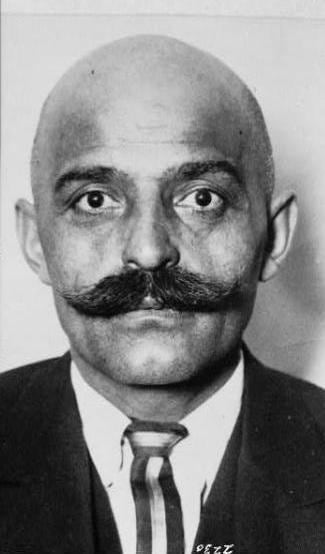
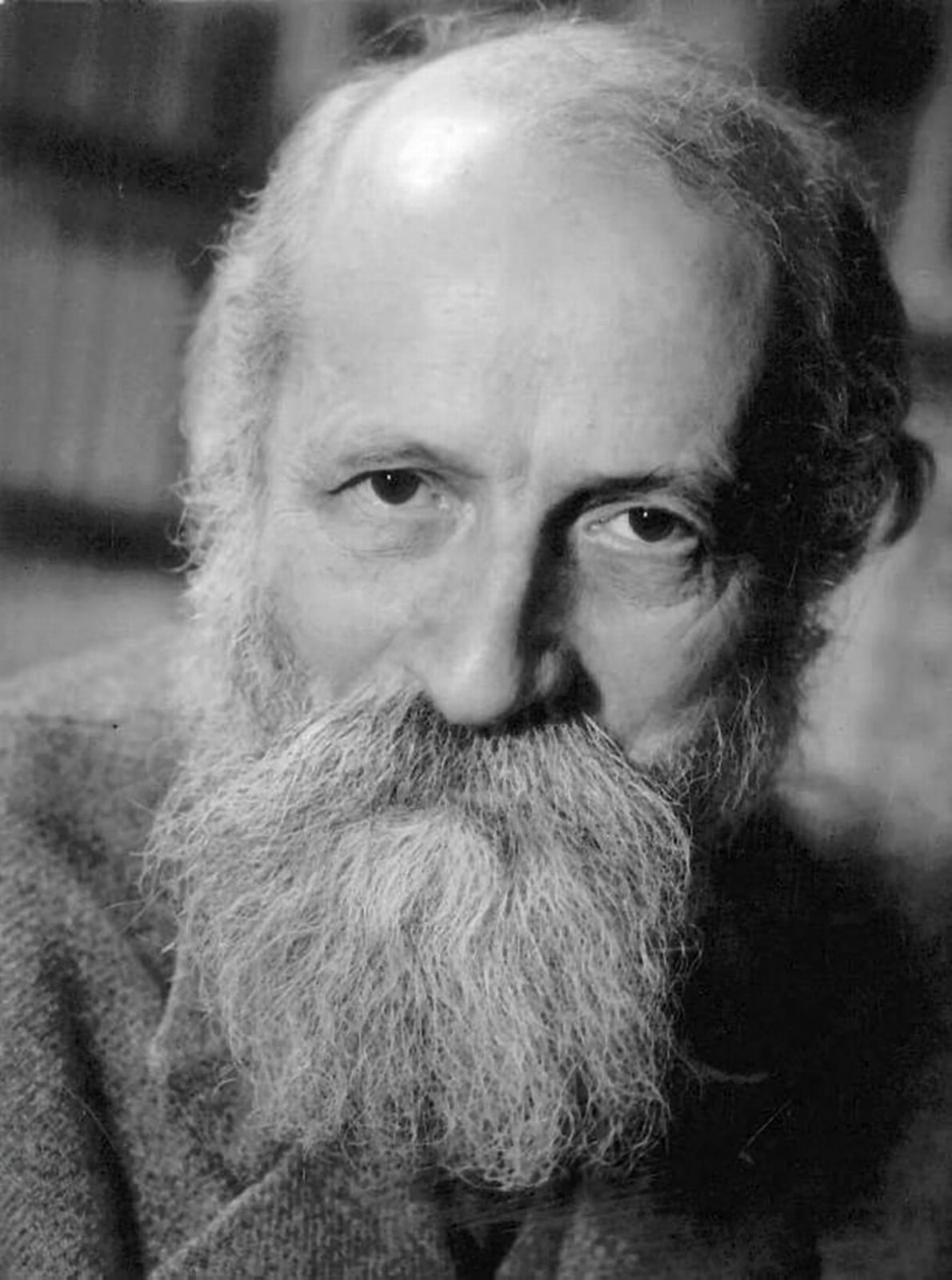
  60. Retrato de G. I. Gurdjieff, 1925

    c. 1872 – 1949

    G. I. Gurdjieff

    Fourth Way

    Spiritual teacher, writer and composer born in Russian Armenia c. 1866–1877 and died in Paris in 1949. He taught that human beings live asleep, like machines, and that waking up requires simultaneous work of body, feeling and thought in the midst of ordinary life. He founded the Institute for the Harmonious Development of Man, created the Movements, composed some two hundred pieces with Thomas de Hartmann and left the trilogy All and Everything, headed by Beelzebub's Tales to His Grandson.

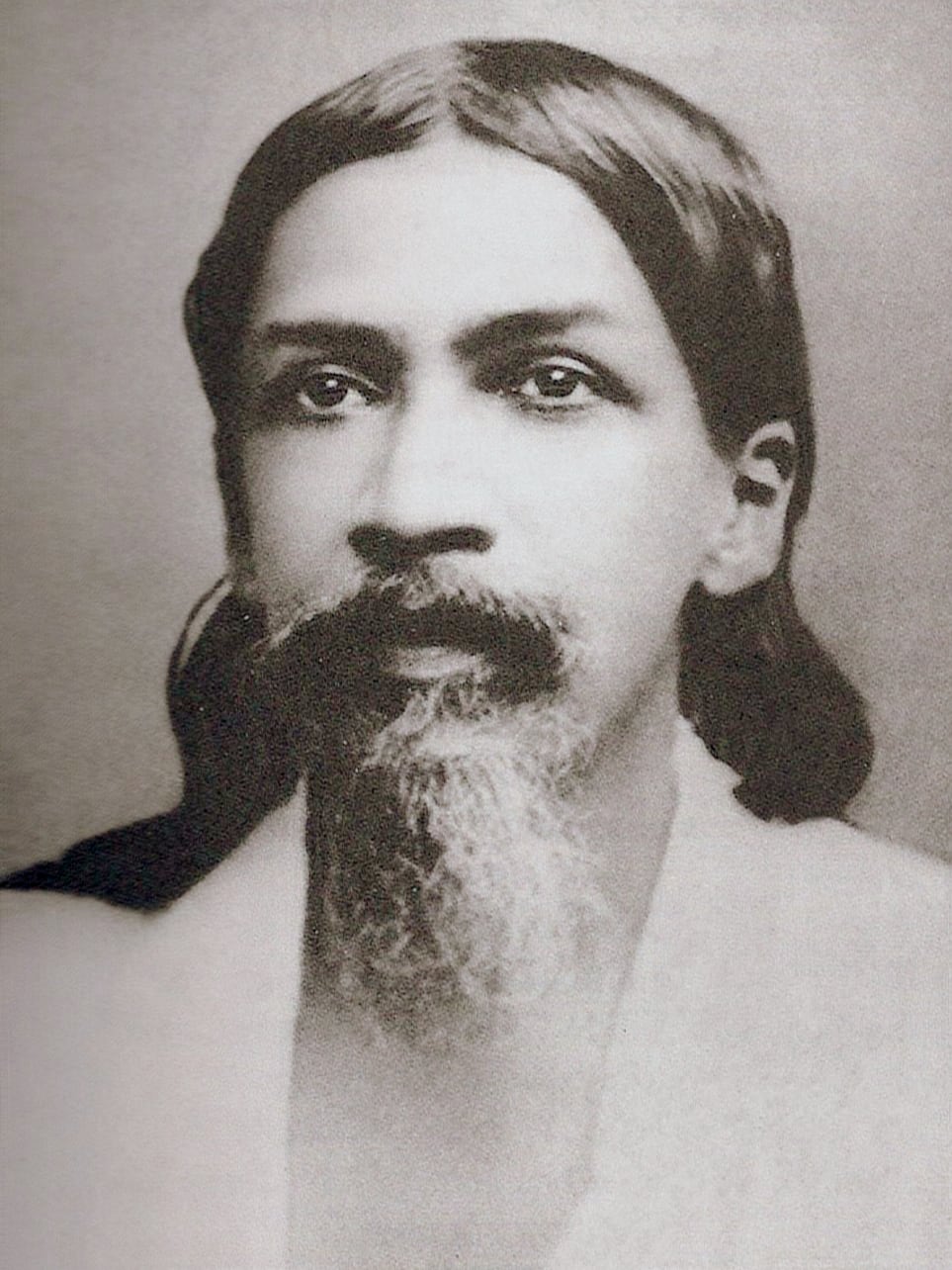
  61. Sri Aurobindo hacia 1900

    1872 – 1950

    Sri Aurobindo

    Yoga · Hinduism

    Bengali philosopher, poet and yogi, educated in England, who moved from leading radical Indian nationalism to a life of retreat in Pondicherry. In the review Arya (1914–1921) and in an immense correspondence he formulated integral yoga: the evolution of consciousness from matter to mind and from mind to the supramental, and the transformation of life rather than flight from the world. His major works are The Life Divine, The Synthesis of Yoga, Essays on the Gita and the epic Savitri.

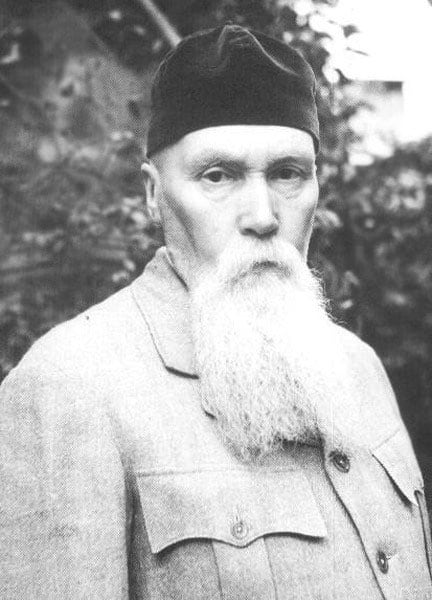
  62. Nicolás Roerich en la India, década de 1940

    1874 – 1947

    Nicholas Roerich

    Theosophy · Buddhism

    Nicholas Roerich (1874–1947), Russian painter, writer, archaeologist and stage designer, was one of his country's great Symbolists: he designed The Rite of Spring with Stravinsky, painted more than seven thousand works—many of them of the Himalayas—and led the Central Asian Expedition (1925–1928). He inspired the Roerich Pact (1935), one of the first treaties to protect cultural heritage in wartime, and founded with his wife Helena the teaching of Agni Yoga. He died in the Kullu valley, India.

  63. Nikolái Berdiáyev en 1912

    1874 – 1948

    Nikolai Berdyaev

    Orthodox Christianity · Christianity

    Russian philosopher (1874–1948), a thinker of freedom, the person and creativity. He moved from Marxism to idealism and to a prophetic, heterodox Christianity; he was tried for blasphemy under the Tsar, interrogated by Dzerzhinsky under the Soviets and expelled on the 1922 'philosophers' ship'. From Paris, as editor of the journal Put', he became the best-known voice of Russian religious thought in Europe: The Meaning of the Creative Act, The End of Our Time, The Destiny of Man, Self-Knowledge.

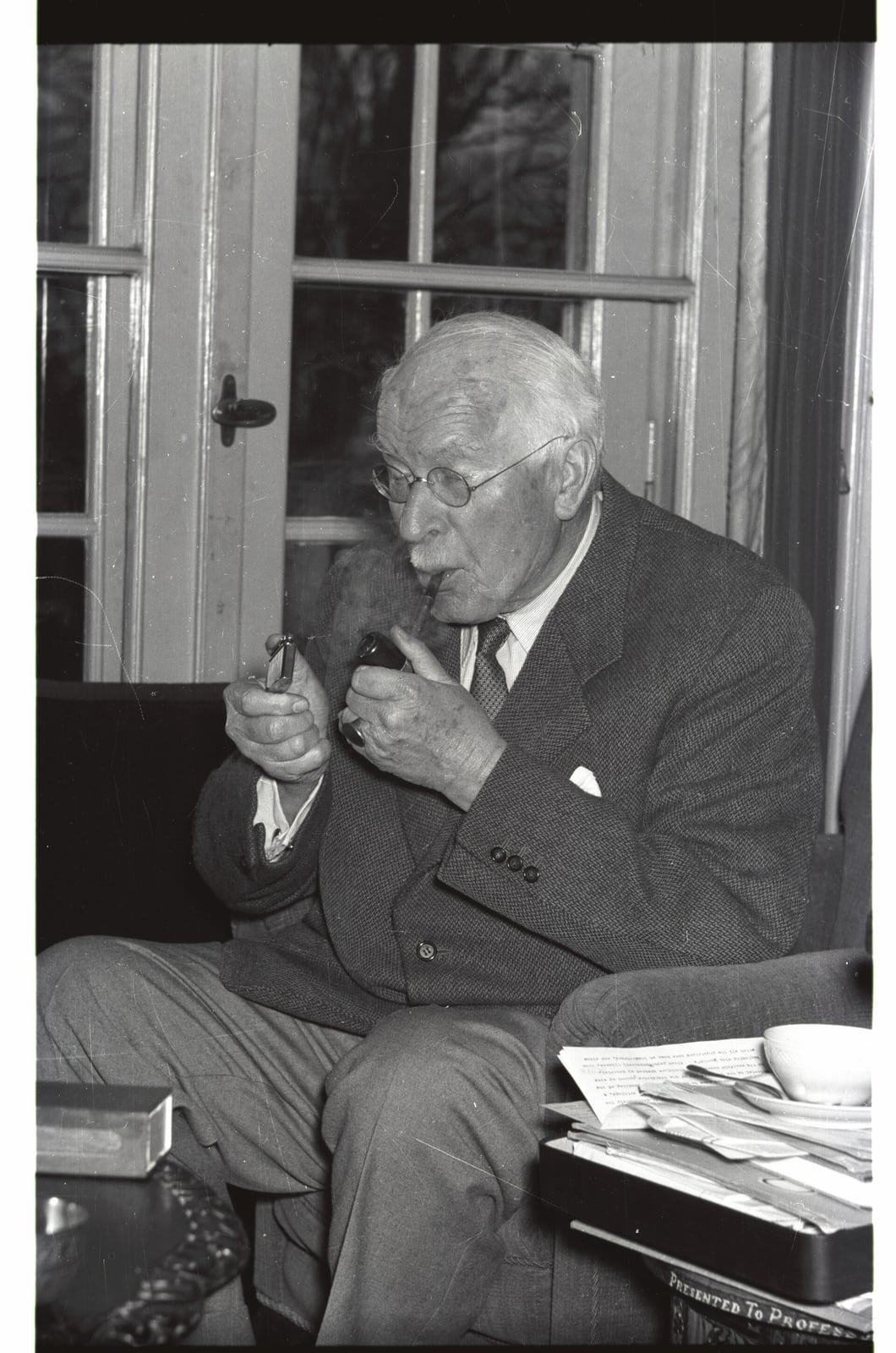
  64. C. G. Jung en Küsnacht, 1955

    1875 – 1961

    Carl Gustav Jung

    Consciousness research · Christianity

    Swiss psychiatrist (1875–1961), founder of analytical psychology. A collaborator and later dissenter from Freud, he formulated the notions of the collective unconscious, archetype, shadow, anima, psychological types, individuation and synchronicity. He explored alchemy, Gnosticism and Eastern religions as mirrors of the psyche and left in The Red Book the record of his own confrontation with the unconscious. His work has influenced psychotherapy, religious studies and twentieth-century culture.

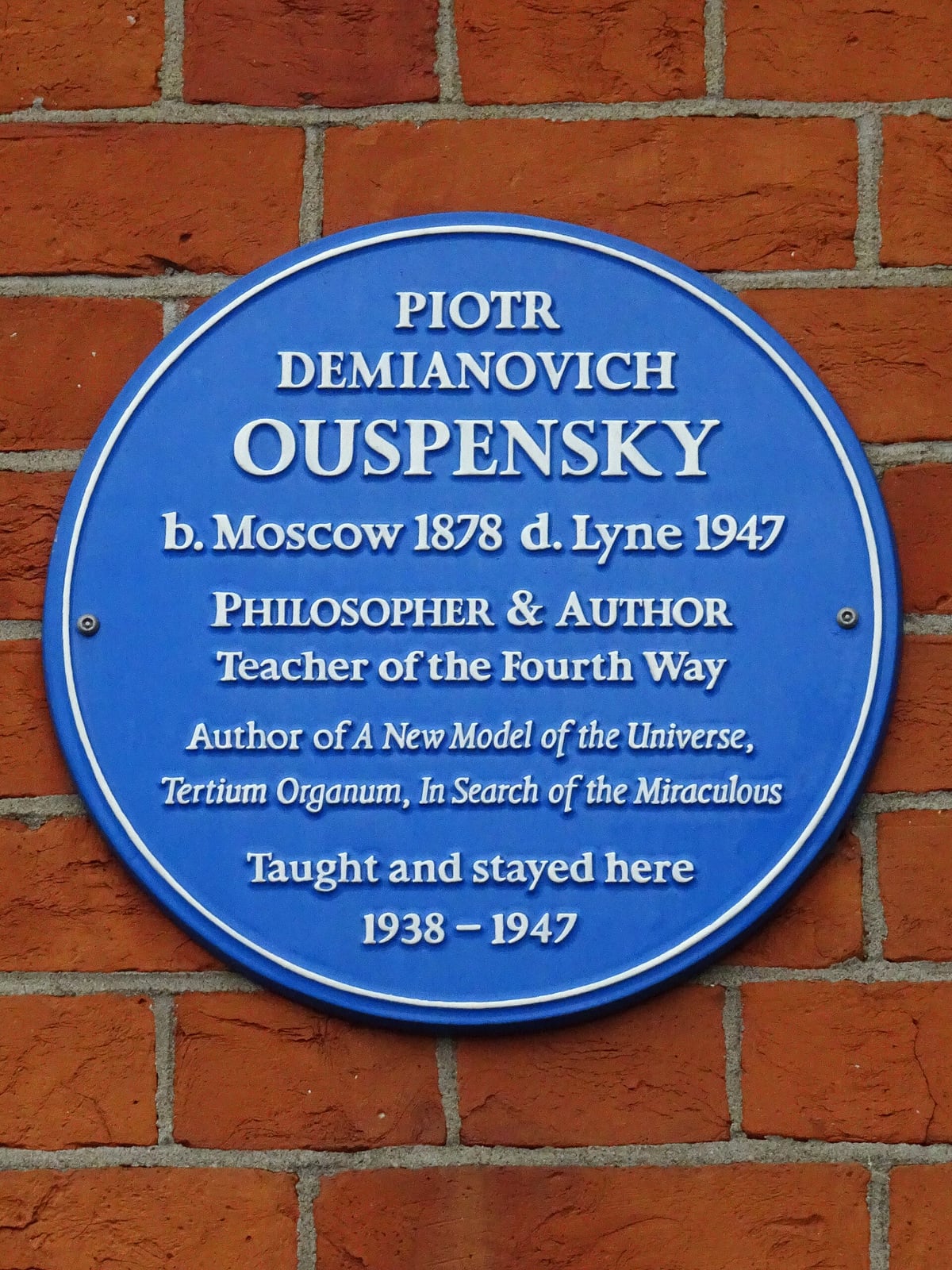
  65. Placa azul de P. D. Ouspensky en Colet House

    1878 – 1947

    P. D. Ouspensky

    Fourth Way · Theosophy

    Pyotr Demyanovich Uspensky (1878–1947), known as P. D. Ouspensky, was a Russian journalist and thinker who moved from speculation on the fourth dimension (Tertium Organum, 1912) to become the great expositor of G. I. Gurdjieff's teaching, with whom he worked from 1915 to 1924. From London and later New Jersey he taught the 'Fourth Way' for twenty-five years to groups that produced pupils such as Maurice Nicoll and Rodney Collin. In Search of the Miraculous, published posthumously, remains the clearest account of that system.

  66. Helena Roerich en Naggar, hacia 1940

    1879 – 1955

    Helena Roerich

    Theosophy · Buddhism

    Helena Roerich (1879–1955), Russian writer and translator and wife of the painter Nicholas Roerich, is the central figure of Agni Yoga, or the 'Living Ethics', a neo-Theosophical teaching in fourteen books (1924–1938) that she presented as dictated by the Mahatma Morya. She translated Blavatsky's The Secret Doctrine into Russian, wrote Foundations of Buddhism and left thousands of letters. She took part in the Central Asian expedition and in the Roerich Pact campaign, and died in Kalimpong, India.

  67. Alice A. Bailey en la década de 1940

    1880 – 1949

    Alice A. Bailey

    Theosophy

    Alice A. Bailey (1880–1949), a British esoteric writer who settled in the United States, signed twenty-four books that form one of the most influential bodies of post-Blavatsky Theosophy. She presented nineteen of them as telepathic dictations from a master she called 'the Tibetan' (later Djwhal Khul), and five as her own work. With her husband Foster Bailey she founded the Lucis Trust and the Arcane School, spread the Great Invocation and popularised the phrase 'New Age'. Her legacy is as wide as it is contested.

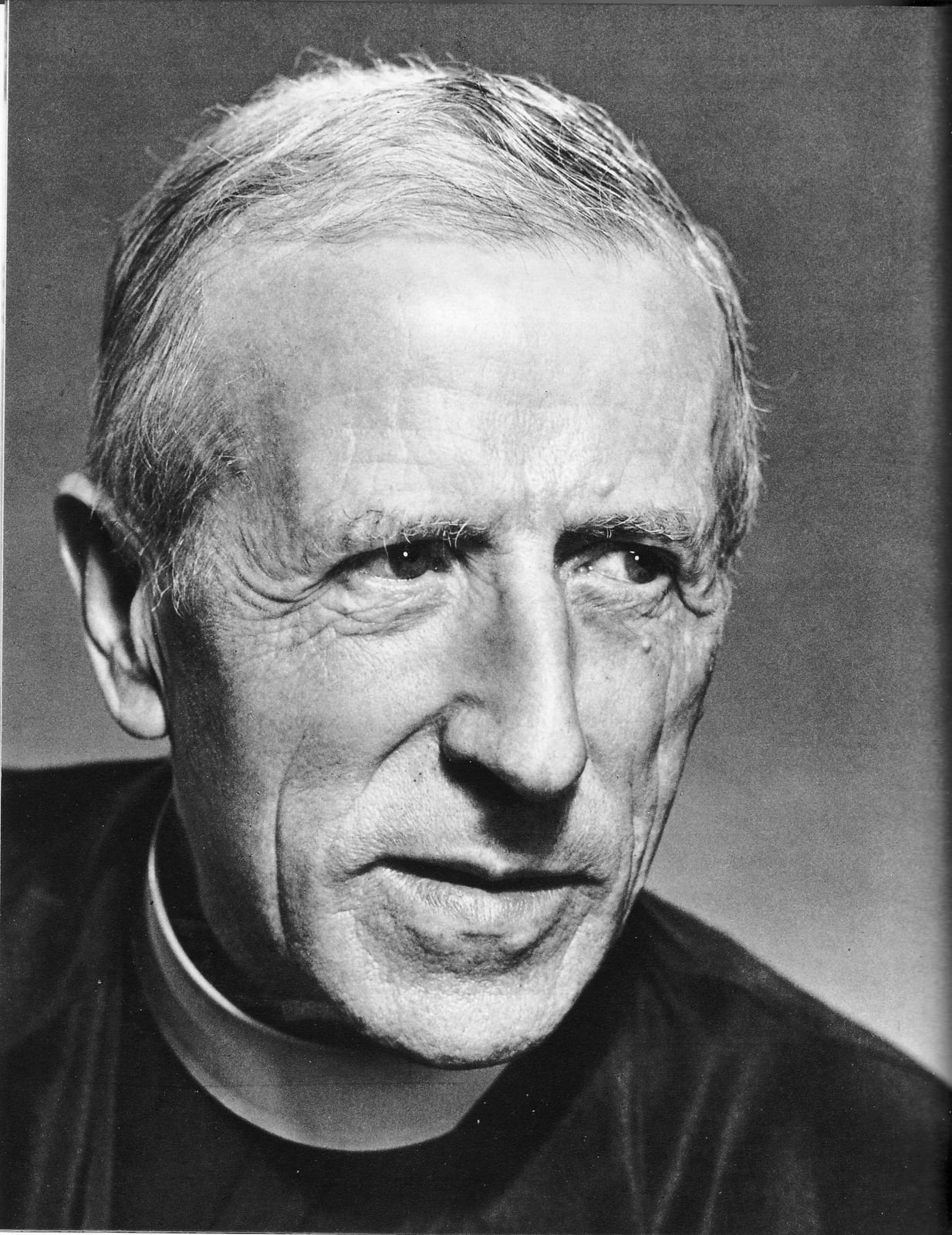
  68. Pierre Teilhard de Chardin en 1955

    1881 – 1955

    Pierre Teilhard de Chardin

    Catholicism · Christian mysticism

    French Jesuit, geologist and palaeontologist (1881–1955) who took part in the study of Peking Man and spent twenty years doing research in China. He sought to unite the theory of evolution with Christian faith: in The Human Phenomenon he describes a universe rising toward greater complexity and consciousness, forming a 'noosphere' and converging on an Omega Point he identifies with Christ. Rome forbade him to publish his philosophical works, which appeared after his death and had enormous influence, together with The Divine Milieu and The Mass on the World.

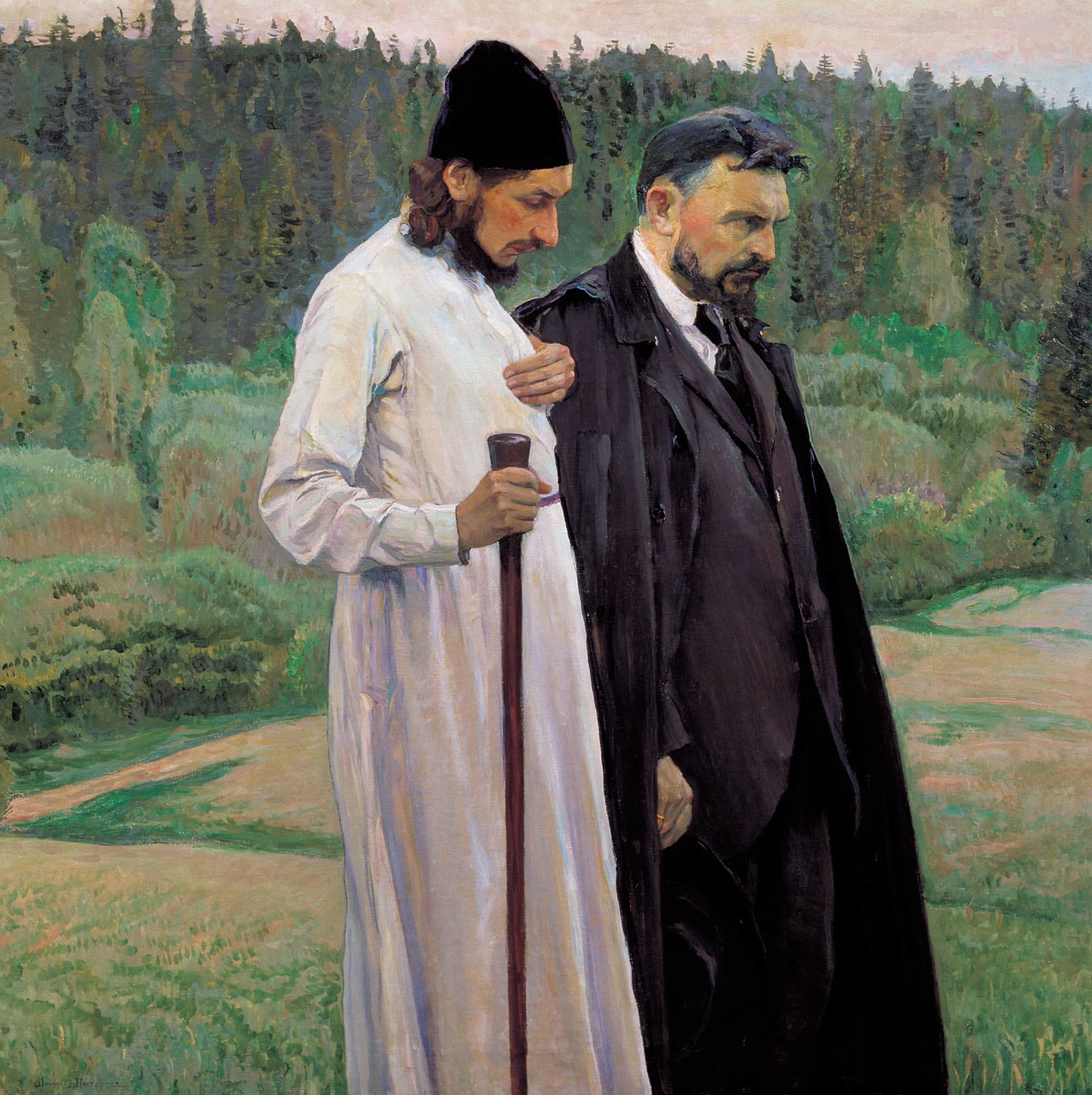
  69. «Filósofos»: Florenski y Bulgákov, por Mijaíl Nésterov

    1882 – 1937

    Pavel Florensky

    Orthodox Christianity · Christianity

    Russian Orthodox priest, theologian, philosopher, mathematician and engineer (1882–1937), often called 'the Russian Leonardo'. His The Pillar and Ground of the Truth (1914) renewed Orthodox theology with a sophiology and a theory of antinomy; Iconostasis and Reverse Perspective founded a philosophy of the icon. He worked in a cassock on Soviet electrification, was sent to the Gulag in 1933, wrote to his children from Solovki and was shot by the NKVD on 8 December 1937.

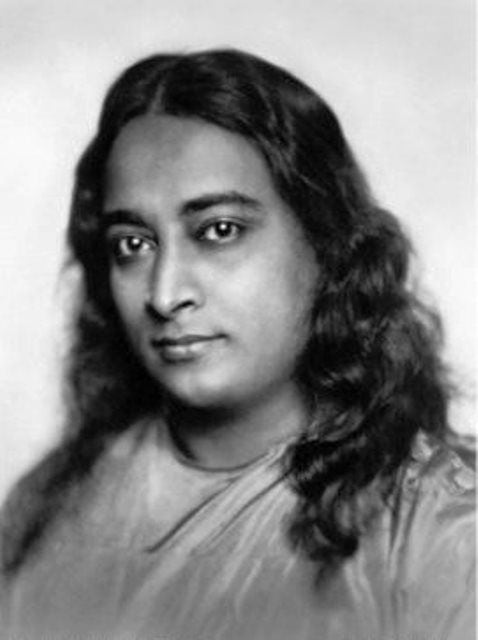
  70. Paramahansa Yogananda, retrato de la «pose estándar»

    1893 – 1952

    Paramahansa Yogananda

    Yoga · Hinduism

    Bengali monk of the Kriya Yoga lineage (Mahavatar Babaji, Lahiri Mahasaya, Sri Yukteswar) who lived in the United States from 1920 until his death. He founded Self-Realization Fellowship and Yogoda Satsanga Society of India, initiated tens of thousands into meditation and wrote Autobiography of a Yogi (1946), one of the most widely read spiritual books of the twentieth century. He taught the unity of Krishna's yoga and original Christianity. His publishing legacy and the accounts of his death remain contested.

  71. Meher Baba en 1941

    1894 – 1969

    Meher Baba

    Sufism · Hinduism

    Meher Baba (1894-1969), born Merwan Sheriar Irani in Poona into a Zoroastrian family, was an Indian spiritual teacher who proclaimed himself the Avatar of his age. From 10 July 1925 he kept silence for forty-four years, communicating with an alphabet board and later by gestures. His Discourses and God Speaks, dictated and edited by disciples, set out a cosmology of the soul's journey towards God-consciousness. He founded Meherabad, cared for the masts and travelled to the West from 1931.

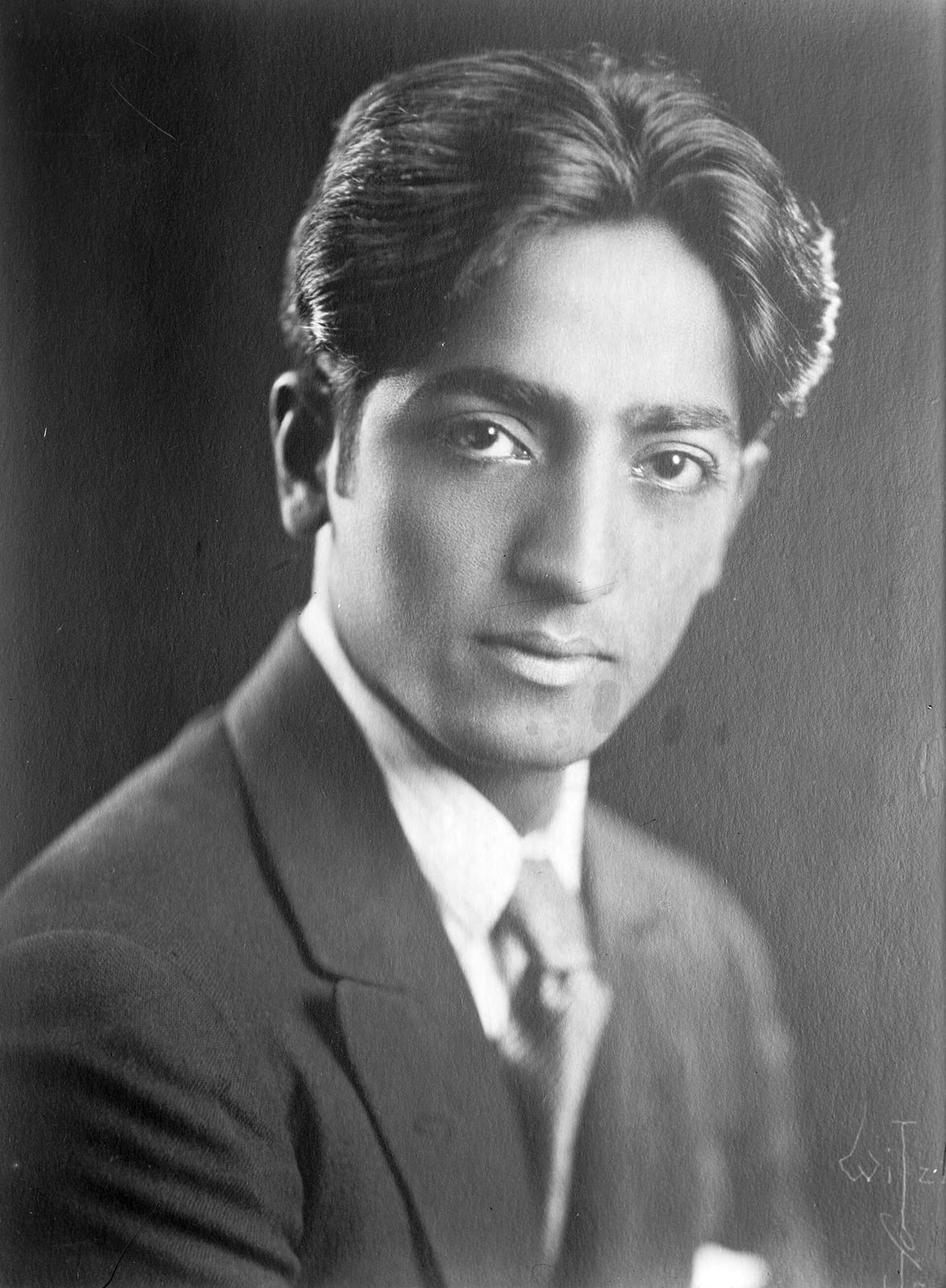
  72. Retrato de Jiddu Krishnamurti (Bain News Service, años veinte)

    1895 – 1986

    Jiddu Krishnamurti

    Secular contemplative · Theosophy

    Indian thinker and speaker (1895–1986). Raised by the Theosophical Society as the future 'World Teacher', in 1929 he dissolved the Order created for him and denied all spiritual authority, his own included. For nearly sixty years he spoke worldwide on conditioning, thought, fear and freedom, without method or doctrine, and left schools, foundations and an exceptional archive of talks and dialogues, among them those held with the physicist David Bohm.

  73. Imagen devocional de Nisargadatta Maharaj

    c. 1897 – 1981

    Nisargadatta Maharaj

    Advaita Vedanta · Hinduism

    Indian teacher of non-duality, born Maruti Shivrampant Kambli, who sold bidis in Bombay for decades and taught from a small mezzanine in Khetwadi. A disciple of Siddharameshwar Maharaj of the Inchegiri Navnath lineage, he summed up the path as attending to the sense "I am" until it is transcended. His Marathi conversations, translated by Maurice Frydman as I Am That (1973), made him world-famous; the volumes of his last years radicalised the teaching towards the absolute, prior to consciousness.

  74. Shunryu Suzuki en el Zen Mountain Center (1969)

    1904 – 1971

    Shunryu Suzuki

    Zen / Chan · Mahayana

    Japanese monk and teacher of the Sōtō Zen school, son of a village abbot, who in 1959, at fifty-five, came to San Francisco to serve the Japanese community of Sokoji temple and ended up training the first generation of American Zen practitioners. He founded the San Francisco Zen Center and Tassajara, the first Zen monastery outside Asia. His informal talks, edited by Trudy Dixon as Zen Mind, Beginner's Mind (1970), became one of the most widely read books on Zen in the West.

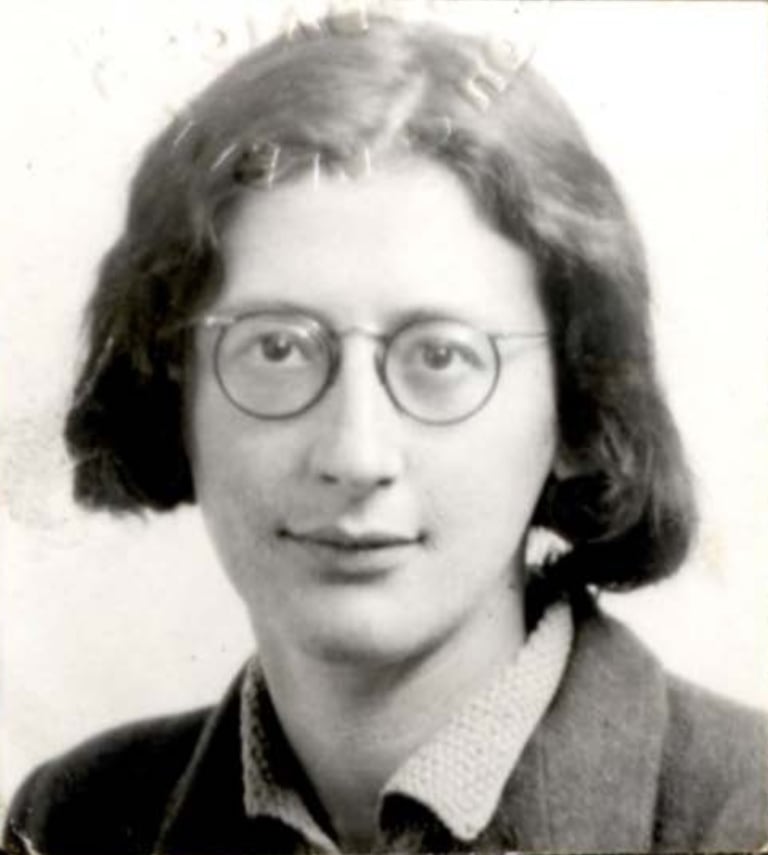
  75. Simone Weil en 1943

    1909 – 1943

    Simone Weil

    Christian mysticism · Christianity

    French philosopher (1909–1943), a pupil of Alain and a lycée teacher, who sought to think from the experience of the oppressed: she worked for a year in factories, fought briefly in the Spanish Civil War and, from 1937, lived a Christian mystical experience without ever being baptised. She died of tuberculosis and malnutrition in England, aged thirty-four, in the service of Free France. Her work, almost entirely posthumous —Gravity and Grace, The Need for Roots, Waiting for God, the Notebooks—, reflects on attention, affliction and force.

  76. La ermita de Thomas Merton en Getsemaní

    1915 – 1968

    Thomas Merton

    Christian mysticism · Catholicism

    Trappist monk of the Abbey of Gethsemani (Kentucky), priest, poet and essayist. His autobiography, The Seven Storey Mountain (1948), drew thousands of post-war readers towards monastic life, and works such as New Seeds of Contemplation turned Christian contemplation into a question of personal identity. In his last decade he championed nonviolence and civil rights, rendered Zhuangzi into English and entered into dialogue with Zen and Tibetan Buddhism. He died in Thailand in 1968, during his only journey to Asia.

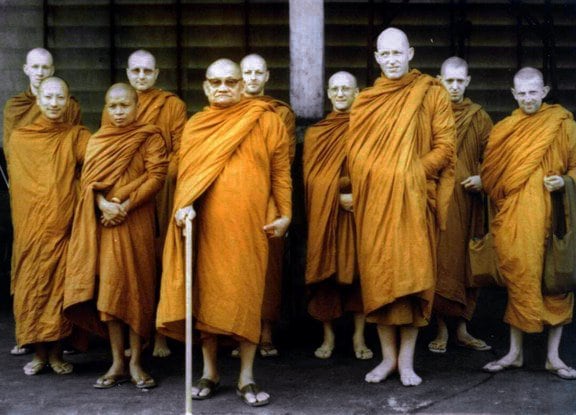
  77. Ajahn Chah con su comunidad (1980)

    1918 – 1992

    Ajahn Chah

    Theravada · Buddhism

    Thai Buddhist monk of the Theravada forest tradition, in the line of Ajahn Mun. In 1954 he founded the monastery of Wat Nong Pah Pong in north-east Thailand, and in 1975 Wat Pah Nanachat, the country's first monastery for Western monks. He wrote no books: his talks, recorded in Thai and in the Isan dialect, were transcribed and translated by his disciples. Through them—Ajahn Sumedho, Jack Kornfield, Ajahn Brahm—his teaching of mindfulness, simplicity and letting go spread across Europe, America and Oceania.

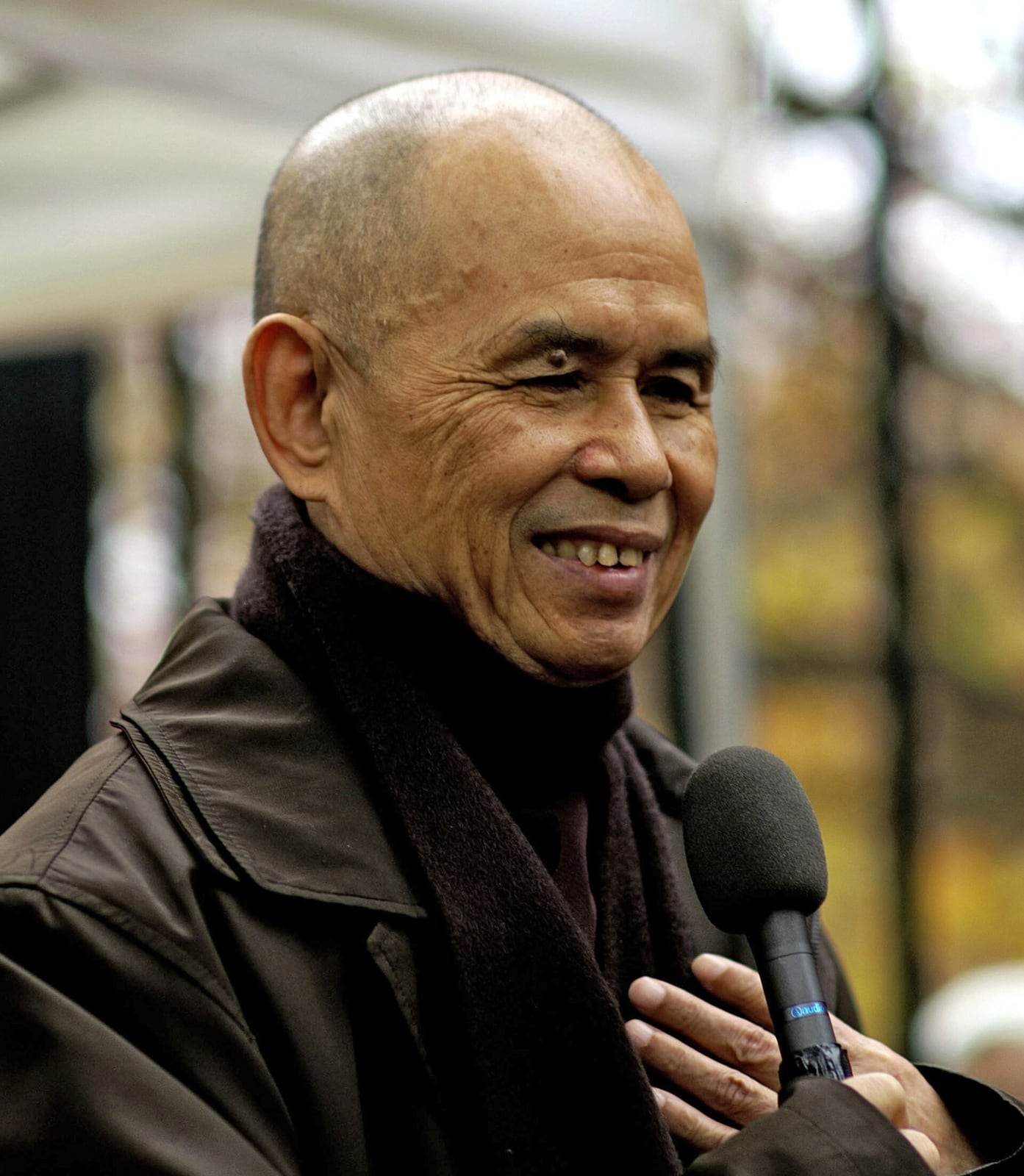
  78. Thich Nhat Hanh en París, 2006

    1926 – 2022

    Thich Nhat Hanh

    Zen / Chan · Mahayana

    Vietnamese Zen monk, poet and peace activist (1926–2022), founder of the Plum Village tradition and of the Order of Interbeing. He coined the term “engaged Buddhism” during the Vietnam War, spent thirty-nine years in exile and turned mindfulness into an everyday practice accessible to the West. Author of more than a hundred books, he was nominated for the Nobel Peace Prize by Martin Luther King Jr. in 1967. He died at his root temple in Huế.

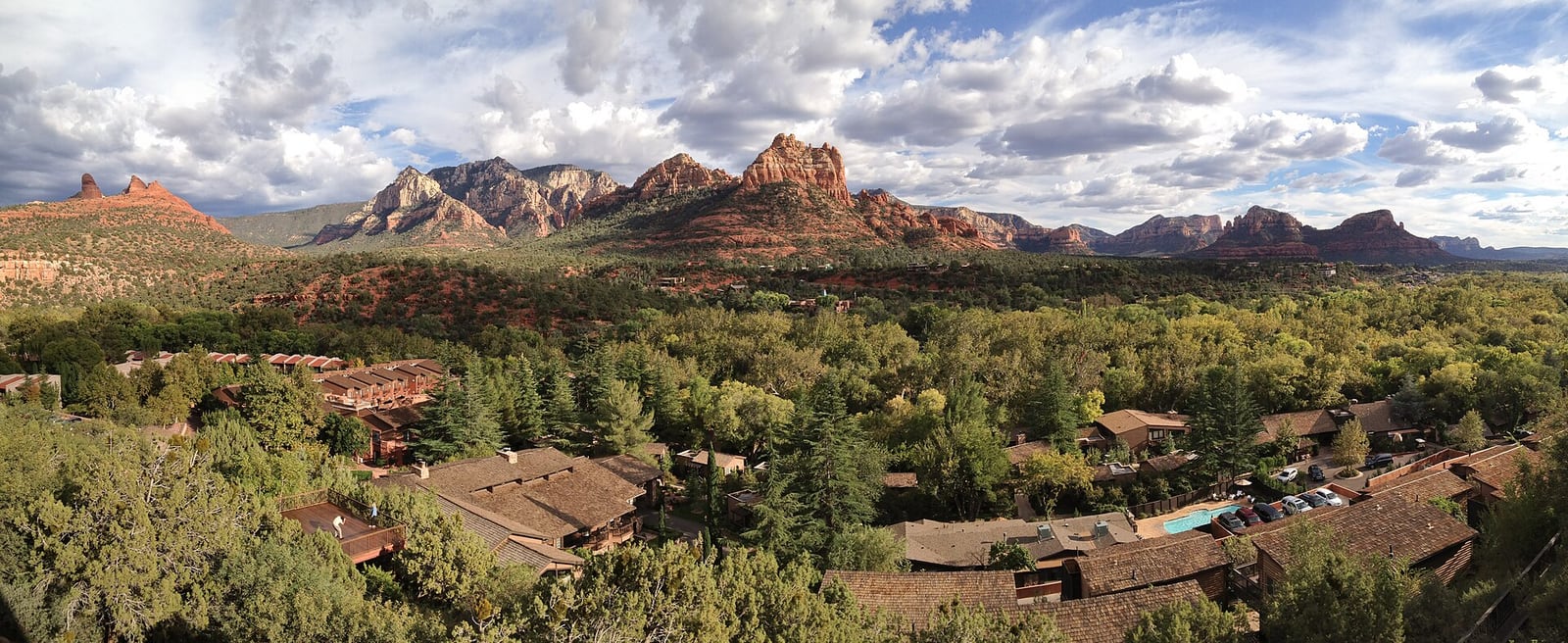
  79. Formaciones de roca roja en Sedona (Arizona)

    1927 – 2012

    David R. Hawkins

    Consciousness research · Contemporary non-duality

    American psychiatrist (1927–2012) who, after running a large practice on Long Island for a quarter of a century and co-editing a book on orthomolecular psychiatry with Linus Pauling, presented himself as a spiritual teacher. His most widely read work, Power vs. Force (1995), proposes a “map of consciousness” graded from 1 to 1000 which, he claimed, can be measured through kinesiological muscle testing. He founded the path of “devotional nonduality”. The scientific community regards the method as lacking demonstrated validity.

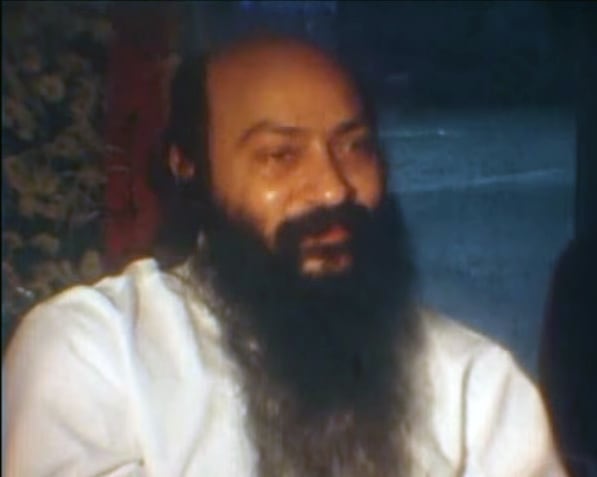
  80. Osho en 1972

    1931 – 1990

    Osho

    Contemporary non-duality · Tantra

    Indian spiritual teacher (1931–1990), known successively as Acharya Rajneesh, Bhagwan Shree Rajneesh and Osho. A philosophy lecturer turned guru, he created Dynamic Meditation and an international neo-sannyasin movement. His Oregon commune, Rajneeshpuram, ended in 1985 after the 1984 bioterror attack carried out by members led by his secretary and his departure from the United States over immigration fraud. His more than six hundred titles are transcripts of talks.

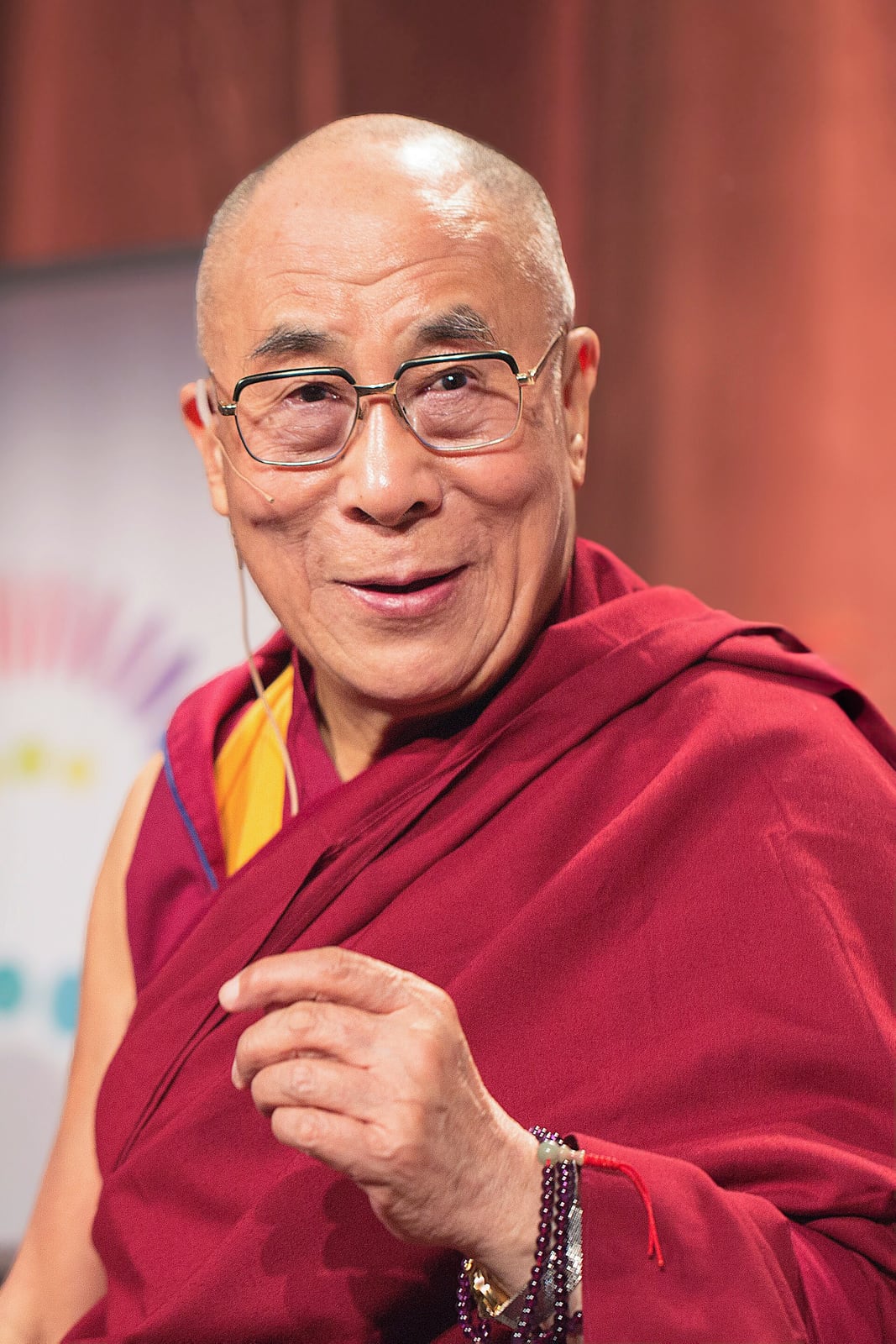
  81. El Dalai Lama en 2012

    1935 –

    The 14th Dalai Lama (Tenzin Gyatso)

    Tibetan Buddhism (Vajrayana) · Buddhism

    Tenzin Gyatso, the Fourteenth Dalai Lama, was born in 1935 in a village in Amdo and enthroned in Lhasa in 1940. He took power at fifteen as the Chinese army entered Tibet, and in 1959 went into exile in India, where he has lived ever since in Dharamsala. Nobel Peace laureate in 1989, he renounced his political authority in 2011. A teacher of the Gelug school, he has promoted a secular ethics of compassion and sustained a lasting dialogue with science.

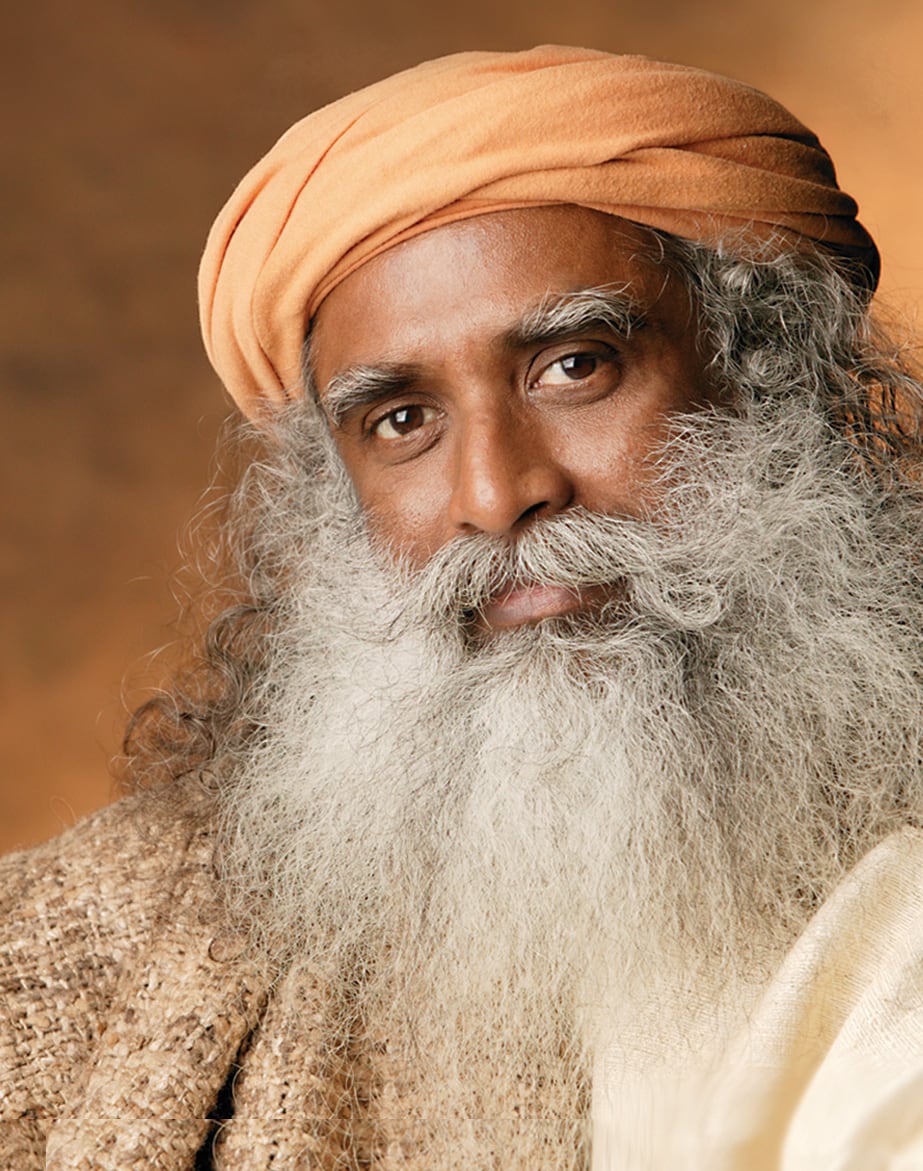
  82. Sadhguru Jaggi Vasudev

    1957 –

    Sadhguru

    Yoga · Hinduism

    Jagadish 'Jaggi' Vasudev (Mysore, 1957), known as Sadhguru, is an Indian yoga teacher and founder of the Isha Foundation (1992), based in Coimbatore. After an experience on Chamundi Hill in 1982 he left his businesses to teach; his Inner Engineering programme and books such as Inner Engineering, Karma and Death have made him one of the world's most visible gurus. He leads ecological campaigns such as Rally for Rivers and Save Soil. He has received the Padma Vibhushan (2017) and criticism for pseudoscientific claims and controversies surrounding Isha.

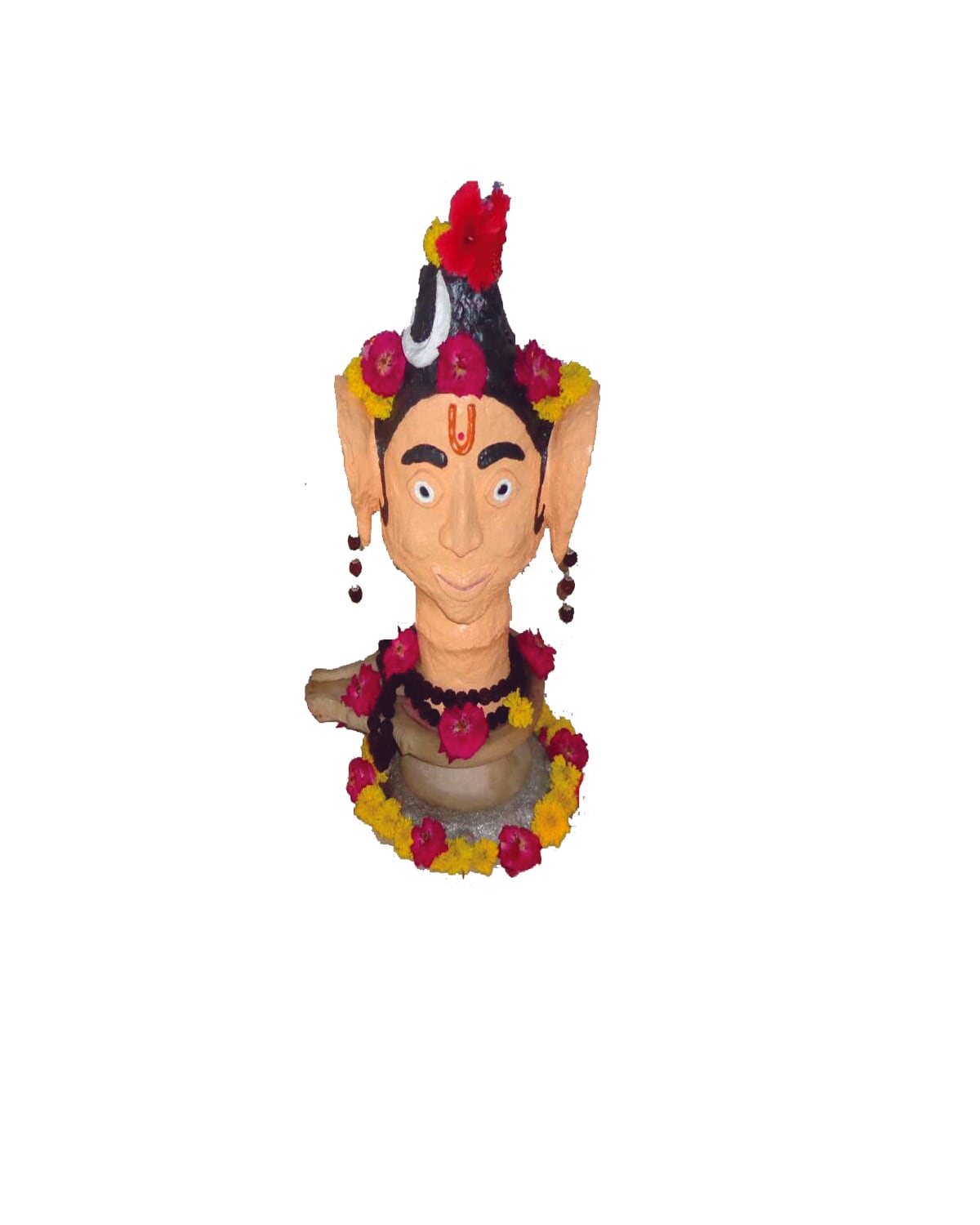
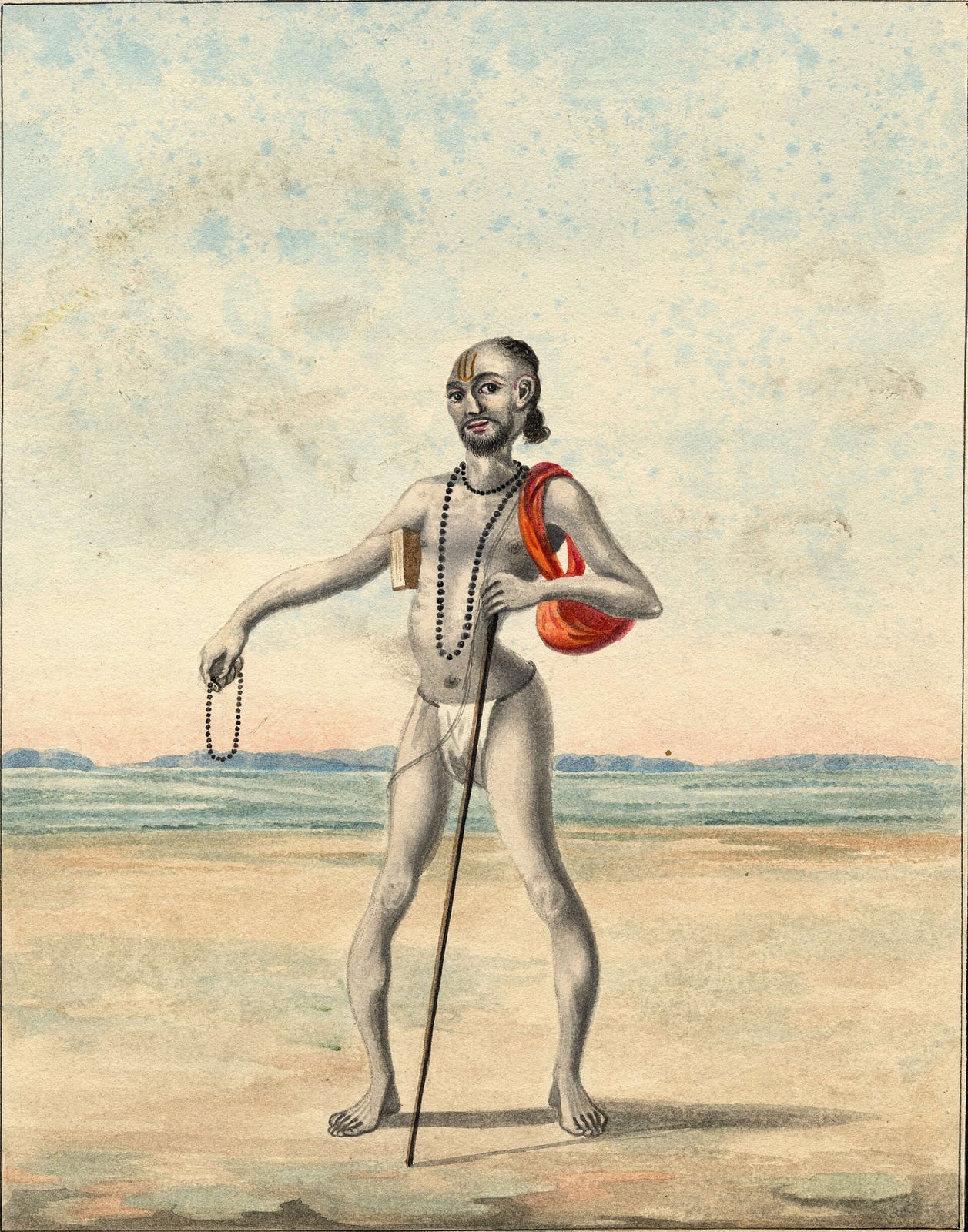
  83. Aṣṭāvakra, acuarela de principios del siglo XIX

    Ashtavakra

    Hinduism · Vedic tradition

    A sage of the Sanskrit tradition whose name means "crooked in eight places". The Mahābhārata tells how, cursed by his father before birth, he defeated the disputant Bandin as a child at King Janaka's court and rescued his father from the waters. Tradition ascribes to him the Aṣṭāvakra Gītā, a dialogue with Janaka in twenty chapters and one of the most radical texts of non-duality, whose author and date are unknown (between the eighth and fourteenth centuries, according to Brockington).

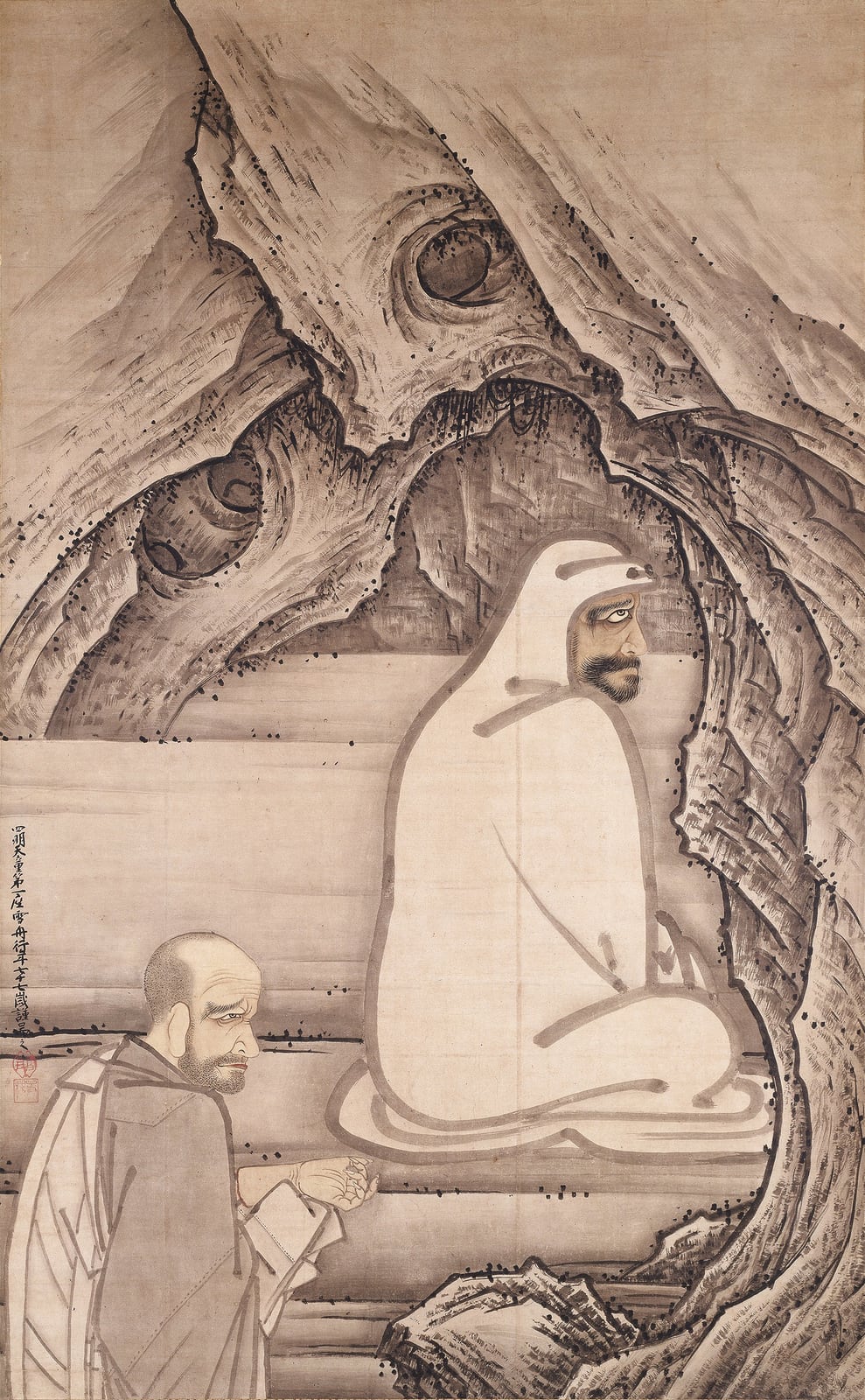
  84. Huike ofrece su brazo a Bodhidharma, de Sesshū Tōyō (1496)

    Bodhidharma

    Zen / Chan · Mahayana

    An Indian or Central Asian monk of the late fifth and early sixth centuries whom the Chan, Zen and Seon tradition venerates as its founder and first Chinese patriarch. Two early sources confirm that a meditation master of that name existed in northern China and taught 'wall contemplation' to Huike and Daoyu; almost everything else—Emperor Wu, the nine years facing the wall at Shaolin, Huike's arm, kung fu—is legend formed between the eighth and seventeenth centuries.

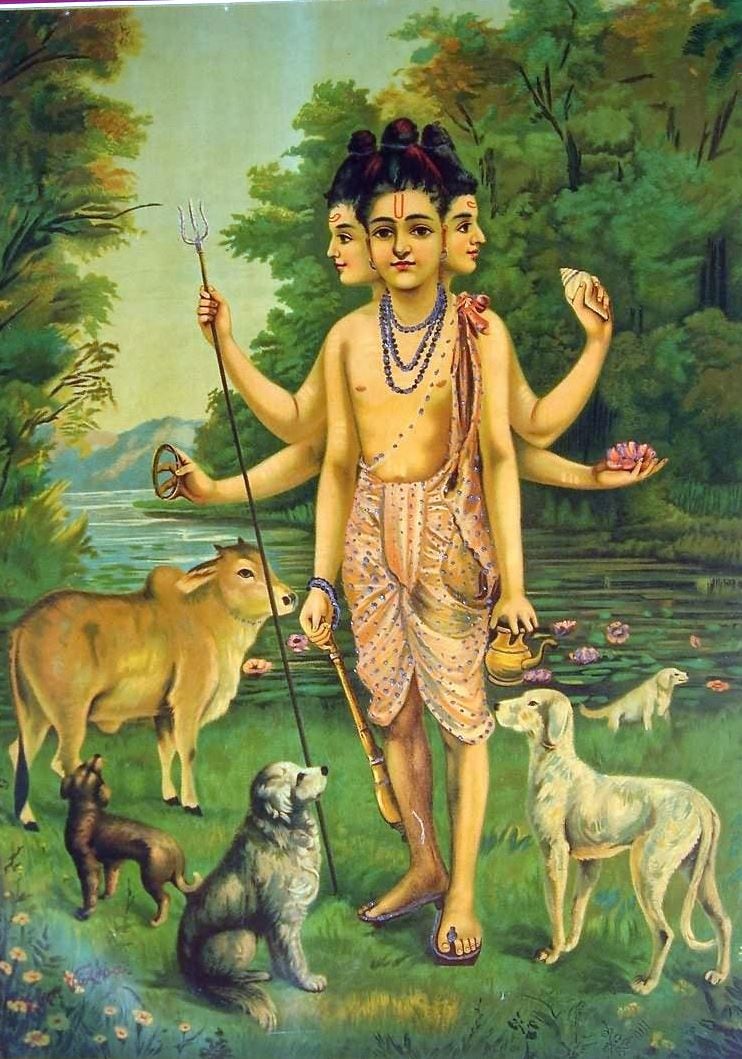
  85. Dattātreya, cromolitografía de la Ravi Varma Press

    Dattatreya

    Hinduism · Yoga

    A Hindu god, avatāra and teacher of yogins, the legendary son of the sage Atri and of Anasūyā, venerated as the joint incarnation of Brahmā, Viṣṇu and Śiva and as the archetype of the avadhūta, the liberated one who lives beyond every rule. The Purāṇas credit him with teaching yoga to King Alarka and, by traditional identification, with the twenty-four teachers of the Bhāgavata. The Avadhūta Gītā and the Dattātreyayogaśāstra are ascribed to him, and he is the primordial guru of the Datta tradition and of the Nāths.

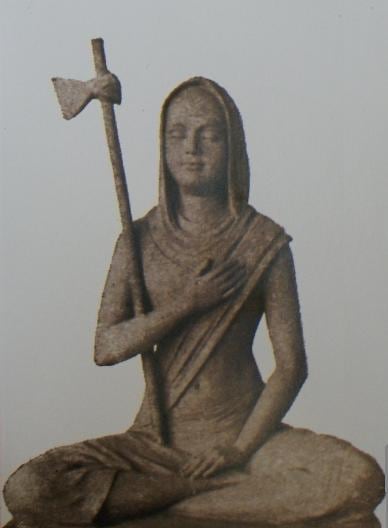
  86. Estatua de Gauḍapāda

    Gaudapada

    Advaita Vedanta · Hinduism

    Indian philosopher, author of the Māṇḍūkya Kārikā or Āgama Śāstra, the oldest surviving systematic treatise of Advaita Vedānta, composed around the sixth or seventh century. In four chapters he comments on the Māṇḍūkya Upaniṣad, equates waking with dreaming and defends non-origination (ajātivāda): nothing has ever been born. Tradition makes him the teacher of Śaṅkara's teacher; scholars debate his debt to Madhyamaka and Yogācāra Buddhism. His life is unknown.

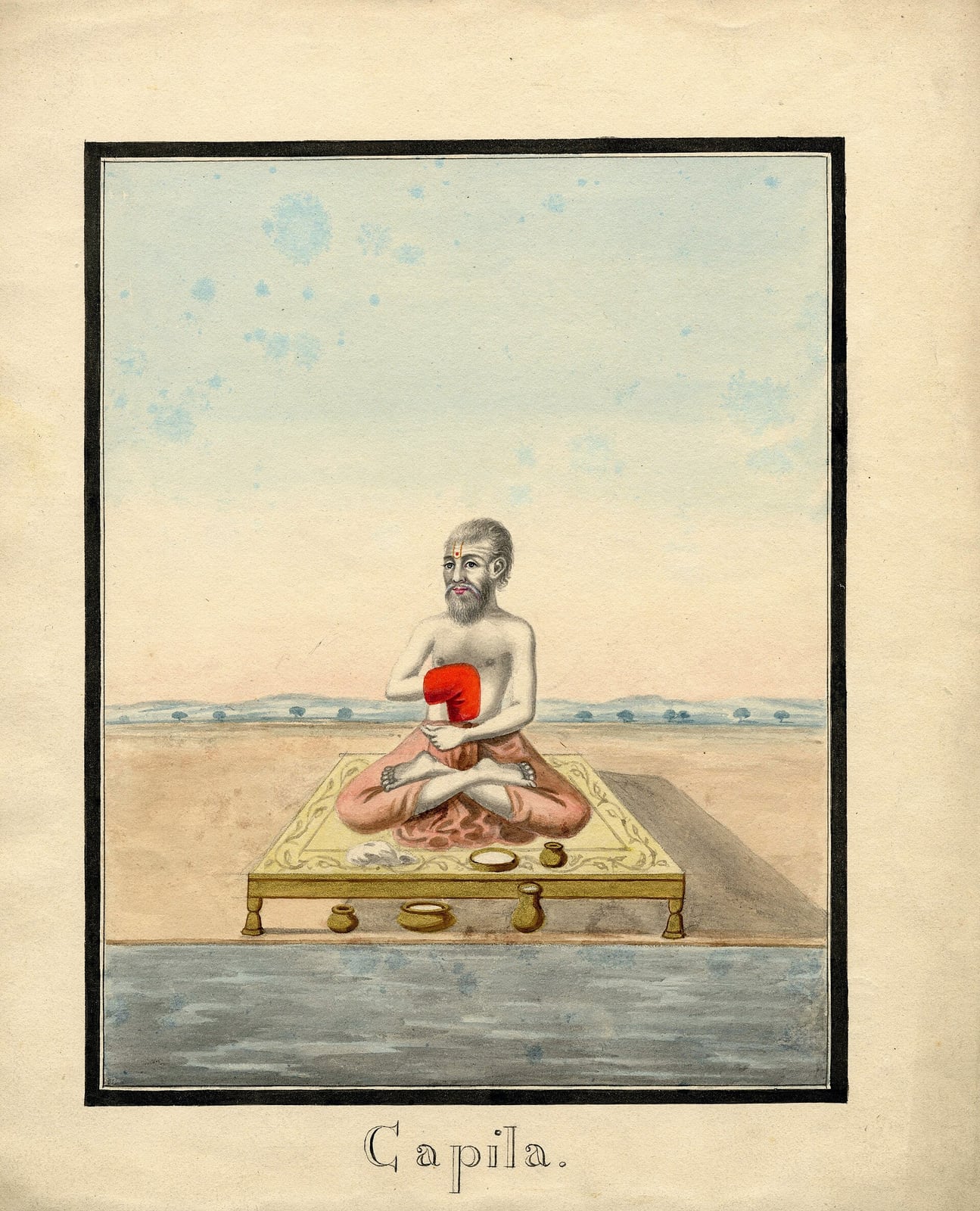
  87. Kapila, sabio védico (pintura de la Company School)

    Kapila

    Samkhya · Hinduism

    Sage of the Indian tradition credited with founding Sāṃkhya, the dualism of consciousness (puruṣa) and nature (prakṛti) that provides the metaphysical basis of Yoga. No work of his survives: the school’s oldest text is Īśvarakṛṣṇa’s Sāṃkhya Kārikā (4th–5th c.), and the Sāṃkhya Sūtra bearing his name date from the 14th–15th centuries. The Purāṇas made him an incarnation of Viṣṇu and the teacher of his mother Devahūti; the epics, the ascetic who burned the sons of Sagara.

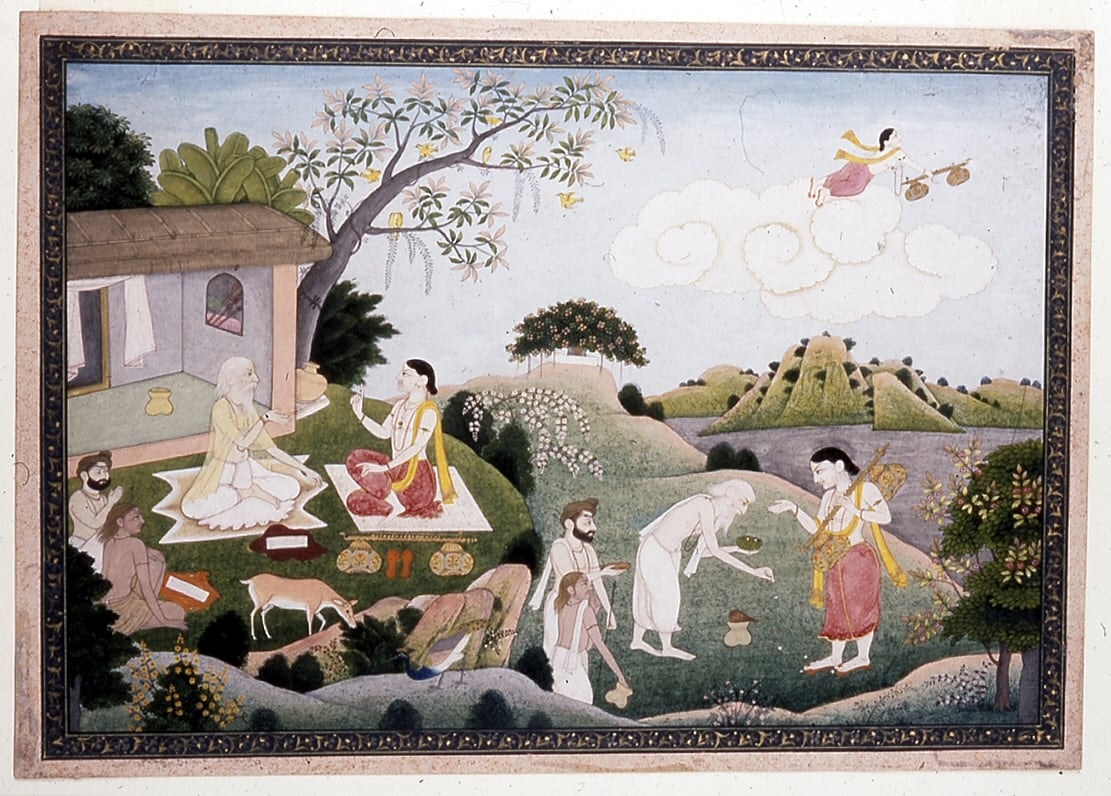
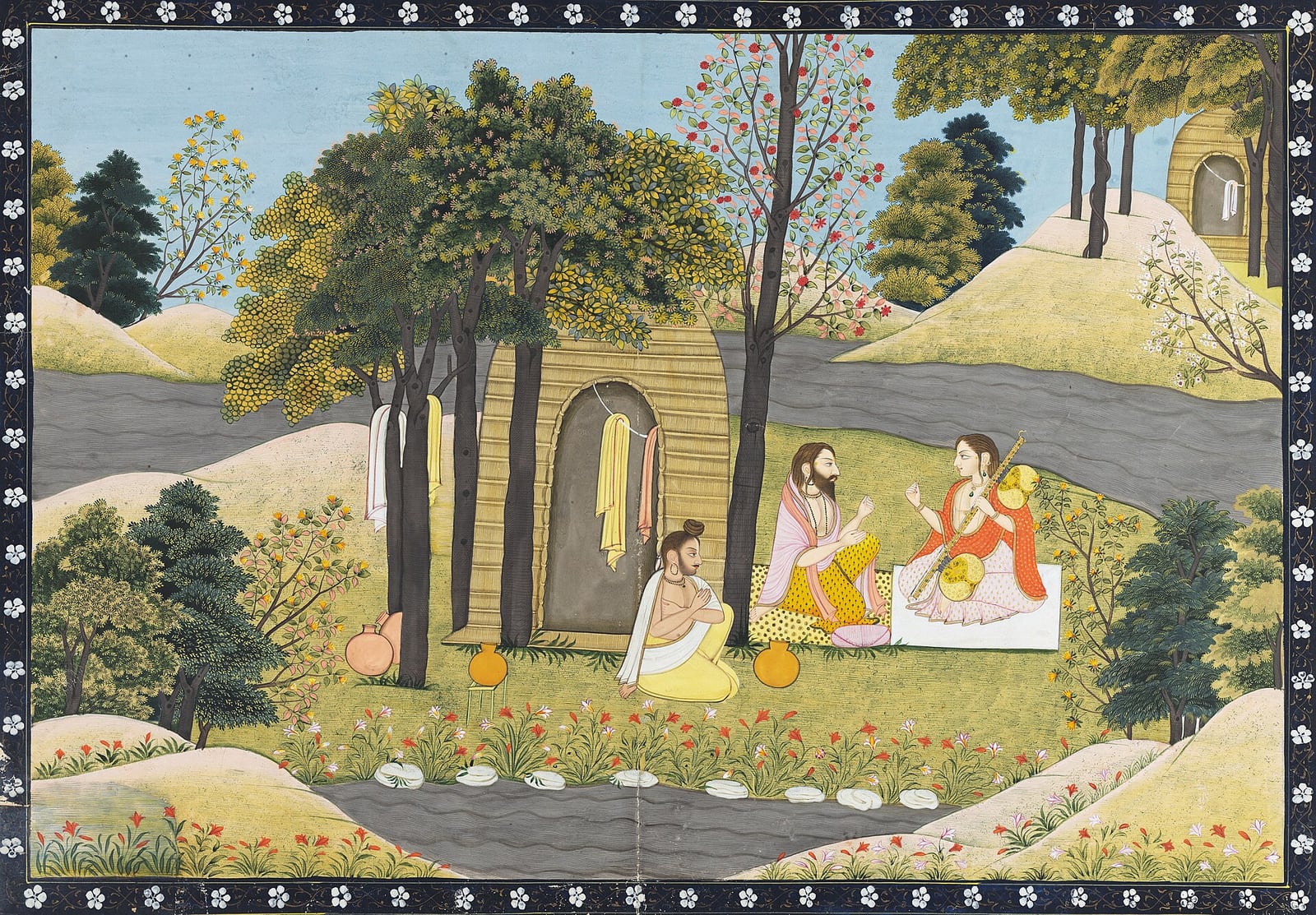
  88. Nārada visita a Vālmīki

    Narada

    Hinduism · Bhakti

    Divine sage (devarṣi) of the Hindu tradition, messenger between gods and men and player of the vīṇā. He appears in the Ṛgveda, the Aitareya Brāhmaṇa, the Chāndogya Upaniṣad (his dialogue with Sanatkumāra), the Mahābhārata, the Rāmāyaṇa —where he tells Vālmīki the story of Rāma— and the Purāṇas, which make him the model devotee. Ascribed to him are the Nārada Bhakti Sūtra, of uncertain medieval date, the Nārada Smṛti, a legal treatise of the early centuries CE (5th–6th c. according to Olivelle) that scholars ascribe to another author, the Nārada Purāṇa and the Nārada Pañcarātra.

  89. Patañjali como encarnación de Ādiśeṣa (imagen de culto)

    Patañjali

    Yoga · Hinduism

    The name of the author of the Pātañjalayogaśāstra, the treatise containing the Yogasūtra, founding text of the classical school of yoga, and of the grammarian who wrote the Mahābhāṣya, the great commentary on Pāṇini. Tradition regards them as one person, an incarnation of the serpent Śeṣa, and also ascribes medical works to him; scholarship distinguishes the grammarian (2nd century BCE) from the yoga author, whom Philipp Maas dates between 325 and 425 CE. The life of neither is known.
  90. Manuscrito de la Chāndogya Upaniṣad (1849)

    Uddalaka Aruni

    Vedic tradition · Hinduism

    Vedic sage of Kuru-Pañcāla, of the Gautama lineage, whom the Upaniṣads present as the teacher of his son Śvetaketu and of Yājñavalkya. In the sixth book of the Chāndogya he teaches through experiments — clay, the fig seed, salt dissolved in water — that everything comes from being, "one without a second", and sums it up in the refrain "tat tvam asi". He wrote nothing; his figure, of debated historicity, comes from the Śatapatha Brāhmaṇa and the oldest Upaniṣads, from around the seventh to sixth centuries BCE.
  91. Nārada en la ermita de Vālmīki

    Valmiki

    Hinduism · Bhakti

    Legendary poet to whom tradition ascribes the Rāmāyaṇa and calls ādikavi, 'the first poet'. All that is known of him comes from the poem itself, where he appears as the sage who turns grief over a slain crane into verse and as protector of Sītā and teacher of her sons, and from late legends such as that of the converted bandit. Philology dates the core of the epic between the eighth and fifth centuries BCE and considers the first and last books late. He is also credited with narrating the Yoga Vāsiṣṭha.

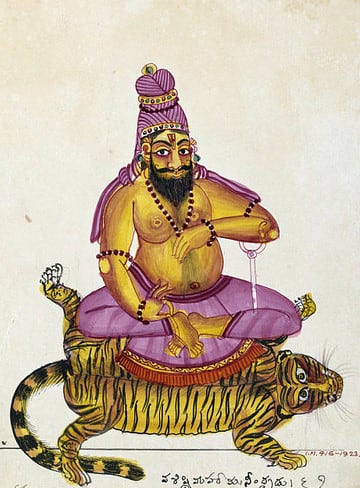
  92. Maharishi Vasiṣṭha sentado sobre una piel de tigre

    Vasishtha

    Vedic tradition · Hinduism

    Vedic sage to whom tradition ascribes the seventh book of the Ṛgveda, composed by a family of poet-priests in the second half of the second millennium BCE. In the hymns he appears beside King Sudās at the Battle of the Ten Kings; in the Rāmāyaṇa he is chaplain to the dynasty of Ayodhyā, rival of Viśvāmitra and teacher of Rāma, and in the Mahābhārata the great-grandfather of Vyāsa. The Vasiṣṭha Dharmasūtra and the Yoga Vāsiṣṭha, a medieval Vedāntic dialogue reworked from the Kashmiri Mokṣopāya, bear his name. He is not a documented person but a lineage and a legendary figure.

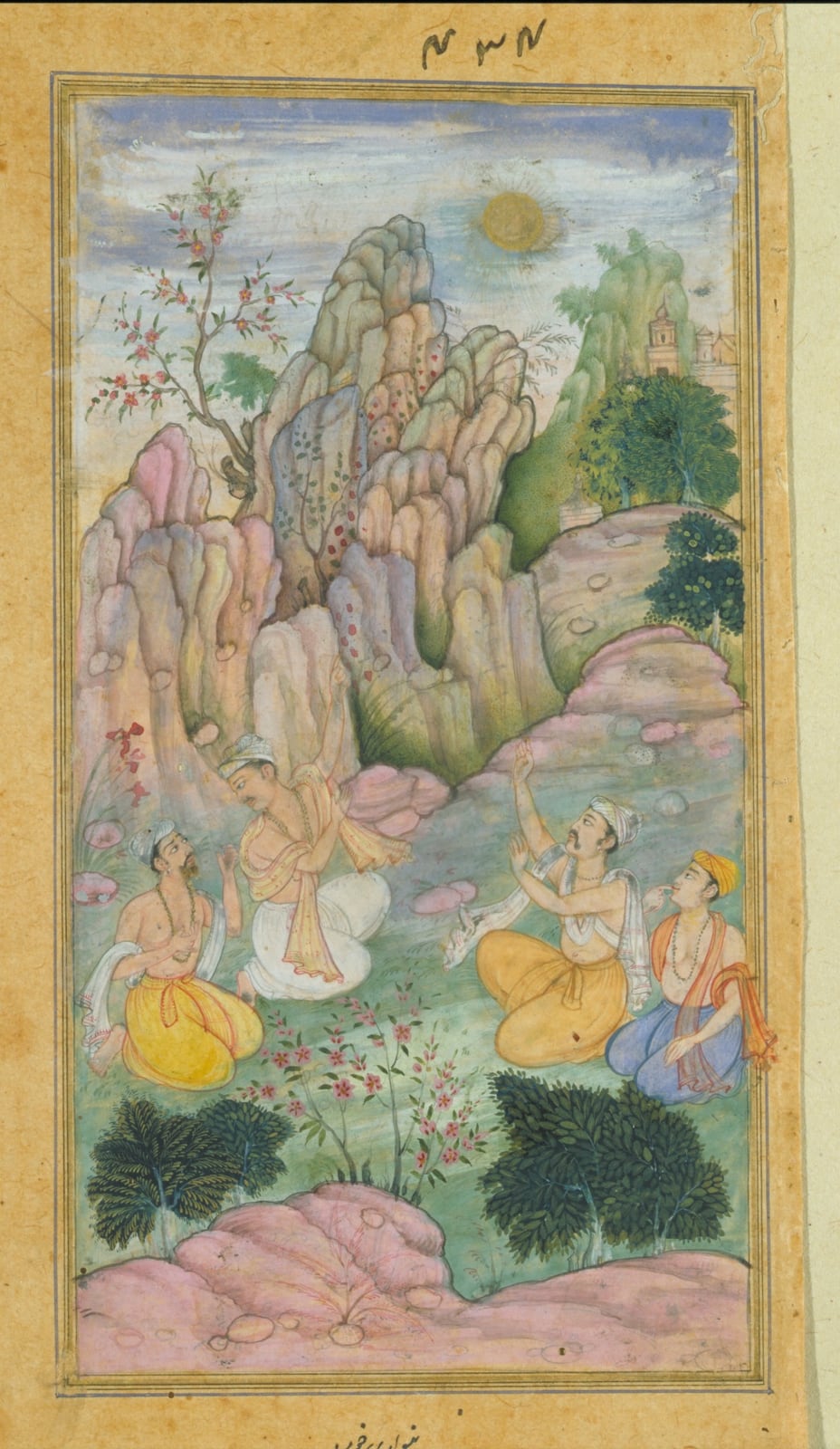
  93. Vyāsa y sus discípulos ven llegar a Śuka (Razmnāma)

    Vyasa

    Hinduism · Vedic tradition

    Legendary sage, called Kṛṣṇa Dvaipāyana, to whom tradition ascribes the division of the Veda into four, the composition of the Mahābhārata —with the Bhagavad Gītā— and of the eighteen Purāṇas, and whom it identifies with Bādarāyaṇa, author of the Brahmasūtras, and with the commentator on the Yogasūtras. In the Mahābhārata he is at once author, narrator and grandfather of both sides. Philology sees in him a figure of authority built by the texts, composed between the fourth century BCE and the first millennium CE.
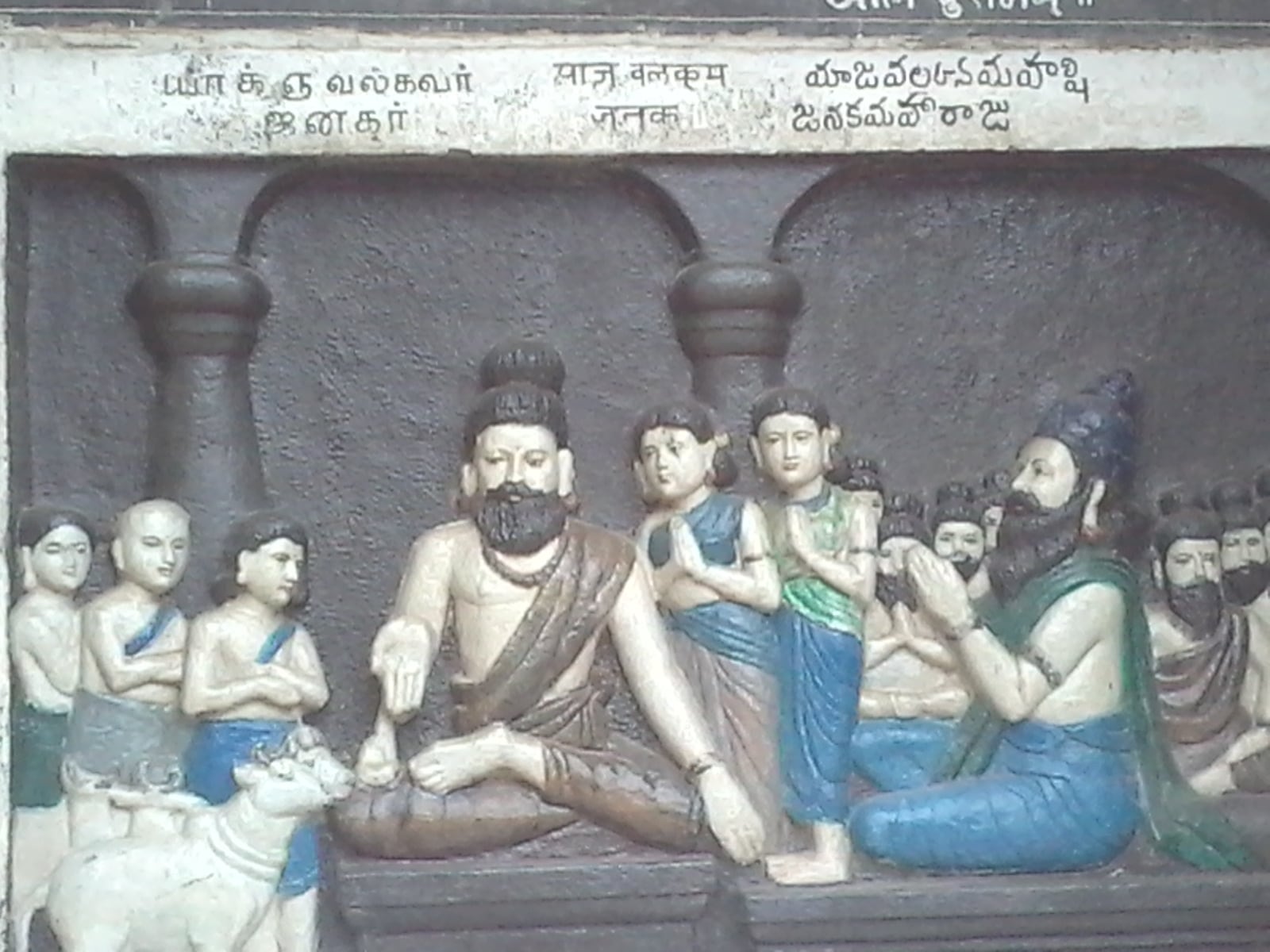
  94. Yājñavalkya con el rey Janaka (relieve)
    Yajnavalkya

    Vedic tradition · Hinduism

    Vedic sage, protagonist of the Bṛhadāraṇyaka Upaniṣad and ritual authority of the Śatapatha Brāhmaṇa, texts of the White Yajurveda school attributed to him. At the court of Janaka of Videha he defeats the brahmins, teaches Gārgī about the imperishable and the king that the ātman is its own light, definable only as "not this, not this". Before leaving as an ascetic he teaches his wife Maitreyī. His historicity is debated; the Yājñavalkya Smṛti and the Yoga Yājñavalkya, which bear his name, are much later.

More teachers are being researched: the library grows every week. Vote for who we research next.