Buddhism · Mahayana · Tibetan Buddhism (Vajrayana)
Pema Chödrön
པདྨ་ཆོས་སྒྲོན།
1936 –LivingHistorically documented person
American Buddhist nun of the Tibetan tradition (b. 1936), a student of Chögyam Trungpa and the first American in the Vajrayana tradition to receive full bhikshuni ordination (1981). Principal teacher of Gampo Abbey (Nova Scotia) for four decades and abbess since 2025, she is the author of widely read books such as When Things Fall Apart, Start Where You Are and The Places That Scare You.
- works
- 40works
- editions
- 64editions
- quotes
- 7quotes
- videos
- 13videos
- images
- 4images

Pema Chödrön en 2007 · CC BY-SA 2.0
In their words
«a big groundless moment»Entrevista con Bill Moyers (PBS), sobre el anuncio de su segundo marido; citada en Lion's Roar (2014)
To begin, one work
Start Where You AreTheir central idea
Insecurity and groundlessness are not a fault to be corrected but the real condition of life; learning to stay with them without running away is the heart of the spiritual path.
See in context
Biography
4 min read
A Catholic childhood in New Jersey
Deirdre Blomfield-Brown was born on 14 July 1936 in New York City into a Catholic family and grew up on a New Jersey farm with an older brother and sister. She attended Miss Porter's boarding school in Farmington, Connecticut, where, she has said, her spiritual curiosity awoke. She took a degree in English literature at Sarah Lawrence College and a master's in elementary education at the University of California, Berkeley, and for many years taught elementary school in New Mexico and California.
A groundless moment
She married at twenty-one and had two children, Arlyn and Edward; that marriage ended when she was about twenty-five. She married again and, some eight years later, her second husband told her he was having an affair and wanted a divorce. In an interview with Bill Moyers she described that instant as a big groundless moment: the start of a search that took her through various therapies and traditions without relief, until she read an article by Chögyam Trungpa — not knowing its author was a Buddhist — that proposed working with emotions rather than trying to get rid of them.
Teachers and ordination
Soon afterwards she met Lama Chime Rinpoche, with whom she felt a strong recognition; he agreed to teach her in London and for years she divided her time between England and the United States. On his advice she approached Trungpa in San Francisco: she met him in 1972 and he was her root teacher until his death in 1987. In 1974 she received novice ordination from the Sixteenth Karmapa, Rangjung Rigpe Dorje, who in 1977 encouraged her to seek full ordination, which had never been transmitted in the Tibetan lineage for women. The search took her to Hong Kong, where in July 1981, in a Chinese lineage, she became the first American in the Vajrayana tradition to be ordained a bhikshuni, a fully ordained nun. Her religious name, Pema Chödrön, means 'lotus Dharma lamp'.
From Boulder to Cape Breton
In the early 1980s Trungpa appointed her director of Karma Dzong, his community's centre in Boulder, Colorado. In 1984 she moved to Cape Breton Island, Nova Scotia, to help establish Gampo Abbey, the first Tibetan Buddhist monastery in North America for Western men and women. She was its director from 1986 and, for four decades, its principal teacher under the abbot Khenchen Thrangu Rinpoche.
The books
Her first book, The Wisdom of No Escape (1991), gathered talks from a retreat at the abbey. It was followed by Start Where You Are (1994), on Tibetan mind training or lojong, and When Things Fall Apart (1997), which made her one of the most widely read Buddhist teachers in English. In 1993, when Trungpa's son Sakyong Mipham Rinpoche took over the leadership of Shambhala, she received the title of acharya, senior teacher. In 1994 she was diagnosed with chronic fatigue syndrome; in those years she met Dzigar Kongtrul Rinpoche, who became her teacher. There followed The Places That Scare You (2001), No Time to Lose (2005), a commentary on Shantideva's Bodhicharyavatara, Practicing Peace in Times of War (2006), Living Beautifully with Uncertainty and Change (2012), Welcoming the Unwelcome (2019) and How We Live Is How We Die (2022), along with dozens of recordings.
A voice for uncertainty
Her teaching renders Mahayana and Vajrayana practices in plain language: tonglen, the meditation of taking in suffering and sending out relief; the lojong slogans; bodhichitta; and the notion of shenpa, the moment one gets 'hooked' into a habitual reaction. Against the search for security she proposes settling into uncertainty, moving towards what hurts and making difficulties one's path. In 2006 the Pema Chödrön Foundation was created; it receives the royalties from her books and recordings and supports contemplative life. In 2016 she received the Global Bhikkhuni Award from the Chinese Buddhist Bhikkhuni Association of Taiwan.
The abbey and Trungpa's legacy
At Gampo Abbey she has led the yarne each winter, the traditional monastic rainy-season retreat transposed to the Canadian winter, and for years she taught Shantideva's Way of the Bodhisattva in Berkeley each summer. In 2005 she joined the Committee of Western Bhikshunis, which brings together fully ordained Western nuns. Her loyalty to Trungpa, whose conduct — his drinking, his sexual relations with students, the authoritarian style of his community — has been harshly criticised, has drawn frequent questions, and she has spoken publicly about that controversial legacy.
Withdrawal and return to the abbey
In January 2020 she resigned her role as acharya of Shambhala International, partly because of the way the organisation had handled allegations of sexual misconduct against its leader, Sakyong Mipham, writing that she could not go on representing it given what she saw as the unwise direction it was taking. She then withdrew from regular public teaching. After Thrangu Rinpoche's death in 2023, in May 2025 she agreed to become abbess of Gampo Abbey, and in 2026 Another Kind of Freedom, her commentary on two works by Trungpa, appeared. She has two children and three grandchildren.
Sources: Boucher, Sandy. Turning the Wheel: American Women Creating the New Buddhism. Boston: Beacon Press, 1993, pp. 93–97. · Chödrön, Pema. When Things Fall Apart: Heart Advice for Difficult Times. Boston: Shambhala Publications, 1997. · Chödrön, Pema. Start Where You Are: A Guide to Compassionate Living. Boston: Shambhala Publications, 1994. · Chödrön, Pema. The Places That Scare You: A Guide to Fearlessness in Difficult Times. Boston: Shambhala Publications, 2001. · Coleman, James William. The New Buddhism: The Western Transformation of an Ancient Tradition. Nueva York: Oxford University Press, 2001, p. 150.
Timeline
A life, year by year
Each point is a documented event. Click to read it, with its source and degree of certainty.
July 14, 1936age 0Nueva York / New York City
Birth
Deirdre Blomfield-Brown is born on 14 July in New York City into a Catholic family.
DocumentedWikidata, «Pema Chödrön» (Q442384).
July 14, 1936 · age 0
Birth
Deirdre Blomfield-Brown is born on 14 July in New York City into a Catholic family.
Documented
1957 · age 21
First marriage
Marries at twenty-one; she will have two children, Arlyn and Edward.
Probable
1972 · age 36
Meets Chögyam Trungpa
Meets Chögyam Trungpa, who will be her root teacher until 1987.
Documented
1974 · age 38
Novice ordination
Receives novice ordination from the Sixteenth Karmapa, Rangjung Rigpe Dorje.
Documented
July 1981 · age 45
Full ordination in Hong Kong
In July she becomes the first American in the Vajrayana tradition to be ordained a bhikshuni.
Documented
1984 · age 48
Move to Nova Scotia
Settles on Cape Breton to help establish Gampo Abbey.
Documented
1986 · age 50
Director of Gampo Abbey
Becomes director of Gampo Abbey.
Documented
1987 · age 50
Death of Trungpa
Chögyam Trungpa, her root teacher, dies.
Documented
1991 · age 55
The Wisdom of No Escape
Publishes her first book.
Documented
1993 · age 57
Shambhala acharya
Receives the title of acharya when Sakyong Mipham takes over the leadership of Shambhala.
Probable
1994 · age 58
Illness and a new teacher
She is diagnosed with chronic fatigue syndrome; meets Dzigar Kongtrul Rinpoche. Publishes Start Where You Are.
Documented
1997 · age 61
When Things Fall Apart
Publishes When Things Fall Apart, her best-known book.
Documented
2006 · age 70
Pema Chödrön Foundation
The foundation that receives the royalties from her books and recordings is created.
Documented
2016 · age 80
Global Bhikkhuni Award
Receives the Global Bhikkhuni Award from the Chinese Buddhist Bhikkhuni Association of Taiwan.
Documented
January 16, 2020 · age 83
Resigns as acharya
In January she resigns her role in Shambhala International over the handling of allegations against its leader.
Documented
May 2025 · age 88
Abbess of Gampo Abbey
In May she agrees to become abbess of Gampo Abbey, following Thrangu Rinpoche's death (2023).
Documented
Works
Essential works
The works without which their legacy cannot be understood.
Written work · 1994
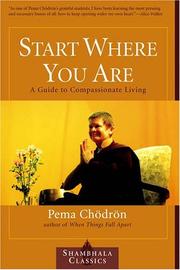
Start Where You Are
Start Where You Are: A Guide to Compassionate Living
Commentary on the 59 slogans of lojong, the Tibetan Buddhist mind training attributed to Atisha and systematised by Chekawa Yeshe Dorje, and on the practice of tonglen. It shows how difficult situations in daily life can become occasions to awaken compassion, starting with oneself.
3 editions

Written work · 1997
When Things Fall Apart
When Things Fall Apart: Heart Advice for Difficult Times
Her most widely read book. Drawing on talks given at Gampo Abbey, it proposes moving towards pain, fear and loss instead of fleeing them, and presents groundlessness as the very condition of awakening. It explains the practices of tonglen and maitri, the eight worldly concerns and the bodhisattva path in accessible language, and has become a reference book for people in grief or crisis, translated into many languages.
11 editions
Written work · 2001
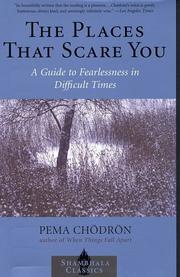
The Places That Scare You
The Places That Scare You: A Guide to Fearlessness in Difficult Times
Guide to fear and courage grounded in bodhichitta, the awakened heart. It sets out the four limitless qualities — love, compassion, joy and equanimity — and the practices for cultivating them, and describes how the ego's protective habits distance us from others. With When Things Fall Apart, it is her most widely read work.
5 editions
Complete works (40)

The Wisdom of No Escape
1991

Awakening Loving-Kindness
1996

Tonglen
2001

Comfortable with Uncertainty
2002

Hooked!
2005

No Time to Lose
2005

Practicing Peace in Times of War
2006

Always Maintain a Joyful Mind
2007

The Pocket Pema Chödrön
2008

Taking the Leap
2009

Living Beautifully with Uncertainty and Change
2012

Fail, Fail Again, Fail Better
2015

The Compassion Book
2017

Welcoming the Unwelcome
2019
Pema Chödrön
How We Live Is How We Die
The Conscious LibraryHow We Live Is How We Die
2022
Pema Chödrön
Another Kind of Freedom
The Conscious LibraryAnother Kind of Freedom
2026

How to Meditate
2007

Awakening Compassion
1995

Noble Heart
1998

Good Medicine
2001

From Fear to Fearlessness
2003

Pure Meditation
2004

Getting Unstuck
2004

In Conversation with Alice Walker
2005
Quotations
Quotations located in a specific work. Each carries its provenance and its level of confidence.
a big groundless momentVerifiedEntrevista con Bill Moyers (PBS), sobre el anuncio de su segundo marido; citada en Lion's Roar (2014)
Essential ideas (editorial summary)
Out of respect for copyright, these ideas are summarised in our own words and are not presented as literal quotations.
- Insecurity and groundlessness are not a fault to be corrected but the real condition of life; learning to stay with them without running away is the heart of the spiritual path.
- Before reacting with anger or flight there is a moment of being 'hooked' that can be recognised; learning to see it and not bite the hook interrupts the cycle of habit.
- Compassion for others begins with unconditional friendship with oneself, which consists not in improving oneself but in knowing oneself with honesty and tenderness.
- Instead of rejecting pain, the practitioner can take it in with the breath and wish relief for all who suffer the same; one's own pain thus becomes a bridge to others.
- The difficult situations of daily life are the material of awakening: one starts where one is, not where one would like to be.
- World peace depends on each person learning not to feed their own aggression.
Ask
What their work answers
Twelve great human questions and what their texts allow us to answer, with references. We never put words in their mouth.
What is the Absolute? Does God exist?
There is no one outside to save us: nontheism is relaxing into uncertainty
No creator GodStated explicitly
Pema Chödrön, a nun of the Tibetan tradition trained by Chögyam Trungpa, addresses the question explicitly in When Things Fall Apart. There she presents Buddhism as nontheistic, but not in the sense of a thesis about the existence of God: nontheism consists in no longer seeking an outside figure, belief or babysitter to protect us from the ambiguity of the present moment. What she calls theism is the hope that someone will resolve our groundlessness for us; growing up means ceasing to wait for that. Instead of an absolute to be addressed, her teaching points to the openness of mind and to bodhichitta, the awakened heart, which are not held as beliefs but discovered by staying with experience as it is.
Compare this question with other teachersWho am I? Is there a true self?
The self is an attempt at solid ground; egolessness is openness, not loss
There is no permanent selfInferred from their doctrine
Pema Chödrön sets out the Buddhist teaching of the absence of a permanent self through the teaching of her teacher Chögyam Trungpa, whose work on ego she comments on in Another Kind of Freedom. Ego appears in her work less as a substance than as a strategy: the continual effort to manufacture a solid identity and firm ground in the face of a life that has none. In her teachings on the three marks of existence she presents egolessness as one of them, alongside impermanence and suffering. But she insists that discovering it is no threat: it is the condition of openness and of tenderness towards others, and what is found on letting go of identity is not a bleak void but an open mind that had never gone away.
Compare this question with other teachersWhy do we suffer?
We suffer from seeking firm ground and biting the hook of reaction
Craving and attachmentStated explicitly
Pema Chödrön describes suffering as the result of fleeing groundlessness, which is the real condition of life. In When Things Fall Apart she holds that crisis is not a fault to be corrected but a kind of testing and also a kind of healing, and that nothing ever goes away until it has taught us what we need to know. Her best-known contribution is the Tibetan notion of shenpa, developed in Taking the Leap: the hook, the instant in which something catches us and drags us into the habitual reaction of anger, desire or flight. Pain is inevitable; what turns it into repeated suffering is biting the hook again and again. Recognising the hook and staying with the discomfort without acting it out interrupts the cycle.
Compare this question with other teachersWhat happens after death?
The bardos teach how to die and to live: every ending is a transition
Rebirth according to karmaStated explicitly
Pema Chödrön devoted a whole book to the question, How We Live Is How We Die, based on the Tibetan teachings on the bardos, the intermediate states between death and rebirth. She sets out her tradition's view: after death consciousness passes through states in which its mental habits carry it away or in which it may recognise the open nature of mind, and rebirth depends on this. But she presents these teachings above all as a guide for living: every ending in daily life, every loss and every change is a bardo in miniature, and the way we meet them now is the way we will meet death. Already in When Things Fall Apart she linked death with giving up the hope of firm ground.
Compare this question with other teachersHow is liberation or salvation attained?
Start where you are: meditation, tonglen and mind training
Through disciplined practiceStated explicitly
Pema Chödrön proposes a path of gradual practice taken from Tibetan Buddhism. Its basis is sitting meditation, which she understands as unconditional friendship with oneself (maitri): seeing what arises with honesty and tenderness, without trying to improve oneself. On this are built lojong, the mind-training slogans she comments on in Start Where You Are, and tonglen, the practice of breathing in one's own and others' pain and breathing out relief. Her principle is that the difficult situations of daily life are the material of awakening: there is no need to wait for ideal conditions. The goal is to awaken bodhichitta, the open heart, and to live the three commitments she sets out in Living Beautifully.
Compare this question with other teachersIs a teacher necessary?
She always sought a teacher, yet teaches a practice that starts where you are
Helpful but not indispensableInferred from their doctrine
Pema Chödrön's path is bound up with her teachers. She trained for years with Chögyam Trungpa, whose teachings she still comments on, and after his death, as she has recounted, she felt a longing for someone to put her questions to, until she found Dzigar Kongtrul Rinpoche, on whose instruction she bases her commentary on Shantideva in No Time to Lose. In her tradition the teacher has a central role. But her books are addressed to any reader and offer practices that can be done alone, from one's own situation. Her relationship to the institution has not been uncritical: in 2020 she stepped down as senior teacher of Shambhala, in a public letter, because she disagreed with the direction the community was taking.
Compare this question with other teachersIs the world real?
Nothing is solid or permanent: embracing the world as it is
A web of causes without substanceInferred from their doctrine
Pema Chödrön is not concerned with the reality of the world as a metaphysical problem; what interests her is how to live in it. Her view is the Buddhist one: everything is impermanent, nothing has a solid core, and life lacks firm ground. In Living Beautifully with Uncertainty and Change she organises her teaching around three commitments, the last of which consists in embracing the world as it is, with its chaos and unpredictability, without withdrawing into a refuge of certainties. The world is not a deception to escape from, but the only place where compassion can awaken; its instability, which frightens, is also what makes it alive and open.
Compare this question with other teachersWhat is love?
Compassion begins with unconditional friendship with oneself
Boundless compassionStated explicitly
Compassion is the centre of Pema Chödrön's work. Her starting point is maitri, unconditional friendship with oneself, which consists not in improving oneself but in knowing oneself with honesty and tenderness; without it, she holds, compassion for others becomes idealistic or condescending. In The Places That Scare You she sets out her tradition's four limitless qualities, love, compassion, joy and equanimity, and warns against their near counterfeits. Tonglen turns one's own pain into a bridge to others: when suffering something, one thinks of all who suffer the same and wishes them relief. The goal is bodhichitta, a heart that does not close to anyone, not even to those who harm us.
Compare this question with other teachersAre we free, or is everything determined?
Karma is habit, and habit can be interrupted in this very moment
Karma and choiceStated explicitly
Pema Chödrön presents karma less as destiny than as a pattern of habits. Each repeated reaction, anger, flight, attachment, strengthens the tendency to repeat it, and so the past conditions the present. But in that same mechanism lies freedom: in the instant when something hooks us, the shenpa she describes in Taking the Leap, there is a space in which one can recognise the impulse and not bite the hook. Each time the habit is interrupted the chain is weakened and another seed is sown. Her recorded teachings on karma develop this idea: we are not condemned to repeat ourselves, though change demands patience and the willingness to stay with discomfort.
Compare this question with other teachersWhy meditate or pray?
Meditating is befriending oneself and seeing clearly what arises
Seeing reality as it isStated explicitly
Pema Chödrön teaches the shamatha-vipashyana meditation of Trungpa's tradition: one attends lightly to the out-breath, recognises thoughts, labelling them «thinking» if need be, and returns to the breath without self-judgement. In The Wisdom of No Escape she presents this practice as a form of unconditional friendship with oneself: one does not meditate to become someone else, but to know with precision and tenderness the person one already is. From this comes the capacity to see clearly what is happening, the impermanence of states and the hook of reactions, and to stay with discomfort without running away. Meditation is thus training of attention and of the heart at once.
Compare this question with other teachersCan reason know the ultimate?
She leaves the question aside: drop the storyline and touch experience
Did not address it
Pema Chödrön is not concerned with reason's capacity to know the ultimate; her work is practical, not epistemological. The closest thing is her advice, repeated in her books, to drop the storyline the mind tells itself, the story of why something offends or frightens us, and stay with the raw energy of experience without interpreting it. At the same time she values study: she has commented for years on Shantideva's Bodhicharyavatara and on the lojong slogans, and in Another Kind of Freedom she rereads Trungpa's work. The attitude she recommends is neither the sceptic's nor the believer's, but an open curiosity, interest in what is happening without needing to close the question.
Compare this question with other teachersWithdraw from the world or transform it?
Peace in the world begins with not feeding one's own aggression
The revolution is innerStated explicitly
Pema Chödrön, who lives as a nun at Gampo Abbey, preaches neither withdrawal nor activism, but a transformation that begins in each person. In Practicing Peace in Times of War she locates the origin of war in everyone's aggressive reactions: each time someone bites the hook of anger and clings to their position against another, they sow the same seed that on a large scale produces conflicts. Practising peace consists in recognising that impulse and not acting it out. In Welcoming the Unwelcome she applies this idea to contemporary polarisation, asking us to respond without closing down or attacking. She does not deny the value of action in the world, but holds that without that inner work the cycle repeats itself.
Compare this question with other teachers
Affinities & tensions
Affinities and tensions
Calculated question by question from their positions. The reason for each agreement or clash, on click.
Thinks most like
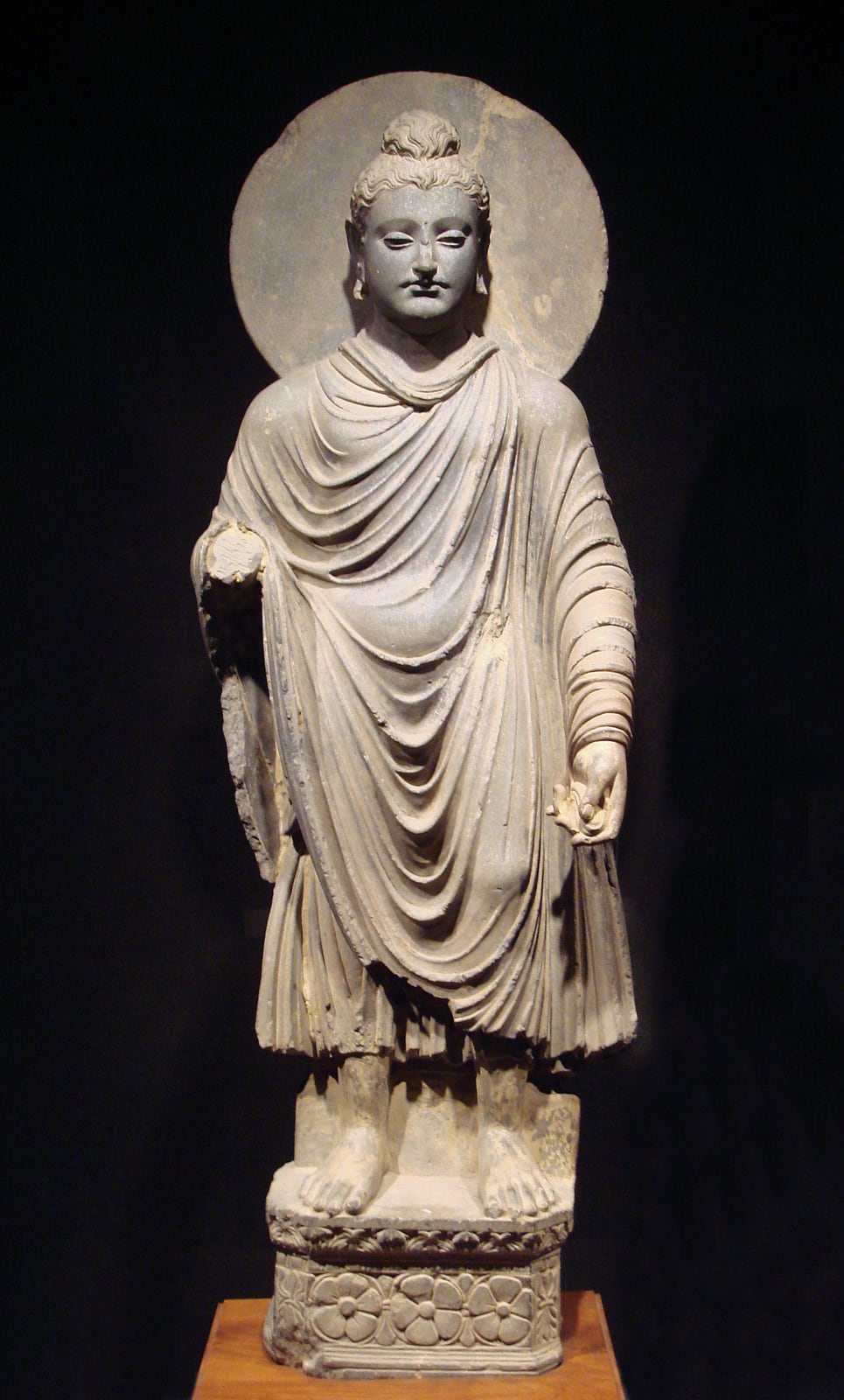
Siddhartha Gautama, the Buddha
They agree on: What is the Absolute? Does God exist? · Who am I? Is there a true self? · Why do we suffer?
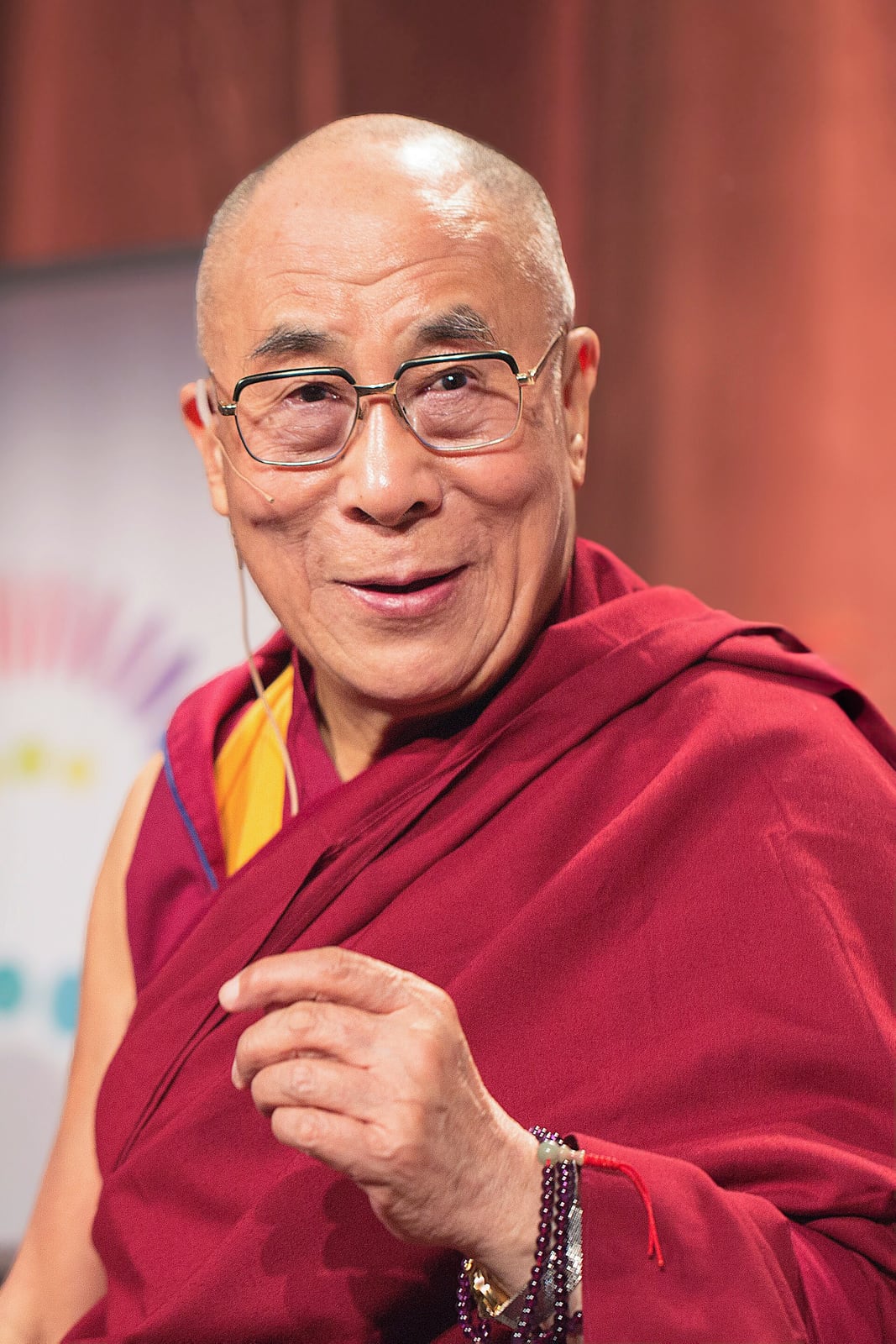
The 14th Dalai Lama (Tenzin Gyatso)
They agree on: What is the Absolute? Does God exist? · Who am I? Is there a true self? · Why do we suffer?
Śāntideva
They agree on: What is the Absolute? Does God exist? · Who am I? Is there a true self? · Why do we suffer?

Tsongkhapa
They agree on: What is the Absolute? Does God exist? · Who am I? Is there a true self? · Why do we suffer?
Thinks most unlike
Al-Hallaj
They clash on: What is the Absolute? Does God exist? · Who am I? Is there a true self? · What happens after death?
Chaitanya Mahaprabhu
They clash on: What is the Absolute? Does God exist? · Who am I? Is there a true self? · What happens after death?

Emanuel Swedenborg
They clash on: What is the Absolute? Does God exist? · Who am I? Is there a true self? · What happens after death?

Julian of Norwich
They clash on: What is the Absolute? Does God exist? · Who am I? Is there a true self? · What happens after death?
Anecdotes and stories
Anecdotes and stories
Testimonyaños sesenta y setenta
A groundless moment
Origin of the story: Pema Chödrön's own account in the interview with Bill Moyers (PBS), recorded by Andrea Miller in 'Becoming Pema' (Lion's Roar, 2014).
Source: Miller, Andrea. «Becoming Pema». Lion's Roar, 20 de octubre de 2014.
Testimonycomienzos de los años setenta
An article with no Buddhist label
Origin of the story: Lion's Roar, 'Becoming Pema' (2014); the date of the meeting with Trungpa comes from the Pema Chödrön Foundation biography.
Source: Miller, Andrea. «Becoming Pema». Lion's Roar, 20 de octubre de 2014.
Documented1974–1981
The Hong Kong ordination
Origin of the story: Lion's Roar (2014), Pema Chödrön Foundation and Sandy Boucher, Turning the Wheel (1993), pp. 93–97.
Source: Miller, Andrea. «Becoming Pema». Lion's Roar, 20 de octubre de 2014.
Documented1984–
A monastery facing the Atlantic
Origin of the story: Pema Chödrön Foundation, Lion's Roar (2014) and the Gampo Abbey website; the stupa and its relics, according to the description of the photographs on Wikimedia Commons.
Source: Pema Chödrön Foundation, «Pema Chödrön» (biografía oficial y fines de la fundación).
Testimony1994–
Someone to ask
Origin of the story: Lion's Roar, 'Becoming Pema' (2014), with Pema Chödrön's own words.
Source: Miller, Andrea. «Becoming Pema». Lion's Roar, 20 de octubre de 2014.
Documented2018–2025
The January 2020 letter
Origin of the story: Letter published in the Shambhala Times (16 January 2020) and The Washington Post report (17 January 2020); the appointment as abbess, in the Shambhala Times (13 May 2025).
Source: Chödrön, Pema. «Letter from Ani Pema Chödrön». Shambhala Times, 16 de enero de 2020.
Teachings
Teachings
The notions that structure their thought, explained in context.
Shenpa (getting hooked)shenpa
Taking the Leap (2009), Don't Bite the Hook (2007) and Practicing Peace in Times of War (2006).
Tonglen (taking and sending)tonglen
Start Where You Are (1994), When Things Fall Apart (1997) and Tonglen: The Path of Transformation (2001); it derives from Atisha's lojong.
Source: Chödrön, Pema. Start Where You Are: A Guide to Compassionate Living. Boston: Shambhala Publications, 1994.
Maitri (unconditional friendliness towards oneself)maitri
The Wisdom of No Escape (1991); Chögyam Trungpa's teaching.
Source: Open Library: obras y ediciones de Pema Chödrön (comprobación de ISBN por catálogo).
Bodhichitta (the awakened heart)bodhichitta
The Places That Scare You (2001) and No Time to Lose (2005); Shantideva's tradition.
Source: Chödrön, Pema. The Places That Scare You: A Guide to Fearlessness in Difficult Times. Boston: Shambhala Publications, 2001.
Groundlessnessfalta-de-suelo
When Things Fall Apart (1997); Comfortable with Uncertainty (2002); Living Beautifully with Uncertainty and Change (2012).
Source: Chödrön, Pema. When Things Fall Apart: Heart Advice for Difficult Times. Boston: Shambhala Publications, 1997.
Lojong (mind training)lojong
Start Where You Are (1994), Always Maintain a Joyful Mind (2007), The Compassion Book (2017).
Source: Chödrön, Pema. Start Where You Are: A Guide to Compassionate Living. Boston: Shambhala Publications, 1994.
Videos
Videos
Recordings, interviews and documentaries. Videos play from YouTube; they are not hosted here.
New Abbess - Pema Chödrön
Original recording· EN· 2025· 3 min
Gampo AbbeyOfficial channel
Pema Chödrön reflections on Gampo Abbey
Original recording· EN· 4 min
Gampo AbbeyOfficial channel
Anam Thubten & Abbess Pema Chödrön in Conversation
Interview· EN· 16 min
Gampo AbbeyOfficial channel
Pema Chödrön – What Is Bodhicitta?
Original recording· EN· 10 min
Pema Chödrön FoundationOfficial channel
Pema Chödrön - Welcoming the Unwelcome | Super Soul Sunday S9E18 | Full Episode
Interview· EN· 2019· 42 min
OWN
Breathing Space: Where Pema Chödrön Met Her True Self | SuperSoul Sunday
Interview· EN· 2 min
OWN
Bill Moyers' interview of Pema Chödrön (PBS special)
Interview· EN· 52 min
Palouse Mindfulness
Pema Chödrön on Chögyam Trungpa's controversial legacy
Interview· EN· 2026· 8 min
Shambhala PublicationsOfficial channel
Another Kind of Freedom with Pema Chödrön: This Very Moment Episode 10
Interview· EN· 2026· 37 min
Shambhala PublicationsOfficial channel
Smile at Fear with Pema Chödrön
Lecture· EN· 2011· 5 min
Shambhala PublicationsOfficial channel
What If Uncertainty Is the Practice: Pema Chödrön on Groundlessness
Lecture· EN· 9 min
Sounds TrueOfficial channel
Relajarse con la impermanencia y la muerte - Pema Chödrön (con subtítulos en español)
Lecture· ES· 8 min
Sakyadhita Spain
Pema Chödrön - Cambiar tu corazón ante el dolor
Lecture· ES· 19 min
Sakyadhita Spain
Gallery
Gallery
Images with verified licences. Each keeps its authorship and attribution.
Connections
Connections
Influences, discipleships and affinities. Documented relations are distinguished from similarities identified by analysis.
Disciple of
Chögyam Trungpa
Her root teacher from 1972 until his death in 1987; he appointed her director in Boulder and entrusted Gampo Abbey to her.
Documented relation
Disciple of
Chime Rinpoche
Her first teacher, with whom she studied in London in the early 1970s.
Documented relation
Disciple of
Rangjung Rigpe Dorje, XVI Karmapa
Conferred novice ordination on her in 1974 and encouraged her to seek full ordination.
Documented relation
Disciple of
Dzigar Kongtrul Rinpoche
Her teacher since the mid-1990s.
Documented relation
Met
Khenchen Thrangu Rinpoche
Abbot of Gampo Abbey during the years she was principal teacher; he died in 2023.
Documented relation
Disagreed with
Sakyong Mipham Rinpoche
He gave her the title of acharya in 1993; she resigned in 2020 over the handling of the allegations against him.
Documented relation
Influenced by
She commented on his Bodhicharyavatara in No Time to Lose and has taught it for decades.
Documented relation
Met
Alice Walker
Recorded dialogue published by Sounds True in 2005.
Documented relation
Ideas akin to
Both rendered Buddhist practice in an everyday, compassion-centred language for Western readers.
Similarity identified by analysis
Contemporary of
Contemporary teachers with large English-speaking audiences who propose meeting distress rather than fleeing it, from different frameworks.
Similarity identified by analysis
Ideas akin to
The 14th Dalai Lama (Tenzin Gyatso)
They share the tradition of Tibetan mind training and the teaching of bodhichitta to Western audiences.
Similarity identified by analysis
Sources
Sources
Bibliography and catalogues consulted for this profile.
- Wikidata, «Pema Chödrön» (Q442384).
- «Pema Chödrön» y «Pema Chödrön bibliography», Wikipedia en inglés (consultadas para cotejar hechos y bibliografía; texto propio).
- Miller, Andrea. «Becoming Pema». Lion's Roar, 20 de octubre de 2014.
- Pema Chödrön Foundation, «Pema Chödrön» (biografía oficial y fines de la fundación).
- Boucher, Sandy. Turning the Wheel: American Women Creating the New Buddhism. Boston: Beacon Press, 1993, pp. 93–97.
- Gampo Abbey, web oficial (historia del monasterio y de sus maestros).
- Open Library: obras y ediciones de Pema Chödrön (comprobación de ISBN por catálogo).
- Chödrön, Pema. When Things Fall Apart: Heart Advice for Difficult Times. Boston: Shambhala Publications, 1997.
- «Famed Buddhist nun Pema Chödrön retires, cites handling of sexual misconduct allegations against her group's leader». The Washington Post, 17 de enero de 2020.
- Chödrön, Pema. «Letter from Ani Pema Chödrön». Shambhala Times, 16 de enero de 2020.
- «Bhikshuni Pema Chödrön appointed Abbess of Gampo Abbey». Shambhala Times, 13 de mayo de 2025 (reproduce el boletín de Gampo Abbey).
- Chödrön, Pema. Start Where You Are: A Guide to Compassionate Living. Boston: Shambhala Publications, 1994.
- Chödrön, Pema. The Places That Scare You: A Guide to Fearlessness in Difficult Times. Boston: Shambhala Publications, 2001.
- «8 North American Buddhist nuns, including Pema Chödrön and Thubten Chodron, receive “Global Bhikkhuni Award”». Lion's Roar, 2016.
- Coleman, James William. The New Buddhism: The Western Transformation of an Ancient Tradition. Nueva York: Oxford University Press, 2001, p. 150.
- Bill Moyers, entrevista con Pema Chödrön (PBS); recogida en Lion's Roar (2014).
- Shambhala Publications, «Pema Chödrön on Chögyam Trungpa's controversial legacy» (vídeo, 2026).
- The Committee of Western Bhikshunis, «Ven. Bhiksuni Pema Chödrön» (2006).
- Chödrön, Pema. No Time to Lose: A Timely Guide to the Way of the Bodhisattva. Boston: Shambhala Publications, 2005.
- Rights holder
- Pema Chödrön Foundation (recibe los derechos de todos sus libros y grabaciones); edición a cargo de Shambhala Publications y Sounds True
- Official site
- pemachodronfoundation.org
Pending confirmation
What this profile has not yet been able to settle. We would rather say so than fill it in.
- Comprobar la página exacta de las dos citas marcadas como «probable» de When Things Fall Apart en la edición impresa.
- ISBN sin verificar en catálogo: Tonglen: The Path of Transformation (edición inglesa), The Three Commitments, Natural Awareness, When Pain Is the Doorway, Walking the Walk y Giving Our Best (agrupados como «otros retiros grabados»); Becoming Bodhisattvas (2018, reedición de No Time to Lose).
- Traducciones españolas de Comienza donde estás, Vivir bellamente (Gaia/Oniro), Cómoda con la incertidumbre y otras: localizar ISBN en catálogo.
- Año exacto del primer matrimonio (deducido de «a los veintiún años»: hacia 1957) y nombres de sus maridos.
- Confirmar en la web de Gampo Abbey el alcance de su papel de abadesa (2025) y su actividad docente actual.
- Persona viva: revisar periódicamente su actividad y nuevas publicaciones.
Researched on 2026-10-25