Tantra · Buddhism · Mahayana · Tibetan Buddhism (Vajrayana)
Tsongkhapa
ཙོང་ཁ་པ་བློ་བཟང་གྲགས་པ། · tsong kha pa blo bzang grags pa · རྗེ་རིན་པོ་ཆེ། · 宗喀巴
1357 – 1419Historically documented person
Tibetan monk, philosopher and reformer (1357–1419), born in Amdo and trained for two decades under teachers of every school of central Tibet. His synthesis of monastic discipline, reasoned study, the gradual path (lamrim) and tantra, and his Prāsaṅgika reading of Nāgārjuna, founded the Geluk school, which grew up around Ganden monastery (1409) and to which the Dalai Lamas belong. His collected works fill eighteen volumes.
- works
- 175works
- editions
- 58editions
- quotes
- 5quotes
- videos
- 13videos
- images
- 7images

Tsongkhapa, pintura del siglo XVI (Rubin Museum of Art) · Public domain
In their words
«Without the wisdom that realises how things are, even if you have trained in renunciation and the mind of awakening you cannot cut the root of existence; therefore strive in the means of realising dependent origination.»Los tres aspectos principales del camino, estrofa 9 (texto tibetano de Lotsawa House; traducción del investigador)
Their central idea
Stages of the path (lamrim): The lamrim is a way of organising all the Buddha's teachings as a graded itinerary for a single person.
See in context
Biography
5 min read
A monk from Amdo
Tsongkhapa was born in 1357, in the tenth month of the fire-bird year, in Tsongkha, a herding district of the province of Amdo in the north-east of the Tibetan world; the name by which history knows him comes from that place. His monastic name was Losang Drakpa, and his disciples called him Je Rinpoche, 'the Precious Lord'. Almost everything known about his childhood comes from the biographies those same disciples wrote, above all Khedrup Gelek Pelzang, in the years after his death: according to them, at the age of three he received lay vows from the fourth Karmapa, Rolpe Dorje, and at seven he was ordained a novice by his first teacher, Chöje Döndrub Rinchen, who raised him in the Kadam tradition.
Twenty years of learning
In 1372, aged sixteen, he left for central Tibet, never to return. What followed was a training of exceptional breadth even for his time: medicine and Kagyu practices at Drikung under Chenga Chökyi Gyalpo, the Perfection of Wisdom at the Nyethang Dewachen college, Abhidharma and the Middle Way with the Sakya master Rendawa Zhönnu Lodrö, his decisive teacher, and the Kālacakra with masters of the Jonang tradition. At nineteen he held his first public debates, and at about twenty-five he received full ordination. The record of the teachings he received, preserved in the first volume of his works, lists lineages from every school, and explains why tradition presents him as a great synthesiser rather than as the founder of a sect.
In 1388–1389 he completed his first major work, the Golden Garland of Eloquence, a monumental commentary on the Ornament for Clear Realization that established him as a scholar. Yet the young scholastic was not satisfied with his understanding of emptiness. Around 1390 he met Lama Umapa, a mystic from eastern Tibet who, according to the biographies, acted as an intermediary with Mañjuśrī, the bodhisattva of wisdom; through him, and later—so the same accounts say—directly, Tsongkhapa is said to have put his philosophical doubts to the deity. The answer was a practical injunction: to set teaching aside for a while, withdraw and purify.
The Wölkha retreat
From 1392 he withdrew with a small group of disciples, eight according to tradition, to the Wölkha valley south-east of Lhasa. There, his biographers relate, he performed hundreds of thousands of prostrations before the thirty-five confession buddhas, restored the great Maitreya image of Dzingchi monastery, and received from the master Lhodrak Namkha Gyaltsen the Kadam instructions on the gradual path. Around 1397–1398, after dreaming of Nāgārjuna and his disciples, he is said to have reached a definitive understanding of emptiness while reading Buddhapālita's commentary on the Fundamental Verses on the Middle Way. The dreams and visions belong to hagiography; what can be verified is the turn of his work towards the Prāsaṅgika reading of Nāgārjuna, which he would defend to the end, and the poem that celebrates it, the Praise of Dependent Origination.
The great treatises
In 1402, at Radreng (Reting) monastery, founded in the eleventh century by Atiśa's disciple Dromtönpa, he completed the Great Treatise on the Stages of the Path to Enlightenment, the Lamrim Chenmo. That same year he gathered the monastic community at Namtsé Deng to restore observance of the vinaya, convinced that discipline was the condition for everything else. There followed the treatises on bodhisattva and tantric ethics (1403), the Great Exposition of Secret Mantra (1405), the Essence of Eloquence and the Ocean of Reasoning, composed at the Sera Chöding hermitage in 1407–1408, the Lamp to Illuminate the Five Stages (1411), the Middle-Length Lamrim (1415) and, in 1418, Illuminating the Intent, his last great commentary.
A single conviction runs through these books. For Tsongkhapa reasoning is not the enemy of contemplation but its instrument: emptiness must be understood through analysis, and the mere suspension of thought does not lead to it. Emptiness, moreover, does not destroy the conventional world; it is precisely because nothing exists by itself that causes produce effects and ethics makes sense. Hence his insistence on identifying the 'object of negation' exactly, so as to negate neither too little nor too much, and his critique of those in Tibet who confused emptiness with nothingness or meditation with the absence of ideas.
Lhasa, 1409
His prestige reached the Chinese court. In 1407, and again in 1413, the Yongle emperor of the Ming dynasty invited him; Tsongkhapa declined, and his letter of reply survives among his miscellaneous writings. In his place his disciple Shakya Yeshe would travel to the court some years later. In the first month of 1409, with the patronage of the Phagmodrupa ruler Drakpa Gyaltsen, he inaugurated the Great Prayer Festival (Monlam Chenmo) at the Jokhang in Lhasa, held every year thereafter until 1959. That same year he founded Ganden monastery on Mount Drok Riwo, 'the Joyous', named after Maitreya's pure land.
Around Ganden grew the community posterity would call Geluk, 'those of the virtuous tradition'. His disciples multiplied the foundations: Jamyang Chöje Tashi Palden opened Drepung in 1416 and Jamchen Chöje Shakya Yeshe, Sera in 1419. Gyaltsab Darma Rinchen and Khedrup Gelek Pelzang were his intellectual successors, and another disciple, Gendun Drub, would later be recognised as the first Dalai Lama.
Death and legacy
Tsongkhapa died at Ganden in 1419, on the twenty-fifth day of the tenth Tibetan month, a date Geluk monasteries have commemorated ever since with the festival of lamps, Ganden Ngamchö. Tradition relates that before dying he gave his hat and cloak to Gyaltsab Je, first holder of the Ganden throne. His body, preserved in a silver and gold stūpa, was venerated for more than five centuries; after the monastery's destruction in 1959 and during the Cultural Revolution it was burned, and according to the testimony gathered by Thomas Laird only the skull and part of the ashes were saved.
Few figures in Tibetan Buddhism have been so clothed in legend. In 1845 the French missionary Évariste Huc found at Kumbum, the monastery built on his birthplace, a tree whose leaves, the monks said, had shown sacred letters ever since his mother threw his hair there; Huc saw it and could not explain it. The biographies speak of visions of Mañjuśrī and prodigious signs; his own writings, by contrast, show a tireless reader of the Indian texts, demanding about sources, who wrote so that others could reason for themselves. That work, eighteen volumes in the Tashi Lhunpo edition, remains the core of training in Geluk monasteries and of the teachings of the present Dalai Lama.
Sources: Jinpa, Thupten. Tsongkhapa: A Buddha in the Land of Snows. Boulder: Shambhala Publications, 2019. ISBN 9781611806465. · Thurman, Robert A. F. (ed.). The Life and Teachings of Tsong Khapa. Dharamsala: Library of Tibetan Works and Archives, 1982; nueva ed. 2006, ISBN 9788186470442. Incluye la traducción de la biografía tradicional y de varias obras breves. · Tsong-kha-pa. The Great Treatise on the Stages of the Path to Enlightenment. Trad. Lamrim Chenmo Translation Committee; ed. Joshua W. C. Cutler y Guy Newland. 3 vols. Ithaca (NY): Snow Lion, 2000–2004. ISBN 9781559391528, 9781559391689, 9781559391665. · Tsongkhapa. Ocean of Reasoning: A Great Commentary on Nāgārjuna's Mūlamadhyamakakārikā. Trad. Geshe Ngawang Samten y Jay L. Garfield. Nueva York: Oxford University Press, 2006. ISBN 9780195147339. · Thurman, Robert A. F. Tsong Khapa's Speech of Gold in the Essence of True Eloquence: Reason and Enlightenment in the Central Philosophy of Tibet. Princeton: Princeton University Press, 1984. ISBN 9780691072852 (reed. como The Central Philosophy of Tibet, 1991, ISBN 9780691020679).
Timeline
A life, year by year
Each point is a documented event. Click to read it, with its source and degree of certainty.
1357age 0Tsongkha, Amdo
Birth
Born in the tenth month of the fire-bird year at Tsongkha (Amdo), into a herding family.
DocumentedSparham, Gareth, y Chandra Chiara Ehm. «Tsongkhapa». En Edward N. Zalta (ed.), The Stanford Encyclopedia of Philosophy. Primera publicación 18 de julio de 2011; revisión sustancial 17 de abril de 2024.
After their death
- 1845Huc at Kumbum
- c. 1966Destruction of the tomb
1357 · age 0
Birth
Born in the tenth month of the fire-bird year at Tsongkha (Amdo), into a herding family.
Documented
c. 1360 · age 3
Lay vows from the fourth Karmapa
According to his biographies he receives lay vows and the name Kunga Nyingpo from the fourth Karmapa, Rolpe Dorje.
Tradition
c. 1363 · age 7
Novice ordination
He is ordained a novice by Chöje Döndrub Rinchen, his first teacher, receiving the name Losang Drakpa.
Tradition
1372 · age 16
Departure for central Tibet
He leaves Amdo to study in central Tibet and will never return home. He reaches Drikung in the autumn of 1373.
Documented
1375 · age 19
First public debates
He holds his first formal debates on the great treatises.
Documented
c. 1381 · age 25
Full ordination
He receives full monastic ordination at about twenty-five.
Probable
c. 1389 · age 32
The Golden Garland
He completes his commentary on the Abhisamayālaṃkāra (1388–1389), his first major work; that year he makes a Cakrasaṃvara retreat in Yarlung.
Documented
c. 1390 · age 33
Meeting Lama Umapa
He meets the mystic Umapa, through whom, according to the biographies, he consults Mañjuśrī.
Tradition
c. 1392 · age 35
The Wölkha retreat
He withdraws with eight disciples to Wölkha; prostrations, purification and restoration of the Dzingchi Maitreya.
Tradition
c. 1397 · age 40
Insight into emptiness
After dreaming of Nāgārjuna and his disciples he attains, according to tradition, a definitive understanding of emptiness while reading Buddhapālita; he composes the Praise of Dependent Origination.
Tradition
1402 · age 45
The Lamrim Chenmo
He completes the Great Treatise on the Stages of the Path and gathers the community at Namtsé Deng to restore the vinaya.
Documented
1405 · age 48
The Ngagrim Chenmo
He completes the Great Exposition of Secret Mantra.
Documented
1407 · age 50
The Yongle emperor's invitation; the Essence of Eloquence
He declines the invitation to the Ming court (repeated in 1413) and composes the Essence of Eloquence and the Ocean of Reasoning at Sera Chöding (1407–1408).
Documented
1409 · age 52
Great Prayer Festival and founding of Ganden
He institutes the Monlam Chenmo at the Jokhang in the first month, with Drakpa Gyaltsen's patronage, and founds Ganden monastery.
Documented
1415 · age 58
The Middle-Length Lamrim
He composes the middle-length version of the stages of the path.
Documented
1416 · age 59
Founding of Drepung
His disciple Jamyang Chöje Tashi Palden founds Drepung.
Documented
1418 · age 61
Illuminating the Intent
He composes his last great commentary, on Candrakīrti's Entering the Middle Way.
Documented
1419 · age 62
Death
He dies at Ganden on the 25th day of the tenth Tibetan month; that year his disciple Shakya Yeshe founds Sera.
Documented
1845
Huc at Kumbum
The missionary Évariste Huc describes Kumbum's 'tree of ten thousand images' and the legend of its origin.
Documented
c. 1966
Destruction of the tomb
After Ganden's destruction (1959) and during the Cultural Revolution his preserved body is burned; remains were saved according to testimonies.
Documented
Works
Essential works
The works without which their legacy cannot be understood.

Written work · 1402
Great Treatise on the Stages of the Path to Enlightenment (Lamrim Chenmo)
སྐྱེས་བུ་གསུམ་གྱི་ཉམས་སུ་བླང་བའི་རིམ་པ་ཐམས་ཅད་ཚང་བར་སྟོན་པའི་བྱང་ཆུབ་ལམ་གྱི་རིམ་པ། (skyes bu gsum gyi nyams su blang ba'i rim pa thams cad tshang bar ston pa'i byang chub lam gyi rim pa)
His most widely read work and the founding text of the Geluk school. Finished in 1402 at Radreng (Reting) monastery, it expands Atiśa's Lamp for the Path into a complete course for the 'three types of person': one who seeks a good rebirth, one who seeks liberation and one who aspires to buddhahood for the sake of others. Its last two sections, on calm abiding (śamatha) and special insight (vipaśyanā), contain his mature account of emptiness and of the 'object of negation'. It fills vol. 13 (pa) of the collected works.
11 editions

Written work · 1405
Great Exposition of Secret Mantra (Ngagrim Chenmo)
རྒྱལ་བ་ཁྱབ་བདག་རྡོ་རྗེ་འཆང་ཆེན་པོའི་ལམ་གྱི་རིམ་པ་གསང་བ་ཀུན་གྱི་གནད་རྣམ་པར་ཕྱེ་བ། (rgyal ba khyab bdag rdo rje 'chang chen po'i lam gyi rim pa gsang ba kun gyi gnad rnam par phye ba)
The tantric counterpart of the Lamrim Chenmo, completed in 1405. It sets out systematically the four classes of tantra (action, performance, yoga and highest yoga), the difference between the perfection vehicle and the mantra vehicle, the requirements of initiation and vows, deity yoga and the generation and completion stages of Guhyasamāja. Its central thesis is that tantra does not replace renunciation, bodhicitta and the view of emptiness but presupposes them. It fills vol. 3 (ga).
7 editions

Written work · 1407
Essence of Eloquence: Treatise Differentiating the Interpretable and the Definitive
དྲང་བ་དང་ངེས་པའི་དོན་རྣམ་པར་འབྱེད་པའི་བསྟན་བཅོས་ལེགས་བཤད་སྙིང་པོ། (drang ba dang nges pa'i don rnam par 'byed pa'i bstan bcos legs bshad snying po)
Composed in 1407–1408 at the Sera Chöding hermitage above Lhasa, it is his hermeneutical work: how to decide which of the Buddha's teachings are to be taken literally and which require interpretation. It goes through the Mind-Only (Yogācāra) reading of the Saṃdhinirmocana, then those of Bhāviveka and Candrakīrti within Madhyamaka, concluding in favour of the Prāsaṅgika approach. Tradition regards it as the most difficult of his books. Vol. 14 (pha).
3 editions

Correspondence
The Three Principal Aspects of the Path
ལམ་གྱི་གཙོ་བོ་རྣམ་གསུམ། (lam gyi gtso bo rnam gsum)
Fourteen stanzas sent as a letter to his disciple Tsakho Önpo Ngawang Drakpa in Gyalmorong (eastern Tibet), and preserved among the miscellaneous writings (vol. 2, kha). They reduce the whole path to three dispositions: renunciation or the determination to be free, bodhicitta, and the correct view of emptiness understood as compatible with dependent origination. It is probably the most widely taught and memorised text by Tsongkhapa in the Tibetan world.
4 editions
Complete works (175)

Ocean of Reasoning: Great Commentary on the Fundamental Verses of the Middle Way
1408
Tsongkhapa
Illuminating the Intent: Extensive Exposition of Entering the Middle Way
The Conscious LibraryIlluminating the Intent: Extensive Exposition of Entering the Middle Way
1418

Middle-Length Treatise on the Stages of the Path to Enlightenment
1415

Concise Presentation of the Practice of the Stages of the Path (Lines of Experience)

In Praise of Dependent Origination: The Essence of Eloquence
1398

Golden Garland of Eloquence: Commentary on the Ornament for Clear Realization
1389

A Lamp to Illuminate the Five Stages
1411

Fulfilling All the Hopes of Disciples: Commentary on the Fifty Verses on the Guru

Ear of Accomplishments: Explanation of the Ethics of Secret Mantra
1403

The Main Path to Awakening: Explanation of Bodhisattva Ethics
1403

A Book of Three Inspirations: Guide to the Six Yogas of Nāropa

Ocean of Eloquence: Extensive Commentary on the Difficult Points of Mind and the Foundation Consciousness
Tsongkhapa
Gateway to the Seven Treatises: Dispelling the Darkness of the Mind of Seekers
The Conscious LibraryGateway to the Seven Treatises: Dispelling the Darkness of the Mind of Seekers

Stairway for Clear Minds: Presentation of the Great Beings who Enter and Abide in the Fruits
Tsongkhapa
Illumination of All Hidden Meanings: Extensive Commentary on the Concise Cakrasaṃvara Tantra
The Conscious LibraryIllumination of All Hidden Meanings: Extensive Commentary on the Concise Cakrasaṃvara Tantra
Tsongkhapa
Commentary on the Jñānavajrasamuccaya
The Conscious LibraryCommentary on the Jñānavajrasamuccaya
1410
Tsongkhapa
Annotations on the Brilliant Lamp (Candrakīrti's Guhyasamāja commentary)
The Conscious LibraryAnnotations on the Brilliant Lamp (Candrakīrti's Guhyasamāja commentary)
Tsongkhapa
How He Met the Great Adept of Lhodrak; and the Cycle of the Tooth Given to Khedrup Je
The Conscious LibraryHow He Met the Great Adept of Lhodrak; and the Cycle of the Tooth Given to Khedrup Je
Tsongkhapa
Profound and Special Guru Yoga, Given by Tsongkhapa to Khedrup as a Single-Lineage Transmission
The Conscious LibraryProfound and Special Guru Yoga, Given by Tsongkhapa to Khedrup as a Single-Lineage Transmission
Tsongkhapa
Guru Yoga Given to Baso Chöje as a Single-Lineage Transmission
The Conscious LibraryGuru Yoga Given to Baso Chöje as a Single-Lineage Transmission
Tsongkhapa
Record of Teachings Received (gsan yig)
The Conscious LibraryRecord of Teachings Received (gsan yig)
Tsongkhapa
Garland of Nectar of Supreme Medicine: Replies
The Conscious LibraryGarland of Nectar of Supreme Medicine: Replies
Tsongkhapa
Precepts for the Fully Ordained Monk, Known as 'of Namtsé Deng'
The Conscious LibraryPrecepts for the Fully Ordained Monk, Known as 'of Namtsé Deng'
Tsongkhapa
Precepts for the Novice, Known as 'of Namtsé Deng'
The Conscious LibraryPrecepts for the Novice, Known as 'of Namtsé Deng'
Quotations
Quotations located in a specific work. Each carries its provenance and its level of confidence.
Without the wisdom that realises how things are, even if you have trained in renunciation and the mind of awakening you cannot cut the root of existence; therefore strive in the means of realising dependent origination.གནས་ལུགས་རྟོགས་པའི་ཤེས་རབ་མི་ལྡན་ན། །ངེས་འབྱུང་བྱང་ཆུབ་སེམས་ལ་གོམས་བྱས་ཀྱང༌། །སྲིད་པའི་རྩ་བ་བཅད་པར་མི་ནུས་པས། །དེ་ཕྱིར་རྟེན་འབྲེལ་རྟོགས་པའི་ཐབས་ལ་འབད། །
VerifiedLos tres aspectos principales del camino, estrofa 9 (texto tibetano de Lotsawa House; traducción del investigador)
Apocryphal quotes or disputed attributions (1)
«The more you understand emptiness, the more respect you will have for the law of cause and effect.»
Circulates online as a literal quotation from Tsongkhapa. It has not been located in this form in any of his works; it is a popular paraphrase of an idea he does develop (the compatibility of emptiness and dependent origination in the Three Principal Aspects and the Praise of Dependent Origination).
Last words
There are no verifiable records of their last words.
No reliable last words survive. His disciples' biographies describe his death at Ganden, in meditation, on the 25th of the tenth month of 1419, and tradition adds that he handed his hat and cloak to Gyaltsab Je as a sign of succession, but they transmit no final sentence that can be attributed to him.
Source: Jinpa, Thupten. Tsongkhapa: A Buddha in the Land of Snows. Boulder: Shambhala Publications, 2019. ISBN 9781611806465.
Ask
What their work answers
Twelve great human questions and what their texts allow us to answer, with references. We never put words in their mouth.
What is the Absolute? Does God exist?
Nothing escapes emptiness, neither a god nor an Absolute
No creator GodInferred from their doctrine
Tsongkhapa does not devote a treatise to denying God: together with all the Indian scholasticism he comments on, he takes for granted the Buddhist critique of an eternal creator. What occupies his work is more radical. In the Praise of Dependent Origination he venerates the Buddha precisely for having seen and taught that everything arises dependently, and in the section on special insight in the Great Treatise on the Stages of the Path he carefully defines the «object of negation»: intrinsic existence, which nothing possesses. Neither a god nor an impersonal Absolute escapes this analysis; emptiness itself is empty. The buddhas, to whom he addresses prayers and praises, are not creators but beings who have completed the path; taking refuge in them is justified because they teach how to be liberated, not because they govern the world.
Compare this question with other teachersWho am I? Is there a true self?
The self exists only as a designation; what is negated is its intrinsic existence
There is no permanent selfStated explicitly
Tsongkhapa devoted much of his work to specifying exactly what is negated when one says there is no self. In the section on special insight in the Great Treatise on the Stages of the Path he distinguishes the conventional self, which acts, remembers and reaps the fruits of its deeds, from the self that exists by itself, which is the «object of negation». Negating too much leads to nihilism and destroys ethics; negating too little leaves clinging intact. The person exists as a mere designation on the aggregates, and precisely for that reason it functions: if it had its own existence it could not change. The Three Principal Aspects of the Path sums up the consequence: without the wisdom that understands how things are, neither renunciation nor the mind of awakening cuts the root of existence.
Compare this question with other teachersWhy do we suffer?
The root of saṃsāra is clinging to an existence that nothing has
Craving and attachmentStated explicitly
The Great Treatise on the Stages of the Path devotes its middle section to contemplating the suffering of cyclic existence in order to awaken renunciation: the suffering of pain, that of change and the one that pervades all that is conditioned. Its origin is the afflictions and the karma they impel, and among them attachment keeps the wheel turning. But Tsongkhapa insists that the root is not cut by renunciation or compassion alone: in the Three Principal Aspects of the Path he warns that, without the wisdom that understands how things are, the root of existence cannot be cut (verse 9). That root is the ignorance that clings to self and things as though they existed intrinsically. We suffer because we cling to what we believe solid.
Compare this question with other teachersWhat happens after death?
Death is certain, its hour uncertain, and only the Dharma helps
Rebirth according to karmaStated explicitly
In the section on the initial scope of the Great Treatise on the Stages of the Path, Tsongkhapa arranges the meditation on death around three roots: death is certain, its moment uncertain, and at that moment nothing helps except the Dharma. From there he moves to the sufferings of the lower destinies, to refuge and to the law of karma, because what determines the next birth is one's actions. Rebirth is not for him an inherited, unexamined belief: mind does not arise from matter but from a previous instant of the same nature, which requires a continuity before and after this life. His work also includes tantric instructions for the moment of death, such as the transference of consciousness.
Compare this question with other teachersHow is liberation or salvation attained?
A path in stages: renunciation, the mind of awakening and correct view
Through disciplined practiceStated explicitly
Tsongkhapa's work is the most systematic exposition of the gradual path in Tibetan Buddhism. The Great Treatise on the Stages of the Path arranges practice into three scopes: that of one who seeks a good rebirth, that of one who seeks liberation from the cycle and that of one who aspires to buddhahood for the good of all. The Three Principal Aspects of the Path condenses it into renunciation, the mind of awakening and correct view of emptiness, and warns that without the last the other two do not cut the root. Wisdom is not a sudden intuition: it is cultivated by uniting mental calm and special insight, with study, reflection and analytical meditation. Monastic ethics and, at its culmination, tantra complete a path that demands discipline and perseverance.
Compare this question with other teachersIs a teacher necessary?
Relying on the master is the root of the path; examining him first, too
IndispensableStated explicitly
The Great Treatise on the Stages of the Path opens its practical exposition with how to rely on the spiritual master, which it presents as the root of the whole path. Tsongkhapa lists the qualities the master must have, drawing on the Ornament of the Sūtras: disciplined, serene, pacified, wiser than the disciple, with knowledge of emptiness and compassion. He asks the disciple to examine him before committing and then to serve him in thought and deed. In the tantric domain, his commentary on the Fifty Verses on the Master regulates the relationship in detail. The figure of the master is indispensable because the path is long and subtle; but it does not cancel critical study, which he himself practised rigorously on the Indian texts.
Compare this question with other teachersIs the world real?
Appearance dispels the extreme of existence; emptiness, that of nothingness
A web of causes without substanceStated explicitly
Tsongkhapa made dependent origination the centre of his work and of his devotion. In the Praise of Dependent Origination he venerates the Buddha for having seen and taught it, and in the Three Principal Aspects of the Path he formulates his most characteristic thesis: as long as the understanding of appearances, which arise dependently and do not deceive, and that of emptiness present themselves separately, one has not yet understood the Buddha's intent (verse 11). The two imply each other: precisely because things arise dependently they are empty, and because they are empty they can arise and function. Hence, he adds, appearance dispels the extreme of existence and emptiness that of non-existence (verse 13). The world is fully valid conventionally and lacks intrinsic existence.
Compare this question with other teachersWhat is love?
See all as mothers swept by four rivers and take on their liberation
Boundless compassionStated explicitly
In the Great Treatise on the Stages of the Path, Tsongkhapa systematised the two Indian and Tibetan methods for generating the mind of awakening: the seven instructions of cause and effect, which begin by recognising all beings as mothers in previous lives, remembering their kindness and wishing to repay it, and the method of equalising and exchanging self with others, inherited from Śāntideva. From love, which wishes their happiness, arises compassion, which cannot bear their suffering, and from it the extraordinary intention to take their liberation upon oneself. The Three Principal Aspects of the Path condenses it in an image: beings are swept along by the four rivers of birth, ageing, sickness and death, and seeing this awakens the supreme mind.
Compare this question with other teachersAre we free, or is everything determined?
Karma is certain and grows, but it can be purified and redirected
Karma and choiceStated explicitly
In the section on the initial scope of the Great Treatise on the Stages of the Path, Tsongkhapa sets out the laws of karma as the Indian tradition records them: it is certain, because happiness arises from virtue and suffering from non-virtue; it multiplies, because a small act can yield a great fruit; one does not meet what one has not done; and what has been done is not lost by itself. But this determinism is not closed: the same treatise teaches how to purify negative karma through regret, the antidote, the resolve not to repeat it and refuge. Emptiness, far from cancelling causality, is what makes it possible, because only what lacks intrinsic existence can change. Present choice is real on the conventional level.
Compare this question with other teachersWhy meditate or pray?
Unite mental calm and special insight; meditation is also analysis
Seeing reality as it isStated explicitly
The last two sections of the Great Treatise on the Stages of the Path are devoted to mental calm (śamatha) and special insight (vipaśyanā). Tsongkhapa explains how to develop stable concentration, without laxity or agitation, and how to use it to examine the nature of things. His most characteristic thesis is that analytical meditation is not an obstacle to concentration but part of it: whoever merely fixes the mind without examining does not cut the root of cyclic existence. Special insight consists in understanding emptiness with a concentrated mind, until calm and analysis sustain each other. Prayer, supplications to the lineage and tantric practice have their place, but in the service of that understanding.
Compare this question with other teachersCan reason know the ultimate?
Reason decides which scripture is definitive and leads to emptiness
Scripture and reasoningStated explicitly
Tsongkhapa grants reason a larger role than almost any other Tibetan Buddhist author. In the Essence of Eloquence he addresses a classic problem: the sūtras say different things, and one must distinguish those of interpretable meaning from those of definitive meaning. That distinction cannot be made by appeal to another scripture, which would be circular, but by reasoning. Scripture is a source of knowledge, but reason interprets it. Likewise, emptiness is first understood inferentially, through analysis, and only afterwards, by meditative familiarisation, directly and non-conceptually. Hence he criticises those who scorn analysis in the name of a thought-free experience: without reasoning, meditation does not cut the root of ignorance.
Compare this question with other teachersWithdraw from the world or transform it?
Withdraw into solitude and fulfil your purpose soon; then reform the community
Withdraw in order to findStated explicitly
The Three Principal Aspects of the Path ends with an exhortation: when you have understood the essential points for yourself, withdraw into solitude, rouse the strength of effort and soon fulfil your ultimate purpose (verse 14). Tsongkhapa practised what he taught: he spent years in retreat with a small group of disciples before his maturity as a teacher. But his life is not exhausted in retreat. He restored monastic discipline, founded the monastery of Ganden, instituted the Great Prayer of Lhasa in 1409, with rules he himself set, and wrote letters of advice to rulers and to the Ming emperor. Retreat is the condition of realisation; the well-ordered monastic community is the place where that realisation is preserved and transmitted.
Compare this question with other teachers
Affinities & tensions
Affinities and tensions
Calculated question by question from their positions. The reason for each agreement or clash, on click.
Thinks most like
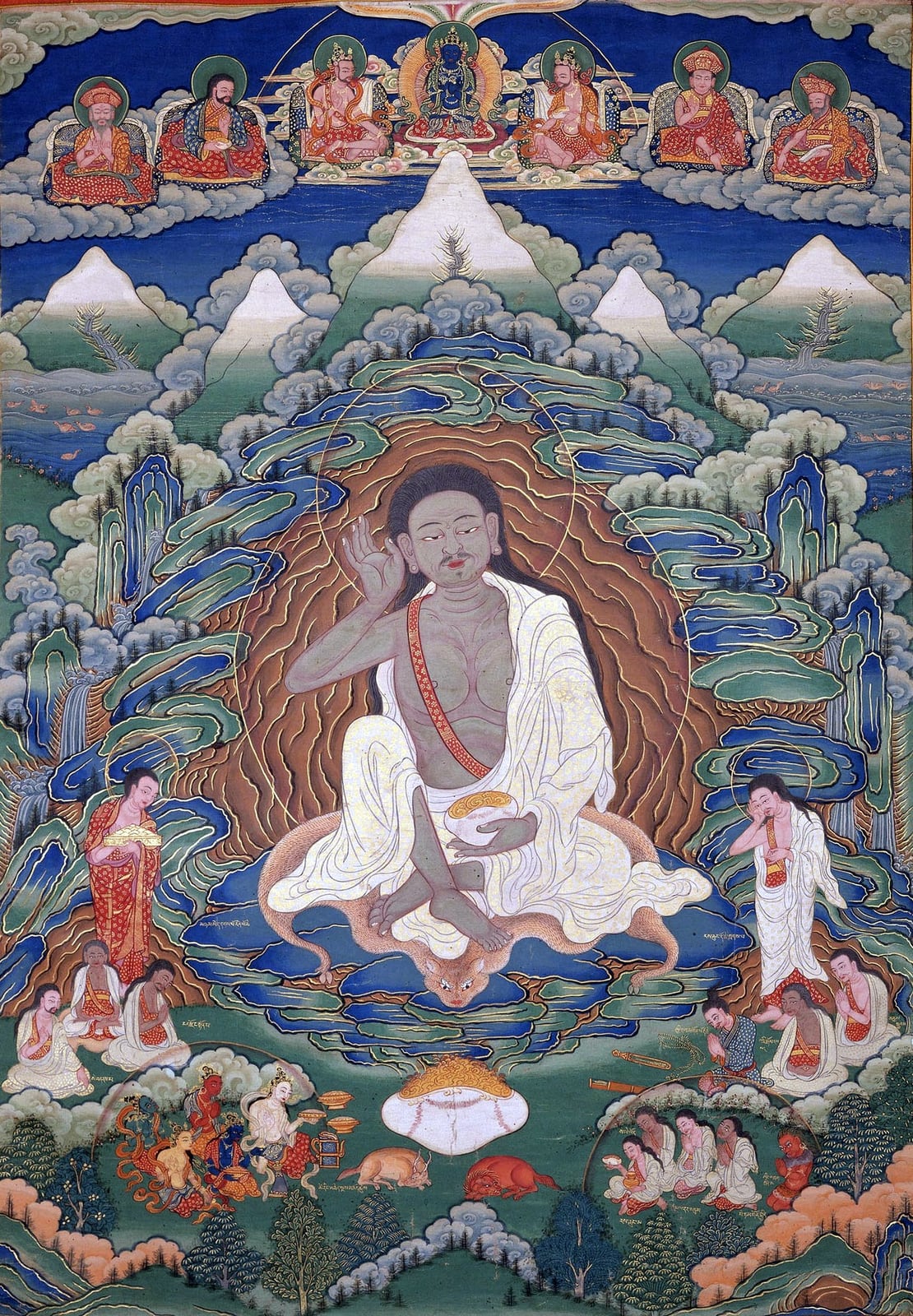
Milarepa
They agree on: What is the Absolute? Does God exist? · Who am I? Is there a true self? · Is the world real?
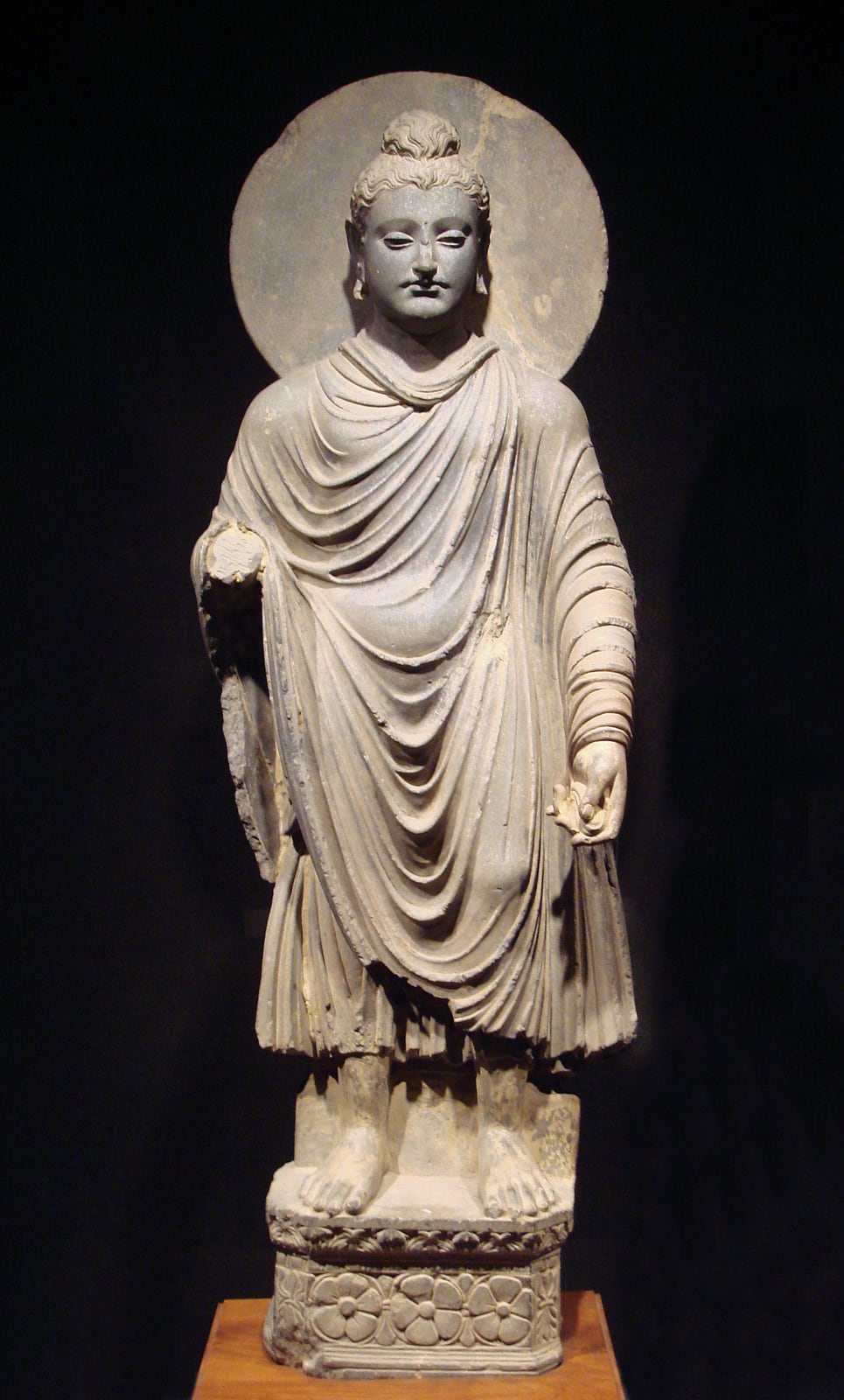
Siddhartha Gautama, the Buddha
They agree on: What is the Absolute? Does God exist? · Who am I? Is there a true self? · Why do we suffer?
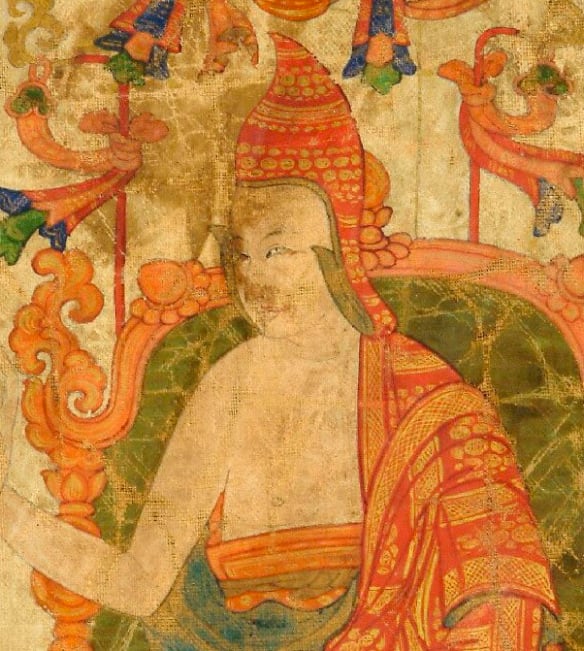
Śāntideva
They agree on: What is the Absolute? Does God exist? · Who am I? Is there a true self? · Why do we suffer?

Pema Chödrön
They agree on: What is the Absolute? Does God exist? · Who am I? Is there a true self? · Why do we suffer?
Thinks most unlike
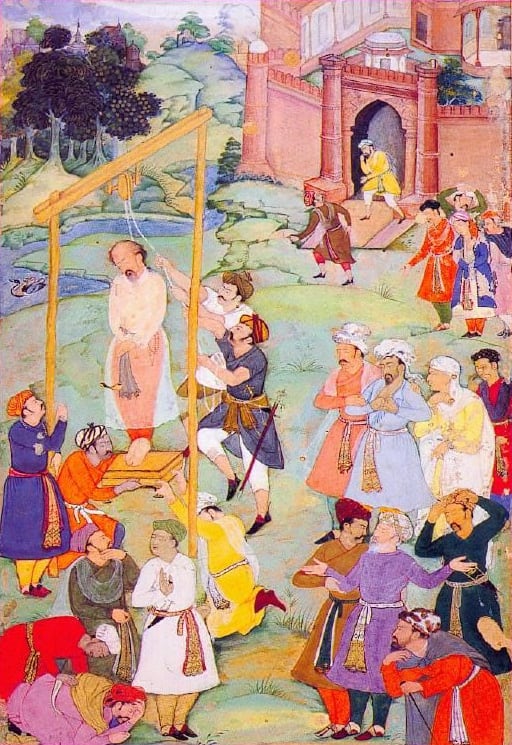
Al-Hallaj
They clash on: What is the Absolute? Does God exist? · Who am I? Is there a true self? · What happens after death?

Francis of Assisi
They clash on: What is the Absolute? Does God exist? · Who am I? Is there a true self? · What happens after death?

Nikolai Berdyaev
They clash on: Who am I? Is there a true self? · What happens after death? · Is a teacher necessary?
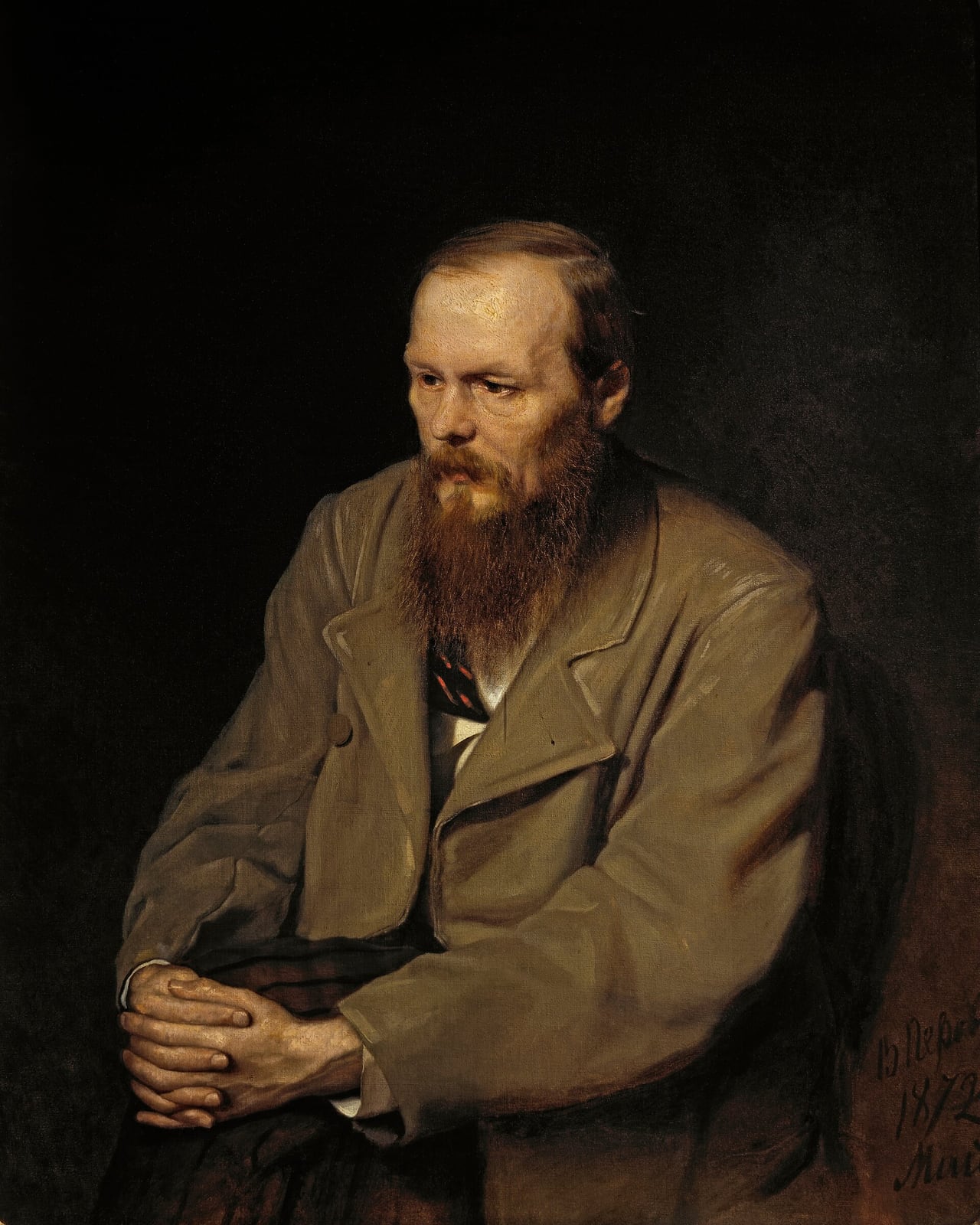
Fyodor Dostoevsky
They clash on: What is the Absolute? Does God exist? · Who am I? Is there a true self? · What happens after death?
Anecdotes and stories
Anecdotes and stories
Testimony1845–1846
The tree of ten thousand images
Origin of the story: Huc, Souvenirs d'un voyage dans la Tartarie, le Thibet et la Chine (1850), vol. II, chapter on Kumbum; English translation by William Hazlitt (1852), vol. 2, 'The Tree of Ten Thousand Images' (Project Gutenberg no. 33269). The legend of the tree's birth is hagiographic; the description of the tree is Huc's direct testimony. Huc's closing comment is summarised, not quoted.
Source: Huc, Évariste-Régis. Souvenirs d'un voyage dans la Tartarie, le Thibet et la Chine pendant les années 1844, 1845 et 1846. 2 vols. París: Adrien Le Clere, 1850 (descripción de Kumbum y del «árbol de las diez mil imágenes»).
Hagiographic accountc. 1390–1398
Questions to Mañjuśrī
Origin of the story: Khedrup Gelek Pelzang's biographies, especially the 'secret' one (gsang ba'i rnam thar, vol. 1 of the collected works); summarised and analysed in Jinpa 2019, chs. 5–7. Tsongkhapa left a note on the signs seen at Wölkha (bka' 'bum thor bu 02.3.037) and a letter to Umapa (02.3.045).
Source: Jinpa, Thupten. Tsongkhapa: A Buddha in the Land of Snows. Boulder: Shambhala Publications, 2019. ISBN 9781611806465.
Hagiographic account1392–1393
The prostrations of Wölkha
Origin of the story: Traditional biographies (Khedrup) and their oral circulation in Geluk monasteries; Jinpa 2019 discusses the retreat. The specific figures come from oral tradition and later biographies, not from Tsongkhapa's writings.
Source: Jinpa, Thupten. Tsongkhapa: A Buddha in the Land of Snows. Boulder: Shambhala Publications, 2019. ISBN 9781611806465.
Hagiographic accountc. 1397–1398
The dream of Nāgārjuna
Origin of the story: Khedrup Gelek Pelzang's biography (dad pa'i 'jug ngogs); Jinpa 2019; Thurman (ed.) 1982. The dating varies between 1397 and 1398 according to the sources.
Source: Jinpa, Thupten. Tsongkhapa: A Buddha in the Land of Snows. Boulder: Shambhala Publications, 2019. ISBN 9781611806465.
Documented1407–1414
The emperor's invitation
Origin of the story: Sparham and Ehm (SEP) give the invitations of 1407 and 1413; the letter appears in the bka' 'bum thor bu (BDRC index 02.3.110). Shakya Yeshe's journey to court and the founding of Sera are documented in Geluk historiography and Chinese sources.
Oral traditionfinales del s. XIV
The prayer that returned to its author
Origin of the story: An account from the Geluk tradition, recorded by Jinpa 2019 and by Lotsawa House in its introduction to the 'Prayer to Rendawa'. The praises to Rendawa appear in the bka' 'bum thor bu (02.3.004–006).
Source: Jinpa, Thupten. Tsongkhapa: A Buddha in the Land of Snows. Boulder: Shambhala Publications, 2019. ISBN 9781611806465.
Disputed1959–1969
What remained of his body
Origin of the story: Laird, The Story of Tibet (2006), cited in Wikipedia's 'Ganden Monastery' article; the tooth version comes from the same encyclopaedia ('Je Tsongkhapa') and from unverified exile accounts. The exact date of the cremation could not be established.
Source: Laird, Thomas. The Story of Tibet: Conversations with the Dalai Lama. Nueva York: Grove Press, 2006.
Teachings
Teachings
The notions that structure their thought, explained in context.
Stages of the path (lamrim)lamrim
Heir to Atiśa's Kadam tradition; the axis of Geluk training, also adopted with variations by other Tibetan schools.
Source: Tsong-kha-pa. The Great Treatise on the Stages of the Path to Enlightenment. Trad. Lamrim Chenmo Translation Committee; ed. Joshua W. C. Cutler y Guy Newland. 3 vols. Ithaca (NY): Snow Lion, 2000–2004. ISBN 9781559391528, 9781559391689, 9781559391665.
The three principal aspects of the pathtres-aspectos-principales
A synthesis of the lamrim; received according to tradition as an instruction from Mañjuśrī.
Source: Jinpa, Thupten. Tsongkhapa: A Buddha in the Land of Snows. Boulder: Shambhala Publications, 2019. ISBN 9781611806465.
The object of negationdgag-bya
Prāsaṅgika Madhyamaka; Tibetan scholastic controversy of the fifteenth and sixteenth centuries.
Emptiness and dependent originationorigen-dependiente-vacuidad
Nāgārjuna's Madhyamaka in Candrakīrti's Prāsaṅgika interpretation.
Source: Tsongkhapa. Ocean of Reasoning: A Great Commentary on Nāgārjuna's Mūlamadhyamakakārikā. Trad. Geshe Ngawang Samten y Jay L. Garfield. Nueva York: Oxford University Press, 2006. ISBN 9780195147339.
The eight difficult pointsocho-puntos-dificiles
Tibetan Madhyamaka doxography.
Union of calm abiding and special insightshamatha-vipashyana
The final section of the Lamrim Chenmo and the Middle-Length Lamrim; Tibetan polemic against the 'sudden' model attributed to Chan.
Source: Tsong-kha-pa. The Great Treatise on the Stages of the Path to Enlightenment. Trad. Lamrim Chenmo Translation Committee; ed. Joshua W. C. Cutler y Guy Newland. 3 vols. Ithaca (NY): Snow Lion, 2000–2004. ISBN 9781559391528, 9781559391689, 9781559391665.
Videos
Videos
Recordings, interviews and documentaries. Videos play from YouTube; they are not hosted here.
Thupten Jinpa PhD - "Tsongkhapa: Philosopher, Teacher and Yogi"
Lecture· EN· 138 min
Tse Chen Ling Center
Thubten Jinpa | Tsongkhapa: Philosopher, Teacher & Yogi
Lecture· EN· 143 min
Jamyang Buddhist Centre
Tsongkhapa's Vision of Manjushri in Wölkha – Thupten Jinpa PhD
Lecture· EN· 90 min
Tse Chen Ling Center
Mystical Dimensions of Tsongkhapa with Thupten Jinpa (Full Talk)
Lecture· EN· 43 min
Sacred Stream
Thupten Jinpa on Tsongkhapa and Negating Too Much
Analysis· EN· 8 min
Wisdom Publications Inc.Official channel
Robert Thurman - "The Life and Legacy of Lama Tsongkhapa"
Lecture· EN· 119 min
Tse Chen Ling Center
What is Tsongkhapa's Essence of True Eloquence? Robert A.F. Thurman Exploring Buddhism
Lecture· EN· 117 min
Tibet House US NYC | Menla Resort OnlineOfficial channel
“Three Principal Aspects of the Path" & "Concise Stages of the Path to Enlightenment"
Lecture· EN· 71 min
Dalai LamaOfficial channel
«Los Tres Aspectos Principales del Camino» y el «Lamrim Abreviado», de Tsongkhapa
Lecture· ES· 71 min
El Dalái LamaOfficial channel
Tsongkhapa's "Praise to Dependent Origination"
Lecture· EN· 171 min
Dalai Lama Archive
Day6-pm: Great Treatise on the Stages of the Path to Enlightenment
Lecture· EN· 117 min
Dalai LamaOfficial channel
Las cualidades especiales de las enseñanzas de Lama Tsong Khapa
Lecture· ES· 80 min
FPMT EspañolOfficial channel
La Vida de Lama Tsongkhapa - Dr. Alexander Berzin
Third-party recording· ES· 22 min
Narraciones Budismo
Gallery
Gallery
Images with verified licences. Each keeps its authorship and attribution.
Manuscripts
Manuscripts
Manuscript witnesses and ancient texts, with their custodian and conditions of access.
BO · Tibetano (dbu can) · 1388–1419
རྗེ་ཙོང་ཁ་པའི་གསུང་འབུམ། (gsung 'bum, bkras lhun par rnying)
- Surviving witness
- Xilografía de las planchas antiguas de Tashi Lhunpo, 18 vols.; reimpresión fotográfica de Dharamsala (Sherig Parkhang), 1997
- Custodian
- Buddhist Digital Resource Center (BDRC), copia digital · bdr:MW29193 (índice bdr:O2DB2379)
- Digitisation
- library.bdrc.io/show/bdr:MW29193…
Connections
Connections
Influences, discipleships and affinities. Documented relations are distinguished from similarities identified by analysis.
Influenced by
Candrakīrti
His principal authority in Madhyamaka; Illuminating the Intent comments on his Entering the Middle Way.
Documented relation
Influenced by
His philosophy is a reading of Nāgārjuna; the Ocean of Reasoning comments chapter by chapter on the Mūlamadhyamakakārikā, and he also annotated the Sixty Stanzas of Reasoning.
Documented relation
Influenced by
He taught and annotated the wisdom chapter of the Bodhicaryāvatāra and the Śikṣāsamuccaya (vols. 14 and 16 of his works); Śāntideva is one of the sources of the great-scope lamrim.
Documented relation
Influenced by
Siddhartha Gautama, the Buddha
The Praise of Dependent Origination addresses the Buddha as unsurpassed teacher for teaching dependent origination; the Essence of Eloquence is a hermeneutics of his words.
Documented relation
Influenced by
A lineage relationship, not a personal one: the six yogas of Nāropa that Tsongkhapa expounded in the Book of Three Inspirations are the cycle Marpa transmitted to Milarepa, which he received at Kagyu centres such as Drikung.
Documented relation
Influenced
The 14th Dalai Lama (Tenzin Gyatso)
The 14th Dalai Lama, spiritual head of the Geluk lineage descending from Tsongkhapa through his disciple Gendun Drub (1st Dalai Lama), has taught and commented on the Lamrim Chenmo (From Here to Enlightenment, 2012), the Three Principal Aspects and the Great Exposition of Secret Mantra.
Documented relation
Disagreed with
An indirect, not historical, relationship: the Lamrim Chenmo criticises the concept-free meditation that Tibetan tradition attributed to the Chan master Heshang Moheyan (Samye debate, eighth century), heir of the school that claimed descent from Bodhidharma. Tsongkhapa does not mention Bodhidharma.
Similarity identified by analysis
Disciple of
Rendawa Zhönnu Lodrö (1349–1412)
His principal teacher of Madhyamaka and Abhidharma; he dedicated praises, letters and an instruction to him (vols. 2, 12 and 14).
Documented relation
Influenced by
Atiśa Dīpaṃkara Śrījñāna
The Lamrim Chenmo develops Atiśa's Lamp for the Path to Enlightenment and the Kadam tradition.
Documented relation
Teacher of
Gyaltsab Darma Rinchen (1364–1432)
Chief disciple and first holder of the Ganden throne; he recorded several of his teachings in writing.
Documented relation
Teacher of
Khedrup Gelek Pelzang (1385–1438)
Disciple and author of his principal biographies; retrospectively, the first Panchen Lama.
Documented relation
Teacher of
Gendun Drub (1391–1474)
Disciple, founder of Tashi Lhunpo and posthumously recognised as the first Dalai Lama.
Documented relation
Corresponded with
Emperador Yongle (dinastía Ming)
He invited him to court in 1407 and 1413; Tsongkhapa declined by letter.
Documented relation
Linked from other profiles
Sources
Sources
Bibliography and catalogues consulted for this profile.
- Wikidata, «Tsongkhapa», QID Q323439 (VIAF 65296968; LCCN n80017690; BDRC bdr:P64; Treasury of Lives 8986).
- Jinpa, Thupten. Tsongkhapa: A Buddha in the Land of Snows. Boulder: Shambhala Publications, 2019. ISBN 9781611806465.
- Sparham, Gareth, y Chandra Chiara Ehm. «Tsongkhapa». En Edward N. Zalta (ed.), The Stanford Encyclopedia of Philosophy. Primera publicación 18 de julio de 2011; revisión sustancial 17 de abril de 2024.
- Buddhist Digital Resource Center (BDRC). gsung 'bum/ tsong kha pa (bkras lhun par rnying / d+ha sar bskyar par brgyab pa), reimpresión de las planchas antiguas de Tashi Lhunpo, Dharamsala, 1997, 18 vols., instancia bdr:MW29193, índice bdr:O2DB2379 (contenido volumen por volumen).
- Thurman, Robert A. F. (ed.). The Life and Teachings of Tsong Khapa. Dharamsala: Library of Tibetan Works and Archives, 1982; nueva ed. 2006, ISBN 9788186470442. Incluye la traducción de la biografía tradicional y de varias obras breves.
- Tsong-kha-pa. The Great Treatise on the Stages of the Path to Enlightenment. Trad. Lamrim Chenmo Translation Committee; ed. Joshua W. C. Cutler y Guy Newland. 3 vols. Ithaca (NY): Snow Lion, 2000–2004. ISBN 9781559391528, 9781559391689, 9781559391665.
- Tsongkhapa. Ocean of Reasoning: A Great Commentary on Nāgārjuna's Mūlamadhyamakakārikā. Trad. Geshe Ngawang Samten y Jay L. Garfield. Nueva York: Oxford University Press, 2006. ISBN 9780195147339.
- Thurman, Robert A. F. Tsong Khapa's Speech of Gold in the Essence of True Eloquence: Reason and Enlightenment in the Central Philosophy of Tibet. Princeton: Princeton University Press, 1984. ISBN 9780691072852 (reed. como The Central Philosophy of Tibet, 1991, ISBN 9780691020679).
- Jinpa, Thupten. Self, Reality and Reason in Tibetan Philosophy: Tsongkhapa's Quest for the Middle Way. Londres: RoutledgeCurzon, 2002.
- Ary, Elijah S. Authorized Lives: Biography and the Early Formation of Geluk Identity. Somerville (MA): Wisdom Publications, 2015.
- Laird, Thomas. The Story of Tibet: Conversations with the Dalai Lama. Nueva York: Grove Press, 2006.
- Wikipedia (en). «Je Tsongkhapa», «Ganden Monastery» y «Monlam Prayer Festival». Usadas como índice de traducciones y bibliografía secundaria; contrastadas con t2, t3 y t4.
- Wikimedia Commons, API imageinfo (licencia, autor, fecha y descripción de cada fichero citado en images[]).
- Open Library (Internet Archive). Registros de ISBN de cada edición citada en works[].
- Huc, Évariste-Régis. Souvenirs d'un voyage dans la Tartarie, le Thibet et la Chine pendant les années 1844, 1845 et 1846. 2 vols. París: Adrien Le Clere, 1850 (descripción de Kumbum y del «árbol de las diez mil imágenes»).
- Ium, Michael. «Tsongkhapa as a mahāsiddha». Journal of the International Association of Buddhist Studies 45 (2022): 73–117. doi:10.2143/JIABS.45.0.3291577.
- Kilty, Gavin (trad.). The Splendor of an Autumn Moon: The Devotional Verse of Tsongkhapa. Boston: Wisdom Publications, 2001. ISBN 9780861711925.
- Mullin, Glenn H. Tsongkhapa's Six Yogas of Naropa. Ithaca (NY): Snow Lion, 1996. ISBN 9781559390583.
- Dalai Lama (Tenzin Gyatso). From Here to Enlightenment: An Introduction to Tsong-kha-pa's Classic Text The Great Treatise on the Stages of the Path to Enlightenment. Ed. y trad. Guy Newland. Boston: Snow Lion, 2012. Trad. esp.: De aquí a la iluminación, Madrid: Gaia Ediciones, 2014, ISBN 9788484454854.
- YouTube: conferencias y documentales verificados por oEmbed el 2026-10-25 (detalle en videos[]).
- Lotsawa House. «Three Principal Aspects of the Path» (lam gyi gtso bo rnam gsum), texto tibetano con colofón; y presentación de «Prayer to Rendawa Zhönnu Lodrö».
- Rights holder
- Obra original en dominio público (m. 1419). Las traducciones modernas tienen derechos propios: Shambhala Publications/Snow Lion (Lamrim Chenmo; Gran exposición del mantra secreto; Seis yogas), Wisdom Publications (Iluminación del pensamiento, Lamrim medio, Lámpara de las cinco etapas, ética tántrica), Oxford University Press (Océano de razonamiento), Princeton University Press (Esencia de la elocuencia), SUNY Press, Ediciones Dharma (versión española del Lamrim Chenmo), Gaia Ediciones.
Pending confirmation
What this profile has not yet been able to settle. We would rather say so than fill it in.
- Sala de lectura: no se ha encontrado ningún texto de Tsongkhapa en dominio público con texto completo en Gutenberg, Wikisource (inglés, chino, multilingüe) ni Internet Archive con OCR limpio. Todas las traducciones occidentales son posteriores a 1970 y la china de Fazun (m. 1980) tiene derechos en la UE y en España. El texto tibetano original (libre en todas partes) solo está en BDRC, que el importador no lee. Revisar si BDRC o el ACIP ofrecen e-textos importables.
- Ediciones españolas: solo se han verificado en catálogo las de Ediciones Dharma (Lamrim Chenmo, 2000, 2007, 2011; el catálogo no indica qué volumen es cada una) y el comentario del Dalái Lama (Gaia, 2014). No se ha localizado con ISBN una edición española de Los tres aspectos principales, la Alabanza del origen dependiente ni de la Gran exposición del mantra secreto.
- Las obras secundarias de las obras completas (vols. 1–12, 14–18) se han registrado a partir del índice de BDRC; sus títulos se han traducido y descrito según el título y el género, sin lectura del texto. Algunas identificaciones quedan por confirmar: 01.09 (zhu lan sman mchog), 07.6 («Los cuatrocientos cincuenta»), 11.07 (a tsa la gar b+ha), 14.4 (relación con el Lamrim medio) y 02.3.056 (identificación con Yon tan gzhir gyur ma).
- Los textos del vol. 1 que son biografías de Tsongkhapa escritas por discípulos (01.01–01.04, entre ellas las de Khedrup) y el colofón de impresión del vol. 13 no se registran como obras suyas; se mencionan en la entrada «gsung-bum».
- Fechas: ordenación completa (c. 1381) y novicio (c. 1363) proceden de la tradición biográfica resumida en Jinpa 2019; no se ha podido leer el libro directamente. Treasury of Lives (8986) devuelve 403 a clientes automáticos.
- Citas: el texto tibetano de Los tres aspectos principales se ha cotejado con Lotsawa House; las traducciones al español e inglés son del investigador. La primera estrofa de la Alabanza del origen dependiente se da de memoria y está marcada como «probable»: cotejar con una edición.
- Relación con Padmasambhava: no se ha documentado ninguna relación directa entre ambos (separados por seis siglos y escuelas distintas); no se registra.
- Duraciones de vídeo tomadas de la página de resultados de YouTube; el año de publicación no se ha registrado (la API oEmbed no lo devuelve).
Researched on 2026-10-25