Christianity · Christian mysticism · Catholicism
Francis of Assisi
c. 1182 – 1226Historically documented person
The son of a wealthy Assisi cloth merchant (c. 1182–1226), he abandoned his father's trade to live the Gospel 'to the letter' among lepers and the poor. He founded the Order of Friars Minor, inspired Clare of Assisi and the Third Order, wrote the Canticle of the Creatures, one of the first poems in Italian, and left a handful of authentic writings: rules, admonitions, letters, praises and a Testament. Canonised in 1228, his historical figure coexists with a vast hagiography that must be read in layers.
- works
- 44works
- editions
- 121editions
- quotes
- 10quotes
- videos
- 14videos
- images
- 8images

Fresco de «Frater Franciscus» en el Sacro Speco de Subiaco · Public domain
In their words
«Most High, all-powerful, good Lord, yours are the praises, the glory and the honour and all blessing.»Cántico de las criaturas, v. 1 (Asís, Biblioteca del Sacro Convento, cód. 338)

Their central idea
Living 'without anything of one's own': The formula 'sine proprio', which opens the 1223 Rule alongside obedience and chastity, is broader than material poverty.
See in context
Biography
6 min read
A merchant of Assisi
Giovanni di Pietro di Bernardone was born in Assisi around 1181 or 1182, in an Umbrian town struggling to free itself from the feudal nobility and the emperor. His father, Pietro, was a cloth merchant who traded at the fairs of Champagne; his mother was called Pica. According to tradition the father, back from France, changed the boy's baptismal name to Francesco, 'the Frenchman'. He learned elementary Latin at the parish school of San Giorgio, some French and the art of selling, and his youth was that of a son of the rising bourgeoisie: money, feasts, chivalric ambition.
In 1202 he fought with the Assisi militia against Perugia at Collestrada and spent about a year in prison. He came back ill. Around 1205 he enlisted for a military expedition to Apulia but abandoned it at Spoleto; later biographies turn that return into the first sign of a calling. What the sources allow us to say is more sober: a long crisis, impossible to date precisely, in which the young merchant ceased to recognise himself in the life that awaited him.
Among the lepers
The conversion has a first-hand witness, Francis himself in his Testament of 1226: when he was 'in sins' it seemed exceedingly bitter to him to see lepers; the Lord led him among them, he showed them mercy, and what had been bitter was turned into sweetness of soul and body. There are no heavenly voices in that account, but a social displacement: the merchant's son takes the side of the town's outcasts. Everything else, visions and dreams of arms, comes from biographers who wrote after his death.
To this period belongs the repair of the little church of San Damiano, which the Legend of the Three Companions and Thomas of Celano's second life link to a crucifix that supposedly told him 'Francis, go and repair my house'. To pay for the work he sold his father's cloth; his father denounced him to the consuls and then to Bishop Guido. At that hearing, probably in 1206, Francis returned the money, stripped off his clothes and declared that from then on he would say only 'Our Father who art in heaven'. The scene, transmitted by all the early sources, marks his exit from the mercantile order.
In 1208 or 1209, hearing at the Portiuncula the passage in which Jesus sends the disciples out without gold or bag (Mt 10), he understood that this was his form of life. Bernard of Quintavalle, Peter Catanii and others joined him; around 1209 or 1210 they went to Rome, and Innocent III orally approved a short rule made of Gospel quotations. The Testament itself says so: no one showed him what he should do, but the Most High revealed to him that he should live according to the form of the holy Gospel.
A brotherhood that grew too fast
On the night of Palm Sunday 1212, Clare, the daughter of a noble Assisi family, fled her home and received the habit from Francis; with her the Poor Ladies of San Damiano were born. The fraternity of the 'lesser ones', the minores, the lower orders in the social vocabulary of the communes, grew at a speed no one had foreseen: itinerant preaching, manual work, begging when wages failed, annual chapters at the Portiuncula and, from 1217, missions beyond Italy.
In 1219 Francis sailed with the crusaders to Damietta in Egypt, crossed the lines and was received by the sultan al-Malik al-Kamil. A contemporary observer outside the order, Bishop Jacques de Vitry, attests it in a letter of 1220: the sultan listened to him for several days and sent him back with a safe-conduct. The proposal of an ordeal by fire appears much later, in Bonaventure, and belongs to the construction of the saint, not to the record of the meeting.
On his return in 1220 he found an order of thousands of brothers torn between the ideal of absolute poverty and the demands of an institution. He resigned the government in favour of Peter Catanii and, after his death, Elias of Cortona. He drafted the Rule of 1221, called 'non-bullata', long and exhortatory, and in 1223 a more juridical version that Honorius III approved with the bull Solet annuere of 29 November. The distance between the two measures the price of institutionalisation.
La Verna, the Canticle and death
At Christmas 1223 he celebrated a Mass at Greccio before a manger with an ox and an ass, a scene Celano narrates as the origin of a popular devotion. In September 1224, in retreat on Mount La Verna, he received according to his companions the wounds of Christ in hands, feet and side. What is documented is the autograph 'chartula' he gave there to Brother Leo, with Leo's rubric about the vision of the seraph, the letter in which Elias announced the stigmata after the death, whose authenticity is debated, and Celano's account. Chiara Frugoni has shown how text and image gradually fixed the event; its nature lies beyond history.
Almost blind and ill, subjected to cauterisation of the temples, he composed in 1225 at San Damiano the Canticle of Brother Sun in the Umbrian vernacular: a praise of the Most High 'with' and 'through' sun, moon, wind, water, fire and earth, to which he added verses on forgiveness to reconcile the bishop and the podestà and, at the end, the stanza on 'Sister bodily Death'. It is one of the first poetic texts of Italian literature.
He died at nightfall on 3 October 1226 beside the Portiuncula, laid on the ground at his own wish, after dictating his Testament. Gregory IX, the former cardinal protector Hugolino, canonised him in Assisi on 16 July 1228 and had the basilica built to which his body was moved in 1230; the tomb, hidden at the time, was not rediscovered until 1818.
The layers of a legend
Almost everything told about Francis comes from a hagiography written by an order in conflict with itself. Thomas of Celano composed the first life in 1228–1229 and a second in 1246–1247 with the companions' recollections; the Legend of the Three Companions and the Assisi Compilation belong to that memory. In 1260–1263 Bonaventure wrote the Major Legend, and the general chapter of 1266 ordered the earlier ones destroyed. In 2014 Jacques Dalarun identified, in a manuscript of the Bibliothèque nationale de France, a hitherto unknown abridged life by Celano.
The Little Flowers, which fixed the popular image of the saint, are the Tuscan version of the Actus beati Francisci, compiled a century after his death: the wolf of Gubbio appears there for the first time. The famous prayer 'Lord, make me an instrument of your peace' is not his: it was published anonymously in Paris in 1912 and attributed to him from the late 1920s. Separating the man from his legend does not diminish him; it allows him to be read in his own words, which are few, hard and luminous.
His institutional legacy (the Friars Minor and their branches, the Poor Clares, the Third Order) and his symbolic legacy have overflowed the Church. John Paul II proclaimed him patron of those who cultivate ecology in 1979; in 2013 a pope took his name for the first time, and the encyclical Laudato si' (2015) opened with the first line of his Canticle.
Sources: Esser, Kajetan, O.F.M. Die Opuscula des hl. Franziskus von Assisi. Neue textkritische Edition. Grottaferrata: Collegium S. Bonaventurae ad Claras Aquas, 1976 (Spicilegium Bonaventurianum 13); editio minor: Opuscula sancti patris Francisci Assisiensis, 1978 (Bibliotheca Franciscana Ascetica Medii Aevi 12). · Armstrong, Regis J.; Hellmann, J. A. Wayne; Short, William J. (eds.). Francis of Assisi: Early Documents. 3 vols. e índice. Nueva York: New City Press, 1999–2002 (vol. 1, The Saint, ISBN 1565481100). · Guerra, José Antonio (ed.). San Francisco de Asís: Escritos, biografías, documentos de la época. Madrid: Biblioteca de Autores Cristianos (BAC 399), 1978; reed. 2003 (ISBN 8479146273). · Vauchez, André. François d'Assise. Entre histoire et mémoire. París: Fayard, 2009. Trad. ingl.: Francis of Assisi. The Life and Afterlife of a Medieval Saint. New Haven: Yale University Press, 2012. · Thompson, Augustine, O.P. Francis of Assisi: A New Biography. Ithaca: Cornell University Press, 2012.
Timeline
A life, year by year
Each point is a documented event. Click to read it, with its source and degree of certainty.
c. 1182age 0Asís
Birth
Giovanni is born to the cloth merchant Pietro di Bernardone and Pica. The sources waver between 1181 and 1182; his father is said to have given him the name Francesco.
DocumentedVauchez, André. François d'Assise. Entre histoire et mémoire. París: Fayard, 2009. Trad. ingl.: Francis of Assisi. The Life and Afterlife of a Medieval Saint. New Haven: Yale University Press, 2012.
After their death
- July 16, 1228Canonisation
- May 25, 1230Translation to the basilica
- c. 1263Bonaventure's Major Legend
- November 29, 1979Patron of ecology
- 2014A lost life by Celano
c. 1182 · age 0
Birth
Giovanni is born to the cloth merchant Pietro di Bernardone and Pica. The sources waver between 1181 and 1182; his father is said to have given him the name Francesco.
Documented
1202 · age 20
War and prison
He fights for Assisi against Perugia at Collestrada; taken prisoner, he spends about a year in jail and comes out ill.
Documented
c. 1205 · age 23
Return from Spoleto
He abandons a military expedition to Apulia. Later biographies place here a dream or a voice that made him turn back.
Tradition
c. 1206 · age 24
Renunciation before the bishop
Denounced by his father, he gives back money and clothes before Bishop Guido and leaves the merchant life. He repairs San Damiano and other small churches.
Documented
c. 1208 · age 26
The Gospel of mission
At the Portiuncula he hears Mt 10 and adopts the poor itinerant life; the first companions join him (1208–1209).
Probable
c. 1209 · age 27
Oral approval by Innocent III
Innocent III orally approves the brothers' first form of life (1209 or 1210).
Documented
March 1212 · age 30
Clare of Assisi
On the night of Palm Sunday Clare leaves home and receives the habit; the Poor Ladies of San Damiano are born.
Documented
1219 · age 37
Before the sultan al-Kamil
He accompanies the crusaders and is received by the sultan al-Malik al-Kamil, according to Jacques de Vitry's letter (1220).
Documented
c. 1220 · age 38
Resignation from governing the order
Back from the East, he hands the government to Peter Catanii and then to Elias of Cortona.
Probable
1221 · age 39
Earlier Rule (Regula non bullata)
Drafting of the long rule presented at the Pentecost chapter of 1221, never approved by bull.
Documented
November 29, 1223 · age 41
Later Rule (Regula bullata)
Honorius III approves the definitive rule of the Friars Minor with the bull Solet annuere.
Documented
December 1223 · age 41
The crib at Greccio
He celebrates Christmas with a manger, an ox and an ass; Celano narrates it in his first life (1C 84–87).
Probable
September 1224 · age 42
The stigmata
During a Lent on La Verna his companions attest the wounds; he writes for Brother Leo the Praises of God Most High and his blessing (autograph preserved).
Disputed
1225 · age 43
The Canticle of Brother Sun
Ill and almost blind, he composes the Canticle of the Creatures in the Umbrian vernacular; he later adds the stanzas on forgiveness and death.
Documented
1226 · age 44
Testaments
He dictates the brief Siena Testament and, shortly before dying, the Testament, a memoir of his conversion and an exhortation to fidelity to the rule.
Documented
October 3, 1226 · age 44
Death
He dies at nightfall, laid on the ground, beside the Portiuncula.
Documented
July 16, 1228
Canonisation
Gregory IX canonises him in Assisi and lays the first stone of the basilica.
Documented
May 25, 1230
Translation to the basilica
His body is moved to the new basilica and hidden; the tomb would not be rediscovered until 1818.
Documented
c. 1263
Bonaventure's Major Legend
Bonaventure composes the official biography (1260–1263); the chapter of 1266 orders the earlier legends destroyed.
Documented
November 29, 1979
Patron of ecology
John Paul II proclaims him heavenly patron of those who promote ecology (bull Inter sanctos).
Documented
2014
A lost life by Celano
Jacques Dalarun identifies at the BnF Thomas of Celano's Vita brevior, published in 2015.
Documented
Works
Essential works
The works without which their legacy cannot be understood.
Written work · 1225
Canticle of the Creatures (Canticle of Brother Sun)
Laudes creaturarum (Cantico di frate Sole)
Thirty-odd lines of rhymed prose praising the Most High 'with all his creatures': Brother Sun, Sister Moon and the stars, Brother Wind, Sister Water, Brother Fire and Sister Mother Earth; then those who forgive for his love and 'Sister bodily Death'. The preposition 'per' admits instrumental, causal or agentive readings, and critics still debate it. It is one of the first poems of Italian literature and the most read Franciscan text.
5 editions · amazon.com
Written work · c. 1220
Admonitions
Admonitiones
Twenty-eight short exhortations, nearly all in the form of beatitudes ('Blessed is the servant who…'), that dismantle the appropriation of one's own will, learning, virtue or office. They contain some of Francis's most quoted formulas: a person is worth what he is worth before God, 'and no more'; where there is poverty with joy there is neither greed nor avarice. They are the core of his spiritual teaching.
4 editions · amazon.com

Written work · 1226
Testament
Testamentum
A memoir of his own conversion (the lepers, the churches, the first brothers, the revelation to live according to the Gospel, the greeting 'The Lord give you peace') and a final exhortation to keep the Rule 'simply and without gloss', forbidding requests for privileges from the curia. It is Francis's most personal text and the main autobiographical source on his life.
5 editions · amazon.com

Traditional attribution · c. 1380
The Little Flowers of Saint Francis
Fioretti di san Francesco (de los Actus beati Francisci et sociorum eius)
Fifty-three chapters of stories about Francis and his companions (the wolf of Gubbio, the sermon to the birds, perfect joy, Brother Juniper, Brother Masseo) written with a freshness that has made them a classic of fourteenth-century Italian prose. They are the source of the saint's popular image, but not a record of his life: they should be read as memory and as literature.
6 editions · amazon.com
Complete works (44)
Earlier Rule (Regula non bullata, 1221)
1221
Later Rule (Regula bullata, 1223)
1223
Rule for Hermitages
1218
Earlier Exhortation to the Brothers and Sisters of Penance (First Letter to the Faithful)
1215
Later Admonition and Exhortation to the Brothers and Sisters of Penance (Second Letter to the Faithful)
1220
Exhortation to the Clergy (Letter to the Clergy)
1220
Letters to the Custodians (first and second)
1220
Letter to the Rulers of the Peoples
1220
Letter to the Entire Order
1225
Letter to a Minister
1221
Letter to Brother Anthony of Padua
1223
Letter to Brother Leo
1220
The Praises of God and the Blessing for Brother Leo (Chartula)
1224
The Praises to Be Said at All the Hours
1220
Exhortation to the Praise of God
1220
The Office of the Passion
1220
The Prayer before the Crucifix
1206
A Salutation of the Blessed Virgin Mary
1220
A Salutation of the Virtues
1220
A Prayer Inspired by the Our Father
1215
Form of Life and Last Will for Saint Clare
1212
The Canticle of Exhortation to the Poor Ladies ('Audite, poverelle')
1225
The Testament Written in Siena
1226
Fragments of Another Rule
1222
Quotations
Quotations located in a specific work. Each carries its provenance and its level of confidence.
Most High, all-powerful, good Lord, yours are the praises, the glory and the honour and all blessing.Altissimu onnipotente bon signore, tue so' le laude la gloria e l'honore et onne benedictione.
VerifiedCántico de las criaturas, v. 1 (Asís, Biblioteca del Sacro Convento, cód. 338)
Apocryphal quotes or disputed attributions (3)
«Lord, make me an instrument of your peace: where there is hatred, let me sow love; where there is injury, pardon…»
Published anonymously in Paris in December 1912 (La Clochette) and attributed to Francis from 1927. It appears in no manuscript or medieval source. See the work 'Peace Prayer'.
«Preach the Gospel at all times and, if necessary, use words.»
It does not appear in his writings or in the medieval biographies. The closest authentic text is Earlier Rule 17:3, 'All the brothers, however, should preach by their deeds', which does not disparage words (the same rule regulates preaching).
«Start by doing what's necessary; then do what's possible; and suddenly you are doing the impossible.»
A modern phrase circulating online; it is not found in the canon of writings established by Esser or in the Franciscan legends.
Last words
Traditional attribution
«I have done what was mine to do; may Christ teach you what is yours.»Ego quod meum est feci; quod vestrum est, Christus vos doceat.
There is no record of his last words, but hagiographic accounts composed from the companions' recollections. Thomas of Celano's second life (2C 214, 1246–1247) puts this sentence in Francis's mouth when, already dying, he asked to be laid naked on the ground; Bonaventure repeats it (Major Legend 14:3). Celano's first life (1C 109–110, 1229) says that in his last hours he intoned Psalm 141 ('Voce mea ad Dominum clamavi') and died on finishing it. Both traditions are compatible, but neither is direct testimony.
Source: Armstrong, Regis J.; Hellmann, J. A. Wayne; Short, William J. (eds.). Francis of Assisi: Early Documents. 3 vols. e índice. Nueva York: New City Press, 1999–2002 (vol. 1, The Saint, ISBN 1565481100).
Ask
What their work answers
Twelve great human questions and what their texts allow us to answer, with references. We never put words in their mouth.
What is the Absolute? Does God exist?
God is the Most High, the highest good, to be praised and thanked
A personal GodStated explicitly
Francis of Assisi does not argue for God's existence: he sings it. His authentic writings are, to a large extent, praises addressed to a Thou. The Praises of God Most High, an autograph preserved in Assisi, string together attributes in the second person: holy, strong, great, most high, three and one, love, humility, patience, all good. The Canticle of the Creatures opens with the «Most High, all-powerful, good Lord» and ascribes to him all praise, glory and honour. In chapter 23 of the Earlier Rule, the great thanksgiving is addressed to the Father, the Son and the Holy Spirit, creator and saviour. This God chooses, reveals and leads: in the Testament, Francis attributes every step of his conversion to the Lord's initiative. The Absolute is, for him, someone to whom one responds with gratitude.
Compare this question with other teachersWho am I? Is there a true self?
A person is what he is before God, and no more
A created, immortal soulInferred from their doctrine
Francis of Assisi does not develop a theory of the self, but his Admonitions contain a precise anthropology. A person's identity lies not in what he owns, knows or appears to be, but in what he is before God: «what a person is before God, that he is, and no more». He places the root of evil in appropriation: Admonition 2 interprets Adam's sin as appropriating one's own will and exalting oneself over the good that God says and does in one. The true self is thus a creature that receives itself and returns every good to its owner; the Earlier Rule asks that one claim nothing as one's own except vices and sins. Like his tradition, he presupposes a created soul destined for eternal life.
Compare this question with other teachersWhy do we suffer?
What is bitter turns sweet when embraced for love
Separation from GodStated explicitly
Francis of Assisi does not explain the origin of suffering; he shows how it changes sign. The Testament begins with that experience: while he was in sin it seemed very bitter to him to see lepers, but the Lord led him among them and what had been bitter was turned into sweetness of soul and body. The dictation on true and perfect joy places perfect joy not in the order's successes but in being turned away, at night and frozen, at the door of one's own house, without losing patience. The suffering that wounds is that of the soul turned away from God by self-appropriation; that which is embraced in union with Christ's cross purifies and unites.
Compare this question with other teachersWhat happens after death?
Bodily death is a sister; only the second death harms
Eternal life and resurrectionStated explicitly
The last stanza that Francis of Assisi added to the Canticle of the Creatures, in 1226, shortly before his death, praises God for sister bodily death, from whom no living man can escape. The same verse distinguishes two deaths: woe to those who die in mortal sin; blessed those whom death finds in God's most holy will, for the second death will do them no harm. The death of the body is no enemy, but part of the creation that gives praise; what is at stake is the person's eternal destiny. The Letter to All the Faithful describes starkly the death of one who lived clinging to his goods, to move readers to penance while there is time.
Compare this question with other teachersHow is liberation or salvation attained?
The Lord gives the beginning; following the poor Christ is the answer
Through grace and loveStated explicitly
In the Testament, Francis of Assisi repeats a formula that says a great deal: «the Lord gave me». The Lord gave him to begin doing penance, gave him faith in churches and priests, gave him brothers, and the Most High himself revealed to him that he should live according to the form of the holy Gospel. Salvation thus begins with a gift. The response is to follow in the footsteps of the poor and humble Christ: the Later Rule sums it up as keeping the Gospel by living in obedience, without anything of one's own and in chastity. The Admonitions insist that every good belongs to God and that the blessed servant is the one who gives it back, without appropriating even his own virtues.
Compare this question with other teachersIs a teacher necessary?
No one showed him the way: the Most High revealed it, within the Church
Community and traditionStated explicitly
Francis of Assisi had no human teacher, and he says so: in the Testament he recalls that, when the Lord gave him brothers, no one showed him what he should do, but the Most High himself revealed to him that he should live according to the form of the holy Gospel. Yet that revelation did not set him apart from ecclesial mediation: in the same Testament he asks that priests and theologians be honoured, he had his form of life approved by the pope and entrusted the brothers to obedience to the minister general and the Roman Church. His school is the fraternity: ministers who serve, brothers who correct one another with mercy, and a common rule. What guides is the Gospel lived in community.
Compare this question with other teachersIs the world real?
Creatures are siblings, and through them the Most High is praised
A good and real creationStated explicitly
The Canticle of the Creatures is Francis of Assisi's answer: the sun, moon, stars, wind, water, fire and earth are brothers and sisters, and through them —or with them, since the Umbrian preposition per admits both readings— the Lord is praised. The world is real, good and beautiful, and bears the meaning of the Most High: brother sun, the text says, is his likeness. But it is not divine: everything comes from God and belongs to him, and praise is due to him alone. The Exhortation to the Praise of God invites heaven, earth, rivers and creatures to bless the Lord, in the line of the Psalms and the canticle of Daniel.
Compare this question with other teachersWhat is love?
Love the brother who sins and do not demand he be better
Love of God and neighbourStated explicitly
For Francis of Assisi love is, before any feeling, a concrete way of treating the other. In the Letter to a Minister he asks a superior burdened by his brothers not to want them to be better Christians, to love them as they are, and that there be no brother in the world who, having sinned as much as he could sin, should leave his presence without having obtained mercy. The Admonitions call blessed the one who loves his brother as much when he is ill and can give nothing back as when he is well. Love of God and love of neighbour form a single charity, learned, according to the Testament, among the lepers.
Compare this question with other teachersAre we free, or is everything determined?
He does not discuss freedom: he denounces appropriating one's own will
Did not address it
Francis of Assisi did not take up the problem of freedom versus providence or fate; he was no school theologian. What he does treat, insistently, is the use of the will. In Admonition 2 he interprets original sin as appropriating one's own will: to eat of the tree of the knowledge of good is to ascribe to oneself the good that God says and does in one. His whole rule rests on obedience, understood as the free surrender of that will, and Admonition 3 calls true and perfect obedience the giving up of oneself. He thus presupposes a will capable of appropriating or giving back, but does not theorise about its freedom or about predestination.
Compare this question with other teachersWhy meditate or pray?
To pray is to praise and make the heart a dwelling for the Lord
Friendship with GodStated explicitly
The writings of Francis of Assisi are full of prayer, and almost always of praise: the Praises of God Most High, the Praises to Be Said at All the Hours, the Office of the Passion composed from verses of the Psalms, the Salutation of the Virgin. His prayer is a relationship with a Thou who is blessed and thanked. The Earlier Rule asks that a home and dwelling place be made in the heart for the Lord, and the Later Rule that the brothers desire above all to have the spirit of the Lord and his holy operation and to pray always with a pure heart; work itself must not extinguish that spirit. The Rule for Hermitages organises retreats of prayer in small groups.
Compare this question with other teachersCan reason know the ultimate?
He does not theorise about reason: he subordinates study to the spirit of prayer
Did not address it
Francis of Assisi did not ask whether reason can know God; he asked what knowledge is for. His answer is practical and cautious. Admonition 7 distinguishes between those who study letters only to be thought wiser and to gain riches, whom the letter kills, and those who give back to God what they know by word and example. The Later Rule asks those who do not know letters not to be anxious to learn them. And the short Letter to Saint Anthony authorises him to teach theology to the brothers, provided that study does not extinguish the spirit of prayer and devotion. Reason is no enemy, but neither is it the way.
Compare this question with other teachersWithdraw from the world or transform it?
From hermitage to the roads: preach by deeds
Contemplation in actionStated explicitly
Francis of Assisi left the world —in the Testament he says that, after serving the lepers, he left the world behind— but he did not shut himself away. His form of life was itinerant: the brothers go through the world with nothing of their own, work with their hands, serve and proclaim peace. The Earlier Rule asks that all preach by their deeds, and the Letter to the Rulers of the Peoples addresses governors to remind them of judgement and ask them to have God honoured. At the same time, the Rule for Hermitages organises retreats of prayer in which some brothers act as mothers, like Martha, and others as sons, like Mary, taking turns. Contemplation and mission alternate and nourish each other.
Compare this question with other teachers
Affinities & tensions
Affinities and tensions
Calculated question by question from their positions. The reason for each agreement or clash, on click.
Thinks most like
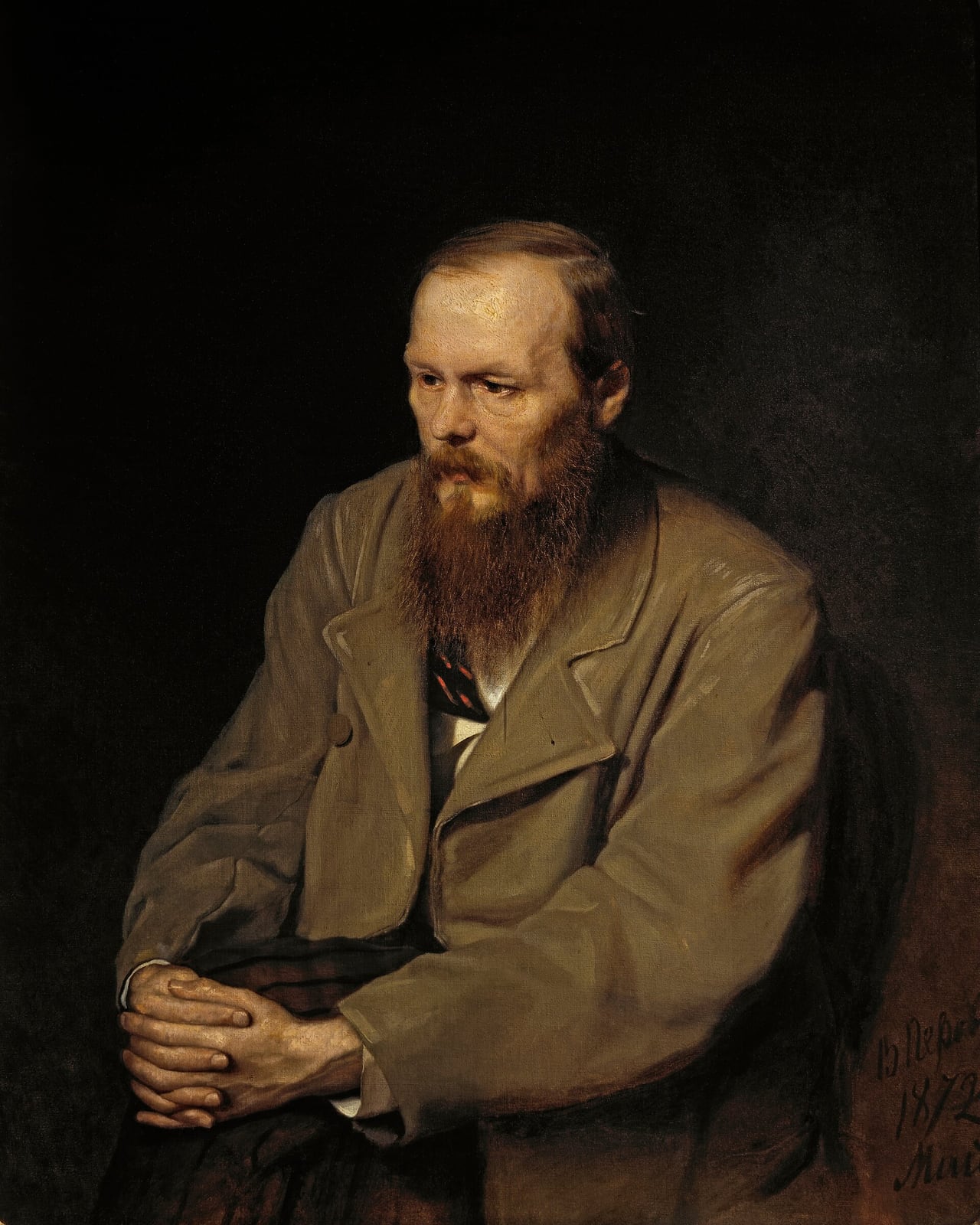
Fyodor Dostoevsky
They agree on: What is the Absolute? Does God exist? · Who am I? Is there a true self? · Why do we suffer?

Theophan the Recluse
They agree on: What is the Absolute? Does God exist? · Who am I? Is there a true self? · Why do we suffer?
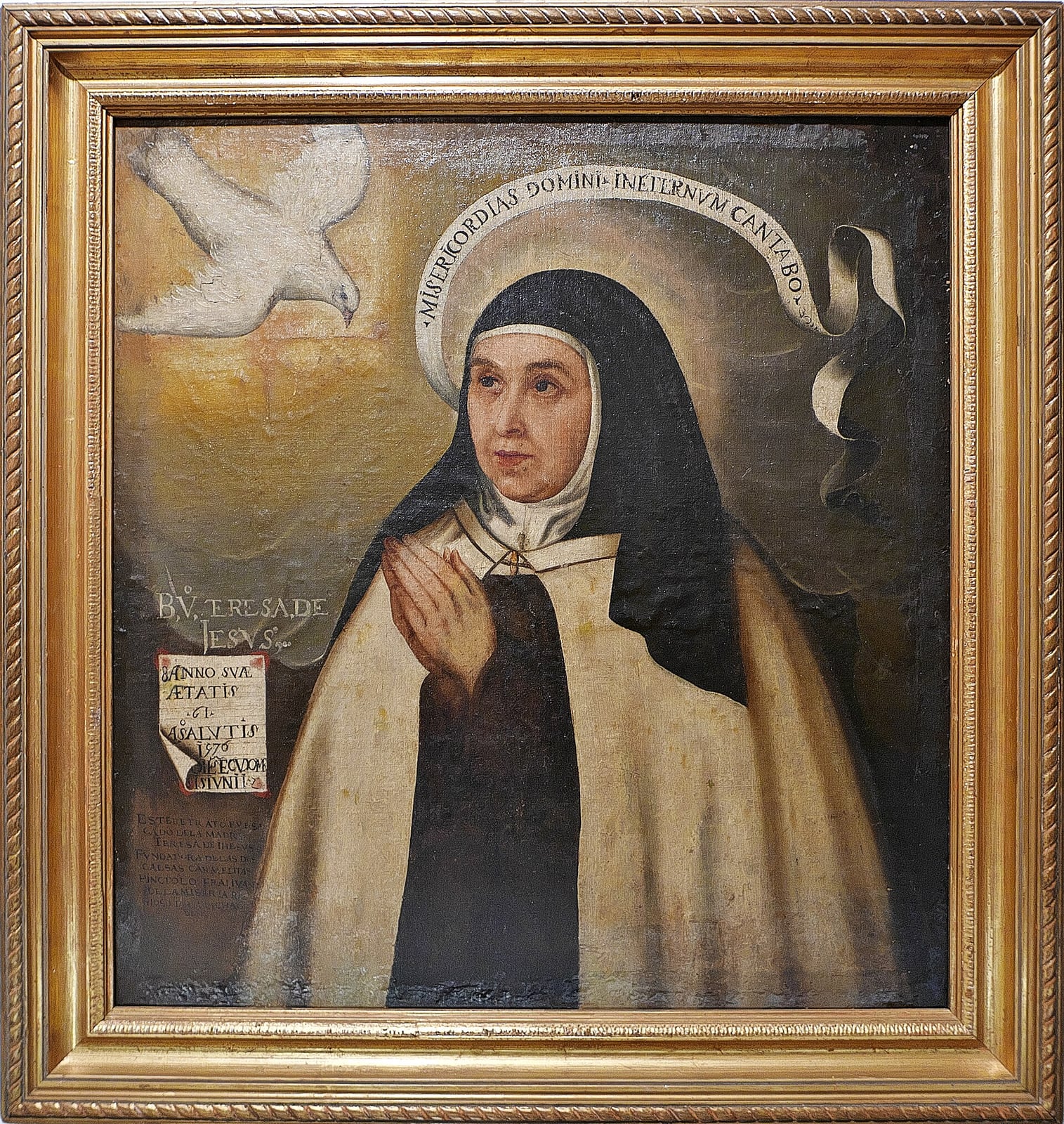
Teresa of Ávila
They agree on: What is the Absolute? Does God exist? · Who am I? Is there a true self? · Why do we suffer?

Julian of Norwich
They agree on: What is the Absolute? Does God exist? · Who am I? Is there a true self? · Why do we suffer?
Thinks most unlike

Patañjali
They clash on: What is the Absolute? Does God exist? · Who am I? Is there a true self? · What happens after death?

Nāgārjuna
They clash on: What is the Absolute? Does God exist? · Who am I? Is there a true self? · What happens after death?

Dōgen
They clash on: What is the Absolute? Does God exist? · Who am I? Is there a true self? · What happens after death?

Pema Chödrön
They clash on: What is the Absolute? Does God exist? · Who am I? Is there a true self? · What happens after death?
Anecdotes and stories
Anecdotes and stories
Documentedc. 1205–1206
The leper
Origin of the story: Testament 1–3 (authentic text, Esser). The kiss of the leper comes from 2C 9 (Celano, 1246–1247) and the Legend of the Three Companions 11; the leper's disappearance only from the latter.
Source: Esser, Kajetan, O.F.M. Die Opuscula des hl. Franziskus von Assisi. Neue textkritische Edition. Grottaferrata: Collegium S. Bonaventurae ad Claras Aquas, 1976 (Spicilegium Bonaventurianum 13); editio minor: Opuscula sancti patris Francisci Assisiensis, 1978 (Bibliotheca Franciscana Ascetica Medii Aevi 12).
Hagiographic accountc. 1205–1206
'Francis, go and repair my house'
Origin of the story: 2C 10–11 (Celano, 1246–1247) and Legend of the Three Companions 13; absent from 1C (1229), which narrates only the repair (1C 18). Bonaventure incorporates it into the Major Legend 2:1.
Source: Armstrong, Regis J.; Hellmann, J. A. Wayne; Short, William J. (eds.). Francis of Assisi: Early Documents. 3 vols. e índice. Nueva York: New City Press, 1999–2002 (vol. 1, The Saint, ISBN 1565481100).
Testimony1206
Naked before the bishop
Origin of the story: 1C 14–15 (Celano, 1229); Legend of the Three Companions 19–20; Major Legend 2:4. The words about 'Our Father' come from the Legend of the Three Companions.
Source: Armstrong, Regis J.; Hellmann, J. A. Wayne; Short, William J. (eds.). Francis of Assisi: Early Documents. 3 vols. e índice. Nueva York: New City Press, 1999–2002 (vol. 1, The Saint, ISBN 1565481100).
Documented1219
Francis and the sultan
Origin of the story: Jacques de Vitry, letter VI (1220) and Historia occidentalis 32; the chronicle of Ernoul; 1C 57 (1229). The ordeal by fire appears in the Major Legend 9:8 (Bonaventure, 1263). Overall study: Tolan (2009).
Source: Jacques de Vitry. Lettres de Jacques de Vitry (1160/1170–1240), évêque de Saint-Jean-d'Acre. Ed. R. B. C. Huygens. Leiden: Brill, 1960 (carta VI, 1220); y Historia occidentalis, cap. 32.
TestimonyNavidad de 1223
The crib at Greccio
Origin of the story: 1C 84–87 (Celano, 1229); Major Legend 10:7. The vision of the child is attributed to an anonymous witness.
Source: Armstrong, Regis J.; Hellmann, J. A. Wayne; Short, William J. (eds.). Francis of Assisi: Early Documents. 3 vols. e índice. Nueva York: New City Press, 1999–2002 (vol. 1, The Saint, ISBN 1565481100).
Hagiographic accountc. 1213–1220
The sermon to the birds
Origin of the story: 1C 58 (Celano, 1229); Major Legend 12:3; Little Flowers 16. The date is unknown.
Source: Armstrong, Regis J.; Hellmann, J. A. Wayne; Short, William J. (eds.). Francis of Assisi: Early Documents. 3 vols. e índice. Nueva York: New City Press, 1999–2002 (vol. 1, The Saint, ISBN 1565481100).
Hagiographic accountsin fecha (relato del siglo XIV)
The wolf of Gubbio
Origin of the story: Actus beati Francisci 23 (c. 1327–1337) and Little Flowers 21. None of the thirteenth-century biographies (Celano, Julian of Speyer, Three Companions, Bonaventure) mentions it.
Source: Vauchez, André. François d'Assise. Entre histoire et mémoire. París: Fayard, 2009. Trad. ingl.: Francis of Assisi. The Life and Afterlife of a Medieval Saint. New Haven: Yale University Press, 2012.
Disputedseptiembre de 1224
The wounds of La Verna
Origin of the story: Autograph chartula with Brother Leo's rubric (Sacro Convento, Assisi); Elias's encyclical letter (authenticity debated); 1C 94–95; Major Legend 13. The Considerations on the Stigmata, added to the Little Flowers in the fourteenth century, amplify the account.
Source: Frugoni, Chiara. Francesco e l'invenzione delle stimmate. Una storia per parole e immagini fino a Bonaventura e Giotto. Turín: Einaudi, 1993.
Teachings
Teachings
The notions that structure their thought, explained in context.
Living 'without anything of one's own'sine-proprio
Twelfth- and thirteenth-century evangelical and poverty movements (Waldensians, Humiliati) within the monetary economy of the Italian communes.
Source: Esser, Kajetan, O.F.M. Die Opuscula des hl. Franziskus von Assisi. Neue textkritische Edition. Grottaferrata: Collegium S. Bonaventurae ad Claras Aquas, 1976 (Spicilegium Bonaventurianum 13); editio minor: Opuscula sancti patris Francisci Assisiensis, 1978 (Bibliotheca Franciscana Ascetica Medii Aevi 12).
Minority (being 'lesser')minoridad
Italian communal society and the spirituality of following the poor and humble Christ.
Source: Esser, Kajetan, O.F.M. Die Opuscula des hl. Franziskus von Assisi. Neue textkritische Edition. Grottaferrata: Collegium S. Bonaventurae ad Claras Aquas, 1976 (Spicilegium Bonaventurianum 13); editio minor: Opuscula sancti patris Francisci Assisiensis, 1978 (Bibliotheca Franciscana Ascetica Medii Aevi 12).
Kinship with creaturesfraternidad-de-las-criaturas
Thirteenth-century vernacular religious poetry; the psalms and the canticle of Daniel (Dan 3) as models of cosmic praise.
Source: Branca, Vittore. Il Cantico di frate Sole. Studio delle fonti e testo critico. Florencia: Olschki, 1950; reimpr. 1994 (ISBN 8822215222).
Doing penancehacer-penitencia
The lay penitential movement of the twelfth and thirteenth centuries and the Fourth Lateran Council (1215).
Source: Esser, Kajetan, O.F.M. Die Opuscula des hl. Franziskus von Assisi. Neue textkritische Edition. Grottaferrata: Collegium S. Bonaventurae ad Claras Aquas, 1976 (Spicilegium Bonaventurianum 13); editio minor: Opuscula sancti patris Francisci Assisiensis, 1978 (Bibliotheca Franciscana Ascetica Medii Aevi 12).
Perfect joyperfecta-alegria
The spirituality of dispossession and patience in Francis's writings.
Source: Armstrong, Regis J.; Hellmann, J. A. Wayne; Short, William J. (eds.). Francis of Assisi: Early Documents. 3 vols. e índice. Nueva York: New City Press, 1999–2002 (vol. 1, The Saint, ISBN 1565481100).
Following in the footprints of Christseguir-las-huellas
Medieval devotion to the humanity of Christ (Bernard of Clairvaux) and the spirituality of the 'vita apostolica'.
Source: Esser, Kajetan, O.F.M. Die Opuscula des hl. Franziskus von Assisi. Neue textkritische Edition. Grottaferrata: Collegium S. Bonaventurae ad Claras Aquas, 1976 (Spicilegium Bonaventurianum 13); editio minor: Opuscula sancti patris Francisci Assisiensis, 1978 (Bibliotheca Franciscana Ascetica Medii Aevi 12).
Videos
Videos
Recordings, interviews and documentaries. Videos play from YouTube; they are not hosted here.
"Francis of Assisi: Lost Between Myth and History," Augustine Thompson, O.P.
Lecture· EN· 2014· 63 min
Lumen Christi InstituteOfficial channel
Poverty in the Church & St. Francis of Assisi - Augustine Thompson, OP
Lecture· EN· 2015· 21 min
Dominican School of Philosophy & Theology (DSPT)Official channel
St. Francis of Assisi: In His Own Words, by Larry Cunningham
Lecture· EN· 2012· 60 min
McGrath Institute for Church Life (University of Notre Dame)Official channel
The Death of St. Francis in 1226: Looking Back after 800 Years
Lecture· EN· 2026· 39 min
Franciscan School of TheologyOfficial channel
Spirituality of Francis and Clare of Assisi
Lecture· EN· 2009· 77 min
Villanova UniversityOfficial channel
How Francis of Assisi rejected wealth and found purpose
Documentary· EN· 2026· 11 min
DW History and CultureOfficial channel
San Francisco de Asís: la búsqueda de la verdad
Documentary· ES· 2026· 11 min
DW EspañolOfficial channel
El año de San Francisco
Documentary· ES· 2026· 27 min
EWTN EspañolOfficial channel
Cántico de las Criaturas de San Francisco de Asís. Cantado por Fr. Ángel Ramón Serrano García
Original recording· ES· 2020· 4 min
Franciscanos Santo Espíritu del Monte HospederíaOfficial channel
Franz von Assisi - Der Grenzgänger | Doku HD | ARTE
Documentary· DE· 2026· 87 min
ARTEdeOfficial channel
François d'Assise - L'exigence de la foi | Documentaire | ARTE
Documentary· FR· 2026· 87 min
ARTEOfficial channel
Francesco d'Assisi | Documentario integrale | ARTE.tv Documentari
Documentary· IT· 2026· 87 min
ARTE.tv DocumentariOfficial channel
Il realismo di San Francesco | Massimo Cacciari | Basilica superiore di Assisi
Lecture· IT· 2023· 70 min
Massimo Cacciari YouTubeOfficial channel
Alessandro Baricco: il Testamento di San Francesco - Francesco, il Santo di tutti 04/10/2026
Analysis· IT· 2026· 7 min
RaiOfficial channel
Gallery
Gallery
Images with verified licences. Each keeps its authorship and attribution.
Manuscripts
Manuscripts
Manuscript witnesses and ancient texts, with their custodian and conditions of access.
LA · Latina (minúscula gótica de mano no profesional) · Septiembre de 1224, La Verna
Chartula fratri Leoni data (Laudes Dei altissimi; Benedictio fratri Leoni)
- Surviving witness
- Autógrafo en un pequeño pergamino
- Custodian
- Sacro Convento de San Francisco, Asís (capilla de las reliquias)
LA · Latina · c. 1220–1224
Epistola ad fratrem Leonem
- Surviving witness
- Autógrafo
- Custodian
- Catedral de Santa María de la Asunción, Espoleto
LA · Latina (gótica) · Mediados del siglo XIII
Codex Assisiensis 338
- Surviving witness
- Testimonio más antiguo del Cántico de las criaturas y de buena parte de los Opuscula
- Custodian
- Fondo antiguo de la Biblioteca del Sacro Convento (Biblioteca comunale), Asís · Assisi, cod. 338
LA · Latina (cancilleresca pontificia) · 29 de noviembre de 1223
Regula bullata con la bula «Solet annuere»
- Surviving witness
- Original de la bula de aprobación
- Custodian
- Sacro Convento de San Francisco, Asís
LA · Latina · 1232–1239 (copia de c. 1230–1250)
Thomas de Celano, Vita brevior
- Surviving witness
- Único testimonio conocido de la Vita brevior, identificado por Jacques Dalarun en 2014
- Custodian
- Bibliothèque nationale de France, París · nouv. acq. lat. 3245
Connections
Connections
Influences, discipleships and affinities. Documented relations are distinguished from similarities identified by analysis.
Influenced by
The 1223 Rule defines the brothers' life as 'to observe the holy Gospel of our Lord Jesus Christ', and the 1221 Rule as following Christ's 'teaching and footprints'. The Testament attributes to divine revelation the decision to live 'according to the form of the holy Gospel'.
Documented relation
Influenced
The unendowed poverty of Teresa's foundations was inspired by the Franciscan ideal through Peter of Alcántara, Franciscan reformer and Teresa's adviser. The relation is one of mediated reception, not contact.
Similarity identified by analysis
Ideas akin to
Francis's dispossession ('without anything of one's own', perfect joy) and John of the Cross's 'nada' share the intuition that the self must be emptied of every possession, even spiritual; John systematises it as the dark night.
Similarity identified by analysis
Ideas akin to
Eckhart's German Sermon 52 on the poor in spirit radicalises, in a speculative key, an inner poverty (to will nothing, know nothing, have nothing) that engages with the Franciscan poverty controversy of his time.
Similarity identified by analysis
Ideas akin to
Both celebrate creation as a place of God's presence (Hildegard's viriditas, the Canticle's kinship of creatures) from very different forms of religious life: the Benedictine abbey and mendicant itinerancy.
Similarity identified by analysis
Linked from other profiles
- John of the Cross · Ideas akin to
- Simone Weil · Influenced by
- Hildegard of Bingen · Ideas akin to
- Catherine of Siena · Ideas akin to
- Leo Tolstoy · Ideas akin to
- Milarepa · Ideas akin to
- Pierre Teilhard de Chardin · Ideas akin to
- Ignatius of Loyola · Influenced by
- Thomas à Kempis · Ideas akin to
- Julian of Norwich · Ideas akin to
- Shinran · Ideas akin to
- Thomas Merton · Influenced by
- Jesus of Nazareth · Influenced
- Meister Eckhart · Ideas akin to
- Augustine of Hippo · Ideas akin to
- Teresa of Ávila · Influenced by
- Baal Shem Tov · Ideas akin to
- Ignatius Brianchaninov · Disagreed with
Sources
Sources
Bibliography and catalogues consulted for this profile.
- Wikidata, Q676555 «Francis of Assisi» (P31=Q5; 139 enlaces entre wikis; P569 1182, P570 1226-10-03).
- Esser, Kajetan, O.F.M. Die Opuscula des hl. Franziskus von Assisi. Neue textkritische Edition. Grottaferrata: Collegium S. Bonaventurae ad Claras Aquas, 1976 (Spicilegium Bonaventurianum 13); editio minor: Opuscula sancti patris Francisci Assisiensis, 1978 (Bibliotheca Franciscana Ascetica Medii Aevi 12).
- Armstrong, Regis J.; Hellmann, J. A. Wayne; Short, William J. (eds.). Francis of Assisi: Early Documents. 3 vols. e índice. Nueva York: New City Press, 1999–2002 (vol. 1, The Saint, ISBN 1565481100).
- Guerra, José Antonio (ed.). San Francisco de Asís: Escritos, biografías, documentos de la época. Madrid: Biblioteca de Autores Cristianos (BAC 399), 1978; reed. 2003 (ISBN 8479146273).
- Vauchez, André. François d'Assise. Entre histoire et mémoire. París: Fayard, 2009. Trad. ingl.: Francis of Assisi. The Life and Afterlife of a Medieval Saint. New Haven: Yale University Press, 2012.
- Thompson, Augustine, O.P. Francis of Assisi: A New Biography. Ithaca: Cornell University Press, 2012.
- Frugoni, Chiara. Francesco e l'invenzione delle stimmate. Una storia per parole e immagini fino a Bonaventura e Giotto. Turín: Einaudi, 1993.
- Renoux, Christian. La prière pour la paix attribuée à saint François: une énigme à résoudre. París: Éditions franciscaines, 2001. Resumen del autor: «The Origin of the Peace Prayer of St. Francis», Franciscan Archive.
- Tolan, John. Saint Francis and the Sultan: The Curious History of a Christian-Muslim Encounter. Oxford: Oxford University Press, 2009.
- Branca, Vittore. Il Cantico di frate Sole. Studio delle fonti e testo critico. Florencia: Olschki, 1950; reimpr. 1994 (ISBN 8822215222).
- Dalarun, Jacques. «Thome Celanensis Vita beati patris nostri Francisci (Vita brevior)». Analecta Bollandiana 133 (2015), 23–86; y La Vie retrouvée de François d'Assise. París: Éditions franciscaines, 2015.
- Opuscula sancti patris Francisci Assisiensis sec. codices mss. emendata et denuo edita a PP. Collegii S. Bonaventurae. Quaracchi: Ex typographia Collegii S. Bonaventurae, 1904.
- Juan Pablo II. Litterae apostolicae «Inter sanctos» (29 de noviembre de 1979): S. Franciscus Assisiensis caelestis Patronus oecologiae cultorum eligitur.
- Open Library, registros de edición de las obras de Francisco de Asís y de sus fuentes (consultados por ISBN y por obra).
- Jacques de Vitry. Lettres de Jacques de Vitry (1160/1170–1240), évêque de Saint-Jean-d'Acre. Ed. R. B. C. Huygens. Leiden: Brill, 1960 (carta VI, 1220); y Historia occidentalis, cap. 32.
- Manselli, Raoul. San Francesco d'Assisi. Roma: Bulzoni, 1980 (trad. esp.: San Francisco de Asís, Oñati: Arantzazu, 1997).
- Francisco (papa). Carta encíclica Laudato si' sobre el cuidado de la casa común, 24 de mayo de 2015, n. 1 y 10–12.
- Wikisource (la, it, es): Testamentum, Regula bullata y non bullata, Epistola toti Ordini missa (la); Cantico di Frate Sole y Fioretti di San Francesco, ed. Antonio Cesari (it); Cántico de las criaturas (es).
- Rights holder
- Dominio público (escritos del siglo XIII). Las ediciones críticas (Esser, Paolazzi), traducciones y aparatos modernos están sujetos a los derechos de sus editores (BAC, New City Press, Paulist Press, Éditions du Cerf, Editrici Francescane, Butzon & Bercker…). Los autógrafos y el códice 338 los custodian el Sacro Convento de Asís y la catedral de Espoleto.
- Official site
- www.sanfrancescoassisi.org/
Pending confirmation
What this profile has not yet been able to settle. We would rather say so than fill it in.
- Añadir con ISBN la edición crítica de Carlo Paolazzi (Francisci Assisiensis Scripta, Grottaferrata, 2009) y la edición española de Fonti/Escritos de Editorial Arantzazu: no se han localizado en Open Library.
- Identificar al traductor de la versión española del Cántico en Wikisource (es) para poder retirar la marca de precaución.
- Confirmar la fecha de muerte de A. G. Ferrers Howell (traductor de Celano, 1908) y el traductor de la edición Dent de 1904 de la Leyenda mayor (¿E. Gurney Salter?) para la sala de lectura.
- Localizar digitalizaciones oficiales del códice 338 de Asís y del manuscrito de la Vita brevior (BnF, nouv. acq. lat. 3245): no se ha querido inventar una URL.
- Las fechas de subida de los vídeos se han deducido de la fecha relativa que muestra YouTube; conviene fijarlas si se necesitan exactas.
- Programas de afiliación: ninguno verificado para las editoriales listadas.
Researched on 2026-10-25