Christianity · Christian mysticism · Catholicism
Ignatius of Loyola
1491 – 1556Historically documented person
Basque nobleman (1491–1556) wounded at Pamplona in 1521 who, converted during his convalescence, became a pilgrim, a student at Alcalá, Salamanca and Paris, and, with his companions, founder of the Society of Jesus (1540), whose first superior general he was. His Spiritual Exercises, born of his experience at Manresa, are a method of prayer and discernment that has shaped religious and lay people for five centuries. He also left the order's Constitutions, a Spiritual Diary, a dictated autobiographical account and some seven thousand letters.
- works
- 16works
- editions
- 42editions
- quotes
- 9quotes
- videos
- 15videos
- images
- 7images
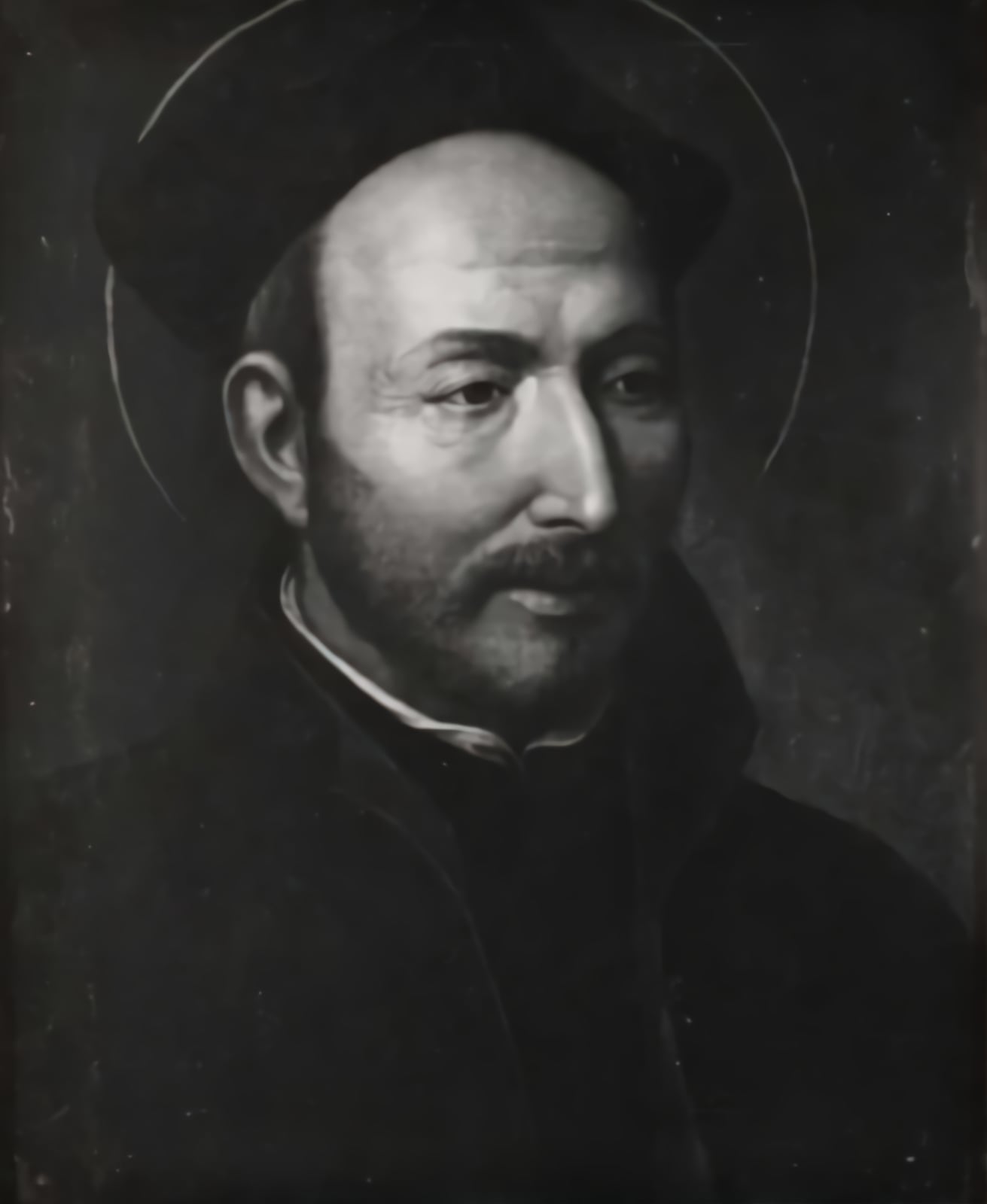
Retrato de Ignacio de Loyola · Public domain
In their words
«Man is created to praise, reverence, and serve God our Lord, and by this means to save his soul.»Ejercicios espirituales, [23] Principio y fundamento (trad. inglesa de Elder Mullan, 1914)

Their central idea
Principle and Foundation and indifference: The Principle and Foundation ([23]) opens the first week of the Exercises: human beings are created to praise, reverence and serve God, and all other things are created to help them toward that end; it follows that they should use them 'as much as' they help and rid themselves of them 'as much as' they hinder.
See in context
Biography
5 min read
A younger son of Loyola
Íñigo López de Loyola was born in 1491 in the tower house of Loyola, near Azpeitia in Gipuzkoa, the youngest of the thirteen children of Beltrán Yáñez de Oñaz y Loyola and Marina Sánchez de Licona. The year comes from the Jesuit tradition fixed by his first biographers; the day is not recorded, and he himself contradicts it when giving his age. Tonsured as a boy, he was nonetheless sent to court: around 1506 he became a page in the household of Juan Velázquez de Cuéllar, chief treasurer of Castile, at Arévalo, where he learned courtly manners, a taste for arms and the romances of chivalry. Proceedings opened in 1515 in Azpeitia over offences committed at night, during carnival, with his brother Pero López, show that this youth was hardly edifying, and he later summed it up without indulgence: "a man given to the vanities of the world".
Pamplona and convalescence
After Velázquez fell from favour and died in 1517, Íñigo entered the service of the Duke of Nájera, viceroy of Navarre. On 20 May 1521, during the French siege of Pamplona, he persuaded the commander to resist when everyone else wanted to surrender; a cannonball passed between his legs and shattered one of them. The French sent him home on a litter to Loyola, where surgeons re-broke the badly set bone and, at his own request, sawed off the piece that protruded below the knee, because it disfigured the leg and he "was resolved to follow the world". During his convalescence he asked for romances of chivalry; the house had only Ludolph of Saxony's Vita Christi and a Castilian Flos sanctorum. As he read, he began to ask what it would be like to do what Saint Francis and Saint Dominic had done, and he noticed that some thoughts left him dry and others joyful: that is how he himself describes his first discernment of spirits.
Montserrat, Manresa and Jerusalem
In February 1522 he left Loyola. At Montserrat he made a general confession lasting three days, hung his sword and dagger before the Virgin, gave his clothes to a beggar and kept a knightly vigil, in the manner of Amadís, on the night of 24–25 March. He then stayed almost a year at Manresa, begging, serving in the hospital and praying for hours in a cave above the Cardoner. There he went through scruples that brought him to the edge of suicide and, afterwards, a series of illuminations; the greatest, beside the river, left him "as if he were another man". In those months he took the notes that would become the Spiritual Exercises. In 1523 he travelled to Jerusalem by way of Rome and Venice; the Franciscan custodians obliged him to leave, and he returned to Barcelona in 1524 asking himself what he should do.
A student under suspicion
He resolved to study "in order to help souls". He learned Latin among schoolboys in Barcelona, moved to Alcalá in 1526 and to Salamanca in 1527. In both cities he preached without a degree and gathered followers dressed in sackcloth, which was enough for the Inquisition and the Dominicans to investigate him as a possible alumbrado: he was imprisoned for forty-two days at Alcalá and twenty-two at Salamanca, where he told a sympathetic visitor that there were not enough fetters and chains in the city for him not to desire more for the love of God. Acquitted, but forbidden to teach on mortal and venial sin until he had studied, he set out "alone and on foot" for Paris early in 1528.
The companions of Paris
At the Collège de Montaigu and later at Sainte-Barbe he shared a room with the Savoyard Pierre Favre and the Navarrese Francis Xavier. He gave them the Exercises one by one, and Diego Laínez, Alfonso Salmerón, Nicolás de Bobadilla and Simão Rodrigues joined them. On 15 August 1534, in a chapel on Montmartre, the seven vowed poverty and a journey to Jerusalem, or, if they could not sail within a year, to place themselves at the pope's disposal. Íñigo, master of arts in 1535, went back to Azpeitia to recover his health and scandalised his brother by begging and teaching catechism at the Magdalena hospital.
Rome and the Society
Reunited in Venice in 1537, they worked in hospitals and were ordained priests on 24 June. War with the Turks closed the route to the Holy Land. On the road to Rome, in the chapel of La Storta in November 1537, Ignatius —the name he was beginning to use— felt that the Father was placing him with his Son; Laínez handed down the words "Ego vobis Romae propitius ero". In spring 1539 the companions deliberated whether to bind themselves by obedience, and on 27 September 1540 Paul III approved the Society of Jesus with the bull Regimini militantis Ecclesiae. In April 1541 Ignatius was elected general unanimously, save for his own vote, and made his profession on the 22nd at Saint Paul Outside the Walls.
Fifteen years in one room
He barely left Rome again. From small rooms beside Santa Maria della Strada he governed by letter an order which, at his death, numbered about a thousand members and some forty colleges. Paul III approved the Exercises in 1548; with his secretary Juan Alfonso de Polanco Ignatius drafted the Constitutions, founded the Roman College (1551) and the German College (1552), opened the house of Santa Marta for women leaving prostitution, and left nearly seven thousand letters. His Spiritual Diary of 1544–1545 reveals, beneath the administrator's prose, a mysticism of tears centred on the Trinity. Between 1553 and 1555 he dictated to Luís Gonçalves da Câmara the account of his life, in which he calls himself "the pilgrim".
Death and legacy
He died at dawn on 31 July 1556, almost before his community grasped how ill he was: the evening before he had asked Polanco to seek the blessing of Pope Paul IV, who was no friend of his, and Polanco put it off until the morning. He was beatified in 1609 and canonised on 12 March 1622 together with Francis Xavier, Teresa of Jesus, Philip Neri and Isidore the Farmer. His legacy is not a doctrine but a method: learning to tell interior movements apart, choosing in freedom and "seeking and finding God in all things". For five centuries the Exercises have formed religious and lay people of different confessions, and the Society became the largest educational network in the Church. The historical figure, less legendary than the "converted soldier", is that of a short, lame and patient man who learned to govern by listening.
Sources: Ignacio de Loyola. Obras. Transcripción, introducciones y notas de Ignacio Iparraguirre, Cándido de Dalmases y Manuel Ruiz Jurado. Madrid: Biblioteca de Autores Cristianos, 1991 (5.ª ed.). ISBN 9788479140342. · Ignacio de Loyola. Autobiografía (Acta Patris Ignatii), recogida por Luís Gonçalves da Câmara, 1553–1555. Texto castellano en Wikisource. · Ignatius of Loyola. The Spiritual Exercises of St. Ignatius of Loyola. Translated from the Autograph by Elder Mullan, S.J. New York: P. J. Kenedy & Sons, 1914. Texto en Christian Classics Ethereal Library. · García-Villoslada, Ricardo. San Ignacio de Loyola: nueva biografía. Madrid: Biblioteca de Autores Cristianos (BAC Maior), 1986. · Tellechea Idígoras, José Ignacio. Ignacio de Loyola, solo y a pie. Madrid: Cristiandad, 1986.
Timeline
A life, year by year
Each point is a documented event. Click to read it, with its source and degree of certainty.
1491age 0Loyola, Azpeitia
Birth
Íñigo is born, the youngest of thirteen children, in the tower house of the Oñaz and Loyola. The year is fixed by Jesuit tradition; the day is unknown.
ProbablePollen, John Hungerford. «St. Ignatius Loyola». The Catholic Encyclopedia, vol. 7. New York: Robert Appleton, 1910 (texto en Wikisource).
After their death
- March 12, 1622Canonisation
1491 · age 0
Birth
Íñigo is born, the youngest of thirteen children, in the tower house of the Oñaz and Loyola. The year is fixed by Jesuit tradition; the day is unknown.
Probable
c. 1506
Page at Arévalo
He enters the household of Juan Velázquez de Cuéllar, chief treasurer of Castile, where he is trained as a courtier until 1517.
Probable
1515
Lawsuit at Azpeitia
He is prosecuted together with his brother Pero López for offences committed at night during carnival; the records survive.
Documented
May 20, 1521 · age 29
Wounded at Pamplona
A cannonball shatters one of his legs during the French siege of the fortress. Convalescence at Loyola and reading of the Vita Christi and the Flos sanctorum.
Documented
March 25, 1522
Vigil of arms at Montserrat
After a three-day general confession he leaves his sword and dagger before the Virgin, gives his clothes to a beggar and keeps vigil on the night of the Annunciation.
Documented
1522
Manresa and the Cardoner
Almost a year of prayer, penance and scruples; the 'great illumination' beside the river Cardoner and the first notes of the Exercises.
Documented
September 4, 1523
Pilgrim in Jerusalem
He reaches Jerusalem; the Franciscan custodians order him to leave and he returns to Barcelona in 1524.
Documented
1527
Trials and prison
Investigated as a possible alumbrado, he spends 42 days in prison at Alcalá and 22 at Salamanca; he is forbidden to define mortal and venial sin.
Documented
February 1528
Arrival in Paris
He arrives 'alone and on foot'; studies at Montaigu and at Sainte-Barbe, where he lives with Pierre Favre and Francis Xavier.
Documented
August 15, 1534
Vows of Montmartre
With Favre, Xavier, Laínez, Salmerón, Bobadilla and Rodrigues he vows poverty and a pilgrimage to Jerusalem, or else to place himself at the pope's disposal.
Documented
June 24, 1537
Ordination to the priesthood
He is ordained priest in Venice with several companions; he postpones his first Mass until Christmas 1538.
Documented
November 1537
Vision at La Storta
On the road to Rome he feels that the Father places him with his Son; Laínez hands down the words 'Ego vobis Romae propitius ero'.
Documented
September 27, 1540
Approval of the Society of Jesus
Paul III approves the Formula of the Institute with the bull Regimini militantis Ecclesiae.
Documented
April 22, 1541
First superior general
Elected general by his companions, he makes his profession with them at Saint Paul Outside the Walls.
Documented
February 2, 1544
The Spiritual Diary begins
Until February 1545 he records his movements, tears and visions while discerning the poverty of the Society's churches.
Documented
July 31, 1548
Approval of the Exercises
Brief Pastoralis officii of Paul III; the Latin version is printed in Rome that year.
Documented
February 1551
Roman College
He founds the Roman College, origin of the Pontifical Gregorian University; the following year, the German College.
Documented
August 4, 1553
He dictates his account
He begins to tell his life to Luís Gonçalves da Câmara; the sessions continue in 1555.
Documented
July 31, 1556 · age 64
Death
He dies at dawn in the professed house; Polanco had gone to ask for Paul IV's blessing.
Documented
March 12, 1622
Canonisation
Gregory XV canonises him with Francis Xavier, Teresa of Jesus, Philip Neri and Isidore the Farmer; he had been beatified in 1609.
Documented
Works
Essential works
The works without which their legacy cannot be understood.
Written work · 1548
Spiritual Exercises
Ejercicios espirituales
It is not a book to be read but a manual for the person who gives the exercises to another. It is organised in four 'weeks' of flexible length: sin and mercy; the life of Christ and the choice of a state of life; the passion; the resurrection and the 'contemplation to attain love', which culminates in the prayer 'Take, Lord, and receive'. It is framed by the Principle and Foundation, the annotations, methods of examination and prayer, the rules for the discernment of spirits, for distributing alms, on scruples and 'for thinking with the Church'. Its novelty lies in a pedagogy of inner freedom: learning to recognise consolation and desolation in order to choose without disordered attachments.
12 editions · amazon.com

Recorded oral teaching · 1555
Autobiography (A Pilgrim's Testament)
Acta Patris Ignatii (Relato del peregrino)
It covers the years from Pamplona (1521) to his arrival in Rome (1538), with a short appendix on the writing of the Exercises and the Constitutions. It is a spiritual autobiography rather than a chronicle: Ignatius selects the episodes in which he learned to read 'the diversity of spirits' —the convalescence at Loyola, the scruples and the illumination at the Cardoner in Manresa, the journey to Jerusalem, the trials at Alcalá and Salamanca, the studies in Paris— and tells them with sobriety, irony and no hagiography. It is the main primary source for his conversion.
8 editions · amazon.com

Written work · c. 1556
Constitutions of the Society of Jesus
Constituciones de la Compañía de Jesús
Ten parts that follow a Jesuit's path: admission, dismissal, formation of novices, studies and colleges (Part IV, the basis of Jesuit pedagogy), final incorporation, the life of the professed, missions, union of those dispersed, the general's government and the preservation of the body. They combine legal norms with spiritual criteria: obedience 'like a dead body' that lets itself be carried, apostolic mobility, poverty, and the principle of adapting everything 'to persons, times and places'. Ignatius deliberately left them open to revision.
4 editions · amazon.es

Manuscript · 1544
Spiritual Diary
Diario espiritual
A near-daily record of the movements, tears, visions and 'loquela' that accompanied Ignatius as he discerned whether the Society's churches should have fixed revenues. Written with abbreviations, signs and crossings-out, it shows both the method of election of the Exercises applied by their author and an intense Trinitarian and Eucharistic mysticism tied to the celebration of Mass. It is the most intimate document of his to survive.
4 editions · amazon.com
Complete works (16)

Letters and Instructions
1556
Letter to Teresa Rejadell
1536
Letter on Perfection (to the students at Coimbra)
1547
Letter on Obedience
1553
Ignatius of Loyola
Formula of the Institute
The Conscious LibraryFormula of the Institute
1539
Ignatius of Loyola
Deliberation of the First Fathers
The Conscious LibraryDeliberation of the First Fathers
1539
Deliberation on Poverty
1544
Ignatius of Loyola
Autograph Directory and dictated directories
The Conscious LibraryAutograph Directory and dictated directories
1555
Instruction for those going to Trent
1546
Ignatius of Loyola
Rules of the Society (common rules and rules of modesty)
The Conscious LibraryRules of the Society (common rules and rules of modesty)
1555
Ignatius of Loyola
'Anima Christi' (misattribution)
The Conscious Library'Anima Christi' (misattribution)
1350

Ignatian Sparks (Scintillae Ignatianae)
1705
Quotations
Quotations located in a specific work. Each carries its provenance and its level of confidence.
Man is created to praise, reverence, and serve God our Lord, and by this means to save his soul.El hombre es criado para alabar, hacer reverencia y servir a Dios nuestro Señor, y mediante esto salvar su ánima.
VerifiedEjercicios espirituales, [23] Principio y fundamento (trad. inglesa de Elder Mullan, 1914)
Apocryphal quotes or disputed attributions (3)
«'Trust in God as if all success depended on you and nothing on God; yet put all your effort into it as if you did nothing and God did everything.'»
A maxim from Gabriel Hevenesi's Scintillae Ignatianae (Vienna, 1705), with no literal counterpart in Ignatius's writings. It circulates in an inverted, simplified version ('Pray as if everything depended on God and work as if everything depended on you') that loses the paradox of the Latin original. It may sum up his spirit, but it is not his quotation.
«'Give me the child until he is seven and I will show you the man.'»
It is attributed to the Jesuits generally, sometimes to Ignatius or Francis Xavier, with no source in their writings or in the sixteenth-century narrative sources. It is a modern attribution, often used polemically against Jesuit education.
«'Go and set the world on fire' (Ite, inflammate omnia).»
A phrase widely spread in Jesuit tradition as Ignatius's farewell to his envoys, above all Francis Xavier. It does not appear in his letters or in the Autobiography; it is a formula of later piety.
Last words
Later account by witnesses
«Ah, God!»¡Ay, Dios!
There was no solemn farewell: Ignatius died at dawn on 31 July 1556 with very few witnesses, while Polanco was on his way to the Vatican to ask for Paul IV's blessing. All that survives is the exclamation that the infirmarian brother Cannizaro believed he heard during the night, handed down in Polanco's letter of 6 August 1556 (Fontes narrativi I). José Ignacio Tellechea quotes it as 'Ay, Dios, Jesús'; other versions give only 'Ay, Dios!'. The short form, common to all, is recorded here.
Source: Tellechea Idígoras, José Ignacio. «Semblanza de Ignacio de Loyola». Conferencia en Forum Deusto, 24 de enero de 2006. Bilbao: Universidad de Deusto. ISBN 978-84-9830-696-5.
Ask
What their work answers
Twelve great human questions and what their texts allow us to answer, with references. We never put words in their mouth.
What is the Absolute? Does God exist?
God is Creator and Lord, who deals directly with the creature
A personal GodStated explicitly
Ignatius of Loyola begins, in the Principle and Foundation of the Spiritual Exercises, with a creator God to whom the human being is ordered: created to praise, reverence and serve him. This God is not distant: annotation 15 asks the one giving the exercises to let the Creator deal «immediately» with the creature. In the Contemplation to Attain Love, God dwells in creatures, labours for the human being in them, and descends like the rays of the sun. The Spiritual Diary of 1544 also shows an intense devotion to the three Persons of the Trinity, with tears and visions. The Absolute is for Ignatius a personal Lord who communicates his will and awaits a response.
Compare this question with other teachersWho am I? Is there a true self?
I am a creature made to praise and serve, and so save my soul
A created, immortal soulStated explicitly
Ignatius of Loyola defines the human being by its end: the Principle and Foundation of the Spiritual Exercises states that it was created to praise, reverence and serve God, and by this means save its soul. The self is not a fixed datum, but a freedom traversed by movements: the Exercises teach one to distinguish within oneself one's own thoughts and those that come from outside, from the good and the evil spirit, and to order disordered affections. To know oneself is to learn to read consolations and desolations. The true self is the one that, indifferent toward created things, chooses what most leads to the end for which it was created.
Compare this question with other teachersWhy do we suffer?
Desolation has causes, and in it one makes no change
Separation from GodStated explicitly
Ignatius of Loyola does not build a theodicy; he offers discernment. In the Spiritual Exercises he calls desolation the darkness, disturbance, restlessness and lack of faith, hope and love in which the soul feels as if separated from its Creator. He assigns it three causes: one's own tepidity and negligence, the testing of one's worth without consolation, and the lesson that consolation is God's gift and not one's own merit. In time of desolation one should never change decisions already made. The first week also meditates on sin and its consequences. Spiritual suffering arises from estrangement and can become a school.
Compare this question with other teachersWhat happens after death?
Decide as if one were at the point of death
Eternal life and resurrectionStated explicitly
Ignatius of Loyola takes for granted the Christian faith in eternal life, judgement and the possibility of damnation, and puts it at the service of decision-making. The Principle and Foundation directs all of life toward saving the soul; the first week of the Exercises includes the meditation on hell with the five senses. More original is his use of death as a criterion for discernment: in the second way of making an election, he proposes considering what form and measure one would wish to have followed in the present choice if one were at the point of death, and how one will stand on the day of judgement. Death is not speculated upon: it is used to live truthfully.
Compare this question with other teachersHow is liberation or salvation attained?
Exercise oneself to remove disordered affections and seek God's will
Through disciplined practiceStated explicitly
Ignatius of Loyola is, among Christian masters, the great author of a method. The first annotation of the Spiritual Exercises defines them as every way of examining one's conscience, meditating, contemplating and praying, and compares them to bodily exercise: just as walking and running are exercises of the body, these are of the soul, to remove all disordered affections and, once they are removed, to seek and find the divine will. Four weeks, with timetables, additions, examens and rules for discernment, lead to the election. But the method does not produce salvation: in each exercise it asks for the grace desired and lets the Creator act directly with the creature.
Compare this question with other teachersIs a teacher necessary?
The giver of the exercises lets the Creator deal with the creature
Helpful but not indispensableStated explicitly
Ignatius of Loyola defines precisely the role of the companion. The Spiritual Exercises are designed for someone to give them to another, and their annotations offer detailed advice: adapt the exercises to the person, do not give more than they can bear, help them discern the movements. But annotation 15 marks the limit: the one giving the exercises must not incline the one receiving them toward one choice or another, but stand in the middle like the pointer of a balance and let the Creator act directly with the creature. The teacher is useful and almost necessary to avoid self-deception, but does not take God's place.
Compare this question with other teachersIs the world real?
Things are created to help the human being toward its end
A good and real creationStated explicitly
Ignatius of Loyola looks at the world in terms of its purpose. The Principle and Foundation of the Spiritual Exercises states that the other things on the face of the earth are created for the human being, to help him attain the end for which he was created; hence they should be used insofar as they help and set aside insofar as they hinder, becoming indifferent. But the Contemplation to Attain Love adds a deeper gaze: God dwells in the elements, in plants, in animals and in the human being, labours for him in all things, and all goods descend from above like the rays of the sun. The world is good creation and a place where God is found.
Compare this question with other teachersWhat is love?
Love is shown more in deeds than in words
Love of God and neighbourStated explicitly
The Contemplation to Attain Love, which closes the Spiritual Exercises, opens with two notes that define love for Ignatius of Loyola. The first: love ought to be put more into deeds than into words. The second: love consists in mutual communication, in which the lover gives and shares with the beloved what he has and can, and the beloved with the lover. Contemplating how much God has given leads to the offering of self: take, Lord, and receive all my liberty. That love is expressed in service, and the Constitutions extend it to the help of souls and to dealings with one's neighbour, whom the presupposition of the Exercises asks always to interpret in the best sense.
Compare this question with other teachersAre we free, or is everything determined?
Never speak of grace so as to take away freedom
Real free willStated explicitly
Ignatius of Loyola builds the Spiritual Exercises around a free choice: the whole method seeks that the person, free of disordered affections, choose what most leads to the end for which they were created. The offering that crowns them begins precisely with freedom: take, Lord, and receive all my liberty. And in the rules for thinking with the Church, written in the midst of the controversy with the Reformation, he warns that one should not speak so much of predestination or insist so much on grace as to give rise to the idea that works and free will are of no use. Freedom is a real gift that is exercised and, in the end, surrendered.
Compare this question with other teachersWhy meditate or pray?
Speak with God as one friend speaks to another
Friendship with GodStated explicitly
The Spiritual Exercises are a repertoire of ways of praying: examination of conscience, meditation with the three faculties, contemplation of Gospel scenes by composition of place, application of the senses, three methods of praying with words. But all lead into the colloquy, which Ignatius of Loyola defines in the first week as speaking exactly as one friend speaks to another, or a servant to his master. The second annotation gives the criterion: it is not much knowledge that fills and satisfies the soul, but feeling and relishing things interiorly. To pray is to deal with someone, and the fruit is an inner knowledge of the Lord, the better to love and follow him.
Compare this question with other teachersCan reason know the ultimate?
Not much knowing, but relishing; and still, study
Faith and reason help each otherStated explicitly
Ignatius of Loyola holds two things that complete each other. On the one hand, the second annotation of the Spiritual Exercises warns that it is not much knowledge that fills and satisfies the soul, but feeling and relishing things interiorly; and the Autobiography recounts that by the river Cardoner the eyes of his understanding were opened with such great enlightenment that everything seemed new to him. On the other, in his thirties he sat among children to learn Latin and studied at Alcalá, Salamanca and Paris, and the rules for thinking with the Church command praise of positive and scholastic theology. For him, trained reason serves faith and the help of souls.
Compare this question with other teachersWithdraw from the world or transform it?
Seek and find God in all things
Contemplation in actionStated explicitly
Ignatius of Loyola began as a hermit at Manresa, but founded an order of active life: the Society of Jesus has no choir and no enclosure, and its members must be available to go to any part of the world where greater service of God is hoped for. The Constitutions ask Jesuits to seek God in all things, removing as far as possible their love from creatures to place it in the Creator. The Contemplation to Attain Love teaches to see God present and labouring in everything. His secretary Jerónimo Nadal coined the formula that sums it up: contemplative in action. Prayer is not opposed to apostolic work: it directs and sustains it.
Compare this question with other teachers
Affinities & tensions
Affinities and tensions
Calculated question by question from their positions. The reason for each agreement or clash, on click.
Thinks most like

Teresa of Ávila
They agree on: What is the Absolute? Does God exist? · Who am I? Is there a true self? · Why do we suffer?

Francis of Assisi
They agree on: What is the Absolute? Does God exist? · Who am I? Is there a true self? · Why do we suffer?
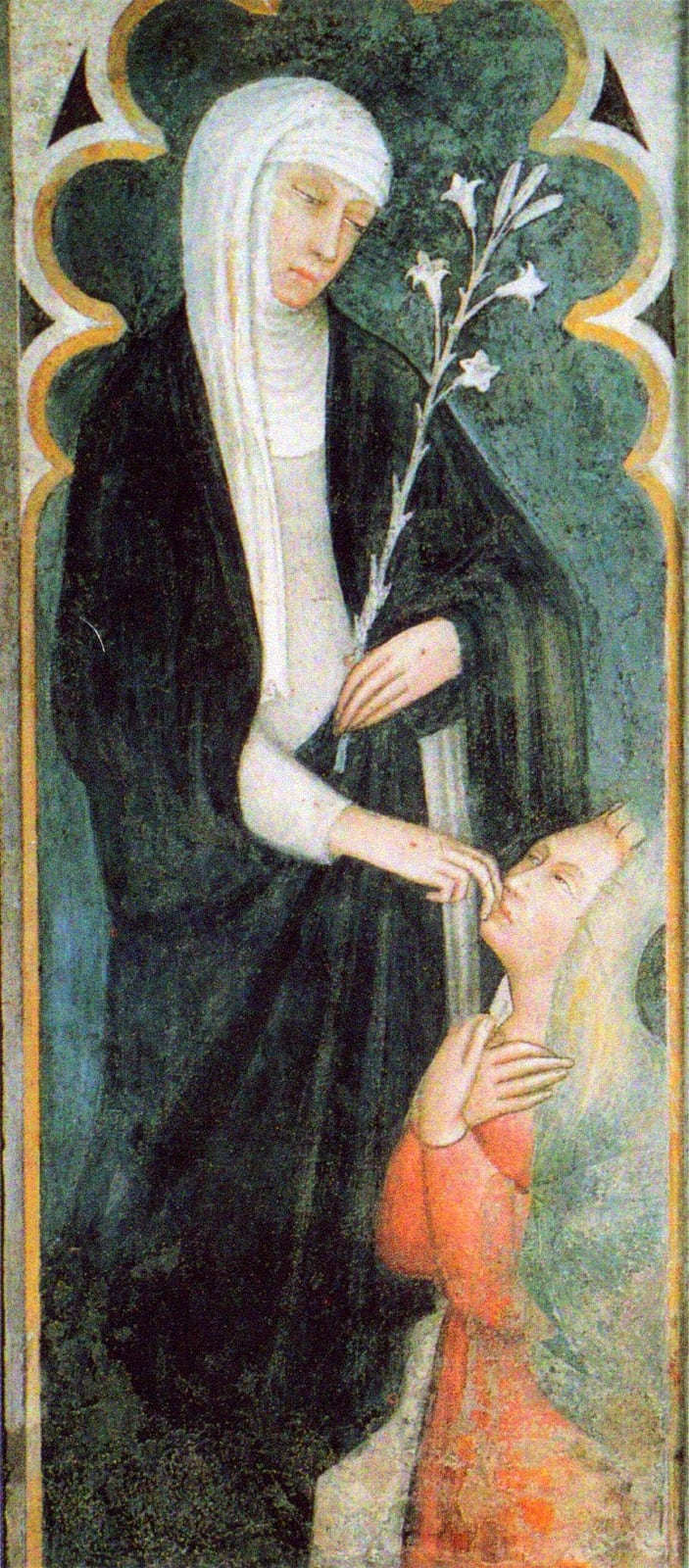
Catherine of Siena
They agree on: What is the Absolute? Does God exist? · Who am I? Is there a true self? · Why do we suffer?

Fyodor Dostoevsky
They agree on: What is the Absolute? Does God exist? · Who am I? Is there a true self? · Why do we suffer?
Thinks most unlike

Nāgārjuna
They clash on: What is the Absolute? Does God exist? · Who am I? Is there a true self? · What happens after death?
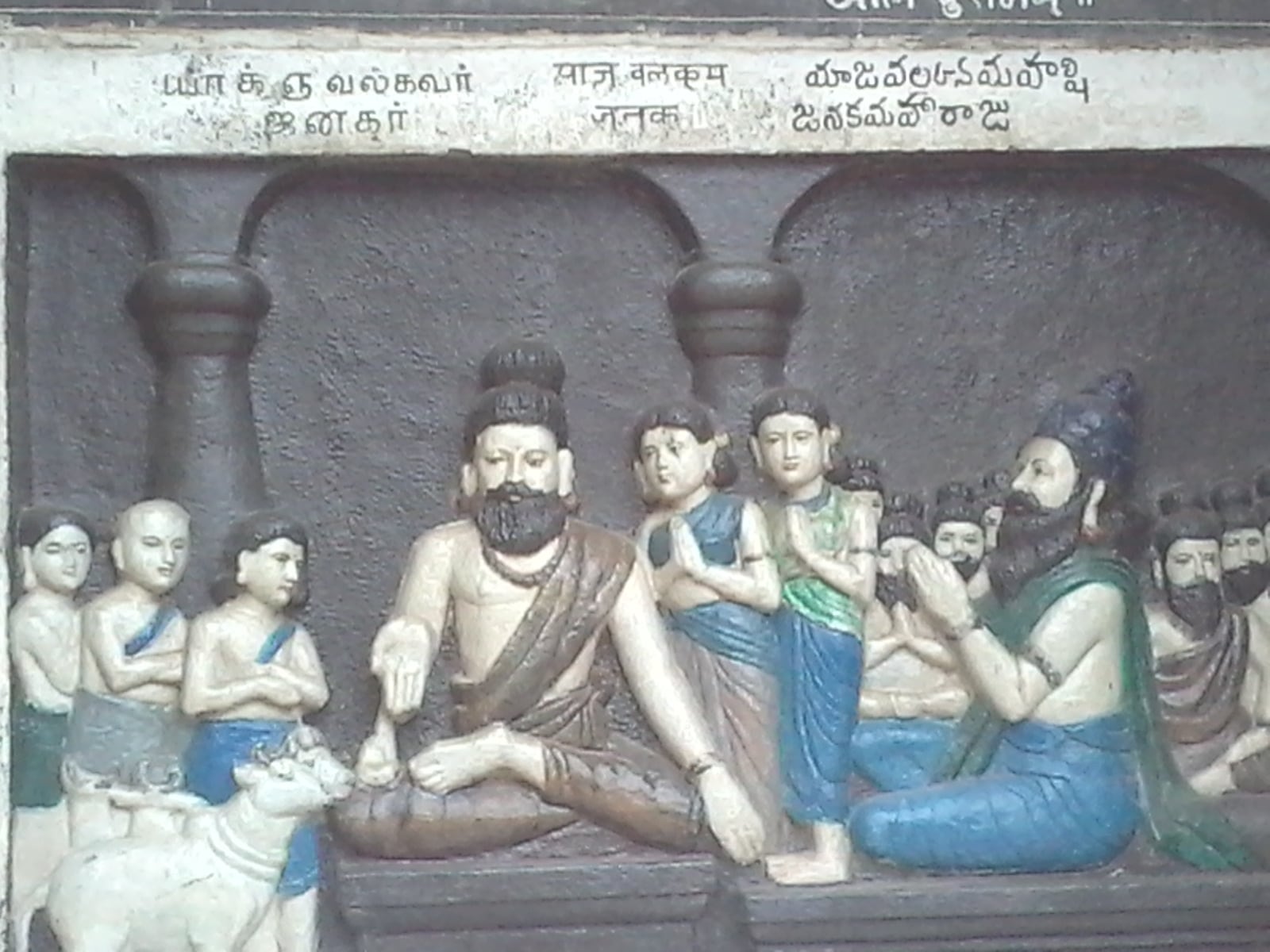
Yajnavalkya
They clash on: Who am I? Is there a true self? · What happens after death? · Is the world real?
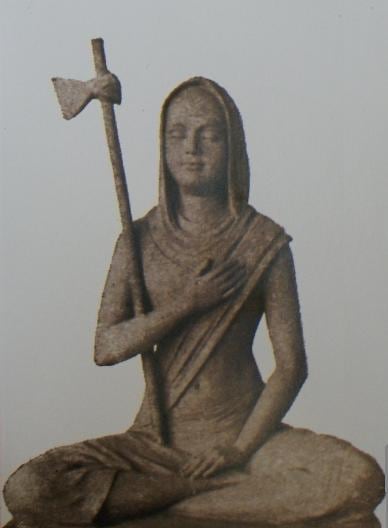
Gaudapada
They clash on: Who am I? Is there a true self? · Is the world real?

Patañjali
They clash on: What is the Absolute? Does God exist? · Who am I? Is there a true self? · What happens after death?
Anecdotes and stories
Anecdotes and stories
Testimony1521
The sawn leg
Origin of the story: Autobiography, nos. 2–5, dictated by Ignatius to Gonçalves da Câmara in 1553: his own testimony, thirty years later.
Testimony1522
The Moor and the mule
Origin of the story: Autobiography, nos. 15–16. It is the only testimony to the episode.
Testimony1522
The vigil of arms at Montserrat
Origin of the story: Autobiography, nos. 17–18. The confessor's name, Jean Chanon, comes from the Montserrat tradition and the biographers, not from the Autobiography.
Testimony1522
Beside the Cardoner
Origin of the story: Autobiography, no. 30; the term 'eximia ilustración' comes from later Jesuit tradition (Nadal, Laínez).
Testimony1527
The fetters of Salamanca
Origin of the story: Autobiography, nos. 64–70; the Salamanca sentence and the Alcalá proceedings survive in the Monumenta (Scripta de S. Ignatio).
Testimony1540–1552
'Here I am': Xavier leaves for India
Origin of the story: The dialogue comes from Ribadeneira's Life (book II) and is quoted by Tellechea in his 'Semblanza'; Xavier's written vote (15 March 1540) and his letters from Asia survive in the Monumenta Xaveriana.
Testimony1555
A quarter of an hour of prayer
Origin of the story: The confidence appears in the narrative sources of the first companions (Gonçalves da Câmara's Memorial and Ribadeneira, in Fontes narrativi); the exact passage has not been checked here. The reaction to Carafa's election is told by Tellechea (s7).
Source: Monumenta Historica Societatis Iesu. Fontes narrativi de S. Ignatio de Loyola et de Societatis Iesu initiis, ed. Dionisio Fernández Zapico, Cándido de Dalmases et al., 4 vols. Roma: MHSI, 1943–1965 (incluye el Memorial de Gonçalves da Câmara y la carta de Polanco sobre la muerte de Ignacio, 6 de agosto de 1556).
Teachings
Teachings
The notions that structure their thought, explained in context.
Principle and Foundation and indifferenceprincipio-y-fundamento
Programmatic text of the first week; its scholastic language comes from the Paris studies.
Discernment of spiritsdiscernimiento-de-espiritus
It reworks a patristic and monastic tradition (Cassian, Gerson) in a practical language of its own.
Consolation and desolationconsolacion-y-desolacion
Core of the rules for the first week; illustrated in his own life by the Spiritual Diary.
The election and its three timeseleccion
It is the practical aim of the Exercises according to the first annotation: 'to seek and find the divine will'.
The examenexamen
A daily practice that extends the Exercises into ordinary life.
Imaginative contemplation and composition of placecontemplacion-imaginativa
The method proper to the second, third and fourth weeks.
Magis and 'in all things to love and serve'magis
The phrase 'contemplativus in actione' is Nadal's, not Ignatius's.
Source: O'Malley, John W. The First Jesuits. Cambridge (Mass.): Harvard University Press, 1993.
Videos
Videos
Recordings, interviews and documentaries. Videos play from YouTube; they are not hosted here.
JESUITS ON...Ignatius of Loyola
Documentary· EN· 21 min
Loyola Productions, Inc.Official channel
John O'Malley Sacred Lecture Fall 2018: The New Spirituality of St. Ignatius
Lecture· EN· 39 min
Georgetown University Campus MinistryOfficial channel
On Magnanimity and the Magis: What St. Ignatius Loyola Really Said about Finding God's Will
Lecture· EN· 47 min
Georgetown University Campus MinistryOfficial channel
Saint Ignatius of Loyola
Documentary· EN· 9 min
SaintLouisUniversityOfficial channel
Ignatius of Loyola – Finding God In All Things
Documentary· EN· 10 min
Jesuits in BritainOfficial channel
What are the Spiritual Exercises of St Ignatius?
Analysis· EN· 4 min
Jesuits in BritainOfficial channel
Ignacio - el buscador de Dios - premiado Documental de animación
Documentary· ES· 62 min
Loyola Productions Munich – Visualizing MindsOfficial channel
La Cueva de San Ignacio de Loyola
Documentary· ES· 11 min
Jesuïtes CatalunyaOfficial channel
El Camino Ignaciano
Documentary· ES· 12 min
JesuitasESPOfficial channel
Manresa: cortometraje sobre Ignacio de Loyola
Documentary· ES· 14 min
Jesuitas del PerúOfficial channel
Saint Ignace de Loyola
Documentary· FR· 53 min
KTO TV
Saint Ignace dans l'Histoire de l'Eglise
Lecture· FR· 53 min
KTO TV
Ignatius of Loyola – Gott in allen Dingen finden
Documentary· DE· 10 min
JesuitenOfficial channel
Ignatius von Loyola kurz erklärt. Heiligenportraits.
Analysis· DE· 3 min
katholisch.de
Divini Devoti - 5 ep I GESUITI Chiesa Ss Nome di Gesù e Chiesa Sant'Ignazio
Documentary· IT· 40 min
Dialogues, raccontare l'Arte
Gallery
Gallery
Images with verified licences. Each keeps its authorship and attribution.
Manuscripts
Manuscripts
Manuscript witnesses and ancient texts, with their custodian and conditions of access.
ES · Latin · c. 1541–1548
Ejercicios espirituales («Autógrafo»)
- Surviving witness
- Manuscrito único conocido como Autógrafo
- Custodian
- Archivum Romanum Societatis Iesu (Roma)
ES · Latin · 2 de febrero de 1544 – 27 de febrero de 1545
Diario espiritual
- Surviving witness
- Dos cuadernillos autógrafos
- Custodian
- Archivum Romanum Societatis Iesu (Roma)
ES · Latin · 1553–1555
Acta Patris Ignatii (Autobiografía)
- Surviving witness
- Copias manuscritas del siglo XVI
- Custodian
- Archivum Romanum Societatis Iesu (Roma)
Connections
Connections
Influences, discipleships and affinities. Documented relations are distinguished from similarities identified by analysis.
Influenced by
During his convalescence in 1521 he read Francis's life in the Flos sanctorum and resolved to imitate him ('what if I were to do what Saint Francis did…?', Autobiography no. 7).
Documented relation
Influenced by
He came to know the Imitation of Christ (then circulating as Gerson's work, the 'Gersoncito') at Manresa and, according to Gonçalves da Câmara's Memorial, read it daily and recommended it.
Documented relation
Influenced
Teilhard entered the Society of Jesus in 1899 and was formed by the Exercises; his search for God 'in all things' of matter and evolution has been read as an extension of Ignatian spirituality.
Documented relation
Influenced
Jung devoted his 1939–1940 seminar at the ETH Zurich to a psychological commentary on the Spiritual Exercises.
Documented relation
Contemporary of
A Spanish contemporary; she had several Jesuit confessors and was canonised on the same day in 1622. There is no record that they met.
Similarity identified by analysis
Ideas akin to
Both describe the purification of attachments as a condition of union with God; Ignatian 'indifference' and John's 'nothing' have often been compared, with different emphases (apostolic choice versus contemplative path).
Similarity identified by analysis
Ideas akin to
Merton practised and discussed the Ignatian meditation tradition in his early years, though his path was the Cistercian monastic one.
Similarity identified by analysis
Linked from other profiles
Sources
Sources
Bibliography and catalogues consulted for this profile.
- Wikidata, «Ignatius of Loyola» (Q44281).
- Ignacio de Loyola. Obras. Transcripción, introducciones y notas de Ignacio Iparraguirre, Cándido de Dalmases y Manuel Ruiz Jurado. Madrid: Biblioteca de Autores Cristianos, 1991 (5.ª ed.). ISBN 9788479140342.
- Ignacio de Loyola. Autobiografía (Acta Patris Ignatii), recogida por Luís Gonçalves da Câmara, 1553–1555. Texto castellano en Wikisource.
- Ignatius of Loyola. The Spiritual Exercises of St. Ignatius of Loyola. Translated from the Autograph by Elder Mullan, S.J. New York: P. J. Kenedy & Sons, 1914. Texto en Christian Classics Ethereal Library.
- García-Villoslada, Ricardo. San Ignacio de Loyola: nueva biografía. Madrid: Biblioteca de Autores Cristianos (BAC Maior), 1986.
- Tellechea Idígoras, José Ignacio. Ignacio de Loyola, solo y a pie. Madrid: Cristiandad, 1986.
- Tellechea Idígoras, José Ignacio. «Semblanza de Ignacio de Loyola». Conferencia en Forum Deusto, 24 de enero de 2006. Bilbao: Universidad de Deusto. ISBN 978-84-9830-696-5.
- O'Malley, John W. The First Jesuits. Cambridge (Mass.): Harvard University Press, 1993.
- Monumenta Historica Societatis Iesu. Fontes narrativi de S. Ignatio de Loyola et de Societatis Iesu initiis, ed. Dionisio Fernández Zapico, Cándido de Dalmases et al., 4 vols. Roma: MHSI, 1943–1965 (incluye el Memorial de Gonçalves da Câmara y la carta de Polanco sobre la muerte de Ignacio, 6 de agosto de 1556).
- Ribadeneira, Pedro de. Vida del P. Ignacio de Loyola, fundador de la religión de la Compañía de Jesús. Madrid, 1583 (versión latina, Nápoles, 1572). Reimpresión de 1880 en Internet Archive.
- Pollen, John Hungerford. «St. Ignatius Loyola». The Catholic Encyclopedia, vol. 7. New York: Robert Appleton, 1910 (texto en Wikisource).
- Ignatius of Loyola. The Autobiography of St. Ignatius. Ed. J. F. X. O'Conor, S.J. New York: Benziger Brothers, 1900 (Project Gutenberg n.º 24534).
- Ignatius of Loyola. Personal Writings: Reminiscences, Spiritual Diary, Select Letters, including the text of The Spiritual Exercises. Trad. Joseph A. Munitiz y Philip Endean. London: Penguin Books, 1996. ISBN 9780140433852.
- Hevenesi, Gabriel. Scintillae Ignatianae, sive S. P. Ignatii de Loyola sententiae et effata sacra. Viena, 1705.
- Rahner, Hugo. Saint Ignatius Loyola: Letters to Women. Freiburg / New York: Herder, 1960.
- Open Library, registros de edición consultados por ISBN (obras de Ignacio de Loyola).
- The Online Books Page, «Online Books by Saint Ignatius of Loyola», ed. John Mark Ockerbloom (University of Pennsylvania).
- Dalmases, Cándido de. El Padre Maestro Ignacio: breve biografía ignaciana. Madrid: BAC, 1979.
- Wikidata, «Pierre Teilhard de Chardin» (Q189564): miembro de la Compañía de Jesús (P611 = Q36380).
- Jung, Carl Gustav. Jung on Ignatius of Loyola's Spiritual Exercises: Lectures Delivered at ETH Zurich, vol. 7, 1939–1940. Ed. Martin Liebscher. Princeton: Princeton University Press, 2023. ISBN 9780691244167.
- Frisbee, S. H. «Anima Christi». The Catholic Encyclopedia, vol. 1. New York: Robert Appleton, 1907 (texto en Wikisource).
- Rights holder
- Los textos de Ignacio son de dominio público; las traducciones y ediciones críticas modernas pertenecen a sus editoriales (BAC, Sal Terrae–Mensajero, Loyola Press, Institute of Jesuit Sources, Penguin, etc.).
- Official site
- www.jesuits.global/
Pending confirmation
What this profile has not yet been able to settle. We would rather say so than fill it in.
- Localizar una transcripción de dominio público y con OCR limpio del texto castellano de los Ejercicios espirituales (Wikisource en español no lo tiene; el facsímil de 1908 es solo imagen).
- Cotejar en Fontes narrativi (MHSI) la carta de Polanco del 6 de agosto de 1556 para fijar la forma exacta de la exclamación final («¡Ay, Dios!» / «Ay, Dios, Jesús»).
- Verificar el número exacto del Memorial de Gonçalves da Câmara donde figura la confidencia del «cuarto de hora de oración».
- Signaturas (shelfmark) del Autógrafo de los Ejercicios, del Diario espiritual y de los códices de la Autobiografía en el Archivum Romanum Societatis Iesu; buscar digitalización oficial.
- Completar ISBN de ediciones en italiano, ruso y árabe de los Ejercicios y de la Autobiografía (no localizados en Open Library), y de una edición castellana actual de las Constituciones con sus Normas complementarias.
- Fechas de muerte de Juan José de la Torre y Antonio Cabré, editores de las Cartas (1874), para cerrar la nota de derechos.
- Programas de afiliación: ninguno verificado para las editoriales listadas.
Researched on 2026-10-25