Christianity · Christian mysticism · Catholicism
Thomas à Kempis
Thomas Hemerken a Kempis
c. 1380 – 1471Historically documented person
Augustinian canon regular (c. 1380–1471), formed at Deventer in the milieu of Geert Grote's devotio moderna and a monk for more than seventy years at Mount St Agnes, near Zwolle. A tireless copyist, master of novices and chronicler of his house and of the movement's founders, he is, by critical consensus, the author of The Imitation of Christ, the most widely circulated Christian book after the Bible, whose authorship was disputed for centuries by the partisans of Jean Gerson and of a supposed abbot Gersen.
- works
- 28works
- editions
- 49editions
- quotes
- 8quotes
- videos
- 13videos
- images
- 8images
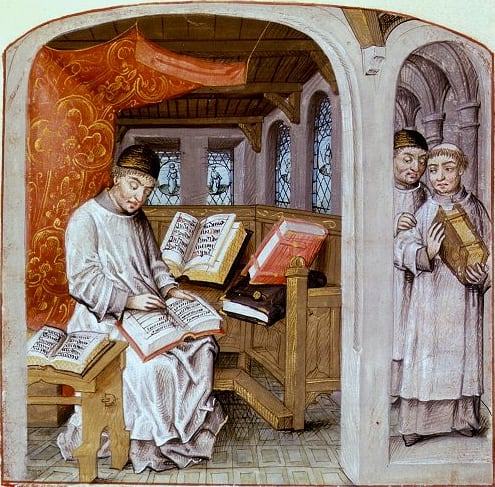
Thomas a Kempis escribiendo (miniatura de la Imitación) · Public domain
In their words
«'He who follows me does not walk in darkness,' says the Lord. These are the words of Christ, by which we are exhorted to imitate his life and ways if we wish to be truly enlightened and freed from all blindness of heart.»De imitatione Christi, I, 1, 1 (texto latino de Wikisource; traducción propia).

Their central idea
The imitation of Christ: The idea that gives the book its title is not new (it starts from St Paul, 'be imitators of me as I am of Christ', and runs through Bernard and Francis of Assisi), but Thomas makes it a programme for daily life.
See in context
Biography
5 min read
The smith's son from Kempen
Thomas Hemerken was born around 1379 or 1380 at Kempen, a small town in the archbishopric of Cologne, near the Rhine. His surname, 'little hammer', Latinised as Malleolus, probably alludes to the trade of his father, Johann, a metalworker; his mother, Gertrud, by tradition kept a school for small children. The world would know him by the name of his town: he himself signed Thomas Kempensis or Thomas de Kempis. He had a brother, Johannes, some fifteen years older, who shaped each of his steps.
Around 1392 or 1393 he followed Johannes to Deventer in the Low Countries to study at its renowned Latin school. Deventer was then the heart of the devotio moderna, the movement of spiritual reform begun by Geert Grote (d. 1384): lay people and clerics living in common without vows, the Brethren of the Common Life, who copied books for their bread and sought an inward, sober and practical piety centred on the life of Christ. The young Thomas lived in the house of Florens Radewijns, Grote's successor, learned the copyist's trade and was marked for ever by that milieu, which he would later portray in his lives of the founders.
Mount St Agnes
In 1399 he presented himself at the monastery of canons regular of Mount St Agnes (Agnietenberg), outside Zwolle, a house of the Windesheim congregation founded by Grote's disciples, where his brother had just been elected prior. He would spend more than seventy years there. He received the habit in 1406, made his profession the following year and was ordained priest around 1413. He was twice subprior and master of novices, and devoted most of his life to prayer, to preaching within the cloister and to copying manuscripts: he transcribed the whole Bible several times, and one of those copies, in five volumes, survives at Darmstadt.
The only great disturbance of that life came from outside. In 1429, following the Utrecht schism, the pope placed the diocese under interdict, and the canons of Mount St Agnes, loyal to Rome, left their house and took refuge at Lunenkerk in Friesland until 1432. During that exile Thomas was sent to Arnhem to care for his sick brother Johannes, and stayed with him until his death in November 1432. Then he returned to Zwolle, which he would hardly leave again.
The Imitation of Christ
In the 1420s four booklets intended for the formation of religious began to circulate without an author's name: Admonitiones ad spiritualem vitam utiles, Admonitiones ad interna trahentes, De interna consolatione and a treatise on the Eucharist. The first opened with Christ's words in John's Gospel, 'he who follows me does not walk in darkness', and with a chapter entitled De imitatione Christi, and that title came to designate the whole. In 1441 Thomas copied the four books in his own hand, together with other treatises of his, in a codex he signed and dated, now kept by the Royal Library of Belgium in Brussels. The book does not teach doctrine: it exhorts. It asks the reader to distrust the knowledge that does not make one better, to love being unknown, to embrace the daily cross, to enter inner silence and to let Christ speak to the soul as a friend.
No Christian book save the Bible has circulated so widely. More than seven hundred manuscripts survive, and the first printed edition appeared in Augsburg around 1471–1472; by the sixteenth century it had been translated into every European language. But many early editions attributed it to the chancellor of the University of Paris, Jean Gerson, and in the early seventeenth century the Benedictine Constantino Gaetani put forward a supposed thirteenth-century abbot of Vercelli, Johannes Gersen, of whom there is no documentary trace. The controversy lasted three centuries. Today scholarship attributes the work to Thomas on the strength of the 1441 autograph, the testimony of his contemporary Johannes Busch, chronicler of Windesheim, and the style of his other writings; some scholars still debate how far he gathered and reworked earlier material from the milieu of the devotio moderna.
Chronicler and master of novices
The Imitation is only part of an extensive body of work, all in Latin and nearly all intended for cloister life. He wrote the Soliloquy of the Soul, inward dialogues with God; The Little Garden of Roses and The Valley of Lilies, collections of maxims; treatises on compunction, solitude, poverty and monastic discipline; sermons for the novices and meditations on the life and passion of Christ; hymns, letters and prayers. He was also a scrupulous historian: his lives of Geert Grote, Florens Radewijns and other brethren are an essential source for the history of the devotio moderna, and the Chronicle of Mount St Agnes, which he kept up almost until his death, records the life of his house year by year. He also composed a life of St Lidwina of Schiedam.
Death and memory
He died at Mount St Agnes on 25 July 1471, aged over ninety, and was buried in the cloister. The house chronicle, continued by another canon, notes his death with his age and his years of religious life and recalls the many books he wrote and copied. The monastery was destroyed in the wars of the sixteenth century. In 1672 the Elector of Cologne, Maximilian Henry of Bavaria, had his remains sought out; since 1674 they have rested in a reliquary, and since 2006 they have been venerated in the basilica of Our Lady in Zwolle. He has never been canonised, though Kempen honours him as patron and the German Protestant calendar commemorates him on 25 July.
His book, by contrast, has never ceased to be read. Ignatius of Loyola read it daily and called it 'the little Gerson'; Teresa of Ávila listed it among the books her convents should have; John Wesley published an abridged version for the Methodists; Thérèse of Lisieux knew it almost by heart. Catholics and Protestants read it with equal devotion, though not all admired it: the Orthodox bishop Ignatius Brianchaninov warned against it as the fruit of an imaginative piety. Its strength comes from its simplicity: short, rhythmic, almost proverbial sentences that demand no learning and that every reader seems to hear addressed to himself alone.
Sources: Kettlewell, Samuel. Thomas à Kempis and the Brothers of Common Life. 2 vols. Londres: Kegan Paul, Trench & Co., 1882. · Van Engen, John. Sisters and Brothers of the Common Life: The Devotio Moderna and the World of the Later Middle Ages. Filadelfia: University of Pennsylvania Press, 2008. · Thomas à Kempis. The Founders of the New Devotion, being the Lives of Gerard Groote, Florentius Radewin and their Followers. Trad. J. P. Arthur. Londres: Kegan Paul, Trench, Trübner, 1905. · Pohl, Michael Joseph (ed.). Thomae Hemerken a Kempis Opera omnia. 7 vols. Friburgo de Brisgovia: Herder, 1902–1922. · Thomas à Kempis. The Chronicle of the Canons Regular of Mount St. Agnes. Trad. J. P. Arthur. Londres: Kegan Paul, Trench, Trübner, 1906 (Project Gutenberg n.º 16759; incluye la continuación con la noticia de su muerte).
Timeline
A life, year by year
Each point is a documented event. Click to read it, with its source and degree of certainty.
c. 1380age 0Kempen
Birth
Born at Kempen, son of Johann and Gertrud Hemerken. The sources vary between 1379 and 1380.
ProbableKettlewell, Samuel. Thomas à Kempis and the Brothers of Common Life. 2 vols. Londres: Kegan Paul, Trench & Co., 1882.
After their death
- c. 1472First printed edition
- 1604The Gersen thesis
- 1672Exhumation of his remains
- June 2006Transfer to the Zwolle basilica
c. 1380 · age 0
Birth
Born at Kempen, son of Johann and Gertrud Hemerken. The sources vary between 1379 and 1380.
Probable
c. 1392 – 1399 · age 12
Studies at Deventer
He follows his brother Johannes to Deventer, studies at the Latin school and lives with the Brethren of the Common Life in the house of Florens Radewijns (until 1399).
Documented
1399 · age 19
Entry into Mount St Agnes
He arrives at the monastery of canons regular of Agnietenberg, near Zwolle, where his brother is prior.
Documented
1406 · age 26
Clothing
He receives the habit of a canon regular; he makes his profession the following year.
Documented
1413 · age 33
Ordination to the priesthood
He is ordained priest (some sources give 1414).
Probable
c. 1424 · age 44
The Imitation circulates
The oldest known copy of the first book of the Imitation is dated around this year; the four books circulate anonymously in the 1420s.
Probable
1425 · age 45
Subprior and master of novices
He is elected subprior for the first time; he takes charge of the formation of novices, for whom he writes sermons and booklets.
Documented
1429 – 1432 · age 49
Exile over the Utrecht schism
Because of the papal interdict on the diocese of Utrecht, the community takes refuge at Lunenkerk (Friesland) until 1432.
Documented
November 1432 · age 52
Death of his brother Johannes
Having cared for him at Arnhem since 1431, he is present at his brother's death in November; he returns to Mount St Agnes.
Documented
1441 · age 61
The Brussels autograph
He finishes copying in his own hand a codex with the four books of the Imitation and other treatises, signed and dated (now KBR, ms. 5855–5861).
Documented
c. 1448 · age 68
Subprior a second time
He again holds the office of subprior.
Probable
c. 1464 · age 84
Johannes Busch's testimony
The Windesheim chronicler Johannes Busch attributes the Imitation to Thomas in his Chronicon Windeshemense, in the author's lifetime.
Documented
July 25, 1471 · age 91
Death
He dies at Mount St Agnes on 25 July, aged over ninety; the house chronicle records his death.
Documented
c. 1472
First printed edition
Günther Zainer prints the Imitation in Augsburg around 1471–1472; a circulation begins that will make it the most published Christian book after the Bible.
Probable
1604
The Gersen thesis
The Benedictine Constantino Gaetani attributes the Imitation to a supposed abbot Johannes Gersen of Vercelli; a three-century controversy opens with the partisans of Kempis and of Gerson.
Documented
1672
Exhumation of his remains
The Elector of Cologne, Maximilian Henry of Bavaria, has his remains sought and raised; since 1674 they rest in a reliquary.
Documented
June 2006
Transfer to the Zwolle basilica
The reliquary, which had been in St Michael's church since 1897, is carried in procession to the basilica of Our Lady in Zwolle.
Documented
Works
Essential works
The works without which their legacy cannot be understood.
Written work · 1441
The Imitation of Christ
De imitatione Christi (Libri quattuor)
Four booklets written for the spiritual formation of religious which circulated anonymously from the 1420s and which Thomas copied in his own hand, signed and dated, in 1441. The first counsels detachment from vanity and from knowledge that does not make one better; the second invites to the inner life and culminates in 'the royal way of the holy cross'; the third, the longest, is a dialogue between Christ and the disciple on inner consolation and love; the fourth prepares for communion. With more than seven hundred manuscripts and thousands of editions, it is the most widely circulated Christian book after the Bible. For centuries it was also attributed to Jean Gerson and to a supposed abbot Johannes Gersen; the Brussels autograph and Johannes Busch's testimony support Thomas's authorship.
14 editions

Written work · c. 1471
The Chronicle of the Canons Regular of Mount St Agnes
Chronica Montis Sanctae Agnetis
Annals of the monastery of Agnietenberg from its foundation (1398) to Thomas's last years: professions, deaths, works, financial difficulties, the exile of 1429–1432, with notes on his brother Johannes and his teacher Johannes Cele. Another canon continued it after his death and recorded Thomas's own.
2 editions
Complete works (28)
Thomas à Kempis
Imitation of Christ, Book I: Admonitions Useful for the Spiritual Life
The Conscious LibraryImitation of Christ, Book I: Admonitions Useful for the Spiritual Life
1424
Thomas à Kempis
Imitation of Christ, Book II: Admonitions Drawing toward the Inner Life
The Conscious LibraryImitation of Christ, Book II: Admonitions Drawing toward the Inner Life
1427
Thomas à Kempis
Imitation of Christ, Book III: On Inner Consolation
The Conscious LibraryImitation of Christ, Book III: On Inner Consolation
1430
Thomas à Kempis
Imitation of Christ, Book IV: On the Blessed Sacrament
The Conscious LibraryImitation of Christ, Book IV: On the Blessed Sacrament
1430

The Soliloquy of the Soul
1435

The Little Garden of Roses
1440

The Valley of Lilies
1440
Thomas à Kempis
Of the Three Tabernacles
The Conscious LibraryOf the Three Tabernacles
1440
Thomas à Kempis
On the Discipline of Cloistered Religious
The Conscious LibraryOn the Discipline of Cloistered Religious
1440

Of the Faithful Steward
1440
Thomas à Kempis
Letter to a Cellarer
The Conscious LibraryLetter to a Cellarer
1440
Thomas à Kempis
Of True Compunction of Heart
The Conscious LibraryOf True Compunction of Heart
1440
Thomas à Kempis
Little Book of Spiritual Exercise
The Conscious LibraryLittle Book of Spiritual Exercise
1440
Thomas à Kempis
On the Elevation of the Mind
The Conscious LibraryOn the Elevation of the Mind
1440
Thomas à Kempis
Manual for the Young
The Conscious LibraryManual for the Young
1440
Thomas à Kempis
Manual for Little Ones
The Conscious LibraryManual for Little Ones
1440
Thomas à Kempis
Hospice of the Poor
The Conscious LibraryHospice of the Poor
1440
Thomas à Kempis
Consolation of the Poor and the Sick
The Conscious LibraryConsolation of the Poor and the Sick
1440
Thomas à Kempis
Little Alphabet of a Good Monk
The Conscious LibraryLittle Alphabet of a Good Monk
1440

Sermons to the Novices Regular
1440
Thomas à Kempis
Sermons on the Life and Passion of Our Lord; A Meditation on the Incarnation
The Conscious LibrarySermons on the Life and Passion of Our Lord; A Meditation on the Incarnation
1440

Prayers and Meditations on the Life of Christ
1440
Thomas à Kempis
Dialogues of the Novices and Lives of the Founders
The Conscious LibraryDialogues of the Novices and Lives of the Founders
1450
Thomas à Kempis
Life of St Lidwina of Schiedam
The Conscious LibraryLife of St Lidwina of Schiedam
1448
Quotations
Quotations located in a specific work. Each carries its provenance and its level of confidence.
'He who follows me does not walk in darkness,' says the Lord. These are the words of Christ, by which we are exhorted to imitate his life and ways if we wish to be truly enlightened and freed from all blindness of heart.Qui sequitur me non ambulat in tenebris, dicit Dominus. Hæc sunt verba Christi, quibus admonemur quatenus vitam eius et mores imitemur, si volumus veraciter illuminari, et ab omni cæcitate cordis liberari.
VerifiedDe imitatione Christi, I, 1, 1 (texto latino de Wikisource; traducción propia).
Apocryphal quotes or disputed attributions (1)
«In all things I have sought rest and found it nowhere save in a corner with a book.»
A Latin saying ('In omnibus requiem quaesivi et nusquam inveni nisi in angulo cum libro') which has long accompanied some portraits of Thomas and which tradition attributes to him; it does not appear in his known works and its first attestation has not been established. It expresses his ideal well, but it is a traditional attribution.
Last words
There are no verifiable records of their last words.
No last words survive. The continuation of the Chronicle of Mount St Agnes records his death on 25 July 1471, with his age and his years of religious life, without transmitting any final sentence.
Source: Thomas à Kempis. The Chronicle of the Canons Regular of Mount St. Agnes. Trad. J. P. Arthur. Londres: Kegan Paul, Trench, Trübner, 1906 (Project Gutenberg n.º 16759; incluye la continuación con la noticia de su muerte).
Ask
What their work answers
Twelve great human questions and what their texts allow us to answer, with references. We never put words in their mouth.
What is the Absolute? Does God exist?
God is the Lord who speaks to the soul and consoles it
A personal GodStated explicitly
Thomas à Kempis does no speculative theology; he distrusts it. In The Imitation of Christ, God is someone one speaks with: book III is built as a dialogue between the disciple and Christ, who teaches inwardly, consoles, corrects and asks for the surrender of one's own will. Book I warns that it profits little to dispute loftily about the Trinity if one lacks humility and thus displeases the Trinity. Kempis's God is that of the Catholic faith and the Modern Devotion: provident Father, Christ present in the sacrament of the altar (book IV), truth that speaks within without the noise of words. The Absolute is a personal Thou, close and demanding.
Compare this question with other teachersWho am I? Is there a true self?
Humble self-knowledge is the surest way to God
A created, immortal soulInferred from their doctrine
Thomas à Kempis does not speculate about the nature of the soul; he takes for granted the Christian doctrine of an immortal soul and concerns himself with practical knowledge of it. The Imitation of Christ teaches that humble self-knowledge is a surer road to God than a deep search for learning, and recommends loving to be unknown and accounted as nothing. The self to be overcome is self-will and self-love, from which restlessness and vainglory arise; book III insists on denying oneself in order to follow Christ. The true self is the soul which, stripped of itself, finds itself small and loved.
Compare this question with other teachersWhy do we suffer?
The cross carried willingly ends up carrying you
Separation from GodStated explicitly
For Thomas à Kempis, suffering is inevitable in this life and the question is how it is borne. The chapter on the royal road of the holy cross, in book II of The Imitation of Christ, holds that in the cross lie health and life, and that if one carries the cross willingly, it will carry its bearer to the desired end; if dragged by force, it weighs more. Tribulation is useful because it returns the human being to his heart, reminds him that he is in exile and keeps him from placing his hope in the world. Suffering arises from being far from one's homeland and, accepted, unites with Christ.
Compare this question with other teachersWhat happens after death?
Live each day as if it were your last
Eternal life and resurrectionStated explicitly
The Imitation of Christ devotes an entire chapter to meditation on death. Thomas à Kempis urges living in such a way that death does not find one unprepared: blessed is the one who keeps the hour of his death daily before his eyes and makes ready to die each day. He recalls that the glory of the world passes quickly, that a man is here today and gone tomorrow, and that one should make friends of the saints while there is time. After death await judgement and eternal life, which book III describes as the homeland where the soul will rest in God without fear of losing him. Death is the door to the true homeland.
Compare this question with other teachersHow is liberation or salvation attained?
Imitate Christ's life and love him above all things
Through devotion and surrenderStated explicitly
The Imitation of Christ is the most widely read fruit of the devotio moderna, the movement of the Brethren of the Common Life to which Thomas à Kempis belonged. Its first line marks the path: whoever follows Christ does not walk in darkness, and therefore one must imitate his life and ways. Salvation is received in grace, which book III carefully distinguishes from nature, but it is lived as personal love for Jesus: book II asks that one love him above all things and keep a familiar friendship with him. Humility, renunciation of self-will, daily examination and frequent communion (book IV) are the concrete forms of that surrender.
Compare this question with other teachersIs a teacher necessary?
Truth speaks within, without the noise of words
The teacher is withinStated explicitly
Thomas à Kempis lived in obedience to his superiors at the monastery of Mount Saint Agnes, and The Imitation of Christ recommends living under a superior rather than being one's own master. But his most characteristic teaching places the teacher within. Book III, built as a dialogue between the soul and Christ, opens with the request to hear what the Lord says inwardly, and states that truth speaks within without the noise of words. Later on, Christ declares that it is he who teaches man knowledge and gives the little ones a clearer understanding than any man can teach. Human masters speak; he alone teaches.
Compare this question with other teachersIs the world real?
With an upright heart, every creature is a mirror of life
A good and real creationStated explicitly
Thomas à Kempis does not dispute the reality of the world, but its value. The Imitation of Christ begins with contempt for the world: vanity of vanities, all is vanity except to love God and serve him alone; the glory of the world passes quickly. But that contempt is not dualist: it is detachment from what passes. Book II offers the other side: if the heart were upright, every creature would be a mirror of life and a book of holy doctrine, for there is no creature so small and lowly that it does not show forth God's goodness. The world is good creation, but deceives whoever stops at it; purity of heart makes it transparent.
Compare this question with other teachersWhat is love?
Love is born of God and rests only in God
Longing and unionStated explicitly
The chapter of The Imitation of Christ on the wonderful effects of divine love is one of the most widely read texts of Western piety. Thomas à Kempis praises love as a great good that makes light all that is heavy, bears the burden without burden and makes the bitter sweet; nothing is sweeter, stronger, higher or wider. The reason he gives is its origin: love is born of God and can rest only in God, above all created things. It is therefore a movement of return, a longing that rises. Book II makes it concrete as love of Jesus above all things and familiar friendship with him.
Compare this question with other teachersAre we free, or is everything determined?
Man proposes and God disposes, yet each answers for himself
Destiny and responsibilityStated explicitly
Thomas à Kempis develops no theory of freedom, but his work holds two certainties at once. The first is providence: man proposes and God disposes, and a man's way is not in his own hands, says The Imitation of Christ, taking up a formula with biblical roots. The second is responsibility: daily resolutions, examination of conscience, the struggle against the passions and the judgement awaiting each person presuppose that one answers for one's acts. Between the two there is no contradiction, but trust: one must do all that lies in one's power and leave the outcome in God's hands. Book III insists on handing him one's own will.
Compare this question with other teachersWhy meditate or pray?
Familiar friendship with Jesus, in inner conversation
Friendship with GodStated explicitly
Thomas à Kempis understands prayer as personal converse with Christ. Book II of The Imitation of Christ describes the inner life as Christ's frequent visiting of the inner man, with sweet conversation, consolation, peace and an astonishing familiarity, and devotes a chapter to familiar friendship with Jesus. Book III is itself written as a dialogue between the disciple and the Lord, and book IV prepares for Eucharistic communion as the meeting of beloved and lover. Kempis's meditation is affective, not speculative: he would rather feel compunction than know how to define it, and he recommends retreat, silence and the reading of Scripture in order to hear that voice.
Compare this question with other teachersCan reason know the ultimate?
I would rather feel compunction than know how to define it
The ultimate lies beyond the mindStated explicitly
Thomas à Kempis distrusts speculative learning. The Imitation of Christ begins by asking what use it is to dispute loftily about the Trinity if one lacks humility, and states that he would rather feel compunction than know how to define it. Book I advises against wanting to know too much, for there is distraction and deceit in it, and places humble self-knowledge above learning. In book III, Christ declares that he teaches without the noise of words and that in a moment he raises the humble mind to grasp more of the reasons of eternal truth than ten years of study in the schools. He does not condemn learning, which is good in itself, but learning cut off from life.
Compare this question with other teachersWithdraw from the world or transform it?
As often as I was among men, I came back less a man
Withdraw in order to findStated explicitly
Thomas à Kempis spent more than seventy years at the monastery of canons regular of Mount Saint Agnes, near Zwolle, copying manuscripts, writing and training novices. The Imitation of Christ devotes a chapter to the love of solitude and silence, where it quotes Seneca without naming him: as often as he was among men, he came back less a man. It recommends avoiding idle conversation, remaining in the cell, which grows sweet the more it is kept, and seeking the right time to attend to oneself. The world and its glory pass; whoever would reach what is inward and spiritual must withdraw with Jesus from the crowd.
Compare this question with other teachers
Affinities & tensions
Affinities and tensions
Calculated question by question from their positions. The reason for each agreement or clash, on click.
Thinks most like

Rabia al-Adawiyya
They agree on: What is the Absolute? Does God exist? · Why do we suffer? · What happens after death?
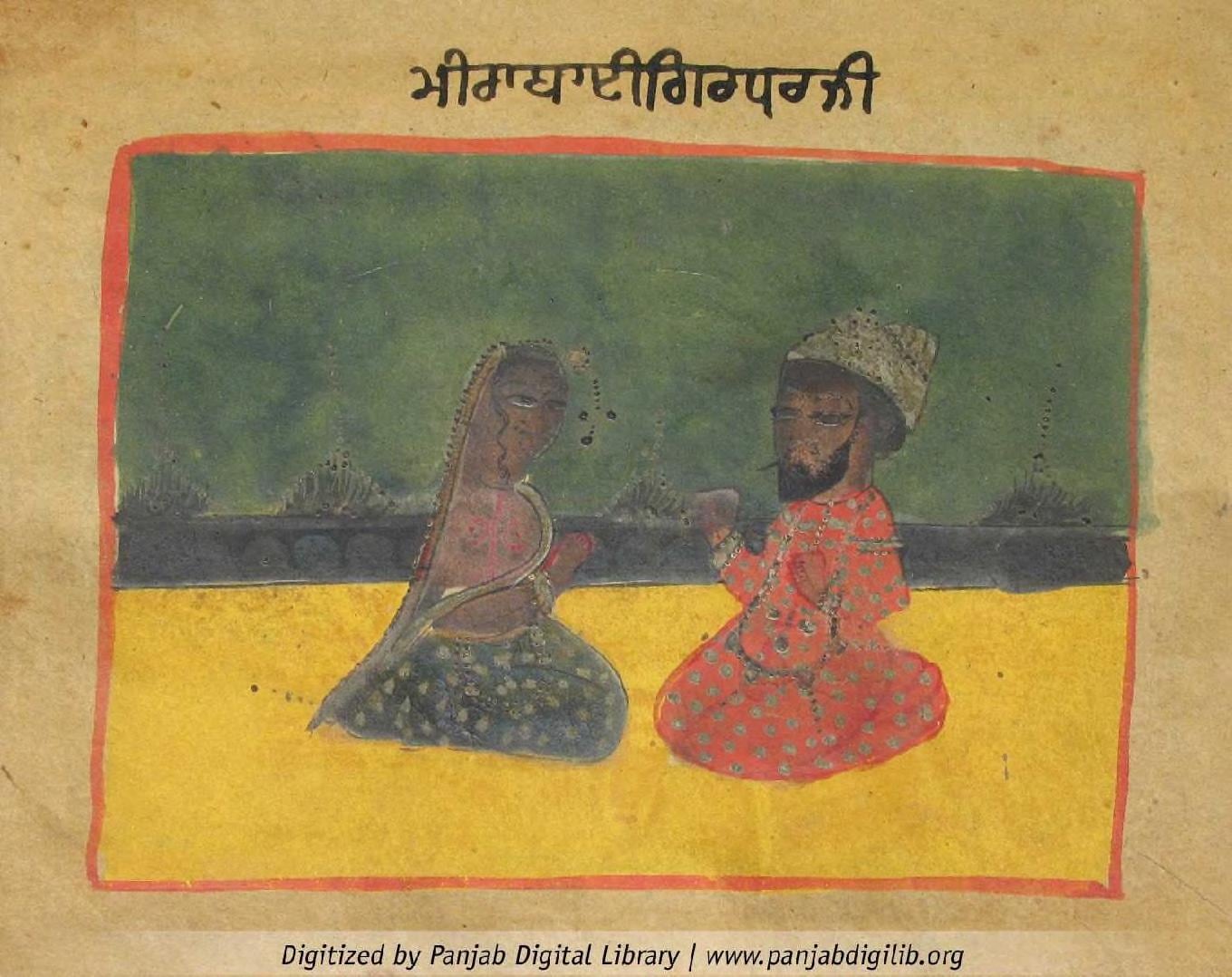
Mirabai
They agree on: What is the Absolute? Does God exist? · Why do we suffer? · How is liberation or salvation attained?
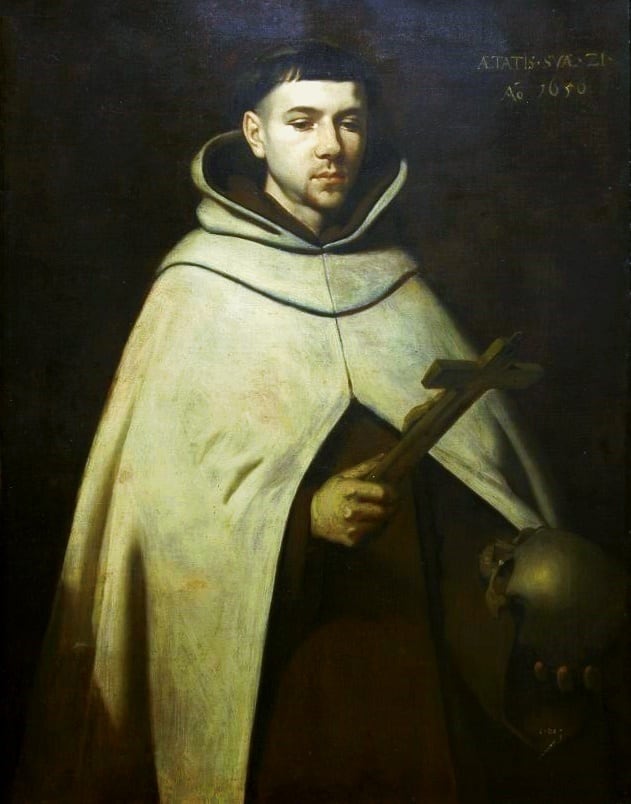
John of the Cross
They agree on: What is the Absolute? Does God exist? · Who am I? Is there a true self? · Why do we suffer?
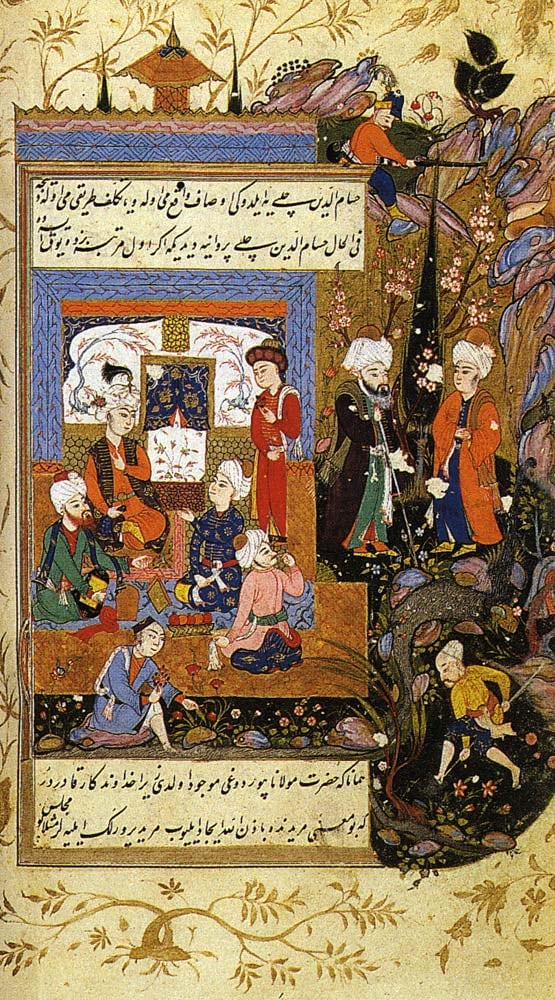
Rumi
They agree on: What is the Absolute? Does God exist? · Who am I? Is there a true self? · Why do we suffer?
Thinks most unlike

Pema Chödrön
They clash on: What is the Absolute? Does God exist? · Who am I? Is there a true self? · What happens after death?

The 14th Dalai Lama (Tenzin Gyatso)
They clash on: What is the Absolute? Does God exist? · Who am I? Is there a true self? · What happens after death?
Parmenides
They clash on: Is the world real?

Nāgārjuna
They clash on: What is the Absolute? Does God exist? · Who am I? Is there a true self? · What happens after death?
Anecdotes and stories
Anecdotes and stories
Documented1441
The codex of 1441
Origin of the story: KBR, ms. 5855–5861; diplomatic edition and study by L. M. J. Delaissé (1956).
Source: Delaissé, L. M. J. Le manuscrit autographe de Thomas a Kempis et «L'Imitation de Jésus-Christ»: examen archéologique et édition diplomatique du Bruxellensis 5855–61. 2 vols. París y Bruselas: Érasme, 1956.
Documented1604–1900
The war of the three authors
Origin of the story: History of the controversy in Ampe (1973) and Van Engen (2008); Gaetani's thesis, in his Roman edition of 1616 and writings from 1604; the attribution to Thomas, in Busch's Chronicon Windeshemense (1464).
Source: Ampe, Albert. L'Imitation de Jésus-Christ et son auteur: réflexions critiques. Roma: Edizioni di Storia e Letteratura, 1973.
Documented1522–1556
Ignatius's 'little Gerson'
Origin of the story: Gonçalves da Câmara, Memoriale (1555), §§ 97–98; Spiritual Exercises, n. 100 (readings 'from the Imitation of Christ or the Gospels and lives of saints').
Source: Gonçalves da Câmara, Luís. Memoriale (1555), en Fontes narrativi de S. Ignatio, vol. I (Monumenta Historica Societatis Iesu 66). Roma, 1943. Trad. española: Recuerdos ignacianos. Memorial de Luis Gonçalves da Câmara, ed. Benigno Hernández Montes. Bilbao y Santander: Mensajero y Sal Terrae, 1992.
Documented1429–1432
Exile in Friesland and his brother's death
Origin of the story: Chronica Montis Sanctae Agnetis, years 1429–1432 (trans. Arthur, 1906); Catholic Encyclopedia (1912).
Unverifiable1672 (supuesto)
The legend of the scratched coffin
Origin of the story: No printed source earlier than its internet circulation has been located; the English Wikipedia itself marks it as unsupported. The data on the exhumation come from the Catholic Encyclopedia (1912).
Teachings
Teachings
The notions that structure their thought, explained in context.
The imitation of Christimitatio-christi
De imitatione Christi, I, 1; Christocentric spirituality of the devotio moderna.
Source: Thomas a Kempis. De imitatione Christi, libros I–IV (texto latino). Wikisource en latín.
Devotio modernadevotio-moderna
Lives of the founders (Dialogus noviciorum), Chronicle of Mount St Agnes; Van Engen (2008).
Source: Van Engen, John. Sisters and Brothers of the Common Life: The Devotio Moderna and the World of the Later Middle Ages. Filadelfia: University of Pennsylvania Press, 2008.
Compunction of heartcompunctio
De imitatione Christi, I, 1 and I, 21; De vera compunctione cordis.
Source: Thomas a Kempis. De imitatione Christi, libros I–IV (texto latino). Wikisource en latín.
The royal way of the holy crossvia-regia-crucis
De imitatione Christi, II, 11–12.
Source: Thomas a Kempis. De imitatione Christi, libros I–IV (texto latino). Wikisource en latín.
'Ama nesciri': humility and hidden lifeama-nesciri
De imitatione Christi, I, 2; I, 20; III, 50; Alphabetum parvum boni monachi.
Source: Thomas a Kempis. De imitatione Christi, libros I–IV (texto latino). Wikisource en latín.
Videos
Videos
Recordings, interviews and documentaries. Videos play from YouTube; they are not hosted here.
The Imitation of Christ by Thomas à KEMPIS read by David Barnes | Full Audio Book
Third-party recording· EN· 522 min
LibriVox AudiobooksOfficial channel
De la imitación de Cristo by Thomas à Kempis read by Mongope Part 1/2 | Full Audio Book
Third-party recording· ES· 404 min
LibriVox AudiobooksOfficial channel
La Devotio moderna, par Benoît Beyer de Ryke
Lecture· FR· 79 min
Académie royale de BelgiqueOfficial channel
Geschichte des christlichen Mönchtums 11 – Leben in der Nachfolge – Die Brüder vom gemeinsamen Leben
Lecture· DE· 17 min
Athina Lexutt
Thomas a Kempis - L'Imitation de Jésus-Christ
Analysis· FR· 2019· 53 min
KTO TVOfficial channel
Thomas a Kempis (ca. 1380-1471) | Zwolle, Nederland
Documentary· NL· 2010· 2 min
LetterkundigMuseum2Official channel
Thomas à Kempis Part 1: Historical Background #SpirtualMasters
Lecture· EN· 41 min
TAN BooksOfficial channel
Episode 1: Avoid Vanity, Seek Humility | The Commentaries: The Imitation of Christ
Analysis· EN· 20 min
TAN BooksOfficial channel
Second Only to the Bible: The Imitation of Christ (Fr. Mike Schmitz & Fr. Gregory Pine)
Analysis· EN· 31 min
Ascension PresentsOfficial channel
Pfarrer Dr. Peter Dyckhoff: Nachfolge Christi - geistlich leben nach Thomas von Kempen
Interview· DE· 14 min
KIRCHE IN NOT DeutschlandOfficial channel
Nachfolge Christi – Grundlagen für ein geistliches Leben (Teil 1)
Analysis· DE· 12 min
KIRCHE IN NOT DeutschlandOfficial channel
Imitación de Cristo - Tomás de Kempis
Analysis· ES· 41 min
Bibliopolis - Ivo Hernandez
¿Es posible imitar a CRISTO como lo hizo Tomás de Kempis?
Analysis· ES· 10 min
Creer para Comprender
Gallery
Gallery
Images with verified licences. Each keeps its authorship and attribution.
Manuscripts
Manuscripts
Manuscript witnesses and ancient texts, with their custodian and conditions of access.
LA · Gótica libraria (textualis) de los Países Bajos · c. 1420–1441
De imitatione Christi libri IV et alia opuscula (autógrafo)
- Surviving witness
- Códice autógrafo terminado en 1441 con la Imitación y otros opúsculos; colofón con su nombre y la fecha
- Custodian
- KBR, Biblioteca Real de Bélgica, Bruselas · ms. 5855–5861
LA · Gótica libraria · c. 1427–1439
Biblia (copia de Thomas a Kempis)
- Surviving witness
- Biblia completa en cinco volúmenes, una de las varias que copió
- Custodian
- Universitäts- und Landesbibliothek Darmstadt
Connections
Connections
Influences, discipleships and affinities. Documented relations are distinguished from similarities identified by analysis.
Influenced
Ignatius came to know the Imitation at Manresa (1522), read it daily, called it 'the little Gerson' and recommended it in the Spiritual Exercises (n. 100).
Documented relation
Influenced
Teresa included the Contemptus mundi (the Castilian name of the Imitation) among the books her convents should have in the Constitutions of 1567.
Documented relation
Disagreed with
Brianchaninov judged the Imitation a fruit of 'prelest', an imaginative and exalted piety, and advised the Orthodox against reading it. The criticism is his; Thomas never knew him.
Documented relation
Ideas akin to
The devotio moderna comes from the same Rhenish-Netherlandish world as the mysticism of Eckhart, Tauler and Ruusbroec, and shares its detachment and inner life; but it distrusts speculation and translates mysticism into practical exercise. There is no evidence that Thomas read Eckhart.
Similarity identified by analysis
Ideas akin to
The imitation of the poor and humble Christ unites them; the Imitation expressly quotes a saying of Francis ('as much as each one is in your eyes, so much he is, and no more').
Documented relation
Ideas akin to
The devotional treatises of The Way to Christ share with the Imitation the renunciation of self-will and the distrust of knowledge that does not transform; Böhme adds a cosmology the Imitation ignores.
Similarity identified by analysis
Sources
Sources
Bibliography and catalogues consulted for this profile.
- Wikidata, Q220976 «Thomas à Kempis» (P31=Q5; 78 enlaces entre wikis; P569 1379/1380; P570 1471-07-25; P20 Zwolle).
- Kettlewell, Samuel. Thomas à Kempis and the Brothers of Common Life. 2 vols. Londres: Kegan Paul, Trench & Co., 1882.
- Van Engen, John. Sisters and Brothers of the Common Life: The Devotio Moderna and the World of the Later Middle Ages. Filadelfia: University of Pennsylvania Press, 2008.
- Thomas à Kempis. The Founders of the New Devotion, being the Lives of Gerard Groote, Florentius Radewin and their Followers. Trad. J. P. Arthur. Londres: Kegan Paul, Trench, Trübner, 1905.
- Pohl, Michael Joseph (ed.). Thomae Hemerken a Kempis Opera omnia. 7 vols. Friburgo de Brisgovia: Herder, 1902–1922.
- Thomas à Kempis. The Chronicle of the Canons Regular of Mount St. Agnes. Trad. J. P. Arthur. Londres: Kegan Paul, Trench, Trübner, 1906 (Project Gutenberg n.º 16759; incluye la continuación con la noticia de su muerte).
- Delaissé, L. M. J. Le manuscrit autographe de Thomas a Kempis et «L'Imitation de Jésus-Christ»: examen archéologique et édition diplomatique du Bruxellensis 5855–61. 2 vols. París y Bruselas: Érasme, 1956.
- Thomas a Kempis. De imitatione Christi, libros I–IV (texto latino). Wikisource en latín.
- Busch, Johannes. Chronicon Windeshemense und Liber de reformatione monasteriorum (1464). Ed. Karl Grube. Halle: Otto Hendel, 1886 (Geschichtsquellen der Provinz Sachsen 19), con la atribución de la Imitación a Thomas.
- Scully, Vincent. «Thomas à Kempis». The Catholic Encyclopedia, vol. 14. Nueva York: Robert Appleton, 1912.
- Gonçalves da Câmara, Luís. Memoriale (1555), en Fontes narrativi de S. Ignatio, vol. I (Monumenta Historica Societatis Iesu 66). Roma, 1943. Trad. española: Recuerdos ignacianos. Memorial de Luis Gonçalves da Câmara, ed. Benigno Hernández Montes. Bilbao y Santander: Mensajero y Sal Terrae, 1992.
- Teresa de Jesús. Constituciones de las carmelitas descalzas (1567), «De los libros» (recomienda el Contemptus mundi). En Obras completas, ed. Efrén de la Madre de Dios y Otger Steggink. Madrid: BAC, 1962 y ediciones posteriores.
- Wesley, John (ed.). The Christian's Pattern: or, a Treatise of the Imitation of Christ. Londres: C. Rivington, 1735.
- Thérèse de l'Enfant-Jésus. Histoire d'une âme écrite par elle-même. Lisieux, 1898 (manuscrito A, cap. V: conocía casi de memoria la Imitación).
- Ignati (Brianchanínov). «О прелести», en Аскетические опыты, t. I (crítica de la Imitación de Cristo). Texto en Azbuka very.
- Open Library (Internet Archive): registros consultados por autor, título e ISBN para las ediciones listadas.
- Wikimedia Commons: metadatos de licencia (extmetadata) de cada fichero, leídos por la API imageinfo el 2026-10-25.
- KBR, Biblioteca Real de Bélgica (Bruselas): manuscrito autógrafo de Thomas a Kempis, ms. 5855–5861 (1441).
- Ampe, Albert. L'Imitation de Jésus-Christ et son auteur: réflexions critiques. Roma: Edizioni di Storia e Letteratura, 1973.
- Rights holder
- Dominio público (Thomas murió en 1471). Las traducciones antiguas (Nieremberg, Challoner, Benham, Lamennais, Sailer) son de dominio público; las modernas (Edibesa, Debate, Vintage, Mercer, Dover y otras) pertenecen a sus editores y traductores.
Pending confirmation
What this profile has not yet been able to settle. We would rather say so than fill it in.
- Verificar las fechas de muerte de los traductores J. P. Arthur, Vincent Scully y William Duthoit para levantar la cautela sobre la Crónica, las Vidas de los fundadores, los Sermones a los novicios y las Oraciones y meditaciones.
- La edición española de la Imitación en Internet Archive (Nieremberg, 1876) carece de datos de imprenta: localizar una digitalización bibliotecaria (BNE, Biblioteca Digital Hispánica) de la traducción de Nieremberg o de la atribuida a fray Luis de Granada.
- No existe la Imitación en la Wikisource en español (comprobado el 2026-10-25), contra lo que se esperaba; la sala de lectura en español queda con el ejemplar de Internet Archive.
- Opúsculos menores (De tribus tabernaculis, De disciplina claustralium, Hortulus rosarum, Vallis liliorum, Doctrinale iuvenum, etc.): solo en los volúmenes de Pohl (1902–1922) en Internet Archive, que reúnen varias obras por volumen; buscar URL propia por obra.
- Precisar fechas de composición de los opúsculos (se dan aproximadas) con la introducción de la edición de Pohl.
- Confirmar traductor y año de la edición de Debate (2000) y del Libro de remedar a Christo (1495; ejemplar en la Biblioteca Digital Hispánica).
- Confirmar el ISBN de la nueva traducción alemana de Bernhard Lang (Reclam, 2022) y de Das Leben Meister Gerhards (2016): no localizados en Open Library.
- No hay retrato de Thomas hecho del natural: todas las imágenes de su persona son posteriores e imaginarias.
- Programas de afiliación: ninguno verificado; lista vacía.
- Documentar la procedencia del autógrafo de Bruselas (KBR ms. 5855–5861) entre Agnietenberg y la Biblioteca Real, y si existe digitalización pública.
Researched on 2026-10-25