Christianity · Christian mysticism · Catholicism · Neoplatonism
Meister Eckhart
c. 1260 – 1328Historically documented person
A Thuringian Dominican (c. 1260–1328), twice master of theology in Paris, provincial of Saxony and preacher in Strasbourg and Cologne. In Latin he wrote an unfinished scholastic work (the Opus tripartitum, biblical commentaries, sermons) and in German he preached on the ground of the soul, detachment and the birth of God in the soul, forging the abstract vocabulary of the German language. Tried by the archbishop of Cologne, he died before the bull In agro dominico (1329) condemned twenty-eight propositions drawn from his works.
- works
- 37works
- editions
- 112editions
- quotes
- 9quotes
- videos
- 12videos
- images
- 6images
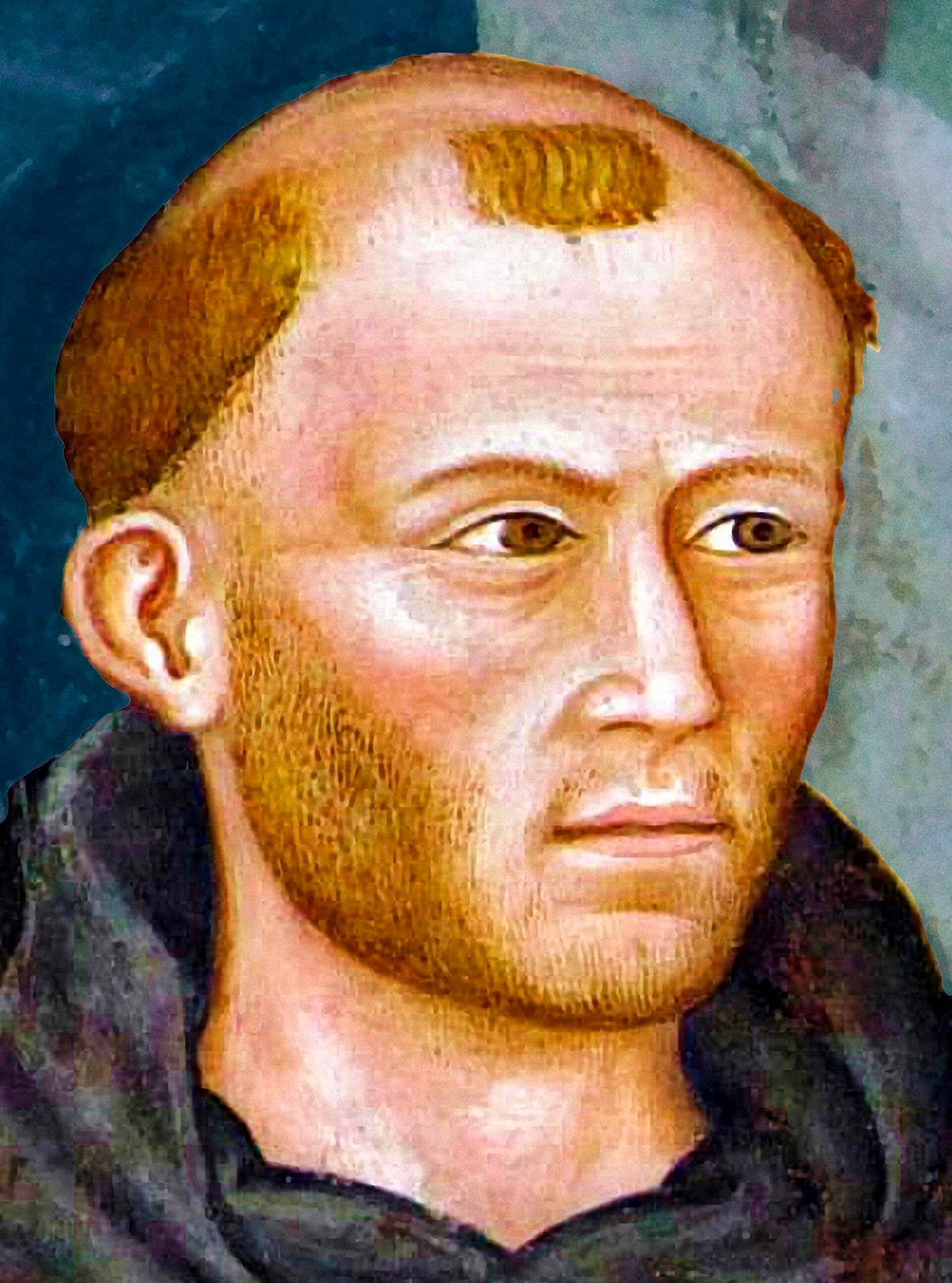
Fraile dominico identificado tradicionalmente con Eckhart (Andrea di Bonaiuto, Via Veritatis) · CC BY-SA 4.0
In their words
«Here God's ground is my ground and my ground is God's ground.»Sermón alemán 5b, «In hoc apparuit caritas dei» (DW I)

Their central idea
The ground (grunt): 'Grunt' is the word Eckhart uses for what is innermost in the soul and, at the same time, innermost in God, and his boldest thesis is that the two grounds coincide: 'here God's ground is my ground and my ground God's ground' (Sermon 5b).
See in context
Biography
5 min read
A friar from Thuringia
Eckhart was born around 1260 in Thuringia, at Tambach or Hochheim near Gotha; nothing certain is known of his family or childhood. He entered the Dominican convent at Erfurt as a young man and was trained in the order's houses of study, probably in Cologne, where the legacy of Albert the Great still weighed, and later in Paris. His known life is that of an intellectual of the Order of Preachers: study, offices of government and preaching, in that order and often at once.
In 1293–1294 he lectured in Paris on Peter Lombard's Sentences; an inaugural lecture and an Easter sermon survive from those months. Back in Thuringia he was prior of Erfurt and vicar of the region. There he gave the novices talks that were copied as the Talks of Instruction (Die rede der underscheidunge): one should not worry so much about what one does as about what one is; works do not sanctify a person, it is the person who sanctifies the works.
Master in Paris
In 1302 he obtained in Paris the chair of theology reserved for foreign Dominicans and with it the title of magister that would accompany him ever after: 'Meister'. In the disputed questions of that year he held, against the usual reading of Thomas Aquinas, that in God understanding is more fundamental than being, and he debated with the Franciscan Gonsalvus of Spain whether intellect or will has primacy.
Between 1303 and 1311 he was the first provincial of the new Dominican province of Saxony, which stretched from the Low Countries to Livonia, and in 1307 vicar general of Bohemia. In 1311 the order sent him to Paris again, an honour only Thomas Aquinas had received before. From those years comes the project of an Opus tripartitum (a work of propositions, one of questions and one of expositions) that remained in prologues, commentaries on Genesis, Exodus, Wisdom and the Gospel of John, and Latin sermons. Its general prologue states the thesis that orders everything: 'being is God'.
The preacher of Strasbourg and Cologne
Around 1313 he settled in Strasbourg as vicar of the master general, charged with the care of the many Dominican convents of women and the beguine communities of the Upper Rhine. For them he preached in German. His sermons, transcribed by listeners and copied in hundreds of manuscripts, are the core of his fame: the critical edition today recognises more than a hundred, numbered by Josef Quint and Georg Steer, alongside fifty-six Latin sermons.
No German sermon survives in his own hand. We know them through copies made by listeners, often nuns, which circulated anonymously or mixed with texts by other preachers; collections such as the Paradisus anime intelligentis gather his pieces alongside those of other Dominicans. To separate the authentic from the spurious, Josef Quint took as his starting point the passages cited in the Cologne trial and in Eckhart's own defence, which guarantee his authorship, and from them the parallels of doctrine and style. That is why Quint's numbering has become the way of citing Eckhart, and why some of what was attributed to him in the nineteenth century, such as the treatise of Sister Catherine, has been excluded from his work.
In them a few ideas return with unheard-of verbal daring: the soul has a 'ground' or an uncreated 'spark' where the Father ceaselessly begets his Son; for that birth to happen one must 'detach' from every image, every willing and even from God as we picture him; beyond God is the 'Godhead', a silent desert where there is no distinction. In saying so, Eckhart created much of the abstract vocabulary of the German language.
For the widowed Queen Agnes of Hungary he wrote the Book of Divine Consolation, accompanied by the sermon On the Noble Man, which teaches how to find in God consolation for every loss. The treatise On Detachment, which ranks detachment above love and humility, has long been attributed to him, although its authenticity is debated.
The trial
Around 1323 the order moved him to the studium generale in Cologne. In 1326 Archbishop Henry of Virneburg, uneasy about the Free Spirit movements and at odds with the Dominicans, opened an inquisitorial process against him based on lists of propositions drawn from his books and sermons. Eckhart replied with a meticulous defence in which he distinguishes between erring and being a heretic: he can be mistaken, he writes, but not a heretic, because the first belongs to the intellect and the second to the will.
In January 1327 he appealed to the pope; on 13 February he had a public declaration of orthodoxy read in the Dominican church at Cologne, recorded by a notary, and travelled to Avignon. There a papal commission reduced the charges to twenty-eight articles. Eckhart died before 30 April 1328, the date on which John XXII wrote to the archbishop that the process was continuing; neither the day nor the exact place of his death is known.
On 27 March 1329 the bull In agro dominico declared seventeen of the articles heretical and the other eleven 'evil-sounding' and suspect, adding that Eckhart, at the end of his life, had revoked whatever might generate a heretical sense in the faithful. The bull was published only in the ecclesiastical province of Cologne and did not condemn his person.
An underground posterity
His disciples John Tauler and Henry Suso continued his teaching cautiously, and many sermons circulated anonymously or under other names. Nicholas of Cusa had his Latin works copied and defended him in 1449, although he asked that they not be placed in the hands of the common people. Through these channels, and through Tauler's translations, Rhineland mysticism reached the European spirituality of the fifteenth and sixteenth centuries.
In the nineteenth century he was rediscovered by Franz von Baader and Hegel; Franz Pfeiffer edited the German texts in 1857 and Heinrich Denifle discovered the Latin works in 1886, which forced readers to see him as a scholastic theologian. National Socialism sought to appropriate him as a Germanic mystic; the critical edition, begun in 1936, and later scholarship have restored his place within the Dominican and Neoplatonic tradition.
Since Rudolf Otto compared him with Shankara in 1926, Eckhart has become a privileged partner in dialogue with Vedanta and Zen Buddhism, from Suzuki to the Kyoto School. That reception has been fruitful, but historians such as Kurt Flasch warn against an Eckhart detached from his context: a scholastic master who spoke of Christ and Scripture with the tools of the philosophy of his time.
Sources: Meister Eckhart. Die deutschen und lateinischen Werke. Herausgegeben im Auftrage der Deutschen Forschungsgemeinschaft. Stuttgart: W. Kohlhammer, 1936– (Die deutschen Werke, ed. Josef Quint y Georg Steer; Die lateinischen Werke, ed. Konrad Weiß, Josef Koch, Loris Sturlese et al.). · McGinn, Bernard. The Mystical Thought of Meister Eckhart: The Man from Whom God Hid Nothing. Nueva York: Crossroad, 2001. · Ruh, Kurt. Meister Eckhart: Theologe, Prediger, Mystiker. Múnich: C. H. Beck, 1985 (2.ª ed. 1989). · Flasch, Kurt. Meister Eckhart: Philosoph des Christentums. Múnich: C. H. Beck, 2010. Trad. ingl.: Meister Eckhart: Philosopher of Christianity. New Haven: Yale University Press, 2015. · Meister Eckhart. The Essential Sermons, Commentaries, Treatises, and Defense. Trad. e introd. de Edmund Colledge y Bernard McGinn. Nueva York: Paulist Press, 1981 (Classics of Western Spirituality; ISBN 0809123703).
Timeline
A life, year by year
Each point is a documented event. Click to read it, with its source and degree of certainty.
c. 1260age 0Tambach o Hochheim (Turingia)
Birth
He is born in Thuringia, near Gotha. Neither the exact date nor his family is known.
ProbableRuh, Kurt. Meister Eckhart: Theologe, Prediger, Mystiker. Múnich: C. H. Beck, 1985 (2.ª ed. 1989).
After their death
- March 27, 1329Bull In agro dominico
- 1449Defence by Nicholas of Cusa
- 1857Pfeiffer's edition
- 1886Discovery of the Latin works
- 1936The critical edition begins
c. 1260 · age 0
Birth
He is born in Thuringia, near Gotha. Neither the exact date nor his family is known.
Probable
c. 1275 · age 15
Joins the Dominicans
He enters the Dominican convent of Erfurt; the date is an estimate.
Probable
c. 1293 · age 33
Lecturer on the Sentences
He lectures on the Sentences in Paris (1293–1294); the inaugural Collatio and the Easter Sermon of 1294 survive.
Documented
c. 1294 · age 34
Prior of Erfurt
Prior of Erfurt and vicar of Thuringia (until c. 1298); he delivers the Talks of Instruction.
Documented
1302 · age 42
Master of theology
He holds the Dominican chair for foreigners (1302–1303); Parisian Questions.
Documented
1303 · age 43
Provincial of Saxony
First provincial of the new Dominican province of Saxony (1303–1311).
Documented
1307 · age 47
Vicar general of Bohemia
The general chapter entrusts him with reforming the convents of Bohemia.
Documented
1311 · age 51
Second regency in Paris
He teaches in Paris again (1311–1313), a privilege previously held only by Thomas Aquinas.
Documented
c. 1313 · age 53
Vicar in Strasbourg
Vicar of the master general with care of the Dominican nuns and beguines of the Upper Rhine; the period of the great German sermons.
Probable
c. 1323 · age 63
Studium generale in Cologne
He teaches and preaches in Cologne.
Probable
1326 · age 66
The trial begins
Archbishop Henry of Virneburg opens an inquisitorial process; Eckhart writes his defence.
Documented
January 24, 1327 · age 67
Appeal to the pope
Eckhart appeals to the Holy See against the archbishop's commissioners.
Documented
February 13, 1327 · age 67
Public declaration
He has a protestation of orthodoxy read, recorded in a notarial instrument (now in the Vatican Archives), and leaves for Avignon.
Documented
1328 · age 68
Death
He dies before 30 April 1328, when John XXII writes to the archbishop referring to him as deceased.
Documented
March 27, 1329
Bull In agro dominico
John XXII condemns twenty-eight articles: seventeen heretical and eleven evil-sounding or suspect.
Documented
1449
Defence by Nicholas of Cusa
In the Apologia doctae ignorantiae Cusanus defends Eckhart; his library preserves the main codex of the Latin works.
Documented
1857
Pfeiffer's edition
Franz Pfeiffer publishes the German texts attributed to Eckhart, the basis of his rediscovery.
Documented
1886
Discovery of the Latin works
Heinrich Denifle publishes the Latin works found in Erfurt and in Cusanus's library.
Documented
1936
The critical edition begins
The Deutsche Forschungsgemeinschaft begins Die deutschen und lateinischen Werke (Kohlhammer).
Documented
Works
Essential works
The works without which their legacy cannot be understood.
Written work · c. 1296
Talks of Instruction (Counsels on Discernment)
Die rede der underscheidunge
Twenty-three chapters of practical spiritual direction on true obedience, prayer, detachment from one's own will, the Eucharist, sins and how to work without losing God. They contain the maxim that what one does matters less than what one is. It is Eckhart's earliest German work.
5 editions · amazon.com
Written work · c. 1318
The Book of Divine Consolation
Daz buoch der götlîchen træstunge (Liber Benedictus I)
A treatise of consolation in three parts: truths about the relation between the just man and justice, some thirty grounds of comfort in loss, and examples of sages and saints. It teaches that whoever suffers with God and for God finds that God suffers with him, and that accepted suffering becomes sweet.
6 editions · amazon.com
Written work · c. 1320
On Detachment
Von abegescheidenheit
A short treatise that places detachment above love, humility and mercy, because it compels God to come into the soul: a detached heart is a blank tablet on which God writes. Its image of the door swinging on its motionless hinge is among the most quoted in German mysticism.
6 editions · amazon.com
Later compilation · c. 1320
German Sermons (complete corpus)
Predigten (deutsche Predigten)
More than a hundred sermons preached mainly to nuns and beguines, commenting on the Gospel or Epistle of the day. In them the theses for which Eckhart is known are formulated: the birth of the Son in the ground of the soul, the uncreated spark, poverty of spirit, the Godhead beyond God. Their language, at once popular and abstract, is a landmark of German prose.
10 editions · amazon.com
Written work
German Sermon 5b: 'In hoc apparuit caritas dei in nobis'
Predigt 5b: «In hoc apparuit caritas dei in nobis»
A sermon on the incarnation and the ground: God became man so that man might be born as son, and 'here God's ground is my ground and my ground God's ground'. It asks for a life 'without why', lived from one's own ground. A manuscript fragment discovered in 2010 is one of its oldest witnesses.
4 editions · amazon.com
Written work
German Sermon 52: 'Beati pauperes spiritu'
Predigt 52: «Beati pauperes spiritu»
The sermon on poverty: poor is the one who wills nothing, knows nothing and has nothing, not even a place in which God could work. It contains the prayer that God rid us of 'God' and the evocation of the state in which man was before he was created. It is his most commented sermon.
5 editions · amazon.com
Written work
German Sermon 86: 'Intravit Iesus in quoddam castellum'
Predigt 86: «Intravit Iesus in quoddam castellum»
It reverses the traditional reading of Martha and Mary: Martha, mature and active, knows how to work from the ground without losing God, while Mary is still learning. It is Eckhart's key text on the union of contemplation and action.
4 editions · amazon.com
Complete works (37)
Meister Eckhart
Inaugural Lecture on the Sentences
The Conscious LibraryInaugural Lecture on the Sentences
1293
Meister Eckhart
Easter Sermon (Paris, 1294)
The Conscious LibraryEaster Sermon (Paris, 1294)
1294
Meister Eckhart
Treatise on the Lord's Prayer
The Conscious LibraryTreatise on the Lord's Prayer
1294
Meister Eckhart
Sermon on the Feast of Saint Augustine (Paris)
The Conscious LibrarySermon on the Feast of Saint Augustine (Paris)
1302

Parisian Questions
1302
Tripartite Work (prologues)
1311

Commentary on the Book of Genesis
1314
Book of the Parables of Genesis
1314

Commentary on the Book of Exodus
1314
Sermons and Lectures on Ecclesiasticus 24
1314
Commentary on the Book of Wisdom
1314
Commentary on the Gospel of John
1320
Latin Sermons
1320
Defence (Reply to the Cologne charges)
1326
On the Noble Man
1318
German Sermon 1: 'Intravit Iesus in templum'
German Sermon 2: 'Intravit Iesus in quoddam castellum'
German Sermon 6: 'Iusti vivent in aeternum'
German Sermon 9: 'Quasi stella matutina'
German Sermon 12: 'Qui audit me'
German Sermon 22: 'Ave, gratia plena'
German Sermon 48: 'Ein meister sprichet: alliu glîchiu dinc minnent sich'
German Sermon 71: 'Surrexit autem Saulus de terra'
German Sermon 83: 'Renovamini spiritu'
Quotations
Quotations located in a specific work. Each carries its provenance and its level of confidence.
Here God's ground is my ground and my ground is God's ground.Hie ist gotes grunt mîn grunt und mîn grunt gotes grunt.
VerifiedSermón alemán 5b, «In hoc apparuit caritas dei» (DW I)
Apocryphal quotes or disputed attributions (2)
«If the only prayer you ever say in your entire life is thank you, it will be enough.»
A widely circulated English quotation not found in the German or Latin works of the critical edition. It appears to be a modern paraphrase; its first appearance has not been located.
«What we plant in the soil of contemplation, we shall reap in the harvest of action.»
Attributed to Eckhart in modern compilations without reference to any sermon or treatise. The idea recalls Sermon 86 on Martha and Mary, but the sentence is not in it.
Last words
There are no verifiable records of their last words.
No account of his death survives. It is known only that he died before 30 April 1328, probably in Avignon or on the road, while the process was still open. The bull In agro dominico (1329) states that at the end of his life he revoked and deplored the articles he had admitted teaching 'insofar as they could generate a heretical sense in the minds of the faithful', but that is a legal formula, not last words.
Source: Juan XXII. Bula «In agro dominico», Aviñón, 27 de marzo de 1329. Texto en Denzinger–Hünermann, Enchiridion symbolorum, n.os 950–980; trad. ingl. en Colledge y McGinn (1981), 77–81.
Ask
What their work answers
Twelve great human questions and what their texts allow us to answer, with references. We never put words in their mouth.
What is the Absolute? Does God exist?
Beyond the God of three Persons lies the modeless Godhead
Both personal and impersonalStated explicitly
Eckhart affirms the Trinitarian faith without reservation and, in his Latin works, identifies God with being itself («being is God», prologue to the Tripartite Work) and, in the Parisian Questions, with understanding. But in the German sermons he distinguishes between God, who is spoken in Persons, acts and is named by creatures, and the Godhead (gotheit), a desert ground without mode in which there is no distinction. Hence in sermon 52 he prays that God rid us of «God», that is, of the image of God as an object, and in sermon 83 he proposes loving him as a non-God, a non-spirit, a non-person. Both levels are true: the personal God is the Godhead as manifested; the Godhead is that same God in his ground, which no name reaches.
Compare this question with other teachersWho am I? Is there a true self?
In the ground of the soul, God's ground and mine are one
The Self is the AbsoluteStated explicitly
Eckhart distinguishes in the soul its powers, which deal with images and creatures, and a ground (grunt), a spark or «little castle» so simple that not even God as Persons can peer into it (sermon 2). In that ground, he says in sermon 5b, God's ground is my ground and my ground is God's; there the Father begets his Son, and the eye in which I see God is the same eye in which God sees me (sermon 12). Sermon 52 even evokes the state in which man was in God before being created. The true self is not the one who owns, knows and wills, but the one who, detached, coincides with the divine ground.
Compare this question with other teachersWhy do we suffer?
All sorrow springs from love of what is lost
Craving and attachmentStated explicitly
In the Book of Divine Consolation, written for a grieving queen, Eckhart diagnoses suffering with precision: all sorrow comes from love of what loss takes from us. Whoever grieves over outward goods shows that their heart was set on them and not on God. The remedy is detachment: the soul that wills nothing of its own, that has left its will in God's, cannot be wounded in what is essential, because nothing it loses was its own. Eckhart adds a theological consolation: whoever suffers for God and in God does not suffer alone, because God suffers with him, and so pain loses its bitterness.
Compare this question with other teachersWhat happens after death?
The just live in eternity, which is a timeless now
Eternal life and resurrectionStated explicitly
Eckhart shares the faith in eternal life, but shifts the emphasis from afterwards to now. In sermon 6, on the verse «the just shall live for ever», he explains that the just man, as just, is begotten by justice and lives in it as the Son in the Father; this life does not begin after death, because eternity is a now that knows no before or after. The sermons on the eternal birth place in that same now the birth of the Son in the ground of the soul. The death that matters is the death of attachment and of self-will; whoever has died to himself already shares, in the ground, in the life that does not end.
Compare this question with other teachersHow is liberation or salvation attained?
Whoever seeks God by a way keeps the way and loses God
No method: total attentionStated explicitly
Eckhart distrusts paths that turn into ends. In sermon 5b he warns that whoever seeks God by a way takes the way and leaves God hidden in it; whoever seeks him without a way takes him as he is in himself. What is decisive is not what one does, but what one is: the Talks of Instruction ask us to think less about works and more about being. The path, if it can be called that, is detachment: a heart empty of images, of self-will and of desire for reward, in which God begets his Son. The noble man, poor in spirit, lives and acts «without why», like life that lives because it lives.
Compare this question with other teachersIs a teacher necessary?
God speaks his Word in the ground of the silent soul
The teacher is withinInferred from their doctrine
Eckhart was himself a master —the title came from his chair in Paris— and a preacher to communities of friars and nuns. But his doctrine places the true teacher within: in the sermons on the eternal birth, the Father speaks his Word in the ground of the soul, and to hear it the faculties and images must be silenced. No outward teaching can give what is received only in that silence. In sermon 12, the eye with which the soul sees God is the same with which God sees it: ultimate knowledge does not come from outside. The preacher can only point and awaken.
Compare this question with other teachersIs the world real?
Creatures are a pure nothing; all their being is God in them
Manifestation of the divineStated explicitly
Eckhart holds two theses that only appear contradictory. On the one hand, if being is God, creatures have no being of their own: in a German sermon he goes so far as to say that all creatures are a pure nothing, not small or something, but nothing. On the other, all they have they receive from God at every instant, so that every creature is full of God and is a book about him: whoever knew a single creature thoroughly would need no sermons. In the Commentary on Genesis he interprets «in the beginning» as the Word: God creates in the eternal now in which he begets the Son. The world is real as manifestation, never as something that stands by itself.
Compare this question with other teachersWhat is love?
To love without why, from a ground that seeks nothing
What appears when the self ceasesStated explicitly
Eckhart distrusts love that seeks something, even God or his consolation: whoever loves God for the reward treats him like a cow, wanted for its milk and cheese. True love is «without why», like life that lives because it lives. In the treatise On Detachment he goes so far as to place detachment above love, because love urges me to love God, whereas detachment compels God to love me. And in sermon 12 he explains that whoever truly loves himself loves all people as himself, without preference. Love appears when the possessive self yields: it is God loving himself in the bare ground of the soul.
Compare this question with other teachersAre we free, or is everything determined?
The will is free, and its summit is to let itself go into God's
Real free willInferred from their doctrine
Eckhart presupposes the scholastic doctrine of free will: in his Defence he distinguishes error, which belongs to the intellect, from heresy, which belongs to the will, and therefore asserts that he can err but cannot be a heretic. But his interest lies not in the freedom to choose, but in what the will does with it. The Talks of Instruction teach gelâzenheit, letting go: renouncing one's own will so that God's will may be one's own. Whoever achieves this wills all that God wills and acts without why. The highest freedom, for Eckhart, is not choosing among options, but willing nothing of one's own.
Compare this question with other teachersWhy meditate or pray?
The most powerful prayer comes from an empty mind
Meditation is not a techniqueStated explicitly
Eckhart proposes no meditation techniques. In the Talks of Instruction, asked which prayer is most powerful, he answers that it is the one that comes from an empty mind, detached from all things and from itself. Asking God for this or that is, in a sense, treating him as a means; pure prayer asks for nothing. In sermon 52, the poor in spirit do not even wish to fulfil God's will, nor keep within themselves a place where God might act. And in the sermons on the eternal birth, the Word is spoken when all the faculties fall silent. Meditation is not a method to be carried out, but a silence without a centre of its own.
Compare this question with other teachersCan reason know the ultimate?
Expound faith and Scripture with the natural reasons of philosophers
Faith and reason help each otherStated explicitly
Eckhart, master of theology in Paris, states at the beginning of his Commentary on the Gospel of John his purpose: to expound what the Christian faith and the Scripture of both Testaments affirm by means of the natural reasons of the philosophers. For him, Scripture, theology and philosophy say the same thing in different ways, and Moses, Christ and Aristotle teach one truth. In the Parisian Questions he even asserts that in God understanding is more fundamental than being. But this intellectualism ends in silence: the intellect, carried to its ground, breaks through all images and concepts, and God remains beyond every name. Reason is a path, not a destination.
Compare this question with other teachersWithdraw from the world or transform it?
Martha, mature, acts from the ground without losing God
Contemplation in actionStated explicitly
Eckhart reverses a traditional reading of the Gospel. In sermon 86, on Martha and Mary, he holds that Martha, who serves, is more mature than Mary, who listens seated at Jesus's feet: Mary is still learning, whereas Martha has come to act from the ground without activity separating her from God. The Talks of Instruction insist on the same point: whoever truly has God has him everywhere, in the street and among people as much as in church or in the cell, and need not flee things but learn to pass through them. Holiness depends not on place or work, but on the being from which one acts.
Compare this question with other teachers
Affinities & tensions
Affinities and tensions
Calculated question by question from their positions. The reason for each agreement or clash, on click.
Thinks most like
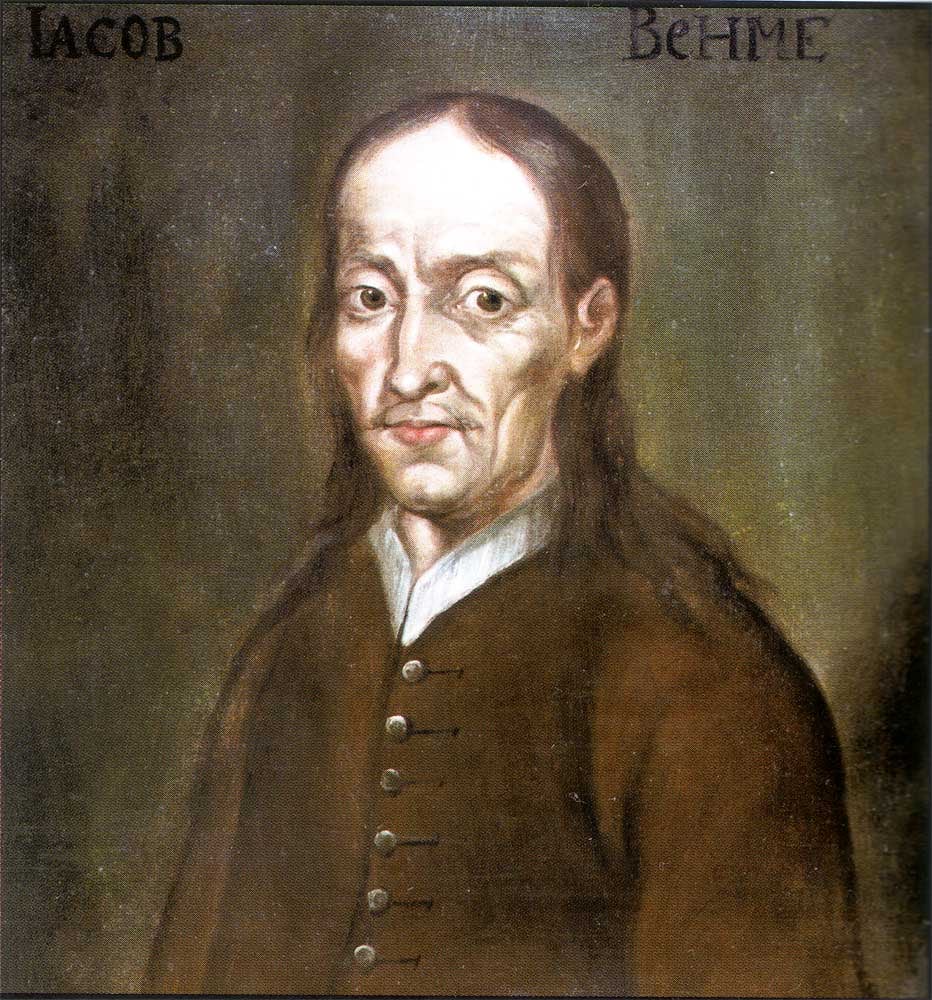
Jakob Böhme
They agree on: What is the Absolute? Does God exist? · What happens after death? · Is a teacher necessary?
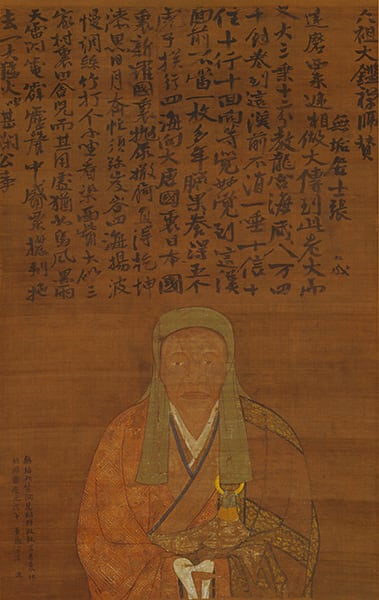
Huineng
They agree on: Who am I? Is there a true self? · Is a teacher necessary? · Is the world real?
Uddalaka Aruni
They agree on: Who am I? Is there a true self? · Is the world real? · Can reason know the ultimate?

Ibn Arabi
They agree on: What is the Absolute? Does God exist? · Who am I? Is there a true self? · What happens after death?
Thinks most unlike

Milarepa
They clash on: Who am I? Is there a true self? · What happens after death? · How is liberation or salvation attained?

Pema Chödrön
They clash on: Who am I? Is there a true self? · What happens after death? · How is liberation or salvation attained?
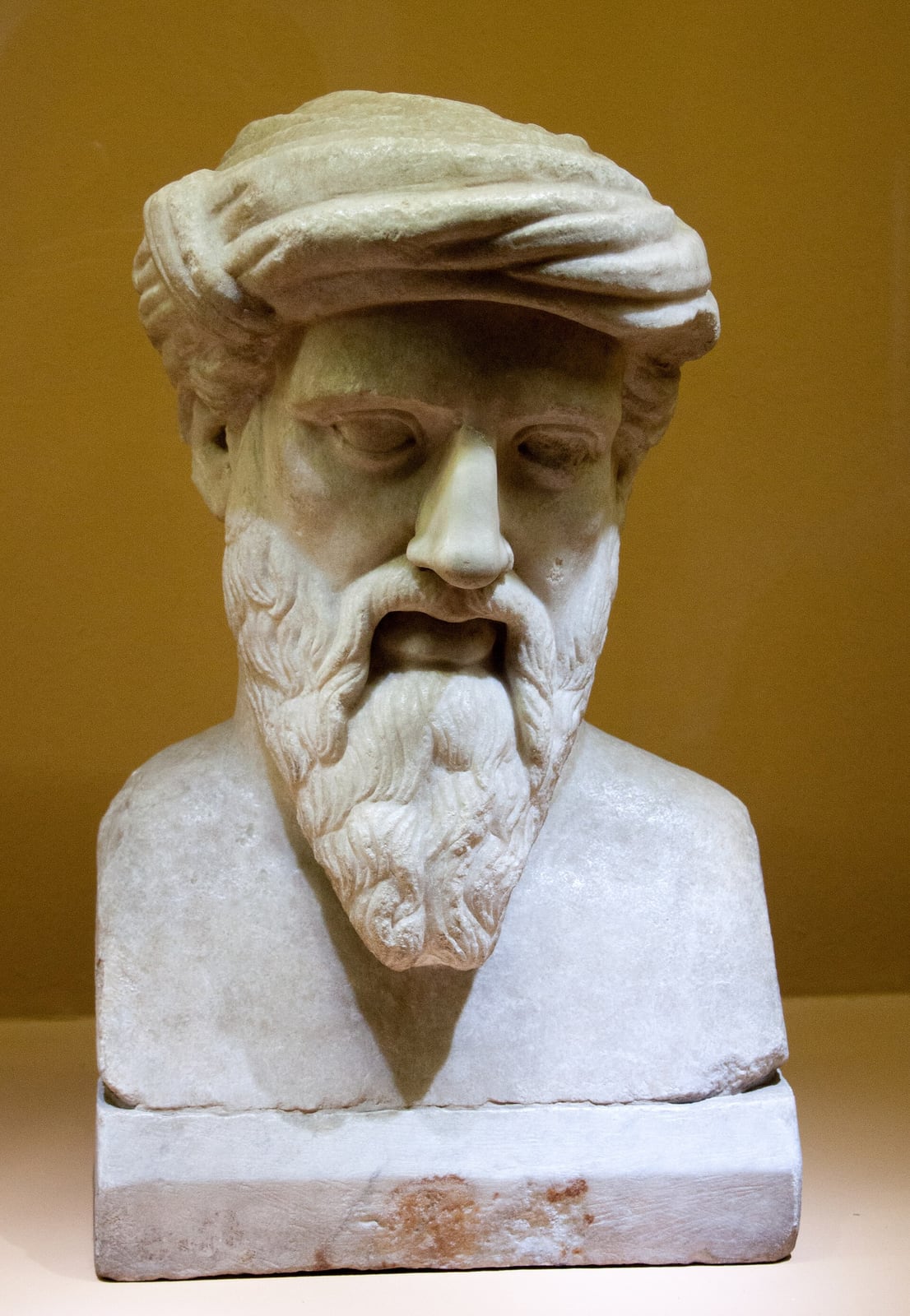
Pythagoras
They clash on: What happens after death? · How is liberation or salvation attained?
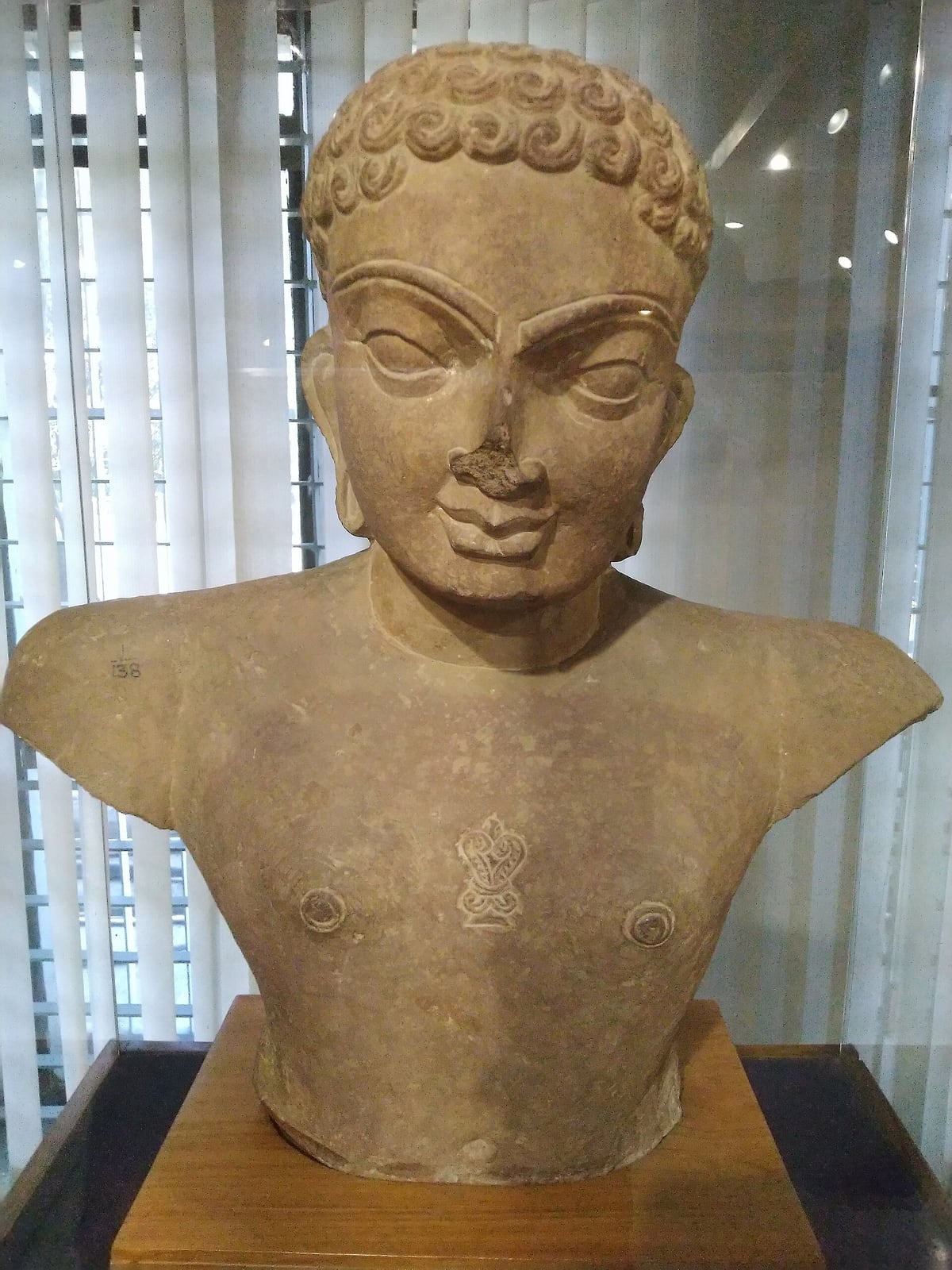
Mahāvīra
They clash on: What happens after death? · How is liberation or salvation attained?
Anecdotes and stories
Anecdotes and stories
Documented1302–1303
The master and the Franciscan
Origin of the story: Quaestiones Parisienses (LW V) and Quaestio magistri Consalvi; analysis in McGinn (2001) and Flasch (2010).
Source: McGinn, Bernard. The Mystical Thought of Meister Eckhart: The Man from Whom God Hid Nothing. Nueva York: Crossroad, 2001.
Documented1326
'I can err, but I cannot be a heretic'
Origin of the story: Rechtfertigungsschrift, in the Acta Echardiana (LW V); partial English translation in Colledge and McGinn (1981).
Source: Acta Echardiana: documentos del proceso de Colonia y Aviñón (listas de artículos, defensa, apelación, protesta pública de 13 de febrero de 1327, votum de Aviñón, carta de Juan XXII de 30 de abril de 1328). Ed. Loris Sturlese, en Die lateinischen Werke, vol. V. Stuttgart: Kohlhammer, 2000–2006.
Documented13 de febrero de 1327
The protestation in the Dominican church
Origin of the story: Notarial instrument of 13 February 1327 (Vatican Apostolic Archive, Archivum Arcis, Arm. C, 1123), edited in the Acta Echardiana.
Source: Acta Echardiana: documentos del proceso de Colonia y Aviñón (listas de artículos, defensa, apelación, protesta pública de 13 de febrero de 1327, votum de Aviñón, carta de Juan XXII de 30 de abril de 1328). Ed. Loris Sturlese, en Die lateinischen Werke, vol. V. Stuttgart: Kohlhammer, 2000–2006.
Documented1328–1329
A condemnation without a condemned man
Origin of the story: Letter of John XXII of 30 April 1328 (Acta Echardiana); bull In agro dominico (DH 950–980).
Source: Juan XXII. Bula «In agro dominico», Aviñón, 27 de marzo de 1329. Texto en Denzinger–Hünermann, Enchiridion symbolorum, n.os 950–980; trad. ingl. en Colledge y McGinn (1981), 77–81.
Documented1449
The books Cusanus did not want in common hands
Origin of the story: Nicholas of Cusa, Apologia doctae ignorantiae (1449); Codex Cusanus 21 (Bernkastel-Kues, library of the St Nicholas Hospital).
Source: Nicolás de Cusa. Apologia doctae ignorantiae (1449). Ed. Raymond Klibansky, Nicolai de Cusa Opera omnia, vol. II. Leipzig: Meiner, 1932.
Oral traditionrelato del siglo XIV
Meister Eckhart's daughter
Origin of the story: An anonymous legend edited by Pfeiffer (1857) among the attributed texts; the Augsburg version, Universitätsbibliothek, Cod. III.2.8.9, fol. 104v, titles it 'Meister Eckharts Wirtschaft'.
Teachings
Teachings
The notions that structure their thought, explained in context.
The ground (grunt)grunt
Christian Neoplatonism (Augustine, Dionysius, Proclus through the Liber de causis) and scholastic debate on the powers of the soul.
Source: McGinn, Bernard. The Mystical Thought of Meister Eckhart: The Man from Whom God Hid Nothing. Nueva York: Crossroad, 2001.
The birth of God in the soulnacimiento-de-dios-en-el-alma
Greek and Latin patristics (Origen, Augustine) and the Christmas liturgy; Christology of adoptive grace.
Source: McGinn, Bernard. The Mystical Thought of Meister Eckhart: The Man from Whom God Hid Nothing. Nueva York: Crossroad, 2001.
Detachment (abegescheidenheit) and releasement (gelâzenheit)desasimiento
Dominican and beguine spirituality of the Upper Rhine; the monastic tradition of renouncing one's own will.
Source: McGinn, Bernard. The Mystical Thought of Meister Eckhart: The Man from Whom God Hid Nothing. Nueva York: Crossroad, 2001.
God and the Godheaddeidad
Dionysian apophatic theology and the Neoplatonism of the One.
Source: McGinn, Bernard. The Mystical Thought of Meister Eckhart: The Man from Whom God Hid Nothing. Nueva York: Crossroad, 2001.
Poverty of spiritpobreza-de-espiritu
The early fourteenth-century controversy on evangelical poverty and beguine spirituality.
Source: Meister Eckhart. Die deutschen und lateinischen Werke. Herausgegeben im Auftrage der Deutschen Forschungsgemeinschaft. Stuttgart: W. Kohlhammer, 1936– (Die deutschen Werke, ed. Josef Quint y Georg Steer; Die lateinischen Werke, ed. Konrad Weiß, Josef Koch, Loris Sturlese et al.).
Living without whysin-porque
The scholastic ethics of intention and the critique of self-interested piety.
Source: McGinn, Bernard. The Mystical Thought of Meister Eckhart: The Man from Whom God Hid Nothing. Nueva York: Crossroad, 2001.
'Being is God' and 'God is understanding'esse-est-deus
Parisian scholastic metaphysics (Thomas Aquinas, Albert the Great, Dietrich of Freiberg) and the Liber de causis.
Source: Flasch, Kurt. Meister Eckhart: Philosoph des Christentums. Múnich: C. H. Beck, 2010. Trad. ingl.: Meister Eckhart: Philosopher of Christianity. New Haven: Yale University Press, 2015.
Videos
Videos
Recordings, interviews and documentaries. Videos play from YouTube; they are not hosted here.
Meister Eckhart with Prof. Bernard McGinn
Lecture· EN· 2020· 70 min
Lumen Christi InstituteOfficial channel
Bernard McGinn on The Nothingness of God in Jewish and Christian Mysticism
Lecture· EN· 2017· 64 min
University of GlasgowOfficial channel
The Bible and Western Culture - Meister Eckhart: From Whom God Hid Nothing
Lecture· EN· 2020· 44 min
Michael Sugrue
Meister Eckhart & Christian Mysticism
Analysis· EN· 2021· 44 min
Let's Talk Religion
Christian Mysticism, Vedanta und Meister Eckhart – by Swami Sarvapriyānanda
Lecture· EN· 2025· 84 min
Vedanta GermanyOfficial channel
La experiencia de Dios en el Maestro Eckhart: el nacimiento de Dios en el fondo del alma
Lecture· ES· 2023· 74 min
Universidad Pontificia ComillasOfficial channel
El todo y la nada de Dios: Maestro Eckhart (Inés Fuente)
Lecture· ES· 2016· 15 min
Dominicos EspañaOfficial channel
Conferencia sobre el Maestro Eckhart y Santo Tomás de Aquino
Lecture· ES· 2020· 83 min
Facultad de Teología San Vicente Ferrer de ValenciaOfficial channel
Silvia Bara Bancel: «San Juan de la Cruz, lector del Maestro Eckhart»
Lecture· ES· 2026· 109 min
Centro de Estudios de HermenéuticaOfficial channel
Dietmar Mieth: Mystik, Widerstand und Politik – Zugänge bei Meister Eckhart
Lecture· DE· 2021· 65 min
Evangelische Akademie ThüringenOfficial channel
«L'Ombra della Luce: Tommaso d'Aquino e Meister Eckhart» con Marco Vannini e Giuseppe Barzaghi
Lecture· IT· 2026· 120 min
IstitutoTomisticoOfficial channel
Marco Vannini | Distacco | festivalfilosofia 2024
Lecture· IT· 2024· 48 min
FestivalfilosofiaOfficial channel
Gallery
Gallery
Images with verified licences. Each keeps its authorship and attribution.
Manuscripts
Manuscripts
Manuscript witnesses and ancient texts, with their custodian and conditions of access.
LA · Latina (gótica) · Obras de c. 1305–1326; copia del siglo XV
Codex Cusanus 21 (obras latinas de Eckhart)
- Surviving witness
- Testigo principal del Opus tripartitum y de los comentarios bíblicos
- Custodian
- Biblioteca del Hospital de San Nicolás (Cusanusstift), Bernkastel-Kues · Cod. Cus. 21
LA · Latina (notarial) · 13 de febrero de 1327
Instrumento notarial de la protesta de Colonia
- Surviving witness
- Original
- Custodian
- Archivo Apostólico Vaticano · Archivum Arcis, Arm. C, 1123
GMH · Latina (gótica) · c. 1340
Paradisus anime intelligentis
- Surviving witness
- Manuscrito principal de la colección
- Custodian
- Bodleian Library, Oxford · MS. Laud Misc. 479
LA · Latina · 1326
Rechtfertigungsschrift (Defensa)
- Surviving witness
- Copia única conocida
- Custodian
- Stadtbibliothek Soest
Connections
Connections
Influences, discipleships and affinities. Documented relations are distinguished from similarities identified by analysis.
Ideas akin to
Two summits of spirituality in German lands with opposite paths: Hildegard's symbolic, imaginative vision and Eckhart's detachment from every image.
Similarity identified by analysis
Influenced by
His whole work is exegesis: Latin commentaries on the Gospel of John and German sermons on the Gospels of the day. His central doctrine, the birth of the Son in the soul, is a reading of the incarnation.
Documented relation
Influenced by
Eckhart's metaphysics of the One, procession and return, and his negative theology are Neoplatonic in origin, received mainly through Augustine, Dionysius the Areopagite, Proclus (Liber de causis) and Macrobius rather than by direct reading of the Enneads.
Similarity identified by analysis
Ideas akin to
In 1926 Rudolf Otto compared Eckhart's mysticism with Shankara's Advaita: both distinguish an attributeless absolute (Godhead / nirguna brahman) from its personal manifestation and place liberation in recognising the identity of the ground. Otto also stressed the differences, especially the living dynamism of Eckhart's God.
Similarity identified by analysis
Ideas akin to
Since D. T. Suzuki and the Kyoto School (Nishitani, Ueda Shizuteru), Eckhart has been a partner of Zen: his 'nothing', the life 'without why' and detachment have been read alongside emptiness and Dōgen's dropping off of body and mind. There is no historical contact.
Similarity identified by analysis
Influenced
Rhineland mysticism reached sixteenth-century Spain through Latin and Castilian translations attributed to Tauler, Eckhart's disciple. Research (Silvia Bara Bancel) has studied John of the Cross as an indirect reader of Eckhart in the doctrine of nothingness and the ground of the soul; the exact route of transmission is still debated.
Similarity identified by analysis
Ideas akin to
Both speak of a centre or ground of the soul where God dwells, but Teresa refuses to leave behind the Humanity of Christ and distrusts imageless prayer, distancing herself from the more speculative Eckhart.
Similarity identified by analysis
Ideas akin to
Sermon 52 transposes to the inner plane the poverty Francis lived materially, at a time when the Franciscan controversy over Christ's poverty divided the Church.
Similarity identified by analysis
Influenced
Ulrich Tölle adopted the name Eckhart in homage to the Dominican master, as he himself has explained on his official channel.
Documented relation
Linked from other profiles
- Aristotle · Influenced
- John of the Cross · Influenced by
- Laozi · Ideas akin to
- Francis of Assisi · Ideas akin to
- Simone Weil · Ideas akin to
- Hildegard of Bingen · Ideas akin to
- Adi Shankara · Ideas akin to
- Carl Gustav Jung · Influenced by
- Catherine of Siena · Ideas akin to
- Thomas à Kempis · Ideas akin to
- Julian of Norwich · Ideas akin to
- Rudolf Steiner · Influenced by
- Thomas Merton · Influenced by
- Baruch Spinoza · Ideas akin to
- Jakob Böhme · Ideas akin to
- Maimonides · Influenced
- Martin Buber · Ideas akin to
- Ibn Arabi · Ideas akin to
- Al-Hallaj · Ideas akin to
- Augustine of Hippo · Influenced
- Plato · Ideas akin to
- Rumi · Ideas akin to
- Teresa of Ávila · Ideas akin to
- Baal Shem Tov · Ideas akin to
- Yajnavalkya · Ideas akin to
Sources
Sources
Bibliography and catalogues consulted for this profile.
- Wikidata, Q76548 «Meister Eckhart» (P31=Q5; 74 enlaces entre wikis).
- Meister Eckhart. Die deutschen und lateinischen Werke. Herausgegeben im Auftrage der Deutschen Forschungsgemeinschaft. Stuttgart: W. Kohlhammer, 1936– (Die deutschen Werke, ed. Josef Quint y Georg Steer; Die lateinischen Werke, ed. Konrad Weiß, Josef Koch, Loris Sturlese et al.).
- McGinn, Bernard. The Mystical Thought of Meister Eckhart: The Man from Whom God Hid Nothing. Nueva York: Crossroad, 2001.
- Ruh, Kurt. Meister Eckhart: Theologe, Prediger, Mystiker. Múnich: C. H. Beck, 1985 (2.ª ed. 1989).
- Flasch, Kurt. Meister Eckhart: Philosoph des Christentums. Múnich: C. H. Beck, 2010. Trad. ingl.: Meister Eckhart: Philosopher of Christianity. New Haven: Yale University Press, 2015.
- Meister Eckhart. The Essential Sermons, Commentaries, Treatises, and Defense. Trad. e introd. de Edmund Colledge y Bernard McGinn. Nueva York: Paulist Press, 1981 (Classics of Western Spirituality; ISBN 0809123703).
- Acta Echardiana: documentos del proceso de Colonia y Aviñón (listas de artículos, defensa, apelación, protesta pública de 13 de febrero de 1327, votum de Aviñón, carta de Juan XXII de 30 de abril de 1328). Ed. Loris Sturlese, en Die lateinischen Werke, vol. V. Stuttgart: Kohlhammer, 2000–2006.
- Juan XXII. Bula «In agro dominico», Aviñón, 27 de marzo de 1329. Texto en Denzinger–Hünermann, Enchiridion symbolorum, n.os 950–980; trad. ingl. en Colledge y McGinn (1981), 77–81.
- Vega Esquerra, Amador (ed. y trad.). Maestro Eckhart, El fruto de la nada y otros escritos. Madrid: Siruela, 1998; Alianza Editorial, 2011 (ISBN 9788420654966).
- Otto, Rudolf. West-östliche Mystik. Vergleich und Unterscheidung zur Wesensdeutung. Gotha: Leopold Klotz, 1926. Trad. ingl.: Mysticism East and West: A Comparative Analysis of the Nature of Mysticism. Nueva York: Macmillan, 1932.
- Ueda, Shizuteru. Die Gottesgeburt in der Seele und der Durchbruch zur Gottheit. Die mystische Anthropologie Meister Eckharts und ihre Konfrontation mit der Mystik des Zen-Buddhismus. Gütersloh: Gerd Mohn, 1965.
- Pfeiffer, Franz (ed.). Deutsche Mystiker des vierzehnten Jahrhunderts, vol. II: Meister Eckhart. Leipzig: G. J. Göschen, 1857; reimpr. anastática Gotinga: Vandenhoeck & Ruprecht, 1906.
- Open Library, registros de edición de las obras de Meister Eckhart (consultados por ISBN y por obra).
- Nicolás de Cusa. Apologia doctae ignorantiae (1449). Ed. Raymond Klibansky, Nicolai de Cusa Opera omnia, vol. II. Leipzig: Meiner, 1932.
- Eckhart Tolle. «Why Did You Choose the Name ‘Eckhart’?», canal oficial Eckhart Tolle en YouTube (vídeo no insertable).
- Bara Bancel, Silvia. «San Juan de la Cruz, lector del Maestro Eckhart». Conferencia, Centro de Estudios de Hermenéutica, 2026.
- Meister Eckhart. Werke. Texte und Übersetzungen von Josef Quint. Ed. y comentario de Niklaus Largier. 2 vols. Fráncfort: Deutscher Klassiker Verlag, 1993.
- Field, Claud (trad.). Meister Eckhart's Sermons. Londres: H. R. Allenson, 1909. Texto en Christian Classics Ethereal Library.
- Rights holder
- Dominio público (obras del siglo XIV). La edición crítica Die deutschen und lateinischen Werke (Kohlhammer) y las traducciones modernas (Quint, Largier, Walshe, Colledge y McGinn, Vega, Vannini) están sujetas a los derechos de sus editores.
- Official site
- www.eckhartsociety.org/
Pending confirmation
What this profile has not yet been able to settle. We would rather say so than fill it in.
- Registrar individualmente los sermones alemanes que faltan (Pr. 3–4, 7–8, 10–11, 13–21, 23–47, 49–51, 53–70, 72–82, 84–85 de DW I–III y los de DW IV desde el 87, salvo 101–104), cada uno con su incipit según la edición crítica: no se ha podido consultar un índice fiable en línea y no se ha querido reconstruir de memoria.
- Verificar con la edición crítica la grafía exacta de las citas en alemán medio marcadas como «probable» (Instrucciones 4, sermones 5b —«sin porqué»— y 83).
- Localizar ISBN de Tratados y sermones (trad. Ilse M. de Brugger, Edhasa, 1983), de los Sermoni tedeschi (Adelphi, 1985) y de los volúmenes de la edición Kohlhammer.
- Confirmar la signatura del manuscrito de Soest que conserva la defensa y la del códice de Erfurt (Amploniana) con obras latinas.
- C. de B. Evans (traductor, 1924): fecha de muerte desconocida; la traducción queda marcada con precaución en la sala de lectura.
- El fragmento de Gotinga (sermón 5b): confirmar institución custodia y signatura.
- Las fechas de subida de los vídeos se han deducido de la fecha relativa que muestra YouTube.
- Programas de afiliación: ninguno verificado.
Researched on 2026-10-25