Islam · Sufism
Al-Hallaj
الحسين بن منصور الحلاج · أبو المغيث الحسين بن منصور الحلاج البيضاوي · منصور حلاج
c. 858 – 922Historically documented person
Mystic and preacher born in Fars (c. 858) and executed in Baghdad in 922, the most controversial Sufi of his generation. A disciple of Sahl al-Tustari and of followers of al-Junayd, he broke with them by preaching the experience of God openly. His phrase "I am the Truth" and his trial for heresy, after nine years in prison, made him the martyr of love of the Persian tradition. He left the Kitab al-Tawasin, a short Diwan and the sayings gathered in the Akhbar al-Hallaj, edited by Louis Massignon.
- works
- 6works
- editions
- 14editions
- quotes
- 5quotes
- videos
- 13videos
- images
- 3images

La ejecución de al-Hallaj (1602) · Public domain
In their words
«I am the Truth (that is, I am God).»Šaṭḥ transmitido en relatos sobre él: la versión más antigua lo sitúa en el círculo de al-Shibli; otras, ante al-Junayd. No figura en ningún manuscrito fiable de sus obras (Mojaddedi, Encyclopædia Iranica, siguiendo a Massignon).

Their central idea
"I am the Truth" and ecstatic utterance (shath): *Ana l-Haqq* is the most famous of the *shathiyyat*, the ecstatic utterances in which a mystic seems to speak in God's name.
See in context
Biography
5 min read
A grandson of Zoroastrians in Arab lands
Abu l-Mughith al-Husayn ibn Mansur was born around the year 244 of the Hijra (857–858) at al-Tur, near al-Bayda in the Persian province of Fars. His grandfather, according to tradition, had been a Zoroastrian. As a child his family moved to Wasit on the Tigris, because his father, a cotton carder (hallaj, the trade that gave him his name), sought to be close to the textile centres of Iraq. There he learned the Qur'an by heart by the age of twelve and adopted Arabic as his only language of writing. What we know of his life comes from the reports gathered in the Akhbar al-Hallaj around the year 360 (971), from the Baghdad chroniclers and, above all, from the reconstruction of Louis Massignon, who devoted his life to him; the Encyclopædia Iranica warns that this monumental work is in part interpretive.
Disciple of three masters
At about sixteen he became a disciple of the Sufi Sahl al-Tustari; four years later he received the Sufi robe in Basra from Amr ibn Uthman al-Makki and married the daughter of Abu Ya'qub al-Aqta, with whom he had three children. Both were followers of al-Junayd, the great master of Baghdad, whom al-Hallaj is said to have met, and whose "sober" path later anecdotes contrast with his "intoxication". His time in Basra coincided with the revolt of the Zanj slaves, to which his brother-in-law was linked; hence, perhaps, the early suspicion that he was a Shi'ite agitator.
Preaching and travels
After the defeat of the Zanj he went on pilgrimage to Mecca and spent a year in the precinct of the Kaaba in silence and fasting. On his return he began to speak openly of his experience; his father-in-law disowned him and his master al-Makki attacked him in writing. He then preached to popular audiences in Tustar, without Sufi garb, inviting people to seek God in their own hearts (they called him "the carder of secrets"), and then for five years in Khorasan and Transoxiana. He returned to Mecca with hundreds of disciples, was accused of sorcery and set out on a long journey through India and Turkestan. Around 290 (903) he made his third pilgrimage: at Arafat he asked God to be despised like an infidel. Back in Baghdad he built a model of the Kaaba in his house and walked the streets proclaiming his love and his wish to die for the community.
"I am the Truth"
According to the earliest account, it was in the circle of the Sufi al-Shibli that he uttered the phrase that would make him famous: ana l-Haqq, "I am the Truth", that is, "I am God", since al-Haqq is one of the divine names. Later versions place the scene before al-Junayd. The phrase appears in no reliable manuscript of his works, and its historical circumstances are uncertain; but its meaning agrees with his writings, in which he compares himself to the burning bush that spoke to Moses. Later Sufis read it in three ways: as a secret that should not have been divulged, as the word of one drunk with love, or as the voice of God speaking through a man extinguished in Him. Al-Shibli would later say: "Al-Husayn and I were one thing, except that he revealed it and I concealed it."
The trial
Baghdad was living through years of crisis: in 296 (908) the coup that put Ibn al-Mu'tazz on the throne for a single day failed, and the following year there was another Sunni uprising in which al-Hallaj took part. He fled to Ahvaz; in 301 (913) he was arrested in Sus, taken to Baghdad and exposed on the pillory as an agent of the Qarmatians. He spent some nine years in prison, mostly at court, where he had protectors, and wrote much of his work there. The vizier Hamid ibn al-Abbas reopened the case and obtained a death sentence; according to a widespread version, the pretext was a text in which he proposed fulfilling the pilgrimage without going to Mecca. According to Massignon, on Tuesday 24 Dhu l-Qa'da 309 (26 March 922) he received a thousand lashes, his hands and feet were cut off, he was exposed on the gibbet and the next day beheaded; his body was burned and the ashes thrown into the Tigris. Ibn Kathir gives a slightly different date.
A doctrine of love
What scandalised was not only a phrase but a teaching. Al-Hallaj distinguishes in God divinity (lahut) and humanity (nasut), and sings of a divine spirit that mingles with the lover's "as wine with pure water"; Massignon saw in this a doctrine of the saint's deification by the Spirit, and Nicholson compared it with that of the Rhineland mystics who speak of the birth of God in the soul. His adversaries called it hulul, incarnation. Unlike his masters, who reserved the experience for a circle of initiates, al-Hallaj preached it in the street and in language everyone could understand, and that gesture, more than the doctrine itself, explains the hostility of many of the Sufis of Baghdad.
A brief body of work
Of the forty-six titles ascribed to him by Ibn al-Nadim's Fihrist (987) only a part survives. His main work, the Kitab al-Tawasin, gathers eleven short treatises in rhymed prose, with diagrams and signs, on the Prophet, divine unity and mystical experience; in it appears for the first time in Arabic the image of the moth circling the lamp until it is consumed, and the praise of Iblis as the most sincere of monotheists, who preferred damnation to bowing before any but God. Massignon edited the Tawasin in 1913, the Diwan of poems in 1931 and the Akhbar with Paul Kraus in 1936.
The martyr of love
For a century and a half the Sufis treated him with caution: al-Sulami acknowledges that most masters rejected him, and al-Qushayri leaves him out of his gallery of biographies while quoting his sayings. Al-Ghazali excused him as a drunken lover. Hujwiri began his rehabilitation, and Attar made him the climax of his Memorial of the Saints, with a joyful death that Persian poetry would repeat. Rumi distinguishes Mansur's "I am the Truth", which was light, from Pharaoh's "I am God", and Hafez wrote that his only crime was revealing the secrets. In the twentieth century Massignon presented him as the mystic martyr of Islam, and the Egyptian poet Salah Abd al-Sabur brought his tragedy to the stage (1965). Others still see him as an agitator or a heretic: his figure continues to divide.
Sources: Massignon, Louis. La Passion de Husayn Ibn Mansûr Hallâj, martyr mystique de l'Islam, exécuté à Bagdad le 26 mars 922. 2.ª ed., 4 vols., París: Gallimard, 1975 (1.ª ed., Geuthner, 1922); trad. Herbert Mason, The Passion of al-Hallaj, Princeton University Press, 1982. · Nicholson, Reynold A. The Mystics of Islam. Londres: G. Bell & Sons, 1914, cap. VI (Project Gutenberg 67388); y al-Ghazali, Mishkat al-anwar, trad. W. H. T. Gairdner, 1924, pp. 106–107. · Ernst, Carl W. Words of Ecstasy in Sufism. Albany: State University of New York Press, 1985; y Hallaj: Poems of a Sufi Martyr, Evanston: Northwestern University Press, 2018. · Ibn Kathir. al-Bidaya wa-l-nihaya, vol. XI, año 309 H, noticia sobre al-Husayn ibn Mansur al-Hallaj (texto árabe en Wikisource). · Ibn al-Nadim. Kitab al-Fihrist (987), maqala V, noticia «al-Hallaj» y lista de sus libros (texto árabe en Wikisource).
Timeline
A life, year by year
Each point is a documented event. Click to read it, with its source and degree of certainty.
c. 858age 0al-Tur, Fars
Birth in Fars
Born around 244 AH (857–858) at al-Tur near al-Bayda (Fars), grandson of a Zoroastrian according to tradition.
ProbableMojaddedi, Jawid. «Ḥallāj, Abu'l-Moḡiṯ Ḥosayn». Encyclopædia Iranica, vol. XI, fasc. 6, pp. 589–592, 2003 (ed. en línea, act. 2016).
After their death
- c. 971The Akhbar al-Hallaj
- c. 1072Hujwiri begins the rehabilitation
- c. 1221Attar makes him a martyr of love
- 1913Massignon edits the Kitab al-Tawasin
- 1965The Tragedy of al-Hallaj
c. 858 · age 0
Birth in Fars
Born around 244 AH (857–858) at al-Tur near al-Bayda (Fars), grandson of a Zoroastrian according to tradition.
Probable
c. 865
Childhood in Wasit
The family moves to Wasit; he learns the Qur'an by heart by about twelve.
Tradition
c. 874
Disciple of Sahl al-Tustari
At about sixteen he follows the Sufi master Sahl al-Tustari.
Tradition
c. 878
Sufi robe and marriage in Basra
Receives the robe (*khirqa*) from Amr al-Makki and marries the daughter of Abu Ya'qub al-Aqta, a disciple of al-Junayd.
Tradition
c. 884
A year of silence by the Kaaba
After the defeat of the Zanj (883), he goes to Mecca and stays a year in the sanctuary in silence and fasting.
Probable
c. 890
Preaching in Tustar, Khorasan and India
Preaches to popular audiences in Tustar and for five years in Khorasan and Transoxiana; after the second pilgrimage he travels to India and Turkestan.
Probable
c. 903
Third pilgrimage and the prayer at Arafat
Around 290 AH at Arafat he asks to be despised like an infidel; he settles in Baghdad.
Probable
908
The coup of Ibn al-Mu'tazz
The Hanbali coup fails in 296 AH; the following year al-Hallaj takes part in another uprising and flees to Ahvaz.
Probable
913
Arrest in Sus and pillory in Baghdad
In 301 AH he is arrested in Sus, paraded on a camel through Baghdad and exposed as "a missionary of the Qarmatians"; nine years of imprisonment begin.
Documented
March 26, 922 · age 64
Execution in Baghdad
Condemned in the trial promoted by the vizier Hamid ibn al-Abbas; flogged, mutilated, exposed on the gibbet, beheaded and burned (24 Dhu l-Qa'da 309 / 26 March 922 according to Massignon).
Documented
c. 971
The Akhbar al-Hallaj
Around 360 AH the reports and prayers that form the Akhbar al-Hallaj are gathered in the circle of al-Nasrabadhi.
Probable
c. 1072
Hujwiri begins the rehabilitation
The Kashf al-mahjub devotes a long defence to al-Hallaj.
Documented
c. 1221
Attar makes him a martyr of love
His biography closes the Tadhkirat al-awliya with a joyful death that Persian poetry would repeat.
Documented
1913
Massignon edits the Kitab al-Tawasin
First edition of the Arabic text with French translation; in 1922 he publishes La Passion d'al-Hallaj.
Documented
1965
The Tragedy of al-Hallaj
The Egyptian poet Salah Abd al-Sabur publishes the verse drama Ma'sat al-Hallaj.
Documented
Works
Essential works
The works without which their legacy cannot be understood.
Written work · c. 915
The Book of the Tawasin
كتاب الطواسين (Kitab al-Tawasin)
Al-Hallaj's main work: eleven meditations in rhymed prose, sometimes with diagrams of circles and dots, on the Prophet's pre-existent light, God's unity and the impossibility of expressing it. The chapter on "understanding" introduces the moth approaching the lamp: it sees its light, feels its heat and truly knows it only by burning in it. The longest, on pre-eternity, defends Iblis as the absolute monotheist who refused to bow before Adam out of fidelity to God, and compares his case with Pharaoh's and the author's own. It is a difficult, allusive and intensely charged text that influenced Ahmad al-Ghazali, Ayn al-Qudat and Ruzbihan.
3 editions · amazon.com

Written work · c. 922
Diwan
ديوان الحلاج (Diwan al-Hallaj)
Some seventy short poems, often of only a few lines, in which love of God is spoken in the language of union: "I am He whom I love, and He whom I love is I", "Your spirit is mingled with mine as wine with pure water". The famous "Kill me, my trusted friends, for in my killing is my life" turns execution into a passage to true life. They are verses of great economy, with paradoxes and plays on pronouns that show the dissolution of the self, and they formed the core of al-Hallaj's image as a martyr of love.
6 editions · amazon.com
Al-Hallaj
Reports of al-Hallaj
Later compilation · c. 971
Reports of al-Hallaj
أخبار الحلاج (Akhbar al-Hallaj)
About fifty pieces: prayers spoken in public, short sermons, dialogues with disciples and the account of his last days, with the prayer in which he asks God to forgive those about to kill him "out of zeal for Your religion". It is the main source for his preaching and the basis of later hagiographical versions of his death.
2 editions
Complete works (6)

Quotations
Quotations located in a specific work. Each carries its provenance and its level of confidence.
I am the Truth (that is, I am God).أنا الحق
DisputedŠaṭḥ transmitido en relatos sobre él: la versión más antigua lo sitúa en el círculo de al-Shibli; otras, ante al-Junayd. No figura en ningún manuscrito fiable de sus obras (Mojaddedi, Encyclopædia Iranica, siguiendo a Massignon).
Last words
Contradictory versions
«For the ecstatic it is enough that the One should make him one [with Him].»حسب الواجد إفراد الواحد له
The sources preserve several versions. According to al-Sulami, cited by Ibn Khallikan, his last words were "It is enough for the ecstatic that the One should single him out" (with the variant "for the one", *al-wahid*, instead of "for the ecstatic", *al-wajid*). The *Akhbar al-Hallaj* also record a prayer spoken before the gibbet in which he asks God to forgive those about to kill him out of zeal for His religion, and words addressed to al-Shibli. Attar adds a hagiographical scene in which he smears his face with his blood. There is no single reliable testimony.
Source: Tarajm.com, ficha «al-Hallaj» con el texto de Ibn Khallikan, Wafayat al-a'yan, que cita a al-Sulami sobre sus últimas palabras.
Ask
What their work answers
Twelve great human questions and what their texts allow us to answer, with references. We never put words in their mouth.
What is the Absolute? Does God exist?
The transcendent Beloved who speaks through the lover's mouth
A personal GodStated explicitly
Al-Hallaj speaks of God as the Beloved with whom the lover comes to be merged, but his starting point is absolute transcendence. In the Book of the Tawasin he devotes a meditation to tanzih, divine incomparability: God cannot be reached by the concepts, places or times of creatures. That distance is what gives its scandal to the cry «I am the Truth»: al-Haqq, the Truth, is one of the names of God, and whoever utters it does not claim a divinity of his own but lets the Other speak in him. The verses of the Diwan express union as wine mingling with water or as two spirits dwelling in one body: it is the language of love between two, not dissolution into an impersonal principle.
Compare this question with other teachersWho am I? Is there a true self?
«I am the Truth»: when the lover is effaced, God speaks
The Self is the AbsoluteStated explicitly
Al-Hallaj is the Sufi who pushed the question of the self furthest. His formula «I am the Truth» is not spoken by the ordinary self but by the one annihilated in the Beloved, so that the one who says «I» is God. The verses of the Diwan say it plainly: he is the One he loves, and the One he loves is he; they are two spirits dwelling in one body, and whoever sees one sees the other. In the Book of the Tawasin, the moth circling the lamp truly knows the flame only when it throws itself into it and burns: the self that knows disappears into what is known. For al-Hallaj the separate self is a veil; the true self is the one God makes one with Himself, and that union may be paid for with one's life.
Compare this question with other teachersWhy do we suffer?
The pain of separation is consummated in the lover's death
Separation from GodStated explicitly
For al-Hallaj, suffering is born of the separation between lover and Beloved, and it is not evaded: it is passed through to the end. His verses ask his faithful friends to kill him, because in his death lies his life; the execution of 922 was read by the tradition as the fulfilment of that wish. In the Book of the Tawasin, the figure of Iblis embodies the pain of one who loves and has been set apart: cursed for not bowing to Adam, he remains faithful to his Lord in separation itself. Al-Hallaj does not see pain as a punishment to be avoided but as the form love takes while union has not been consummated. The remedy is not to stop suffering but to stop being the one who suffers.
Compare this question with other teachersWhat happens after death?
In my death is my life: martyrdom as the consummation of love
Eternal life and resurrectionStated explicitly
Al-Hallaj thought about his own death before it came. In famous verses he asks his faithful friends to kill him, for in his death is his life and in his life his death: to die is to pass from separate existence to life in the Beloved. Executed in Baghdad in 922 after a long trial, the tradition recorded in the Akhbar al-Hallaj attributes to him on the scaffold a prayer asking God to forgive his executioners, who kill him out of zeal for their religion. His last words are transmitted in several versions; the best known says that for the ecstatic it is enough that the One should make him one with Him. Within the Islamic faith in resurrection, al-Hallaj lives death as union, not as an end.
Compare this question with other teachersHow is liberation or salvation attained?
Love that surrenders unto death: the pilgrimage is inward
Through devotion and surrenderStated explicitly
For al-Hallaj, liberation is the union of love with God, and it is reached through a surrender that holds nothing back. The lover must let the Beloved take his place, like the moth that throws itself into the flame; his verses express that union with images of mingling and fusion. This surrender is not confined to the circle of initiates: al-Hallaj preached in the markets of Baghdad and spoke to everyone of the love of God, for which his Sufi masters reproached him. The records of his trial attribute to him the idea that a pilgrim who cannot go to Mecca may perform the pilgrimage in his own house, with an inner rite; his judges took it as an attack on the law. His death was read as the consummation of that love.
Compare this question with other teachersIs a teacher necessary?
He had masters and broke with them; his guide is the Prophet's lamp
Did not address it
Al-Hallaj left no doctrine on the need for a master, and his biography is ambivalent. He was trained by Sahl al-Tustari, by Amr ibn Uthman al-Makki and in al-Junayd's circle in Baghdad, and he broke with all of them: they reproached him for divulging in public what should be kept among initiates, and he chose to preach in the markets to anyone who would listen. The nearest thing to an answer is in the Book of the Tawasin, which opens with a meditation on the Prophet as a lamp sprung from the light of the unseen: the only guide who never fails is Muhammad. His life suggests that the human master helps one begin, but that the Beloved's call may require going beyond what the master approves.
Compare this question with other teachersIs the world real?
No doctrine of the world: God is incomparable with what is created
Did not address it
Al-Hallaj left no cosmology and no doctrine on the reality of the world. What can be reconstructed from his writings concerns the relation between God and creature, not the status of things. He insists on transcendence: the eternal does not mingle with the temporal, and the concepts of creatures do not reach God. At the same time, his language of divinity (lahut) manifesting in humanity (nasut), based on the tradition that God created Adam in His image, makes the human being, rather than the cosmos, the place where the divine lets itself be seen. His judges read incarnation into it; his defenders, a theology of the image. About the world as such he is silent.
Compare this question with other teachersWhat is love?
Love unites until lover and Beloved are a single body
Longing and unionStated explicitly
Love is the centre of al-Hallaj's experience and of his language. His verses describe it as a mingling: the Beloved's spirit has mingled with his own as wine with pure water, so that what touches one touches the other; they are two spirits dwelling in a single body. In the Book of the Tawasin the moth circling the lamp is not content with its light or its warmth: it knows the flame only by throwing itself into it. Massignon credits al-Hallaj with the boldness of presenting passionate love (ishq) as a reality rooted in the very essence of God. Love is not a feeling towards God but the movement by which God unites with the one who loves.
Compare this question with other teachersAre we free, or is everything determined?
Iblis between command and decree: no one escapes what God wills
There is no doerInferred from their doctrine
Al-Hallaj wrote no treatise on freedom, but the Book of the Tawasin devotes a meditation on pre-eternity and ambiguity to Iblis, the angel who refused to bow before Adam, in dialogue with Moses and with God. Al-Hallaj turns him into an extreme monotheist: Iblis received the command to bow, but God's eternal decree was otherwise, and he obeyed what God willed rather than what He ordered, accepting the curse for it. The scene lays bare the abyss between the divine will and the law, and the creature's powerlessness before the decree. In his experience of union, moreover, the lover no longer acts by himself: what he does and says, Another does and says in him.
Compare this question with other teachersWhy meditate or pray?
Speaking to God in public and in private as one speaks to the Beloved
Friendship with GodInferred from their doctrine
Al-Hallaj was a man of prayer and rigorous asceticism, and the Akhbar al-Hallaj preserve several of his prayers, some spoken in public, in the market or the mosque, others in prison and before the scaffold. Their tone is that of intimate dialogue with the Beloved: he addresses Him as thou, reproaches Him, thanks Him, offers Him his life. That intimacy culminates in the experience of union, in which the distance between the one who prays and the One prayed to seems to vanish. Unlike other Sufis of his time, he did not reserve that conversation for initiates: he wanted everyone to know that God can be spoken to in this way. It was precisely this prayer aloud, with its ecstatic formulas, that caused scandal.
Compare this question with other teachersCan reason know the ultimate?
The moth knows the flame not by its light but by burning in it
The ultimate lies beyond the mindStated explicitly
The meditation in the Book of the Tawasin devoted to understanding offers al-Hallaj's central image of knowledge. The moth flutters around the lamp until dawn and returns to the others to tell them what it has seen; then it approaches the warmth; finally it throws itself into the flame and burns. Only then does it truly know, and it can no longer come back to tell it. The light is knowledge by hearsay, the warmth knowledge by experience, the flame reality itself. Al-Hallaj, who was trained in the religious sciences and wrote with rigour, holds that reason and concepts remain at the edge: God is known only by losing oneself in Him, and what is reached in this way does not fit into discourse.
Compare this question with other teachersWithdraw from the world or transform it?
He took the secret to the markets and paid with his life
Engage with the worldInferred from their doctrine
Al-Hallaj broke with the discretion of the Baghdad Sufis, who reserved their teaching for small circles. He travelled through Khurasan, India and Turkestan, preached in markets and mosques, spoke of the love of God to ordinary people and attracted followers from every class. That public life had political consequences: he was accused of ties with seditious movements and of claims that threatened the caliphal order, and his trial, which lasted years, mixed theology and politics. Massignon saw in him a mystic who sought to bring his experience to the whole community and accepted death for it. He chose not retreat but the public square, and his death became a public event that tradition never forgot.
Compare this question with other teachers
Affinities & tensions
Affinities and tensions
Calculated question by question from their positions. The reason for each agreement or clash, on click.
Thinks most like

Rabia al-Adawiyya
They agree on: What is the Absolute? Does God exist? · Why do we suffer? · What happens after death?
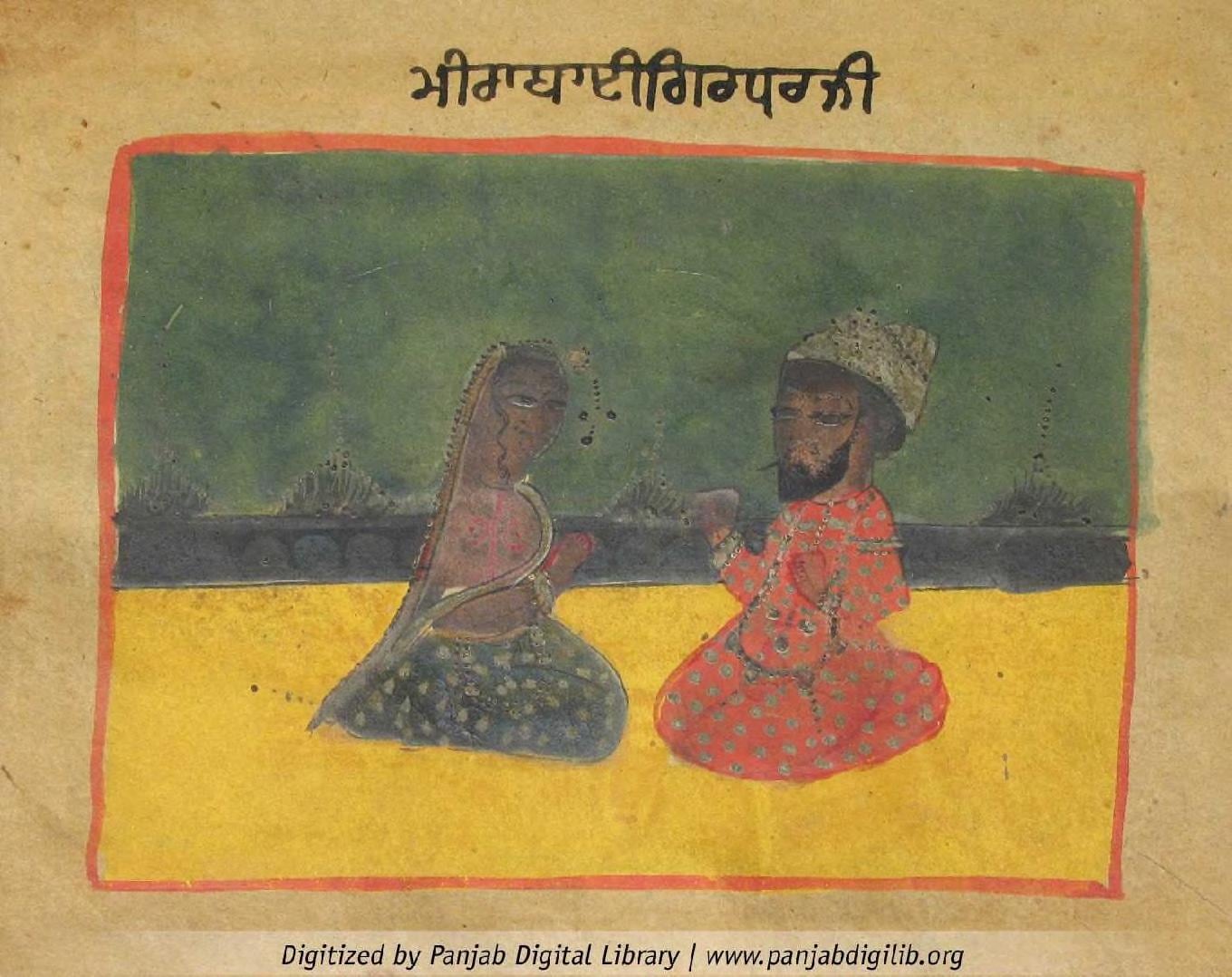
Mirabai
They agree on: What is the Absolute? Does God exist? · Why do we suffer? · How is liberation or salvation attained?
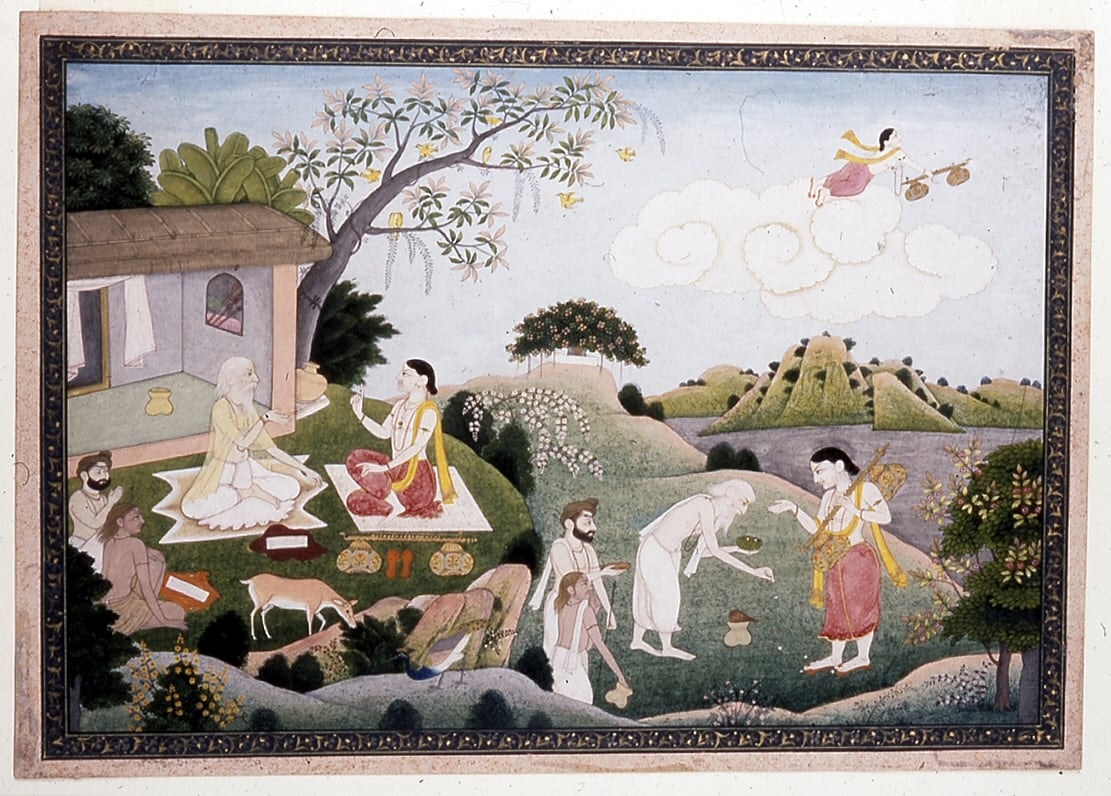
Narada
They agree on: What is the Absolute? Does God exist? · Why do we suffer? · How is liberation or salvation attained?
Ibn Arabi
They agree on: Who am I? Is there a true self? · Why do we suffer? · What happens after death?
Thinks most unlike

Pema Chödrön
They clash on: What is the Absolute? Does God exist? · Who am I? Is there a true self? · What happens after death?

Epicurus
They clash on: What is the Absolute? Does God exist? · Who am I? Is there a true self? · What happens after death?

Tsongkhapa
They clash on: What is the Absolute? Does God exist? · Who am I? Is there a true self? · What happens after death?
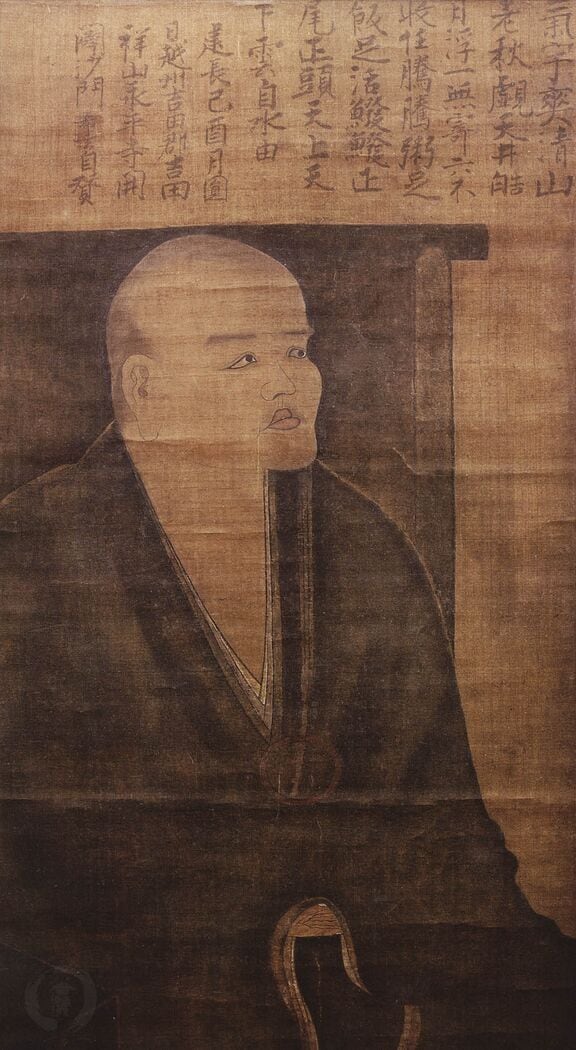
Dōgen
They clash on: What is the Absolute? Does God exist? · Who am I? Is there a true self? · What happens after death?
Anecdotes and stories
Anecdotes and stories
Disputedc. 900–913
"I am the Truth" in al-Shibli's circle
Origin of the story: Massignon, La Passion, I, pp. 168–172 (tr. Mason, I, pp. 126–129), summarised by Mojaddedi in the Encyclopædia Iranica. The al-Junayd version appears in Hujwiri and Attar.
Testimonyc. 903
The prayer at Arafat
Origin of the story: Akhbar al-Hallaj; Massignon, La Passion, I, pp. 67 and 265–267 (tr. Mason, I, pp. 26–27 and 219–223).
Oral traditionc. 884
A year motionless by the Kaaba
Origin of the story: Akhbar al-Hallaj and later Sufi biographies; summary in the Encyclopædia Iranica.
Disputed922
The Kaaba at home and the pretext for the sentence
Origin of the story: Massignon, La Passion, I, pp. 592–594 (tr. Mason, I, pp. 546–547); Ernst, Words of Ecstasy in Sufism (1985), pp. 106–110; summary in the Encyclopædia Iranica.
Hagiographic account922
The execution: chronicle and legend
Origin of the story: Chronicle: Ibn Kathir, al-Bidaya wa-l-nihaya, year 309 AH (Arabic Wikisource). Legend: Attar, Tadhkirat al-awliya and Mantiq al-tayr (vv. 2287–2298), according to the Encyclopædia Iranica.
Teachings
Teachings
The notions that structure their thought, explained in context.
"I am the Truth" and ecstatic utterance (shath)ana-l-haqq
Shath of Abu Yazid al-Bistami ("Glory be to me!"); al-Ghazali's commentary in the Mishkat; Ruzbihan Baqli, Sharh-i shathiyyat.
Lahut and nasut: the charge of incarnation (hulul)hulul
Sunni polemic against the Hululis (Abu Nu'aym, Ibn Taymiyya); interpretation by Massignon and Nicholson.
The moth and the lampfarash-y-lampara
Degrees of certainty (*'ilm*, *'ayn*, *haqq al-yaqin*); fortune of the motif in Persian poetry.
Iblis, the faithful monotheistiblis-monoteista
Qur'an 2:34, 7:11–18; P. J. Awn, Satan's Tragedy and Redemption (1983).
The inner pilgrimagehajj-interior
Legal debate on the substitution of rites; Massignon and Ernst on the trial.
Videos
Videos
Recordings, interviews and documentaries. Videos play from YouTube; they are not hosted here.
al-Hallaj: Mystic Martyr of Sufism
Analysis· EN· 59 min
Let's Talk Religion
Dr. Carl Ernst On Mansur Al-Hallaj
Lecture· EN· 87 min
Hast o Neest
#ZeeJLF2018 | Sufi Martyrs of Love
Lecture· EN· 61 min
Jaipur Literature FestivalOfficial channel
Episode 2: al-Hallaj | Logic of the Birds Podcast
Analysis· EN· 44 min
Logic of the Birds
Mansur al-Hallaj - Louis Massignon - Des Idées et des Hommes
Lecture· FR· 49 min
Traits d'Union
Ma rencontre avec al-Hallâj, par Louis Massignon
Interview· FR· 22 min
Conscience Soufie
La poésie d'al-Hallâj, par Louis Massignon
Lecture· FR· 27 min
Conscience Soufie
Mansûr al-Hallâj par Joël-Claude Meffre
Lecture· FR· 86 min
Conscience Soufie
Mansur Al HALLAJ – Une Vie, une Œuvre : le christ de l'Islam (France Culture, 1988)
Documentary· FR· 1988· 84 min
ÉCLAIR BRUT
Dolors Bramon - Los sufíes Al-Khallaj y la ex esclava Rabia Al-Adawiyya
Lecture· ES· 49 min
Espacio Ronda Barcelona
MANSUR HALLAJ ➤ ¿EL MÍSTICO QUE VIVIÓ COMO JESÚS? | con HALIL BÁRCENA
Interview· ES· 47 min
Psicología y Espiritualidad
يوسف زيدان يتحدث عن الصوفي الحلاج al-Hallaj
Lecture· AR· 21 min
gruenten
Hallac-ı Mansur Kimdir? Enel Hakk Ne Demek?
Analysis· TR· 37 min
Mustafa B. Bozkurt [Lex Historiae]
Gallery
Gallery
Images with verified licences. Each keeps its authorship and attribution.
Connections
Connections
Influences, discipleships and affinities. Documented relations are distinguished from similarities identified by analysis.
Influenced
The Masnavi mentions al-Hallaj many times; Rumi distinguishes his "I am the Truth", which was light, from Pharaoh's "I am God" (Masnavi II, v. 307).
Documented relation
Influenced
Attar placed al-Hallaj's biography as the climax of the Tadhkirat al-awliya and evokes him in the Mantiq al-tayr and the Ilahinama.
Documented relation
Influenced
A ghazal by Hafez alludes to him: "That friend for whom the gallows was raised: his crime was revealing the secrets."
Documented relation
Influenced
Al-Ghazali quotes in the Mishkat al-anwar his "I am the Truth" and the verse "I am He whom I love", explaining them as the words of a drunken lover that should have been concealed.
Documented relation
Ideas akin to
Ibn Arabi's school reread "I am the Truth" in terms of the oneness of being; no specific passage of Ibn Arabi is cited here.
Similarity identified by analysis
Ideas akin to
Both embody love mysticism in the tradition and appear together in anthologies and studies; there was no contact.
Similarity identified by analysis
Ideas akin to
Massignon called him "the Christ of Islam" and Nicholson compared his doctrine of deification with Christology; al-Hallaj mentions Jesus in his verses. An interpretive parallel, not documented influence.
Similarity identified by analysis
Ideas akin to
Nicholson compares al-Hallaj's doctrine with the Rhineland mystics' birth of God in the soul. No contact.
Similarity identified by analysis
Linked from other profiles
Sources
Sources
Bibliography and catalogues consulted for this profile.
- Wikidata, Q172862 «Mansur Al-Hallaj» (P31=Q5; 64 enlaces entre wikis; P569 858; P570 922-03-26).
- Mojaddedi, Jawid. «Ḥallāj, Abu'l-Moḡiṯ Ḥosayn». Encyclopædia Iranica, vol. XI, fasc. 6, pp. 589–592, 2003 (ed. en línea, act. 2016).
- Massignon, Louis. La Passion de Husayn Ibn Mansûr Hallâj, martyr mystique de l'Islam, exécuté à Bagdad le 26 mars 922. 2.ª ed., 4 vols., París: Gallimard, 1975 (1.ª ed., Geuthner, 1922); trad. Herbert Mason, The Passion of al-Hallaj, Princeton University Press, 1982.
- Nicholson, Reynold A. The Mystics of Islam. Londres: G. Bell & Sons, 1914, cap. VI (Project Gutenberg 67388); y al-Ghazali, Mishkat al-anwar, trad. W. H. T. Gairdner, 1924, pp. 106–107.
- Ernst, Carl W. Words of Ecstasy in Sufism. Albany: State University of New York Press, 1985; y Hallaj: Poems of a Sufi Martyr, Evanston: Northwestern University Press, 2018.
- Ibn Kathir. al-Bidaya wa-l-nihaya, vol. XI, año 309 H, noticia sobre al-Husayn ibn Mansur al-Hallaj (texto árabe en Wikisource).
- Ibn al-Nadim. Kitab al-Fihrist (987), maqala V, noticia «al-Hallaj» y lista de sus libros (texto árabe en Wikisource).
- Wikisource árabe, categoría «al-Hallaj»: poemas del Diwan (Uqtuluni ya thiqati y sesenta y nueve «Mukhtarat»).
- Tarajm.com, ficha «al-Hallaj» con el texto de Ibn Khallikan, Wafayat al-a'yan, que cita a al-Sulami sobre sus últimas palabras.
- Open Library, registros de ediciones de al-Hallaj y de Massignon (Tawasin 1913, Diwan, Akhbar, Passion, Ernst, Sami-Ali).
- Rights holder
- Dominio público (obra del siglo X). Las ediciones y traducciones modernas (Massignon/Gallimard, Princeton University Press, Northwestern University Press, Albin Michel, Ediciones del Oriente y del Mediterráneo…) están sujetas a los derechos de sus editores; los trabajos de Massignon (m. 1962) no son de dominio público en la UE ni en España.
Pending confirmation
What this profile has not yet been able to settle. We would rather say so than fill it in.
- Fechas: nacimiento c. 244 H (857–858, Iranica). Muerte el martes 24 de dhu l-qada de 309 = 26-3-922 según Massignon (coincide el día de la semana); Ibn Kathir dice «nueve días antes del fin de dhu l-qada», que daría el 21 o el 22. Conservado el dato de Massignon.
- Obra: registrados los Tawasin (con sus once capítulos), el Diwan, los Akhbar, los fragmentos de tafsir conservados por al-Sulami y los 46 títulos perdidos del Fihrist en una sola entrada. Faltan las «Riwayat» (dichos en forma de hadiz editados por Massignon) y la verificación de los fragmentos en la edición de los Haqa'iq al-tafsir.
- Ediciones: confirmar el traductor del Diván en castellano (Ediciones del Oriente y del Mediterráneo, 2002, ISBN 9788487198847) y localizar una traducción castellana de los Tawasin con ISBN; la de Aisha Abd ar-Rahman (Diwan Press, 1974) no tiene ISBN en el catálogo.
- Última palabra: verificar en la edición de los Akhbar (Massignon y Kraus, 1957) el texto árabe de la oración por sus verdugos y la forma exacta (al-wajid / al-wahid) del dicho final.
- Citas: no se ha podido cotejar con una edición árabe impresa el pasaje de la mariposa de los Tawasin ni la plegaria de Arafat; se describen sin cita literal.
- Imágenes: la ficha de File:Hallaj.jpg no indica el manuscrito de procedencia; buscar en la Walters la miniatura del Diwan de Amir Khusraw (W.650) citada por la Iranica.
Researched on 2026-10-25