Hinduism · Bhakti
Mirabai
मीराबाई · મીરાંબાઈ
c. 1498 – c. 1547Historicity debated
Sixteenth-century Rajput poet and saint (c. 1498-c. 1547), a devotee of Krishna, to whom she declared herself married. A princess of the Rathor clan of Merta and widow of the heir of Mewar, she defied the norms of her caste and station, and tradition remembers her as persecuted by her in-laws and vanishing at Dwarka. Hundreds of songs (padas) still sung throughout India are attributed to her, although almost none appear in manuscripts earlier than the eighteenth century.
- works
- 11works
- editions
- 14editions
- quotes
- 5quotes
- videos
- 11videos
- images
- 7images
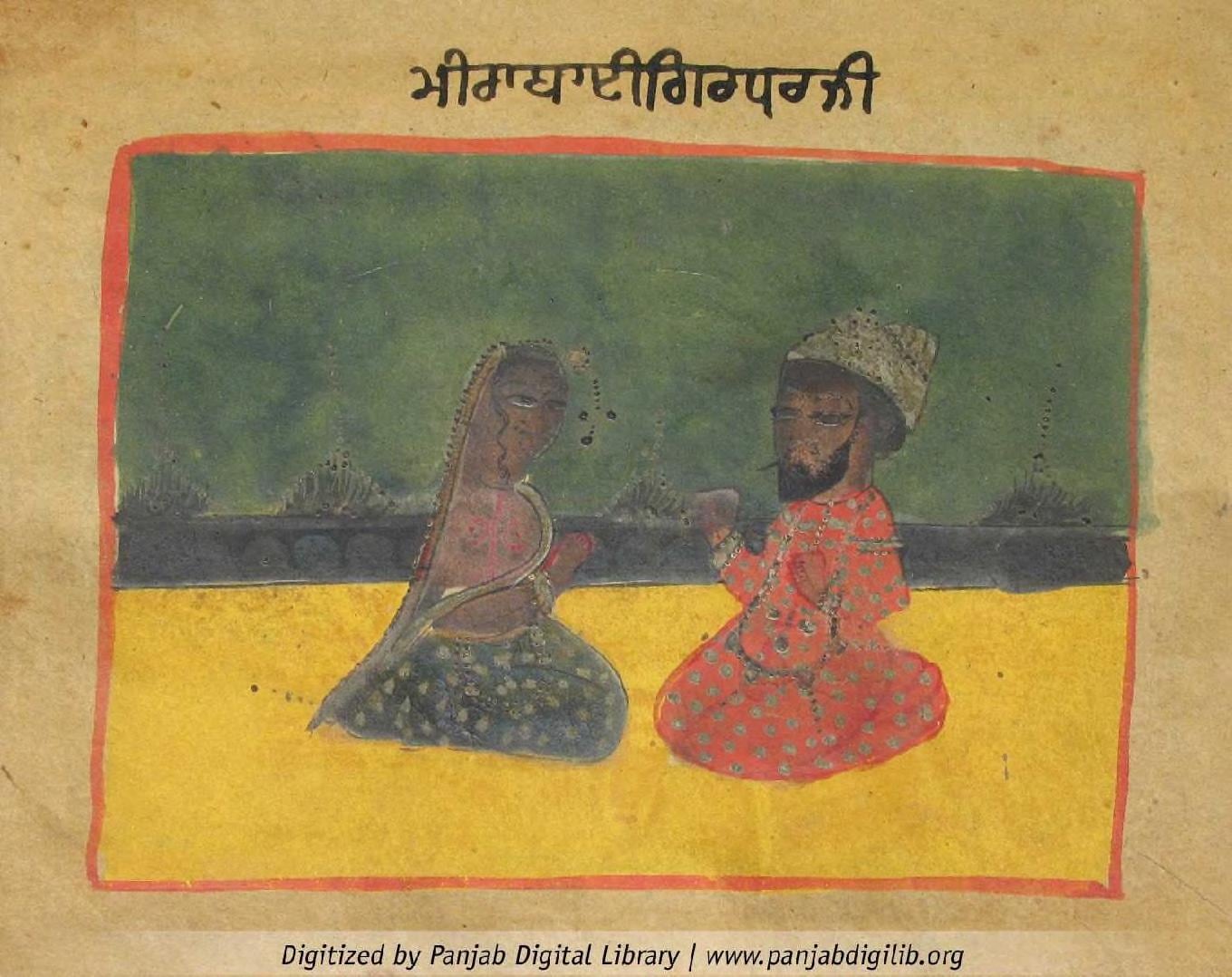
Mirabai y Girdharji en la Prem Ambodh Pothi · Public domain
In their words
«Mine is Giridhar Gopal, and no one else. The one who wears the peacock-feather crown on his head, he is my husband.»Pada atribuido, en la Mīrāṃbāī kī padāvalī de P. Chaturvedi. Traducción propia.

Their central idea
Krishna as husband (Giridhar Nagar): The most personal feature of Mira's devotion is its form: she does not love Krishna as one of the many cowherd women of legend, but as a wife married to him, and she calls her god by the epithet Giridhar Nagar, the gallant who held up Mount Govardhana to protect the herders.
See in context
Biography
4 min read
A princess of Merta
Mira —Mirabai, with the honorific— was born around 1498 in Kudki, a village in the territory of Merta, in the heart of Rajasthan. She belonged to the Merta branch of the Rathor Rajput clan: she was the daughter of Ratan Singh and granddaughter of Rao Duda, the town's founder, and a cousin of Jaimal, the defender of Chittor. Tradition says that as a child she was given a small image of Krishna and that, watching a wedding procession go by, she asked her mother who her husband would be; her mother pointed to the image. It is a legendary scene, but it condenses the core of her figure: a woman who declared herself married to Krishna, Giridhar, "the one who held up the mountain".
What is known and what is told
Two layers must be separated from the start. The first is meagre: no chronicle of her time names her, and the oldest references date from the seventeenth century, all within a hundred and fifty years of her death. The earliest datable one is a stanza in Nabhadas's Bhaktamal, around 1600, which compares her to Krishna's cowherd women, says she cast off public shame and the chains of family, and that she drank as nectar the poison the wicked gave her. The second layer is immense: Priyadas's commentary (1712), regional legends, songs, cinema. Between the two a life has been built that historians cannot confirm in almost any detail and that people go on singing.
Chittor
Around 1516 she was married to Bhoj Raj, eldest son of Rana Sanga, ruler of Mewar, the most prestigious of the Rajput kingdoms, with its capital in the fortress of Chittor. Bhoj Raj died young, before his father, around 1521, probably of war wounds. Then came disaster: in 1527 Babur defeated the Rajput coalition at Khanwa; Mira's father died as a result of that battle, and Sanga soon afterwards. The following years brought succession struggles in Mewar and siege: in 1535 Bahadur Shah of Gujarat took Chittor. It is reasonable to think, as Nancy Martin suggests, that Mira's conflict with the court was as much political as religious: a high-ranking widow from an allied and later rival clan, who refused to behave as one.
The widow who refused to be one
The traditional account is different. Mira refuses to keep the mourning of Rajput widows and, in later versions, to immolate herself on the pyre; she sings and dances in temples before sadhus of any caste; she receives pilgrims; she says her husband is Krishna. Her brother-in-law Vikramaditya, who ruled Mewar in the early 1530s, tries to kill her: a cup of poison that turns to nectar, a snake in a flower basket that becomes an image of Krishna or a garland, a bed of nails that turns into a bed of flowers. The poison is already in Nabhadas; the rest is added by Priyadas and oral tradition. The poems bearing her signature voice the complaint: people say Mira has gone mad, her mother-in-law that she disgraces the family.
Vrindavan and Dwarka
The traditions agree that she left Chittor, returned for a time to Merta and then set out on pilgrimage to Vrindavan, Krishna's land, where Priyadas places her meeting with the theologian Jiva Gosvamin, who would not receive women. From there she went on to Dwarka, on the coast of Gujarat, the city of Krishna as king. The final legend says that a delegation of brahmins came from Mewar to take her back and threatened to fast to death if she refused; Mira asked leave to bid farewell to the image of Ranchhodji in the temple, went in and never came out: only her sari remained, wrapped around the statue. It is dated to around 1546 or 1547, with no document to confirm it.
A corpus that grew with her
Hundreds of padas are attributed to her, short songs bearing her name in the last line, in a mixture of Rajasthani and Braj Bhasha, and also in Gujarati. But the manuscript basis is surprisingly weak. John Stratton Hawley, who has studied her more than anyone, found only two poems attributed to Mira in manuscripts earlier than the eighteenth century; most of the corpus appears in copies from the late eighteenth and nineteenth centuries. Parashuram Chaturvedi's critical edition (1932), on which almost all modern translations rest, gathers some two hundred poems without indicating the manuscripts it used. Hence Hawley's caution: to speak of Mirabai's poetry is always to speak of an enigma. What can be described is a style: love for Krishna lived as marriage, the impatience of the waiting lover, the yogi Krishna who seduces and leaves, open defiance of the family's honour.
A figure of the people
Mira is, as Parita Mukta wrote, a saint of the people before she is one of the court: in Rajasthan she is sung above all by peasants, weavers and low castes, who remember her as the queen who chose the cobbler Raidas as her guru and scorned the honour of her lineage, while the memory of the Rajput nobility regarded her for centuries with unease. The twentieth century made her an emblem. Gandhi saw in her non-violent resistance a model and gave her name to his English disciple Madeleine Slade, Mirabehn; M. S. Subbulakshmi played her on screen in 1945; Gulzar devoted a film to her in 1979. The translations of Robert Bly, Jane Hirshfield and Andrew Schelling have carried her into other languages as a poet of inner freedom. Behind all these Miras stands a real woman of whom we know very little and a voice that has never stopped changing.
Sources: Hawley, John Stratton. Three Bhakti Voices: Mirabai, Surdas, and Kabir in Their Times and Ours. Nueva Delhi: Oxford University Press, 2005. ISBN 9780195670851. · Hawley, John Stratton, y Mark Juergensmeyer. Songs of the Saints of India. Nueva York: Oxford University Press, 1988. ISBN 9780195052213. · Mukta, Parita. Upholding the Common Life: The Community of Mirabai. Delhi: Oxford University Press, 1994. ISBN 9780195631159. · Nābhādās. Bhaktamāl (c. 1600), con el comentario Bhaktirasabodhinī de Priyādās (1712). Ed. y trad. parcial en Hawley, Three Bhakti Voices, y en Mukta, Upholding the Common Life. · Martin, Nancy M. Mirabai: The Making of a Saint. Nueva York: Oxford University Press, 2023. ISBN 9780195153903.
Timeline
A life, year by year
Each point is a documented event. Click to read it, with its source and degree of certainty.
c. 1498age 0Kudki, territorio de Merta (Rajastán)
Birth
Born into the Merta branch of the Rathor clan, daughter of Ratan Singh and granddaughter of Rao Duda. The year is a historians' estimate; other proposals go as late as 1504.
ProbableGoetz, Hermann. Mira Bai: Her Life and Times. Bombay: Bharatiya Vidya Bhavan, 1966.
After their death
- c. 1600Nabhadas's Bhaktamal
- 1712Priyadas's commentary
- 1829James Tod confuses her with Rana Kumbha's wife
- 1932Parashuram Chaturvedi's edition
- 1945Meera, with M. S. Subbulakshmi
c. 1498 · age 0
Birth
Born into the Merta branch of the Rathor clan, daughter of Ratan Singh and granddaughter of Rao Duda. The year is a historians' estimate; other proposals go as late as 1504.
Probable
c. 1516 · age 18
Marriage to Bhoj Raj
She is married to the heir of Rana Sanga of Mewar. Tradition says she already considered herself married to Krishna.
Probable
c. 1521 · age 23
Death of Bhoj Raj
Her husband dies before succeeding his father, probably of war wounds. Mira is left a childless widow.
Probable
March 1527 · age 29
Battle of Khanwa
Babur defeats Rana Sanga's Rajput coalition; Mira's father dies as a result of the battle and Sanga soon afterwards.
Documented
c. 1531 · age 33
The persecution
Under Vikramaditya (c. 1531-1536), according to tradition, she suffers poisoning attempts and the court's hostility for her public devotion. Nabhadas (c. 1600) already mentions the poison.
Tradition
c. 1535 · age 37
Departure from Mewar and pilgrimage
She leaves Chittor, returns to Merta and makes the pilgrimage to Vrindavan. Priyadas places her meeting with Jiva Gosvamin there.
Tradition
c. 1540
Dwarka
She settles in Dwarka, the city of Krishna as king, where she will spend her last years.
Tradition
c. 1547 · age 49
Death or disappearance
Legend has her vanish into the image of Ranchhodji when a delegation from Mewar comes for her. It is dated to around 1546-1547; other sources give later dates.
Disputed
c. 1600
Nabhadas's Bhaktamal
The first datable reference to Mira: a stanza presenting her as a fearless devotee who drank poison as nectar.
Documented
1712
Priyadas's commentary
Priyadas's Bhaktirasabodhini expands Mira's life with the episodes of the snake, Jiva Gosvamin and Dwarka.
Documented
1829
James Tod confuses her with Rana Kumbha's wife
The Annals and Antiquities of Rajast'han place her a century earlier, as Kumbha's wife; the error was repeated for decades.
Documented
1932
Parashuram Chaturvedi's edition
The Hindi Sahitya Sammelan's Mīrāṃbāī kī padāvalī fixes the corpus of some two hundred padas on which almost all translators work.
Documented
1945
Meera, with M. S. Subbulakshmi
Tamil film by Ellis R. Dungan with the singer in the lead role; the 1947 Hindi version was introduced by Sarojini Naidu.
Documented
Works
Essential works
The works without which their legacy cannot be understood.
Later compilation
Padavali (Mirabai's songs)
मीराँबाई की पदावली
Short songs, composed to be sung to a raga, ending with the signature "Mira ke prabhu Giridhar Nagar" ("Mira's lord is the gallant Giridhar"). They speak of Krishna as a husband chosen against the family's will, of waiting and separation, of the yogi Krishna who seduces and leaves, of mockery and persecution, of the joy of meeting. The language mixes Rajasthani and Braj Bhasha; there is also a Gujarati corpus. Musical tradition also attributes to her a variant of raga Malhar, called "Mira ki Malhar". It is the work for which she is known throughout India.
8 editions · amazon.com
Mirabai
"Mere to Giridhar Gopal" ("Mine is Giridhar Gopal")
Traditional attribution
"Mere to Giridhar Gopal" ("Mine is Giridhar Gopal")
मेरे तो गिरधर गोपाल, दूसरो न कोई
Probably the pada most associated with her name. The singer declares she has no one but Krishna, the one with the peacock-feather crown, and that for him she has lost the family's honour: she has sat with the saints, cast off public shame, watered the creeper of love with her tears. It sums up the break with lineage that defines her figure.
1 edition
Mirabai
"Payoji maine Ram ratan dhan payo" ("I have found the jewel of Ram's name")
Traditional attribution
"Payoji maine Ram ratan dhan payo" ("I have found the jewel of Ram's name")
पायो जी मैंने राम रतन धन पायो
A song of gratitude for the divine name, presented as a treasure that is never spent, that thieves cannot steal and that grows every day. It is one of the most popular bhajans of modern India, spread by Lata Mangeshkar's recording and by singing in temples and schools.
1 edition
Complete works (11)
Mirabai
Narsi ji ro Mahero
The Conscious LibraryNarsi ji ro Mahero
Mirabai
Commentary on the Gita Govinda
The Conscious LibraryCommentary on the Gita Govinda
Mirabai
Rag Govind
The Conscious LibraryRag Govind
Mirabai
Padas in raga Sorath
The Conscious LibraryPadas in raga Sorath

Three Bhakti Voices (John Stratton Hawley)
2005
Mirabai
Upholding the Common Life (Parita Mukta)
The Conscious LibraryUpholding the Common Life (Parita Mukta)
1994
Mirabai
Mirabai: The Making of a Saint (Nancy M. Martin)
The Conscious LibraryMirabai: The Making of a Saint (Nancy M. Martin)
2023
Mirabai
Mira Bai: Her Life and Times (Hermann Goetz)
The Conscious LibraryMira Bai: Her Life and Times (Hermann Goetz)
1966
Quotations
Quotations located in a specific work. Each carries its provenance and its level of confidence.
Mine is Giridhar Gopal, and no one else. The one who wears the peacock-feather crown on his head, he is my husband.मेरे तो गिरधर गोपाल, दूसरो न कोई। जाके सिर मोर मुकुट, मेरो पति सोई॥
DisputedPada atribuido, en la Mīrāṃbāī kī padāvalī de P. Chaturvedi. Traducción propia.
Last words
There are no verifiable records of their last words.
There is no testimony of her last words or her death. The legend transmitted since Priyadas (1712) has her enter the temple of Ranchhodji in Dwarka and vanish into the image; some popular versions attribute a final song to her, but there is no fixed form and no early source that records it.
Source: Nābhādās. Bhaktamāl (c. 1600), con el comentario Bhaktirasabodhinī de Priyādās (1712). Ed. y trad. parcial en Hawley, Three Bhakti Voices, y en Mukta, Upholding the Common Life.
Ask
What their work answers
Twelve great human questions and what their texts allow us to answer, with references. We never put words in their mouth.
What is the Absolute? Does God exist?
The ultimate has a name and a face: Giridhar Gopal, her husband
A personal GodStated explicitly
In the songs attributed to Mirabai the divine is neither a principle nor an idea: it is Krishna, Giridhar Gopal, the one who lifts the mountain, the cowherd with the peacock-feather crown. Her most famous pada declares him hers and no one else’s, and calls him husband. Mirabai does not debate the nature of the Absolute or compare schools; her theology is that of loving bhakti, which presupposes a personal God who can be loved, awaited and lost. In other songs she also invokes the name of Ram as a jewel received from her teacher, but the figure that dominates her work is a concrete lover with a face, to whom she gives herself above family and convention.
Compare this question with other teachersWho am I? Is there a true self?
She does not theorise the self: she knows herself as Krishna’s bride
Did not address it
The songs attributed to Mirabai contain no doctrine of soul or ego. The closest thing to an answer is the way she names herself: as the bride of Giridhar Gopal, as the one who has lost all shame before public opinion (lok-laj), as a woman mad with love whom nobody understands. Her identity is defined by her relation to Krishna and by her break with the roles assigned to her by caste, by the royal family of Mewar and by widowhood. In some songs she says she was his in earlier lives, which presupposes a persisting soul, but she draws no theory from it. Asking her for an anthropology would force a voice that is, above all, lyrical.
Compare this question with other teachersWhy do we suffer?
The pain of separation from the Beloved, which no one else understands
Separation from GodStated explicitly
The songs attributed to Mirabai are shot through with viraha, the pain of separation from Krishna: sleepless nights, eyes that never dry, a wound no physician can heal. One of the most quoted lines says it plainly: she is mad with love and no one knows her pain. To that suffering is added another, inflicted by her in-laws and by society for choosing Krishna above the norms of caste and widowhood; tradition tells of attempts to poison her. Mirabai does not explain the origin of pain: she sings it. But in her songs the suffering of separation is inseparable from love, and the only possible cure is the Beloved’s coming.
Compare this question with other teachersWhat happens after death?
No speculation on the afterlife: she sings a love across lives
Did not address it
The songs attributed to Mirabai contain no teaching about what happens after death. What appears is the conviction of a bond with Krishna that precedes this life and outlives it: in some padas she presents herself as his bride from previous births and asks not to be separated from him in those to come. Hagiography gives her a symbolic end: in Dwarka, before the image of Krishna, she is said to have vanished into it, leaving no body. That story expresses the devotional hope of a union that death does not interrupt, but it is not a doctrine of Mirabai’s, rather a later legend. In her voice death hardly matters: what matters is not being far from the Beloved.
Compare this question with other teachersHow is liberation or salvation attained?
Giving herself wholly to Giridhar, though the world calls her mad
Through devotion and surrenderStated explicitly
In the songs attributed to Mirabai the only path is love of Krishna lived without reserve. She does not speak of liberation in a technical sense; what she seeks is the Beloved’s presence. Her devotion is expressed in song and dance: one of her best-known verses shows her dancing with bells on her ankles while people say she has gone mad and her mother-in-law that she is the ruin of the family. Another pada speaks of the Name of Ram as a priceless jewel received from her true teacher. Surrendering like this means breaking with public opinion (lok-laj), with caste and with the royal family: for Mirabai devotion is also a form of freedom.
Compare this question with other teachersIs a teacher necessary?
The true master gave her the jewel of the Name
IndispensableInferred from their doctrine
The songs attributed to Mirabai mention the teacher in few places, but with weight. In the pada that begins by saying she has found the treasure, the jewel of Ram’s name, she states that her true teacher gave her something priceless and, by his grace, made her his own. Another verse says she found her guru, Raidas, the saintly cobbler, who gave her the pill of knowledge. The link with Raidas, of untouchable caste, carries a strong social meaning: a Rajput princess declaring herself the disciple of an untouchable. Whatever the historicity, Mirabai’s tradition makes the teacher the one who hands over the Name, without which devotion does not catch fire.
Compare this question with other teachersIs the world real?
She does not ask about the world’s reality: she turns from it for love
Did not address it
The songs attributed to Mirabai do not ask whether the world is real or illusory. What they do is relativise it from love: palaces, jewels, honours and kinship are worthless beside Giridhar Gopal, and other people’s opinion (lok-laj) ceases to matter. Some padas call the world fleeting, a fair of a few days, in the common language of North Indian bhakti, but without developing an ontology. Her relation to the world is more ethical and social than metaphysical: she leaves the one assigned to her as princess and widow to live among devotees. Attributing to her a doctrine on the nature of the real would go beyond what the texts say.
Compare this question with other teachersWhat is love?
Mad with love for Giridhar, defying the world
Longing and unionStated explicitly
The songs attributed to Mirabai are above all love songs. Krishna is her husband, to whom she has always belonged; she waits for him at night, calls him, complains of his absence and celebrates his arrival. One of her most quoted lines shows her mad with love with no one to understand her pain. Her love is not abstract: it has body, desire and jealousy, and uses the language of lover and wife. What sets it apart from human love is its object and its radicality: for it she renounces honour, family and the social place that was hers. In Mirabai divine love is longing for union lived as transgression.
Compare this question with other teachersAre we free, or is everything determined?
She does not speak of fate: she chooses Krishna against what was imposed
Did not address it
The songs attributed to Mirabai do not deal with the problem of freedom and fate. What they show is a radical choice: against marriage, caste, the widow’s duty and the royal family’s honour, she chooses Krishna and declares him her only husband. In some padas she ascribes that choice to a bond older than this life, as if her destiny were precisely to belong to Giridhar, and in others to the grace of the teacher who gave her the Name. But none of this is presented as doctrine. Modern readings that see Mirabai as an emblem of women’s freedom start from that choice, not from any theory of hers.
Compare this question with other teachersWhy meditate or pray?
Singing and dancing before Giridhar: prayer as love song
Friendship with GodStated explicitly
Mirabai’s prayer, as the songs attributed to her preserve it, is song and dance before the image of Krishna. One of her verses shows her dancing with bells on her ankles amid people’s mockery and her family’s scandal; others show her keeping vigil at night, talking to the Beloved, complaining of his absence or begging him to come. There is no technique or method: prayer is the direct expression of a loving relationship with a personal God. The songs themselves serve that function for those who sing them, which is why they have survived in the oral tradition of northern India. To pray, for Mirabai, is to speak to the Beloved.
Compare this question with other teachersCan reason know the ultimate?
She does not discuss knowledge: love suffices her
Did not address it
The songs attributed to Mirabai do not address the relation between reason and the divine. They contain no arguments nor any critique of scholars comparable to Kabir’s; what they contain is the affirmation that love of Krishna suffices and that no one who has not felt it can understand her pain or her madness. One pada speaks of the pill of knowledge received from the teacher, but that knowledge is of the Name, not a doctrine. Her voice belongs to the bhakti tradition that values loving experience above learning, but she does not formulate that hierarchy as a theory. Attributing an epistemology to her would go beyond the texts.
Compare this question with other teachersWithdraw from the world or transform it?
Breaking with court and convention to live among devotees
Withdraw in order to findInferred from their doctrine
Mirabai’s tradition narrates a rupture: a Rajput princess married into the royal house of Mewar, she refused the roles of wife and widow, kept company with devotees and wandering saints, endured her in-laws’ hostility and finally left court to live in Vrindavan and Dwarka. Her songs repeat that she has abandoned shame before public opinion (lok-laj) and cares nothing for palace or jewels. It is not the regulated renunciation of the monastery but the abandonment of a social order for love of Krishna. Some studies have read that rupture as social protest, but its meaning in the texts is above all devotional.
Compare this question with other teachers
Affinities & tensions
Affinities and tensions
Calculated question by question from their positions. The reason for each agreement or clash, on click.
Thinks most like

Rabia al-Adawiyya
They agree on: What is the Absolute? Does God exist? · Why do we suffer? · How is liberation or salvation attained?
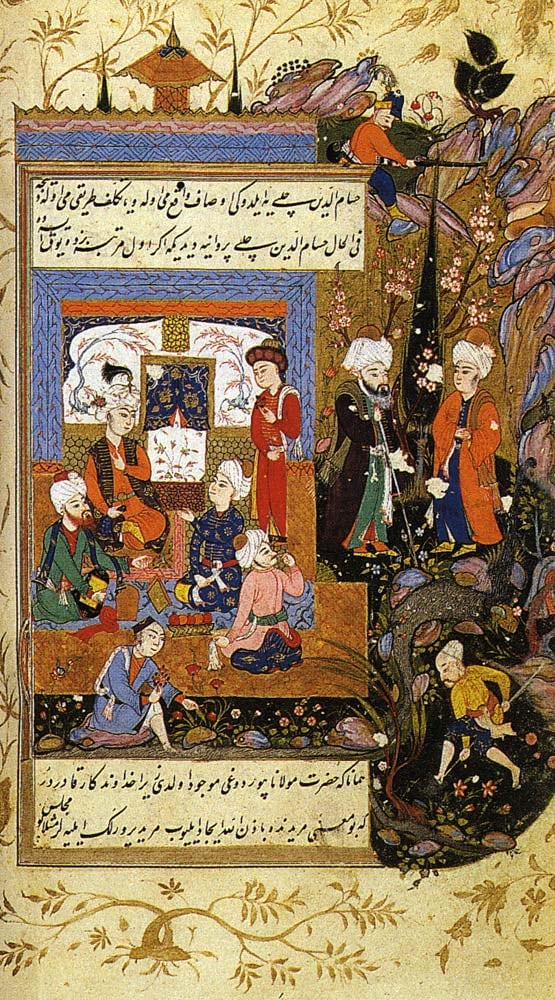
Rumi
They agree on: What is the Absolute? Does God exist? · Why do we suffer? · How is liberation or salvation attained?
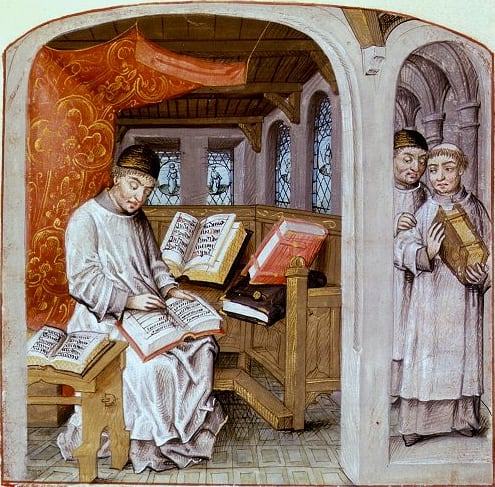
Thomas à Kempis
They agree on: What is the Absolute? Does God exist? · Why do we suffer? · How is liberation or salvation attained?

Chaitanya Mahaprabhu
They agree on: What is the Absolute? Does God exist? · Why do we suffer? · How is liberation or salvation attained?
Thinks most unlike
Alan Watts
They clash on: How is liberation or salvation attained? · Is a teacher necessary?
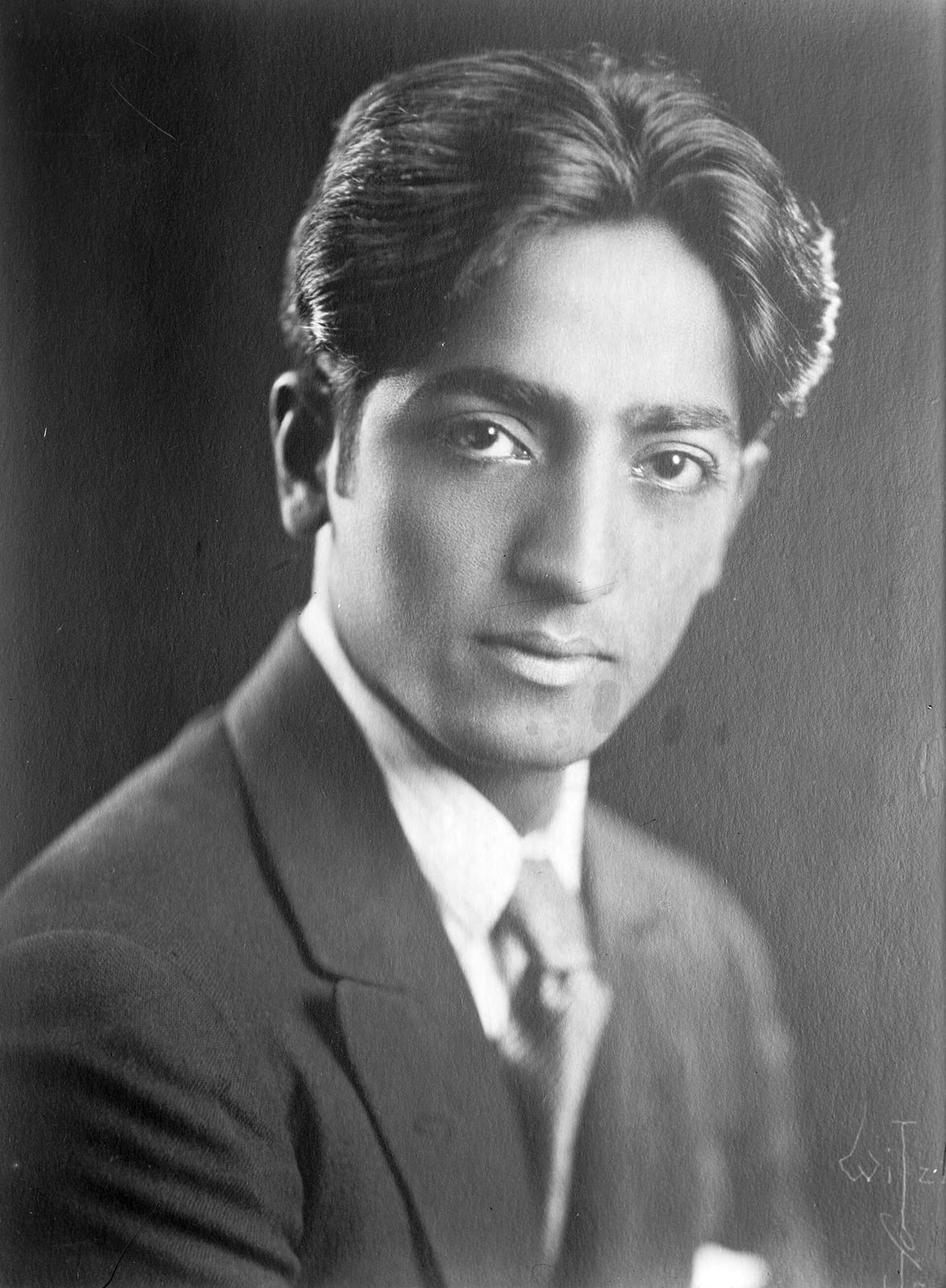
Jiddu Krishnamurti
They clash on: How is liberation or salvation attained? · Is a teacher necessary?
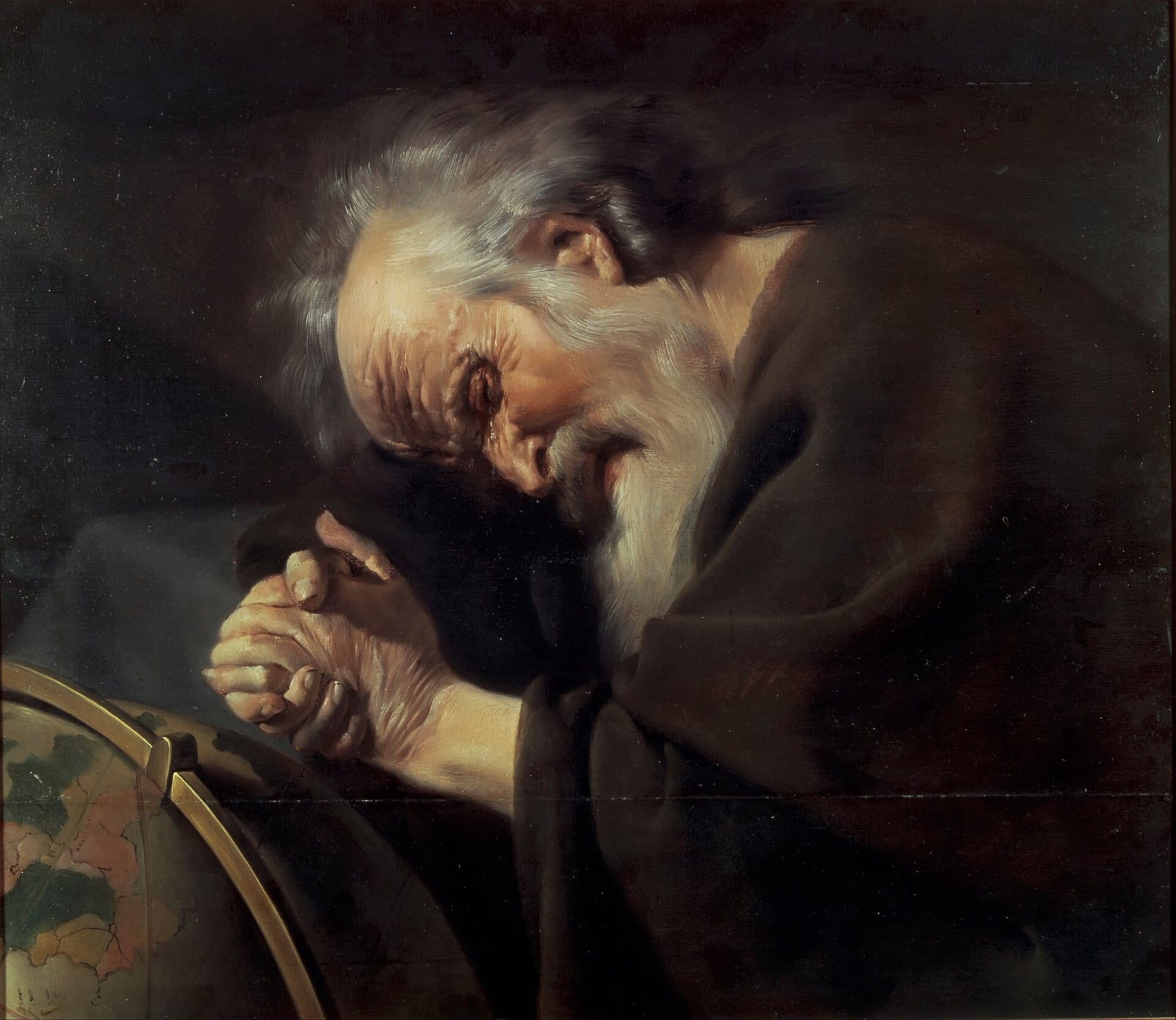
Heraclitus
They clash on: Is a teacher necessary?
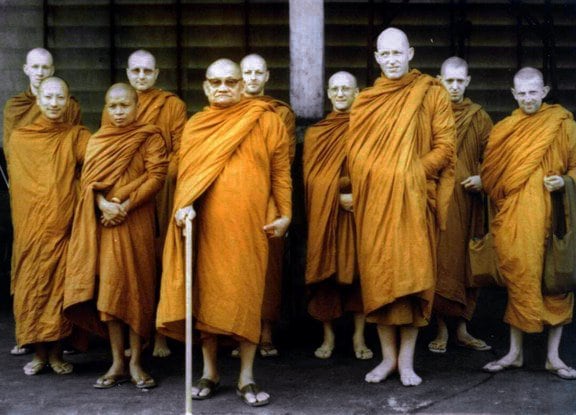
Ajahn Chah
They clash on: What is the Absolute? Does God exist?
Anecdotes and stories
Anecdotes and stories
Hagiographic accountc. 1530
The cup of poison
Origin of the story: Nabhadas's Bhaktamal (c. 1600), stanza on Mira; developed by Priyadas (1712) and by the attributed poems ("the Rana sent me a cup of poison").
Source: Nābhādās. Bhaktamāl (c. 1600), con el comentario Bhaktirasabodhinī de Priyādās (1712). Ed. y trad. parcial en Hawley, Three Bhakti Voices, y en Mukta, Upholding the Common Life.
Hagiographic accountc. 1530
The snake in the basket
Origin of the story: Absent from Nabhadas; it appears in Priyadas's commentary (1712) and in attributed padas. No documentary basis.
Source: Nābhādās. Bhaktamāl (c. 1600), con el comentario Bhaktirasabodhinī de Priyādās (1712). Ed. y trad. parcial en Hawley, Three Bhakti Voices, y en Mukta, Upholding the Common Life.
Hagiographic accountc. 1540
"I thought there was only one male in Vrindavan"
Origin of the story: Priyadas's Bhaktirasabodhini (1712); it does not appear in Gaudiya sources. The meeting is chronologically possible but undocumented.
Source: Nābhādās. Bhaktamāl (c. 1600), con el comentario Bhaktirasabodhinī de Priyādās (1712). Ed. y trad. parcial en Hawley, Three Bhakti Voices, y en Mukta, Upholding the Common Life.
Disputeds. XVI (legendario)
Akbar and Tansen at the temple
Origin of the story: Popular tradition recorded in modern biographies and in films; it does not appear in Nabhadas and is anachronistic.
Source: Goetz, Hermann. Mira Bai: Her Life and Times. Bombay: Bharatiya Vidya Bhavan, 1966.
Unverifiables. XVI (legendario)
The letter to Tulsidas
Origin of the story: Tulsidas's poem exists in the Vinaya Patrika; Mira's letter and its connection with the poem come from late oral tradition and have no documentary support.
Source: Nilsson, Usha S. Mira Bai. Nueva Delhi: Sahitya Akademi (Makers of Indian Literature), 1969.
Hagiographic accountc. 1546-1547
The sari on the image of Ranchhodji
Origin of the story: Priyadas (1712) and later tradition of Dwarka and Mewar. There is no historical record of her death.
Source: Nābhādās. Bhaktamāl (c. 1600), con el comentario Bhaktirasabodhinī de Priyādās (1712). Ed. y trad. parcial en Hawley, Three Bhakti Voices, y en Mukta, Upholding the Common Life.
Documented1925
Gandhi and Mirabehn
Origin of the story: Madeleine Slade, The Spirit's Pilgrimage (1960); Mukta (1994) analyses the nationalist appropriation of Mira.
Source: Slade, Madeleine (Mirabehn). The Spirit's Pilgrimage. Londres: Longmans, 1960.
Teachings
Teachings
The notions that structure their thought, explained in context.
Krishna as husband (Giridhar Nagar)giridhar-nagar
Krishnaite bhakti of northern India; madhurya attitude; comparison with the gopis in Nabhadas.
Source: Hawley, John Stratton. Three Bhakti Voices: Mirabai, Surdas, and Kabir in Their Times and Ours. Nueva Delhi: Oxford University Press, 2005. ISBN 9780195670851.
Separation (viraha)viraha
Lyric of the seasons (baramasa) and the poetics of viraha; compare with the vipralambha of Chaitanya's school.
Source: Hawley, John Stratton. Three Bhakti Voices: Mirabai, Surdas, and Kabir in Their Times and Ours. Nueva Delhi: Oxford University Press, 2005. ISBN 9780195670851.
Casting off "public shame" (lok laj)lok-laj
Rajput ethics of honour; critique of caste in bhakti; Mukta's study (1994).
Source: Mukta, Parita. Upholding the Common Life: The Community of Mirabai. Delhi: Oxford University Press, 1994. ISBN 9780195631159.
The yogi and the yoginijogi
Nath and Sant traditions of Rajasthan; the literary motif of the yogi lover.
Source: Hawley, John Stratton, y Mark Juergensmeyer. Songs of the Saints of India. Nueva York: Oxford University Press, 1988. ISBN 9780195052213.
Videos
Videos
Recordings, interviews and documentaries. Videos play from YouTube; they are not hosted here.
"Seeking Mirabai: Scholarly Engagement and Personal Empowerment" lecture with Nancy M. Martin, PhD
Lecture· EN· 71 min
Loyola Marymount University, BCLA Yoga StudiesOfficial channel
"Mirabai speaks....": The Emergent Voice of Medieval Saint
Lecture· EN· 2017· 70 min
Claremont McKenna CollegeOfficial channel
Meera, Thaare Kain Laage Gopal? | Meera, Who Is Krishna To You After All?
Documentary· HI· 41 min
ajab shahar - kabir projectOfficial channel
Meera | Movie | 1945 | Part-1
Third-party recording· HI· 1947· 35 min
Prasar Bharati ArchivesOfficial channel
Meera Bhajan by M.S. Subbulakshmi
Watch on YouTube
This video cannot be embedded; it opens on YouTube.
Meera Bhajan by M.S. Subbulakshmi
Third-party recording· HI· 5 min
Prasar Bharati ArchivesOfficial channel
Pandit Kumar Gandharva sings a Meerabai Bhajan
Third-party recording· HI· 11 min
Sangeetveda1
Payoji Maine Ram Ratan Dhan Payo (Official Lyric Video) | Lata Mangeshkar
Third-party recording· HI· 4 min
Universal Music IndiaOfficial channel
Meera (1979) {HD + Eng Subs}
Third-party recording· HI· 1979· 140 min
ShemarooOfficial channel
Mirabai's Life and Teachings – Swami Mukundananda | Saints of India
Lecture· EN· 48 min
Swami MukundanandaOfficial channel
Mirabai (Meera) - Selected Poems for Meditation
Third-party recording· EN· 22 min
Samaneri Jayasāra - Wisdom of the Masters
Mirabai: La princesa que dejó un reino por amor a un dios (Audio Podcast)
Analysis· ES· 36 min
Almas de la Historia
Gallery
Gallery
Images with verified licences. Each keeps its authorship and attribution.
Connections
Connections
Influences, discipleships and affinities. Documented relations are distinguished from similarities identified by analysis.
Ideas akin to
Both belong to northern bhakti and share the challenge to caste and ritualism; Kabir sings to a formless God, Mira to Krishna. Tradition links both with Raidas.
Similarity identified by analysis
Ideas akin to
Contemporaries and devotees of Krishna in the language of the separated lover; Priyadas brings her into contact with Jiva Gosvamin, of Chaitanya's school, not with him.
Similarity identified by analysis
Contemporary of
Contemporaries. A Mira pada appears in the Bhai Banno recension of the Adi Granth, which the Sikh canon excluded, and the Prem Ambodh Pothi (1693) counts her among the bhakti saints.
Similarity identified by analysis
Ideas akin to
A frequent comparison: two contemporary women who lived their relationship with God as betrothal and confronted the norms of their milieu. No historical connection.
Similarity identified by analysis
Ideas akin to
Two female figures of the love of God turned into legend, with an attributed corpus of uncertain authenticity. No historical connection.
Similarity identified by analysis
Sources
Sources
Bibliography and catalogues consulted for this profile.
- Hawley, John Stratton. Three Bhakti Voices: Mirabai, Surdas, and Kabir in Their Times and Ours. Nueva Delhi: Oxford University Press, 2005. ISBN 9780195670851.
- Hawley, John Stratton, y Mark Juergensmeyer. Songs of the Saints of India. Nueva York: Oxford University Press, 1988. ISBN 9780195052213.
- Mukta, Parita. Upholding the Common Life: The Community of Mirabai. Delhi: Oxford University Press, 1994. ISBN 9780195631159.
- Nābhādās. Bhaktamāl (c. 1600), con el comentario Bhaktirasabodhinī de Priyādās (1712). Ed. y trad. parcial en Hawley, Three Bhakti Voices, y en Mukta, Upholding the Common Life.
- Martin, Nancy M. Mirabai: The Making of a Saint. Nueva York: Oxford University Press, 2023. ISBN 9780195153903.
- Alston, A. J. (trad.). The Devotional Poems of Mīrābāī. Delhi: Motilal Banarsidass, 1980 (reimpr. 1998, ISBN 9788120804425).
- Caturvedī, Paraśurām (ed.). Mīrāṃbāī kī padāvalī. Prayāg: Hindī Sāhitya Sammelan, 1932 (ediciones posteriores de 1947 y 1966).
- Tod, James. Annals and Antiquities of Rajast'han, or the Central and Western Rajpoot States of India. 2 vols. Londres: Smith, Elder, 1829-1832.
- Wikidata, «Meera / Mirabai» (Q466330).
- Bly, Robert, y Jane Hirshfield. Mirabai: Ecstatic Poems. Epílogo de John Stratton Hawley. Boston: Beacon Press, 2004. ISBN 9780807063866.
- Schelling, Andrew (trad.). For Love of the Dark One: Songs of Mirabai. Boston: Shambhala, 1993 (ISBN 9780877738725); ed. rev. Prescott: Hohm Press, 1998 (ISBN 9780934252843).
- Goetz, Hermann. Mira Bai: Her Life and Times. Bombay: Bharatiya Vidya Bhavan, 1966.
- Nilsson, Usha S. Mira Bai. Nueva Delhi: Sahitya Akademi (Makers of Indian Literature), 1969.
- Futehally, Shama (trad.). In the Dark of the Heart: Songs of Meera. Prólogo de M. S. Subbulakshmi. San Francisco: HarperCollins, 1994. ISBN 9780060628819.
- Slade, Madeleine (Mirabehn). The Spirit's Pilgrimage. Londres: Longmans, 1960.
- Prasar Bharati Archives. «Meera | Movie | 1945 | Part-1» (versión hindi de 1947 con la presentación de Sarojini Naidu). YouTube, 2020.
- Mīrābāī kī śabdāvalī aura jīvana-caritra. Allahabad: Belvedere Printing Works (serie Santbānī), principios del siglo XX. Ejemplar digitalizado en Internet Archive (colección hindi-urdu de Sarai, CSDS).
- Rights holder
- Los padas atribuidos a Mirabai son de dominio público. Las traducciones y ediciones modernas tienen titulares propios (Beacon Press, Shambhala y Hohm Press, Motilal Banarsidass, Oxford University Press, HarperCollins; la edición de Chaturvedi, el Hindi Sahitya Sammelan).
Pending confirmation
What this profile has not yet been able to settle. We would rather say so than fill it in.
- No se localizó ninguna traducción española publicada de los padas de Mirabai con ISBN (consultas en Open Library y en la web).
- No hay en Wikisource ni en Project Gutenberg una edición en dominio público de la Padavali; la de Belvedere en Internet Archive queda con cautela (editor desconocido, OCR sin verificar).
- Localizar los dos manuscritos anteriores al siglo XVIII que, según Hawley, contienen poemas de Mira, para fichar su signatura en manuscripts[].
- Contrastar la datación (1498-1547) con Martin (2023); las fechas proceden en buena parte de Goetz (1966) y son conjeturales.
- Confirmar la numeración de los padas citados en la edición de Chaturvedi.
Researched on 2026-10-25