Presocratic philosophy
Heraclitus
Ἡράκλειτος ὁ Ἐφέσιος
c. 535 BCE – c. 475 BCEHistorically documented person
Philosopher of Ephesus (c. 535–475 BCE) who wrote a single, lost book, of which some hundred and thirty sentences quoted by other authors survive. He taught that a common logos governs all things, that opposites form a unity in tension and that the world is an ever-living fire kindling and going out in measures. Called "the Obscure" for his oracular style, his ancient biography is almost entirely legend deduced from his own fragments.
- works
- 4works
- editions
- 25editions
- quotes
- 17quotes
- videos
- 12videos
- images
- 7images
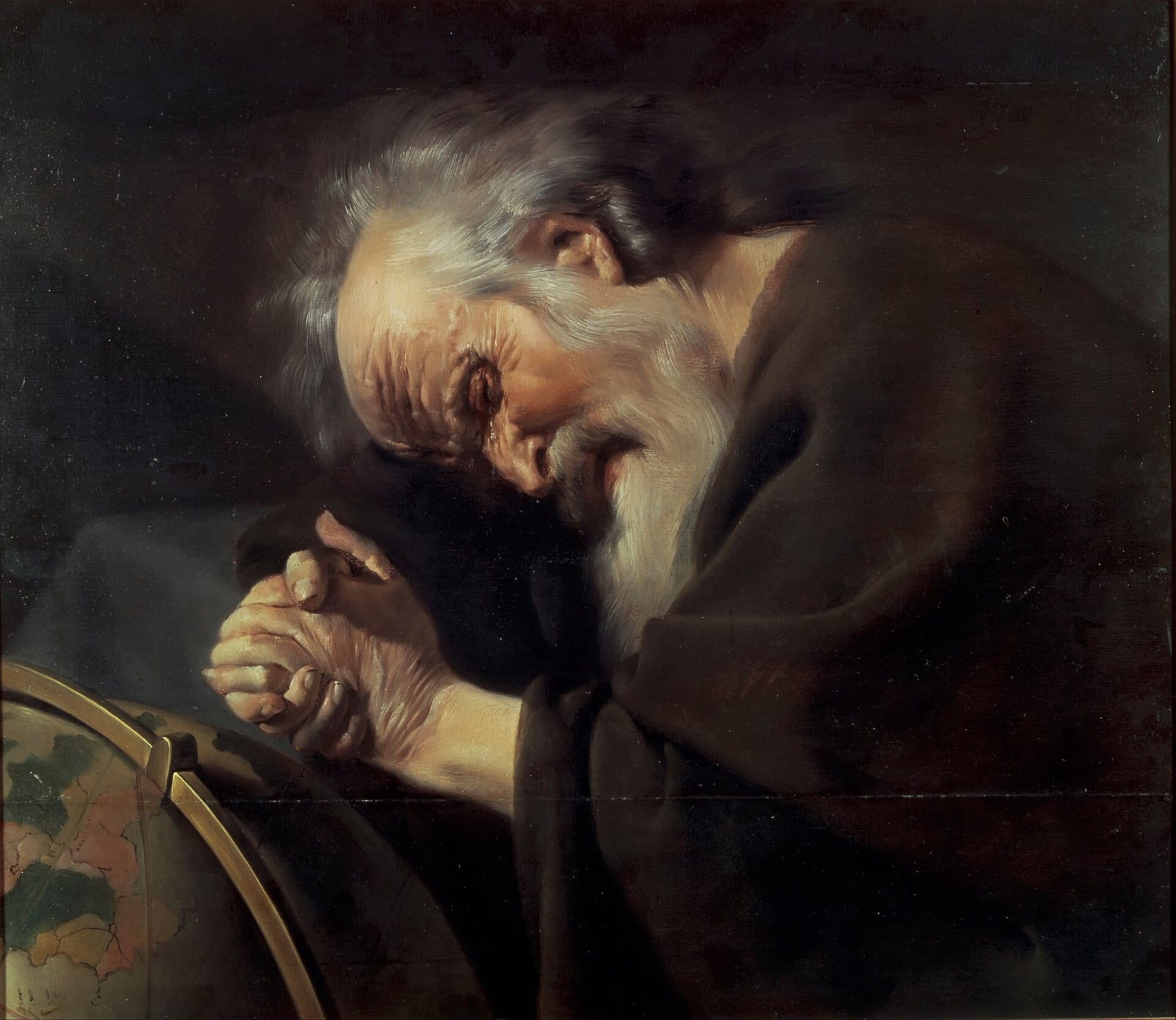
Heráclito, de Johannes Moreelse · Public domain
In their words
«Though this Word is true evermore, yet men are as unable to understand it when they hear it for the first time as before they have heard it at all. For, though all things come to pass in accordance with this Word, men seem as if they had no experience of them, when they make trial of words and deeds such as I set forth, dividing each thing according to its nature and showing how it truly is. But other men know not what they are doing when awake, even as they forget what they do in sleep.»DK 22 B1, transmitido por Sexto Empírico, Contra los matemáticos VII 132; Aristóteles (Retórica III 5) lo cita como comienzo del libro. Griego: Diels-Kranz; inglés: John Burnet, Early Greek Philosophy (1908), fr. 2 de la numeración de Bywater; español: traducción propia.

Their central idea
Logos: In sixth-century Greek, *logos* means word and discourse, but also account, reckoning and proportion.
See in context
Biography
6 min read
The Obscure One of Ephesus
No complete work by Heraclitus survives. He wrote a single book in Ionic prose, still in circulation in the Hellenistic period and later lost; what we read today are some hundred and thirty short sentences quoted by other authors, sometimes verbatim and sometimes from memory, over more than a thousand years: Plato and Aristotle, Plutarch, Sextus Empiricus, Marcus Aurelius, Clement of Alexandria, Hippolytus of Rome, Diogenes Laertius, Stobaeus. Since Hermann Diels's edition (1903) they have been cited by a number preceded by the siglum DK 22 B. They have the form of oracle and maxim, and antiquity already found them hard: Timon of Phlius called him "the riddler", and later tradition nicknamed him "the Obscure".
Ephesus around 500 BCE
Diogenes Laertius, writing in the third century CE and following Apollodorus' chronology, makes him the son of Bloson—or of Heracon, according to others—and places his prime in the 69th Olympiad (504–501 BCE). That date is a convention of the ancient chronographers, who set an author's floruit at about forty, and it places his birth around 540–535 BCE. His city was one of the great Ionian poleis on the coast of Asia Minor, subject to Persia since the mid-sixth century and famous for the sanctuary of Artemis, one of the largest temples of the Greek world. That Heraclitus names Pythagoras and Xenophanes in the past tense, and that Parmenides seems to answer him, confirms a date straddling the sixth and fifth centuries.
Almost everything else is doubtful. Antisthenes of Rhodes, quoted by Diogenes, says he belonged to the royal family of Ephesus and ceded to his brother the title of basileus, which in his day kept religious and honorary functions. John Burnet thought this was perhaps the only fact of his life that can be accepted; the rest, as will be seen, are stories deduced from his own sayings.
A book in the temple
According to Diogenes, his book was "on nature" and divided into three discourses—on the universe, on politics and on theology; he deposited it in the temple of Artemis and wrote it obscurely on purpose, so that only the capable would approach it. Neither the title nor the division is certain: the ancients also cited it as "The Muses" or as "an accurate helm for the course of life", and the threefold arrangement probably reflects the organisation given to it by its commentators. What the fragments do show is a deliberate style of symmetrical sentences, wordplay and paradox, after the manner of the god at Delphi, who "neither speaks nor conceals, but gives a sign" (B93).
Against the wise and against his city
Heraclitus speaks with disdain of almost everyone. Much learning does not teach understanding, he writes: otherwise it would have taught Hesiod, Pythagoras, Xenophanes and Hecataeus (B40). Homer deserves to be thrown out of the contests and flogged, and Archilochus likewise (B42); Hesiod, the teacher of most, did not know that day and night are one (B57). Nor does he spare his fellow citizens: the Ephesians would do well to hang themselves, every adult, and leave the city to the boys, for they banished Hermodorus, the best man among them (B121). To this aristocratic voice, for which one man is worth ten thousand if he is the best (B49), corresponds a demanding ethics: the people must fight for the law as for their city wall (B44).
What the fragments teach
The centre of his thought is the logos, a word that in Greek means at once account, reckoning and proportion. The fragment that probably opened the book (B1) states that this logos always is, but that men fail to understand it both before and after hearing it, and live as if asleep. Listening not to the author but to the logos, says B50, it is wise to agree that all things are one. That unity is not stillness but a tension of opposites: what differs agrees with itself, like the bow and the lyre (B51); the way up and the way down are one and the same (B60); war is the father of all (B53) and justice is strife (B80). The world, the same for all, was made by no god or man: it was, is and will be ever-living fire, kindling in measures and going out in measures (B30).
The image of the river comes from here. On those who step into the same rivers, ever different waters flow (B12): the river endures because the water changes. Plato summed up the doctrine in the formula "everything moves and nothing stays" (Cratylus 402a), and tradition turned it into the slogan panta rhei, which appears in no fragment. Since G. S. Kirk (1954) many scholars have held that universal flux is a Platonic reading and that Heraclitus stressed rather the stability that arises from measured change; others, like Daniel W. Graham, argue that flux was indeed part of his doctrine. The soul has a place of its own: you will not find its limits though you travel every road, so deep is its logos (B45); the dry soul is wisest (B118); and Heraclitus himself writes: "I searched myself" (B101).
The legend
Diogenes Laertius collects a novelistic biography. Heraclitus supposedly refused to give the Ephesians laws and withdrew to the temple of Artemis to play knucklebones with the children; a misanthrope, he lived in the mountains eating grasses, fell ill with dropsy, asked the doctors in a riddle whether they could turn rain into drought and, when they did not understand, covered himself in dung to dry out in its heat. He died at sixty; according to Hermippus he was buried in the agora, and according to Neanthes of Cyzicus, unrecognisable under the dung, he was eaten by dogs. Burnet and, in more detail, Ava Chitwood have shown that these stories were manufactured from the fragments: the death of soul that becomes water (B36) produced the dropsy; corpses that should be thrown out sooner than dung (B96), the dung; time as a child at play (B52), the knucklebones.
Another tradition, Hellenistic in origin and spread by Seneca, Juvenal and Lucian, made him the philosopher who weeps at human folly, opposite Democritus, who laughs; the Renaissance and the Baroque made the pair a pictorial motif. Also late are the nine letters that circulated under his name, among them the reply to King Darius declining to come to his court: they come from Cynic circles of the first centuries BCE and CE. More reliable is the scene Aristotle tells: to visitors who hesitated to enter on finding him warming himself by the oven, he said to come in, for there were gods there too.
Legacy
His influence was immediate and lasting. Aristotle reports that Plato in his youth knew Cratylus, a radical Heraclitean, and took from him the conviction that sensible things are always flowing; the Stoics made fire and logos the centre of their physics, and Cleanthes wrote an explanation of his book. Christian authors quoted him, sometimes to praise and sometimes to combat him: thanks to Hippolytus of Rome, who presented him as the source of Noetus' heresy, we know many of the main fragments. In modern times Hegel declared that there was no sentence of Heraclitus he had not taken into his Logic; Nietzsche admired him; Heidegger devoted his lecture courses of 1943 and 1944 to him and a seminar with Eugen Fink in 1966–1967. He remains the most read of the Presocratics, perhaps because his sayings, detached and polished, invite every age to recognise itself in them.
Sources: Jung, Carl Gustav. Psychologische Typen. Rascher, Zúrich, 1921, cap. XI, «Definiciones», s. v. «Enantiodromie». · Diógenes Laercio. Vidas y opiniones de los filósofos ilustres, libro IX, 1–17 (Heráclito), y II 22, VII 174, s. III d. C. Trad. inglesa de C. D. Yonge, Bohn, Londres, 1853 (Project Gutenberg n.º 57342); trad. inglesa de R. D. Hicks, Loeb Classical Library, 1925 (Wikisource). · Diels, Hermann y Kranz, Walther. Die Fragmente der Vorsokratiker, 6.ª ed., 3 vols. Weidmann, Berlín, 1951–1952; cap. 22 (Heraklit), A (testimonios) y B (fragmentos 1–126, más los dudosos y espurios). Texto griego de los fragmentos B consultado en la transcripción de Wikisource en griego. · Kirk, G. S., Raven, J. E. y Schofield, M. The Presocratic Philosophers: A Critical History with a Selection of Texts, 2.ª ed. Cambridge University Press, Cambridge, 1983, cap. VI (Heraclitus of Ephesus). Trad. esp. de Jesús García Fernández, Los filósofos presocráticos, Gredos, Madrid, 1987. · Kahn, Charles H. The Art and Thought of Heraclitus: An Edition of the Fragments with Translation and Commentary. Cambridge University Press, Cambridge, 1979.
Timeline
A life, year by year
Each point is a documented event. Click to read it, with its source and degree of certainty.
c. 535 BCEage 0Éfeso (Jonia)
Birth
Born in Ephesus, son of Bloson (or of Heracon, according to others). The date is inferred from the floruit Apollodorus sets in the 69th Olympiad; Wikidata records 535 BCE. Years BCE are expressed as negative numbers.
ProbableDiógenes Laercio. Vidas y opiniones de los filósofos ilustres, libro IX, 1–17 (Heráclito), y II 22, VII 174, s. III d. C. Trad. inglesa de C. D. Yonge, Bohn, Londres, 1853 (Project Gutenberg n.º 57342); trad. inglesa de R. D. Hicks, Loeb Classical Library, 1925 (Wikisource).
After their death
- c. 385 BCEPlato's Cratylus
- c. 260 BCECleanthes comments on his book
- c. 225 BCEHippolytus quotes his fragments
- 1877Bywater's edition
- 1903Diels fixes the numbering
- 1943Heidegger lectures on Heraclitus
- 1979The Art and Thought of Heraclitus
c. 535 BCE · age 0
Birth
Born in Ephesus, son of Bloson (or of Heracon, according to others). The date is inferred from the floruit Apollodorus sets in the 69th Olympiad; Wikidata records 535 BCE. Years BCE are expressed as negative numbers.
Probable
c. 504 BCE · age 31
Floruit according to Apollodorus
Diogenes Laertius (IX 1), following Apollodorus' chronology, places his prime in the 69th Olympiad (504–501 BCE), in the reign of Darius I.
Tradition
c. 500 BCE
He cedes the royal title
According to Antisthenes of Rhodes (in Diogenes Laertius IX 6), he cedes to his brother the title of basileus, with religious functions. Date unknown; Burnet considers it the most plausible biographical fact.
Tradition
499 BCE
The Ionian Revolt
The Ionian cities revolt against Persia (499–494 BCE); Ephesus remains in the Persian orbit. It is the political setting of the civic tensions reflected in his fragments.
Documented
c. 490 BCE
Banishment of Hermodorus
The Ephesians banish his friend Hermodorus, "the best man among them", and Heraclitus rebukes them (B121). The date is unknown: Zeller placed it after 478 BCE and Burnet thought it possible under Persian rule.
Disputed
c. 480 BCE
The book deposited in the Artemision
According to Diogenes Laertius (IX 6), he deposits his book in the temple of Artemis. The report is late, though dedicating writings in sanctuaries was a known practice.
Tradition
c. 475 BCE · age 60
Death
Dies at about sixty, according to Diogenes Laertius (IX 3). The circumstances (dropsy, dung, dogs) are legendary and derived from his fragments.
Tradition
c. 385 BCE
Plato's Cratylus
Plato ascribes to Heraclitus the view that "everything moves and nothing stays" and that one cannot step twice into the same river (402a); Aristotle reports that Plato knew the Heraclitean Cratylus in his youth.
Probable
c. 260 BCE
Cleanthes comments on his book
The Stoic Cleanthes writes Explanations of Heraclitus in four books (Diogenes Laertius VII 174); the Stoics adopt fire and logos.
Documented
c. 225 BCE
Hippolytus quotes his fragments
In the Refutation of All Heresies (IX 9–10), Hippolytus of Rome transcribes a series of fragments (B1, B50–B67) to show that Noetus' heresy derives from Heraclitus.
Documented
1877
Bywater's edition
Ingram Bywater publishes Heracliti Ephesii reliquiae, the first standard modern critical edition.
Documented
1903
Diels fixes the numbering
Hermann Diels publishes Die Fragmente der Vorsokratiker; his numbering, revised by Walther Kranz (5th ed., 1934–1937; 6th, 1951–1952), is the one used today (DK 22 B).
Documented
1943
Heidegger lectures on Heraclitus
Martin Heidegger devotes his summer-semester courses of 1943 and 1944 to Heraclitus; in winter 1966–1967 he leads a seminar on the fragments with Eugen Fink.
Documented
1979
The Art and Thought of Heraclitus
Charles H. Kahn publishes an annotated edition that rearranges the fragments and argues for the book's literary unity and deliberate ambiguity.
Documented
Works
Essential works
The works without which their legacy cannot be understood.
Written work · c. 500 BCE
On Nature (lost book)
Περὶ φύσεως (título convencional)
A book in Ionic prose, written around 500 BCE and, by tradition, deposited in the temple of Artemis at Ephesus. It was read and commented on for centuries—Theophrastus, Cleanthes, Sphaerus and several grammarians explained it—and was lost in late antiquity. Its content is reconstructed from some hundred and thirty quotations: the doctrine of the common logos, the unity and tension of opposites, the ever-living fire kindling and going out in measures, the soul and its depth, the critique of Homer, Hesiod and Pythagoras, mystery religion and the political life of Ephesus. The original order of the sentences is unknown; each editor proposes his own.
15 editions · amazon.com

Critical edition · 1903
Fragments (Diels-Kranz 22 B 1–126)
Ἡρακλείτου ἀποσπάσματα (DK 22 B)
The corpus of verbatim quotations that modern philology ascribes to Heraclitus, some 125 sentences grouped as DK 22 B, together with the indirect testimonies (DK 22 A). They come from authors who quoted them for their own purposes: Hippolytus of Rome (who transmits B1 and the series B50–B67), Clement of Alexandria, Plutarch, Sextus Empiricus, Diogenes Laertius, Stobaeus, Marcus Aurelius, Porphyry, Origen and others. Each quotation raises problems of delimitation—where Heraclitus' sentence ends and paraphrase begins—and of dialect. Later editions (Marcovich 1967, Kahn 1979, Mouraviev 1999–2011, Laks and Most 2016) rearrange the material, but the DK reference remains universal.
7 editions · amazon.com

Quotations
Quotations located in a specific work. Each carries its provenance and its level of confidence.
Though this Word is true evermore, yet men are as unable to understand it when they hear it for the first time as before they have heard it at all. For, though all things come to pass in accordance with this Word, men seem as if they had no experience of them, when they make trial of words and deeds such as I set forth, dividing each thing according to its nature and showing how it truly is. But other men know not what they are doing when awake, even as they forget what they do in sleep.τοῦ δὲ λόγου τοῦδ᾽ ἐόντος ἀεὶ ἀξύνετοι γίνονται ἄνθρωποι καὶ πρόσθεν ἢ ἀκοῦσαι καὶ ἀκούσαντες τὸ πρῶτον· γινομένων γὰρ πάντων κατὰ τὸν λόγον τόνδε ἀπείροισιν ἐοίκασι, πειρώμενοι καὶ ἐπέων καὶ ἔργων τοιούτων, ὁκοίων ἐγὼ διηγεῦμαι κατὰ φύσιν διαιρέων ἕκαστον καὶ φράζων ὅκως ἔχει· τοὺς δὲ ἄλλους ἀνθρώπους λανθάνει ὁκόσα ἐγερθέντες ποιοῦσιν, ὅκωσπερ ὁκόσα εὕδοντες ἐπιλανθάνονται.
VerifiedDK 22 B1, transmitido por Sexto Empírico, Contra los matemáticos VII 132; Aristóteles (Retórica III 5) lo cita como comienzo del libro. Griego: Diels-Kranz; inglés: John Burnet, Early Greek Philosophy (1908), fr. 2 de la numeración de Bywater; español: traducción propia.
Apocryphal quotes or disputed attributions (5)
«Everything flows (panta rhei).»
The formula appears in no fragment. It sums up Plato's reading of Heraclitus ("everything moves and nothing stays", Cratylus 402a), and the literal expression πάντα ῥεῖ comes from late commentators such as Simplicius. Many scholars think Heraclitus stressed the stability resulting from measured change, not universal flux.
«No man ever steps in the same river twice, for it is not the same river and he is not the same man.»
A modern expansion combining B12, B91 and the disputed B49a ("we step and do not step into the same rivers, we are and are not"). The second half, about the man no longer being the same, is in no ancient source.
«The only constant is change.»
Widespread in business books and social media. It has no ancient source; it is a modern paraphrase of the flux commonplace.
«The soul becomes dyed with the colour of its thoughts.»
Frequently attributed to Heraclitus, it is by Marcus Aurelius, Meditations V 16, six centuries later.
«Out of every one hundred men, ten shouldn't even be there, eighty are just targets, nine are the real fighters… but one is a warrior.»
It circulates in military circles and online under Heraclitus' name. It appears in no collection of fragments and in no ancient author.
Last words
There are no verifiable records of their last words.
No record of his last words survives. Diogenes Laertius (IX 3) only transmits the riddle he supposedly put to the doctors—whether they could turn a downpour into drought—within an account of his death that scholars regard as derived from his own fragments (B36).
Source: Diógenes Laercio. Vidas y opiniones de los filósofos ilustres, libro IX, 1–17 (Heráclito), y II 22, VII 174, s. III d. C. Trad. inglesa de C. D. Yonge, Bohn, Londres, 1853 (Project Gutenberg n.º 57342); trad. inglesa de R. D. Hicks, Loeb Classical Library, 1925 (Wikisource).
Ask
What their work answers
Twelve great human questions and what their texts allow us to answer, with references. We never put words in their mouth.
What is the Absolute? Does God exist?
A common logos and an ever-living fire that no god made
An impersonal AbsoluteStated explicitly
For Heraclitus the ultimate is the logos, the measure according to which everything happens, and the ever-living fire that is kindled and quenched in measures. Fragment B30 explicitly denies that any of the gods or of men made the cosmos: it always was, is and will be. The divine here has no face of craftsman or father. Yet Heraclitus does not abandon religious language: B32 says that the one, the only wise thing, is unwilling and willing to be called by the name of Zeus, and B67 calls god the unity of opposites, day and night, winter and summer, war and peace. It is an impersonal and intelligent principle that the traditional name of the god only half designates.
Compare this question with other teachersWho am I? Is there a true self?
The soul has no limits: its measure is the common logos
The Self is the AbsoluteInferred from their doctrine
Heraclitus says of himself that he searched himself (B101) and that it belongs to all humans to know themselves and to be sound of mind (B116). But what he finds in searching himself is not a private interiority: you would not find the limits of the soul though you travelled every road, so deep is its logos (B45). That logos is common to all, as thinking is common (B113), and the error of the many lies in living as if they had a private understanding (B2). The soul is moreover fiery and changing: it comes from water and dies into water (B36). His work suggests that the depth of the self coincides with the measure governing the cosmos, though he never states an identity.
Compare this question with other teachersWhy do we suffer?
Sickness makes health sweet: whoever misses the logos suffers
Ignorance of what we areInferred from their doctrine
Heraclitus devotes no fragment to the cause of suffering, but his work allows an attitude to be reconstructed. Opposites are inseparable: sickness makes health pleasant, hunger satiety, weariness rest (B111), and it would not be better for humans to get all they wish (B110). For god all things are beautiful, good and just; it is humans who have taken some things as unjust and others as just (B102). War itself is common and justice is strife (B80). Pain thus arises from a partial view: from those who do not grasp the logos although everything happens according to it (B1) and who live as if asleep.
Compare this question with other teachersWhat happens after death?
At death things await humans that they neither expect nor imagine
Silence or reserveInferred from their doctrine
Heraclitus speaks of death in several fragments, always in his enigmatic style, and none offers a description of the beyond. B27 says that at death things await humans that they neither expect nor imagine; B62, that immortals and mortals live each other's death; B36 places the soul in the cycle of elements, for to souls it is death to become water. B25 promises greater portions to greater deaths, perhaps those of the fallen in battle. Together they suggest that death is one more transformation within the flux governed by the logos, and that what comes after does not match usual expectations; they do not allow us to affirm personal survival or to deny it.
Compare this question with other teachersHow is liberation or salvation attained?
The wise is one thing: to know the thought that steers all through all
Through direct knowledgeInferred from their doctrine
Heraclitus speaks not of salvation but of waking up. Humans live as if asleep, not understanding the logos although everything happens according to it (B1), and each turns towards a private world. The wise, says B41, is one thing: to know the thought that steers all things through all things. That understanding is not given by much learning, which did not teach Hesiod or Pythagoras (B40), but by listening to the logos and agreeing that all is one (B50). B112 joins knowledge and conduct: sound thinking is the greatest virtue, and wisdom is to speak the truth and act according to nature, heeding it. What frees is grasping the common measure.
Compare this question with other teachersIs a teacher necessary?
Not to me but to the logos: borrowed learning gives no understanding
No spiritual authorityStated explicitly
Heraclitus is perhaps the Greek thinker most hostile to the authority of recognised sages. Much learning does not teach understanding, says B40; otherwise it would have taught Hesiod, Pythagoras, Xenophanes and Hecataeus. Homer deserves to be thrown out of the contests and flogged, and Hesiod, teacher of most, did not know that day and night are one. He does not even claim authority for himself: it is wise, listening not to him but to the logos, to agree that all is one (B50). And against any school he sets his own method: I searched myself (B101). No one can grasp for another the logos that is common to all.
Compare this question with other teachersIs the world real?
Ever-living fire, kindled and quenched in measures
Natural order in transformationStated explicitly
For Heraclitus the world is real and in perpetual transformation. B30 describes it as an ever-living fire kindled and quenched in measures, which no one made and which always was, is and will be. Upon those who step into the same rivers, other and other waters flow (B12): the identity of things holds through change, like that of the river. Opposites are joined in tension, as in the bow and the lyre (B51), and war is the father of all things (B53). But the flux is not chaos: the sun will not overstep its measures (B94). The real is the changing course of things, ordered by a logos to which the wise attune themselves.
Compare this question with other teachersWhat is love?
No fragment speaks of love; the uniting force is tension
Did not address it
Among Heraclitus' surviving fragments there is none devoted to love, either erotic or as goodwill. What joins things in his work is not attraction but the tension of opposites: what differs agrees with itself, a harmony of opposing tensions, as in the bow and the lyre (B51). War is the father of all (B53) and justice is strife (B80). Heraclitus even reproaches Homer for wishing strife would vanish from among gods and men, since without it there would be no harmony (A22). It would be forced to extract a doctrine of love from this; the closest is hidden harmony, which is better than the manifest (B54).
Compare this question with other teachersAre we free, or is everything determined?
Character is a human being's destiny
Destiny and responsibilityStated explicitly
Heraclitus' most quoted fragment on this question is B119: character is a human being's destiny, his daimon. The sentence can be read in two senses that do not exclude each other: each person's destiny is not an alien power but is identified with his way of being; and, at the same time, that character works as a force that guides him. Elsewhere Heraclitus states that everything happens according to the logos (B1) and through strife and necessity (B80), and that the sun will not overstep its measures, for the Erinyes, helpers of Justice, would find it out (B94). There is an order governing everything, but the centre of gravity of human destiny lies in conduct.
Compare this question with other teachersWhy meditate or pray?
Praying to statues is talking to walls: one must grasp the logos
Seeing reality as it isInferred from their doctrine
Heraclitus sharply criticises the religious forms of his time. Those who purify themselves by defiling themselves with blood are like someone who, having stepped into mud, would wash it off with mud; and they pray to statues as if one were to converse with houses, knowing nothing of gods or heroes (B5). Mystery rites, as practised, are unholy (B14). What he proposes instead is a form of attention: to listen to the logos and not to him (B50), to wake from the sleep in which most live (B1) and to search oneself (B101). The aim is not to gain favours but to see what is, the common logos that nature, which loves to hide, conceals.
Compare this question with other teachersCan reason know the ultimate?
Nature loves to hide; the logos is common, but few grasp it
Esoteric knowledgeInferred from their doctrine
Heraclitus believes the logos can be understood — it is common to all, as thinking is (B113) — but that almost no one does. Nature loves to hide (B123), invisible harmony is better than visible (B54), and the lord whose oracle is at Delphi neither speaks nor conceals but gives signs (B93), just like his own enigmatic style, which earned him the nickname “the Obscure”. Eyes and ears are bad witnesses for those with barbarian souls (B107), and much learning does not give understanding (B40). Unless one expects the unexpected, one will not find it (B18). The ultimate is accessible but requires deciphering the signs; truth is in plain sight, hidden from those who cannot look.
Compare this question with other teachersWithdraw from the world or transform it?
The people must fight for the law as for its city wall
Order societyStated explicitly
Ancient biography relates that Heraclitus renounced hereditary kingship in favour of his brother, refused to give laws to Ephesus and ended up living in the mountains, feeding on herbs. But these anecdotes, transmitted by Diogenes Laertius, are largely regarded as inferences from his fragments. The fragments themselves speak otherwise: the people must fight for the law as for the wall (B44); those who speak with understanding must rely on what is common to all, as a city on its law, and far more strongly, for all human laws are nourished by one, the divine (B114). Wisdom thus has a civic dimension: just law reflects the logos.
Compare this question with other teachers
Affinities & tensions
Affinities and tensions
Calculated question by question from their positions. The reason for each agreement or clash, on click.
Thinks most like
Baruch Spinoza
They agree on: What is the Absolute? Does God exist? · Who am I? Is there a true self? · Why do we suffer?
Gaudapada
They agree on: What is the Absolute? Does God exist? · Who am I? Is there a true self? · Why do we suffer?
Aristotle
They agree on: What is the Absolute? Does God exist? · What happens after death? · Is the world real?
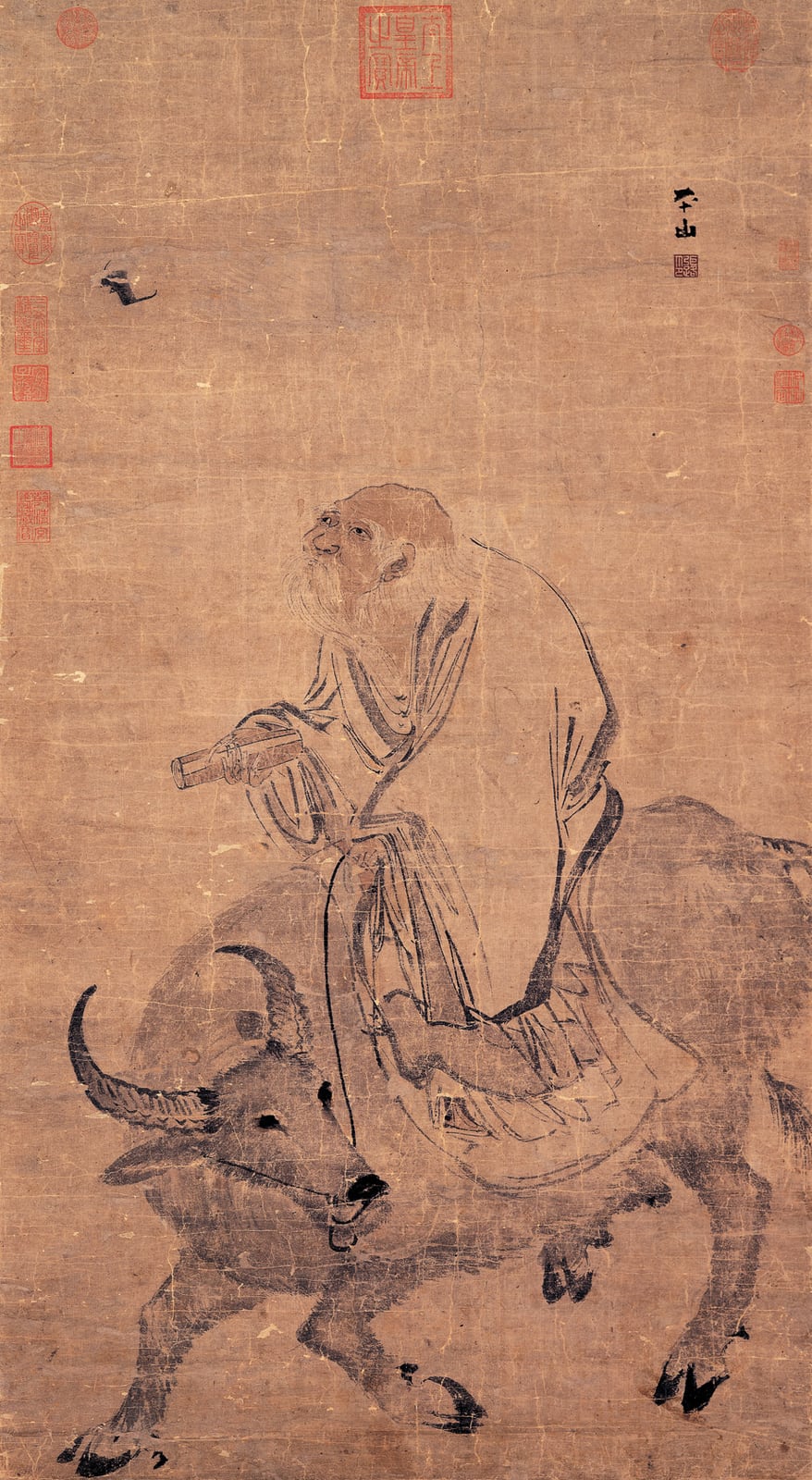
Laozi
They agree on: What happens after death? · Is the world real? · Withdraw from the world or transform it?
Thinks most unlike
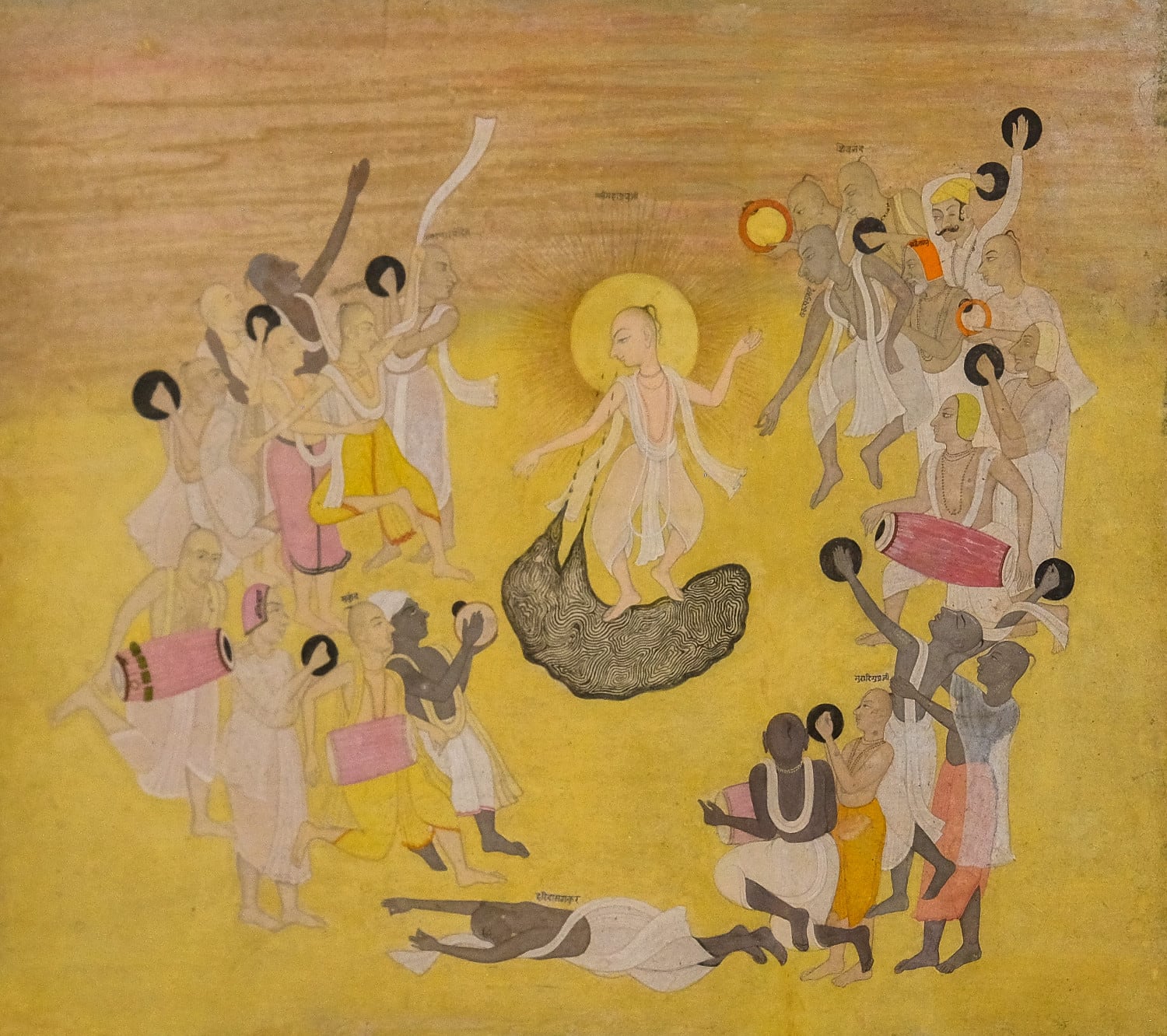
Chaitanya Mahaprabhu
They clash on: Who am I? Is there a true self? · Is a teacher necessary?
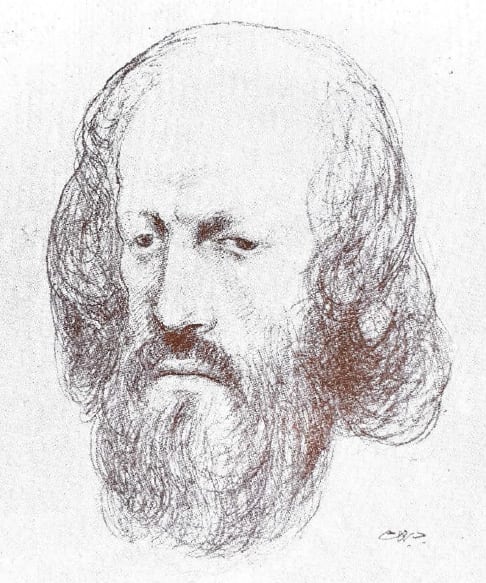
Al-Ghazali
They clash on: Who am I? Is there a true self? · Is a teacher necessary?

Dōgen
They clash on: Who am I? Is there a true self? · Is a teacher necessary?
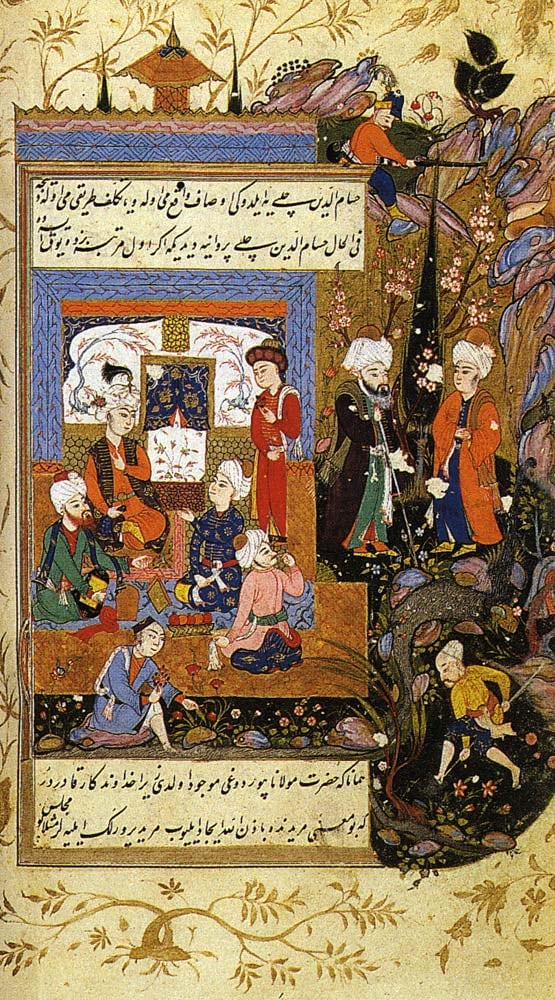
Rumi
They clash on: Who am I? Is there a true self? · Is a teacher necessary?
Anecdotes and stories
Anecdotes and stories
Testimonyc. 500 a. C. (incierto)
"There are gods here too"
Origin of the story: Aristotle, Parts of Animals I 5, 645a17–23, who introduces it with "it is said". It is the oldest testimony to an anecdote about Heraclitus and does not come from the late biographical tradition, though Aristotle writes a century and a half later.
Disputedc. 500 a. C.
The king who gave up the throne
Origin of the story: Diogenes Laertius IX 6, quoting the Successions of Antisthenes of Rhodes (2nd century BCE). Strabo (XIV 1.3) confirms that the descendants of Androclus, founder of Ephesus, kept the royal title and its honours.
Unverifiablec. 490–480 a. C. (tradicional)
Knucklebones in the temple of Artemis
Origin of the story: Diogenes Laertius IX 2–3 (3rd century CE), without a named source. Burnet (Early Greek Philosophy, § 63, n. 324) and Chitwood (Death by Philosophy, 2004) show how the biographical tradition derived these scenes from the fragments.
Unverifiables. V a. C. (tradicional)
The Delian diver
Origin of the story: Diogenes Laertius II 22 (life of Socrates, quoting Ariston) and IX 11–12 (quoting Seleucus the grammarian and Croton). It is not found in Plato or Xenophon.
Disputedc. 475 a. C. (tradicional)
Death under the dung
Origin of the story: Diogenes Laertius IX 3–5, with the versions of Hermippus, Neanthes, Ariston and Hippobotus. Ava Chitwood (Death by Philosophy, 2004), and Burnet before her, showed that the story is built from his fragments: water as the death of soul (B36), corpses more fit to be thrown out than dung (B96), contempt for doctors (B58). The versions contradict one another.
Source: Chitwood, Ava. Death by Philosophy: The Biographical Tradition in the Life and Death of the Archaic Philosophers Empedocles, Heraclitus, and Democritus. University of Michigan Press, Ann Arbor, 2004.
Unverifiabletópico helenístico y romano
The weeping philosopher
Origin of the story: Seneca, On Anger II 10.5 and On Tranquillity of Mind 15.2; Juvenal, Satires X 28–32; Lucian, Philosophies for Sale 13–14. The word "melancholy" comes from Theophrastus according to Diogenes Laertius IX 6. It is a literary commonplace, not a biographical fact.
Source: Séneca. De ira II 10.5 y De tranquillitate animi 15.2; Juvenal, Sátiras X 28–32; Luciano, Subasta de vidas 13–14 (el tópico de Heráclito que llora y Demócrito que ríe).
Disputedc. 500 a. C. (tradicional)
The book deposited in the temple
Origin of the story: Diogenes Laertius IX 6; Theophrastus quoted in the same passage. Kahn (1979) and Burnet discuss the report without wholly rejecting it.
Teachings
Teachings
The notions that structure their thought, explained in context.
Logoslogos
The book's central concept, present in B1, B2, B45, B50, B72 and B115.
Source: Kahn, Charles H. The Art and Thought of Heraclitus: An Edition of the Fragments with Translation and Commentary. Cambridge University Press, Cambridge, 1979.
Unity of oppositesunidad-de-los-contrarios
A doctrine transmitted chiefly by Hippolytus (B51–B67), who links it to Noetus' theology.
Source: Kirk, G. S., Raven, J. E. y Schofield, M. The Presocratic Philosophers: A Critical History with a Selection of Texts, 2.ª ed. Cambridge University Press, Cambridge, 1983, cap. VI (Heraclitus of Ephesus). Trad. esp. de Jesús García Fernández, Los filósofos presocráticos, Gredos, Madrid, 1987.
Ever-living firefuego-siempre-vivo
The cosmology of fragments B30, B31, B64, B66, B90.
Source: Kirk, G. S. Heraclitus: The Cosmic Fragments. Cambridge University Press, Cambridge, 1954.
The river and fluxel-rio
Fragments B12, B49a and B91; testimonies of Plato (Cratylus 402a) and Aristotle (Metaphysics Γ 5, 1010a10–15).
Polemos: war and justicepolemos
Fragments B53, B80 and A22 (Aristotle, Eudemian Ethics VII 1, 1235a25).
Source: Kirk, G. S., Raven, J. E. y Schofield, M. The Presocratic Philosophers: A Critical History with a Selection of Texts, 2.ª ed. Cambridge University Press, Cambridge, 1983, cap. VI (Heraclitus of Ephesus). Trad. esp. de Jesús García Fernández, Los filósofos presocráticos, Gredos, Madrid, 1987.
The soul (psyche)psyche
Fragments B36, B45, B77, B85, B101, B115–B119.
Source: Kahn, Charles H. The Art and Thought of Heraclitus: An Edition of the Fragments with Translation and Commentary. Cambridge University Press, Cambridge, 1979.
Videos
Videos
Recordings, interviews and documentaries. Videos play from YouTube; they are not hosted here.
Heraclitus: Pre-Socratic Philosophy
Lecture· EN· 2022· 28 min
Philosophy Overdose
HoP 005 - Old Man River - Heraclitus
Lecture· EN· 2020· 18 min
history of philosophy without any gapsOfficial channel
2) The Pre-Socratics: Xenophanes and Heraclitus
Lecture· EN· 2016· 74 min
Adam RosenfeldOfficial channel
Prof. Richard Capobianco: Heidegger's Readings of Heraclitus: The Metaphysical and Spiritual Import
Lecture· EN· 2023· 33 min
Stonehill CollegeOfficial channel
Heraclitus of Ephesus | The Logos | Philosophy Core Concepts
Analysis· EN· 2020· 19 min
Gregory B. Sadler - That Philosophy GuyOfficial channel
Heraclitus of Ephesus | Strife, Opposition, and Harmony | Philosophy Core Concepts
Analysis· EN· 2020· 20 min
Gregory B. Sadler - That Philosophy GuyOfficial channel
Heráclito de Éfeso
Documentary· ES· 2016· 22 min
UNEDOfficial channel
Conferencia Teresa Oñate "Heráclito"
Lecture· ES· 2018· 134 min
Hercritia-Cátedra de Hermenéutica CríticaOfficial channel
Heráclito, Empédocles y Anaxágoras | Historia de la filosofía (7/61)
Lecture· ES· 2017· 68 min
Ernesto CastroOfficial channel
Filosofía más allá de la academia. Ciclo de filosofía antigua. Parménides y Heráclito
Lecture· ES· 2022· 88 min
Universidad Nacional Abierta y a Distancia UNADOfficial channel
Héraclite avec André Laks
Interview· FR· 2010· 56 min
Résonance[s]
Hans-Georg Gadamer über Heraklit/on Heraclitus (full, 1989)
Interview· DE· 1989· 50 min
PhilosophieKanal
Gallery
Gallery
Images with verified licences. Each keeps its authorship and attribution.
Manuscripts
Manuscripts
Manuscript witnesses and ancient texts, with their custodian and conditions of access.
GRC · Minúscula griega · c. 222–235 d. C.; copia del s. XIV
Ἱππολύτου κατὰ πασῶν αἱρέσεων ἔλεγχος (Refutatio omnium haeresium), libros IV–X
- Surviving witness
- Códice en papel, único testigo de los libros IV–X; atribuido a Orígenes hasta mediados del s. XIX
- Custodian
- Bibliothèque nationale de France, París · Supplément grec 464
Connections
Connections
Influences, discipleships and affinities. Documented relations are distinguished from similarities identified by analysis.
Disagreed with
He criticises him in B40 among the learned without understanding; B129, of disputed authenticity, accuses him of appropriating others' writings and calls his wisdom "artful knavery".
Documented relation
Disagreed with
Jenófanes
He names him in B40 alongside Hesiod, Pythagoras and Hecataeus. Sotion made him Xenophanes' pupil, a report Burnet considers improbable.
Documented relation
Disagreed with
Homero
B42 calls for him to be thrown out of the contests and flogged; B56 cites him as an example of how men are deceived about what is visible.
Documented relation
Disagreed with
Hesíodo
"Teacher of most", he did not know that day and night are one (B57); he also appears in B40 and B106.
Documented relation
Contemporary of
They were contemporaries. Many scholars read in Parmenides B6 ("two-headed mortals… for whom the path of all things turns back on itself") a polemical allusion to Heraclitus; others deny it.
Similarity identified by analysis
Influenced
Diogenes Laertius (II 22) tells that Euripides lent him Heraclitus' book and that he asked for "a Delian diver" to understand it; the anecdote has no contemporary confirmation.
Similarity identified by analysis
Influenced
According to Aristotle (Metaphysics A 6), he knew the Heraclitean Cratylus in his youth and kept the conviction that sensible things flow; he discusses the doctrine in the Cratylus and the Theaetetus.
Documented relation
Influenced
He quotes and criticises him: he accuses him of denying the principle of non-contradiction (Metaphysics Γ 3), comments on the ambiguity of his prose (Rhetoric III 5) and transmits the anecdote of the oven.
Documented relation
Influenced
The Stoics, from Zeno and Cleanthes—author of Explanations of Heraclitus—adopted fire as principle and logos as the reason of the cosmos.
Documented relation
Influenced
The Meditations quote and paraphrase Heraclitus (IV 46, VI 42); fragments DK B71–B76 come from them.
Documented relation
Influenced
He took from Heraclitus the term "enantiodromia"—the turning of something into its opposite—and defined it in Psychological Types (1921).
Documented relation
Ideas akin to
Empedocles' Love and Strife extend, in another key, the Heraclitean tension between harmony and war.
Similarity identified by analysis
Ideas akin to
The complementarity of opposites, the praise of the hidden and water as an image of change bring the Daodejing close to Heraclitus' fragments; the comparison has been common since the nineteenth century, without historical contact.
Similarity identified by analysis
Ideas akin to
Siddhartha Gautama, the Buddha
Approximate contemporaries, both made continual change a key to reality, though the Buddha understood it as liberating impermanence and Heraclitus as ordering measure.
Similarity identified by analysis
Sources
Sources
Bibliography and catalogues consulted for this profile.
- Jung, Carl Gustav. Psychologische Typen. Rascher, Zúrich, 1921, cap. XI, «Definiciones», s. v. «Enantiodromie».
- Wikidata, entidad Q41155 «Heraclitus» (146 enlaces entre wikis; P31=Q5). Registra nacimiento en 535 a. C. y muerte en 470 a. C., ambos en Éfeso.
- Diógenes Laercio. Vidas y opiniones de los filósofos ilustres, libro IX, 1–17 (Heráclito), y II 22, VII 174, s. III d. C. Trad. inglesa de C. D. Yonge, Bohn, Londres, 1853 (Project Gutenberg n.º 57342); trad. inglesa de R. D. Hicks, Loeb Classical Library, 1925 (Wikisource).
- Diels, Hermann y Kranz, Walther. Die Fragmente der Vorsokratiker, 6.ª ed., 3 vols. Weidmann, Berlín, 1951–1952; cap. 22 (Heraklit), A (testimonios) y B (fragmentos 1–126, más los dudosos y espurios). Texto griego de los fragmentos B consultado en la transcripción de Wikisource en griego.
- Kirk, G. S., Raven, J. E. y Schofield, M. The Presocratic Philosophers: A Critical History with a Selection of Texts, 2.ª ed. Cambridge University Press, Cambridge, 1983, cap. VI (Heraclitus of Ephesus). Trad. esp. de Jesús García Fernández, Los filósofos presocráticos, Gredos, Madrid, 1987.
- Kahn, Charles H. The Art and Thought of Heraclitus: An Edition of the Fragments with Translation and Commentary. Cambridge University Press, Cambridge, 1979.
- Burnet, John. Early Greek Philosophy, 2.ª ed. Adam and Charles Black, Londres, 1908, cap. III (Herakleitos of Ephesos), §§ 63–80 (Project Gutenberg n.º 67097).
- Graham, Daniel W. «Heraclitus». The Stanford Encyclopedia of Philosophy, ed. Edward N. Zalta y Uri Nodelman; primera publicación el 8 de febrero de 2007, revisión sustancial del 8 de diciembre de 2023.
- Laks, André y Most, Glenn W. (eds. y trads.). Early Greek Philosophy, vol. III: Early Ionian Thinkers, Part 2. Loeb Classical Library 526, Harvard University Press, Cambridge (Mass.), 2016.
- Graham, Daniel W. (ed. y trad.). The Texts of Early Greek Philosophy: The Complete Fragments and Selected Testimonies of the Major Presocratics, 2 vols. Cambridge University Press, Cambridge, 2010.
- Eggers Lan, Conrado y Juliá, Victoria E. (introd., trad. y notas). Los filósofos presocráticos I. Biblioteca Clásica Gredos 12, Gredos, Madrid, 1978 (incluye Heráclito).
- Chitwood, Ava. Death by Philosophy: The Biographical Tradition in the Life and Death of the Archaic Philosophers Empedocles, Heraclitus, and Democritus. University of Michigan Press, Ann Arbor, 2004.
- Aristóteles. Partes de los animales I 5, 645a17–23 (la anécdota del horno); Metafísica A 6, 987a29–b1 (Platón y Crátilo) y Γ 3, 1005b23–25; Retórica III 5, 1407b11–18 (la puntuación de B1). Trad. inglesa de W. Ogle (1882) y W. D. Ross (1908), Internet Classics Archive (MIT).
- Platón. Crátilo 402a; Teeteto 152d–e y 160d; Sofista 242d–e; Banquete 187a. Trad. inglesa de Benjamin Jowett, The Dialogues of Plato, 3.ª ed., Clarendon Press, Oxford, 1892 (Project Gutenberg n.º 1616, Cratylus).
- Attridge, Harold W. First-Century Cynicism in the Epistles of Heraclitus. Harvard Theological Studies 29, Scholars Press, Missoula, 1976; y Malherbe, Abraham J. (ed.), The Cynic Epistles: A Study Edition, Scholars Press, Missoula, 1977.
- Séneca. De ira II 10.5 y De tranquillitate animi 15.2; Juvenal, Sátiras X 28–32; Luciano, Subasta de vidas 13–14 (el tópico de Heráclito que llora y Demócrito que ríe).
- Fairbanks, Arthur (ed. y trad.). The First Philosophers of Greece: An Edition and Translation of the Remaining Fragments of the Pre-Sokratic Philosophers. Kegan Paul, Trench, Trübner, Londres, 1898 (Project Gutenberg n.º 78670).
- Bywater, Ingram (ed.). Heracliti Ephesii reliquiae. Clarendon Press, Oxford, 1877; y Patrick, G. T. W., The Fragments of the Work of Heraclitus of Ephesus on Nature, translated from the Greek text of Bywater, N. Murray, Baltimore, 1889 (Internet Archive).
- «Heraclitus», Wikipedia en inglés, y «Heráclito», Wikipedia en español (consultadas para contrastar datos y bibliografía; texto propio).
- Open Library (Internet Archive): ediciones de los fragmentos de Heráclito y de las colecciones de presocráticos verificadas por ISBN.
- Bibliothèque nationale de France. Hippolyte, Réfutation de toutes les hérésies (notice de titre conventionnel), y manuscrito Supplément grec 464 (s. XIV), único testigo de los libros IV–X; ed. M. Marcovich, Hippolytus. Refutatio omnium haeresium, De Gruyter, Berlín, 1986.
- Mondolfo, Rodolfo. Heráclito. Textos y problemas de su interpretación. Siglo XXI, México, 1966 (reed. 2007).
- García Calvo, Agustín. Razón común. Edición crítica, ordenación, traducción y comentario de los restos del libro de Heraclito. Lucina, Madrid, 1985 (Lecturas presocráticas II).
- Marcovich, Miroslav. Heraclitus. Greek Text with a Short Commentary. Editio maior. Universidad de los Andes, Mérida (Venezuela), 1967.
- Kirk, G. S. Heraclitus: The Cosmic Fragments. Cambridge University Press, Cambridge, 1954.
- Marco Aurelio. Meditaciones IV 46 y V 16. Trad. inglesa de George Long, 1862 (Project Gutenberg n.º 2680).
- Rights holder
- Textos antiguos en dominio público; cada traducción y edición crítica pertenece a su traductor o editorial
Pending confirmation
What this profile has not yet been able to settle. We would rather say so than fill it in.
- Fechas: se adopta c. 535–475 a. C. (Wikidata y uso común); Diógenes Laercio solo da la madurez en la 69.ª olimpiada (504–501) y la edad de sesenta años al morir (así traduce Hicks; la versión de Yonge dice «setenta», probablemente por error).
- Ediciones con ISBN no verificado en catálogo: Diels-Kranz (Weidmann; los ISBN de la reimpresión de 2005 no indican volumen), Marcovich (Mérida, 1967, sin ISBN) y Mouraviev (solo se ha verificado una parte).
- Traducción española de dominio público de los fragmentos: no localizada en línea con URL estable.
- Manuscrito BnF Supplément grec 464: no se ha localizado digitalización en Gallica; añadir el enlace si existe.
- Imagen de la moneda de Éfeso: licencia «Public domain» según Commons sin plantilla específica; revisar la ficha si se usa como principal.
- Programas de afiliación: ninguno verificado (Gredos, Alianza, Cambridge, Harvard). Lista vacía.
- Año de los vídeos: el de la grabación cuando la descripción lo indica y, si no, el de publicación en YouTube.
Researched on 2026-10-25