Taoism
Laozi
老子 · 李耳 · 老聃 · 太上老君
c. 571 BCE – ?Historicity debated
Founding figure of Taoism, to whom Chinese tradition attributes the Daodejing, the short book of the Way and its Virtue. Sima Qian describes him as an archivist at the Zhou court, consulted by Confucius, who vanished westward after dictating five thousand characters. Modern scholarship holds that the text took shape between the fourth and third centuries BCE and that its author is largely a traditional construct; the Guodian and Mawangdui manuscripts are now the firm ground on which the debate rests.
- works
- 12works
- editions
- 26editions
- quotes
- 10quotes
- videos
- 11videos
- images
- 8images
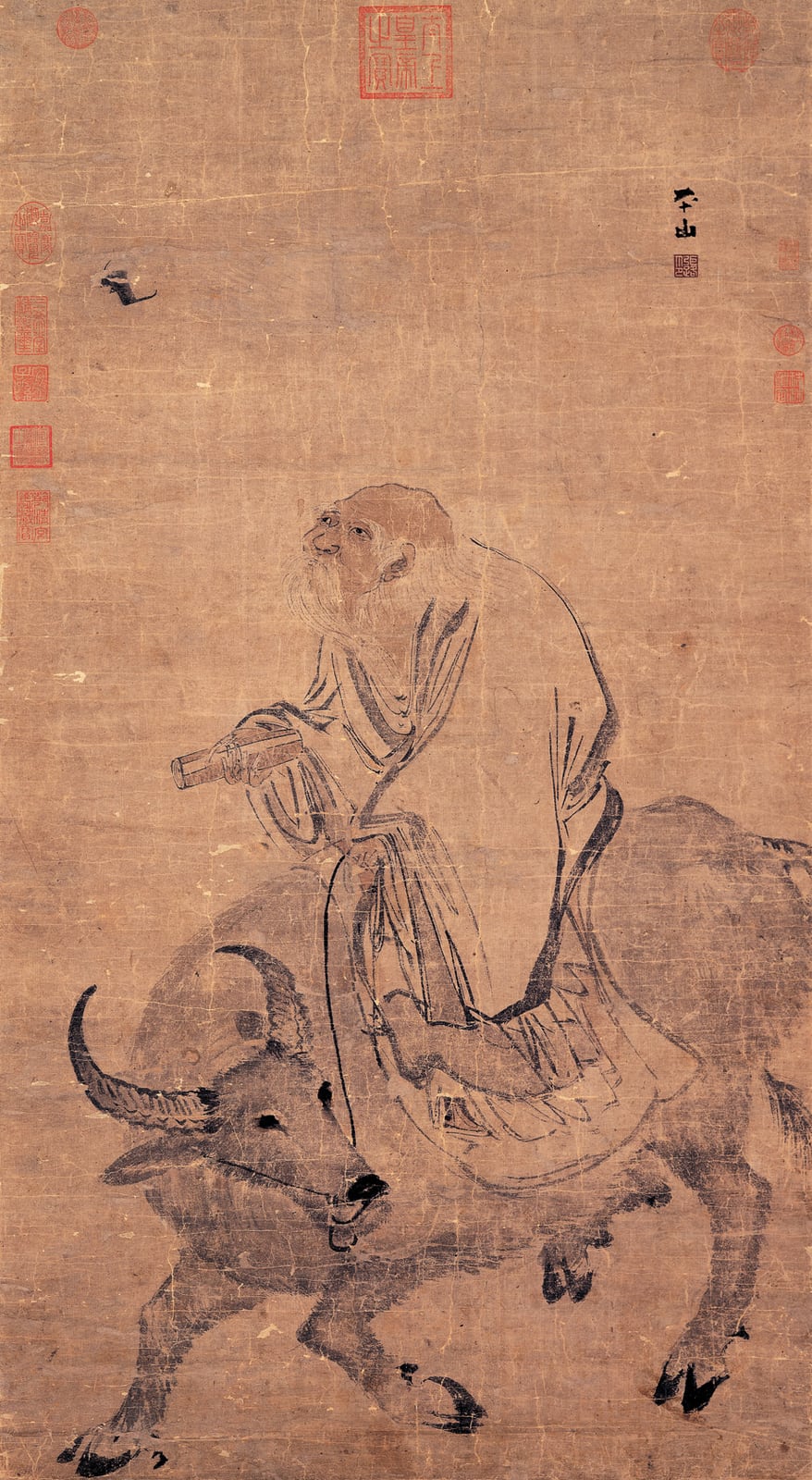
Laozi cabalgando un buey · Public domain
In their words
«The Tao that can be trodden is not the enduring and unchanging Tao. The name that can be named is not the enduring and unchanging name.»Daodejing, capítulo 1 (trad. inglesa de Legge, 1891)
Their central idea
Dao (the Way): The word dao means "road", "way" and, by extension, "method" or "doctrine"; all Chinese schools use it.
See in context
Biography
5 min read
A name that means "the Old Master"
Of Laozi we know, with any certainty, very little; of his book, more each year. That asymmetry defines the figure. The name by which we know him is not a personal name but a title: Lao ("old", "venerable") and zi ("master"). Tradition assigns him a surname, Li, a given name, Er ("ear"), and a courtesy or posthumous name, Dan; places his birth in the village of Quren, in the county of Ku, within the southern state of Chu, in what is now Luyi, Henan province; and makes him a contemporary—somewhat older—of Confucius, that is, it sets him in the sixth century BCE. All of this derives, ultimately, from a single page: chapter 63 of the Records of the Grand Historian (Shiji) by Sima Qian, written around 94 BCE, four centuries after the events it claims to relate.
What is remarkable about that page is its honesty. Sima Qian relates that Laozi was "historian of the archives" at the royal court of Zhou, that Confucius travelled to consult him about the rites, that on seeing the dynasty decline he departed westward and that, at the request of Yin Xi, the keeper of the pass, he wrote a book in two parts on the meaning of the Way (dao) and Virtue (de), of somewhat more than five thousand characters, after which "no one knows where he ended." But the historian then doubts aloud: perhaps Laozi was Lao Laizi, also from Chu, author of another book; perhaps he was the Grand Historian Dan, who one hundred and twenty-nine years after the death of Confucius visited Duke Xian of Qin. "No one in the world knows whether this is so or not," he concludes. It is the earliest acknowledgement that the figure was already, in Han times, a problem.
What the texts before the Shiji say
Before Sima Qian, the name Lao Dan appears in the Zhuangzi, in the Lüshi chunqiu, in the Han Feizi—which devotes two chapters of commentary to him—and in the Liji, where Confucius recalls having learned from him details of funeral rites. In the Zhuangzi the Old Master is a sage who receives the visit of a dazzled Confucius and who even dies, mourned by his disciples, in a celebrated passage of the third chapter. None of these mentions allows us to date a person; all of them show, however, that by the fourth century BCE there already existed the figure of an aged master linked to a knowledge of the Way, and that this figure was used to measure—and sometimes to diminish—that of Confucius.
Contemporary research, from A. C. Graham to D. C. Lau, has reconstructed with considerable plausibility how three threads were fused into a single character: the master of rites whom Confucius consults, the Taoist sage of the Zhuangzi, and the historian Dan of the Zhou court. The result is a composite biography, useful to a school that needed a founder earlier than Confucius. This is why the entry classifies him as a figure of debated historicity: there is no reason to deny that such a master existed, but neither is there any document that proves it.
The book: from silk scroll to bamboo slips
The Daodejing—also called simply the Laozi—is a text of some five thousand characters, traditionally divided into 81 short chapters, a good part of them in rhymed verse. It speaks of an unnameable Way that precedes heaven and earth, of the strength of the soft over the hard, of the ruler who achieves more the less he intervenes, of the uncarved block, of water that overcomes everything because it does not compete. Its form is aphoristic and its authorship collective: specialists agree that it is an anthology of sayings from a wisdom tradition, gathered and polished over generations.
For centuries the oldest available text was the one fixed by the commentary of Wang Bi (226–249), together with the recension attributed to the "Old Man of the Riverbank" (Heshang Gong). Two archaeological discoveries changed the picture. In 1973, in tomb 3 at Mawangdui, in Changsha (Hunan), sealed in 168 BCE, two complete copies on silk appeared, called A and B: the first in small seal script, earlier than 195 BCE; the second in clerical script, from the following decade. Both present the section on Virtue before the section on the Way, so that the book could have been called the Dedaojing. In 1993, in tomb 1 at Guodian, near Jingmen (Hubei), dated to around 300 BCE, 71 bamboo slips were recovered, distributed in three bundles, containing material corresponding to some thirty-one chapters of the received text, in a different order and without the hostility towards Confucian benevolence and righteousness that characterises the later version. They are, at present, the oldest witnesses of any Chinese classic, and they prove that by the end of the fourth century BCE the Laozi was already in circulation, though not yet in its final form.
From philosopher to god
Laozi's later fate was extraordinary. Under the Han dynasty, as the Daodejing came to be read as a manual of government and of longevity, its author rose from master to immortal. In 165 CE Emperor Huan offered sacrifices to him at Luyi and commissioned from Bian Shao the Inscription for Laozi (Laozi ming), in which the Old Master already appears as a being who transforms himself through the ages of the world. In the religious Taoism born with the Celestial Masters he would be the Most High Lord Lao (Taishang Laojun), revealer of scriptures, and in the polemic with Buddhism it would be said that, after crossing the pass, he travelled to India to "convert the barbarians" and teach as the Buddha. The Tang dynasty, whose imperial house bore the surname Li, adopted him as an ancestor: in 666 Emperor Gaozong granted him the title "August Emperor of the Mysterious Origin."
The West discovered him late and all at once: the first complete translation into a European language is the French one by Stanislas Julien (1842), followed by the English of James Legge (1891) and the German of Richard Wilhelm (1911). Since then the Daodejing has been, with the Bible, one of the most translated books in the world, and Laozi—the man of whom we know nothing—one of the most recognisable voices in the history of thought. What that voice says, and not who uttered it, is what this entry attempts to document.
Sources: Sima Qian. Shiji (Memorias históricas), juan 63, «Laozi Han Fei liezhuan», y juan 47, «Kongzi shijia». c. 94 a. C. Ed. Zhonghua shuju, Pekín, 1959. Trad. francesa parcial: Chavannes, Les Mémoires historiques de Se-ma Ts'ien, 1895–1905. · Lau, D. C. (trad.). Lao Tzu: Tao Te Ching. Penguin Classics, Harmondsworth, 1963 (introducción y apéndice «The problem of authorship»). ISBN 9780140441314. · Henricks, Robert G. Lao-Tzu: Te-Tao Ching. A New Translation Based on the Recently Discovered Ma-wang-tui Texts. Ballantine Books, Nueva York, 1989. ISBN 9780345370990. · Henricks, Robert G. Lao Tzu's Tao Te Ching: A Translation of the Startling New Documents Found at Guodian. Columbia University Press, Nueva York, 2000. Edición príncipe: Jingmen shi bowuguan (ed.), Guodian Chu mu zhujian. Wenwu chubanshe, Pekín, 1998. · Kohn, Livia y LaFargue, Michael (eds.). Lao-tzu and the Tao-te-ching. State University of New York Press, Albany, 1998. Incluye A. C. Graham, «The Origins of the Legend of Lao Tan».
Timeline
A life, year by year
Each point is a documented event. Click to read it, with its source and degree of certainty.
c. 571 BCEQuren, condado de Ku, Chu (hoy Luyi, Henan)
Traditional birth
Date and place assigned by late tradition to the birth of Li Er, "Laozi". The Shiji gives the place but not the date; the year is a convention that makes him somewhat older than Confucius. Years BCE are expressed as negative numbers.
TraditionSima Qian. Shiji (Memorias históricas), juan 63, «Laozi Han Fei liezhuan», y juan 47, «Kongzi shijia». c. 94 a. C. Ed. Zhonghua shuju, Pekín, 1959. Trad. francesa parcial: Chavannes, Les Mémoires historiques de Se-ma Ts'ien, 1895–1905.
c. 571 BCE
Traditional birth
Date and place assigned by late tradition to the birth of Li Er, "Laozi". The Shiji gives the place but not the date; the year is a convention that makes him somewhat older than Confucius. Years BCE are expressed as negative numbers.
Tradition
VI century BCE
Archivist at the Zhou court
According to Sima Qian, Laozi was "historian in charge of the archives" (shoucangshi zhi shi) of the Zhou royal house. It is the only office tradition attributes to him.
Tradition
c. 518 BCE
Confucius consults him on the rites
The Shiji (chs. 47 and 63), the Liji and the Zhuangzi relate a visit by Confucius to the Old Master. The date is a conjecture of commentators; for critical scholarship the episode is a construction meant to subordinate Confucius.
Tradition
V century BCE
Departure westward and dictation of the book
Seeing the decline of Zhou, Laozi departs; the keeper of the pass, Yin Xi, asks him to set down his knowledge and he composes the book in two parts on the Way and Virtue. "No one knows where he ended."
Tradition
c. 300 BCE
Guodian slips: the earliest witness
Tomb 1 at Guodian is sealed with 71 bamboo slips containing material from some 31 chapters of the Laozi, in three bundles. It proves the text was already circulating by the late 4th century BCE, though not in its final form.
Documented
c. 240 BCE
Wang Bi's commentary
The young philosopher Wang Bi (226–249) fixes the text and commentary that would be, for seventeen centuries, the reference version of the Daodejing.
Documented
c. 195 BCE – 168 BCE
Mawangdui silk copies
Two complete silk copies of the Laozi (A and B), the first earlier than 195 BCE and the second from the following years, are placed in tomb 3, sealed in 168 BCE. Both put the De section before the Dao section.
Documented
165 BCE
Emperor Huan offers him sacrifices
Emperor Huan of the Han sends offerings to Laozi's birthplace and Bian Shao composes the Inscription for Laozi (Laozi ming), the earliest testimony of his deification.
Documented
c. 94 BCE
Sima Qian writes the first biography
Chapter 63 of the Shiji gathers what was told of Laozi and confesses the doubt: he may have been Li Er, Lao Laizi or the historian Dan. It is the source of almost everything tradition would repeat.
Documented
666
Ancestor of the Tang imperial house
Emperor Gaozong, surnamed Li, grants Laozi the title Taishang Xuanyuan Huangdi ("August Emperor of the Mysterious Origin"), consecrating the dynasty's claim of descent.
Documented
1842
First complete translation into a European language
Stanislas Julien publishes Lao Tseu, Tao Te King at the Royal Press in Paris. Legge (1891) and Wilhelm (1911) would follow.
Documented
1973
Discovery of the Mawangdui manuscripts
The excavation of Mawangdui tomb 3 brings to light the two silk copies of the Laozi, now in the Hunan Museum.
Documented
October 1993
Discovery of the Guodian slips
The Jingmen Museum excavates Guodian tomb 1 and recovers the three bundles of Laozi slips, published in 1998.
Documented
Works
Essential works
The works without which their legacy cannot be understood.

Traditional attribution · c. 300 BCE
Daodejing (Tao Te Ching). The Book of the Way and its Virtue
道德經
Some five thousand characters in 81 short chapters, many in verse, divided into two parts: the Way (chs. 1–37) and Virtue (38–81). It sets out an unnameable Dao, prior to heaven and earth, which engenders everything without possessing it; it proposes to ruler and sage non-action (wuwei), spontaneity (ziran), the simplicity of the uncarved block and the strength of the soft, symbolised by water. Its tone shifts between mysticism, political strategy and critique of civilisation. It is, with the Bible, one of the most translated books in the world.
15 editions · amazon.com
Laozi
The Guodian Laozi (bundles A, B and C)
Manuscript · c. 300 BCE
The Guodian Laozi (bundles A, B and C)
郭店楚簡《老子》甲、乙、丙
The 71 slips contain some two thousand characters corresponding to 31 chapters of the received text, in a different order and with substantive variants: missing, for instance, is the attack on benevolence and righteousness in chapter 18. Bundle C is accompanied by the Taiyi sheng shui ("The Great One Gave Birth to Water"), a cosmological text unknown until then. Published in 1998 as Guodian Chu mu zhujian, they are the oldest witness of the Laozi and have forced the text's history to be rewritten.
2 editions

Manuscript · c. 195 BCE
The Mawangdui Laozi (silk copies A and B)
馬王堆帛書《老子》甲本、乙本
Both copies place the part on Virtue (De) before that on the Way (Dao), lack chapter divisions and present hundreds of variants against Wang Bi's text, many minor and some weighty (such as "the Way is great" instead of "Heaven is great" in chapter 25). Published in 1980 by Wenwu, they formed the basis of Henricks's translation (1989) and revolutionised study of the text.
2 editions · amazon.com
Complete works (12)
Laozi
Wang Bi's Commentary on the Laozi
The Conscious LibraryWang Bi's Commentary on the Laozi
240
Laozi
Heshang Gong's Commentary on the Laozi
The Conscious LibraryHeshang Gong's Commentary on the Laozi
150
Laozi
Scripture of Western Ascension
The Conscious LibraryScripture of Western Ascension
450
Laozi
Scripture of Laozi Converting the Barbarians
The Conscious LibraryScripture of Laozi Converting the Barbarians
300

Treatise of the Most High on Action and Response
1150
Laozi
Peking University Laozi (Western Han bamboo slips)
The Conscious LibraryPeking University Laozi (Western Han bamboo slips)
100
Laozi
Scripture of Constant Purity and Stillness
The Conscious LibraryScripture of Constant Purity and Stillness
900
Laozi
Scripture of Laozi's Transformations
The Conscious LibraryScripture of Laozi's Transformations
185

Xiang'er Commentary on the Laozi
200
Quotations
Quotations located in a specific work. Each carries its provenance and its level of confidence.
The Tao that can be trodden is not the enduring and unchanging Tao. The name that can be named is not the enduring and unchanging name.道可道,非常道。名可名,非常名。
VerifiedDaodejing, capítulo 1 (trad. inglesa de Legge, 1891)
Apocryphal quotes or disputed attributions (3)
«If you are depressed you are living in the past. If you are anxious you are living in the future. If you are at peace you are living in the present.»
Appears in no chapter of the Daodejing nor in any ancient source on Laozi. It has circulated online since the early 21st century; its psychological vocabulary ("depressed", "anxious") is modern.
«Give a man a fish and you feed him for a day; teach a man to fish and you feed him for a lifetime.»
Attributed indiscriminately to Laozi, Confucius or a "Chinese proverb". It is found neither in the Daodejing nor in the Analects; its modern form is first documented in English in Anne Isabella Thackeray Ritchie's novel Mrs. Dymond (1885).
«Being deeply loved by someone gives you strength, while loving someone deeply gives you courage.»
No correspondence in the Daodejing. Possibly a very loose paraphrase of chapter 67 ("compassion gives courage"), turned into a sentimental maxim.
Last words
There are no verifiable records of their last words.
No record exists. Sima Qian closes the biography with "no one knows where he ended" (莫知其所終). The Zhuangzi (ch. 3) relates the death of Lao Dan and his disciples' mourning, but as a parable on attachment, without final words; later hagiographies make him an immortal and therefore deathless.
Source: Sima Qian. Shiji (Memorias históricas), juan 63, «Laozi Han Fei liezhuan», y juan 47, «Kongzi shijia». c. 94 a. C. Ed. Zhonghua shuju, Pekín, 1959. Trad. francesa parcial: Chavannes, Les Mémoires historiques de Se-ma Ts'ien, 1895–1905.
Ask
What their work answers
Twelve great human questions and what their texts allow us to answer, with references. We never put words in their mouth.
What is the Absolute? Does God exist?
The Dao that can be named is not the constant Dao
The unnameableStated explicitly
The Daodejing, the text attributed to Laozi, opens with the warning that the Dao that can be spoken is not the constant Dao, and the name that can be named is not the constant name. In chapter 25 it describes something formed in undifferentiation, prior to heaven and earth, silent and empty, that may be the mother of the world: the text declares it does not know its name and calls it Dao for want of another. In chapter 4 it suggests it seems to precede even the ancestral Lord (di). The Dao is not a personal God: chapter 5 states that heaven and earth are not benevolent and treat beings as straw dogs. Nor is it mere nothing: it begets, nourishes and does not possess. The ultimate here is what precedes every name, which language can only point to obliquely.
Compare this question with other teachersWho am I? Is there a true self?
No theory of the self: it advises emptying it, putting it last, knowing oneself
Did not address it
The Daodejing, attributed to Laozi, does not pose the question of a true self in terms of a soul or a Self. What it offers are practical indications about the self. Chapter 7 says that the sage puts his person last and is therefore first, and that precisely by having no private interests he fulfils them. Chapter 13 links great afflictions to having a body, understood as the self that protects itself. Chapter 19 recommends lessening the private and reducing desires, and chapter 33 distinguishes knowing others, which is intelligence, from knowing oneself, which is clarity. Its ideal is the simplicity of the uncarved block. From all this one can infer a distrust of the self-assertive self, but no doctrine of what the self is.
Compare this question with other teachersWhy do we suffer?
Abandoning the Way brings desire, rivalry and disaster
Social and moral disorderInferred from their doctrine
The Daodejing does not pose suffering as a metaphysical problem, but it does diagnose the causes of disorder. When the great Dao is abandoned, says chapter 18, humaneness and righteousness appear as belated remedies; when cleverness and cunning arise, great hypocrisy appears. Chapter 46 states that there is no greater misfortune than not knowing contentment and no greater fault than the desire to acquire; chapter 12, that the five colours blind the eyes and rare goods lead conduct astray. Anxiety, war and ruin arise from forced action, the urge to accumulate and estrangement from natural simplicity. The remedy is not a salvation but a return: acting without forcing (wuwei), knowing when enough is enough, and going back to the root, which chapter 16 calls stillness.
Compare this question with other teachersWhat happens after death?
Returning to the root: the text describes no personal beyond
Silence or reserveInferred from their doctrine
The Daodejing does not describe what happens to the person after death. It speaks of death, but in another register. Chapter 16 presents the life of all beings as a return to the root, which it calls stillness and the fulfilment of destiny; chapter 50 contrasts those who cling to life and shorten it with the one who knows how to preserve it; chapter 74 warns that it is useless to threaten with death a people that no longer fears it. Chapter 33 contains a disputed line — one who dies without perishing is long-lived — which some read as permanence in the Dao and others as lasting fame. What the text allows us to affirm is an attitude: to accept the cycle of arising and returning, neither forcing life nor fearing its end. The quest for physical or spiritual immortality belongs to the later Daoist tradition.
Compare this question with other teachersHow is liberation or salvation attained?
There is no salvation to attain: one returns to the root, to the Way
Through virtue and harmonyInferred from their doctrine
The Daodejing does not speak of salvation or liberation in a religious sense. What it proposes is a return: attaining utmost emptiness, keeping stillness and watching the ten thousand things go back to their root, what chapter 16 calls knowing the constant. The path is not cumulative: whoever devotes himself to learning increases daily, and whoever devotes himself to the Way decreases, until reaching non-action (wuwei), according to chapter 48. Hence the call to simplicity, to fewer desires and to abandoning cleverness and prescriptive morality (chapter 19). The fruit is not escape from the world but living in accord with the course of things, without forcing it, and thereby enduring without danger.
Compare this question with other teachersIs a teacher necessary?
The sage teaches without words; slighting the teacher, however clever, is great confusion
Helpful but not indispensableInferred from their doctrine
The Daodejing does not treat discipleship as an institution, but it offers two indications. The first is that the sage teaches without words (chapter 2; also 43): his teaching is his way of being, not a doctrinal body or an authority imposed. The second is in chapter 27: the good man is the teacher of the one who is not good, and the one who is not good is material for the good; not to value the teacher nor care for the material is, however much one knows, a great confusion. The teacher therefore has value, though his way of transmitting is silent example. Since the Way cannot be spoken (chapter 1), no verbal instruction delivers it entirely.
Compare this question with other teachersIs the world real?
The ten thousand things are born of the Way and return to it in constant cycle
Natural order in transformationStated explicitly
The Daodejing does not ask whether the world is real or illusory; it describes it as a process. The Way begets the one, the one the two, the two the three, and the three the ten thousand things (chapter 42); things arise from being and being from non-being (chapter 40), and all eventually return to their root (chapter 16). The course of the world is an alternation of opposites that generate each other, soft and hard, full and empty, and the Way follows what is so of itself (ziran, chapter 25). The world is therefore fully real but changing; wisdom consists in attuning to that course without forcing it.
Compare this question with other teachersWhat is love?
The highest good is like water: it benefits without contending or proclaiming itself
What appears when the self ceasesInferred from their doctrine
The Daodejing distrusts love understood as a virtue to be preached. Chapter 5 says that Heaven and Earth are not benevolent (ren) and treat beings as straw dogs; chapter 18, that humaneness and righteousness appear when the great Dao has been lost; chapter 38, that superior virtue does not regard itself as virtuous and therefore has virtue. Against the cultivated benevolence of the Confucians, the text proposes a goodness without self-assertion: that of water, which benefits all beings and does not contend with them (ch. 8), and that of the sage, who puts himself last and therefore comes first (ch. 7). Among its three treasures, chapter 67 names compassion (ci), comparable to a mother's care, from which courage is born. True love is not manufactured: it flows when the urge to stand out ceases.
Compare this question with other teachersAre we free, or is everything determined?
The Daodejing does not pose freedom: it proposes moving with the Dao
Did not address it
The *Daodejing* does not know the dilemma between free will and determinism as the West framed it, and attributing a position to it would be anachronistic. What it offers is something else: the Dao acts without acting and nothing is left undone (ch. 37), and the sage imitates that non-forcing (*wuwei*). In chapter 16, returning to the root is stillness, and stillness is «returning to one's destiny» (*fuming*): destiny is not an imposed chain but each being's own course, to which it is fitting to return. Chapter 73 adds that Heaven's net is vast and wide-meshed, yet nothing slips through. The freedom the text cares about is not choosing among options but ceasing to resist the natural course of things.
Compare this question with other teachersWhy meditate or pray?
Empty and still oneself to watch all things return to their root
Seeing reality as it isInferred from their doctrine
The *Daodejing* describes no meditation technique, but it contains passages the Daoist tradition read as such. Chapter 16 asks one to reach utmost emptiness and hold fast to stillness; then, as the ten thousand beings arise together, one watches their return: all things flourish and go back to their root. Chapter 10 asks whether one can embrace unity without parting from it, make the breath soft as a newborn's and cleanse the mysterious mirror until it is spotless. Chapter 48 adds that the Way is followed by diminishing each day. The aim is not an extraordinary experience, but to see clearly the natural movement of things and stop getting in its way.
Compare this question with other teachersCan reason know the ultimate?
The Dao that can be spoken is not the constant Dao
The ultimate lies beyond the mindStated explicitly
The *Daodejing* opens by denying that the ultimate can be captured in words: the Way that can be spoken is not the enduring Way, and the name that can be named is not the enduring name (ch. 1). Throughout the text accumulated knowledge appears as an obstacle: whoever devotes himself to learning increases each day, whoever devotes himself to the Way diminishes each day (ch. 48); the one who knows does not speak and the one who speaks does not know (ch. 56). This is not irrationalism but the conviction that the Dao precedes every conceptual distinction and is known only by ceasing to impose categories on it. The knowledge it proposes is of another order: clarity (*ming*) in knowing oneself and in contemplating the return of things.
Compare this question with other teachersWithdraw from the world or transform it?
Governing without forcing: of the best ruler the people barely know he exists
Order societyStated explicitly
Although the legend recorded by Sima Qian tells that Laozi left the Zhou court and departed westward, the Daodejing is largely addressed to the ruler. Its ideal is not withdrawal but an order achieved without imposing: of the best ruler the people barely know he exists (ch. 17); the more prohibitions, the poorer the people, and the sage does not act and the people transform themselves (ch. 57); governing a great state is like frying a small fish, without stirring it too much (ch. 60). Chapter 80 describes a small, sparsely populated community, content with what it has, where the neighbours' cocks can be heard and no one feels the need to travel. Wisdom is realised in the world and in politics, but through non-action (wuwei): reducing desires, weapons and laws until the natural order is restored.
Compare this question with other teachers
Affinities & tensions
Affinities and tensions
Calculated question by question from their positions. The reason for each agreement or clash, on click.
Thinks most like
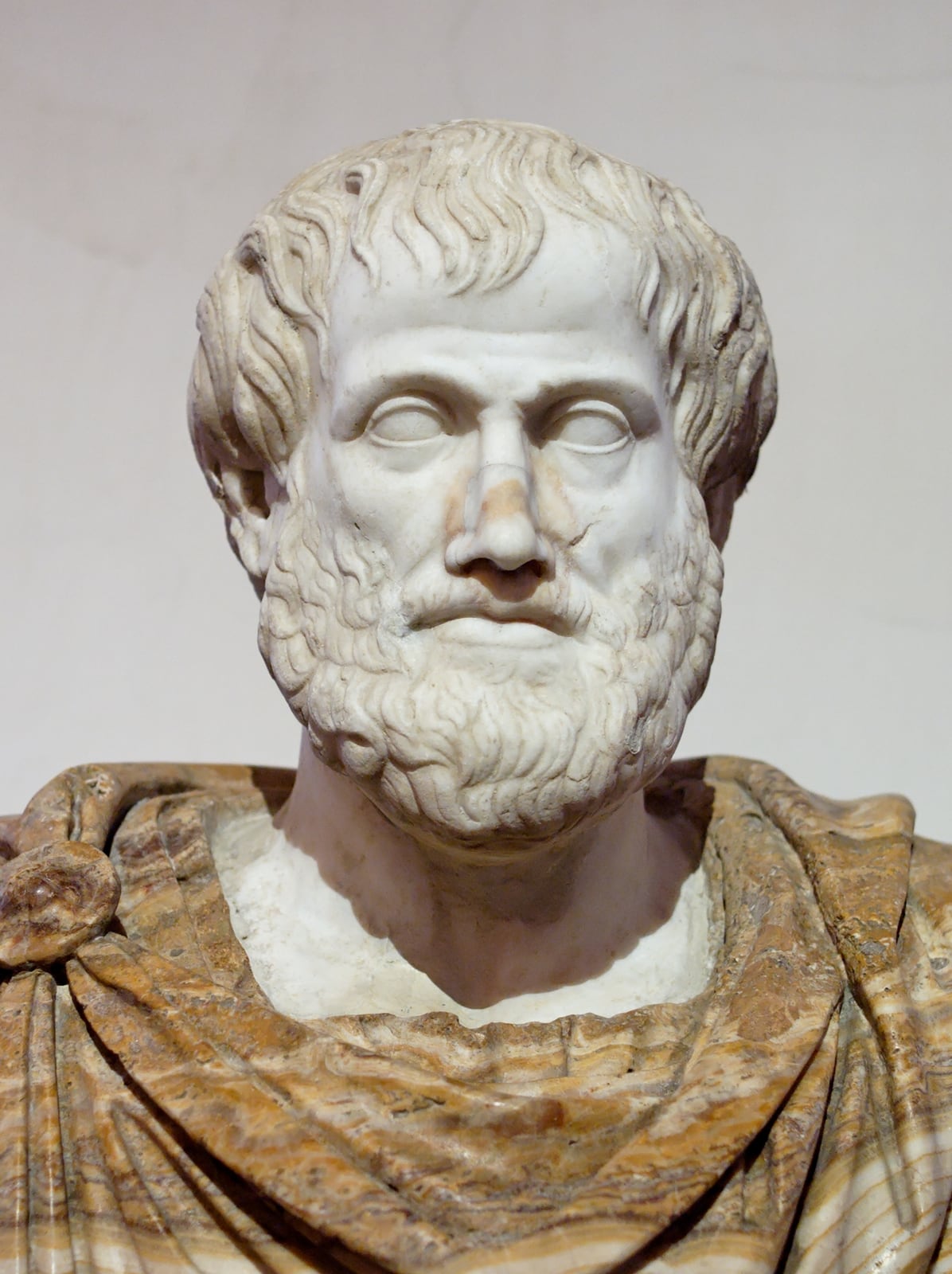
Aristotle
They agree on: Why do we suffer? · What happens after death? · How is liberation or salvation attained?
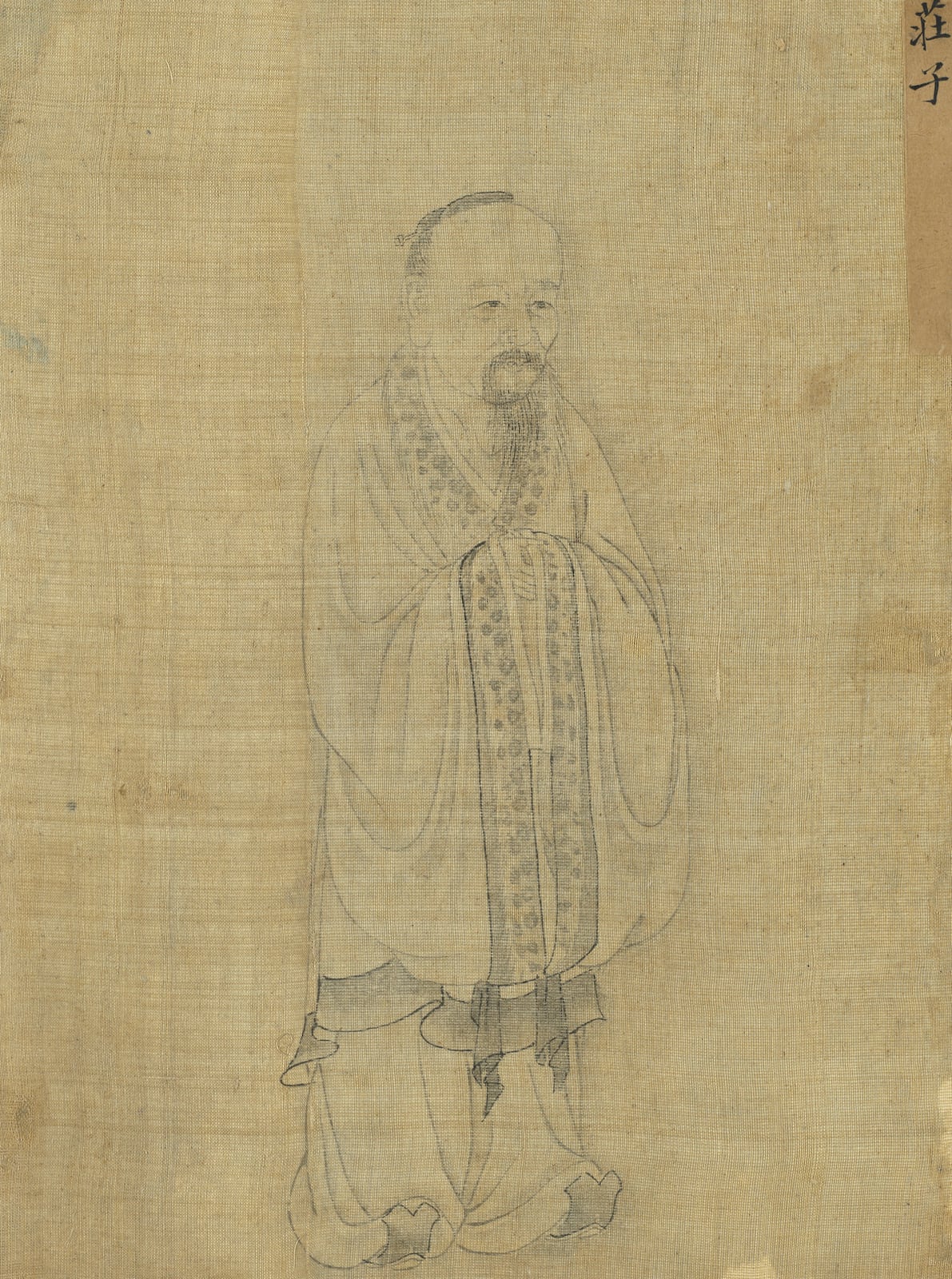
Zhuangzi
They agree on: What is the Absolute? Does God exist? · What happens after death? · How is liberation or salvation attained?
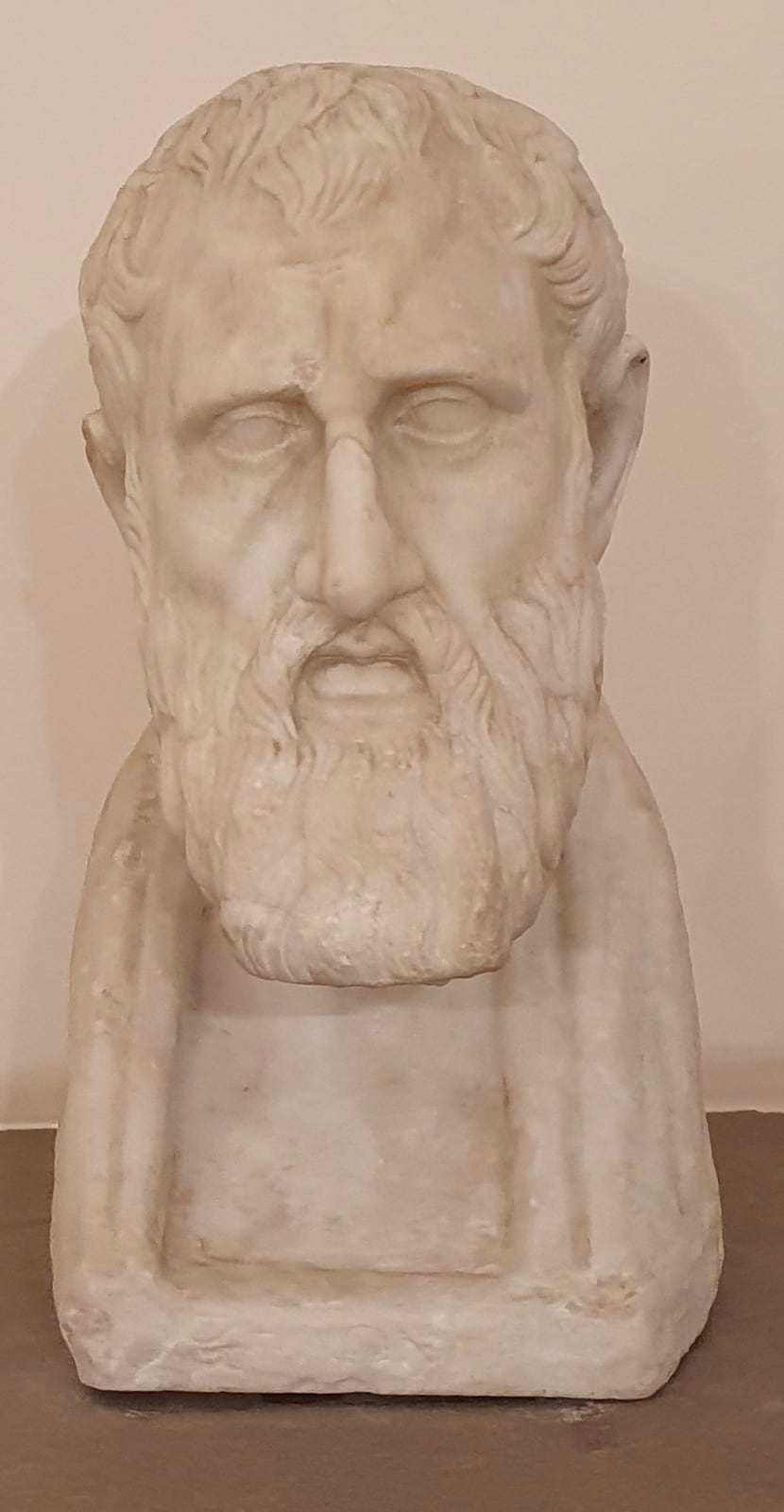
Zeno of Citium
They agree on: Why do we suffer? · What happens after death? · How is liberation or salvation attained?
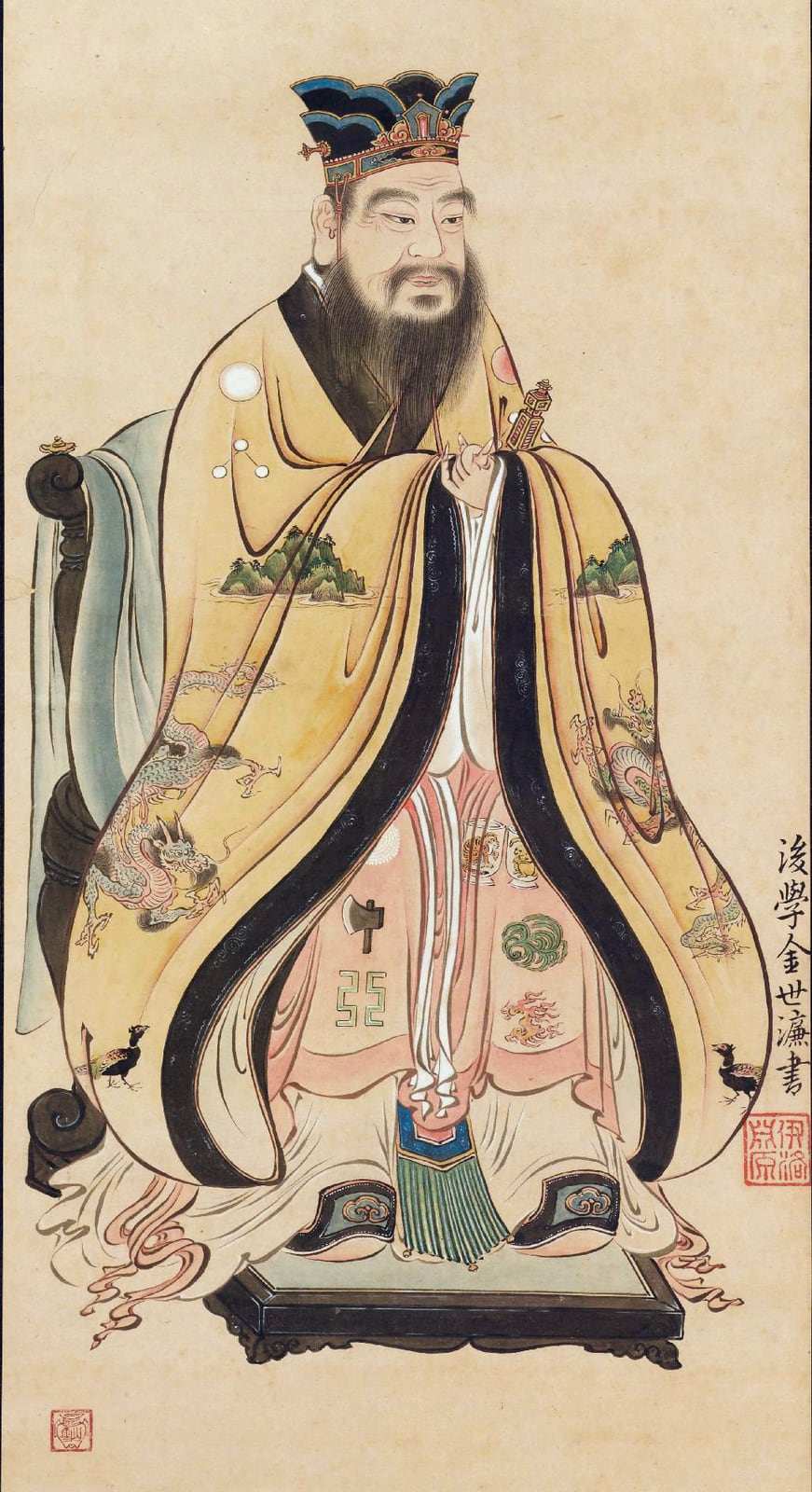
Confucius
They agree on: Why do we suffer? · What happens after death? · How is liberation or salvation attained?
Thinks most unlike
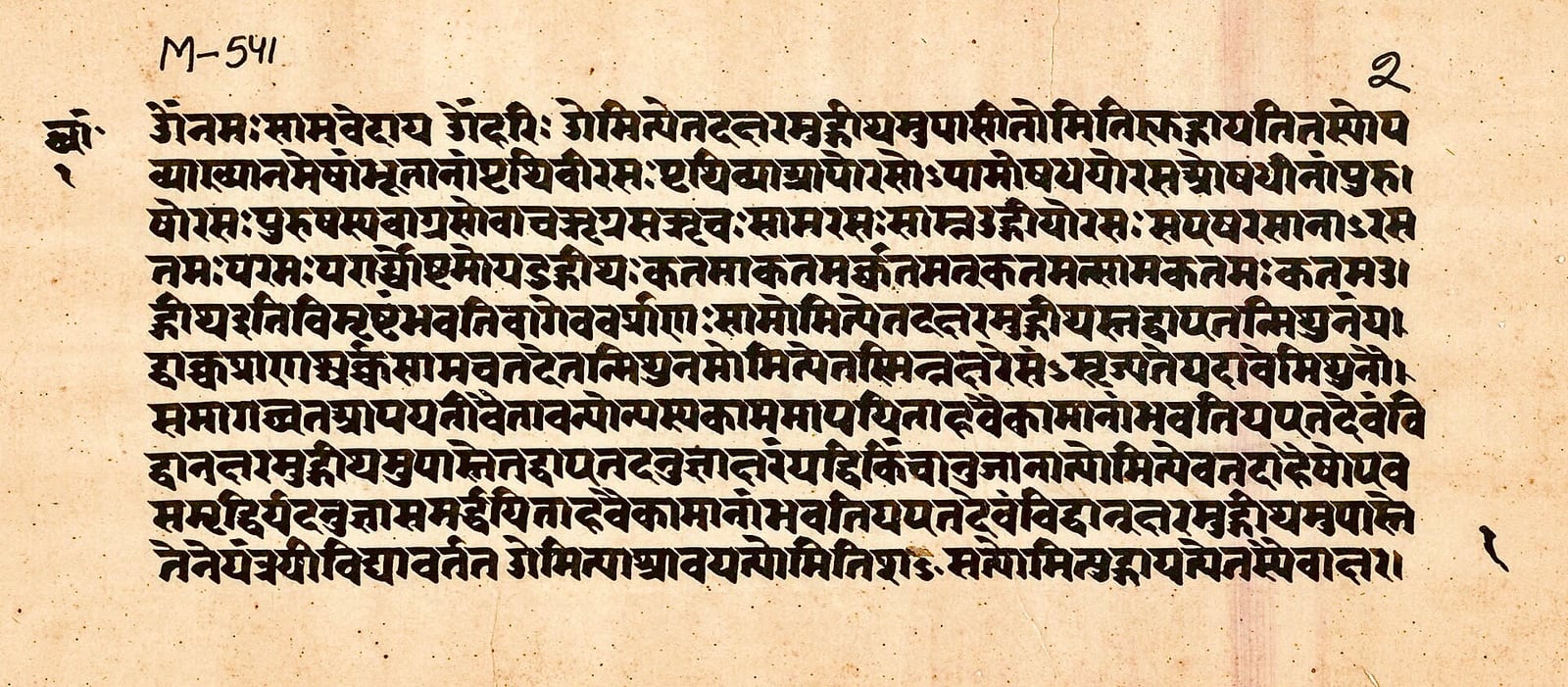
Uddalaka Aruni
They clash on: What is the Absolute? Does God exist? · What happens after death? · How is liberation or salvation attained?
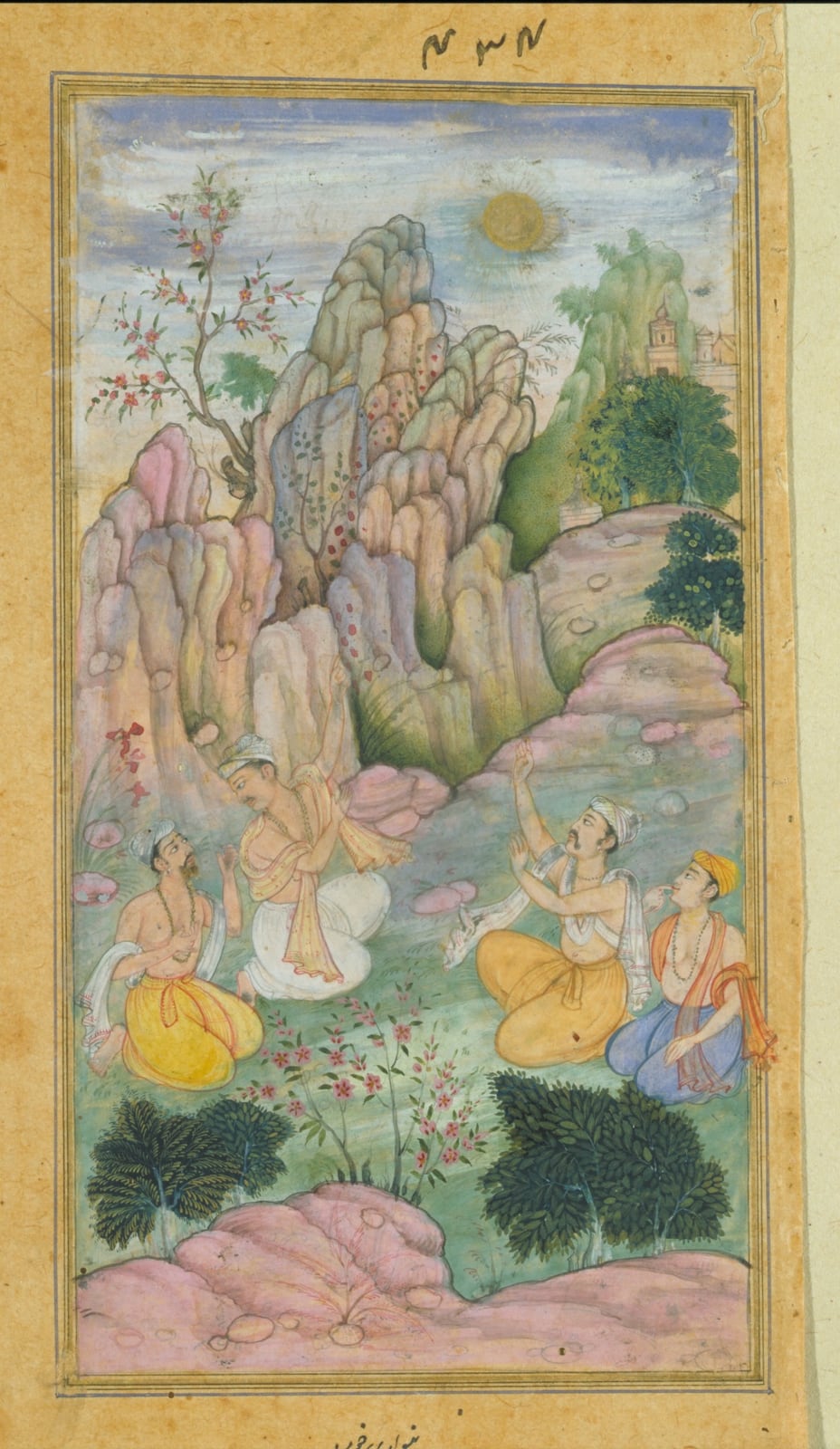
Vyasa
They clash on: What is the Absolute? Does God exist? · Why do we suffer? · What happens after death?

Rabia al-Adawiyya
They clash on: What is the Absolute? Does God exist? · Why do we suffer? · What happens after death?

Theophan the Recluse
They clash on: What is the Absolute? Does God exist? · Why do we suffer? · What happens after death?
They clash onFundamental disagreement
Laozi · Teresa of Ávila
A Thou who loves versus a Way without a name
Why: The contradiction is substantive, not verbal. Teresa writes within the Catholic faith and for nuns who pray; her language is that of the revelation of a God who has made himself known as a person in Christ, and her whole itinerary depends on someone answering. The Daodejing is an anthology of aphorisms from the fourth and third centuries BCE, addressed partly to rulers, which describes the course of things and distrusts any preached benevolence. There is a point of contact: Teresa too admits that what is received in the higher dwelling places exceeds the understanding. But in her that ineffability is that of a friend too great; in the Daodejing, that of a principle that is no one's friend.
They clash onFundamental disagreement
Laozi · Confucius
Two orders for a world at war: ritual that gives form and the Way that removes it
Why: The conflict is real and polemical, though between texts and schools rather than persons. The Daodejing names and discredits the central Confucian concepts, humaneness, righteousness and ritual, which suggests it was composed, at least in part, against that school. The meeting between Confucius and Laozi recounted by Sima Qian in the Records of the Grand Historian (ch. 63) belongs to legend and is not considered historical. The underlying difference is anthropological: Confucius trusts that cultivated form educates human nature; the Daodejing suspects that every imposed form falsifies it. Chinese culture eventually read them as complementary, one for public office and the other for retirement.
They agree on
Laozi · Jiddu Krishnamurti
What can be said is not it: the nameless Way and the pathless land
Why: There is no record that Krishnamurti engaged with the Daodejing; the affinity is structural. Both react against an excess of form: the Chinese text, against the proliferation of virtues, rites and learning in the schools of its time; Krishnamurti, against organisations, beliefs and spiritual methods, starting with those of the Theosophical Society that raised him. Hence the same gesture of subtraction. The difference lies in context and aim: the Daodejing also addresses the ruler and seeks a natural order of the community; Krishnamurti speaks to individuals and seeks a mutation of consciousness. One contemplates the return of things to their root; the other, the movement of thought.
Anecdotes and stories
Anecdotes and stories
Oral traditions. VI a. C. (tradicional)
Confucius asks about the rites
Origin of the story: Shiji 63 ("Biography of Laozi and Han Fei") and 47 ("Hereditary House of Confucius"); Liji, "Zengzi wen"; Zhuangzi, chs. 13, 14 and 21. Analysed as a school legend by A. C. Graham, "The Origins of the Legend of Lao Tan" (in Kohn and LaFargue, 1998).
Oral traditions. VI a. C. (tradicional)
"Today I saw Laozi: he is like a dragon"
Origin of the story: Shiji 63. The comparison with the dragon does not appear in sources earlier than Sima Qian.
Hagiographic accounts. VI–V a. C. (tradicional)
The keeper of the pass and the five thousand characters
Origin of the story: Core in Shiji 63; expansions in the Liexian zhuan (1st–2nd c.), Ge Hong's Shenxian zhuan (4th c.) and the Scripture of Western Ascension (5th c.).
Documentedc. 94 a. C.
Sima Qian's three Laozis
Origin of the story: Literal text of Shiji 63. The critical reading follows A. C. Graham (1986/1998) and D. C. Lau (introduction to his translation, 1963).
Hagiographic accountsiglos II–IV (hagiografía Han y Jin)
Eighty-one years in his mother's womb
Origin of the story: Shenxian zhuan ("Biographies of Divine Immortals"), entry on Laozi; Inscription for Laozi (Laozi ming, 165); Laozi bianhua jing (Dunhuang S.2295). Reference study: Anna Seidel, La divinisation de Lao tseu dans le taoïsme des Han (1969); Shenxian zhuan translated by Robert F. Campany (2002).
Source: Campany, Robert Ford. To Live as Long as Heaven and Earth: A Translation and Study of Ge Hong's Traditions of Divine Transcendents. University of California Press, Berkeley, 2002.
Disputedsiglos II–XIII
The conversion of the barbarians
Origin of the story: Memorial of Xiang Kai (166) in the Hou Hanshu; Wang Fu's Laozi huahu jing (c. 300), known from Dunhuang fragments and quotations; debates of 1255–1281 at the Mongol court. Study: Erik Zürcher, The Buddhist Conquest of China (1959).
Source: Zürcher, Erik. The Buddhist Conquest of China: The Spread and Adaptation of Buddhism in Early Medieval China. Brill, Leiden, 1959 (cap. 6 sobre la teoría del huahu).
Teachings
Teachings
The notions that structure their thought, explained in context.
Dao (the Way)dao
Core of philosophical Taoism; shared with the Zhuangzi and reinterpreted by Confucianism, Chan Buddhism and Neo-Confucianism.
Source: Lau, D. C. (trad.). Lao Tzu: Tao Te Ching. Penguin Classics, Harmondsworth, 1963 (introducción y apéndice «The problem of authorship»). ISBN 9780140441314.
De (Virtue, potency)de
A term common to all Zhou philosophy (the king's "virtue" in the Documents); the Daodejing de-moralises and naturalises it.
Source: Lau, D. C. (trad.). Lao Tzu: Tao Te Ching. Penguin Classics, Harmondsworth, 1963 (introducción y apéndice «The problem of authorship»). ISBN 9780140441314.
Wuwei (non-action)wuwei
Concept shared with the Zhuangzi and the Huainanzi; reinterpreted by Legalism and, in Analects 15.5, applied to the sage-king Shun.
Source: Lau, D. C. (trad.). Lao Tzu: Tao Te Ching. Penguin Classics, Harmondsworth, 1963 (introducción y apéndice «The problem of authorship»). ISBN 9780140441314.
Ziran (what is so of itself)ziran
Developed by the Zhuangzi and central to Wang Bi's commentary and to Chinese aesthetics (painting, poetry).
Source: Lau, D. C. (trad.). Lao Tzu: Tao Te Ching. Penguin Classics, Harmondsworth, 1963 (introducción y apéndice «The problem of authorship»). ISBN 9780140441314.
Pu (the uncarved block)pu
An image proper to the Daodejing; it reappears in the Zhuangzi and in later literary and artistic aesthetics.
Source: Lau, D. C. (trad.). Lao Tzu: Tao Te Ching. Penguin Classics, Harmondsworth, 1963 (introducción y apéndice «The problem of authorship»). ISBN 9780140441314.
The soft overcomes the hardrou-ruo
Linked to the notion of reversal (fan) and to the valuing of the feminine (pin); it influences the Sunzi, the Huainanzi and the internal martial arts.
Source: Lau, D. C. (trad.). Lao Tzu: Tao Te Ching. Penguin Classics, Harmondsworth, 1963 (introducción y apéndice «The problem of authorship»). ISBN 9780140441314.
Retreats
Retreats and centres
Places and gatherings linked to their teaching. We put you in touch with the organisers.
Shiyan, provincia de Hubei · China
Wudang Mountains: Taoist pilgrimage
Comité de Administración de la Zona Turística de Wudangshan
The Wudang Mountains are one of the four sacred mountains of Taoism and one of the great pilgrimage destinations of the tradition whose founding text is Laozi's Tao Te Ching. Their palaces, monasteries and temples, built largely under the Ming dynasty and inscribed as a World Heritage Site in 1994, are scattered across the slopes up to the Golden Summit. Communities of Taoist monks live there, keeping the liturgy, inner cultivation and the martial arts associated with the mountain. The official website is published by the Wudangshan tourism zone administration, in Chinese only.
Centro internacional cerca de Orangeville (Ontario) y clases en numerosos países · Canadá
Fung Loy Kok Institute of Taoism: Taoist Tai Chi
Fung Loy Kok Institute of Taoism
The Fung Loy Kok Institute of Taoism is a charitable, volunteer organisation founded more than fifty years ago by Master Moy Lin Shin, who brought his arts to twenty-five countries. It describes itself as the source and depository of the Taoist Tai Chi arts he taught: a set of 108 movements based on the principles of Taoism and aimed at cultivating body, mind and spirit, along with chanting practices. Its international centre is near Orangeville, Ontario. It is a practical rather than textual route into the tradition whose foundations go back to Laozi.
Videos
Videos
Recordings, interviews and documentaries. Videos play from YouTube; they are not hosted here.
Wisdom of China: Laozi
Documentary· EN· 2024· 50 min
Bryan Van Norden
《中国智慧 老子篇》 (Sabiduría de China: Laozi)
Documentary· ZH· 2024· 49 min
CCTV纪录 (CCTV Documentary)Official channel
马王堆汉墓帛书版《老子》颠覆传世经典 (CCTV «帛书传奇», ep. 4)
Documentary· ZH· 2025· 39 min
CCTV中国中央电视台Official channel
China in the Classics — Dao De Jing (典籍里的中国, ep. 9)
Third-party recording· ZH· 2021· 85 min
CCTV中国中央电视台Official channel
Why This Text Matters | Daodejing | Brook Ziporyn
Lecture· EN· 54 min
University of Chicago Divinity SchoolOfficial channel
The Tao Teh King by Laozi, read by Eric S. Piotrowski (LibriVox)
Third-party recording· EN· 95 min
LibriVox AudiobooksOfficial channel
如果国宝会说话 — 孔子见老子画像石 (El relieve «Confucio visita a Laozi»)
Documentary· ZH· 5 min
CCTV纪录Official channel
Filosofía china: Lao Tse, Confucio y Mozi — documental completo
Documentary· ES· 45 min
El Viaje Filosófico
Lao Tse — Tao Te King (audiolibro completo en español)
Third-party recording· ES· 100 min
AMA Audiolibros
Eastern Philosophy — Lao Tzu
Analysis· EN· 2014· 6 min
The School of Life
The Dao De Jing: What Is the Dao, and Can It Be Said? (PEL ep. 311, part 1)
Analysis· EN· 2023· 50 min
The Partially Examined Life
Gallery
Gallery
Images with verified licences. Each keeps its authorship and attribution.
Manuscripts
Manuscripts
Manuscript witnesses and ancient texts, with their custodian and conditions of access.
ZH · Escritura de Chu (caracteres de los Estados Combatientes) · c. 300 a. C. (fecha del cierre de la tumba; el texto es algo anterior)
郭店楚簡《老子》甲、乙、丙
- Surviving witness
- 71 tablillas de bambú en tres haces (A: 39 tablillas; B: 18; C: 14), de 14,1 a 32,5 cm de longitud
- Custodian
- Museo de Jingmen (institución excavadora y depositaria original); los haces del Laozi figuran hoy en la colección del Museo Provincial de Hubei, Wuhan
- Digitisation
- www.hbww.org.cn/bambooslips/p/11903.html…
ZH · Escritura de sello pequeño (xiaozhuan) con rasgos de escritura de los escribas · Anterior a 195 a. C. (no evita el nombre tabú de Liu Bang)
馬王堆帛書《老子》甲本
- Surviving witness
- Rollo de seda, parte de un conjunto que incluye cuatro textos perdidos; parte De antes de la parte Dao
- Custodian
- Museo de Hunan (Hunan Provincial Museum), Changsha
- Digitisation
- web.hnmuseum.com/en/node/7174…
ZH · Escritura de los escribas (lishu) · c. 194–180 a. C. (evita «bang» pero no los nombres tabú de Hui y Wen)
馬王堆帛書《老子》乙本
- Surviving witness
- Seda ancha, copiado junto a los Cuatro cánones del Emperador Amarillo; parte De antes de la parte Dao
- Custodian
- Museo de Hunan (Hunan Provincial Museum), Changsha
- Digitisation
- web.hnmuseum.com/en/node/7174…
ZH · Escritura de los escribas (lishu) de los Han occidentales · Mediados del s. II a. C. aproximadamente (reinado de Wu de los Han)
北京大學藏西漢竹書《老子》
- Surviving witness
- Más de 200 tablillas de bambú con el texto casi completo, con los títulos «Laozi shang jing» y «Laozi xia jing» y el De antes del Dao
- Custodian
- Universidad de Pekín (Centro de Investigación de Manuscritos Excavados)
Connections
Connections
Influences, discipleships and affinities. Documented relations are distinguished from similarities identified by analysis.
Met
Tradition (Shiji 47 and 63, Liji, Zhuangzi) relates that Confucius consulted Laozi on the rites. It is a school narrative, not a verifiable fact; recorded as undocumented.
Similarity identified by analysis
Influenced
The Zhuangzi cites Lao Dan as a master in many chapters and chapter 33 ("Under Heaven") presents him, with Guan Yin, as exponent of the same current. The relation is textual, not personal.
Documented relation
Ideas akin to
Siddhartha Gautama, the Buddha
No historical relation. The affinity between the Daodejing's emptying and the Buddhist path of non-attachment was thematised by Taoism itself (huahu legend) and by Chan Buddhism.
Similarity identified by analysis
Ideas akin to
Affinity noted in comparative literature: Eckhart's detachment (Gelassenheit) and negative way versus wuwei and the unnameable Dao.
Similarity identified by analysis
Linked from other profiles
- Heraclitus · Ideas akin to
- Siddhartha Gautama, the Buddha · Ideas akin to
- Alan Watts · Influenced by
- Simone Weil · Influenced by
- Byron Katie · Ideas akin to
- Carl Gustav Jung · Influenced by
- Leo Tolstoy · Influenced by
- Osho · Influenced by
- Huineng · Ideas akin to
- Martin Buber · Influenced by
- Confucius · Met
- Zhuangzi · Influenced by
Sources
Sources
Bibliography and catalogues consulted for this profile.
- Wikidata, entidad Q9333 «Laozi» (P31=Q5; 214 enlaces entre wikis). Nombre nativo 老子; lugar de nacimiento Q504759 (Luyi).
- Sima Qian. Shiji (Memorias históricas), juan 63, «Laozi Han Fei liezhuan», y juan 47, «Kongzi shijia». c. 94 a. C. Ed. Zhonghua shuju, Pekín, 1959. Trad. francesa parcial: Chavannes, Les Mémoires historiques de Se-ma Ts'ien, 1895–1905.
- Lau, D. C. (trad.). Lao Tzu: Tao Te Ching. Penguin Classics, Harmondsworth, 1963 (introducción y apéndice «The problem of authorship»). ISBN 9780140441314.
- Henricks, Robert G. Lao-Tzu: Te-Tao Ching. A New Translation Based on the Recently Discovered Ma-wang-tui Texts. Ballantine Books, Nueva York, 1989. ISBN 9780345370990.
- Henricks, Robert G. Lao Tzu's Tao Te Ching: A Translation of the Startling New Documents Found at Guodian. Columbia University Press, Nueva York, 2000. Edición príncipe: Jingmen shi bowuguan (ed.), Guodian Chu mu zhujian. Wenwu chubanshe, Pekín, 1998.
- Museo Provincial de Hubei. Ficha de catálogo «Laozi B, tablillas de Guodian» (郭店楚簡 老子乙): originalmente custodiadas en el Museo de Jingmen; longitud de las tablillas 14,1–29,7 cm; periodo de los Estados Combatientes.
- Museo de Hunan (Hunan Provincial Museum). «Silk Book of Laozi, Version A and Version B», ficha de la colección de Mawangdui (datación de A en 206–195 a. C. y de B por los nombres tabú de los reinados de Hui y de la emperatriz Lü).
- Kohn, Livia y LaFargue, Michael (eds.). Lao-tzu and the Tao-te-ching. State University of New York Press, Albany, 1998. Incluye A. C. Graham, «The Origins of the Legend of Lao Tan».
- Legge, James (trad.). The Texts of Taoism. Sacred Books of the East, vols. XXXIX–XL. Clarendon Press, Oxford, 1891. Vol. XXXIX en Project Gutenberg nº 216.
- Preciado Idoeta, Iñaki (ed. y trad.). Lao zi. Tao Te Ching. Los libros del Tao. Editorial Trotta (Pliegos de Oriente), Madrid, 2006; reimpr. 2018. ISBN 9788498797411.
- Seidel, Anna. La divinisation de Lao tseu dans le taoïsme des Han. École française d'Extrême-Orient, París, 1969.
- Graham, A. C. Disputers of the Tao: Philosophical Argument in Ancient China. Open Court, La Salle (Illinois), 1989.
- Chinese Text Project. «Dao De Jing» (道德經), texto chino con traducción de James Legge en paralelo.
- Zhuangzi (莊子), caps. 3, 13, 14, 21 y 33. Chinese Text Project.
- Campany, Robert Ford. To Live as Long as Heaven and Earth: A Translation and Study of Ge Hong's Traditions of Divine Transcendents. University of California Press, Berkeley, 2002.
- Zürcher, Erik. The Buddhist Conquest of China: The Spread and Adaptation of Buddhism in Early Medieval China. Brill, Leiden, 1959 (cap. 6 sobre la teoría del huahu).
- Kohn, Livia. God of the Dao: Lord Lao in History and Myth. Center for Chinese Studies, University of Michigan, Ann Arbor, 1998.
- Beijing daxue chutu wenxian yanjiusuo (ed.). Beijing daxue cang Xi Han zhushu (貳): Laozi. Shanghai guji chubanshe, Shanghái, 2012.
- Chan, Alan K. L. «Laozi». The Stanford Encyclopedia of Philosophy (ed. Edward N. Zalta).
- Julien, Stanislas (trad.). Lao Tseu. Tao Te King. Le Livre de la Voie et de la Vertu, composé dans le VIe siècle avant l'ère chrétienne par le philosophe Lao-Tseu, traduit en français et publié avec le texte chinois et un commentaire perpétuel. Imprimerie royale, París, 1842. Transcripción en Wikisource.
- Wilhelm, Richard (trad.). Laotse. Tao te king. Das Buch des Alten vom Sinn und Leben. Eugen Diederichs, Jena, 1911.
- École française d'Extrême-Orient. Ficha editorial de Seidel, Anna K., La divinisation de Lao tseu dans le taoïsme des Han (PEFEO 71), 1969; reimpr. 1992: índice con «Les transformations de Lao tseu», traducción del Lao tseu ming y facsímil del Lao-tseu pien-houa king (manuscrito Stein 2295 de Dunhuang).
- Bokenkamp, Stephen R. Early Daoist Scriptures. With a contribution by Peter Nickerson. University of California Press, Berkeley, 1997 (Daoist Classics, 1), ISBN 9780520203228; ed. rústica 1999, ISBN 9780520219311. Incluye la traducción del comentario Xiang'er al Laozi.
- Rights holder
- Obra en dominio público; cada traducción pertenece a su traductor o editorial
Pending confirmation
What this profile has not yet been able to settle. We would rather say so than fill it in.
- La web del Museo de Hunan (hnmuseum.com) no respondía el 2026-10-22; la ficha s7 se cita por su URL y por el resumen indexado. Confirmar datos y número de inventario cuando esté accesible.
- Los haces del Laozi de Guodian figuran hoy en el catálogo del Museo Provincial de Hubei («originalmente custodiados en el Museo de Jingmen»). Confirmar con ambos museos cuál es el custodio físico actual y si existe signatura.
- No se ha localizado ninguna edición del Daodejing en Siruela (el encargo la mencionaba): probablemente confusión con Editorial Sirio (Wilhelm, 2009). Comprobar en el catálogo de Siruela.
- ISBN pendientes de ver en catálogo: Henricks/Guodian (Columbia, 2000), Wagner/Wang Bi (SUNY, 2003), Kohn/Xisheng jing (SUNY, 1991), Tecnos/Elorduy. Se han dejado en null.
- No se han encontrado en Open Library ediciones en hindi ni en árabe con ISBN fiable (solo autoediciones); la edición rusa de 2024 con comentario de Wang Bi aparece con ISBN mal formado y se ha omitido.
- Programas de afiliación: no se ha verificado ninguno (Trotta, Alianza y Penguin no publican uno accesible); se deja la lista vacía.
- Fecha exacta del nacimiento tradicional (algunas fuentes dan 604 a. C., Wikidata registra 604, 579 y 571): se ha adoptado 571 con precisión «approx» y se señala la discrepancia.
- Verificar el ancho exacto de las tablillas de Guodian (el museo da 14,1–29,7 cm para el haz B; la edición de 1998 da hasta 32,5 cm para el haz A).
- Sala de lectura: no hay en línea ningún Daodejing completo en español de dominio público y comprobable. Wikisource en español tiene «El libro del sendero y de la línea recta» (trad. Eduardo Montagne, 1916), pero solo transcrito hasta el capítulo 41 aprox. (págs. 18–36 sin transcribir) y sin fechas del traductor para acreditar el dominio público. Revisar cuando se complete.
- Sala de lectura: el texto chino del Daodejing está en Project Gutenberg (#24039, 81 capítulos con encabezado, dominio público), pero el ingestor cuenta palabras por espacios y descarta el chino (≈171 «palabras»). Registrarlo cuando el ingestor admita lenguas sin espacios.
- Sala de lectura: no se ha encontrado en Gutenberg, Wikisource ni Internet Archive un texto limpio y separado de las traducciones de Legge (SBE XL, 1891) del Taishang ganying pian y del Qingjing jing; solo el volumen completo de los Sacred Books of the East, que mezcla otras obras.
- Obras: ISBN de la edición de Pekín del Laozi de Beida (Shanghai guji, 2012) no verificado en catálogo.
Researched on 2026-10-22