Taoism
Zhuangzi
莊子 · 莊周 · 南華真人
c. 369 BCE – c. 286 BCEHistoricity debated
Chinese thinker of the 4th century BCE, from Meng in the state of Song, about whom almost everything we know comes from the book that bears his name. The seven inner chapters of the Zhuangzi are attributed to him with good reason; the rest is the work of disciples and later schools. Through parables, humour and paradox he dismantled the certainties of Confucians and Mohists and proposed a free wandering in harmony with the ceaseless transformation of things. With Laozi, he is the literary founder of Daoism.
- works
- 34works
- editions
- 117editions
- quotes
- 9quotes
- videos
- 12videos
- images
- 5images
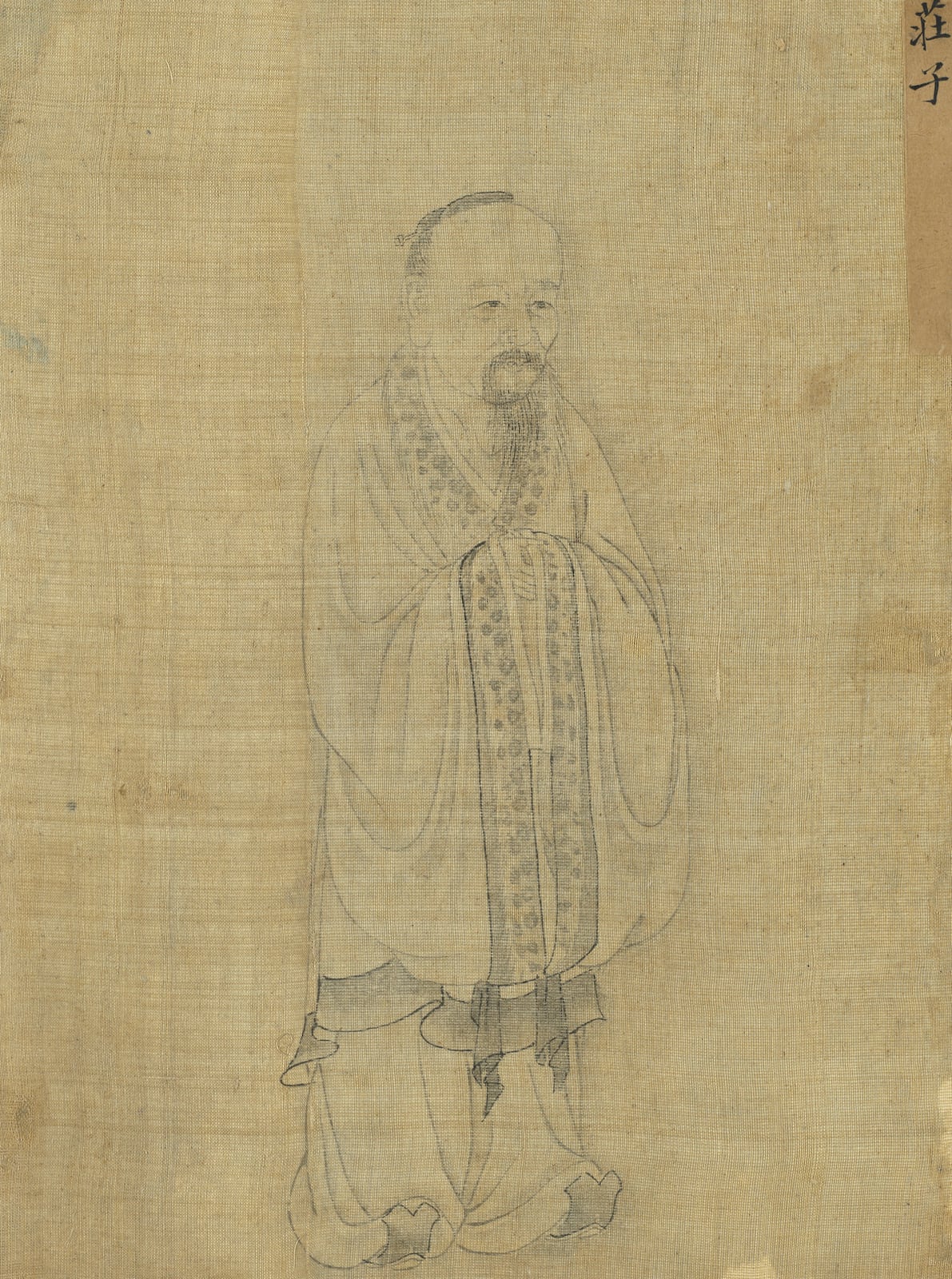
Zhuangzi en el álbum de retratos de soberanos sabios y ministros virtuosos · Public domain
In their words
«The universe and I came into being together; and I, and everything therein, are One.»Zhuangzi, cap. 2 «Qiwu lun» (trad. inglesa de Giles, 1889; la española es propia, del chino)

Their central idea
Free and easy wandering (xiaoyao you): Title of the first chapter and emblem of the whole book.
See in context
Biography
5 min read
A man behind a book
Of Zhuang Zhou, whom tradition calls Zhuangzi, "Master Zhuang", ancient historiography preserves a single paragraph. Sima Qian wrote it around 94 BCE, in chapter 63 of his Records of the Grand Historian, and in a few lines it says what matters: that he came from Meng, in the small state of Song; that he served as an official of the local "lacquer garden"; that he lived in the time of King Hui of Liang and King Xuan of Qi, that is, in the second half of the 4th century BCE. The dates usually given, around 369–286 BCE, are a modern reconstruction from those synchronisms and appear in no ancient source.
The historian adds that he wrote "more than a hundred thousand words", mostly in the form of allegories, and that in chapters such as "The Old Fisherman", "Robber Zhi" and "Rifling Trunks" he mocked the followers of Confucius in order to exalt the teachings of Laozi. He closes the notice with an anecdote: King Wei of Chu offered him the post of chief minister and he refused it, comparing himself to the sacrificial ox, fattened and adorned for years only to be slaughtered. The irony is that the three chapters Sima Qian cites as his are, for modern scholarship, among the latest in the book.
A book of many hands
The Zhuangzi we read is not the one Sima Qian knew. The catalogue of the Han imperial library records a version in fifty-two chapters; around the year 300 CE the commentator Guo Xiang cut it to thirty-three, removing what he considered spurious additions, and his recension is the only one to have survived complete. Guo Xiang also fixed the division into three blocks: seven inner chapters, fifteen outer and eleven miscellaneous. In 742 Emperor Xuanzong of the Tang granted Zhuang Zhou the title "True Man of Nanhua", and the book came to be called the True Classic of Nanhua.
Twentieth-century philology confirmed what ancient commentators had already sensed. A. C. Graham distinguished several voices in the whole: the inner chapters, attributable to Zhuang Zhou; those of his immediate followers; a "Primitivist" group that exalts life before civilisation; a "Yangist" group centred on preserving one's own life; and a "Syncretist" layer of Han date, to which the final chapter, "Under Heaven", belongs, with its first survey of the Chinese schools. Liu Xiaogan argued on linguistic grounds for the greater antiquity of the inner core, and Esther Klein has pointed out that there is no evidence that this core circulated as a block before the Han. Prudence therefore requires us to speak of the thought of the inner chapters rather than of the doctrine of an individual.
The portrait drawn by the disciples
The anecdotes that made the character famous come almost entirely from the outer and miscellaneous chapters: the poor Zhuangzi who appears before a king in patched clothes and shoes tied with string, and replies that this is poverty, not misery; the one who fishes in the river Pu and dismisses the envoys of Chu by saying he would rather drag his tail in the mud like a living tortoise; the one who sings, drumming on a bowl, after his wife's death; the one who, about to die, refuses a lavish burial because heaven and earth are coffin enough. They are school narratives, composed to illustrate an attitude; their biographical value is uncertain, but their value as a portrait of the ideal is immense.
Among these scenes his friendship with Hui Shi, or Huizi, stands out: a logician of the School of Names and a minister in the kingdom of Wei. On the bridge over the river Hao they argue whether one can know the joy of fish; they argue about a useless tree and an oversized gourd; and when Huizi has died, Zhuangzi stops at his grave and tells the story of the mason of Ying, who could only exercise his skill with a partner who did not flinch: since his interlocutor died, he says, he has no one left to talk to. The book's final chapter lists Huizi's paradoxes, which confirms that he was a historical figure.
What the inner chapters teach
The first chapter opens with an immense fish, Kun, which turns into the bird Peng and flies to the southern ocean, while a cicada and a dove laugh at so much effort. From the first page the book plays with scale and relativises points of view. The second, "On the Equality of Things", is its densest philosophical piece: each school affirms "this is so" and denies what the other affirms, but "this" and "that" depend on where one speaks from; the sage takes no side but stands at the "pivot of the Way", from which oppositions are illuminated without being cancelled. The chapter ends with the butterfly dream.
The following chapters carry that intuition into practical life. Cook Ding carves an ox without dulling his blade in nineteen years because he follows the animal's natural interstices; Confucius teaches his disciple Yan Hui the "fasting of the heart", which empties the mind so that the Way can lodge in it; mutilated men, hunchbacks and punished criminals parade whose inner fullness disarms the powerful; the "true man" of antiquity is described, who neither loved life nor hated death, as is the practice of "sitting and forgetting". The last inner chapter ends with the death of Hundun, Chaos, whose friends bore seven openings in him so that he will look like everyone else.
An immense posterity
The book's influence is already visible in the Huainanzi in the 2nd century BCE. It was central to the "Learning of the Mysterious" in the 3rd and 4th centuries, lent vocabulary to the first translators of Buddhism and nourished the sensibility of Chan, later Zen. Poets such as Tao Yuanming, Li Bai and Su Shi read it as a classic of inner freedom, and the Daoist religion incorporated it into its canon.
In the West, Herbert Giles's 1889 translation earned an enthusiastic review from Oscar Wilde, who saw in the Chinese sage a relentless critic of philanthropy and government; James Legge published it in 1891 in the Sacred Books of the East, Martin Buber rendered it into German in 1910 and Léon Wieger into French in 1913. Thomas Merton rewrote it in 1965 in free versions, and Borges made the butterfly dream one of the central images of his literature. In Spanish it was translated by the Jesuit Carmelo Elorduy in 1967 and by Iñaki Preciado, who in 1996 published the complete version of all thirty-three chapters; the inner chapters also have the version of Pilar González España and Jean Claude Pastor-Ferrer.
Sources: Sima Qian. Shiji (Memorias históricas), juan 63, «Laozi Han Fei liezhuan», noticia sobre Zhuang Zhou. c. 94 a. C. Ed. Zhonghua shuju, Pekín, 1959. · Graham, A. C. (trad.). Chuang-tzŭ: The Seven Inner Chapters and Other Writings from the Book Chuang-tzŭ. Londres: George Allen & Unwin, 1981 (reimpr. Hackett, 2001, como Chuang-tzu: The Inner Chapters). ISBN 9780042990101. · Watson, Burton (trad.). The Complete Works of Zhuangzi. Nueva York: Columbia University Press, 2013 (1.ª ed. The Complete Works of Chuang Tzu, 1968). ISBN 9780231164740. · Ziporyn, Brook (trad.). Zhuangzi: The Essential Writings, with Selections from Traditional Commentaries. Indianápolis: Hackett, 2009. ISBN 9780872209114. · Roth, Harold D. «Chuang tzu 莊子». En Michael Loewe (ed.), Early Chinese Texts: A Bibliographical Guide. Berkeley: Society for the Study of Early China / Institute of East Asian Studies, 1993, pp. 56–66.
Timeline
A life, year by year
Each point is a documented event. Click to read it, with its source and degree of certainty.
c. 369 BCEMeng, estado de Song
Birth (conventional date)
Modern date inferred from the Shiji's synchronisms, which make him a contemporary of King Hui of Liang and King Xuan of Qi. No ancient source gives the year. Years BCE are expressed as negative numbers.
TraditionSima Qian. Shiji (Memorias históricas), juan 63, «Laozi Han Fei liezhuan», noticia sobre Zhuang Zhou. c. 94 a. C. Ed. Zhonghua shuju, Pekín, 1959.
After their death
- c. 139 BCEInfluence on the Huainanzi
- c. 94 BCESima Qian writes his notice
- c. 111The Han catalogue records 52 chapters
- c. 300Guo Xiang's 33-chapter recension
- 742Title of "True Man of Nanhua"
- 1889First complete English translation
- 1891Legge in the Sacred Books of the East
- 1910Martin Buber translates Zhuangzi
- 1965Thomas Merton's The Way of Chuang Tzu
c. 369 BCE
Birth (conventional date)
Modern date inferred from the Shiji's synchronisms, which make him a contemporary of King Hui of Liang and King Xuan of Qi. No ancient source gives the year. Years BCE are expressed as negative numbers.
Tradition
c. 340 BCE
Official of the lacquer garden
According to Sima Qian, Zhuang Zhou held a minor post as official of the "lacquer garden" (qiyuan) of Meng. When and for how long is unknown; the date is merely indicative.
Probable
c. 335 BCE
Refuses to become minister of Chu
The Shiji relates that King Wei of Chu (r. c. 339–329 BCE) offered him wealth and the post of chief minister, and that he refused with the parable of the sacrificial ox. Chapter 17 of the Zhuangzi gives another version, that of the sacred tortoise that would rather drag its tail in the mud.
Tradition
c. 310 BCE
Death of his friend Huizi
Hui Shi, logician and minister to King Hui of Wei, was his favourite interlocutor. Chapter 24 relates Zhuangzi's visit to his grave and the parable of the mason of Ying. The date of Hui Shi's death is approximate.
Tradition
c. 286 BCE
Death (conventional date)
Approximate modern date; Wikidata records -288. Chapter 32 of the Zhuangzi relates that, close to death, he refused a lavish burial; it is a school narrative, not a testimony.
Tradition
c. 139 BCE
Influence on the Huainanzi
Liu An presents the Huainanzi at the Han court, which incorporates ideas and passages parallel to the Zhuangzi: the first extensive literary reception of the work.
Documented
c. 94 BCE
Sima Qian writes his notice
In chapter 63 of the Shiji, Sima Qian devotes to Zhuang Zhou the only ancient biographical note that survives.
Documented
c. 111
The Han catalogue records 52 chapters
The "Yiwen zhi" of the Hanshu, based on the catalogue of Liu Xiang and Liu Xin, records a Zhuangzi in 52 chapters (pian).
Documented
c. 300
Guo Xiang's 33-chapter recension
Guo Xiang (c. 252–312) reduces the text to 33 chapters, divides it into inner, outer and miscellaneous and writes a commentary. Every surviving complete copy derives from his edition.
Documented
742
Title of "True Man of Nanhua"
Emperor Xuanzong of the Tang grants Zhuang Zhou the title Nanhua zhenren and elevates the book to Nanhua zhenjing, "True Classic of Nanhua".
Documented
1889
First complete English translation
Herbert A. Giles publishes Chuang Tzŭ: Mystic, Moralist, and Social Reformer (Quaritch). Oscar Wilde reviews it in The Speaker in February 1890.
Documented
1891
Legge in the Sacred Books of the East
James Legge includes the complete Zhuangzi in The Texts of Taoism (SBE XXXIX–XL).
Documented
1910
Martin Buber translates Zhuangzi
Buber publishes Reden und Gleichnisse des Tschuang-Tse with Insel, a selection that spreads the book in the German-speaking world.
Documented
1965
Thomas Merton's The Way of Chuang Tzu
The Trappist monk publishes free versions of passages from the Zhuangzi, bringing the book to Christian and contemplative readers.
Documented
Works
Essential works
The works without which their legacy cannot be understood.
Later compilation · c. 250 BCE
Zhuangzi (Chuang Tzu). The True Classic of Nanhua
莊子 (南華真經)
One of the two founding classics of Daoism and one of the summits of Chinese prose. In some sixty-five thousand characters it alternates fables, dialogues, aphorisms and paradoxical arguments with a humour rare in ancient literature. Its protagonists are giant birds, craftsmen, cripples, bandits, a Confucius sometimes mocked and sometimes turned into a Daoist mouthpiece, and Zhuangzi himself arguing with his friend Huizi. Its central teaching is that points of view are relative, that life and death are part of a ceaseless transformation and that freedom lies in wandering unfettered in harmony with the Way.
18 editions
Zhuangzi
Zhuangzi, ch. 1: "Free and Easy Wandering" (Xiaoyao you)
Traditional attribution · c. 300 BCE
Zhuangzi, ch. 1: "Free and Easy Wandering" (Xiaoyao you)
《莊子·逍遙遊》
It opens with the fish Kun turning into the bird Peng and flying to the southern ocean while the cicada and dove mock its effort. It plays with scales of size and time to relativise viewpoints, presents the perfect man "without self", Xu You refusing the empire, and ends with the dialogues with Huizi on the giant gourd and the useless tree.
3 editions
Zhuangzi
Zhuangzi, ch. 2: "Discussion on Making All Things Equal" (Qiwu lun)
Traditional attribution · c. 300 BCE
Zhuangzi, ch. 2: "Discussion on Making All Things Equal" (Qiwu lun)
《莊子·齊物論》
The densest philosophical chapter of the book. Ziqi of Nanguo has "lost himself" and hears the piping of heaven; the schools entangle themselves in asserting "this is" and "this is not"; the sage settles at the pivot of the Way and lets things take their course. It contains the fable of the monkeys and "three in the morning", the dialogue of penumbra and shadow, and the butterfly dream.
3 editions
Complete works (34)
Zhuangzi
Zhuangzi, ch. 3: "The Secret of Caring for Life" (Yangsheng zhu)
The Conscious LibraryZhuangzi, ch. 3: "The Secret of Caring for Life" (Yangsheng zhu)
300
Zhuangzi
Zhuangzi, ch. 4: "In the World of Men" (Renjian shi)
The Conscious LibraryZhuangzi, ch. 4: "In the World of Men" (Renjian shi)
300
Zhuangzi
Zhuangzi, ch. 5: "The Sign of Virtue Complete" (Dechong fu)
The Conscious LibraryZhuangzi, ch. 5: "The Sign of Virtue Complete" (Dechong fu)
300
Zhuangzi
Zhuangzi, ch. 6: "The Great and Venerable Teacher" (Da zongshi)
The Conscious LibraryZhuangzi, ch. 6: "The Great and Venerable Teacher" (Da zongshi)
300
Zhuangzi
Zhuangzi, ch. 7: "Fit for Emperors and Kings" (Ying diwang)
The Conscious LibraryZhuangzi, ch. 7: "Fit for Emperors and Kings" (Ying diwang)
300
Zhuangzi
Zhuangzi, ch. 8: "Webbed Toes" (Pianmu)
The Conscious LibraryZhuangzi, ch. 8: "Webbed Toes" (Pianmu)
200
Zhuangzi
Zhuangzi, ch. 9: "Horses' Hoofs" (Mati)
The Conscious LibraryZhuangzi, ch. 9: "Horses' Hoofs" (Mati)
200
Zhuangzi
Zhuangzi, ch. 10: "Rifling Trunks" (Quqie)
The Conscious LibraryZhuangzi, ch. 10: "Rifling Trunks" (Quqie)
200
Zhuangzi
Zhuangzi, ch. 11: "Let It Be, Leave It Alone" (Zaiyou)
The Conscious LibraryZhuangzi, ch. 11: "Let It Be, Leave It Alone" (Zaiyou)
200
Zhuangzi
Zhuangzi, ch. 12: "Heaven and Earth" (Tiandi)
The Conscious LibraryZhuangzi, ch. 12: "Heaven and Earth" (Tiandi)
200
Zhuangzi
Zhuangzi, ch. 13: "The Way of Heaven" (Tiandao)
The Conscious LibraryZhuangzi, ch. 13: "The Way of Heaven" (Tiandao)
200
Zhuangzi
Zhuangzi, ch. 14: "The Turning of Heaven" (Tianyun)
The Conscious LibraryZhuangzi, ch. 14: "The Turning of Heaven" (Tianyun)
200
Zhuangzi
Zhuangzi, ch. 15: "Constrained in Will" (Keyi)
The Conscious LibraryZhuangzi, ch. 15: "Constrained in Will" (Keyi)
200
Zhuangzi
Zhuangzi, ch. 16: "Mending the Inborn Nature" (Shanxing)
The Conscious LibraryZhuangzi, ch. 16: "Mending the Inborn Nature" (Shanxing)
200
Zhuangzi
Zhuangzi, ch. 17: "Autumn Floods" (Qiushui)
The Conscious LibraryZhuangzi, ch. 17: "Autumn Floods" (Qiushui)
200
Zhuangzi
Zhuangzi, ch. 18: "Supreme Happiness" (Zhile)
The Conscious LibraryZhuangzi, ch. 18: "Supreme Happiness" (Zhile)
200
Zhuangzi
Zhuangzi, ch. 19: "Mastering Life" (Dasheng)
The Conscious LibraryZhuangzi, ch. 19: "Mastering Life" (Dasheng)
200
Zhuangzi
Zhuangzi, ch. 20: "The Mountain Tree" (Shanmu)
The Conscious LibraryZhuangzi, ch. 20: "The Mountain Tree" (Shanmu)
200
Zhuangzi
Zhuangzi, ch. 21: "Tian Zifang" (Tian Zifang)
The Conscious LibraryZhuangzi, ch. 21: "Tian Zifang" (Tian Zifang)
200
Zhuangzi
Zhuangzi, ch. 22: "Knowledge Wandered North" (Zhi beiyou)
The Conscious LibraryZhuangzi, ch. 22: "Knowledge Wandered North" (Zhi beiyou)
200
Zhuangzi
Zhuangzi, ch. 23: "Gengsang Chu" (Gengsang Chu)
The Conscious LibraryZhuangzi, ch. 23: "Gengsang Chu" (Gengsang Chu)
200
Zhuangzi
Zhuangzi, ch. 24: "Xu Wugui" (Xu Wugui)
The Conscious LibraryZhuangzi, ch. 24: "Xu Wugui" (Xu Wugui)
200
Zhuangzi
Zhuangzi, ch. 25: "Zeyang" (Zeyang)
The Conscious LibraryZhuangzi, ch. 25: "Zeyang" (Zeyang)
200
Zhuangzi
Zhuangzi, ch. 26: "External Things" (Waiwu)
The Conscious LibraryZhuangzi, ch. 26: "External Things" (Waiwu)
200
Quotations
Quotations located in a specific work. Each carries its provenance and its level of confidence.
The universe and I came into being together; and I, and everything therein, are One.天地與我並生,而萬物與我為一。
VerifiedZhuangzi, cap. 2 «Qiwu lun» (trad. inglesa de Giles, 1889; la española es propia, del chino)
Apocryphal quotes or disputed attributions (2)
«"Flow with whatever may happen and let your mind be free: stay centred by accepting whatever you are doing. This is the ultimate."»
It circulates online as a literal quotation from Zhuangzi. It is a free modern paraphrase of a sentence in chapter 4 (乘物以遊心,託不得已以養中,至矣: "let your mind wander by riding on things, entrust yourself to the unavoidable to nourish your centre: that is the highest"), part of Confucius's counsel to the Duke of She. It matches no recognisable published translation.
«"Happiness is the absence of the striving for happiness."»
A self-help line attributed to Zhuangzi. It distantly echoes chapter 18 (an outer chapter, not his work), which says 至樂無樂, "supreme happiness is having no happiness" or "not seeking it"; the popular wording is not a translation.
Last words
Traditional attribution
«"With Heaven and Earth for my coffin and shell; with the sun, moon, and stars as my burial regalia; and with all creation to escort me to the grave,—are not my funeral paraphernalia ready to hand?" […] "Above ground I shall be food for kites; below I shall be food for mole-crickets and ants. Why rob one to feed the other?"»吾以天地為棺槨,以日月為連璧,星辰為珠璣,萬物為齎送。吾葬具豈不備邪?何以加此!……在上為烏鳶食,在下為螻蟻食,奪彼與此,何其偏也!
Scene from chapter 32, "Lie Yukou", one of the miscellaneous chapters written by the later school: the disciples want to give him a lavish burial and he refuses; when they fear crows will devour his body, he answers with the second sentence. It is not an eyewitness account but an exemplary tale; no other ancient source describes his death. The English is Giles's (1889); the Spanish is our own, from the Chinese.
Source: Giles, Herbert A. (trad.). Chuang Tzŭ: Mystic, Moralist, and Social Reformer. Londres: Bernard Quaritch, 1889. Texto íntegro en Wikisource (por capítulos) y en Project Gutenberg n.º 59709.
Ask
What their work answers
Twelve great human questions and what their texts allow us to answer, with references. We never put words in their mouth.
What is the Absolute? Does God exist?
The Dao has reality but no form: it can be pointed to, not defined
The unnameableStated explicitly
In the inner chapters, the only ones scholars attribute with good grounds to Zhuang Zhou, the Dao is not a personal god. Chapter 6, «The Great and Venerable Teacher», describes it as something that has reality and signs but lacks action and form; it can be transmitted but not possessed, and it precedes heaven and earth. Chapter 2 asks whether there is a «true lord» governing body and mind, and concludes that, although it seems to act, no trace of it can be found. When the book speaks of the «Maker of things», it does so as an image of the process of transformation, not of a being that wills or judges. The ultimate can be pointed to, but every definition fixes it in one point of view; hence the text prefers parable, paradox and irony to concepts.
Compare this question with other teachersWho am I? Is there a true self?
«I have lost myself»: the perfect man has no self and transforms with things
There is no permanent selfStated explicitly
The inner chapters of the Zhuangzi return again and again to the dissolution of the self. Chapter 1 states that the perfect man has no self. Chapter 2 opens with Nanguo Ziqi who, seated like a withered tree, declares that he has lost himself, and closes with the butterfly dream, where Zhou no longer knows whether he is a man who dreamt of being a butterfly or a butterfly dreaming of being a man; the passage from one to the other is called the transformation of things. In chapter 6, Yan Hui attains sitting and forgetting: he lets go of body and knowledge and joins the great thoroughfare. The self here is not a substance but a provisional form in the course of change; clinging to it, and to its judgements of this and not-this, is what binds.
Compare this question with other teachersWhy do we suffer?
We suffer by resisting transformation: accepting it unties the bond
Craving and attachmentStated explicitly
In the inner chapters, suffering arises above all from resisting the course of things. In chapter 3, at Lao Dan's death, Qin Shi reproaches those who weep without measure for fleeing from heaven: the master came when it was his time and left following the order; whoever accepts the moment and settles into the order lets neither grief nor joy enter. The ancients called this being untied by the Lord. Chapter 6 repeats the idea with the four friends who receive illness and death as transformations. To this resistance are added the disputes of chapter 2: attachment to a point of view, to what each calls «this» and «not this», shuts one into a perspective and sets people against one another.
Compare this question with other teachersWhat happens after death?
What comes is unknown, but death is another transformation to welcome
Silence or reserveStated explicitly
The inner chapters treat death with a serenity that does not depend on knowing what comes afterwards. In chapter 2, the story of Lady Li, who wept on being taken to the palace and later regretted her tears, serves to ask how one knows that the dead do not regret having clung to life. In chapter 6, the Great Clod burdens us with a form, wearies us with life, eases us with old age and rests us with death; therefore what makes life good will make death good. When Zilai lies dying, his friend wonders whether the Creator will turn him into a rat's liver or an insect's leg. Zhuangzi neither affirms personal survival nor denies it: he accepts transformation and laughs at those who weep.
Compare this question with other teachersHow is liberation or salvation attained?
Fast the heart, sit and forget: wander freely in step with the Dao
Through virtue and harmonyStated explicitly
The inner chapters speak not of salvation but of free and easy wandering, the title of chapter 1. That state is reached by emptying oneself, not by accumulating. In chapter 4, Confucius teaches Yan Hui the fasting of the heart: listening not with the ears but with the heart, and not with the heart but with the breath, which is empty and receives things. In chapter 6, Yan Hui forgets benevolence, righteousness, rites and music, and at last sits and forgets until he joins the great thoroughfare. In chapter 3, Cook Ding carves the ox without blunting his knife because he follows the natural joints. To be freed is to keep pace with the course of things with the spontaneity of one who has stopped forcing them.
Compare this question with other teachersIs a teacher necessary?
Teachers guide, but the great teacher is the Dao, and disciples may surpass them
Helpful but not indispensableInferred from their doctrine
The inner chapters are full of teachers, but none is untouchable. In chapter 4, Confucius, turned into a Daoist spokesman, guides Yan Hui towards the fasting of the heart; in chapter 6, the same Yan Hui attains sitting and forgetting, and Confucius asks to be allowed to follow him. Tradition thus appears inverted: the disciple can go further than the master. The title of chapter 6, «The Great and Venerable Teacher», ultimately refers to the Dao itself. And chapter 2 warns against the most insidious teacher: the already formed heart, that of one's own prejudices, which each person takes as guide. Teachers help one to empty oneself, but the work of forgetting belongs to each and no one can do it for another.
Compare this question with other teachersIs the world real?
Everything ceaselessly transforms; the ten thousand beings are one with me
Natural order in transformationStated explicitly
For the inner chapters, the real is the ceaseless course of transformation. Chapter 2 holds that distinctions between this and that depend on point of view; seen from the pivot of the Dao, things are equalised, and heaven and earth were born together with me, and the ten thousand beings are one with me. The same chapter ends with the butterfly dream: between Zhou and the butterfly there must be some difference, and this is called the transformation of things. The world is not an illusion: differences exist, but they are not fixed. Chapter 6 shows its characters receiving illness and death as stages of that same process. Wisdom consists in keeping pace with it, not in halting it.
Compare this question with other teachersWhat is love?
Great benevolence is not benevolent: better to forget each other in rivers and lakes
What appears when the self ceasesStated explicitly
Zhuangzi distrusts love turned into a virtue to be cultivated and displayed, the benevolence (ren) of the Confucians. In chapter 2 he states that great benevolence is not benevolent: affection that proclaims itself has already lost something. In chapter 6 he offers a memorable image: when the spring dries up, the fish are left on land and moisten one another with their breath and spittle, but it would be better to forget one another in the rivers and lakes. The same chapter tells how four men become friends on discovering that they share the acceptance of life and death: they look at one another, smile, and there is no disagreement in their hearts. True bonding neither strains nor claims; it appears when no one turns it into a merit of their own.
Compare this question with other teachersAre we free, or is everything determined?
Accepting what cannot be changed as fate is the height of virtue
Destiny and responsibilityStated explicitly
The inner chapters often speak of destiny (ming). In chapter 4, Confucius advises an anxious envoy that knowing what cannot be helped and accepting it calmly as destiny is the height of virtue. In chapter 6, Zisang, sick and poor, searches for who has brought him to that state and finds no one, neither his parents, nor heaven, nor earth: «it is destiny», he concludes. But this acceptance is not passivity. In the same chapters, freedom appears as unfettered wandering within what is given: Cook Ding moves with ease between the ox's joints, and the sage uses his mind like a mirror that responds without retaining. Responsibility consists in not adding resistance to the inevitable.
Compare this question with other teachersWhy meditate or pray?
Fast the heart and forget: empty oneself, not accumulate techniques
Meditation is not a techniqueStated explicitly
The inner chapters describe two states that later tradition would turn into methods but which in the text are rather ways of emptying oneself. In chapter 4, Yan Hui proposes to Confucius a series of strategies to reform a cruel ruler; Confucius rejects them all and teaches him the fasting of the heart: listening not with the ears but with the heart, and not with the heart but with the breath, which is empty and receives things. In chapter 6, Yan Hui forgets benevolence, righteousness, rites and music, and at last sits and forgets: he lets go of body and knowledge and joins the great thoroughfare. What is practised is unlearning. The sage uses the mind like a mirror, which responds and does not retain.
Compare this question with other teachersCan reason know the ultimate?
Pursuing the limitless with the limited is perilous; all knowing is perspective
Thought is limitedStated explicitly
The inner chapters are a sustained critique of the pretension to know. Chapter 3 opens by warning that life has a limit and knowledge does not, and that pursuing the limitless with the limited is perilous. Chapter 2 shows that the disputes between Confucians and Mohists depend on point of view: each affirms what the other denies, and there is no neutral arbiter. When Nie Que asks Wang Ni whether he knows what all agree on, Wang Ni answers with questions: how can I know that what I call knowing is not ignorance? But Zhuangzi does not scorn all knowledge: Cook Ding and other craftsmen possess a know-how that does not fit into words. What reasoning does not reach is reached in skill and ease.
Compare this question with other teachersWithdraw from the world or transform it?
Roam the world of men without being harmed: the usefulness of the useless
Contemplation in actionStated explicitly
The inner chapters propose neither fleeing the world nor reforming it. Chapter 4, «In the World of Men», deals precisely with how to live among dangerous rulers: Confucius dissuades Yan Hui from going to correct the lord of Wei with principles, and teaches him the fasting of the heart so as to enter his cage without being moved by renown. The same chapter ends with the song of the madman of Chu: all know the usefulness of the useful and none that of the useless; the tree that is no good for timber lives to old age. Chapter 1 tells how Xu You refused the empire Yao offered him. The sage neither retires to a monastery nor seeks office: he lives among others with the ease of Cook Ding.
Compare this question with other teachers
Affinities & tensions
Affinities and tensions
Calculated question by question from their positions. The reason for each agreement or clash, on click.
Thinks most like
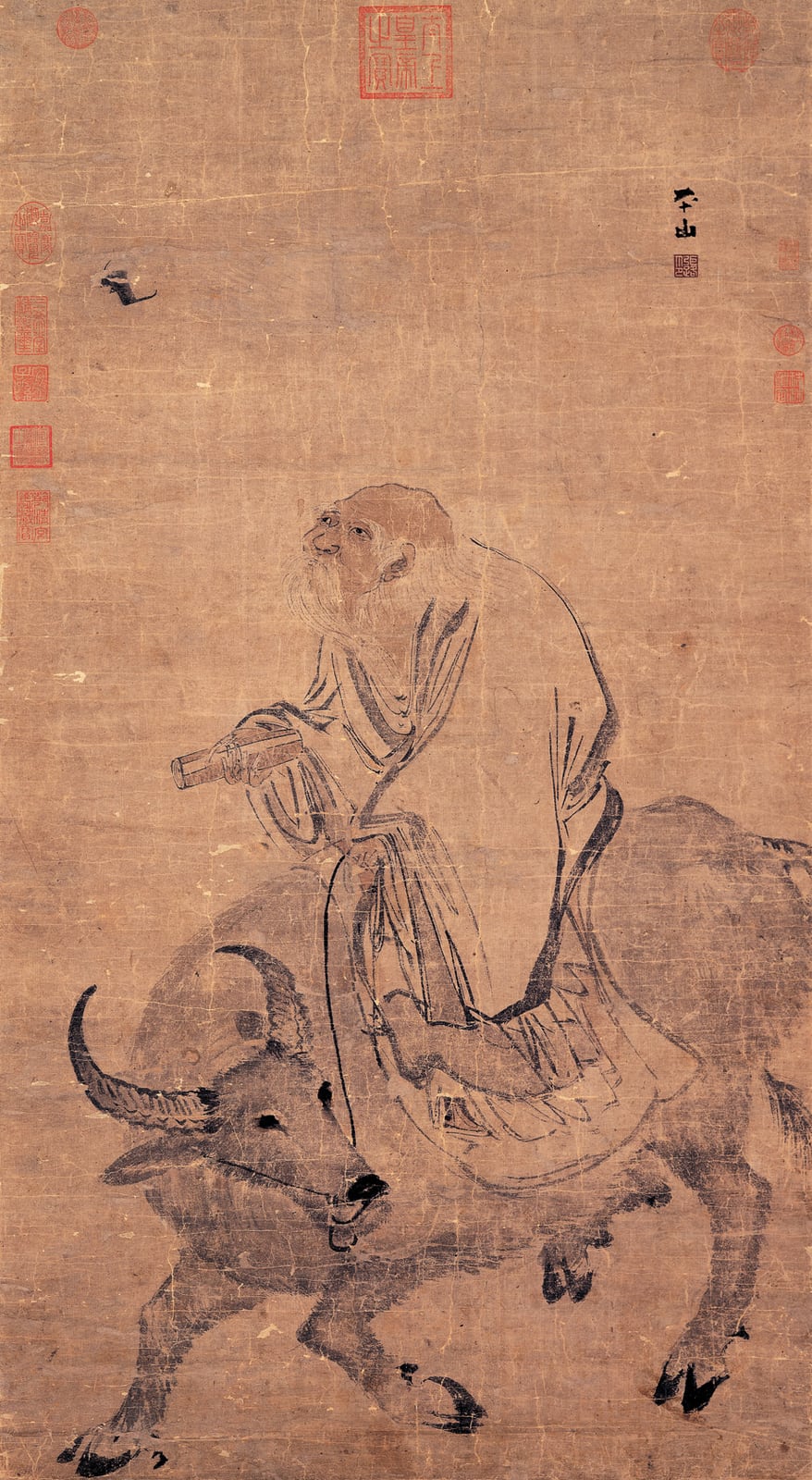
Laozi
They agree on: What is the Absolute? Does God exist? · What happens after death? · How is liberation or salvation attained?
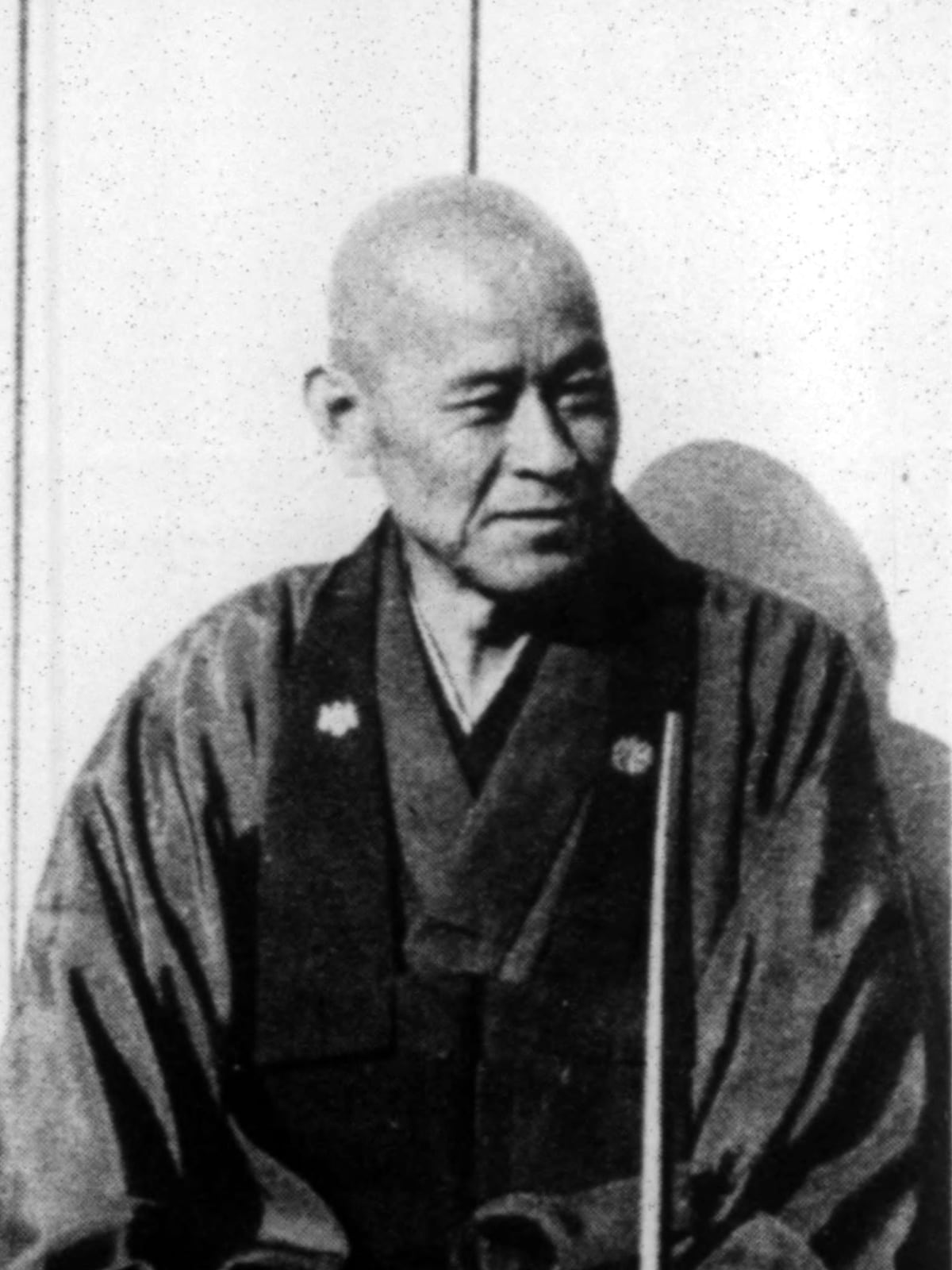
Shunryu Suzuki
They agree on: What is the Absolute? Does God exist? · Who am I? Is there a true self? · Why do we suffer?
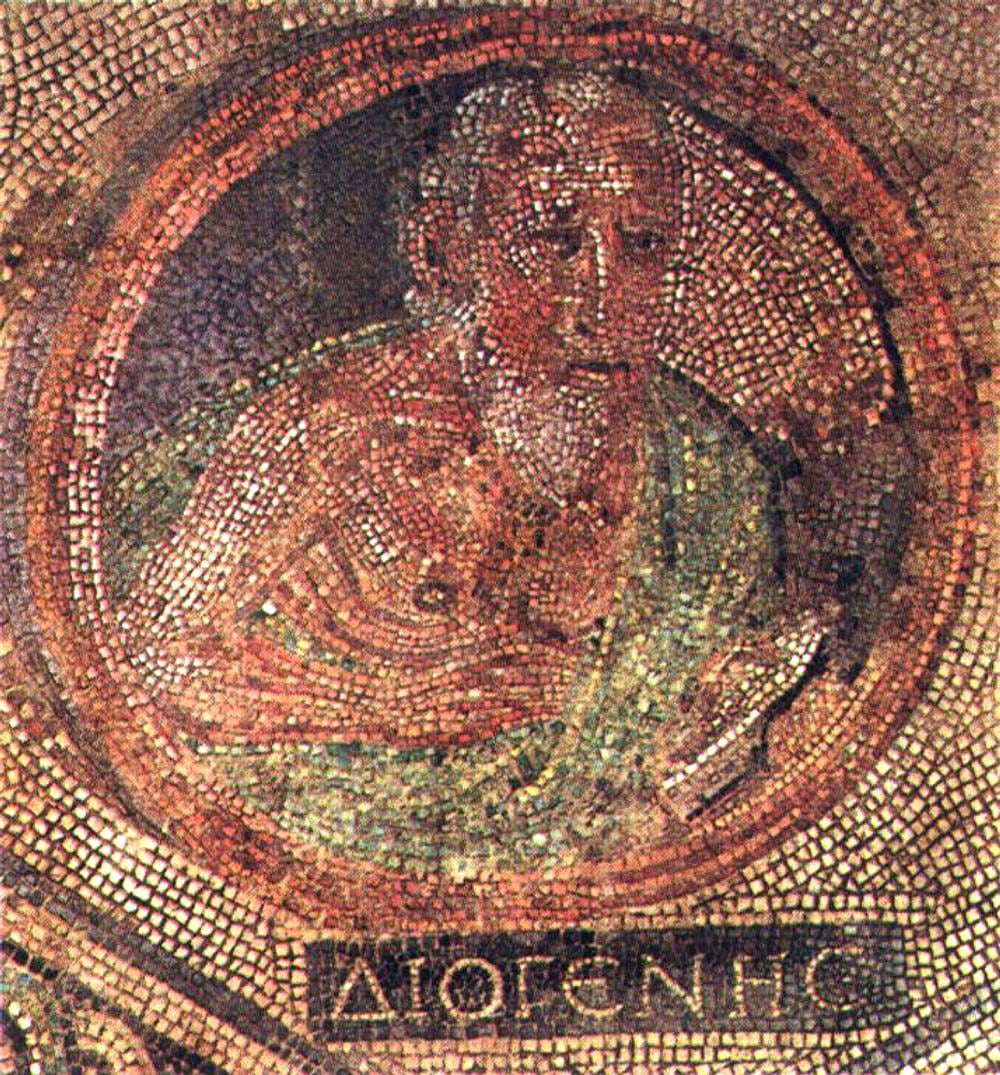
Diogenes of Sinope
They agree on: Why do we suffer? · What happens after death? · Is a teacher necessary?
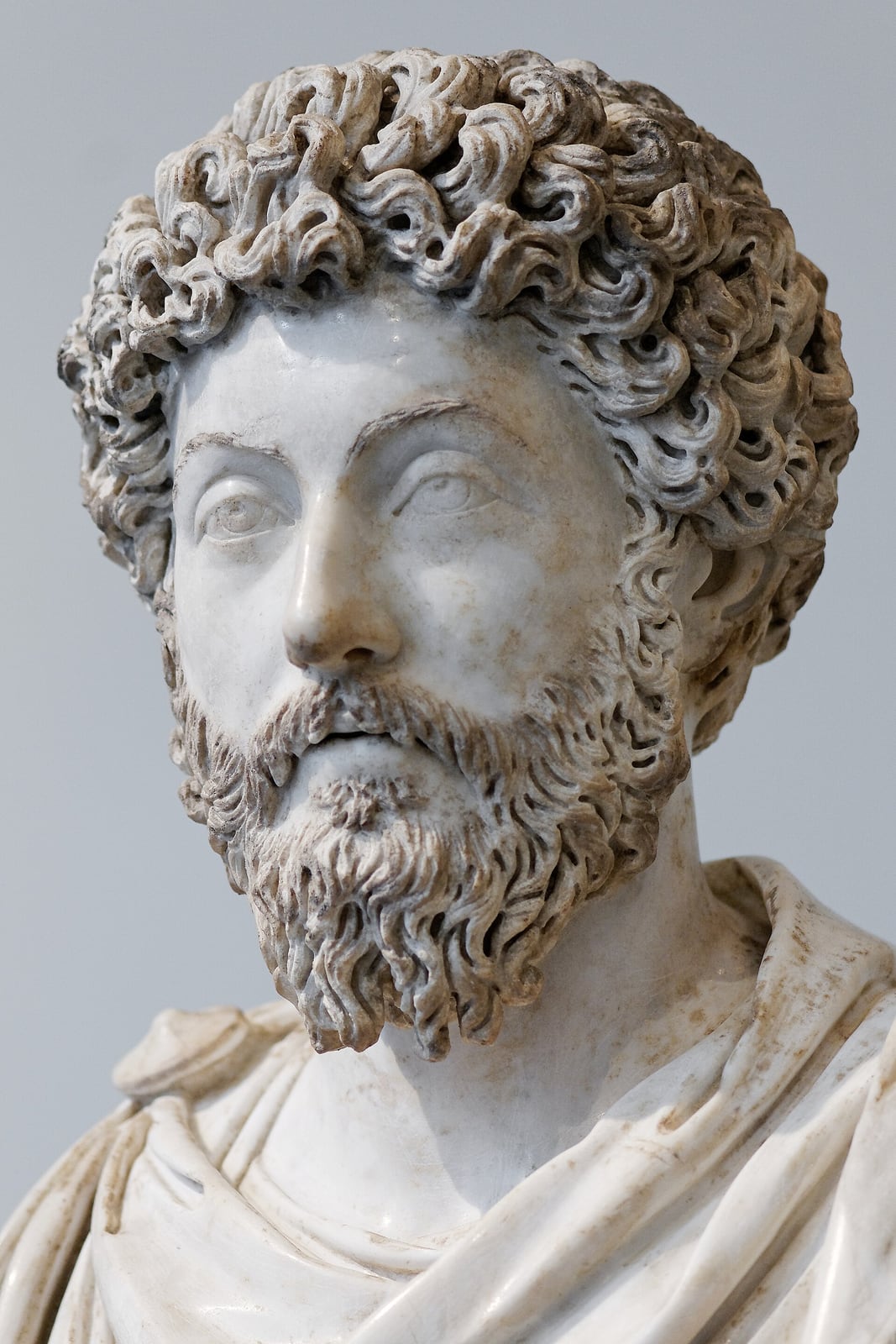
Marcus Aurelius
They agree on: What happens after death? · How is liberation or salvation attained? · Is a teacher necessary?


Anecdotes and stories
Anecdotes and stories
Oral traditions. IV a. C. (redacción)
The butterfly dream
Origin of the story: Zhuangzi, ch. 2 (inner), final passage. It is a literary first-person parable, attributable to the oldest core of the book; there is no way of knowing whether it reflects a real dream.
Oral traditions. IV a. C. (redacción)
Cook Ding and the ox
Origin of the story: Zhuangzi, ch. 3 (inner). A literary fable; the identification of Lord Wenhui with King Hui of Liang comes from the commentators.
Oral traditionc. 339–329 a. C. (según el Shiji)
The tortoise in the mud and the sacrificial ox
Origin of the story: The tortoise version is in ch. 17 (outer) and the ox version in ch. 32 (miscellaneous) and in Shiji 63, which adopts it as a biographical fact. The agreement of sources does not make it documented: Sima Qian draws on the book itself.
Oral traditions. IV a. C. (escena); s. III a. C. (redacción probable)
The joy of the fish
Origin of the story: Zhuangzi, ch. 17 (outer), last passage. A school composition; Hui Shi is a historical figure, but the dialogue is literary.
Oral traditions. IV a. C. (escena)
The bowl and his wife's death
Origin of the story: Zhuangzi, ch. 18 (outer). There is no other source on Zhuangzi's wife; the scene is exemplary and comes from the school.
Oral traditionc. 310 a. C. (escena)
At Huizi's grave: the mason of Ying
Origin of the story: Zhuangzi, ch. 24 (miscellaneous). A school narrative presupposing that Huizi died before Zhuangzi.
Oral traditions. IV a. C. (redacción)
The death of Hundun
Origin of the story: Zhuangzi, ch. 7 (inner), final passage. A literary mythological fable.
Teachings
Teachings
The notions that structure their thought, explained in context.
Free and easy wandering (xiaoyao you)xiaoyao-you
Inner chapters, above all ch. 1; taken up by the Learning of the Mysterious (Guo Xiang) as "each thing content in its own nature".
Equalising things (qiwu)qiwu
Chapter 2 (inner), in critical dialogue with Mohist logic and with Hui Shi.
The transformation of things (wuhua)wuhua
Chapters 2 and 6 (inner) and 18 (outer).
Source: Graham, A. C. (trad.). Chuang-tzŭ: The Seven Inner Chapters and Other Writings from the Book Chuang-tzŭ. Londres: George Allen & Unwin, 1981 (reimpr. Hackett, 2001, como Chuang-tzu: The Inner Chapters). ISBN 9780042990101.
Fasting of the heart (xinzhai)xinzhai
Chapter 4 (inner); a forerunner of Daoist meditative practices and of their Chan reading.
Sitting and forgetting (zuowang)zuowang
Chapter 6 (inner).
Source: Graham, A. C. (trad.). Chuang-tzŭ: The Seven Inner Chapters and Other Writings from the Book Chuang-tzŭ. Londres: George Allen & Unwin, 1981 (reimpr. Hackett, 2001, como Chuang-tzu: The Inner Chapters). ISBN 9780042990101.
The usefulness of the useless (wuyong zhi yong)wuyong-zhi-yong
Chapters 1 and 4 (inner) and 20 (outer).
Goblet words and imputed words (zhiyan, yuyan)zhiyan
Chapters 27 and 26 (miscellaneous), applied to the whole book.
Videos
Videos
Recordings, interviews and documentaries. Videos play from YouTube; they are not hosted here.
Professor Michael Puett on Zhuangzi in Relation to Confucius
Lecture· EN· 2013· 44 min
China X (HarvardX)Official channel
The Greatest Daoist Philosopher: Zhuangzi
Lecture· EN· 2021· 58 min
Bryan Van Norden
Brook Ziporyn - Losing the Self in the Philosophy of Zhuangzi
Lecture· EN· 2017· 93 min
School of History Tel Aviv UniversityOfficial channel
Finding a Way Together: Interpersonal Ethics in the Zhuāngzǐ
Lecture· EN· 2022· 106 min
4TH SPACE Concordia UniversityOfficial channel
Zhuangzi and the Tragedy of Personal Freedom in Chinese History
Lecture· EN· 2021· 102 min
Department of Classics & Religion UCalgaryOfficial channel
Zhuangzi In-Depth: Professor Edward Slingerland
Interview· EN· 2020· 55 min
George Thompson
Zhuangzi - The Sage of Uncertainty
Analysis· EN· 2020· 24 min
Let's Talk Religion
France culture - Du jour au lendemain - Notes sur Tchouang-Tseu de J.F. Billeter
Interview· FR· 2011· 34 min
EditionsAlliaOfficial channel
《逍遥游》流传两千多年 里面到底藏着哪些人生道理?《百家讲坛》 崆峒论道 2 吾心安处
Lecture· ZH· 2026· 38 min
CCTV百家讲坛官方频道Official channel
读懂庄子的《人间世》《百家讲坛》 崆峒论道 4 人间处世
Lecture· ZH· 2026· 38 min
CCTV百家讲坛官方频道Official channel
老子与庄子 | 易中天讲先秦诸子百家争鸣 第六部《继往开来》| CCTV《百家讲坛》
Lecture· ZH· 2013· 38 min
CCTV百家讲坛官方频道Official channel
Ding el cocinero Zhuang Zi
Third-party recording· ES· 2016· 3 min
Pilar Gonzalez EspañaOfficial channel
Gallery
Gallery
Images with verified licences. Each keeps its authorship and attribution.
Manuscripts
Manuscripts
Manuscript witnesses and ancient texts, with their custodian and conditions of access.
ZH · Caracteres chinos (escritura regular) · Copias de época Tang (ss. VII–VIII)
莊子 (fragmentos de Dunhuang)
- Surviving witness
- Fragmentos manuscritos que cubren aproximadamente doce capítulos de la edición de Guo Xiang
- Custodian
- British Library (Londres) y Bibliothèque nationale de France (París), entre otras colecciones
ZH · Caracteres chinos · Periodo Muromachi según la fuente consultada (datación pendiente de confirmar)
莊子 (高山寺本)
- Surviving witness
- Manuscrito con siete secciones completas de los capítulos exteriores y misceláneos, emparentado con la edición comentada de Cheng Xuanying (s. VII)
- Custodian
- Kōzan-ji (Kioto)
ZH · Caracteres chinos (impresión xilográfica) · Dinastía Song (s. XIII según la ficha de Commons)
莊子 (edición Song, 宋刊本)
- Surviving witness
- Edición impresa; la imagen conocida reproduce el comienzo del capítulo 19, «Dasheng»
- Custodian
- Seikadō Bunko (Tokio)
- Digitisation
- commons.wikimedia.org/wiki/File:Zhuangzi_Song_Ed…
Connections
Connections
Influences, discipleships and affinities. Documented relations are distinguished from similarities identified by analysis.
Influenced by
Sima Qian states that Zhuang Zhou's doctrine "goes back in essence to the words of Laozi". In the book itself, Lao Dan appears as Confucius's teacher in several outer chapters; chapter 33 presents them as distinct currents.
Documented relation
Disagreed with
According to the Shiji, Zhuang Zhou attacked Confucius's disciples. In the book, Confucius is sometimes mocked and sometimes a mouthpiece for Daoist ideas (chs. 4 and 6).
Documented relation
Met
Hui Shi (Huizi)
Friend and dialectical adversary; protagonist of several dialogues in the book (chs. 1, 5, 17, 18, 24), and his paradoxes are listed in chapter 33. The relationship is documented only by the Zhuangzi itself.
Documented relation
Influenced
Buber published Reden und Gleichnisse des Tschuang-Tse in 1910, a translated selection with an afterword on the teaching of the Tao.
Documented relation
Influenced
Merton published The Way of Chuang Tzu in 1965, free versions based on existing translations.
Documented relation
Ideas akin to
The Zhuangzi's critique of language, praise of spontaneity and paradoxical humour are part of the Chinese background of Chan; the relation is one of affinity, not documented direct influence.
Similarity identified by analysis
Ideas akin to
Both think of reality as ceaseless transformation and distrust fixed concepts; an affinity noted by modern interpreters, not documented influence.
Similarity identified by analysis
Ideas akin to
A frequent comparison: the flux of all things and the unity of opposites. No historical contact.
Similarity identified by analysis
Ideas akin to
The refusal of power, chosen poverty and mockery of conventions bring the literary figure of Zhuangzi close to the Greek Cynic. No historical contact.
Similarity identified by analysis
Sources
Sources
Bibliography and catalogues consulted for this profile.
- Wikidata, entidad Q47739 «Zhuang Zhou» (P31=Q5; 98 enlaces entre wikis; nombre nativo 莊子; nacimiento -369, muerte -288 con precisión de año). Entidad del libro: Q1074987 «Zhuangzi».
- Sima Qian. Shiji (Memorias históricas), juan 63, «Laozi Han Fei liezhuan», noticia sobre Zhuang Zhou. c. 94 a. C. Ed. Zhonghua shuju, Pekín, 1959.
- Graham, A. C. (trad.). Chuang-tzŭ: The Seven Inner Chapters and Other Writings from the Book Chuang-tzŭ. Londres: George Allen & Unwin, 1981 (reimpr. Hackett, 2001, como Chuang-tzu: The Inner Chapters). ISBN 9780042990101.
- Watson, Burton (trad.). The Complete Works of Zhuangzi. Nueva York: Columbia University Press, 2013 (1.ª ed. The Complete Works of Chuang Tzu, 1968). ISBN 9780231164740.
- Ziporyn, Brook (trad.). Zhuangzi: The Essential Writings, with Selections from Traditional Commentaries. Indianápolis: Hackett, 2009. ISBN 9780872209114.
- Hansen, Chad. «Zhuangzi». En Edward N. Zalta (ed.), The Stanford Encyclopedia of Philosophy. Publicado el 17-12-2014; revisión sustancial del 24-03-2024.
- Roth, Harold D. «Chuang tzu 莊子». En Michael Loewe (ed.), Early Chinese Texts: A Bibliographical Guide. Berkeley: Society for the Study of Early China / Institute of East Asian Studies, 1993, pp. 56–66.
- Liu Xiaogan. Classifying the Zhuangzi Chapters. Trad. de William E. Savage. Ann Arbor: Center for Chinese Studies, University of Michigan, 1994 (Michigan Monographs in Chinese Studies, 65).
- Klein, Esther. «Were there "Inner Chapters" in the Warring States? A New Examination of Evidence about the Zhuangzi». T'oung Pao 96, n.º 4/5 (2010): 299–369. doi:10.1163/156853210X546825.
- Giles, Herbert A. (trad.). Chuang Tzŭ: Mystic, Moralist, and Social Reformer. Londres: Bernard Quaritch, 1889. Texto íntegro en Wikisource (por capítulos) y en Project Gutenberg n.º 59709.
- Legge, James (trad.). The Texts of Taoism, partes I–II (The Writings of Kwang-ze). Sacred Books of the East, vols. XXXIX–XL. Oxford: Clarendon Press, 1891.
- Wieger, Léon (trad.). Les Pères du système taoïste: Lao-tzeu, Lie-tzeu, Tchoang-tzeu. Hien-hien: Imprimerie de Hien-hien, 1913. «Œuvre de Tchoang-tzeu» en Wikisource francés, por capítulos y en texto completo.
- 莊子 (recensión de Guo Xiang en 33 capítulos), texto chino en Wikisource, con índice de capítulos interiores, exteriores y misceláneos.
- Wikipedia en inglés. «Zhuangzi (book)», secciones «Textual history» y «Manuscripts» (Fuyang, Zhangjiashan, Dunhuang, manuscrito del Kōzan-ji). Consultado el 25-10-2026; usado solo como orientación y contrastado con Roth (1993).
- Ban Gu. Hanshu (Libro de los Han), juan 30, «Yiwen zhi» (catálogo bibliográfico), entrada «莊子五十二篇». c. 111 d. C.
- Mair, Victor H. (trad.). Wandering on the Way: Early Taoist Tales and Parables of Chuang Tzu. Nueva York: Bantam Books, 1994. ISBN 9780553374063.
- Billeter, Jean François. Leçons sur Tchouang-tseu. París: Allia, 2002. ISBN 9782844850805.
- Buber, Martin. Reden und Gleichnisse des Tschuang-Tse. Leipzig: Insel, 1910.
- Wilde, Oscar. «A Chinese Sage» (reseña de la traducción de Giles). The Speaker, 8 de febrero de 1890.
- Merton, Thomas. The Way of Chuang Tzu. Nueva York: New Directions, 1965 (reed. 2010, ISBN 9780811218511).
- Borges, Jorge Luis; Ocampo, Silvina; Bioy Casares, Adolfo (eds.). Antología de la literatura fantástica. Buenos Aires: Sudamericana, 1940 (incluye «Sueño de Chuang Tzu», en versión de los antólogos a partir de Giles).
- Editorial Kairós. Ficha de «Zhuang Zi. Maestro Chuang Tsé», trad. de Iñaki Preciado Idoeta (col. Clásicos), ISBN 9788472453357.
- Open Library: Elorduy, Carmelo (trad.), Chuang-Tzu: literato, filósofo y místico taoísta, Manila, East Asian Pastoral Institute, 1967; y Lao Tse, Chuang Tzu, Dos grandes maestros del taoísmo, ed. de Carmelo Elorduy, Madrid, Editora Nacional, 1977 (ISBN 9788427603912).
- Editorial Trotta. Ficha de «Los capítulos interiores de Zhuang Zi», trad. de Pilar González España y Jean Claude Pastor-Ferrer (col. Pliegos de Oriente), ISBN 9788481642391.
- Rights holder
- Obra en dominio público; cada traducción moderna pertenece a su traductor o editorial
Pending confirmation
What this profile has not yet been able to settle. We would rather say so than fill it in.
- Fechas de nacimiento y muerte (c. 369–286 a. C.) convencionales: no constan en ninguna fuente antigua; Wikidata da -369 y -288.
- Sala de lectura: la traducción de James Legge (SBE XXXIX–XL, 1891) no está transcrita en Wikisource ni en Gutenberg como texto limpio separado; solo hay escaneos del volumen completo.
- Sala de lectura: no hay traducción española del Zhuangzi en dominio público localizada en línea.
- Manuscritos: confirmar con bibliografía especializada los fragmentos Han de Fuyang (Shuanggudui) y Zhangjiashan que menciona la bibliografía divulgativa, y la datación y la condición de Tesoro Nacional del manuscrito del Kōzan-ji (la fuente consultada lo sitúa en el periodo Muromachi). No se han incorporado como datos firmes.
- Clasificación de los capítulos según Graham: verificada en líneas generales (interiores, escuela de Zhuangzi 17–22, primitivista 8–11, yangista 28–31, sincretista 12–15 y 33); la adscripción del capítulo 16 queda abierta.
- Ediciones: ISBN de la traducción rusa de V. V. Maliavin y de ediciones en árabe e hindi no verificados; la edición de Elorduy de 1967 (Manila) consta en Open Library sin ISBN.
- Vídeos: no se ha localizado una conferencia universitaria en español específica sobre Zhuangzi en canal institucional; se incluye la lectura de su traductora.
- Comprobar en la colección del Museo Nacional del Palacio la datación del álbum 聖君賢臣全身像冊 (imagen principal).
Researched on 2026-10-25