Islam · Sufism
Ibn Arabi
محيي الدين ابن عربي · أبو عبد الله محمد بن علي بن محمد ابن العربي الحاتمي الطائي · الشيخ الأكبر
1165 – 1240Historically documented person
Andalusi mystic, poet and thinker (Murcia, 1165 – Damascus, 1240), called "the Greatest Master". Trained in Almohad Seville, he left al-Andalus in 1201 and travelled the Islamic East until settling in Damascus. His major works, al-Futuhat al-Makkiyya, a visionary encyclopedia of thousands of pages, and the Fusus al-hikam, on the wisdom of each prophet, founded the most influential school of speculative Sufism; the Tarjuman al-ashwaq gathers his love poetry. His thought was later summed up, not always accurately, as "oneness of being".
- works
- 30works
- editions
- 68editions
- quotes
- 5quotes
- videos
- 11videos
- images
- 7images
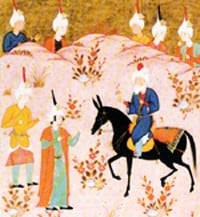
Ibn Arabi a caballo con dos discípulos (miniatura safaví) · Public domain
In their words
«My heart has become capable of every form: it is a pasture for gazelles and a convent for Christian monks, And a temple for idols and the pilgrim's Ka'ba and the tables of the Tora and the book of the Koran. I follow the religion of Love: whatever way Love's camels take, that is my religion and my faith.»Tarjuman al-ashwaq, oda XI, vv. 13–15 (trad. Nicholson, 1911, pp. 66–67). En el comentario, el autor precisa que esa religión del amor es prerrogativa de los musulmanes, por ser Muhammad el amado de Dios.

Their central idea
Oneness of being (wahdat al-wujud): The formula *wahdat al-wujud* does not appear as such in Ibn Arabi; it was coined by his interpreters and above all by his critics, among them Ibn Taymiyya, to designate his doctrine.
See in context
Biography
5 min read
A Murcian in Almohad Seville
Abu Abd Allah Muhammad ibn Ali ibn Muhammad ibn al-Arabi al-Hatimi al-Tai was born in Murcia on 17 Ramadan 560 AH, that is, 28 July 1165. His family, of Arab lineage going back to the tribe of Tayy and to the legendary generous Hatim al-Tai, served King Ibn Mardanish, the "Wolf King" who resisted the Almohads in the Andalusi Levant. When Murcia fell in 1172, his father entered the victors' service and the family settled in Seville. There the boy grew up, educated as the son of an official: Qur'an, hadith, grammar, poetry and, as he would later recall, a worldly youth of hunting and company, to which he alludes without detail.
Around 1184, at about twenty, he entered the spiritual path. In the Futuhat he ascribes his conversion to a vision in which Jesus, Moses and Muhammad appeared to him, and he calls Jesus his first master. In those years he came to know the Sufis of al-Andalus whose portraits he would leave in two books written in Mecca, the Ruh al-quds and al-Durra al-fakhira: ascetics, bakers, cobblers and an old woman of Seville, Fatima bint al-Muthanna, who played the tambourine for joy because God had given her that disciple as a son. From this period too comes the meeting, narrated by himself, with Averroes in Córdoba: the great philosopher wished to meet the adolescent said to have attained by illumination what others seek by reasoning, and the conversation, made of a "yes" and a "no", left him pale and pensive.
The years of travel in the Maghreb
Between 1193 and 1200 he alternated stays in al-Andalus with journeys to the Maghreb: Tunis, Fez, Marrakesh. In Almería, in 1199, he wrote in eleven days the Mawaqi al-nujum, a treatise on the stages of the inner path. In Córdoba he witnessed the return of the body of Averroes, who had died in Marrakesh in 1198, and noted an image that has become famous: the coffin loaded on one side of the mule and, on the other, the philosopher's books to balance the weight. In 1200 a vision in Marrakesh ordered him to set out for the East. In 1201 he left for Tunis and would never return to the peninsula.
Mecca and the beginning of an immense work
He reached Mecca in 1202, after passing through Tunis, Cairo, Hebron and Jerusalem. There he began al-Futuhat al-Makkiyya, the "Meccan Openings", which by his own account were inspired by a mysterious youth met beside the Kaaba. There too he came to know the Persian scholar Zahir ibn Rustam and his daughter Nizam, "the eye of the sun and of splendour", a young woman of great beauty, learning and piety, whom he would celebrate in the odes of the Tarjuman al-ashwaq, "The Interpreter of Desires". When years later a jurist in Aleppo suggested that those love poems were mere gallantry, Ibn Arabi wrote a verse-by-verse commentary to show that every gazelle, every desert ruin and every moving camel spoke of divine realities.
A traveller through the Seljuq and Ayyubid East
From 1204 his life was a continuous journey: Mosul, where he received the initiatory mantle from a disciple of al-Khidr; Konya, Malatya and Sivas, at the Seljuq court, where he befriended Majd al-Din Ishaq, whose son Sadr al-Din al-Qunawi would become his great disciple and interpreter; Cairo, where the jurists accused him of heresy; Baghdad, Aleppo, Mecca again. Tradition holds that he married Majd al-Din's widow and raised Sadr al-Din as a son; little more is known of his wives and children, apart from the name of his son Sad al-Din, a poet born in Malatya. He wrote ceaselessly: his own inventory of 1234 lists some two hundred and ninety works, and Osman Yahia's modern catalogue records 846 attributed titles, many of them apocryphal or duplicates.
Damascus: the Bezels and the end
Around 1223 he settled in Damascus, under the protection of a family of judges, the Banu Zaki, and of the Ayyubid milieu. There, in the last ten nights of Muharram 627 (December 1229), he saw the Prophet in a dream holding out a book and ordering him to bring it to people: thus he himself presents the origin of the Fusus al-hikam, the "Bezels of Wisdom", twenty-seven chapters on the wisdom proper to each prophet, from Adam to Muhammad, which would become the most commented and most disputed text of Sufism. In 1231 he finished the first redaction of the Futuhat, and in 1238 the second, whose autograph in thirty-seven volumes survives in Istanbul. He died in Damascus in Rabi al-Thani 638 AH (November 1240), surrounded by disciples, and was buried in the Salihiyya quarter at the foot of Mount Qasiyun. No final words have been preserved.
A work that never ceases to be disputed
They called him al-Shaykh al-Akbar, the "Greatest Master", and Muhyi al-Din, "the reviver of religion". His disciples, beginning with al-Qunawi, systematised his thought in the language of philosophy, and the label wahdat al-wujud, "oneness of being", which he never used as such, came to sum him up for friends and enemies alike. Ibn Taymiyya fought him harshly; the Ottomans venerated him, and Sultan Selim I built in 1517 the mosque and mausoleum that still cover his tomb. His influence runs through Persian, Turkish and Indian mysticism for seven centuries. In Europe he was discovered by Miguel Asín Palacios, who in El islam cristianizado (1931) read him alongside Christian mysticism; Henry Corbin made him the philosopher of creative imagination, and Michel Chodkiewicz, Claude Addas and William Chittick restored him to his Islamic and Qur'anic context. Murcia remembers him today as its most universal son.
What is documented and what is transmitted
Unlike many mystics, Ibn Arabi spoke a great deal about himself: almost everything known of his life comes from his own books, above all the Futuhat, the Ruh al-quds and the prefaces to his works. That wealth has a price: the episodes are told from within his visionary experience and cannot always be checked. Later Arabic biographies, such as al-Maqqari's in the seventeenth century, add marvels and posthumous prophecies that already belong to legend.
Sources: Ibn al-Arabi. The Tarjumán al-Ashwáq: A Collection of Mystical Odes. Ed. y trad. de Reynold A. Nicholson. Oriental Translation Fund, New Series XX. Londres: Royal Asiatic Society, 1911. · Addas, Claude. Ibn ʿArabī ou la quête du Soufre Rouge. París: Gallimard, 1989. Trad. inglesa: Quest for the Red Sulphur: The Life of Ibn ʿArabī. Cambridge: Islamic Texts Society, 1993. · Chittick, William C. The Sufi Path of Knowledge: Ibn al-ʿArabi's Metaphysics of Imagination. Albany: State University of New York Press, 1989. · Corbin, Henry. L'imagination créatrice dans le soufisme d'Ibn ʿArabî. París: Flammarion, 1958 (trad. inglesa: Creative Imagination in the Sufism of Ibn ʿArabī, Princeton University Press, 1969); incluye la traducción del relato del encuentro con Averroes (Futuhat, ed. Bulaq, I, 153–154). · Nicholson, Reynold A. «Introduction» y prefacios traducidos, en The Tarjumán al-Ashwáq (1911), pp. 1–14.
Timeline
A life, year by year
Each point is a documented event. Click to read it, with its source and degree of certainty.
July 28, 1165age 0Murcia
Birth
Born on 17 Ramadan 560 in the Murcia of Ibn Mardanish, into a family of officials of Arab lineage.
DocumentedAddas, Claude. Ibn ʿArabī ou la quête du Soufre Rouge. París: Gallimard, 1989. Trad. inglesa: Quest for the Red Sulphur: The Life of Ibn ʿArabī. Cambridge: Islamic Texts Society, 1993.
After their death
- 1517Ottoman mausoleum
- 1931El islam cristianizado
July 28, 1165 · age 0
Birth
Born on 17 Ramadan 560 in the Murcia of Ibn Mardanish, into a family of officials of Arab lineage.
Documented
1172 · age 7
Move to Seville
After the Almohad conquest of Murcia, the family settles in Seville, where the father serves the new rulers.
Documented
c. 1180 · age 15
Meeting with Averroes
While still an adolescent, he converses with Ibn Rushd in Córdoba; he recounts it himself in the *Futuhat*.
Documented
c. 1184 · age 19
Entry into the Sufi path
Around 580 AH he abandons worldly life; he attributes his conversion to a vision of Jesus, Moses and Muhammad.
Documented
c. 1193 · age 28
Journeys in the Maghreb
First stays in Tunis and Fez; he frequents the disciples of Abu Madyan.
Documented
1199 · age 34
Mawaqi al-nujum
In Almería he composes in eleven days *Mawaqi al-nujum*, a treatise on the stages of the spiritual path.
Documented
1201 · age 36
Final departure from al-Andalus
After a vision in Marrakesh (1200) ordering him to set out for the East, he leaves the peninsula for ever.
Documented
1202 · age 37
Arrival in Mecca; the Futuhat begins
He arrives in 598 AH; he meets Zahir ibn Rustam and his daughter Nizam and begins *al-Futuhat al-Makkiyya*.
Documented
1203 · age 38
Ruh al-quds
He writes the *Ruh al-quds*, an epistle with portraits of his Andalusi masters.
Documented
c. 1204 · age 39
Travels in Iraq and Anatolia
In Mosul he receives the mantle of al-Khidr; in Anatolia he befriends Majd al-Din Ishaq, father of Sadr al-Din al-Qunawi.
Probable
January 1215 · age 49
Tarjuman al-ashwaq and its commentary
He finishes the odes of the *Tarjuman* in Ramadan 611 (January 1215) and, in response to an Aleppan jurist's criticism, writes his commentary (*Dhakhair al-alaq*).
Documented
c. 1223 · age 58
Settlement in Damascus
He settles in Damascus under the protection of the Banu Zaki judges.
Probable
December 1229 · age 64
The vision of the Fusus al-hikam
In the last ten nights of Muharram 627 he dreams that the Prophet hands him the *Fusus al-hikam*.
Documented
1234 · age 69
Licence to Sultan al-Muzaffar
He grants an *ijaza* to the Ayyubid prince al-Malik al-Muzaffar listing some 290 of his works.
Documented
1238 · age 73
Second redaction of the Futuhat
He completes the second version of *al-Futuhat al-Makkiyya*, whose autograph in 37 volumes survives.
Documented
November 16, 1240 · age 75
Death
He dies on 22 Rabi al-Thani 638 and is buried in Salihiyya, at the foot of Mount Qasiyun.
Documented
1517
Ottoman mausoleum
After conquering Damascus, Selim I builds the mosque and mausoleum over his tomb.
Documented
1931
El islam cristianizado
Miguel Asín Palacios publishes his study of Ibn Arabi, a starting point of Akbarian studies in the West.
Documented
Works
Essential works
The works without which their legacy cannot be understood.
Written work · 1238
The Meccan Openings (al-Futuhat al-Makkiyya)
الفتوحات المكية (al-Futuhat al-Makkiyya)
A monumental work of 560 chapters in six sections, gathering all of Ibn Arabi's knowledge: the metaphysics of the divine names, cosmology, the esoteric interpretation of worship (purification, prayer, fasting, pilgrimage), the stations and abodes of the spiritual path, the hierarchy of saints and eschatology, together with many autobiographical episodes and visions. The author states that he did not compose it by reflection but through "openings" or illuminations received. It is the main source for his biography and the reference work of the whole Akbarian school; only part has been translated into European languages.
7 editions · amazon.com
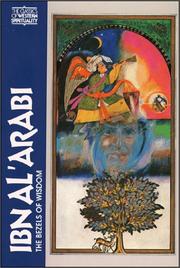
Written work · c. 1229
The Bezels of Wisdom (Fusus al-hikam)
فصوص الحكم (Fusus al-hikam)
Twenty-seven chapters, each devoted to the "wisdom" of a prophet (from Adam to Muhammad, by way of Noah, Abraham, Moses, Jesus or Solomon), understood as a bezel in which a precious stone is set: an aspect of divine knowledge. It is his densest work and the one that concentrates his boldest theses on the relationship between God and the world, imagination, beliefs and the perfect human being. It was commented on more than a hundred times (al-Qunawi, al-Jandi, al-Qashani, al-Qaysari, Jami) and attacked with equal intensity, by Ibn Taymiyya among others.
9 editions · amazon.com

Written work · 1215
The Interpreter of Desires (Tarjuman al-ashwaq)
ترجمان الأشواق (Tarjuman al-ashwaq)
A collection of love poetry in the tradition of the Arabic qasida: abandoned encampments, departing camels, gazelles and gardens, and a beloved inspired by Nizam, daughter of the Persian scholar with whom he studied in Mecca. Its famous ode XI proclaims a heart "capable of every form" and a "religion of love". The author's own commentary reads every image as a symbol of divine realities and is one of the keys to the Sufi hermeneutics of erotic language.
5 editions · amazon.com
Complete works (30)
Ibn Arabi
The Treasures of Lovers (commentary on the Tarjuman)
The Conscious LibraryThe Treasures of Lovers (commentary on the Tarjuman)
1215

The Spirit of Holiness (portraits of Andalusi masters)
1203
Ibn Arabi
The Setting-Places of the Stars
The Conscious LibraryThe Setting-Places of the Stars
1199

The Contemplations of the Holy Mysteries
1194

The Book of Theophanies
1205

Treatise on Unity (attributed)
Ibn Arabi
The Production of the Circles
The Conscious LibraryThe Production of the Circles

Divine Governance of the Human Kingdom

The Book of Majesty and Beauty
What the Seeker Needs

The Adornment of the Spiritually Transformed
1203

Journey to the Lord of Power
1205
Ibn Arabi
The Book of the Night Journey
The Conscious LibraryThe Book of the Night Journey
1198

The Precious Pearl

The Fabulous Gryphon
1199

The Niche of Lights (Divine Sayings)
1203

The Universal Tree and the Four Birds

The Seven Days of the Heart

The Unveiling of the Effects of the Journey

The Secret of the Names of God
Ibn Arabi
The Brilliant Star: The Virtues of Dhu l-Nun the Egyptian
The Conscious LibraryThe Brilliant Star: The Virtues of Dhu l-Nun the Egyptian

The Tree of Being
Ibn Arabi
The Book of Mim, Waw and Nun
The Conscious LibraryThe Book of Mim, Waw and Nun
Ibn Arabi
The Great Diwan (mystical poetry)
The Conscious LibraryThe Great Diwan (mystical poetry)
Quotations
Quotations located in a specific work. Each carries its provenance and its level of confidence.
My heart has become capable of every form: it is a pasture for gazelles and a convent for Christian monks, And a temple for idols and the pilgrim's Ka'ba and the tables of the Tora and the book of the Koran. I follow the religion of Love: whatever way Love's camels take, that is my religion and my faith.لقد صار قلبي قابلاً كل صورةٍ / فمرعى لغزلانٍ وديرٌ لرهبانِ // وبيتٌ لأوثانٍ وكعبةُ طائفٍ / وألواحُ توراةٍ ومصحفُ قرآنِ // أدينُ بدينِ الحبِّ أنّى توجّهتْ / ركائبُه فالحبُّ ديني وإيماني
VerifiedTarjuman al-ashwaq, oda XI, vv. 13–15 (trad. Nicholson, 1911, pp. 66–67). En el comentario, el autor precisa que esa religión del amor es prerrogativa de los musulmanes, por ser Muhammad el amado de Dios.
Apocryphal quotes or disputed attributions (2)
«"When the sin enters the shin, the tomb of Muhyi al-Din will appear."»
A coded prophecy that Ottoman tradition ascribes to Ibn Arabi, read as announcing that Selim (with *sin*) would enter Damascus (*Sham*, with *shin*) and restore his tomb, as he did in 1517. It comes from *al-Shajara al-numaniyya*, an apocalyptic work attributed to him without foundation; it appears in none of his authentic writings.
«"Whoever knows himself knows his Lord", presented as the central teaching of Ibn Arabi's *Treatise on Unity*.»
The saying is a hadith of earlier Sufi circulation, which Ibn Arabi comments on in other works; but the *Treatise on Unity* (*Risalat al-ahadiyya*), where it is developed in radical terms, is by Awhad al-Din Balyani, as Michel Chodkiewicz demonstrated.
Last words
There are no verifiable records of their last words.
No reliably attributed final sentence survives. The biographical sources fix the date (22 Rabi al-Thani 638) and place of his death, in the house of the judge Muhyi al-Din ibn al-Zaki in Damascus, and his burial in Salihiyya, but transmit no last words.
Source: Addas, Claude. Ibn ʿArabī ou la quête du Soufre Rouge. París: Gallimard, 1989. Trad. inglesa: Quest for the Red Sulphur: The Life of Ibn ʿArabī. Cambridge: Islamic Texts Society, 1993.
Ask
What their work answers
Twelve great human questions and what their texts allow us to answer, with references. We never put words in their mouth.
What is the Absolute? Does God exist?
The Essence is unknowable; God makes Himself known through His Names
Both personal and impersonalStated explicitly
Ibn Arabi distinguishes rigorously between the divine Essence (al-dhat) and the Divinity that relates to the world. Of the Essence nothing can be said or known: it is free of all relation and all attribute. Yet that same Reality manifests as Lord through His Names — the Merciful, the Wise, the Living — which need beings in order to become visible; in the chapter on Adam of the Fusus al-hikam, the human being is the mirror in which God contemplates His Names. This God loves, wishes to be known and turns to each according to their capacity, to the point that every believer worships the God their belief has shaped. The Absolute is both inaccessible ground and a face turned towards the creature; to confuse the two planes, or to separate one entirely from the other, is for him an error.
Compare this question with other teachersWho am I? Is there a true self?
Whoever knows himself knows his Lord: He and not He
The Self is the AbsoluteStated explicitly
Ibn Arabi makes the traditional saying «whoever knows himself knows his Lord» an axis of his work. For him, the human being has no existence of its own: what exists in it is God's existence, manifested according to the predisposition of each creature, its immutable entity (ayn thabita) eternally present in divine knowledge. In the Fusus al-hikam, the chapter on Adam presents the complete human being (al-insan al-kamil) as the mirror in which Reality contemplates all its Names. To know oneself is to discover that the self, in itself, is nothing, and that its reality is that of the Real. Yet Ibn Arabi rejects fusion (ittihad) and incarnation (hulul): the servant remains servant. His formula is paradoxical: the creature is He and is not He.
Compare this question with other teachersWhy do we suffer?
We suffer behind the veil; divine mercy precedes wrath
Separation from GodInferred from their doctrine
Ibn Arabi does not treat suffering as a separate theme, but his work allows an answer to be reconstructed. The human being suffers because it is veiled: it perceives the multiplicity of things and not the single Reality manifest in them, and believes itself separate from God when its very existence is that of the Real. At the same time, Ibn Arabi gives central place to the divine saying that God's mercy precedes His wrath, and to the Qur'anic verse stating that His mercy embraces all things. Hence his thesis, controversial among theologians, that even the punishment of hell will eventually become sweet for those who dwell there, playing on the closeness in Arabic between punishment (adhab) and sweetness (adhb). Pain is real but provisional; the ultimate is mercy.
Compare this question with other teachersWhat happens after death?
From the barzakh to the resurrection: and mercy finally reaches everyone
Eternal life and resurrectionStated explicitly
Ibn Arabi fully accepts Qur'anic eschatology — death, the intermediate state, bodily resurrection, judgement, paradise and hell — and interprets it through his metaphysics of imagination. After death the soul enters the barzakh, an intermediate world of images where deeds and beliefs take form; at the resurrection it receives a new body suited to the next life. His boldest feature is the primacy of mercy: relying on the verse according to which God's mercy embraces all things, he holds in the Futuhat and the Fusus that the punishment of the fire is not eternal in its pain. The damned will remain in their abode, but the torment (ʿadhāb) will eventually turn sweet (ʿadhb) for them. Death does not destroy the being's relationship with God; it reveals it, because every creature has always been a manifestation of His names.
Compare this question with other teachersHow is liberation or salvation attained?
Realising who one is means knowing one's Lord: knowledge by unveiling, not by reasoning
Through direct knowledgeStated explicitly
Ibn Arabi organises the path around the saying, transmitted in Sufi circles, that whoever knows himself knows his Lord. The goal is realisation (tahqiq): understanding by experience that every being is a manifestation of the divine Names and that the complete human being reflects the totality of those Names. That knowledge does not come from philosophical reasoning, to which he grants limited scope, but from unveiling (kashf), which God grants to whoever prepares through observance of the law, invocation, retreat and purification. Alongside this, Ibn Arabi holds that divine mercy embraces everything, which leads him to qualify the eternity of punishment in the hereafter.
Compare this question with other teachersIs a teacher necessary?
The ordinary path passes through masters, but God can teach directly
Helpful but not indispensableInferred from their doctrine
Ibn Arabi had numerous teachers in al-Andalus and the Maghreb, to whom he devoted portraits in The Spirit of Holiness, and in The Meccan Revelations he deals in detail with the rules of courtesy (adab) governing the relationship between disciple and master. For most people, the path runs through a shaykh who knows the states and dangers of the way. Yet Ibn Arabi admits and claims another mode of transmission: that of someone instructed directly by God or by spiritual figures such as Khidr, from whom he claimed to have received investiture. The human teacher is therefore the usual and valuable channel, but not the exclusive one, because the true teacher of all knowledge is God.
Compare this question with other teachersIs the world real?
The cosmos is the mirror in which God contemplates His Names
Manifestation of the divineStated explicitly
Ibn Arabi conceives of the world as God's self-disclosure (tajalli). The first chapter of The Bezels of Wisdom, devoted to Adam, explains that God wished to see His Names in a being that would reflect them all: He created the cosmos like an unpolished mirror, and the human being was the polishing of that mirror. Everything that exists is thus a locus of manifestation of some divine Name. The world is neither God in His essence, which remains unknowable, nor an independent reality: it is «He and not He», and is renewed at every instant. Ibn Arabi therefore gives the world an intermediate status, comparable to imagination, real as reflection, without consistency of its own.
Compare this question with other teachersWhat is love?
God loved to be known: love is the origin of the world and its return
Longing and unionStated explicitly
Ibn Arabi makes love the very principle of creation. Relying on a saying attributed to God in the Sufi tradition — I was a hidden treasure and loved to be known — he explains that the world is born of divine love for self-manifestation, and that all created love is, at bottom, God's love for himself through creatures. No one loves anything but God, even when believing they love a particular person, because all beauty is his manifestation. In the chapter on love in the Futuhat he distinguishes divine, spiritual and natural love and describes their states. In the Tarjuman al-ashwaq, a collection of love poems inspired by the young Nizam, he declares that his heart has become capable of every form and that he follows the religion of love, wherever its caravans turn.
Compare this question with other teachersAre we free, or is everything determined?
God gives only what each essence asks for: the secret of destiny
There is no doerStated explicitly
Ibn Arabi addresses the question in the chapter of the *Fusus al-hikam* devoted to the prophet Uzayr, under the name «secret of destiny» (*sirr al-qadar*). His thesis is that the divine decree follows God's knowledge, and that this knowledge follows the known: the immutable essences (*aʿyān thābita*) of each thing, which by their own preparedness ask for what they will receive. No one is compelled except by what he himself is in God's knowledge. At the same time, the only real agent is God, acting through the forms of creatures. The consequence is not moral fatalism, since the revealed law still binds, but that the self who believes it decides on its own is a partial perspective on a single divine activity.
Compare this question with other teachersWhy meditate or pray?
Prayer is intimate conversation between God and his servant
Friendship with GodStated explicitly
In the last chapter of the *Fusus al-hikam*, devoted to the Prophet Muhammad, Ibn Arabi interprets ritual prayer (*ṣalāt*) as *munājāt*, intimate conversation: drawing on the hadith that God has divided the prayer between Himself and His servant, he holds that in it God speaks and listens at once, and that the one who prays sees the One with whom he converses. Hence he calls it, following another hadith, the coolness of the Prophet's eyes. Alongside prescribed prayer he valued remembrance of God (*dhikr*) and retreat (*khalwa*), which he describes in the *Epistle of Lights*. The aim is not to leave the relationship but to worship God as if seeing Him, what tradition calls *iḥsān*, until recognising Him in every form.
Compare this question with other teachersCan reason know the ultimate?
Reason binds; divine unveiling grants the knowledge of secrets
The ultimate lies beyond the mindStated explicitly
In the introduction to *The Meccan Openings* (*al-Futuhat al-makkiyya*), Ibn Arabi distinguishes three kinds of knowledge: that of the intellect, obtained by demonstration; that of states, reached only by tasting or experience; and that of secrets, which lies above the intellect and is granted by God to prophets and saints. He plays on the etymology of *ʿaql* (intellect), related to the hobble placed on a camel: reason binds and delimits, and so cannot encompass a God who is both transcendent and present in every form. In his letter to the theologian Fakhr al-Din al-Razi he advises him to leave speculation and seek the knowledge that comes from God through retreat and remembrance.
Compare this question with other teachersWithdraw from the world or transform it?
The highest is outwardly indistinguishable: he returns to live among creatures
Contemplation in actionInferred from their doctrine
Ibn Arabi practised retreats (khalwa) and describes in the Futuhat the illuminations he received in them, but he does not make retreat the goal. In his spiritual hierarchy the highest rank belongs to the malamiyya, the «people of blame», who after attaining realisation return to ordinary life, without distinctive dress or visible wonders, and blend in with common people while their inner being remains with God. The spiritual journey, for him, has a return: the one who has ascended to God descends again towards creatures to serve and guide them. His own life was that of a traveller between al-Andalus, the Maghreb, Mecca, Anatolia and Damascus, in contact with masters, disciples and rulers, to whom he occasionally wrote advising them on how to govern. Contemplation and presence in the world are not opposed: the world is God's manifestation.
Compare this question with other teachers
Affinities & tensions
Affinities and tensions
Calculated question by question from their positions. The reason for each agreement or clash, on click.
Thinks most like
Attar
They agree on: What is the Absolute? Does God exist? · Who am I? Is there a true self? · Why do we suffer?

Al-Hallaj
They agree on: Who am I? Is there a true self? · Why do we suffer? · What happens after death?
Ramakrishna
They agree on: What is the Absolute? Does God exist? · Who am I? Is there a true self? · Why do we suffer?
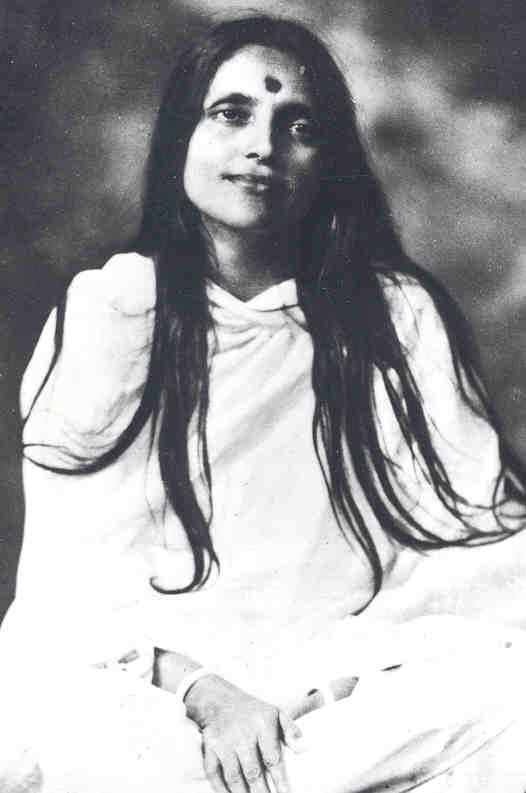
Anandamayi Ma
They agree on: What is the Absolute? Does God exist? · Who am I? Is there a true self? · Is the world real?
Thinks most unlike

Epicurus
They clash on: Who am I? Is there a true self? · What happens after death?

Tsongkhapa
They clash on: Who am I? Is there a true self? · What happens after death?

Pema Chödrön
They clash on: Who am I? Is there a true self? · What happens after death?
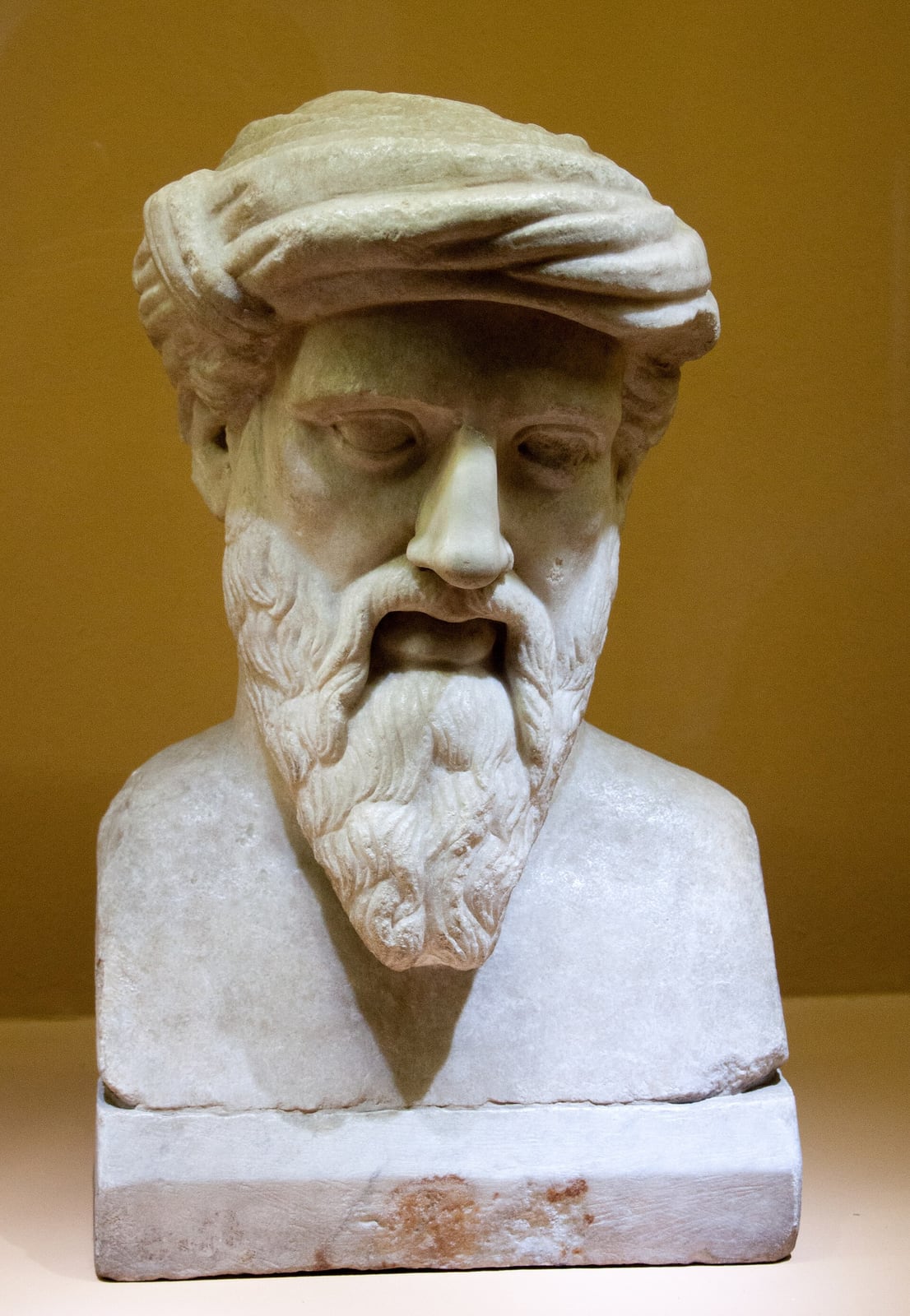
Pythagoras
They clash on: What happens after death?
They agree on
Ibn Arabi · Adi Shankara
Two metaphysics of unity, in Murcia and in Kerala
Why: The affinity comes from the same question pushed to its limit: how can there be multiplicity if the Absolute is one. Both answer with a doctrine of levels, empirical and ultimate truth in one, Essence and Names in the other, which allows them to keep worship and law without giving up unity. There is no historical relation between them, and the differences are serious: for Ibn Arabi the world is a self-revelation willed by a God who loves to be known, and the servant remains a servant; for Shankara the world is a superimposition due to ignorance, and the liberated one retains no distinction. One thinks a theophany; the other, an error that dissolves. They agree in structure, not in feeling.
They clash onApparent contradiction
Ibn Arabi · Teresa of Ávila
Always a creature, or He and not He: two languages for a union without confusion
Why: The tension is apparent because they use different categories for a similar experience. Teresa writes under the scrutiny of the Inquisition and of her learned confessors, within a theology that distinguishes creator and creature at the level of being, and so she stresses the distinction every time she describes union. Ibn Arabi works with a metaphysics of the single existence and of the mirror, in which saying that the creature has no being of its own does not mean it is God in his Essence, which remains unknowable. She speaks of what the soul lives; he, of what being is. They agree in practice: knowing oneself and knowing God go together, and the goal is intimacy without confusion.
They agree on
Ibn Arabi · Rumi
Love as the origin and return of the world: two summits of Sufism in the same century
Why: They share an era, a religious language and sources: the Qur'an, the sayings attributed to the Prophet and the Sufi tradition that made love the principal way. There was also an indirect link: Sadr al-Din al-Qunawi, Ibn Arabi's stepson and chief disciple, taught in Konya in the same years as Rumi, and the Mevlevi hagiographies present them on cordial terms; there is no evidence that Rumi read Ibn Arabi or that they met. The difference is one of register. Ibn Arabi elaborates a technical metaphysics of the divine Names and of manifestation; Rumi writes narrative and lyrical poetry, without a system, where love is an experience of separation and longing before it is doctrine.
They agree on
Ibn Arabi · Hildegard of Bingen
The human being as mirror of the cosmos and of the divine
Why: There was no contact between the German abbess and the Andalusian mystic, contemporaries for only a few years. The affinity stems from a common inheritance: the ancient idea of the human being as microcosm, Greek and Neoplatonic in origin, which circulated both in Latin Europe and in the Islamic world, and a reading of creation as the language of God. The differences are substantive. Hildegard sharply maintains the distinction between Creator and creature and thinks of the harmony lost through sin and restored in Christ; Ibn Arabi says the world is He and not He, within a metaphysics of the single existence. She contemplates visions; he builds a theory of the Names.
Anecdotes and stories
Anecdotes and stories
Testimonyc. 1180
"Yes" and "No": the meeting with Averroes
Origin of the story: Autobiographical account in *al-Futuhat al-Makkiyya* (Bulaq ed., I, 153–154), translated by Corbin (1958). It is the only testimony of the meeting; Averroes does not mention it.
Source: Corbin, Henry. L'imagination créatrice dans le soufisme d'Ibn ʿArabî. París: Flammarion, 1958 (trad. inglesa: Creative Imagination in the Sufism of Ibn ʿArabī, Princeton University Press, 1969); incluye la traducción del relato del encuentro con Averroes (Futuhat, ed. Bulaq, I, 153–154).
Testimony1198–1199
The coffin and the books
Origin of the story: *Al-Futuhat al-Makkiyya*, I, 154 (Bulaq ed.), following the account of the first meeting; translation in Corbin 1958.
Source: Corbin, Henry. L'imagination créatrice dans le soufisme d'Ibn ʿArabî. París: Flammarion, 1958 (trad. inglesa: Creative Imagination in the Sufism of Ibn ʿArabī, Princeton University Press, 1969); incluye la traducción del relato del encuentro con Averroes (Futuhat, ed. Bulaq, I, 153–154).
Testimonyc. 1185–1190
Fatima of Seville, the old woman with the tambourine
Origin of the story: *Ruh al-quds* and *al-Durra al-fakhira*, trans. Austin, Sufis of Andalusia (1971); Asín Palacios, Vidas de santones andaluces (1933).
Source: Ibn al-Arabi. Sufis of Andalusia: The Ruh al-quds and al-Durrat al-fakhirah. Trad. de R. W. J. Austin. Londres: Allen & Unwin, 1971; y Asín Palacios, Miguel. Vidas de santones andaluces. Madrid, 1933 (reed. Hiperión, 1981).
Documented1202–1215
Nizam and the jurist of Aleppo
Origin of the story: Prefaces to the first and third recensions of the *Tarjuman*, translated by Nicholson (1911, pp. 3–5).
Testimony1202
The youth beside the Kaaba
Origin of the story: *Al-Futuhat al-Makkiyya*, ch. 1 (the author's visionary account); analysis in Addas 1989 and Corbin 1958.
Source: Addas, Claude. Ibn ʿArabī ou la quête du Soufre Rouge. París: Gallimard, 1989. Trad. inglesa: Quest for the Red Sulphur: The Life of Ibn ʿArabī. Cambridge: Islamic Texts Society, 1993.
Testimony1229
The vision of the Bezels
Origin of the story: Preface to the *Fusus al-hikam* (Afifi ed., 1946; Austin trans., 1980).
Source: Ibn al-Arabi. Fusus al-hikam. Ed. Abu al-Ala Afifi. El Cairo, 1946. Trad. inglesa: R. W. J. Austin, The Bezels of Wisdom (Classics of Western Spirituality). Nueva York: Paulist Press, 1980.
Unverifiable1516–1517
Selim I and the hidden tomb
Origin of the story: Ottoman tradition based on the apocryphal *al-Shajara al-numaniyya*; Addas and Chodkiewicz record it as legend.
Source: Addas, Claude. Ibn ʿArabī ou la quête du Soufre Rouge. París: Gallimard, 1989. Trad. inglesa: Quest for the Red Sulphur: The Life of Ibn ʿArabī. Cambridge: Islamic Texts Society, 1993.
Teachings
Teachings
The notions that structure their thought, explained in context.
Oneness of being (wahdat al-wujud)wahdat-al-wujud
Doctrine systematised by al-Qunawi and debated for centuries (as against Ahmad Sirhindi's *wahdat al-shuhud*).
Source: Chittick, William C. The Sufi Path of Knowledge: Ibn al-ʿArabi's Metaphysics of Imagination. Albany: State University of New York Press, 1989.
The perfect human being (al-insan al-kamil)insan-kamil
Qur'anic anthropology and the hadith of the image; extended by Abd al-Karim al-Jili (d. c. 1408).
Source: Ibn al-Arabi. Fusus al-hikam. Ed. Abu al-Ala Afifi. El Cairo, 1946. Trad. inglesa: R. W. J. Austin, The Bezels of Wisdom (Classics of Western Spirituality). Nueva York: Paulist Press, 1980.
Imagination and isthmus (khayal, barzakh)khayal
A reworking of philosophical psychology (Avicenna) and of the Qur'anic eschatology of the *barzakh* (Qur'an 23:100).
Source: Corbin, Henry. L'imagination créatrice dans le soufisme d'Ibn ʿArabî. París: Flammarion, 1958 (trad. inglesa: Creative Imagination in the Sufism of Ibn ʿArabī, Princeton University Press, 1969); incluye la traducción del relato del encuentro con Averroes (Futuhat, ed. Bulaq, I, 153–154).
Theophany or divine self-disclosure (tajalli)tajalli
It develops the Qur'anic notion of God's signs in the world and in souls (Qur'an 41:53).
Source: Chittick, William C. The Sufi Path of Knowledge: Ibn al-ʿArabi's Metaphysics of Imagination. Albany: State University of New York Press, 1989.
Immutable entities (ayan thabita)ayan-thabita
It takes up and transforms debates of *Mutazili* theology on the "thingness" of the non-existent.
Source: Chittick, William C. The Sufi Path of Knowledge: Ibn al-ʿArabi's Metaphysics of Imagination. Albany: State University of New York Press, 1989.
The seal of the saints (khatm al-awliya)khatm-al-awliya
It develops ideas of al-Hakim al-Tirmidhi (9th c.) on the seal of sainthood.
Source: Chodkiewicz, Michel. Le Sceau des saints: prophétie et sainteté dans la doctrine d'Ibn ʿArabî. París: Gallimard, 1986. Trad. inglesa: The Seal of the Saints. Cambridge: Islamic Texts Society, 1993.
Retreats
Retreats and centres
Places and gatherings linked to their teaching. We put you in touch with the organisers.
Oxford (Reino Unido) y Berkeley (EE. UU.), y en línea · Reino Unido / Estados Unidos
Muhyiddin Ibn Arabi Society: symposia and courses
Muhyiddin Ibn Arabi Society
The Muhyiddin Ibn Arabi Society was founded in 1977 to promote understanding of the work of Ibn Arabi and his followers, and is represented by non-profit organisations in Oxford and Berkeley. Since 1982 it has published a peer-reviewed journal, since 1984 it has held conferences in the UK and the USA, with more than a hundred talks available as podcasts and videos, and it runs an education programme with courses. Since 2002 it has also been collecting copies of the historic manuscripts of his works. It is the reference institution for the rigorous study of the Shaykh al-Akbar.
Chisholme House (Escocia), Sutton Courtenay (Oxfordshire), Londres y en línea · Reino Unido
Beshara: Foundation course and Masnavi study
The Beshara Trust
Beshara is the educational offering of the Beshara Trust, a British charity founded in 1971. Its foundation course takes the metaphysics of Ibn Arabi as its starting point to explore what it means to know oneself and the world in the light of the Unity of Existence, combining an introductory weekend, fortnightly online sessions and an optional residential at Chisholme House in the Scottish Borders. It also runs study groups on Rumi's Masnavi and other texts of the Sufi tradition. It is funded by philanthropic donations and voluntary work, and bookings are made by contacting the trust.
Videos
Videos
Recordings, interviews and documentaries. Videos play from YouTube; they are not hosted here.
Translation, Ibn al-ʿArabi, and the Islamic Past: William C. Chittick Keynote (2023 Conference)
Lecture· EN· 2023· 91 min
Columbia University Department of HistoryOfficial channel
Eric Geoffroy: Some Aspects of "Supra-reason" in Ibn 'Arabi's Epistomology
Lecture· EN· 61 min
Ibn 'Arabi SocietyOfficial channel
Pablo Beneito: Keys to Decipher Ibn ʻArabī's Manzil al-manāzil
Lecture· EN· 55 min
Ibn 'Arabi SocietyOfficial channel
Ibn 'Arabi & The Unity of Being
Analysis· EN· 72 min
Let's Talk Religion
The Bezels of Wisdom - Ibn 'Arabi's Controversial Masterpiece
Analysis· EN· 94 min
Let's Talk Religion
La morada de la no-morada: el legado vivo de Ibn Arabi en su 850 aniversario
Lecture· ES· 2015· 62 min
Casa ÁrabeOfficial channel
La Visión De Ibn Arabi | Pablo Beneito
Interview· ES· 66 min
Psicología y Espiritualidad
Ibn 'Arabî: un saint, un penseur et un poète par Claude Addas
Lecture· FR· 27 min
Conscience Soufie
Ibn ‘Arabî et sainteté en islam par Michel Chodkiewicz
Lecture· FR· 26 min
Conscience Soufie
İbnü'l Arabi ve "Vahdet-i Vücud" | Düşüncenin Seyir Defteri | 16. Bölüm
Documentary· TR· 51 min
TRT 2Official channel
بالهجري: ابن عربي
Documentary· AR· 3 min
AlJazeera Arabic قناة الجزيرةOfficial channel
Gallery
Gallery
Images with verified licences. Each keeps its authorship and attribution.
Manuscripts
Manuscripts
Manuscript witnesses and ancient texts, with their custodian and conditions of access.
AR · Nasj · 1231–1238 (segunda redacción)
الفتوحات المكية (al-Futuhat al-Makkiyya), autógrafo de la segunda redacción
- Surviving witness
- 37 volúmenes autógrafos, con certificados de lectura
- Custodian
- Museo de Arte Turco e Islámico (Türk ve İslam Eserleri Müzesi), Estambul · Evkaf Müzesi 1845–1881
AR · Nasj · 1229 (texto); c. 1232 (copia)
فصوص الحكم (Fusus al-hikam), copia de Sadr al-Din al-Qunawi
- Surviving witness
- Códice con certificado de audición en presencia del autor
- Custodian
- Museo de Arte Turco e Islámico, Estambul · Evkaf Müzesi 1933
Connections
Connections
Influences, discipleships and affinities. Documented relations are distinguished from similarities identified by analysis.
Contemporary of
Contemporaries with no documented meeting. The link is Sadr al-Din al-Qunawi, Ibn Arabi's stepson and chief disciple, who lived in Konya, knew Rumi and, according to Aflaki, was to lead his funeral prayer. The anecdote that Ibn Arabi saw the boy Rumi in Damascus is late.
Documented relation
Influenced by
Ibn Arabi read and cites al-Ghazali, with whom he shares the critique of the limits of speculative reason, though he disagrees with him on points of metaphysics.
Documented relation
Ideas akin to
Asín Palacios proposed parallels between Andalusi and Carmelite mysticism (dark night, love and erotic symbolism). The hypothesis of direct influence is unproven.
Similarity identified by analysis
Ideas akin to
Convergences in the metaphysics of being and the relation between God and the soul, studied comparatively; no contact.
Similarity identified by analysis
Ideas akin to
Toshihiko Izutsu systematically compared Ibn Arabi's key concepts with those of Laozi and Zhuangzi in *Sufism and Taoism* (1983). An academic comparison, not influence.
Similarity identified by analysis
Sources
Sources
Bibliography and catalogues consulted for this profile.
- Wikidata, Q46420 «Ibn Arabi» (P31=Q5; 89 enlaces entre wikis; P569 1165-07-28; P570 1240-11-16).
- Ibn al-Arabi. The Tarjumán al-Ashwáq: A Collection of Mystical Odes. Ed. y trad. de Reynold A. Nicholson. Oriental Translation Fund, New Series XX. Londres: Royal Asiatic Society, 1911.
- Addas, Claude. Ibn ʿArabī ou la quête du Soufre Rouge. París: Gallimard, 1989. Trad. inglesa: Quest for the Red Sulphur: The Life of Ibn ʿArabī. Cambridge: Islamic Texts Society, 1993.
- Chittick, William C. The Sufi Path of Knowledge: Ibn al-ʿArabi's Metaphysics of Imagination. Albany: State University of New York Press, 1989.
- Corbin, Henry. L'imagination créatrice dans le soufisme d'Ibn ʿArabî. París: Flammarion, 1958 (trad. inglesa: Creative Imagination in the Sufism of Ibn ʿArabī, Princeton University Press, 1969); incluye la traducción del relato del encuentro con Averroes (Futuhat, ed. Bulaq, I, 153–154).
- Nicholson, Reynold A. «Introduction» y prefacios traducidos, en The Tarjumán al-Ashwáq (1911), pp. 1–14.
- Ibn al-Arabi. Fusus al-hikam. Ed. Abu al-Ala Afifi. El Cairo, 1946. Trad. inglesa: R. W. J. Austin, The Bezels of Wisdom (Classics of Western Spirituality). Nueva York: Paulist Press, 1980.
- Asín Palacios, Miguel. El islam cristianizado: estudio del sufismo a través de las obras de Abenarabi de Murcia. Madrid: Plutarco, 1931 (reed. Hiperión, 1981).
- Chodkiewicz, Michel. Le Sceau des saints: prophétie et sainteté dans la doctrine d'Ibn ʿArabî. París: Gallimard, 1986. Trad. inglesa: The Seal of the Saints. Cambridge: Islamic Texts Society, 1993.
- Nicholson, Reynold A. The Mystics of Islam. Londres: G. Bell and Sons, 1914.
- Yahia, Osman. Histoire et classification de l'œuvre d'Ibn ʿArabî: étude critique. 2 vols. Damasco: Institut Français de Damas, 1964.
- Ibn al-Arabi. Sufis of Andalusia: The Ruh al-quds and al-Durrat al-fakhirah. Trad. de R. W. J. Austin. Londres: Allen & Unwin, 1971; y Asín Palacios, Miguel. Vidas de santones andaluces. Madrid, 1933 (reed. Hiperión, 1981).
- Muhyiddin Ibn ʿArabi Society (Oxford), recursos y catálogo de manuscritos (Ibn ʿArabi Digital Archive).
- Open Library, registros de ediciones de las obras de Ibn Arabi (Futuhat, Fusus, Tarjuman, Ruh al-quds, Mashahid al-asrar).
- Open Library, registros de ediciones y traducciones de los tratados menores de Ibn Arabi (Nyberg 1919; Anqa Publishing; Fons Vitae; Threshold; Éditions de l'Éclat; Éditions de l'Œuvre; Editora Regional de Murcia; Sirio), consultados el 2026-10-25.
- Chittick, William C. «Ibn ʿArabī». En Edward N. Zalta (ed.), The Stanford Encyclopedia of Philosophy. Primera publicación: 5 de agosto de 2008; revisión sustancial: 5 de diciembre de 2025.
- Rights holder
- Dominio público (obra del siglo XIII). Las ediciones críticas (Osman Yahia, Afifi) y las traducciones modernas (Siruela, Hiperión, Editora Regional de Murcia, Paulist Press, Pir Press, Albin Michel, Al-Bouraq, C. H. Beck…) están sujetas a los derechos de sus editores.
- Official site
- www.ibnarabisociety.org/
Pending confirmation
What this profile has not yet been able to settle. We would rather say so than fill it in.
- Localizar ISBN de «El intérprete de los deseos» (trad. Carlos Varona, Editora Regional de Murcia, 2002) en el catálogo de la BNE o de la editorial.
- Comprobar el ISBN de «Contemplation of the Holy Mysteries» (Anqa, 2001) y de las ediciones árabes críticas (Osman Yahia; al-Mansub, Saná 2010).
- Verificar en el catálogo del Museo de Arte Turco e Islámico las signaturas Evkaf 1845–1881 (Futuhat) y Evkaf 1933 (Fusus).
- Identificar la obra de procedencia de la cita «Gnostics cannot impart their feelings…» (Nicholson, 1914) y el capítulo exacto de los Fusus de la cita sobre los credos.
- Cotejar el texto árabe del prefacio de los Fusus con la edición de Afifi (se ha transcrito sin verificación directa).
- Añadir ediciones en ruso (A. V. Smirnov), hindi y persa de los Fusus con ISBN verificado.
- Precisar la fecha y el lugar de redacción de *Mashahid al-asrar* y *Kitab al-tajalliyat*.
- Obra completa (2026-10-25): Osman Yahia (fuente i10) catalogó 846 títulos atribuidos, de los que unos 550 se conservan y buena parte son opúsculos o atribuciones dudosas. Se registran los tratados principales con edición o traducción real; quedan fuera, entre otros, Kitab al-fana' fi l-mushahada (trad. francesa de Michel Vâlsan, sin edición verificada en catálogo), Muhadarat al-abrar (atribución discutida), al-Diwan al-akbar, Naqsh al-fusus, Kitab al-'abadila, Kitab al-qurba, Kitab al-ahadiyya y las selecciones de capítulos de las Futuhat publicadas como libro (Traité de l'amour, L'alchimie du bonheur parfait, La profession de foi, Textos sobre la caballería espiritual). Catálogo completo: Yahia 1964 y el Ibn Arabi Digital Archive (MIAS, i12).
- Confirmar el traductor de The Four Pillars of Spiritual Transformation (Anqa, 2009) y de Divine Sayings (Anqa, 2005): Open Library no lo indica.
- Precisar la fecha de redacción de Insha' al-dawa'ir, al-Tadbirat al-ilahiyya, Kitab al-jalal wa-l-jamal y al-Ittihad al-kawni (Yahia 1964).
- Sala de lectura (2026-10-25): no se registran otras traducciones. «Wisdom of the Prophets» (Fusus, trad. sinóptica de Khaja Khan, Madrás 1928; archive.org in.ernet.dli.2015.217778) es libre en EE. UU., pero se desconoce la fecha de muerte del traductor, lleva prólogo de Louis Massignon (m. 1962) y el OCR es defectuoso. «Vidas de santones andaluces» (Asín Palacios, 1933) y las traducciones de «El islam cristianizado» (1931) son libres en España y la UE (Asín murió en 1944), pero no en EE. UU. hasta 2029 y 2027. Los textos árabes de la Futuhat y los Fusus no están en Wikisource árabe (solo refutaciones de Ibn Taymiyya).
- Obras (2026-10-25): añadidos al-Diwan al-akbar, Muhadarat al-abrar (atribuida), Tadhkirat al-khawass y la colección Rasaʾil Ibn al-ʿArabi; siguen fuera como obras propias Kitab al-ʿabadila, Kitab al-qurba (incluido en la colección Rasaʾil), Naqsh al-fusus y las antologías temáticas de la Futuhat (p. ej. «Textos sobre la caballería espiritual», Edaf 2006, ISBN 8441417431, sin traductor en catálogo).
- Vídeos: año de emisión de la cápsula de Al Jazeera («Bil-hijri: Ibn Arabi») no indicado; queda en null.
Researched on 2026-10-23