Islam · Sufism
Al-Ghazali
أبو حامد محمد بن محمد الغزالي الطوسي · حجة الإسلام · ابوحامد محمد غزالی
c. 1058 – 1111Historically documented person
Shafi'i jurist, Ash'ari theologian and Persian mystic (Tus, c. 1058 – Tus, 1111), called "the proof of Islam" and known in Latin Europe as Algazel. Professor at the Nizamiyya of Baghdad, he criticised the philosophers in the Tahafut al-falasifa and, after the crisis he narrates in his autobiography, al-Munqidh min al-dalal, left his chair in 1095 for the Sufi path. His Ihya ulum al-din, in forty books, integrated mysticism into Sunni religious life and is, after the Qur'an and hadith, one of the most widely read books in Islam.
- works
- 44works
- editions
- 86editions
- quotes
- 9quotes
- videos
- 13videos
- images
- 7images
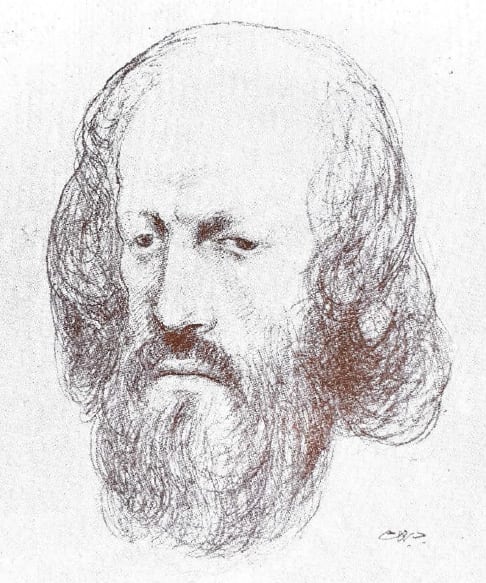
Al-Ghazali según Khalil Gibran · Public domain
In their words
«The thirst for knowledge was innate in me from an early age; it was like a second nature implanted by God, without any will on my part.»al-Munqidh min al-dalal, introducción (texto árabe de Wikisource; trad. inglesa de Claud Field, 1909; trad. española propia)

Their central idea
Certainty (yaqin) and the light in the breast: The *Munqidh* defines certainty as knowledge in which the known is disclosed so as to leave no room for doubt or the possibility of error.
See in context
Biography
5 min read
An orphan of Tus
Abu Hamid Muhammad ibn Muhammad al-Ghazali was born in Tabaran, one of the two centres of the city of Tus in Khorasan, some twenty-five kilometres from present-day Mashhad. Medieval biographers place his birth in the year 450 of the Hijra, corresponding to 1058–1059; Frank Griffel has observed that the references to his age in his letters and autobiography point rather to 448/1056 or even 1055. According to the tradition recorded by al-Subki, his father spun and sold wool (hence the form Ghazzali, "the spinner", which competes with Ghazali, derived from a village called Ghazala) and, on his deathbed, entrusted his two sons, Muhammad and Ahmad, to a Sufi friend who brought them up until the small inheritance ran out and then sent them to a madrasa where students were fed. The two brothers would have parallel destinies: Ahmad became a Sufi preacher and master, author of the Sawanih, the first great Persian treatise on mystical love.
From Jurjan to the vizier's court
After early legal studies in Tus and Jurjan, he moved to Nishapur to train under Imam al-Haramayn al-Juwayni, the leading Ash'ari theologian and Shafi'i jurist of his day; there he also came to know the Sufi master Abu Ali al-Farmadhi. When al-Juwayni died in 478/1085, the young man joined the travelling entourage of Nizam al-Mulk, vizier to the Seljuq sultans and founder of the network of madrasas that bore his name. In 484/1091 the vizier appointed him professor at the Nizamiyya of Baghdad, the most prestigious chair in the Sunni world. He was little more than thirty and had an authority that gave him a voice before caliph and sultan.
Baghdad: the professor and the philosophers
In Baghdad he taught Shafi'i law before hundreds of students and, by his own account, devoted his spare hours to reading alone the philosophers of the Greek tradition, above all al-Farabi and Avicenna. Two complementary books came of this: the Maqasid al-falasifa, a faithful exposition of Avicenna's doctrine, and the Tahafut al-falasifa, the "Incoherence of the Philosophers", completed in the first fortnight of Muharram 488 (January 1095), which examines twenty of their theses and declares three of them incompatible with Islam: the eternity of the world, God's ignorance of particulars and the denial of bodily resurrection. Here is his famous analysis of causality: that cotton burns on contact with fire is a habit God creates, not a necessary connection. At the request of the caliph al-Mustazhir he also wrote a refutation of the Batini Isma'ilis, who were blamed for the assassination of Nizam al-Mulk in 1092.
The crisis of 1095
The autobiography he wrote at the end of his life, al-Munqidh min al-dalal ("What Delivers from Error"), recounts the crisis of those years with a candour unprecedented in Arabic literature. A first sceptical episode, lasting about two months, was resolved, he says, not by arguments but "by a light which God cast into the breast". The second crisis was moral: he understood that the knowledge of the Sufis is not learned from books but "tasted" (dhawq), and that his career was driven by the desire for prestige. For six months, beginning in Rajab 488 (July 1095), he wavered; in the end, he writes, God locked his tongue so that he could no longer lecture, he lost his appetite and the physicians declared themselves powerless. In Dhu l-Qa'da 488 (November 1095) he left Baghdad on the pretext of pilgrimage and handed his chair to his brother Ahmad. Historians debate how much weight spiritual disillusion carried in the decision and how much the fear of political violence after the deaths of Nizam al-Mulk and Sultan Malikshah: the Munqidh is a retrospective, apologetic reconstruction, not a diary.
Ten years of retreat
He spent some two years in Syria; in Damascus he lived secluded in the minaret of the great mosque. He visited Jerusalem and the tomb of Abraham in Hebron, where in 489/1096 he vowed never again to serve a ruler, accept money from the powerful or take part in scholastic disputations; he made the pilgrimage to Mecca and Medina and returned, by way of Damascus and Baghdad, to Tus, where he opened a small school and a Sufi convent. In those years he composed his major work, the Ihya ulum al-din, the "Revival of the Religious Sciences": forty books in four parts covering worship, customs, the vices that destroy and the virtues that save, which integrate Sufism into the ordinary life of the believer. He summarised it in Persian in the Kimiya-yi saadat, the "Alchemy of Happiness". In the Almoravid West its reception was hostile: in 1109 the Ihya was publicly burned in Cordoba at the instigation of the jurists.
The return to teaching
In 499/1106 Fakhr al-Mulk, son of Nizam al-Mulk and vizier to Sanjar in Khorasan, persuaded him to teach again at the Nizamiyya of Nishapur. Al-Ghazali broke the Hebron vow, convinced, as he writes, that God sends a renewer (mujaddid) at the beginning of each century and that the sixth century of the Hijra fell to him. Around 503/1109 he was summoned before Sanjar over his opponents' accusations and was acquitted; in the same year he completed al-Mustasfa, his great treatise on the foundations of law. He spent his last months in Tus, where, according to his brother Ahmad's account recorded by Ibn al-Jawzi, he died at dawn on Monday 14 Jumada al-Akhira 505, 18 December 1111: he performed his ablutions, prayed, asked for his shroud, kissed it, laid it on his eyes and stretched himself out towards the qibla.
The proof of Islam
Posterity called him Hujjat al-islam, "the proof of Islam", and the Sunni tradition has seen in the Ihya the book that reconciled law, theology and the spiritual life. His authentic output amounts to some sixty or seventy titles, but medieval catalogues ascribe about three hundred more to him, and modern scholarship, since Maurice Bouyges and Montgomery Watt, still debates the authorship of texts such as the Mishkat al-anwar, the Minhaj al-abidin, Ayyuha l-walad or the second part of the Nasihat al-muluk. Latin Europe knew him as Algazel, above all as the author of a logic and a metaphysics that were in fact the Avicennian exposition of the Maqasid. Averroes answered the Tahafut with his Tahafut al-tahafut; the commonplace that al-Ghazali "killed philosophy in Islam" has been revised by recent historiography, which shows how far later theology absorbed the logic and metaphysics he had taught it to handle.
Sources: al-Ghazali. al-Munqidh min al-dalal. Texto árabe en Wikisource; trad. inglesa de Claud Field, The Confessions of Al Ghazzali, Londres: John Murray (Wisdom of the East), 1909. · al-Ghazali. Mishkat al-anwar («The Niche for Lights»). Trad. e introd. de W. H. T. Gairdner. Londres: Royal Asiatic Society (Monographs, vol. XIX), 1924; reimpr. Lahore: Sh. Muhammad Ashraf, 1952. · Bouyges, Maurice. Essai de chronologie des œuvres de al-Ghazali (Algazel). Ed. Michel Allard. Beirut: Imprimerie Catholique, 1959. · Badawi, Abd al-Rahman. Mu'allafat al-Ghazali. El Cairo, 1961; 2.ª ed., Kuwait, 1977. · Watt, W. Montgomery. Muslim Intellectual: A Study of al-Ghazali. Edimburgo: Edinburgh University Press, 1963; y «The Authenticity of the Works Attributed to al-Ghazali», Journal of the Royal Asiatic Society, 1952.
Timeline
A life, year by year
Each point is a documented event. Click to read it, with its source and degree of certainty.
c. 1058age 0Tabarán, Tus (Jorasán)
Birth in Tus
Born in Tabaran (Tus, Khorasan) in 450 AH (1058–1059), according to medieval biographers; Griffel proposes 448/1056 or 1055 on the basis of his own letters.
ProbableBöwering, Gerhard. «Ḡazālī, Abū Ḥāmed Moḥammad i. Biography». Encyclopædia Iranica, vol. X, fasc. 4 (2001), ed. en línea.
After their death
- c. 1150Algazel in Latin Europe
- c. 1180Averroes replies: Tahafut al-tahafut
c. 1058 · age 0
Birth in Tus
Born in Tabaran (Tus, Khorasan) in 450 AH (1058–1059), according to medieval biographers; Griffel proposes 448/1056 or 1055 on the basis of his own letters.
Probable
c. 1075
Studies in Jurjan and Nishapur
After studying law in Tus and Jurjan, he trains in Nishapur under al-Juwayni (Ash'ari theology, Shafi'i law) and comes to know the Sufi Abu Ali al-Farmadhi.
Probable
1085
In the service of Nizam al-Mulk
With al-Juwayni dead (478 AH), he joins the camp and court of the Seljuq vizier Nizam al-Mulk.
Documented
1091
Professor at the Baghdad Nizamiyya
Appointed by Nizam al-Mulk in 484 AH (1091), he teaches Shafi'i law at the most prestigious madrasa of the Sunni world.
Documented
1092
Assassination of Nizam al-Mulk
The vizier is assassinated (485 AH), a crime attributed to the Nizari Isma'ilis; shortly afterwards Sultan Malikshah dies.
Documented
January 1095
Completes the Tahafut al-falasifa
Completes the "Incoherence of the Philosophers" in the first fortnight of 488 AH (January 1095), after setting out their doctrine in the Maqasid.
Documented
July 1095
The crisis: the locked tongue
From Rajab 488 (July 1095) he wavers for six months between career and the Sufi path; he becomes unable to speak in class, according to the Munqidh.
Documented
November 1095
Leaves Baghdad
In Dhu l-Qa'da 488 (November 1095) he hands the chair to his brother Ahmad and leaves on the pretext of pilgrimage.
Documented
1096
Damascus, Jerusalem, Hebron and Mecca
Retreat in the minaret of the Damascus mosque; in Hebron he vows never to serve the powerful (489 AH); pilgrimage to Mecca and Medina.
Documented
c. 1097
Return to Tus; the Ihya
After passing through Baghdad (490 AH) he settles in Tus, opens a school and a Sufi convent and composes the Ihya ulum al-din and, in Persian, the Kimiya-yi saadat.
Probable
1106
Returns to teach in Nishapur
In 499 AH, invited by Fakhr al-Mulk, Sanjar's vizier, he teaches at the Nishapur Nizamiyya; he presents himself as the century's renewer.
Documented
c. 1109
Before Sanjar; the Ihya burned in Cordoba
Around 503 AH he is summoned before Sanjar and acquitted; he completes al-Mustasfa. In Almoravid Cordoba the Ihya is publicly burned.
Probable
December 18, 1111 · age 53
Death in Tus
Dies at dawn on Monday 14 Jumada al-Akhira 505 (18 December 1111), according to his brother Ahmad's account transmitted by Ibn al-Jawzi.
Documented
c. 1150
Algazel in Latin Europe
Dominicus Gundissalinus and John of Spain translate the Maqasid into Latin (Logica et philosophia Algazelis); Europe will read him as an Avicennian philosopher.
Documented
c. 1180
Averroes replies: Tahafut al-tahafut
Ibn Rushd writes the "Incoherence of the Incoherence", a point-by-point refutation of the Tahafut.
Documented
Works
Essential works
The works without which their legacy cannot be understood.
Written work · c. 1097
The Revival of the Religious Sciences (Ihya ulum al-din)
إحياء علوم الدين (Ihya' 'ulum al-din)
Al-Ghazali's major work and one of the most widely read in Islam: a complete guide to religious life in four "quarters" of ten books each. The first two deal with worship and customs (prayer, fasting, eating, marriage, trade, friendship, music); the last two with the science of the heart: the vices that destroy the soul (anger, avarice, ostentation, pride) and the virtues that save it (repentance, patience, trust, the love of God). Its thesis is that the scholars of his time had reduced religion to law and polemic, and that its inner life must be restored. It draws on Abu Talib al-Makki and al-Qushayri but reorganises their material into a system of its own.
12 editions · amazon.com

Written work · 1095
The Incoherence of the Philosophers
تهافت الفلاسفة (Tahafut al-falasifa)
A refutation of twenty theses of the Aristotelian philosophers, above all Avicenna, using their own logical methods. Three of them (the eternity of the world, that God knows only universals, and the denial of bodily resurrection) are in his judgement unbelief; the other seventeen, innovations. The seventeenth question contains his analysis of causality: the connection between what we call cause and effect is not necessary but a habit created by God, as the example of cotton and fire shows. Averroes replied with the *Tahafut al-tahafut*.
5 editions · amazon.com

Written work · c. 1108
Deliverance from Error
المنقذ من الضلال (al-Munqidh min al-dalal)
Al-Ghazali's intellectual autobiography, written in reply to a "brother in faith" who asks how he reached the truth. It recounts his sceptical crisis, cured by a light God placed in his breast, and examines the four classes of seekers (theologians, philosophers, Isma'ilis and Sufis) to conclude that only the Sufi path, known by experience and not by definition, gives certainty. It also relates his departure from Baghdad and his return to teaching. It has often been compared to Saint Augustine's *Confessions*.
8 editions · amazon.com

Written work · c. 1105
The Alchemy of Happiness
کیمیای سعادت (Kimiya-yi sa'adat)
A shorter, reorganised Persian version of the *Ihya*. Four opening "headings" (knowledge of self, of God, of the world and of the hereafter) precede four "pillars" corresponding to the quarters of the *Ihya*. Its starting point is that knowledge of self is the key to knowledge of God, and its central image is the heart as a mirror that "alchemical" discipline polishes until it reflects the divine. It is one of the great works of eleventh-century Persian prose.
7 editions · amazon.com
Complete works (44)
Al-Ghazali
The Extensive (Shafi'i law)
The Conscious LibraryThe Extensive (Shafi'i law)
1088
Al-Ghazali
The Intermediate (Shafi'i law)
The Conscious LibraryThe Intermediate (Shafi'i law)
1090
Al-Ghazali
The Concise (Shafi'i law)
The Conscious LibraryThe Concise (Shafi'i law)
1101
Al-Ghazali
The Quintessence of the Epitome
The Conscious LibraryThe Quintessence of the Epitome
Al-Ghazali
The Sifted Notes on the Foundations
The Conscious LibraryThe Sifted Notes on the Foundations
1085
Al-Ghazali
The Healing of the Thirsty (on legal reasoning)
The Conscious LibraryThe Healing of the Thirsty (on legal reasoning)
1093
Al-Ghazali
The Essentials of Legal Theory
The Conscious LibraryThe Essentials of Legal Theory
1109
Al-Ghazali
The Foundation of Analogy
The Conscious LibraryThe Foundation of Analogy
Al-Ghazali
The Aims of the Philosophers
The Conscious LibraryThe Aims of the Philosophers
1094
Al-Ghazali
The Standard of Knowledge (logic)
The Conscious LibraryThe Standard of Knowledge (logic)
1095
Al-Ghazali
The Touchstone of Reasoning (logic)
The Conscious LibraryThe Touchstone of Reasoning (logic)
1095
Al-Ghazali
The Criterion of Action
The Conscious LibraryThe Criterion of Action
1095
Al-Ghazali
The Correct Balance
The Conscious LibraryThe Correct Balance
1100

Moderation in Belief
1095
Al-Ghazali
The Jerusalem Epistle
The Conscious LibraryThe Jerusalem Epistle
1096

The Decisive Criterion for Distinguishing Islam from Clandestine Unbelief
1101
Al-Ghazali
The Rule of Interpretation
The Conscious LibraryThe Rule of Interpretation
1105
Al-Ghazali
Restraining the Common People from Theology
The Conscious LibraryRestraining the Common People from Theology
1111
Al-Ghazali
The Infamies of the Batinis (al-Mustazhiri)
The Conscious LibraryThe Infamies of the Batinis (al-Mustazhiri)
1095
Al-Ghazali
The Excellent Refutation of the Divinity of Jesus from the Gospel
The Conscious LibraryThe Excellent Refutation of the Divinity of Jesus from the Gospel
Al-Ghazali
The Book of the Forty (principles of religion)
The Conscious LibraryThe Book of the Forty (principles of religion)
1100

The Jewels of the Qur'an
1100

The Noblest Aim: on the Beautiful Names of God
1100
Al-Ghazali
Dictation on the Difficult Passages of the Ihya
The Conscious LibraryDictation on the Difficult Passages of the Ihya
1105
Quotations
Quotations located in a specific work. Each carries its provenance and its level of confidence.
The thirst for knowledge was innate in me from an early age; it was like a second nature implanted by God, without any will on my part.وقد كان التعطش إلى درك حقائق الأمور دأبي وديدني من أول أمري وريعان عمري، غريزة وفطرة من الله وضعتا في جبلتي، لا باختياري وحيلتي
Verifiedal-Munqidh min al-dalal, introducción (texto árabe de Wikisource; trad. inglesa de Claud Field, 1909; trad. española propia)
Last words
Later account by witnesses
«I hear and obey, to enter into the presence of the King.»سمعاً وطاعة للدخول على الملك
Account of his brother Ahmad al-Ghazali, transmitted by Ibn al-Jawzi in *al-Thabat 'inda l-mamat*: on Monday at dawn he performed his ablutions, prayed, asked for his shroud, kissed it, laid it on his eyes, spoke these words, stretched his legs towards the qibla and died before daybreak. It is a family testimony transmitted by an author of the following century, with features of an exemplary death.
Source: Ibn al-Yawzi, Abu l-Faraj. al-Thabat 'inda l-mamat (relato de Ahmad al-Ghazali sobre la muerte de su hermano), citado en la introducción del editor a Jawahir al-Qur'an (texto en Wikisource árabe).
Ask
What their work answers
Twelve great human questions and what their texts allow us to answer, with references. We never put words in their mouth.
What is the Absolute? Does God exist?
A living God who creates by will and is the only true light
A personal GodStated explicitly
Al-Ghazali defends, as an Ash'ari theologian, a single God who is living, knowing, powerful and endowed with will, who creates the world from nothing and sustains it at every instant. In The Just Mean in Belief he argues that the world had a beginning and that whatever begins needs someone to bring it into existence; in The Incoherence of the Philosophers he rejects Avicenna's God, from whom the world emanates by necessity, because that God is denied free will and knowledge of particulars. His mystical work does not depersonalise this God but intensifies Him: in The Niche of Lights he holds that the only true light is God and that all other lights are borrowed, and his commentary on the ninety-nine names makes each divine attribute a model the believer can imitate within human measure.
Compare this question with other teachersWho am I? Is there a true self?
The true self is the heart, a mirror created to know God
A created, immortal soulStated explicitly
Al-Ghazali opens The Alchemy of Happiness with knowledge of the self, because knowledge of the self is the key to knowledge of God. What man truly is is not the body, which is his mount and his tool, but the heart (qalb): a subtle, spiritual reality of a divine order, able to know God and destined to survive death. The book on the marvels of the heart, in the Revival, describes it as a mirror that is clouded by sins and passions and polished by discipline and remembrance of God, until it reflects the realities of the unseen world. The passional self (nafs), with its appetites, is not the absolute enemy but the animal the heart must govern. The soul is created, not eternal; but its destiny is immortal.
Compare this question with other teachersWhy do we suffer?
A heart sick with the world is veiled from God
Separation from GodStated explicitly
Al-Ghazali devotes an entire quarter of the Revival, that of the «vices leading to perdition», to the diseases of the heart: gluttony, lust, anger, envy, love of money and fame, pride, ostentation. They all share one root, love of the world, which clouds the mirror of the heart and veils it from God; that distance is the true misery, here and in the next life. He lived it himself: in Deliverance from Error he tells how, in 1095, God locked his tongue until he could no longer teach, and the physicians said the illness lay in the heart and their art had no remedy for it. Outward afflictions, by contrast, are trials to be borne with patience and gratitude, and they can bring one closer to God.
Compare this question with other teachersWhat happens after death?
Death is the passage to meeting the King, and the body will be raised
Eternal life and resurrectionStated explicitly
Al-Ghazali closes the Revival with an entire book on the remembrance of death and what comes after: the agony, the grave, the resurrection, the judgement, the balance, the bridge, paradise and the fire, and also the vision of God, which is the supreme bliss. The Precious Pearl follows the same itinerary with abundant traditions. Against the philosophers, who admitted only the immortality of the soul, he holds in The Incoherence that denying the resurrection of bodies is unbelief, for nothing prevents God from giving the soul back a body. Remembering death every day is not morbid: it detaches from the world and prepares the encounter. According to his brother Ahmad's account, he died in Tus at dawn, after asking for his shroud and declaring himself ready to enter into the presence of the King.
Compare this question with other teachersHow is liberation or salvation attained?
Knowing is not enough: the heart must be purified and the path tasted
Through disciplined practiceStated explicitly
Al-Ghazali came to the Sufi way after exhausting theology, philosophy and the teaching of the Ismailis, and what he discovered was that salvation is not reached by reading. In Deliverance from Error he puts it in an image: what a difference there is between knowing the definition of health and satiety and being healthy and sated. The Sufis, he writes, were men of lived states, not of words. That is why the Revival is a programme of practice: acts of worship performed with inner attention, discipline of the soul (riyada), struggle against vices, acquisition of virtues and constant remembrance of God. In the Letter to a Disciple he insists that knowledge without deeds is madness. The goal is knowledge of God, but the path is purification.
Compare this question with other teachersIs a teacher necessary?
The disciple needs a master to train him, but not an infallible imam
IndispensableStated explicitly
Al-Ghazali distinguishes two questions. On the spiritual path the master is indispensable: in the Letter to a Disciple and in the Revival's book on the discipline of the soul he explains that whoever seeks God needs a shaykh to train him, to uproot his bad traits of character and replace them with good ones, as the farmer pulls up weeds; the disciple must entrust himself to him as the sick man to the physician. But in matters of religious truth he rejects the authority the Ismailis claimed for their hidden, infallible imam: in Deliverance from Error and in his refutations he holds that the only infallible teacher is the Prophet, and that his teaching is already in the Qur'an and the sunna, within reach of reason and of the scholars.
Compare this question with other teachersIs the world real?
A world created anew at every instant, and none better is possible
A good and real creationStated explicitly
For al-Ghazali the world is real and good, but it does not sustain itself. In The Incoherence of the Philosophers he denies any necessary connection between what we call cause and effect: cotton does not burn because fire touches it, but because God creates the burning when the contact occurs, according to a custom (ada) He can suspend. The world is thus a continuous work of the divine will. In the Revival's book on divine unity and trust in God he states that there is nothing in the realm of possibility more wonderful than what exists: the present order is the best that could have been. And in The Niche of Lights he adds that the existence of creatures is borrowed, as the moon's light comes from the sun.
Compare this question with other teachersWhat is love?
Only God truly deserves love: love crowns the path
Longing and unionStated explicitly
Al-Ghazali devotes one of the final books of the Revival to love, longing, intimacy and contentment, and presents it as the goal of all the preceding stations: repentance, patience or trust are preparations for loving. He analyses the causes for which one loves — love of one's own existence, of the benefactor, of beauty, of affinity — and shows that all of them, carried to their end, find a full object only in God, the origin of being, of every good and of all beauty. From love springs the longing to see Him and intimacy with Him. To illustrate pure love he quotes the verses of the two loves attributed to Rabia, thereby making them the canonical example of the tradition.
Compare this question with other teachersAre we free, or is everything determined?
There is no agent but God: the pen does not write by itself
There is no doerStated explicitly
In the Revival's book on divine unity and trust in God, al-Ghazali describes the highest degree of faith in unity: to see that there is no agent but God. He illustrates it with a parable: a traveller sees a blackened sheet and questions the ink, which refers him to the pen, which refers him to the hand, which refers him to will, knowledge and power, until all acknowledge that they obey another. Secondary causes are intermediaries; the only actor is God, who also creates human acts. Nevertheless, as an Ash'ari theologian he holds that man acquires (kasb) his acts and answers for them before the law and at the judgement. Trust in God does not abolish effort: the one who trusts goes on working.
Compare this question with other teachersWhy meditate or pray?
The rites of the law, lived with presence of heart, transform the believer
Ritual and self-cultivationStated explicitly
Al-Ghazali's great contribution was to give the rites back their soul. The first quarter of the Revival goes through purification, prayer, almsgiving, fasting, pilgrimage, recitation of the Qur'an and remembrance of God, and for each act sets out its outward rules and its inner secrets. Ritual prayer is fully valid only when accompanied by presence of heart, understanding of what is said, reverence, awe, hope and shame. The Beginning of Guidance orders the believer's day from waking to sleep. Beyond the rites lie constant remembrance (dhikr) and retreat (khalwa), which he himself practised for years; but he never set them against the law: Sufi practice flourishes within it.
Compare this question with other teachersCan reason know the ultimate?
Reason has a limit; beyond it, a light that God casts
The ultimate lies beyond the mindStated explicitly
Al-Ghazali was a master of logic, who wrote two manuals to teach it and defended its use in law and theology; in The Incoherence of the Philosophers he fought Avicenna with his own weapons. But Deliverance from Error tells how a crisis of doubt made him distrust both the senses and the first principles of reason, and how he came out of it not through a chain of proofs but through a light God cast into his breast, the key to most knowledge. The ultimate is not demonstrated: it is tasted (dhawq). Above reason lies the degree of prophecy, of which the Sufis attain a sample. Reason is an indispensable instrument, but it is not the supreme judge.
Compare this question with other teachersWithdraw from the world or transform it?
He left his Baghdad chair to withdraw, and returned to teach years later
Withdraw in order to findStated explicitly
Al-Ghazali's most famous decision was a withdrawal. In 1095, at the peak of his career as professor at the Nizamiyya of Baghdad, he realised he was teaching out of ambition and not for God, lost his speech and left the city. For some eleven years he lived in Damascus, Jerusalem, Hebron and Mecca, given to retreat, asceticism and the remembrance of God. In the Revival he devotes a book to weighing the advantages of seclusion and of life in company, and concludes that it depends on each person and each moment. But in 1106 he agreed to teach again in Nishapur, convinced that the corruption of his age demanded speaking out; he also wrote counsel for sultans. Retreat was for him a necessary purification, not a definitive flight.
Compare this question with other teachers
Affinities & tensions
Affinities and tensions
Calculated question by question from their positions. The reason for each agreement or clash, on click.
Thinks most like
Mirabai
They agree on: What is the Absolute? Does God exist? · Why do we suffer? · Is a teacher necessary?

Rabia al-Adawiyya
They agree on: What is the Absolute? Does God exist? · Why do we suffer? · What happens after death?
John of the Cross
They agree on: What is the Absolute? Does God exist? · Who am I? Is there a true self? · Why do we suffer?
Thomas à Kempis
They agree on: What is the Absolute? Does God exist? · Who am I? Is there a true self? · Why do we suffer?
Thinks most unlike
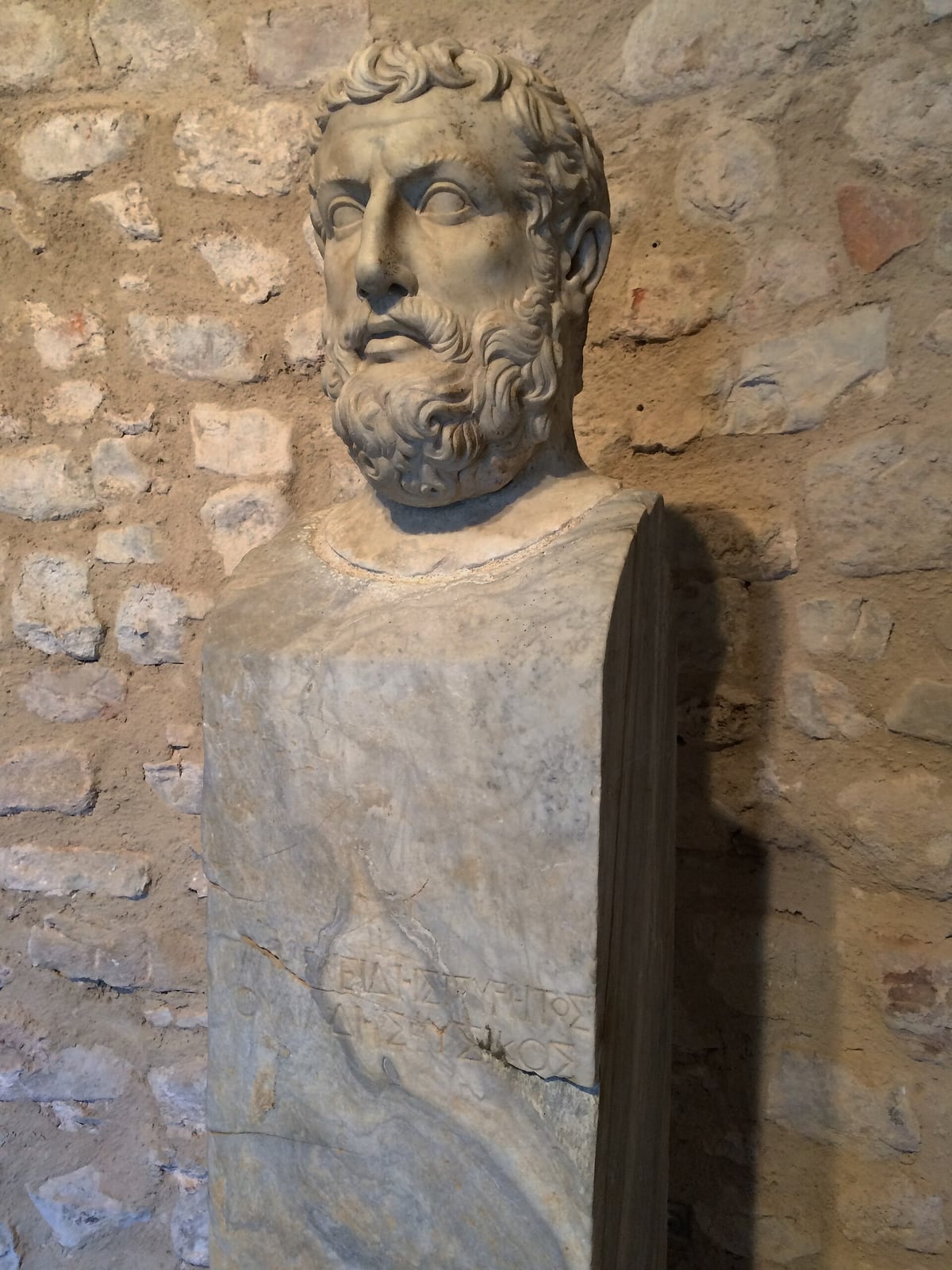
Parmenides
They clash on: Is the world real?

Pema Chödrön
They clash on: What is the Absolute? Does God exist? · Who am I? Is there a true self? · What happens after death?
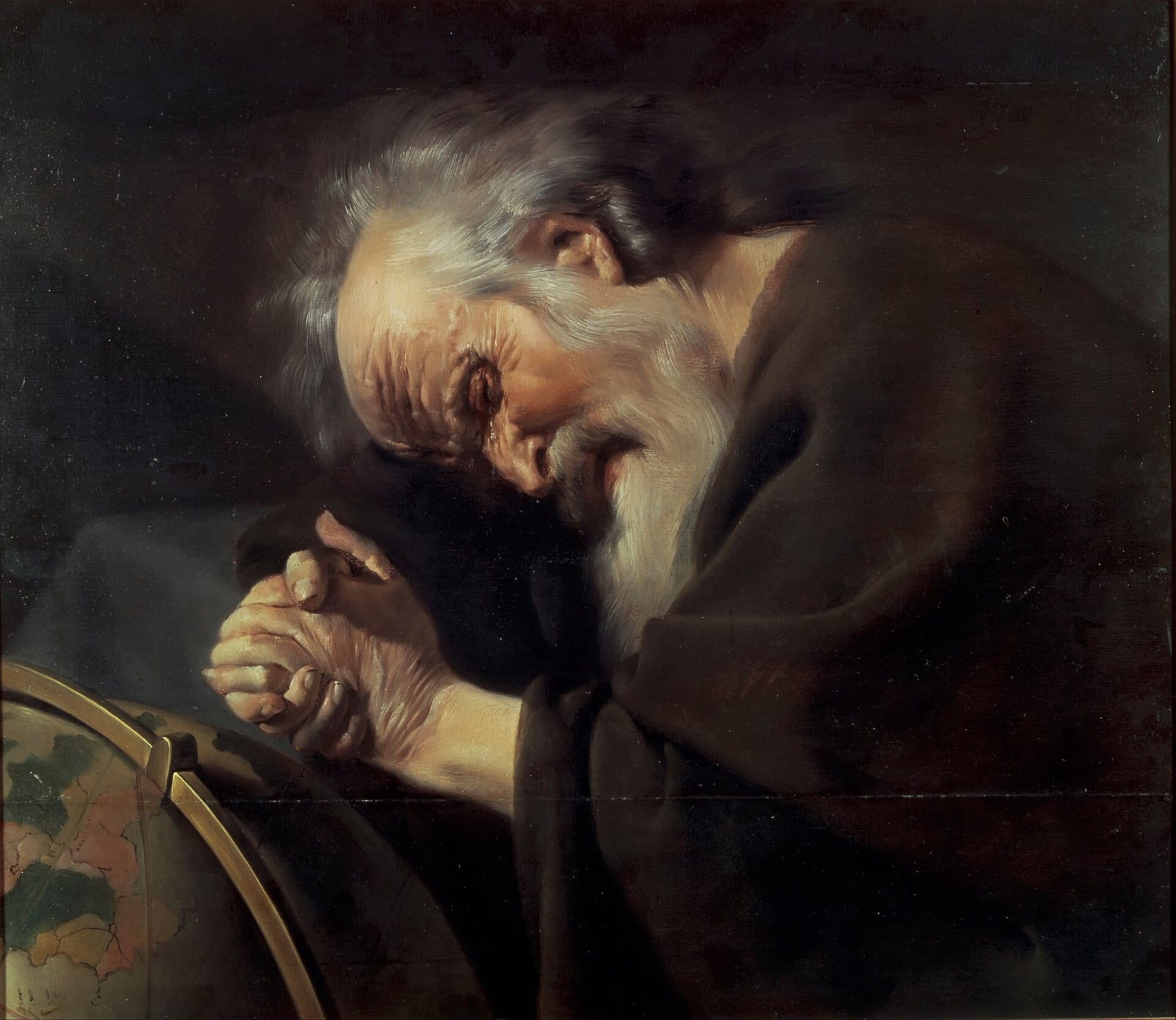
Heraclitus
They clash on: Who am I? Is there a true self? · Is a teacher necessary?
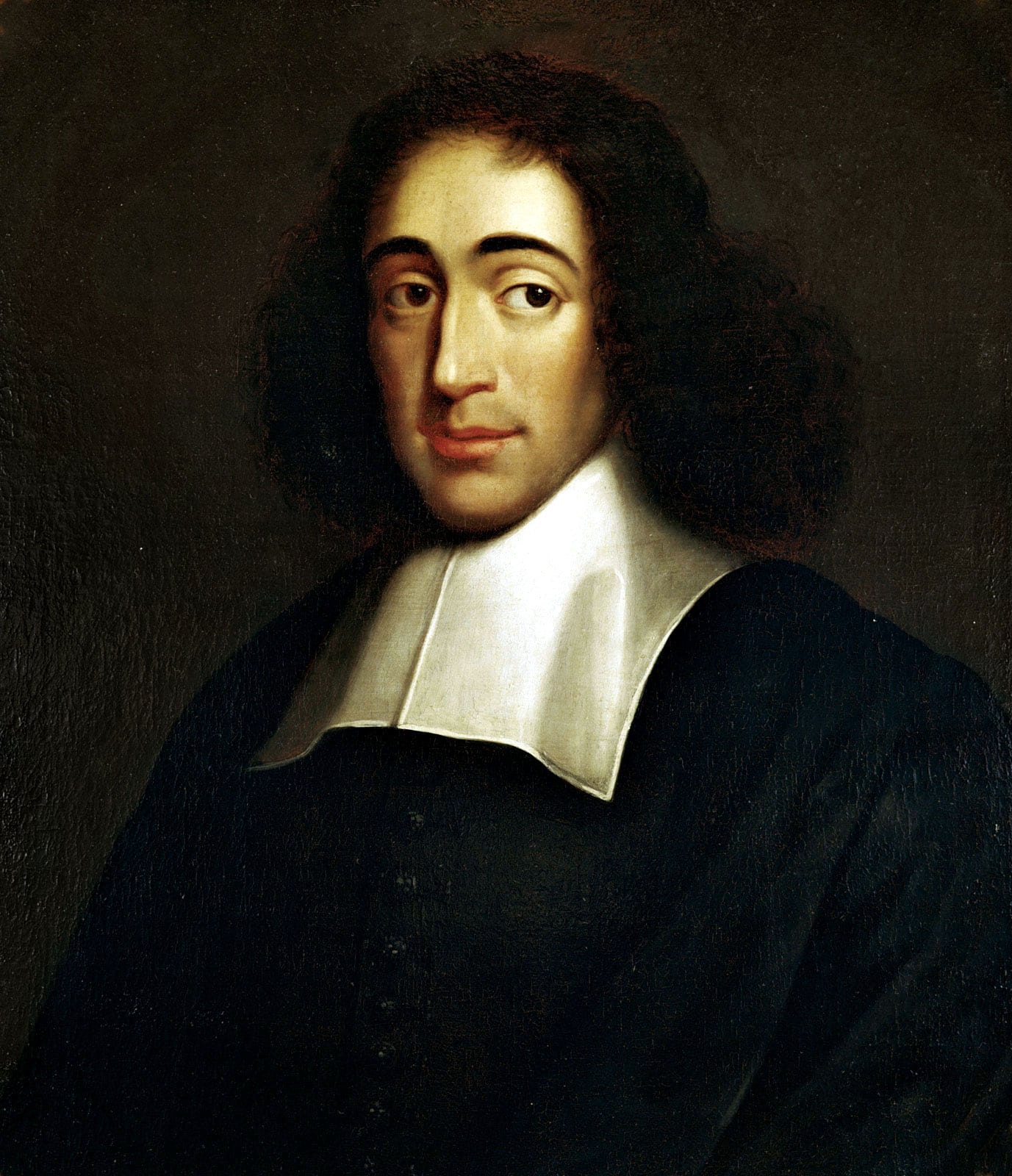
Baruch Spinoza
They clash on: Who am I? Is there a true self? · Is a teacher necessary?
Anecdotes and stories
Anecdotes and stories
Testimonyc. 1070s
The robbers of Jurjan
Origin of the story: Taj al-Din al-Subki, *Tabaqat al-shafi'iyya al-kubra* (14th c.), citing As'ad al-Mayhani as hearer of the story; Griffel (2009) discusses its chronological problems.
Source: Griffel, Frank. Al-Ghazali's Philosophical Theology. Nueva York: Oxford University Press, 2009 (cap. 1: biografía y cronología).
Testimony1095
The locked tongue
Origin of the story: Autobiographical account in *al-Munqidh min al-dalal* (c. 1106–1110); historians (Griffel, Garden) discuss the weight of the political factors the text passes over.
Hagiographic accountc. 1096
The Damascus minaret and the lesson at the Aminiyya
Origin of the story: The minaret: *al-Munqidh*. The Aminiyya lesson: traditional biography (Ibn Asakir, al-Subki), summarised in the editor's introduction to *Jawahir al-Qur'an* (Arabic Wikisource).
Disputed1109–1143
The bonfire of Cordoba and the legend of Ibn Tumart
Origin of the story: The burning: Maghrebi and Andalusi chronicles studied by Bennison (2016) and Garden (2014). The meeting with Ibn Tumart: Almohad tradition, described as doubtful by the Encyclopædia Iranica.
Source: Bennison, Amira K. The Almoravid and Almohad Empires. Edimburgo: Edinburgh University Press, 2016, pp. 243–244 (quema del Ihya en Córdoba); y Garden, Kenneth. The First Islamic Reviver: Abu Hamid al-Ghazali and His Revival of the Religious Sciences. Oxford University Press, 2014.
Testimony1111
The shroud
Origin of the story: Ibn al-Jawzi (d. 1201), *al-Thabat 'inda l-mamat*, citing Ahmad al-Ghazali; also recorded by al-Subki.
Teachings
Teachings
The notions that structure their thought, explained in context.
Certainty (yaqin) and the light in the breastyaqin
The *Munqidh*'s epistemology; modern discussion of its relation to ancient scepticism and to Descartes.
Tasting (dhawq): knowledge of states, not wordsdhawq
Classical Sufi distinction between *qal* and *hal*; al-Qushayri and Abu Talib al-Makki as sources.
Divine habit (ada) and the critique of causalityada-causalidad
Ash'ari occasionalism; Averroes's reply in the *Tahafut al-tahafut*.
The heart as mirror (qalb)qalb
Sufi and Avicennian psychology; the saying "whoever knows himself knows his Lord".
The degrees of divine unity and trust in Godtawhid-tawakkul
Doctrine of *fana'* since al-Junayd; later reformulated by the school of Ibn Arabi.
The love of God (mahabba)mahabba
Love mysticism of the Baghdad school; his brother Ahmad developed the theory of love in the *Sawanih*.
Videos
Videos
Recordings, interviews and documentaries. Videos play from YouTube; they are not hosted here.
Al-Ghazali's Philosophical Theology
Lecture· EN
Yale UniversityOfficial channel
Special Lecture: The Philosophical Foundations of al-Ghazali's Sufism - Frank Griffel
Lecture· EN
Centre for Advanced Irfan Studies - TRADISI
HoP 145 - Frank Griffel on al-Ghazali
Interview· EN
History of Philosophy without any gaps
Islamic Philosophy before the "Incoherence", w/ Prof. Frank Griffel
Interview· EN
Averroes
Ep 49: Al-Ghazali [feat. Frank Griffel]
Interview· EN
Dogs with Torches
Al-Ghazali - The Reviver of Religious Sciences
Analysis· EN
Let's Talk Religion
Al-Ghazali: The Muslim Theologian Who Lost Faith in Theology
Analysis· EN
ReligionForBreakfast
Al Ghazali - The Alchemist of Happiness - Documentary Trailer
Documentary· EN
IslamLite
Interview mit Prof. Dr. Frank Griffel, Islamkolleg Deutschland
Interview· DE
Islamkolleg Deutschland e.V.Official channel
Al Ghazâlî (1058-1111) Philosophie et religion
Lecture· FR
Hervé Pasqua
Al-Ghazali - El que salva del error
Analysis· ES
Filosofía Apuntes
La Historia del FILÓSOFO AL-GHAZALI - FILOSOFÍA ISLAMICA
Analysis· ES
Filosoando
#موسوعة_العربية .. أبو حامد الغزالي
Documentary· AR
AlArabiya العربيةOfficial channel
Gallery
Gallery
Images with verified licences. Each keeps its authorship and attribution.
Manuscripts
Manuscripts
Manuscript witnesses and ancient texts, with their custodian and conditions of access.
AR · Nasj · c. 1095–1110 (textos); 509 H / 1115–1116 (copia)
مجموع رسائل الغزالي (المنقذ من الضلال، مشكاة الأنوار وغيرهما)
- Surviving witness
- Manuscrito colectivo de obras de al-Ghazali copiado cuatro años después de su muerte; incluye el Munqidh y la Mishkat completa
- Custodian
- Biblioteca Süleymaniye, Estambul · Şehid Ali Paşa 1712
- Digitisation
- commons.wikimedia.org/wiki/File:Munqidh_min_al-d…
AR · Nasj · c. 1100 (texto); 800 H / 1397 (copia)
بداية الهداية (Bidayat al-hidaya)
- Surviving witness
- Copia fechada
- Custodian
- British Library, Londres · Add 9517/1
- Digitisation
- blogs.bl.uk/asian-and-african/2017/02/arabic-man…
FA · Nasj / nastaliq · c. 1105 (texto); 2 safar 781 / 19 de mayo de 1379 (copia)
کیمیای سعادت (Kimiya-yi sa'adat)
- Surviving witness
- Códice encuadernado para el sah de Shirván Hushang
- Custodian
- Museo de Arte Turco e Islámico, Estambul · T. 1999
- Digitisation
- commons.wikimedia.org/wiki/File:Outer_front_cove…
AR · Nasj · c. 1100 (texto)
المقصد الأسنى (al-Maqsad al-asna)
- Surviving witness
- Copia árabe
- Custodian
- British Library (antes British Museum), Londres · Or 7357
- Digitisation
- commons.wikimedia.org/wiki/File:Almaqsad_alasna_…
Connections
Connections
Influences, discipleships and affinities. Documented relations are distinguished from similarities identified by analysis.
Influenced
The *Masnavi* draws tales and arguments from the Ghazalian tradition; Nicholson's commentary notes many parallels with the *Ihya*. The influence of his brother Ahmad, the theorist of love, reached Rumi through Sanai and Attar.
Documented relation
Influenced
Ibn Arabi read and cites al-Ghazali, sharing his critique of the limits of speculative reason while disagreeing with him in metaphysics. The Iranica observes that after the spread of Ibn Arabi's work dubious esoteric texts were attributed to al-Ghazali.
Documented relation
Disagreed with
In the *Mishkat al-anwar* al-Ghazali quotes al-Hallaj's "I am the Truth" as the word of a drunken lover that should be concealed: he acknowledges the experience but disapproves of its disclosure, explaining that it is not real identity but something resembling it.
Documented relation
Influenced by
In book XXXVI of the *Ihya*, on the love of God, al-Ghazali quotes and comments on the verses attributed to Rabia on the "two loves" as an expression of pure love.
Documented relation
Influenced
Attar, a poet of Nishapur a generation later, shares with al-Ghazali the critique of book learning and the pedagogy of tales; several stories in his work have parallels in the *Ihya*. No study of direct dependence is cited here.
Similarity identified by analysis
Ideas akin to
The critique of the scholars' hypocrisy and of ostentatious religiosity that runs through the *Ihya* reappears, in a poetic and ironic key, in Hafez's ghazals. A thematic affinity, not documented influence.
Similarity identified by analysis
Ideas akin to
The *Maqasid* circulated in Hebrew and were read by Jewish philosophers; Maimonides shares with al-Ghazali the critique of kalam and the debate on the creation of the world against Aristotelian eternity. A direct reading has been discussed, but Maimonides does not cite him.
Similarity identified by analysis
Ideas akin to
The *Munqidh* has often been compared with the *Confessions*: both narrate an intellectual and moral conversion, a sceptical crisis overcome by illumination and the renunciation of a brilliant career. There is no contact or influence.
Similarity identified by analysis
Disagreed with
The *Tahafut* attacks the Aristotelian theses transmitted by al-Farabi and Avicenna, above all the eternity of the world, while the *Mi'yar* adopts Aristotelian logic as an instrument.
Documented relation
Sources
Sources
Bibliography and catalogues consulted for this profile.
- Wikidata, Q9546 «Al-Ghazali» (P31=Q5; 145 enlaces entre wikis; P569 1058 y 1056; P570 1111-12-19).
- Griffel, Frank. «al-Ghazali». Stanford Encyclopedia of Philosophy, publicado el 14 de agosto de 2007; revisión sustancial del 15 de enero de 2026.
- Böwering, Gerhard. «Ḡazālī, Abū Ḥāmed Moḥammad i. Biography». Encyclopædia Iranica, vol. X, fasc. 4 (2001), ed. en línea.
- al-Ghazali. al-Munqidh min al-dalal. Texto árabe en Wikisource; trad. inglesa de Claud Field, The Confessions of Al Ghazzali, Londres: John Murray (Wisdom of the East), 1909.
- al-Ghazali. Mishkat al-anwar («The Niche for Lights»). Trad. e introd. de W. H. T. Gairdner. Londres: Royal Asiatic Society (Monographs, vol. XIX), 1924; reimpr. Lahore: Sh. Muhammad Ashraf, 1952.
- Bouyges, Maurice. Essai de chronologie des œuvres de al-Ghazali (Algazel). Ed. Michel Allard. Beirut: Imprimerie Catholique, 1959.
- Badawi, Abd al-Rahman. Mu'allafat al-Ghazali. El Cairo, 1961; 2.ª ed., Kuwait, 1977.
- Watt, W. Montgomery. Muslim Intellectual: A Study of al-Ghazali. Edimburgo: Edinburgh University Press, 1963; y «The Authenticity of the Works Attributed to al-Ghazali», Journal of the Royal Asiatic Society, 1952.
- Griffel, Frank. Al-Ghazali's Philosophical Theology. Nueva York: Oxford University Press, 2009 (cap. 1: biografía y cronología).
- al-Ghazali. The Alchemy of Happiness. Trad. de Claud Field. Londres: John Murray (Wisdom of the East), 1910. Texto en Wikisource.
- Bennison, Amira K. The Almoravid and Almohad Empires. Edimburgo: Edinburgh University Press, 2016, pp. 243–244 (quema del Ihya en Córdoba); y Garden, Kenneth. The First Islamic Reviver: Abu Hamid al-Ghazali and His Revival of the Religious Sciences. Oxford University Press, 2014.
- Open Library, registros de ediciones de las obras de al-Ghazali (autor OL: al-Ghazzālī).
- Wikipedia (en), «Al-Ghazali», secciones Works y Works in Persian (resumen de la tesis de A. Khismatulin sobre la falsificación de Ay farzand y de la segunda parte de Nasihat al-muluk).
- Ibn al-Yawzi, Abu l-Faraj. al-Thabat 'inda l-mamat (relato de Ahmad al-Ghazali sobre la muerte de su hermano), citado en la introducción del editor a Jawahir al-Qur'an (texto en Wikisource árabe).
- Ghazali.org, «Oeuvre: Philosophy and Logic» (ediciones y traducciones de Maqasid, Tahafut, Mi'yar, Mihakk, al-Madnun, al-Qistas y Ma'arij al-quds).
- Rights holder
- Dominio público (obra del siglo XI–XII). Las ediciones críticas y las traducciones modernas (Islamic Texts Society, Fons Vitae, Brigham Young University Press, University of Chicago Press, Oxford University Press, Alianza, Trotta, Seuil…) están sujetas a los derechos de sus editores.
Pending confirmation
What this profile has not yet been able to settle. We would rather say so than fill it in.
- Fecha de nacimiento: se registra 1058 (450 H, biógrafos medievales); Griffel propone 448/1056 o 1055. Wikidata da 19-12-1111 como fecha de muerte; aquí se usa el lunes 14 de yumada al-ajira de 505 = 18-12-1111 (juliano), que coincide con el día de la semana del relato de Ahmad.
- Obra completa (2026-10-25): se registran 44 títulos (auténticos, dudosos y apócrifos) a partir de la Encyclopædia Iranica, Bouyges (1959) y Ghazali.org. Quedan fuera, por falta de verificación: al-Muntakhal fi 'ilm al-jadal, Hujjat al-haqq y Qawasim al-batiniyya (refutaciones antiismailíes perdidas o parciales), Yaqut al-ta'wil (supuesto tafsir de cuarenta volúmenes, perdido), Zad-i akhirat, Adab al-suhba, Tahdhib al-usul y las Teshuvot she'elot hebreas de atribución dudosa. Catálogo completo: Badawi, Mu'allafat al-Ghazali (1961; 457 títulos).
- Ediciones en español: localizar en la BNE las traducciones parciales del Ihya y de Ayyuha l-walad, y confirmar en el catálogo de Almuzara el ISBN 9791370202217 (Tahafut, 2026), tomado de la ficha de una reseña.
- Sala de lectura: localizar un escaneo con OCR limpio de El justo medio en la creencia (Asín Palacios, 1929; libre en España, la UE y EE. UU.) y de la traducción francesa de Schmölders (1842), que en Internet Archive va dentro de un volumen con otros textos. Verificar la fecha de muerte de Syed Nawab Ali (Gutenberg 73140, marcado con caution).
- Vídeos: duraciones y años no comprobados (null); no se ha localizado un documental institucional completo en castellano ni la versión íntegra autorizada de «Al-Ghazali: The Alchemist of Happiness» (2004).
- Citas apócrifas: no se registran; circulan en redes frases como la de los «trece enemigos invisibles» atribuidas a al-Ghazali sin fuente, pero no se ha localizado un estudio que documente su origen.
- Citas: cotejar con el texto árabe de la Mishkat (ed. Afifi) las dos citas de Gairdner y con la Kimiya persa (ed. Khadiv-Jam) la cita de Field, que son traducciones indirectas.
Researched on 2026-10-25