Christianity · Christian mysticism · Sufism
Kahlil Gibran
جبران خليل جبران
1883 – 1931Historically documented person
Lebanese-American poet, essayist and painter (1883–1931). In Arabic he wrote stories, prose poems and essays that renewed Mahjar literature; in English, books of parables and aphorisms. His best-known work, The Prophet (1923), gathers twenty-six discourses on love, work, freedom and death and is one of the most translated books of the twentieth century. He presided over the Pen League in New York.
- works
- 24works
- editions
- 65editions
- quotes
- 13quotes
- videos
- 12videos
- images
- 10images
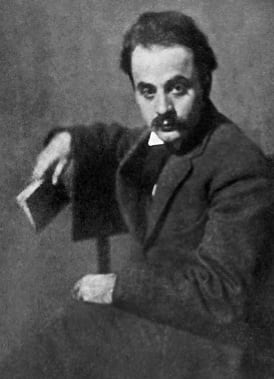
Khalil Gibran en 1913 · Public domain
In their words
«Your children are not your children. They are the sons and daughters of Life’s longing for itself.»The Prophet (1923), «On Children»

Their central idea
Almustafa and the prophetic voice: Gibran does not present himself as a prophet: he creates one.
See in context
Biography
5 min read
Bsharri, beneath the cedars
Jubran Khalil Jubran was born on 6 January 1883 in Bsharri, a Maronite village perched above the Qadisha valley in Mount Lebanon, then an autonomous mutasarrifate of the Ottoman Empire. His mother, Kamila Rahmeh, a priest's daughter, brought to the marriage a son from an earlier union, Boutros; his father, Khalil, a difficult man in debt from gambling, was imprisoned in 1891 for embezzlement while serving as a tax collector, and the family's property was seized. The future poet's childhood passed between poverty, the parish school—where he learned the rudiments of Arabic and Syriac—and a landscape of gorges, cedars and monasteries that would return, transfigured, in almost everything he wrote.
Boston and the gaze of others
In June 1895 Kamila made a decision unusual for a woman of her background: she emigrated to the United States with her four children and left her husband behind. The family settled in Boston's South End, one of the largest Syrian-Lebanese immigrant quarters in the country. The boy was enrolled at the Josiah Quincy School under the anglicised spelling "Kahlil Gibran", which he kept for life, and began drawing at the Denison House settlement. His teachers introduced him to the photographer and publisher Fred Holland Day, a central figure of Boston aestheticism, who photographed him in Oriental costume, lent him books and opened to him an artistic world that a boy of his origins could hardly have reached alone.
Between Beirut and bereavement
Afraid he would forget his roots, the family sent him in 1898 to Beirut to study at the Maronite Collège de la Sagesse (Madrasat al-Hikma), where he was trained in Arabic language and literature. He returned to Boston in 1902 on learning that his younger sister Sultana had died of tuberculosis. In the following months he lost his half-brother Boutros to the same disease and his mother, who died of cancer in June 1903. At twenty he was left alone with his sister Marianna, who supported them both as a seamstress. His biographers agree that this triple loss set the elegiac tone of his early work.
Mary Haskell and Paris
In 1904 he exhibited his drawings for the first time at Day's studio, and there he met Mary Haskell, headmistress of a Boston girls' school nine years his senior. It was the decisive encounter of his life: Haskell paid for his training, debated every idea with him and for years revised the English of his books sentence by sentence. Her journals and their correspondence, published in 1972 as Beloved Prophet, are the richest source on the private man. Thanks to her he spent 1908 to 1910 in Paris, first at the Académie Julian and then in the studio of the Symbolist Pierre Marcel-Béronneau. Meanwhile he was publishing in Arabic: a short essay on music (1905), the stories of Nymphs of the Valley (1906) and Spirits Rebellious (1908), an indictment of clerical and feudal power which, as Barbara Young later told it, was burned in a Beirut marketplace.
New York and the Pen League
In 1911 he settled in a studio of the Tenth Street Studio Building in New York, which he called "the Hermitage" and where he lived until his death. The following year he published The Broken Wings, a short novel about impossible love in a society ruled by clergy and notables, and began his correspondence with the writer May Ziadeh in Cairo: it lasted almost twenty years, and they never met. In 1914 came A Tear and a Smile, gathering the prose poems he had published in the émigré press. During the First World War he worked for the relief committee for the victims of the Mount Lebanon famine, and in 1920 he refounded, with Nasib Arida, Abd al-Masih Haddad, Mikhail Naimy and other émigré writers, the Pen League (al-Rabita al-Qalamiyya), which renewed Arabic poetic language from American exile.
The Prophet
From 1918 he wrote mainly in English. Alfred A. Knopf published that year The Madman, a collection of parables, and then The Forerunner (1920). In 1923 came The Prophet: twenty-six discourses in poetic prose that Almustafa, a sage who has waited twelve years for the ship that will take him back to the isle of his birth, addresses to the people of the city of Orphalese on love, marriage, children, work, pain, freedom and death. Critics received it coolly, but the book has never gone out of print and has been translated into more than a hundred languages. Gibran illustrated it himself with washes of naked bodies and veiled faces indebted to William Blake and Rodin.
The last years
There followed Sand and Foam (1926), a book of aphorisms, and Jesus, the Son of Man (1928), in which seventy-seven imagined contemporaries—friends, enemies, disciples—remember Jesus. In this period he worked with the poet Barbara Young, who served as his unpaid secretary and who, after his death, completed and published The Garden of the Prophet (1933). Gibran, who drank heavily, had been in declining health since the late 1920s. He was admitted to St. Vincent's Hospital in New York on 10 April 1931 and died the same day, aged forty-eight; the certificate recorded cirrhosis of the liver with incipient tuberculosis in one lung. His biographers report that he refused the last rites.
Return to the mountain
His body was taken to Lebanon in the summer of 1931 and laid in the old monastery of Mar Sarkis in Bsharri, which his family bought and which is now the Gibran Museum. He bequeathed the future American royalties of his books to his native village, and in 1950 Mary Haskell gave nearly a hundred of his artworks to the Telfair Museum in Savannah. Academic critics have viewed his popular success with suspicion, but his place in modern Arabic literature is beyond dispute: Salma Khadra Jayyusi called him the most important single influence on Arabic poetry in the first half of the twentieth century. In the West, The Prophet became a bedside book of the 1960s counterculture and is still read at weddings and funerals, often by readers who know nothing of the Maronite emigrant who wrote it.
Sources: Bushrui, Suheil y Jenkins, Joe. Kahlil Gibran, Man and Poet: A New Biography. Oxford: Oneworld, 1998. · Gibran, Jean y Gibran, Kahlil. Kahlil Gibran: His Life and World. Boston: New York Graphic Society, 1974 (ed. rev. Nueva York: Interlink, 1991). · Waterfield, Robin. Prophet: The Life and Times of Kahlil Gibran. Londres: Allen Lane / Nueva York: St. Martin's Press, 1998. · Hilu, Virginia (ed.). Beloved Prophet: The Love Letters of Kahlil Gibran and Mary Haskell, and Her Private Journal. Nueva York: Alfred A. Knopf, 1972. · Naimy, Mikhail. Kahlil Gibran: A Biography. Nueva York: Philosophical Library, 1950 (orig. árabe, Beirut, 1934).
Timeline
A life, year by year
Each point is a documented event. Click to read it, with its source and degree of certainty.
January 6, 1883age 0Bsharri, Monte Líbano
Birth
Jubran Khalil Jubran is born into a poor Maronite family in Bsharri, son of Khalil Jubran and Kamila Rahmeh.
DocumentedBushrui, Suheil y Jenkins, Joe. Kahlil Gibran, Man and Poet: A New Biography. Oxford: Oneworld, 1998.
After their death
- 1933The Garden of the Prophet
- 1950Gift to the Telfair
- 1972Beloved Prophet
January 6, 1883 · age 0
Birth
Jubran Khalil Jubran is born into a poor Maronite family in Bsharri, son of Khalil Jubran and Kamila Rahmeh.
Documented
1891 · age 8
His father's imprisonment
Khalil Jubran is imprisoned for embezzlement and the family property is seized; the mother decides to emigrate.
Documented
June 25, 1895 · age 12
Emigration to the United States
Kamila leaves with Boutros, Jubran, Marianna and Sultana; the family settles in Boston's South End and the boy enters the Josiah Quincy School.
Documented
1896 · age 13
F. Holland Day
Through Denison House he meets the photographer and publisher Fred Holland Day, who photographs him and introduces him to Boston's artistic circles.
Documented
1898 – 1902 · age 15
Studies in Beirut
He enters the Maronite Collège de la Sagesse (Madrasat al-Hikma), studying Arabic and literature until 1902.
Documented
April 2, 1902 · age 19
Death of Sultana
His younger sister dies of tuberculosis; Gibran returns to Boston. Boutros dies in March 1903 and his mother in June.
Documented
January 1904 · age 21
First exhibition; Mary Haskell
He exhibits drawings at Day's studio and meets Mary Haskell, who will become his patron, confidante and editor.
Documented
1905 · age 22
First book in Arabic
The press of the newspaper al-Muhajir publishes Nubdha fi fann al-musiqa, a short essay on music.
Documented
July 1908 – 1910 · age 25
Studies in Paris
With Haskell's financial support he studies at the Académie Julian and then with Pierre Marcel-Béronneau, returning in October 1910. That year Spirits Rebellious is published.
Documented
1911 · age 28
Settles in New York
He settles in the Tenth Street Studio Building, in the studio he will call 'the Hermitage', where he lives until his death.
Documented
1912 · age 29
The Broken Wings and May Ziadeh
He publishes al-Ajniha al-mutakassira and sends a copy to May Ziadeh, beginning a correspondence of nearly twenty years without ever meeting her.
Documented
1918 · age 35
The Madman
His first book in English, published by Alfred A. Knopf, his publisher from then on.
Documented
1920 · age 37
The Pen League
With Nasib Arida, Abd al-Masih Haddad, Mikhail Naimy and other Mahjar writers he refounds the Pen League, of which he is president.
Documented
September 1923 · age 40
The Prophet
Knopf publishes The Prophet, illustrated by the author. Lukewarm critical reception; enduring readership to this day.
Probable
1928 · age 45
Jesus, the Son of Man
He publishes his choral portrait of Jesus through seventy-seven imagined witnesses.
Documented
April 10, 1931 · age 48
Death
He dies on the day of his admission; the recorded cause is cirrhosis of the liver with incipient tuberculosis.
Documented
August 1931
Burial at Mar Sarkis
His remains reach Bsharri and rest in the former monastery of Mar Sarkis, now the Gibran Museum.
Documented
1933
The Garden of the Prophet
Barbara Young completes and publishes the posthumous book from the author's manuscripts.
Documented
1950
Gift to the Telfair
Mary Haskell Minis gives nearly a hundred of Gibran's artworks to the Telfair Museum.
Documented
1972
Beloved Prophet
Virginia Hilu publishes the letters of Gibran and Haskell and her journals, the principal source for his biography.
Documented
Works
Essential works
The works without which their legacy cannot be understood.
Written work · 1912
The Broken Wings
الأجنحة المتكسرة
A short novel narrated by a young man who at eighteen falls in love with Selma Karamy in Beirut. The archbishop forces her father to marry her to his nephew, and their love burns out in secret meetings until Selma dies in childbirth. Regarded as one of the first modern romantic novels in Arabic, it is both an idealised autobiographical tale and an indictment of women's condition in Lebanese society.
4 editions · amazon.es

Written work · 1923
The Prophet
Gibran's masterpiece. Almustafa, who has waited twelve years in the city of Orphalese for the ship that will take him home, answers before leaving the questions of the seeress Almitra and the townspeople on twenty-six subjects: love, marriage, children, giving, work, joy and sorrow, freedom, reason and passion, pain, friendship, prayer, beauty, religion and death. Rhythmic prose with biblical resonances, illustrated with twelve drawings by the author. Despite cool reviews it has never gone out of print since 1923 and has been translated into more than a hundred languages.
11 editions · amazon.com

Written work · 1928
Jesus, the Son of Man
Jesus, the Son of Man: His Words and His Deeds as Told and Recorded by Those Who Knew Him
A choral portrait of Jesus through seventy-seven imagined testimonies—Peter, Mary Magdalene, Caiaphas, Pilate, a Lebanese shepherd, a Greek philosopher. Gibran presents a virile Jesus, poet and rebel, far from the 'lamb' of devotional imagery. Its genesis has been linked to the portrait he drew of ʿAbdu'l-Bahá in New York in 1912.
5 editions · amazon.com

Correspondence · 1972
Beloved Prophet
Beloved Prophet: The Love Letters of Kahlil Gibran and Mary Haskell, and Her Private Journal
Virginia Hilu's edition of hundreds of letters exchanged by Gibran and Mary Haskell between 1908 and 1931, with extracts from her journal, in which she recorded their conversations word for word. It is the most important documentary source for his life, his working method and the making of The Prophet.
2 editions · amazon.com
Complete works (24)
Kahlil Gibran
Music (A Profile of the Art of Music)
The Conscious LibraryMusic (A Profile of the Art of Music)
1905

Nymphs of the Valley
1906

Spirits Rebellious
1908

A Tear and a Smile
1914

The Madman
1918

The Processions
1919

Twenty Drawings
1919
Kahlil Gibran
The Tempests
The Conscious LibraryThe Tempests
1920

The Forerunner
1920
Kahlil Gibran
The New and the Marvelous
The Conscious LibraryThe New and the Marvelous
1923

Sand and Foam
1926

The Earth Gods
1931

The Wanderer
1932
The Garden of the Prophet
1933

Prose Poems
1934

A Treasury of Kahlil Gibran
1951

Thoughts and Meditations
1960

A Self-Portrait
1959

Lazarus and His Beloved
1973
Kahlil Gibran
Blue Flame: The Love Letters of Kahlil Gibran to May Ziadah
The Conscious LibraryBlue Flame: The Love Letters of Kahlil Gibran to May Ziadah
1979
Quotations
Quotations located in a specific work. Each carries its provenance and its level of confidence.
Your children are not your children. They are the sons and daughters of Life’s longing for itself.VerifiedThe Prophet (1923), «On Children»
Apocryphal quotes or disputed attributions (2)
«"If you love somebody, let them go, for if they return, they were always yours. And if they don't, they never were."»
It circulates widely under Gibran's name, but it does not appear in The Prophet, The Madman, The Forerunner or Sand and Foam (checked against Project Gutenberg and Wikisource), nor in the anthologies of his Arabic work. It is an anonymous self-help maxim from the second half of the twentieth century.
«Kennedy's line 'Ask not what your country can do for you…' comes from Gibran.»
In 'The New Frontier' (1925) Gibran contrasts those who ask what their country can do for them with those who ask what they can do for their country. The resemblance to the 1961 inaugural address is real, but there is no documentary proof that Kennedy or his speechwriters knew the text: it is a hypothesis, not a quotation.
Last words
There are no verifiable records of their last words.
No reliably attested last words exist. He died at St. Vincent's Hospital in New York on the night of 10 April 1931, a few hours after admission; Barbara Young, who was with him, left a devout account of those days (This Man from Lebanon, 1945), and later biographers report that he refused the last rites, but none records a verifiable final sentence.
Source: Young, Barbara. This Man from Lebanon: A Study of Kahlil Gibran. Nueva York: Alfred A. Knopf, 1945.
Ask
What their work answers
Twelve great human questions and what their texts allow us to answer, with references. We never put words in their mouth.
What is the Absolute? Does God exist?
A God who plays with children and in whose heart we live
Both personal and impersonalInferred from their doctrine
Gibran built no theology, but his English work sketches a God at once intimate and cosmic. In The Prophet, Almustafa advises not to seek God as a solver of riddles: it is enough to look around to see Him playing with the children, walking in the clouds, smiling in the flowers and waving His hands in the trees. This God diffused in nature is also Someone in whom one dwells: when you love, the book says, do not say that God is in your heart, but rather that you are in the heart of God. Gibran also speaks of a divine self in each person, greater than the small self, towards which man grows. His Jesus, the Son of Man and his Arabic stories distrust churches that lock God into dogmas at the service of power.
Compare this question with other teachersWho am I? Is there a true self?
A soul that unfolds like a lotus of countless petals
An evolving soulStated explicitly
In The Prophet, Gibran presents the self as a sea boundless and measureless, impossible to chart: whoever claims to have found the truth should say he has found a truth, because the soul walks upon all paths and unfolds itself like a lotus of countless petals. In man there coexist a divine self, comparable to the ocean or the sun, and a part that is not yet fully human, shapeless and clumsy, seeking its own awakening. Life consists in growing towards that greater self. And this growth does not end with death: in the book's farewell, Almustafa announces that after a brief rest upon the wind another woman shall bear him. Gibran thinks of the self as a process, not a finished substance.
Compare this question with other teachersWhy do we suffer?
Pain is the shell that breaks so that understanding may be born
Karma and the soul's learningStated explicitly
In The Prophet, Gibran gives pain a meaning of growth: pain is the breaking of the shell that encloses understanding, like the stone of the fruit that must break so its heart may stand in the sun. Much of suffering, he adds, is self-chosen: it is the bitter potion by which the physician within heals the sick self. And sorrow enlarges: the deeper it carves into one's being, the more joy one can contain, for joy and sorrow are inseparable. The same Gibran, in his early Arabic stories, denounced the suffering inflicted by the clergy and the feudal lords on the poor and on the women of Lebanon. But in his mature work pain is above all a school of the soul.
Compare this question with other teachersWhat happens after death?
To die is to melt into the sun; and another woman shall bear me
Rebirth according to karmaStated explicitly
In The Prophet, when Almitra asks him about death, Almustafa replies that to know its secret one must seek it in the heart of life, for life and death are one, even as the river and the sea are one. To die is not to vanish but to stand naked in the wind and melt into the sun, to let the breath be freed from its restless tides so that it may seek God unencumbered. And in the book's farewell the prophet announces his return: a little while, a moment of rest upon the wind, and another woman shall bear him. Gibran thus combines two images, dissolution into the greater life and return to another existence, without fixing them in a doctrine. What there is not in his work is fear: death belongs to the same movement as life.
Compare this question with other teachersHow is liberation or salvation attained?
Free when we break the chains we ourselves have forged
Through direct knowledgeInferred from their doctrine
Gibran proposes no doctrine of salvation; what his work describes is an inner liberation. In The Prophet, Almustafa warns those who prostrate themselves before freedom that they will be free not when their days are without a care, but when cares girdle their life and yet they rise above them naked and unbound. The chains that weigh on them, he says, they have forged themselves, and what they would cast off is a fragment of their own self. The path is self-knowledge: the heart knows in silence the secrets of the days and the nights, and that knowledge must be allowed to reach words without trying to measure it. To be freed is to recognise the greater self waiting within and to stop identifying with the small one.
Compare this question with other teachersIs a teacher necessary?
The teacher only leads to the threshold of one's own mind
The teacher is withinStated explicitly
In The Prophet, when a teacher asks him to speak of teaching, Almustafa replies that no one can reveal to another anything but what already lies half asleep in the dawning of his own knowledge. The teacher who walks in the shadow of the temple among his followers gives not of his wisdom but of his faith and his lovingness; if he is indeed wise he does not bid you enter the house of his wisdom, but leads you to the threshold of your own mind. The vision of one lends not its wings to another: each must stand alone in his knowledge of God. Gibran, who lived surrounded by readers who treated him as a prophet, always distrusted that role; his Almustafa teaches and departs.
Compare this question with other teachersIs the world real?
God walks in the clouds and waves His hands in the trees
Manifestation of the divineStated explicitly
Gibran sees the world as a place of the divine. In The Prophet, whoever would know God need only look around: he will see Him playing with the children, walking in the cloud, outstretching His arms in the lightning and descending in rain, smiling in flowers and rising to wave His hands in trees. Daily life is the temple and the religion. This vision, heir to romanticism and mysticism, does not make the world an appearance: the earth, work, the body and love have a sacred value in his work, and beauty is almost a revelation; we live, says one of his aphorisms, only to discover it. What Gibran fights is not the world but the institutions that diminish it.
Compare this question with other teachersWhat is love?
Love neither possesses nor would be possessed: we are in the heart of God
Love of God and neighbourStated explicitly
The chapter on love in The Prophet is Gibran's most widely read. Love crowns and crucifies, makes one grow and prunes; it gives naught but itself and takes naught but from itself; it possesses not nor would it be possessed, for love is sufficient unto love. Whoever loves must not think he can direct the course of love: it is love that, if it finds him worthy, directs his. And its origin is divine: when you love, says Almustafa, do not say that God is in your heart, but rather that you are in the heart of God. In marriage he asks that there be spaces in the togetherness. In Jesus, the Son of Man, love is also charity without frontiers towards the other, the poor and the enemy.
Compare this question with other teachersAre we free, or is everything determined?
You will be free by rising above your bonds, not by lacking them
Real free willInferred from their doctrine
Gibran does not discuss determinism in philosophical terms, but his work affirms a demanding inner freedom. In The Prophet, freedom does not consist in a life without cares but in rising above them unbound; the chains that weigh are usually those one has forged oneself. In the chapter on reason and passion, the soul is a ship that needs the rudder of reason and the sails of passion: man steers his course, though not the winds. Gibran also insists on shared responsibility: the righteous man is not wholly innocent of the deeds of the wicked, because all are part of one life. Freedom is real, but it is conquered and never purely individual.
Compare this question with other teachersWhy meditate or pray?
I cannot teach you to pray in words: prayer is the expansion of oneself
Meditation is not a techniqueStated explicitly
In The Prophet, when a priestess asks him to speak of prayer, Almustafa answers that people pray in their distress and need, and he wishes they would pray also in the fullness of their joy. Prayer is not asking: it is the expansion of oneself into the living ether. Whoever enters the temple only to ask will receive nothing; it is enough to enter the temple invisible. And he adds that he cannot teach anyone to pray in words, for God listens to no words save those He Himself utters through our lips. In the chapter on religion he goes further: daily life is the temple and the religion, and whoever sets apart one hour for God and another for himself has understood nothing.
Compare this question with other teachersCan reason know the ultimate?
The heart knows in silence what reason merely steers
The ultimate lies beyond the mindInferred from their doctrine
Gibran does not despise reason, but he places it. In The Prophet, reason and passion are the rudder and the sails of the seafaring soul: reason alone is a confining force, passion alone a flame that burns itself out; the soul must exalt reason to the height of passion so that it may sing. The deepest knowledge, however, is not reasoned. Your hearts, says Almustafa, know in silence the secrets of the days and the nights, and the ear thirsts to hear that knowledge; but the self is a sea without measure, and one should not try to sound it with a measuring rod. That is why whoever says he has found the truth should say he has found a truth.
Compare this question with other teachersWithdraw from the world or transform it?
Work is love made visible, and tyranny must be denounced
Engage with the worldStated explicitly
Gibran never preached withdrawal. His early Arabic stories, such as Spirits Rebellious, denounced the oppression exercised by the clergy and feudal lords over the peasants and women of Lebanon, and the book was badly received by the religious authorities. In New York he took part in the life of the Arab emigration, founded the Pen League with other writers and worked for relief to Syria and Mount Lebanon during the famine of the First World War. In The Prophet, spirituality is lived in work, marriage, the house and trade: work is love made visible, and whoever works without love would do better to sit at the temple gate and take alms.
Compare this question with other teachers
Affinities & tensions
Affinities and tensions
Calculated question by question from their positions. The reason for each agreement or clash, on click.
Thinks most like
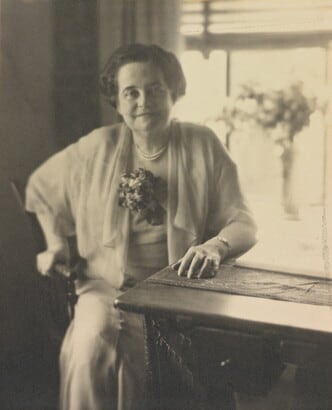
Alice A. Bailey
They agree on: What is the Absolute? Does God exist? · Who am I? Is there a true self? · Why do we suffer?
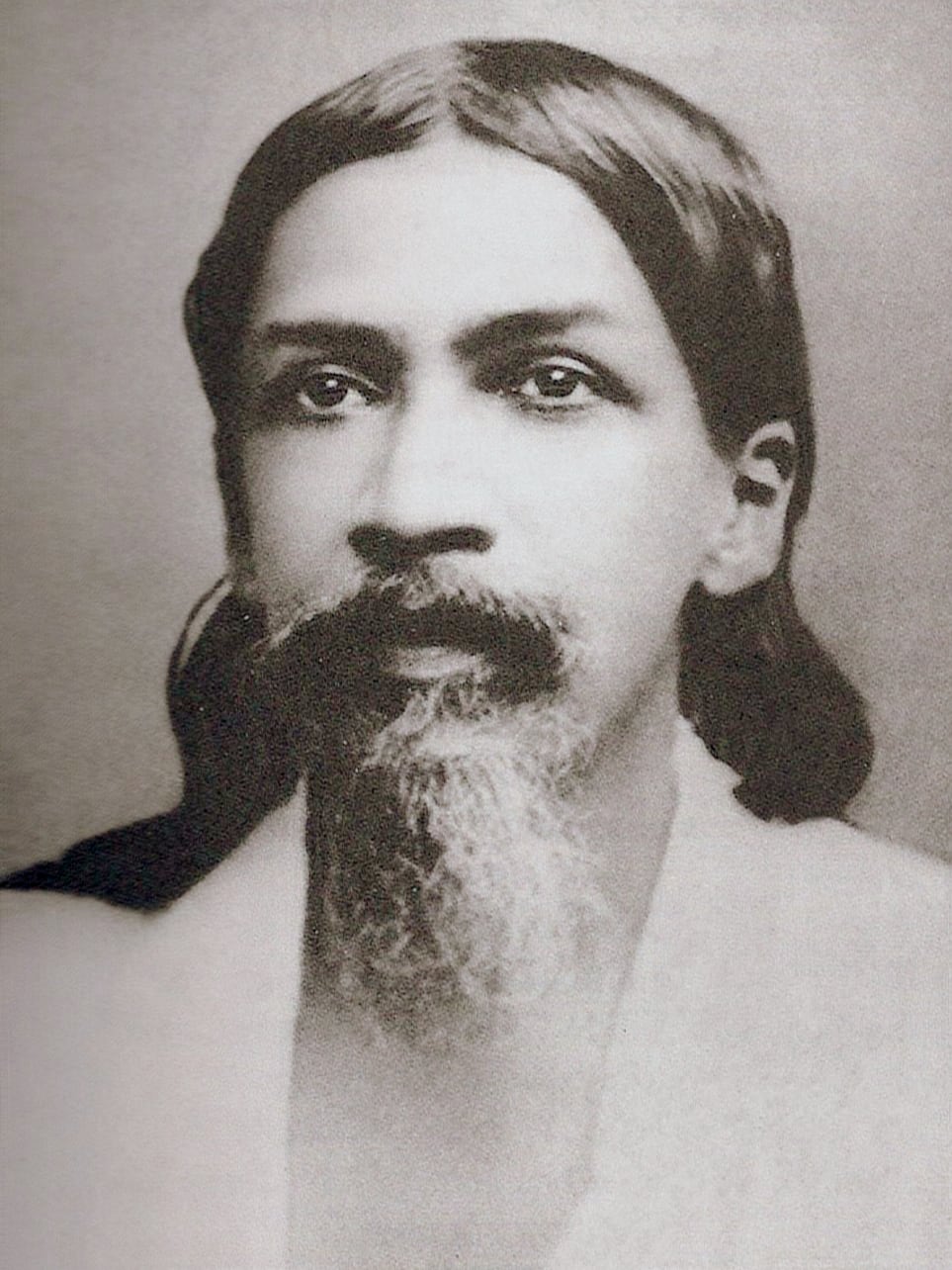
Sri Aurobindo
They agree on: What is the Absolute? Does God exist? · Who am I? Is there a true self? · What happens after death?
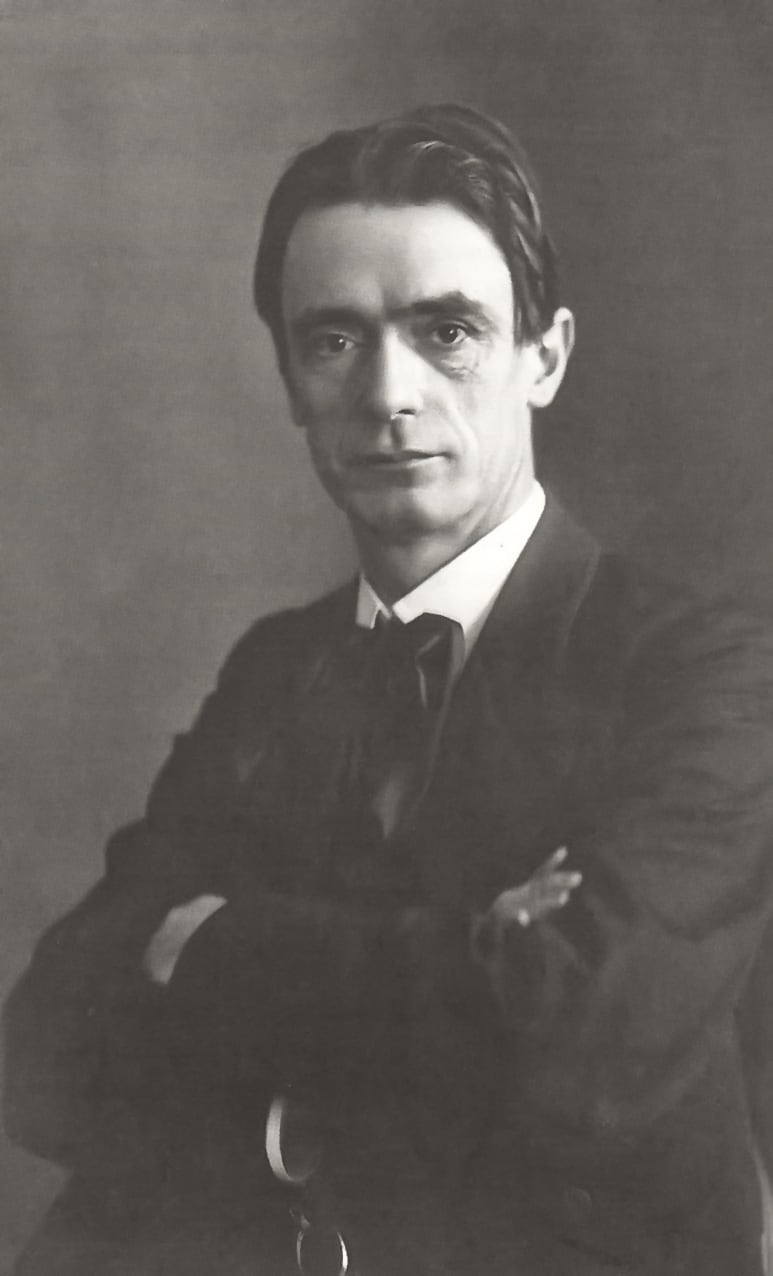
Rudolf Steiner
They agree on: What is the Absolute? Does God exist? · Who am I? Is there a true self? · Why do we suffer?
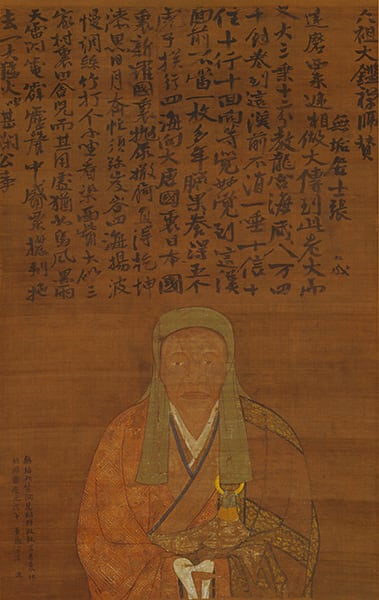
Huineng
They agree on: How is liberation or salvation attained? · Is a teacher necessary? · Is the world real?

Anecdotes and stories
Anecdotes and stories
Documented1896–1898
The boy in Holland Day's photographs
Origin of the story: Account reconstructed by Jean and Kahlil Gibran from the correspondence of Day and Jessie Beale; the photographs are held by the Library of Congress (LCCN 95503209) and the Metropolitan Museum.
Source: Gibran, Jean y Gibran, Kahlil. Kahlil Gibran: His Life and World. Boston: New York Graphic Society, 1974 (ed. rev. Nueva York: Interlink, 1991).
Disputed1908
Spirits Rebellious on the bonfire
Origin of the story: The burning comes from Barbara Young, This Man from Lebanon (1945); Waterfield and Bushrui-Jenkins confirm the scandal but find no record of a formal excommunication.
Source: Young, Barbara. This Man from Lebanon: A Study of Kahlil Gibran. Nueva York: Alfred A. Knopf, 1945.
Documented1908–1931
The editing evenings with Mary Haskell
Origin of the story: Mary Haskell's journals and letters, held at the University of North Carolina and edited by Virginia Hilu in Beloved Prophet (1972).
Source: Hilu, Virginia (ed.). Beloved Prophet: The Love Letters of Kahlil Gibran and Mary Haskell, and Her Private Journal. Nueva York: Alfred A. Knopf, 1972.
Documented1912–1931
Twenty years of letters without a meeting
Origin of the story: Gibran's letters edited by Salma Haffar al-Kuzbari and Suheil Bushrui (al-Shu'la al-zarqa', 1979; Blue Flame, 1983).
Source: Bushrui, Suheil y Kuzbari, Salma Haffar (eds. y trads.). Blue Flame: The Love Letters of Kahlil Gibran to May Ziadah. Harlow: Longman, 1983.
Unverifiable1908–1910
'The William Blake of the twentieth century'
Origin of the story: An attribution going back to Gibran himself and Barbara Young (1945); critical biographers find no trace of it in Rodin's papers.
Source: Waterfield, Robin. Prophet: The Life and Times of Kahlil Gibran. Londres: Allen Lane / Nueva York: St. Martin's Press, 1998.
Testimony1912
The portrait of ʿAbdu'l-Bahá
Origin of the story: Juliet Thompson's diary (published as The Diary of Juliet Thompson, 1983); the portrait survives. The link with Jesus, the Son of Man is an interpretation by later scholars.
Teachings
Teachings
The notions that structure their thought, explained in context.
Almustafa and the prophetic voicealmustafa-la-voz-profetica
Wisdom literature, Nietzsche and the biblical prophetic tradition read from the Mahjar.
Source: Bushrui, Suheil y Jenkins, Joe. Kahlil Gibran, Man and Poet: A New Biography. Oxford: Oneworld, 1998.
The god-selfel-yo-divino
Romantic pantheism, Blake and Sufi mysticism; an ethics of inwardness.
Reconciled oppositeslos-contrarios-reconciliados
Romanticism and Eastern Christian mysticism.
Love that does not possessel-amor-que-no-posee
A critique of patriarchal marriage in Mount Lebanon; a mysticism of love.
Work as love made visibletrabajo-amor-visible
An ethic of craft; Arts and Crafts; wisdom tradition.
The Mahjar and the Arabic prose poemmahyar-y-poema-en-prosa
Modern Arabic literature; Lebanese emigration to the Americas.
Source: Hawi, Khalil S. Kahlil Gibran: His Background, Character and Works. Beirut: American University of Beirut, 1963 (reed. Londres: Third World Centre, 1982).
Videos
Videos
Recordings, interviews and documentaries. Videos play from YouTube; they are not hosted here.
وثائقي عن جبران خليل جبران (Documental sobre Gibran)
Documentary· AR· 26 min
Gibran National CommitteeOfficial channel
أرواح متمردة – جبران خليل جبران (Espíritus rebeldes)
Documentary· AR· 53 min
Al Jazeera Documentary
Khalil Gibran – Une vie, une œuvre (France Culture, 1990)
Documentary· FR· 1990· 78 min
ÉCLAIR BRUT
Khalil Gibran
Documentary· FR· 52 min
KTO TV
Gibran Khalil Gibran
Documentary· ES· 27 min
Canal22Official channel
Gibran Kahlil Gibran Museum, an in-depth explanation with Mr. Joseph Geagea
Documentary· EN· 26 min
Anthony Rahayel
Gibran, Naimy and Afifa Karam: Gender Politics in Mahjar Literature — Elizabeth Saylor
Lecture· EN· 21 min
Gibran ChairOfficial channel
In Search of a Prophet — Kahlil Gibran: An Unparalleled Guide for Our Times (Paul-Gordon Chandler)
Lecture· EN· 66 min
The Jerusalem Fund & Palestine Center
Kahlil Gibran ~ with Paul-Gordon Chandler
Lecture· EN· 62 min
Banyen Books & Sound
Interview of Kahlil Gibran, artist, by David Ossman in Boston
Interview· EN· 10 min
ArtistKahlil Gibran
Academy Conversations: Khalil Gibran's The Prophet
Interview· EN· 2015· 12 min
OscarsOfficial channel
The Madman by Kahlil Gibran (audiolibro)
Third-party recording· EN· 45 min
LearnOutLoud
Gallery
Gallery
Images with verified licences. Each keeps its authorship and attribution.
Manuscripts
Manuscripts
Manuscript witnesses and ancient texts, with their custodian and conditions of access.
EN · Latin · 1904–1931
Kahlil Gibran–Mary Haskell papers
- Surviving witness
- Cartas autógrafas y diarios de Mary Haskell
- Custodian
- Southern Historical Collection, University of North Carolina at Chapel Hill
Connections
Connections
Influences, discipleships and affinities. Documented relations are distinguished from similarities identified by analysis.
Corresponded with
Mary Haskell
Patron, editor and confidante from 1904 to 1931; hundreds of letters and her journal document the relationship.
Documented relation
Corresponded with
May Ziadeh
Literary and amorous correspondence from 1912 to 1931; they never met.
Documented relation
Met
Mijaíl Naimy
Close friend from 1916, fellow member of the Pen League and author of a biography of Gibran (1934).
Documented relation
Met
Fred Holland Day
Boston photographer and publisher who discovered him in 1896 and organised his first exhibition in 1904.
Documented relation
Met
ʿAbdu'l-Bahá
Gibran drew his portrait in New York in 1912; the meeting left a lasting impression.
Documented relation
Influenced by
Friedrich Nietzsche
A decisive reading in his Paris and New York years; Thus Spoke Zarathustra is the formal antecedent of The Madman and The Prophet.
Documented relation
Influenced by
William Blake
A model as visionary poet-painter, acknowledged by Gibran and noted by all his biographers.
Documented relation
Influenced by
Central figure of his religious imagination; he devoted Jesus, the Son of Man (1928) to him, and he is the implicit model for Almustafa.
Documented relation
Influenced by
He devoted to him one of the portraits in al-Bada'i' wa-l-Tara'if (1923), as part of his interest in Islamic mysticism.
Documented relation
Influenced
Osho commented on The Prophet in two volumes of talks, The Messiah (1987), and quoted it often.
Documented relation
Ideas akin to
Love as a consuming and transforming force, and poetry as a mystical path, bring Gibran close to Rumi; no direct influence is documented.
Similarity identified by analysis
Contemporary of
Contemporaries in the United States of the 1890s with no known contact; both contributed to the American reception of Eastern spirituality.
Similarity identified by analysis
Linked from other profiles
Sources
Sources
Bibliography and catalogues consulted for this profile.
- Bushrui, Suheil y Jenkins, Joe. Kahlil Gibran, Man and Poet: A New Biography. Oxford: Oneworld, 1998.
- Gibran, Jean y Gibran, Kahlil. Kahlil Gibran: His Life and World. Boston: New York Graphic Society, 1974 (ed. rev. Nueva York: Interlink, 1991).
- Waterfield, Robin. Prophet: The Life and Times of Kahlil Gibran. Londres: Allen Lane / Nueva York: St. Martin's Press, 1998.
- Hilu, Virginia (ed.). Beloved Prophet: The Love Letters of Kahlil Gibran and Mary Haskell, and Her Private Journal. Nueva York: Alfred A. Knopf, 1972.
- Naimy, Mikhail. Kahlil Gibran: A Biography. Nueva York: Philosophical Library, 1950 (orig. árabe, Beirut, 1934).
- Young, Barbara. This Man from Lebanon: A Study of Kahlil Gibran. Nueva York: Alfred A. Knopf, 1945.
- Wikidata, «Kahlil Gibran» (Q47737).
- Hawi, Khalil S. Kahlil Gibran: His Background, Character and Works. Beirut: American University of Beirut, 1963 (reed. Londres: Third World Centre, 1982).
- Project Gutenberg: Gibran, Kahlil, The Prophet (Nueva York: Knopf, 1923), ebook n.º 58585; The Madman (1918), n.º 5616; The Forerunner (1920), n.º 54580.
- Gibran National Committee (Comité National Gibran), Museo Gibran, Bsharri.
- Telfair Museums, Savannah: colección Kahlil Gibran (legado de Mary Haskell Minis, 1950).
- Wikipedia (en), «Kahlil Gibran», consultada el 25 de octubre de 2026 (sección «Later years and death»).
- Wikisource en árabe: textos de Yubrán Jalil Yubrán (al-Ajniha al-mutakassira; Dam'a wa-ibtisama, 1914; al-Arwah al-mutamarrida, 1908; Nubdha fi fann al-musiqa, 1905).
- Bushrui, Suheil y Kuzbari, Salma Haffar (eds. y trads.). Blue Flame: The Love Letters of Kahlil Gibran to May Ziadah. Harlow: Longman, 1983.
- Library of Congress, Prints and Photographs Division: F. Holland Day, retratos de Kahlil Gibran (c. 1898), LCCN 95503209.
- Wikisource en inglés: Gibran, Kahlil, Sand and Foam: A Book of Aphorisms (Nueva York: Knopf, 1926).
- Osho (Bhagwan Shree Rajneesh). The Messiah: Commentaries on Kahlil Gibran's The Prophet. 2 vols. Rajneeshpuram / Poona: Rajneesh Foundation International, 1987.
- Rights holder
- Gibran National Committee (Bsharri), beneficiario por legado testamentario de los derechos de autor del escritor. Las obras publicadas hasta 1930 son de dominio público en EE. UU.; toda la obra del autor (m. 1931) es de dominio público en la UE desde 2002 y en España desde 2012. Las traducciones y ediciones modernas tienen sus propios derechos.
- Official site
- www.gibrankhalilgibran.org/
Pending confirmation
What this profile has not yet been able to settle. We would rather say so than fill it in.
- Confirmar el día exacto de publicación de The Prophet (septiembre de 1923, según la tradición editorial de Knopf).
- Localizar ISBN verificados de ediciones en árabe moderno, ruso e hindi de The Prophet y de al-Ajniha al-mutakassira (no figuran en Open Library).
- Verificar ISBN de las traducciones inglesas de A Tear and a Smile (Nahmad, 1950) y The Broken Wings (Ferris, 1957).
- Fechar y registrar las piezas dramáticas póstumas (The Blind y las cinco obras breves en árabe publicadas entre 1973 y 1993).
- Comprobar si la Southern Historical Collection (UNC) ofrece digitalización de los papeles Haskell-Gibran y su signatura.
- The Earth Gods (1931), The Wanderer (1932) y The Garden of the Prophet (1933) entrarán en dominio público en EE. UU. en 2027, 2028 y 2029: añadirlos entonces a la sala de lectura si hay texto en línea.
Researched on 2026-10-25