Theosophy
Alice A. Bailey
1880 – 1949Historically documented person
Alice A. Bailey (1880–1949), a British esoteric writer who settled in the United States, signed twenty-four books that form one of the most influential bodies of post-Blavatsky Theosophy. She presented nineteen of them as telepathic dictations from a master she called 'the Tibetan' (later Djwhal Khul), and five as her own work. With her husband Foster Bailey she founded the Lucis Trust and the Arcane School, spread the Great Invocation and popularised the phrase 'New Age'. Her legacy is as wide as it is contested.
- works
- 33works
- editions
- 55editions
- quotes
- 8quotes
- videos
- 9videos
- images
- 3images
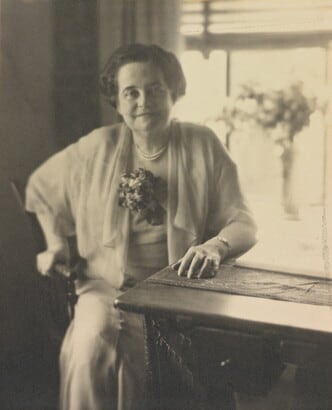
Alice A. Bailey en la década de 1940 · Public domain
In their words
«From the point of Light within the Mind of God / Let light stream forth into the minds of men.»La Gran Invocación (versión de 1945), en The Reappearance of the Christ, páginas preliminares

Their central idea
Bailey distinguishes automatic writing, which she considers dangerous because it requires passivity, from the conscious telepathy she claimed to practise: positive attention, full control of the senses and faithful transcription, correcting only the English.
See in context
Biography
5 min read
A child of the Victorian upper middle class
Alice La Trobe-Bateman was born in Manchester on 16 June 1880 into a family of engineers. Her grandfather, John Frederic La Trobe-Bateman, was one of the great builders of dams and waterworks in industrial England; her father, Frederic Foster La Trobe-Bateman, worked for the family firm and took the infant to Montreal, where he was engaged on the Victoria Bridge over the St Lawrence. Almost everything we know of those years comes from a single witness: the Unfinished Autobiography she wrote between 1945 and 1948 and her widower published in 1951. It is a precious source and an interested one, written by a woman who read her own life in the light of the mission she believed she had received.
In that account childhood is surrounded by luxury and by a persistent sadness. Her mother died at twenty-nine, when Alice was six; her father, already ill, died soon afterwards on a sea voyage to Tasmania. The two sisters grew up with their grandparents at Moor Park, Surrey, and, after the grandfather's death, among governesses and long stays at Castramont, the Scottish home of an aunt, Margaret Maxwell. The author does not hide what many biographers would have left out: before the age of fifteen, she says, she tried to take her own life three times.
The visitor in the turban
The episode that orders her whole autobiography took place on Sunday 30 June 1895, at Castramont. Alone in the drawing-room while the family was at church, she saw — so she tells it — a tall man in European clothes and a turban walk in and tell her that there was work planned for her in the world if she could master her temper. Years later, in the shrine room of the Theosophical Society's Esoteric Section at Krotona, she believed she recognised him in the portrait of the Master Koot Hoomi. No other witness corroborates the scene; it is, strictly speaking, personal testimony.
Evangelist, wife, factory hand
The young Anglican first found her vocation in evangelism. She worked in the soldiers' homes run by Elise Sandes in Ireland and then in British India, where she opened homes at Umballa and Ranikhet. There she met Walter Evans, a soldier who hoped to be ordained; they married in Britain around 1907 and moved to Cincinnati, where he studied at Lane Theological Seminary before becoming an Episcopal priest. The marriage, as she tells it, was a sequence of hardship and violence. Three daughters were born — Dorothy, Mildred and Ellison — and in 1915, in Pacific Grove, California, the couple separated. To feed the girls, the granddaughter of the Manchester engineer worked in a sardine cannery.
Theosophy and rupture
In Pacific Grove two English women brought her to the local Theosophical lodge. Blavatsky's Secret Doctrine displaced the Bible on her bedside table, and around 1917–1918 she moved to Krotona, the Society's Californian headquarters, where she ran the cafeteria, joined the Esoteric Section and came to edit the magazine The Messenger. In January 1919 she met Foster Bailey, who that year became National Secretary; once her divorce was granted, they married in 1921.
The couple led a current critical of Adyar's management and of the Esoteric Section's grip on the Society, at the height of the controversy over Annie Besant's prophecies about Krishnamurti. The Chicago convention of 1920 ended with both removed from their posts. Historians such as Bruce F. Campbell and Olav Hammer add a deeper motive: Besant's distrust of the communications Alice claimed to receive.
The voice of the Tibetan
In November 1919, sitting on a hill near her Hollywood home, Bailey heard, as she later told it, a musical note and a voice asking her to write books for the public. She refused; the voice returned three weeks later and she agreed to try. So were born the first chapters of Initiation, Human and Solar (1922). For thirty years she took down — insisting always that this was not automatic writing but a conscious telepathy — nineteen volumes attributed to 'the Tibetan', whom she eventually identified as Djwhal Khul, a master of the Theosophical tradition. Five books she signed as her own. Authorship is therefore the central question of her work: Theosophical readers accept it as transmission; historians treat it as Bailey's own literary production cast in the form of revelation. She herself reports, wryly, that Jung was said to regard the Tibetan as a personification of her higher self.
The Lucis Trust and the Arcane School
Settled in New York, the Baileys founded in 1922 the press that would publish all her work — first the Lucifer Publishing Company, a name alluding to light that they soon changed to Lucis — and in April 1923 the Arcane School, a correspondence training in meditation and service that required no oaths of obedience. Around it grew the magazine The Beacon, World Goodwill (with explicit support for the United Nations) and the Triangles network, groups of three people meditating daily. A first stanza of the Great Invocation appeared in 1937, and in 1945 the version that now circulates in dozens of languages.
Doctrine, influence and controversy
Her system reworks the Theosophy of Blavatsky and Leadbeater: a hierarchy of masters guiding evolution, seven rays of energy qualifying persons and nations, an 'esoteric' astrology and healing, and the expectation of a reappearance of the Christ who would found a universal religion. Her insistent use of the phrase 'New Age' explains why many scholars count her among the forerunners of the movement of that name, by way of Findhorn and other groups.
Controversy is part of the legacy and must be recorded without softening it. Texts such as Education in the New Age and The Destiny of the Nations contain a theory of spiritual races and passages on Judaism that writers such as Yonassan Gershom, Hannah Newman and Victor Shnirelman have called antisemitic or racist. The Lucis Trust holds that such readings take an evolutionary and symbolic vocabulary out of context; the reader will find both arguments.
The end
Suffering from heart and blood disease, Bailey refused invalidism from 1946 and kept dictating letters from her hospital bed. She died in New York on 15 December 1949. Her autobiography was left unfinished; The Rays and the Initiations, the last volume of A Treatise on the Seven Rays, appeared in 1960. The Lucis Trust holds the rights and keeps her books available online and translated into many languages.
Sources: Bailey, Alice A. The Unfinished Autobiography. Nueva York: Lucis Publishing Company, 1951 (© 1951, renovado 1979, Lucis Trust). · Campbell, Bruce F. Ancient Wisdom Revived: A History of the Theosophical Movement. Berkeley: University of California Press, 1980. · Hammer, Olav. Claiming Knowledge: Strategies of Epistemology from Theosophy to the New Age. Leiden: Brill, 2001. · Sutcliffe, Steven J. Children of the New Age: A History of Spiritual Practices. Londres: Routledge, 2003. · Bailey, Alice A. The Reappearance of the Christ. Nueva York: Lucis Publishing Company, 1948 (texto de la Gran Invocación en las páginas preliminares).
Timeline
A life, year by year
Each point is a documented event. Click to read it, with its source and degree of certainty.
June 16, 1880age 0Mánchester
Born in Manchester
Alice La Trobe-Bateman is born, daughter of the engineer Frederic Foster La Trobe-Bateman and Alice Hollinshead, granddaughter of the waterworks builder John Frederic La Trobe-Bateman.
DocumentedBailey, Alice A. The Unfinished Autobiography. Nueva York: Lucis Publishing Company, 1951 (© 1951, renovado 1979, Lucis Trust).
After their death
- 1951The Unfinished Autobiography published
- 1960Last volume of the dictation
June 16, 1880 · age 0
Born in Manchester
Alice La Trobe-Bateman is born, daughter of the engineer Frederic Foster La Trobe-Bateman and Alice Hollinshead, granddaughter of the waterworks builder John Frederic La Trobe-Bateman.
Documented
c. 1886 · age 6
Death of her mother
Her mother dies at twenty-nine, when Alice is six; soon after, her father dies on a voyage to Tasmania and the girls are left with their grandparents at Moor Park, Surrey.
Documented
June 30, 1895 · age 15
The visitor in the turban
According to her autobiography, a stranger in a turban visits her at her aunt's house and announces a future task. She later identifies him with the Master Koot Hoomi. It is uncorroborated personal testimony.
Disputed
c. 1900 – 1906
Evangelist in the Soldiers' Homes
She works with Elise Sandes in the evangelical homes for British soldiers, first in Ireland and then in India, where she opens homes at Umballa and Ranikhet and meets Walter Evans.
Documented
c. 1907 · age 27
Marriage to Walter Evans
She marries Walter Evans in a private chapel in Britain and moves with him to Cincinnati, where he studies at Lane Theological Seminary before being ordained an Episcopal priest.
Probable
1915 · age 35
Separation and the sardine cannery
She separates definitively from Walter Evans and, with three young daughters (Dorothy, Mildred and Ellison), works in a sardine cannery to support them.
Documented
c. 1918 · age 38
Esoteric Section of the Theosophical Society
Having discovered Theosophy in Pacific Grove she settles at Krotona, joins the Esoteric Section and, in the shrine room, believes she recognises her 1895 visitor as the Master K. H.
Documented
November 1919 · age 39
First contact with 'the Tibetan'
According to her account, a voice asks her to write books for the public. After refusing once, she agrees to try and receives the first chapters of Initiation, Human and Solar.
Disputed
1920 · age 40
Break at the Chicago convention
The 1920 American Theosophical convention seals the confrontation between Adyar loyalists and the Baileys' group, who lose their posts and leave the Society.
Documented
1921 · age 41
Marriage to Foster Bailey
Her divorce from Walter Evans granted, she marries Foster Bailey (1888–1977), who will be her partner in every later undertaking.
Documented
1922 · age 42
First book and own press
Initiation, Human and Solar, Letters on Occult Meditation and The Consciousness of the Atom are published. The Baileys found the Lucifer Publishing Company, soon renamed Lucis.
Documented
April 1923 · age 42
Founding of the Arcane School
They organise the Arcane School, a correspondence training in meditation and service, with no vows of obedience to any person.
Documented
1925 · age 45
A Treatise on Cosmic Fire
Her longest and most technical work appears, dedicated to H. P. Blavatsky.
Documented
1936 · age 56
A Treatise on the Seven Rays begins
Esoteric Psychology I is published, the first of the treatise's five volumes; the last will appear in 1960.
Documented
1945 · age 65
The Great Invocation
She circulates the version of the Great Invocation now used in many languages ('From the point of Light within the Mind of God…'); a first stanza had appeared in 1937.
Documented
December 15, 1949 · age 69
Death in New York
She dies after years of heart and blood disease. Foster Bailey announces the news by letter to students around the world.
Documented
1951
The Unfinished Autobiography published
Foster Bailey edits the autobiography left off in 1948, with a foreword and appendices on the Arcane School.
Documented
1960
Last volume of the dictation
Lucis publishes The Rays and the Initiations, closing A Treatise on the Seven Rays and the cycle of twenty-four books.
Documented
Works
Essential works
The works without which their legacy cannot be understood.
Traditional attribution · 1922
Initiation, Human and Solar
An account of the Hierarchy of masters that, in Theosophy, guides human evolution, and of the five initiations through which the disciple is said to pass. It describes the organisation of that Hierarchy, the role of the Lords of the Flame and the meaning of solar initiation. It is the classic entry point to Bailey's corpus.
4 editions · amazon.com

Traditional attribution · 1925
A Treatise on Cosmic Fire
The longest and most technical work in the corpus: a cosmology of over a thousand pages on the three fires (by friction, solar and electric), the planes, the devas and the evolution of solar systems, conceived as a psychological development of The Secret Doctrine. It is the reference text for advanced students of Bailey.
2 editions · amazon.com

Traditional attribution · 1934
A Treatise on White Magic
A Treatise on White Magic, or The Way of the Disciple
A commentary on fifteen 'rules for magic' concerning the creation of thought-forms by the soul: 'white magic' here means the soul's creative work through the personality, in service of the group. It contains the formula that energy follows thought and extensive practical advice for the disciple.
2 editions · amazon.com

Traditional attribution · 1936
Esoteric Psychology I
A Treatise on the Seven Rays, Vol. I: Esoteric Psychology I
First volume of A Treatise on the Seven Rays: it presents the seven fundamental energies (will, love-wisdom, active intelligence, harmony through conflict, concrete knowledge, devotion and ceremonial order) and their action on the kingdoms of nature. It is the foundation of 'ray psychology'.
2 editions · amazon.com

Posthumous work · 1951
The Unfinished Autobiography
A first-person account of childhood in the English upper middle class, evangelism in India, the unhappy marriage to Walter Evans, poverty in California, the discovery of Theosophy, the break with Adyar and the beginning of the work with the Tibetan. It is the indispensable primary source on her life.
2 editions · amazon.com
Complete works (33)

Letters on Occult Meditation
1922

The Consciousness of the Atom
1922

The Light of the Soul
1927

The Soul and Its Mechanism
1930

From Intellect to Intuition
1932

From Bethlehem to Calvary
1937

Esoteric Psychology II
1942
Alice A. Bailey
Between War and Peace
The Conscious LibraryBetween War and Peace
1942

Discipleship in the New Age I
1944

The Problems of Humanity
1947

The Reappearance of the Christ
1948

The Destiny of the Nations
1949

Glamour: A World Problem
1950

Telepathy and the Etheric Vehicle
1950

Esoteric Astrology
1951

Esoteric Healing
1953

Education in the New Age
1954

Discipleship in the New Age II
1955

The Externalisation of the Hierarchy
1957

The Rays and the Initiations
1960

Ponder on This
1971

Serving Humanity
1972

The Soul: The Quality of Life
1974

The Labours of Hercules
1974
Quotations
Quotations located in a specific work. Each carries its provenance and its level of confidence.
From the point of Light within the Mind of God / Let light stream forth into the minds of men.VerifiedLa Gran Invocación (versión de 1945), en The Reappearance of the Christ, páginas preliminares
Essential ideas (editorial summary)
Out of respect for copyright, these ideas are summarised in our own words and are not presented as literal quotations.
- Bailey distinguishes automatic writing, which she considers dangerous because it requires passivity, from the conscious telepathy she claimed to practise: positive attention, full control of the senses and faithful transcription, correcting only the English.
- The Tibetan's books are presented without any claim to authority: readers should accept them only if their intuition and practice confirm them, not out of devotion to a master.
- Service to humanity, rather than personal devotion, is for Bailey the soul's own instinct and the way of approach to the spiritual Hierarchy.
- All religions spring from one spiritual source; humanity will come to recognise this in a universal religion that does not abolish the traditions but gathers them.
- Illness has its ultimate root in a blocked soul life; healing consists in restoring the right relation between soul and personality.
Last words
Later account by witnesses
«I have much to be thankful for. I have had a rich and full life.»I have much to be thankful for. I have had a rich and full life.
Words spoken, according to Foster Bailey, 'that last afternoon' in the New York hospital; he reproduces them in the letter sent to students the morning after her death, included in the foreword to the Unfinished Autobiography. The sentence goes on to thank the many people around the world who had been kind to her. They are not necessarily her last words in a literal sense, but the last her husband recorded. The same letter says her Master K. H. came for her, a statement of faith rather than verifiable testimony.
Source: Bailey, Alice A. The Unfinished Autobiography. Nueva York: Lucis Publishing Company, 1951 (© 1951, renovado 1979, Lucis Trust).
Ask
What their work answers
Twelve great human questions and what their texts allow us to answer, with references. We never put words in their mouth.
What is the Absolute? Does God exist?
An Absolute of which nothing can be said, and conscious Logoi animating the worlds
Both personal and impersonalStated explicitly
Alice Bailey, who attributes most of her books to a Tibetan master, Djwhal Khul, proposes a hierarchical theology. At the summit she places the One About Whom Naught May Be Said, an unknowable absolute. Below are the entities she calls Logoi: the Solar Logos, whose body of manifestation is the solar system, and the Planetary Logos, the life animating the Earth, whom she identifies with Sanat Kumara. These Logoi are conscious, purposeful and manifest as will, love-wisdom and active intelligence, so that to speak of God is to speak of real beings in evolution, in whose life, in the Pauline formula she takes up (Acts 17:28), «we live and move and have our being». In A Treatise on Cosmic Fire she develops this cosmology in detail. The divine thus has an ineffable ground and conscious faces at different scales, though none is the creator God of the Abrahamic religions.
Compare this question with other teachersWho am I? Is there a true self?
Monad, soul and personality: a soul learning to govern its vehicle
An evolving soulStated explicitly
Alice Bailey describes the human being on three levels: the Monad, a spiritual spark of the Logos; the soul or Ego, dwelling on the higher mental plane; and the personality, made up of the physical, emotional and mental bodies, which is the soul's vehicle in each incarnation. The everyday self is the personality, which over many lives believes itself independent and pursues its own ends. Evolution consists in the soul taking control of that vehicle, until the personality is integrated and becomes the soul's instrument, and later the soul itself merges with the Monad. In A Treatise on White Magic (1934) she presents this process as the disciple's great work, and in The Light of the Soul (1927), her commentary on the Yoga Sutras, she links it to meditation.
Compare this question with other teachersWhy do we suffer?
Illness and pain have karmic roots, individual and collective
Karma and the soul's learningStated explicitly
Alice Bailey addresses suffering mainly in Esoteric Healing (1953), where she sets out the causes of disease. She distinguishes individual causes, arising from the person's emotional and mental life and karma; group causes, inherited from humanity as a whole; and planetary causes, linked to the evolution of the Earth's Logos. Pain results from friction between the soul, which seeks expression, and a personality that resists or is still unintegrated. In her framework suffering is not punishment but the consequence of causes and a means of learning: it forces the personality to reorient towards the soul and prepares the disciple for service. Bailey insists that karma is also collective, and that much of an individual's pain comes from debts of the humanity they share.
Compare this question with other teachersWhat happens after death?
Dying is withdrawing consciousness from the body; the soul incarnates again
Rebirth according to karmaStated explicitly
Alice Bailey treats death as a technical process of the soul's withdrawal. In Esoteric Healing, in the section on the art of dying, she describes how the soul withdraws the thread of consciousness and the thread of life, from the head and the heart, and leaves the physical body; it then sheds the etheric, astral and mental bodies in what she calls the elimination of the vehicles. The freed soul remains on its own plane assimilating experience and then incarnates again according to the law of rebirth and karma, until it completes its evolutionary and initiatory cycle. Bailey criticises the fear of death, which she attributes to identification with form and to materialism, and proposes that it should become a conscious and orderly transition. She also announces that future humanity will understand death as a mere change of state.
Compare this question with other teachersHow is liberation or salvation attained?
Discipleship, meditation and group service lead to the initiations under the Hierarchy
Through disciplined practiceStated explicitly
Alice Bailey, who attributes most of her work to a Tibetan master named Djwhal Khul, describes liberation as the result of a long evolution through successive initiations. In Initiation, Human and Solar she presents those initiations as expansions of consciousness the disciple attains after purifying the personality and placing it at the service of the soul. The method is occult meditation, control of the mind and, characteristically, service to humanity carried out in groups rather than individual perfection. A Treatise on White Magic develops the rules of that inner work. The last stage is not escape from the world but incorporation into the spiritual Hierarchy which, according to her system, guides planetary evolution.
Compare this question with other teachersIs a teacher necessary?
The Masters of the Hierarchy guide the disciple, but are found through the soul
IndispensableStated explicitly
In Alice Bailey's system, spiritual evolution is guided by a Hierarchy of Masters, and discipleship consists in entering into conscious relationship with it. Initiation, Human and Solar describes initiations as events in which those Masters intervene, and Discipleship in the New Age gathers instructions she attributes to one of them, the Tibetan, addressed to groups of disciples. At the same time, Bailey insists that contact with the Master is not sought for the personality nor brought about by fascination with a figure: it is reached through the soul, once the disciple has become useful for service. The outer teacher is structural, but the way to him passes through the interior.
Compare this question with other teachersIs the world real?
Cosmic and systemic planes: the physical world is the densest of seven
Planes of existenceStated explicitly
Alice Bailey inherited and expanded Theosophical cosmology. In A Treatise on Cosmic Fire she describes a universe organised into seven planes, each divided into seven subplanes, which in turn form part of the cosmic physical plane of a still greater reality. All of it is the body of manifestation of a great Entity, the Solar Logos, just as the human body is the vehicle of the soul. The physical world is real, but it is the densest of these levels and a limited expression of higher energies. Bailey understands evolution as the process by which consciousness ascends through these planes, and matter is the necessary medium of that expression.
Compare this question with other teachersWhat is love?
Love-wisdom is God's nature and the principle of the new age
Love of God and neighbourStated explicitly
Alice Bailey places love at the centre of her cosmology. In Esoteric Psychology she describes seven rays or qualities of divine energy, and the second, that of love-wisdom, is for her the dominant quality of our solar system: God is love in a literal, energetic sense. Christ is the embodiment of that principle, and his reappearance, which she announces in The Reappearance of the Christ, would consist in the manifestation of that love in humanity. Bailey insists that this is not personal affection or sentimentality, but an impersonal, inclusive and lucid love, expressed as goodwill towards the whole and as group service. The disciple moves from love of self and of one's own to love of the group, of humanity and of the divine plan.
Compare this question with other teachersAre we free, or is everything determined?
The soul chooses to incarnate and the personality learns to answer it
Karma and choiceInferred from their doctrine
Bailey inherits from theosophy the law of karma as the law of cause and effect, but articulates it around the relation between soul and personality. In *Esoteric Psychology* and *A Treatise on White Magic* the soul chooses its conditions of incarnation according to its purpose and karma, while the personality at first lives ruled by its desires and environment, without true freedom. As contact with the soul is established through meditation and service, the person moves from being driven by forces to directing them consciously. Freedom, then, is not a starting point but an evolutionary achievement: it grows as personal will aligns with the soul's will and, beyond it, with the Plan.
Compare this question with other teachersWhy meditate or pray?
Meditating to align personality with soul and place oneself in service
Returning to the source of the IStated explicitly
Bailey devoted her early books to meditation, *Letters on Occult Meditation* (1922) and *From Intellect to Intuition* (1932). There she presents it as a gradual process: concentration, meditation and contemplation, whose aim is to establish conscious contact between the personality (body, emotions and mind) and the soul, and then to receive by intuition impressions from higher planes. But unlike other paths, contact with the soul is not the end: it must be translated into service to humanity. Hence her insistence on group meditation and on the *Great Invocation*, a prayer she spread from 1945 to be recited by people of any creed.
Compare this question with other teachersCan reason know the ultimate?
From intellect to intuition: the trained mind opens the way to higher knowledge
Esoteric knowledgeStated explicitly
Bailey does not set reason against spiritual knowledge: she orders them. In *From Intellect to Intuition* (1932) she holds that the concrete mind must be educated and disciplined, because only a trained intellect can, through meditation, open to intuition, which she defines as direct apprehension of truth coming from the soul. That intuition gives access to a wisdom which, according to her, is guarded by a hierarchy of masters and revealed gradually to humanity according to its capacity. Her own books are presented as telepathic transmission from one of those masters, the Tibetan. Reason is a necessary stage of the path, not its end, and esoteric knowledge is tested in the disciple's own experience.
Compare this question with other teachersWithdraw from the world or transform it?
The modern disciple serves in the world: goodwill as a spiritual task
Engage with the worldStated explicitly
Alice Bailey holds that the disciple of the new age does not withdraw to an ashram or a monastery but serves in the midst of modern life, in politics, education, science or finance. In the 1930s she launched the idea of the New Group of World Servers, an invisible network of people of goodwill working, each in their own field, for human unity, and created activities such as Triangles and World Goodwill within the Lucis Trust. In The Problems of Humanity (1947) she analyses issues of her time — post-war reconstruction, relations between races and nations, capital and labour, the churches, education — and proposes tackling them through goodwill. For her, meditation is itself a form of service, since it channels spiritual energy into the world, but it must be translated into concrete action.
Compare this question with other teachers
Affinities & tensions
Affinities and tensions
Calculated question by question from their positions. The reason for each agreement or clash, on click.
Thinks most like
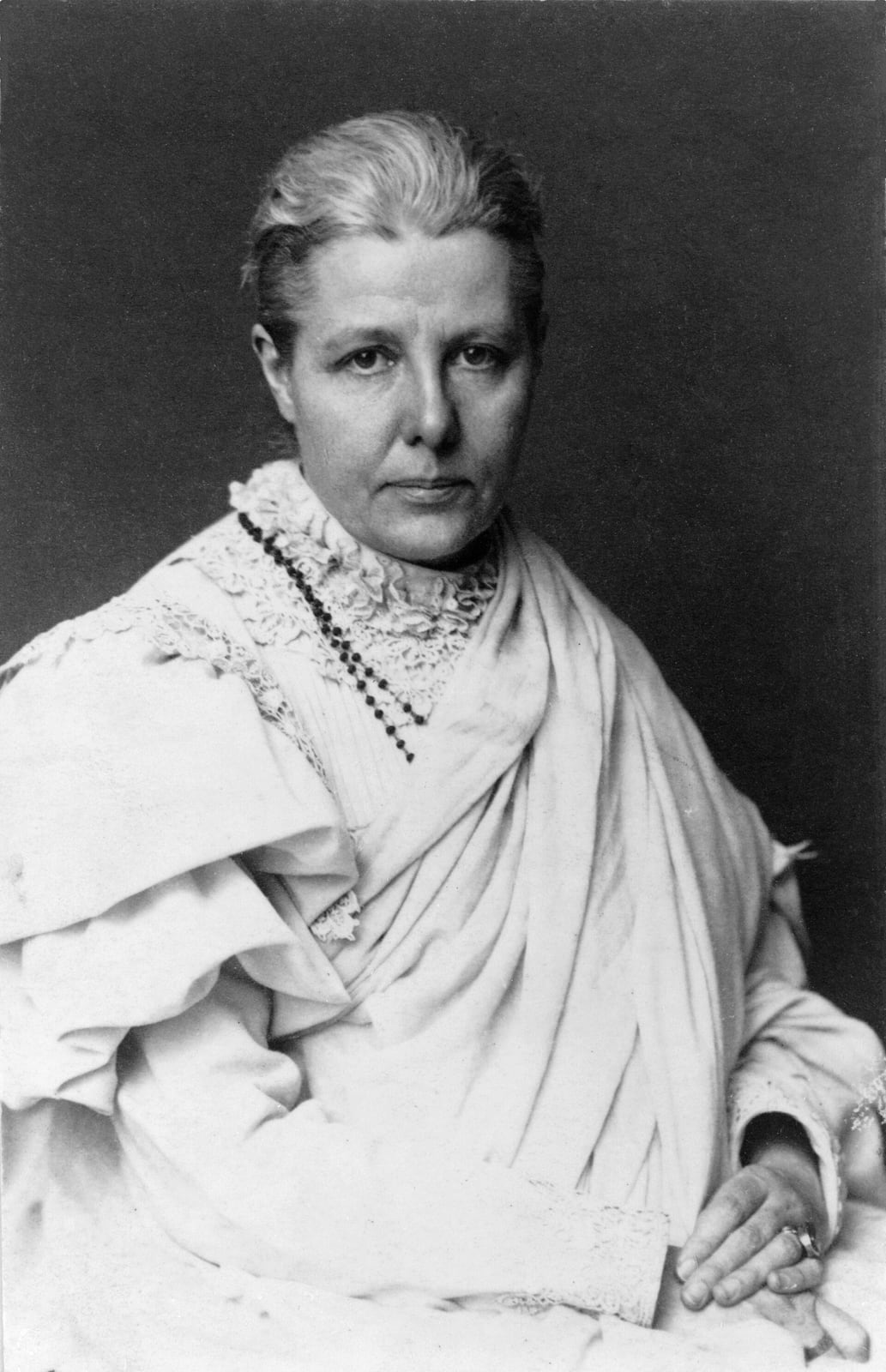
Annie Besant
They agree on: What is the Absolute? Does God exist? · Is the world real? · Who am I? Is there a true self?
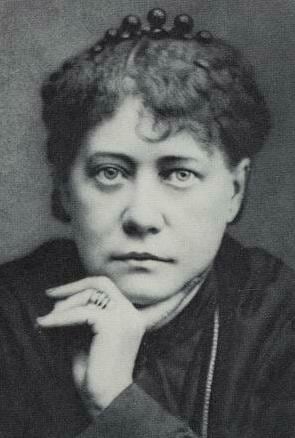
Helena Blavatsky
They agree on: Is the world real? · Who am I? Is there a true self? · Why do we suffer?
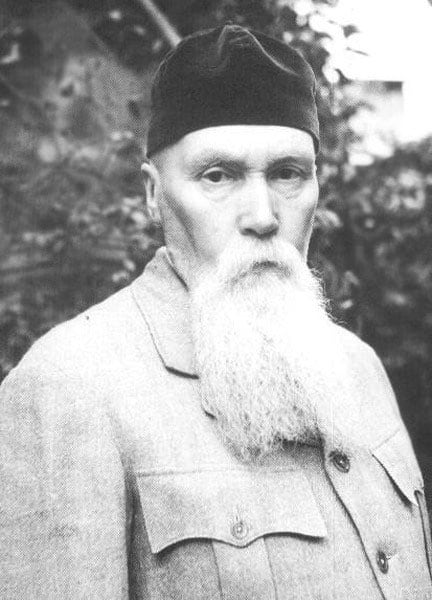
Nicholas Roerich
They agree on: Is a teacher necessary? · Is the world real? · Can reason know the ultimate?
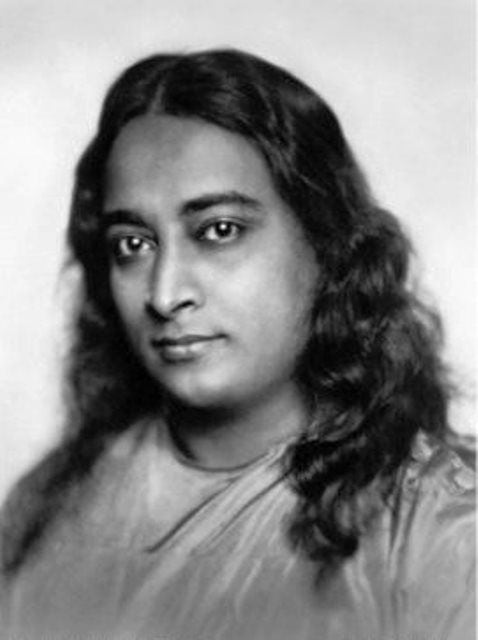
Paramahansa Yogananda
They agree on: What is the Absolute? Does God exist? · Who am I? Is there a true self? · Why do we suffer?
Thinks most unlike


They agree on
Alice A. Bailey · Helena Blavatsky
Seven planes and a nameless Principle: Theosophical cosmology and its second generation
Why: The affinity is one of direct inheritance: Bailey was formed in the Theosophical Society, where she worked in California until her break with its leadership around 1920, and she presented her work as a continuation of the line opened by The Secret Doctrine. She attributes most of her books to a Tibetan master, Djwhal Khul, a claim of hers that cannot be verified, just as the existence of Blavatsky's Mahatmas could not be verified. The differences are of emphasis and period: Blavatsky polemicises against the dogma and materialism of the nineteenth century; Bailey writes in the interwar years, with a strong emphasis on service, goodwill and the preparation of a new age.
Anecdotes and stories
Anecdotes and stories
Testimony1895
The man in the turban at Castramont
Origin of the story: Sole source: The Unfinished Autobiography, ch. I, written fifty years later. There are no other witnesses.
Testimony1918
The portrait in the Krotona shrine room
Origin of the story: The Unfinished Autobiography, ch. IV. Bailey's own account; the person who answered her is not named.
Testimony1919
'I'm not a darned psychic'
Origin of the story: The Unfinished Autobiography, ch. IV. Bailey says she did not even tell Foster Bailey about the first episode at the time.
Testimony1915
The engineer's granddaughter in the cannery
Origin of the story: The Unfinished Autobiography, chs. I and III. Autobiographical account, consistent with the known chronology but without independent documentation.
Unverifiabledécada de 1930–1940
The parcels from India
Origin of the story: The Unfinished Autobiography, ch. IV. Jung's opinion is hearsay ('I have been told'); it has not been located in his published work.
Teachings
Teachings
The notions that structure their thought, explained in context.
The Tibetan (Djwhal Khul) and telepathic impressionel-tibetano-djwhal-khul
It extends the Theosophical figure of the Masters of Wisdom and the practice of receiving teachings from them, which with Blavatsky took the form of letters.
The seven rayssiete-rayos
It reworks Theosophical notions and the image of the 'seven spirits before the throne' found in several traditions.
Source: Campbell, Bruce F. Ancient Wisdom Revived: A History of the Theosophical Movement. Berkeley: University of California Press, 1980.
The Great Invocationgran-invocacion
It belongs to the public, service-oriented side of Bailey's work, alongside World Goodwill and Triangles.
Trianglestriangulos
It is one of the Lucis Trust's services alongside the Arcane School and World Goodwill.
The New Group of World Serversnuevo-grupo-de-servidores-del-mundo
It translates into social and political language the Theosophical idea of universal brotherhood.
The reappearance of the Christreaparicion-de-cristo
It inherits the Theosophical expectation of a world teacher that Besant and Leadbeater had projected onto Krishnamurti.
Retreats
Retreats and centres
Places and gatherings linked to their teaching. We put you in touch with the organisers.
Por correspondencia y en línea (sede en Asheville, Carolina del Norte) · Estados Unidos
School for Esoteric Studies
School for Esoteric Studies
The School for Esoteric Studies offers what it calls training in purposeful living based on the Ageless Wisdom, a distance school of meditation and study that works with the teachings transmitted through Alice Bailey alongside other sources of the esoteric tradition. The work is done by correspondence and online, in English, Spanish and Italian, with a quarterly newsletter and video materials. Together with the Arcane School, it is one of the two best-known organised routes for studying Bailey's books under guidance, and it is particularly accessible to Spanish-speaking students.
Por correspondencia (oficinas en Nueva York, Londres y Ginebra) · Internacional
The Arcane School (Lucis Trust)
Lucis Trust – Arcane School
The Arcane School began in 1923, when Alice Bailey, helped by her husband Foster Bailey, started answering by correspondence the questions of readers of her books. It is part of the Lucis Trust, the organisation the couple created, and offers training in meditation and study based on the teachings set out in Bailey's work, with personal written work and guidance at a distance. The Lucis Trust also keeps up activities such as full-moon meditation meetings. Its official website sometimes rejects automated requests, but it is the organisation's known website.
Videos
Videos
Recordings, interviews and documentaries. Videos play from YouTube; they are not hosted here.
Life of Alice Bailey Part 1 of 3
Documentary· EN· 10 min
Lucis TrustOfficial channel
The Life of Alice Bailey Part 2 of 3
Documentary· EN· 10 min
Lucis TrustOfficial channel
Life of Alice Bailey Part 3 of 3
Documentary· EN· 10 min
Lucis TrustOfficial channel
The Great Invocation - A World Prayer
Original recording· EN· 2 min
Lucis TrustOfficial channel
Great Invocation Video
Original recording· EN· 5 min
Lucis TrustOfficial channel
Triangles Meditation Group Webinar - Alice Bailey's first recitation of The Great Invocation in 1945
Lecture· EN· 64 min
Lucis TrustOfficial channel
The Great Invocation in Greek
Original recording· EL· 3 min
Lucis TrustOfficial channel
La Gran Invocación (voces)
Original recording· ES· 4 min
Fundación LucisOfficial channel
La Gran Invocación – 01. Introducción
Lecture· ES· 9 min
Fundación LucisOfficial channel
Gallery
Gallery
Images with verified licences. Each keeps its authorship and attribution.
Connections
Connections
Influences, discipleships and affinities. Documented relations are distinguished from similarities identified by analysis.
Influenced by
Bailey discovered Theosophy through The Secret Doctrine, dedicated A Treatise on Cosmic Fire to Blavatsky and presented herself as continuing her teaching.
Documented relation
Disagreed with
The Baileys clashed with the leadership of Besant and the Esoteric Section in 1920; according to Hammer and Campbell, Besant distrusted the Tibetan communications.
Documented relation
Contemporary of
Bailey cites Besant's pronouncements about Krishnamurti as one of the factors dividing the Theosophical Society when she left it.
Documented relation
Influenced by
The Light of the Soul (1927) is an annotated paraphrase of the Yoga Sutras.
Documented relation
Influenced by
From Bethlehem to Calvary interprets Jesus' life as five initiations; her esoteric Christology distinguishes Jesus from the Christ.
Documented relation
Ideas akin to
Both left the Adyar Theosophical Society and built their own systems with an esoteric Christology; no direct relationship between them is recorded.
Similarity identified by analysis
Sources
Sources
Bibliography and catalogues consulted for this profile.
- Bailey, Alice A. The Unfinished Autobiography. Nueva York: Lucis Publishing Company, 1951 (© 1951, renovado 1979, Lucis Trust).
- Wikidata, «Alice Bailey» (Q260575): fechas y lugares de nacimiento y muerte.
- Lucis Trust. Catálogo de libros de Alice A. Bailey y biblioteca en línea.
- Open Library, autora OL2328289A (Alice A. Bailey): obras y ediciones con ISBN.
- Campbell, Bruce F. Ancient Wisdom Revived: A History of the Theosophical Movement. Berkeley: University of California Press, 1980.
- Hammer, Olav. Claiming Knowledge: Strategies of Epistemology from Theosophy to the New Age. Leiden: Brill, 2001.
- Sutcliffe, Steven J. Children of the New Age: A History of Spiritual Practices. Londres: Routledge, 2003.
- Bailey, Alice A. The Reappearance of the Christ. Nueva York: Lucis Publishing Company, 1948 (texto de la Gran Invocación en las páginas preliminares).
- Bailey, Alice A. Glamour: A World Problem. Nueva York: Lucis Publishing Company, 1950 (incluye «Extract from a Statement by the Tibetan», agosto de 1934).
- Bailey, Alice A. A Treatise on White Magic, or The Way of the Disciple. Nueva York: Lucis Publishing Company, 1934.
- Wikipedia (en), «Alice Bailey» (bibliografía, recepción y críticas, con referencias a Gershom, Newman, Shnirelman y Lubelsky).
- Blackthorn, Isobel. Alice A. Bailey: Life and Legacy. Edición independiente, 2020.
- Newman, Hannah. «Invocation, The Great», en Richard S. Levy (ed.), Antisemitism: A Historical Encyclopedia of Prejudice and Persecution. Santa Bárbara: ABC-CLIO, 2005, pp. 351–352.
- Gershom, Yonassan. «Antisemitic Stereotypes in Alice Bailey's Writings», 1997 (revisado en 2005); copia de archivo de 2007.
- Shnirelman, Victor A. Russian Neo-pagan Myths and Antisemitism. Acta, n.º 13: Analysis of Current Trends in Antisemitism. Jerusalén: Vidal Sassoon International Center for the Study of Antisemitism, Universidad Hebrea, 1998.
- Rights holder
- Lucis Trust (Nueva York, Londres, Ginebra). Bailey murió en 1949: sus obras son de dominio público en los países con plazo de 70 años post mortem, pero los libros publicados en Estados Unidos después de 1930 y las recopilaciones póstumas siguen protegidos allí.
- Official site
- www.lucistrust.org
Pending confirmation
What this profile has not yet been able to settle. We would rather say so than fill it in.
- Ediciones españolas con ISBN de Cartas sobre meditación ocultista, Tratado sobre fuego cósmico, La luz del alma, El alma y su mecanismo, Del intelecto a la intuición, De Belén al Calvario, Psicología esotérica II, Curación esotérica, La exteriorización de la Jerarquía, El discipulado II y la Autobiografía inconclusa (Fundación Lucis las publica, pero no se han visto en catálogo).
- Años de las ediciones españolas de Fundación Lucis, Sirio y Cárcamo (el catálogo de Open Library no los consigna).
- Folletos no registrados como obra: The Next Three Years (1934), The Present World Crisis, Today (1940), The Coming World Order, The Immediate Plans, The Interlude between War and Peace y otros mensajes de guerra, absorbidos después en La exteriorización de la Jerarquía (fuente: Open Library OL2328289A).
- Fecha original de The Labours of Hercules (1974 en libro; Wikipedia cita 1957).
- Fecha exacta y lugar del matrimonio con Walter Evans (hacia 1907) y año exacto de la muerte del padre.
- Comprobar el estatus de dominio público de la fotografía de Clara E. Sipprell (fallecida en 1975) declarada PD en Commons.
- No se ha encontrado grabación sonora ni filmada verificada de Alice Bailey; confirmar si el webinario de Lucis Trust sobre 1945 contiene audio de archivo.
- Programa de afiliación: no localizado para Lucis Trust ni Editorial Sirio.
- Sala de lectura (2026-10-25): también son de dominio público en EE. UU. y en la UE (no en España hasta 2030) A Treatise on Cosmic Fire (1925), The Light of the Soul (1927) y The Soul and Its Mechanism (1930, libre en EE. UU. desde el 1 de enero de 2026), pero no se ha localizado texto completo limpio: el ejemplar de 1925 en archive.org (treatiseoncosmic0001alic) no tiene OCR y la biblioteca en línea de Lucis Trust está tras un control de Cloudflare que impide la descarga automática. Las obras publicadas desde 1931 pueden conservar derechos en EE. UU. si se renovaron (consta la renovación de la autobiografía, 1979); comprobar renovación por título.
- Sala de lectura: los tres textos registrados llevan «caution»: entran en la sala el 1 de enero de 2030, cuando expiren los derechos en España.
- Comprobar en la Autobiografía inconclusa la participación del padre en «las obras del puente Victoria» de Montreal hacia 1880: el puente se construyó en 1854–1859 y se reconstruyó en 1897–1898 (señalado al traducir, 2026-10-25).
Researched on 2026-10-25