Buddhism · Zen / Chan · Taoism · Christian mysticism · Advaita Vedanta
Alan Watts
1915 – 1973Historically documented person
British-born American philosopher and populariser (1915–1973) who made Zen Buddhism, Taoism and Vedanta accessible to Western readers. Briefly an Episcopal priest, then a teacher in San Francisco and a voice of KPFA radio and public television, he wrote The Way of Zen, The Wisdom of Insecurity, Psychotherapy East and West and The Book. His recorded lectures continue to circulate widely.
- works
- 59works
- editions
- 150editions
- quotes
- 8quotes
- videos
- 13videos
- images
- 5images
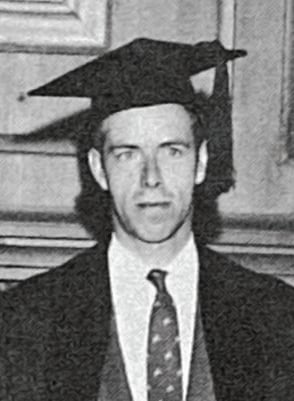
Alan Watts en la Universidad de Vermont (1958) · Public domain
In their words
«If you get the message, hang up the phone.»The Joyous Cosmology, ed. Vintage 1970, p. 26 (sobre los psicodélicos como instrumentos)

Their central idea
The feeling of being an isolated self inside the body, facing an alien world, is not a datum of experience but a learned social convention; organism and environment form a single field.
See in context
Biography
5 min read
A Kentish boy enthralled by the East
Alan Wilson Watts was born on 6 January 1915 in Chislehurst, Kent, the only child of Laurence Wilson Watts, a representative of the Michelin tyre company in London, and Emily Mary Buchan, a missionary's daughter. He grew up in a modest country cottage, learning the names of wild flowers and butterflies, surrounded by embroideries and paintings that missionaries returning from China had given his mother. Decades later he recalled being captivated by "a certain clarity, transparency, and spaciousness" he could not find in English art.
A boarder from the age of seven, first at St Hugh's preparatory school and then at The King's School, Canterbury, he received an Anglican education he remembered as grim. On holidays he travelled in France with Francis Croshaw, a cultivated epicurean with a taste for Buddhism, and in his library found the texts that would set his course. At sixteen he was secretary of the Buddhist Lodge in London, run by the barrister Christmas Humphreys. An examination essay written with more daring than prudence cost him a scholarship to Oxford, and the young man educated himself: at the Lodge, in libraries and in the company of the eccentric Serbian thinker Dimitrije Mitrinović. His biographer Monica Furlong describes him, above all, as an autodidact.
The young interpreter of Zen
In 1936, aged twenty-one, he attended the World Congress of Faiths in London and met D. T. Suzuki, whose work he had popularised that same year in The Spirit of Zen. The Legacy of Asia and Western Man followed in 1937. Two decades later he would judge his first book unscholarly and in many respects misleading; but the vocation was settled: to make Zen Buddhism, Taoism and Vedanta intelligible to the West.
At the Lodge he met Eleanor Everett, daughter of Ruth Fuller Everett, the American who later, as Ruth Fuller Sasaki, would hold a singular place in Kyoto Zen. They married in April 1938 and settled in New York, where Watts frequented the Zen teacher Sokei-an Sasaki without committing to formal training under him. He published The Meaning of Happiness in 1940 and became a United States citizen in 1943.
Episcopal priest
Looking for a professional outlet for his calling, he entered Seabury-Western Theological Seminary in Evanston, Illinois, and was ordained in the mid-1940s: his autobiography gives 1945, while the letters collected by his daughters point to 1944. He served as Episcopal chaplain at Northwestern University, translated the Mystical Theology of Pseudo-Dionysius (1944) and sought to reconcile mystical Christianity with Asian philosophy in Behold the Spirit (1947). The marriage did not survive his disinclination to monogamy: Eleanor obtained an annulment and in 1950 Watts resigned from the priesthood. That same year he married Dorothy DeWitt.
San Francisco: academy, radio and television
In 1951 he moved to California to teach at the American Academy of Asian Studies in San Francisco, which he also administered, alongside Frederic Spiegelberg, Haridas Chaudhuri and the painter Saburo Hasegawa, with whom he practised Chinese calligraphy. From 1953 he hosted an unpaid weekly programme on KPFA radio in Berkeley that won him a loyal audience. In 1951 he had published The Wisdom of Insecurity, a meditation on modern anxiety; in 1957 came The Way of Zen, the historical and philosophical account that established his reputation and has never gone out of print.
In 1958 the University of Vermont awarded him an honorary doctorate in divinity, and that summer he toured Europe with his father, visiting Carl Gustav Jung and Karlfried Graf Dürckheim. In 1959 and 1960 he recorded the series Eastern Wisdom and Modern Life for San Francisco public television station KQED. Psychotherapy East and West (1961) proposed reading Buddhism, Taoism and Vedanta as "ways of liberation" akin to psychotherapy rather than as religions or philosophies in the Western sense.
Psychedelics, counterculture and critics
From the late 1950s he took part in sessions with mescaline and LSD supervised by Californian researchers; they gave rise to The Joyous Cosmology (1962), in which he warned that such substances are instruments, like a microscope or a telephone, and that once you get the message you should hang up. He held a Harvard fellowship from 1962 to 1964, separated from Dorothy and married Mary Jane Yates King. With her he divided his life between the beached ferryboat Vallejo in Sausalito and a cabin at Druid Heights, the bohemian community founded by the poet Elsa Gidlow on the slopes of Mount Tamalpais.
Those years produced Beyond Theology (1964) and The Book: On the Taboo Against Knowing Who You Are (1966), his most personal synthesis: the universe as a cosmic game of hide-and-seek in which the separate self, encapsulated in a bag of skin, turns out to be a hallucination. Watts did not consider himself an academic. Objections also came from within Zen: Philip Kapleau accused him of dismissing seated practice, and Robert Aitken recorded D. T. Suzuki's verdict that Watts had not understood a certain classic story. Shunryu Suzuki, founder of the San Francisco Zen Center, by contrast defended him as "a great bodhisattva".
The last years
In 1971 he filmed A Conversation with Myself at Druid Heights for educational television, and in 1972 published his autobiography, In My Own Way, dedicated to Elsa Gidlow. Those were also years of worsening alcoholism that worried friends and family. In October 1973 he returned from a lecture tour in Europe, and on 16 November he died in his sleep at his home in Druid Heights, aged fifty-eight. His ashes were divided between Druid Heights and the Green Gulch Zen centre. The book he had been preparing with the tai chi master Al Chung-liang Huang, Tao: The Watercourse Way, appeared in 1975 with an afterword by Huang on his final months.
A legacy of voice
Watts left more than twenty-five books and hundreds of hours of recorded lectures, which his son Mark Watts has preserved and turned into posthumous books from transcripts. That voice, with its English diction and wry humour, has reached generations who never read his books: series, films, songs and videos reuse it endlessly, often out of context. Critics agree that he was neither a Buddhist scholar nor a lineage teacher but an exceptional populariser, whose achievement was to build bridges between East and West, between religion and psychology, and between culture and nature.
Sources: Watts, Alan. In My Own Way: An Autobiography, 1915–1965. Nueva York: Pantheon Books, 1972 (reed. New World Library, 2007, ISBN 9781577315841). · Furlong, Monica. Zen Effects: The Life of Alan Watts. Boston: Houghton Mifflin, 1986 (publicado en Reino Unido como Genuine Fake, Heinemann, 1986; reed. SkyLight Paths, 2001, ISBN 9781893361324). · Columbus, Peter J. y Rice, Donadrian L. (eds.). Alan Watts—Here and Now: Contributions to Psychology, Philosophy, and Religion. Albany: State University of New York Press, 2012 (ISBN 9781438441993). · Watts, Joan y Watts, Anne (eds.). The Collected Letters of Alan Watts. Novato: New World Library, 2017 (ISBN 9781608684151). · Chadwick, David. Crooked Cucumber: The Life and Zen Teaching of Shunryu Suzuki. Nueva York: Broadway Books, 1999.
Timeline
A life, year by year
Each point is a documented event. Click to read it, with its source and degree of certainty.
January 6, 1915age 0Chislehurst, Kent
Born in Chislehurst
Born on 6 January in Chislehurst, Kent, the only child of Laurence Wilson Watts and Emily Mary Buchan.
DocumentedWatts, Alan. In My Own Way: An Autobiography, 1915–1965. Nueva York: Pantheon Books, 1972 (reed. New World Library, 2007, ISBN 9781577315841).
After their death
- 1975Tao: The Watercourse Way
January 6, 1915 · age 0
Born in Chislehurst
Born on 6 January in Chislehurst, Kent, the only child of Laurence Wilson Watts and Emily Mary Buchan.
Documented
1922 · age 7
Boarder at St Hugh's
Aged seven he is sent as a boarder to St Hugh's preparatory school; he will later attend The King's School, Canterbury.
Documented
1931 · age 16
Secretary of the Buddhist Lodge
At sixteen he becomes secretary of the Buddhist Lodge in London, run by Christmas Humphreys.
Documented
1936 · age 21
The Spirit of Zen and D. T. Suzuki
Publishes The Spirit of Zen and meets D. T. Suzuki at the World Congress of Faiths in London.
Documented
April 1938 · age 23
Marriage and emigration
In April he marries Eleanor Everett and the couple settle in New York.
Documented
1943 · age 28
US citizenship
Becomes a United States citizen.
Documented
1945 · age 30
Ordination
Ordained an Episcopal priest after studying at Seabury-Western seminary. His autobiography gives 1945; his published letters suggest 1944.
Disputed
1947 · age 32
Behold the Spirit
Publishes Behold the Spirit, an attempt to unite mystical Christianity and Eastern philosophy.
Documented
August 1950 · age 35
Leaves the priesthood
After the annulment of his marriage he resigns from the priesthood in August; he marries Dorothy DeWitt.
Documented
1951 · age 36
American Academy of Asian Studies
Moves to San Francisco to teach at the American Academy of Asian Studies; publishes The Wisdom of Insecurity.
Documented
1953 – 1962 · age 38
KPFA programme
Begins a weekly programme on KPFA radio in Berkeley, which he will keep until 1962.
Documented
1957 · age 42
The Way of Zen
Publishes The Way of Zen, his most influential book on Zen Buddhism.
Documented
June 15, 1958 · age 43
Honorary doctorate and visit to Jung
On 15 June he receives an honorary Doctor of Divinity from the University of Vermont; that summer he visits Carl Jung in Switzerland.
Documented
1959 – 1960 · age 44
Eastern Wisdom and Modern Life
Records the television series Eastern Wisdom and Modern Life for KQED (two seasons, 1959–1960).
Documented
1961 · age 46
Psychotherapy East and West
Publishes Psychotherapy East and West.
Documented
1962 – 1964 · age 47
The Joyous Cosmology and Harvard
Publishes The Joyous Cosmology; holds a Harvard fellowship until 1964.
Documented
1966 · age 51
The Book
Publishes The Book: On the Taboo Against Knowing Who You Are.
Documented
1971 · age 56
A Conversation with Myself
Films A Conversation with Myself at Druid Heights for educational television.
Documented
1972 · age 57
In My Own Way
Publishes his autobiography, In My Own Way, dedicated to Elsa Gidlow.
Documented
November 16, 1973 · age 58
Death at Druid Heights
Dies in his sleep on 16 November at his home in Druid Heights, after returning from a European tour.
Documented
1975
Tao: The Watercourse Way
Tao: The Watercourse Way appears posthumously, completed by Al Chung-liang Huang.
Documented
Works
Essential works
The works without which their legacy cannot be understood.
Written work · 1951
The Wisdom of Insecurity
The Wisdom of Insecurity: A Message for an Age of Anxiety
Short treatise written after he left the priesthood and one of his most widely read books. It argues that modern anxiety springs from seeking security in a future that does not exist and from splitting the observing 'I' off from experience; the way out is not another belief but full attention to the present and acceptance of change. Without technical vocabulary it distils what Watts had learned from Zen, Taoism and Christian mysticism.
11 editions · amazon.com

Written work · 1957
The Way of Zen
His standard work and the book that made him internationally known. Part one reconstructs Zen's background — Indian thought, Taoism and Mahayana Buddhism — and its formation in China; part two sets out its principles and practice: zazen, koans and Zen's expression in the arts. Watts draws on general semantics and cybernetics to explain non-dual experience. In print continuously since 1957 and translated into many languages.
9 editions · amazon.com

Written work · 1961
Psychotherapy East and West
Proposes that Buddhism, Vedanta, Taoism and Zen are better understood as 'ways of liberation' — disciplines for undoing the social conditioning that produces the feeling of an isolated self — than as religions or philosophies. From there he engages Freud, Jung, existential psychology and Gregory Bateson's double-bind theory, suggesting that the Western therapist and the Eastern teacher perform similar functions. It is one of his most cited books in psychology.
7 editions · amazon.com

Written work · 1966
The Book
The Book: On the Taboo Against Knowing Who You Are
His most personal and accessible statement. Written as the book a parent might give a child on entering adult life, it argues that the sense of being an ego enclosed in a bag of skin is a social hallucination and that the universe is a single process playing hide-and-seek with itself. It blends Vedanta, Taoism, ecology and cybernetics in a lively, humorous style and became an emblematic book of the counterculture.
6 editions · amazon.com
Complete works (59)
Alan Watts
An Outline of Zen Buddhism
The Conscious LibraryAn Outline of Zen Buddhism
1932

The Spirit of Zen
1936
Alan Watts
The Legacy of Asia and Western Man
The Conscious LibraryThe Legacy of Asia and Western Man
1937
Alan Watts
The Meaning of Happiness
The Conscious LibraryThe Meaning of Happiness
1940
Alan Watts
Theologia Mystica (translation of Pseudo-Dionysius)
The Conscious LibraryTheologia Mystica (translation of Pseudo-Dionysius)
1944

Behold the Spirit
1947
Alan Watts
Easter: Its Story and Meaning
The Conscious LibraryEaster: Its Story and Meaning
1950

The Supreme Identity
1950

Myth and Ritual in Christianity
1953

Nature, Man and Woman
1958

Beat Zen, Square Zen, and Zen
1959

This Is It
1960

The Joyous Cosmology
1962

The Two Hands of God
1963

Beyond Theology
1964
Alan Watts
Nonsense
The Conscious LibraryNonsense
1967
Alan Watts
Psychedelics and Religious Experience
The Conscious LibraryPsychedelics and Religious Experience
1968

Does It Matter?
1970
Alan Watts
Erotic Spirituality
The Conscious LibraryErotic Spirituality
1971
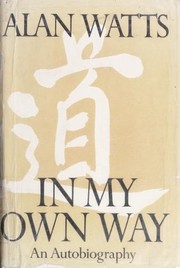
In My Own Way
1972

The Art of Contemplation
1972

Cloud-Hidden, Whereabouts Unknown
1973

Tao: The Watercourse Way
1975

The Essence of Alan Watts
1974
Quotations
Quotations located in a specific work. Each carries its provenance and its level of confidence.
If you get the message, hang up the phone.VerifiedThe Joyous Cosmology, ed. Vintage 1970, p. 26 (sobre los psicodélicos como instrumentos)
Essential ideas (editorial summary)
Out of respect for copyright, these ideas are summarised in our own words and are not presented as literal quotations.
- The feeling of being an isolated self inside the body, facing an alien world, is not a datum of experience but a learned social convention; organism and environment form a single field.
- Seeking psychological security in the future produces the very anxiety one wishes to escape; only acceptance of change and attention to the present dissolve it.
- Asian traditions such as Buddhism, Vedanta and Taoism resemble psychotherapy more than religion: their aim is to free one from conditioning, not to impose beliefs.
- The universe can be understood as a game in which a single reality hides from itself by taking every form, and enlightenment is the moment the player recognises itself.
- The West is not too materialistic but not materialistic enough: it confuses money and symbols with real things and therefore mistreats matter, the body and nature.
- Meditation is not a means of reaching a future state but a purposeless game, like music or dance, whose meaning lies in the act itself.
- Opposites — pleasure and pain, life and death, good and evil — are inseparable poles of one process, and wanting to keep only one of them is the root of frustration.
Apocryphal quotes or disputed attributions (2)
«Trying to define yourself is like trying to bite your own teeth.»
Widely circulated online under Watts's name. It expresses an image he used in lectures (the eye that cannot see itself, teeth that cannot bite themselves), but it has not been located in this wording in any of his published books; it may paraphrase a talk.
«You are an aperture through which the universe is looking at and exploring itself.»
Spread as a Watts quotation on posters and videos with no indication of work. The idea is consistent with his thought, but the sentence has not been found in his books; if it comes from a recorded lecture, the exact source remains to be identified.
Last words
There are no verifiable records of their last words.
There is no reliable record of any last words. He died in his sleep at Druid Heights on the night of 15–16 November 1973. The phrase 'the secret of life is knowing when to stop', which his widow Mary Jane Watts attributed to him and Monica Furlong records, is presented not as his last words but as something he had told her.
Source: Furlong, Monica. Zen Effects: The Life of Alan Watts. Boston: Houghton Mifflin, 1986 (publicado en Reino Unido como Genuine Fake, Heinemann, 1986; reed. SkyLight Paths, 2001, ISBN 9781893361324).
Ask
What their work answers
Twelve great human questions and what their texts allow us to answer, with references. We never put words in their mouth.
What is the Absolute? Does God exist?
God is no separate monarch: he is the whole playing at being each one
An impersonal AbsoluteStated explicitly
Alan Watts, an Episcopal priest until 1950 and afterwards a popular expositor of Asian traditions, rejected the image of God as a monarch separate from his work. In The Book he contrasts the ceramic model of the world, made by an outside craftsman, and the mechanical model with a dramatic model drawn from his reading of Vedānta: the ultimate hides from and finds itself in all beings, as in a game of hide-and-seek. Beyond Theology carries the idea into Christianity and reproaches it for having made God a jealous king. Already in The Supreme Identity, under the influence of Coomaraswamy and Guénon, he had presented the identity of the human ground with the Absolute as the common core of the great traditions.
Compare this question with other teachersWho am I? Is there a true self?
The skin-encapsulated ego is a hallucination: what you are is the whole
The Self is the AbsoluteStated explicitly
The Book, Watts's most personal work, is subtitled on the taboo against knowing who you are, and answers bluntly: the prevalent sensation of oneself as a separate ego enclosed in a bag of skin is a hallucination. For him that ego is a social convention, reinforced by language and upbringing. What one really is, is the whole process of the universe, which manifests as this person just as a wave is the ocean at one point. Watts takes this thesis from his reading of Vedānta, the identity of ātman and brahman, which he had already set out in The Supreme Identity, and combines it with Buddhism and Western psychology; in Psychotherapy East and West he presents those traditions as ways of undoing the feeling of an isolated self.
Compare this question with other teachersWhy do we suffer?
Anxiety comes from seeking security in a future that does not exist
Thought and psychological timeStated explicitly
The Wisdom of Insecurity, one of Watts's most widely read books, states the problem clearly: modern man suffers because he seeks security in a world that is essentially changing, and seeks it in a future that exists only as an idea. Living for a tomorrow that never comes, he misses the only real moment. To this is added an inner split: the self that observes and tries to control experience separates itself from experience itself, and the harder it strives to secure itself the more anxious it becomes; Watts calls this the law of reversed effort. The only way to make sense out of change, he writes, is to plunge into it, move with it and join the dance. It is his own synthesis of Buddhism, Taoism and psychology.
Compare this question with other teachersWhat happens after death?
The ego dies, not what we are: the universe wakes up again as others
What I am is never born and never diesInferred from their doctrine
Watts did not uphold personal survival or a judgement after death. But, consistently with his reading of Vedānta, he held that what we really are is not the ego that dies. In The Book and in his lectures he proposes imagining death as the end of one waking and the beginning of another: if the ego is a function of the universe, when one dies the universe goes on waking up as every new being that is born, and each of them says «I» as we did. Death for him is the other side of life, as the valley is of the mountain. In Cloud-Hidden, Whereabouts Unknown, his last book, written shortly before he died, he meditates on it with the same serenity.
Compare this question with other teachersHow is liberation or salvation attained?
Wanting liberation is the trap: there is nothing to get, only something to see
No method: total attentionInferred from their doctrine
Watts held that seeking liberation as an achievement prevents it. In The Wisdom of Insecurity he calls this the law of reversed effort: the more one tries to secure oneself or to stop thinking, the more the striving self is reinforced. In Psychotherapy East and West he presents Buddhism, Vedānta and Taoism not as religions but as ways of liberation that undo the double binds by which society convinces us we are a separate self, and notes that Zen masters often use tricks to show the disciple there is nothing to attain. On psychedelics he wrote: if you get the message, hang up the phone. Liberation is sudden understanding, not the accumulation of merit.
Compare this question with other teachersIs a teacher necessary?
A philosophical entertainer, not a guru: there is nothing to transmit
No spiritual authorityInferred from their doctrine
Watts declined to present himself as a spiritual teacher; he preferred to describe himself as a philosopher and popular expositor, and in his memoir, In My Own Way, he portrays himself ironically as an intellectual, a mystic and a disreputable epicurean. He was not a formal disciple of any lineage, though he acknowledged his debt to D. T. Suzuki and to the texts. On the teacher's role, his thesis, set out in Psychotherapy East and West and in many lectures, is that the authentic teacher transmits nothing: with paradoxes and tricks he leads the disciple to discover that what he sought was not lacking, and then the disciple no longer needs him. He distrusted dependence on gurus and on religious organisations as a substitute for understanding.
Compare this question with other teachersIs the world real?
The world is a game in which the One hides and finds itself
Manifestation of the divineStated explicitly
For Watts, the world is not a machine nor a work made from outside, but a game. From his reading of Hinduism he takes the idea of līlā, divine play, and develops it in The Book and in his lectures: the ultimate hides from itself in the multitude of beings and finds itself again in them, with no purpose but play, just as music does not exist to reach the end of the piece. With the Buddhist image of Indra's net, which he sets out in The Diamond Web, he adds that each thing reflects all the others. Hence his critique of the Western contempt for matter in Does It Matter?: the concrete world is not something to overcome, but the place where the game is played.
Compare this question with other teachersWhat is love?
Love cannot be commanded: it springs up when the self stops watching itself
What appears when the self ceasesInferred from their doctrine
Watts applied his analysis of the double bind to love: the command to love, whether religious or social, demands something that cannot be produced at will, and generates a feigned and guilty love. Authentic love is spontaneous, like everything alive, and appears when the person stops seeing himself as a separate ego that calculates and watches itself. In Nature, Man and Woman he carries this idea into love between the sexes: against the Christian distrust of the body he proposes, drawing on Taoism and tantra, a relationship in which sexual love is a form of contemplation and neither a conquest nor an obligation. For Watts, love is not a virtue to be acquired but what flows when it is not forced.
Compare this question with other teachersAre we free, or is everything determined?
Neither free will nor determinism: both assume a separate self that does not exist
There is no doerStated explicitly
Watts considered the dilemma badly framed. Both free will and determinism assume a self separate from the world: one that controls it or one the world pushes around. If, as he holds in The Book, that skin-encapsulated self is a hallucination, the question loses its basis: what one is is not an agent facing the universe, but the universe acting here. That is why the distinction between voluntary and involuntary, as between the heart beating and the hand moving, is for him conventional. In his expositions of Taoism, from The Way of Zen to Tao: The Watercourse Way, he finds the same idea in wu wei, action that does not force and springs up spontaneously.
Compare this question with other teachersWhy meditate or pray?
Meditating is attending to what is without purpose, like listening to music
Being presentStated explicitly
Watts understood meditation as purposeless attention to the present. In The Art of Contemplation, published in facsimile of his own handwriting, and in the lectures collected in Still the Mind, he describes it as ceasing to talk inwardly and listening to what is happening, the sounds, the breath, thoughts themselves as if they were noises, without trying to control anything. Meditating to obtain something, enlightenment or calm, would repeat the trap of goal-directed effort; true meditation has no goal, just as music is not played to reach the end. In The Wisdom of Insecurity he had already put it: the only real moment is this one, and full awareness of it dissolves anxiety.
Compare this question with other teachersCan reason know the ultimate?
The word is not the thing: reality slips through the net of concepts
The ultimate lies beyond the mindStated explicitly
Watts was a brilliant intellectual who devoted much of his work to explaining that what is essential is not grasped by the intellect. In The Way of Zen he shows how conventional thought divides the world into useful things and categories, but confuses that net of concepts with the reality it tries to catch; Zen, in his reading, seeks to return to direct experience, prior to words. In The Wisdom of Insecurity he insists that thinking about life is not living it, and in his lectures he repeated the image that the menu is not the meal. He does not reject reason, which he uses with relish, but its claim to encompass everything.
Compare this question with other teachersWithdraw from the world or transform it?
Neither flee nor reform from the ego: live the everyday without standing apart
Contemplation in actionInferred from their doctrine
Watts distrusted both ascetic flight and the reformism that springs from a separate self. He was drawn to the Zen and Taoist ideal of one who returns to the marketplace after awakening and lives the everyday without pose: in Beat Zen, Square Zen, and Zen he criticised both the use of Zen as an alibi for rebellion and its conversion into a rigid discipline. At the same time he took an interest in the problems of his time: in Does It Matter? he argued that the West is not too materialistic but not materialistic enough, because it despises the matter it consumes, and he wrote about money, technology and ecology. His proposal is not to withdraw, but to live in the world without feeling a stranger in it, and to care for it from there.
Compare this question with other teachers
Affinities & tensions
Affinities and tensions
Calculated question by question from their positions. The reason for each agreement or clash, on click.
Thinks most like
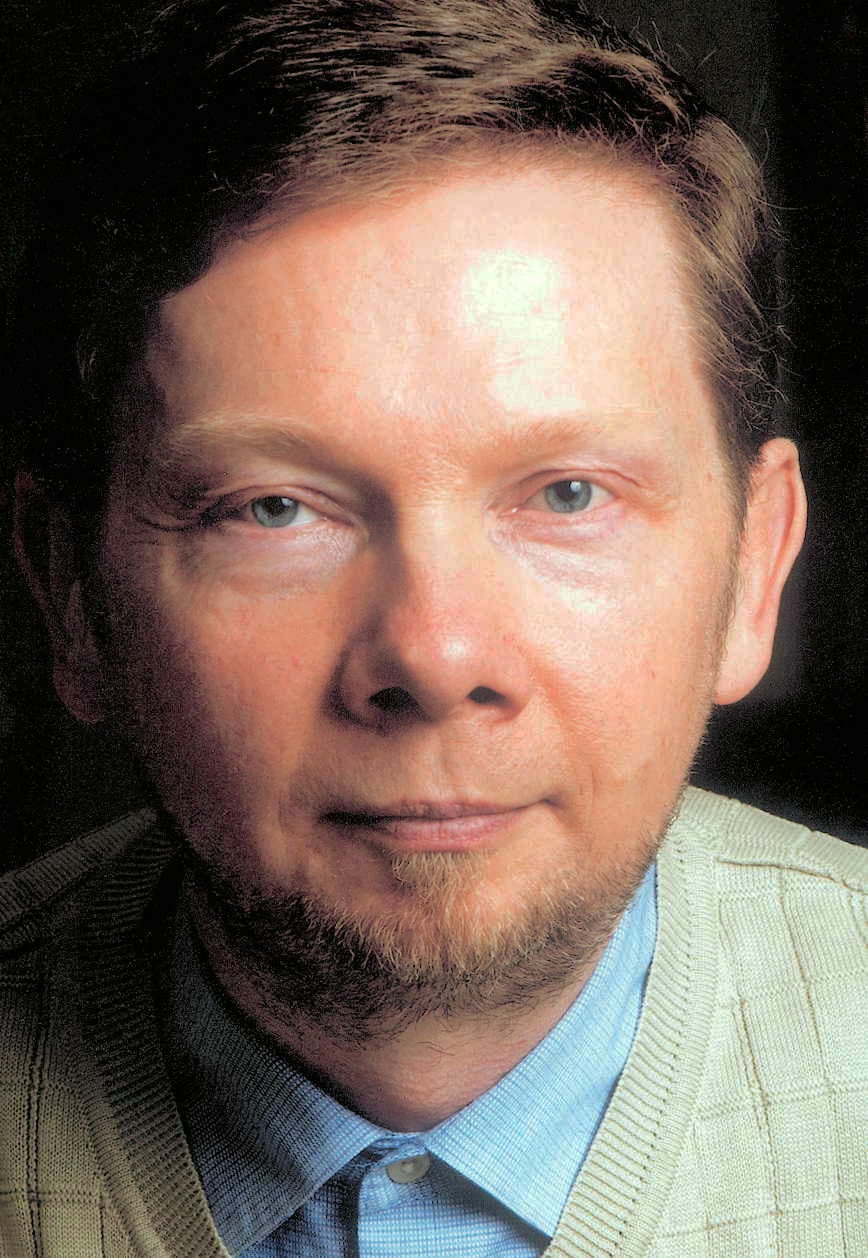
Eckhart Tolle
They agree on: What is the Absolute? Does God exist? · Why do we suffer? · What happens after death?
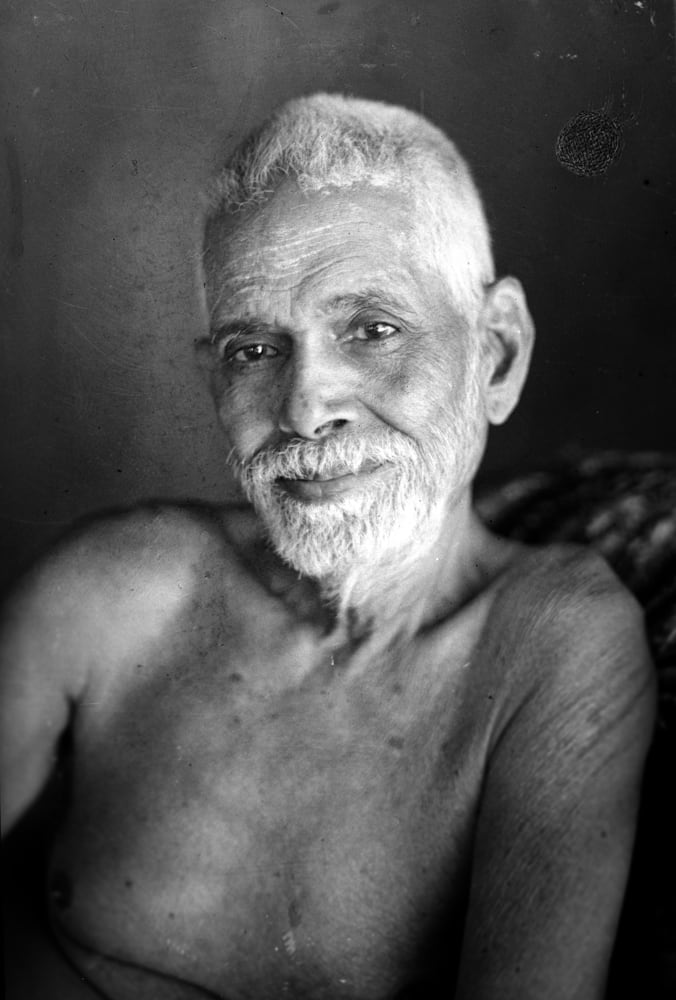
Ramana Maharshi
They agree on: What is the Absolute? Does God exist? · Who am I? Is there a true self? · What happens after death?
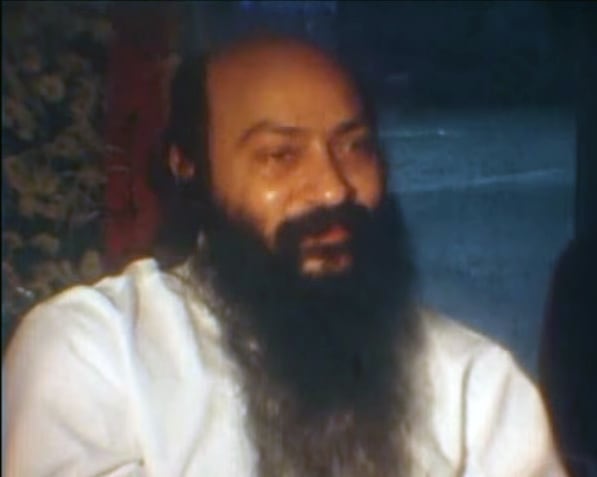
Osho
They agree on: What is the Absolute? Does God exist? · Why do we suffer? · What happens after death?
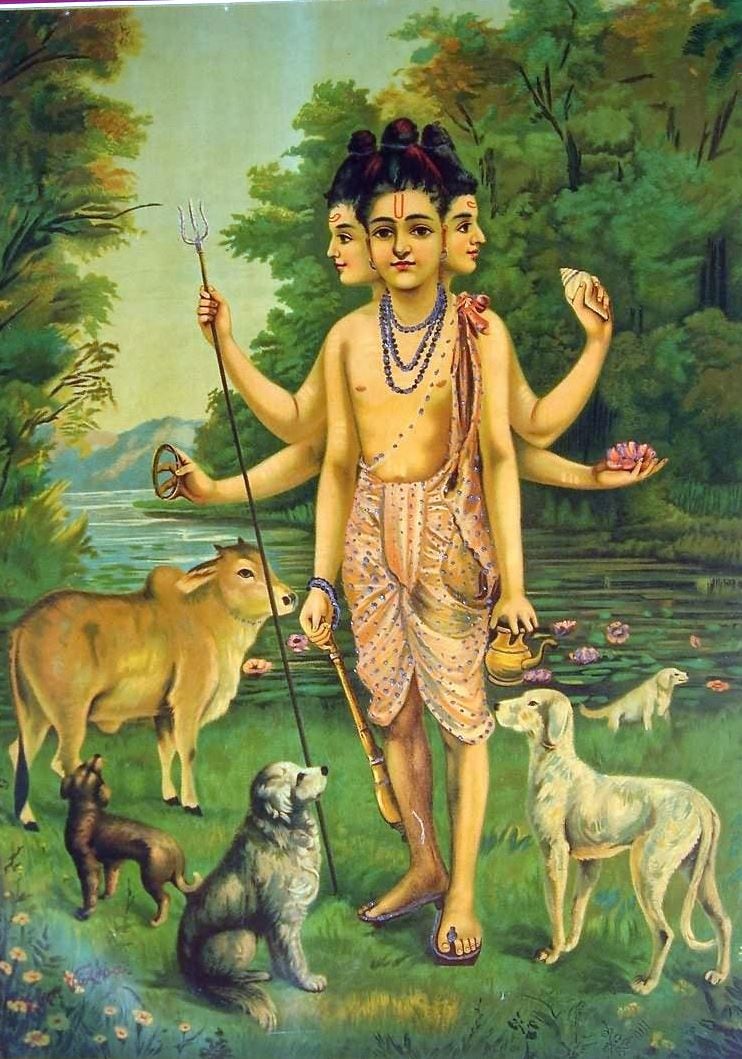
Dattatreya
They agree on: What is the Absolute? Does God exist? · Who am I? Is there a true self? · What happens after death?
Thinks most unlike
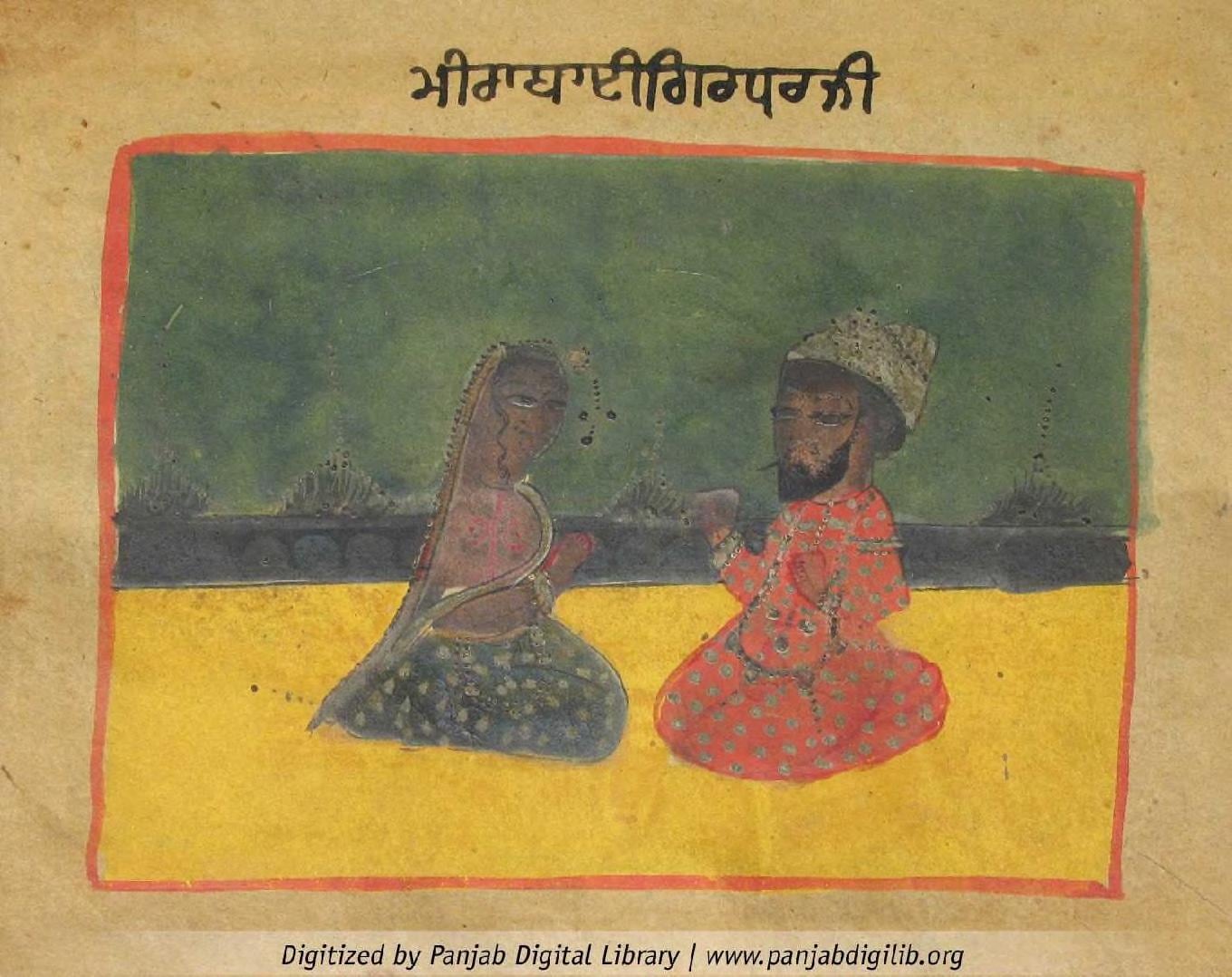
Mirabai
They clash on: How is liberation or salvation attained? · Is a teacher necessary?

Tsongkhapa
They clash on: Who am I? Is there a true self? · How is liberation or salvation attained? · Is a teacher necessary?
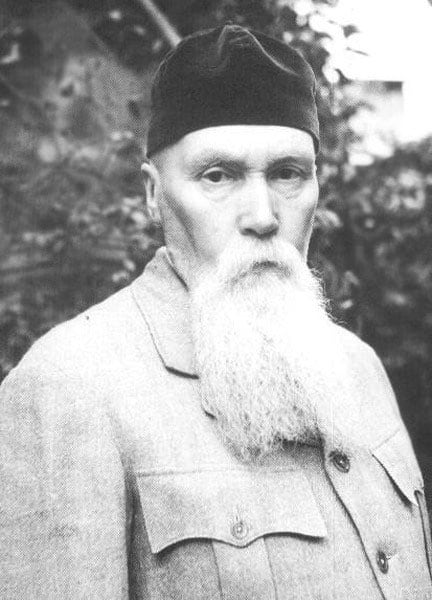
Nicholas Roerich
They clash on: Is a teacher necessary?

Pema Chödrön
They clash on: Who am I? Is there a true self? · How is liberation or salvation attained?
Anecdotes and stories
Anecdotes and stories
Testimony1936
The lecture in a diving suit
Origin of the story: It comes from Watts's own account in In My Own Way (1972) and is recorded by Monica Furlong in her biography. Later versions differ in details — who helped him remove the helmet and at exactly which event it occurred; it is usually placed in the context of the 1936 World Congress of Faiths.
Source: Watts, Alan. In My Own Way: An Autobiography, 1915–1965. Nueva York: Pantheon Books, 1972 (reed. New World Library, 2007, ISBN 9781577315841).
Testimonydécada de 1960
'He is a great bodhisattva'
Origin of the story: Recorded by David Chadwick in Crooked Cucumber (1999), from testimony by students of the San Francisco Zen Center.
Source: Chadwick, David. Crooked Cucumber: The Life and Zen Teaching of Shunryu Suzuki. Nueva York: Broadway Books, 1999.
Testimony1960s–1990s
Half a koan
Origin of the story: Kapleau, The Three Pillars of Zen (1967 ed.), pp. 21–22; D. T. Suzuki's remark is reported by Robert Aitken in Original Dwelling Place (1997). The Zen story in question is the dialogue of Mazu and Nanyue about the polished tile.
Source: Kapleau, Philip. The Three Pillars of Zen. Boston: Beacon Press, 1967 (ed. citada), pp. 21–22.
Testimony1958
A visit to Küsnacht
Origin of the story: Watts's own account in In My Own Way (1972), p. 321.
Source: Watts, Alan. In My Own Way: An Autobiography, 1915–1965. Nueva York: Pantheon Books, 1972 (reed. New World Library, 2007, ISBN 9781577315841).
Documented1958–1970
Hanging up the phone
Origin of the story: The phrase comes from the Vintage edition of The Joyous Cosmology (1970), p. 26; the researchers' identities are recorded in the biographical literature drawing on In My Own Way.
Source: Watts, Alan. The Joyous Cosmology: Adventures in the Chemistry of Consciousness. Nueva York: Vintage Books, 1970 (1.ª ed. Pantheon, 1962).
Documented1960s–1973
Between a beached ferry and a cabin in the woods
Origin of the story: In My Own Way (1972), pp. 300–304, and the dedications of The Joyous Cosmology and the autobiography; Elsa Gidlow's memoir, Elsa: I Come with My Songs (1986), completes the picture of Druid Heights.
Source: Watts, Alan. In My Own Way: An Autobiography, 1915–1965. Nueva York: Pantheon Books, 1972 (reed. New World Library, 2007, ISBN 9781577315841).
Teachings
Teachings
The notions that structure their thought, explained in context.
The skin-encapsulated egoego-encerrado-en-la-piel
Developed above all in The Book (1966) and his 1960s lectures, under the influence of Vedanta, cybernetics and general semantics.
Source: Watts, Alan. The Book: On the Taboo Against Knowing Who You Are. Nueva York: Pantheon Books, 1966.
The cosmic game of hide-and-seekjuego-cosmico
The Book (1966) and Beyond Theology (1964); drawn from Vedanta and devotional Hinduism, freely reinterpreted.
Source: Watts, Alan. The Book: On the Taboo Against Knowing Who You Are. Nueva York: Pantheon Books, 1966.
The law of reversed effortley-del-esfuerzo-invertido
The Wisdom of Insecurity (1951) and later lectures; connected with the Taoism of Laozi and Zhuangzi.
Source: Watts, Alan. The Wisdom of Insecurity: A Message for an Age of Anxiety. Nueva York: Pantheon Books, 1951.
Ways of liberationvias-de-liberacion
Psychotherapy East and West (1961); a forerunner of transpersonal psychology.
Source: Watts, Alan. Psychotherapy East and West. Nueva York: Pantheon Books, 1961.
The social double binddoble-vinculo
Psychotherapy East and West (1961) and The Book (1966).
Source: Watts, Alan. Psychotherapy East and West. Nueva York: Pantheon Books, 1961.
Beat Zen and square Zenzen-beat-y-zen-cuadrado
Essay published in Chicago Review (1958) and as a City Lights pamphlet (1959).
Videos
Videos
Recordings, interviews and documentaries. Videos play from YouTube; they are not hosted here.
Alan Watts: A Conversation with Myself - Part 1
Original recording· EN· 1971· 28 min
Mark WattsOfficial channel
Alan Watts: A Conversation with Myself - Part 2
Original recording· EN· 1971· 28 min
Mark WattsOfficial channel
Eastern Wisdom & Modern Life (1959) with Alan Watts - Program 1: Man & Nature (Recolored)
Original recording· EN· 1959· 29 min
HermesTrismegistus
Eastern Wisdom and Modern Life - Alan Watts: The Silent Mind, program five (1959)
Original recording· EN· 1959· 28 min
Torridstream12
Eastern Wisdom and Modern Life - Alan Watts: Death, program six (1959)
Original recording· EN· 1959· 27 min
Torridstream12
Alan Watts - Myth of Myself Full Lecture Part 1
Lecture· EN· 37 min
Official Alan Watts OrgOfficial channel
Alan Watts - Individual and the World Pt 1 Full Lecture
Lecture· EN· 47 min
Official Alan Watts OrgOfficial channel
Alan Watts - Taoist Way Full Lecture
Lecture· EN· 27 min
Official Alan Watts OrgOfficial channel
Alan Watts - What Is Reality?
Lecture· EN· 53 min
Official Alan Watts OrgOfficial channel
Alan Watts In Conversation With Elliot Mintz
Interview· EN· 1972· 48 min
Elliot MintzOfficial channel
Alan Watts Interview in Dallas - March 1970
Interview· EN· 1970· 2 min
SMU Jones FilmOfficial channel
First Wednesday: Following Alan Watts with Mark Watts
Lecture· EN· 106 min
MillValleyLibraryOfficial channel
Alan Watts en español - Conferencia - El mito del yo
Lecture· ES· 35 min
fer.de.erratas
Gallery
Gallery
Images with verified licences. Each keeps its authorship and attribution.
Connections
Connections
Influences, discipleships and affinities. Documented relations are distinguished from similarities identified by analysis.
Influenced by
D. T. Suzuki
Watts met him in 1936 and his first book popularised Suzuki's work.
Documented relation
Met
Founder of the San Francisco Zen Center; defended Watts as 'a great bodhisattva'.
Documented relation
Met
Watts visited him in Switzerland in 1958; his psychology influenced The Meaning of Happiness.
Documented relation
Ideas akin to
Both question the separate self and spiritual authority; Watts discussed Krishnamurti in his 1968 radio interview with Laura Huxley.
Similarity identified by analysis
Disciple of
Christmas Humphreys
Watts was secretary of the London Buddhist Lodge, which Humphreys led, and was formed there.
Documented relation
Family of
Ruth Fuller Sasaki
His mother-in-law during his first marriage and a key figure of American Zen.
Documented relation
Met
Sokei-an Sasaki
New York Zen teacher with whom Watts kept in contact without entering formal training.
Documented relation
Corresponded with
Al Chung-liang Huang
Collaborator on Tao: The Watercourse Way, which he completed after Watts's death.
Documented relation
Met
Elsa Gidlow
Poet who founded Druid Heights, neighbour and friend; Watts dedicated his autobiography to her.
Documented relation
Influenced by
His last book expounds the Taoism of Laozi and Zhuangzi.
Documented relation
Influenced by
A constant source of his lectures on Taoism and wu wei.
Documented relation
Ideas akin to
The identity of self and ultimate ground, central to Watts, comes from the Advaita Vedanta systematised by Shankara.
Similarity identified by analysis
Ideas akin to
Both popularise attention to the present and the critique of identification with thought for a wide audience.
Similarity identified by analysis
Contemporary of
Contemporaries who spread Zen, Tantra and Taoism in the West in a free and provocative style; there is no record that they met.
Similarity identified by analysis
Ideas akin to
Both explored the dialogue between contemplative Christianity and Zen in the 1950s and 1960s.
Similarity identified by analysis
Linked from other profiles
Sources
Sources
Bibliography and catalogues consulted for this profile.
- Wikidata, «Alan Watts» (Q354867).
- Watts, Alan. In My Own Way: An Autobiography, 1915–1965. Nueva York: Pantheon Books, 1972 (reed. New World Library, 2007, ISBN 9781577315841).
- Furlong, Monica. Zen Effects: The Life of Alan Watts. Boston: Houghton Mifflin, 1986 (publicado en Reino Unido como Genuine Fake, Heinemann, 1986; reed. SkyLight Paths, 2001, ISBN 9781893361324).
- Columbus, Peter J. y Rice, Donadrian L. (eds.). Alan Watts—Here and Now: Contributions to Psychology, Philosophy, and Religion. Albany: State University of New York Press, 2012 (ISBN 9781438441993).
- Watts, Joan y Watts, Anne (eds.). The Collected Letters of Alan Watts. Novato: New World Library, 2017 (ISBN 9781608684151).
- «Alan Watts» y «Alan Watts bibliography», Wikipedia en inglés (consultadas para cotejar hechos y bibliografía; texto propio).
- Open Library: obras y ediciones de Alan Watts (autor OL…; búsqueda por autor y por título, ediciones con ISBN).
- Chadwick, David. Crooked Cucumber: The Life and Zen Teaching of Shunryu Suzuki. Nueva York: Broadway Books, 1999.
- Aitken, Robert. Original Dwelling Place: Zen Buddhist Essays. Washington D. C.: Counterpoint, 1997 (ISBN 1887178414).
- Kapleau, Philip. The Three Pillars of Zen. Boston: Beacon Press, 1967 (ed. citada), pp. 21–22.
- Alan Watts Organization (archivo de grabaciones gestionado por la familia Watts) y Alan Watts Official Store.
- Watts, Alan. The Joyous Cosmology: Adventures in the Chemistry of Consciousness. Nueva York: Vintage Books, 1970 (1.ª ed. Pantheon, 1962).
- Watts, Alan. The Book: On the Taboo Against Knowing Who You Are. Nueva York: Pantheon Books, 1966.
- Watts, Alan. The Wisdom of Insecurity: A Message for an Age of Anxiety. Nueva York: Pantheon Books, 1951.
- Watts, Alan. The Way of Zen. Nueva York: Pantheon Books, 1957.
- Stirling, Isabel. Zen Pioneer: The Life and Works of Ruth Fuller Sasaki. Emeryville: Shoemaker & Hoard, 2006 (ISBN 9781593761103).
- University of Vermont, programa de la 154.ª ceremonia de graduación (15 de junio de 1958) y UVM Alumni Magazine, vol. 39, n.º 1, p. 22 (UVM Digital Collections; reproducido en Wikimedia Commons).
- Indiana University Libraries Moving Image Archive, exposición «Eastern Wisdom and Modern Life» (KQED, San Francisco, 1959–1960).
- Watts, Alan. Psychotherapy East and West. Nueva York: Pantheon Books, 1961.
- Gidlow, Elsa. Elsa: I Come with My Songs. San Francisco: Bootlegger Press y Druid Heights Books, 1986.
- Watts, Alan y Huang, Al Chung-liang. Tao: The Watercourse Way. Nueva York: Pantheon Books, 1975 (prólogo y epílogo de Al Chung-liang Huang).
- Open Culture, «Alan Watts Brings Eastern Wisdom to American TV Viewers in 1959» (2012).
- Rights holder
- Herederos de Alan Watts (gestión de grabaciones: Alan Watts Organization / Electronic University, Mark Watts); derechos de los libros según cada editorial
- Official site
- alanwatts.org
Pending confirmation
What this profile has not yet been able to settle. We would rather say so than fill it in.
- Localizar página exacta de las citas marcadas como «probable» (The Book, cap. 1; The Wisdom of Insecurity, cap. 3) en una edición impresa.
- Ediciones con ISBN no verificadas en catálogo: The Book (Vintage, 1989), Tao for Now (2023), Taoism: Way Beyond Seeking (Tuttle, 1997), The Way of Liberation (Weatherhill, 1983), Om: Creative Meditations (1979) y The Essential Alan Watts (1976).
- Identificar la obra inglesa de la que procede «Qué es la realidad» (Kairós, 1995, ISBN 9788472453630), registrada en Open Library sin correspondencia clara.
- Ediciones en español sin ISBN verificado de In My Own Way, The Joyous Cosmology, Does It Matter?, Cloud-Hidden y Tao: The Watercourse Way (Kairós).
- Fecha exacta de la ordenación (1944 según las cartas, 1945 según la autobiografía) y del matrimonio con Mary Jane Yates King.
- Detalles del episodio de la escafandra (acto exacto y quién le ayudó) en la edición impresa de In My Own Way.
- Catálogo de grabaciones: la obra oral (cientos de conferencias en alanwatts.org y alanwatts.com) no se registra pieza a pieza; se incluyen las series de televisión y la antología Out of Your Mind.
- Vídeos: no hay en YouTube conferencias oficiales de Watts en español; el único vídeo en castellano registrado es una versión preparada por un tercero.
Researched on 2026-10-25