Hinduism · Bhakti · Advaita Vedanta
Ramana Maharshi
ரமண மகரிஷி
1879 – 1950Historically documented person
Tamil sage (1879–1950) who, after an experience of death at sixteen, withdrew to the sacred mountain of Arunachala and never left Tiruvannamalai again. He taught above all through silence and through a single question, 'Who am I?', the self-enquiry he proposed as a direct path to liberation. His few Tamil writings and the dialogues recorded by his disciples made him the central reference of modern Advaita and of contemporary non-duality.
- works
- 33works
- editions
- 50editions
- quotes
- 8quotes
- videos
- 10videos
- images
- 7images
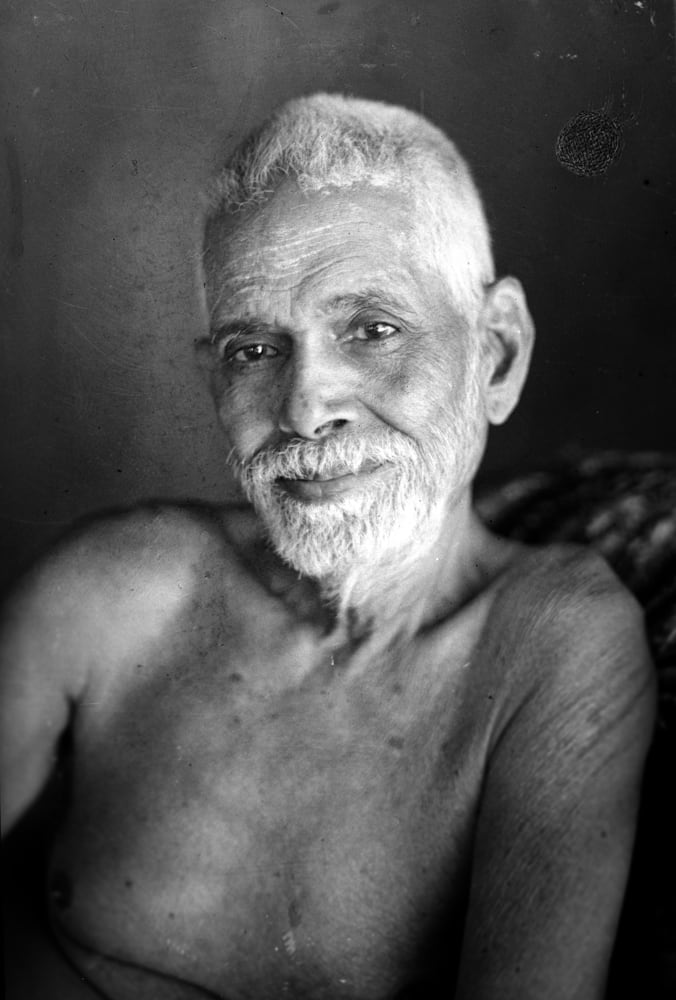
Retrato de Ramana Maharshi por G. G. Welling (1948) · Public domain
In their words
«I have set out in quest of my Father in accordance with his command.»Nota dejada a su hermano al salir de Madurai, 29 de agosto de 1896 (original tamil; trad. inglesa en Osborne 1954)

Their central idea
Happiness is not obtained from objects: it is the very nature of the Self, glimpsed in deep sleep, when there are no thoughts or objects and no one feels unhappy.
See in context
Biography
6 min read
A boy from Madurai
Venkataraman Iyer was born on 30 December 1879 in Tiruchuli, a village in the south of the Madras Presidency, into a Tamil-speaking Brahmin family. His father, Sundaram Iyer, practised as an unlicensed pleader before the local courts; his mother, Alagammal, would much later become one of his disciples. When the boy was twelve his father died and the family scattered: Venkataraman went to live with an uncle in Madurai, the great temple city of Minakshi, where he attended Scott's Middle School and then the American Mission High School. His biographers describe an ordinary pupil, fond of football, wrestling and swimming, with no evident religious bent. Only two traits hinted at something else: a sleep so deep that his classmates could shake him without waking him, and the jolt he felt in November 1895 on hearing an elderly relative mention Arunachala, the sacred mountain of Tiruvannamalai. Soon afterwards he read the Periya Puranam, the lives of the sixty-three Tamil Shaiva saints, and something in him was held in suspense.
Death at sixteen
In mid-July 1896, alone in an upstairs room of his uncle's house, he was seized for no reason by an intense fear of dying. Instead of seeking help, he lay down on the floor, held his breath, made his body stiff like a corpse and asked what exactly it was that died. The body, he understood, would be carried to the cremation ground and reduced to ashes; but what was aware of this remained present, untouched, independent of the body. It was not, by his later account, a chain of reasoning but a direct certainty: the true 'I' was a living current that death could not reach. From that day, he said, absorption in that Self never ceased. It should be noted that everything we know of this episode comes from what he himself related decades later, recorded by B. V. Narasimha Swami in his 1931 biography and in dialogues transcribed by disciples; there is no contemporary testimony.
Towards Arunachala
The boy lost all interest in his studies. On 29 August 1896, after a reproach from his elder brother, he invented an extra class, left a note saying he had set out in search of his Father, and caught a train. He reached Tiruvannamalai on 1 September, entered the great Arunachaleshvara temple, shaved his head, threw away his remaining money and his sacred thread, and sat down. The following years were ones of near-total immersion: weeks in the Patala Lingam, a dark vault beneath the temple where insects ulcerated his legs without his seeming to notice; months at the Gurumurtam shrine, where an ascetic named Palaniswami became his attendant; then a mango grove, the Pavalakkunru temple and, from 1899, Virupaksha cave on the slope of the mountain, where he would live until 1916. He did not speak: not because of a vow, he later explained, but because he had no need to. When his mother came in 1898 to beg him to return, he answered in writing that what was destined to happen would happen and that the best course was to remain silent.
In this period he answered in writing, on slates and scraps of paper, the questions of two visitors, Gambhiram Seshayya and Sivaprakasam Pillai. From those answers came, years later, Vichara Sangraham and Nan Yar? ('Who am I?'), the most widely read text of his teaching. In 1907 the Sanskrit scholar Kavyakantha Ganapati Muni, after receiving from him a short instruction on the source of the notion of 'I', proclaimed him Bhagavan Sri Ramana Maharshi, the name by which he was known thereafter. In 1911 the first Westerner arrived, the young British police officer Frank Humphreys, whose letters, published in London in 1913, were the first account in English of the force of that silence. In 1914 he composed for his companions on the alms round the hundred and eight verses of the Marital Garland of Letters to Arunachala.
Skandashram and the mother
In 1916 his mother came to live with him and the small community moved to Skandashram, a little higher up the slope. Alagammal, an orthodox widow, learned at his side to let go of her caste scruples and eventually took up the life of a renunciant; she died on 19 May 1922 with her son seated beside her, one hand on her chest and the other on her head. She was buried at the foot of the mountain. A few months later Ramana came down to visit the tomb and never went back up: Sri Ramanasramam grew around that grave.
The ashram and the silence
From December 1922 until his death he lived in an open hall, its door closed to no one. He rose before dawn to cut vegetables in the kitchen, read the post and refused better food or treatment than any other resident. His teaching had two registers: silence, which visitors describe as a perceptible presence, and answers, usually brief, to those who asked. To everyone he returned the same question: who is it that asks? Self-enquiry (atma vichara) and complete surrender to God or the master were for him two paths that led to the same place. In 1927 and 1928 he wrote his two major doctrinal poems, Upadesa Saram and Ulladu Narpadu.
On the night of 26 June 1924 thieves broke into the ashram and beat him; he asked his companions not to resist, because the robbers had their role and they had theirs. In 1931 Narasimha Swami's biography appeared, and that same year the British journalist Paul Brunton arrived; his A Search in Secret India (1934) made Ramana a known figure in the West. Through Tiruvannamalai then passed Paramahansa Yogananda (1935), Somerset Maugham (1938), the Indologist Heinrich Zimmer, who in 1944 published an anthology of his teachings with a foreword by C. G. Jung although he never visited him, and a long line of seekers. Between 1935 and 1939 Munagala Venkataramiah took down the conversations that would be published in 1955 as Talks with Sri Ramana Maharshi.
Illness and death
In late 1948 or early 1949 (the sources differ) a small nodule appeared below his left elbow; diagnosed as a malignant tumour, it was operated on four times between February and December 1949. Ramana refused amputation of the arm and accepted the treatments proposed to him more so as not to upset those around him than from conviction. To those who begged him to heal himself he replied that they gave too much importance to the body. He died on 14 April 1950 at 8.47 p.m., while a group of devotees outside sang the verses to Arunachala. Arthur Osborne, who witnessed the scene, records that at that very moment several people saw a large shooting star move slowly across the sky towards the summit of the mountain. His body was buried in the ashram, next to the temple raised over his mother's tomb.
The documented and the transmitted
Ramana's biography is unusually rich in testimony, but it should be read in layers. The external facts (dates, places, visitors, the final illness) are well documented by multiple sources. His inner experiences reach us only through his own account, given late and mediated by translators. His oral teachings survive in notes taken, often hurriedly and in English, by interpreters translating from Tamil, Telugu or Malayalam; the writings from his own hand are few and short. And around him grew, as around every Indian saint, a crown of wonders that he himself frequently disowned: he denied possessing powers and turned every question about miracles back to the question of who was asking.
Legacy
Sri Ramanasramam remains open in Tiruvannamalai, run by the descendants of his brother Niranjanananda, and preserves the hall where he lived and his tomb. Through Brunton, Osborne (who founded the journal The Mountain Path in 1964), David Godman and Indian disciples such as H. W. L. Poonja, his teaching became one of the main sources of contemporary non-duality. Few twentieth-century masters have left so slender a written work and so wide a trace: the question 'Who am I?', first put by a teenager lying on the floor of a house in Madurai.
Sources: Osborne, Arthur. Ramana Maharshi and the Path of Self-Knowledge. Londres: Rider, 1954 (reed. Sri Ramanasramam). Texto consultado en Internet Archive. · Narasimha Swami, B. V. Self-Realization: The Life and Teachings of Sri Ramana Maharshi. Tiruvannamalai: Sri Ramanasramam, 1931. · Venkataramiah, Munagala (Swami Ramanananda Saraswathi), ed. Talks with Sri Ramana Maharshi. Tiruvannamalai: Sri Ramanasramam, 1955 (conversaciones de 1935–1939; ed. 2006 consultada en Internet Archive). · Godman, David, ed. Be As You Are: The Teachings of Sri Ramana Maharshi. Londres: Arkana, 1985. · Brunton, Paul. A Search in Secret India. Londres: Rider, 1934 (caps. 9 y 16–17 sobre Ramana Maharshi).
Timeline
A life, year by year
Each point is a documented event. Click to read it, with its source and degree of certainty.
December 30, 1879age 0Tiruchuli
Birth
Venkataraman Iyer is born, second son of Sundaram Iyer and Alagammal, into a Tamil Brahmin family, on the night of Ardra Darshanam, a festival of Shiva.
DocumentedOsborne, Arthur. Ramana Maharshi and the Path of Self-Knowledge. Londres: Rider, 1954 (reed. Sri Ramanasramam). Texto consultado en Internet Archive.
After their death
- 1964The Mountain Path
December 30, 1879 · age 0
Birth
Venkataraman Iyer is born, second son of Sundaram Iyer and Alagammal, into a Tamil Brahmin family, on the night of Ardra Darshanam, a festival of Shiva.
Documented
c. 1892 · age 12
Father's death and move to Madurai
His father dies when the boy is about twelve; Venkataraman goes to live with an uncle in Madurai and attends Scott's Middle School and the American Mission High School.
Probable
November 1895 · age 15
The name Arunachala
He hears an elderly relative say he has come from Arunachala, and the name gives him a shock he later described. Shortly afterwards he reads the Periya Puranam.
Probable
July 1896 · age 16
The death experience
Alone in his uncle's house, a sudden fear of death leads him to enact his own death and enquire what it is that dies. From then on, by his account, absorption in the Self never ceases.
Probable
August 29, 1896 · age 16
Departure for Arunachala
He leaves a note for his brother ('I have set out in quest of my Father') with two rupees for the college fees and takes the train to Tiruvannamalai.
Documented
September 1, 1896 · age 16
Arrival at Tiruvannamalai
He enters the Arunachaleshvara temple, shaves his head, discards his money and sacred thread. He will never again leave the town and its mountain.
Documented
February 1897 · age 17
Gurumurtam and Palaniswami
After weeks in the Patala Lingam and other corners of the temple, he moves to the Gurumurtam shrine; the ascetic Palaniswami becomes his attendant for twenty-one years.
Documented
1898 · age 18
His mother asks him to return
Alagammal finds him and begs him to come home. He replies in writing that what is destined to happen will happen and that the best course is to remain silent.
Documented
1899 – 1916 · age 19
Virupaksha cave
He settles in Virupaksha cave on the slope of Arunachala, where he will live with his first disciples until 1916.
Documented
c. 1902 · age 22
Sivaprakasam Pillai's questions
He answers in writing Sivaprakasam Pillai's questions on how to know one's true identity. The answers will be published in 1923 as Nan Yar? ('Who Am I?').
Documented
1907 · age 27
Ganapati Muni names him Bhagavan Sri Ramana Maharshi
The Sanskrit poet and scholar Kavyakantha Ganapati Muni receives instruction from him on self-enquiry and proclaims him Bhagavan Sri Ramana Maharshi.
Documented
November 1911 · age 31
Frank Humphreys, the first Westerner
The British police officer Frank H. Humphreys visits him; his letters, published in 1913 in London's International Psychic Gazette, are the first Western account of his silence.
Documented
1914 · age 34
Aksharamanamalai
He composes the 108 verses of the Marital Garland of Letters to Arunachala, at his companions' request, to be sung on the alms round.
Documented
1916 · age 36
Skandashram and his mother's arrival
His mother and younger brother come to live with him; the community moves to Skandashram, a little higher up the mountain.
Documented
May 19, 1922 · age 42
His mother's death
Alagammal dies with her son beside her, one of his hands on her heart and the other on her head. She is buried at the foot of the mountain.
Documented
December 1922 · age 42
Sri Ramanasramam begins
He comes down to his mother's tomb and stays there. Around the grave grows the ashram where he will live until his death.
Documented
June 26, 1924 · age 44
The robbery
Three thieves raid the ashram and beat him; he forbids his companions to retaliate and invites the robbers to come in by the door. They were arrested days later.
Documented
1927 · age 47
Upadesa Saram
At Muruganar's request he writes the thirty verses of Upadesa Undiyar, which he himself will render into Sanskrit as Upadesa Saram.
Documented
1928 · age 48
Ulladu Narpadu
He composes the Forty Verses on Reality, his fullest doctrinal statement.
Documented
1931 · age 51
First biography and Paul Brunton's visit
B. V. Narasimha Swami's Self-Realization is published; that same year Paul Brunton arrives, whose 1934 book will make Ramana known in the West.
Documented
November 29, 1935 · age 55
Paramahansa Yogananda's visit
Yogananda visits him with his secretary; the oldest surviving film footage of Ramana comes from that visit.
Documented
1935 – 1939 · age 55
The Talks begin
Munagala Venkataramiah begins recording the conversations with visitors (1935–1939), published in 1955 as Talks with Sri Ramana Maharshi.
Documented
June 18, 1948 · age 68
Death of the cow Lakshmi
Lakshmi, the cow closest to him, dies; he stays with her in her last hours and writes an epitaph stating that she attained liberation.
Documented
February 1949 · age 69
First operation on the tumour
A nodule is removed from his left arm; it returns and he is operated on three more times in 1949. He refuses amputation.
Documented
April 14, 1950 · age 70
Death
He dies at 8.47 p.m. while devotees sing the verses to Arunachala. Witnesses describe a shooting star crossing the sky at that moment.
Documented
1964
The Mountain Path
Arthur Osborne founds the ashram's quarterly journal, still published, which spreads his teachings in English.
Documented
Works
Essential works
The works without which their legacy cannot be understood.
Recorded oral teaching · c. 1902
Who Am I? (Nan Yar?)
நான் யார்?
Ramana's most widely read text and the best gateway to his teaching. In a few pages it proposes that happiness is the nature of the Self, that the mind is nothing but a bundle of thoughts held together by the 'I'-thought, and that the direct path consists in turning attention to the source of that thought by asking 'Who am I?'. It distinguishes enquiry from mere suppression of thoughts, presents surrender as an equivalent path and states that the real Self is not attained: it is revealed when identification with body and mind ceases.
3 editions · amazon.com
Ramana Maharshi
Upadesa Saram (The Essence of Instruction)
Written work · 1927
Upadesa Saram (The Essence of Instruction)
உபதேச உந்தியார் / उपदेशसारम्
Thirty verses that move in ascending order through the spiritual paths: ritual action without attachment, worship, repetition of the name, meditation, breath control and, at the summit, enquiry into the source of the mind. It does not disqualify the earlier paths but shows that all lead to the stillness of the heart. It is the text recited daily at Sri Ramanasramam.
2 editions · amazon.com
Ramana Maharshi
Ulladu Narpadu (Forty Verses on Reality)
Written work · 1928
Ulladu Narpadu (Forty Verses on Reality)
உள்ளது நாற்பது
His fullest and most demanding doctrinal statement. It examines the relation between the world, the individual and God, the illusion of time and space, destiny and free will, and the status of the 'I'-thought as the root of all duality. Its thesis is that only what exists without interruption is real, and that this conscious existence is the Self. It has received extensive commentaries, including those of Lakshmana Sarma and Sadhu Om.
3 editions · amazon.es

Later compilation · 1955
Talks with Sri Ramana Maharshi
The broadest source for his oral teaching: 653 numbered conversations with Indian and Western visitors on enquiry, surrender, deep sleep, karma, meditation, the world and the master. Its value is immense and so are its limits: these are an interpreter's notes, not verbatim transcripts. It is the book from which many quotations attributed to Ramana derive.
4 editions · amazon.com

Later compilation · 1959
The Collected Works of Ramana Maharshi
The reference volume: Nan Yar, Vichara Sangraham, Upadesa Saram, Ulladu Narpadu and its supplement, the hymns to Arunachala, the Ekatma Panchakam, occasional verses and the versions of Shankara and the Gita. The ashram keeps its own revised edition.
3 editions · amazon.com

Later compilation · 1985
Be As You Are
The most widely used modern introduction to Ramana's teaching. Godman arranges the dialogues by question (the Self, enquiry, surrender, the master, meditation, suffering, the world) and prefaces each chapter with a short, precise explanation. It has been translated into many languages.
4 editions · amazon.com
Complete works (33)

Vichara Sangraham (Self-Enquiry)
1901
Ramana Maharshi
The Marital Garland of Letters to Arunachala (Aksharamanamalai)
The Conscious LibraryThe Marital Garland of Letters to Arunachala (Aksharamanamalai)
1914
Ramana Maharshi
Five Hymns to Arunachala
The Conscious LibraryFive Hymns to Arunachala
1914
Ramana Maharshi
Supplement to the Forty Verses
The Conscious LibrarySupplement to the Forty Verses
1928
Ramana Maharshi
Five Verses on the One Self (Ekatma Panchakam)
The Conscious LibraryFive Verses on the One Self (Ekatma Panchakam)
1947
Ramana Maharshi
Tamil translations (Vivekachudamani, Atma Bodha, Drig-Drishya-Viveka and others)
The Conscious LibraryTamil translations (Vivekachudamani, Atma Bodha, Drig-Drishya-Viveka and others)

Sri Ramana Gita
1917
Ramana Maharshi
Maharshi's Gospel
The Conscious LibraryMaharshi's Gospel
1939

The Spiritual Teaching of Ramana Maharshi
1972

The Teachings of Bhagavan Sri Ramana Maharshi in His Own Words
1962

Day by Day with Bhagavan
1968

Letters from Sri Ramanasramam
1970
Ramana Maharshi
Self-Realization: The Life and Teachings of Sri Ramana Maharshi
The Conscious LibrarySelf-Realization: The Life and Teachings of Sri Ramana Maharshi
1931

Ramana Maharshi and the Path of Self-Knowledge
1954
Ramana Maharshi
Atma Vidya Kirtanam (Song on Self-Knowledge)
The Conscious LibraryAtma Vidya Kirtanam (Song on Self-Knowledge)
1927
Ramana Maharshi
Appalappattu (The Song of the Poppadum)
The Conscious LibraryAppalappattu (The Song of the Poppadum)
1914

Sat-Darshana Bhashya and Talks with Maharshi
1931
Ramana Maharshi
Spiritual Instruction (Upadesa Manjari)
The Conscious LibrarySpiritual Instruction (Upadesa Manjari)
1948
Ramana Maharshi
Guru Vachaka Kovai (The Garland of Guru's Sayings)
The Conscious LibraryGuru Vachaka Kovai (The Garland of Guru's Sayings)
1939

Crumbs from His Table

Gems from Bhagavan
1965
Ramana Maharshi
Conscious Immortality
The Conscious LibraryConscious Immortality
1984
Ramana Maharshi
Padamalai
The Conscious LibraryPadamalai
2004

The Essential Teachings of Ramana Maharshi: A Visual Journey
2002
Quotations
Quotations located in a specific work. Each carries its provenance and its level of confidence.
I have set out in quest of my Father in accordance with his command.VerifiedNota dejada a su hermano al salir de Madurai, 29 de agosto de 1896 (original tamil; trad. inglesa en Osborne 1954)
Essential ideas (editorial summary)
Out of respect for copyright, these ideas are summarised in our own words and are not presented as literal quotations.
- Happiness is not obtained from objects: it is the very nature of the Self, glimpsed in deep sleep, when there are no thoughts or objects and no one feels unhappy.
- For Ramana, enquiry and surrender are not opposed paths: seeking the source of the 'I' or abandoning it entirely to God lead to the same result, the disappearance of the ego.
- The true master is not an outer person but the Self; the human master only pushes inward one who seeks outside, and his grace works above all in silence.
Apocryphal quotes or disputed attributions (1)
«Wanting to reform the world without discovering one's true self is like trying to cover the world with leather to avoid the pain of walking on stones; it is much simpler to wear shoes.»
Widely circulated online under his name, but it does not appear in the Talks, the Gospel or the collected works. The image of leather covering the earth comes from Shantideva's Bodhicharyavatara (V, 12–13), an eighth-century Buddhist text.
Last words
Later account by witnesses
«"They say that I am dying but I am not going away. Where could I go? I am here."»They say that I am dying but I am not going away. Where could I go? I am here.
Ramana left no single final sentence. In his last days, according to Arthur Osborne, who was present, he answered those who grieved his going that they said he was dying, but he was not going away: where could he go? He was here. This is the sentence tradition remembers as his farewell. Osborne also records other words from those days: to those who asked him to will his recovery he asked who was there to will it; at noon on 14 April, asking the time, he added that henceforth time did not matter; and he thanked his attendants for their years of service by telling them that the English have the word 'thanks' but they only say santosham ('I am pleased'). At nightfall, no longer speaking, he opened his eyes on hearing the verses to Arunachala sung outside, smiled, shed a few tears and stopped breathing at 8.47 p.m. The words are known in the English version of witnesses who heard them in Tamil.
Source: Osborne, Arthur. Ramana Maharshi and the Path of Self-Knowledge. Londres: Rider, 1954 (reed. Sri Ramanasramam). Texto consultado en Internet Archive.
Ask
What their work answers
Twelve great human questions and what their texts allow us to answer, with references. We never put words in their mouth.
What is the Absolute? Does God exist?
God, soul and world are the one Reality, which is the Self
An impersonal AbsoluteStated explicitly
Ramana Maharshi answers from Advaita. In the Forty Verses on Reality (Ulladu Narpadu) he notes that all doctrines start from three realities — world, soul and God — and states that it is the one Reality that appears as the three; to dispute whether they are three or one while the ego lasts is futile. That Reality is the Self, pure formless consciousness. Ramana does not deny God: in his conversations he admits Ishvara as long as there is a sense of individuality, and recommends surrender to God as a path as valid as enquiry. But a separate God exists only for one who believes himself separate; when the ego dissolves, God, the Self and the Absolute are the same. His practical teaching is not to debate God's existence but to ask who it is that asks.
Compare this question with other teachersWho am I? Is there a true self?
Asking «Who am I?» dissolves the ego and reveals the Self
The Self is the AbsoluteStated explicitly
The question «Who am I?» is the core of Ramana Maharshi's teaching and gives its title to his best-known text, Nan Yar?, compiled from answers he gave in the 1900s. There he rules out, one by one, the body, the senses, the breath and the mind: none of these is the self. The ego is the «I»-thought, the first of all thoughts, which arises with the body and on which the others depend; if its source is sought, it vanishes. What remains is not nothingness but the Self (atman), pure consciousness identical with the Absolute, whose nature is happiness. Ramana teaches holding attention on that sense of «I» until it dissolves into its source. According to his biographers, he himself awoke to this understanding at sixteen, after an experience of his own death.
Compare this question with other teachersWhy do we suffer?
Happiness is the Self's nature; we suffer by taking ourselves for the body
Ignorance of what we areStated explicitly
Ramana Maharshi answers in Nan Yar? that happiness is the very nature of the Self, and that when a desired object is obtained and one feels happy, what happens is that the mind turns for a moment towards its source and tastes that happiness, which was never in the object. Suffering appears when the mind goes out towards the world and identifies with the body: the thought «I am this body» is the root of all others and of all sorrows. In his conversations he insists that problems exist for the ego, and that asking who suffers undoes the one who suffers. He does not deny physical pain, which he himself endured with cancer in his last years, but distinguishes between the body's pain and identification with it. The remedy is to know what one is.
Compare this question with other teachersWhat happens after death?
The body dies; the Self that knew it was never born and never dies
What I am is never born and never diesStated explicitly
Ramana Maharshi linked his awakening to an experience of death. According to the account he himself gave, at sixteen, in Madurai, he was seized by a sudden fear of dying; he lay down like a corpse, held his breath and asked what it was that died: the body would be inert, but the «I» that knew this remained present and was untouched by death. All his later teaching develops that insight. In the conversations recorded in Talks he distinguishes the body, which is born and dies, from the Self, which is pure consciousness without beginning or end. To those who asked about rebirth he replied that they should first find out who is born: as long as identification with the body persists there are births and deaths; for one who knows the Self, the question disappears. When his disciples lamented his final illness, he told them he was not going anywhere.
Compare this question with other teachersHow is liberation or salvation attained?
The enquiry «Who am I?» dissolves the false self; surrender is the other way
Through direct knowledgeStated explicitly
For Ramana Maharshi liberation is not something acquired, because the Self is already what one is: the only thing to remove is the ignorance that veils it, the identification with the thought «I» that takes itself to be the body. The principal means, set out in Who Am I? (Nan Yar), is enquiry: for each thought, ask to whom it arises and trace the sense of «I» back to its source until it dissolves in the Self. Ramana admitted a second, equally valid path, total surrender to God or the guru, because both lead to the disappearance of the ego. He regarded action, ritual devotion or breath control as preparatory aids, not causes of liberation.
Compare this question with other teachersIs a teacher necessary?
God, guru and Self are not different: the true teacher is within
The teacher is withinStated explicitly
Ramana Maharshi attained realisation at sixteen without a human teacher, and never gave formal initiation or presented himself as the guru of an organisation. His teaching, recorded in Who Am I? and in Talks with Sri Ramana Maharshi, holds that God, the guru and the Self are essentially the same: the true teacher is the Self dwelling in the heart. The outer guru fulfils a function, pushing the mind inward while the inner Self draws it, but his grace does not act without the disciple's effort. Ramana did not deny the usefulness of a human teacher for most people; he denied that it is something other than the Self to which it points.
Compare this question with other teachersIs the world real?
The world is unreal as a separate object and real as the Self
Appearance over the one realityStated explicitly
Ramana Maharshi takes up the Advaita thesis that only the Self is real, but formulates it from experience rather than speculation. In Who Am I? he explains that the world appears when the thought «I» arises and disappears in deep sleep, like the snake imagined in a rope: it cannot be attributed a reality independent of the perceiver. That is why he advised not getting lost in debates about whether the world is real, but finding out who sees it. In Forty Verses on Reality and in the conversations recorded by his disciples he qualifies that, for one who knows the Self, the world is not unreal: it is the Self itself, perceived without the division between subject and object.
Compare this question with other teachersWhat is love?
The Self is love; full devotion and knowledge are the same
What appears when the self ceasesInferred from their doctrine
Ramana Maharshi does not separate love from knowledge of the Self. To those who asked him about devotion (bhakti) he replied that supreme devotion and knowledge (jñāna) are one and the same: to love God fully is to surrender the ego to him, and what remains when the ego is surrendered is the Self. What everyone loves in everything, he said, is their own happiness, and happiness is the nature of the Self; so love of others, understood deeply, is love of the Self present in all. This love is not produced by emotional effort: it appears when the question «who am I?» dissolves identification with body and mind. Ramana nevertheless cultivated and encouraged devotion: his hymns to Arunachala, such as the Akshara Mana Malai, are poems of love and surrender to the hill he revered as Shiva.
Compare this question with other teachersAre we free, or is everything determined?
What is destined will happen; the only freedom is not being the doer
There is no doerStated explicitly
Ramana holds that what the body is to live through was fixed by *prarabdha karma*, the karma that has already begun to bear fruit. In the note he wrote to his mother in 1898, when she came to fetch him at Tiruvannamalai, he states that what is destined to happen will happen however one tries to prevent it, and that the best course is to remain silent. In *Upadesa Saram* (vv. 1–2) he recalls that karma bears fruit by the Lord's ordinance and that action by itself is insentient. Where, then, is freedom? According to the conversations recorded in *Talks*, there are only two ways out: to enquire who it is that believes he has free will —and discover that it does not exist as a separate entity— or to surrender completely to God. Both dissolve the idea of a doer.
Compare this question with other teachersWhy meditate or pray?
Asking «who am I?» until the «I»-thought dissolves in its source
Returning to the source of the IStated explicitly
Ramana is the reference for this key. In *Who Am I?* (*Nan Yar*), his written answers of around 1901-1902 to Sivaprakasam Pillai, he explains that of all thoughts the first is the «I»-thought, and all the others depend on it. The practice is to ask, each time a thought arises, to whom it occurs; the answer is «to me», and then one enquires who that I is. Thus the mind turns towards its source and eventually dissolves in the Self, which is not an object but what has always been present. Ramana also accepts complete surrender to God as an equivalent path, but holds that mantra repetition or breath control only quiet the mind temporarily.
Compare this question with other teachersCan reason know the ultimate?
The mind does not know the Self: it dissolves into it
The ultimate lies beyond the mindStated explicitly
For Ramana the mind is not an instrument able to know the Self, because the mind itself arises from the Self as the «I»-thought and veils it. In *Who Am I?* he explains that the mind is nothing but a bundle of thoughts and that, when its origin is sought, it vanishes; what remains is the Self, which is not an object of knowledge but knowledge itself. In *Ulladu Narpadu* (*Forty Verses on Reality*) he adds that all arguments over whether the world is real or illusory, one or many, belong to the ego. He did not scorn scripture, which he could quote precisely, but considered it useful only to turn one towards enquiry: endless reading, he said, is useless unless one seeks who reads.
Compare this question with other teachersWithdraw from the world or transform it?
True renunciation is of the ego, not of home or work
Contemplation in actionStated explicitly
Ramana Maharshi's life looks like an example of withdrawal: he came to Arunachala at sixteen, spent years in temples and caves on the hill and never again left Tiruvannamalai. His teaching, however, does not require anyone to do the same. In the conversations recorded in Talks, to those who wished to abandon family and work to devote themselves to the search he replied that true renunciation does not consist in leaving external things but in giving up the sense of being the doer; the ego that goes to the forest takes the problem along with it. One can work and live in the world with attention on the Self, and then actions happen without attachment. Asked how to help the world, he held that one who knows himself helps the world more than through any activity, and that the world is not outside the Self.
Compare this question with other teachers
Affinities & tensions
Affinities and tensions
Calculated question by question from their positions. The reason for each agreement or clash, on click.
Thinks most like
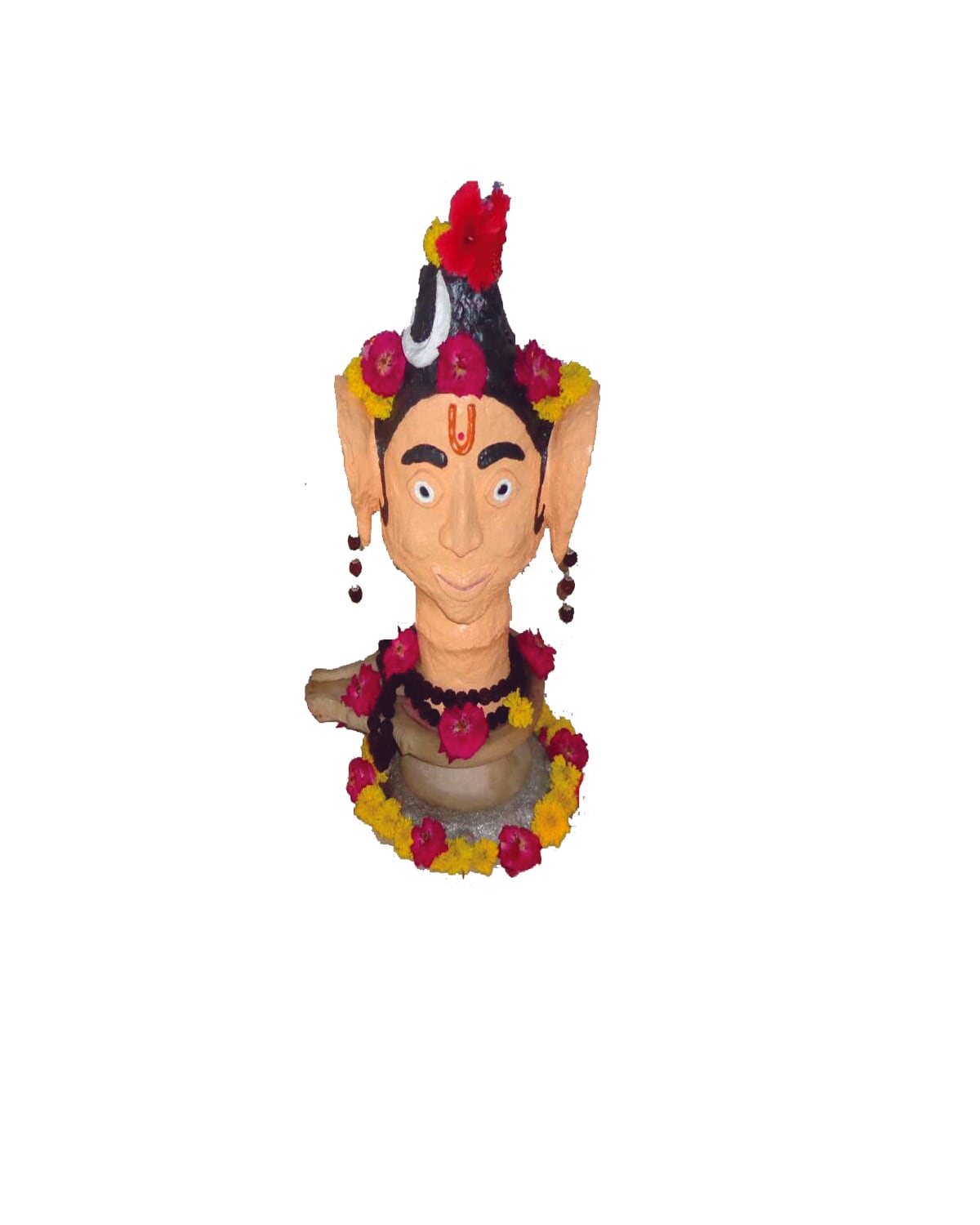
Nisargadatta Maharaj
They agree on: Who am I? Is there a true self? · Why do we suffer? · What happens after death?
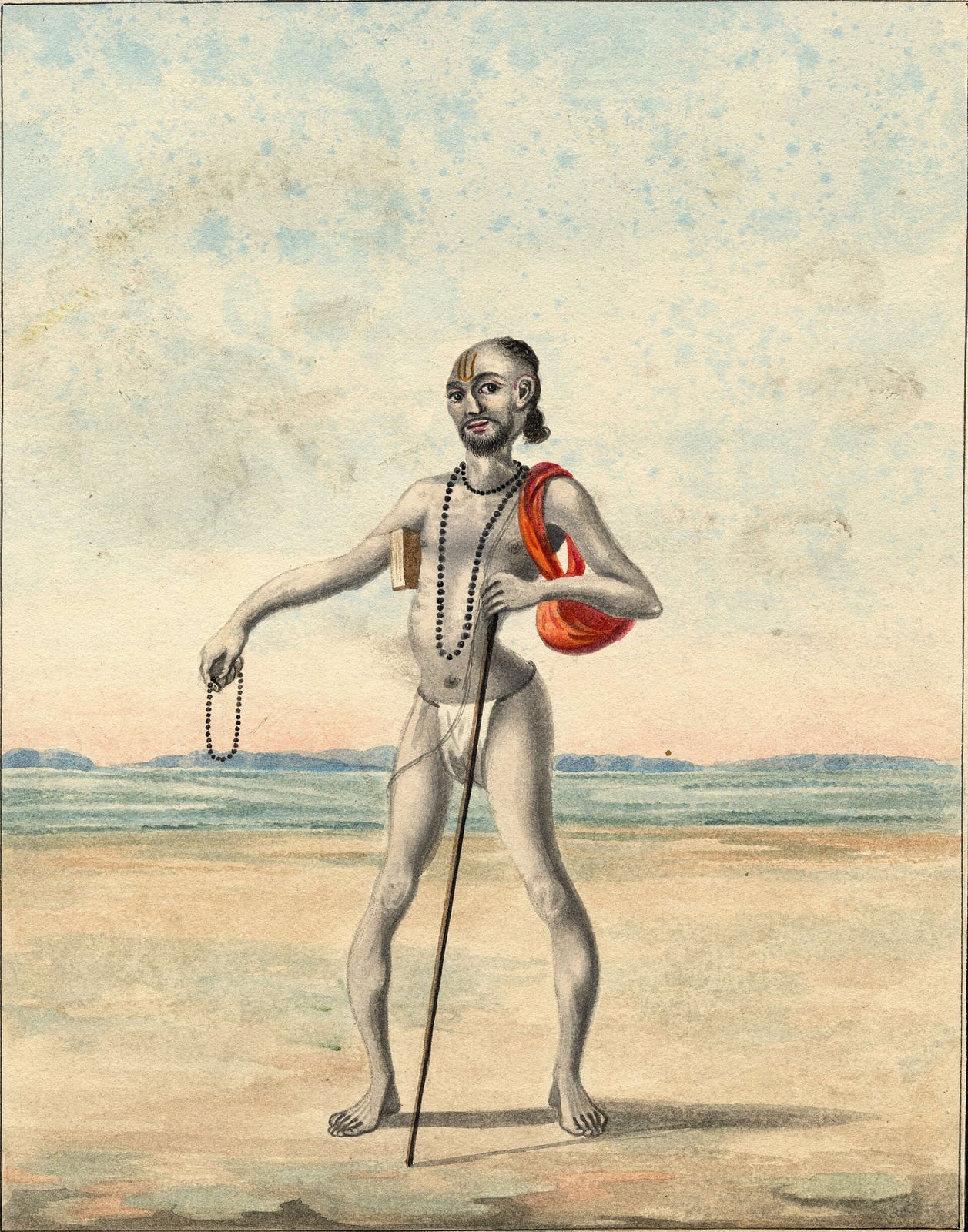
Ashtavakra
They agree on: What is the Absolute? Does God exist? · Who am I? Is there a true self? · Why do we suffer?
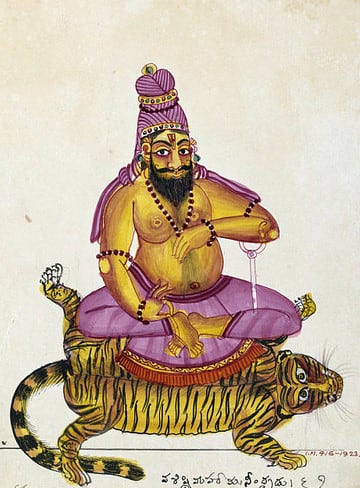
Vasishtha
They agree on: What is the Absolute? Does God exist? · Who am I? Is there a true self? · Why do we suffer?
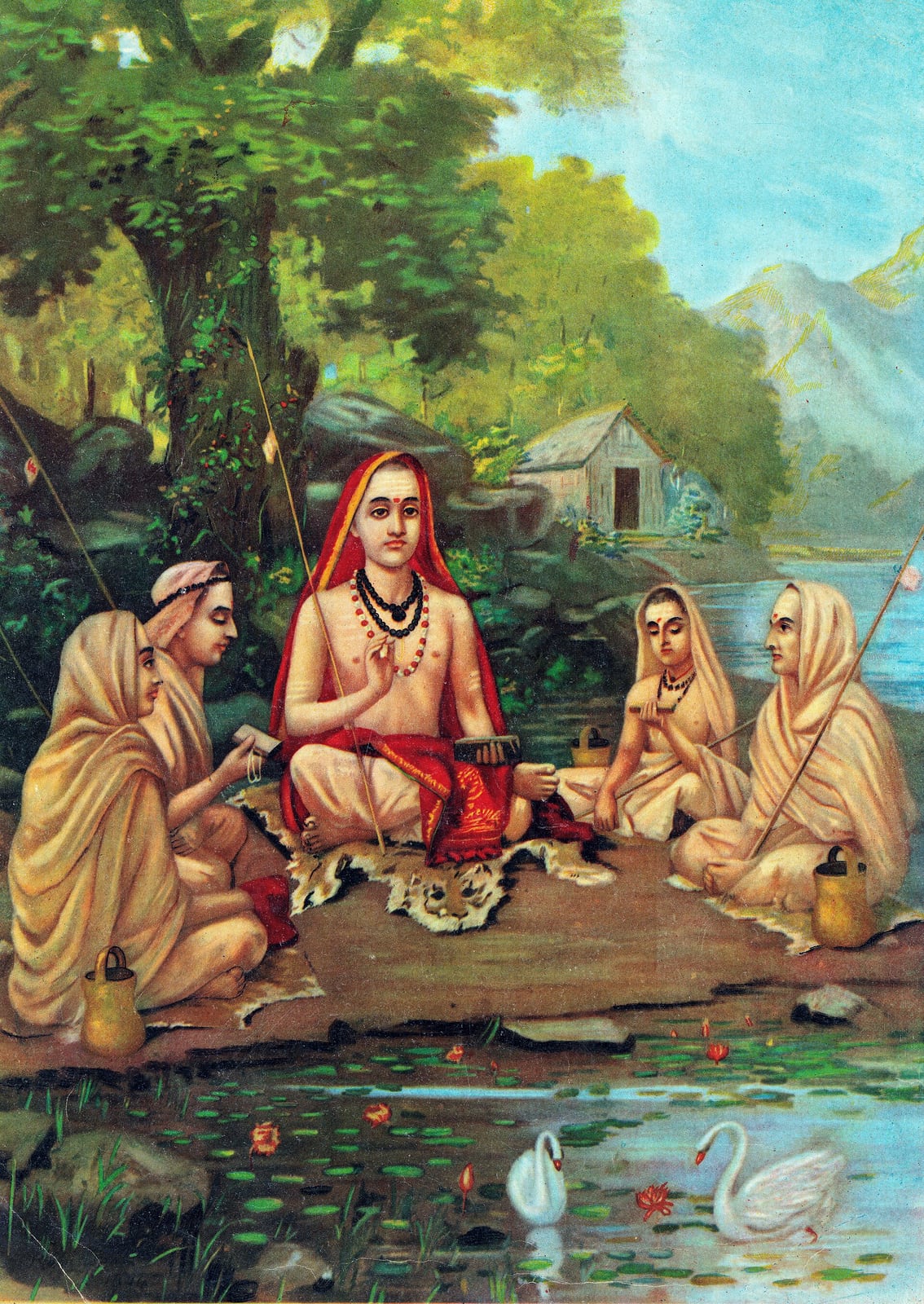
Adi Shankara
They agree on: What is the Absolute? Does God exist? · Who am I? Is there a true self? · Why do we suffer?
Thinks most unlike

Julian of Norwich
They clash on: Who am I? Is there a true self? · Is the world real?
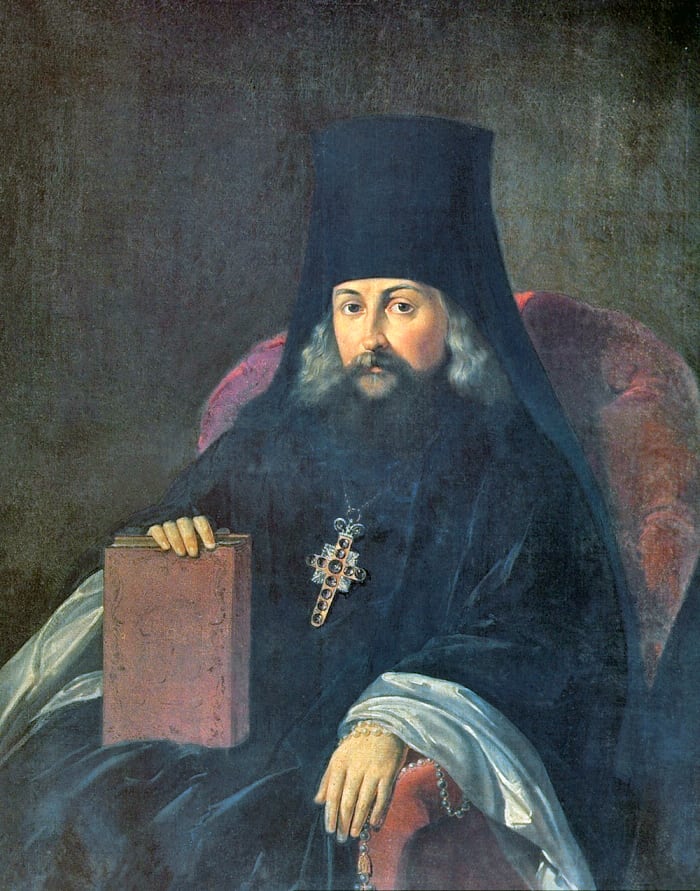
Ignatius Brianchaninov
They clash on: Who am I? Is there a true self? · Is the world real?
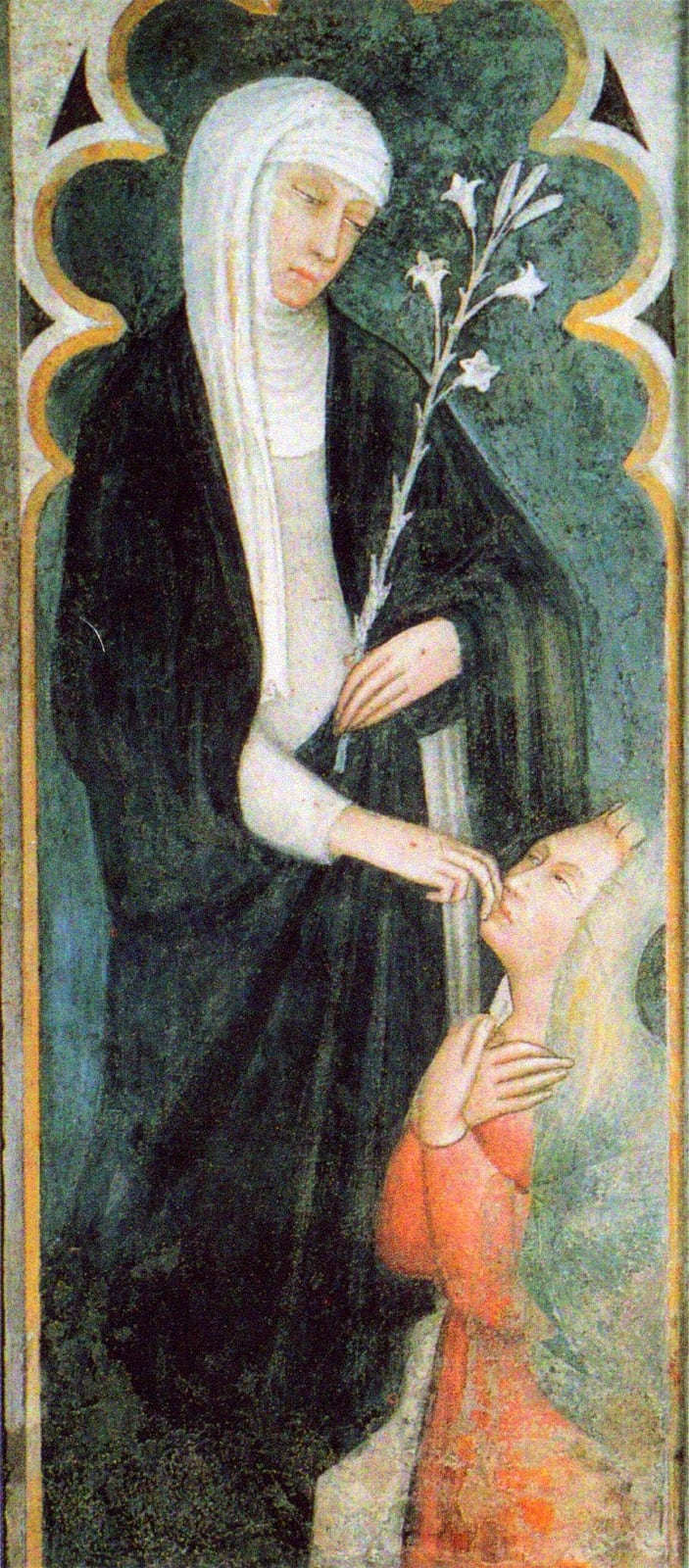
Catherine of Siena
They clash on: Who am I? Is there a true self? · Is the world real?
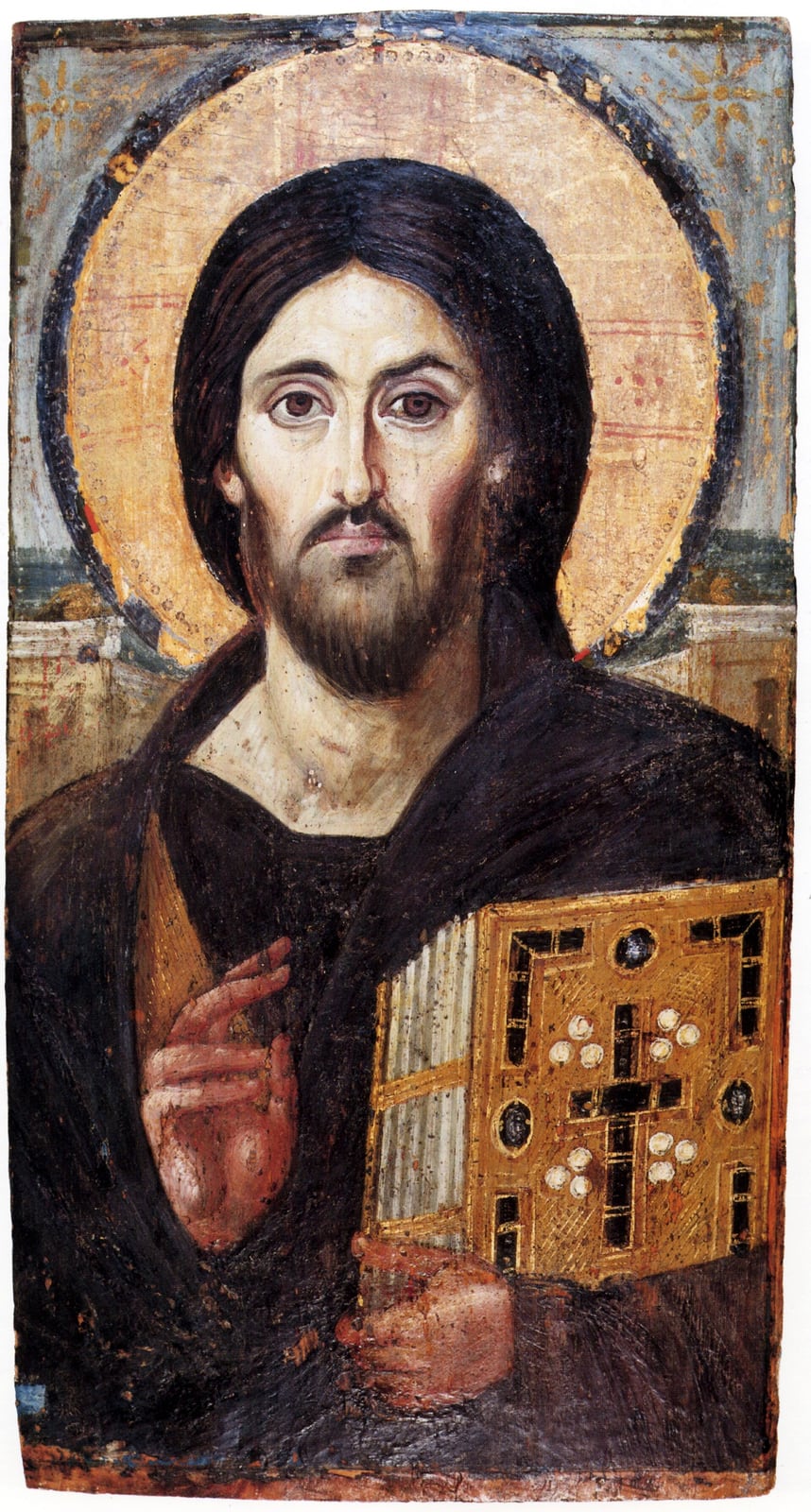
Jesus of Nazareth
They clash on: Is the world real? · Who am I? Is there a true self?
They clash onApparent contradiction
Ramana Maharshi · G. I. Gurdjieff
Conscious effort versus being what one already is: a smaller conflict than it seems
Why: The contradiction is largely apparent because they speak from different levels. Gurdjieff describes the human being from the side of sleep and the machine, and his effort is the condition for something to awaken; Ramana speaks from the Self, for which effort produces nothing new, and he admits it only as a means of stopping the ego from interfering. Both deny the ordinary doer. A real difference remains, however, and should not be glossed over: for Gurdjieff the permanent self does not exist and must be created; for Ramana it already exists and one need only stop veiling it. In one effort builds; in the other, it clears away.
They agree on
Ramana Maharshi · Eckhart Tolle
You are not what you think: the shift of the subject on the hill and in the now
Why: The affinity has a contextual explanation: Tolle writes in a contemporary Western milieu that had received Advaita, among other sources, through Ramana and his popularisers, and he adopts a vocabulary without scriptures or gods. The differences are of register and audience. Ramana speaks from the Vedantic tradition, with an explicit metaphysical horizon, since the Self is identical with the Absolute, and with a very precise question-method; Tolle addresses readers without religious training, stresses the now and the inner body, and extends the diagnosis to a collective scale. One asks who; the other asks one to be present. Both point to the same shift of the subject.
They clash onApparent contradiction
Ramana Maharshi · Rumi
The path of knowledge and the path of love: two ways ending in the same burning of the ego
Why: The contradiction is apparent at the level of the path: both seek the dissolution of the ego and attribute it to something that exceeds the subject, the Beloved who draws in Rumi, the Self or grace in Ramana. The difference of language comes from their traditions: Persian Sufism expresses the way in terms of lover and Beloved; Advaita, in terms of knowledge of the Self. A metaphysical difference remains, however, that is not apparent: Rumi stays within the Islamic doctrine of creation, and the soul returns to a God who is not itself, while Ramana affirms that the Self is the Absolute. They agree on the how more than on the what.
They clash onApparent contradiction
Ramana Maharshi · P. D. Ouspensky
Many I's or a single Self: the same word for two levels
Why: The contradiction is apparent at the level of diagnosis because they use the word I for different levels: Ouspensky calls I's the psychological states of ordinary man; Ramana reserves the term Self for the awareness that witnesses them all, which is neither a state nor a content. Ramana's ego and Ouspensky's many I's are the same reality seen from two systems. There is a real difference in the goal: the Fourth Way aims to build a permanent I through work, whereas for Ramana the Self is not built but recognised. One starts from a psychology of the machine; the other, from a Vedantic metaphysics.
They agree on
Ramana Maharshi · Adi Shankara
The Advaita of the commentaries and the Advaita of silence
Why: The relationship is documented in one sense: Ramana rendered into Tamil texts attributed to Shankara, such as the Vivekachudamani and the Atmabodha, although scholars dispute Shankara's authorship of them. The difference is one of method and authority. Shankara is a commentator who holds that Brahman is known only through scripture, with reason in its service, and who assigns monastic renunciation to the sage. Ramana never received scholastic training, spoke from an experience lived at sixteen, proposed a single question as method and considered that true renunciation is of the ego, not of home or work. One argues for the identity; the other invites one to verify it.
They agree on
Ramana Maharshi · Jiddu Krishnamurti
No outer authority: the question who am I and the observer who is the observed
Why: The affinity is comparative: there is no record that they met. It is explained by a shared distrust of institutional religion and of learning, which in Ramana stems from an early experience lived without teacher or study, and in Krishnamurti from his break with the Theosophical organisation that had formed him. The underlying difference is metaphysical. Ramana speaks from Advaita and affirms a Self that is the Absolute, and accepts devotion and surrender as a path; Krishnamurti rejects any doctrine of the Self, which he sees as another projection of thought seeking security, and every tradition. One enquires in order to find what has always been; the other observes so that what thought manufactures comes to an end.
Anecdotes and stories
Anecdotes and stories
Testimonyjulio de 1896
The boy who rehearsed his own death
Origin of the story: It comes from Ramana's own account, recorded by B. V. Narasimha Swami for Self-Realization (1931) from conversations with him, and repeated with minimal variations in later dialogues (Talks, 1935–1939; collected by Godman in Be As You Are). There are no witnesses: it is an autobiographical testimony given more than thirty years later.
Source: Narasimha Swami, B. V. Self-Realization: The Life and Teachings of Sri Ramana Maharshi. Tiruvannamalai: Sri Ramanasramam, 1931.
Testimony1896–1897
In the vault of the Patala Lingam
Origin of the story: Narrated by Narasimha Swami (1931) with testimony from those involved, including Venkatachala Mudali, and followed by Osborne (1954). The details (the sores, Seshadri's intervention) come from witnesses; the reading that he did not feel the pain because he was absorbed in the Self is the biographers' and Ramana's own interpretation.
Testimony1896–1950
A silence that could be felt
Origin of the story: The fame of his stillness has a traceable early origin: Humphreys' letters (The International Psychic Gazette, London, 1913), reproduced by Narasimha Swami and Osborne; Brunton's A Search in Secret India (1934), which spread it in the West; and Ramana's own words on silence in the Talks (talks 20 and 398). The explanation that it was not a vow is his own, quoted by Osborne. What witnesses felt is, by nature, subjective testimony.
Source: Humphreys, Frank H. Cartas sobre su visita a Ramana Maharshi (1911), publicadas en The International Psychic Gazette, Londres, 1913; reproducidas en Osborne 1954 y por Sri Ramanasramam (Glimpses of the Life and Teachings of Bhagavan Sri Ramana Maharshi).
Documented1924
The thieves of the night of 26 June
Origin of the story: A documented event: there was a police report, the thieves were arrested and sentenced, and several eyewitnesses (Kunjuswami, Ramakrishnaswami) left their accounts. Osborne narrates it in detail following Narasimha; Ramana's words come from those witnesses.
Testimony1926–1948
The cow Lakshmi
Origin of the story: Told by Osborne (1954), who was living at the ashram at the time, and by Devaraja Mudaliar, who asked Ramana whether the epitaph was a conventional formula or literally meant liberation. The grave with the epitaph exists at Sri Ramanasramam; the spiritual interpretation of the episode belongs to the devotees and to Ramana himself.
Testimony14 de abril de 1950
The star of 14 April 1950
Origin of the story: It comes from the account of Osborne (1954), an eyewitness, who in turn relays what the photographer told him. Osborne does not name him; he is usually identified as Henri Cartier-Bresson, who photographed Ramana in his last days, an identification we have not been able to confirm in a primary source. That a fireball was seen that night is plausible; that its passage coincided exactly with the death, and its reading as a sign, belong to devotional testimony.
Unverifiablesin fecha
The shadow that could not be seen
Origin of the story: It cannot be traced. It does not appear in the full texts of Osborne (1954) or the Talks (1955), which we have reviewed in full, nor have we found it in Narasimha (1931), Mudaliar, Nagamma, Godman or any accessible primary source; nor in searches in English and Spanish. The surviving photographs and films (1935–1950) do not support it; that many were taken in diffuse light (overcast sky, umbrella, inside the hall) might explain why no marked shadow is visible in them, but this is our hypothesis. The motif of shadowless gods comes from the Nalopakhyana (Mahabharata III).
Teachings
Teachings
The notions that structure their thought, explained in context.
Self-enquiryatma-vichara
It has roots in the Upanishads and Shankara, but in scholastic Advaita enquiry (vichara) is usually intellectual discrimination guided by scripture. Ramana turns it into a direct attentional practice, with no requirement of study or initiation.
Source: Osborne, Arthur, ed. The Collected Works of Ramana Maharshi. Londres: Rider, 1959; Tiruvannamalai: Sri Ramanasramam (ediciones posteriores).
The 'I'-thoughtaham-vritti
The expression 'knot between the conscious and the inert' (chit-jada-granthi) comes from the Tamil tradition and texts such as the Yoga Vasishtha, which Ramana knew. His analysis through the three states (waking, dream, deep sleep) follows the Mandukya Upanishad.
Source: Osborne, Arthur, ed. The Collected Works of Ramana Maharshi. Londres: Rider, 1959; Tiruvannamalai: Sri Ramanasramam (ediciones posteriores).
The Hearthridayam
Placing the spiritual heart on the right does not come from the classical Upanishads, which put it in the chest without laterality; Ramana based it on his experience and said he found confirmation in a Malayalam Ayurvedic treatise (the index of the Talks refers to the Ashtanga Hridayam) and in the Sita Upanishad (Talks, talk 4).
Silence (mauna)mauna
The ideal of the silent master has a long history in South Indian Shaivism (the hymn to Dakshinamurti attributed to Shankara, which Ramana translated into Tamil). Jung and Zimmer noted that the figure of the silent saint fitted deep-rooted Indian notions of holiness.
Surrender (saranagati)saranagati
The notion comes from the devotional (bhakti) tradition and, in South India, from Vaishnavism and Tamil Shaivism, whose saints (the Nayanmars of the Periya Puranam) marked Ramana in his adolescence.
Source: Godman, David, ed. Be As You Are: The Teachings of Sri Ramana Maharshi. Londres: Arkana, 1985.
Natural samadhi (sahaja samadhi)sahaja-samadhi
The terminology of degrees of samadhi comes from yoga and late Vedanta; the insistence that the ultimate state is natural (sahaja) and compatible with activity connects with the jivanmukta ideal and the Tamil siddha traditions.
Source: Godman, David, ed. Be As You Are: The Teachings of Sri Ramana Maharshi. Londres: Arkana, 1985.
Retreats
Retreats and centres
Places and gatherings linked to their teaching. We put you in touch with the organisers.
Tiruvannamalai, Tamil Nadu · India
Sri Ramanasramam, Tiruvannamalai
Sri Ramanasramam
Sri Ramanasramam is the ashram that grew around Ramana Maharshi at the foot of Arunachala, the sacred hill of Tiruvannamalai, where he lived until his death in 1950. Today it preserves his samadhi shrine, the old hall where he received visitors and his mother's shrine, and keeps the daily chanting and routine. It does not run courses or guided retreats: the ashram makes itself available as a simple home for anyone who wishes to sit in silence and practise the enquiry Who am I. It provides rooms and South Indian meals to visitors from all over the world.
Tiruvannamalai, Tamil Nadu · India
Giri pradakshina: walking around Arunachala
Sri Ramanasramam (información) · Arulmigu Arunachaleswarar Temple
Giri pradakshina is the walking circuit of about fourteen kilometres around Arunachala, the hill Ramana Maharshi regarded as the visible form of the Self. It is walked clockwise, keeping the mountain on one's right, past the temples, tanks and lingams that mark the route. Ramana recommended it to everyone: go round the hill once and you will see that it attracts you, he told one devotee, and to the elderly or unwell he simply said they could go slowly. Sri Ramanasramam explains the meaning of the practice on its website, along with the places on the path connected to the teacher.
Jamaica (Queens), Nueva York · Bridgetown, Nueva Escocia · Estados Unidos / Canadá
Arunachala Ashrama (New York and Nova Scotia)
Arunachala Ashrama – Bhagavan Sri Ramana Maharshi Center
Arunachala Ashrama is the oldest centre devoted to Ramana Maharshi in North America, with a house in the New York borough of Queens and another in rural Nova Scotia, Canada. It holds satsangs, chanting and readings from the teacher's works, and marks occasions such as his Jayanthi or birth anniversary, some of them livestreamed. It also distributes books and materials connected with Sri Ramanasramam. It does not present itself as a centre for guided retreats, but as a simple space of devotion and study for anyone who wants to approach the teaching of self-enquiry without travelling to India.
Videos
Videos
Recordings, interviews and documentaries. Videos play from YouTube; they are not hosted here.
The Archival Films - Sri Ramanasramam
Original recording· 1950· 60 min
Sri RamanasramamOfficial channel
The Archival Films of Sri Ramana Maharshi (1935–1950) | Complete Restored Footage
Original recording· 1950· 60 min
Arunachala AshramaOfficial channel
Sri Ramana Maharshi – Full Documentary: The Sage of Arunachala (English)
Documentary· EN· 73 min
Arunachala AshramaOfficial channel
Sri Ramana Maharshi full Documentary in Spanish
Documentary· ES· 73 min
Arunachala AshramaOfficial channel
'Ulladu Narpadu' Forty Verses On Reality - Sri Ramana Maharshi (recitation by Sri J. Jayaraman)
Third-party recording· TA
Arunachala AshramaOfficial channel
Annamalai Swami in Tamil from a 1989
Interview· TA· 1989
Arunachala AshramaOfficial channel
Ramaswami Pillai 1989 interview
Interview· 1989
Arunachala AshramaOfficial channel
From Sri Ramanasramam to Skandasramam, Walking in Meditation - Home of Bhagavan Ramana Maharshi
Third-party recording· 34 min
Sri RamanasramamOfficial channel
Turiya, "The Life and Teachings of Ramana Maharshi" - Full HD Film
Documentary· EN· 55 min
AwakenTheWorldFilm
Turiya (Spanish), «La vida y las enseñanzas de Ramana Maharshi» - Película en Full HD
Documentary· ES· 55 min
AwakenTheWorldFilm
Gallery
Gallery
Images with verified licences. Each keeps its authorship and attribution.
Connections
Connections
Influences, discipleships and affinities. Documented relations are distinguished from similarities identified by analysis.
Influenced by
Ramana was not trained in scholastic Advaita, but recognised his experience in the texts attributed to Shankara and translated into Tamil the Vivekachudamani, the Atma Bodha, the Drig-Drishya-Viveka and the hymn to Dakshinamurti.
Documented relation
Met
Yogananda visited Sri Ramanasramam in November 1935 and described it in Autobiography of a Yogi (ch. 41); a short film of the visit survives.
Documented relation
Teacher of
Kavyakantha Ganapati Muni
In 1907 Ganapati Muni received instruction from Ramana on enquiry and proclaimed him Bhagavan Sri Ramana Maharshi; he later composed the Sri Ramana Gita.
Documented relation
Met
Paul Brunton
Brunton visited him in 1931 and devoted the central chapters of A Search in Secret India (1934) to him, the book that made him known in the West.
Documented relation
Contemporary of
C. G. Jung
In 1944 Jung wrote the foreword to Heinrich Zimmer's anthology Der Weg zum Selbst, devoted to Ramana; he did not visit him during his 1937–1938 trip to India.
Documented relation
Contemporary of
Contemporaries in South India, some hundred kilometres apart (Pondicherry and Tiruvannamalai); there is no record that they met, though disciples of both moved between the two ashrams.
Similarity identified by analysis
Ideas akin to
Both centre their teaching on the sense 'I am' as the gateway to what precedes it; there is no record that they met.
Similarity identified by analysis
Ideas akin to
The emphasis on presence and disidentification from thought takes up, in contemporary language, themes of Ramana's teaching.
Similarity identified by analysis
Contemporary of
Contemporaries, both from South India; both rejected methods and outer authority, but there is no record that they met.
Similarity identified by analysis
Linked from other profiles
- Uddalaka Aruni · Ideas akin to
- David R. Hawkins · Ideas akin to
- Eckhart Tolle · Ideas akin to
- Byron Katie · Ideas akin to
- Sri Aurobindo · Contemporary of
- Adi Shankara · Influenced
- Carl Gustav Jung · Contemporary of
- Osho · Ideas akin to
- Meher Baba · Contemporary of
- Jiddu Krishnamurti · Ideas akin to
- Dattatreya · Influenced
- Gaudapada · Ideas akin to
- Nisargadatta Maharaj · Ideas akin to
- Anandamayi Ma · Contemporary of
- Ramakrishna · Ideas akin to
- Paramahansa Yogananda · Met
- Vasishtha · Ideas akin to
- Yajnavalkya · Ideas akin to
- Ashtavakra · Influenced
Sources
Sources
Bibliography and catalogues consulted for this profile.
- Osborne, Arthur. Ramana Maharshi and the Path of Self-Knowledge. Londres: Rider, 1954 (reed. Sri Ramanasramam). Texto consultado en Internet Archive.
- Narasimha Swami, B. V. Self-Realization: The Life and Teachings of Sri Ramana Maharshi. Tiruvannamalai: Sri Ramanasramam, 1931.
- Venkataramiah, Munagala (Swami Ramanananda Saraswathi), ed. Talks with Sri Ramana Maharshi. Tiruvannamalai: Sri Ramanasramam, 1955 (conversaciones de 1935–1939; ed. 2006 consultada en Internet Archive).
- Godman, David, ed. Be As You Are: The Teachings of Sri Ramana Maharshi. Londres: Arkana, 1985.
- Brunton, Paul. A Search in Secret India. Londres: Rider, 1934 (caps. 9 y 16–17 sobre Ramana Maharshi).
- Osborne, Arthur, ed. The Collected Works of Ramana Maharshi. Londres: Rider, 1959; Tiruvannamalai: Sri Ramanasramam (ediciones posteriores).
- Wikidata: Ramana Maharshi (Q288441).
- Sri Ramanasramam, Tiruvannamalai. Web oficial del ashram (biografía, obras, publicaciones).
- Humphreys, Frank H. Cartas sobre su visita a Ramana Maharshi (1911), publicadas en The International Psychic Gazette, Londres, 1913; reproducidas en Osborne 1954 y por Sri Ramanasramam (Glimpses of the Life and Teachings of Bhagavan Sri Ramana Maharshi).
- Arunachala Ashrama. The Archival Films 1935 to 1950: Research Booklet. Nueva York: Arunachala Ashrama, 1996–2012 (artículos publicados en The Maharshi, 1991–1993).
- Yogananda, Paramahansa. Autobiography of a Yogi. Nueva York: Philosophical Library, 1946, cap. 41.
- Zimmer, Heinrich. Der Weg zum Selbst: Lehre und Leben des indischen Heiligen Shri Ramana Maharshi aus Tiruvannamalai. Ed. C. G. Jung. Zúrich: Rascher, 1944.
- Mudaliar, A. Devaraja. Day by Day with Bhagavan (diario del 16-3-1945 al 4-1-1947). Tiruvannamalai: Sri Ramanasramam, 1968 (ed. 2002, ISBN 81-88018-82-1).
- Nagamma, Suri. Letters from Sri Ramanasramam. Trad. D. S. Sastri. Tiruvannamalai: Sri Ramanasramam, 1970.
- Open Library (Internet Archive): registros de obra y edición de Ramana Maharshi y de sus compiladores, consultados el 2026-10-23.
- Mahabharata, Vana Parva (Aranyaka Parvan), episodio de Nala y Damayanti (Nalopakhyana). Edición crítica, Poona: Bhandarkar Oriental Research Institute, 1933–1966; libro III, adhyaya 54.
- Shantideva. Bodhicharyavatara (s. VIII), cap. V, estrofas 12–13 (imagen de cubrir la tierra de cuero frente a calzarse).
- Maugham, W. Somerset. «The Saint», en Points of View. Londres: Heinemann, 1958 (ensayo sobre su visita a Ramana Maharshi en 1938).
- Sri Ramanasramam. «The Mountain Path» (revista trimestral fundada en 1964 por Arthur Osborne y publicada por el ashram). Web oficial de Sri Ramanasramam.
- Arunachala Ashrama (Nueva York). «Sri Ramanasramam's Centenary Celebration»: cronología del ashram y de su presidencia (T. N. Venkataraman, V. S. Ramanan, Venkat S. Ramanan).
- Lucas, Phillip Charles. «Non-Traditional Modern Advaita Gurus in the West and Their Traditional Modern Advaita Critics». Nova Religio 17, n.º 3 (2014): 6–37. doi:10.1525/nr.2014.17.3.6.
- Osborne, Arthur, ed. The Collected Works of Ramana Maharshi. Tiruvannamalai: Sri Ramanasramam, 1974 (índice: obras originales, versos sueltos, traducciones de los Agamas y de Shankara, Vichara Mani Mala). Escaneo en Internet Archive (colección eGangotri).
- Ramana Maharshi. Sri Ramana Nool Thirattu (obras reunidas en tamil), 3.ª ed. Tiruvannamalai: Sri Ramanasramam (publ. por Niranjanananda Swami), c. 1940. Digital Library of India 2015.384252, en Internet Archive.
- Rights holder
- Sri Ramanasramam (Tiruvannamalai) es titular de los derechos de las traducciones, compilaciones y ediciones que publica (Talks, Collected Works, Sri Ramana Gita, The Mountain Path) y del archivo fotográfico y fílmico. Los textos originales en tamil de Ramana (m. 1950) están en dominio público en la India; las traducciones y antologías modernas (Godman, Osborne y otras) tienen derechos de sus autores y editores.
- Official site
- www.sriramanamaharshi.org/
Pending confirmation
What this profile has not yet been able to settle. We would rather say so than fill it in.
- Ediciones en español con ISBN de Upadesa Saram, de los Talks (traducción completa) y de las Obras completas: no aparecen en Open Library y Google Books devuelve cuota 0 sin clave.
- Ediciones en italiano, ruso, hindi y árabe de las obras principales: no localizadas en catálogo.
- Confirmar que «Enseñanzas de Bhagavan Sri Ramana Maharshi» (Kier, ISBN 9501700828) es la traducción de la antología de Osborne; el registro no da traductor ni año.
- Manuscritos: localizar los autógrafos conservados en el archivo de Sri Ramanasramam (respuestas originales de Nan Yar y Vichara Sangraham, cuadernos de himnos) y, si existe, su digitalización; no se ha encontrado catálogo público.
- Transcribir de una edición fiable los originales tamiles de la nota de 1896 y de la respuesta a su madre de 1898, para dar text_original en tamil.
- Confirmar en fuente primaria la identidad del fotógrafo francés de la noche del 14 de abril de 1950 (se suele decir Henri Cartier-Bresson; Osborne no lo nombra).
- Fijar mes de la proclamación de Ganapati Muni (1907) y fecha exacta de la primera visita de Brunton (1931).
- Imágenes descartadas por metadatos poco fiables en Commons (autor y fecha erróneos): Ramana-Maharshi-walk.jpg, Ramana-Maharshi-stand.jpg, Ramana-Maharshi-1949.jpg, Paramahansa-Yogananda-with-Ramana-Maharshi.jpg. Revisar con la fuente original antes de usarlas.
- Sin programas de afiliación verificados (ni Sri Ramanasramam ni sus editoriales).
- Obras (2026-10-25): se añadieron 10 obras (dos composiciones de su mano —Atma Vidya Kirtanam y Appalappattu— y ocho recopilaciones reconocidas). Los cinco himnos a Arunachala, el Gita Saram y las traducciones de Shankara ya figuraban agrupados. Quedan fuera las antologías modernas derivadas (Words of Grace, A Practical Guide to Know Yourself, Sayings of Sri Ramana Maharshi), los libros de recuerdos de devotos (Guru Ramana de S. S. Cohen, The Power of the Presence de David Godman) y las ediciones autopublicadas.
- Fijar fecha de primera edición de Crumbs from His Table y de Upadesa Manjari en tamil (la de Appalappattu se resolvió el 2026-10-25: «1914 o 1915», Collected Works 1974).
- Localizar ISBN de The Garland of Guru's Sayings (Sri Ramanasramam, 1990) y de la traducción de Sadhu Om y Michael James de Guru Vachaka Kovai; y de Conscious Immortality (ed. revisada).
- Sala de lectura (2026-10-25): solo se registra el Nool Thirattu tamil (c. 1940). Las traducciones inglesas antiguas localizadas no son aún de dominio público en los países de 70 años p. m.: Upadesa Saram trad. B. V. Narasimha Swami, 1938 (m. 1956; libre en 2027), o tienen autoría del comentario sin identificar (Sri Ramana Gita con comentario sánscrito, 1946, archive.org/details/sriramanagitawithsanskritcommentaryganapatimuni1946_202004_376_r). Revisar en 2027 y confirmar el estatus en España (80 años p. m.: 2031).
Researched on 2026-10-25