Hinduism · Contemporary non-duality · Advaita Vedanta
Nisargadatta Maharaj
निसर्गदत्त महाराज
c. 1897 – 1981Historically documented person
Indian teacher of non-duality, born Maruti Shivrampant Kambli, who sold bidis in Bombay for decades and taught from a small mezzanine in Khetwadi. A disciple of Siddharameshwar Maharaj of the Inchegiri Navnath lineage, he summed up the path as attending to the sense "I am" until it is transcended. His Marathi conversations, translated by Maurice Frydman as I Am That (1973), made him world-famous; the volumes of his last years radicalised the teaching towards the absolute, prior to consciousness.
- works
- 21works
- editions
- 48editions
- quotes
- 6quotes
- videos
- 10videos
- images
- 3images
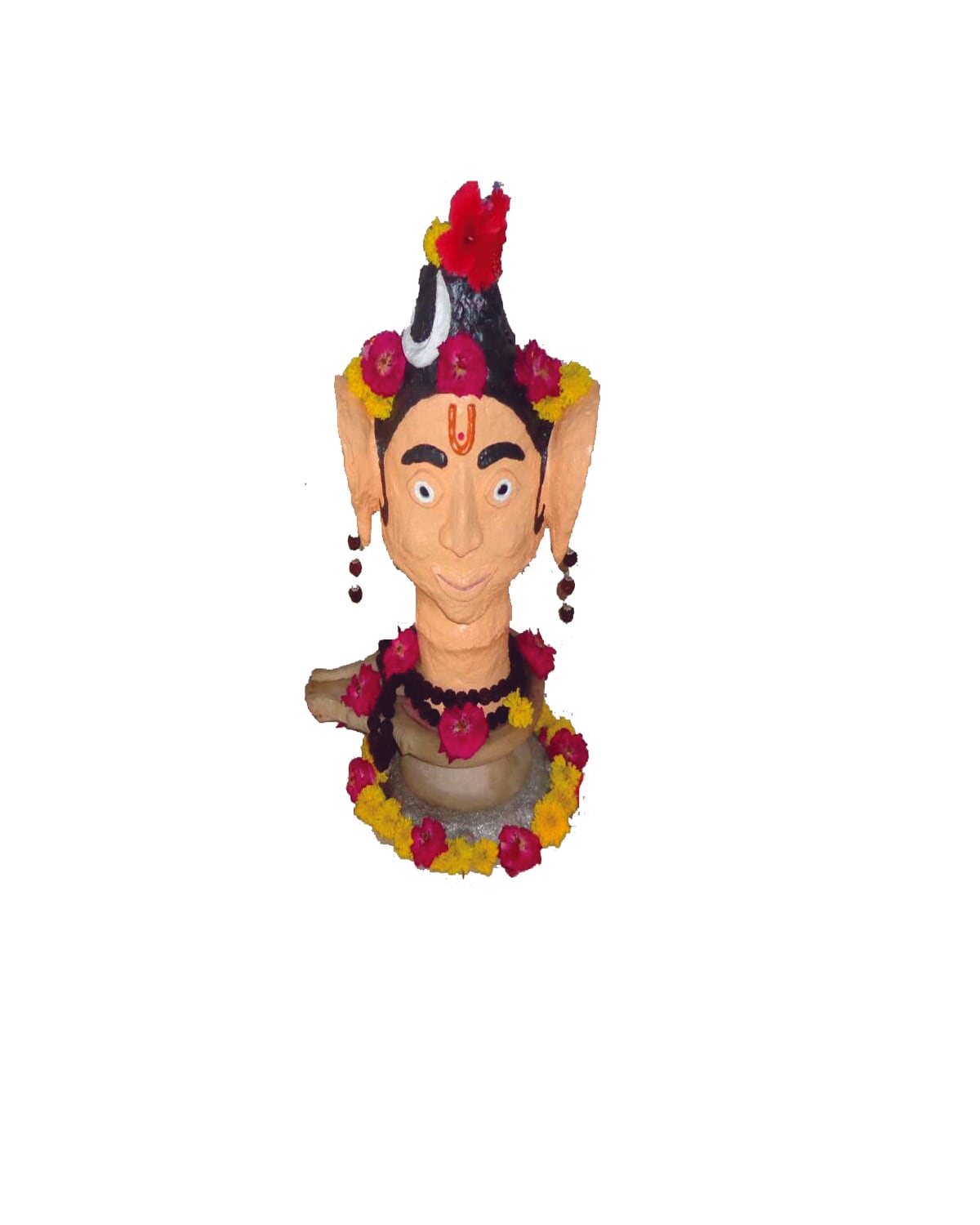
Imagen devocional de Nisargadatta Maharaj · CC BY-SA 4.0
In their words
«Establish yourself firmly in the awareness of 'I am'. This is the beginning and also the end of all endeavour.»I Am That, cap. 16, «Desirelessness, the Highest Bliss»

Their central idea
The starting point is neither a belief nor a technique but the most immediate fact of experience: the feeling of existing, prior to any idea of who one is. Abiding in it, separating it from everything added to it—body, name, history—is for Nisargadatta the whole practice.
See in context
Biography
4 min read
A boy without schooling
Nothing in the life of Maruti Shivrampant Kambli suggested that he would become one of the most widely read teachers of non-duality of the twentieth century. Even his date of birth is uncertain: tradition places it in 1897, on the full moon of Hanuman Jayanti—hence the name Maruti, another name of Hanuman—usually given as 17 April, although the biographical note in I Am That records that his relatives spoke of March. Asked about it himself, he would answer that he had never been born. His father, Shivrampant, had worked as a domestic servant in Bombay and later farmed a small plot at Kandalgaon, in the hinterland of Ratnagiri district (today Sindhudurg) on the Maharashtra coast. Maruti barely went to school: he tended cattle, drove oxen, ran errands. The family belonged to the varkari piety devoted to Vithoba, and a Brahmin neighbour, Vishnu Haribhau Gore, spoke to him of religion with a seriousness the boy never forgot.
Bombay and the bidi shop
When his father died, around 1915, he followed his elder brother to Bombay. He worked for a few months as a clerk and gave it up; he then opened a small haberdashery selling children's clothes, tobacco and bidis, the hand-rolled Indian cigarettes. The business prospered until it numbered several shops. In 1924 he married Sumatibai, with whom he had a son and three daughters. It was, in the words of his editor Sudhakar S. Dikshit, the ordinary life of an ordinary man.
"Attend to the sense 'I am'"
In 1933 a friend, Yashwantrao Baagkar, took him to his teacher, Siddharameshwar Maharaj, of the Inchegiri lineage, a branch of the Navnath Sampradaya founded by Bhausaheb Maharaj. Siddharameshwar gave him a mantra and an instruction he would summarise many years later with disarming simplicity: you are not what you take yourself to be; watch the sense "I am" and pay attention to nothing else. Maruti followed it in every spare moment, sitting in silence. By his own account, three years were enough for him to understand his true nature. Siddharameshwar died on 9 November 1936. In time he became known as Nisargadatta, a name that may be understood as "one given over to the natural" or "one who abides in the natural state"; sources disagree on when and how he adopted it.
The interrupted pilgrimage
In 1937 he left his family and shop and set out barefoot for the Himalayas, intending to spend the rest of his life there. The pilgrimage lasted about eight months. On the way, he would say, he understood the futility of seeking what he already had, and returned to Bombay. The story of a fellow disciple who persuaded him to resume the householder's life comes from the circle's oral tradition. He went back to the shop, although from then on, says Dikshit, he ceased to be a merchant intent on profit. The following years were hard: his wife died in 1942 and a daughter in 1948.
The Khetwadi mezzanine
From 1951, after what he described as an inner prompting from his teacher, he began to give initiation to others. He lived in a modest flat in a working-class street of Khetwadi, in central Bombay, and to receive visitors he had a small mezzanine built, a low room where a few dozen people could sit on the floor. In 1966 he retired from trade. There, twice a day, he answered questions in Marathi; between sessions the lineage's bhajans were sung. He wrote no treatises and founded no institutions. He spoke bluntly, interrupted, smoked bidis and sent away without ceremony anyone looking for comfort, experiences or a new belief system.
Maurice Frydman and I Am That
His fame outside India has a name: Maurice Frydman, a Polish Jewish engineer who had come to India in the 1930s, had taken part in the Gandhi-inspired experiment in rural self-government at Aundh and had known Ramana Maharshi and Krishnamurti. Frydman spoke Marathi and became his disciple in 1965. He translated the conversations—some recorded on tape, often in a mixture of languages—and arranged them in a hundred and one sections. Published in Bombay by Chetana in 1973, in two volumes edited by Dikshit, I Am That became a classic: readers from all over the world began to seek out that Khetwadi lane. Frydman died in 1976; the revised one-volume edition added his essay "Nisarga Yoga" as an epilogue.
Beyond the "I am"
In the last years the tone of the teaching changed. The conversations recorded between 1979 and 1981 and translated by interpreters such as Saumitra Mullarpattan or Ramesh Balsekar—later edited by Jean Dunn and Robert Powell—insist that consciousness, the very "I am", is a passing product of the body made of food, a kind of illness that appears and disappears; the real is the absolute, prior to consciousness. In his last two years he suffered from throat cancer. He went on receiving visitors as long as he could speak. He died at his home in Bombay on 8 September 1981.
A legacy without an organisation
Nisargadatta left no institution comparable to those of other Indian teachers; he left books. None came from his own hand: all are transcriptions, translations and selections by others, and the difference between the broader tone of I Am That and the radicalism of the late volumes reflects his own development as much as that of his interpreters. His influence on so-called contemporary non-duality is immense: Ramesh Balsekar, Jean Dunn, Stephen Wolinsky and many later Western teachers recognised themselves in his teaching.
Sources: Nisargadatta Maharaj. I Am That: Talks with Sri Nisargadatta Maharaj. Trad. Maurice Frydman; ed. Sudhakar S. Dikshit. Bombay: Chetana, 1973 (2 vols.); 2.ª ed. revisada en un volumen, 1976. Incluye la nota biográfica de Dikshit y el epílogo «Nisarga Yoga» de Frydman. · Nisargadatta Maharaj. Prior to Consciousness: Talks with Sri Nisargadatta Maharaj. Ed. Jean Dunn. Durham (Carolina del Norte): The Acorn Press, 1985; y Seeds of Consciousness, ed. Jean Dunn, Nueva York: Grove Press, 1982. · Nisargadatta Maharaj. The Ultimate Medicine, ed. Robert Powell (San Diego: Blue Dove Press, 1994); The Experience of Nothingness (1996) y The Nectar of the Lord's Feet / The Nectar of Immortality (Element, 1987; Blue Dove, 1996).
Timeline
A life, year by year
Each point is a documented event. Click to read it, with its source and degree of certainty.
c. 1897age 0Bombay / Kandalgaon
Birth of Maruti Kambli
Born on Hanuman Jayanti according to family tradition; the exact date is undocumented (the note in I Am That speaks of March).
ProbableWikidata, «Nisargadatta Maharaj» (Q175532): nacimiento 17-04-1897 y muerte 08-09-1981 en Bombay; 30 enlaces entre wikis.
c. 1897 · age 0
Birth of Maruti Kambli
Born on Hanuman Jayanti according to family tradition; the exact date is undocumented (the note in I Am That speaks of March).
Probable
c. 1915 · age 18
Arrival in Bombay
After his father's death he follows his elder brother to Bombay; works as a clerk and opens a shop selling clothes, tobacco and bidis.
Documented
1924 · age 27
Marriage to Sumatibai
Marries Sumatibai; they will have a son and three daughters.
Documented
1933 · age 36
Meeting Siddharameshwar Maharaj
His friend Yashwantrao Baagkar takes him to Siddharameshwar Maharaj, who gives him a mantra and the instruction to attend to the sense "I am".
Documented
November 9, 1936 · age 39
Death of Siddharameshwar
His teacher dies. Nisargadatta would say three years of practice were enough for him to understand his true nature.
Documented
1937 · age 40
The interrupted pilgrimage
Leaves family and shop and sets out barefoot for the Himalayas; returns some eight months later convinced of the futility of seeking what he already had.
Probable
1942 · age 45
Death of his wife
Sumatibai dies; in 1948 one of his daughters will also die.
Documented
1951 · age 54
First initiations
Begins initiating disciples in the Inchegiri lineage, after what he described as an inner prompting from his teacher.
Documented
1963 · age 66
Self Knowledge and Self Realisation
His first booklet in English is published in Bombay.
Documented
1965 · age 68
Maurice Frydman becomes a disciple
The Polish engineer, who spoke Marathi, becomes a disciple and begins translating and recording the conversations.
Documented
1966 · age 69
Retirement from trade
Gives up the shop and devotes himself to receiving visitors in his Khetwadi flat, with two sessions a day.
Documented
1973 · age 76
Publication of I Am That
Chetana publishes in two volumes the conversations translated by Frydman and edited by Sudhakar S. Dikshit; foreign visitors begin to arrive.
Documented
1976 · age 79
Second edition and Frydman's death
The revised one-volume edition appears, with the epilogue "Nisarga Yoga"; Frydman dies that year.
Documented
1979 · age 82
The final conversations
Between 1979 and 1981 the talks later edited by Jean Dunn and Robert Powell are recorded, centred on the absolute prior to consciousness.
Documented
September 8, 1981 · age 84
Death
Dies at his Khetwadi home from throat cancer.
Documented
Works
Essential works
The works without which their legacy cannot be understood.
Recorded oral teaching · 1973
I Am That
I Am That: Talks with Sri Nisargadatta Maharaj
A hundred and one conversations with Indian and foreign visitors, held mostly in the late 1960s and early 1970s in his Khetwadi flat. Through concrete questions—suffering, death, desire, the guru, practice—Nisargadatta leads again and again to the same point: the sense "I am" as the entrance and the understanding that one is nothing one perceives. The tone is direct, sometimes abrupt, and the clarity of Frydman's translation explains why it has become one of the reference texts of contemporary Advaita, read across all traditions.
7 editions · amazon.com

Recorded oral teaching · 1985
Prior to Consciousness
Prior to Consciousness: Talks with Sri Nisargadatta Maharaj
The conversations of the last eighteen months, when the cancer was already advanced. The master shifts the emphasis from the "I am" to what precedes it: consciousness is a passing product of food and body, and the absolute does not know that it is. Many answers are dry and polemical; the book also shows how he received visitors and how he rejected practices turned into routine. Alongside I Am That, it is the most read book for knowing his mature teaching.
4 editions · amazon.com

Recorded oral teaching · 1994
The Ultimate Medicine
The Ultimate Medicine: As Prescribed by Sri Nisargadatta Maharaj
Dialogues of the last two years centred on the "medicine" that cures identification with the body: understanding that the sense of being is a passing state and remaining its witness until it dissolves. It includes exchanges with Western visitors and direct references to his illness, which he treated with detachment. It is one of the most quoted titles of his final period.
6 editions · amazon.com
Complete works (21)

Self Knowledge and Self Realisation
1963

Pointers from Nisargadatta Maharaj
1982

Seeds of Consciousness
1982
Nisargadatta Maharaj
The Blissful Life
The Conscious LibraryThe Blissful Life
1984

The Nectar of the Lord's Feet
1987

Consciousness and the Absolute
1994

The Experience of Nothingness
1996
Nisargadatta Maharaj
Atmasparsha (Marathi talks)
The Conscious LibraryAtmasparsha (Marathi talks)
1992

The Wisdom-Teachings of Nisargadatta Maharaj: A Visual Journey
2003
Nisargadatta Maharaj
Gleanings from Nisargadatta
The Conscious LibraryGleanings from Nisargadatta
2006
Nisargadatta Maharaj
Beyond Freedom
The Conscious LibraryBeyond Freedom
2007
Nisargadatta Maharaj
I Am Unborn
The Conscious LibraryI Am Unborn
2007
Nisargadatta Maharaj
The Nisargadatta Gita
The Conscious LibraryThe Nisargadatta Gita
2008
Nisargadatta Maharaj
Meditations with Sri Nisargadatta Maharaj
The Conscious LibraryMeditations with Sri Nisargadatta Maharaj
2014

Nothing is Everything
2014
Nisargadatta Maharaj
Self-Love: The Original Dream
The Conscious LibrarySelf-Love: The Original Dream
2017
Nisargadatta Maharaj
The Earliest Discourses
The Conscious LibraryThe Earliest Discourses
2020
Nisargadatta Maharaj
Amrutvarsha (Shower of Grace: Meditations with Shri Nisargadatta Maharaj)
The Conscious LibraryAmrutvarsha (Shower of Grace: Meditations with Shri Nisargadatta Maharaj)
Quotations
Quotations located in a specific work. Each carries its provenance and its level of confidence.
Establish yourself firmly in the awareness of 'I am'. This is the beginning and also the end of all endeavour.VerifiedI Am That, cap. 16, «Desirelessness, the Highest Bliss»
Essential ideas (editorial summary)
Out of respect for copyright, these ideas are summarised in our own words and are not presented as literal quotations.
- The starting point is neither a belief nor a technique but the most immediate fact of experience: the feeling of existing, prior to any idea of who one is. Abiding in it, separating it from everything added to it—body, name, history—is for Nisargadatta the whole practice.
- Everything that can be perceived, including one's own body and mind, cannot be what one is. The decisive question is not what I am but what I am not: patient negation of the perceived leaves the perceiver free.
- In the final period, consciousness itself appears as a passing phenomenon dependent on the body nourished by food; it is born and goes out with it. The real precedes that consciousness and does not know that it exists.
- The true teacher gives no experiences and promises no states; he points to what the disciple already is. Trust in the guru's word, like his own in Siddharameshwar's, is enough if followed seriously.
- The spiritual search turned into an accumulation of practices, pilgrimages and teachers is another form of desire. Nisargadatta dismissed the professional seeker sharply and sent him back to the only question that mattered.
Last words
There are no verifiable records of their last words.
The volumes edited by Jean Dunn and Robert Powell record conversations up to a few weeks before his death, when his voice was already much weakened by cancer, but none of the published sources consulted transcribes words spoken at the moment of death. Sentences presented online as "his last words" circulate without reference to any witness or recording; they are not included here.
Source: Nisargadatta Maharaj. Prior to Consciousness: Talks with Sri Nisargadatta Maharaj. Ed. Jean Dunn. Durham (Carolina del Norte): The Acorn Press, 1985; y Seeds of Consciousness, ed. Jean Dunn, Nueva York: Grove Press, 1982.
Ask
What their work answers
Twelve great human questions and what their texts allow us to answer, with references. We never put words in their mouth.
What is the Absolute? Does God exist?
The Absolute is prior even to consciousness and admits no description
The unnameableStated explicitly
Nisargadatta Maharaj, a teacher of the Navnath lineage in Bombay, starts from the awareness of existing, the «I am», which he regards as the gateway. But in the conversations collected in I Am That (1973) and, more sharply, in those of his last years gathered in Prior to Consciousness, he insists that the Absolute (Parabrahman) is prior even to that consciousness: it does not know, is not known and cannot be the object of any statement. God, in his language, is often consciousness itself in manifestation, the «I am» that makes the world appear, and therefore something transient; the Absolute is neither personal nor impersonal in any thinkable sense. Whatever is said of it is concept, and his teaching consists in negating all one believes oneself to be until nothing remains to be said.
Compare this question with other teachersWho am I? Is there a true self?
Staying with «I am»: one is not body or mind, but what perceives
The Self is the AbsoluteStated explicitly
Nisargadatta Maharaj recounts that his teacher, Siddharameshwar Maharaj, told him to stay with the sense «I am», and that this was enough. In the conversations of I Am That (1973) he teaches discarding everything that can be perceived — body, thoughts, memories, one's own story — because what is perceived cannot be the perceiver. Neither body nor mind is what one is; nor is the person society names. Holding attention on the pure sense of existing reveals its own source. In his last years he radicalises the teaching: even «I am», consciousness, is a transient state tied to the body, and what one really is is the Absolute, prior to it, of which nothing can be affirmed. The true self, then, is not a self.
Compare this question with other teachersWhy do we suffer?
Pain belongs to the body; suffering, to identifying with it
Ignorance of what we areStated explicitly
Nisargadatta Maharaj distinguishes in his conversations between pain and suffering. Pain is physical, a sensation the body registers; suffering is mental, and appears when one takes oneself to be body and mind and believes something is happening to oneself. In I Am That he holds that all unhappiness comes from this mistaken identification with what one is not, and from the attachment to desire and fear that accompanies it. Whoever knows themselves as witness of the states, and not the states themselves, can pass through pain without suffering from it. Nisargadatta lived this teaching in his last years, ill with throat cancer, and went on receiving visitors and speaking. He does not promise the disappearance of pain, but the end of suffering once one sees clearly what one is not.
Compare this question with other teachersWhat happens after death?
The death of the body does not happen to what one is
What I am is never born and never diesStated explicitly
Nisargadatta Maharaj holds that death is an event for the body and for the «I am» sense that depends on it, not for what one really is. In the conversations of I Am That he distinguishes three levels: the body, made of food; the consciousness of being, which appears with the body and disappears with it; and the Absolute, prior to both, which was never born and cannot die. Whoever takes himself for the body fears death; whoever has seen that he is neither body nor mind regards it as a change of scene. To questions about reincarnation he replies that only what believes itself born is reborn: desires and memories may seek another form, but that does not concern the Self. In the talks of his last years, collected in Prior to Consciousness, he speaks calmly of his own cancer and of the body's imminent disappearance.
Compare this question with other teachersHow is liberation or salvation attained?
Abide in the «I am» until seeing one is nothing that is perceived
Through direct knowledgeStated explicitly
According to the dialogues gathered in I Am That, Nisargadatta Maharaj holds that the person already is what they seek and only needs to discover it. His central instruction, received from his teacher Siddharameshwar, is to hold on to the sense «I am», the bare feeling of existing, setting everything else aside, and to abide in it. One thus sees that everything one believed oneself to be, body, mind, history, is perceived and therefore is not oneself. That discernment leads beyond the «I am» itself, to the Absolute prior to consciousness. Nisargadatta insists that no complicated effort is needed, only earnestness and trust in the teacher's word.
Compare this question with other teachersIs a teacher necessary?
He trusted his guru's word, but the real guru is one's own being
The teacher is withinStated explicitly
Nisargadatta Maharaj used to say that everything he realised was due to believing without reservation what his teacher, Siddharameshwar Maharaj, told him: that he was not what he believed himself to be but the supreme reality, and that he should attend to the sense «I am». That trust in the outer teacher was therefore decisive in his life. Yet in the dialogues of I Am That he distinguishes the outer guru, who gives instruction and confidence, from the inner guru, who is one's own being and who works the transformation. The outer teacher is a timely help; the inner one, permanent. Nisargadatta also insisted on not depending on him: what the teacher says must be verified in one's own experience.
Compare this question with other teachersIs the world real?
The world appears in consciousness like a dream; the Absolute is prior
Appearance over the one realityStated explicitly
In the dialogues of I Am That, Nisargadatta Maharaj holds that the world does not exist independently of the consciousness that perceives it: it appears with the sense «I am» and disappears with it, as in deep sleep. He often compares it to a dream: real while it lasts, but without substance of its own. Consciousness itself, with its content, is for him a temporary appearance bound to the body, and the Absolute is prior to it and untouched by it. He does not therefore propose disengaging from life: he accepted that one acts in the world and attends to it, but without identifying with it. In his last period the emphasis on the illusory character of all manifestation becomes even more radical.
Compare this question with other teachersWhat is love?
Wisdom says I am nothing; love says I am everything
What appears when the self ceasesStated explicitly
Nisargadatta Maharaj unites love and wisdom as two sides of the same understanding. In the conversations of I Am That he holds that wisdom consists in seeing that one is nothing of what is perceived — neither body nor mind — while love is the experience of being everything; life flows between the two. That love is not a feeling towards someone or a desire, but the absence of separation that appears when identification with a limited person falls away: where there is no self defending itself, the other ceases to be other. That is why he distrusts love that seeks something for itself, which he calls desire under another name, and states that true love neither chooses nor excludes. In practice, his only advice is to abide in the sense «I am» until seeing what is prior to it.
Compare this question with other teachersAre we free, or is everything determined?
Everything happens, nobody does it: personal will is one more idea
There is no doerStated explicitly
In the conversations collected in *I Am That* (1973), Nisargadatta answers questions about free will by dismantling the questioner. The person who believes he chooses is a combination of body, memories and the sense «I am», and what he does is determined by countless causes; claiming authorship is part of the dream. The consciousness in which everything appears neither chooses nor refrains from choosing: it witnesses. So to whoever asks for a method to change his destiny, he returns the prior question of who he is. When one stops identifying with the person, one does not gain a freer will but loses interest in the question, discovering that one was never a separate individual with anything to decide.
Compare this question with other teachersWhy meditate or pray?
Abiding in the sense «I am» until going beyond it
Returning to the source of the IStated explicitly
The practice Nisargadatta received from his teacher Siddharameshwar, and passes on in *I Am That*, is simple: keep attention on the sense «I am», the pure feeling of existing, before adding anything to it (I am this, I am that). He recounts that he followed it for about three years and that it was enough. By abiding in that «I am» without identifying it with body or mind, one discovers that this feeling too appears and disappears, and that what one is comes before it. He attaches no importance to techniques, postures or mantra repetition —he himself sang *bhajans* at home—, because what is decisive is the earnestness and interest of the seeker.
Compare this question with other teachersCan reason know the ultimate?
Whatever the mind can conceive is not what one is
The ultimate lies beyond the mindStated explicitly
In *I Am That*, Nisargadatta repeats that the real cannot be an object of knowledge, since it is the ultimate subject in which all knowledge appears. Everything that can be perceived or conceived —body, mind, world, even God as an idea— is not what one is; hence his method is negative: discarding, one by one, the objects with which consciousness identifies. He valued the sharp intelligence of his visitors, but warned them that verbal understanding is not enough and that bookish knowledge can become another obstacle. He himself, who had little formal schooling, insisted that what matters is not knowing more but seeing clearly what is false until it falls away of itself.
Compare this question with other teachersWithdraw from the world or transform it?
Set yourself right and the world will be right
The revolution is innerStated explicitly
Nisargadatta Maharaj lived his whole life in the world: he had a wife and children and ran a small shop selling Indian cigarettes (bidis) in Bombay while teaching in a loft room of his home. He never advised abandoning ordinary life. But to those who asked him how to help the world or change society he replied, in the conversations of I Am That, that they should first find out who they were: the world is as one takes it to be, and one who acts out of confusion only adds confusion. When one is free of identification with body and mind, the right action happens of itself, without a self claiming credit or seeking results. He does not deny the value of relieving suffering, but holds that the root of the problems lies in the illusion of being a separate person, and that this can only be corrected from within.
Compare this question with other teachers
Affinities & tensions
Affinities and tensions
Calculated question by question from their positions. The reason for each agreement or clash, on click.
Thinks most like
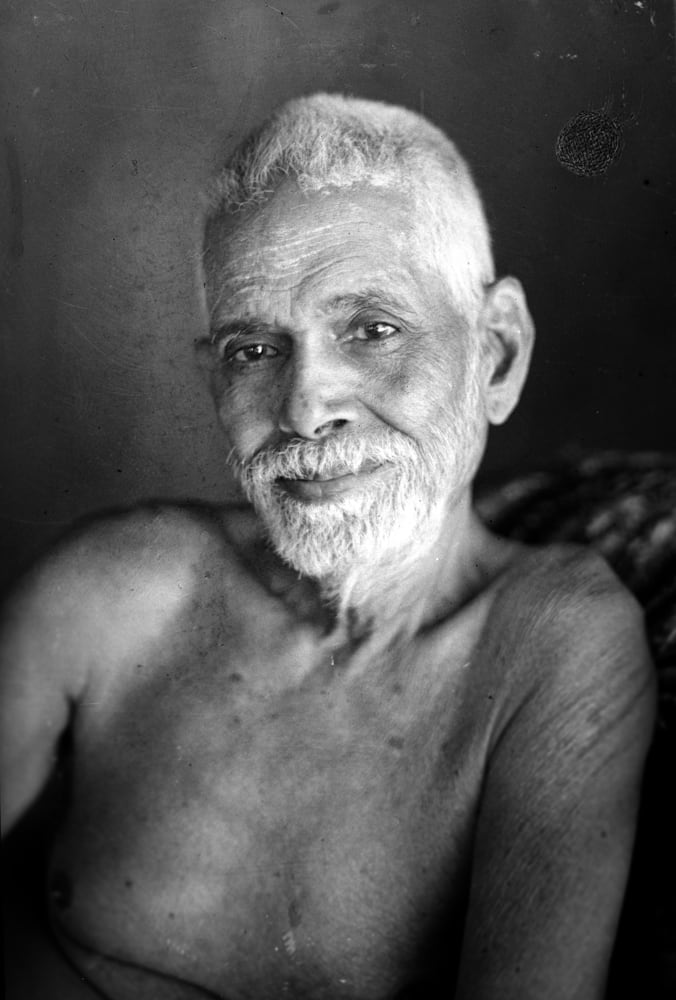
Ramana Maharshi
They agree on: Is the world real? · Who am I? Is there a true self? · Why do we suffer?
David R. Hawkins
They agree on: Who am I? Is there a true self? · Why do we suffer? · What happens after death?
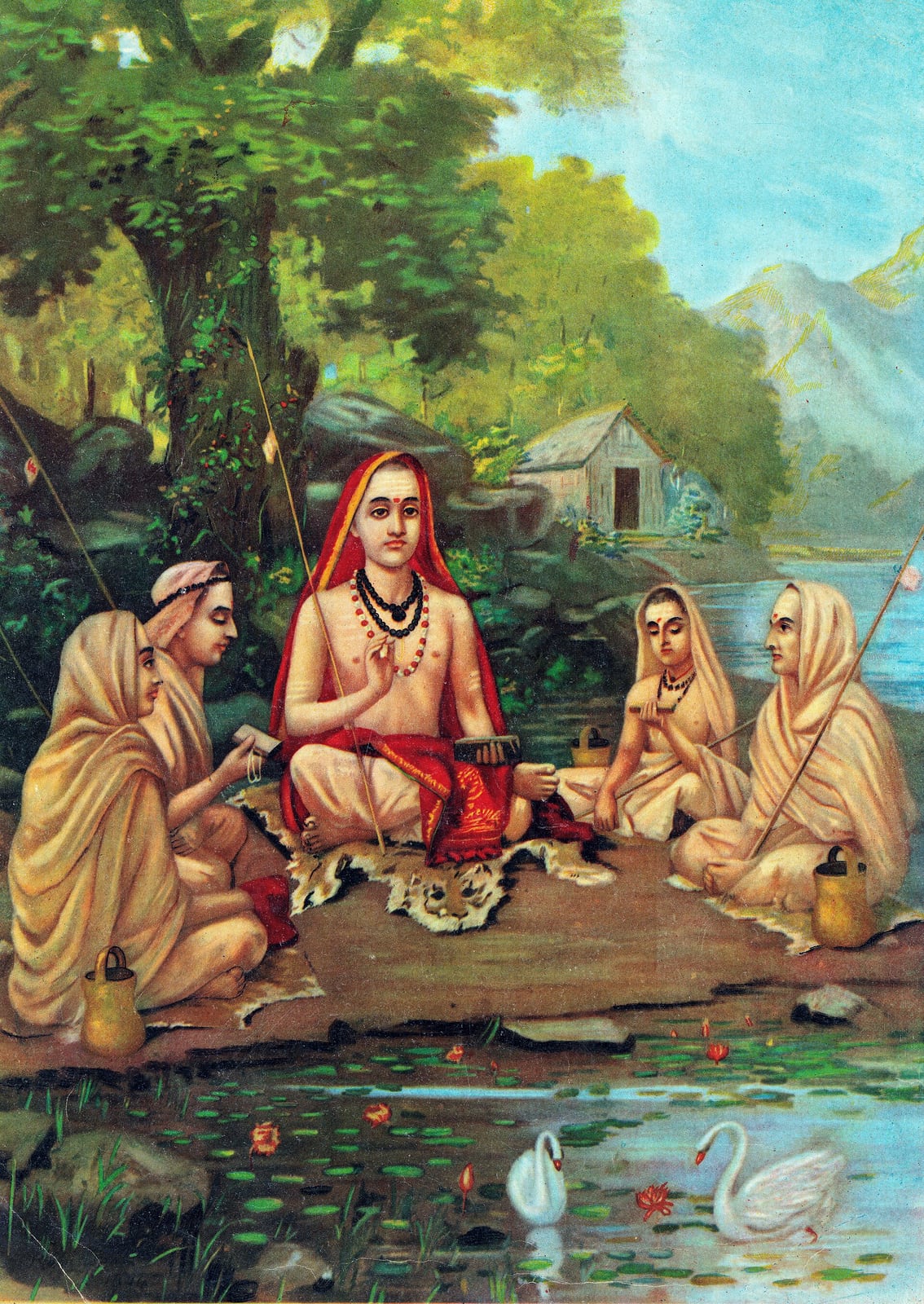
Adi Shankara
They agree on: Who am I? Is there a true self? · Why do we suffer? · What happens after death?
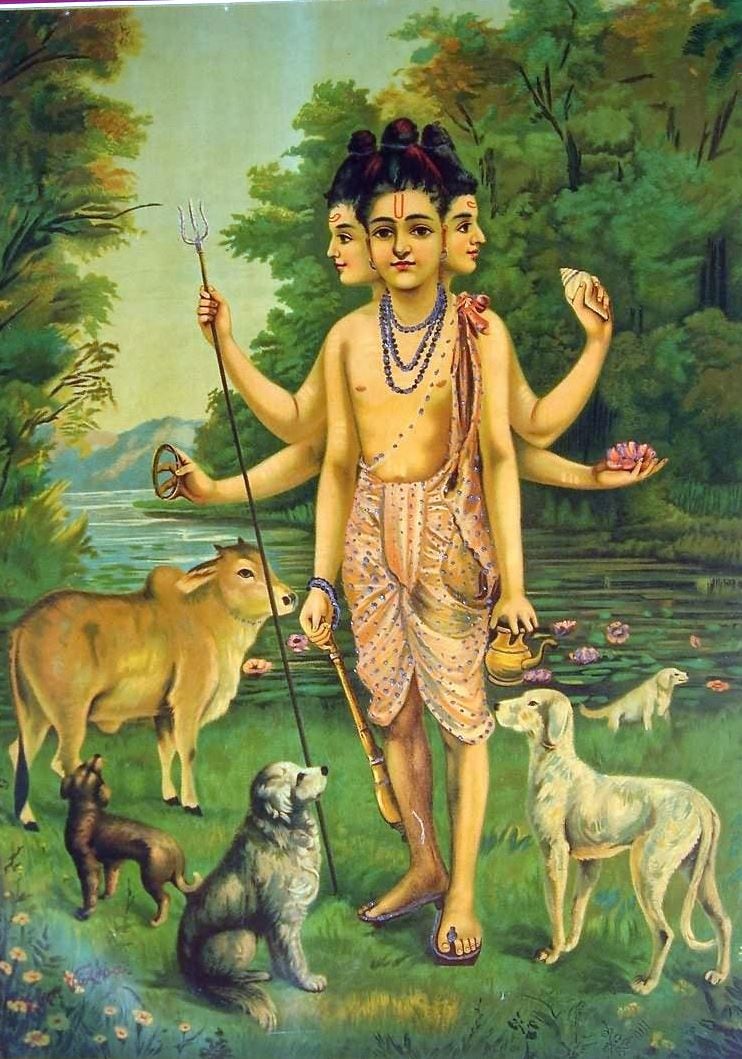
Dattatreya
They agree on: Who am I? Is there a true self? · What happens after death? · How is liberation or salvation attained?
Thinks most unlike

Francis of Assisi
They clash on: Who am I? Is there a true self? · Is the world real?

Julian of Norwich
They clash on: Who am I? Is there a true self? · Is the world real?
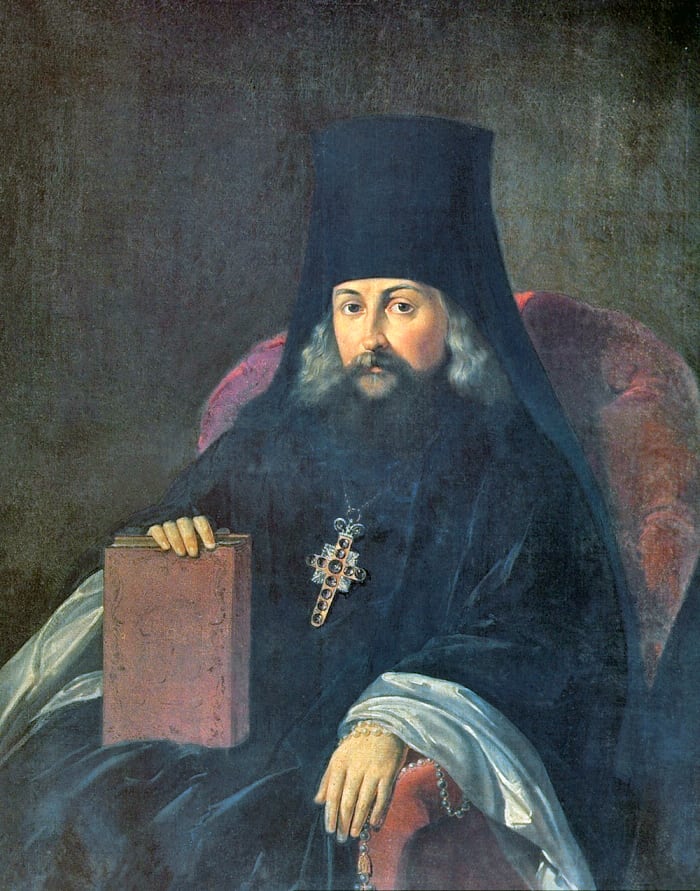
Ignatius Brianchaninov
They clash on: Who am I? Is there a true self? · Is the world real?

Theophan the Recluse
They clash on: Who am I? Is there a true self? · Is the world real?
They clash onApparent contradiction
Nisargadatta Maharaj · Paramahansa Yogananda
The lineage that transmits and the guru within: two grateful disciples
Why: The contradiction is apparent because both describe the same relationship from opposite ends. Both had a decisive guru and both belonged to a lineage with initiation; they differ in where they place the emphasis. Yogananda writes for Western readers to whom he wants to present a living tradition and an organisation, Self-Realization Fellowship, that guarantees transmission; hence he stresses lineage. Nisargadatta speaks to seekers who came to his home in Bombay with years of accumulated practices, and he urges them not to depend on anyone, himself included. The Hindu tradition knows this double face well: the outer master points to the inner one, which is the Self.
They clash onFundamental disagreement
Nisargadatta Maharaj · Adi Shankara
Scripture as the only means of knowing Brahman, or a cigarette seller without books
Why: The contradiction is real at the level of method, even if the goal is the same. Shankara is a Brahmin commentator debating rival schools and needs to establish what counts as valid knowledge: for him, without the word of scripture there is no way of knowing that the Self is Brahman. Nisargadatta belongs to a devotional lineage from Maharashtra that transmitted the teaching in the vernacular and through the master's direct instruction, and he speaks to modern seekers, often saturated with reading. Neither trusts free-standing reasoning, and both rely on a master; they differ over whether ultimate authority lies in the revealed word or in the evidence of one's own existing.
They agree on
Nisargadatta Maharaj · David R. Hawkins
Everything happens and no one does it: the doer as an assumption
Why: The affinity comes from a common matrix, non-duality of Vedantic origin, which Nisargadatta received from his lineage and Hawkins adopted in his mature works. No relationship between them is recorded in this library. They differ in register and audience: Nisargadatta speaks in direct conversations, translated from Marathi, with a negative method that discards everything perceived; Hawkins writes books combining his experience, clinical language and a map of levels of consciousness whose calibration basis lacks scientific validation. Hawkins also stresses devotional surrender to God; Nisargadatta stays with pure enquiry into the I am.
Anecdotes and stories
Anecdotes and stories
Testimony1933–1936
An evening with Siddharameshwar
Origin of the story: Nisargadatta's own testimony in I Am That, chs. 48 and 64, and Sudhakar S. Dikshit's biographical note in the same work, which names Baagkar.
Testimony1937–1938
Barefoot towards the Himalayas
Origin of the story: Dikshit's biographical note in I Am That (which does not date the journey) and the Wikipedia chronology ("Nisargadatta Maharaj"), which places it in 1937–38. The role of the fellow disciple comes from the circle's oral tradition.
Documented1966–1981
The man who sold cigarettes
Origin of the story: The remark about his trade as a cigarette-maker is in I Am That, ch. 35, "Greatest Guru is Your Inner Self". The description of the mezzanine and his smoking habit comes from visitors' testimonies and Dikshit's note.
Documented1965–1976
Frydman's tape recorder
Origin of the story: The translator's note in I Am That and the Wikipedia article "I Am That", which records the rejection by major publishers and the choice of Chetana.
Testimony1980–1981
Teaching with cancer
Origin of the story: Introductions and conversations in Prior to Consciousness (ed. Jean Dunn, 1985), The Ultimate Medicine (ed. Robert Powell, 1994) and Consciousness and the Absolute (1994).
Source: Nisargadatta Maharaj. Prior to Consciousness: Talks with Sri Nisargadatta Maharaj. Ed. Jean Dunn. Durham (Carolina del Norte): The Acorn Press, 1985; y Seeds of Consciousness, ed. Jean Dunn, Nueva York: Grove Press, 1982.
Teachings
Teachings
The notions that structure their thought, explained in context.
The sense 'I am'i-am
Instruction received from Siddharameshwar; I Am That, chs. 1, 16, 18, 48, 64.
Nisarga yoganisarga-yoga
I Am That, chs. 26 and 38, and Appendix I, "Nisarga Yoga", by Maurice Frydman (added in the second edition).
The absolute, prior to consciousnessthe-absolute
Seeds of Consciousness, Prior to Consciousness, The Ultimate Medicine, Consciousness and the Absolute.
Source: Nisargadatta Maharaj. Prior to Consciousness: Talks with Sri Nisargadatta Maharaj. Ed. Jean Dunn. Durham (Carolina del Norte): The Acorn Press, 1985; y Seeds of Consciousness, ed. Jean Dunn, Nueva York: Grove Press, 1982.
The witnesswitness
I Am That, chs. 10, 50, 62 and 79.
The Inchegiri lineage (Navnath Sampradaya)inchegiri-lineage
I Am That, Appendix II, "Navnath Sampradaya", and Dikshit's biographical note.
Videos
Videos
Recordings, interviews and documentaries. Videos play from YouTube; they are not hosted here.
Rays of the Absolute (the Legacy of Sri Nisargadatta Maharaj)
Documentary· EN· 2015· 85 min
Science and Nonduality
Rayos del Absoluto, El Legado de Sri Nisargadatta Maharaj (2015) SUBTITULADO
Documentary· ES· 2015· 85 min
Raul Campos
TATVAMASI - YOU ARE THAT. English Documentary Film on Sri Nisargadatta Maharaj
Documentary· EN· 88 min
Nitin Ram Official
The Lost Satsang: Sri Nisargadatta Maharaj Archival Film 1979
Original recording· EN· 1979· 93 min
Sabine NowHere
I am only the Self - Nisargadatta Maharaj
Original recording· EN· 21 min
Felix Wolf
Sri Nisargadatta Maharaj – Archive of Audio Recordings - 8th June 1980
Original recording· MR· 1980· 94 min
Sri Nisargadatta Maharaj
NISARGADATTA MAHARAJ - documental (subtitulado en español)
Documentary· ES· 53 min
CanalGanges
NISARGADATTA - Satsang 1 (subtitulado en español)
Original recording· ES· 15 min
CanalGanges
Shree Nisargadatta Maharaj Pravachan part - 1 (Hanuman Jayanti Utsav 2026)
Watch on YouTube
This video cannot be embedded; it opens on YouTube.
Shree Nisargadatta Maharaj Pravachan part - 1 (Hanuman Jayanti Utsav 2026)
Original recording· MR· 27 min
Shree Nisargadatta Adhyatma Kendra Official ChannelOfficial channel
Shree Nisargadatta Maharaj Pravachan part 2 (Hanuman Jayanti Utsav 2026)
Watch on YouTube
This video cannot be embedded; it opens on YouTube.
Shree Nisargadatta Maharaj Pravachan part 2 (Hanuman Jayanti Utsav 2026)
Original recording· MR· 9 min
Shree Nisargadatta Adhyatma Kendra Official ChannelOfficial channel
Gallery
Gallery
Images with verified licences. Each keeps its authorship and attribution.
Connections
Connections
Influences, discipleships and affinities. Documented relations are distinguished from similarities identified by analysis.
Influenced
Tolle has recommended I Am That among his fundamental readings, according to the reception recorded on Wikipedia ("I Am That").
Similarity identified by analysis
Disciple of
Siddharameshwar Maharaj
His guru from 1933 until his death in 1936; gave him the mantra and the instruction to attend to the "I am".
Documented relation
Teacher of
Maurice Frydman
Disciple from 1965 and translator of I Am That.
Documented relation
Teacher of
Ramesh S. Balsekar
Interpreter in the last years and author of Pointers from Nisargadatta Maharaj (1982); later taught in his own right.
Documented relation
Teacher of
Jean Dunn
American disciple who recorded and edited Seeds of Consciousness, Prior to Consciousness and Consciousness and the Absolute.
Documented relation
Ideas akin to
Asked about Ramana, he answered that both were "in the same ancient state"; no personal meeting is recorded (I Am That, ch. 70).
Documented relation
Ideas akin to
In I Am That he comments on Krishnamurti's view that a guru is unnecessary and remarks that, in a way, Krishnamurti is acting as one (ch. 64).
Documented relation
Ideas akin to
His distinction between the perceived and the perceiver and his notion of the absolute continue the classical Advaita tradition, although Nisargadatta did not present himself as a commentator on Shankara.
Similarity identified by analysis
Contemporary of
Indian contemporaries with very different approaches: Yogananda taught a technique and founded an institution in the West; Nisargadatta founded none and distrusted techniques.
Similarity identified by analysis
Sources
Sources
Bibliography and catalogues consulted for this profile.
- Wikidata, «Nisargadatta Maharaj» (Q175532): nacimiento 17-04-1897 y muerte 08-09-1981 en Bombay; 30 enlaces entre wikis.
- Nisargadatta Maharaj. I Am That: Talks with Sri Nisargadatta Maharaj. Trad. Maurice Frydman; ed. Sudhakar S. Dikshit. Bombay: Chetana, 1973 (2 vols.); 2.ª ed. revisada en un volumen, 1976. Incluye la nota biográfica de Dikshit y el epílogo «Nisarga Yoga» de Frydman.
- Wikipedia (en), «Nisargadatta Maharaj» (biografía, cronología y bibliografía), consultada el 2026-10-25.
- Wikipedia (en), «I Am That» (historia editorial, Maurice Frydman, recepción), consultada el 2026-10-25.
- Nisargadatta Maharaj. Prior to Consciousness: Talks with Sri Nisargadatta Maharaj. Ed. Jean Dunn. Durham (Carolina del Norte): The Acorn Press, 1985; y Seeds of Consciousness, ed. Jean Dunn, Nueva York: Grove Press, 1982.
- Open Library, obras y ediciones de Nisargadatta Maharaj (consultadas por clave de obra e ISBN).
- Nisargadatta Maharaj. The Ultimate Medicine, ed. Robert Powell (San Diego: Blue Dove Press, 1994); The Experience of Nothingness (1996) y The Nectar of the Lord's Feet / The Nectar of Immortality (Element, 1987; Blue Dove, 1996).
- Wikimedia Commons, metadatos de licencia de las imágenes relacionadas con Nisargadatta Maharaj (API imageinfo).
- Shri Nisargadatta Adhyatma Kendra / Nisargadatta Maharaj Official Center (sitio del centro en Bombay; fuente indicada en Commons para la fotografía de 1973).
- Conway, Timothy. «Sri Nisargadatta Maharaj (1897–1981): Life & Teachings of Bombay's Fiery Sage of Liberating Wisdom». Enlightened-Spirituality.org, © 1981/2007 (biografía detallada con cronología: 1915, 1924, 1933, 1936–1938, 1942, 1948, 1951, 1966; Khetwadi; intérpretes de los últimos años).
- Lucas, Phillip Charles. «Non-Traditional Modern Advaita Gurus in the West and Their Traditional Modern Advaita Critics». Nova Religio 17, n.º 3 (2014): 6–37. doi:10.1525/nr.2014.17.3.6.
- Shree Nisargadatta Adhyatma Kendra (Bombay). Catálogo de la tienda oficial de libros (API de la tienda): Sukhsanwad – I AM THAT (Marathi Version), Atmadnyan aani Parmarthayog, Gurubodhananda (Shree Nisargadatta Maharaj Charitra), Swaroopaanubhav y otros títulos en marathi.
- Exotic India (librería). Ficha de Shower of Grace: Meditations with Shri Nisargadatta Maharaj, de Jayashri Gaitonde. Mumbai: Zen Publications, 2020, 282 pp., ISBN 9789387242746 (traducción inglesa de Amrutvarsha); Bagchee (librería) da el mismo ISBN.
- Rights holder
- Derechos vigentes (fallecido en 1981). Las traducciones y ediciones pertenecen a sus editores y traductores: Chetana Pvt. Ltd. (Bombay) para I Am That y Pointers, con The Acorn Press (Durham, Carolina del Norte) como editorial norteamericana; los herederos de Jean Dunn y The Acorn Press para sus volúmenes; Robert Powell / Blue Dove Press (distribución actual de North Atlantic Books) para los suyos; Zen Publications y Yogi Impressions para las recopilaciones recientes. No se ha identificado un titular único.
Pending confirmation
What this profile has not yet been able to settle. We would rather say so than fill it in.
- Retrato principal: la fotografía de 1973 de Commons («File:Nisargadatta Maharaj.jpg», Shree Nisargadatta Adhyatma Kendra) usa la plantilla «Attribution», que no figura entre las licencias admitidas (PD, CC0, CC BY, CC BY-SA); no se incluye hasta confirmar su equivalencia.
- Fecha de nacimiento: 17 de abril de 1897 (Wikidata, Wikipedia) frente a «marzo de 1897, luna llena de Hanuman Jayanti» (nota de Dikshit en I Am That); lugar exacto (Bombay o Kandalgaon) no documentado.
- Primera editorial de Seeds of Consciousness (Grove Press según Open Library, Acorn Press según Wikipedia) y de Prior to Consciousness (al revés): cotejar con las portadillas.
- ISBN de Beyond Freedom (2007), I Am Unborn (2007), The Nisargadatta Gita (2008), Meditations with Sri Nisargadatta Maharaj (2014), Self-Love (2017), The Earliest Discourses (2020) y Gleanings from Nisargadatta (2006): Google Books no respondió y Open Library no los registra.
- Origen y fecha del nombre «Nisargadatta» y posible obra poética devocional en marathi: no documentados en las fuentes consultadas.
- Traducciones españolas sin original identificado: «Ser» (Sirio, 2001, ISBN 9788478083732), «Balance cero» y «Yo no sabía» (CreateSpace, 2016-2017) y «Enseñanzas sobre la no-dualidad» (Kairós, 2022, ISBN 9788499889115).
- Volumen conmemorativo «Sri Nisargadatta Maharaj presentation volume» (Sri Nisargadatta Adhyatma Kendra, 1980): no examinado.
- Cronología interna de I Am That (años exactos de las conversaciones) y fecha del diagnóstico del cáncer.
- Sala de lectura (2026-10-25): ninguna obra en dominio público. Nisargadatta murió en 1981 (libre en la India en 2042 y en los países de 70 años p. m. en 2052); todas sus obras son transcripciones o traducciones de terceros con derechos vigentes.
- Obras (2026-10-25): el catálogo oficial del Shree Nisargadatta Adhyatma Kendra vende además en marathi Swanandamrut (con versión inglesa «A Nectar of Self-Joy»), Nisarg Bhagvat, Swaroopaanubhav («Narrations»), Shree Nisargadatta Bodhsudha, Swabodh Sanjeevani, Bhakti Dnyan Pradeep, Ishwardnyan Swaroop aani Sat Swaroopdnyan, Vivek Ki Nirupan y Sadgurubodh (partes 1 y 2), sin autor ni fecha en la ficha; algunos pueden ser de Siddharameshwar Maharaj (Dnyan Vidnyan Yogeshwar es su biografía y Gurubodhananda la de Nisargadatta). Determinar autoría antes de registrarlos.
- Fecha de la edición marathi de Amrutvarsha y nombre del traductor de Shower of Grace (2020).
Researched on 2026-10-25