Hinduism · Advaita Vedanta · Vedic tradition
Ashtavakra
अष्टावक्र
Legendary figure
A sage of the Sanskrit tradition whose name means "crooked in eight places". The Mahābhārata tells how, cursed by his father before birth, he defeated the disputant Bandin as a child at King Janaka's court and rescued his father from the waters. Tradition ascribes to him the Aṣṭāvakra Gītā, a dialogue with Janaka in twenty chapters and one of the most radical texts of non-duality, whose author and date are unknown (between the eighth and fourteenth centuries, according to Brockington).
- works
- 3works
- editions
- 19editions
- quotes
- 6quotes
- videos
- 13videos
- images
- 2images
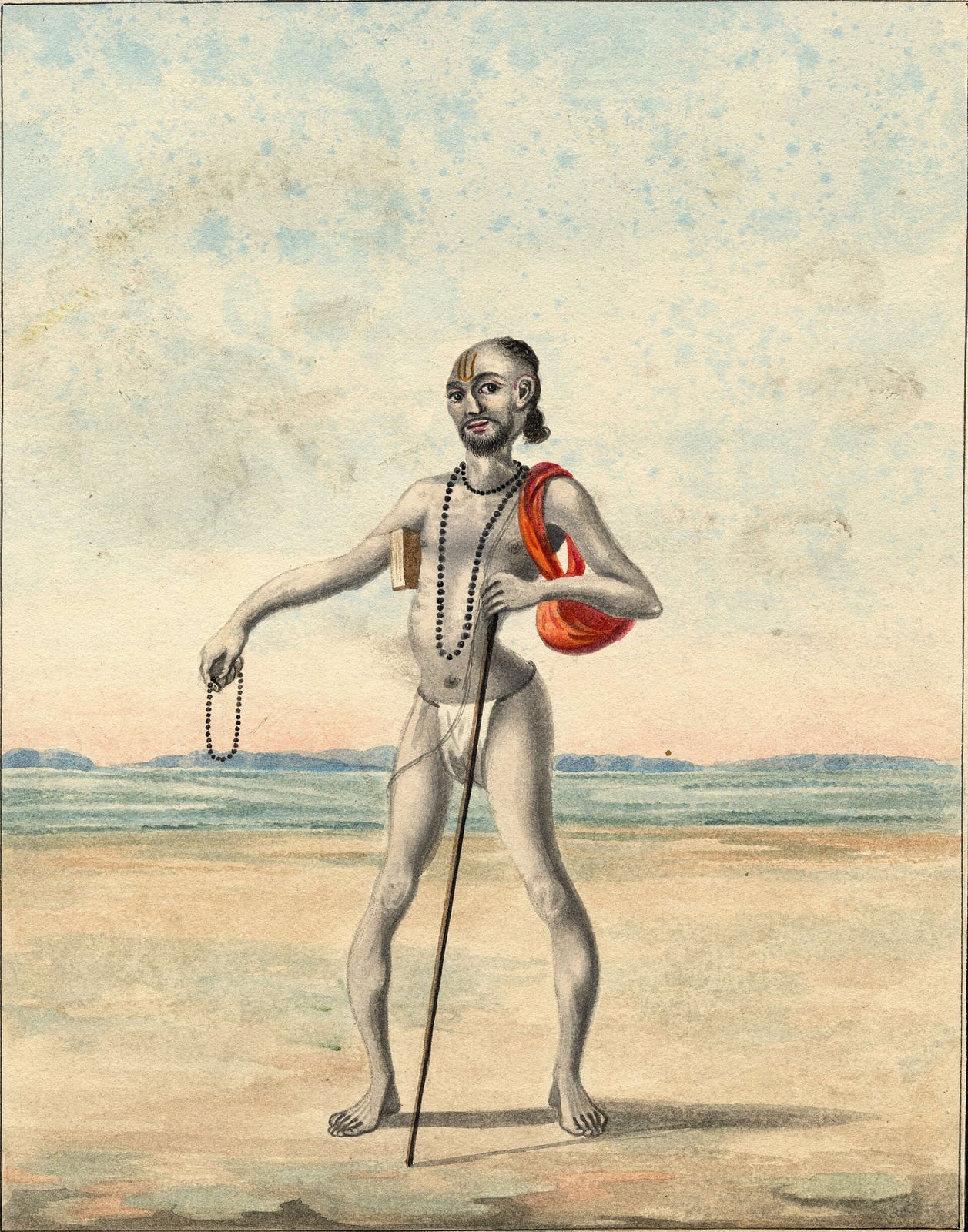
Aṣṭāvakra, acuarela de principios del siglo XIX · Public domain
In their words
«You are not earth, nor water, nor fire, nor air, nor space. For liberation, know yourself as the witness of all these, whose form is consciousness.»Aṣṭāvakra Gītā 1.3 (texto sánscrito de Wikisource); versiones española e inglesa del investigador

Their central idea
The witness (sākṣin): This is the central notion of the Aṣṭāvakra Gītā.
See in context
Biography
5 min read
A name that is a wound
Aṣṭāvakra means "the one who is crooked in eight places". Few sages of ancient India carry a deformity in their name, and none turns it so effectively into an argument: the whole tradition gathered around him repeats that the body is not the measure of the sage, that age is not the measure of knowledge and that the self is not the figure one sees. Two levels, however, which devotion tends to merge, must be kept apart from the outset. On the one hand there is the character of the Sanskrit epic, whose fullest story survives in the Mahābhārata; on the other, the philosophical poem that circulates under his name, the Aṣṭāvakra Gītā or Aṣṭāvakra Saṃhitā, a text by an unknown author that no ancient passage connects with that character. No date, place or testimony allows Aṣṭāvakra to be treated as a historical figure: he is a figure of tradition.
The child who corrected his father
The canonical story fills three chapters of the Āraṇyakaparvan (3.132–134 in the critical edition), where the sage Lomaśa tells it to Yudhiṣṭhira during the Pāṇḍavas' pilgrimage. Kahoḍa, a disciple of the Vedic teacher Uddālaka, marries Sujātā, his teacher's daughter. While she is pregnant, the child speaks from the womb and reproaches his father because, although he recites all night long, he does not recite correctly. Humiliated before his pupils, Kahoḍa curses him: he will be born crooked in eight places. Shortly afterwards, driven by poverty, Kahoḍa goes to the court of King Janaka of Videha in search of wealth; there he is defeated in debate by the disputant Bandin (or Vandin) and, by the rule of the contest, thrown into the water. Uddālaka orders that the child must not know, and Aṣṭāvakra grows up believing that his grandfather is his father and that Śvetaketu, his uncle of the same age, is his brother.
The contest of numbers
At twelve, when Śvetaketu pulls him off Uddālaka's lap with the words "this is not your father's lap", Aṣṭāvakra learns the truth and sets out with his uncle for Janaka's sacrifice. The gatekeeper bars his way because only old and learned brahmins may enter, and the boy answers with a maxim the poem would make famous: a man is not old because his head is grey, but because he knows, and the sages did not found merit on years, grey hair, wealth or kinsmen. Before the king he challenges Bandin. The duel is a singular piece of Sanskrit literature: each contestant must improvise verses on the numbers from one to thirteen, and when Bandin manages only the first half of the stanza on thirteen, Aṣṭāvakra completes it and wins. The loser then reveals that he is a son of the god Varuṇa and that he had been sending the drowned brahmins to a twelve-year sacrifice beneath the waters; he returns them, Kahoḍa among them, and the father tells his son to bathe in the river Samaṅgā, from which he emerges with straightened limbs.
Other traces in the epics and the Purāṇas
The name reappears elsewhere. Vālmīki's Rāmāyaṇa uses it as the emblem of the son who redeems his father: in the book of the war (6.119.17 in the vulgate numbering), the dead Daśaratha tells Rāma that he has been saved by him as the brahmin Kahoḍa was saved by Aṣṭāvakra. The Anuśāsanaparvan of the Mahābhārata (sections 19–21 in Ganguli's translation) tells of another trial: to win the hand of Suprabhā, daughter of the sage Vadānya, Aṣṭāvakra travels to the North and resists the advances of an old woman who turns out to be the deity of that region, Diś. The Viṣṇu Purāṇa (5.38) instead ascribes to him a gesture of anger: some apsarases who had been praising him laughed when they saw him rise from the water, misshapen, and he cursed them to fall into the hands of robbers, which, according to Vyāsa, explains the abduction of Kṛṣṇa's wives after the god's death.
An undated poem
The Aṣṭāvakra Gītā is something else. It consists of some three hundred verses in twenty chapters cast as a dialogue between Janaka and Aṣṭāvakra, although the dialogue soon dissolves into an almost continuous declaration of identity with consciousness. Neither the text nor the epic links the boy of the contest with the teacher of the poem; tradition does, through the name and the figure of Janaka. Proposed dates diverge enormously. Radhakamal Mukerjee, in a study published posthumously in 1971, placed it around the fifth to fourth centuries BCE; J. L. Brockington, in his foreword to Thomas Byrom's translation (1990), regards it as the work of an Advaitin later than Śaṅkara, from the eighth or the fourteenth century, at a time of renewal of that school. Richard Hauschild's critical edition (Berlin, 1967) remains the reference philological study.
What the text says
The poem opens with three questions from the king: how knowledge is attained, how liberation, how dispassion. The answer is abrupt: you are not earth, water, fire, air or space, but the conscious witness of them all; if you detach yourself from the body and rest in consciousness, you will be happy and free right now. The text prescribes no rites, caste duties or stages of life, and goes so far as to say that bondage consists precisely in still practising concentration in order to reach what one already is. Its famous maxim, "he who considers himself free is free, he who considers himself bound is bound: as one thinks, so one becomes", sums up a teaching that excludes all gradualness. Chapter XVIII, the longest, describes the one liberated while living, indifferent to success and failure, who acts without feeling himself the doer.
Modern readers
The work reached European readers in the nineteenth century: in 1912 the Italian Silvio Pagani recalled the prose translation by Carlo Giussani published in Angelo De Gubernatis's Rivista Orientale in 1867–1868, which he set in verse; in 1904 Lala Baij Nath published the first known English version. In modern India it became a bedside text of the Vedantic movement: Vivekananda quoted its verse on freedom as one's own opinion of oneself, and Ramana Maharshi recalled the story of Aṣṭāvakra and Janaka before his visitors and copied the poem's Sanskrit text by hand, which Sri Ramanasramam has reproduced in facsimile alongside Swami Nityaswarupananda's translation (1940). Osho devoted a long series of Hindi discourses to it, published as Ashtavakra Mahageeta, and the versions by Thomas Byrom (1990) and John Richards, who released his into the public domain in 1994, have made it one of the most widely read texts of contemporary non-duality.
Sources: Mahābhārata, Āraṇyakaparvan 3.132–134 (ed. crítica de Poona: V. S. Sukthankar et al., Bhandarkar Oriental Research Institute, 1942). Traducción inglesa: Kisari Mohan Ganguli (trad.), The Mahabharata of Krishna-Dwaipayana Vyasa, vol. «Vana Parva», Calcuta, Bharata Press (Pratap Chandra Roy), 1884, secciones CXXXII–CXXXIV (Tirtha-yatra Parva), pp. 396–407. · Mahābhārata, Anuśāsanaparvan, secciones XIX–XXI de la traducción de Kisari Mohan Ganguli (The Mahabharata of Krishna-Dwaipayana Vyasa, vol. «Anusasana Parva», Calcuta, Pratap Chandra Roy, 1883–1896): diálogo de Aṣṭāvakra con la dama Diś. · Wilson, Horace Hayman (trad.). The Vishnu Purana: A System of Hindu Mythology and Tradition. Londres: Oriental Translation Fund / John Murray, 1840, libro V, cap. XXXVIII, pp. 617–618. · Byrom, Thomas (trad.). The Heart of Awareness: A Translation of the Ashtavakra Gita. Prólogo de J. L. Brockington. Boston y Londres: Shambhala, 1990. ISBN 9780877735748. · Hauschild, Richard (ed. y trad.). Die Aṣṭāvakra-Gītā. Berlín: Akademie-Verlag, 1967 (reimpresión De Gruyter, ISBN 9783112742679).
Timeline
A life, year by year
Each point is a documented event. Click to read it, with its source and degree of certainty.
c. 300 BCE
The story in the Āraṇyakaparvan
The Mahābhārata, composed and expanded over several centuries around the turn of the era, includes in its forest book (3.132–134) the story of Aṣṭāvakra, Kahoḍa and Bandin. The date is only an order of magnitude: the epic does not allow individual episodes to be dated.
ProbableMahābhārata, Āraṇyakaparvan 3.132–134 (ed. crítica de Poona: V. S. Sukthankar et al., Bhandarkar Oriental Research Institute, 1942). Traducción inglesa: Kisari Mohan Ganguli (trad.), The Mahabharata of Krishna-Dwaipayana Vyasa, vol. «Vana Parva», Calcuta, Bharata Press (Pratap Chandra Roy), 1884, secciones CXXXII–CXXXIV (Tirtha-yatra Parva), pp. 396–407.
c. 300 BCE
The story in the Āraṇyakaparvan
The Mahābhārata, composed and expanded over several centuries around the turn of the era, includes in its forest book (3.132–134) the story of Aṣṭāvakra, Kahoḍa and Bandin. The date is only an order of magnitude: the epic does not allow individual episodes to be dated.
Probable
VIII century
Composition of the Aṣṭāvakra Gītā (hypothesis)
J. L. Brockington ascribes the poem to a follower of Śaṅkara in the eighth or the fourteenth century. Other authors propose much earlier dates (Mukerjee: fifth to fourth centuries BCE); there is no consensus.
Disputed
1840
Wilson translates the Viṣṇu Purāṇa
Horace Hayman Wilson publishes in London his translation of the Viṣṇu Purāṇa, which includes (5.38) Aṣṭāvakra's curse on the apsarases who laughed at his body.
Documented
c. 1867
First Italian translation
Carlo Giussani publishes a prose translation of the Aṣṭāvakra Gītā in Angelo De Gubernatis's Rivista Orientale (Milan, 1867–1868), as Silvio Pagani recalled in 1912.
Documented
1884
Ganguli translates the forest book
Kisari Mohan Ganguli publishes in Calcutta the English translation of the Vana Parva, with the full story of the contest of numbers.
Documented
1904
First English translation of the poem
Lala Baij Nath publishes The Ashtavakra Gita: A Treatise on Adwaita Philosophy, with notes and an introduction.
Documented
1912
Pagani's verse version
Silvio Pagani publishes in Milan (Sonzogno) an Italian version in hendecasyllables based on Giussani's prose.
Documented
February 6, 1937
Ramana Maharshi comments on the story of Aṣṭāvakra and Janaka
In talk 350 Ramana explains to a devotee that the point of the story of Aṣṭāvakra and Janaka is the disciple's complete surrender, and warns that "the anecdotes differ in different books".
Documented
1940
Nityaswarupananda's translation
Advaita Ashrama publishes Swami Nityaswarupananda's Aṣṭāvakra Saṃhitā, with word-by-word translation and commentary; it would become the reference version of the Ramakrishna movement.
Documented
1967
Hauschild's critical edition
Richard Hauschild publishes in Berlin the edition and German translation Die Aṣṭāvakra-Gītā.
Documented
1990
The Heart of Awareness
Shambhala publishes Thomas Byrom's free rendering with a foreword by J. L. Brockington, one of the most widely read in the West.
Documented
Works
Essential works
The works without which their legacy cannot be understood.
Traditional attribution ·
Aṣṭāvakra Gītā (The Song of Aṣṭāvakra)
अष्टावक्रगीता (Aṣṭāvakragītā), también अष्टावक्रसंहिता (Aṣṭāvakrasaṃhitā)
A Sanskrit poem of some three hundred verses in twenty chapters, cast as a dialogue between King Janaka of Mithilā and Aṣṭāvakra. After the king's opening questions on knowledge, liberation and dispassion, the teacher asserts that the self is the conscious witness, formless and actionless, and that bondage is merely a mistaken identification with body and mind. Janaka answers with songs of wonder at his own nature, and the text culminates in a long chapter (XVIII) on the one liberated while living. It dispenses with rites, duties and stages of life, and even regards the practice of concentration itself as bondage.
16 editions
Ashtavakra
The number debate with Bandin (Mahābhārata 3.132–134)
Traditional attribution
The number debate with Bandin (Mahābhārata 3.132–134)
अष्टावक्रीय (Aṣṭāvakrīya), Mahābhārata 3.132–134
Aṣṭāvakra's answers to the gatekeeper, to King Janaka and to the disputant Bandin. They include the maxim on true old age, which lies in knowledge and not in grey hair, and the tournament of improvised stanzas on the numbers from one to thirteen, in which each figure evokes ritual, cosmological and philosophical groups (two friends, Indra and Agni; twelve months of the year; thirteen metres). Commentators read in it a controversy between doctrines about the unity of the Self.
2 editions
Quotations
Quotations located in a specific work. Each carries its provenance and its level of confidence.
You are not earth, nor water, nor fire, nor air, nor space. For liberation, know yourself as the witness of all these, whose form is consciousness.न पृथ्वी न जलं नाग्निर्न वायुर्द्यौर्न वा भवान्। एषां साक्षिणमात्मानं चिद्रूपं विद्धि मुक्तये॥
VerifiedAṣṭāvakra Gītā 1.3 (texto sánscrito de Wikisource); versiones española e inglesa del investigador
Last words
There are no verifiable records of their last words.
There is no record of his death or of his last words. The epic and Purāṇic texts present him in isolated episodes (his birth, the contest, his marriage, the curse on the apsarases) and none narrates his end.
Ask
What their work answers
Twelve great human questions and what their texts allow us to answer, with references. We never put words in their mouth.
What is the Absolute? Does God exist?
The Absolute is the witnessing consciousness, one, full and actionless
An impersonal AbsoluteStated explicitly
The Aṣṭāvakra Gītā does not speak of a God to be addressed but of a consciousness that the disciple already is. In the first chapter the teacher describes the Self as witness, all-pervading, full, one, free, pure consciousness and actionless (1.12), and compares it to space, which is at once inside and outside a jar: so the eternal brahman is in the multitude of beings (1.20). The whole world appears in it like the snake in the rope (1.10) or the waves in the ocean (2.4), adding nothing to it and taking nothing away. The text does not expressly deny a personal God, but grants him no role: the ultimate is not someone who creates or judges, but the conscious ground of all experience, identical with the one who asks.
Compare this question with other teachersWho am I? Is there a true self?
You are not the elements: you are the witness, whose form is consciousness
The Self is the AbsoluteStated explicitly
The Aṣṭāvakra Gītā answers the question from its third verse: the disciple is not earth, water, fire, air or space, but the witness of them all, whose form is consciousness (1.3). That witness belongs to no caste or stage of life, neither acts nor enjoys (1.5–1.6), and is one with the brahman that is in all beings as space is in jars (1.20). Bondage consists in seeing the seer as if it were another, that is, in taking oneself for an object (1.7). That is why the poem does not propose building a higher self, but recognising what one already is: whoever considers himself free is free, and whoever considers himself bound is bound (1.11).
Compare this question with other teachersWhy do we suffer?
The bite of the serpent of ego: believing oneself the doer
Ignorance of what we areStated explicitly
The Aṣṭāvakra Gītā places the root of suffering in a mistaken identification. The disciple, says the teacher, has been bitten by the great black serpent of the pride of thinking «I am the doer», and the antidote is to drink the nectar of the conviction «I am not the doer» (1.8). Bondage consists in taking the seer for another, that is, for an object (1.7), and in identifying for a long time with the body (1.14). Desire, aversion, pleasure and pain belong to the mind, not to the Self; whoever separates from the body and rests in consciousness is happy and serene right now (1.4). Suffering is neither punishment nor trial: it is the price of not knowing what one is.
Compare this question with other teachersWhat happens after death?
The witness is neither born nor dies; the sage neither craves life nor fears death
What I am is never born and never diesStated explicitly
The Aṣṭāvakra Gītā does not describe what happens after death, because for it death affects something the disciple is not. From the first chapter it asks him to recognise himself as the witness of the elements (1.3) and to stop identifying with the body, the rope by which he has long been bound (1.14). Body and world arise and dissolve in consciousness like waves in the ocean (2.4); consciousness neither comes nor goes. Chapter XVIII, devoted to one liberated in life, describes someone who neither desires life nor fears death, indifferent to pleasure and pain. The text neither discusses rebirth nor expressly denies it: it simply leaves it on the side of what is not the Self.
Compare this question with other teachersHow is liberation or salvation attained?
You are already free: your bondage is that you keep practising concentration
Through direct knowledgeStated explicitly
The Aṣṭāvakra Gītā understands liberation as recognition, not achievement. The teacher asks Janaka to burn the forest of ignorance with the fire of the conviction «I am the one pure consciousness» (1.9), and assures him that if he rests in consciousness, separating from the body, he will be free right now (1.4). The most radical feature of the poem is its distrust of discipline: Janaka is already free, actionless and luminous, and his bondage consists precisely in continuing to practise concentration (1.15). Hence the text states that a disciple of pure mind reaches his goal through a mere instruction, while the other seeks all his life (15.1). In chapter II Janaka does indeed awaken at the first dialogue.
Compare this question with other teachersIs a teacher necessary?
One instruction suffices for the ripe disciple; in the end there is no teacher or disciple
Helpful but not indispensableInferred from their doctrine
The Aṣṭāvakra Gītā is a dialogue between teacher and disciple, and its very form grants a role to the sage's word: Janaka asks, Aṣṭāvakra answers, and in the second chapter the king declares that he has awakened. The text explains why: the disciple of pure mind reaches his goal through a mere instruction, while the other goes on seeking all his life (15.1). But the instruction conveys nothing the disciple does not already have; it only points to what he already is. Hence the poem distrusts learning (16.1) and, in its last chapter, lists among the things that no longer exist for the liberated one the scriptures, knowledge and the distinction between the one who teaches and the one who learns. The teacher is an occasion, not a condition.
Compare this question with other teachersIs the world real?
The world appears through not knowing the Self, like the snake in the rope
Appearance over the one realityStated explicitly
The Aṣṭāvakra Gītā treats the world as a superimposition on consciousness. It appears through not knowing the Self and ceases to appear when the Self is known, as the snake appears through not recognising the rope and vanishes once it is recognised (2.7). The poem also uses other classical Vedānta images: the silver seen in mother-of-pearl, the water of a mirage (2.9). But alongside them it offers a more conciliatory one: as waves, foam and bubbles are not different from water, the universe that has arisen from the Self is not different from it (2.4). The world is unreal as an independent reality and, at the same time, nothing but the Self appearing. That is why the liberated one need not flee it: it is enough not to take it for what it is not.
Compare this question with other teachersWhat is love?
It does not speak of love: it describes the sage free from attachment and aversion
Did not address it
The Aṣṭāvakra Gītā contains no teaching on love. Its vocabulary is that of detachment: desire and aversion belong to the mind, not to the Self (15.5), and the liberated one of chapter XVIII is indifferent to pleasure and pain, praise and blame, with neither affection nor hatred towards anything. It would be a mistake to read coldness there: the text describes someone who has stopped dividing the world into what is his and what is another's, and who acts without feeling himself the doer. But it does not call that state love, nor develop it as compassion towards others. If anything follows from its doctrine, it is that the sage's equanimity arises from seeing himself in all beings and all beings in himself (6.4).
Compare this question with other teachersAre we free, or is everything determined?
Drink the nectar of the conviction «I am not the doer» and be happy
There is no doerStated explicitly
The Aṣṭāvakra Gītā answers the question by displacing it. The problem is not whether the self chooses freely or is determined, but the very belief in a self that acts: the disciple has been bitten by the great black serpent of the pride of thinking «I am the doer», and the antidote is the nectar of the conviction «I am not the doer» (1.8). The Self is witness, actionless (1.12); merit and demerit, pleasure and pain, belong to the mind (1.6). Chapter XVIII describes the liberated one as someone who does what comes without feeling himself the author, gaining nothing by acting and losing nothing by not acting. The freedom that concerns the poem is not that of the will, but that of not being identified with any agent.
Compare this question with other teachersWhy meditate or pray?
Your bondage is precisely that you practise concentration
Meditation is not a techniqueStated explicitly
The Aṣṭāvakra Gītā is one of the texts most critical of meditative practice in all Indian literature. In the first chapter the teacher tells Janaka that he is already free, actionless, self-luminous and stainless, and that his bondage consists precisely in continuing to practise concentration (samādhi) (1.15). The idea recurs throughout the poem: whoever strives to still the mind still presupposes a self that strives and a goal to be reached, and the sage neither meditates nor ceases to meditate. This is not a recommendation of laxity: what the text points out is that what is sought is not a produced state. All it asks is to rest in the consciousness one already is (1.4).
Compare this question with other teachersCan reason know the ultimate?
Though you read and hear many scriptures, you will find no rest until you forget all
The ultimate lies beyond the mindStated explicitly
The Aṣṭāvakra Gītā distrusts study as much as practice. In chapter XVI the teacher tells Janaka that he may expound or hear many scriptures, again and again, but that he will not attain rest in himself until he forgets everything (16.1). Reason and learning belong to the mind, and what is sought is that to which the mind appears: the witness, which is not an object of the senses or of thought (1.5). The poem does not despise instruction —it is what awakens Janaka— but it understands it as a pointer that is exhausted once understood. In the last chapter, the liberated one no longer has any scripture or knowledge to defend.
Compare this question with other teachersWithdraw from the world or transform it?
King or ascetic, it matters not: the liberated one acts without feeling the author
Contemplation in actionStated explicitly
The Aṣṭāvakra Gītā is a dialogue with a king, Janaka, whom tradition considers liberated without leaving his throne, and its answer to the question is consistent with that frame. Chapter XVIII describes the sage liberated in life as someone not distinguished by outward conduct: he may act or not act, live at court or in the forest, because he no longer feels himself the author of what he does. He neither seeks solitude nor flees it: in the fool, the poem observes, even abstention turns into activity, while in the sage activity itself bears the fruit of abstention (18.61). Nor is there in the text any programme for reforming the world: the sage's action happens, but pursues nothing. What changes is not where one lives, but who one believes is living.
Compare this question with other teachers
Affinities & tensions
Affinities and tensions
Calculated question by question from their positions. The reason for each agreement or clash, on click.
Thinks most like
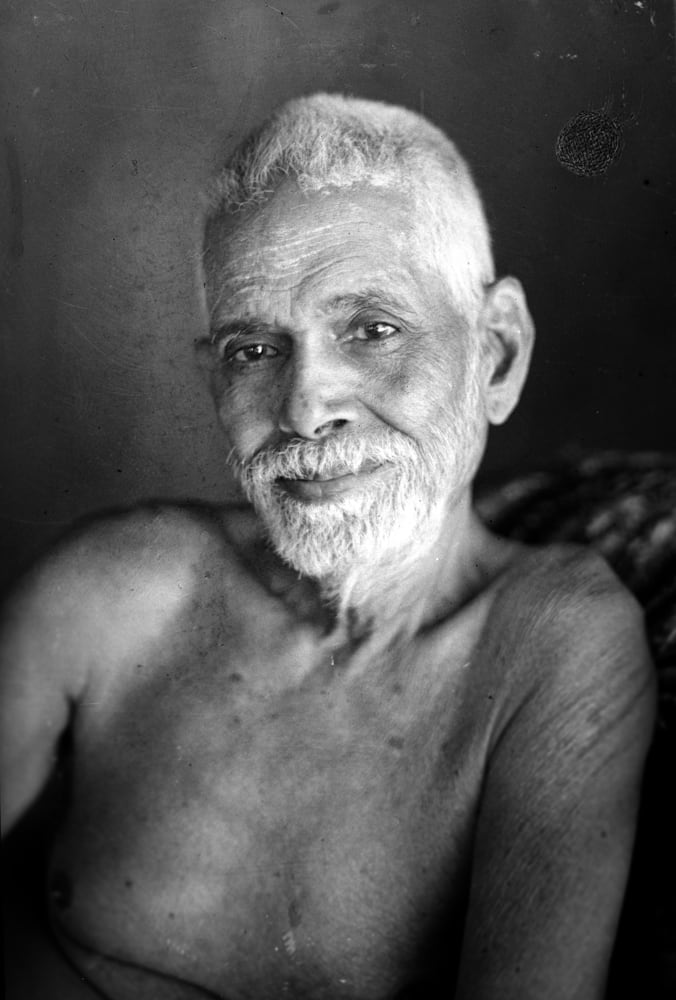
Ramana Maharshi
They agree on: What is the Absolute? Does God exist? · Is the world real? · Who am I? Is there a true self?
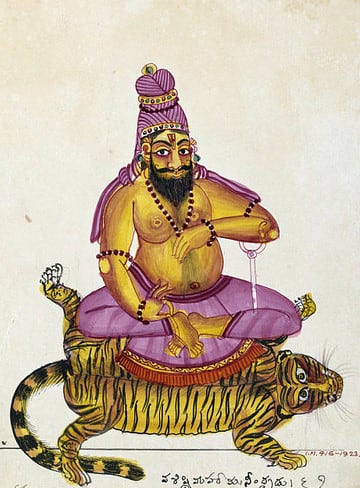
Vasishtha
They agree on: What is the Absolute? Does God exist? · Who am I? Is there a true self? · Why do we suffer?
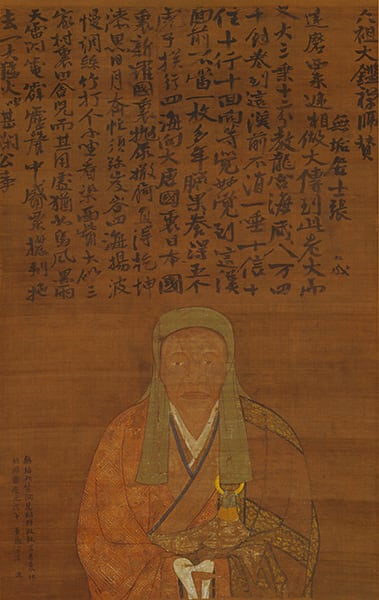
Huineng
They agree on: What is the Absolute? Does God exist? · Who am I? Is there a true self? · Why do we suffer?
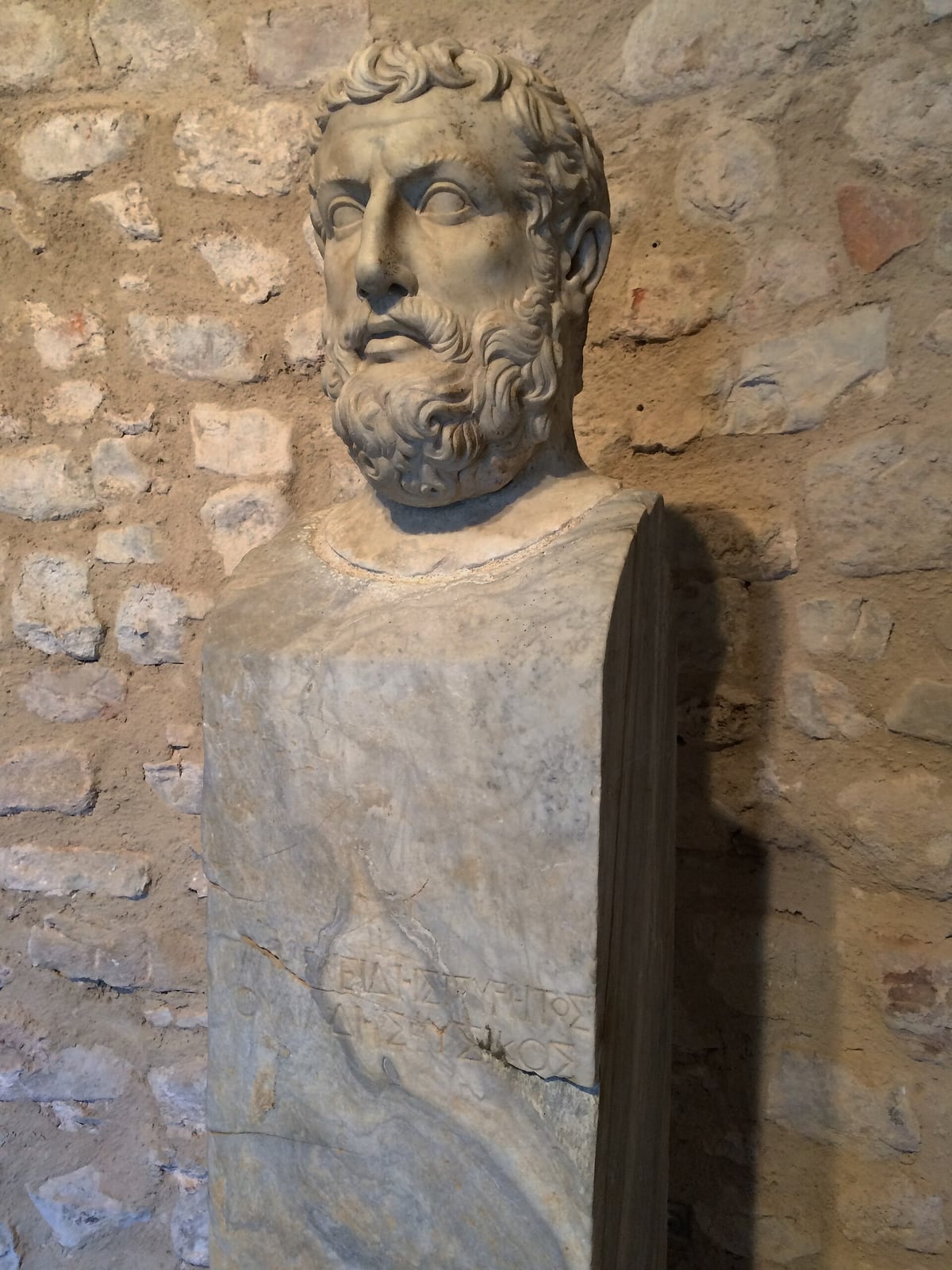
Parmenides
They agree on: What is the Absolute? Does God exist? · How is liberation or salvation attained? · Is a teacher necessary?
Thinks most unlike
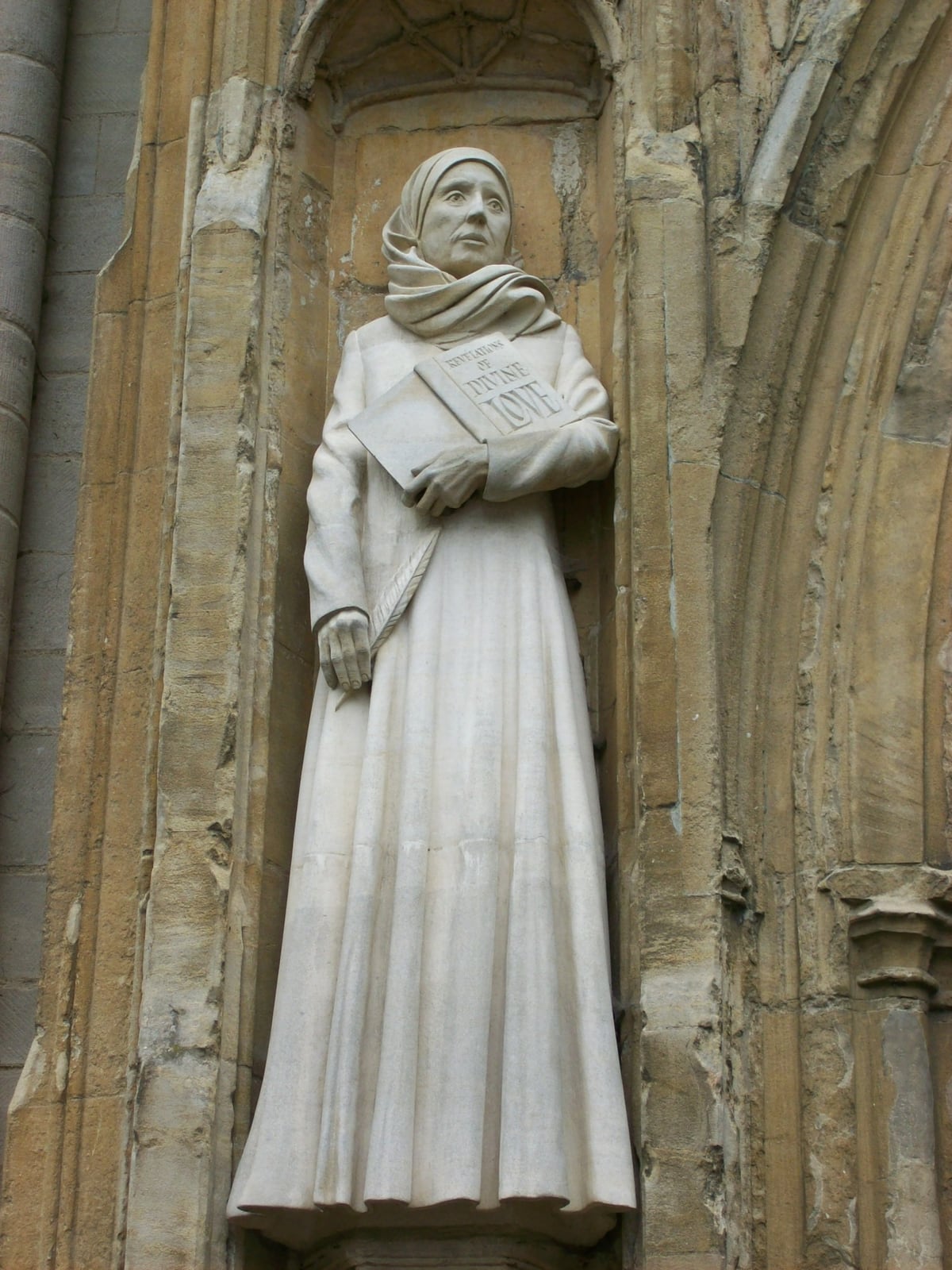
Julian of Norwich
They clash on: Who am I? Is there a true self? · Is the world real?
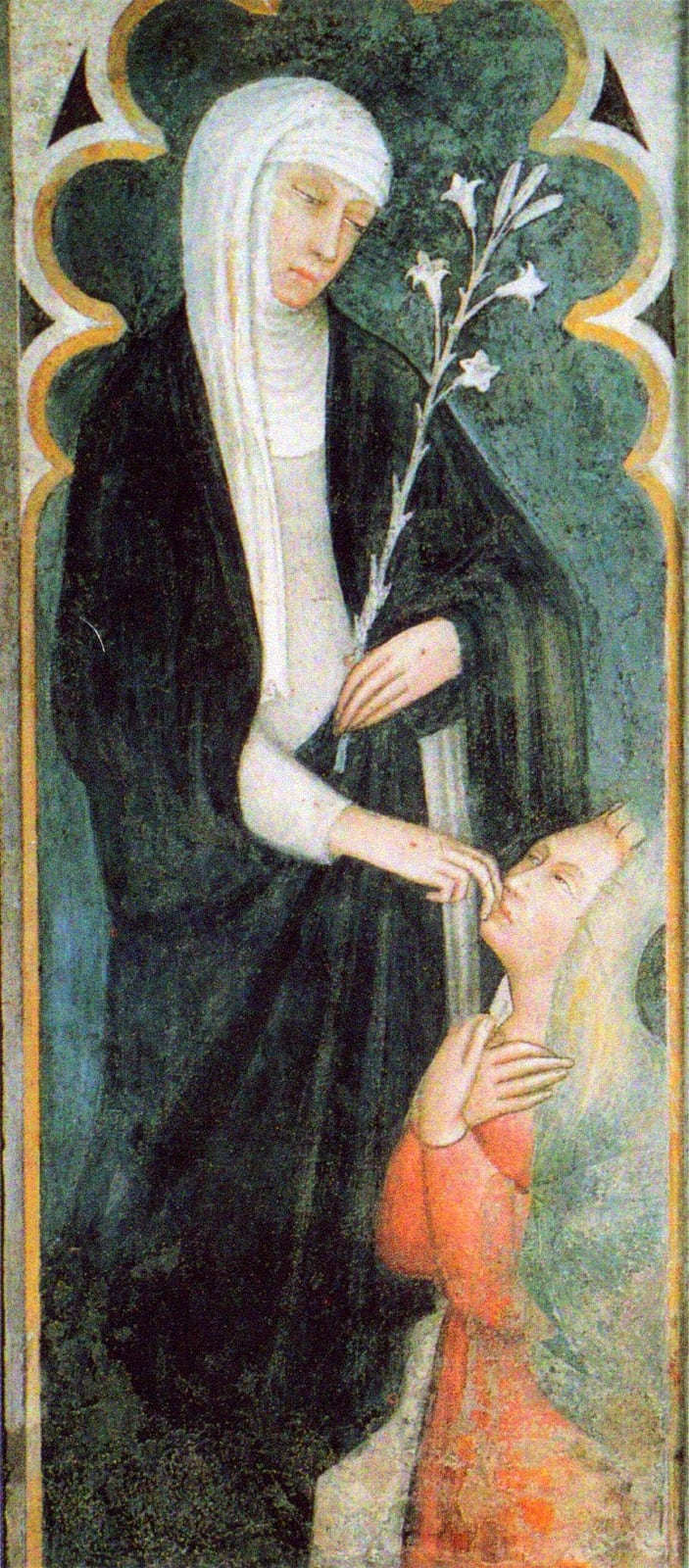
Catherine of Siena
They clash on: Who am I? Is there a true self? · Is the world real?
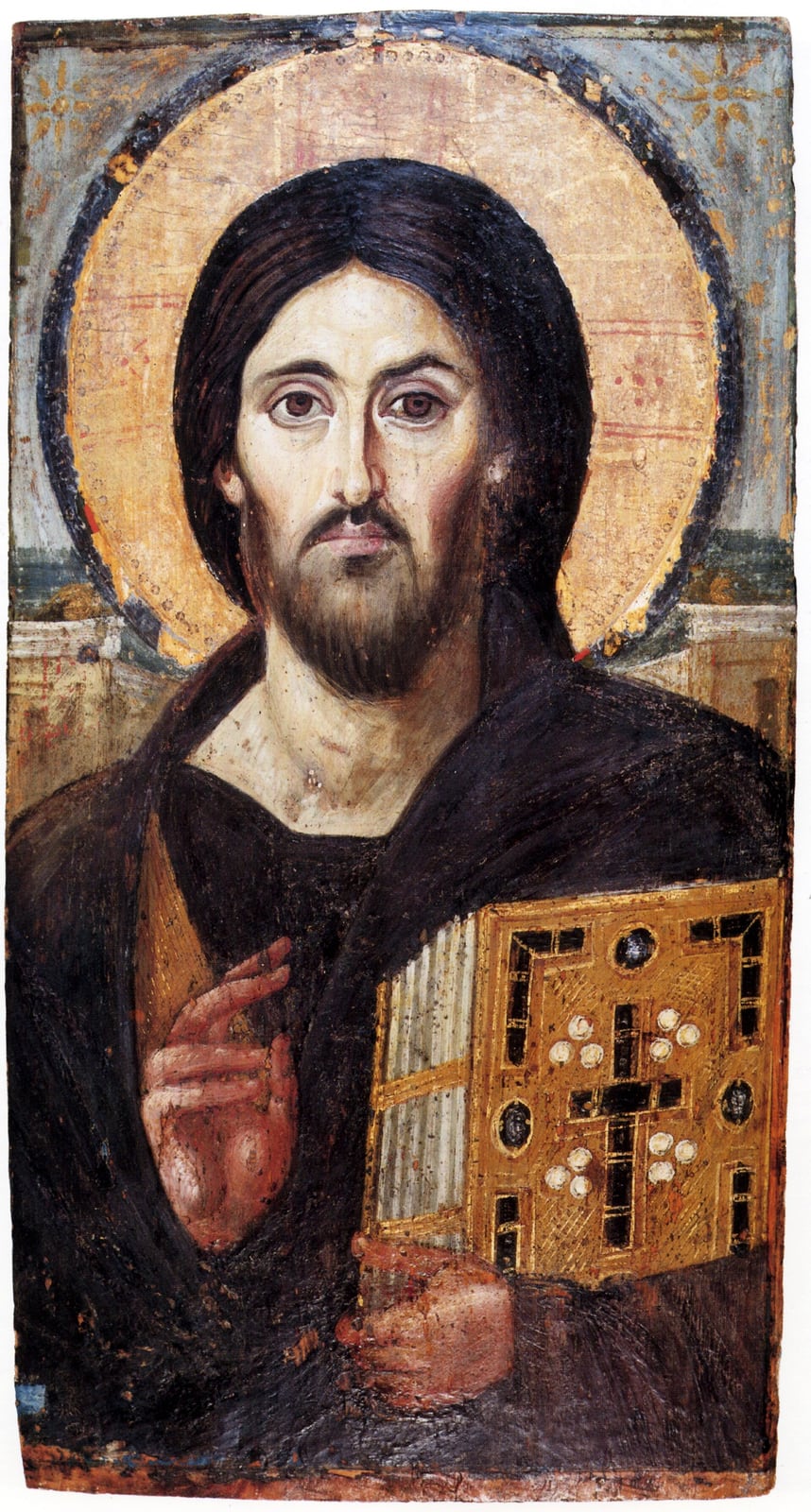
Jesus of Nazareth
They clash on: Is the world real? · Who am I? Is there a true self?

Francis of Assisi
They clash on: Who am I? Is there a true self? · Is the world real?
Anecdotes and stories
Anecdotes and stories
Hagiographic accounttiempo legendario
The reproach from the womb
Origin of the story: Mahābhārata 3.132 (critical edition), narrated by the sage Lomaśa to Yudhiṣṭhira; English translation by Ganguli (1884), pp. 396–397. H. H. Wilson summarises it in a note to his translation of the Viṣṇu Purāṇa (1840).
Hagiographic accounttiempo legendario
The boy before Janaka's gatekeeper
Origin of the story: Mahābhārata 3.133; Ganguli's translation (1884), pp. 398–399. The maxim on grey hair has parallels in normative Sanskrit literature.
Hagiographic accounttiempo legendario
The contest of numbers
Origin of the story: Mahābhārata 3.134; Ganguli's translation (1884), pp. 402–407, with notes interpreting each number as the thesis of a philosophical school.
Hagiographic accounttiempo legendario
The bath in the Samaṅgā
Origin of the story: Mahābhārata 3.134, end of the episode; Ganguli's translation (1884), p. 407. It is an aetiology of a sacred site (tīrtha) within the book of pilgrimages.
Hagiographic accounttiempo legendario
The trial of the North
Origin of the story: Mahābhārata, Anuśāsanaparvan, sections XIX–XXI of Ganguli's translation.
Hagiographic accounttiempo legendario
The apsarases who laughed
Origin of the story: Viṣṇu Purāṇa 5.38; H. H. Wilson's translation (1840), pp. 617–618. It is a Purāṇic story that does not appear in the Mahābhārata.
Unverifiabletiempo legendario (circulación moderna)
The king with one foot in the stirrup
Origin of the story: It has not been located in the Mahābhārata, in the Purāṇas consulted or in the Aṣṭāvakra Gītā. It circulates in oral versions and in modern devotional literature, with variants; Ramana Maharshi refers to "the story of Aṣṭāvakra and Janaka" and to its differences between books in talk 350 (6 February 1937), without citing a source.
Teachings
Teachings
The notions that structure their thought, explained in context.
The witness (sākṣin)sakshin
The notion of sākṣin, the unchanging witness, is common to Advaita Vedānta and has precedents in Sāṃkhya (puruṣa as spectator) and in the Upaniṣads.
Bondage and liberation as convictionbandha-moksha
It corresponds to the Advaita doctrine of superimposition (adhyāsa) and of liberation through knowledge, not through action.
Practice as bondagesamadhi-como-atadura
It contrasts with Patañjali's yoga, which defines yoga as the stilling of the movements of the mind and organises it into eight limbs.
Liberation while living (jīvanmukti)jivanmukti
Jīvanmukti is a classic theme of post-Śaṅkara Advaita (Vidyāraṇya's Jīvanmuktiviveka) and of texts such as the Yogavāsiṣṭha.
The contest of sages at Janaka's courtvada-certamen
The Bṛhadāraṇyaka Upaniṣad (book 3) presents another famous contest at Janaka's court, that of Yājñavalkya.
Videos
Videos
Recordings, interviews and documentaries. Videos play from YouTube; they are not hosted here.
Selected Verses of the Ashtavakra Gita (Part 1) | Swami Sarvapriyananda
Lecture· EN· 2019· 88 min
Vedanta Society of New YorkOfficial channel
Ashtavakra Samhita by Swami Sarvapriyananda
Lecture· EN· 2017· 74 min
Vedanta Society of Southern CaliforniaOfficial channel
Ashtavakra Gita - The Enlightened Life | Swami Sarvapriyananda
Lecture· EN· 2022· 99 min
Vedanta Society of New YorkOfficial channel
Why Astavakra Gita Stands Apart in Spiritual Wisdom | Swami Sarvapriyananda
Lecture· EN· 2025· 33 min
Ramakrishna Math & Ramakrishna Mission MangaluruOfficial channel
Concluding Talk on Ashtavakra Gita at Sri Ramanasramam
Lecture· EN· 2024· 27 min
Swami ShantanandaOfficial channel
Introduction to Ashtavakra Gita — Non-dual Teachings for Vedantic Contemplation
Lecture· EN· 2026· 9 min
ArshaBodha - Swami TadatmanandaOfficial channel
Upanishad Ganga Episode 4 | Ashtavakra's Wisdom!
Documentary· HI· 2022· 23 min
ChinmayaChannelOfficial channel
The GREATEST Spiritual STORY Ever Told | Ashtavakra Gita | Gurudev
Lecture· EN· 2022· 15 min
Gurudev Sri Sri Ravi ShankarOfficial channel
A Story of Ashtavakra and Janaka Maharaj's Relationship | Sadhguru
Third-party recording· EN· 2017· 13 min
SadhguruOfficial channel
అరణ్యపర్వం 32 • అష్టావక్రుని వృత్తాంతం • Chaganti • Mahabharatham
Lecture· TE· 2023· 23 min
Sanatana Bharathi
Ashtavakra Gîta - Chapitres 1 à 6 [Advaita Vedanta]
Third-party recording· FR· 2021· 32 min
Le Vieux Sage
Manik "Ashtavakra Gita 1. Kapitel - Teil 1/8 - Wie kann Erkenntnis entstehen" Satsang-Auszug
Lecture· DE· 2025· 33 min
Manik Satsang
Day 1 Ashtavakara Gita Ch 1 Verse 1 & 2
Lecture· ES· 2020· 45 min
Shivender Nagar Gita Vedanta
Gallery
Gallery
Images with verified licences. Each keeps its authorship and attribution.
Connections
Connections
Influences, discipleships and affinities. Documented relations are distinguished from similarities identified by analysis.
Family of
According to the Mahābhārata (3.132), Aṣṭāvakra is the son of Sujātā, Uddālaka's daughter, and of Kahoḍa, Uddālaka's disciple; he grows up believing his grandfather to be his father.
Documented relation
Influenced
Ramana commented on the story of Aṣṭāvakra and Janaka (Talks, talk 350, 1937) and copied by hand the Sanskrit text of the Aṣṭāvakra Gītā, published in facsimile by Sri Ramanasramam.
Documented relation
Influenced
Vivekananda quotes Aṣṭāvakra Saṃhitā 1.11 ("he who considers himself free is free") in the conversations recorded by Sharat Chandra Chakravarty.
Documented relation
Influenced
Osho devoted an extensive series of Hindi discourses to the Aṣṭāvakra Gītā, published as Ashtavakra Mahageeta.
Documented relation
Ideas akin to
In tradition both are protagonists of contests of knowledge at the court of Janaka of Videha (Yājñavalkya's in the Bṛhadāraṇyaka Upaniṣad, book 3).
Similarity identified by analysis
Ideas akin to
The Aṣṭāvakra Gītā sets out a radical Advaita; Brockington ascribes it to a follower of Śaṅkara (eighth or fourteenth century).
Similarity identified by analysis
Ideas akin to
Some commentators (Swami Shantananda Puri) see in the poem a seed of the doctrine of non-origination (ajātivāda) that Gauḍapāda develops in the Māṇḍūkya Kārikā.
Similarity identified by analysis
Ideas akin to
The Aṣṭāvakra Gītā and the Yogavāsiṣṭha share the ideal of the one liberated while living; Ramana Maharshi engaged with both (he copied the Gītā's Sanskrit by hand, and a selection of the Yogavāsiṣṭha was published at his ashram).
Similarity identified by analysis
Ideas akin to
The Aṣṭāvakra Gītā and the Avadhūta Gītā, ascribed to Dattātreya, are often published together (Alexandra David-Néel translated them in a single volume) because of their uncompromising non-dualism.
Similarity identified by analysis
Ideas akin to
The insistence on the self as witness and on the futility of gradual seeking brings his teaching close to that of the poem.
Similarity identified by analysis
Linked from other profiles
Sources
Sources
Bibliography and catalogues consulted for this profile.
- Mahābhārata, Āraṇyakaparvan 3.132–134 (ed. crítica de Poona: V. S. Sukthankar et al., Bhandarkar Oriental Research Institute, 1942). Traducción inglesa: Kisari Mohan Ganguli (trad.), The Mahabharata of Krishna-Dwaipayana Vyasa, vol. «Vana Parva», Calcuta, Bharata Press (Pratap Chandra Roy), 1884, secciones CXXXII–CXXXIV (Tirtha-yatra Parva), pp. 396–407.
- Mahābhārata, Anuśāsanaparvan, secciones XIX–XXI de la traducción de Kisari Mohan Ganguli (The Mahabharata of Krishna-Dwaipayana Vyasa, vol. «Anusasana Parva», Calcuta, Pratap Chandra Roy, 1883–1896): diálogo de Aṣṭāvakra con la dama Diś.
- Wilson, Horace Hayman (trad.). The Vishnu Purana: A System of Hindu Mythology and Tradition. Londres: Oriental Translation Fund / John Murray, 1840, libro V, cap. XXXVIII, pp. 617–618.
- Byrom, Thomas (trad.). The Heart of Awareness: A Translation of the Ashtavakra Gita. Prólogo de J. L. Brockington. Boston y Londres: Shambhala, 1990. ISBN 9780877735748.
- Hauschild, Richard (ed. y trad.). Die Aṣṭāvakra-Gītā. Berlín: Akademie-Verlag, 1967 (reimpresión De Gruyter, ISBN 9783112742679).
- Mukerjee, Radhakamal. Aṣṭāvakragītā (The Song of the Self Supreme). Delhi: Motilal Banarsidass, 1971 (póstumo). Datación citada según la entrada «Ashtavakra Gita» de la Wikipedia en inglés (consultada el 26-10-2026); no se ha visto el libro.
- Baij Nath, Rai Bahadur Lala (trad.). The Ashtavakra Gita: A Treatise on Adwaita Philosophy, translated into English with brief notes and introduction. Meerut: oficina del Vaishya Hitkari (impreso en Allahabad, Liddell's Printing Works), 1904.
- Nityaswarupananda, Swami (trad.). Aṣṭāvakra Saṃhitā. Mayavati: Advaita Ashrama, 1940. Edición facsímil con el texto sánscrito copiado a mano por Ramana Maharshi: Tiruvannamalai, Sri Ramanasramam, 2001 (ficha del distribuidor Society of Abidance in Truth).
- Venkataramiah, Munagala (comp.). Talks with Sri Ramana Maharshi. Tiruvannamalai: Sri Ramanasramam, 1955; charlas 104 y 350 (6 de febrero de 1937).
- Vivekananda, Swami. The Complete Works of Swami Vivekananda, vol. 7, «Conversations and Dialogues», V (notas de Sharat Chandra Chakravarty). Mayavati: Advaita Ashrama. Cita de la Aṣṭāvakra Saṃhitā 1.11.
- Wikidata: «Ashtavakra» (Q2722992, sabio védico) y «Ashtavakra Gita» (Q780145).
- Osho. Ashtavakra Mahageeta, bhāg 1 (discursos en hindi). Nueva Delhi: Diamond Books, 2021. ISBN 9788189605773 (serie en varios volúmenes).
- Vālmīki, Rāmāyaṇa, Yuddhakāṇḍa 6.119.17 (numeración de la vulgata), texto y traducción inglesa de Desiraju Hanumanta Rao y K. M. K. Murthy, Valmiki Ramayan.
- अष्टावक्रगीता (Aṣṭāvakragītā), texto sánscrito completo en veinte capítulos, Wikisource en sánscrito.
- Pagani, Silvio (versión en verso). Asht'avakragìtà o il canto di Asht'àvakra. Poemetto filosofico indiano. Milán: Sonzogno (Biblioteca Universale), 1912. Prefacio sobre la traducción en prosa de Carlo Giussani (Rivista Orientale, 1867–1868).
- Rights holder
- Texto sánscrito anónimo en dominio público. Las traducciones modernas tienen derechos propios: Shambhala (Byrom), Advaita Ashrama (Nityaswarupananda), Shanti Sadan (Shastri), José J. de Olañeta, Luis Cárcamo, Éditions du Rocher (David-Néel), Éditions de l'Éclat (Porte), De Gruyter (Hauschild), Diamond Books (Osho). La versión de John Richards fue cedida por su autor al dominio público (1994); las de Baij Nath (1904) y Pagani (1912) son de dominio público.
Pending confirmation
What this profile has not yet been able to settle. We would rather say so than fill it in.
- Fechas: no existen fechas de nacimiento ni muerte; la línea de tiempo usa la recepción de los textos.
- Comprobar en el libro de Radhakamal Mukerjee (1971) la datación que le atribuye la Wikipedia (siglos V–IV a. C.); no se ha visto el volumen.
- Comprobar en la edición de Hauschild (1967) su propuesta de datación, los manuscritos utilizados y la serie exacta (Abhandlungen de la Academia Sajona de Ciencias); registrar después los manuscritos en manuscripts[].
- Traducción de Janaki Nath Mukerjee: no se ha localizado en ningún catálogo (Open Library, Internet Archive, búsqueda general). No se registra.
- Comprobar en el catálogo del British Museum (objeto 1880,0.2073) el título y la identificación de la figura de la acuarela; la identificación como Aṣṭāvakra procede de la ficha de Commons.
- Confirmar el año de publicación del fascículo del Anuśāsana Parva de Ganguli y la numeración de la edición crítica (13.19–21) del diálogo con Diś.
- Edición de Sri Ramanasramam con la caligrafía de Ramana (2001): confirmar el ISBN (el distribuidor da 8188018570).
- Osho: no se ha encontrado un canal oficial (OSHO International) con los discursos de la Ashtavakra Mahageeta; las subidas encontradas son de terceros y no se registran.
- Sala de lectura: la traducción de Baij Nath y la versión de Pagani tienen OCR deficiente; buscar transcripciones limpias. No se ha encontrado ningún texto español en dominio público.
- Vídeo ivZ9kPLxMqA: confirmar que la clase es en español.
- Project Gutenberg no tiene ninguna edición de estas obras (búsqueda en gutenberg.org el 2026-10-26: «No records found»).
Researched on 2026-10-26