Buddhism · Mahayana · Tibetan Buddhism (Vajrayana)
The 14th Dalai Lama (Tenzin Gyatso)
བསྟན་འཛིན་རྒྱ་མཚོ་ · ལྷ་མོ་དོན་འགྲུབ།
1935 –LivingHistorically documented person
Tenzin Gyatso, the Fourteenth Dalai Lama, was born in 1935 in a village in Amdo and enthroned in Lhasa in 1940. He took power at fifteen as the Chinese army entered Tibet, and in 1959 went into exile in India, where he has lived ever since in Dharamsala. Nobel Peace laureate in 1989, he renounced his political authority in 2011. A teacher of the Gelug school, he has promoted a secular ethics of compassion and sustained a lasting dialogue with science.
- works
- 166works
- editions
- 279editions
- quotes
- 8quotes
- videos
- 10videos
- images
- 8images
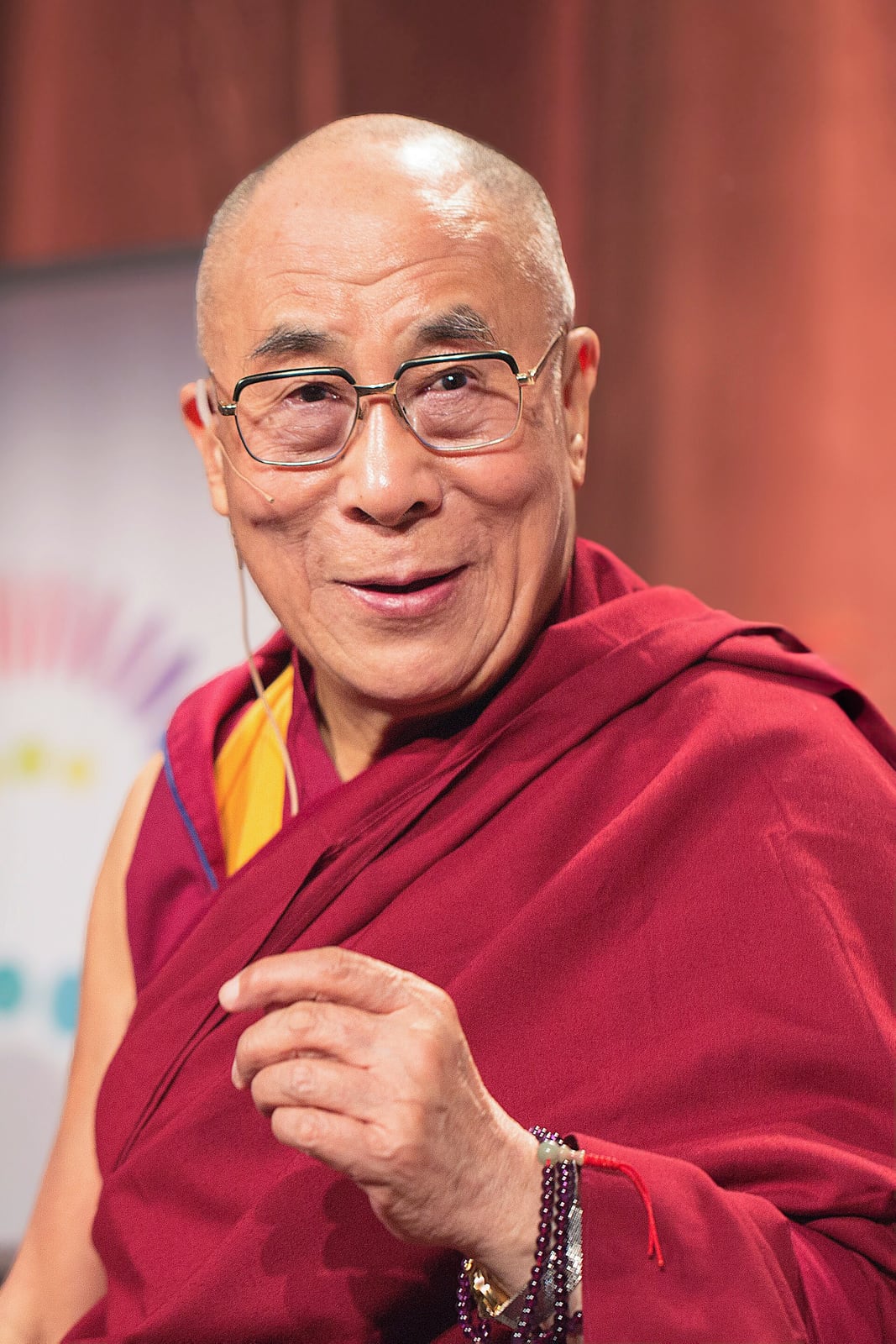
El Dalai Lama en 2012 · CC BY-SA 4.0
In their words
«I feel honoured, humbled and deeply moved that you should give this important prize to a simple monk from Tibet.»Discurso de aceptación del Premio Nobel de la Paz, Oslo, 10 de diciembre de 1989

Their central idea
All human beings want happiness and shun suffering; for him this basic equality, prior to any belief, is the foundation of ethics and human rights.
See in context
Biography
6 min read
A child from Amdo
Lhamo Dhondup was born on 6 July 1935 in Taktser, a village of farmers and herders in the Amdo region of north-eastern Tibet, in an area that the Chinese administration already counted as part of Qinghai province. He was the son of Choekyong Tsering and Diki Tsering, one of a large family in which an elder brother, Thubten Jigme Norbu, had already been recognised as the reincarnation of a lama.
In 1937 one of the search parties sent from Lhasa to find the reincarnation of the Thirteenth Dalai Lama, Thubten Gyatso, who had died in December 1933, reached the village. The Tibetan accounts of that search—the visions at the lake Lhamo Lhatso, the signs pointing east, the test with objects that had belonged to the late ruler—belong to tradition and should be read as such. What is documented is that the boy was accepted as the candidate, that his departure was delayed by the financial demands of Ma Bufang, the warlord who governed Qinghai, and that the caravan reached Lhasa in October 1939. On 22 February 1940 he was enthroned in the Potala under the religious name Jetsun Jamphel Ngawang Lobsang Yeshe Tenzin Gyatso.
The making of a monk
His education followed the curriculum of the great Gelug monasteries, which present themselves as heirs to the Indian university of Nalanda: logic, epistemology, the perfection of wisdom, Nagarjuna's Middle Way, monastic discipline and Abhidharma metaphysics, together with language, poetry and medicine. His principal tutors were Ling Rinpoche and Trijang Rinpoche. In 1959, during the Monlam festival and with political tension already boiling over, he sat his examination in the Jokhang temple before hundreds of monks and received the geshe lharampa degree, the highest of that scholastic training. It was, almost literally, his last public act in Lhasa.
A teenager facing history
In October 1950 the People's Liberation Army entered eastern Tibet and defeated Tibetan troops at Chamdo. On 17 November that year, aged fifteen, the Dalai Lama assumed full temporal authority ahead of time. In 1951 a Tibetan delegation signed the so-called Seventeen Point Agreement in Beijing, which the Tibetan government accepted under pressure and which he would repudiate in exile. In 1954 he travelled to Beijing, where he met Mao Zedong, Zhou Enlai and Deng Xiaoping; in 1956 he visited India for the 2,500th anniversary of the Buddha and discussed with Nehru the possibility of not returning. He went back.
On 10 March 1959 the people of Lhasa surrounded the Norbulingka palace, fearing that the Chinese authorities would detain the Dalai Lama. On the night of 17 March he left the palace disguised as a soldier and, after two weeks crossing Himalayan passes, entered India at the end of the month. In his two autobiographies—My Land and My People (1962) and Freedom in Exile (1990)—he left his account of the escape, which agrees in essentials with the testimony of those who accompanied him and with the work of historians such as Melvyn Goldstein.
Dharamsala
After a first stay in Mussoorie, in 1960 he settled in McLeod Ganj, above Dharamsala, in today's Indian state of Himachal Pradesh, which became the seat of the Central Tibetan Administration. From there he organised the survival of a community that grew to tens of thousands of refugees: schools, farming settlements, the refounding in southern India of the great monasteries of Sera, Drepung and Ganden, a library of Tibetan works and archives. In 1963 he presented a draft democratic constitution for Tibetans in exile, the first step in a democratisation he pushed through against the reluctance of part of his own people.
Politically he formulated what came to be called the "Middle Way": giving up the demand for independence and seeking instead genuine autonomy for Tibet within the People's Republic of China. He presented it to the United States Congress on 21 September 1987 as the Five Point Peace Plan, and developed it before the European Parliament in Strasbourg on 15 June 1988. Beijing never accepted it, and part of the diaspora regarded it as too great a concession.
The Nobel and the public voice
In 1989 he received the Nobel Peace Prize. The Oslo committee stressed that his struggle for Tibet had consistently opposed the use of violence and that his proposals sought solutions based on tolerance and mutual respect. From then on he became one of the most recognisable religious figures in the world: journeys to dozens of countries, meetings with leaders of other faiths, mass lectures, and a body of books—written, dictated or compiled from his teachings—that his office puts at more than a hundred.
Two registers should be distinguished in that output. One is that of the Buddhist teacher commenting on classical texts—Shantideva, Kamalashila, Tsongkhapa, Nagarjuna—before audiences of practitioners, often translated by Thupten Jinpa or Jeffrey Hopkins. The other is that of the advocate of a "secular ethics" that requires no faith: Ethics for the New Millennium (1999) and later Beyond Religion (2011) argue that compassion and discernment can be educated without appeal to any dogma. Between the two stand the collaborative books, such as The Art of Happiness (1998), written by the psychiatrist Howard Cutler from their conversations, or The Book of Joy (2016), born of his meeting with Desmond Tutu in Dharamsala and written by Douglas Abrams.
Dialogue with science
One of his most constant interests has been science. From 1987, together with the entrepreneur Adam Engle and the neuroscientist Francisco Varela, he promoted the Mind & Life meetings, which brought physicists, psychologists and neuroscientists together with monks and contemplatives in Dharamsala; from them came the Mind & Life Institute and a line of research on meditation and emotion that influenced laboratories such as Richard Davidson's. In The Universe in a Single Atom (2005) he set out his position: if science shows a Buddhist claim to be false, Buddhism must abandon it.
Renouncing power and the question of succession
On 14 March 2011 he asked the Tibetan parliament in exile to relieve him of temporal authority, and on 29 May he signed the formal transfer to an elected leadership, ending a tradition of almost four centuries in which the Dalai Lamas had been heads of government. Since then he has presented himself as a purely spiritual leader.
That left the question that most concerns Beijing and Tibetans alike: what will happen after his death. In a statement of 24 September 2011 he set out the traditional criteria for recognition, announced that at around ninety he would consult on whether the institution should continue, and assigned the decision to the Gaden Phodrang Trust, his own office, excluding any role for an atheist government. On 2 July 2025, days before turning ninety, he confirmed that the institution will continue and that only that body, in consultation with the heads of the Buddhist traditions, will have the authority to recognise his successor. In Voice for the Voiceless (2025) he wrote that the new Dalai Lama will be born in the "free world". The Chinese government maintains that recognition belongs to it, which in all likelihood foreshadows a disputed succession.
Light and shadow
His figure is not free of controversy. His discouragement, since the 1970s, of the cult of the protector deity Dorje Shugden set part of the Gelug community against him and led to organised protests during his travels. In 2023 his office publicly apologised for a video in which he was seen joking with a child in a way many considered inappropriate. None of these episodes has substantially altered the place he occupies: that of a monk who, without territory or political power, has made Tibetan exile a moral question of global reach and placed reasoned compassion at the centre of contemporary spiritual conversation.
Sources: Dalai Lama. Freedom in Exile: The Autobiography of the Dalai Lama. Londres: Hodder & Stoughton; Nueva York: HarperCollins, 1990. · Dalai Lama. My Land and My People. Nueva York: McGraw-Hill, 1962. · Goldstein, Melvyn C. The Snow Lion and the Dragon: China, Tibet, and the Dalai Lama. Berkeley: University of California Press, 1997. · Laird, Thomas. The Story of Tibet: Conversations with the Dalai Lama. Nueva York: Grove Press, 2006. · Dalai Lama. Ethics for the New Millennium. Nueva York: Riverhead Books, 1999.
Timeline
A life, year by year
Each point is a documented event. Click to read it, with its source and degree of certainty.
July 6, 1935age 0Taktser, Amdo (hoy Qinghai, China)
Birth in Taktser
Lhamo Dhondup is born into a farming family in Amdo, the son of Choekyong Tsering and Diki Tsering.
DocumentedOffice of His Holiness the Dalai Lama. «Brief Biography». dalailama.com (biografía oficial).
July 6, 1935 · age 0
Birth in Taktser
Lhamo Dhondup is born into a farming family in Amdo, the son of Choekyong Tsering and Diki Tsering.
Documented
1937 · age 2
Recognised as the reincarnation
A search party sent from Lhasa identifies him as the reincarnation of the Thirteenth Dalai Lama, Thubten Gyatso. The signs and tests in the story belong to tradition.
Documented
October 1939 · age 4
Arrival in Lhasa
After delays caused by the demands of the Qinghai governor Ma Bufang, the caravan reaches the Tibetan capital.
Documented
February 22, 1940 · age 4
Enthronement
He is enthroned as the Fourteenth Dalai Lama with the religious name Tenzin Gyatso.
Documented
November 17, 1950 · age 15
Assumes temporal authority
After the People's Liberation Army enters eastern Tibet, he assumes full political authority ahead of time.
Documented
1954 · age 19
Journey to Beijing
He meets Mao Zedong, Zhou Enlai and Deng Xiaoping during a long stay in China.
Documented
1956 · age 21
Visit to India for the Buddha Jayanti
He attends the celebrations of the Buddha's 2,500th anniversary and discusses the Tibetan situation with Nehru.
Documented
1959 · age 23
Geshe lharampa degree
During the Monlam Chenmo he passes the final examination of his monastic training and receives the geshe lharampa degree.
Documented
March 17, 1959 · age 23
Flight into exile
After the uprising of 10 March he leaves the Norbulingka by night and, after a two-week journey, enters India at the end of the month.
Documented
1960 · age 24
Settles in Dharamsala
He moves from Mussoorie to Dharamsala, which becomes the seat of the Central Tibetan Administration.
Documented
1962 · age 27
Publishes My Land and My People
First autobiography, focused on his childhood, the occupation and the escape.
Documented
1963 · age 27
Draft democratic constitution
He presents a draft constitution for Tibetans in exile, the seed of the later Charter of Tibetans in Exile.
Documented
September 21, 1987 · age 52
Five Point Peace Plan
He presents his peace proposal for Tibet to the United States Congress, the basis of the 'Middle Way'.
Documented
October 1987 · age 52
First Mind & Life meeting
First dialogue between the Dalai Lama and Western scientists, organised by Adam Engle and Francisco Varela.
Documented
June 15, 1988 · age 52
Strasbourg Proposal
He develops his proposal for Tibetan autonomy before the European Parliament.
Documented
December 10, 1989 · age 54
Nobel Peace Prize
He receives the Nobel Peace Prize for his non-violent struggle for the liberation of Tibet.
Documented
1990 · age 55
Publishes Freedom in Exile
Second autobiography, written after the Nobel.
Documented
2005 · age 70
The Universe in a Single Atom
He publishes his personal synthesis on Buddhism and science, the fruit of two decades of Mind & Life dialogues.
Documented
May 29, 2011 · age 75
Transfer of political authority
He signs the document transferring his temporal authority to an elected leadership, ending a 368-year tradition.
Documented
September 24, 2011 · age 76
Statement on his reincarnation
He sets out the criteria for recognition and assigns the decision on his successor to the Gaden Phodrang Trust.
Documented
April 2015 · age 79
Meeting with Desmond Tutu
A week of conversations with Archbishop Tutu that would become The Book of Joy (2016).
Documented
April 10, 2023 · age 87
Apology over a video with a child
His office issues a public apology over a video circulated online that caused widespread controversy.
Documented
July 2, 2025 · age 89
The institution will continue
Days before turning ninety, he affirms that the institution of the Dalai Lama will continue and that only the Gaden Phodrang Trust will recognise his successor.
Documented
Works
Essential works
The works without which their legacy cannot be understood.
Written work · 1990
Freedom in Exile
His second autobiography, published shortly after the Nobel Prize and written with the help of the editor Alexander Norman. It revisits the history of 1950–1959 with greater distance and tells of thirty years of exile, the rebuilding of Tibetan institutions in India, his travels, his first meetings with scientists and his Middle Way proposal. It is the most cited autobiographical source and the basis of much later biography, including on film.
8 editions · amazon.com

Written work · 1998
The Art of Happiness
The Art of Happiness: A Handbook for Living
A book written by the American psychiatrist Howard C. Cutler from long conversations with the Dalai Lama in Arizona and Dharamsala. It alternates the teacher's answers with the author's reflections and clinical cases on the pursuit of happiness, suffering, anger, anxiety and compassion. Its huge commercial success made it the gateway to his thought for millions of readers and led to a series of sequels.
9 editions · amazon.com

Written work · 1999
Ethics for the New Millennium
His most systematic account of an ethics that does not depend on religious faith. It starts from the observation that all beings want happiness and shun suffering, and argues that compassion, restraint and discernment can be cultivated through reason and shared experience. It proposes a universal responsibility extending to politics, economics, disarmament and the environment. In Spanish it was published as El arte de vivir en el nuevo milenio.
8 editions · amazon.com

Written work · 2016
The Book of Joy
The Book of Joy: Lasting Happiness in a Changing World
The fruit of a week of conversations in Dharamsala in April 2015 between the Dalai Lama and the South African archbishop Desmond Tutu on the occasion of the former's eightieth birthday. The writer Douglas Abrams composed the book by combining the dialogue, a chronicle of those days and references to research on well-being. It examines the obstacles to joy—fear, anger, sadness, envy—and eight pillars for cultivating it, from the standpoint of two different religious traditions.
4 editions · amazon.com
Complete works (166)

My Land and My People
1962
The Universe in a Single Atom
2005
The 14th Dalai Lama (Tenzin Gyatso)
Voice for the Voiceless
The Conscious LibraryVoice for the Voiceless
2025

Kindness, Clarity, and Insight
1984

The Buddhism of Tibet
1975
The 14th Dalai Lama (Tenzin Gyatso)
Opening the Eye of New Awareness
The Conscious LibraryOpening the Eye of New Awareness
1984

Ocean of Wisdom
1989

The Way to Freedom
1994

The World of Tibetan Buddhism
1995

Awakening the Mind, Lightening the Heart
1995

The Power of Compassion
1995

The Good Heart
1996

Healing Anger
1997

The Four Noble Truths
1997
Sleeping, Dreaming, and Dying
1997

Gentle Bridges
1992

Kalachakra Tantra: Rite of Initiation
1985

Transforming the Mind
2000

An Open Heart
2001

Stages of Meditation
2001

Advice on Dying
2002

Essence of the Heart Sutra
2002

The Art of Happiness at Work
2003

Practicing Wisdom
2004
Quotations
Quotations located in a specific work. Each carries its provenance and its level of confidence.
I feel honoured, humbled and deeply moved that you should give this important prize to a simple monk from Tibet.VerifiedDiscurso de aceptación del Premio Nobel de la Paz, Oslo, 10 de diciembre de 1989
Essential ideas (editorial summary)
Out of respect for copyright, these ideas are summarised in our own words and are not presented as literal quotations.
- All human beings want happiness and shun suffering; for him this basic equality, prior to any belief, is the foundation of ethics and human rights.
- Ethics can be taught without religion. Against those who make it depend on faith, he proposes a secular ethics grounded in reason, shared experience and science, valid for believers and non-believers.
- If scientific investigation conclusively shows a Buddhist claim to be false, Buddhism must accept the finding and abandon the claim (the central position of The Universe in a Single Atom).
- Universal responsibility: in an interdependent world one's own security and happiness depend on those of others, and compassion stops being a moral luxury to become a practical necessity.
- The Middle Way applied to politics: giving up Tibetan independence in exchange for genuine autonomy that protects its language, culture, religion and environment.
- His office sums up his life in three principal commitments—as a human being, to promote values such as compassion and forgiveness; as a monk, harmony among religions; as a Tibetan, to preserve the language, the culture inherited from Nalanda and the environment of Tibet—to which he has lately added a fourth: reviving among young Indians an interest in India's ancient knowledge of mind and emotions.
- The enemy is the best teacher of patience: following Shantideva, whoever harms us offers the only real occasion to practise tolerance.
- The succession of the Dalai Lamas must be decided according to Tibetan religious tradition and not by a government that denies reincarnation; a candidate chosen for political ends must not be recognised.
Apocryphal quotes or disputed attributions (1)
«Asked what surprised him most about humanity, he answered: man, because he sacrifices his health to make money and then sacrifices money to recuperate his health…»
Widely circulated under the Dalai Lama's name since the early 2010s, but not found in any of his books or speeches or in the dalailama.com archive. There is no primary source; it has been linked to an anonymous email text known as 'The Interview with God'.
Ask
What their work answers
Twelve great human questions and what their texts allow us to answer, with references. We never put words in their mouth.
What is the Absolute? Does God exist?
Buddhism does not accept a creator, and respects those who do
No creator GodStated explicitly
Tenzin Gyatso, the Fourteenth Dalai Lama, states the Buddhist position clearly: the universe has no first creator, and phenomena arise dependent on beginningless causes and conditions. In The Universe in a Single Atom (2005) he relates this thesis to scientific cosmology and explains why Buddhism needs no creating principle. But he refuses to turn the difference into polemic: in Toward a True Kinship of Faiths (2010) and in The Good Heart (1996), his commentary on Gospel passages, he holds that faith in a creator God can sustain compassion, humility and love in the believer, and that this is what matters. He distinguishes between the truth each tradition affirms and the pluralism with which it is wise to live. For one's own liberation, however, no God is needed.
Compare this question with other teachersWho am I? Is there a true self?
The self exists conventionally, but not in itself
There is no permanent selfStated explicitly
The Fourteenth Dalai Lama presents non-self from the Madhyamaka Prasangika school of Tibetan Buddhism. In How to See Yourself as You Really Are (2006) he invites the reader to search for the self we identify with so strongly when offended or afraid, and to verify that it is found neither in the body, nor in the mind, nor in their combination, nor apart from them. This does not mean there is no one: the self exists conventionally, as a designation dependent on the aggregates, and it is what acts, remembers and answers for its deeds. What does not exist is a self existing by itself, independently and intrinsically. Clinging to that appearance of solidity is, for him, the root of afflictive emotions; understanding its emptiness opens the door to compassion.
Compare this question with other teachersWhy do we suffer?
Afflictive emotions, born of clinging to a self, are the root of pain
Craving and attachmentStated explicitly
The Fourteenth Dalai Lama sets out in The Four Noble Truths (1997) the classical doctrine: suffering originates in karma and afflictive emotions — attachment, aversion and confusion — whose root is the ignorance that conceives self and phenomena as existing by themselves. In The Art of Happiness (1998), written with the psychiatrist Howard Cutler, he translates this teaching into accessible terms: attachment to what is desired and rejection of what displeases generate anxiety, anger and frustration, and the undisciplined mind is the main source of unhappiness. He insists that some suffering is unavoidable — illness, old age, death — but that one's attitude towards it changes its effect. The remedy is to train the mind, cultivate compassion, which reduces self-absorption, and understand the emptiness of the self.
Compare this question with other teachersWhat happens after death?
Subtle mind continues from life to life; dying well is prepared by living
Rebirth according to karmaStated explicitly
The Dalai Lama sets out the Tibetan Buddhist view of death, above all in Advice on Dying and Living a Better Life (2002), where he comments on a classic text on dying. He distinguishes levels of mind: the gross mind, tied to the senses, dissolves at death; the mind of clear light, the subtlest, continues and is the basis of rebirth. He describes the stages of dissolution of the elements, the appearance of the clear light and the intermediate state (bardo) preceding the new life, whose character depends on karma and on one's last state of mind. He therefore advises preparing throughout life, thinking of death every day without morbidity. He regards himself as the fourteenth incarnation of a lineage and, in his 2011 statement, explained how his successor should be recognised, or whether the institution should continue.
Compare this question with other teachersHow is liberation or salvation attained?
A gradual path joining compassion and wisdom about emptiness, examined with reason
Through disciplined practiceStated explicitly
The Fourteenth Dalai Lama sets out liberation according to the Gelug tradition of Tibetan Buddhism: suffering derives from afflictive emotions, and these from the ignorance that conceives things as having inherent existence. In The Four Noble Truths he explains that this ignorance can be removed because it does not rest on reality, and that the antidote is the wisdom realising emptiness. The path is gradual (lamrim) and combines ethical discipline, analytical and concentrative meditation, and the generation of the awakening mind (bodhicitta), the wish to attain enlightenment for the sake of all beings. He insists that practice must undergo rational examination and that transforming the mind takes time and sustained effort.
Compare this question with other teachersIs a teacher necessary?
The teacher is valuable, but must be examined carefully before being accepted
Helpful but not indispensableInferred from their doctrine
The Fourteenth Dalai Lama teaches within a tradition in which reliance on the spiritual teacher is the first topic of the gradual path (lamrim) and in which tantra requires initiation. He does not minimise that role. But he constantly insists on two precautions: the disciple must examine the teacher at length before accepting him, checking his knowledge and conduct, and must not follow instructions contrary to the Dharma or to ethics, even if they come from him. He also encourages studying the texts critically, in line with the Nalanda university tradition, and not accepting even the Buddha's words without analysing them. The teacher guides; understanding is each person's responsibility.
Compare this question with other teachersIs the world real?
Things exist, but not by themselves: they depend on causes, parts and designation
A web of causes without substanceStated explicitly
The Fourteenth Dalai Lama explains reality according to the Madhyamaka Prasangika school, as interpreted by the Gelug tradition. Things exist conventionally and function, but lack intrinsic existence: they depend on their causes, their parts and the mental designation that identifies them. That is emptiness, which does not deny the world but a mistaken way of conceiving it. In The Universe in a Single Atom he places this doctrine in dialogue with modern physics and points out convergences with the interdependence of phenomena described by science, without conflating the two. For him, understanding interdependence has ethical consequences: no being or interest exists in isolation.
Compare this question with other teachersWhat is love?
Wishing all beings to be happy and free from suffering
Boundless compassionStated explicitly
The Dalai Lama defines love and compassion according to Tibetan Buddhism: love is the wish that others be happy, and compassion the wish that they be free from suffering. He distinguishes genuine compassion from ordinary affection, which depends on the other seeming close or pleasant to us and is mixed with attachment; true compassion is based on recognising that everyone, the enemy included, wishes just as we do to be happy and avoid pain. In The Art of Happiness and in Ethics for the New Millennium he presents compassion as the source of one's own happiness and the foundation of a secular ethic of universal responsibility, valid for believers and non-believers alike. In the Tibetan practice he teaches, it culminates in bodhicitta: the aspiration to awaken for the benefit of all beings.
Compare this question with other teachersAre we free, or is everything determined?
Karma is intentional action: the future depends on what we do now
Karma and choiceStated explicitly
The Dalai Lama presents the Tibetan doctrine of karma by insisting that it is not fatalism. Karma means action, and in particular action motivated by an intention; its fruits depend on causes and conditions and can therefore be changed. In *The Universe in a Single Atom* (2005) he places karma within general causality and relates it to the experience of sentient beings, without claiming it explains every natural phenomenon on its own. In his popular works, such as *How to Practice*, he stresses the practical consequence: since the present state is the fruit of past actions, ethical discipline and the cultivation of the mind are the way to shape what is to come. Personal responsibility and interdependence go together.
Compare this question with other teachersWhy meditate or pray?
Analytical meditation: familiarising the mind with compassion and emptiness
Seeing reality as it isStated explicitly
The Dalai Lama explains that the Tibetan word for meditation, *gom*, means familiarisation: to meditate is to habituate the mind to virtuous states and to a correct understanding of reality. He distinguishes two modes, both necessary: calm meditation, which stabilises attention on an object, and analytical meditation, which examines through reasoning impermanence, suffering, compassion and above all emptiness, the absence of intrinsic existence in phenomena. In *How to Practice* and in his commentary on Kamalaśīla's *Stages of Meditation* he presents practice as a progressive training whose fruit is a clearer mind and a more compassionate heart, useful also outside Buddhism.
Compare this question with other teachersCan reason know the ultimate?
If science refutes a Buddhist claim, Buddhism must change it
Faith and reason help each otherStated explicitly
The Dalai Lama presents himself as heir to the Nālandā tradition, which gives reason a central role: the Buddha's own teaching, he recalls, must be examined as a goldsmith examines gold, by burning, cutting and rubbing it, and not accepted out of mere reverence. In *The Universe in a Single Atom* (2005) he goes so far as to state that, if scientific investigation conclusively proved a Buddhist claim false, it would have to be abandoned. Understanding of emptiness is reached first through logical analysis, and only afterwards does meditation turn it into direct experience. The faith he defends is trust grounded in reason, not its opposite.
Compare this question with other teachersWithdraw from the world or transform it?
Monk and statesman: universal responsibility demands acting for others
Engage with the worldStated explicitly
The Dalai Lama embodies the tension between monastic renunciation and public responsibility. He has been a monk since childhood and devotes hours each day to meditation, but for decades he was the political head of the Tibetans in exile, until in 2011 he transferred that authority to an elected government. He proposed a five-point peace plan (1987) and a «middle way» of autonomy for Tibet, and received the Nobel Peace Prize in 1989 for his defence of nonviolence. In Ethics for the New Millennium he holds that compassion must be translated into universal responsibility: caring for the well-being of all, including future generations and the planet, is an obligation for anyone, believer or not. He has promoted dialogue with science and between religions. Inner practice is indispensable, but its proof is action.
Compare this question with other teachers
Affinities & tensions
Affinities and tensions
Calculated question by question from their positions. The reason for each agreement or clash, on click.
Thinks most like

Pema Chödrön
They agree on: What is the Absolute? Does God exist? · Who am I? Is there a true self? · Why do we suffer?
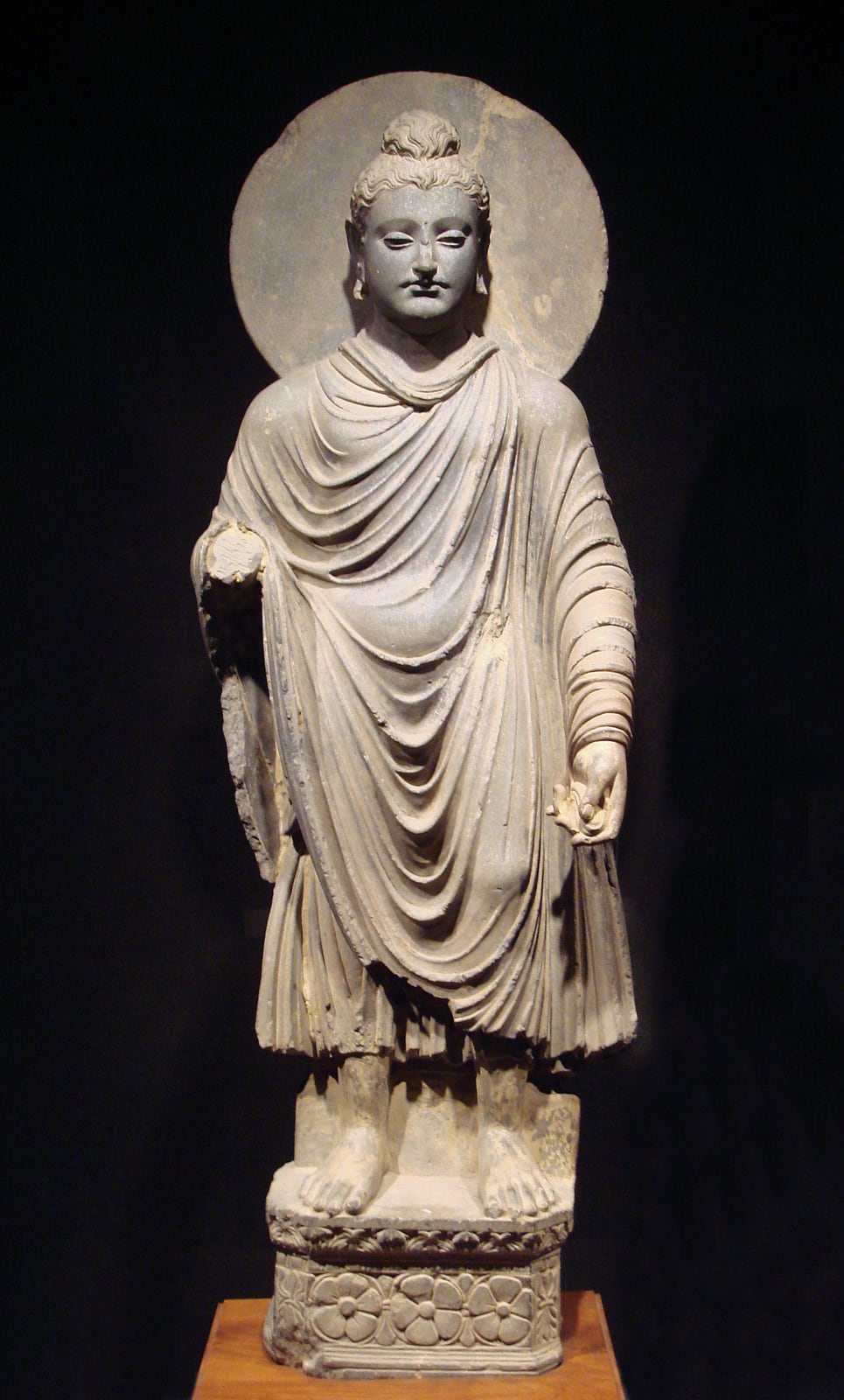
Siddhartha Gautama, the Buddha
They agree on: What is the Absolute? Does God exist? · Who am I? Is there a true self? · Why do we suffer?
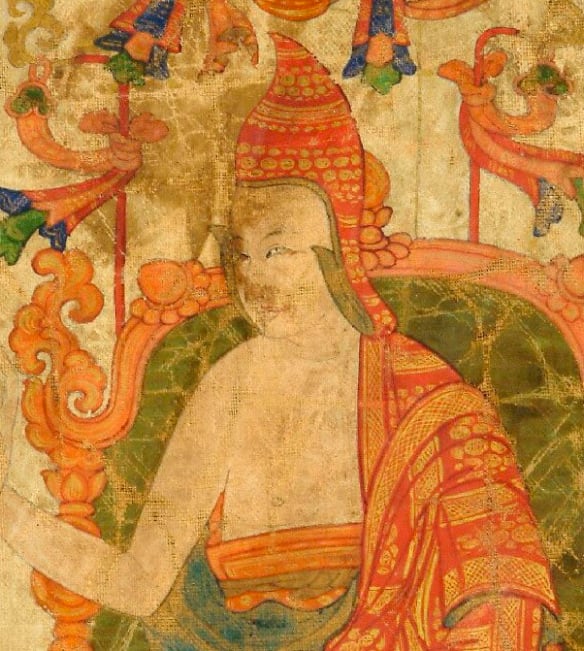
Śāntideva
They agree on: What is the Absolute? Does God exist? · Who am I? Is there a true self? · Why do we suffer?

Tsongkhapa
They agree on: What is the Absolute? Does God exist? · Who am I? Is there a true self? · Why do we suffer?
Thinks most unlike

Francis of Assisi
They clash on: What is the Absolute? Does God exist? · Who am I? Is there a true self? · What happens after death?

Rabia al-Adawiyya
They clash on: What is the Absolute? Does God exist? · What happens after death?
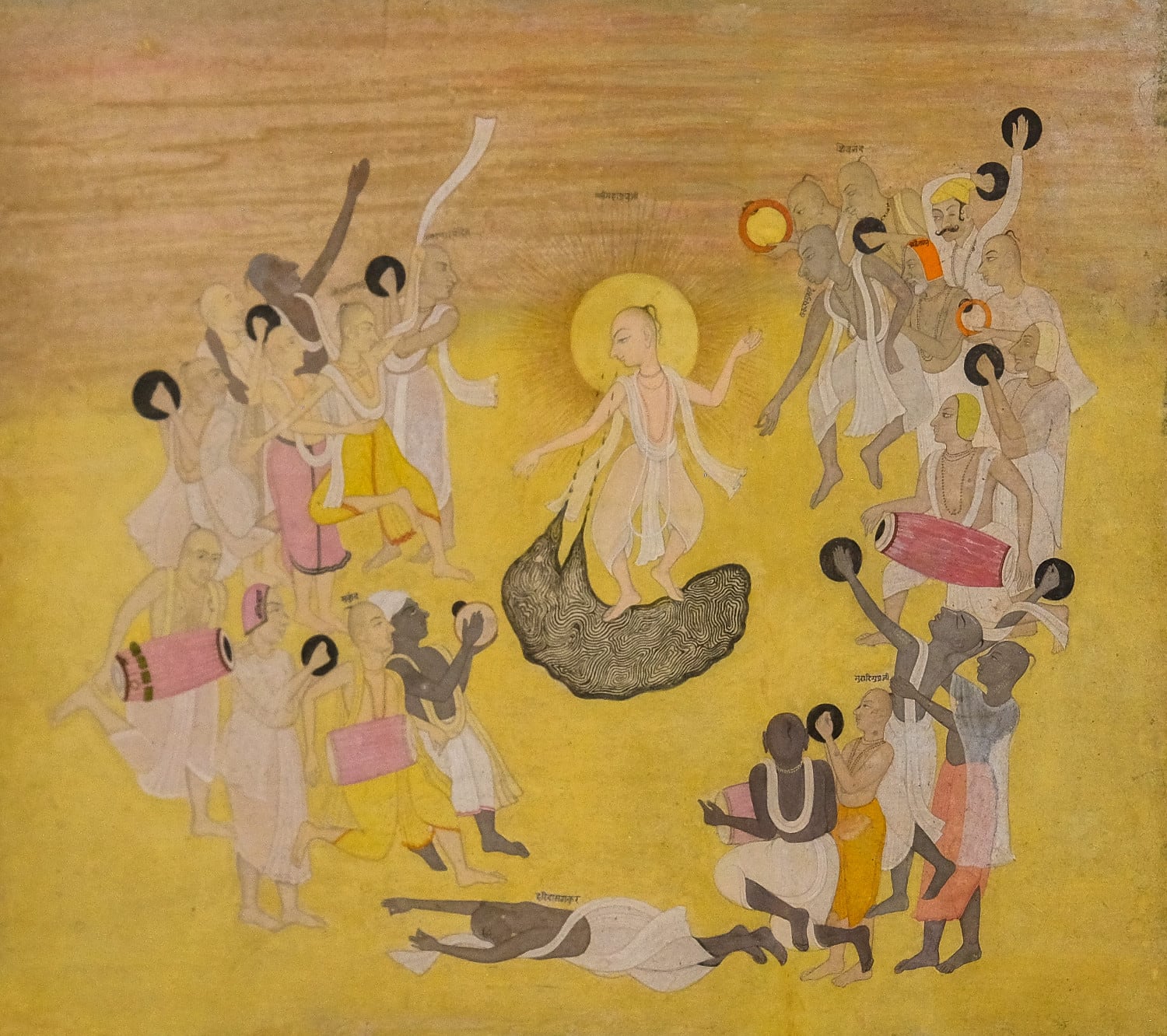
Chaitanya Mahaprabhu
They clash on: What is the Absolute? Does God exist? · Who am I? Is there a true self? · What happens after death?
Hafez
They clash on: What is the Absolute? Does God exist? · Who am I? Is there a true self? · What happens after death?
They clash onApparent contradiction
The 14th Dalai Lama (Tenzin Gyatso) · Thich Nhat Hanh
No birth and no death, or a detailed map of dying: two Buddhists facing the end
Why: The opposition is apparent because they speak from the two truths distinguished by Mahayana Buddhism. Thich Nhat Hanh deliberately places himself in the ultimate dimension, where nothing is born or dies because nothing exists by itself; he does not deny rebirth but reformulates it as continuation. The Dalai Lama speaks on the conventional plane, that of experience and practice, and from the Tibetan tantric tradition, which has a meticulous description of dying. Audiences matter too: the Vietnamese monk writes for Western readers who fear annihilation; the Tibetan comments on a classical text for practitioners who must prepare. Each would accept the other's truth at its own level.
They clash onApparent contradiction
The 14th Dalai Lama (Tenzin Gyatso) · Milarepa
Total obedience in the cave or critical discernment in the world: the guru in Tibet
Why: The contradiction is apparent for two reasons. The first is genre: the Life of Milarepa is a fifteenth-century hagiography composed to exalt the Kagyu lineage, and its portrait of the perfect disciple is not a manual for choosing a master; the Dalai Lama speaks in public teachings, before global audiences exposed to unscrupulous teachers. The second is stage: the Tibetan tradition itself asks that the master be examined before acceptance and fully trusted afterwards, so the Dalai Lama's advice precedes the moment the Life recounts. Withdrawal and engagement, for their part, answer to different vocations, and Milarepa himself ended up teaching herdsmen, hunters and villagers.
They agree on
The 14th Dalai Lama (Tenzin Gyatso) · Jesus of Nazareth
Loving the enemy too: the Tibetan monk reads the Sermon on the Mount
Why: The relationship is documented: at the 1994 John Main Seminar in London the Dalai Lama commented on Gospel passages, among them the Sermon on the Mount, and his remarks were published as The Good Heart. He acknowledged the ethical affinity and pointed out frankly the underlying difference. In the Gospels love of the enemy is grounded in imitation of a Father who loves all; in Tibetan Buddhism, in the equality of all beings before the wish for happiness and in interdependence, without a creator God. They agree on the practice and its demands, not on the ultimate reason that sustains it, and neither seeks to erase that distance.
They clash onFundamental disagreement
The 14th Dalai Lama (Tenzin Gyatso) · David R. Hawkins
Calibrating truth or letting science refute: two attitudes towards evidence
Why: The contradiction is real and concerns method. The Dalai Lama speaks from the university tradition of Nalanda, with its developed logic and epistemology, and from decades of dialogue with scientists: he distinguishes what Buddhism says about the mind, which can be tested, from what it affirms about the path. Hawkins, a psychiatrist by training, presents kinesiology as a bridge between science and spirituality, but his procedure lacks independent experimental validation, and the library presents it as doctrine, not as a result. Both agree on the place of reason, necessary but not ultimate; they clash over whether a claim about truth can rest on a measurement no one else can replicate.
They agree on
The 14th Dalai Lama (Tenzin Gyatso) · Swami Vivekananda
A religion that accepts examination: the monk of Chicago and the monk of Nalanda
Why: The convergence is explained by context: both present an Asian tradition before a West shaped by modern science and by the critique of religion, and both want to show that their tradition does not fear that examination. Each also draws on resources specific to his tradition: Vivekananda, on the experimental reading of yoga and on Vedanta; the Dalai Lama, on the logic and epistemology of Nalanda. They differ on the goal: for Vivekananda experience culminates in identity with Brahman; for the Dalai Lama, in the understanding of emptiness, which denies precisely a permanent Self. No relationship between them is documented.
They agree on
The 14th Dalai Lama (Tenzin Gyatso) · Confucius
An ethics that needs no metaphysics: humaneness and universal responsibility
Why: The convergence is comparative and responds to similar situations: Confucius teaches in a China divided by war between states, and the Dalai Lama in a plural, secularised world, as the leader of a people in exile. Both seek a moral basis that can be shared without requiring a common faith. They differ, however, in the scope of love. Confucius wants it graded, beginning with parents, and rejects repaying evil with good (14.34); the Dalai Lama, from Buddhist compassion, extends it to all beings equally, the enemy included. One orders affection; the other universalises it. And ritual, central in Confucius, carries little weight in the Dalai Lama's secular ethics.
Anecdotes and stories
Anecdotes and stories
Oral tradition1937
The boy who recognised the disguised lama
Origin of the story: It comes from members of the search party and the family and was set down by the Dalai Lama in My Land and My People (1962) and Freedom in Exile (1990), where he makes clear he tells it at second hand. It is the official Tibetan version of the recognition; there are no independent records of the tests.
Source: Dalai Lama. Freedom in Exile: The Autobiography of the Dalai Lama. Londres: Hodder & Stoughton; Nueva York: HarperCollins, 1990.
Testimony1940s
The Potala projector
Origin of the story: Double testimony: Harrer's book (1952) and the Dalai Lama's autobiographies, especially Freedom in Exile and The Universe in a Single Atom. Harrer's Nazi past, revealed in 1997, does not affect this episode but does bear on how his figure is read.
Source: Harrer, Heinrich. Sieben Jahre in Tibet. Viena: Ullstein, 1952 (trad. ingl. Seven Years in Tibet, Londres: Rupert Hart-Davis, 1953).
Testimony1954–1955
'Religion is poison'
Origin of the story: The only source is the Dalai Lama's own testimony in Freedom in Exile (1990) and later interviews; it does not appear in published Chinese records. It is given as testimony, not as a verified fact.
Source: Dalai Lama. Freedom in Exile: The Autobiography of the Dalai Lama. Londres: Hodder & Stoughton; Nueva York: HarperCollins, 1990.
Testimonymarzo de 1959
The escape from the Norbulingka
Origin of the story: Recounted by the Dalai Lama in My Land and My People and Freedom in Exile, and by several companions; historians (Goldstein, Shakya) confirm the general chronology. The consultation of the oracle rests on his own testimony.
Source: Dalai Lama. Freedom in Exile: The Autobiography of the Dalai Lama. Londres: Hodder & Stoughton; Nueva York: HarperCollins, 1990.
Documentednoviembre de 1968
The Trappist in Dharamsala
Origin of the story: Documented in The Asian Journal of Thomas Merton (1973), edited from his notebooks, and recalled by the Dalai Lama in Freedom in Exile. Each man's impressions are paraphrased here, not quoted.
Source: Merton, Thomas. The Asian Journal of Thomas Merton. Ed. Naomi Burton, Patrick Hart y James Laughlin. Nueva York: New Directions, 1973.
Documentedabril de 2015
A week with Tutu
Origin of the story: Documented in The Book of Joy (2016), in the footage behind Mission: Joy and in the condolence message published on dalailama.com in December 2021.
Source: Dalai Lama, Desmond Tutu y Douglas Abrams. The Book of Joy: Lasting Happiness in a Changing World. Nueva York: Avery, 2016.
Teachings
Teachings
The notions that structure their thought, explained in context.
Bodhicitta and compassionbodhichitta
A central Mahayana doctrine in the Gelug school, systematised in Tsongkhapa's stages of the path (lamrim).
Source: Open Library (Internet Archive), registros de ediciones e ISBN de las obras del Dalai Lama.
Emptiness and dependent originationsunyata-y-origen-dependiente
The philosophical axis of the curriculum of the Gelug monasteries, heirs to Nalanda.
Source: Dalai Lama. The Middle Way: Faith Grounded in Reason. Trad. Thupten Jinpa. Boston: Wisdom Publications, 2009.
Universal responsibilityresponsabilidad-universal
A secular translation of the bodhisattva ideal into the language of international relations and human rights.
Secular ethicsetica-secular
A Buddhist response to Western secularisation, in dialogue with psychology and neuroscience.
Source: Dalai Lama. Ethics for the New Millennium. Nueva York: Riverhead Books, 1999.
Middle Way Approach (Umaylam)via-intermedia
Official policy of the Central Tibetan Administration.
Source: Office of His Holiness the Dalai Lama. «Brief Biography». dalailama.com (biografía oficial).
Tulku and the recognition of reincarnationtulku
A religious and political institution in Tibet since the thirteenth century (the Karmapas) and, for the Dalai Lamas, since the sixteenth.
Source: Dalai Lama. «Reincarnation» (declaración del 24 de septiembre de 2011). dalailama.com.
Retreats
Retreats and centres
Places and gatherings linked to their teaching. We put you in touch with the organisers.
McLeod Ganj, Dharamsala, Himachal Pradesh · India
Tushita Meditation Centre, Dharamsala
Tushita Meditation Centre (FPMT)
Tushita is a centre for the study and practice of Tibetan Mahayana Buddhism in the forest above McLeod Ganj, a few minutes from the Dalai Lama's residence. Affiliated with the FPMT, it is known for its ten-day residential introduction to Buddhism courses, held in partial silence, which combine meditation with teachings on the lamrim, the graded path the Dalai Lama has emphasised throughout his life. It also offers intermediate, weekend and online courses, and drop-in sessions by donation. For many Westerners it is the first doorway to Tibetan Buddhism in the setting of the exile community.
Gangchen Kyishong, Dharamsala, Himachal Pradesh · India
Library of Tibetan Works and Archives (LTWA)
Library of Tibetan Works and Archives
The Library of Tibetan Works and Archives is the Tibetan library and cultural institution in Dharamsala, established at the Dalai Lama's initiative in 1970 to preserve the texts, manuscripts and objects the community was able to save in exile. Besides its archive and museum, it offers courses in Buddhist philosophy and Tibetan language attended by students from many countries and taught by teachers of the tradition. Its website explains registration, fees and accommodation. It is a more academic and unhurried path of study that complements attending the Dalai Lama's public teachings in the same town.
Templo principal tibetano (Tsuglagkhang), McLeod Ganj, Dharamsala · India
Public teachings of the Dalai Lama in Dharamsala
Office of His Holiness the Dalai Lama
When the Dalai Lama teaches in Dharamsala, seat of the Tibetan government in exile, he does so at the main temple in McLeod Ganj, before monks, Tibetans and visitors from around the world. His office publishes the schedule of teachings and events, notes that dates may change, and webcasts many of them live with translation. Events are free unless otherwise noted: the Dalai Lama himself accepts no fees for his talks. To attend in Dharamsala one must register a few days beforehand in the temple courtyard with the documents listed on the website.
Videos
Videos
Recordings, interviews and documentaries. Videos play from YouTube; they are not hosted here.
Dalai Lama In India (1959) | British Pathé
Documentary· EN· 1959· 2 min
British Pathé
US Congressional Gold Medal Acceptance Speech
Original recording· EN· 2007· 26 min
Dalai LamaOfficial channel
InterSpiritual Discussion with His Holiness the Dalai Lama and Desmond Tutu: A.M. Session, Part 1
Original recording· EN· 2008· 57 min
UW Video
Mind and Life XXV - Part 05 - Dialogue with His Holiness and Audience Q&A
Original recording· EN· 2012· 60 min
Mind & Life InstituteOfficial channel
Mind & Life Conversations with the Dalai Lama - Session 1
Original recording· EN· 2019· 121 min
Dalai LamaOfficial channel
El sentido de la vida
Lecture· ES· 2020· 88 min
El Dalái LamaOfficial channel
Flex Your Joy Muscle • Mission: JOY • Documentary Excerpt • Desmond Tutu & the Dalai Lama
Documentary· EN· 2021· 1 min
MISSION: JOYOfficial channel
Interdependence, Ethics, and Social Networks - Mind & Life Conversation - Day 1
Original recording· EN· 2022· 129 min
Dalai LamaOfficial channel
His Holiness the Dalai Lama's 90th Birthday Celebration
Original recording· EN· 2025· 12 min
Dalai LamaOfficial channel
Apostrophes : Le Dalaï Lama et le rire
Interview· FR· 2 min
INA CultureOfficial channel
Gallery
Gallery
Images with verified licences. Each keeps its authorship and attribution.
Connections
Connections
Influences, discipleships and affinities. Documented relations are distinguished from similarities identified by analysis.
Influenced by
Siddhartha Gautama, the Buddha
A Buddhist teacher trained in the Nalanda tradition; he comments on the Buddha's discourses and the Four Noble Truths.
Documented relation
Influenced by
Nagarjuna's Madhyamaka philosophy, read through Tsongkhapa, is the axis of his teaching on emptiness.
Documented relation
Disciple of
Kyabje Ling Rinpoche (Thubten Lungtok Namgyal Trinley)
His senior tutor and preceptor of his full ordination.
Documented relation
Disciple of
Kyabje Trijang Rinpoche
His junior tutor in Lhasa and in the first years of exile.
Documented relation
Met
Three meetings in Dharamsala in November 1968, a few weeks before Merton's death, recorded in his Asian Journal and recalled by the Dalai Lama in Freedom in Exile.
Documented relation
Met
Desmond Tutu
A friendship of decades; in 2015 they spent a week together in Dharamsala, the origin of The Book of Joy.
Documented relation
Met
Francisco J. Varela
Chilean neuroscientist and co-founder of the Mind & Life meetings in 1987.
Documented relation
Ideas akin to
Two exiled monks who brought Buddhism into the Western public sphere with a message of compassion and non-violence, from different traditions (Gelug Vajrayana and Vietnamese Zen).
Similarity identified by analysis
Ideas akin to
A founding figure of Tibetan Buddhism according to tradition; the Dalai Lama has taught Dzogchen texts of the Nyingma school, which reveres him as its founder.
Similarity identified by analysis
Contemporary of
A contemporary who, from the Kagyu–Shambhala lineage, has popularised mind training and compassion in the West.
Similarity identified by analysis
Sources
Sources
Bibliography and catalogues consulted for this profile.
- Office of His Holiness the Dalai Lama. «Brief Biography». dalailama.com (biografía oficial).
- Dalai Lama. Freedom in Exile: The Autobiography of the Dalai Lama. Londres: Hodder & Stoughton; Nueva York: HarperCollins, 1990.
- Dalai Lama. My Land and My People. Nueva York: McGraw-Hill, 1962.
- Nobel Prize Outreach. «The Nobel Peace Prize 1989: The 14th Dalai Lama (Tenzin Gyatso)». NobelPrize.org.
- Dalai Lama. «Reincarnation» (declaración del 24 de septiembre de 2011). dalailama.com.
- Dalai Lama. «Statement Affirming the Continuation of the Institution of Dalai Lama» (2 de julio de 2025). dalailama.com.
- Mind & Life Institute. «Celebrating 35 Years: Weaving Origin Stories» (historia institucional; primer diálogo Mind & Life I, Dharamsala, 1987, con Adam Engle y Francisco Varela). mindandlife.org, 2022.
- Wikidata, «Tenzin Gyatso» (14.º Dalai Lama), QID Q17293.
- Goldstein, Melvyn C. The Snow Lion and the Dragon: China, Tibet, and the Dalai Lama. Berkeley: University of California Press, 1997.
- Laird, Thomas. The Story of Tibet: Conversations with the Dalai Lama. Nueva York: Grove Press, 2006.
- Open Library (Internet Archive), registros de ediciones e ISBN de las obras del Dalai Lama.
- Dalai Lama. Ethics for the New Millennium. Nueva York: Riverhead Books, 1999.
- Dalai Lama. The Universe in a Single Atom: The Convergence of Science and Spirituality. Nueva York: Morgan Road Books, 2005.
- Dalai Lama y Howard C. Cutler. The Art of Happiness: A Handbook for Living. Nueva York: Riverhead Books, 1998.
- Dalai Lama, Desmond Tutu y Douglas Abrams. The Book of Joy: Lasting Happiness in a Changing World. Nueva York: Avery, 2016.
- Office of His Holiness the Dalai Lama. Comunicado de disculpa del 10 de abril de 2023, recogido por la prensa internacional (BBC News, «Dalai Lama apologises after video asking boy to 'suck my tongue'», 10-04-2023).
- Dalai Lama. Voice for the Voiceless: Over Seven Decades of Struggle with China for My Land and My People. Nueva York: William Morrow, 2025.
- Central Tibetan Administration. «Devolution of His Holiness the Dalai Lama's Political Authority», tibet.net.
- Nobel Prize Outreach. «The 14th Dalai Lama – Acceptance Speech» (Oslo, 10 de diciembre de 1989). NobelPrize.org.
- Nobel Prize Outreach. «The 14th Dalai Lama – Nobel Lecture» (Oslo, 11 de diciembre de 1989). NobelPrize.org.
- Merton, Thomas. The Asian Journal of Thomas Merton. Ed. Naomi Burton, Patrick Hart y James Laughlin. Nueva York: New Directions, 1973.
- Wikimedia Commons, páginas de los ficheros citados en images[] (licencias consultadas por la API imageinfo/extmetadata).
- YouTube, canales oficiales «Dalai Lama» (@dalailama) y «El Dalái Lama» (@ElDalaiLama, canal oficial en español de la Oficina), y canal del Mind & Life Institute (@mindandlifeinstitute); vídeos verificados por oEmbed.
- Goodreads, entrada «The Dalai Lama, when asked what surprised him most about humanity…» (circulación de la cita sin fuente primaria; anotada como disputada desde 2012).
- Dalai Lama. The Middle Way: Faith Grounded in Reason. Trad. Thupten Jinpa. Boston: Wisdom Publications, 2009.
- Office of His Holiness the Dalai Lama. «Principal Commitments». dalailama.com.
- Office of His Holiness the Dalai Lama. «Dolgyal (Shugden)», sección documental de dalailama.com.
- Harrer, Heinrich. Sieben Jahre in Tibet. Viena: Ullstein, 1952 (trad. ingl. Seven Years in Tibet, Londres: Rupert Hart-Davis, 1953).
- Office of His Holiness the Dalai Lama. «Books» (catálogo de publicaciones, 142 títulos).
- Open Library: búsqueda por autor y fichas de edición por ISBN (comprobado el 2026-10-25).
- Dalai Lama. «Five Point Peace Plan». Discurso ante el Congressional Human Rights Caucus, Washington D. C., 21 de septiembre de 1987. dalailama.com.
- Dalai Lama. «Strasbourg Proposal 1988». Discurso ante el Parlamento Europeo, Estrasburgo, 15 de junio de 1988. dalailama.com.
- Rights holder
- Derechos vigentes (autor vivo). La Oficina de Su Santidad el Dalai Lama / Gaden Phodrang Trust gestiona sus textos y enseñanzas; los libros en colaboración comparten derechos con sus coautores (Howard C. Cutler, Desmond Tutu Peace Foundation/Douglas Abrams, Thubten Chodron, etc.) y cada edición con su editorial.
- Official site
- www.dalailama.com
Pending confirmation
What this profile has not yet been able to settle. We would rather say so than fill it in.
- Confirmar editorial y año de la edición española «Mi vida y mi pueblo. Memorias del Premio Nobel de la Paz 1989» (ISBN 9788427938861 en Open Library, sin autor ni editorial en el registro).
- Confirmar editorial (presumiblemente Grijalbo, por el prefijo 84-253) de «El libro de la alegría», ISBN 9788425353949.
- Localizar ISBN de ediciones españolas editadas en España de Libertad en el exilio, Más allá de la religión, Un corazón abierto y Cómo verse a uno mismo tal como uno es; y de ediciones italiana, rusa, hindi y árabe de las obras principales.
- Localizar ISBN de Buddhism: One Teacher, Many Traditions (Wisdom, 2014) y de los demás volúmenes de The Library of Wisdom and Compassion y de Science and Philosophy in the Indian Buddhist Classics.
- Completar buy[] por edición con URLs de ficha de las editoriales (no se añadieron enlaces sin verificar).
- Fecha exacta de entrada en la India en 1959 (las fuentes secundarias dan el 31 de marzo) y fecha de incorporación del Mind & Life Institute (1990 o 1991 según la fuente).
- Fecha de emisión del fragmento de Apostrophes (INA) y búsqueda de vídeos oficiales en otros idiomas (tibetano, hindi, alemán).
- Las obras traducidas del tibetano (Opening the Eye of New Awareness, The Buddhism of Tibet, Kalachakra Tantra) tienen fecha de composición aproximada; conviene contrastarla con el catálogo de la Library of Tibetan Works and Archives.
- Obras (2026-10-25): se añadieron 108 obras a partir del catálogo oficial dalailama.com/books (142 títulos) y de Open Library. Quedan fuera a propósito: «Inner World» (2020), que es un álbum musical de mantras y no un libro; y los ~800 registros de Open Library que son traducciones, ediciones de bolsillo, selecciones de citas de terceros, prólogos o atribuciones erróneas (p. ej. Steps on the Path to Enlightenment, de Geshe Lhundub Sopa).
- Confirmar si «Refining Gold: Stages in Buddhist Contemplative Practice» (Shambhala, 2019, ISBN 9781611807332) es reedición de «The Path to Enlightenment» (Snow Lion, 1994; comentario a la Esencia del oro refinado del Tercer Dalai Lama). No se añadió como edición hasta comprobarlo.
- Confirmar que «Answers: Discussions with Western Buddhists» (Snow Lion, 2001, ed. J. I. Cabezón) es la nueva edición de «The Bodhgaya Interviews» (1988); se registró como edición de esa obra.
- ISBN no localizados para: Introduction to Buddhism (Paljor, 1999), Four Essential Buddhist Commentaries, Words of Truth (Wisdom, 1993), Speeches 1987-1995 (DIIR), The Little Book of Buddhism (Penguin India), Warm Heart Open Mind, Lighting the Path (Lothian), Happiness (PRH India, 2018), The Little Book of Encouragement (2021), The Book of Compassion (2024) y la edición ampliada de 2017 de The Dalai Lama on Environment.
- Ediciones españolas sin localizar en catálogo de las obras añadidas en 2026-10-25 marcadas con «título traducido» (p. ej. El arte de la felicidad en un mundo problemático, El camino del líder, Cómo practicar); Open Library registra títulos españoles como «En mis propias palabras», «De aquí a la iluminación» o «El corazón de la meditación» sin editorial ni ISBN.
- Sala de lectura: ninguna obra entra. El autor vive y toda su obra (y la de sus traductores) tiene derechos vigentes en EE. UU., la UE y España; reading_texts queda vacío a propósito.
- Cotejo de obras 2026-10-25: las 142 entradas del catálogo oficial de dalailama.com/books están todas registradas. Quedan sin añadir títulos de Open Library de identidad dudosa o que son de otros autores con prólogo suyo: «Heart Full of Peace» (Wisdom, 2007; posible confusión con el libro homónimo de Joseph Goldstein), la serie «Be Angry / Be Happy / Be Kind / Be Here / Be Brave» (Hampton Roads, 2019–2022; posible reedición de «Dalai Lama on What Matters Most»), «L’enseignement du Dalaï-Lama» (Albin Michel, 1976) y «La Lumière du Dharma» (Seghers, 1973), que pueden ser traducciones francesas de obras ya registradas.
Researched on 2026-10-23