Hinduism · Yoga
Sadhguru
ಸದ್ಗುರು ಜಗ್ಗಿ ವಾಸುದೇವ್ · सद्गुरु
1957 –LivingHistorically documented person
Jagadish 'Jaggi' Vasudev (Mysore, 1957), known as Sadhguru, is an Indian yoga teacher and founder of the Isha Foundation (1992), based in Coimbatore. After an experience on Chamundi Hill in 1982 he left his businesses to teach; his Inner Engineering programme and books such as Inner Engineering, Karma and Death have made him one of the world's most visible gurus. He leads ecological campaigns such as Rally for Rivers and Save Soil. He has received the Padma Vibhushan (2017) and criticism for pseudoscientific claims and controversies surrounding Isha.
- works
- 30works
- editions
- 40editions
- quotes
- 6quotes
- videos
- 14videos
- images
- 2images
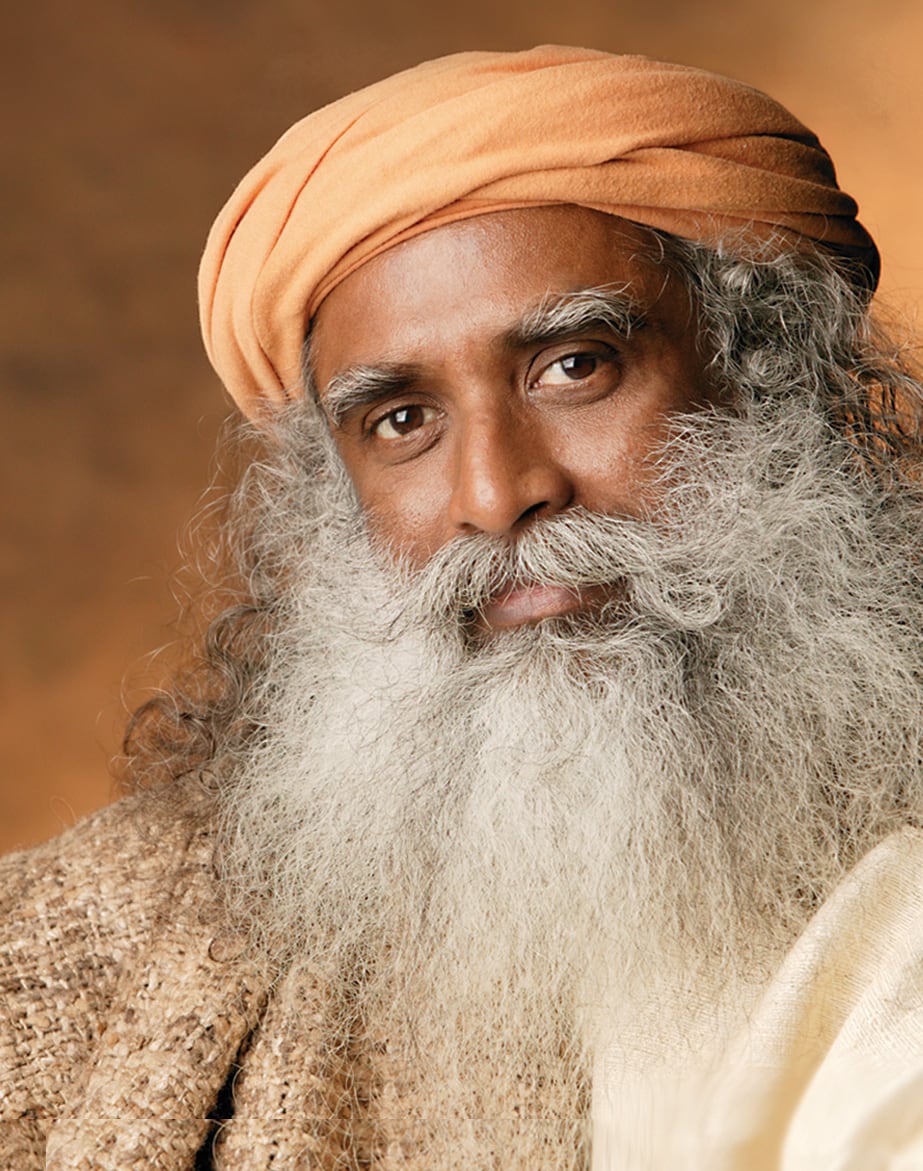
Sadhguru Jaggi Vasudev · CC BY-SA 3.0
In their words
«Opinions are like cataracts. They will not allow you to see clearly.»Cita diaria oficial publicada por la Fundación Isha (23 de octubre de 2026), https://isha.sadhguru.org/en/wisdom/quotes/date/october-23-2026

Their central idea
Responsibility, understood as the ability to respond to everything that happens rather than as blame, is for Sadhguru the starting point of wellbeing: whoever assumes it stops being a victim of circumstances.
See in context
Biography
4 min read
A young man from Mysore
Jagadish Vasudev was born on 3 September 1957 in Mysore into a Telugu family. He was the youngest of the five children of B. V. Vasudev, an ophthalmologist at the city's railway hospital, and Susheela Vasudev. By his own account and that of his biographer, Arundhathi Subramaniam, he did not grow up in a particularly religious home: he was a restless boy, fond of motorcycles, of rambles through the forests of the Ghats and of asking questions school did not answer. At twelve he began practising with a local teacher, Malladihalli Raghavendra Swami, a simple series of yoga postures that, he says, he never gave up.
After a year without studying he took a degree in English literature at the University of Mysore and, against the wishes of his parents, who wanted him to go on to postgraduate study, went into business: first a poultry farm, which left him time to write poetry, and then a construction firm, Buildaids, founded with an engineer friend.
Chamundi Hill
On 23 September 1982, aged twenty-five, he rode his motorcycle up Chamundi Hill outside Mysore and sat on a rock. What happened then is the axis of all his teaching and is known only from his testimony: for hours he ceased to distinguish between himself and his surroundings — the air, the rock, the atmosphere — and when he came back to himself his eyes were wet and an ecstasy would not leave him. The experience recurred over the following days. Six weeks later he closed his businesses and travelled for about a year to understand what had happened to him.
In 1983 he taught his first yoga class in Mysore. For years he rode around Karnataka and Hyderabad teaching a method of his own, without charging for his teaching and living on the rent from his former farm. In 1984 he married Vijayakumari; in 1990 they had a daughter, Radhe, who would train as a bharatanatyam dancer.
Isha
In 1992 he founded the Isha Foundation, and in 1994 he acquired land at the foot of the Velliangiri hills near Coimbatore, Tamil Nadu, where he built the Isha Yoga Center. There he consecrated the Dhyanalinga in 1999, a meditation space open to people of any creed, and in 2017 the giant figure of Adiyogi, the representation of Shiva as the first yogi, recognised by Guinness World Records as the world's largest bust. The foundation, run largely by volunteers, has spread across several continents — its American centre is at McMinnville, Tennessee — and offers meditation, hatha yoga and retreat programmes, the best known being Inner Engineering, presented as a 'technology' of wellbeing based on classical yoga.
In January 1997 his wife Vijayakumari died. Sadhguru and the foundation maintained that she had voluntarily left her body in meditation; her father filed a complaint against him that the police closed.
The global guru
From the 2000s Sadhguru became a regular speaker at international forums — the UN Millennium Summit of religious leaders, the World Economic Forum at Davos, universities such as Oxford and MIT — and, above all, a social-media phenomenon, with millions of followers and videos in English, Hindi, Tamil, Telugu, Kannada and other languages. His style mixes humour, anecdote and categorical statements, and it reaches a young, urban audience with no attachment to religion. He has published more than thirty books, mostly edited transcripts of talks; Inner Engineering (2016), Karma (2021) and Death (2020; US edition, 2025) have been bestsellers.
At the same time he has taken the foundation into environmental activism: Project GreenHands (tree planting in Tamil Nadu), Rally for Rivers (2017), Cauvery Calling (2019) and Save Soil (2022), for which he rode some 30,000 kilometres by motorcycle from London to India and addressed the conference of the parties to the UN Convention to Combat Desertification. In 2017 he received the Padma Vibhushan, India's second-highest civilian honour.
Criticism and controversy
He is also the subject of documented criticism that should be set out precisely. Scientists and science writers have faulted him for claims contrary to scientific consensus, such as his views on mercury in traditional medicine or on the effects of eclipses. Analysts and journalists have pointed to his closeness to the BJP government and to Hindu nationalist positions, which he denies, describing himself as belonging to no party; in 2019 he apologised for calling a Muslim student a 'Taliban'. Environmentalists and India's Comptroller and Auditor General questioned buildings at the Coimbatore centre in a protected area and an elephant corridor. In 2016 and 2024 parents alleged that their adult daughters were being held at the ashram; in October 2024 India's Supreme Court closed the latter case after the two women stated that they lived there by choice. Since 2024 allegations of abuse at the foundation's school have been published, and in 2025 criminal proceedings were opened against several staff members; the foundation rejects the allegations and has brought defamation actions against some media outlets. None of these proceedings has established any criminal liability on Sadhguru's part.
In March 2024 he underwent emergency surgery in Delhi for a subdural haematoma; he recovered within weeks. He remains at the head of the Isha Foundation and continues to teach and publish.
Sources: Subramaniam, Arundhathi. Sadhguru: More Than a Life. Nueva Delhi: Penguin Ananda, 2010. · Sadhguru. Inner Engineering: A Yogi's Guide to Joy. Nueva York: Spiegel & Grau / Harmony, 2016. · Waghorne, Joanne Punzo. «Engineering an Artful Practice: On Jaggi Vasudev's Isha Yoga and Sri Sri Ravi Shankar's Art of Living». En Mark Singleton y Ellen Goldberg (eds.), Gurus of Modern Yoga. Nueva York: Oxford University Press, 2013, pp. 283–307. · Chopra, Shaili. When I Was 25: The Leaders Look Back. Nueva Delhi: Random House India, 2014. · Simone, Cheryl, con Sadhguru Jaggi Vasudev. Midnights with the Mystic: A Little Guide to Freedom and Bliss. Charlottesville: Hampton Roads, 2008.
Timeline
A life, year by year
Each point is a documented event. Click to read it, with its source and degree of certainty.
September 3, 1957age 0Mysore
Born in Mysore
Jagadish Vasudev is born, the youngest of five children of the ophthalmologist B. V. Vasudev and Susheela Vasudev, in a Telugu family.
DocumentedWikidata, «Sadhguru» (Q793985): fecha y lugar de nacimiento.
September 3, 1957 · age 0
Born in Mysore
Jagadish Vasudev is born, the youngest of five children of the ophthalmologist B. V. Vasudev and Susheela Vasudev, in a Telugu family.
Documented
c. 1970 · age 12
First yoga practice
At about twelve he learns a simple set of postures from Malladihalli Raghavendra Swami, which he will practise daily from then on.
Probable
September 23, 1982 · age 25
The Chamundi experience
Sitting on a rock on Chamundi Hill he has, by his own testimony, an experience of the boundaries between himself and the world dissolving. Six weeks later he closes his businesses.
Probable
1983 · age 26
First yoga class
He teaches his first class in Mysore and begins riding around Karnataka and Hyderabad teaching without charge.
Documented
1984 · age 27
Marriage to Vijayakumari
He marries Vijayakumari; their only child, Radhe, is born in 1990.
Documented
1992 · age 35
Isha Foundation
He founds the Isha Foundation as a platform for his spiritual, educational and environmental activities.
Documented
1994 · age 37
Isha Yoga Center
He acquires land at the foot of the Velliangiri hills and opens the Isha Yoga Center.
Documented
January 23, 1997 · age 39
Death of Vijayakumari
His wife dies. The foundation maintains she left her body in meditation; a complaint by her father against Sadhguru was closed by the police.
Documented
1999 · age 41
Consecration of the Dhyanalinga
He consecrates the Dhyanalinga, a meditation space open to anyone, without ritual or worship.
Documented
2000 · age 42
Millennium World Peace Summit
He speaks at the Millennium World Peace Summit of Religious and Spiritual Leaders at the United Nations.
Documented
2016 · age 59
Inner Engineering, a bestseller
He publishes Inner Engineering: A Yogi's Guide to Joy, which enters The New York Times bestseller list.
Documented
2017 · age 59
Adiyogi, Rally for Rivers and Padma Vibhushan
He unveils the Adiyogi figure (34 m), launches the Rally for Rivers campaign and receives the Padma Vibhushan from President Pranab Mukherjee (13 April).
Documented
July 2019 · age 61
Cauvery Calling
He launches Cauvery Calling, a tree-planting campaign in the Kaveri river basin.
Documented
March 2022 – 2022 · age 64
Journey to Save Soil
He rides a motorcycle for a hundred days from London to India for the Save Soil campaign and in May addresses COP15 of the UN Convention to Combat Desertification.
Documented
March 17, 2024 · age 66
Emergency brain surgery
He undergoes surgery at Indraprastha Apollo Hospital for a subdural haematoma after weeks of headaches; he recovers within weeks.
Documented
October 18, 2024 · age 67
Supreme Court closes a habeas corpus case
India's Supreme Court closes a father's petition alleging his two daughters were held at the ashram, after they stated they lived there voluntarily.
Documented
Works
Essential works
The works without which their legacy cannot be understood.
Published lectures · 2003
Mystic's Musings
Extracts from talks on life, death, rebirth, karma, suffering and the nature of the self, arranged in thematic chapters. The Isha Foundation itself presents it as a book that 'works like a yantra', to be read slowly.
1 edition · amazon.com

Written work · 2016
Inner Engineering: A Yogi's Guide to Joy
His most widely read book: it recounts his Chamundi experience and proposes classical yoga as an 'inner engineering' for wellbeing, in two parts — a reflection on responsibility and perception, and practices for body, mind, energy and emotions.
5 editions · amazon.com

Written work · 2020
Death: An Inside Story
A systematic account of what the yogic tradition, according to Sadhguru, teaches about death: what happens in the body and energy, how to prepare for dying, how to accompany the dying and what comes after; it includes practices and rituals.
3 editions · amazon.com

Written work · 2021
Karma: A Yogi's Guide to Crafting Your Destiny
Reinterprets karma not as fate or punishment but as the memory of one's own actions that conditions life, and proposes ways of taking responsibility and freeing oneself from that conditioning through awareness and practice.
3 editions · amazon.com
Complete works (30)

Dhyanalinga: The Silent Revolution
2000

Encounter the Enlightened
2001

Eternal Echoes
2002

Flowers on the Path
2007

Midnights with the Mystic
2008

Essential Wisdom from a Spiritual Master
2008

The Mystic Eye
2008
Sadhguru
Circus of the Mind
The Conscious LibraryCircus of the Mind
2008

Good and Bad Divides the World
2008
Sadhguru
Unleashing the Mind
The Conscious LibraryUnleashing the Mind
2008
Sadhguru
Culture of Peace
The Conscious LibraryCulture of Peace
2008

Himalayan Lust
2009

Don't Polish Your Ignorance
2011

Life and Death in One Breath
2011

Of Mystics and Mistakes
2012

Inner Management
2008

Inspire Your Child, Inspire the World
2012
Sadhguru
A Guru Always Takes You for a Ride
The Conscious LibraryA Guru Always Takes You for a Ride
2012
Sadhguru
Three Truths of Well-Being
The Conscious LibraryThree Truths of Well-Being
2013
Sadhguru
A Tree Can Save the World
The Conscious LibraryA Tree Can Save the World
2013
Sadhguru
Enlightenment: An Inside Story
The Conscious LibraryEnlightenment: An Inside Story
2013

Shiva: Ultimate Outlaw
2014

Mind Is Your Business / Body the Greatest Gadget
2015
Sadhguru
Adiyogi: The Source of Yoga
The Conscious LibraryAdiyogi: The Source of Yoga
2017
Quotations
Quotations located in a specific work. Each carries its provenance and its level of confidence.
The air I was breathing, the rock on which I was sitting, the atmosphere around me — everything had become me.ProbableSobre su experiencia en la colina de Chamundi (1982); recogida en Chopra, When I Was 25 (2014), y en Simone, Midnights with the Mystic. No se ha visto la página exacta.
Essential ideas (editorial summary)
Out of respect for copyright, these ideas are summarised in our own words and are not presented as literal quotations.
- Responsibility, understood as the ability to respond to everything that happens rather than as blame, is for Sadhguru the starting point of wellbeing: whoever assumes it stops being a victim of circumstances.
- Joy, peace or anguish are inner chemistry; the technology of yoga would let each person govern that chemistry instead of depending on outer events.
- Karma is not an imposed fate or a system of rewards and punishments but the accumulated memory of one's own actions, thoughts and emotions, which conditions life and from which one can be freed.
- Death deserves conscious preparation as much as life; the way of dying and of accompanying the dying is part of spiritual practice.
- Yoga is neither a physical exercise nor a religion but a science of union with the whole of existence, whose origin he attributes to Adiyogi, the first yogi.
- Soil health is the basis of human health; agricultural policy should guarantee a minimum of organic matter in farmland, the central idea of the Save Soil campaign.
Ask
What their work answers
Twelve great human questions and what their texts allow us to answer, with references. We never put words in their mouth.
What is the Absolute? Does God exist?
The source of creation is not a man in the sky: it is within
An impersonal AbsoluteInferred from their doctrine
Sadhguru Jaggi Vasudev, founder of the Isha Foundation, sidesteps in his books and talks the question of believing or not believing in God: he proposes being a seeker rather than a believer, and says that not knowing is the honest starting point. When he describes the ultimate, he does so in impersonal terms: a source of creation operating within every being and a boundless emptiness from which all arises, which the yogic tradition calls Shiva, «that which is not». In Inner Engineering (2016) he presents yoga as a technology for experiencing that dimension, not as adherence to a doctrine. In Adiyogi (2017) he presents Shiva as the first yogi, a figure he uses in a mythic and pedagogical register. The divine is for him not someone who judges but a dimension of life accessed through experience.
Compare this question with other teachersWho am I? Is there a true self?
You are not the body or the mind: what you are has no boundaries
The Self is the AbsoluteInferred from their doctrine
Sadhguru Jaggi Vasudev teaches, in line with classical yoga, that body and mind are accumulations: the body is accumulated food and the mind accumulated impressions. What one accumulates may be one's own, but it cannot be oneself. In Inner Engineering (2016) he presents the scheme of the five sheaths (koshas), from the physical to the blissful, and the experience of one who stops identifying with them. He recounts that in 1982, seated on a rock on Chamundi Hill, in Mysore, he no longer knew where he ended and the rest began. The aim of yoga, in his language, is to dissolve the boundaries of individual identity until unity with everything is experienced. The true self is not the person but the boundlessness the person encloses.
Compare this question with other teachersWhy do we suffer?
We suffer what has passed and what has not yet happened: memory and imagination
Thought and psychological timeInferred from their doctrine
Sadhguru Jaggi Vasudev repeats in his books and talks a central idea: almost all human suffering is manufactured by one's own mind. We suffer less from what happens than from what we remember, what happened years ago, and what we imagine, what might happen tomorrow; memory and imagination, two valuable faculties, turn against us when we do not govern them. In Inner Engineering (2016) he holds that every human experience, joy or misery, is produced within, and can therefore be managed from within, with yogic tools that bring order to body, mind and energy. He also distinguishes physical pain, which is inevitable, from suffering, which he considers optional. His approach is practical rather than metaphysical: taking responsibility for one's own experience.
Compare this question with other teachersWhat happens after death?
At death the body is lost; karmic information seeks another
Rebirth according to karmaStated explicitly
Sadhguru speaks of death often and devoted a book to it, Death: An Inside Story (2020). He describes the human being as layers: the physical, mental and energy bodies and subtler dimensions, held together by karmic memory. At death the physical body is lost, but the subtle structure, laden with tendencies, persists for a time and seeks a new womb according to its karma. He insists that the way one dies matters: a conscious death, prepared through practice, makes it possible to pass through the process lucidly, and in the yogic tradition he cites the realised master leaves the body at will (mahasamadhi). What he proposes is not a belief about the beyond but an exploration: whoever knows the non-physical dimension of themselves in life stops fearing the end of the body, and liberation (mukti) is the dissolution of the karmic accumulation that compels rebirth.
Compare this question with other teachersHow is liberation or salvation attained?
Yoga as inner technology: with method and practice, liberation is possible for everyone
Through disciplined practiceStated explicitly
In Inner Engineering, Sadhguru (Jaggi Vasudev) presents yoga not as belief but as a technology for wellbeing and, ultimately, for liberation (mukti), which he defines as freedom from the limits of body and mind. His approach is that human experience is determined from within and that, with the right tools, anyone can reorganise their body, mind, emotions and energy. Those tools are concrete practices, such as Shambhavi Mahamudra, which the Isha Foundation transmits by initiation, along with postures, breathing and meditation. Sadhguru combines this technical language with a strong emphasis on the guru's grace, which he regards as the factor that makes practice bear fruit.
Compare this question with other teachersIs a teacher necessary?
The guru does not teach information: he is a presence opening a new dimension
IndispensableInferred from their doctrine
Sadhguru (Jaggi Vasudev) presents himself as a guru and his teaching revolves around that figure. In his talks and books he holds that the guru is not a teacher transmitting information but someone who dispels darkness, according to the traditional etymology he often invokes, and who opens in the disciple a dimension of experience he could not reach alone. That is why the Isha Foundation's central practices are transmitted by initiation, and Sadhguru attributes a decisive role to the guru's grace. At the same time, in Inner Engineering he insists on personal responsibility and on each person being the source of their own experience, which qualifies any passive dependence.
Compare this question with other teachersIs the world real?
Sense perception is limited: the world is real, but not the ultimate truth
Appearance over the one realityInferred from their doctrine
Sadhguru (Jaggi Vasudev) approaches the question from the yogic tradition rather than from a written metaphysics. In his talks and in Inner Engineering he holds that what a person calls the world is their experience of it, and that this experience is determined by the senses and the mind, which perceive only the physical and in a limited way. The term maya, as he explains it, does not mean that the world does not exist but that ordinary perception takes a part for the whole. Beyond the physical there is a formless dimension, which he often names with the yogic term Shiva, «that which is not», from which creation arises.
Compare this question with other teachersWhat is love?
Love is the longing to include the other until becoming one with all
Longing and unionInferred from their doctrine
Sadhguru describes love not as something given or received but as an inner quality. He often defines it as a longing to include the other as part of oneself: in a love relationship that impulse is limited to one person, whereas in devotion and in yoga, which for him means union, it extends until it embraces the whole of existence. In Inner Engineering he holds that love, like joy, is a form of inner chemistry that each person can generate, and that making it depend on others leads to need and conflict. He values devotion (bhakti) as the fastest way to dissolve the limits of the individual, because the devotee ceases to be the centre. Mature love does not demand reciprocity: it is a way of being offered without conditions.
Compare this question with other teachersAre we free, or is everything determined?
Karma is not fate: it is memory, and each person can write their own
Karma and choiceStated explicitly
Sadhguru devotes a whole book to the question: *Karma: A Yogi's Guide to Crafting Your Destiny* (2021). His argument is that karma is not a system of rewards and punishments but memory accumulated in body, mind and energy, which conditions how one responds to life. As long as one acts compulsively, that memory decides; but a human being can establish a distance from it and respond consciously, and then becomes the author of his destiny. In *Inner Engineering* (2016) he formulates the same idea as responsibility: the ability to respond to everything that happens. He does not deny conditioning, but turns it into material for work through yogic practices.
Compare this question with other teachersWhy meditate or pray?
Creating distance from body and mind: I am not what I accumulate
Returning to the source of the IStated explicitly
Sadhguru insists that meditation is not an act one performs but a quality one becomes: one cannot «do» meditation, but one can cultivate body, energy and mind so that this quality flowers. To that end he teaches concrete practices, such as the *Shambhavi Mahamudra* of his *Inner Engineering* programme or the *Isha Kriya*, which he offers freely and publicly. The latter includes the affirmation of being neither the body nor even the mind. Its declared aim is to establish a distance between oneself and what one has accumulated —body, thoughts, emotions—, so that one's own nature beyond them is perceived.
Compare this question with other teachersCan reason know the ultimate?
The intellect cuts and divides: the ultimate is perceived, not thought
The ultimate lies beyond the mindInferred from their doctrine
Sadhguru often compares the intellect to a knife: useful for dissecting and handling the world, but unable to grasp the whole, because its nature is to divide. In *Inner Engineering* (2016) he holds that the intellect works with information accumulated in memory and, however sharpened, cannot go beyond it. He is equally wary of belief: he invites people neither to believe nor to disbelieve, but to seek and test in their own experience. The ultimate is not an object of thought but of perception, and perception is widened through yogic work on body, energy and mind. Reason is indispensable in practical life, but it is not the door to what lies beyond the senses.
Compare this question with other teachersWithdraw from the world or transform it?
From inner well-being to campaigns for rivers and soil
Engage with the worldStated explicitly
Sadhguru does not frame spiritual life as withdrawal. The Isha Foundation, which he created in 1992 near Coimbatore, combines yoga and meditation programmes with social and environmental projects: Project GreenHands, for mass tree planting; Rally for Rivers (2017), for the restoration of India's rivers; Save Soil (2022), an international campaign for the health of agricultural soils; as well as rural schools and health programmes. His argument is that inner transformation and action in the world are not opposed: a person who has attained inner well-being acts with greater clarity and less compulsion, and responsibility, which he defines as the ability to respond, has no limits. In Inner Engineering he presents practice as a tool for living effectively in any sphere, including business and politics, whose leaders he frequently addresses.
Compare this question with other teachers
Affinities & tensions
Affinities and tensions
Calculated question by question from their positions. The reason for each agreement or clash, on click.
Thinks most like
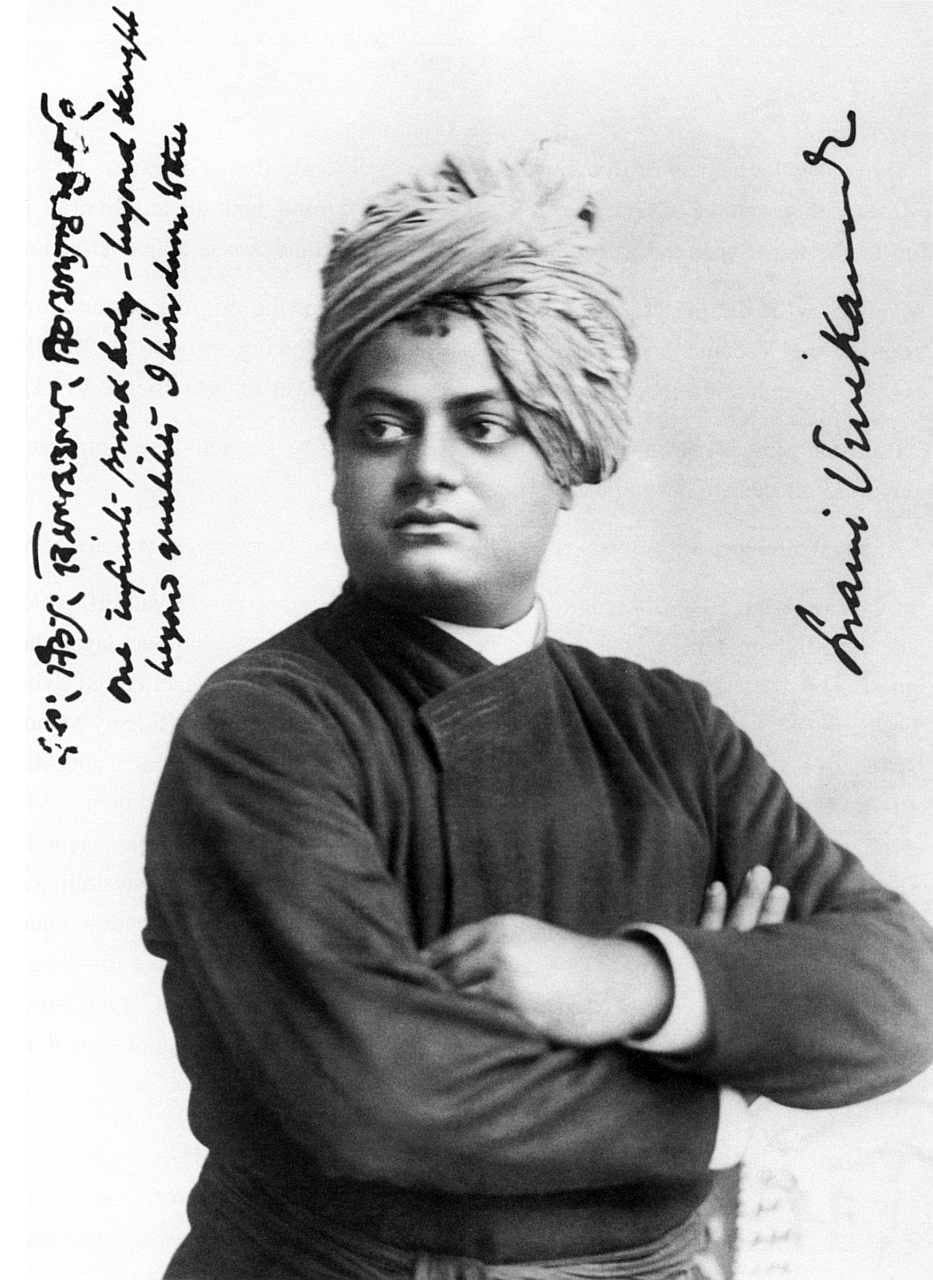
Swami Vivekananda
They agree on: Who am I? Is there a true self? · How is liberation or salvation attained? · Is a teacher necessary?
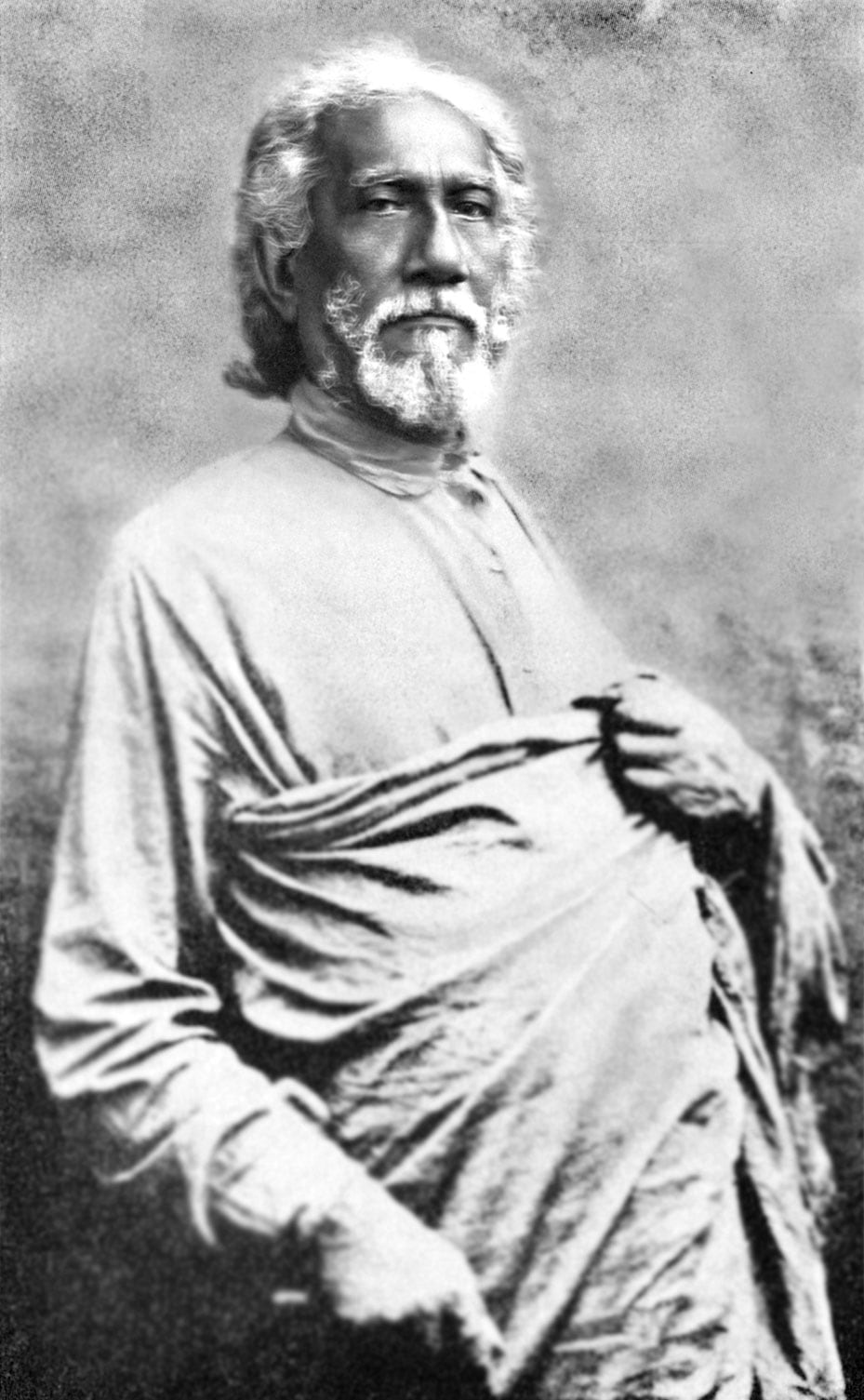
Sri Yukteswar
They agree on: What is the Absolute? Does God exist? · Who am I? Is there a true self? · What happens after death?
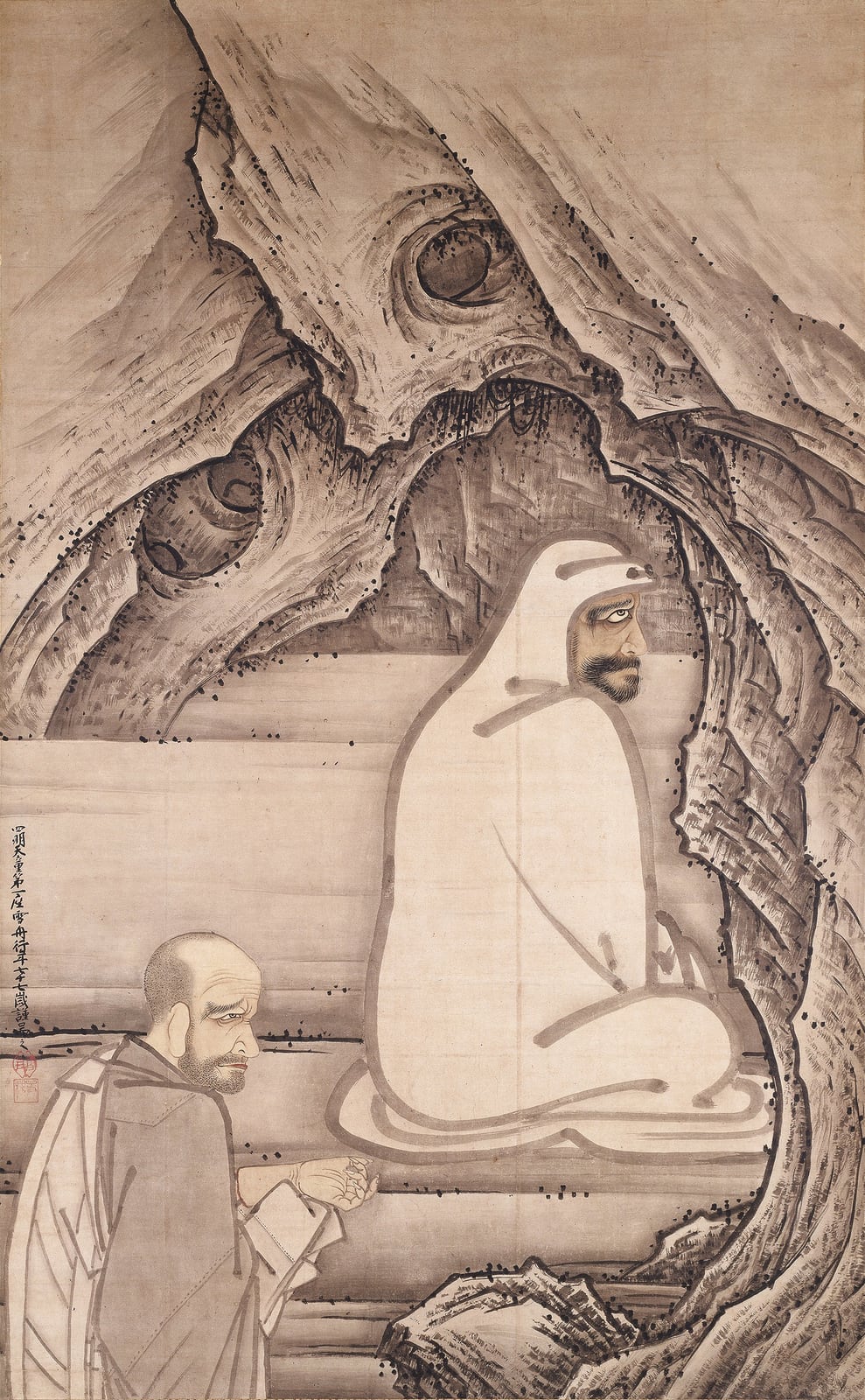
Bodhidharma
They agree on: What is the Absolute? Does God exist? · Who am I? Is there a true self? · What happens after death?

Helena Blavatsky
They agree on: What is the Absolute? Does God exist? · What happens after death? · How is liberation or salvation attained?
Thinks most unlike

Francis of Assisi
They clash on: Who am I? Is there a true self? · What happens after death? · Is the world real?

Julian of Norwich
They clash on: Who am I? Is there a true self? · What happens after death? · Is the world real?
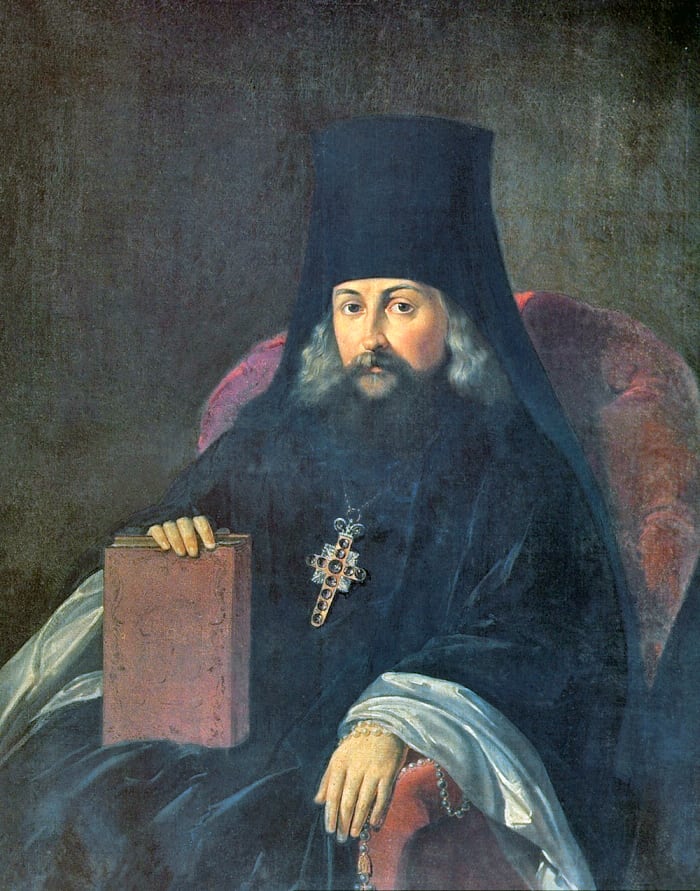
Ignatius Brianchaninov
They clash on: Who am I? Is there a true self? · What happens after death? · Is the world real?

Theophan the Recluse
They clash on: Who am I? Is there a true self? · What happens after death? · Is the world real?
They agree on
Sadhguru · Paramahansa Yogananda
Yoga as a testable science: from kriya to inner engineering
Why: They converge because they share a strategy for presenting yoga to global audiences, inaugurated at the end of the nineteenth century: translating an initiatory tradition into the language of science and efficacy, for readers who distrust dogma. There is no relation between them and their lineages are different. They differ in theology: Yogananda is intensely devotional, speaks to God as Divine Mother and comments on the Gospels; Sadhguru prefers an impersonal language, in which the ultimate is a dimension of life accessed through experience. The claims of both about the effects of their techniques are doctrinal: the library sets them out, it does not verify them.
They clash onFundamental disagreement
Sadhguru · Jiddu Krishnamurti
Inner technology with initiation versus an attention without method or guru
Why: The contradiction is real and reflects two ideas of tradition. Sadhguru belongs to the yogic line that trusts body, energy and breath as vehicles of transformation, and the relationship with the guru as what makes it possible; hence his organisation transmits techniques by initiation. Krishnamurti, formed in an organisation with masters and disciplines, concluded that every practice aimed at a result arises from the very thought it claims to overcome. Sadhguru would say that cultivating body and mind is not pursuing meditation but creating the conditions for it to flower; Krishnamurti would see in those conditions another form of time and seeking.
Anecdotes and stories
Anecdotes and stories
Testimony1982
An afternoon on Chamundi Hill
Origin of the story: Sadhguru's own testimony, told in talks and in Inner Engineering and recorded by Simone (2008), Subramaniam (2010) and Chopra (2014). There are no outside witnesses.
Source: Chopra, Shaili. When I Was 25: The Leaders Look Back. Nueva Delhi: Random House India, 2014.
Documented1983–1992
The teacher who would not take money
Origin of the story: Recorded in Subramaniam's biography (2010) and in the press; summarised in Wikipedia.
Hagiographic account1996–1999
The consecration of the Dhyanalinga
Origin of the story: Account of the Isha Foundation and Sadhguru himself; the consecration and its date are documented, the previous lives are a belief of the community.
Documented2022
A hundred days on a motorcycle for the soil
Origin of the story: Widely documented by the press and the UN; summarised in Wikipedia (Sadhguru and Isha Foundation).
Documented2024
The empty skull
Origin of the story: Indraprastha Apollo Hospital statement reported by Business Standard and other outlets (20–21 March 2024); video released by the Isha Foundation.
Teachings
Teachings
The notions that structure their thought, explained in context.
Inner Engineeringinner-engineering
The name sums up Sadhguru's strategy of presenting yoga in technical and scientific vocabulary to an urban, secular audience; Joanne Waghorne has analysed it as a case of translating yoga into Indian and global corporate culture.
Source: Sadhguru. Inner Engineering: A Yogi's Guide to Joy. Nueva York: Spiegel & Grau / Harmony, 2016.
Shambhavi Mahamudra Kriyashambhavi-mahamudra
The name refers to Shambhavi, an epithet of the goddess as Shiva's consort, and to the mudra of the same name in the hatha yoga tradition; the specific sequence Isha teaches is the foundation's own and is not published.
Isha Kriyaisha-kriya
The formula of disidentification from body and mind comes from the Vedantic and yogic tradition; Isha presents it as a self-sufficient practice, distinct from those requiring initiation.
Yoga as inner technologyyoga-as-inner-technology
The language of yoga as science has precedents in Vivekananda and in twentieth-century modern yoga; Sadhguru carries it into the vocabulary of technology and management.
Source: Waghorne, Joanne Punzo. «Engineering an Artful Practice: On Jaggi Vasudev's Isha Yoga and Sri Sri Ravi Shankar's Art of Living». En Mark Singleton y Ellen Goldberg (eds.), Gurus of Modern Yoga. Nueva York: Oxford University Press, 2013, pp. 283–307.
Adiyogi and the origin of yogaadiyogi
Shiva as lord of yoga (Yogeshvara) is ancient in Shaivism; the construction of Adiyogi as founder and non-confessional figure is characteristic of Isha. Historians of yoga place its documented origins in Indian texts of the last centuries before the Common Era.
Source: Sadhguru. Adiyogi: The Source of Yoga. Noida: Harper Element / HarperCollins India, 2017.
Dhyanalingadhyanalinga
The consecration of forms (pratishtha) is a classic practice of Hindu temples; the novelty Isha claims is a linga devoted solely to meditation and open to any creed.
Karma as memory and responsibilitykarma
The notion comes from the Indic traditions, which understand it in very different ways; Sadhguru's reading, centred on memory and responsibility, addresses a modern reader and moves away from fatalism.
Source: Sadhguru. Karma: A Yogi's Guide to Crafting Your Destiny. Nueva York: Harmony Books, 2021.
Retreats
Retreats and centres
Places and gatherings linked to their teaching. We put you in touch with the organisers.
Velliangiri, cerca de Coimbatore, Tamil Nadu · India
Isha Yoga Center, Coimbatore
Isha Foundation
The Isha Yoga Center is the headquarters of the Isha Foundation, established by Sadhguru at the foot of the Velliangiri mountains, some thirty kilometres from Coimbatore. It brings together the spaces that define his work: the Dhyanalinga, a consecrated space for silent meditation; the Linga Bhairavi temple; the 112-foot Adiyogi statue; and halls for hatha yoga practice. It offers beginner and advanced programmes, yoga teacher training and volunteering, as well as cottage accommodation. It is the main place to experience Sadhguru's work at first hand, and the setting for large gatherings such as Mahashivratri.
En línea y en centros Isha · Internacional
Inner Engineering
Isha Foundation
Inner Engineering is Sadhguru's foundational programme, presenting tools for the body, mind, emotions and energy. It culminates in the transmission of Shambhavi Mahamudra Kriya, a daily practice of about twenty minutes, and also teaches Upa-Yoga. The conceptual part is followed online at one's own pace and the kriya is transmitted live over a weekend; there is also a four-day residential retreat format and instructor-led sessions at centres around the world. It is offered in around ten languages, Spanish included, and is the prerequisite for Isha's advanced programmes and residential retreats.
McMinnville, Tennessee · Estados Unidos
Isha Institute of Inner-sciences (Tennessee)
Isha Foundation
The Isha Institute of Inner-sciences is the Isha Foundation's retreat centre in North America, a 1,400-acre mountain campus on Tennessee's Cumberland Plateau. Its heart is Mahima, a large domed meditation hall that hosts many of the programmes, together with the Adiyogi space, which is open to visitors. It offers beginner and advanced classical yoga and meditation programmes, individual wellness retreats, overnight stays with early-morning practice and special events with Sadhguru. The centre itself stresses that it is not a place of worship, religion, philosophy or belief system, but a space for inner wellbeing.
Videos
Videos
Recordings, interviews and documentaries. Videos play from YouTube; they are not hosted here.
The Importance of Silence | Sadhguru
Lecture· EN· 15 min
SadhguruOfficial channel
The Power of Being Alone | Sadhguru Jaggi Vasudev
Lecture· EN· 12 min
SadhguruOfficial channel
One Thing You Must Do to Overcome Anxiety | Sadhguru
Lecture· EN· 11 min
SadhguruOfficial channel
Unplug from the Mental Matrix | Sadhguru
Lecture· EN· 61 min
SadhguruOfficial channel
Sadhguru's Enlightenment - In His Own Words
Original recording· EN· 2017· 5 min
SadhguruOfficial channel
Sadhguru Jaggi Vasudev | Full Address & Q&A | Oxford Union
Lecture· EN· 2017· 65 min
OxfordUnion
Sadhguru | Developing an Inclusive Consciousness | Talks at Google
Lecture· EN· 2016· 66 min
Talks at Google
Sadhguru: Your Mind Will Follow Your Emotions | India Economic Summit 2017
Interview· EN· 2017· 64 min
World Economic Forum
At UNCCD COP15, Sadhguru Presents a Practical 3-Pronged Strategy to #SaveSoil | Sadhguru
Original recording· EN· 2022· 5 min
SadhguruOfficial channel
Isha Kriya: A Guided Meditation For Health And Wellbeing | 15-Minutes
Original recording· EN· 2019· 19 min
SadhguruOfficial channel
Adiyogi Shiva: The First & Ultimate Zen Master | Sadhguru
Lecture· EN· 2015· 14 min
SadhguruOfficial channel
¿Qué es la ingeniería interior? | Sadhguru
Lecture· ES· 2019· 30 min
Sadhguru EspañolOfficial channel
ईशा क्रिया - 12 मिनट में पाएं मानसिक स्थिरता और ख़ुशी | Isha Kriya Guided Meditation | Sadhguru Hindi
Original recording· HI· 2020· 19 min
Sadhguru HindiOfficial channel
L'Importance du Silence | Sadhguru
Lecture· FR· 2026· 15 min
Sadhguru FrançaisOfficial channel
Gallery
Gallery
Images with verified licences. Each keeps its authorship and attribution.
Connections
Connections
Influences, discipleships and affinities. Documented relations are distinguished from similarities identified by analysis.
Ideas akin to
Both present yoga to the West as an inner science rather than a religion; Sadhguru often cites him in his talks.
Similarity identified by analysis
Sources
Sources
Bibliography and catalogues consulted for this profile.
- Subramaniam, Arundhathi. Sadhguru: More Than a Life. Nueva Delhi: Penguin Ananda, 2010.
- Wikidata, «Sadhguru» (Q793985): fecha y lugar de nacimiento.
- Sadhguru. Inner Engineering: A Yogi's Guide to Joy. Nueva York: Spiegel & Grau / Harmony, 2016.
- Open Library, autores OL3248457A y OL3290802A (Sadhguru / Sadhguru Jaggi Vasudev): obras y ediciones con ISBN.
- Waghorne, Joanne Punzo. «Engineering an Artful Practice: On Jaggi Vasudev's Isha Yoga and Sri Sri Ravi Shankar's Art of Living». En Mark Singleton y Ellen Goldberg (eds.), Gurus of Modern Yoga. Nueva York: Oxford University Press, 2013, pp. 283–307.
- Isha Foundation. «The Big List of Books by Sadhguru» (catálogo oficial de libros y libros electrónicos).
- Isha Foundation. «Sadhguru Quotes» (citas diarias oficiales, octubre de 2026).
- Chopra, Shaili. When I Was 25: The Leaders Look Back. Nueva Delhi: Random House India, 2014.
- Wikipedia (en), «Sadhguru» (biografía, recepción científica y opiniones políticas, con sus referencias de prensa).
- Wikipedia (en), «Isha Foundation» (iniciativas y sección «Controversies and reception»: denuncias de retención, corredor de elefantes e informe de la CAG, acusaciones de abusos, caso POCSO y litigios por difamación).
- Business Standard, «Sadhguru undergoes brain surgery after month-long headache: What we know», 21 de marzo de 2024 (comunicado del Indraprastha Apollo Hospital).
- Simone, Cheryl, con Sadhguru Jaggi Vasudev. Midnights with the Mystic: A Little Guide to Freedom and Bliss. Charlottesville: Hampton Roads, 2008.
- Guinness World Records, «Largest bust (sculpture)»: Adiyogi Shiva, Isha Foundation, Coimbatore; 34,24 m de altura; récord verificado el 11 de marzo de 2017.
- Peterson, Christine Tara; Sarah M. Bauer; Deepak Chopra; Paul J. Mills; Raj K. Maturi. «Effects of Shambhavi Mahamudra Kriya, a Multicomponent Breath-Based Yogic Practice (Pranayama), on Perceived Stress and General Well-Being». Journal of Evidence-Based Complementary & Alternative Medicine 22, n.º 4 (2017): 788–797. doi:10.1177/2156587217730934 (PMID 29228793).
- Isha Foundation. «Isha Kriya Meditation» (instrucciones oficiales: duración, postura, frecuencia recomendada).
- Isha Foundation, Inner Engineering. «Shambhavi Mahamudra Kriya» (descripción oficial de la práctica y de su relación con el programa Inner Engineering).
- Wikipedia (en), «Adiyogi Shiva bust» (inauguración del 24 de febrero de 2017, dimensiones, simbolismo de los 112 pies y libro Adiyogi: The Source of Yoga).
- Sadhguru. Adiyogi: The Source of Yoga. Noida: Harper Element / HarperCollins India, 2017.
- Isha Foundation. «Dhyanalinga Consecration Anniversary» (consagración por Sadhguru en 1999, tras tres años de prana pratishtha; aniversario el 24 de junio).
- Sadhguru. Karma: A Yogi's Guide to Crafting Your Destiny. Nueva York: Harmony Books, 2021.
- Rights holder
- Isha Foundation
- Official site
- isha.sadhguru.org
Pending confirmation
What this profile has not yet been able to settle. We would rather say so than fill it in.
- Obras: están los 30 libros publicados por Isha Foundation y sus editoriales (Penguin, Harmony, Jaico). Open Library registra además títulos autoeditados en 2018–2020 («Life Mysterious», «Greed Is God», «Ancient Mysteries», «Ease and Disease», «Cancer», «Universal Wisdom», «Diálogos de Sadhguru») sin editorial vinculada a Isha: no se listan como obra suya mientras no se confirme la autorización. Por confirmar también «Enlightenment: What It Is» (BookBaby, 2013) y «El cuerpo. La mente.» (La Vanguardia, 2021), y el centenar de cuadernillos de Isha en lenguas indias (comprobado contra Open Library el 2026-10-25).
- Relaciones documentadas con otros maestros de la biblioteca: no hay; la afinidad con Vivekananda es temática, no histórica.
- Sala de lectura (2026-10-25): no se registra ningún texto; autor vivo, toda su obra tiene derechos vigentes.
- Conceptos (2026-10-25): la secuencia de la Shambhavi Mahamudra no es pública y no se describe; la eficacia que Isha atribuye a esta práctica, a Isha Kriya y al Dhyanalinga se presenta como afirmación de la fundación, con el único estudio revisado por pares localizado (s14) y sus límites.
- Vídeos (2026-10-25): el campo year de los vídeos añadidos es el año de publicación en YouTube, no el de la grabación (la charla de la Oxford Union, p. ej., se publicó el 2 de enero de 2017).
Researched on 2026-10-25