Hinduism · Yoga
Sri Yukteswar
শ্রীযুক্তেশ্বর গিরি · श्रीयुक्तेश्वर गिरि
1855 – 1936Historically documented person
Sri Yukteswar Giri (1855-1936), born Priya Nath Karar in Serampore, was a disciple of Lahiri Mahasaya, a teacher of kriya yoga and the guru of Paramahansa Yogananda. He wrote Kaivalya Darsanam (The Holy Science, 1894), which seeks the unity of Indian Samkhya and the New Testament and proposes a 24,000-year chronology of the yugas. Astrologer, educator and founder of the Serampore and Puri hermitages, he reaches us above all through Autobiography of a Yogi.
- works
- 8works
- editions
- 18editions
- quotes
- 10quotes
- videos
- 12videos
- images
- 7images
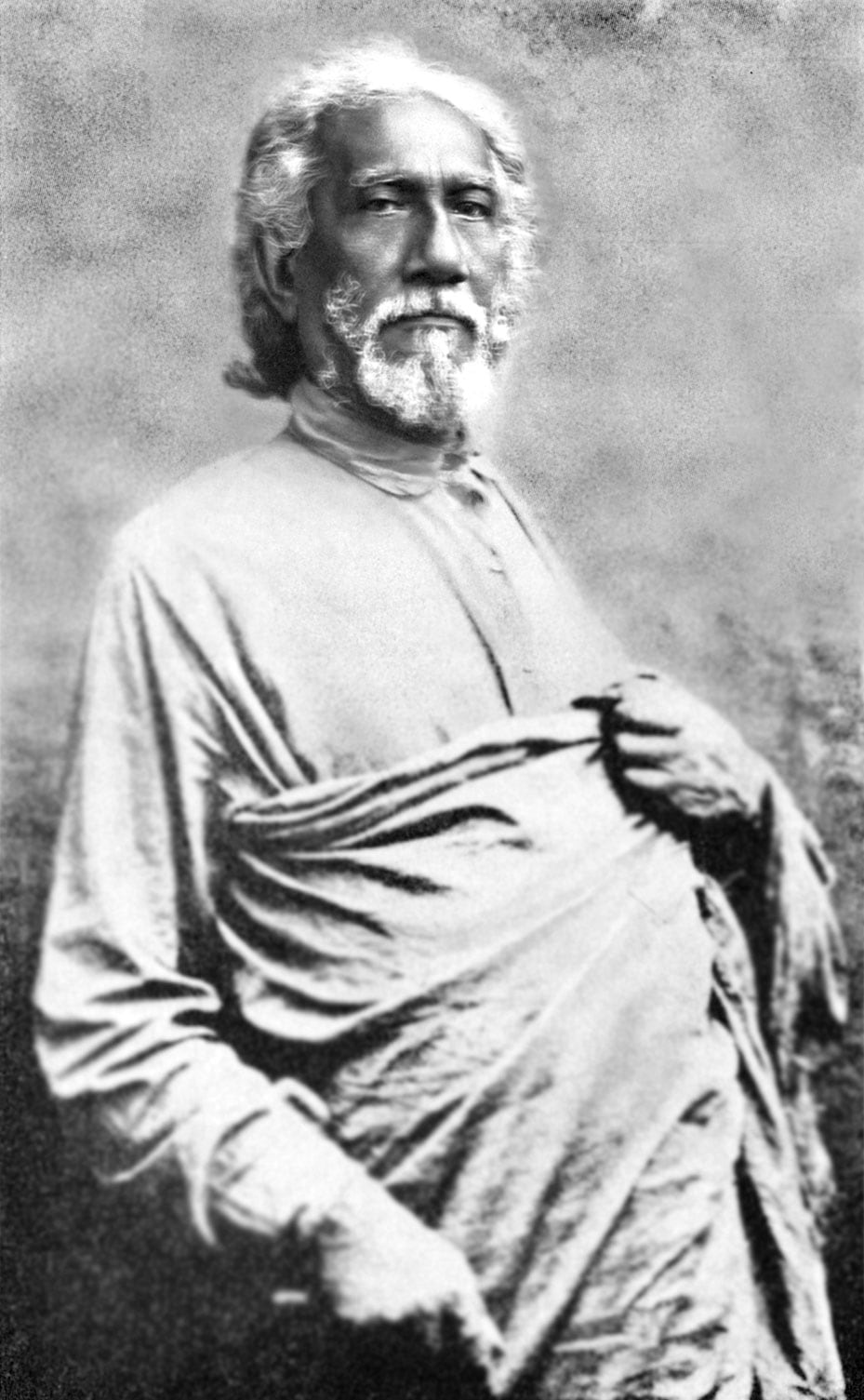
Sri Yukteswar, retrato de la primera edición de la Autobiografía · Public domain
In their words
«The purpose of this book is to show as clearly as possible that there is an essential unity in all religions; that there is no difference in the truths inculcated by the various faiths; that there is but one method by which the world, both external and internal, has evolved; and that there is but one Goal admitted by all scriptures.»The Holy Science, ed. SRF 1972 (texto de 1894), Introducción

To begin, one work
Kaivalya Darsanam: The Holy ScienceTheir central idea
The 24,000-year cycle of the yugas: In the introduction to *The Holy Science*, Sri Yukteswar holds that the Sun, with its planets, revolves around a companion star in a period of about 24,000 years, and that nearness to or distance from a 'grand centre' of divine magnetism determines the development of human intelligence.
See in context
Biography
5 min read
A landowner's son in Serampore
Priya Nath Karar was born on 10 May 1855 in Serampore, the former Danish settlement on the Hooghly some twenty kilometres from Calcutta. His parents, Kshetranath Karar and Kadambini, belonged to a family of rural landowners; his father died early and the boy had to take charge of the family lands. He studied at the town's Christian missionary college, where he formed a lifelong familiarity with the Bible, and spent about two years studying medicine in Calcutta without taking a degree. He married, had a daughter and was widowed after a few years. This is the least documented part of his life: what we know comes from the Bengali biography written by his disciple Swami Satyananda Giri and from the pages Paramahansa Yogananda devoted to him, both written by devotees.
Lahiri Mahasaya and kriya yoga
In 1884 he met in Benares Shyama Charan Lahiri, known to his followers as Lahiri Mahasaya, an accountant in the British administration who taught householders a breath-centred meditation technique called kriya yoga. Priya Nath received initiation from him and visited him often in the years that followed. The lineage remembers that the master affectionately called him "Priya", the beloved. From Lahiri he inherited two traits that would define his teaching: the conviction that meditative practice can be lived without leaving the world, and a reading of scripture as a map of inner states.
Allahabad, 1894: The Holy Science
In January 1894, during the Kumbha Mela at Allahabad, by his own account he was called by a stranger on the bank of the Ganges and led to Babaji, the teacher of Lahiri Mahasaya, a figure for whom there is no independent historical documentation. In that conversation, again according to the author, Babaji asked him for a short book showing the harmony between Christian and Hindu scriptures and gave him the title of swami. The book, Kaivalya Darsanam, the "exposition of final truth", presents itself on its first page as written by "Priya Nath Swami" at Babaji's request in the 194th year of the Dvapara Yuga. The chapters first appeared in his journal Sadhusambad; in 1920 his disciple Atul Chandra Chowdhury printed them as a book, and in 1949 Self-Realization Fellowship published a revised version as The Holy Science.
The book has four chapters—the Gospel, the Goal, the Procedure and the Revelation—built on Sanskrit aphorisms composed by the author himself and commented on in English, with many quotations from the New Testament and above all from Revelation. Its framework is Samkhya cosmology; its thesis, that all religions share a single goal. The introduction contains its most famous and most disputed part: a chronology of the yugas that replaces the hundreds of thousands of years of Puranic tradition with a 24,000-year cycle, tied to a supposed orbit of the Sun around a companion star, and that places humanity not in the Kali Yuga but in an ascending Dvapara since 1699. Academic astronomy does not support the binary-star hypothesis; the chronology, however, has had a long afterlife in spiritual literature.
Two hermitages and a stern discipline
After his formal ordination into the Swami order, received from the abbot of Bodh Gaya in the Giri branch, he turned the family house in Serampore into a hermitage and in 1903 founded another in Puri, facing the Bay of Bengal, the Karar Ashram, whose opening, according to the house tradition, he timed to the spring equinox. He alternated between the two through the year. He founded an association, the Sadhu Sabha, to bring together religious figures of different currents; drew up school syllabi in physics, physiology, geography and astronomy, an English and Hindi primer for Bengalis and an elementary treatise on astrology; and took an interest in the education of women. He practised jyotisha, Indian astrology, and prescribed bangles of metals and gems to his disciples, convinced that the science of the stars could serve as a shortcut while the soul was not yet free.
He had few long-term disciples. Yogananda attributed this to a method that "cannot be described as other than drastic": he rebuked in public, demanded domestic order and did not tolerate complacency. The scholar of Tibetan texts W. Y. Evans-Wentz, who visited him at Serampore, remembered him as tall and upright, gentle of voice and serene in presence.
Yogananda's teacher
In 1910, in a Benares lane, he met Mukunda Lal Ghosh, a seventeen-year-old who had run away from home in search of a master. For a decade he trained him in Serampore and Puri; in July 1915 he ordained him swami with the name Yogananda and encouraged him in 1920 to accept an invitation to a religious congress in Boston. When Yogananda returned to India in 1935, Sri Yukteswar conferred on him the title of paramahansa and named him his successor at the head of the Sadhu Sabha and of his hermitages. Other disciples, such as Swami Satyananda Giri, Sailendra Bejoy Dasgupta or Swami Hariharananda, later founded parallel kriya lineages that read his figure with accents different from those of Self-Realization Fellowship.
Death in Puri and the making of the story
He died at the Karar Ashram in Puri at seven in the evening on 9 March 1936, after a brief fever, seated in the lotus posture according to those who found his body. Yogananda, who was in Calcutta, arrived the next day and presided over his burial in the hermitage garden, according to the custom of swamis, who are not cremated. Calcutta's Amrita Bazar Patrika bade him farewell as one of the great interpreters of the Bhagavad Gita. In Autobiography of a Yogi (1946), Yogananda added a chapter in which he relates having seen him in flesh and blood in a Bombay hotel on 19 June 1936 and having received from him a long description of the astral world. It is a disciple's testimony of faith, not a verifiable fact, and should be read as such.
Legacy
The image of Sri Yukteswar that circulates around the world is largely the one Yogananda drew: the jnanavatar, the "incarnation of wisdom", demanding and affectionate, astrologer and reader of the Bible. His face appears among those on the cover of Sgt. Pepper's Lonely Hearts Club Band (1967), and The Holy Science is still published in a dozen languages. His Bengali commentary on the Gita, translated into English in 2004 by Yoga Niketan, and Satyananda's biography show a more technical and less legendary author, best read alongside the portrait in the Autobiography.
Sources: Yogananda, Paramhansa. Autobiography of a Yogi. Nueva York: The Philosophical Library, 1946 (1.ª ed.), caps. 10, 12, 14-16, 36, 42 y 43; prefacio de W. Y. Evans-Wentz. Texto en Wikisource y Project Gutenberg #7452. · Yukteswar Giri, Swami Sri. The Holy Science (Kaivalya Darsanam). Los Ángeles: Self-Realization Fellowship, 7.ª ed. 1972, 3.ª reimpr. 1977 (texto de 1894; copyright de la revisión, 1949). Consultado en Internet Archive. · Satyananda Giri, Swami. «Swami Sri Yuktesvar Giri Maharaj: A Biography», en A Collection of Biographies of 4 Kriya Yoga Gurus. Trad. Yoga Niketan. Lincoln (Nebraska): iUniverse, 2006. ISBN 9780595386758. · Selbie, Joseph, y David Steinmetz. The Yugas: Keys to Understanding Our Hidden Past, Emerging Present and Future Enlightenment. Nevada City: Crystal Clarity Publishers, 2010. ISBN 9781565892538. · Dasgupta, Sailendra Bejoy. Kriya Yoga and Swami Sriyukteshvar. Calcuta: S. B. Dasgupta, 1979.
Timeline
A life, year by year
Each point is a documented event. Click to read it, with its source and degree of certainty.
May 10, 1855age 0Serampore
Birth of Priya Nath Karar
Born into a family of Bengali landowners, son of Kshetranath Karar and Kadambini.
DocumentedYogoda Satsanga Society of India, «Swami Sri Yukteswar».
After their death
- December 1946*Autobiography of a Yogi* spreads his figure
- 1949Revised Self-Realization Fellowship edition
- June 1967On the cover of *Sgt. Pepper*
May 10, 1855 · age 0
Birth of Priya Nath Karar
Born into a family of Bengali landowners, son of Kshetranath Karar and Kadambini.
Documented
c. 1875
Studies at the missionary college and the medical college
Studies at the Christian missionary college of Serampore, where he becomes interested in the Bible, and spends about two years at medical college in Calcutta. Approximate dates.
Probable
c. 1880
Marriage, a daughter and widowhood
After his father's death he marries at his mother's wish; he has a daughter and is widowed a few years later.
Probable
1884 · age 29
Initiation into kriya yoga by Lahiri Mahasaya
Meets Lahiri Mahasaya, who initiates him into kriya yoga; he will visit him often in the following years.
Documented
January 1894 · age 38
Meeting with Babaji at the Kumbha Mela
By his own account in the introduction to *Kaivalya Darsanam*, Babaji asks him for a book on the harmony of Christian and Hindu scriptures and gives him the title of swami. Babaji has no independent historical documentation.
Tradition
1894 · age 39
Writes *Kaivalya Darsanam*
Writes the work in a short time, dated to the 194th year of the Dvapara Yuga; the chapters first appear in his journal *Sadhusambad*.
Documented
March 22, 1903 · age 47
Founding of the Karar Ashram
Founds his seaside hermitage in Puri; his lineage's tradition dates the opening to the spring equinox, chosen for astrological reasons.
Tradition
1910 · age 55
Meeting with Mukunda Lal Ghosh
Meets the future Paramahansa Yogananda, who will spend ten years training in his hermitages.
Documented
July 1915 · age 60
Ordains Yogananda a swami
Gives Mukunda the vows of the Swami order, Giri branch, with the name Yogananda.
Documented
1920 · age 65
First book edition of *Kaivalya Darsanam*
His disciple Atul Chandra Chowdhury, secretary of the Sadhu Sabha, privately prints the book.
Documented
1935 · age 80
Confers on Yogananda the title of paramahansa
During Yogananda's visit to India he grants him the monastic title of paramahansa and charges him with continuing his work.
Documented
March 9, 1936 · age 80
Death at the Karar Ashram
Dies at about seven in the evening after a brief fever; he is buried on 10 March in the hermitage garden. The funeral bhandara is held on 21 March.
Documented
December 1946
*Autobiography of a Yogi* spreads his figure
Yogananda devotes several chapters of his autobiography to him, including the account of his appearance after death, which builds his international image.
Documented
1949
Revised Self-Realization Fellowship edition
SRF publishes *The Holy Science* with a foreword by Yogananda and changes to terminology and grammar; in 1963 an English translation of the Sanskrit sutras is added.
Documented
June 1967
On the cover of *Sgt. Pepper*
His portrait appears among the figures on the cover of the Beatles' album.
Documented
Works
Essential works
The works without which their legacy cannot be understood.
Written work · 1894
Kaivalya Darsanam: The Holy Science
Kaivalya Darsanam (The Holy Science)
A treatise in four chapters—the Gospel, the Goal, the Procedure and the Revelation—that sets out Samkhya cosmology and yogic practice through commented Sanskrit aphorisms and places them alongside passages from the New Testament and Revelation. It argues that all religions share a single goal and describes five states of the heart through which the seeker advances, guided by the 'heart's natural love'. Its introduction proposes a 24,000-year cycle of yugas, tied to a hypothetical companion star of the Sun, and places humanity in an ascending Dvapara: the most famous and most disputed part of the book.
15 editions

Written work
Spiritual commentary on the Bhagavad Gita
Srimad Bhagavad Gita (comentario espiritual, bengalí)
A reading of the *Bhagavad Gita* as an allegory of kriya yoga practice, in the line begun by Lahiri Mahasaya: the poem's characters and battles are interpreted as forces and states of the practitioner's consciousness. It is the text that best shows the technical Sri Yukteswar, the meditation teacher, as against the literary character of *Autobiography of a Yogi*. Yogananda said his master encouraged him to give his own interpretation of the *Gita*, the distant origin of *God Talks with Arjuna*.
1 edition
Complete works (8)
Sri Yukteswar
First Book (English and Hindi primer)
The Conscious LibraryFirst Book (English and Hindi primer)
Sri Yukteswar
Elementary treatise on astrology
The Conscious LibraryElementary treatise on astrology
Sri Yukteswar
School science syllabi
The Conscious LibrarySchool science syllabi
Sri Yukteswar
Sadhusambad (journal)
The Conscious LibrarySadhusambad (journal)

Biography of Sri Yukteswar by Swami Satyananda Giri
Sri Yukteswar
Kriya Yoga and Swami Sriyukteshvar (S. B. Dasgupta)
The Conscious LibraryKriya Yoga and Swami Sriyukteshvar (S. B. Dasgupta)
1979
Quotations
Quotations located in a specific work. Each carries its provenance and its level of confidence.
The purpose of this book is to show as clearly as possible that there is an essential unity in all religions; that there is no difference in the truths inculcated by the various faiths; that there is but one method by which the world, both external and internal, has evolved; and that there is but one Goal admitted by all scriptures.VerifiedThe Holy Science, ed. SRF 1972 (texto de 1894), Introducción
Last words
There are no verifiable records of their last words.
No reliable record of his last words is known. Yogananda, his main biographer, was not present (he was in Calcutta and reached Puri the next day) and says so explicitly in a note to the *Autobiography*. The words 'My task on earth is now finished; you must carry on', addressed to Yogananda when conferring the title of paramahansa in 1935, are sometimes quoted as a farewell, but they precede his death by months.
Source: Yogananda, Paramhansa. Autobiography of a Yogi. Nueva York: The Philosophical Library, 1946 (1.ª ed.), caps. 10, 12, 14-16, 36, 42 y 43; prefacio de W. Y. Evans-Wentz. Texto en Wikisource y Project Gutenberg #7452.
Ask
What their work answers
Twelve great human questions and what their texts allow us to answer, with references. We never put words in their mouth.
What is the Absolute? Does God exist?
Parambrahma, the one eternal substance, manifests as Father, Son and Om
An impersonal AbsoluteStated explicitly
In the Kaivalya Darsanam Sri Yukteswar opens with the statement that Parambrahma, Spirit, is the only real substance, eternal, complete and without beginning or end. From it he explains creation with a scheme meant to show the unity of Hinduism and Christianity: God the Father (Sat) is beyond creation; his manifestation as vibration, the Word or Om, is the Holy Ghost; and his conscious reflection in creation is the Son (Tat), the Christ consciousness. The ultimate is therefore not a person who acts but a substance of love and consciousness that expresses itself through vibration and maya. The personal figures of Father and Son are ways of naming those aspects, not beings distinct from the Absolute.
Compare this question with other teachersWho am I? Is there a true self?
Man is a son of God wrapped in five sheaths
The Self is the AbsoluteStated explicitly
In the Kaivalya Darsanam Sri Yukteswar describes the human being as a reflection of Spirit, the ‘son of God’, covered by five sheaths (koshas) ranging from the subtlest to the physical. Out of ignorance man identifies with those sheaths and with the body, and forgets his divine nature. Wisdom consists in progressively withdrawing consciousness from these layers until one recognises that the true self is one with the eternal Father, beyond creation. To describe that return he uses both the vocabulary of Samkhya and that of the Gospel: the prodigal son coming home is the soul recovering its unity with Spirit. Kaivalya, oneness, is the name of that goal.
Compare this question with other teachersWhy do we suffer?
Ignorance makes man think himself the body and exiles him from the inner Eden
Ignorance of what we areStated explicitly
In the Kaivalya Darsanam Sri Yukteswar explains that man suffers because, through avidya, ignorance, he identifies with the material body and its desires and forgets that he is a reflection of Spirit. From that identification arise attachment, aversion and fear, which he sets out in the vocabulary of yoga’s afflictions. Yogananda, in his Autobiography, attributes to him a biblical image of the same idea: outward longings drive us from the inner Eden and offer false pleasures that supplant the soul’s happiness, and the lost paradise is regained through meditation. Suffering is thus an exile from one’s own nature, and the way back is the heart’s natural love disciplined by yoga.
Compare this question with other teachersWhat happens after death?
The soul passes to subtle worlds and returns according to its karma
Rebirth according to karmaInferred from their doctrine
Sri Yukteswar taught within the framework of reincarnation: as long as the soul is not freed from desires and karma it is born again, and his astrology presupposes that each birth matches that individual karma. In the Kaivalya Darsanam he describes creation as a series of spheres (lokas) of decreasing density between the physical world and Spirit, through which the soul descends and ascends. The best-known description of his teaching on the afterlife is not his own: in Autobiography of a Yogi Yogananda relates a posthumous appearance of his master in which he describes the astral and causal worlds where souls live between one incarnation and the next.
Compare this question with other teachersHow is liberation or salvation attained?
Kriya yoga, discipline and the heart’s natural love
Through disciplined practiceStated explicitly
Sri Yukteswar, a disciple of Lahiri Mahasaya, transmitted Kriya Yoga as a precise method for withdrawing consciousness from the body and directing it towards Spirit. In the Kaivalya Darsanam he makes the heart’s natural love the main requirement and defines faith (sraddha) as its intensification; from there he sets out the steps of yoga: ethical discipline, breath control, interiorisation and meditation on the vibration of Om. His teaching combines method with moral demand: according to Yogananda he was a stern master who corrected without indulgence. Liberation is a gradual process the disciple travels by his own effort, guided by a true master, until he recognises himself one with the Father.
Compare this question with other teachersIs a teacher necessary?
The true master, the sadguru, is the disciple’s saviour
IndispensableStated explicitly
In the Kaivalya Darsanam Sri Yukteswar describes the meeting with the sadguru, the true master, as the decisive step: the heart’s natural love leads the seeker into the company of the saints, and from there to the master who initiates him into practice and guides him to the goal. He himself lived that relationship with Lahiri Mahasaya and exercised it with his disciples. Yogananda describes in his Autobiography the strict discipline of the Serampore ashram, where the master corrected each of the disciple’s faults so that he could receive the teaching. For Sri Yukteswar the guru does not replace the disciple’s effort, but without his transmission and guidance practice bears no fruit.
Compare this question with other teachersIs the world real?
Creation is the vibration of Om in fourteen spheres
Planes of existenceStated explicitly
In the Kaivalya Darsanam Sri Yukteswar explains creation as the manifestation of Spirit through the vibration of Om, which gives rise to maya, the illusion of separateness, and to a series of spheres of increasing density. He describes seven worlds (lokas), from the subtlest, close to Spirit, to the material, together with their corresponding regions of darkness, forming a hierarchical creation. To that scheme he adds a cyclical theory of time, that of the yugas, which he adjusts to his own astronomical calculations. The physical world is not false, but it is the densest plane of a stratified reality, and the human being is called to climb back through those planes to their source.
Compare this question with other teachersWhat is love?
The heart’s natural love is the gateway to the holy life
Longing and unionStated explicitly
In the Kaivalya Darsanam Sri Yukteswar places love at the start of the path: the heart’s natural love is the main requirement for a holy life, and faith (sraddha) is its intensification. That love is the soul’s attraction to its source, Spirit, and when rightly directed it leads to the company of saints and to the master. Yogananda attributes to him in his Autobiography a clear distinction: ordinary love is selfish, rooted in desires and gratifications, whereas divine love has no condition, no limit and no change. Sri Yukteswar, known for his severity, understood the demanding correction of the disciple as a form of that unconditional love.
Compare this question with other teachersAre we free, or is everything determined?
The stars reflect karma, but spiritual effort overcomes it
Karma and choiceStated explicitly
Sri Yukteswar was an astrologer and defended astrology as a science, but not as fatalism. According to Yogananda’s account in Autobiography of a Yogi, he taught that a child is born at the moment when the celestial rays are in mathematical harmony with its individual karma: the horoscope does not cause destiny, it reflects it. And that karma can be changed. The same account attributes to him the exhortation to forget the past, since human conduct is uncertain until anchored in the divine, and all will improve if spiritual effort is made now. He even recommended astrological remedies, but insisted that wisdom and the practice of yoga are the real means of freeing oneself from such influences.
Compare this question with other teachersWhy meditate or pray?
Reverse the current inward and regain the inner Eden
Returning to the source of the IStated explicitly
For Sri Yukteswar meditation is the return of consciousness to its source. In the Kaivalya Darsanam he describes how, through regulation of the breath and interiorisation, the yogi withdraws attention from the senses, perceives the light and sound of Om and climbs back through the sheaths that separate him from Spirit. This is the logic of the Kriya Yoga he received from Lahiri Mahasaya: not a prayer addressed to an external God but a technique for reversing the life current that flows outward. Yogananda attributes to him the image of the lost paradise quickly regained through divine meditation. To meditate is to return home, to where the soul knows itself one with the Father.
Compare this question with other teachersCan reason know the ultimate?
A holy science that reconciles scriptures and is verified within oneself
Esoteric knowledgeStated explicitly
Sri Yukteswar wrote the Kaivalya Darsanam, translated as The Holy Science, with a purpose stated in its opening: to show as clearly as possible the essential unity of all religions. To that end he compares passages of the Bible and Hindu texts with reasoned arguments and presents his system as a science. But that science is not merely intellectual: it rests on a technique transmitted from master to disciple, Kriya Yoga, and on a cosmic chronology, that of the yugas, which he regards as recovered knowledge. Yogananda attributes to him the warning not to confuse understanding with a larger vocabulary: wisdom is assimilated not with the eyes but with the atoms.
Compare this question with other teachersWithdraw from the world or transform it?
From home to ashram: inner discipline does not require flight
Contemplation in actionInferred from their doctrine
Sri Yukteswar lived most of his life as a householder and property owner in Serampore, and only after being widowed did he take monastic vows in the Giri order. His master, Lahiri Mahasaya, was the model of the yogi who attains realisation without leaving work or family, and Kriya Yoga was transmitted precisely as a practice compatible with life in the world. Sri Yukteswar took an interest in education, astronomy and medicine, wrote science syllabuses for schools and guided his disciples with practical rigour. For him what mattered was not where one lives but inner discipline and the heart’s love directed towards Spirit.
Compare this question with other teachers
Affinities & tensions
Affinities and tensions
Calculated question by question from their positions. The reason for each agreement or clash, on click.
Thinks most like
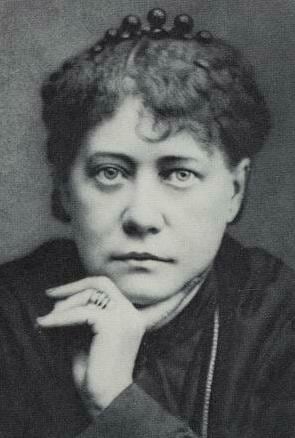
Helena Blavatsky
They agree on: What is the Absolute? Does God exist? · Is the world real? · What happens after death?
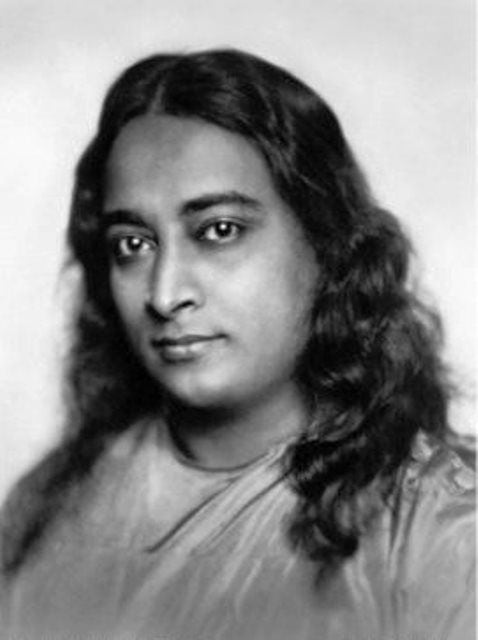
Paramahansa Yogananda
They agree on: What happens after death? · How is liberation or salvation attained? · Is a teacher necessary?
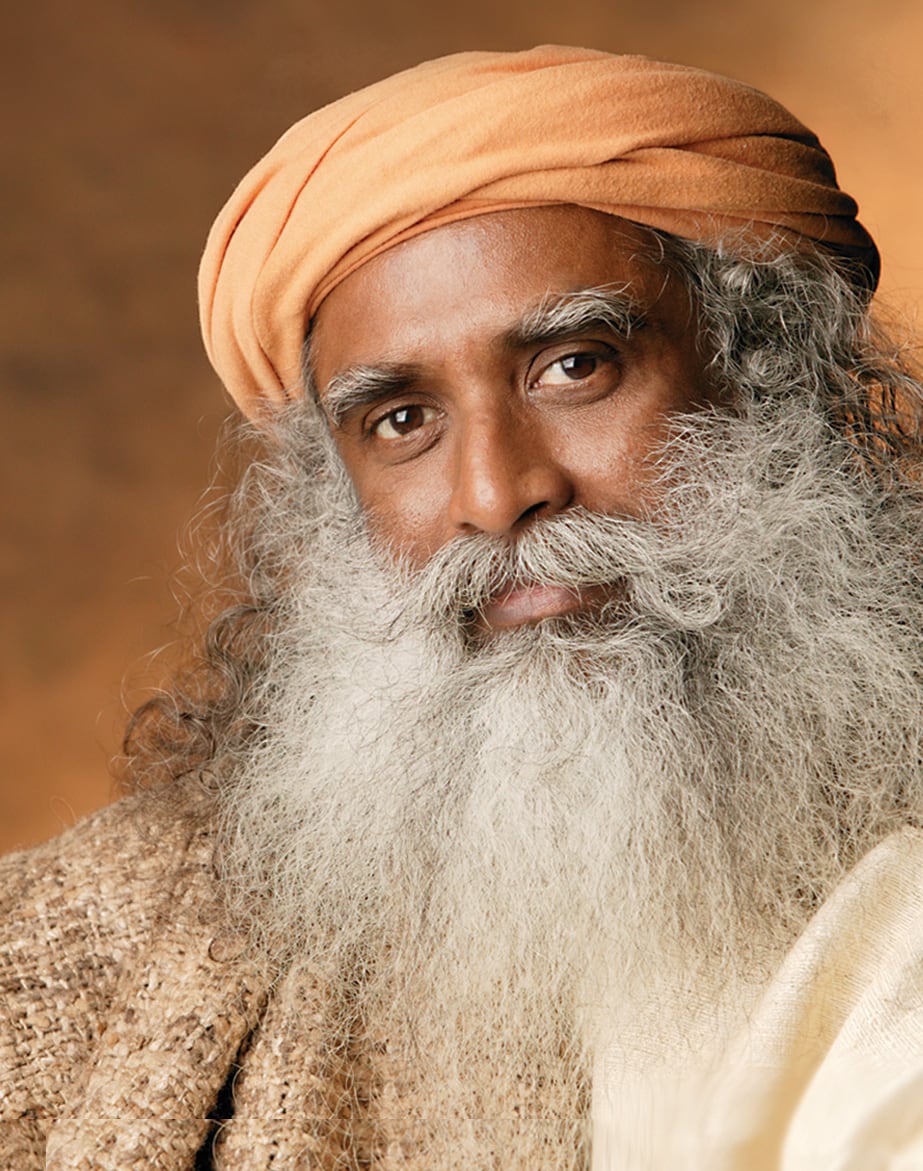
Sadhguru
They agree on: What is the Absolute? Does God exist? · Who am I? Is there a true self? · What happens after death?
Helena Roerich
They agree on: What is the Absolute? Does God exist? · What happens after death? · Is a teacher necessary?
Thinks most unlike

Nikolai Berdyaev
They clash on: Who am I? Is there a true self? · What happens after death? · Is a teacher necessary?

Julian of Norwich
They clash on: Who am I? Is there a true self? · What happens after death?

Ignatius Brianchaninov
They clash on: Who am I? Is there a true self? · What happens after death?
Seraphim of Sarov
They clash on: Who am I? Is there a true self? · What happens after death?
Anecdotes and stories
Anecdotes and stories
Testimony1910
'How many years I have waited for you!'
Origin of the story: Yogananda's account in *Autobiography of a Yogi* (1946), ch. 10, written thirty-five years later. There are no independent witnesses.
Testimonyc. 1910-1915
The cauliflower robbery
Origin of the story: *Autobiography of a Yogi* (1946), ch. 15, 'The Cauliflower Robbery'. Sole source; the element of clairvoyance is the narrator's interpretation.
Testimonyc. 1910-1911
A tap on the chest
Origin of the story: *Autobiography of a Yogi* (1946), ch. 14, 'An Experience in Cosmic Consciousness'. A subjective experience narrated by the one who lived it.
Testimony1894
The commission at Allahabad
Origin of the story: Two sources from the protagonist himself: the introduction to *Kaivalya Darsanam* (1894) and his account recorded by Yogananda in *Autobiography of a Yogi*, ch. 36. Babaji's historical existence is not documented outside his lineage.
Hagiographic account1936
The appearance in the Bombay hotel
Origin of the story: *Autobiography of a Yogi* (1946), ch. 43. A vision narrated by a single witness, Yogananda himself, beyond verification; the Kriya Yoga International lineage relates similar appearances to Swami Hariharananda.
Testimonyc. 1915
The bangle against the stars
Origin of the story: *Autobiography of a Yogi* (1946), ch. 16, 'Outwitting the Stars'. The prediction and its fulfilment are recorded only in the disciple's account.
Teachings
Teachings
The notions that structure their thought, explained in context.
The 24,000-year cycle of the yugasciclo-de-los-yugas
A reinterpretation of the Puranic doctrine of the four ages (*caturyuga*) with nineteenth-century astronomical arguments.
The essential unity of religionsunidad-de-las-religiones
A commission attributed to Babaji in 1894; inherited by Self-Realization Fellowship as a founding principle.
The heart's natural love (sraddha)amor-natural-del-corazon
Aphorisms 5-6 of chapter 3; takes up the notion of *śraddhā* from the *Yoga Sutras* (I.20).
Kriya yogakriya-yoga
Lineage Babaji – Lahiri Mahasaya – Sri Yukteswar – Yogananda.
The guru as guide, not saviourguru
The conception of the guru in the kriya yoga lineage.
Astrology as a science of karmaastrologia-como-ciencia
The Indian astrological tradition (*jyotisha*) read in a yogic key.
Videos
Videos
Recordings, interviews and documentaries. Videos play from YouTube; they are not hosted here.
Sri Yukteshwar video 2
Original recording· UND· 1 min
Avatarsandyogis
Sri Yukteshwar video 1
Original recording· UND· 1 min
Avatarsandyogis
Paramahansa Yogananda & Swami Sri Yukteswar
Original recording· UND· 1 min
Fred McCabe (cgny69)
The Yugas and Spiritual Awakening: The Revolutionary Wisdom of Swami Sri Yukteswar
Lecture· EN· 58 min
Ananda Sangha WorldwideOfficial channel
Swami Sri Yukteswar: Inspiration from the "Holy Science"
Lecture· EN· 44 min
Ananda Sangha WorldwideOfficial channel
Sri Yukteswar's Advice on How to Develop the Natural Love of the Heart
Lecture· EN· 51 min
Ananda Sangha WorldwideOfficial channel
"What are the Yugas?" with Joseph Selbie, co-author of "The Yugas"
Interview· EN· 6 min
Ananda Sangha WorldwideOfficial channel
Puri - with the Kriya Yoga Ashram founded by Sri Yukteswar, India 1977
Documentary· EN· 1977· 34 min
Kriya Yoga Masters of Kriya Yoga InternationalOfficial channel
Online Class on The Holy Science by Sri Yukteswar April & May 2020
Lecture· EN· 2020· 12 min
Kriya Yoga Online with Ryan Kurczak
The Spiritual Guidance of Swami Sri Yukteswar: Navigating Life's Challenges
Lecture· EN· 51 min
Yogacharya Ellen Grace O'Brian
Swami Sri Yukteswar Giri: O Leão da Bengala | Grandes Mestres Ep. 6
Analysis· PT· 32 min
Guilherme Romano
Home of Swami Sri Yukteshwar ji, Ananda Lok & Babaji's Banyan Tree | Serampore
Documentary· HI· 12 min
Connect with Thyself - Ruchi Shukla
Gallery
Gallery
Images with verified licences. Each keeps its authorship and attribution.
Connections
Connections
Influences, discipleships and affinities. Documented relations are distinguished from similarities identified by analysis.
Disciple of
Lahiri Mahasaya
His guru; initiated him into kriya yoga in 1884.
Documented relation
Met
Mahavatar Babaji
A meeting the author himself relates in his book's introduction (Allahabad, 1894); Babaji's historical existence is not documented outside the lineage.
Documented relation
Teacher of
His best-known disciple (1910-1936); ordained him swami in 1915 and gave him the title of paramahansa in 1935.
Documented relation
Teacher of
Swami Satyananda Giri
Disciple and biographer; ran the Ranchi school.
Documented relation
Teacher of
Paramahamsa Hariharananda
Disciple who spread kriya yoga from the Karar Ashram and founded Kriya Yoga International.
Documented relation
Influenced by
Comments on the words of Jesus and Revelation in *Kaivalya Darsanam* as expressions of the same truths as the Vedas.
Documented relation
Influenced by
The practice and the notion of *śraddhā* in his third chapter closely follow the *Yoga Sutras*.
Similarity identified by analysis
Met
W. Y. Evans-Wentz
The scholar visited him at Serampore and described him in the preface to the *Autobiography*.
Documented relation
Contemporary of
A Bengali contemporary who, like him, presented yoga to the West as a universal science of religion.
Similarity identified by analysis
Contemporary of
A contemporary from the Calcutta region; both defended the convergence of religions, by different paths.
Similarity identified by analysis
Linked from other profiles
Sources
Sources
Bibliography and catalogues consulted for this profile.
- Yogananda, Paramhansa. Autobiography of a Yogi. Nueva York: The Philosophical Library, 1946 (1.ª ed.), caps. 10, 12, 14-16, 36, 42 y 43; prefacio de W. Y. Evans-Wentz. Texto en Wikisource y Project Gutenberg #7452.
- Yukteswar Giri, Swami Sri. The Holy Science (Kaivalya Darsanam). Los Ángeles: Self-Realization Fellowship, 7.ª ed. 1972, 3.ª reimpr. 1977 (texto de 1894; copyright de la revisión, 1949). Consultado en Internet Archive.
- Satyananda Giri, Swami. «Swami Sri Yuktesvar Giri Maharaj: A Biography», en A Collection of Biographies of 4 Kriya Yoga Gurus. Trad. Yoga Niketan. Lincoln (Nebraska): iUniverse, 2006. ISBN 9780595386758.
- Wikidata, «Yukteswar Giri» (Q380790).
- Wikipedia (en), «Swami Sri Yukteswar Giri» (apoyada en la biografía de Satyananda y en la Autobiografía).
- «The Holy Science – 1920 Original Edition: Introduction and Study». Yogananda Harmony (estudio de la historia editorial: Sadhusambad, edición de Atul Chandra Chowdhury de 1920, revisiones de SRF de 1949, 1963 y 1972).
- Yogoda Satsanga Society of India, «Swami Sri Yukteswar».
- Kriya Yoga International (linaje de Paramahamsa Hariharananda), «Swami Shriyukteshwar Giri».
- Yoga Niketan, «Scriptural Commentaries» (Srimad Bhagavad Gita, Spiritual Commentary by Swami Sriyukteshvar Giri).
- Open Library, ediciones de The Holy Science y del comentario a la Gita (ISBN 9780876120514, 9780876120569, 9780595665211, 9788189955038, etc.).
- Selbie, Joseph, y David Steinmetz. The Yugas: Keys to Understanding Our Hidden Past, Emerging Present and Future Enlightenment. Nevada City: Crystal Clarity Publishers, 2010. ISBN 9781565892538.
- Dasgupta, Sailendra Bejoy. Kriya Yoga and Swami Sriyukteshvar. Calcuta: S. B. Dasgupta, 1979.
- Rights holder
- El texto original de 1894/1920 es de dominio público (autor fallecido en 1936). Self-Realization Fellowship (Los Ángeles) y Yogoda Satsanga Society of India son titulares de la edición revisada de 1949 y de sus traducciones; Yoga Niketan, de la traducción inglesa del comentario a la Gita.
- Official site
- yssofindia.org/about/swami-sri-yukteswar
Pending confirmation
What this profile has not yet been able to settle. We would rather say so than fill it in.
- Localizar un facsímil o transcripción con OCR limpio de la edición de 1920 de Kaivalya Darsanam (dominio público en EE. UU., UE y España): las copias de Internet Archive son de la edición revisada de SRF (copyright 1949) y no sirven para la sala de lectura.
- Confirmar fechas y alcance del comentario bengalí a la Bhagavad Gita (¿primeros capítulos?) y la fecha de su primera edición en Bengala.
- Identificar título y ejemplares del tratado de astrología y del «First Book», conocidos solo por la biografía de Satyananda.
- Consultar directamente la biografía de Satyananda (iUniverse, 2006) para fijar las fechas de los estudios, el matrimonio y la ordenación en Bodh Gaya.
- Vídeos: no se encontró material serio en español sobre él; las filmaciones históricas están subidas por terceros sin datos de procedencia (posiblemente la película de C. Richard Wright de 1935-1936).
- Imágenes: la serie «Sri-Yukteswar-1» a «-8» de Commons tiene metadatos inverosímiles (fechas inventadas, el propio Yukteswar como autor); no se ha usado.
- Relaciones con slugs fuera del catálogo (lahiri-mahasaya, mahavatar-babaji, swami-satyananda-giri, swami-hariharananda, w-y-evans-wentz): la ficha de Yogananda usa «sri-yukteswar-giri» como slug de esta persona; conviene unificarlo con «sri-yukteswar».
Researched on 2026-10-25