Christianity · Christian mysticism · Orthodox Christianity
Seraphim of Sarov
Серафим Саровский · Прохор Исидорович Мошнин
1754 – 1833Historically documented person
Russian monk and starets (1754–1833) of Sarov monastery, spiritual founder of the Diveyevo convent and one of the most venerated saints of Russian Orthodoxy. A forest hermit, a recluse for fifteen years and then spiritual guide to multitudes, whom he greeted with "My joy, Christ is risen!", he wrote nothing: his teaching on the acquisition of the Holy Spirit came down through the Instructions of 1839, the Diveyevo Chronicle and the Conversation with Motovilov, published in 1903 and of disputed literal accuracy. He was canonised in 1903.
- works
- 11works
- editions
- 27editions
- quotes
- 11quotes
- videos
- 12videos
- images
- 9images
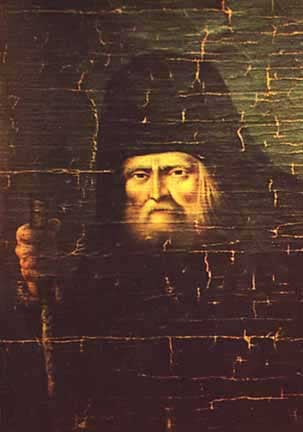
Retrato de Serafín de Sarov pintado en vida · Public domain
In their words
«Nothing so helps to acquire inner peace as silence and, as far as possible, constant converse with oneself and rare converse with others.»Instrucciones espirituales, cap. «О мире душевном» (De la paz del alma).
Their central idea
The acquisition of the Holy Spirit: The Russian term stiazhanie means to acquire, gain, accumulate: it is the word of trade and saving.
See in context
Biography
6 min read
A boy from Kursk
Prokhor Isidorovich Moshnin was born in Kursk on 19 July 1754 by the Julian calendar (30 July in the Gregorian), into a family of prosperous merchants. The year is not certain: the pre-Revolutionary lives gave 1759, inferred from the age carved on his tombstone at Sarov, and only in 2004, after the local historian Vladimir Stepashkin had worked through the parish registers of Kursk and the monastery archive, did the Russian Church adopt 1754. His father, Isidor, was building a church in the town under contract and died when the boy was small; his mother, Agafia, finished the work. The hagiographies tell how at seven he fell from the top of the church under construction unharmed, and how, ill at about ten, he recovered after kissing the icon of the Virgin of the Sign carried in procession past his house. These are family traditions written down decades later: the detail of the bell tower, for instance, first appears in the life published in 1863, and in 1761 that bell tower did not yet exist.
Sarov
After a pilgrimage to Kiev, where by tradition the recluse Dositheus pointed him towards Sarov, he entered that monastery in the forests of Tambov as a novice on 20 November 1778. He worked as baker, carpenter and sacristan; he went through an illness, a dropsy that kept him bedridden for nearly three years; he was tonsured a monk on 13 August 1786 with the name Seraphim, ordained deacon shortly afterwards and priest on 2 September 1793. Sarov kept a strict rule, heir to the monastic revival that Paisius Velichkovsky had launched with his Slavonic translation of the Philokalia, and the young monk was formed by those texts: the Spiritual Instructions attributed to him cite Isaac the Syrian, John Climacus, Barsanuphius and Gregory of Sinai again and again.
The wilderness
In 1794 he withdrew to a hut in the forest, some five kilometres from the monastery, the so-called "far hermitage". He tended a garden, read the Gospels and the Fathers, fasted until he lived only on vegetables and a wild herb, goutweed, and walked back to Sarov on Sundays to receive communion. In 1804, according to the lives, robbers looking for money left by visitors beat him with the handle of his own axe; he remained bent for the rest of his life and asked that they not be punished. To this period belongs the most famous episode of his asceticism, the thousand days and nights of prayer on a rock. The earliest source is more sober: in 1848 Abbot Isaiah wrote that, when he began his hermit life, Seraphim had confided to a companion that he prayed standing motionless for seventeen hours a day, and kept this up for more than three years; the "thousand days on the stone" took fixed form in the later hagiographies, above all Chichagov's.
The same is true of the bear. In 1849 the hieromonk Joasaph published the testimony of a Diveyevo nun, Matrona Pleshcheyeva, who said she had seen the elder feeding bread to a bear. Among the papers of Metropolitan Philaret of Moscow, now in the Manuscripts Department of the Russian State Library, there is a file recording that Matrona herself confessed before she died that Joasaph had coached her to tell the story should the imperial family visit the convent. The image of the hermit with the bear, popularised by icons and prints, is thus a legend whose origin can be traced.
Seclusion and open doors
On 8 May 1810 he returned to the monastery and shut himself in his cell: five years without receiving anyone and ten more with the door open to whoever came, but without leaving it, until 25 November 1825. From then on, and above all in his last eight years, Sarov became a place of pilgrimage. He received hundreds of people, peasants and nobles alike, greeting each with "My joy, Christ is risen!" whatever the season, bowing to them and often answering before they had asked. He took charge of the small women's community at Diveyevo, twelve kilometres away, and founded a second one beside it, the so-called Mill community, for unmarried girls only. Among his visitors were Mikhail Manturov, who sold his estate to serve Diveyevo, and a young landowner from Simbirsk, Nikolai Motovilov, who attributed to his prayers the cure of a paralysis in September 1831.
What he left
Seraphim wrote no books. His teaching came down by three routes, none of them in his own hand. The first is the Spiritual Instructions, gathered by the Sarov monk Sergius and published in 1839 within a life of the hermit Mark, after Metropolitan Philaret had altered expressions "so that the language should be more correct" and to guard certain ideas "against misinterpretation", as he himself wrote in 1838. The second is the sayings and stories preserved at Diveyevo, which Archimandrite Seraphim Chichagov arranged in the Chronicle of the Seraphim-Diveyevo Monastery (1896, enlarged in 1903). The third is the Conversation on the Aim of the Christian Life, which Motovilov left in manuscript.
In it, on a November day in 1831, in a snowy clearing by the river Sarovka, the elder explains that prayer, fasting, vigil and almsgiving are only means, and that the true aim of the Christian life is the acquisition of the Holy Spirit; then, taking the young man by the shoulders, he lets him see his face "brighter than the sun". The text appeared in 1903, on the eve of the canonisation, in Sergei Nilus's The Great in the Small; Nilus said he had found it among more than seventy kilos of papers covered in feathers and bird droppings, handed to him by Motovilov's widow. Its literal accuracy is disputed: Archpriest Vsevolod Rochcau, who does not doubt the core of the episode, points to a density of theological quotation unlikely in a man of twenty-two, ideas about the souls of animals foreign to the Fathers, and the hand of Nilus, whom he calls "a myth-maker, but not a conscious forger"; this is the same editor who in 1905 put the Protocols of the Elders of Zion into his book.
Death and canonisation
He died alone in his cell on 2 January 1833 (the 14th by the Gregorian calendar). The monks, alerted by a smell of burning, found him kneeling before the icon of the Virgin of Tenderness, which he called "Joy of all joys". His cult grew in the following decades through successive lives, each richer in miracles than the last. The canonisation was also a political affair: Archimandrite Chichagov pressed it on Nicholas II, with the support of the Empress, who hoped for an heir, against the reservations of the Synod's Chief Procurator, Pobedonostsev. The commission that examined the remains in January 1903 found no incorrupt body, as popular piety expected, and Metropolitan Anthony had to explain in the press that none was needed. On 19 July 1903, before the Tsar and more than a hundred thousand pilgrims, Seraphim was proclaimed a saint.
The relics were seized by the Bolsheviks in 1920–1922, vanished into the storerooms of an anti-religious museum and resurfaced in Leningrad in 1990; on 1 August 1991 they returned in procession to Diveyevo. Today Seraphim is one of the most venerated saints of Russia, commemorated by the Anglican Communion as well and called a saint by John Paul II. The figure left by the earliest sources—an austere monk of disarming joy who passed from absolute silence to the spiritual direction of multitudes—is less spectacular than the legend, and probably rarer.
Sources: Roshko, Vsévolod, prot. [Rochcau, Vsévolod]. Преподобный Серафим: Саров и Дивеево. Исследования и материалы. Moscú: Sampo, 2001 (ed. francesa: Saint Séraphim, Sarov et Divéyevo. Bégrolles-en-Mauges: Abbaye de Bellefontaine, 1987). Primera parte, «Historia y crítica histórica». · Nilus, Serguéi A. «Цель жизни христианской» [El fin de la vida cristiana], en Великое в малом, 1.ª ed., 1903; epílogo del editor fechado el 19 de mayo de 1903. Texto en Azbuka very. · Serafín de Sarov (atrib.). Духовные наставления мирянам и инокам [Instrucciones espirituales a laicos y monjes]. Recogidas por el monje Sergio (Vasíliev) de Sarov, revisadas por el metropolita Filaret (Drozdov) y publicadas en Краткое начертание жизни старца Саровской пустыни, схимонаха и пустынника Марка. Troitse-Sérguieva Lavra, 1839. Texto cotejado (ediciones de 1839, 1856, 1863 y 1903–1904) en Azbuka very. · Serafín (Chichagov), archimandrita. Летопись Серафимо-Дивеевского монастыря Нижегородской губ. Ардатовского уезда. Moscú: Pechatnia A. I. Snegirevoi, 1896; 2.ª ed. ampliada, San Petersburgo, 1903. Reed. Diveyevo: Izd-vo Bratstva sv. Aleksandra Nevskogo, 2004 (ISBN 9785882130649). · Stepashkin, Vladímir A. Преподобный Серафим Саровский: предания и факты. 3.ª ed. corregida y aumentada. Sarov: ZAO «INFO», 2009. ISBN 978-5-89269-010-2; y Серафим Саровский. Moscú: Molodaya gvardiya (ЖЗЛ), 2018.
Timeline
A life, year by year
Each point is a documented event. Click to read it, with its source and degree of certainty.
July 30, 1754age 0Kursk
Birth of Prokhor Moshnin
Born into a merchant family of Kursk (19 July, Julian calendar). Nineteenth-century lives gave 1759; the Russian Church adopted 1754 in 2004 on the basis of parish registers and the Sarov archive.
Probable«Серафим Саровский», Wikipedia en ruso (biografía, fuentes hagiográficas, expediente de Matrona Plescheeva en el fondo del metropolita Filaret, carta del abad Isaías II de 1848, canonización y reliquias). Consultada el 25-10-2026.
After their death
- 1839First edition of the Instructions
- July 19, 1903Canonisation
- August 1, 1991Return of the relics
July 30, 1754 · age 0
Birth of Prokhor Moshnin
Born into a merchant family of Kursk (19 July, Julian calendar). Nineteenth-century lives gave 1759; the Russian Church adopted 1754 in 2004 on the basis of parish registers and the Sarov archive.
Probable
c. 1761 · age 7
The fall from the church under construction
According to the lives, he falls from the top of the church his family was building and is unhurt. Hieromonk Sergius (1841) speaks of 'the building'; the bell tower appears in 1863.
Tradition
1776 · age 22
Pilgrimage to Kiev
He visits the Kiev Caves Lavra; tradition says the recluse Dositheus directed him to Sarov monastery.
Tradition
November 20, 1778 · age 24
Novice at Sarov
He enters Sarov monastery, in the forests of Tambov province, as a novice under the elder Joseph.
Documented
August 13, 1786 · age 32
Monastic profession as Seraphim
He is tonsured a monk with the name Seraphim; shortly afterwards he is ordained hierodeacon.
Documented
September 2, 1793 · age 39
Priestly ordination
He is ordained hieromonk (priest-monk).
Documented
1794 · age 40
Hermit in the forest
He withdraws to a hut some five kilometres from the monastery, with a garden and beehives; he returns on Sundays for communion.
Documented
1804 · age 50
The robbers' attack
Robbers beat him; he is left bent for life and asks that they go unpunished. He convalesces for five months in the monastery.
Probable
c. 1807 – 1810 · age 53
Prayer on the stone
A period of standing prayer that the hagiographies fixed as 'a thousand days on a stone'. Abbot Isaiah II's letter (1848) speaks of seventeen hours a day standing for more than three years.
Disputed
May 8, 1810 · age 55
Return to the monastery and seclusion
He returns to Sarov at the decision of the council of elders and shuts himself in his cell: five years without receiving anyone.
Documented
1815 · age 61
He opens the door of his cell
He begins to receive visitors without leaving his cell; sources differ on whether this was 1815 or, regularly, around 1823.
Probable
November 25, 1825 · age 71
End of the seclusion
He ends his seclusion and again visits his forest hermitage; he begins his spiritual direction of the Diveyevo community.
Documented
c. 1827 – 1829 · age 73
The Mill community
Next to the Kazan community at Diveyevo he founds a second community, for unmarried girls only; its Nativity church is built in 1828–1829.
Documented
1828 · age 74
A portrait from life
The painter Serebryakov (later the monk Joseph of Sarov) makes the only portrait from life, the basis of later iconography.
Probable
November 1831 · age 77
Conversation with Motovilov
Date of the conversation on the acquisition of the Holy Spirit that Nikolai Motovilov left in writing; the text was published in 1903.
Disputed
January 14, 1833 · age 78
Death
He is found dead, kneeling before the icon of the Virgin of Tenderness (2 January, Julian calendar).
Documented
1839
First edition of the Instructions
The Spiritual Instructions, revised by Metropolitan Philaret, are published within the life of the hermit Mark; the first life of Seraphim, by the monk Sergius, appears in 1841.
Documented
July 19, 1903
Canonisation
Following the Synod's decree of 29 January, his glorification is celebrated at Sarov in the presence of Nicholas II and over a hundred thousand pilgrims (19 July, Julian calendar). That same year Nilus publishes the Conversation with Motovilov.
Documented
August 1, 1991
Return of the relics
The relics, seized in 1920–1922 and found in 1990 in the Museum of the History of Religion in Leningrad, arrive in procession at Diveyevo.
Documented
Works
Essential works
The works without which their legacy cannot be understood.

Traditional attribution · 1831
Conversation with Motovilov on the Aim of the Christian Life
О цели христианской жизни. Беседа преподобного Серафима Саровского с Н. А. Мотовиловым
In a snowy clearing by his hermitage, the elder answers the question Motovilov had asked since childhood: the aim of the Christian life is not prayer, fasting, vigil or almsgiving, which are means, but the acquisition of the Holy Spirit, likened to the accumulation of a capital 'of grace and eternal'; prayer is the means most to hand. When the young man asks how to know whether he is in the Spirit, Seraphim takes him by the shoulders and his face becomes 'brighter than the sun': Motovilov describes the light, peace, sweetness, warmth and fragrance he feels in the depth of winter. It is the most widely read text of modern Russian spirituality, the basis of Seraphim's iconography and of the interest of theologians such as Florensky and Lossky.
8 editions

Later compilation · 1839
Spiritual Instructions to Laypeople and Monks
Духовные наставления мирянам и инокам
Short chapters on God, faith, hope, prayer, tears, sorrow and despondency, peace of soul and its preservation, guarding the heart, the light of Christ, attention to oneself, silence, fasting and the active and contemplative life, with advice for the novice and for the superior. Woven from quotations of Isaac the Syrian, John Climacus, Barsanuphius, Gregory of Sinai, Ephrem and John Chrysostom, they convey a sober hesychast teaching: the Jesus Prayer repeated in the mind, inner peace as the condition of all light, and caution towards contemplation without a guide. It is the earliest and least manipulated source of his teaching.
7 editions
Seraphim of Sarov
Chronicle of the Seraphim-Diveyevo Monastery (sayings and accounts)
Later compilation · 1896
Chronicle of the Seraphim-Diveyevo Monastery (sayings and accounts)
Летопись Серафимо-Дивеевского монастыря
A history of the Diveyevo communities from their founder, Mother Alexandra, to the end of the nineteenth century, which is also the main collection of Seraphim's oral teaching to the sisters: advice on prayer, work, obedience and joy, prophecies about the convent, the ditch he had dug around the Mill community, his farewell words and the lives of his disciples. The second edition (1903) includes a new life of Seraphim and was the documentary basis for the canonisation.
3 editions
Complete works (11)
Seraphim of Sarov
The Short Prayer Rule for Laypeople
The Conscious LibraryThe Short Prayer Rule for Laypeople
Seraphim of Sarov
The Rule of the Theotokos
The Conscious LibraryThe Rule of the Theotokos
Seraphim of Sarov
Notes of Nikolai Motovilov, Servant of the Mother of God and of St Seraphim
The Conscious LibraryNotes of Nikolai Motovilov, Servant of the Mother of God and of St Seraphim
Seraphim of Sarov
The Great Mystery of Diveyevo and other prophecies
The Conscious LibraryThe Great Mystery of Diveyevo and other prophecies
Seraphim of Sarov
Account of the Life and Labours of Father Seraphim (Hieromonk Sergius, 1841)
The Conscious LibraryAccount of the Life and Labours of Father Seraphim (Hieromonk Sergius, 1841)
1841
Seraphim of Sarov
Accounts of the Life of the Elder Seraphim (Hieromonk Georgy, 1844)
The Conscious LibraryAccounts of the Life of the Elder Seraphim (Hieromonk Georgy, 1844)
1844
Seraphim of Sarov
Accounts of the Labours of the Elder Seraphim (Hieromonk Joasaph, 1849)
The Conscious LibraryAccounts of the Labours of the Elder Seraphim (Hieromonk Joasaph, 1849)
1849
Seraphim of Sarov
Life of the Elder Seraphim (Nikolai Elagin, 1863)
The Conscious LibraryLife of the Elder Seraphim (Nikolai Elagin, 1863)
1863
Quotations
Quotations located in a specific work. Each carries its provenance and its level of confidence.
The true aim of our Christian life consists in the acquisition of the Holy Spirit of God.Истинная же цель жизни нашей христианской состоит в стяжании Духа Святого Божьего.
ProbableConversación con Motovílov (noviembre de 1831), en Nilus, Великое в малом (1903). Atribución sujeta a las dudas sobre la literalidad del manuscrito.
Apocryphal quotes or disputed attributions (3)
«"Acquire the spirit of peace, and thousands around you will be saved."»
It is his most quoted saying, but it is not found in this form either in the Instructions of 1839 or in the Conversation with Motovilov as published by Nilus. The idea is in the chapter 'On peace of soul' of the Instructions ('when a man comes to a peaceful state, he can pour out on others the light…'); the short formula circulates in twentieth- and twenty-first-century devotional collections without reference to a primary source.
«Prophecies about the Antichrist, the fall of the dynasty and Seraphim's resurrection ('The Great Mystery of Diveyevo').»
They come from Motovilov manuscripts published by Nilus, who presented them as the elder's exact words; no independent source confirms them and church authority banned them.
«"This is the Christian way of crossing oneself! […] Crossing oneself with two fingers is contrary to the holy statutes."»
A condemnation of the Old Believer rite that first appears in the 1863 life (Elagin), written by a censor; the episode of the four Old Believers had been expanded in the 1844 life. Mikhail Novoselov held that Seraphim's polemic with the priestless Old Believers of Nizhny Novgorod became anti-ritual under the pen of synodal censors; the question remains open.
Last words
There are no verifiable records of their last words.
He died alone in his cell on the night of 1–2 January 1833 (Julian) and no one heard his last words: the monks, alerted by the smell of a candle that had set some books smouldering, found him dead, kneeling before the icon of the Virgin of Tenderness. The Diveyevo tradition recorded by Chichagov preserves as his farewell the charge he had earlier given the sisters: to come to his grave and tell him their sorrows 'as to a living man', for to them he would always be alive; these are not, however, words spoken at his death.
Source: Serafín (Chichagov), archimandrita. Летопись Серафимо-Дивеевского монастыря Нижегородской губ. Ардатовского уезда. Moscú: Pechatnia A. I. Snegirevoi, 1896; 2.ª ed. ampliada, San Petersburgo, 1903. Reed. Diveyevo: Izd-vo Bratstva sv. Aleksandra Nevskogo, 2004 (ISBN 9785882130649).
Ask
What their work answers
Twelve great human questions and what their texts allow us to answer, with references. We never put words in their mouth.
What is the Absolute? Does God exist?
God is the Trinity giving itself as the Holy Spirit to be acquired
A personal GodStated explicitly
Seraphim of Sarov did not write; his teaching comes through testimonies. In them God is not an object of speculation but a presence to be received. The Spiritual Instructions of 1839 open with a chapter on God: where God is there is no evil, and everything that comes from him is peaceful and leads to humility. The Conversation with Motovilov, published in 1903, defines the aim of Christian life as the acquisition of the Holy Spirit of God, and recounts how Motovilov saw the elder's face illumined while both were, in his words, in the Spirit of God. The God of this testimony is that of the Orthodox faith: Father, Son and Spirit, who seeks the human heart as his throne and allows himself to be experienced as light, peace, sweetness and joy.
Compare this question with other teachersWho am I? Is there a true self?
The human being is body, soul and spirit, made to receive the Holy Spirit
A created, immortal soulStated explicitly
In the Conversation with Motovilov, a testimony published in 1903, Seraphim explains the creation of the human being on the basis of Genesis: Adam was formed from dust and received from God the breath of life, so that the complete man is body, soul and spirit, and was made to live in the Spirit of God. The fall made him lose that fullness, and the meaning of Christian life is to recover it by acquiring the Holy Spirit. The true self is not, in this testimony, an impersonal consciousness nor a flow of elements, but a created and immortal person whose heart is the place where God wishes to dwell. The Spiritual Instructions add that without humility there is nothing in man but darkness: the self is illumined by receiving, not by asserting itself.
Compare this question with other teachersWhy do we suffer?
Losing the Spirit of God darkened man; patience brings him back
Separation from GodInferred from their doctrine
In the testimony of the Conversation with Motovilov, the root of human evil lies in Adam's fall, which lost the fullness of the Spirit of God with which he had been created; since then man has lived in darkness, and Christian life consists in recovering that grace. The Spiritual Instructions draw the practical consequences: where God is there is no evil, and what comes from him brings peace and humility, while agitation reveals another source. In the face of sorrows they recommend patience and humility, without which there is nothing in man but darkness. Seraphim, who according to the lives was beaten by robbers and remained bent for ever, does not speculate on the why of pain: he treats it as an occasion for acquiring inner peace, whose fruit reaches others as well.
Compare this question with other teachersWhat happens after death?
Christ is risen: the joy of the Kingdom can already be tasted in this life
Eternal life and resurrectionStated explicitly
Seraphim greeted everyone, at any time of year, with the words of Easter: my joy, Christ is risen. In the testimonies that preserve his teaching, death is viewed from the resurrection and eternal life of Orthodox faith, and what is distinctive is that this life is not postponed: in the Conversation with Motovilov, when his companion sees his face illumined, Seraphim asks him what he feels, and describes peace, sweetness, warmth and joy as a foretaste, a very small one, of what God prepares for those who love him. The Diveyevo chronicles also record his predictions of his own death and his promise to go on speaking with those who came to his grave. He died on his knees, at prayer, in 1833.
Compare this question with other teachersHow is liberation or salvation attained?
The aim of Christian life is to acquire the Holy Spirit; all else is means
Through grace and loveStated explicitly
Seraphim of Sarov's best-known formula, handed down by the Conversation with Motovilov, answers this question directly: the true aim of Christian life consists in the acquisition of the Holy Spirit of God. Fasting, vigil, prayer, almsgiving and every good deed done for Christ's sake are not the end, but means of acquiring it; and the acquisition of the Spirit is also a capital, but one of grace and eternal. Among the means, prayer is the most accessible, because it is always in anyone's hands. Salvation is thus God's gift, received and accumulated, not merit; and its sign is peace: according to the Instructions, whoever attains inner peace can pour out on others the light he has received. Motovilov claims to have seen it in the elder's luminous face.
Compare this question with other teachersIs a teacher necessary?
An elder within the Church, guiding towards the Spirit and not towards himself
Community and traditionInferred from their doctrine
Seraphim embodied the figure of the starets, the elder who, after years of solitude, receives those who come seeking counsel; in his last years crowds visited him, and he was spiritual director of the nuns of Diveyevo. He himself was formed in obedience to the superiors and confessors of Sarov, and his teaching, handed down by the Spiritual Instructions and testimonies, constantly relies on the Scriptures and the Fathers, whose reading he recommended. But the elder does not occupy the centre: in the Conversation with Motovilov, the true teacher is the Holy Spirit, acquired through prayer and good works within the life of the Church and its sacraments. His prayer rules for lay people show, moreover, that he did not require monastic life or constant direction of everyone.
Compare this question with other teachersIs the world real?
Creation is good; the hermit lived in the forest at peace with the animals
A good and real creationInferred from their doctrine
Seraphim left no reflections on the nature of the world, but his teaching and life presuppose the Orthodox vision of a good creation, God's work, wounded by the fall and called to transfiguration. In the Conversation with Motovilov the Genesis account serves as the starting point: Adam lived in a world created for him, in which nothing could harm him while he possessed the Spirit. During his years as a hermit in the forest near Sarov, according to the lives compiled after his death, he shared his bread with a bear and other animals, an image tradition read as a sign of paradisal harmony recovered through holiness. The world is neither illusion nor evil: it is the place where grace can become visible, like the light Motovilov claims to have seen.
Compare this question with other teachersWhat is love?
God seeks a heart full of love for him and for neighbour: that is his throne
Love of God and neighbourStated explicitly
At the end of the Conversation with Motovilov, according to the testimony published in 1903, Seraphim sums up his teaching in an image: the Lord seeks a heart full of love for God and neighbour, and that is the throne on which he likes to sit and on which he appears in the fullness of his glory. Love is for him not an isolated moral effort, but the fruit and dwelling place of the acquired Spirit. His way of treating others expressed it: he called each visitor my joy, received everyone without distinction and, according to the lives, forgave the robbers who left him badly injured and asked that they not be punished. The Spiritual Instructions add that one must judge no one and that the inner peace of the one who loves is communicated to those around him.
Compare this question with other teachersAre we free, or is everything determined?
Grace does not force: each person decides whether to acquire the Spirit
Real free willInferred from their doctrine
Seraphim did not address the theoretical question of freedom and determinism, but the testimonies of his teaching presuppose the Orthodox doctrine of cooperation between grace and human freedom. In the Conversation with Motovilov, acquiring the Holy Spirit is compared to acquiring capital: each person chooses the good works that bear him most fruit and practises them, and what he receives depends on how he uses the means. God compels no one; he calls and awaits the answer. The Spiritual Instructions insist on vigilance over one's own thoughts and on repentance, which only make sense if the person can choose. God's providence governs all, but does not cancel each person's responsibility for his heart.
Compare this question with other teachersWhy meditate or pray?
Prayer is the most readily available means of acquiring the Holy Spirit
Friendship with GodStated explicitly
In the Conversation with Motovilov, Seraphim explains that among all the good works that serve to acquire the Spirit, prayer is the one most easily within anyone's reach, rich or poor, learned or simple, and that when God himself comes to visit the one who prays, one must fall silent and let him act. The Spiritual Instructions advise those who wish to serve God to practise remembrance of God and unceasing prayer to Jesus Christ, saying with the mind: Lord Jesus Christ, Son of God, have mercy on me, a sinner; and a counsel handed down by Ignatius Brianchaninov warns that merely outward prayer is not enough. For lay people he left a small rule of prayer that could be said even while walking. To pray is to live before God until he himself speaks.
Compare this question with other teachersCan reason know the ultimate?
The ultimate is known by the light of grace, which illumines the pacified mind
The ultimate lies beyond the mindInferred from their doctrine
Seraphim did not discuss the scope of reason, but the testimonies of his teaching place the knowledge of God on another plane. In the Conversation with Motovilov, his companion wants to understand how the presence of the Spirit is recognised, and Seraphim gives him not an explanation but an experience: he lets him see his illumined face and feel peace, warmth and joy. The Spiritual Instructions speak of the enlightenment of the mind attained by one who reaches inner peace and who can pour it out on others, and they recommend silence and recollection as its condition. Reason is not despised, and Seraphim read Scripture and the Fathers assiduously; but knowledge of the ultimate is a gift of grace, received in a humble heart, not the fruit of reasoning.
Compare this question with other teachersWithdraw from the world or transform it?
Acquire peace in silence, and then you will be able to enlighten others
Withdraw in order to findStated explicitly
Seraphim's life has two halves. For decades he withdrew: he lived as a hermit in the forest near Sarov, spent, according to the lives, a thousand nights praying on a stone, kept silence for years and remained enclosed in his cell for another fifteen. Only then did he open his door and receive crowds. The Spiritual Instructions state the logic of that itinerary: nothing helps so much to acquire inner peace as silence and rare conversation with others; and when a man reaches a state of peace, he can pour out on others the light of the enlightenment of the mind. Withdrawal is not flight from one's neighbour, but preparation to serve him. Of lay people, however, he did not demand monastic life, but a small rule of prayer compatible with work.
Compare this question with other teachers
Affinities & tensions
Affinities and tensions
Calculated question by question from their positions. The reason for each agreement or clash, on click.
Thinks most like
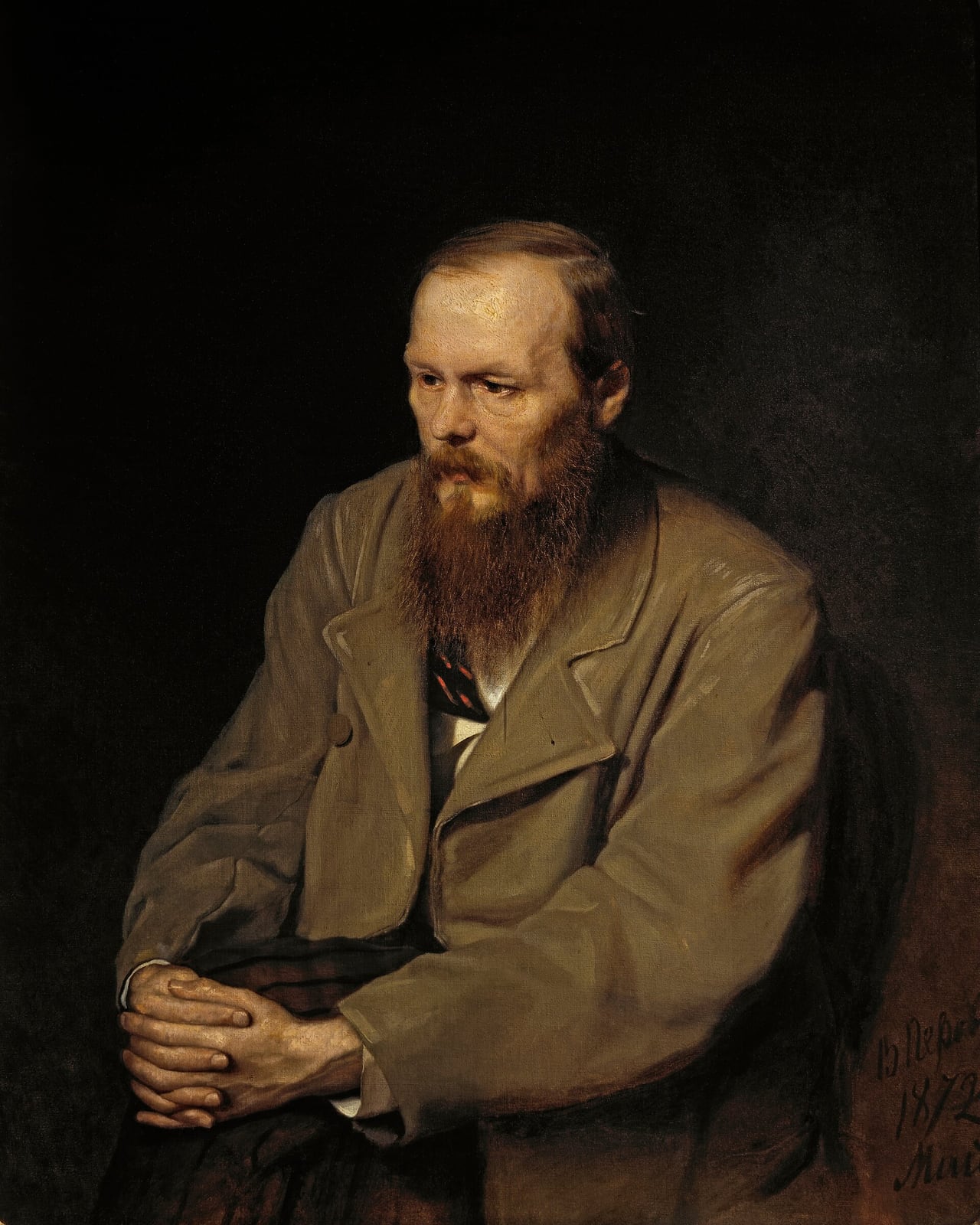
Fyodor Dostoevsky
They agree on: What is the Absolute? Does God exist? · Who am I? Is there a true self? · Why do we suffer?

Julian of Norwich
They agree on: What is the Absolute? Does God exist? · Who am I? Is there a true self? · Why do we suffer?

Francis of Assisi
They agree on: What is the Absolute? Does God exist? · Who am I? Is there a true self? · Why do we suffer?
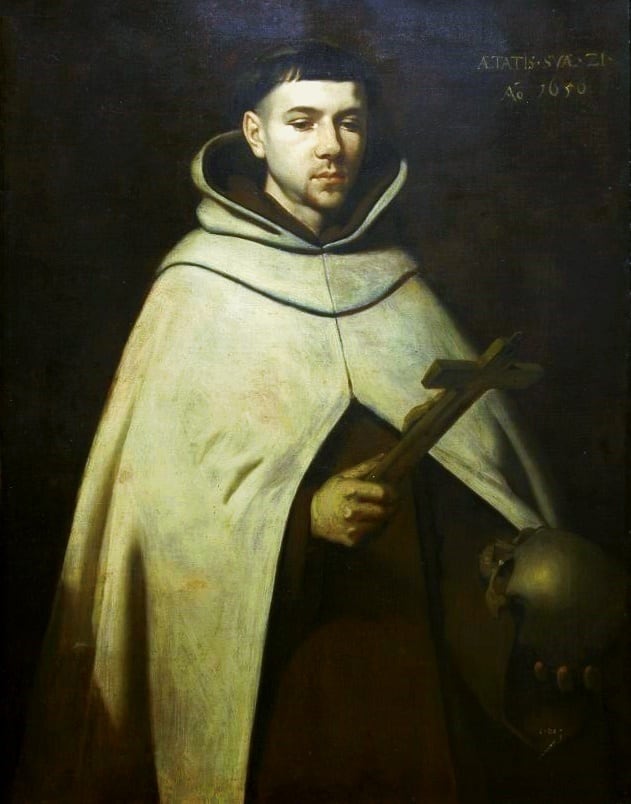
John of the Cross
They agree on: What is the Absolute? Does God exist? · Who am I? Is there a true self? · Why do we suffer?
Thinks most unlike

Pema Chödrön
They clash on: What is the Absolute? Does God exist? · Who am I? Is there a true self? · What happens after death?

The 14th Dalai Lama (Tenzin Gyatso)
They clash on: What is the Absolute? Does God exist? · Who am I? Is there a true self? · What happens after death?
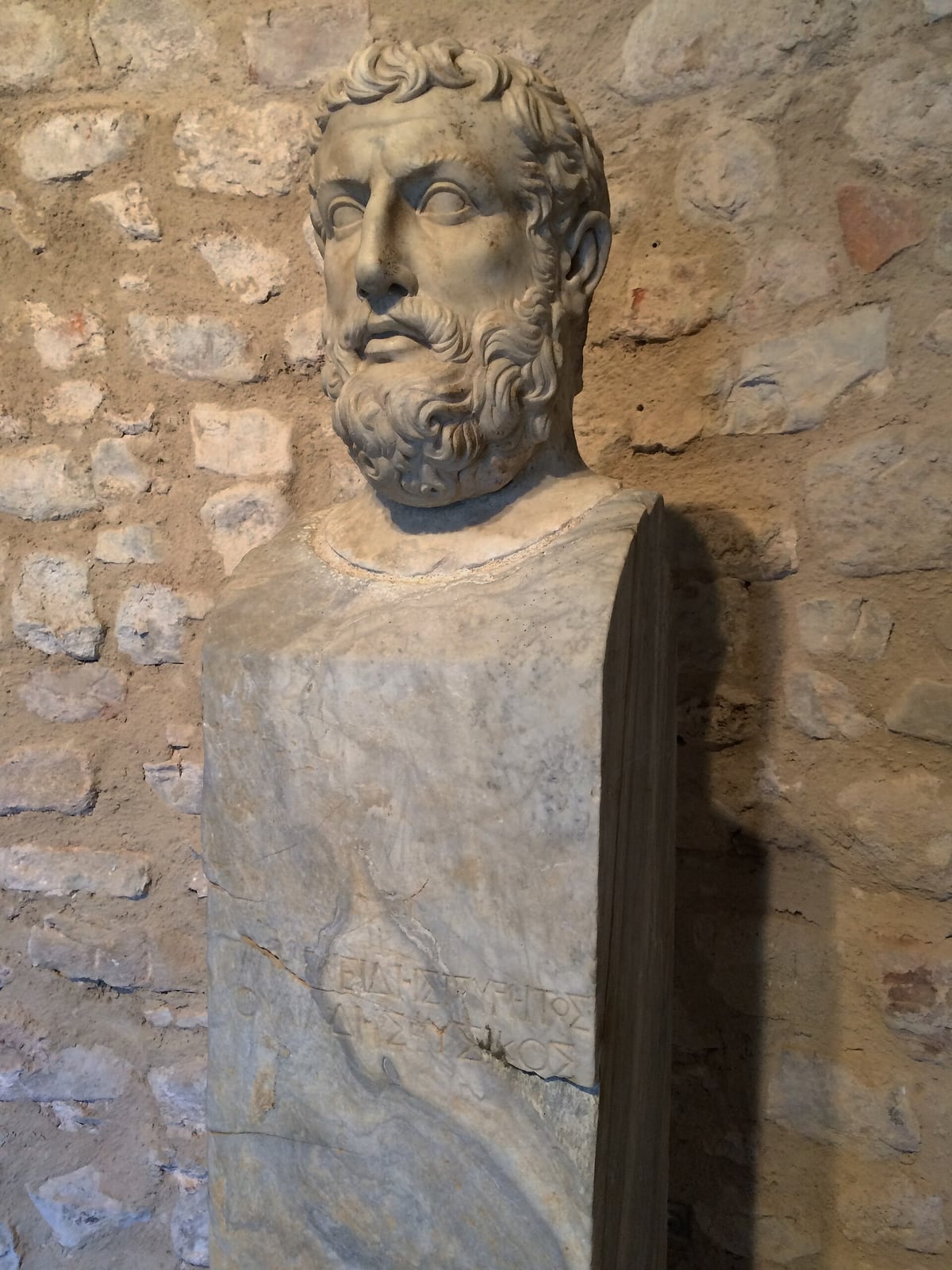
Parmenides
They clash on: Is the world real?

Nāgārjuna
They clash on: What is the Absolute? Does God exist? · Who am I? Is there a true self? · What happens after death?
Anecdotes and stories
Anecdotes and stories
Testimony1804
The robbers in the forest
Origin of the story: The lives tell it from Sergius's (1841) onwards, written from the testimony of Sarov monks; the bent back is confirmed by the 1828 portrait. The apparition during convalescence is a hagiographic element of monastic transmission.
Disputedc. 1807–1810
A thousand days on the stone
Origin of the story: Letter of Abbot Isaiah II (Putilov) to Hieromonk Abel (Vanyukov), December 1848, cited in Russian scholarship; the figure of a thousand days comes from the later lives, above all Chichagov's Chronicle (1903). The core—a long period of standing prayer—is plausible; the canonical form is undocumented.
Disputedpublicado en 1849
The bear
Origin of the story: Published by Joasaph in 1849; the retraction is in the Manuscripts Department of the Russian State Library, papers of Metropolitan Philaret (Drozdov), according to recent Russian scholarship (Stepashkin). The 1844 life already mentioned animals coming to him; the bear as an episode with witnesses is a documented invention.
Testimony1815–1833
"My joy, Christ is risen!"
Origin of the story: The greeting and the form of address are attested by many visitors, gathered in the Diveyevo Chronicle and the lives; the advice to keep a joyful spirit appears in the Instructions ('On preserving peace of soul').
Testimonynoviembre de 1831
The light on his face
Origin of the story: A single witness: Motovilov's manuscript published by Nilus in 1903. Rochcau accepts the historicity of the episode; the literal wording is doubtful, and Sanidopoulos notes that another Motovilov manuscript claims he saw the illumined face many times, which weakens the uniqueness of the account. Florensky reproduced it in 1914 as an example of the light of grace.
Hagiographic accountc. 1761
The fall from the church
Origin of the story: Hieromonk Sergius, Account… (1841) for the original version; Elagin (1863) introduces the bell tower. A family tradition with no independent witnesses.
Testimony1–2 de enero de 1833
Kneeling before the Tenderness icon
Origin of the story: The Sarov monks' account handed down by the first life (1841) and its successors; the icon's fate, in the literature on the canonisation and relics.
Teachings
Teachings
The notions that structure their thought, explained in context.
The acquisition of the Holy Spiritadquisicion-del-espiritu-santo
It gathers the patristic doctrine of deification (theosis) and the emphasis of Symeon the New Theologian and of hesychasm on the conscious experience of grace. Twentieth-century theologians such as Vladimir Lossky made it a summary of Orthodox spirituality.
Peace of soulpaz-del-alma
It develops the hesychast notion of hesychia (stillness) from Isaac the Syrian, Barsanuphius and John Climacus, whom the Instructions cite explicitly.
The Jesus Prayer and the short ruleoracion-de-jesus
It continues the hesychast practice spread in Russia by Paisius Velichkovsky's Slavonic Philokalia (1793), which half a century later Theophan the Recluse would expand in Russian.
The light of graceluz-de-la-gracia
Related to Gregory Palamas's fourteenth-century doctrine of the uncreated light of Tabor and to the Desert Fathers' accounts of faces illumined in prayer.
The starets and spiritual directionstarchestvo
The revival of Russian eldership goes back to Paisius Velichkovsky (1722–1794); Florensky cites Seraphim alongside the Optina elders as those who 'gather as in a burning focus' popular holiness.
Videos
Videos
Recordings, interviews and documentaries. Videos play from YouTube; they are not hosted here.
Великое чудо преподобного Серафима Саровского
Documentary· RU· 2016· 43 min
Свято-Троицкий Серафимо-Дивеевский монастырьOfficial channel
«Дивное Дивеево» — фильм о Серафимо-Дивеевском монастыре (2016)
Documentary· RU· 2016· 53 min
Дивное ДивеевоOfficial channel
Серафим Саровский. Рожденный пламенным
Documentary· RU· 2008· 10 min
SpasTVOfficial channel
Серафим Саровский и современность — А. И. Осипов
Lecture· RU· 2023· 148 min
Алексей Ильич ОсиповOfficial channel
Преп. Серафим Саровский (святость и миф) — Вячеслав Рубский
Lecture· RU· 2017· 89 min
Вячеслав РубскийOfficial channel
Преподобный Серафим Саровский. Священник Валерий Духанин
Lecture· RU· 2026· 19 min
БИБЛИЯ и толкования — Экзегет.руOfficial channel
Серафим Саровский. Фрагмент лекции К. В. Корепанова в Храме на Крови (23.12.2013)
Lecture· RU· 2013· 48 min
Официальный лекторий свящ. Константина КорепановаOfficial channel
Особая книга. В. Степашкин «Серафим Саровский»
Analysis· RU· 2023· 3 min
Библиотека Маяковского СаровOfficial channel
Metropolitan Kallistos Ware on Saint Seraphim of Sarov (Part 1/6)
Lecture· EN· 2017· 56 min
OLTelevisionOfficial channel
AE40: Saint Seraphim of Sarov: Part 2/6
Lecture· EN· 2025· 42 min
OLTelevisionOfficial channel
Saint Séraphim de Sarov 1/4 — Un moine russe
Documentary· FR· 2023· 26 min
RCF Hauts de FranceOfficial channel
Saint Séraphim de Sarov 4/4 — Sa spiritualité
Analysis· FR· 2023· 25 min
RCF Hauts de FranceOfficial channel
Gallery
Gallery
Images with verified licences. Each keeps its authorship and attribution.
Manuscripts
Manuscripts
Manuscript witnesses and ancient texts, with their custodian and conditions of access.
RU · Cyrillic · Fecha de redacción desconocida (entre 1831 y 1879)
Рукопись Н. А. Мотовилова «Дух Божий, явно почивший на отце Серафиме Саровском, в беседе его о цели христианской жизни…» (гл. VI)
- Surviving witness
- Manuscrito único, conocido sólo por la edición de Nilus (1903)
Connections
Connections
Influences, discipleships and affinities. Documented relations are distinguished from similarities identified by analysis.
Teacher of
Nikolái Motovílov
A Simbirsk landowner (1809–1879), healed by his own account through Seraphim's prayers in September 1831 and from then on a disciple, 'servant of the Mother of God and of Seraphim' and benefactor of Diveyevo. His manuscripts are the source of the Conversation and of many accounts, and of the doubtful prophecies as well.
Documented relation
Influenced by
Isaac el Sirio
The author most quoted in the Spiritual Instructions (homilies on humility, despondency and stillness), together with John Climacus, Barsanuphius and Gregory of Sinai.
Documented relation
Influenced by
Padres del desierto
The Instructions quote Barsanuphius, Antiochus, Ephrem and the apophthegms; his life of forest, fasting and silence was consciously modelled on that of the ancient hermits.
Documented relation
Influenced by
Paisi Velichkovski
Sarov's spirituality belongs to the hesychast revival Paisius launched with the Slavonic Philokalia (1793); no personal link has been documented.
Similarity identified by analysis
Ideas akin to
Gregorio Palamas
The light of the face in the Conversation has been read as a manifestation of the light of Tabor defended by Palamas in the fourteenth century.
Similarity identified by analysis
Influenced
Florensky cites Seraphim in several letters of The Pillar and Ground of the Truth (1914) and reproduces in the fourth, 'The Light of Truth', the passage of the luminous face from the Conversation, following Nilus's 1905 edition; he places him alongside the Optina elders as a focus of Russian popular holiness.
Documented relation
Influenced
Dmitri Merezhkovski
His essay 'The Last Saint' (in Not Peace but a Sword, 1908) examines Seraphim and his canonisation as a cipher of Russian religiosity; Florensky cites it.
Documented relation
Ideas akin to
The Easter joy, the bowing before each visitor and the spiritual direction of laypeople of the elder Zosima in The Brothers Karamazov have been compared with Seraphim, though Dostoevsky's declared models were Tikhon of Zadonsk and the elder Ambrose of Optina.
Similarity identified by analysis
Ideas akin to
Theophan carried into Russian, for laypeople, the hesychast teaching on the prayer of the heart and the acquisition of grace that Seraphim transmitted orally; they never met. As Bishop of Tambov he was for a few months in 1861 in charge of the Diveyevo convent founded by Seraphim, to end its disorders.
Similarity identified by analysis
Influenced
In On the Jesus Prayer (Ascetic Experiences, vol. I) Ignatius relates, on the word of 'old monks', that at Sarov the Jesus Prayer was taught to everyone who entered and that 'the blessed elder Seraphim' advised monks to lead an attentive life and practise that prayer, and he quotes a saying of his on the insufficiency of merely outward prayer. There is no record that they met.
Documented relation
Sources
Sources
Bibliography and catalogues consulted for this profile.
- Wikidata, «Seraphim of Sarov» (Q44717): P31=Q5, nacimiento 1754/1759, muerte 1833, 48 enlaces entre wikis.
- Roshko, Vsévolod, prot. [Rochcau, Vsévolod]. Преподобный Серафим: Саров и Дивеево. Исследования и материалы. Moscú: Sampo, 2001 (ed. francesa: Saint Séraphim, Sarov et Divéyevo. Bégrolles-en-Mauges: Abbaye de Bellefontaine, 1987). Primera parte, «Historia y crítica histórica».
- Nilus, Serguéi A. «Цель жизни христианской» [El fin de la vida cristiana], en Великое в малом, 1.ª ed., 1903; epílogo del editor fechado el 19 de mayo de 1903. Texto en Azbuka very.
- Serafín de Sarov (atrib.). Духовные наставления мирянам и инокам [Instrucciones espirituales a laicos y monjes]. Recogidas por el monje Sergio (Vasíliev) de Sarov, revisadas por el metropolita Filaret (Drozdov) y publicadas en Краткое начертание жизни старца Саровской пустыни, схимонаха и пустынника Марка. Troitse-Sérguieva Lavra, 1839. Texto cotejado (ediciones de 1839, 1856, 1863 y 1903–1904) en Azbuka very.
- Serafín (Chichagov), archimandrita. Летопись Серафимо-Дивеевского монастыря Нижегородской губ. Ардатовского уезда. Moscú: Pechatnia A. I. Snegirevoi, 1896; 2.ª ed. ampliada, San Petersburgo, 1903. Reed. Diveyevo: Izd-vo Bratstva sv. Aleksandra Nevskogo, 2004 (ISBN 9785882130649).
- Stepashkin, Vladímir A. Преподобный Серафим Саровский: предания и факты. 3.ª ed. corregida y aumentada. Sarov: ZAO «INFO», 2009. ISBN 978-5-89269-010-2; y Серафим Саровский. Moscú: Molodaya gvardiya (ЖЗЛ), 2018.
- «Серафим Саровский», Wikipedia en ruso (biografía, fuentes hagiográficas, expediente de Matrona Plescheeva en el fondo del metropolita Filaret, carta del abad Isaías II de 1848, canonización y reliquias). Consultada el 25-10-2026.
- Polovtsov, A. A. (dir.). «Серафим (Мошнин)», en Русский биографический словарь, t. 18 (Sabanéiev–Smyslov). San Petersburgo, 1904, pp. 343–344. Texto en Wikisource.
- Sanidopoulos, John. «The Authenticity of the Conversation of St. Seraphim of Sarov with Nicholas Motovilov», Mystagogy Resource Center, 2 de enero de 2020.
- Zander, Valentine. St. Seraphim of Sarov. Trad. de la hermana Gabriel Anne; introducción de Boris Bobrinskoy. Crestwood (NY): St Vladimir's Seminary Press, 1975. ISBN 9780913836286.
- «Seraphim of Sarov», Wikipedia en inglés (reliquias, conmemoración anglicana, Juan Pablo II, bibliografía). Consultada el 25-10-2026.
- Motovílov, Nikolái A. Записки Николая Александровича Мотовилова, служки Божией Матери и преподобного Серафима. Ed. de Gueorgui Pávlovich. Moscú: Otchi dom, 2005. ISBN 9785873011278.
- Freeze, Gregory L. «Subversive Piety: Religion and the Political Crisis in Late Imperial Russia», The Journal of Modern History 68, n.º 2 (1996), pp. 308–350 (sobre la canonización de 1903).
- «Нилус, Сергей Александрович», Wikipedia en ruso (recepción del archivo de Motovílov en 1902, ediciones de Великое в малом de 1903, 1905 y 1911, inclusión de los «Protocolos» en la 2.ª ed.). Consultada el 25-10-2026.
- Azbuka very, página de autor «Серафим Саровский» (textos de la Conversación, las Instrucciones, el pequeño Правило y traducciones).
- Florenski, Pável. Столп и утверждение истины. Опыт православной теодицеи в двенадцати письмах. Moscú: Put', 1914. Carta cuarta, «Свет Истины» (cita la Conversación según Nilus, Великое в малом, 2.ª ed., Tsárskoie Seló, 1905, pp. 197–199) y cartas novena a duodécima. Texto en Azbuka very.
- Ignati (Brianchanínov). «О молитве Иисусовой. Отдел I», en Аскетические опыты, t. I (1865), cap. 26. Texto en Azbuka very.
- Merezhkovski, Dmitri S. «Последний святой» [El último santo], en Не мир, но меч. San Petersburgo, 1908. Texto en Wikisource.
- Rights holder
- Dominio público: Serafín no escribió; las fuentes rusas (Motovílov †1879, Nilus †1929, Sergio, Elaguin, Chichagov) están publicadas antes de 1917. Las traducciones modernas pertenecen a sus traductores y editoriales.
Pending confirmation
What this profile has not yet been able to settle. We would rather say so than fill it in.
- Primera publicación de la Conversación: confirmar editorial y lugar de la 1.ª ed. de «Великое в малом» (1903) y si hubo publicación previa en prensa (se cita a veces «Московские ведомости», julio de 1903, sin verificar).
- Paradero actual del manuscrito de Motovílov de la Conversación y de los cuadernos 40–60 del archivo de Diveyevo.
- Fuente primaria exacta de la fórmula «Стяжи дух мирен…» (no está en las Instrucciones de 1839 ni en la Conversación según el texto de Nilus): revisar la Crónica de Chichagov y la vida de Elaguin.
- Texto completo de la carta del abad Isaías II al hieromonje Abel (1848) y signatura del expediente de Matrona Plescheeva en el fondo del metropolita Filaret (Biblioteca Estatal de Rusia).
- Traductor de la versión inglesa de la Conversación (SPCK, 1936) y de las traducciones del portal Azbuka very: sin identificar, por lo que no se han incluido en la sala de lectura en inglés.
- Ediciones inglesa e italiana de la Crónica de Diveyevo con ISBN verificado; edición española de la Crónica: no localizada.
- Web oficial del convento de Diveyevo (diveevo.ru): no respondió desde fuera de Rusia el 2026-10-25; no se ha consignado como official_site.
- Relación con León Tolstói y Vladímir Soloviov: no se ha encontrado ningún vínculo documentado; no se registran.
Researched on 2026-10-25