الأرسطية
Aristotle
Ἀριστοτέλης · أرسطوطاليس
384 ق.م – 322 ق.مشخصية موثّقة تاريخيًا
فيلسوف وعالم يوناني (384–322 ق.م)، تتلمذ على أفلاطون عشرين عامًا، وكان مؤدّب الإسكندر الأكبر ومؤسس اللوقيون في أثينا. أسّس المنطق الصوري، ونظّم المعرفة في علوم متمايزة، وترك رسائل في الطبيعيات والأحياء والنفس وما بعد الطبيعة والأخلاق والسياسة والخطابة والشعر، هيمنت على الفلسفة اليونانية والعربية واليهودية والمسيحية طوال ألفي عام. ولا تزال فكرته عن الحياة التأملية بوصفها أسمى صور السعادة مرجعًا محوريًا.
- مؤلَّفًا
- 67مؤلَّفًا
- طبعة
- 245طبعة
- اقتباسًا
- 18اقتباسًا
- مقطع فيديو
- 15مقطع فيديو
- صورة
- 9صورة
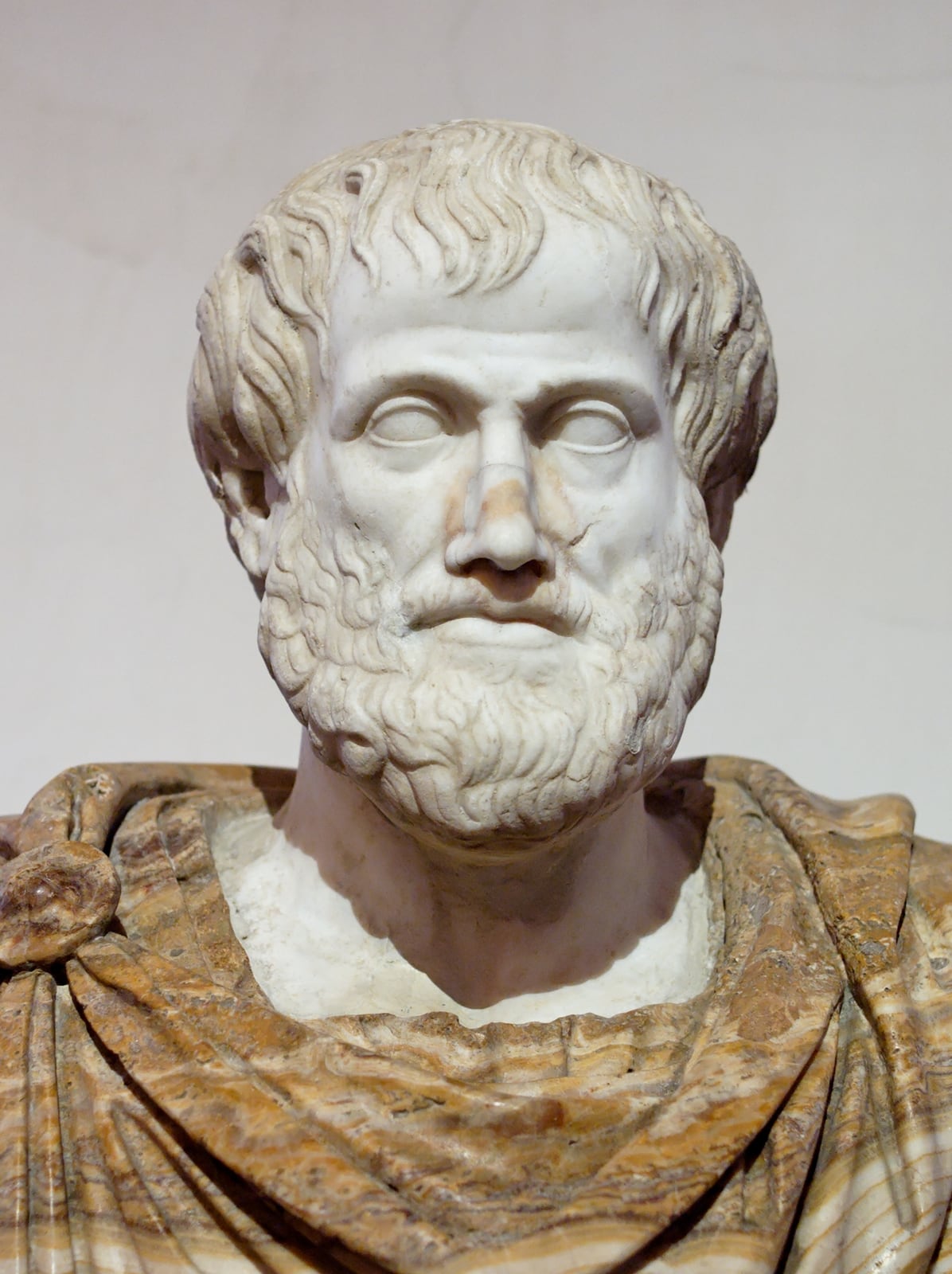
Busto de Aristóteles (Museo Nacional Romano, Palazzo Altemps) · Public domain
بكلماته
«“All men by nature desire to know.”»Metafísica I (A) 1, 980a21. Inglés: trad. de W. D. Ross (Oxford, 1908); español: trad. propia del griego.

فكرته المحورية
Substance (ousia): For Aristotle, “being” is said in many ways, but all of them refer to a first one: substance.
السيرة
5 دقيقة قراءة
ترجمة مُعانة من الأصل الإسباني، بانتظار مراجعة مترجم من أهل اللغة.
ابن طبيب على تخوم مقدونيا
وُلد أرسطو سنة 384 ق.م في ستاجيرا، وهي مدينة يونانية صغيرة في شبه جزيرة خالكيذيكي على الساحل الشمالي لبحر إيجة. كان أبوه نيقوماخوس طبيبًا وصديقًا للملك أمينتاس الثالث ملك مقدونيا، وكانت الأسرة تنتسب إلى أسقليبيوس عن طريق ماخاون؛ أما أمه فايستيس فكانت من خالكيس في جزيرة إيوبويا. وقد مات الاثنان وهو بعدُ صبيّ، فانتقلت الوصاية عليه إلى بروكسينوس الأتارني، الذي سيذكره الفيلسوف في وصيته حين أوصى بإقامة تمثال تخليدًا لذكراه. وتفسّر هذه الطفولة بين الأطباء ورجال البلاط، في رأي كثير من الدارسين، سمتين من سمات حياته: الشغف بملاحظة الكائنات الحية، وصلةً بالبيت الملكي المقدوني انتهت إلى أن تقرّر مصيره.
ويجدر التنبيه منذ البداية إلى أن كل ما نعرفه تقريبًا عن حياته مصدره روايات متأخرة. فأوسع سيرة له هي سيرة ديوجانس اللائرتي، التي كُتبت في القرن الثالث للميلاد استنادًا إلى مؤلفين هلنستيين مثل هرميبوس وأبولودوروس؛ وتُضاف إليها «السِّيَر» التي وضعها الشرّاح الأفلاطونيون المحدثون، وهي أقرب إلى التبجيل منها إلى النقد، وتقليدٌ معادٍ صوّره مختالًا متملّقًا للملوك. وقد دأب البحث الحديث، منذ إنغمار دورينغ، على الفصل بعناية بين المعطيات الزمنية، وهي على الأرجح موثوقة، والنوادر والحكايات.
عشرون عامًا في الأكاديمية
في السابعة عشرة من عمره، نحو سنة 367 ق.م، قدم إلى أثينا والتحق بأكاديمية أفلاطون، حيث مكث عشرين عامًا حتى وفاة أستاذه. كان فيها تلميذًا وباحثًا، ثم سرعان ما صار مدرّسًا للخطابة. وفي تلك المرحلة كتب محاورات موجّهة إلى جمهور واسع —«غريلوس» و«أوديموس» و«الحثّ على الفلسفة» و«في الفلسفة»— أُعجب شيشرون بنثرها فوصفه بأنه «نهر من ذهب»؛ ولم يبقَ منها سوى شذرات. ومن المرجّح أن الصيغ الأولى لكتاباته المنطقية تعود هي أيضًا إلى هذه السنوات.
كانت علاقته بأفلاطون علاقة تلميذ يجادل. ينقل ديوجانس اللائرتي عبارة منسوبة إلى الأستاذ: لقد رفسه أرسطو «كما ترفس الأمهارُ الأمَّ التي ولدتها». ويسري نقده لنظرية المُثُل في «ما بعد الطبيعة» و«الأخلاق النيقوماخية»، حيث يعترف بأنه يشقّ عليه أن يفنّد آراء أصدقاء، غير أن التقوى توجب تقديم الحق. وقد اقترح فيرنر يغر سنة 1923 قراءة أعماله على أنها ابتعاد تدريجي عن الأفلاطونية؛ ويُعدّ هذا التسلسل الزمني اليوم أوضح مما ينبغي، لكن التوتر الذي أشار إليه يظل حقيقيًا.
آسيا الصغرى ولسبوس وبلاط مقدونيا
بعد وفاة أفلاطون سنة 348/347 ق.م، وانتقال الأكاديمية إلى ابن أخته سبيوسيبوس، غادر أرسطو أثينا. فأقام في أسوس، في إقليم الطرواد، في حمى هرمياس حاكم أتارنيوس، الذي كانت تربطه به صداقة وثيقة، وتزوّج بيثياس ابنة أخيه وابنته بالتبنّي؛ وأنجبا ابنة تحمل الاسم نفسه. ونحو سنة 345/344 انتقل إلى ميتيليني في جزيرة لسبوس، حيث عمل إلى جانب ثيوفراسطس ابن إريسوس. وقد حملت الإشارات الكثيرة إلى بحيرة بيرّا في «تاريخ الحيوان» الدارسين على أن يجعلوا هناك قسمًا كبيرًا من ملاحظاته على الأسماك والرخويات والطيور.
وفي سنة 343/342 استدعاه فيليب الثاني إلى مقدونيا ليتولّى تربية ابنه الإسكندر، الذي كان آنذاك في الثالثة عشرة. وبحسب بلوتارخوس، كانت الدروس تُلقى في معبد الحوريات في ميزا، وقد احتفظ الأمير طوال حياته بنسخة من «الإلياذة» صحّحها أستاذه. ونال أرسطو إعادة بناء ستاجيرا التي دمّرها المقدونيون. ونحو سنة 341 أسر الفرسُ هرمياسَ غدرًا وأعدموه؛ فنظم له أرسطو نشيدًا في الفضيلة ونقشًا شعريًا لتمثاله في دلفي، وكلاهما سيكلّفه لاحقًا ثمنًا باهظًا.
اللوقيون
في سنة 335/334، بعد قليل من اعتلاء الإسكندر العرش، عاد إلى أثينا. ولمّا كان غريبًا مقيمًا لا يحق له تملّك الأرض، فقد علّم في اللوقيون، وهو ملعب رياضي عام مكرَّس لأبولون اللوقي، وقد منحت أروقتُه المسقوفة المعدّة للتمشّي —الـ«بيريباتوس»— المدرسةَ اسمها: المدرسة المشّائية. وهناك جمع مكتبة ونظّم عملًا جماعيًا لا سابق له: جمع مئة وثمانية وخمسين دستورًا لمدن يونانية، وقائمة الفائزين في الألعاب البيثية التي أعدّها مع قريبه كاليسثينيس، وحشدًا هائلًا من الملاحظات في علم الحيوان وعلم النبات.
والرسائل التي وصلتنا ليست كتبًا مصقولة موجّهة إلى الجمهور، بل مواد تعليمية نُقّحت مرة بعد مرة: في المنطق والطبيعيات والنفس والأحياء وما بعد الطبيعة والأخلاق والسياسة والخطابة والشعر. وهذه الطبيعة تفسّر كثافتها وتكرارها وسعتها المذهلة. وفي أثينا ماتت بيثياس؛ فعاش أرسطو بعدها مع هربيليس، من ستاجيرا، وأنجب منها ابنًا هو نيقوماخوس. وفترت علاقته بالإسكندر بعد مقتل كاليسثينيس، الذي اتُّهم بالتآمر على الملك سنة 327.
خالكيس والوصية ومصير الكتب
أطلق موت الإسكندر في بابل، في يونيو/حزيران سنة 323، موجة معادية للمقدونيين في أثينا. فاتّهم الكاهنُ الأكبر يوريميدون أرسطو بالكفر، متذرّعًا بالنشيد المهدى إلى هرمياس، فانسحب الفيلسوف إلى خالكيس، إلى بيت أسرة أمه. وينسب إليه تقليد قديم قوله إنه لن يسمح للأثينيين بأن يجنوا على الفلسفة مرتين، في إشارة إلى سقراط. وهناك مات سنة 322، في الثانية أو الثالثة والستين من عمره، ميتة طبيعية بحسب تأريخ أبولودوروس؛ أما الرواية القائلة إنه شرب خانق الذئب، التي ينقلها ديوجانس اللائرتي عن يوميلوس، فلا تستحق التصديق.
ونسخ ديوجانس اللائرتي وصيته، وهي من أكثر الوثائق الشخصية تأثيرًا في العصور القديمة. ففيها يعيّن أنتيباتروس منفّذًا لها، ويوصي بهربيليس وبأولاده، ويعتق عددًا من العبيد، ويحظر بيع من خدموه، ويطلب أن توضع إلى جانبه عظام بيثياس حيثما دُفن، كما أوصت هي نفسها.
وبحسب سترابون وبلوتارخوس، انتقلت مكتبته إلى ثيوفراسطس، ومنه إلى نيليوس السكيبسي، الذي أخفاها ورثته في قبو؛ ثم اشتراها جامع كتب هو أبليكون التيوسي، وحملها سولّا إلى روما بعد أن استولى على أثينا سنة 86 ق.م. وهناك، كما يُروى، نشر أندرونيقوس الرودسي الرسائل بالترتيب الذي لا نزال نقرؤها به في جوهره. ويختلف الدارسون في مدى صحة هذه الحكاية، لكن المتن الحالي يرجع بالفعل إلى نشرة من القرن الأول قبل الميلاد.
ألفا عام من الأستاذية
لم يحظَ فيلسوف بحياة بعد الموت أطول من حياته. فقد جعل الشرّاح اليونانيون، من الإسكندر الأفروديسي إلى الأفلاطونيين المحدثين في أثينا والإسكندرية، منطقَه بابَ الفلسفة كلها، وإن كان أفلوطين قد ناقش مقولاته بقسوة. وفي القرن التاسع تُرجمت مؤلفاته إلى العربية في بغداد؛ فلُقّب الفارابي بـ«المعلّم الثاني»، وأعاد ابن سينا بناء ميتافيزيقاه، واستحق ابن رشد لقب «الشارح». وحارب الغزالي الفلاسفة الذين تبعوه، وعدّه موسى بن ميمون ذروة العقل الإنساني في كل ما يتعلّق بعالم ما تحت فلك القمر.
ومن طليطلة في القرن الثاني عشر، ثم بفضل ترجمات وليم الموربيكي في القرن الثالث عشر، دخلت أعماله الجامعات اللاتينية. فكان عند توما الأكويني «الفيلسوف» بلا زيادة، ووضعه دانتي في «اللمبو» بوصفه «معلّم العارفين». وقد قوّضت الثورة العلمية طبيعياته، لكن علم الأحياء عنده صمد: فقد كتب داروين سنة 1882 أن لينيوس وكوفييه، إلهيه الاثنين، ليسا إلا «تلميذين صغيرين» إلى جانب أرسطو العجوز.
وثبّتت طبعة أكاديمية برلين، التي أشرف عليها إيمانويل بيكر ابتداءً من سنة 1831، الترقيم بحسب الصفحة والعمود والسطر الذي لا يزال يُستشهد به إلى اليوم —«ما بعد الطبيعة» 980a21—، وفي سنة 1891 أعادت بردية من المتحف البريطاني إلى النور «دستور الأثينيين». وفي القرن العشرين عادت أخلاق الفضيلة عنده إلى قلب النقاش الأخلاقي. ولقارئ مكتبةٍ للوعي، يقدّم أرسطو شيئًا أقل بداهة من مذهب روحي: الاقتناع بأن أسمى حياة هي حياة التأمّل، حياة العقل الذي يعرف ذاته، وبأن الوصول إليها يكون بتهذيب عادات كل يوم في صبر وأناة.
المصادر: Cicerón. Académicos II (Lúculo), 119: «veniet flumen orationis aureum fundens Aristoteles». · Diógenes Laercio. Vidas de los filósofos ilustres, libro V, 1–35 («Aristóteles»). Trad. inglesa de R. D. Hicks, Lives of Eminent Philosophers, vol. I, Loeb Classical Library 184. Londres: Heinemann, 1925 (texto en Wikisource). · Natali, Carlo. Aristotle: His Life and School. Ed. D. S. Hutchinson. Princeton: Princeton University Press, 2013. · Düring, Ingemar. Aristotle in the Ancient Biographical Tradition. Göteborg: Acta Universitatis Gothoburgensis, 1957. · Barnes, Jonathan (ed.). The Complete Works of Aristotle: The Revised Oxford Translation. 2 vols. Princeton: Princeton University Press (Bollingen Series LXXI.2), 1984.
الخط الزمني
الحياة عامًا بعد عام
كل نقطة حدث موثّق. انقر لتقرأه مع مصدره ودرجة اليقين فيه.
384 ق.مأقل من عامEstagira (Calcídica)
Birth at Stagira
Aristotle is born, son of the physician Nicomachus and of Phaestis. Apollodorus, quoted by Diogenes Laertius, dates the birth to the first year of the 99th Olympiad (384/383 BCE).
موثّقDiógenes Laercio. Vidas de los filósofos ilustres, libro V, 1–35 («Aristóteles»). Trad. inglesa de R. D. Hicks, Lives of Eminent Philosophers, vol. I, Loeb Classical Library 184. Londres: Heinemann, 1925 (texto en Wikisource).
بعد وفاته
- 86 ق.مThe library reaches Rome
- القرن I ق.مAndronicus of Rhodes's edition
- القرن IXTranslations into Arabic
- 1255Aristotle in the University of Paris curriculum
- 1495Aldus Manutius's editio princeps
- 1831Bekker's edition
- 1891The Constitution of the Athenians reappears
384 ق.م · أقل من عام
Birth at Stagira
Aristotle is born, son of the physician Nicomachus and of Phaestis. Apollodorus, quoted by Diogenes Laertius, dates the birth to the first year of the 99th Olympiad (384/383 BCE).
موثّق
نحو 370 ق.م
Orphaned, in the care of Proxenus
His parents having died while he was still a child, he passes into the care of Proxenus of Atarneus. The detail comes from the late Lives; the will confirms the bond by commissioning a statue of Proxenus.
مرجَّح
367 ق.م · 17 عامًا
Entry into Plato's Academy
At seventeen he comes to Athens and enters the Academy, where he will remain for twenty years as student, researcher and teacher.
موثّق
نحو 360 ق.م
The public dialogues
He writes dialogues and exhortations for a wide readership — Gryllus, Eudemus, Protrepticus, On Philosophy — now lost except for fragments.
مرجَّح
347 ق.م · 37 عامًا
Plato's death and departure from Athens
After Plato's death and Speusippus's election as head of the Academy, he leaves Athens and settles at Assos with Hermias of Atarneus.
موثّق
نحو 346 ق.م
Marriage to Pythias
He marries Pythias, Hermias's niece and adopted daughter; they will have a daughter of the same name.
مرجَّح
345 ق.م
Lesbos and biological research
In the archonship of Eubulus (345/344) he moves to Mytilene. With Theophrastus he studies the fauna of the lagoon of Pyrrha, the basis of much of his zoological work.
موثّق
343 ق.م · 41 عامًا
Tutor to Alexander
Philip II summons him to Macedonia to educate the thirteen-year-old Alexander. According to Plutarch, the lessons take place in the sanctuary of the Nymphs at Mieza.
موثّق
نحو 341 ق.م
Execution of Hermias; the hymn to Virtue
Hermias is treacherously captured by the Persians and executed. Aristotle composes in his honour a hymn to Virtue and an epigram for his statue at Delphi, both preserved by Diogenes Laertius.
موثّق
335 ق.م · 49 عامًا
Foundation of the Lyceum
He returns to Athens (335/334) and teaches in the gymnasium of the Lyceum for thirteen years. His followers will be called Peripatetics.
موثّق
نحو 330 ق.م
The 158 constitutions and the Pythian list
He directs the collection of the constitutions of 158 cities and, with Callisthenes, the list of victors at the Pythian Games, honoured by Delphi with an inscription.
موثّق
327 ق.م
Death of Callisthenes
Callisthenes, Aristotle's kinsman and historian of the expedition, dies accused of conspiring against Alexander; ancient sources place here the cooling between the king and his former teacher.
مرجَّح
323 ق.م · 61 عامًا
Charge of impiety and retreat to Chalcis
After Alexander's death, the hierophant Eurymedon charges him with impiety over the hymn to Hermias. He withdraws to Chalcis in Euboea, to his mother's family house.
موثّق
322 ق.م · 62 عامًا
Death at Chalcis
He dies at Chalcis aged sixty-two or sixty-three, a natural death according to Apollodorus, in the same year as Demosthenes. His will is preserved by Diogenes Laertius.
موثّق
86 ق.م
The library reaches Rome
According to Strabo and Plutarch, Sulla carries off to Rome the library of Apellicon of Teos, which contained the manuscripts of Aristotle and Theophrastus.
مختلَف فيه
القرن I ق.م
Andronicus of Rhodes's edition
Andronicus of Rhodes arranges and edits the school treatises in the first century BCE; the corpus we possess derives from his edition.
مرجَّح
القرن IX
Translations into Arabic
In the ninth century the Baghdad translators, among them Hunayn ibn Ishaq and his son Ishaq, render most of the corpus into Arabic, the foundation of falsafa.
موثّق
1255
Aristotle in the University of Paris curriculum
A 1255 statute of the Paris Faculty of Arts places practically all the known works of Aristotle on the curriculum, after decades of prohibitions.
موثّق
1495
Aldus Manutius's editio princeps
Aldus Manutius prints in Venice (1495–1498) the first edition of Aristotle's Greek text, in five volumes.
موثّق
1831
Bekker's edition
The Prussian Academy publishes Immanuel Bekker's edition, whose pagination (for example, 980a21) remains the universal system of reference.
موثّق
1891
The Constitution of the Athenians reappears
Frederic Kenyon publishes, from a papyrus acquired by the British Museum, the Constitution of the Athenians, lost since antiquity.
موثّق
المؤلَّفات
المؤلَّفات الأساسية
المؤلَّفات التي لا يُفهم إرثه من دونها.
مؤلَّف مكتوب
Metaphysics
Τὰ μετὰ τὰ φυσικά
The work in which Aristotle seeks “first science”: the study of being qua being, of the highest causes and principles and of divine substance. It opens with the famous sentence “all men by nature desire to know” and with a history of earlier philosophy read as a progressive discovery of the four causes. Book B sets out the puzzles; Γ defends the principle of non-contradiction; Δ is a philosophical lexicon; Z, H and Θ, the core, examine substance, form, matter, actuality and potentiality; Λ culminates in the first unmoved mover, “thinking of thinking”; M and N criticise the Platonic theory of Forms and numbers. No work has influenced Western, Islamic and Jewish metaphysics more.
6 طبعات · amazon.com

مؤلَّف مكتوب
Nicomachean Ethics
Ἠθικὰ Νικομάχεια
The most influential work of ethics in history. It starts from the question of the highest human good, which everyone calls happiness, and defines it as an activity of the soul in accordance with virtue over a complete life. It explains ethical virtue as habit and as a mean chosen according to right reason, analyses courage, temperance, liberality, magnanimity and justice, distinguishes the intellectual virtues — with practical wisdom at their centre —, studies incontinence and pleasure, and devotes two admirable books to friendship. Book X concludes that the happiest life is the contemplative one, in which a human being lives according to what is divine in him, and leads into the Politics.
4 طبعات · amazon.com

مؤلَّف مكتوب
Politics
Πολιτικά
A continuation of the Ethics: if happiness is the end of the individual, the city is the community that makes it possible. Book I holds that the human being is by nature a political animal, endowed with speech, and studies the household, economics and — in pages unacceptable today — natural slavery. Book II criticises Plato's Republic and the constitutions of Sparta, Crete and Carthage; book III defines the citizen and classifies regimes into correct (monarchy, aristocracy, polity) and deviant (tyranny, oligarchy, democracy); books IV–VI, based on the 158 constitutions collected at the Lyceum, analyse the causes of revolutions and praise the mixed regime resting on the middle classes; books VII–VIII describe the ideal city and its education.
4 طبعات · amazon.com

مؤلَّف مكتوب
Poetics
Περὶ ποιητικῆς
The founding text of Western literary theory. It conceives poetry as imitation (mimesis) of human actions, natural to human beings and a source of knowledge and pleasure, and claims it is more philosophical than history because it speaks of the universal. It defines tragedy as the imitation of a serious and complete action which, through pity and fear, accomplishes the purification (katharsis) of such emotions, and analyses its six parts, with the plot as the “soul” of the work, reversal, recognition and the tragic error (hamartia). Rediscovered in the Renaissance, it dictated the rules of classical drama for centuries.
5 طبعات · amazon.com
جميع مؤلَّفاته (67)

Categories

On Interpretation (De interpretatione)
Prior Analytics
Posterior Analytics
Topics
Sophistical Refutations

Physics

On the Heavens (De caelo)

On Generation and Corruption
Meteorology (Meteorologica)

On the Cosmos (De mundo)

On the Soul (De anima)
On Sense and the Sensible
On Memory and Recollection
On Sleep and Waking
On Dreams
On Divination in Sleep
On Length and Shortness of Life
On Youth and Old Age, On Life and Death
On Respiration

On Breath (De spiritu)

History of Animals (Historia animalium)

Parts of Animals
Movement of Animals (De motu animalium)
الأقوال
أقوال محدَّدة الموضع في مؤلَّف بعينه. كل منها يحمل مصدره ودرجة الثقة به.
“All men by nature desire to know.”Πάντες ἄνθρωποι τοῦ εἰδέναι ὀρέγονται φύσει.
متحقَّق منهMetafísica I (A) 1, 980a21. Inglés: trad. de W. D. Ross (Oxford, 1908); español: trad. propia del griego.
أقوال منحولة أو مختلَف في نسبتها (3)
«“We are what we repeatedly do. Excellence, then, is not an act, but a habit.”»
Not Aristotle's: it is a paraphrase by Will Durant in The Story of Philosophy (1926), chapter on Aristotle, summarising in his own words the doctrine of Nicomachean Ethics II 1 on virtue as habit. The sentence circulates as if it were a direct quotation.
«“Amicus Plato, sed magis amica veritas” (“Plato is a friend, but truth is a greater friend”).»
The idea is in Nicomachean Ethics I 6, 1096a16, but the Latin formula is not his. An ancient Life of Aristotle attributed to Ammonius transmits it as “Socrates is a friend, but truth is a greater friend”; Roger Bacon uses it with Socrates, Newton writes “amicus Plato, amicus Aristoteles, magis amica veritas”, and the version with Plato appears in Don Quixote.
«“It is the mark of an educated mind to be able to entertain a thought without accepting it.”»
It is found in no work of Aristotle. It appears attributed to him in American books from 1959 (Lowell L. Bennion, Religion and the Pursuit of Truth) and seems a distortion of Nicomachean Ethics I 3, 1094b23–25, which says that an educated person looks for as much precision in each subject as its nature admits.
الكلمات الأخيرة
لا توجد سجلات يمكن التحقق منها لكلماته الأخيرة.
No reliable final sentence survives. The nearest thing to last words is his will, copied by Diogenes Laertius (V 11–16): it opens “All will be well; but, in case anything should happen, Aristotle has made these dispositions”, and closes with the instruction to lay the bones of Pythias beside him and to set up statues of Zeus and Athena the Saviours at Stagira. Contradictory accounts of his death circulated: a natural death at sixty-three (Apollodorus, accepted by Diogenes Laertius), poisoning with aconite (Eumelus, rejected by Diogenes himself) and, in late authors, the legend that he threw himself into the strait of Euripus because he could not explain its currents, with no basis in the early sources. The remark about not letting Athens “sin twice against philosophy” belongs to his departure from Athens, not to his deathbed.
المصدر: Diógenes Laercio. Vidas de los filósofos ilustres, libro V, 1–35 («Aristóteles»). Trad. inglesa de R. D. Hicks, Lives of Eminent Philosophers, vol. I, Loeb Classical Library 184. Londres: Heinemann, 1925 (texto en Wikisource).
اسأل
بماذا يجيب أثره
اثنا عشر سؤالًا كبيرًا من أسئلة الإنسانية، وما تتيح نصوصه الإجابة به عنها، مع المراجع. ولا نقوّله ما لم يقل أبدًا.
ما المطلق؟ هل الله موجود؟
A first unmoved mover that is thought thinking itself
مطلق غير شخصييقوله صراحةً
Aristotle reaches God through physics and metaphysics, not revelation. If there is eternal motion, there must be a first mover that moves without being moved; in book Lambda of the Metaphysics this mover is pure actuality, without matter, and moves as the beloved moves, by attraction. Its life is the best: it is thought, and since the most excellent can only think itself, it is thought of thought. Aristotle calls it god and an eternal living being, but it does not create the world, which is eternal, nor know individuals nor answer prayer. It is an absolute that is faceless intelligence, final cause of everything, closer to a principle than to someone.
قارن هذا السؤال مع معلّمين آخرينمن أنا؟ هل توجد ذات حقيقية؟
The soul is the body's form; character is forged by habit and friendship
ذات تُصقَل في العلاقةيقوله صراحةً
Aristotle rejects both Plato's separate soul and the atomists' materialism. In On the Soul he defines it as the form, the first actuality of a natural body that has life potentially: it makes no sense to ask whether soul and body are one, any more than to ask it of the wax and its shape. What we call character is not given: virtues are acquired by habit, becoming just by doing just acts. And the human being, by nature a political animal, is fulfilled only in the city and in friendship: the friend is another self. Only intellect, which in an obscure passage he calls separable, immortal and eternal, escapes this embodied form.
قارن هذا السؤال مع معلّمين آخرينلماذا نتألّم؟
Happiness depends on virtue, but also on fortune and the city
الفوضى الاجتماعية والأخلاقيةيُستنتج من تعاليمه
Aristotle does not ask about suffering in general but about why a life fails. His answer has several layers. The main one is vice: an ill-formed character, which does not feel pleasure and pain at the right things, lives in conflict with itself, and in book IX he describes the wicked man as someone who flees from himself. But virtue is not enough: happiness also needs external goods, and great misfortunes like Priam's can ruin it, though the good man bears them nobly. And since we are political animals, a badly ordered city and a bad education deform their citizens. Pain comes from disorder of character, from fortune and from the community.
قارن هذا السؤال مع معلّمين آخرينماذا يحدث بعد الموت؟
The soul dies with the body; perhaps only intellect is immortal
صمت أو تحفّظيُستنتج من تعاليمه
If the soul is the form of the living body, as On the Soul maintains, it cannot exist without it, just as shape does not exist without wax; Aristotle describes no destiny of the individual soul after death. The exception is a brief and obscure passage: the intellect that makes all things is separable, impassive and unmixed, and it alone is immortal and eternal, though “we do not remember”. Since antiquity it has been debated whether that intellect is personal, common to all humans or even divine. The Ethics treats death as the most fearful of evils because it is an end, and the courageous man is the one who faces it nobly. About the beyond, Aristotle keeps his reserve.
قارن هذا السؤال مع معلّمين آخرينكيف يُبلَغ التحرّر أو الخلاص؟
Happiness is activity of the soul according to virtue, culminating in contemplation
بالفضيلة والانسجاميقوله صراحةً
Aristotle seeks no exit from the world but the accomplished life within it. The Nicomachean Ethics defines happiness as activity of the soul in accordance with virtue over a complete life: one swallow does not make a spring. Moral virtues are acquired by habit and consist in a mean determined by practical reason; friendship and the city are their natural setting. In book X he adds that the highest activity is contemplation, because it is that of intellect, the most divine thing in us, and urges us to make ourselves immortal as far as possible. There is no grace or sudden illumination: there is cultivated excellence that makes a human happy insofar as one can be.
قارن هذا السؤال مع معلّمين آخرينهل نحتاج إلى معلّم؟
Virtues are learned through good habits, laws and educators
مفيد لكنه ليس ضروريًايقوله صراحةً
Aristotle, who spent twenty years in the Academy and later founded the Lyceum, gives great weight to education but does not make it initiatory transmission. Moral virtues are acquired by habit, so it matters a great deal, or rather everything, to be habituated one way or another from youth. For this good educators and good laws are needed, and the Ethics ends by passing to the Politics precisely because the legislator is the great educator. But nobody can be virtuous for another: we become just by doing just acts. And in theoretical knowledge, loyalty to the teacher yields to truth: both being dear, piety requires preferring truth, he says when criticising Plato.
قارن هذا السؤال مع معلّمين آخرينهل العالم حقيقي؟
An eternal nature, in motion, that does nothing in vain
نظام طبيعي في تحوّليقوله صراحةً
Aristotle is the defender par excellence of the reality of the sensible world. Against Parmenides, he explains change through potentiality and actuality; against Plato, he places forms in things themselves. Nature is a principle of motion and rest in what possesses it, and acts for an end: it does nothing in vain. The cosmos is eternal, without beginning or end, with a heaven of perfect circular motion and a sublunary region of ceaseless generation and corruption. Even the humblest animals deserve study, because in all natural things there is something marvellous. The world is real, ordered and changing, and knowing it is the task of science.
قارن هذا السؤال مع معلّمين آخرينما الحب؟
Perfect friendship is wishing the other's good for their own sake
إحسان منظَّميقوله صراحةً
Aristotle devotes two books of the Nicomachean Ethics to friendship (philia), which he considers necessary for life: no one would choose to live without friends even with all other goods. He distinguishes three kinds by their motive — utility, pleasure and the good — and only the last is perfect and lasting: that of good people who wish the friend's good for the friend's sake. The friend is another self, and right self-love, that of one who loves the best in himself, is its foundation. Friendship has its degrees and proportions: that of parents and children, of spouses, of fellow citizens. It is an ordered goodwill that begins in the household and sustains the city.
قارن هذا السؤال مع معلّمين آخرينهل نحن أحرار أم أن كل شيء مقدَّر؟
It is in our power to be virtuous and also to be vicious
إرادة حرة حقيقيةيقوله صراحةً
In book III of the Nicomachean Ethics Aristotle analyses the voluntary and the involuntary to delimit responsibility. Involuntary are acts forced from outside or done through ignorance of the circumstances; the others have their principle in the agent. Deliberate choice (prohairesis) bears on what depends on us, and it follows that virtue and vice are in our power: where it is up to us to act, it is also up to us not to act. Even character, once formed, is our responsibility, because we formed it by our acts. In On Interpretation he further argues that future contingents are not already settled.
قارن هذا السؤال مع معلّمين آخرينلماذا نتأمّل أو نصلّي؟
Contemplation is the highest and happiest activity
رؤية الواقع كما هويقوله صراحةً
Aristotle does not speak of prayer in a personal sense; his god hears no supplications. But he places at the summit of human life an activity that has something of what other traditions call meditation: contemplation (theoria). In book X of the Nicomachean Ethics he describes it as the activity of intellect, the most divine thing in us; it is the most continuous, the most pleasant, the most self-sufficient, the only one loved for its own sake, and in it a human lives according to what is divine in him. Its object is truth: causes, principles, the eternal. To contemplate is to see what is as it is, with no other end than seeing it.
قارن هذا السؤال مع معلّمين آخرينهل يستطيع العقل أن يعرف الحقيقة القصوى؟
All humans by nature desire to know, up to the first causes
الدراسة والتعلّميقوله صراحةً
The Metaphysics opens by stating that all humans by nature desire to know, and that philosophy was born of wonder. For Aristotle reason can know the ultimate: wisdom is the science of first causes and principles, and it culminates in theology, the study of the first mover. The way is long and gradual: from sensation to memory, from memory to experience, from experience to art and science; first principles are grasped by intellect through induction. None of this is received by revelation: it is learned by inquiry, gathering the opinions of predecessors and examining their puzzles. Knowledge of the divine is the highest fruit of study.
قارن هذا السؤال مع معلّمين آخرينالانسحاب من العالم أم تغييره؟
Man is a political animal: the good life is realised in the city
تنظيم المجتمعيقوله صراحةً
For Aristotle the human being is by nature a political animal, and whoever cannot live in community or does not need it is either a beast or a god. The city exists for the sake of living well, and its good is greater and more complete than the individual's; that is why ethics leads into politics and legislation. Aristotle studied one hundred and fifty-eight constitutions and discussed in the Politics which regime is best. At the same time, in book X of the Ethics he places the contemplative life, the most divine and happiest, above the political life. But even the contemplative, as a human, lives among others and chooses to act in accordance with virtue.
قارن هذا السؤال مع معلّمين آخرين
التقارب والتوتّر
التقارب والتوتّر
محسوبة سؤالًا سؤالًا انطلاقًا من مواقفه. وسبب كل اتفاق أو اختلاف يظهر بالنقر.
يقترب في تفكيره من
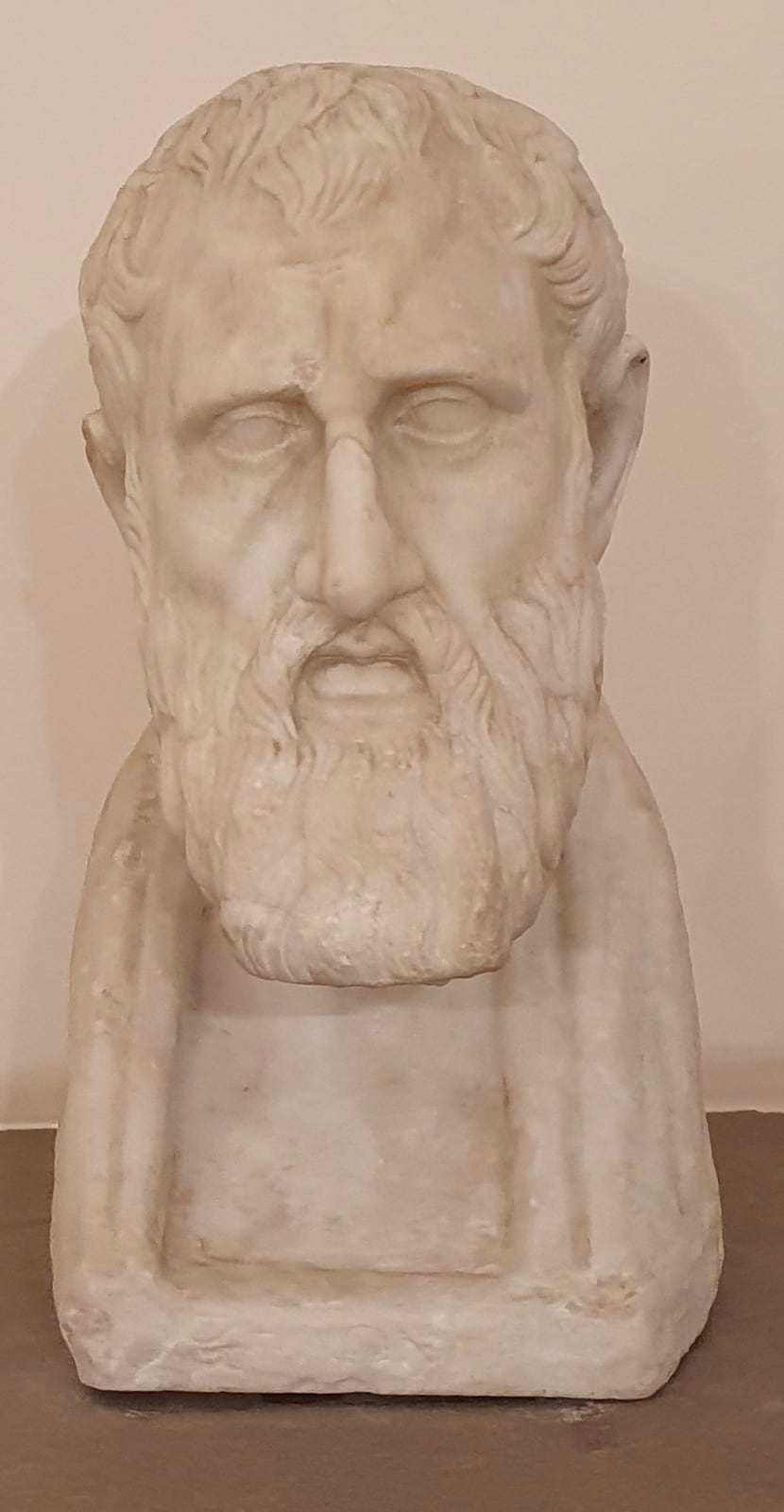
Zeno of Citium
يتّفقان في: ما المطلق؟ هل الله موجود؟ · من أنا؟ هل توجد ذات حقيقية؟ · لماذا نتألّم؟
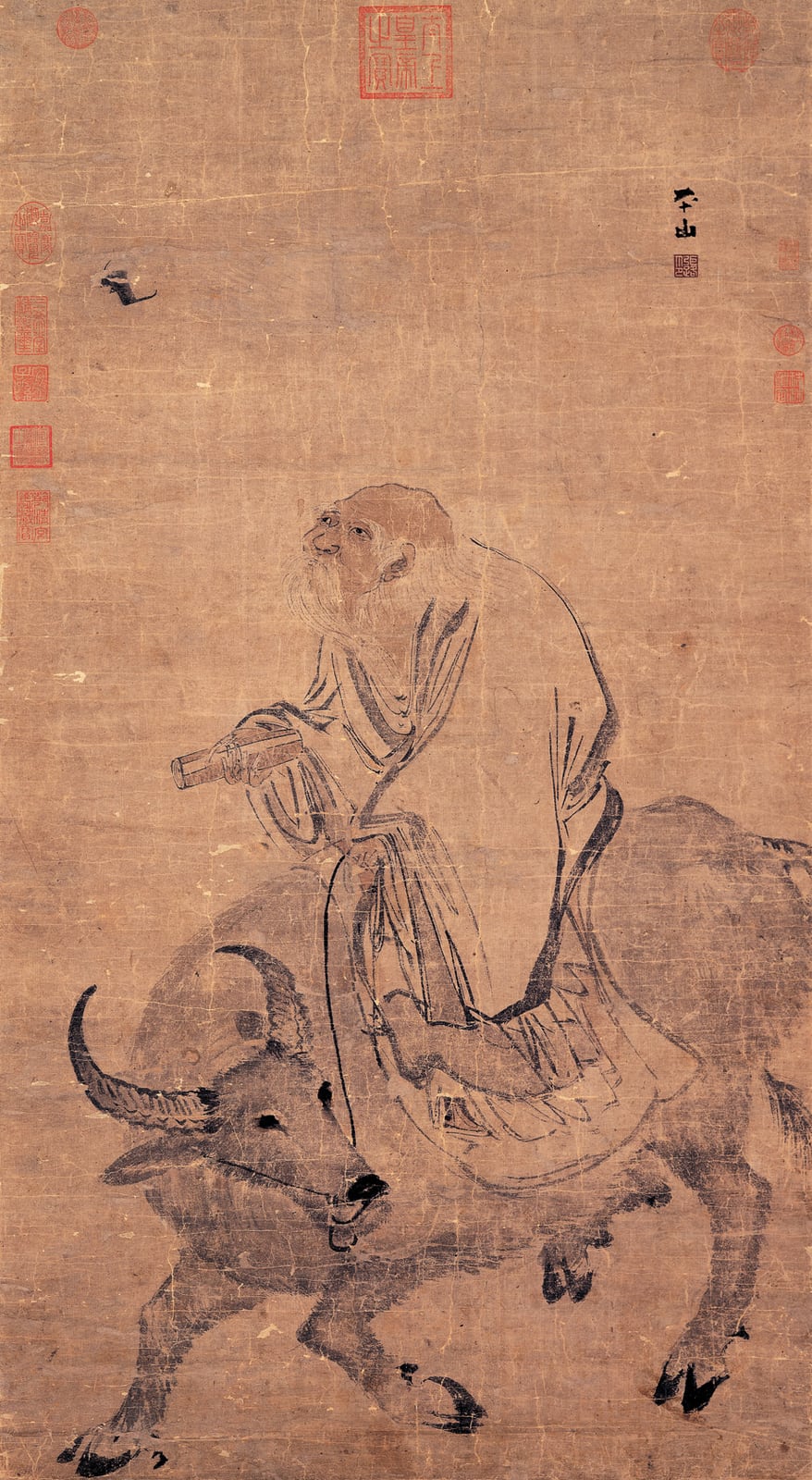
Laozi
يتّفقان في: لماذا نتألّم؟ · ماذا يحدث بعد الموت؟ · كيف يُبلَغ التحرّر أو الخلاص؟
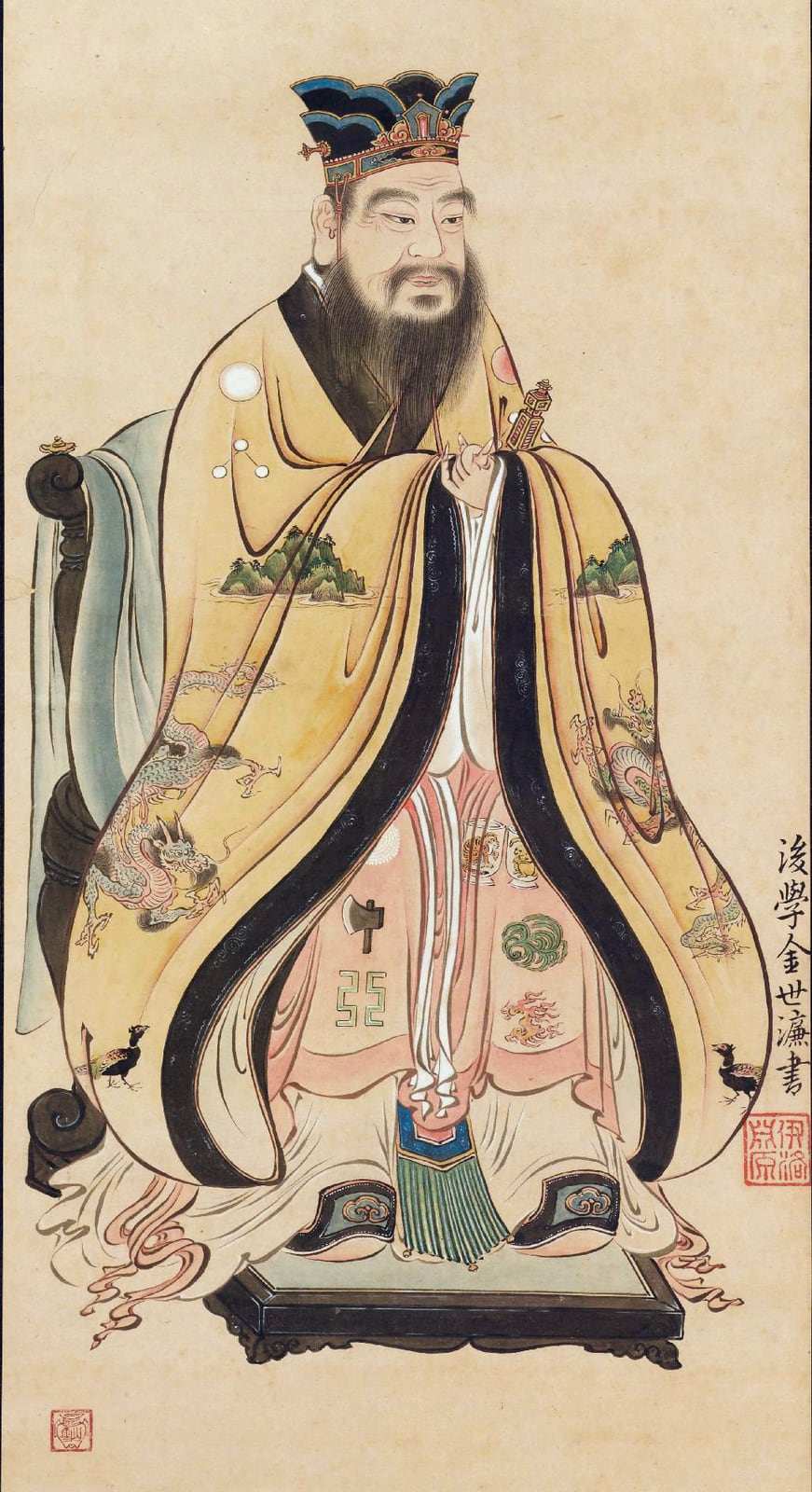
Confucius
يتّفقان في: من أنا؟ هل توجد ذات حقيقية؟ · لماذا نتألّم؟ · ماذا يحدث بعد الموت؟
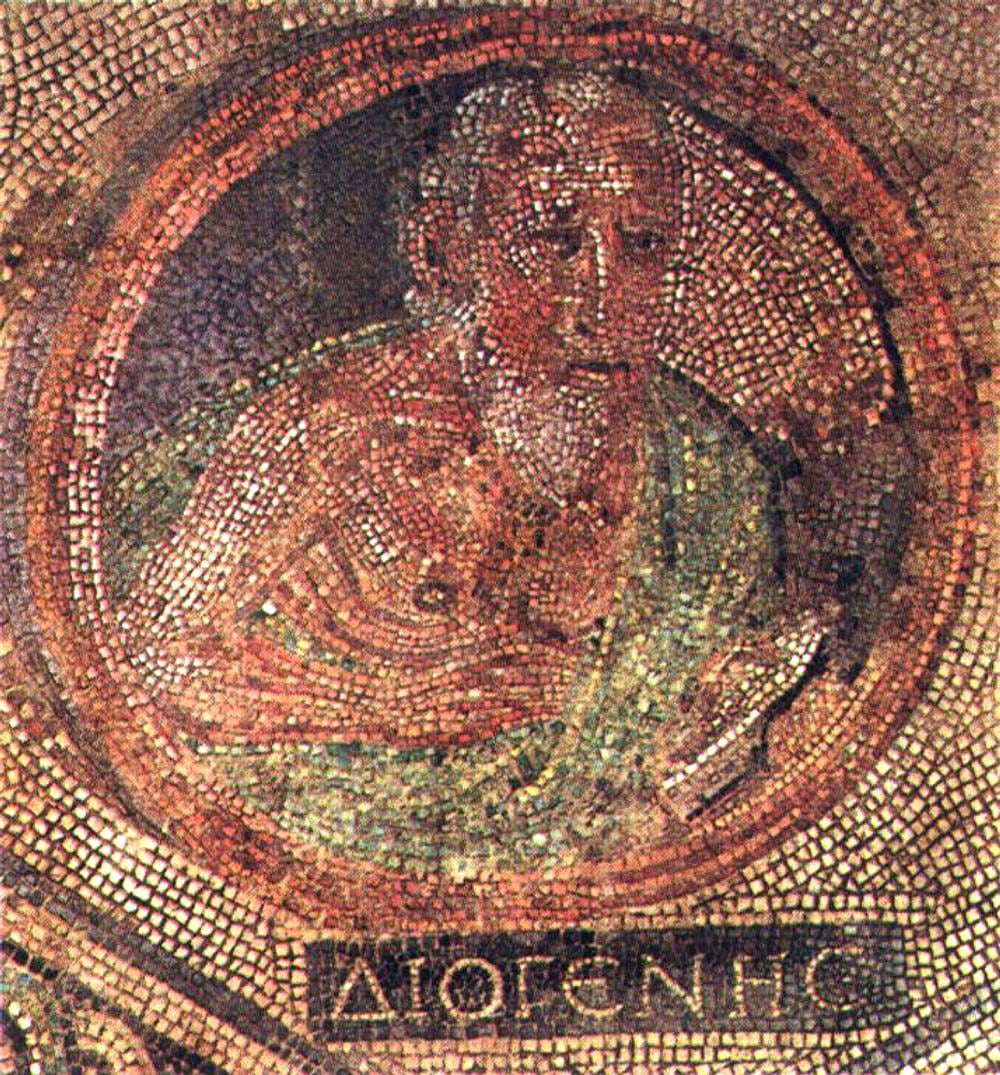
Diogenes of Sinope
يتّفقان في: ماذا يحدث بعد الموت؟ · هل نحتاج إلى معلّم؟ · هل العالم حقيقي؟
يبتعد في تفكيره عن
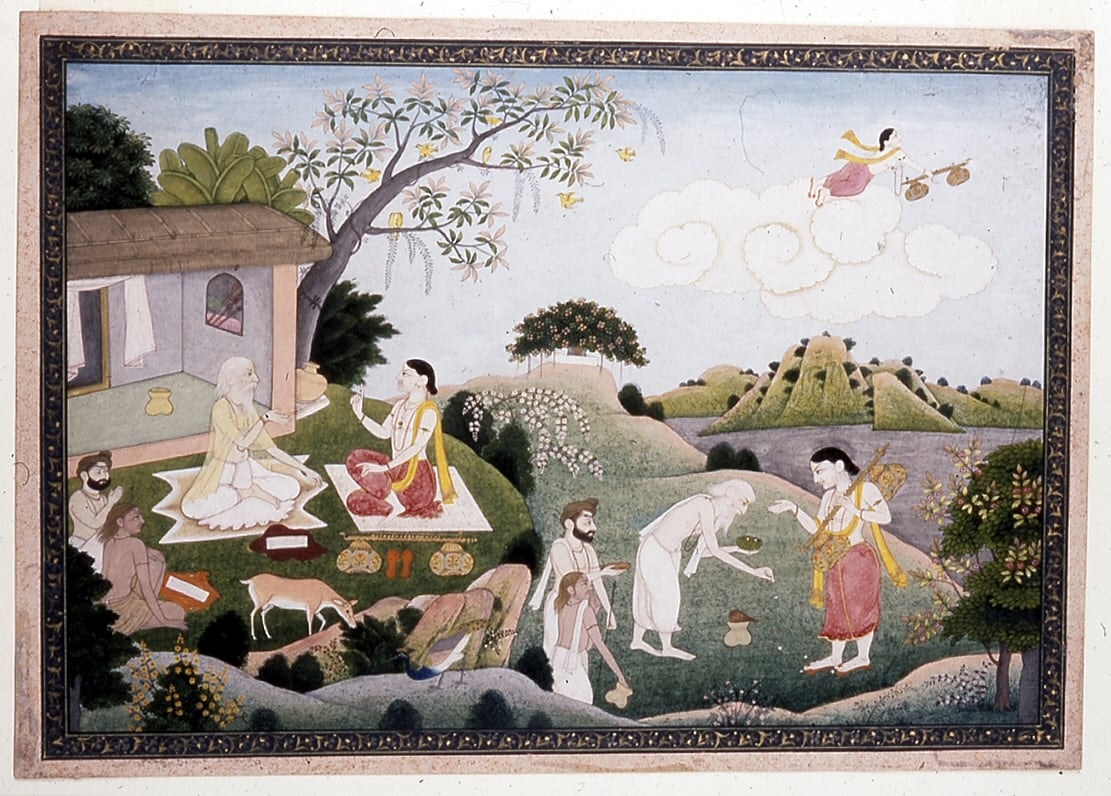
Narada
يختلفان في: ما المطلق؟ هل الله موجود؟ · لماذا نتألّم؟ · كيف يُبلَغ التحرّر أو الخلاص؟
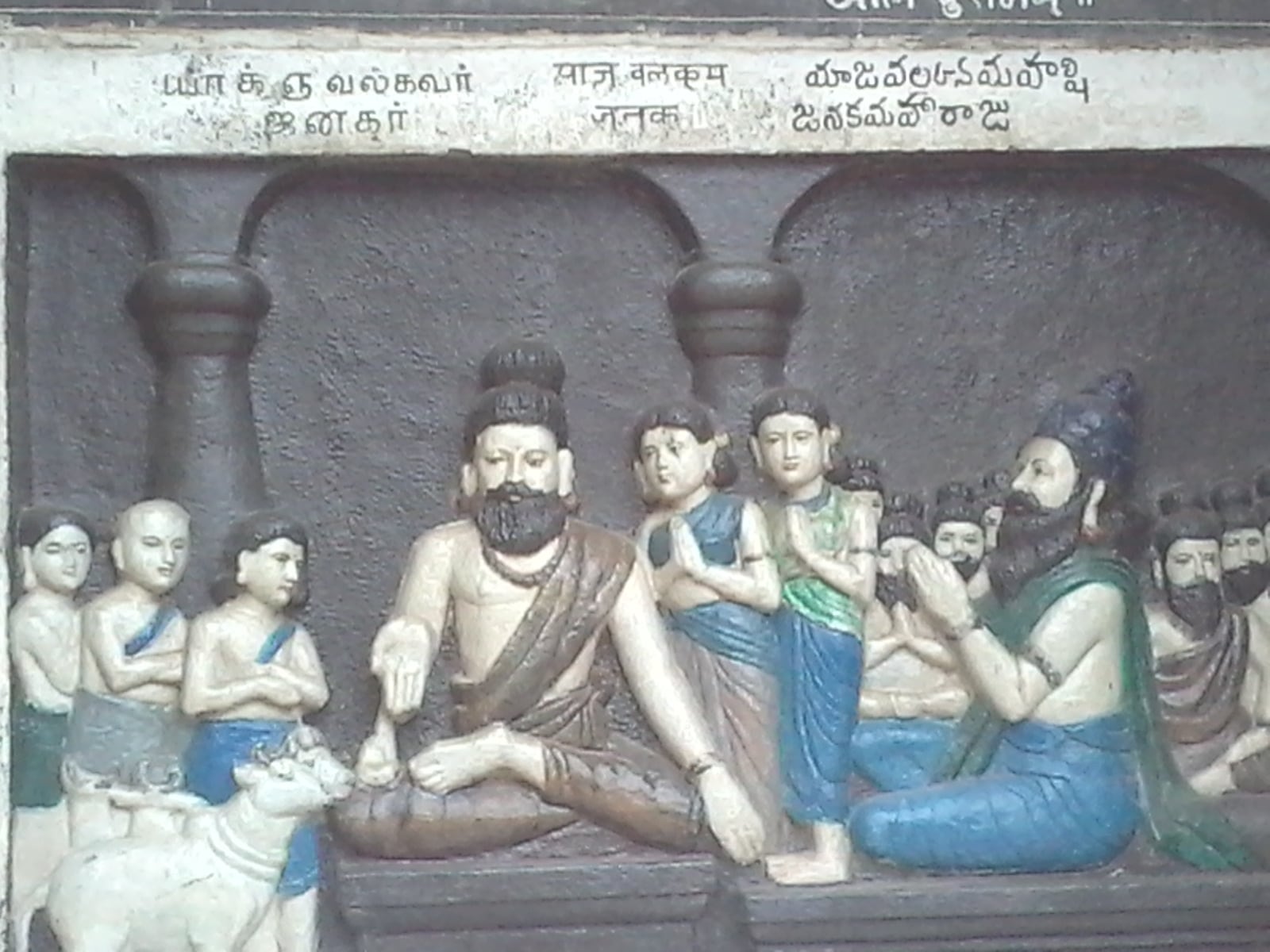
Yajnavalkya
يختلفان في: ما المطلق؟ هل الله موجود؟ · من أنا؟ هل توجد ذات حقيقية؟ · لماذا نتألّم؟
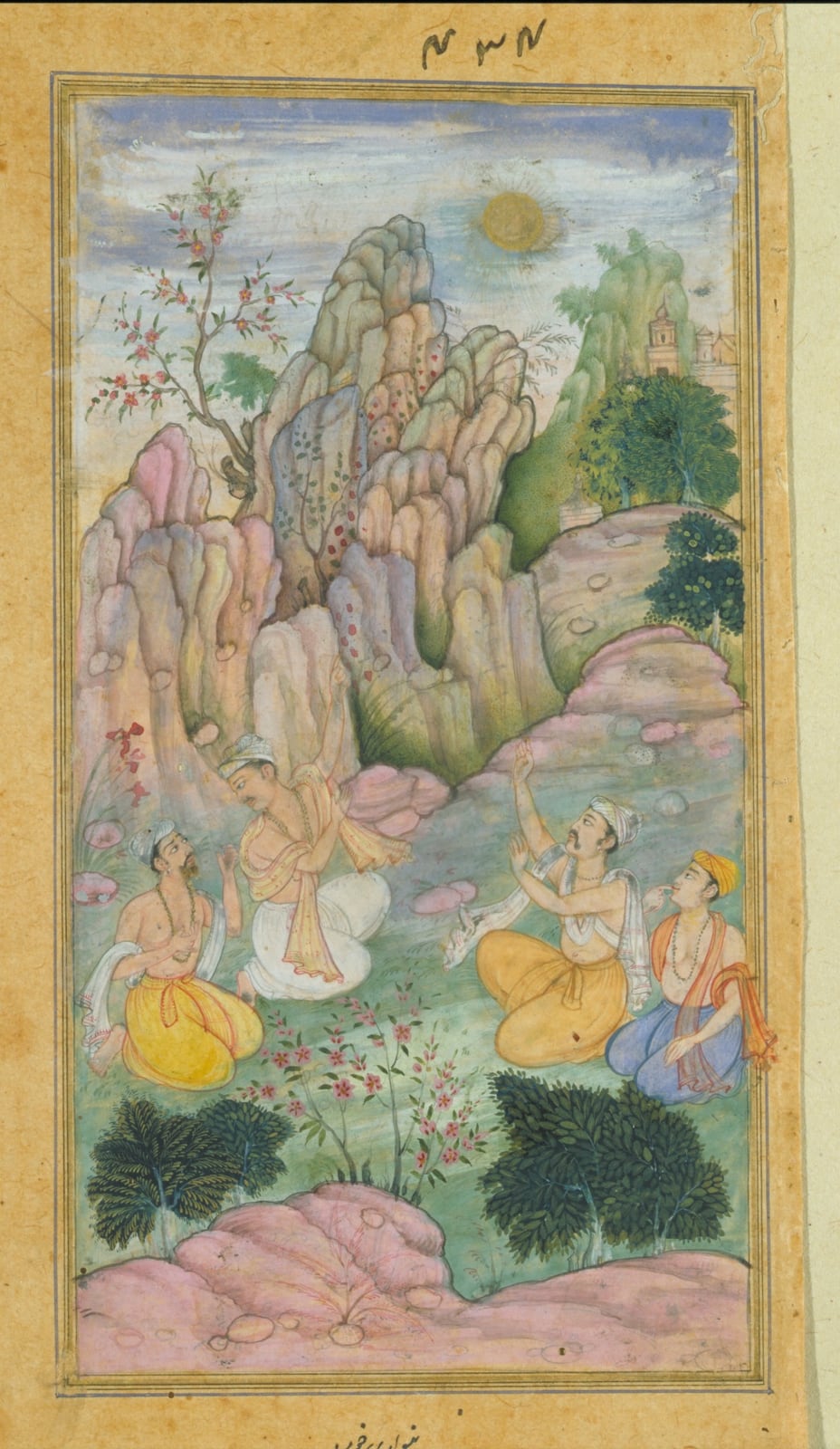
Vyasa
يختلفان في: ما المطلق؟ هل الله موجود؟ · من أنا؟ هل توجد ذات حقيقية؟ · لماذا نتألّم؟
Baal Shem Tov
يختلفان في: ما المطلق؟ هل الله موجود؟ · من أنا؟ هل توجد ذات حقيقية؟ · لماذا نتألّم؟
حكايات وروايات
حكايات وروايات
تقليد شفهيc. 367–347 a. C.
The colt that kicked its mother
أصل الرواية: The colt remark is in Diogenes Laertius V 2 (“they say Plato said”); the nicknames “reader” and “mind” come from the Neoplatonic Lives (Vita Marciana and related texts), collected by Düring (1957). None is contemporary.
شهادة343/342–340 a. C.
Alexander's tutor at Mieza
أصل الرواية: Plutarch, Life of Alexander 7–8 (late first century CE). The exchange of letters he quotes is almost certainly a later composition; the stay at Mieza and the teacher-pupil relationship are well attested.
موثّقc. 341 y 323 a. C.
A hymn for an executed friend
أصل الرواية: Diogenes Laertius V 5–8 transmits the hymn, the epigram and the charge; Athenaeus (Deipnosophists XV 696a–697b) also preserves the hymn and part of the ancient debate about its religious character.
تقليد شفهي323 a. C.
“I will not let Athens sin twice against philosophy”
أصل الرواية: The remark is recorded by Aelian (Varia Historia III 36) and the Neoplatonic Lives, several centuries later. Diogenes Laertius documents the charge and the retreat to Chalcis, but not the remark; handbooks cite it as traditional.
المصدر: Eliano. Historias curiosas (Varia historia) III, 36; Aulo Gelio. Noches áticas XIII, 5 y XX, 5.
موثّق322 a. C.
The will of Chalcis
أصل الرواية: Diogenes Laertius V 11–16, who states that he found the document. Most specialists (Düring, Natali) consider it substantially authentic; Arabic versions of the will also exist.
تقليد شفهيc. 323–322 a. C.
The wine of Lesbos
أصل الرواية: Aulus Gellius, Attic Nights XIII 5 (second century CE), with no known earlier source. That Theophrastus succeeded Aristotle is documented; the wine scene is a late anecdote.
المصدر: Eliano. Historias curiosas (Varia historia) III, 36; Aulo Gelio. Noches áticas XIII, 5 y XX, 5.
مختلَف فيهc. 287–40 a. C.
The books in the cellar
أصل الرواية: Strabo, Geography XIII 1, 54, and Plutarch, Life of Sulla 26. Modern scholars accept the library's journey to Rome and Andronicus's edition but doubt that the treatises were unknown for two centuries: there are signs that copies circulated.
المصدر: Estrabón. Geografía XIII, 1, 54; y Plutarco, Vida de Sila, 26 (sobre la biblioteca de Aristóteles y Teofrasto, Neleo de Escepsis, Apelicón y Andrónico de Rodas).
موثّقc. 330 a. C. (redacción de la Ética nicomáquea)
Plato is a friend, but truth is a greater friend
أصل الرواية: The passage is Nicomachean Ethics I 6, 1096a11–17 (documented). The Latin formula “Amicus Plato, sed magis amica veritas” is later: the Life attributed to Ammonius, Roger Bacon (Opus maius I 7), Newton (Quaestiones quaedam philosophicae, c. 1664) and Cervantes mark its spread.
التعاليم
التعاليم
المفاهيم التي ينتظم بها فكره، مشروحة في سياقها.
Substance (ousia)ousia
Aristotle's answer to the question about being raised by Parmenides and Plato; the basis of scholastic, Arabic and modern ontology.
Matter and form, potentiality and actualityhilemorfismo
A solution to the puzzles about change inherited from Parmenides; the basis of Aristotelian psychology and of the scholastic theory of the soul as the form of the body.
The four causescuatro-causas
Physics II and Metaphysics A; the framework of natural science until the seventeenth century.
The unmoved movermotor-inmovil
The philosophical theology of Physics VIII and Metaphysics Λ; the point of contact between Greek philosophy and monotheistic theology.
The soul as the form of the bodypsyche
The psychology of On the Soul and the Parva naturalia; the origin of the medieval dispute over the agent intellect.
Happiness (eudaimonia) and the contemplative lifeeudaimonia
The core of both Ethics; an inspiration for the contemplative ideal in later philosophy and mysticism.
Virtue as a meantermino-medio
Books II–VI of the Nicomachean Ethics; the basis of virtue ethics.
Syllogism and logicsilogismo
The Organon (“instrument”), the name the commentators gave to the logical treatises.
مقاطع الفيديو
مقاطع الفيديو
تسجيلات ومقابلات وأفلام وثائقية. تُشغَّل مقاطع الفيديو من YouTube؛ ولا تُستضاف هنا.
Aristotle
محاضرة· EN· 2021· 44 min
Gresham Collegeالقناة الرسمية
Aristotle's Lyceum - Edith Hall
محاضرة· EN· 2019· 49 min
Gresham Collegeالقناة الرسمية
Armand Marie Leroi, "The Lagoon: how Aristotle invented science"
محاضرة· EN· 2018· 57 min
British School at Athensالقناة الرسمية
7. The Mixed Regime and the Rule of Law: Aristotle's Politics, I, III
محاضرة· EN· 2008· 44 min
YaleCoursesالقناة الرسمية
8. The Mixed Regime and the Rule of Law: Aristotle's Politics, IV
محاضرة· EN· 2008· 48 min
YaleCoursesالقناة الرسمية
9. The Mixed Regime and the Rule of Law: Aristotle's Politics, VII
محاضرة· EN· 2008· 46 min
YaleCoursesالقناة الرسمية
Justice: What's The Right Thing To Do? Episode 10: "THE GOOD CITIZEN"
محاضرة· EN· 2009· 55 min
Harvard Universityالقناة الرسمية
Edith Hall • Aristotle and the Future of the Human Race
محاضرة· EN· 2023· 81 min
Wolf Humanities Centerالقناة الرسمية
Aristotle & Virtue Theory: Crash Course Philosophy #38
تحليل· EN· 2016· 9 min
CrashCourseالقناة الرسمية
Aristóteles | Por Darío Sztajnszrajber
محاضرة· ES· 2016· 153 min
Facultad Libreالقناة الرسمية
Mentira la verdad IV: Aristóteles, Metafísica - Canal Encuentro
فيلم وثائقي· ES· 2016· 28 min
Canal Encuentroالقناة الرسمية
7ª - 8ª Introducción a la Filosofía de Aristóteles
محاضرة· ES· 2022· 157 min
Fundación Universitaria Españolaالقناة الرسمية
Aristóteles: el discípulo díscolo de Platón | Introduc. Seminario | Filosofía Clásica | Ginés Marco
محاضرة· ES· 2023· 72 min
Ateneo Mercantil de Valenciaالقناة الرسمية
Aristóteles, Galeno y Avicena en la Escuela de Traductores de Toledo | Mariano Gómez Aranda
محاضرة· ES· 2023· 61 min
Fundación Juan Marchالقناة الرسمية
Aristóteles, ¿el primer ecologista?
المشاهدة على YouTube
لا يسمح هذا الفيديو بالتضمين؛ وسيُفتح على YouTube.
Aristóteles, ¿el primer ecologista?
فيلم وثائقي· ES· 2025· 25 min
UNEDالقناة الرسمية
المعرض
المعرض
صور بترخيص متحقَّق منه. كل منها تحتفظ بمؤلّفها ونسبتها.
المخطوطات
المخطوطات
شواهد مخطوطة ونصوص قديمة، مع جهة حفظها وشروط الاطّلاع عليها.
GRC · Griego (minúscula) · s. IV a. C.
Κατηγορίαι κ.ἄ. (Ὄργανον)
- الشاهد المحفوظ
- Códice fechado en el año 954
- جهة الحفظ
- Biblioteca Nazionale Marciana, Venecia · Gr. 201
- الرقمنة
- commons.wikimedia.org/wiki/File:Aristotle,_Categ…
GRC · Griego (minúscula) · s. IV a. C.
Τὰ μετὰ τὰ φυσικά
- الشاهد المحفوظ
- Códice copiado entre 1311 y 1321
- جهة الحفظ
- Biblioteca Apostolica Vaticana · Vat. gr. 256
- الرقمنة
- commons.wikimedia.org/wiki/File:Aristotle,_Metap…
GRC · Griego (minúscula) · s. IV a. C.
Ἀριστοτέλους ἔργα (miscelánea)
- الشاهد المحفوظ
- Manuscrito de 1457 con miniatura de Aristóteles (fol. 8v)
- جهة الحفظ
- Österreichische Nationalbibliothek, Viena · Cod. phil. gr. 64
- الرقمنة
- commons.wikimedia.org/wiki/File:Aristotle,_Vienn…
GRC · Griego (cursiva sobre papiro) · c. 330–322 a. C.
Ἀθηναίων πολιτεία
- الشاهد المحفوظ
- Papiro egipcio de finales del siglo I d. C., escrito en el reverso de unas cuentas agrícolas
- جهة الحفظ
- British Library, Londres · Papyrus 131
- الرقمنة
- www.bl.uk/manuscripts/FullDisplay.aspx?ref=Papyr…
العلاقات
العلاقات
تأثيرات وتلمذة وتقارب في الأفكار. تُميَّز العلاقة الموثّقة عن التشابه المستخلَص بالتحليل.
تلميذ
He was Plato's student in the Academy for twenty years (c. 367–347 BCE) and his most influential critic: he rejected the separation of the Forms but kept the primacy of form and of knowledge of the universal.
علاقة موثّقة
تأثّر بـ
He never met him (Socrates died in 399), but knew him through Plato and discusses him in the Metaphysics (A 6, M 4), crediting him with the search for universal definitions and inductive arguments, and in the Ethics, where he criticises his thesis that no one does wrong knowingly.
علاقة موثّقة
اختلف مع
Book I of the Physics answers the Eleatic denial of change with the notions of subject, privation and form, and of potentiality and actuality.
علاقة موثّقة
اختلف مع
In Metaphysics Γ he argues against those who, following Heraclitus, seem to deny the principle of non-contradiction; in Parts of Animals I 5 he recalls with appreciation his saying “here too there are gods”.
علاقة موثّقة
اختلف مع
He discusses him often in the Physics, On the Soul and On Generation and Corruption; he criticises his explanation of living beings by chance combinations.
علاقة موثّقة
اختلف مع
In Metaphysics A 5 he expounds and criticises the Pythagorean doctrine that the principles of numbers are the principles of all things; he also wrote a lost treatise on the Pythagoreans.
علاقة موثّقة
معاصر لـ
Diogenes Laertius (V 18) records an anecdotal encounter between the two over some dried figs; the episode's historicity is doubtful.
علاقة موثّقة
أثّر في
Plotinus integrated Aristotelian concepts into his system — actuality and potentiality, the intellect thinking itself — and devoted treatises VI 1–3 of the Enneads to criticising the doctrine of the categories.
علاقة موثّقة
أثّر في
In the Confessions (IV 16) he relates that he read and understood on his own, at about twenty, Aristotle's Categories in Latin translation, and that they did him little good in thinking about God.
علاقة موثّقة
اختلف مع
The Incoherence of the Philosophers attacks the falasifa who followed Aristotle through al-Farabi and Avicenna, naming him explicitly as the source of their errors, although al-Ghazali accepted and spread Aristotelian logic.
علاقة موثّقة
أثّر في
The Guide of the Perplexed relies on Aristotelian physics and metaphysics and holds that what Aristotle says about the sublunary world is true, while rejecting his thesis of the eternity of the world.
علاقة موثّقة
أفكار قريبة من
Indirect relation: Ibn Arabi knew the Aristotelian vocabulary (form, matter, intellect) through falsafa and transformed it in a mystical key; there is no record that he discussed Aristotle's texts.
تشابه مستخلَص بالتحليل
أثّر في
As a Dominican master at Paris, Eckhart worked within scholastic Aristotelianism and frequently cites On the Soul and the Metaphysics, particularly the doctrine of the intellect. A general relation, with no specific source recorded in this entry.
تشابه مستخلَص بالتحليل
اختلف مع
The appendix to part one of Spinoza's Ethics rejects final causes, a pillar of Aristotelian physics, as an anthropomorphic prejudice.
علاقة موثّقة
أفكار قريبة من
A parallel often drawn by comparative philosophy: virtue as cultivated habit and the Aristotelian mean are compared with the Confucian doctrine of the mean. There was no historical contact.
تشابه مستخلَص بالتحليل
أفكار قريبة من
Siddhartha Gautama, the Buddha
A thematic parallel: the ethics of the mean and the Buddhist “middle way” between asceticism and pleasure; the underlying conceptions are very different and there was no contact.
تشابه مستخلَص بالتحليل
معاصر لـ
Epicurus (b. 341 BCE) belongs to the following generation; his atomist physics and his ethics of pleasure developed in polemic with the Platonic and Peripatetic tradition.
تشابه مستخلَص بالتحليل
مرتبط من صفحات أخرى
- Plotinus · تأثّر بـ
- Socrates · أثّر في
- Heraclitus · أثّر في
- Marcus Aurelius · أفكار قريبة من
- Epicurus · اختلف مع
- Zeno of Citium · معاصر لـ
- Empedocles · أثّر في
- Diogenes of Sinope · معاصر لـ
- Epictetus · أفكار قريبة من
- Maimonides · تأثّر بـ
- Al-Ghazali · اختلف مع
- Parmenides · أثّر في
- Pythagoras · أثّر في
- Plato · معلّم
المصادر
المصادر
المراجع والفهارس التي رُوجعت لهذه الصفحة.
- Cicerón. Académicos II (Lúculo), 119: «veniet flumen orationis aureum fundens Aristoteles».
- Wikimedia Commons: metadatos y licencias de las imágenes, verificados por la API imageinfo el 25 de octubre de 2026.
- Diógenes Laercio. Vidas de los filósofos ilustres, libro V, 1–35 («Aristóteles»). Trad. inglesa de R. D. Hicks, Lives of Eminent Philosophers, vol. I, Loeb Classical Library 184. Londres: Heinemann, 1925 (texto en Wikisource).
- Shields, Christopher. «Aristotle». Stanford Encyclopedia of Philosophy, ed. Edward N. Zalta (revisión de 2020).
- «Aristotle», Wikipedia en inglés, y «Aristóteles», Wikipedia en español (consultadas para hechos verificables y bibliografía; texto propio).
- Natali, Carlo. Aristotle: His Life and School. Ed. D. S. Hutchinson. Princeton: Princeton University Press, 2013.
- Düring, Ingemar. Aristotle in the Ancient Biographical Tradition. Göteborg: Acta Universitatis Gothoburgensis, 1957.
- Barnes, Jonathan (ed.). The Complete Works of Aristotle: The Revised Oxford Translation. 2 vols. Princeton: Princeton University Press (Bollingen Series LXXI.2), 1984.
- Plutarco. Vida de Alejandro, 7–8. Trad. inglesa de Bernadotte Perrin, Plutarch's Lives, vol. VII, Loeb Classical Library 99. Cambridge (Mass.): Harvard University Press, 1919.
- Estrabón. Geografía XIII, 1, 54; y Plutarco, Vida de Sila, 26 (sobre la biblioteca de Aristóteles y Teofrasto, Neleo de Escepsis, Apelicón y Andrónico de Rodas).
- Wikidata, «Aristotle» (Q868).
- Bekker, Immanuel (ed.). Aristotelis Opera, edidit Academia Regia Borussica. 5 vols. Berlín: G. Reimer, 1831–1870 (vols. I–II, texto griego, 1831).
- Open Library (Internet Archive): registros de edición e ISBN de la Biblioteca Clásica Gredos, la Loeb Classical Library (Harvard University Press) y Princeton University Press consultados el 25 de octubre de 2026.
- Eliano. Historias curiosas (Varia historia) III, 36; Aulo Gelio. Noches áticas XIII, 5 y XX, 5.
- Jaeger, Werner. Aristoteles: Grundlegung einer Geschichte seiner Entwicklung. Berlín: Weidmann, 1923 (trad. esp.: Aristóteles. Bases para la historia de su desarrollo intelectual. México: Fondo de Cultura Económica, 1946).
- Leroi, Armand Marie. The Lagoon: How Aristotle Invented Science. Londres: Bloomsbury, 2014.
- Kenyon, Frederic G. (ed.). Aristotle on the Constitution of Athens. Londres: British Museum, 1891 (editio princeps del Papiro 131 de la British Library).
- Project Gutenberg (catálogo vía Gutendex) e Internet Classics Archive del MIT (traducciones de Oxford y otras), consultados el 25 de octubre de 2026.
- Azcárate, Patricio de (trad.). Obras de Aristóteles. 10 vols. Madrid: Medina y Navarro, 1873–1875 (digitalización parcial en el Proyecto Filosofía en español y facsímiles completos en Wikimedia Commons).
- Darwin, Charles. Carta a William Ogle, 22 de febrero de 1882. Darwin Correspondence Project, DCP-LETT-13697.
- Moraux, Paul. Les listes anciennes des ouvrages d'Aristote. Lovaina: Éditions Universitaires, 1951.
- Kraye, Jill; Ryan, W. F.; Schmitt, C. B. (eds.). Pseudo-Aristotle in the Middle Ages: The Theology and Other Texts. Londres: The Warburg Institute, 1986.
- Rose, Valentin (ed.). Aristotelis qui ferebantur librorum fragmenta. Leipzig: Teubner, 1886; y Gigon, Olof (ed.). Aristotelis Opera III: Librorum deperditorum fragmenta. Berlín: De Gruyter, 1987.
- Hutchinson, D. S.; Johnson, Monte Ransome. «Authenticating Aristotle's Protrepticus». Oxford Studies in Ancient Philosophy 29 (2005): 193–294.
- Maimónides. Guía de perplejos II, 22 (trad. inglesa de Shlomo Pines, The Guide of the Perplexed, Chicago: University of Chicago Press, 1963); y carta a Samuel ibn Tibón (1199) sobre los libros de Aristóteles.
- al-Ghazali. Tahafut al-falasifa (La incoherencia de los filósofos), introducción. Trad. inglesa de Michael E. Marmura, The Incoherence of the Philosophers. Provo: Brigham Young University Press, 2000.
- Agustín de Hipona. Confesiones IV, 16, 28–29 (lectura de las Categorías de Aristóteles hacia los veinte años).
- Plotino. Enéadas VI, 1–3 («Sobre los géneros del ser»), con la crítica de las categorías aristotélicas. Trad. inglesa de A. H. Armstrong, Loeb Classical Library 445. Cambridge (Mass.): Harvard University Press, 1988.
- YouTube: verificación de cada vídeo mediante el servicio oEmbed, 25 de octubre de 2026.
- Spinoza, Baruch. Ethica ordine geometrico demonstrata (1677), parte I, apéndice (crítica de las causas finales).
- Wikiquote en inglés, «Aristotle», secciones «Disputed» y «Misattributed» (atribuciones dudosas y falsas, con sus fuentes).
- صاحب الحقوق
- Los textos griegos de Aristóteles son de dominio público. Las traducciones y ediciones modernas pertenecen a sus traductores y editoriales: Editorial Gredos (Biblioteca Clásica Gredos, hoy en RBA Libros), Harvard University Press (Loeb Classical Library), Princeton University Press (The Complete Works of Aristotle, ed. Barnes), Oxford University Press (Oxford Classical Texts y Clarendon Aristotle Series), Alianza Editorial, Abada y otras.
في انتظار التأكيد
ما لم تتمكّن هذه الصفحة من حسمه بعد. نفضّل أن نقول ذلك على أن نملأ الفراغ.
- Ediciones en español con ISBN no localizadas en catálogo para los opúsculos espurios Sobre el mundo, Sobre el aliento, Sobre los colores, Sobre las cosas audibles, Sobre las plantas, Relatos maravillosos, Situación y nombres de los vientos y Sobre Meliso, Jenófanes y Gorgias, ni para la Teología de Aristóteles; tampoco ediciones inglesas con ISBN del Libro de las causas y del Secreto de los secretos.
- ISBN de la Política en la Biblioteca Clásica Gredos n.º 116 (1988) no visto en Open Library: se ha registrado la reedición de Gredos de 2022 con la misma traducción. Falta también el ISBN de History of Animals VII–X (Loeb 439, Balme).
- Los años de primera edición de los volúmenes Loeb y de la Biblioteca Clásica Gredos proceden de la bibliografía general; los ISBN corresponden a las reimpresiones registradas en Open Library. Confirmar con los catálogos de las editoriales.
- Gredos 2020, «Poética. Magna Moralia» (ISBN 9788424939151): confirmar qué traductor firma cada obra (el registro cita a Teresa Martínez Manzano y Leonardo Martínez Dupla).
- Tomo V de las Obras de Aristóteles de Azcárate («Psicología: Opúsculos»): confirmar qué tratados de los Parva naturalia contiene antes de enlazarlo a cada uno por separado; hoy solo se enlaza a Acerca del sentido y lo sensible.
- Derechos de las traducciones de Oxford en la UE: verificar las fechas de muerte de A. J. Jenkinson, W. A. Pickard-Cambridge, R. P. Hardie, E. W. Webster, G. R. T. Ross y J. Solomon. En EE. UU. todas son de dominio público por ser anteriores a 1931, salvo la de Acerca del alma de J. A. Smith (1931), que lo será el 1 de enero de 2027.
- Traductor de la Ética nicomáquea de Project Gutenberg n.º 8438 (edición Everyman de 1911): el ebook no lo nombra; identificarlo en la edición impresa.
- Catálogo antiguo de obras (Diógenes Laercio V 22–27, unos ciento cincuenta títulos, y las listas de Hesiquio y de Ptolomeo el Árabe estudiadas por Moraux): se han registrado las obras perdidas principales y mejor documentadas, no todos los títulos de la lista.
- Manuscritos: añadir el Parisinus graecus 1741 (Poética y Retórica, s. X), el Vindobonensis phil. gr. 100 (s. IX, Física, Del cielo, Metafísica) y el Parisinus gr. 1853 (s. X) con sus digitalizaciones oficiales (Gallica, ÖNB), no verificadas en esta pasada; tampoco se ha verificado la digitalización íntegra del Vat. gr. 256 en DigiVatLib.
- Wikidata registra como fecha de muerte el 7 de marzo del 322 a. C. sin fuente primaria localizada; se mantiene solo el año.
- Vídeos: el programa de la UNED «Aristóteles, ¿el primer ecologista?» no permite inserción (oEmbed 401). No se ha encontrado un documental de televisión pública española dedicado íntegramente a Aristóteles en un canal oficial.
- Imagen descartada: «Stagira, an ancient Greek city, birth place of Aristotle.jpg» (CC BY-SA 4.0) por metadatos de fecha anómalos (2026-06-16); revisar antes de usarla. No hay retrato de Aristóteles anterior a la copia romana del tipo de Lisipo.
- Sin programa de afiliación verificado ni web oficial: Aristóteles no tiene titular de derechos; las editoriales citadas no se han comprobado como programas de afiliados.
بُحث بتاريخ 2026-10-25