الكونفوشيوسية
Confucius
孔子 · 孔丘 · 仲尼 · 孔夫子
551 ق.م – 479 ق.مشخصية موثّقة تاريخيًا
معلّمٌ وموظفٌ خاب مسعاه ومحرّرٌ للتراث: كونغ تشيو (551–479 ق.م) هو أوثق شخصيات الفكر الصيني القديم توثيقًا وأعظمها أثرًا. لم يكتب «المختارات»: بل جمعها تلاميذه وتلاميذ تلاميذه. علّم أن نظام العالم يولد من الإنسانية (رن) حين تُهذَّب بالشعائر (لي) والتعلّم، وأن الرجل النبيل يُصنع ولا يولد. وظلّ ألفي عام «معلّم عشرة آلاف جيل»؛ أمّا شخصيته التاريخية، تحت طبقات من سير القداسة وعقيدة الدولة، فلا تزال تستدعي الحذر.
- مؤلَّفًا
- 11مؤلَّفًا
- طبعة
- 33طبعة
- اقتباسًا
- 12اقتباسًا
- مقطع فيديو
- 14مقطع فيديو
- صورة
- 9صورة
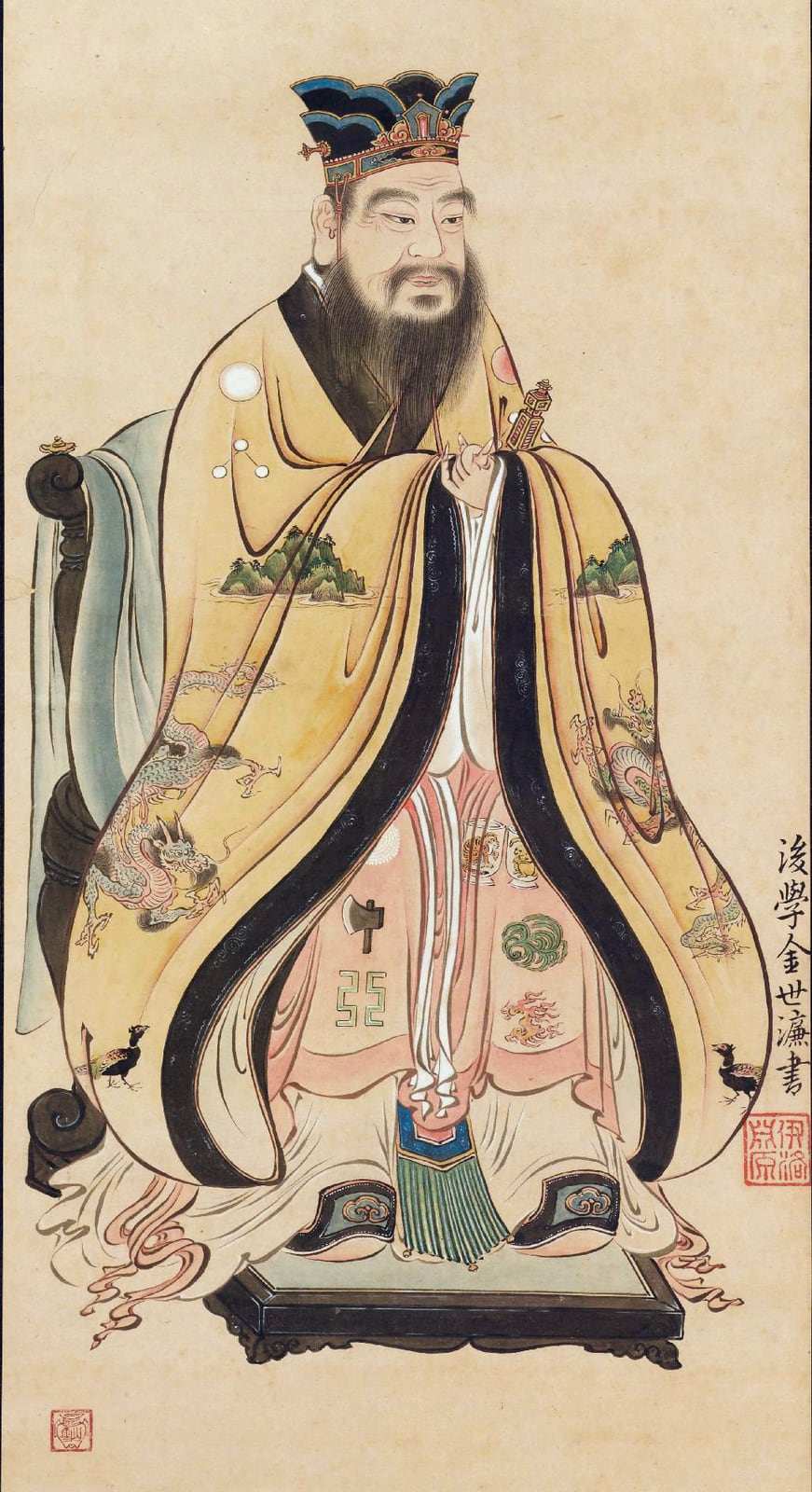
Retrato de Confucio por Kanō Sansetsu · CC BY 4.0
بكلماته
«Is it not pleasant to learn with a constant perseverance and application? Is it not delightful to have friends coming from distant quarters?»Analectas 1.1 (trad. inglesa de Legge, 1861)

فكرته المحورية
Ren (humaneness, benevolence): Ren is the central virtue of the Analects and the one that most resists definition: the Master answers each disciple who asks about it differently.
السيرة
4 دقيقة قراءة
ترجمة مُعانة من الأصل الإسباني، بانتظار مراجعة مترجم من أهل اللغة.
رجلٌ من لو
على خلاف لاوتسي، لكونفوشيوس سيرة. فنحن نعلم أن اسمه كونغ تشيو، وأن اسم المجاملة الذي عُرف به تشونغ ني، وأنه وُلد في تسو، في دولة لو الصغيرة — مدينة تشيوفو الحالية في إقليم شاندونغ —، وأنه مات فيها سنة 479 ق.م، في السنة السادسة عشرة من حكم الدوق آي، كما تسجّل حولية لو، «الربيع والخريف» (تشون تشيو)، وكما يشرح ذلك تعليقها، «تسوو جوان». مات أبوه، شو ليانغ خه، وهو ضابط من رتبة دنيا، والطفل في الثالثة من عمره؛ فربّته أمه، يان تشنغ تساي، في الفقر. وسيقول هو نفسه في «المختارات» (9.6): «كنتُ في صباي وضيعَ الحال، ولذلك أُحسن أمورًا كثيرة من صغائر الأعمال». والوظائف الأولى التي تنسبها إليه الرواية — ناظرًا على مخازن الحبوب، راعيًا للقطعان — تحمل النبرة نفسها: رجل من أسرة تدهور حالها، ينتمي إلى طبقة الـشي، أولئك العلماء المحاربين من أدنى الرتب، الذين أخذوا في القرن السادس ق.م يعيشون من كفايتهم أكثر مما يعيشون من نسبهم.
وكانت تلك الكفاية في حالته معرفةَ شعائر أسرة جو القديمة ونصوصها، وهي أسرة كانت لو تحفظ نظامها أفضل من سائر الدول. فجعل كونفوشيوس من هذه المعرفة رسالةً، ثم مدرسة. وقبِل التلاميذ دون أن يسأل عن أصولهم — «ما رددتُ قطّ عن التعليم من جاءني بحزمة من اللحم المجفّف» (7.7) — وأدّبهم في الفنون الستة، في الشعائر والموسيقى والشعر، وقبل كل شيء في طريقة للوجود. وتتحدث الرواية عن ثلاثة آلاف تلميذ بلغ اثنان وسبعون منهم مرتبة الإتقان؛ وتحفظ «المختارات» أسماء نحو عشرين منهم وطباعهم، من تسي لو المندفع إلى يان هوي الصموت، التلميذ الأثير الذي جعله موته المبكر يصيح بأن السماء تُهلكه.
الموظّف والمنفيّ
أراد كونفوشيوس أن يحكم. ونحو الخمسين نال في لو مناصب ذات شأن: فالرواية تجعله واليًا على تشونغ دو، ثم وزيرًا للأشغال والعدل (سي كو). ويُظهره «تسوو جوان» سنة 500 ق.م وهو يرافق الدوق دينغ في لقاء جياغو مع دولة تشي القوية، حيث يُروى أن صرامته في الشعائر أرغمت تشي على ردّ أراضٍ مغتصبة. وبعد سنتين حاول هدم حصون الأسر الثلاث التي كانت تحكم لو فعليًا؛ فأخفق المشروع نصف إخفاق، ونحو سنة 497 غادر الدولة. وهكذا بدأ منفى دام أربع عشرة سنة، عبر وي وسونغ وتشن وتساي وتخوم تشو، بحثًا عن أمير يضع الطريق موضع التطبيق. فلم يجده. هُدّد في كوانغ، وجاع بين تشن وتساي، وشُبّه بـ«كلب بيتٍ في حداد»، وسمع نسّاك الجنوب يسخرون من إصراره. وقال عنه حارس باب (14.38): «هو الذي يعلم أن الأمر لا يُستطاع، ومع ذلك يحاوله». وعاد إلى لو سنة 484 ق.م في الثامنة والستين، بدعوة من الوزير جي كانغ تسي، وأوقف سنواته الأخيرة على التعليم وترتيب النصوص القديمة. وفقد ابنه كونغ لي، وفقد يان هوي، وتسي لو الذي قُتل في فتنة في وي. ومات سنة 479 ق.م ودُفن قرب نهر سي، شمال تشيوفو، حيث لا يزال قبره، «غابة آل كونغ»، يستقبل الزائرين.
ما قاله وما قُوِّل إياه
جوهر فكره في «المختارات» (لون يو)، وهي مجموعة من نحو خمسمئة قول وحوار قصير جمعها تلاميذه وتلاميذ تلاميذه على مدى أجيال. والكتب العشرون ليست متجانسة: إذ يميّز فيها فقه اللغة الحديث، من علماء عهد تشينغ إلى بروس وتاييكو بروكس، طبقاتٍ متعاقبة، وتُظهر مخطوطات دينغتشو (القرن الأول ق.م) ومخطوطات قبر مركيز هايهون أن النص كان لا يزال متداولًا بصيغ مختلفة في عهد هان. لكن النواة متّسقة، وصوتها لا تخطئه الأذن. يقدّم كونفوشيوس نفسه بوصفه «ناقلًا لا مبدعًا» (7.1): فما يعلّمه هو نظام الملوك الأقدمين. غير أن تجديده جذري: إذ ينقل مركز هذا النظام من الشعيرة بوصفها مراسم إلى الاستعداد الباطني الذي يحييها، أي رن — الإنسانية، الإحسان —، ويعرّفه بقاعدة ذهبية في صيغة النفي: «لا تفعل بالآخرين ما لا تريده لنفسك» (15.24). والرجل النبيل (جون تسي)، الذي كان من قبل مرتبةً بالدم، يغدو مكسبًا أخلاقيًا مفتوحًا لكل من يتعلّم ويهذّب نفسه. لقد عهدت إليه السماء برسالة، لكنه يؤثر في شأن الأرواح «أن يوقّرها ويبقى على مسافة منها» (6.22): «إن كنتَ لم تعرف الحياة بعد، فكيف تعرف الموت؟» (11.12).
وسرعان ما أضيفت إلى هذه النواة طبقات. فنسبت إليه الرواية تحرير الكلاسيكيات الخمس — «كتاب الأغاني»، و«كتاب الوثائق»، و«الشعائر»، و«كتاب التحوّلات» بـ«أجنحته العشرة»، وقبل كل شيء حوليات «الربيع والخريف» التي يُقال إن دقائقها أخفت حكمًا أخلاقيًا على كل أمير. ورفعه منشيوس، بعد قرن ونصف، إلى مرتبة الحكيم الذي لا عرش له؛ وأفرد له سيما تشيان، نحو سنة 94 ق.م، «بيتًا وراثيًا» كأنه ملك، وجمع فيه كل ما كان يُروى عنه، بما في ذلك الخوارق ومشاهد الوداع. وجعلت أسرة هان الكونفوشيوسية مذهبًا للدولة سنة 136 ق.م؛ ومنحه الإمبراطور بينغ في السنة الأولى للميلاد أول لقب يُمنح بعد الوفاة؛ وفي عهد سونغ صارت «الكتب الأربعة» بشروح تشو شي منهاجَ الامتحانات الإمبراطورية، وظلت كذلك حتى سنة 1905. وفي سنة 1687 قدّمه اليسوعيون في بكين إلى أوروبا بعنوان Confucius Sinarum Philosophus، ومن صيغته اللاتينية — كونغ فو تسي، «المعلّم كونغ» — جاء الاسم الذي نعرفه به.
تحفّظات
فصلُ الإنسان عن النُّصُب هو مهمة المؤرخ. فكل ما يكاد يُروى عن حياته بالألوان والتفاصيل مصدره «شي جي»، المتأخر عنه بأربعة قرون، و«كونغ تسي جيا يو»، الأحدث منه أيضًا؛ أمّا ما يمكن إثباته بمصادر قريبة — «تسوو جوان»، و«المختارات» نفسها، وكتاب «منشيوس» — فأكثر تقشّفًا بكثير: معلّم من لو، ومرور قصير بالسلطة، ورحلة طويلة بلا طائل، ومدرسة بقيت. حتى تاريخ مولده يتأرجح بين 552 و551 ق.م بحسب الشرح الذي يُتّبع من شروح «الربيع والخريف». وهذا التقشّف لا يصغّر الشخصية: فما بقي موثّقًا منه — صوتٌ يعلّم كيف يكون المرء إنسانًا بالتعلّم والشعائر والمودّة للآخرين — يكفي لتفسير السبب الذي يجعله، بعد ألفين وخمسمئة عام، لا يزال معلّمَ ربع البشرية.
المصادر: Sima Qian. Shiji (Memorias históricas), juan 47, «Kongzi shijia» (Casa hereditaria de Confucio), c. 94 a. C. Ed. Zhonghua shuju, Pekín, 1959. Trad. francesa: Chavannes, Les Mémoires historiques de Se-ma Ts'ien, vol. 5, 1905; trad. inglesa en Nienhauser (ed.), The Grand Scribe's Records, vol. 5.1, Indiana University Press, 2006. · Legge, James (trad.). The Chinese Classics, vol. 1: Confucian Analects, The Great Learning, The Doctrine of the Mean. Trübner, Londres, 1861; 2.ª ed. Clarendon Press, 1893. Project Gutenberg nº 4094. · Slingerland, Edward (trad.). Confucius: Analects, with Selections from Traditional Commentaries. Hackett Publishing Company, Indianápolis, 2003. ISBN 9780872206359. · Lau, D. C. (trad.). Confucius: The Analects (Lun yü). Penguin Classics, Harmondsworth, 1979. ISBN 9780140443486. · Cheng, Anne (trad.). Entretiens de Confucius. Éditions du Seuil (Points Sagesses), París, 1981. ISBN 9782020057752. Y Cheng, Anne. Histoire de la pensée chinoise. Seuil, París, 1997.
الخط الزمني
الحياة عامًا بعد عام
كل نقطة حدث موثّق. انقر لتقرأه مع مصدره ودرجة اليقين فيه.
551 ق.مأقل من عامZou, estado de Lu (hoy Qufu, Shandong)
Birth
Kong Qiu is born, son of Shuliang He and Yan Zhengzai. The Zuozhuan and Shiji give 551 BCE; the Gongyang commentary, 552. The traditional date of 28 September is a late convention. Years BCE are expressed as negative numbers.
مرجَّحSima Qian. Shiji (Memorias históricas), juan 47, «Kongzi shijia» (Casa hereditaria de Confucio), c. 94 a. C. Ed. Zhonghua shuju, Pekín, 1959. Trad. francesa: Chavannes, Les Mémoires historiques de Se-ma Ts'ien, vol. 5, 1905; trad. inglesa en Nienhauser (ed.), The Grand Scribe's Records, vol. 5.1, Indiana University Press, 2006.
بعد وفاته
- 136 ق.مThe Five Classics become state doctrine
- 1 ق.مFirst posthumous title
- 1313The Four Books become the imperial examination syllabus
- 1687Confucius Sinarum Philosophus
- 2011 – 2016The Analects of the Marquis of Haihun
551 ق.م · أقل من عام
Birth
Kong Qiu is born, son of Shuliang He and Yan Zhengzai. The Zuozhuan and Shiji give 551 BCE; the Gongyang commentary, 552. The traditional date of 28 September is a late convention. Years BCE are expressed as negative numbers.
مرجَّح
نحو 549 ق.م · 3 أعوام
Death of his father
Shuliang He dies when the boy is about three; his mother raises him in humble conditions, as he himself would recall (Analects 9.6).
تقليد
نحو 533 ق.م · 19 عامًا
Marriage and birth of his son
He marries at about nineteen; the following year his son Kong Li, called Boyu ("Fish"), is born, according to the Shiji and the Kongzi jiayu.
تقليد
517 ق.م · 34 عامًا
Follows Duke Zhao to Qi
After Duke Zhao's expulsion from Lu by the three families, Confucius goes to Qi. There, according to the Analects (7.14), he hears the Shao music and "for three months did not know the taste of meat".
مرجَّح
500 ق.م · 51 عامًا
The Jiagu meeting
He assists Duke Ding of Lu at his meeting with Duke Jing of Qi. According to the Zuozhuan (Ding 10), his firmness in protocol foils an intimidation by Qi and obtains the return of territories. It is the best-attested political episode of his life.
مرجَّح
498 ق.م · 53 عامًا
Minister of justice; attempt to dismantle the three fortresses
As sikou (minister of justice) he promotes, with Zilu, the demolition of the walls of the cities of the Ji, Shu and Meng families, who dominate Lu. Two fall; the third resists and the project fails (Zuozhuan, Ding 12).
مرجَّح
497 ق.م – 484 ق.م · 54 عامًا
Fourteen years of travel through the states
He leaves Lu and travels the neighbouring states with his disciples seeking a prince who will adopt his Way: Wei (where he is received by Nanzi), Song (where Huan Tui tries to kill him), Chen and Cai (where he goes hungry), as far as the border of Chu.
مرجَّح
484 ق.م · 67 عامًا
Return to Lu
Summoned by Ji Kangzi, he returns to Lu (Zuozhuan, Ai 11). He receives no office; he devotes himself to teaching and to putting the Songs, the Documents and the rites in order.
موثّق
481 ق.م · 70 عامًا
Death of Yan Hui; capture of the lin
Yan Hui, the favourite disciple, dies ("Heaven is destroying me!", Analects 11.9). The same year a hunt captures a lin, an auspicious beast; tradition has the Chunqiu annals end there.
تقليد
480 ق.م · 71 عامًا
Death of Zilu
Zilu dies in a revolt in Wei, straightening his cap before falling (Zuozhuan, Ai 15). On learning of it, Confucius has the pickled meat removed from his table.
مرجَّح
479 ق.م · 72 عامًا
Death
He dies in the fourth month of the sixteenth year of Duke Ai, according to the Chunqiu and Zuozhuan (Ai 16). He is buried by the river Si; his disciples keep three years of mourning, Zigong six.
موثّق
136 ق.م
The Five Classics become state doctrine
Emperor Wu of the Han establishes the Erudites of the Five Classics: Confucianism becomes the orthodoxy of the empire.
موثّق
1 ق.م
First posthumous title
Emperor Ping grants him the title Duke Baocheng Xuanni, the start of a long series of honours culminating in 1530 with "Supreme Sage and First Teacher".
موثّق
1313
The Four Books become the imperial examination syllabus
The Yuan dynasty restores the examinations with the Four Books as annotated by Zhu Xi as their basis; the Analects would remain a set text until the system's abolition in 1905.
موثّق
1687
Confucius Sinarum Philosophus
The Jesuits Couplet, Intorcetta, Herdtrich and Rougemont publish in Paris the first Latin translation of the Analects, the Great Learning and the Doctrine of the Mean: Europe meets "Confucius".
موثّق
2011 – 2016
The Analects of the Marquis of Haihun
The excavation of the tomb of Liu He, Marquis of Haihun (d. 59 BCE), brings to light bamboo slips of the Analects with a chapter, "Zhi dao", that tradition held lost with the Qi version.
موثّق
المؤلَّفات
المؤلَّفات الأساسية
المؤلَّفات التي لا يُفهم إرثه من دونها.
مجموعة لاحقة · نحو 400 ق.م
Analects (Lunyu)
論語
Twenty books of brief sayings, dialogues with disciples and princes, and notes on the Master's conduct. Without systematic order, they set out an ethic of self-cultivation: humaneness (ren) as the central virtue, ritual (li) as its form, study and the rectification of names as method, and the gentleman (junzi) as ideal. Three versions circulated under the Han (Lu, Qi and the "old text"); Zheng Xuan's recension and He Yan's commentary fixed the text, and Zhu Xi's (1190) made it the first of the Four Books. It is the main, and almost the only reliable, source on Confucius's thought.
18 طبعة · amazon.com
Confucius
Spring and Autumn Annals (Chunqiu)
نسبة تقليدية · نحو 481 ق.م
Spring and Autumn Annals (Chunqiu)
春秋
Terse year-by-year annals of twelve dukes of Lu, in just over sixteen thousand characters. The Confucian tradition read into their laconism a system of "praise and blame" encoded in the choice of each word, and on that reading three canonical commentaries were built: the Zuozhuan, the Gongyang and the Guliang. It is the only one of the Five Classics whose composition tradition attributes directly to Confucius.
طبعتان · amazon.com

مجموعة لاحقة · 1190
The Four Books (Sishu)
四書
The Neo-Confucian synthesis that for six centuries was the syllabus of the imperial examinations and therefore the basic education of the whole Chinese, Korean, Japanese and Vietnamese elite. Its reading order—Daxue, Analects, Mencius, Zhongyong—encodes a pedagogy of self-cultivation running from the individual to the order of the world.
طبعتان · amazon.es
جميع مؤلَّفاته (11)
Confucius
Book of Songs (Shijing)
The Conscious LibraryBook of Songs (Shijing)
600
Confucius
Book of Documents (Shujing)
The Conscious LibraryBook of Documents (Shujing)
500
Confucius
The Ten Wings of the Book of Changes
The Conscious LibraryThe Ten Wings of the Book of Changes
300
Confucius
Record of Rites (Liji)
The Conscious LibraryRecord of Rites (Liji)
100

Classic of Filial Piety (Xiaojing)
300
Confucius
Sayings of the Confucian School (Kongzi jiayu)
The Conscious LibrarySayings of the Confucian School (Kongzi jiayu)
240
The Great Learning (Daxue)
200
Confucius
Confucius's Discussion of the Odes (Kongzi shilun)
The Conscious LibraryConfucius's Discussion of the Odes (Kongzi shilun)
300
الأقوال
أقوال محدَّدة الموضع في مؤلَّف بعينه. كل منها يحمل مصدره ودرجة الثقة به.
Is it not pleasant to learn with a constant perseverance and application? Is it not delightful to have friends coming from distant quarters?學而時習之,不亦說乎?有朋自遠方來,不亦樂乎?
متحقَّق منهAnalectas 1.1 (trad. inglesa de Legge, 1861)
أقوال منحولة أو مختلَف في نسبتها (3)
«Choose a job you love, and you will never have to work a day in your life.»
Found neither in the Analects nor in any ancient source. It is a maxim of twentieth-century American motivational literature, attributed to Confucius since the 1980s.
«Our greatest glory is not in never falling, but in rising every time we fall.»
No literal correspondence in the Analects. The phrase derives from Oliver Goldsmith (The Vicar of Wakefield, 1766: "our greatest glory consists not in never falling, but in rising every time we fall"). The closest in Confucius is 15.30 on correcting faults.
«Before you embark on a journey of revenge, dig two graves.»
Not found in the Analects or the Shiji; documented in English only from the twentieth century, with no identifiable Chinese source.
الكلمات الأخيرة
نسبة تقليدية
«The great mountain crumbles! The main beam breaks! The wise man withers away!»太山壞乎!梁柱摧乎!哲人萎乎!
According to Sima Qian (Shiji 47), seven days before his death Confucius rose early, walked before his door with his hands behind his back and sang these lines; then he told Zigong, who came on hearing him, "The world has long been without the Way and no one has been able to follow me," recounted a dream in which he saw himself seated between two pillars, as in the funerals of the Yin dynasty from which he descended, and took to his bed ill until he died. The Liji ("Tangong") transmits the same scene. It is a traditional account, four centuries after the events, not a testimony; the Analects record no words from his last days.
المصدر: Sima Qian. Shiji (Memorias históricas), juan 47, «Kongzi shijia» (Casa hereditaria de Confucio), c. 94 a. C. Ed. Zhonghua shuju, Pekín, 1959. Trad. francesa: Chavannes, Les Mémoires historiques de Se-ma Ts'ien, vol. 5, 1905; trad. inglesa en Nienhauser (ed.), The Grand Scribe's Records, vol. 5.1, Indiana University Press, 2006.
اسأل
بماذا يجيب أثره
اثنا عشر سؤالًا كبيرًا من أسئلة الإنسانية، وما تتيح نصوصه الإجابة به عنها، مع المراجع. ولا نقوّله ما لم يقل أبدًا.
ما المطلق؟ هل الله موجود؟
He acknowledges Heaven but does not speculate on spirits: conduct is what is urgent
تحفّظ أمام المتعالييقوله صراحةً
Confucius, as transmitted in the Analects, does not deny a transcendent order: he speaks of Heaven (tian) as the power that entrusted virtue to him and that cannot be deceived, and in moments of danger he appeals to it. But his interest is deliberately directed elsewhere. The disciples record that the Master did not speak of prodigies, force, disorder or spirits, and one of them admits he never heard him discourse on human nature and the way of Heaven. He advises respecting the spirits while keeping them at a distance, and understands ritual as a way of ordering human life rather than as a theory of the divine. The Absolute, for him, is acknowledged without being defined; what calls for attention is virtue (de), humaneness (ren) and right relationship between persons.
قارن هذا السؤال مع معلّمين آخرينمن أنا؟ هل توجد ذات حقيقية؟
One becomes a person by overcoming oneself and returning to ritual
ذات تُصقَل في العلاقةيُستنتج من تعاليمه
The Analects do not speculate on the nature of the self, but all their teaching concerns how it is formed. When Yan Hui asks about humaneness (ren), Confucius replies that it consists in overcoming oneself and returning to ritual, and that a single day of doing so would turn the whole world towards humaneness. Whoever wishes to establish himself establishes others; whoever wishes to succeed helps others to succeed. Confucius summarises his own life as a staged apprenticeship, from setting his heart on learning at fifteen to being able, at seventy, to follow his heart's desires without overstepping the measure. The self here is not a substance to be discovered but something cultivated in relationships — parents, ruler, friends — and in the ritual forms that order them.
قارن هذا السؤال مع معلّمين آخرينلماذا نتألّم؟
Let the ruler be ruler and the father father: without order there is no peace
الفوضى الاجتماعية والأخلاقيةيُستنتج من تعاليمه
Confucius does not elaborate an explanation of suffering, but the Analects show where he sees its origin: in the breakdown of the order that makes common life possible. To Duke Jing of Qi he answers that good government consists in the ruler being ruler, the minister minister, the father father and the son son. If the people are led by laws and punishments they will avoid punishment but feel no shame; if guided by virtue and ritual, they will have a sense of shame and correct themselves. One lacking humaneness (ren), he says, cannot long endure hardship nor long enjoy prosperity. He lived in an age of wars between states and saw in that chaos the consequence of abandoning the rites of the ancient kings. Collective pain arises from moral and social disorder; the remedy is rectification.
قارن هذا السؤال مع معلّمين آخرينماذا يحدث بعد الموت؟
If one does not yet know life, how can one know death?
صمت أو تحفّظيقوله صراحةً
Confucius expressly refuses to speculate about the beyond. When his disciple Zilu asks him about death, he answers with another question: while you do not yet know life, how can you know death? In the same passage he declines to speak of serving the spirits while one does not yet know how to serve men. The Analects add that the Master did not speak of prodigies or spirits, and define wisdom as devoting oneself to what is right for the people while keeping the spirits at a respectful distance. This reserve is not indifference: Confucius requires the funeral rites and the sacrifices to the ancestors to be performed with full sincerity, as if they were present. What survives death, in his horizon, is the continuity of lineage, rite and transmitted virtue; on the fate of the dead he keeps a deliberate silence.
قارن هذا السؤال مع معلّمين آخرينكيف يُبلَغ التحرّر أو الخلاص؟
Not liberation from the world but perfection within it, through humaneness and ritual
بالفضيلة والانسجاميُستنتج من تعاليمه
Confucius does not frame the question in terms of salvation: in the Analects there is no beyond to reach and no condition to escape. His horizon is self-cultivation until one becomes a junzi, an exemplary person. When Yan Hui asks him about humaneness (ren), he answers that it consists in overcoming oneself and returning to ritual (12.1). The Way is travelled by studying, practising what one has learned and correcting one's faults, and it is a lifelong task: in 2.4 Confucius sums up his own course up to seventy, when he could follow his heart's desires without transgressing the norm. The closest thing to fulfilment is that coincidence of desire and order, lived out in human relationships.
قارن هذا السؤال مع معلّمين آخرينهل نحتاج إلى معلّم؟
One learns from the ancients, from the rites and from anyone walking beside you
الجماعة والتقليديقوله صراحةً
Confucius was above all a teacher, and the Analects are largely a record of his teaching to a circle of disciples. Yet he presented himself as a transmitter, not a creator: he trusted the ancients and loved them (7.1). For him, authority lies in the living tradition, the classical texts and the rites, and the teacher is the one who keeps and renews it, as 2.11 indicates: whoever reviews the old and discovers the new can be a teacher. Moreover, learning does not depend on a single figure: when three people walk together, there is surely a teacher among them, whose good to learn from and whose faults to correct in oneself (7.22). Transmission is communal and continuous.
قارن هذا السؤال مع معلّمين آخرينهل العالم حقيقي؟
Heaven does not speak: the seasons follow their course and all things are born
نظام طبيعي في تحوّليُستنتج من تعاليمه
Confucius does not speculate on the nature of the world or its ultimate reality, and his disciples noted that he hardly spoke of human nature or the Way of Heaven. But the Analects reveal an assumption: the world is a real order that works by itself. When he wishes to stop speaking, he explains that Heaven does not speak either and yet the four seasons follow their course and all things are born (17.19). Beside a river he remarks that everything passes like this, ceasing neither day nor night (9.17). The human task is not to question that order but to reflect it in conduct, in the rites and in government.
قارن هذا السؤال مع معلّمين آخرينما الحب؟
Ren is loving others, beginning with one's parents and with measure
إحسان منظَّميقوله صراحةً
For Confucius the central virtue is ren, usually translated as humaneness or benevolence. When Fan Chi asks him what ren is, he answers: to love others. That love has an order: the Analects present filial piety and fraternal respect as the root of ren, and from the family it extends to friends, to the community and to the state. Its practical rule is reciprocity (shu): what you do not want for yourself, do not do to others. Confucius rejects, however, an undifferentiated or naive love: asked whether one should repay injury with kindness, he replies that then with what would one repay kindness, and proposes answering injury with uprightness and kindness with kindness. Confucian love is expressed in ritual, which gives form and measure to the affections, and in government by virtue.
قارن هذا السؤال مع معلّمين آخرينهل نحن أحرار أم أن كل شيء مقدَّر؟
There is a mandate of Heaven to know, but virtue depends on oneself alone
القدر والمسؤوليةيقوله صراحةً
The *Analects* hold two things at once that Confucius did not experience as contradictory. There is a *ming*, a mandate or destiny of Heaven: whether his teaching prevails, the length of a life or a disciple's ruin are not in human hands (14.36), and one who does not know the mandate cannot be a noble person (20.3). He says he came to know the mandate of Heaven at fifty (2.4). Yet virtue does not depend on destiny: «Is humaneness far away? If I desire it, it is already here» (7.30). The *junzi* accepts what he does not control —fortune, recognition— and answers wholly for what he does: his conduct, his study, his uprightness in ritual.
قارن هذا السؤال مع معلّمين آخرينلماذا نتأمّل أو نصلّي؟
Thinking without study is useless: practice is rite, study and conduct
الطقس وتهذيب الذاتيقوله صراحةً
The *Analects* know neither meditation in the Indian sense nor prayer as petition; what takes their place is self-cultivation through ritual (*li*), study and conduct. Confucius recounts that he once spent a whole day without eating and a night without sleeping in order to think, and it was of no use: better to study (15.31). When he fell ill and his disciple Zilu proposed praying for him, he replied that he had been praying for a long time (7.35), usually read as meaning that his whole life was his prayer. Of sacrifice he says it should be offered as if the spirits were present (3.12): what matters is the attitude of reverence. Mastering oneself and returning to ritual is humaneness (12.1).
قارن هذا السؤال مع معلّمين آخرينهل يستطيع العقل أن يعرف الحقيقة القصوى؟
Learning without thought is lost; thought without learning is perilous
الدراسة والتعلّميقوله صراحةً
The *Analects* make study the path of wisdom while keeping reserve about the ultimate. Confucius says of himself that he was not born knowing but loved antiquity and sought knowledge diligently (7.20), and he states the balance between study and reflection: learning without thinking leads to confusion, and thinking without learning is perilous (2.15). Intellectual honesty is part of that knowledge: to know that one knows what one knows and does not know what one does not know (2.17). On human nature and the Way of Heaven, according to his disciple Zigong, he was not heard to speak (5.13). Reason, cultivated in texts and rites, is directed to human life; what exceeds it is not speculated upon.
قارن هذا السؤال مع معلّمين آخرينالانسحاب من العالم أم تغييره؟
One cannot live among birds and beasts: the sage belongs in society
تنظيم المجتمعيقوله صراحةً
Confucius devoted his life to seeking a ruler who would put his doctrine into practice and expressly rejected withdrawal. In the Analects, two hermits working the fields criticise his disciples for following a man who goes from court to court in a disordered world; Confucius replies that one cannot live in the company of birds and beasts, that if not with men he does not know with whom to be, and that if the world followed the Way he would not need to try to change it. His political ideal is government by virtue, which draws the people as the pole star orders the others, and the rectification of names: that the prince be a prince, the minister a minister, the father a father and the son a son. Wisdom is realised in ritual, the family and public service.
قارن هذا السؤال مع معلّمين آخرين
التقارب والتوتّر
التقارب والتوتّر
محسوبة سؤالًا سؤالًا انطلاقًا من مواقفه. وسبب كل اتفاق أو اختلاف يظهر بالنقر.
يقترب في تفكيره من
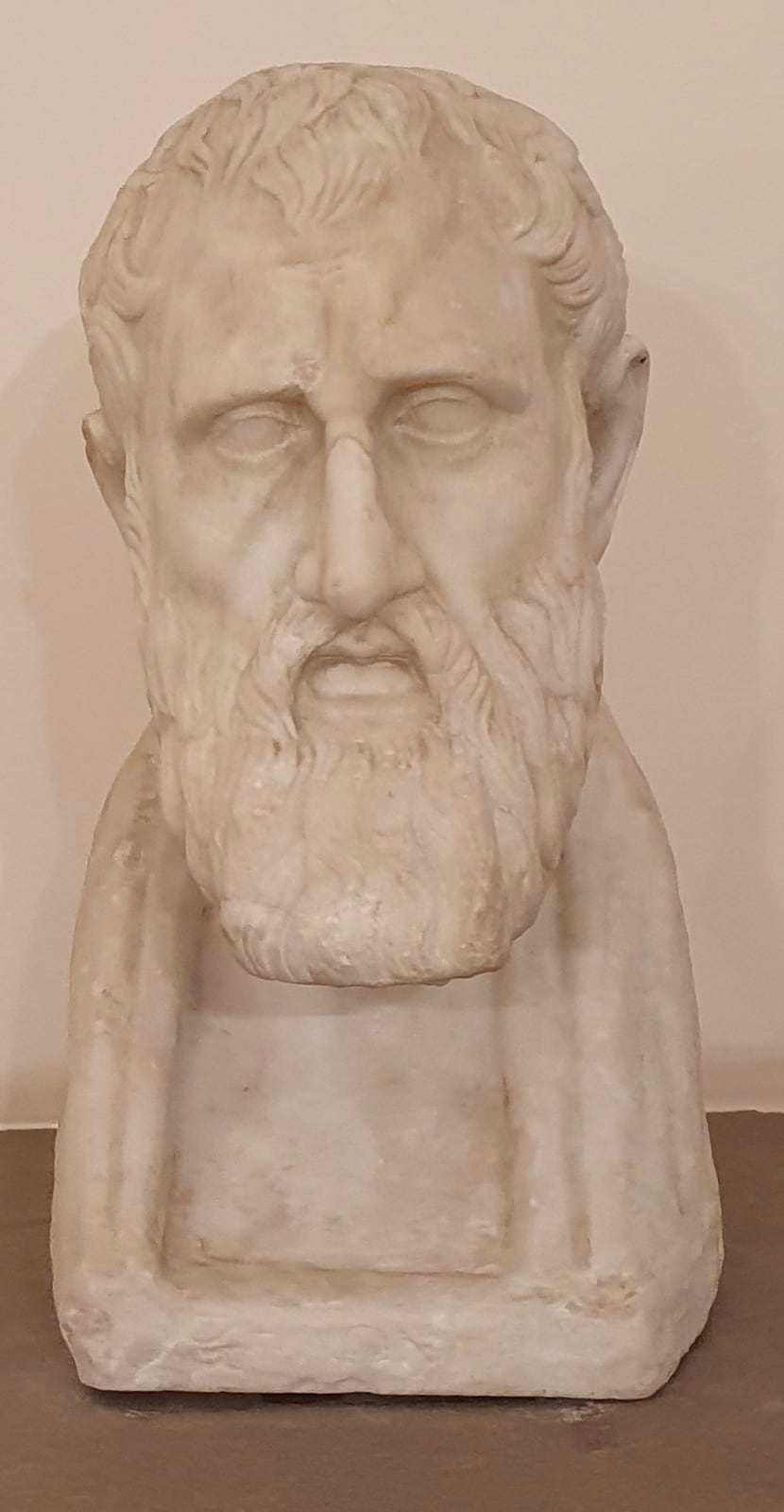
Zeno of Citium
يتّفقان في: من أنا؟ هل توجد ذات حقيقية؟ · لماذا نتألّم؟ · ماذا يحدث بعد الموت؟
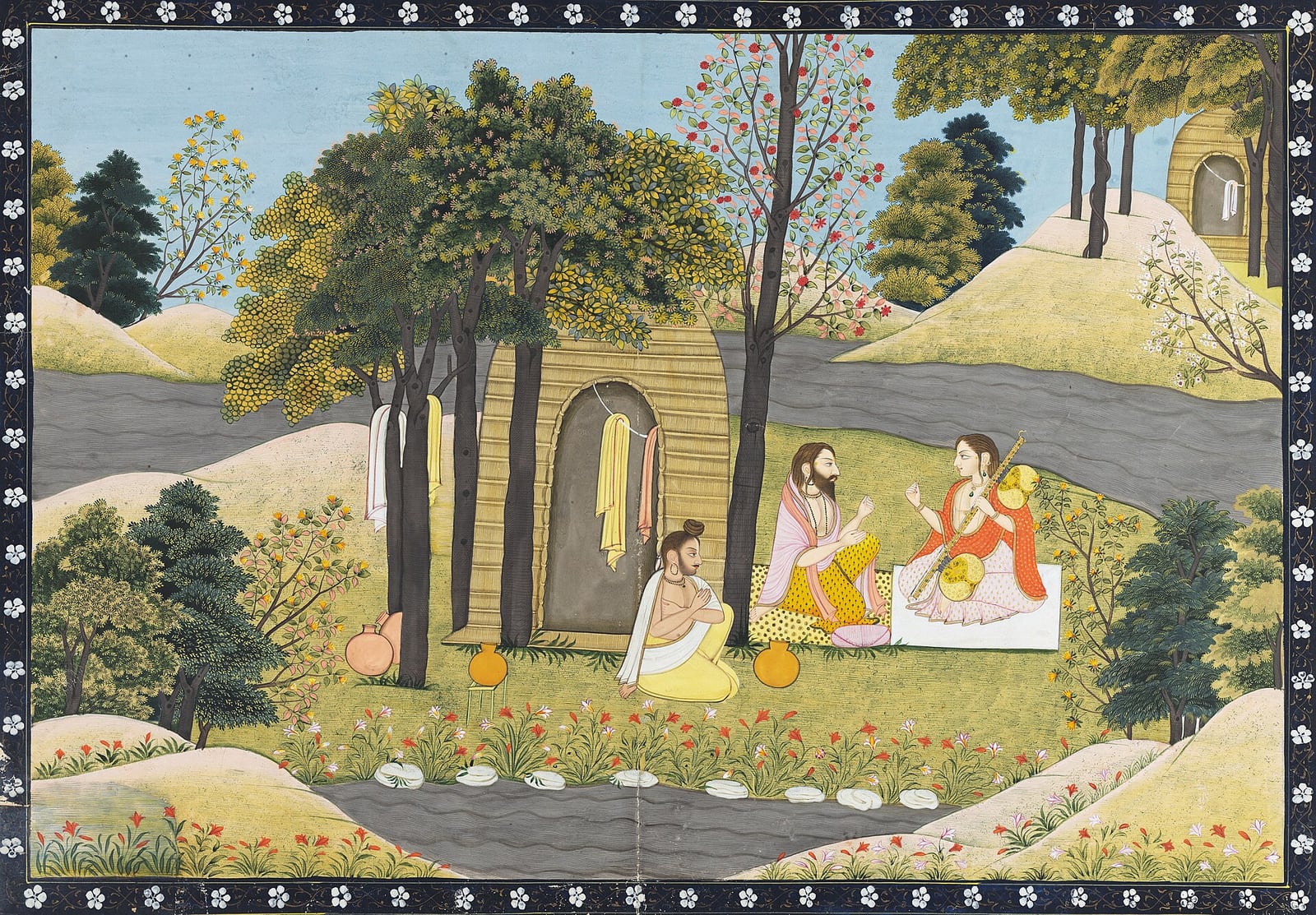
Valmiki
يتّفقان في: لماذا نتألّم؟ · ماذا يحدث بعد الموت؟ · كيف يُبلَغ التحرّر أو الخلاص؟
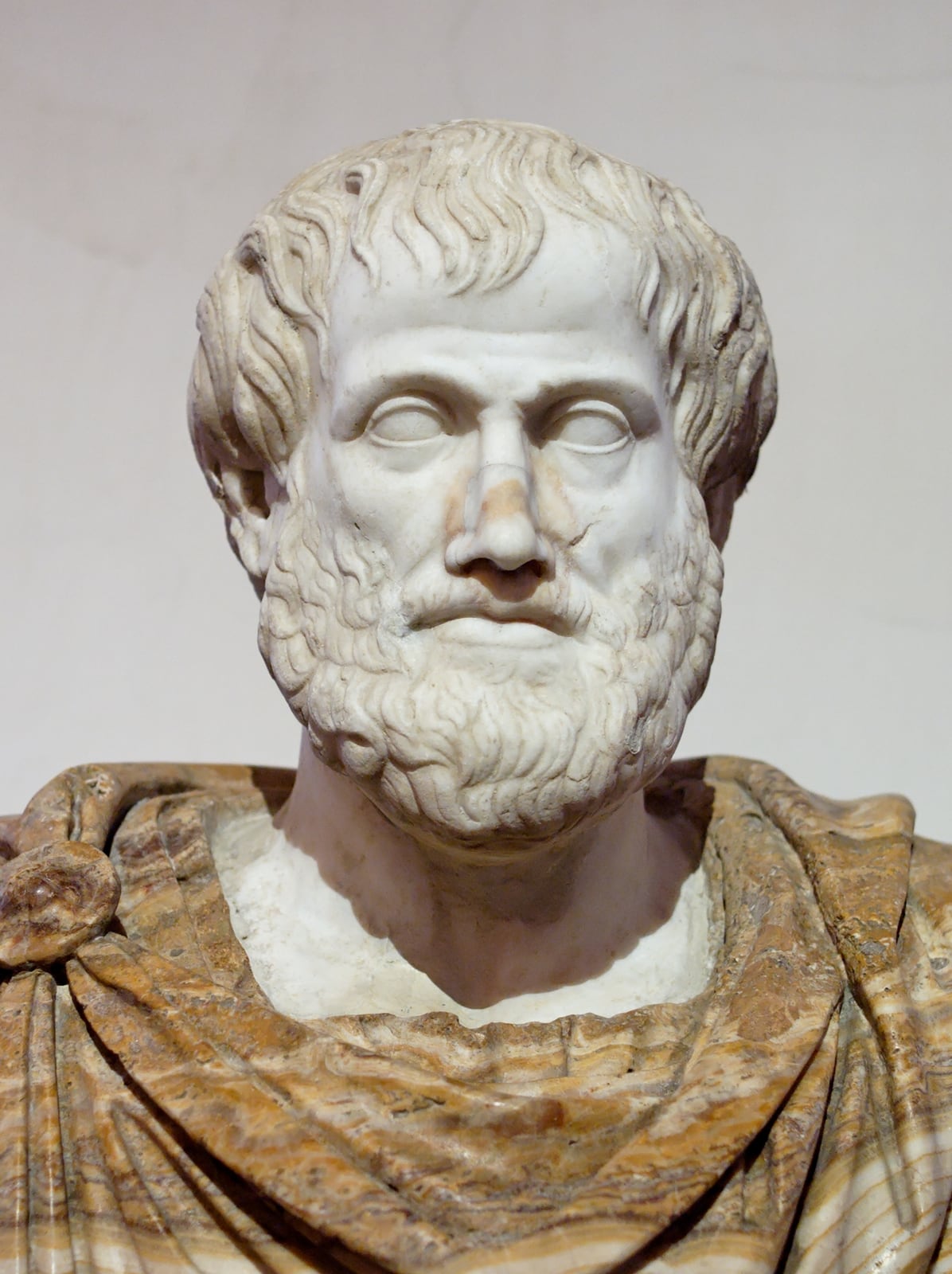
Aristotle
يتّفقان في: من أنا؟ هل توجد ذات حقيقية؟ · لماذا نتألّم؟ · ماذا يحدث بعد الموت؟
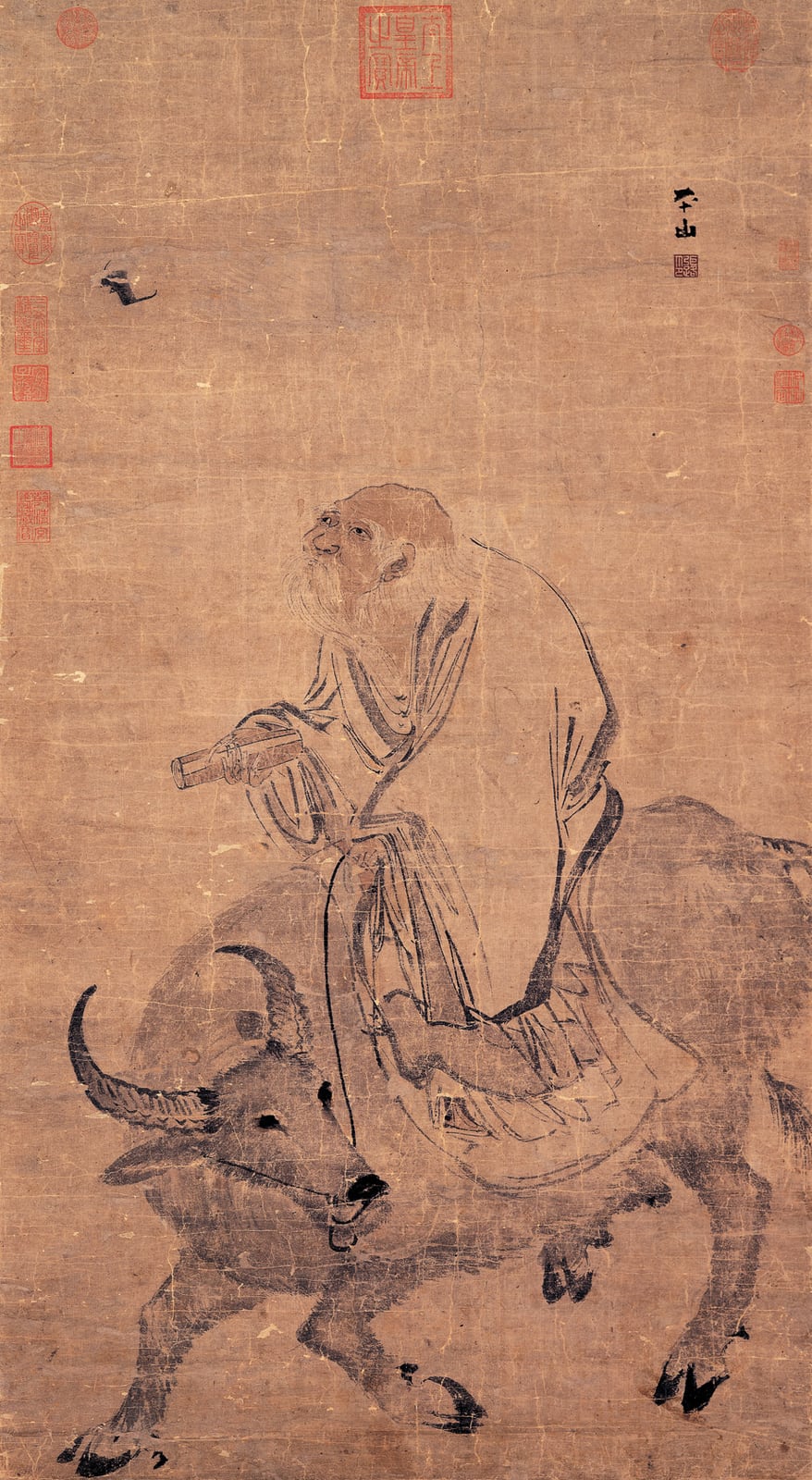
Laozi
يتّفقان في: لماذا نتألّم؟ · ماذا يحدث بعد الموت؟ · كيف يُبلَغ التحرّر أو الخلاص؟
يبتعد في تفكيره عن

Dattatreya
يختلفان في: ما المطلق؟ هل الله موجود؟ · من أنا؟ هل توجد ذات حقيقية؟ · لماذا نتألّم؟
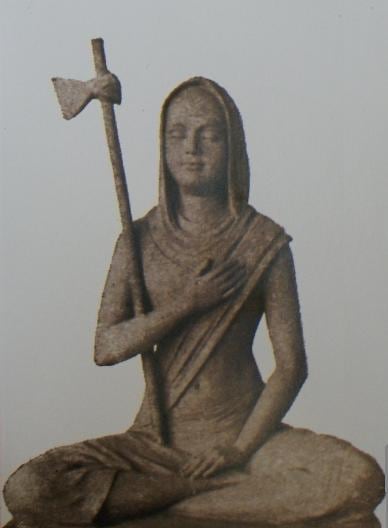
Gaudapada
يختلفان في: ما المطلق؟ هل الله موجود؟ · من أنا؟ هل توجد ذات حقيقية؟ · لماذا نتألّم؟
Uddalaka Aruni
يختلفان في: ما المطلق؟ هل الله موجود؟ · من أنا؟ هل توجد ذات حقيقية؟ · ماذا يحدث بعد الموت؟
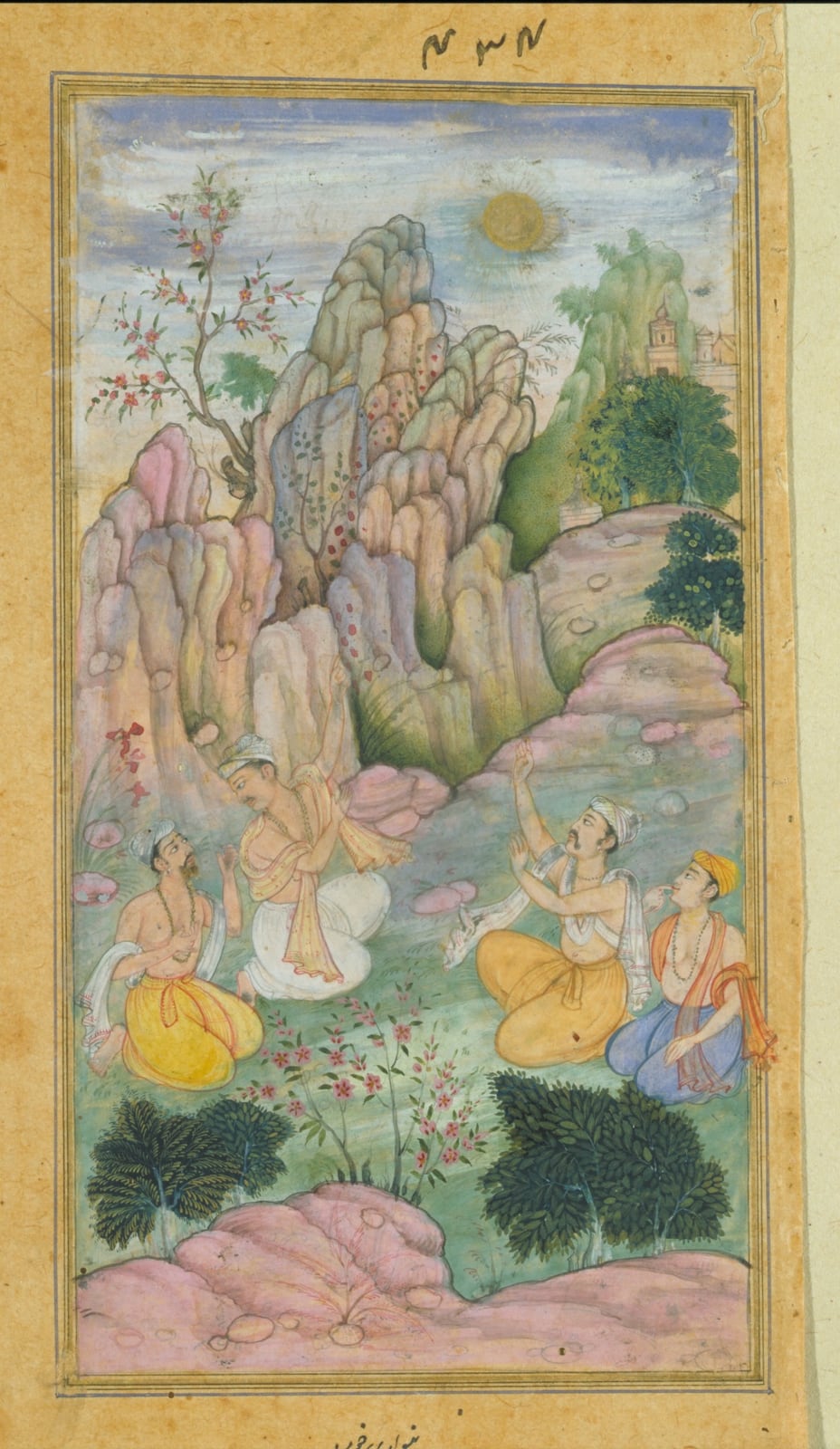
Vyasa
يختلفان في: ما المطلق؟ هل الله موجود؟ · من أنا؟ هل توجد ذات حقيقية؟ · لماذا نتألّم؟
يختلفان فيخلاف جوهري
Confucius · Laozi
Two orders for a world at war: ritual that gives form and the Way that removes it
لماذا: The conflict is real and polemical, though between texts and schools rather than persons. The Daodejing names and discredits the central Confucian concepts, humaneness, righteousness and ritual, which suggests it was composed, at least in part, against that school. The meeting between Confucius and Laozi recounted by Sima Qian in the Records of the Grand Historian (ch. 63) belongs to legend and is not considered historical. The underlying difference is anthropological: Confucius trusts that cultivated form educates human nature; the Daodejing suspects that every imposed form falsifies it. Chinese culture eventually read them as complementary, one for public office and the other for retirement.
يتّفقان في
Confucius · Jesus of Nazareth
The golden rule in two languages, and the exact point where they part
لماذا: There was no contact between them; the convergence comes from a widespread moral intuition, reciprocity, found in very diverse traditions. The divergence before the enemy is explained by each one's framework. Confucius thinks of a society ordered by graded relationships, beginning with the family, where love has measure and justice requires that each act receive its due. Jesus speaks from the imminence of the Kingdom of God and from the imitation of a Father who loves all without distinction, which breaks every measure. One seeks the harmony of the city; the other announces a justice that overflows it.
يتّفقان في
Confucius · Hildegard of Bingen
Ritual and music as the form of the soul: the master of Lu and the abbess of the Rhine
لماذا: The affinity is purely comparative and rests on a shared ancient intuition: music and ritual do not adorn moral life, they constitute it, because body and voice are educated before ideas. The Confucian tradition joined ritual and music very early as instruments of government and self-cultivation; Benedictine liturgy made the singing of psalms the axis of the monastic day. The difference is theological: Confucian ritual looks to human conduct and keeps the spirits at a distance, whereas Hildegard's chant is addressed to a personal God and is participation in the praise of the angels. They agree on pedagogy, not on the addressee.
يختلفان فيخلاف جوهري
Confucius · Siddhartha Gautama, the Buddha
Filial piety as the root, or leaving home as open air
لماذا: The contradiction is real and had historical consequences: when Buddhism reached China, Confucian scholars reproached it for centuries because monks abandoned their parents and left no descendants, and Chinese Buddhists answered by stressing the filial duties found in the canon. The two masters never met; the clash arises from their aims. Confucius seeks the harmony of a society at war and sees in the family the model of the state. The Buddha seeks the end of suffering, which arises from attachment, and sees in domestic ties one more attachment. Neither despises what the other values: one leaves renunciation as an exception; the other, the household as a stage.
يتّفقان في
Confucius · The 14th Dalai Lama (Tenzin Gyatso)
An ethics that needs no metaphysics: humaneness and universal responsibility
لماذا: The convergence is comparative and responds to similar situations: Confucius teaches in a China divided by war between states, and the Dalai Lama in a plural, secularised world, as the leader of a people in exile. Both seek a moral basis that can be shared without requiring a common faith. They differ, however, in the scope of love. Confucius wants it graded, beginning with parents, and rejects repaying evil with good (14.34); the Dalai Lama, from Buddhist compassion, extends it to all beings equally, the enemy included. One orders affection; the other universalises it. And ritual, central in Confucius, carries little weight in the Dalai Lama's secular ethics.
حكايات وروايات
حكايات وروايات
تقليد شفهيc. 496–484 a. C.
The dog of a house in mourning
أصل الرواية: Shiji 47, "Hereditary House of Confucius". Not in the Analects. Reworked in the Kongzi jiayu.
موثّقc. 489 a. C.
Hunger between Chen and Cai
أصل الرواية: Analects 15.2 (core); Shiji 47 (expansion); Zhuangzi, chs. 14, 17, 20 and 28 (Taoist versions).
موثّقfinales del s. VI – principios del V a. C.
The stable fire
أصل الرواية: Analects 10.17 (10.12 in Legge's numbering). Commentary on the alternative punctuation in Slingerland (2003), ad loc.
موثّقc. 496 a. C.
The visit to Nanzi
أصل الرواية: Analects 6.28 (6.26 in Legge); expansion in Shiji 47. The saying on virtue and beauty also appears in Analects 9.18 and 15.13 without context.
موثّق500 a. C.
The Jiagu meeting
أصل الرواية: Zuozhuan, Duke Ding, year 10; Guliang zhuan, Ding 10; Shiji 47 (with the execution of the jesters, absent from the Zuozhuan).
موثّقc. 481 a. C.
The death of Yan Hui
أصل الرواية: Analects 11.8–11.11 (11.7–11.10 in Legge) and 6.11. The date comes from Shiji 47 and the traditional chronology; some place it earlier.
رواية من سِيَر القدّيسين481 a. C.
The capture of the lin
أصل الرواية: Chunqiu, Ai 14 (one line); Gongyang zhuan, Ai 14 (the weeping and the end of the annals); Shiji 47 (the premonition).
التعاليم
التعاليم
المفاهيم التي ينتظم بها فكره، مشروحة في سياقها.
Ren (humaneness, benevolence)ren
Ethical core of Confucianism; contested by the Daodejing (ch. 18) as a symptom of decline; central in Mencius, Zhu Xi and Wang Yangming.
المصدر: Slingerland, Edward (trad.). Confucius: Analects, with Selections from Traditional Commentaries. Hackett Publishing Company, Indianápolis, 2003. ISBN 9780872206359.
Li (ritual, proper form)li
Inherits Zhou ritual culture; systematised by Xunzi and the Liji; criticised by Mohists, Legalists and Taoists.
المصدر: Slingerland, Edward (trad.). Confucius: Analects, with Selections from Traditional Commentaries. Hackett Publishing Company, Indianápolis, 2003. ISBN 9780872206359.
Junzi (the gentleman, the exemplary person)junzi
Ideal shared by the whole Confucian tradition; rough equivalents: the Aristotelian spoudaios, the honnête homme of seventeenth-century Europe.
المصدر: Slingerland, Edward (trad.). Confucius: Analects, with Selections from Traditional Commentaries. Hackett Publishing Company, Indianápolis, 2003. ISBN 9780872206359.
Xiao (filial piety)xiao
A Zhou-culture virtue systematised by Confucius; central in the Xiaojing, the Liji and imperial law.
المصدر: Slingerland, Edward (trad.). Confucius: Analects, with Selections from Traditional Commentaries. Hackett Publishing Company, Indianápolis, 2003. ISBN 9780872206359.
Zhengming (rectification of names)zhengming
Developed by Xunzi ("Zhengming") and the Legalists; debated in Chinese philosophy of language (Mohists, School of Names).
المصدر: Slingerland, Edward (trad.). Confucius: Analects, with Selections from Traditional Commentaries. Hackett Publishing Company, Indianápolis, 2003. ISBN 9780872206359.
Shu (reciprocity) and zhong (doing one's utmost)shu
The Confucian golden rule; parallels in Judaism (Hillel), Christianity (Mt 7:12) and Buddhism.
المصدر: Slingerland, Edward (trad.). Confucius: Analects, with Selections from Traditional Commentaries. Hackett Publishing Company, Indianápolis, 2003. ISBN 9780872206359.
Xue (study, learning)xue
Foundation of the imperial examination system and of Neo-Confucian pedagogy (Zhu Xi, "Articles of the White Deer Grotto Academy").
المصدر: Slingerland, Edward (trad.). Confucius: Analects, with Selections from Traditional Commentaries. Hackett Publishing Company, Indianápolis, 2003. ISBN 9780872206359.
الخلوات
خلوات ومراكز
أماكن ولقاءات مرتبطة بتعليمه. نضعك على تواصل مع من ينظّمها.
Qufu, provincia de Shandong · China
Qufu: Temple, Cemetery and Mansion of Confucius
Patrimonio Mundial de la UNESCO (ficha oficial)
Qufu, Confucius's home town, preserves the three sites UNESCO inscribed as World Heritage in 1994: the temple raised in his memory shortly after his death and enlarged over the centuries into one of China's great architectural complexes; the cemetery where he and thousands of his descendants lie; and the mansion of the Kong family, home of his direct heirs. It is the pilgrimage site par excellence of Confucianism and the setting for annual ceremonies in his honour. The UNESCO website sometimes rejects automated requests, but it is the official listing.
مقاطع الفيديو
مقاطع الفيديو
تسجيلات ومقابلات وأفلام وثائقية. تُشغَّل مقاطع الفيديو من YouTube؛ ولا تُستضاف هنا.
Who was Confucius? — Bryan W. Van Norden
تحليل· EN· 2015· 5 min
TED-Edالقناة الرسمية
¿Quién fue Confucio? — Bryan W. Van Norden
تحليل· ES· 5 min
Sé Curioso — TED-Edالقناة الرسمية
Who Was Confucius? And What Did He Really Say?
محاضرة· EN· 62 min
Bryan Van Norden
Confucius on Language: How NOT to Rectify Names
محاضرة· EN· 66 min
Bryan Van Norden
The Analects of Confucius, read by Jing Li (LibriVox)
تسجيل من طرف ثالث· EN· 212 min
LibriVox Audiobooksالقناة الرسمية
《孔子》Confucius — 半部论语治天下 (CCTV纪录)
فيلم وثائقي· ZH· 90 min
CCTV纪录 (CCTV Documentary)القناة الرسمية
如果国宝会说话 — 孔子见老子画像石 (El relieve «Confucio visita a Laozi»)
فيلم وثائقي· ZH· 5 min
CCTV纪录القناة الرسمية
Confucio. «El Maestro de Diez Mil Siglos»
فيلم وثائقي· ES· 21 min
UNED Documentosالقناة الرسمية
Confucio — Analectas «Lún Yǔ» (audiolibro completo en español)
تسجيل من طرف ثالث· ES· 261 min
AMA Audiolibros
Professor Michael Puett on Zhuangzi in Relation to Confucius
محاضرة· EN· 44 min
China X (HarvardX)القناة الرسمية
Views of Nature in the Analects with Annping Chin
مقابلة· EN· 4 min
Yale Forum on Religion and Ecologyالقناة الرسمية
Confucian Analects in the Modern World: Five Generations
محاضرة· EN· 68 min
UC Berkeley Eventsالقناة الرسمية
Confucius, 551 BC: Ancient China's Philosopher Who Changed The World
فيلم وثائقي· EN· 89 min
Timeline — World History Documentaries
Confucianism, Buddhism, and Daoism: Chinese Popular Religion
تحليل· EN· 13 min
CrashCourseالقناة الرسمية
المعرض
المعرض
صور بترخيص متحقَّق منه. كل منها تحتفظ بمؤلّفها ونسبتها.
المخطوطات
المخطوطات
شواهد مخطوطة ونصوص قديمة، مع جهة حفظها وشروط الاطّلاع عليها.
ZH · Escritura de los escribas (lishu) de los Han occidentales · Anterior a 55 a. C. (año de la muerte de Liu Xiu, príncipe Huai de Zhongshan, en cuya tumba se halló)
定州漢墓竹簡《論語》
- الشاهد المحفوظ
- 620 tablillas de bambú, unos 7.576 caracteres, aproximadamente la mitad del texto recibido; dañadas por un incendio antiguo y por el terremoto de Tangshan (1976)
- جهة الحفظ
- Instituto Provincial de Reliquias Culturales de Hebei (Hebei sheng wenwu yanjiusuo), Shijiazhuang
ZH · Escritura de los escribas (lishu) de los Han occidentales · Anterior a 59 a. C. (muerte de Liu He, marqués de Haihun, antiguo emperador depuesto)
海昏侯墓竹簡《論語》
- الشاهد المحفوظ
- Más de 500 tablillas de bambú identificadas como Analectas, en curso de restauración y publicación
- جهة الحفظ
- Instituto Provincial de Reliquias Culturales y Arqueología de Jiangxi; Museo del Sitio de Haihunhou, Nanchang
ZH · Escritura de los escribas (lishu) de los Han occidentales · c. 45 a. C. (fecha de un registro censal hallado en la misma tumba)
平壤貞柏洞364號墓《論語》竹簡
- الشاهد المحفوظ
- 39 tablillas de bambú con los capítulos «Xianjin» y «Yan Yuan»
- جهة الحفظ
- Instituciones de la República Popular Democrática de Corea (Pyongyang); custodio concreto no confirmado
ZH · Escritura regular (kaishu) de la dinastía Tang · Grabado entre 833 y 837 (era Kaicheng)
開成石經《論語》
- الشاهد المحفوظ
- Texto íntegro de las Analectas en estelas de piedra, parte de los Doce Clásicos de Kaicheng (114 estelas, más de 650.000 caracteres)
- جهة الحفظ
- Museo del Bosque de Estelas (Beilin), Xi'an
العلاقات
العلاقات
تأثيرات وتلمذة وتقارب في الأفكار. تُميَّز العلاقة الموثّقة عن التشابه المستخلَص بالتحليل.
التقى بـ
Tradition (Shiji 47 and 63, Liji, Zhuangzi) relates that Confucius consulted Laozi on the rites. A school narrative, unverifiable; recorded as undocumented.
تشابه مستخلَص بالتحليل
أثّر في
The Zhuangzi (4th–3rd c. BCE) makes Confucius a recurring character, sometimes mocked and sometimes spokesman for Taoist doctrine itself: an influence by contrast, documented in the text.
علاقة موثّقة
معاصر لـ
Siddhartha Gautama, the Buddha
Approximate contemporaries according to traditional chronologies (6th–5th c. BCE), with no contact whatsoever. The comparison is a commonplace of the history of religions (Jaspers's "Axial Age").
تشابه مستخلَص بالتحليل
أفكار قريبة من
The negative golden rule of Analects 15.24 and 12.2 is routinely compared with the positive one of Mt 7:12; no historical relation.
تشابه مستخلَص بالتحليل
المصادر
المصادر
المراجع والفهارس التي رُوجعت لهذه الصفحة.
- Wikidata, entidad Q4604 «Confucius» (P31=Q5; 313 enlaces entre wikis). Nombre nativo 孔夫子; nacimiento registrado en 552/551 a. C.; lugar de nacimiento Q210287 (Zou/Qufu).
- Sima Qian. Shiji (Memorias históricas), juan 47, «Kongzi shijia» (Casa hereditaria de Confucio), c. 94 a. C. Ed. Zhonghua shuju, Pekín, 1959. Trad. francesa: Chavannes, Les Mémoires historiques de Se-ma Ts'ien, vol. 5, 1905; trad. inglesa en Nienhauser (ed.), The Grand Scribe's Records, vol. 5.1, Indiana University Press, 2006.
- Legge, James (trad.). The Chinese Classics, vol. 1: Confucian Analects, The Great Learning, The Doctrine of the Mean. Trübner, Londres, 1861; 2.ª ed. Clarendon Press, 1893. Project Gutenberg nº 4094.
- Slingerland, Edward (trad.). Confucius: Analects, with Selections from Traditional Commentaries. Hackett Publishing Company, Indianápolis, 2003. ISBN 9780872206359.
- Lau, D. C. (trad.). Confucius: The Analects (Lun yü). Penguin Classics, Harmondsworth, 1979. ISBN 9780140443486.
- Cheng, Anne (trad.). Entretiens de Confucius. Éditions du Seuil (Points Sagesses), París, 1981. ISBN 9782020057752. Y Cheng, Anne. Histoire de la pensée chinoise. Seuil, París, 1997.
- Nylan, Michael y Wilson, Thomas. Lives of Confucius: Civilization's Greatest Sage Through the Ages. Doubleday, Nueva York, 2010.
- Hunter, Michael. Confucius Beyond the Analects. Brill, Leiden, 2017.
- Zuozhuan (Zuo Tradition), años Ding 10, Ding 12, Ai 11, Ai 15 y Ai 16. Trad. Durrant, Stephen; Li, Wai-yee; Schaberg, David. Zuo Tradition / Zuozhuan: Commentary on the Spring and Autumn Annals. University of Washington Press, Seattle, 2016.
- Liji, «Tangong» (cap. 3). Trad. Legge, James. The Lî Kî. Sacred Books of the East, vols. XXVII–XXVIII. Clarendon Press, Oxford, 1885.
- Csikszentmihalyi, Mark. «Confucius». The Stanford Encyclopedia of Philosophy (ed. Edward N. Zalta).
- Meynard, Thierry (ed.). Confucius Sinarum Philosophus (1687): The First Translation of the Confucian Classics. Institutum Historicum Societatis Iesu, Roma, 2011. ISBN 9788870412062.
- Zhuangzi (莊子), caps. 4, 5, 6, 14, 20, 28 y 31. Chinese Text Project.
- Jiangxi sheng wenwu kaogu yanjiusuo y otros. «Nanchang shi Xi Han Haihunhou mu» (La tumba del marqués de Haihun, de los Han occidentales, en Nanchang). Kaogu, 2016, nº 7, pp. 45–62.
- Hebei sheng wenwu yanjiusuo Dingzhou Han mu zhujian zhengli xiaozu (ed.). Dingzhou Han mu zhujian Lunyu. Wenwu chubanshe, Pekín, 1997.
- Kim, Kyung-ho. «A Study of Excavated Bamboo and Wooden-strip Analects: The Spread of Confucianism and Chinese Script». Sungkyun Journal of East Asian Studies, vol. 11, nº 1 (2011), pp. 59–88.
- Chinese Text Project. «The Analects» (論語), texto chino con traducción de James Legge en paralelo.
- Suárez Girard, Anne-Hélène (trad.). Confucio. Lun Yu. Reflexiones y enseñanzas. Editorial Kairós, Barcelona, 1997. ISBN 9788472453661.
- Pérez Arroyo, Joaquín (trad.). Confucio y Mencio. Los cuatro libros. Ediciones Paidós (Paidós Orientalia), Barcelona, 2002. ISBN 9788449312076.
- Brooks, E. Bruce y Brooks, A. Taeko. The Original Analects: Sayings of Confucius and His Successors. Columbia University Press, Nueva York, 1998. ISBN 9780231104302 (tela); 9780231104319 (rústica).
- Ma Chengyuan (ed.). Shanghai bowuguan cang Zhanguo Chu zhushu (上海博物館藏戰國楚竹書), vol. 1. Shanghai guji chubanshe, Shanghái, diciembre de 2001. Incluye la primera edición del manuscrito «Kongzi shilun» (孔子詩論).
- صاحب الحقوق
- Obra en dominio público; cada traducción pertenece a su traductor o editorial
في انتظار التأكيد
ما لم تتمكّن هذه الصفحة من حسمه بعد. نفضّل أن نقول ذلك على أن نملأ الفراغ.
- No se ha localizado ninguna edición de las Analectas de Joaquín Pérez Arroyo en Alianza ni en Kairós (el encargo las mencionaba): su traducción es Los cuatro libros (Alfaguara 1981; Paidós 2002); la de Kairós es de Anne-Hélène Suárez Girard; la de Alianza (2021) es una selección de García-Noblejas y Torres Marín. Confirmar en la BNE si existió una edición suelta.
- ISBN pendientes de ver en catálogo: Waley (reediciones Vintage/Routledge), Durrant–Li–Schaberg (Zuozhuan, 2016), Gardner (Four Books, Hackett 2007), Kramers (Kongzi jiayu, 1950). Se han dejado en null.
- La traducción de la edición de Herder (2020, ISBN 9788425443886) no figura en el catálogo consultado; identificar traductor.
- No se han encontrado en Open Library ediciones en ruso, hindi ni árabe con ISBN fiable.
- Custodio concreto de las tablillas de Pyongyang (tumba 364 de Jeongbaek-dong): no confirmado; se conocen solo por fotografías publicadas en Corea del Sur.
- La fecha de las pinturas 孔子燕居像 y 孔子爲魯司寇像 (Museo de Confucio de Qufu) no consta en las fichas de Commons; datarlas con el catálogo del museo.
- Programas de afiliación: no se ha verificado ninguno; lista vacía.
- Fecha de nacimiento: 551 a. C. (Zuozhuan/Shiji) frente a 552 (Gongyang); se adopta 551 con precisión «year». El día tradicional (28 de septiembre) no se registra por ser convención tardía.
- Sala de lectura: no se ha localizado en Gutenberg, Wikisource ni Internet Archive una traducción española de las Analectas en dominio público con texto completo.
- Sala de lectura: las traducciones de Legge del Shujing, del Liji y de los apéndices del Yijing (Sacred Books of the East, vols. III, XVI, XXVII–XXVIII) están en Wikisource en subpáginas anidadas (Parte/Libro/Sección) que el ingestor ordena mal; no se registran hasta poder ordenarlas. Tampoco hay en línea una edición separada de dominio público del Daxue en inglés (la de Legge va dentro del vol. 1 de The Chinese Classics) ni del Chunqiu sin el Zuozhuan.
- Sala de lectura: el Xiaojing de Legge en Wikisource intercala las tres secciones de su introducción entre los capítulos al ordenarlos por número; revisar el orden tras la ingesta. La versión de Ivan Chên (Gutenberg #75878, 1908) no se registra por no haberse podido acreditar la fecha de muerte del traductor.
- Obras: ISBN de la edición de Shanghai guji (2001) del Kongzi shilun no verificado. El Zhongyong no se registra como obra de Confucio: la tradición lo atribuye a su nieto Zisi.
بُحث بتاريخ 2026-10-22