الهندوسية · أدفايتا فيدانتا · التقليد الفيدي
Uddalaka Aruni
उद्दालक आरुणि
تاريخيّته موضع جدل
حكيمٌ فيديّ من كورو-بانتشالا، من سلالة غوتاما، تقدّمه الأوبانيشادات معلّمًا لابنه شفيتاكيتو ولياجنافالكيا. في الكتاب السادس من «تشاندوغيا أوبانيشاد» يعلّم بالتجربة، بالطين وبذرة البانيان والملح المذاب في الماء، أنّ كلّ شيء يصدر عن الكينونة، «واحدًا بلا ثانٍ»، ويوجز ذلك في اللازمة «تات تفام أسي». لم يكتب شيئًا؛ وصورته، المختلَف في تاريخيّتها، مستمدّة من «شتاباثا براهمانا» ومن أقدم الأوبانيشادات، التي تعود إلى القرنين السابع والسادس ق.م تقريبًا.
- مؤلَّفًا
- 9مؤلَّفًا
- طبعة
- 24طبعة
- اقتباسًا
- 7اقتباسًا
- مقطع فيديو
- 12مقطع فيديو
- صورة
- 4صورة
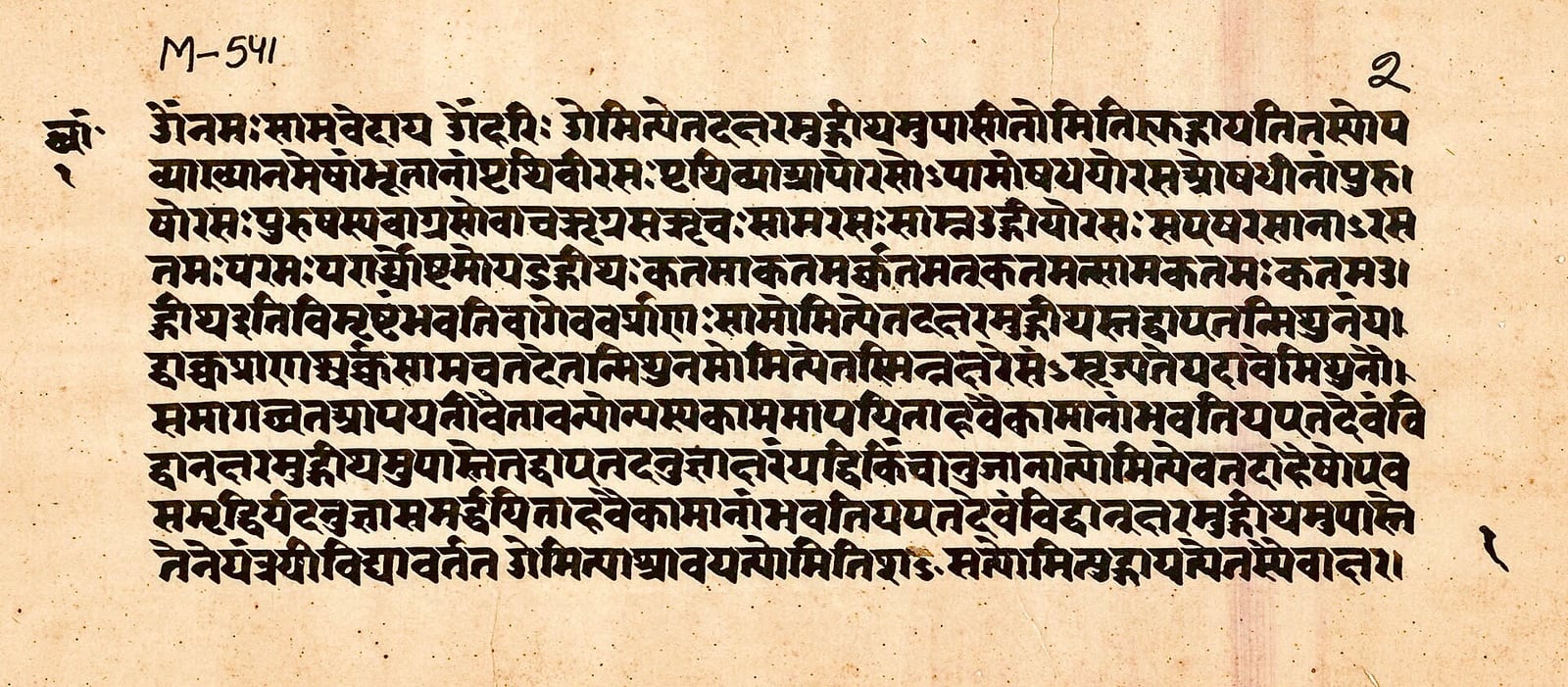
Manuscrito de la Chāndogya Upaniṣad (1849) · CC BY-SA 4.0
بكلماته
«In the beginning, my dear, this was being alone, one only, without a second.»Chāndogya Upaniṣad 6.2.1 (traducción propia)
فكرته المحورية
Tat tvam asi ("you are that"): The refrain that closes nine of Uddālaka's lessons to Śvetaketu in the Chāndogya (6.8.7–6.16.3): that subtle essence (aṇiman) is what all this has as its self; that is the real; that is the ātman; tat tvam asi.
السيرة
4 دقيقة قراءة
ترجمة مُعانة من الأصل الإسباني، بانتظار مراجعة مترجم من أهل اللغة.
معلّمٌ في سلاسل المعلّمين
لم يترك أوددالاكا آروني أيّ كتاب. إنّه اسمٌ يتردّد مرةً بعد مرة في النثر الفيديّ المتأخر، في «شتاباثا براهمانا»، وفي «بريهادارانياكا أوبانيشاد» و«تشاندوغيا أوبانيشاد»، وفي «كاوشيتاكي»، وفي «جايمينيا أوبانيشاد براهمانا»، مرجعًا في الطقوس، ومحاورًا في المناظرات، وقبل كلّ شيء معلّمًا. وتسمّيه النصوص أيضًا غوتاما نسبةً إلى سلالته، وتجعل له أبًا هو أرونا أوبافيشي، وابنًا هو شفيتاكيتو آرونيا؛ ومن هذه الإشارات أعاد ميشائيل فيتسل بناء شجرة نسبٍ من أربعة أجيال. كان برهميًّا من كورو-بانتشالا، قلب العالم الفيديّ في سهل الغانج الغربي، وتجعله سلاسل المعلّمين في «البريهادارانياكا» معلّمَ ياجنافالكيا: «ياجنافالكيا عن أوددالاكا، وأوددالاكا عن أرونا».
الرحّالة في الشمال
تحفظ «شتاباثا براهمانا» حكايةً تصوّره كاهنًا جوّالًا. كان أوددالاكا يطوف بلاد الشمال كاهنًا مُقيمًا للشعائر، ويحمل معه قطعةً من الذهب، لأنّه في الأزمنة القديمة، كما يقول النصّ، كان من يرتحل على هذا النحو يعرض جائزةً يتحدّى بها الآخرين إلى المناظرة. فخشي براهمة الشمال أن ينتزع منهم هذا البرهميّ القادم من كورو-بانتشالا أرضهم، فبعثوا إليه سفايدايانا شاوناكا. فطرح عليه هذا سلسلةً من الأسئلة عن المعنى الخفيّ لقرابين المحاق والبدر؛ فسلّمه أوددالاكا قطعة الذهب، وأقرّ له بعلمه، ثم عاد إليه لاحقًا وفي يده حطب، وهي إيماءة من يطلب أن يصير تلميذًا، ليشرحها له. وفي موضع آخر يكون هو من يجيب، سؤالًا بعد سؤال، عن أسئلة شاوتشيا براتشينايوغيا في الأغنيهوترا.
الأب والمعلّم
التعليم الذي اشتهر به هو تعليم الكتاب السادس من «التشاندوغيا». فابنه شفيتاكيتو، الذي أُرسل للدرس في الثانية عشرة، يعود في الرابعة والعشرين، كما يروي النصّ، «مغرورًا، متعاليًا، يحسب نفسه عالمًا». فيسأله أبوه هل يعرف التعليم الذي به يُسمَع ما لم يُسمَع، ويُفكَّر فيما لم يُفكَّر فيه، ويُعرَف ما لم يُعرَف. فلمّا رأى جهله، عرضه عليه: كما يُعرَف بكتلة واحدة من الطين كلُّ ما صُنع من الطين، وليست الأواني إلا «مسألة كلمات، وتحوّلًا، واسمًا»، كذلك يُعرَف بالكينونة (سات) كلُّ ما هو موجود. «في البدء، يا عزيزي، كان هذا الكونُ الكينونةَ وحدها، واحدًا بلا ثانٍ». ومنها تنبثق الحرارة والماء والغذاء، فتتمازج في الأشياء كلّها.
تسعة دروس ولازمة واحدة
يعلّم أوددالاكا بالتجربة. فيأمر ابنه أن يصوم خمسة عشر يومًا لا يشرب فيها إلا الماء، فيتبيّن أنّه لم يعد قادرًا على تلاوة الفيدات؛ فإذا عاد إلى الطعام عادت إليه الذاكرة كجمرةٍ أُذكيت بالقشّ. ثم تتوالى تسعة دروس: العسل الذي يجمع رحيق أشجار كثيرة دون أن تعرف كلُّ قطرة من أيّ شجرة جاءت، والأنهار التي تضيع في البحر، والشجرة التي تحيا ما دامت الحياة تسري فيها، وبذرة شجرة البانيان التي إذا شُقّت لم يظهر فيها شيء، ومع ذلك تنبت منها الشجرة العظيمة، والملح المذاب في الماء الذي لا يُرى ويُذاق في كلّ موضع، والرجل المعصوب العينين الذي يجد طريق العودة إلى غاندهارا لأنّ أحدًا دلّه عليه. وكلُّ درس يُختَم باللازمة نفسها: ذلك الجوهر اللطيف هو ما لهذا الكلّ من كينونة؛ ذلك هو الحقّ؛ ذلك هو الآتمان؛ «تات تفام أسي»، يا شفيتاكيتو.
ما معنى «تات تفام أسي»
قرأ تقليد الأدفايتا، ابتداءً من شانكارا، العبارةَ على أنّها تعبير عن هوية، «أنت ذاك»: الآتمان الفرديّ هو البراهمن، وعدّها من «الأقوال الكبرى» الأربعة في الأوبانيشادات. واقترح جويل بريتون عام 1986 قراءةً أخرى تُعنى بالنحو والسياق: فالضمير المحايد يحيل إلى الجوهر اللطيف الذي جرى الحديث عنه للتوّ، وتعني العبارة شيئًا من قبيل «هكذا أنت». ومن ثَمّ يترجمها باتريك أوليفيل «وهكذا أنت، يا شفيتاكيتو». وتتّفق القراءتان في الجوهر، فالابن مصنوع من الحقيقة الخفيّة ذاتها التي صُنع منها كلُّ شيء آخر، لكنّهما تختلفان في ما إذا كان النصّ يصوغ هويةً ميتافيزيقية أم تفسيرًا لطبيعة الإنسان.
برهميٌّ مستعدٌّ للتعلّم
تُلحّ النصوص على سمةٍ من سمات طبعه: لا يخشى أوددالاكا أن يعود تلميذًا. ففي بلاط جاناكا يسأل ياجنافالكيا عن «الخيط» الذي يربط العوالم وعن «المدبّر الباطن»، ويستحضر ما تعلّمه على باتانتشالا كابيا في بلاد المادرا، ثم يصمت بعد الجواب. وحين يُذِلّ الملكُ برافاهانا جايفالي شفيتاكيتو بخمسة أسئلة عن المصير بعد الموت، يمضي الأب إلى البلاط، ويطلب أن يُعلَّم، فيتلقّى عقيدة النيران الخمس، التي يعلن الملك أنّها لم تبلغ برهميًّا قطّ من قبل. وأمام براهمة آخرين يسألونه عن الآتمان الكونيّ، يقرّ بأنّه لن يحسن الجواب كاملًا، فيقودهم إلى الملك أشفاباتي كايكيا. وقد درس براين بلاك هذه المشاهد التي ينتقل فيها العلم من الملوك إلى الكهنة.
ما يُعرَف وما لا يُعرَف
لا تواريخ هنا: فتاريخيّة أوددالاكا موضع خلاف، شأنها شأن تاريخيّة جيل الأوبانيشادات الأولى كلّه، الذي يضعه أوليفيل في القرنين السابع والسادس ق.م تقريبًا، ويضعه فيتسل في العصر الفيديّ المتأخر، قبل بوذا. ويعدّه بن-عامي شارفشتاين من أوائل الفلاسفة في التاريخ، ورأى فيه الماركسيّ ديبيبراساد تشاتوبادهيايا أوّل «عالمٍ طبيعيّ»، لمنهجه القائم على الملاحظة والتجربة. وتذكر «كاثا أوبانيشاد» شخصًا اسمه أوددالاكي آروني، أبا ناتشيكيتاس، عدّه شانكارا هو نفسَه؛ ونبّه ماكس مولر إلى أنّ صيغة الاسم تثير الشكوك.
آروني الملحمة
منحته «المهابهاراتا» شبابًا أسطوريًّا. فآروني من بانتشالا، تلميذ الحكيم أيودا دهاوميا، أُرسل ليسدّ ثغرةً في سدّ حقل؛ فلمّا عجز عن ذلك تمدّد فيها وأوقف الماء بجسده. وحين ناداه المعلّم نهض فشقّ السدّ، فسمّاه دهاوميا أوددالاكا، «الذي نهض من السدّ». وتجعل الملحمة نفسها ابنته سوجاتا أمًّا لأشتافاكرا، وتنسب إلى شفيتاكيتو سنَّ الوفاء الزوجيّ. وتحمل اسمَه أوبانيشادٌ متأخرة في الزهد، هي «آروني أوبانيشاد»، وكان مادهفا يستشهد بـ«آروني-شروتي» مفقودة اليوم. أمّا لازمة «التشاندوغيا» فقد غدت في الأثناء من أكثر العبارات ترديدًا في الروحانية الهندية.
المصادر: Olivelle, Patrick (ed. y trad.). The Early Upaniṣads: Annotated Text and Translation. Nueva York: Oxford University Press, 1998. Chāndogya 5.3–5.24 y 6; Bṛhadāraṇyaka 3.7, 6.2, 6.3.7 y 6.5; Kauṣītaki 1.1. · Olivelle, Patrick (trad.). Upaniṣads. Oxford World's Classics. Oxford: Oxford University Press, 1996 (traducción «And that's how you are, Śvetaketu» de Chāndogya 6.8.7 y ss.). · Müller, F. Max (trad.). The Upanishads, Part I (Sacred Books of the East, vol. 1). Oxford: Clarendon Press, 1879 (Khândogya y Kaushîtaki-brâhmaṇa-upanishad); y Part II (SBE 15), 1884, nota a Kaṭha 1.11. · Eggeling, Julius (trad.). The Śatapatha-Brāhmaṇa, Part V (Sacred Books of the East, vol. 44). Oxford: Clarendon Press, 1900. XI.4.1 (Uddālaka Āruṇi y Svaidāyana) y XI.5.3 (Śauceya Prācīnayogya y Uddālaka Āruṇi sobre el agnihotra). · Chattopadhyaya, Debiprasad. Science and Society in Ancient India. Calcuta: Research India Publications, 1977.
الخط الزمني
الحياة عامًا بعد عام
كل نقطة حدث موثّق. انقر لتقرأه مع مصدره ودرجة اليقين فيه.
القرن VIII ق.م – 600 ق.مKuru-Pañcāla
Ritual authority of the Śatapatha Brāhmaṇa
His opinions and debates appear in the later books of the Śatapatha (XI.4.1, XI.5.3) and in the Jaiminīya Upaniṣad Brāhmaṇa. The range is an estimate of the period of the texts.
مرجَّحEggeling, Julius (trad.). The Śatapatha-Brāhmaṇa, Part V (Sacred Books of the East, vol. 44). Oxford: Clarendon Press, 1900. XI.4.1 (Uddālaka Āruṇi y Svaidāyana) y XI.5.3 (Śauceya Prācīnayogya y Uddālaka Āruṇi sobre el agnihotra).
القرن VIII ق.م – 600 ق.م
Ritual authority of the Śatapatha Brāhmaṇa
His opinions and debates appear in the later books of the Śatapatha (XI.4.1, XI.5.3) and in the Jaiminīya Upaniṣad Brāhmaṇa. The range is an estimate of the period of the texts.
مرجَّح
القرن VII ق.م
Svaidāyana's challenge
Travelling in the north as an officiant, he loses a disputation to Svaidāyana Śaunaka and returns with firewood in hand to be instructed (Śatapatha XI.4.1).
تقليد
القرن VII ق.م
The teaching to Śvetaketu
Chāndogya 6: being, one without a second, the experiments and the refrain "tat tvam asi".
تقليد
القرن VII ق.م
Pupil of King Pravāhaṇa Jaivali
After his son's humiliation at the Pañcāla assembly, he receives from the king the doctrine of the five fires (Chāndogya 5.3–10; Bṛhadāraṇyaka 6.2).
تقليد
القرن VII ق.م
He questions Yājñavalkya
He asks about the "thread" and the "inner controller" and falls silent after the answer (Bṛhadāraṇyaka 3.7).
تقليد
القرن II ق.م – 400
The Āruṇi of the Mahābhārata
The epic, fixed between the third century BCE and the fourth century CE, tells the episode of the dyke and how his teacher Dhaumya gave him the name Uddālaka.
مرجَّح
1862
First English translation of the Chāndogya
Rājendralāla Mitra publishes the Chāndogya with extracts from Śaṅkara's commentary in the Bibliotheca Indica.
موثّق
1879
The Chāndogya in the Sacred Books of the East
Max Müller opens the series with the Chāndogya and popularizes the rendering "Thou art that".
موثّق
1986
Brereton rereads "tat tvam asi"
Joel Brereton proposes reading the refrain in its grammatical context as "that's how you are", a reading Olivelle adopts.
موثّق
المؤلَّفات
المؤلَّفات الأساسية
المؤلَّفات التي لا يُفهم إرثه من دونها.

نسبة تقليدية · القرن VII ق.م
The teaching to Śvetaketu (Chāndogya Upaniṣad, book VI)
छान्दोग्योपनिषद् षष्ठोऽध्यायः (Chāndogya Upaniṣad VI)
Sixteen prose sections. Śvetaketu returns conceited after twelve years of study, and his father teaches him what he did not learn: how, by knowing one thing, everything is known. He sets out the origin of the world from being (sat), "one without a second", which produces heat, water and food; the threefold composition of all things; the experiment of fasting; and nine illustrations — honey, rivers, the tree, the fig seed, salt in water, the man from Gandhāra, the dying man, the thief put to the ordeal of the axe — ending with the refrain "tat tvam asi, Śvetaketu". It is one of the founding texts of Vedānta.
9 طبعات
Uddalaka Aruni
Chāndogya Upaniṣad (passages of Uddālaka Āruṇi)
مجموعة لاحقة · القرن VII ق.م
Chāndogya Upaniṣad (passages of Uddālaka Āruṇi)
छान्दोग्योपनिषद् (Chāndogya Upaniṣad)
Together with the Bṛhadāraṇyaka, the oldest of the Upaniṣads. Its first books interpret the chants (sāman) and the syllable Om; the following ones contain teachings on the ātman and brahman attributed to various masters. In book 5 Uddālaka receives from King Pravāhaṇa the doctrine of the five fires and the two paths of the dead, and accompanies other brahmins to Aśvapati Kaikeya to learn the universal ātman (vaiśvānara). Book 6 is his teaching to Śvetaketu.
6 طبعات
جميع مؤلَّفاته (9)
The question of the thread and the inner controller (Bṛhadāraṇyaka 3.7)
650
The doctrine of the five fires (pañcāgni-vidyā), received from Pravāhaṇa Jaivali
650
The teaching of the universal ātman (vaiśvānara-vidyā), before Aśvapati Kaikeya
650
Uddalaka Aruni
Uddālaka's debates in the Śatapatha Brāhmaṇa
The Conscious LibraryUddālaka's debates in the Śatapatha Brāhmaṇa
700
Kauṣītaki Upaniṣad, chapter 1: Āruṇi and Citra Gāṅgyāyani
500

Āruṇi Upaniṣad (Āruṇeyī Upaniṣad)
Uddalaka Aruni
Āruṇi-śruti (lost text)
The Conscious LibraryĀruṇi-śruti (lost text)
الأقوال
أقوال محدَّدة الموضع في مؤلَّف بعينه. كل منها يحمل مصدره ودرجة الثقة به.
In the beginning, my dear, this was being alone, one only, without a second.सदेव सोम्येदमग्र आसीदेकमेवाद्वितीयम् ।
متحقَّق منهChāndogya Upaniṣad 6.2.1 (traducción propia)
الكلمات الأخيرة
لا توجد سجلات يمكن التحقق منها لكلماته الأخيرة.
There is no account of his death or last words in the Vedic texts, the epic or the Purāṇas. The only words of his that survive are the teachings and dialogues attributed to him by the Śatapatha Brāhmaṇa and the Upaniṣads.
المصدر: Olivelle, Patrick (ed. y trad.). The Early Upaniṣads: Annotated Text and Translation. Nueva York: Oxford University Press, 1998. Chāndogya 5.3–5.24 y 6; Bṛhadāraṇyaka 3.7, 6.2, 6.3.7 y 6.5; Kauṣītaki 1.1.
اسأل
بماذا يجيب أثره
اثنا عشر سؤالًا كبيرًا من أسئلة الإنسانية، وما تتيح نصوصه الإجابة به عنها، مع المراجع. ولا نقوّله ما لم يقل أبدًا.
ما المطلق؟ هل الله موجود؟
In the beginning there was only being, one without a second
مطلق غير شخصييقوله صراحةً
In the sixth book of the Chāndogya Upaniṣad, Uddālaka Āruṇi teaches his son Śvetaketu that in the beginning there was only being (sat), one without a second, and rejects those who held that being was born from non-being. From that principle come heat, water and food, and from their mixture all things. He does not describe a god who judges or loves: he describes a single substance, so subtle that it is not perceived, which is the ātman of all that exists. His examples —the clay of which all pots are made, the dissolved salt that is unseen yet present in every sip, the invisible seed from which the fig tree grows— aim to make the disciple recognise that principle in things and in himself.
قارن هذا السؤال مع معلّمين آخرينمن أنا؟ هل توجد ذات حقيقية؟
The subtle essence of all is the ātman, «and that's how you are»
الذات هي المطلقيقوله صراحةً
Nine of Uddālaka's lessons to Śvetaketu in the Chāndogya end with the same refrain: that subtle essence (aṇiman) is what all this has as its ātman; that is the real; that is the ātman; tat tvam asi (6.8.7–6.16.3). Śvetaketu's self is therefore not something apart: like the river that returns to the sea and no longer knows it was that river, or like honey made from different flowers, the individual comes from being and shares its essence. The Advaita tradition read the refrain as the great saying «you are that», a strict identity between the individual and brahman. The lesson is not presented as a theory, but as something the disciple must verify in things and recognise in himself.
قارن هذا السؤال مع معلّمين آخرينلماذا نتألّم؟
He does not analyse pain; he speaks of one lost who needs guidance
لم يُبدِ رأيًا
The teachings the Chāndogya puts in Uddālaka Āruṇi's mouth contain no diagnosis of suffering. Their subject is the origin and essence of things, not the cause of pain. The closest is a parable (6.14): a man is blindfolded, led far from his land of Gandhāra and abandoned in a deserted place; he cries out that he has been brought there blindfolded, until someone removes the blindfold and points out the way, and he, asking from village to village, returns home. So, says Uddālaka, one who has a teacher knows that he will remain here only as long as he is not set free. The image suggests that the human condition is a disorientation that knowledge corrects, but the text does not formulate it as a theory of suffering.
قارن هذا السؤال مع معلّمين آخرينماذا يحدث بعد الموت؟
The body deprived of life dies; life does not die
ما أنا عليه لا يولد ولا يموتيُستنتج من تعاليمه
Uddālaka explains death to Śvetaketu with the image of a great tree: if its root, trunk or crown is struck, it bleeds but lives, because life pervades it; if life leaves a branch, the branch withers. So, he concludes, it is the body deprived of life that dies; life does not die (Chāndogya 6.11.3). In another passage he describes the process: in the dying person, speech is gathered into the mind, the mind into breath, breath into heat and heat into the highest deity, the being from which all proceeds (6.8.6; 6.15). Death is thus a return to the subtle essence that never ceased to be. Uddālaka also appears, in book V, receiving from a king the doctrine of the five fires and of the paths beyond.
قارن هذا السؤال مع معلّمين آخرينكيف يُبلَغ التحرّر أو الخلاص؟
To know that by which the unheard is heard and the unthought is thought
بالمعرفة المباشرةيُستنتج من تعاليمه
Uddālaka's teaching in the Chāndogya begins with a reproach: Śvetaketu returns proud after twelve years of Vedic study, and his father asks whether he knows the teaching by which the unheard becomes heard, the unthought thought and the unknown known (6.1.2–3). The goal is that knowledge of the being from which everything proceeds, and what follows are the lessons through which it is reached: clay, salt, the fig seed. The parable of the man from Gandhāra shows where it leads: one who has a teacher knows that he will remain here only as long as he is not set free, and then he will arrive (6.14.2). In the last lesson, the one who speaks the truth is not burned when he grasps the red-hot axe (6.16). Known truth protects and frees.
قارن هذا السؤال مع معلّمين آخرينهل نحتاج إلى معلّم؟
One who has a teacher knows the way home
لا غنى عنهيقوله صراحةً
Uddālaka is, in the Chāndogya, the figure of the father who teaches: his entire sixth book is an instruction to his son Śvetaketu, made of questions, examples and small tests. And it is in that book that the need for a teacher is most clearly formulated. A blindfolded man is abandoned far from his land of Gandhāra; only when someone removes the blindfold and points out the direction can he return, asking from village to village. So, Uddālaka concludes, one who has a teacher (ācāryavān) knows: I remain here only as long as I am not set free, and then I shall arrive (6.14.2). The teacher does not replace the path, which the disciple walks himself, but without him one does not know which way to go.
قارن هذا السؤال مع معلّمين آخرينهل العالم حقيقي؟
Being became many: heat, water and food, and entered into them
تجلٍّ للإلهييقوله صراحةً
For Uddālaka, the world comes from being (sat), which, wishing to be many, emitted heat; heat, water; and water, food (Chāndogya 6.2.3–4). It then entered those three «deities» with the living ātman and made them threefold, so that each thing contains all three: the red of fire is that of heat, the white that of water, the black that of food (6.3–4). His most famous example is clay: by one lump everything made of clay is known, because the modification is «a matter of words», a name, and the real is the substance (6.1.4). The world is not a dream, but being itself under names and forms; what dissolves on understanding it is the belief that things are something apart from their source.
قارن هذا السؤال مع معلّمين آخرينما الحب؟
His lessons concern being, not love; they ask for trust
لم يُبدِ رأيًا
The teachings the Chāndogya and the Bṛhadāraṇyaka put in Uddālaka Āruṇi's mouth do not address love. Their subject is the origin of things, the subtle essence that sustains them and the relation between that essence and the disciple. The closest thing to an affective dimension lies in the tone of the teaching: he is a father instructing his son, calls him «dear one» (somya) again and again and, when Śvetaketu cannot see the invisible essence of the fig seed, asks him for trust (śraddhā). But the trust he asks for is that of a disciple who accepts what he does not yet understand, not a love directed to God or to one's neighbour, and the text does not develop it as a teaching.
قارن هذا السؤال مع معلّمين آخرينهل نحن أحرار أم أن كل شيء مقدَّر؟
He does not treat freedom; his last lesson is about truth
لم يُبدِ رأيًا
The teachings ascribed to Uddālaka Āruṇi do not address the question of freedom or fate. Their interest lies in the origin of things and in the subtle essence that sustains them, not in human action or its consequences. The doctrine of rebirth according to deeds, which the Chāndogya sets out in book V, Uddālaka receives from a king, Pravāhaṇa Jaivali, who warns him that this knowledge had not previously reached the brahmins. The closest thing to an ethic in his teaching is the last lesson to Śvetaketu (6.16): a man accused of theft is made to grasp a red-hot axe; if he has lied he is burned, and if he speaks the truth, protected by it, he is not. Truth is what frees, not a choice between alternatives.
قارن هذا السؤال مع معلّمين آخرينلماذا نتأمّل أو نصلّي؟
He teaches no meditation: he teaches looking and verifying
لم يُبدِ رأيًا
Uddālaka's lessons in the Chāndogya contain no practice of meditation or prayer. His method is different: questions, observation and small tests. He has Śvetaketu fast for fifteen days so that he finds that, without food, he cannot recall the Vedas, and that on eating he remembers them again (6.7); he asks him to dissolve salt in water and look for it by sight and by taste (6.13); he has him split a fig fruit and then a seed until he sees nothing inside (6.12). What is sought is not an induced inner state, but that the disciple should see for himself the subtle essence in things. When observation no longer reaches, Uddālaka proposes not a technique, but trust: «have faith, my dear».
قارن هذا السؤال مع معلّمين آخرينهل يستطيع العقل أن يعرف الحقيقة القصوى؟
Observe, compare, verify; and where sight fails, trust
الإيمان والعقل يتعاونانيُستنتج من تعاليمه
Uddālaka's method in the Chāndogya is almost experimental. To teach Śvetaketu, who returns proud after twelve years of study, he does not cite texts: he has him fast for fifteen days to verify the relation between food and mind (6.7), dissolve salt in water and taste it (6.13), split a fig seed until he sees nothing (6.12). He reasons by analogies drawn from clay, copper and iron, and argues against those who said that being was born from non-being: how could that happen? (6.2.2). But observation has a limit: when the essence of the seed cannot be seen, Uddālaka asks for trust (śraddhā). Reason prepares and trust completes, in a knowledge the disciple must end up recognising in himself.
قارن هذا السؤال مع معلّمين آخرينالانسحاب من العالم أم تغييره؟
A householder who teaches his son; he does not raise renunciation
لم يُبدِ رأيًا
Uddālaka Āruṇi's teachings do not address the choice between withdrawing from the world and transforming it. His figure, as presented by the Śatapatha Brāhmaṇa and the Upaniṣads, is that of a brahmin householder, an expert in ritual, who debates in assemblies, travels to learn from others —including kings such as Pravāhaṇa Jaivali and Aśvapati Kaikeya— and passes his knowledge on to his son and his disciples. He sends Śvetaketu to study with a teacher, receives him on his return and instructs him at home. The knowledge of being that he teaches does not require leaving that life, but the text does not raise it as a question either. The renunciation associated with his name belongs to the Āruṇi Upaniṣad, a much later text.
قارن هذا السؤال مع معلّمين آخرين
التقارب والتوتّر
التقارب والتوتّر
محسوبة سؤالًا سؤالًا انطلاقًا من مواقفه. وسبب كل اتفاق أو اختلاف يظهر بالنقر.
يقترب في تفكيره من
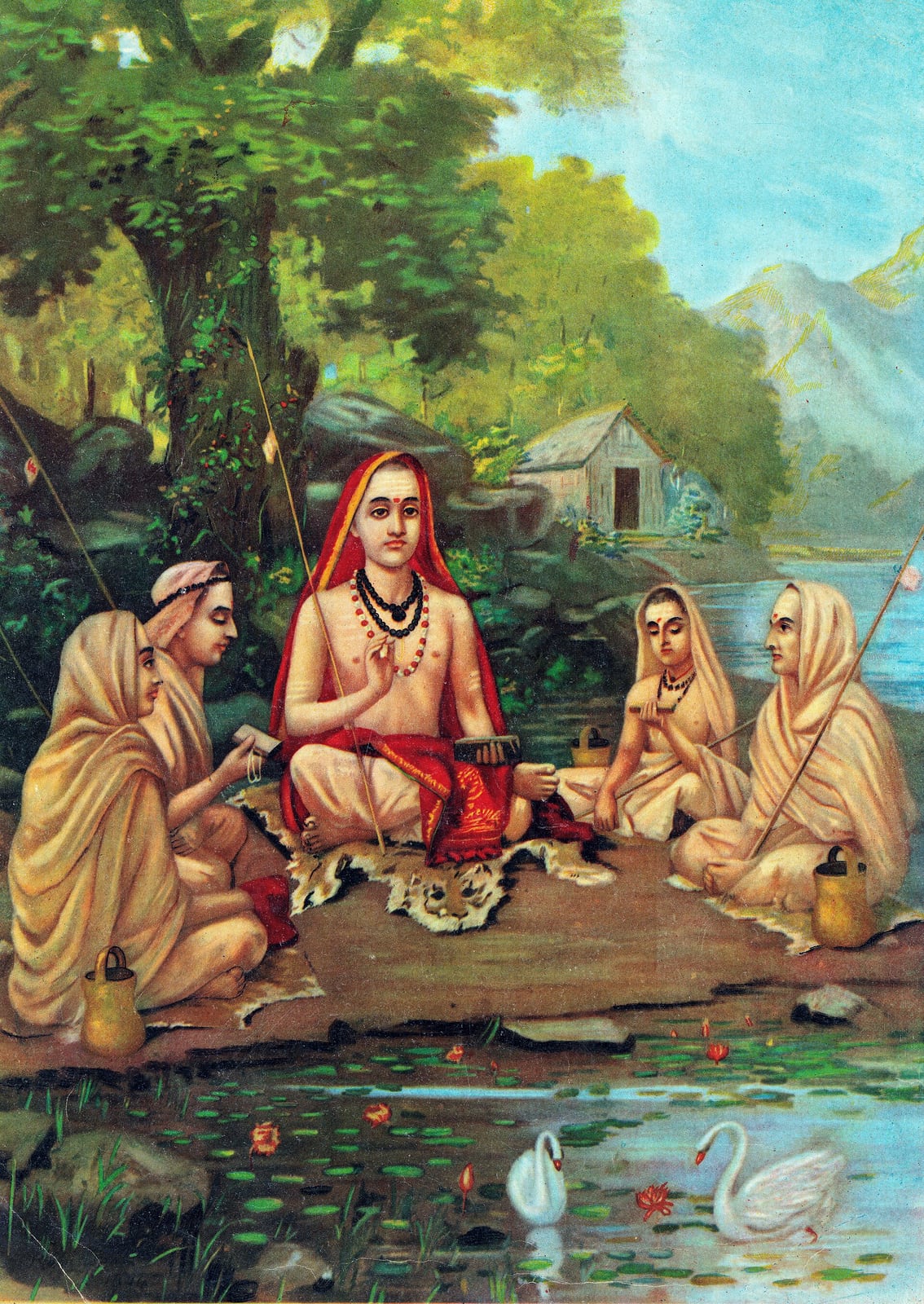
Adi Shankara
يتّفقان في: ما المطلق؟ هل الله موجود؟ · من أنا؟ هل توجد ذات حقيقية؟ · ماذا يحدث بعد الموت؟
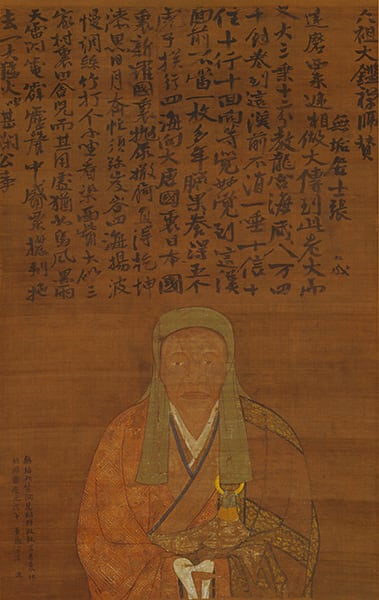
Huineng
يتّفقان في: ما المطلق؟ هل الله موجود؟ · من أنا؟ هل توجد ذات حقيقية؟ · ماذا يحدث بعد الموت؟
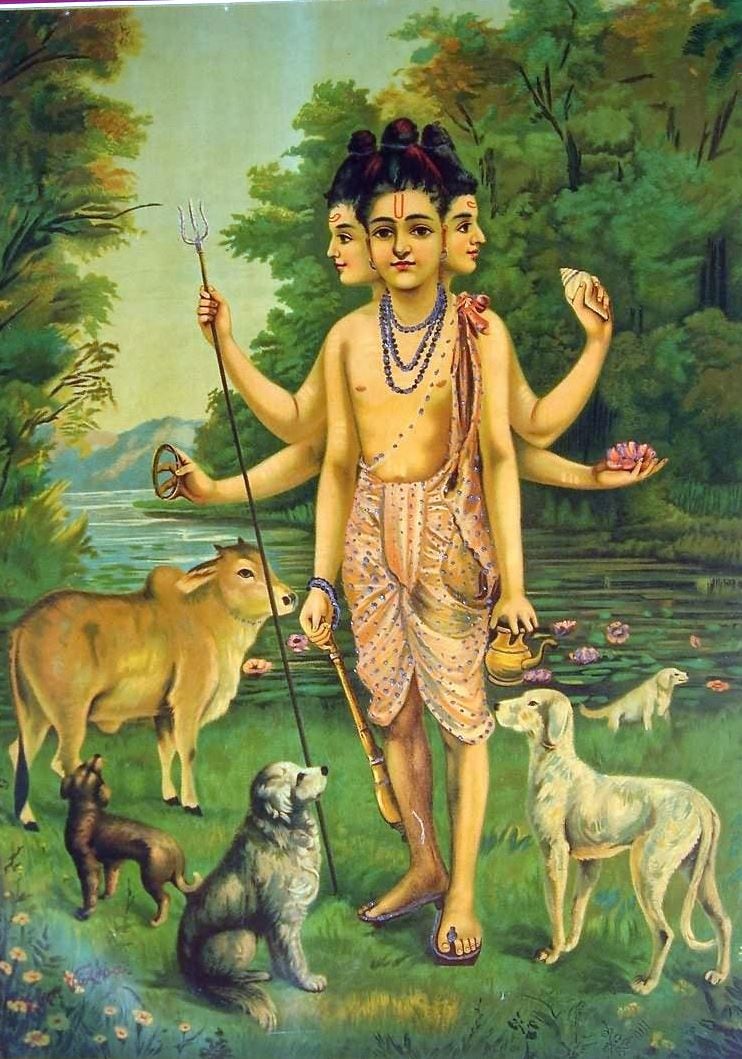
Dattatreya
يتّفقان في: ما المطلق؟ هل الله موجود؟ · من أنا؟ هل توجد ذات حقيقية؟ · ماذا يحدث بعد الموت؟
Leo Tolstoy
يتّفقان في: ما المطلق؟ هل الله موجود؟ · من أنا؟ هل توجد ذات حقيقية؟ · ماذا يحدث بعد الموت؟




حكايات وروايات
حكايات وروايات
موثّقépoca védica tardía (Chāndogya, ss. VII–VI a. C.)
Salt in water
أصل الرواية: Chāndogya Upaniṣad 6.13. "Documented" indicates that the story is in the text, not that the scene is historical.
المصدر: Olivelle, Patrick (ed. y trad.). The Early Upaniṣads: Annotated Text and Translation. Nueva York: Oxford University Press, 1998. Chāndogya 5.3–5.24 y 6; Bṛhadāraṇyaka 3.7, 6.2, 6.3.7 y 6.5; Kauṣītaki 1.1.
موثّقépoca védica tardía
The fifteen-day fast
أصل الرواية: Chāndogya Upaniṣad 6.7. The "scientific" reading is Chattopadhyaya's (1977).
المصدر: Chattopadhyaya, Debiprasad. Science and Society in Ancient India. Calcuta: Research India Publications, 1977.
موثّقépoca védica tardía
The gold coin and the firewood
أصل الرواية: Śatapatha Brāhmaṇa XI.4.1.1–10 (Eggeling's translation, SBE 44, pp. 50–54), with a parallel version in Gopatha Brāhmaṇa 1.3.6. The exact meaning of some phrases (the coin, the "head that splits") is disputed, as Eggeling notes.
موثّقépoca védica tardía
The king's five questions
أصل الرواية: Chāndogya Upaniṣad 5.3 (with another version in Bṛhadāraṇyaka 6.2). Black (2007) analyses these scenes of knowledge passing from kings to brahmins.
المصدر: Black, Brian. The Character of the Self in Ancient India: Priests, Kings, and Women in the Early Upaniṣads. Albany: State University of New York Press, 2007.
رواية من سِيَر القدّيسينrelato épico (Mahābhārata, ss. III a. C.–IV d. C.)
The pupil who lay down in the dyke
أصل الرواية: Mahābhārata 1.3 (Pauṣya-parvan; section 3 of Ganguli's translation). There is no Vedic parallel; the relation between this Āruṇi and the Uddālaka of the Upaniṣads is a traditional identification.
تقليد شفهيrelato épico
Śvetaketu and the law of marriage
أصل الرواية: Mahābhārata 1.113 of the critical edition (section 122 of Ganguli's translation). It is an epic legend with no basis in the Vedic texts.
التعاليم
التعاليم
المفاهيم التي ينتظم بها فكره، مشروحة في سياقها.
Tat tvam asi ("you are that")tat-tvam-asi
Chāndogya Upaniṣad 6; Brereton 1986; Olivelle 1996.
المصدر: Brereton, Joel P. «Tat Tvam Asi in Context». Zeitschrift der Deutschen Morgenländischen Gesellschaft 136 (1986): 98–109.
Sat (being, one without a second)sat
Chāndogya 6.2.
المصدر: Olivelle, Patrick (ed. y trad.). The Early Upaniṣads: Annotated Text and Translation. Nueva York: Oxford University Press, 1998. Chāndogya 5.3–5.24 y 6; Bṛhadāraṇyaka 3.7, 6.2, 6.3.7 y 6.5; Kauṣītaki 1.1.
Trivṛtkaraṇa (the triplication of the elements)trivrtkarana
Chāndogya 6.3–6.6.
المصدر: Chattopadhyaya, Debiprasad. Science and Society in Ancient India. Calcuta: Research India Publications, 1977.
Aṇiman (the subtle essence)animan
Chāndogya 6.8–6.16.
المصدر: Olivelle, Patrick (ed. y trad.). The Early Upaniṣads: Annotated Text and Translation. Nueva York: Oxford University Press, 1998. Chāndogya 5.3–5.24 y 6; Bṛhadāraṇyaka 3.7, 6.2, 6.3.7 y 6.5; Kauṣītaki 1.1.
Vācārambhaṇa (modification is only a name)vacarambhana
Chāndogya 6.1.4–6; Brahmasūtra 2.1.14 and its commentaries.
المصدر: Olivelle, Patrick (ed. y trad.). The Early Upaniṣads: Annotated Text and Translation. Nueva York: Oxford University Press, 1998. Chāndogya 5.3–5.24 y 6; Bṛhadāraṇyaka 3.7, 6.2, 6.3.7 y 6.5; Kauṣītaki 1.1.
مقاطع الفيديو
مقاطع الفيديو
تسجيلات ومقابلات وأفلام وثائقية. تُشغَّل مقاطع الفيديو من YouTube؛ ولا تُستضاف هنا.
Tat Tvam Asi (That Thou Art) | Swami Sarvapriyananda
محاضرة· EN· 2021· 101 min
Vedanta Society of New Yorkالقناة الرسمية
Talk on Tat Tvam Asi - The Ultimate Equation by Swami Sarvapriyananda
محاضرة· EN· 2026· 115 min
Ramakrishna Vedanta Centre U.K.القناة الرسمية
The Story of Svetaketu - Thou Art That - Chandogya Upanishad | Pravrajika Divyanandaprana
محاضرة· EN· 2018· 20 min
VivekaVani
Chandogya Upanishad Chapter-6 01
محاضرة· EN· 2022· 74 min
Chinmaya Mission San Joseالقناة الرسمية
Chandogya Upanishad Ch 6 – An Exposition of Tat Tvam Asi | Swami Ramakrishnananda | Dis 01
محاضرة· EN· 2026· 68 min
Shravana Mangalam
Chandogya Upanishad Lecture - 1 (Chapter 6 - 1 - 1 to 6 - 1 - 4)
محاضرة· EN· 2026· 76 min
Vedanta Students
श्वेतकेतु और उद्दालक, उपनिषद की कहानी, छान्द्योग्यापनिषद
محاضرة· HI· 2020· 35 min
G.V.B. The University of Veda
CHANDOGYA. VER LO INVISIBLE
تحليل· ES· 2022· 14 min
Vedanta en Español
El pensamiento en la India: Hinduismo
فيلم وثائقي· ES· 2017· 25 min
UNED Documentosالقناة الرسمية
The Upanishads: The Sacred Text that Changed India and the West | Jeffery Long, Ph.D.
محاضرة· EN· 2022· 56 min
Theosophical Societyالقناة الرسمية
Introduction to the Rig Veda and Upanishads | Kendall Sharp | First Friday Lecture
محاضرة· EN· 2024· 78 min
The University of Chicago Graham Schoolالقناة الرسمية
The Central Doctrines of the Upanishads
محاضرة· EN· 2016· 37 min
Vidya-mitraالقناة الرسمية
المعرض
المعرض
صور بترخيص متحقَّق منه. كل منها تحتفظ بمؤلّفها ونسبتها.
المخطوطات
المخطوطات
شواهد مخطوطة ونصوص قديمة، مع جهة حفظها وشروط الاطّلاع عليها.
SA · Devanagari · c. ss. VII–VI a. C. (Olivelle)
छान्दोग्योपनिषद् (1.1.1–1.1.9)
- الشاهد المحفوظ
- Manuscrito fechado en 1849
- الرقمنة
- commons.wikimedia.org/wiki/File:Chandogya_Upanis…
SA · Grantha
छान्दोग्योपनिषद्विवरण
- الشاهد المحفوظ
- Hoja de palma adquirida en julio de 1836
- جهة الحفظ
- Kahle-Austin Foundation (según la descripción de Commons)
- الرقمنة
- commons.wikimedia.org/wiki/File:1836_CE_July_pur…
العلاقات
العلاقات
تأثيرات وتلمذة وتقارب في الأفكار. تُميَّز العلاقة الموثّقة عن التشابه المستخلَص بالتحليل.
معلّم
The Bṛhadāraṇyaka's lists of teachers make Yājñavalkya Uddālaka's pupil ("Yājñavalkya from Uddālaka; Uddālaka from Aruṇa").
علاقة موثّقة
اختلف مع
He questions him at Janaka's court about the thread and the inner controller and falls silent after his answer (Bṛhadāraṇyaka 3.7).
علاقة موثّقة
من عائلة
Śvetaketu Āruṇeya
His son and pupil, recipient of the teaching of Chāndogya 6.
علاقة موثّقة
من عائلة
According to the Mahābhārata (3.132–134), Aṣṭāvakra was the son of Sujātā, Uddālaka's daughter, and of his pupil Kahoḍa; that is, his grandson. A legendary, not Vedic, relationship.
تشابه مستخلَص بالتحليل
تلميذ
Pravāhaṇa Jaivali
The king of the Pañcālas teaches him the doctrine of the five fires (Chāndogya 5.3–10; Bṛhadāraṇyaka 6.2).
علاقة موثّقة
أثّر في
Śaṅkara commented on the Chāndogya and made "tat tvam asi" one of the great sayings of Advaita; he analyses it at length in the Upadeśasāhasrī.
علاقة موثّقة
أفكار قريبة من
Inquiry into the self as the substratum of all experience extends the Advaita reading of "tat tvam asi".
تشابه مستخلَص بالتحليل
أفكار قريبة من
Comparative philosophy (Scharfstein) has linked Uddālaka's search for a single principle behind change with that of the first Greek philosophers.
تشابه مستخلَص بالتحليل
أفكار قريبة من
The theory of three elements combining in all things has been compared with Empedocles' roots.
تشابه مستخلَص بالتحليل
أفكار قريبة من
The rejection of being arising from non-being (Chāndogya 6.2.2) is a frequent parallel in comparative philosophy.
تشابه مستخلَص بالتحليل
أثّر في
Gauḍapāda's Kārikā develops, in terms of non-origination, the thesis that the effect is not different from its cause, illustrated by the clay of Chāndogya 6.1.
تشابه مستخلَص بالتحليل
المصادر
المصادر
المراجع والفهارس التي رُوجعت لهذه الصفحة.
- Wikidata, «Aruni» (Uddālaka Āruṇi), QID Q2724299.
- Olivelle, Patrick (ed. y trad.). The Early Upaniṣads: Annotated Text and Translation. Nueva York: Oxford University Press, 1998. Chāndogya 5.3–5.24 y 6; Bṛhadāraṇyaka 3.7, 6.2, 6.3.7 y 6.5; Kauṣītaki 1.1.
- Olivelle, Patrick (trad.). Upaniṣads. Oxford World's Classics. Oxford: Oxford University Press, 1996 (traducción «And that's how you are, Śvetaketu» de Chāndogya 6.8.7 y ss.).
- Müller, F. Max (trad.). The Upanishads, Part I (Sacred Books of the East, vol. 1). Oxford: Clarendon Press, 1879 (Khândogya y Kaushîtaki-brâhmaṇa-upanishad); y Part II (SBE 15), 1884, nota a Kaṭha 1.11.
- Brereton, Joel P. «Tat Tvam Asi in Context». Zeitschrift der Deutschen Morgenländischen Gesellschaft 136 (1986): 98–109.
- Eggeling, Julius (trad.). The Śatapatha-Brāhmaṇa, Part V (Sacred Books of the East, vol. 44). Oxford: Clarendon Press, 1900. XI.4.1 (Uddālaka Āruṇi y Svaidāyana) y XI.5.3 (Śauceya Prācīnayogya y Uddālaka Āruṇi sobre el agnihotra).
- Chattopadhyaya, Debiprasad. Science and Society in Ancient India. Calcuta: Research India Publications, 1977.
- Witzel, Michael. «Yājñavalkya as Ritualist and Philosopher, and His Personal Language». En S. Adhami (ed.), Paitimāna: Essays in Iranian, Indo-European, and Indian Studies in Honor of Hanns-Peter Schmidt. Costa Mesa: Mazda, 2003, pp. 103–143 (n. 13: árbol genealógico Upaveśi – Aruṇa Aupaveśi – Uddālaka Āruṇi Gautama – Śvetaketu Āruṇeya).
- Black, Brian. The Character of the Self in Ancient India: Priests, Kings, and Women in the Early Upaniṣads. Albany: State University of New York Press, 2007.
- Ganguli, Kisari Mohan (trad.). The Mahabharata of Krishna-Dwaipayana Vyasa, vol. 1: Adi Parva. Calcuta, 1883–1896; Project Gutenberg n.º 15474 (sección 3, Āruṇi y Dhaumya; sección 122 de la vulgata, Śvetaketu). Para Aṣṭāvakra, Vana Parva 132–134 de la edición crítica.
- Olivelle, Patrick (trad.). The Saṃnyāsa Upaniṣads: Hindu Scriptures on Asceticism and Renunciation. Nueva York: Oxford University Press, 1992 (Āruṇi Upaniṣad).
- Scharfstein, Ben-Ami. A Comparative History of World Philosophy: From the Upanishads to Kant. Albany: State University of New York Press, 1998.
- Wikisource en sánscrito, «छान्दोग्योपनिषद्» (texto por adhyāya; adhyāya 5 y 6) y «बृहदारण्यकोपनिषद्» (6.5).
- Wikipedia (en inglés), «Uddalaka Aruni», consultada el 26 de octubre de 2026 (Āruṇi Upaniṣad, Āruṇi-śruti citada por Madhva, episodio de Dhaumya).
- Hume, Robert Ernest (trad.). The Thirteen Principal Upanishads. Londres: Oxford University Press, 1921.
- Ilárraz, Félix G., y Óscar Pujol (trads.). La sabiduría del bosque: antología de las principales Upaniṣad. Madrid: Trotta, 2003.
- Wikimedia Commons, ficheros y metadatos de licencia consultados mediante la API (imageinfo/extmetadata).
- Mitra, Rājendralāla (trad.). The Chhándogya Upanishad of the Sáma Veda, with Extracts from the Commentary of Śankara Áchárya. Calcuta: Baptist Mission Press (Bibliotheca Indica), 1862.
- Gambhirananda, Swami (trad.). Chāndogya Upaniṣad, with the Commentary of Śaṅkarācārya. Calcuta: Advaita Ashrama, 1983 (reimpr. 2006).
- Deussen, Paul (trad.). Sechzig Upanishad's des Veda. Leipzig: F. A. Brockhaus, 1897.
- صاحب الحقوق
- Los textos sánscritos son de dominio público. Las traducciones modernas tienen derechos propios: Oxford University Press (Olivelle; Hume hasta 2029 en España), Trotta (Ilárraz y Pujol), Penguin (Roebuck), Advaita Ashrama (Gambhirananda), Hastinapura (versión española de Nikhilananda). Las de Mitra (1862), Müller (1879), Eggeling (1900) y Deussen (1897) son de dominio público.
في انتظار التأكيد
ما لم تتمكّن هذه الصفحة من حسمه بعد. نفضّل أن نقول ذلك على أن نملأ الفراغ.
- Mahābhārata: comprobar en la edición crítica las referencias 1.3 (Āruṇi y Dhaumya), 1.113 (Śvetaketu) y 3.132–134 (Aṣṭāvakra) frente a la numeración de Ganguli.
- Kaṭha Upaniṣad 1.11: localizar la nota exacta de Max Müller (SBE 15) sobre «Auddālaki Āruṇi» y la identificación de Śaṅkara.
- Chattopadhyaya, Science and Society in Ancient India: confirmar paginación del capítulo sobre Uddālaka y la editorial de la primera edición (Calcuta, 1977; reimpresión de B. R. Grüner, Ámsterdam).
- Āruṇi-śruti citada por Madhva: localizar la referencia en las obras de Madhva o en un estudio especializado.
- Ediciones: buscar ISBN de traducciones de la Chāndogya al francés, alemán, ruso e hindi; identificar al traductor español de la edición de Hastinapura (ISBN 9789509102699).
- Relaciones: los slugs svetaketu y pravahana-jaivali no existen en el Atlas.
- Vídeos: no se ha encontrado un documental de televisión pública ni una clase universitaria monográfica sobre Uddālaka; los vídeos registrados son conferencias de instituciones vedánticas y clases generales sobre las Upaniṣad.
بُحث بتاريخ 2026-10-26