الهندوسية · اليوغا · أدفايتا فيدانتا · التقليد الفيدي
Yajnavalkya
याज्ञवल्क्य
تاريخيّته موضع جدل
حكيمٌ فيديّ، بطل «بريهادارانياكا أوبانيشاد» والمرجع الطقسيّ في «شتاباثا براهمانا»، وهما نصّان من مدرسة «الياجورفيدا البيضاء» التي تُنسب إليه. في بلاط جاناكا ملك فيديها يغلب البراهمة، ويعلّم غارغي ما لا يفنى، ويعلّم الملك أنّ الآتمان نورُ ذاته، لا يُحدّ إلا بقول «نيتي نيتي»، أي «لا هذا، لا هذا». وقبل أن يرحل زاهدًا يعلّم زوجته مايتريي. تاريخيّته موضع خلاف؛ أمّا «ياجنافالكيا سمريتي» و«يوغا ياجنافالكيا»، اللذان يحملان اسمه، فمتأخران عنه كثيرًا.
- مؤلَّفًا
- 12مؤلَّفًا
- طبعة
- 35طبعة
- اقتباسًا
- 11اقتباسًا
- مقطع فيديو
- 15مقطع فيديو
- صورة
- 7صورة
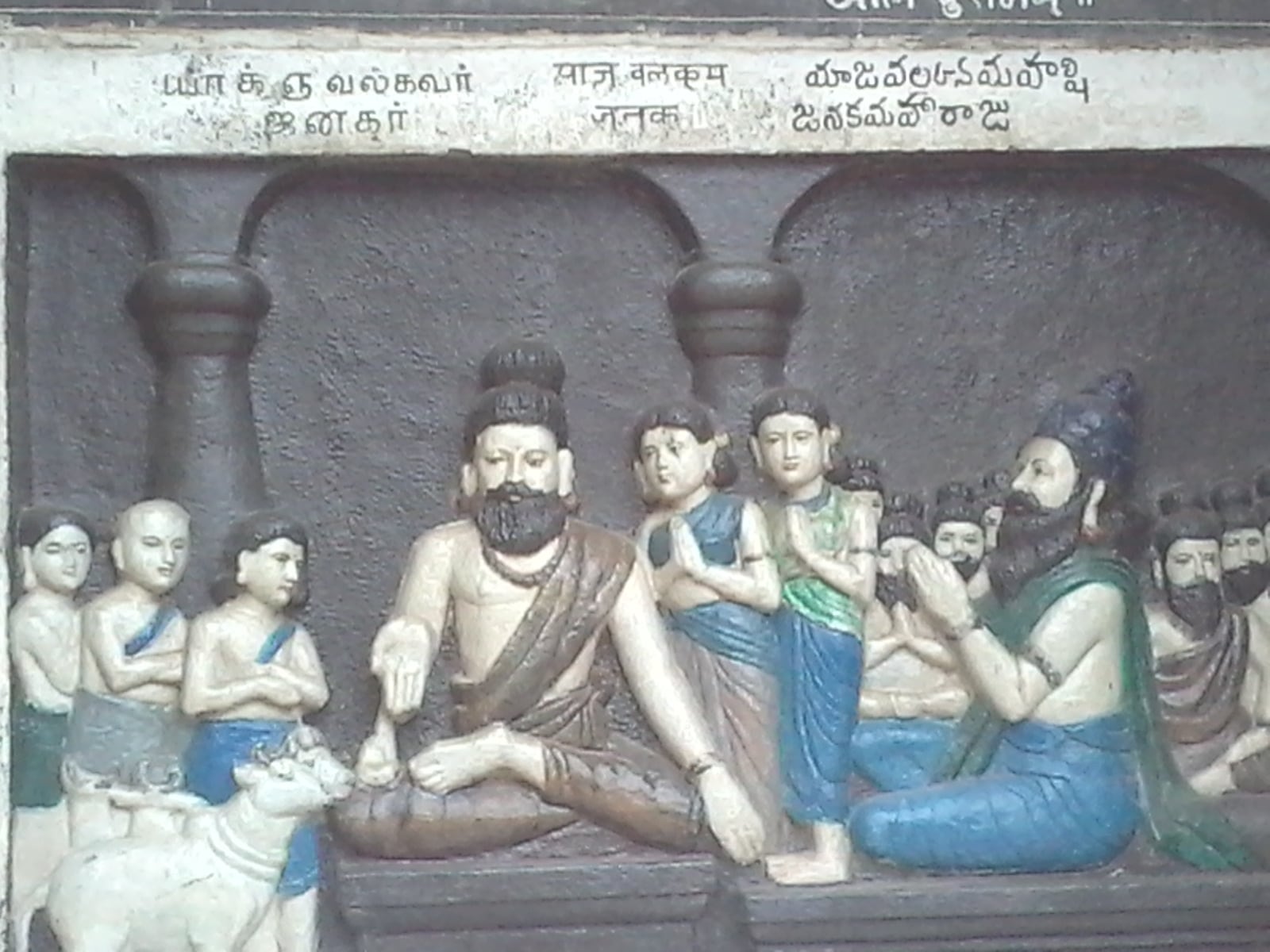
Yājñavalkya con el rey Janaka (relieve) · CC BY-SA 3.0
بكلماته
«It is not for the love of the husband, my dear, that a husband is loved, but for the love of the ātman. […] It is the ātman, my dear, that must be seen, heard, reflected on and meditated upon, Maitreyī.»Bṛhadāraṇyaka Upaniṣad 2.4.5 (traducción propia del sánscrito)
فكرته المحورية
Neti neti ("not this, not this"): The formula with which the Bṛhadāraṇyaka designates the ātman or brahman: it cannot be described by any attribute, because anything said of it would turn it into one object among others.
السيرة
4 دقيقة قراءة
ترجمة مُعانة من الأصل الإسباني، بانتظار مراجعة مترجم من أهل اللغة.
اسمٌ لا وجود له إلا في كتابين
يكاد كلُّ ما يمكن قوله عن ياجنافالكيا يرجع إلى نصّين من مدرسة «الياجورفيدا البيضاء»: «شتاباثا براهمانا»، الرسالة الكبرى في القربان، و«بريهادارانياكا أوبانيشاد» التي تؤلّف كتابها الأخير. وقد وصل كلا النصّين في روايتين، رواية «كانفا» ورواية «مادهياندينا»، وهذا التقليد المزدوج يتيح، بحسب ميشائيل فيتسل، التحقّقَ من أنّ الصورة ليست من اختلاق مدرسة واحدة. فلا نقش ولا حوليّة ولا شهادة من خارج النصوص: ياجنافالكيا شخصيةٌ من شخصيات النصوص، وتاريخيّته موضع خلاف. أمّا ما يمكن الجزم به فهو أنّ التقليد ينسب إليه الكشف عن صيغ «الياجوس الأبيض»، وأنّ «الشتاباثا» نفسها تختم سلسلة معلّميها بالقول إنّ تلك الصيغ، التي تُلُقِّيت من الشمس، قد أعلنها ياجنافالكيا فاجاسانيا.
الطقسيّ الذي كان يسخر من القواعد
ياجنافالكيا الأقدم كاهنٌ. ففي الكتب من الأول إلى الخامس من «الشتاباثا»، ثم في الكتب من الحادي عشر إلى الثالث عشر، يناقش دقائق الطقس التقنية بحدّة ذهنٍ تقارب أحيانًا الوقاحة. فحين يحرّم النصّ أكل لحم البقرة أو الثور لأنّ هذين الحيوانين «يحملان كلَّ ما على الأرض»، يضيف من غير تمهيد: «ومع ذلك قال ياجنافالكيا: أمّا أنا فآكله، ما دام طريًّا» («شتاباثا» 3.1.2.21). وفي موضع آخر يظهر شيخًا يُري الناس ذراعيه وقد اشتعل فيهما الشيب. ويلاحظ فيتسل أنّه لا يرد في الكتب من السادس إلى العاشر، وهي من تقليد أكثر غربيّة، فيصفه بأنّه شخصيةٌ من الشرق، من مملكة فيديها، وإن كان النصّ يعدّه بين براهمة كورو وبانتشالا: فهو إذن وافدٌ إلى شرقٍ كان يندمج في الثقافة الفيدية في القرون السابقة على بوذا.
ألف بقرة في بلاط جاناكا
المشهد الذي منحه الخلود الأدبي في الكتاب الثالث من «البريهادارانياكا». جاناكا، ملك فيديها، يقيم قربانًا وافر العطايا، ويفرد ألف بقرة رُبطت إلى قرونها قطعٌ من الذهب لأعلم البراهمة. فلا يجرؤ أحد على المطالبة بها إلا ياجنافالكيا، الذي يأمر تلميذه ساماشرافاس بأن يسوقها؛ وحين يثور الاستنكار يجيب بأنّه ينحني أمام الأعلم، لكنّه لا يريد إلا البقر. ثم يستجوبه واحدٌ بعد الآخر: أشفالا، وآرتابهاغا، وبهوجيو، وأوشاستا، وكاهولا، وغارغي فاتشاكنافي، وأوددالاكا آروني، ثم غارغي مرةً أخرى، وأخيرًا فيداغدها شاكاليا. ومع آرتابهاغا ينتحي جانبًا ليتحدّثا على انفراد، وما يتحدّثان فيه، كما يقول النصّ، هو العمل: يصير المرء صالحًا بالعمل الصالح، وطالحًا بالعمل الطالح. أمّا غارغي، التي تسأل عمّا تقوم عليه عوالم البراهمن، فينذرها ألّا تُكثر من السؤال إن لم تشأ أن يسقط رأسها؛ وحين تعود بسؤالين «كالسهمين» يحدّثها عن الذي لا يفنى، الذي يرى ولا يُرى. وأمّا شاكاليا، الذي يُلحّ، فيموت ورأسه مشقوق.
نور الإنسان و«لا هذا، لا هذا»
في الكتاب الرابع يعلّم ياجنافالكيا جاناكا نفسه. يسأله الملك: ما نور الإنسان؟ فيجيب: الشمس، فإذا غربت الشمس فالقمر، ثم النار، ثم الصوت، فإذا غاب ذلك كلّه فالذات، الآتمان، الذي هو نورُ نفسه. ويتلو ذلك استكشافٌ لأحوال الوعي، اليقظة والنوم الحالم والنوم العميق، الذي يصير فيه الرائي «محيطًا واحدًا، بلا ثانٍ»، ثم تفسيرٌ للموت والولادة الجديدة بحسب الرغبة والعمل: «كما يعمل المرء يكون». ولا سبيل إلى الإشارة إلى الآتمان إلا بالنفي: «نيتي نيتي»، «لا هذا، لا هذا»؛ فهو لا يُدرَك، ولا يفنى، ولا يتعلّق بشيء. وفي الختام يهب جاناكا نفسه وشعبه للمعلّم عبيدًا.
مايتريي والرحيل
تروي الأوبانيشاد مرّتين أنّ ياجنافالكيا، وقد أوشك أن يترك حياة ربّ الأسرة، أراد أن يقسم أمواله بين زوجتيه مايتريي وكاتياياني. فتسأل مايتريي، التي يسمّيها النصّ «المتحدّثة في البراهمن»، هل كانت الأرض كلّها، مملوءةً بالثروة، ستجعلها خالدة؛ فلمّا نفى ذلك قالت: «وما أصنع بما لا يجعلني خالدة؟». فعلّمها حينئذٍ أنّ الزوج والزوجة والأبناء والثروة لا تُحَبّ لذاتها، بل من أجل الآتمان، وأنّه حيث صار كلُّ شيء آتمانًا لا يبقى أحدٌ يرى آخر. ويشير فيتسل إلى أنّه أوّل إنسان يقول عنه نصٌّ هنديّ إنّه غادر بيته ليعيش بلا مأوى؛ وقد بيّن جويل بريتون كيف أُلِّفت روايتا الحوار ورُكِّبتا وفق خطّة مقصودة.
ما تقوله النصوص وما يقوله النقد
يضع باتريك أوليفيل «البريهادارانياكا» و«التشاندوغيا»، أقدم الأوبانيشادات، في القرنين السابع والسادس ق.م تقريبًا، أي قبل بوذا، وينبّه إلى أنّ الأولى عملٌ مؤلَّف من طبقات. ويرى فيتسل، متابعًا تسوجي، أنّ الطقسيّ في «الشتاباثا» والمفكّر في الأوبانيشاد شخصٌ واحد، وأنّ معاصريه، أوددالاكا آروني وجاناكا ملك فيديها وأجاتاشاترو ملك كاشي، يدلّون على عصرٍ سابق لعصر بوذا؛ في حين شكّك باحثون آخرون، مثل هورش وروبن، في هذه الوحدة. ويقرأ براين بلاك وستيفن ليندكويست الشخصيةَ بوصفها بناءً أدبيًّا: نموذج البرهميّ الذي يغلب في المناظرات، وتُكتب سيرته من خلال تلك المناظرات نفسها. ولا تسمح أيٌّ من هذه القراءات بتحديد تاريخ للميلاد أو للوفاة.
الاسم الذي ظلّ ينمو
بعد الأوبانيشادات صار اسم ياجنافالكيا مغناطيسًا. تروي «فيشنو بورانا» أنّ معلّمه فايشامبايانا، وقد أُغضِب، طالبه بأن يردّ ما تعلّمه، فتقيّأ صيغ الياجوس، فالتقطها تلاميذ آخرون تحوّلوا إلى حَجَل (تيتّيري)، ومن هنا يُقال إنّ مدرسة «تايتّيريا» أخذت اسمها؛ ثم نال من الشمس، التي تجلّت له في هيئة حصان، «الياجوس الأبيض» الخاصّ بالفاجاسانيين. وتجعله «المهابهاراتا» يشرح مذهب السانكهيا للملك جاناكا، ويُدرجه القانون الجاينيّ بين حكمائه باسم جانّافاكّا. وتُتداول تحت اسمه أعمالٌ متأخرة كثيرًا: «ياجنافالكيا سمريتي»، وهي رسالة في الدهارما والشريعة يؤرّخها أوليفيل بالقرن الرابع أو الخامس للميلاد، وقد حكمت، مع شرح «ميتاكشارا»، جانبًا كبيرًا من الشريعة الهندوسية؛ و«يوغا ياجنافالكيا»، وهو كتيّب في اليوغا يتراوح تأريخه، موضعَ خلاف، بين مطلع الميلاد والقرن الثاني عشر.
إرثٌ عند جذور الفيدانتا
شرح شانكارا «البريهادارانياكا»، فغدا منهج النفي، والآتمان بوصفه نورَ ذاته، والوحدة بين الآتمان والبراهمن، كما تُقرأ في محاورات ياجنافالكيا، أركانًا أساسية في «الأدفايتا فيدانتا». ورأت تقاليد الزهد في رحيله نموذجَ السانياسا، وتقدّمه أوبانيشادان متأخرتان، «جابالا» والأوبانيشاد التي تحمل اسمه، معلّمًا لطريق الترهّب. وفي الفلسفة المقارنة، يُعدّ ياجنافالكيا من أوائل المفكّرين الذين حُفظ لهم ما يشبه صوتًا خاصًّا: ساخرًا، مولعًا بالبقر، لا يرحم في الجدل، وهو في الوقت نفسه أوّل من قال إنّ الحقيقة القصوى لا يمكن أن تُسمّى.
المصادر: Olivelle, Patrick (ed. y trad.). The Early Upaniṣads: Annotated Text and Translation. Nueva York: Oxford University Press, 1998 (South Asia Research). Introducción (datación, pp. 12–13) y Bṛhadāraṇyaka 2.4, 3.1–3.9, 4.1–4.5, 6.5. · Olivelle, Patrick (trad.). Upaniṣads. Oxford World's Classics. Oxford: Oxford University Press, 1996. · Müller, F. Max (trad.). The Upanishads, Part II (Sacred Books of the East, vol. 15). Oxford: Clarendon Press, 1884. Incluye la Bṛhadāraṇyaka Upaniṣad. · Eggeling, Julius (trad.). The Śatapatha-Brāhmaṇa according to the Text of the Mādhyandina School, 5 vols. (Sacred Books of the East, vols. 12, 26, 41, 43, 44). Oxford: Clarendon Press, 1882–1900. · Black, Brian. The Character of the Self in Ancient India: Priests, Kings, and Women in the Early Upaniṣads. Albany: State University of New York Press, 2007.
الخط الزمني
الحياة عامًا بعد عام
كل نقطة حدث موثّق. انقر لتقرأه مع مصدره ودرجة اليقين فيه.
القرن VIII ق.م – 600 ق.مVideha y Kuru-Pañcāla (llanura del Ganges)
The ritualist of the Śatapatha Brāhmaṇa
The ritual opinions attributed to Yājñavalkya in books 1–5 and 11–13 of the Śatapatha Brāhmaṇa reflect, according to Witzel, the late Vedic period before the Buddha. The range is an estimate, not a date.
مرجَّحWitzel, Michael. «Yājñavalkya as Ritualist and Philosopher, and His Personal Language». En Siamak Adhami (ed.), Paitimāna: Essays in Iranian, Indo-European, and Indian Studies in Honor of Hanns-Peter Schmidt. Costa Mesa: Mazda Publishers, 2003, pp. 103–143.
القرن VIII ق.م – 600 ق.م
The ritualist of the Śatapatha Brāhmaṇa
The ritual opinions attributed to Yājñavalkya in books 1–5 and 11–13 of the Śatapatha Brāhmaṇa reflect, according to Witzel, the late Vedic period before the Buddha. The range is an estimate, not a date.
مرجَّح
القرن VII ق.م
Revelation of the White Yajus (according to tradition)
The Bṛhadāraṇyaka (6.5.3) credits Yājñavalkya Vājasaneya with proclaiming the "white" Yajus formulas received from the Sun; the Purāṇas add the story of Vaiśaṃpāyana and the partridges.
تقليد
القرن VII ق.م
The debate of the thousand cows
At Janaka's sacrifice Yājñavalkya answers nine interlocutors, including Gārgī Vācaknavī and Uddālaka Āruṇi (Bṛhadāraṇyaka 3.1–3.9). It is a literary account of uncertain date.
تقليد
القرن VII ق.م
The teachings to Janaka
The light of man, the states of waking, dreaming and deep sleep, death and rebirth, and "neti neti" (Bṛhadāraṇyaka 4.1–4.4).
تقليد
القرن VII ق.م
Dialogue with Maitreyī and departure as an ascetic
Before leaving household life he teaches Maitreyī the doctrine of the ātman (Bṛhadāraṇyaka 2.4 and 4.5). Witzel regards it as the first textual case of a "proto-renouncer".
تقليد
القرن II ق.م – 400
Yājñavalkya in the Mahābhārata
The Śāntiparvan (12.298 ff.) has him expound Sāṃkhya doctrine to Janaka. The epic took shape between the third century BCE and the fourth century CE.
مرجَّح
القرن IV – 500
Composition of the Yājñavalkya Smṛti
Treatise on dharma in three books attributed to Yājñavalkya; Olivelle dates it to around the fourth or fifth century CE.
مرجَّح
القرن XI
Vijñāneśvara's Mitākṣarā
Vijñāneśvara's commentary on the Yājñavalkya Smṛti (late eleventh or twelfth century) became the principal authority of Hindu law in much of India and, later, the basis of the "Hindu law" of British courts.
مرجَّح
1884
Max Müller's translation
Max Müller publishes the Bṛhadāraṇyaka in volume 15 of the Sacred Books of the East, which made Yājñavalkya's dialogues known in the West.
موثّق
2019
Olivelle's edition of the Yājñavalkya Smṛti
Patrick Olivelle publishes the text and translation of the Smṛti in the Murty Classical Library of India.
موثّق
المؤلَّفات
المؤلَّفات الأساسية
المؤلَّفات التي لا يُفهم إرثه من دونها.

مجموعة لاحقة · القرن VII ق.م
Bṛhadāraṇyaka Upaniṣad (The Great Forest Upaniṣad)
बृहदारण्यकोपनिषद् (Bṛhadāraṇyaka Upaniṣad)
The longest and probably the oldest of the Upaniṣads. It is traditionally divided into three sections: the Madhu-kāṇḍa (chapters 1–2), with the first dialogue between Yājñavalkya and Maitreyī; the Muni- or Yājñavalkya-kāṇḍa (3–4), with the debate at Janaka's court and the teachings to the king on the light of the ātman, the states of consciousness, death and "neti neti"; and the Khila-kāṇḍa (5–6), a supplement of doctrines and rites ending with the lists of teachers. It is the main source for the early form of the doctrine of karma and rebirth, and one of the textual foundations of Vedānta.
13 طبعة · amazon.es
نسبة تقليدية · القرن VII ق.م
Yājñavalkya-kāṇḍa (Muni-kāṇḍa): the debate at Janaka's court and the teachings to the king
याज्ञवल्कीयकाण्ड / मुनिकाण्ड (Bṛhadāraṇyaka 3–4)
Chapter 3 narrates the contest at the sacrifice of Janaka of Videha: Yājñavalkya answers Aśvala, Ārtabhāga, Bhujyu, Uṣasta, Kahola, Gārgī Vācaknavī, Uddālaka Āruṇi and Vidagdha Śākalya on ritual, death, karma, the "inner controller" (antaryāmin) and the imperishable (akṣara). Chapter 4 records his conversations with Janaka: the light of man, the states of waking, dreaming and deep sleep, death and rebirth, desire and liberation, and the doctrine of the ātman as "not this, not this". It ends with the second version of the dialogue with Maitreyī.
3 طبعات · amazon.es
Yajnavalkya
Śatapatha Brāhmaṇa (The Brāhmaṇa of a Hundred Paths)
نسبة تقليدية · القرن VIII ق.م
Śatapatha Brāhmaṇa (The Brāhmaṇa of a Hundred Paths)
शतपथब्राह्मण (Śatapatha Brāhmaṇa)
The longest of the Vedic prose treatises on sacrifice. It explains, rite by rite, the meaning of the new- and full-moon offerings, the soma sacrifice, the great fire altar (agnicayana), royal consecration and the horse sacrifice, and includes famous narratives such as the flood and Manu, Purūravas and Urvaśī, and Videgha Māthava, which tells of the eastward spread of the sacrificial fire. Its later books contain the first speculative debates (brahmodya) involving Yājñavalkya, Uddālaka Āruṇi and Janaka.
4 طبعات

نسبة تقليدية · القرن IV
Yājñavalkya Smṛti (Yājñavalkya's Treatise on Dharma)
याज्ञवल्क्यस्मृति (Yājñavalkya Smṛti)
About a thousand verses in three books: conduct (ācāra), legal procedure (vyavahāra) and expiation (prāyaścitta). More concise and systematic than the Laws of Manu, it gives priority to documentary evidence, describes the trial in four stages (plaint, answer, proof and verdict) and grants women broader inheritance rights. It also includes passages on medicine, embryology and yoga. With Vijñāneśvara's Mitākṣarā commentary (eleventh–twelfth century) it was the main authority of Hindu law across much of India and the basis of the "Hindu law" applied by British courts.
5 طبعات
جميع مؤلَّفاته (12)

The dialogue with Maitreyī
650
Yajnavalkya
Vājasaneyi Saṃhitā (White Yajurveda)
The Conscious LibraryVājasaneyi Saṃhitā (White Yajurveda)
800

Yoga Yājñavalkya
Yajnavalkya
Bṛhad Yogi Yājñavalkya Smṛti
The Conscious LibraryBṛhad Yogi Yājñavalkya Smṛti

Jābāla Upaniṣad and Yājñavalkya Upaniṣad (Upaniṣads of renunciation)
Yajnavalkya
The dialogue of Yājñavalkya and Janaka in the Mahābhārata
The Conscious LibraryThe dialogue of Yājñavalkya and Janaka in the Mahābhārata
100
Yajnavalkya
Vṛddha-Yājñavalkya and Bṛhad-Yājñavalkya (fragments)
The Conscious LibraryVṛddha-Yājñavalkya and Bṛhad-Yājñavalkya (fragments)
Yajnavalkya
Yājñavalkya Śikṣā (treatise on phonetics)
The Conscious LibraryYājñavalkya Śikṣā (treatise on phonetics)
الأقوال
أقوال محدَّدة الموضع في مؤلَّف بعينه. كل منها يحمل مصدره ودرجة الثقة به.
It is not for the love of the husband, my dear, that a husband is loved, but for the love of the ātman. […] It is the ātman, my dear, that must be seen, heard, reflected on and meditated upon, Maitreyī.न वा अरे पत्युः कामाय पतिः प्रियो भवत्यात्मनस्तु कामाय पतिः प्रियो भवति । … आत्मा वा अरे द्रष्टव्यः श्रोतव्यो मन्तव्यो निदिध्यासितव्यो मैत्रेयि ।
متحقَّق منهBṛhadāraṇyaka Upaniṣad 2.4.5 (traducción propia del sánscrito)
الكلمات الأخيرة
لا توجد سجلات يمكن التحقق منها لكلماته الأخيرة.
There is no record of his death or of his last words. The Bṛhadāraṇyaka closes his story with a departure, not a death: the last words the text gives him are those addressed to Maitreyī, "such, my dear, is immortality" (etāvad are khalv amṛtatvam), after which "Yājñavalkya went away" (4.5.15). They are not last words in a biographical sense. What the Purāṇas and the local traditions of Mithilā tell afterwards is late hagiography.
المصدر: Olivelle, Patrick (ed. y trad.). The Early Upaniṣads: Annotated Text and Translation. Nueva York: Oxford University Press, 1998 (South Asia Research). Introducción (datación, pp. 12–13) y Bṛhadāraṇyaka 2.4, 3.1–3.9, 4.1–4.5, 6.5.
اسأل
بماذا يجيب أثره
اثنا عشر سؤالًا كبيرًا من أسئلة الإنسانية، وما تتيح نصوصه الإجابة به عنها، مع المراجع. ولا نقوّله ما لم يقل أبدًا.
ما المطلق؟ هل الله موجود؟
«Not this, not this»: the ultimate cannot be the object of any knowing
ما لا يُسمّىيقوله صراحةً
In the Bṛhadāraṇyaka Upaniṣad, Yājñavalkya designates the ātman, identical with brahman, by the formula «not this, not this» (neti neti): it is ungraspable because it cannot be grasped, indestructible because it is not destroyed. To Gārgī he describes the imperishable (akṣara) through a long series of negations —neither coarse nor fine, neither short nor long, with no inside or outside— and, at the same time, as that under whose command the sun and moon are held apart. The reason for so much negation is epistemological: the ultimate is the knower, and he asks Maitreyī by what the knower could be known. It is not nihilism; it is the impossibility of turning into an object what is the subject of all knowing.
قارن هذا السؤال مع معلّمين آخرينمن أنا؟ هل توجد ذات حقيقية؟
The ātman sees without being seen: it is its own light and is brahman
الذات هي المطلقيقوله صراحةً
In the Bṛhadāraṇyaka, Yājñavalkya defines the ātman as the ultimate subject of experience: the one who sees without being seen, hears without being heard, thinks without being thought and knows without being known (3.7.23). When King Janaka asks him what the light of a person is once the sun and moon have set, the fire has gone out and the voice is silent, he answers that the ātman is then its own light (4.3.6). That ātman persists in waking, dream and deep sleep, where it becomes «one ocean, without a second» (4.3.32). And Yājñavalkya identifies it plainly with the principle of everything: «this ātman is brahman» (4.4.5). The true self is not the body or the mind, but what illumines them and cannot be known as an object.
قارن هذا السؤال مع معلّمين آخرينلماذا نتألّم؟
Everything other than the ātman is afflicted
الجهل بما نحن عليهيقوله صراحةً
In the debate at Janaka's court, Yājñavalkya closes several of his answers with the same phrase: what is other than the ātman is afflicted (ārta). He says it to Uṣasta, to Kahola and to Uddālaka Āruṇi, after describing the ātman as the one who sees without being seen (3.4.2; 3.5.1; 3.7.23). Suffering is thus tied to living turned towards what is perceived as something else, instead of recognising oneself in the subject who perceives it. Before Janaka he adds the mechanism: a person is made of desire; as is his desire, so is his will, as his will, so his action, and as his action, so he becomes (4.4.5). Whoever knows the ātman, he tells Kahola, leaves behind hunger, thirst, sorrow, delusion, old age and death.
قارن هذا السؤال مع معلّمين آخرينماذا يحدث بعد الموت؟
As a caterpillar moves from blade to blade, the ātman passes to another body
الولادة من جديد وفق الكارمايقوله صراحةً
The Bṛhadāraṇyaka contains, in Yājñavalkya's mouth, one of the first formulations of transmigration according to one's deeds. What he discusses alone with Ārtabhāga, away from the debate, is action: one becomes good by good action and bad by bad (3.2.13). Before Janaka he describes death: the senses gather in the heart, and the ātman, with its knowledge, its deeds and its past experience, leaves the body like a caterpillar that reaches for another blade before letting go of the last, or like a goldsmith who gives gold a new and more beautiful form (4.4.3–4). As is his desire, so will be his action, and as his action, so he will become. But one who desires nothing, whose only desire is the ātman, does not transmigrate: being brahman, he goes to brahman (4.4.6).
قارن هذا السؤال مع معلّمين آخرينكيف يُبلَغ التحرّر أو الخلاص؟
Whoever knows the ātman and desires nothing more becomes brahman
بالمعرفة المباشرةيقوله صراحةً
For the Yājñavalkya of the Bṛhadāraṇyaka, liberation is knowledge. He tells Maitreyī that it is the ātman that must be seen, heard, reflected on and meditated upon, for by knowing it everything is known (2.4.5). He teaches Janaka that one who desires nothing, whose only desire is the ātman, does not transmigrate: being brahman, he goes to brahman (4.4.6). That knowledge goes together with renunciation: the brahmins who know the ātman, he says, give up the desire for sons, wealth and worlds, and live on alms (3.5.1). Ritual, Vedic study, generosity and austerity serve to make one wish to know it (4.4.22), but do not produce it. He himself, before departing as an ascetic, proposes to divide his goods between his two wives.
قارن هذا السؤال مع معلّمين آخرينهل نحتاج إلى معلّم؟
Knowledge is won in debate and passes through a lineage of teachers
الجماعة والتقليديُستنتج من تعاليمه
Yājñavalkya appears in the Bṛhadāraṇyaka within a network of teachers and disciples. He is presented as a pupil of Uddālaka Āruṇi (6.3.7) and in turn teaches King Janaka, his wife Maitreyī and those who question him at court. Knowledge is tested in public, in the theological debate (brahmodya) for Janaka's thousand cows, where Yājñavalkya answers eight opponents, and transmitted in private, as when he withdraws with Ārtabhāga to speak of action. The Upaniṣad closes its sections with lists of lineages (vaṃśa) that trace the teaching from teacher to teacher back to its source. The text contains no thesis on the need for a teacher: what it shows is that knowledge of the ātman lives in a community that debates, transmits and tests.
قارن هذا السؤال مع معلّمين آخرينهل العالم حقيقي؟
Where there is something like duality, one sees the other
ظاهرٌ فوق الحقيقة الواحدةيُستنتج من تعاليمه
Yājñavalkya does not deny that the world exists: he explains to Gārgī that all that is above the sky, below the earth and between them is woven on space, and space on the imperishable (3.8). But he introduces a decisive distinction. He tells Maitreyī that where there is «something like duality» (dvaitam iva) one sees, hears and knows the other; when everything has become one's own ātman, with what and whom would one see? (2.4.14). Multiplicity belongs to ordinary experience; in the ultimate vision there is no second. Verses he quotes before Janaka add that there is no diversity here at all, and that whoever sees as if there were goes from death to death (4.4.19). The world is real as that in which the ātman is manifest, not as something separate from it.
قارن هذا السؤال مع معلّمين آخرينما الحب؟
The husband is not loved for the husband's sake, but for the ātman
الشوق والوصاليقوله صراحةً
Yājñavalkya's most famous passage on love is in his farewell dialogue with Maitreyī. Before leaving as an ascetic he offers to divide his goods; she asks whether wealth would make her immortal, and he answers with a teaching: it is not for love of the husband that the husband is dear, but for love of the ātman; and likewise the wife, the sons, wealth, the gods and all beings (2.4.5). All love has the ātman as its ultimate object, and that is why it is the ātman that must be seen, heard, reflected on and meditated upon. Love, then, is not rejected: one discovers what it was always seeking. Beneath every bond lies a longing for the one thing that is not lost, and wisdom consists in recognising it.
قارن هذا السؤال مع معلّمين آخرينهل نحن أحرار أم أن كل شيء مقدَّر؟
As is one's desire, so is one's will; as one's action, so one becomes
الكارما والاختياريقوله صراحةً
The Bṛhadāraṇyaka ascribes to Yājñavalkya an early and precise formulation of the relation between action and destiny. Before Janaka he explains that a person is made of desire: as is his desire, so is his will; as his will, so his action; and according to the action he performs, so he becomes (4.4.5). As one acts and behaves, so one becomes: the one who does good becomes good; the one who does evil, evil. The past conditions, because at death the ātman departs accompanied by its deeds and experience; but the chain begins in desire, and that is why it can be broken. One who desires nothing, whose only desire is the ātman, leaves it. Responsibility thus rests on what each person desires and does.
قارن هذا السؤال مع معلّمين آخرينلماذا نتأمّل أو نصلّي؟
It is the ātman that must be seen, heard, reflected on and meditated upon
العودة إلى منبع الأنايقوله صراحةً
The phrase Yājñavalkya addresses to Maitreyī —it is the ātman, my dear, that must be seen, heard, reflected on and meditated upon (2.4.5)— became the programme of Vedāntic practice: hearing the teaching (śravaṇa), reflecting on it (manana) and meditating on it until it becomes evident (nididhyāsana). What is meditated on is not an image or an external god, but the subject itself: the one who sees without being seen and knows without being known. His dialogues with Janaka traverse the states of waking, dream and deep sleep to show what remains in all three, and ask the knower to become calm, restrained, withdrawn, patient and collected, and to see the ātman in himself (4.4.23).
قارن هذا السؤال مع معلّمين آخرينهل يستطيع العقل أن يعرف الحقيقة القصوى؟
By what could one know the knower?
الحقيقة القصوى وراء العقليقوله صراحةً
Yājñavalkya is a master of debate: at Janaka's court he answers eight opponents and wins the king's thousand cows. And yet what he defends with arguments is that the ultimate cannot be reached by them. To Uṣasta, who asks him to show the ātman as one points to a cow, he replies that one cannot see the seer of seeing or think the thinker of thought (3.4.2). He asks Maitreyī by what one could know the knower (2.4.14). To Gārgī, who insists on asking on what brahman is woven, he warns her not to ask too much, or her head will fall off (3.6.1). Reasoning can clear away errors and point towards the subject, but the subject never becomes an object of thought.
قارن هذا السؤال مع معلّمين آخرينالانسحاب من العالم أم تغييره؟
Those who know the ātman leave sons, wealth and worlds, and beg
الانسحاب لكي نجديقوله صراحةً
The Bṛhadāraṇyaka presents Yājñavalkya on the point of «going forth» from his home to lead a wandering life: before leaving he wishes to divide his goods between his two wives, and Maitreyī asks for his teaching instead (2.4.1; 4.5.2). In Janaka's debate he describes the knowers of the ātman as those who, giving up the desire for sons, wealth and worlds, live on alms (3.5.1). Knowledge of the ātman leads to detachment from everything else, and detachment is expressed in a way of life. Michael Witzel regards him as the first textual case of a «proto-renouncer», prior to the systematisation of the stages of life. The late Upaniṣads of renunciation made him the teacher par excellence of saṃnyāsa.
قارن هذا السؤال مع معلّمين آخرين
التقارب والتوتّر
التقارب والتوتّر
محسوبة سؤالًا سؤالًا انطلاقًا من مواقفه. وسبب كل اتفاق أو اختلاف يظهر بالنقر.
يقترب في تفكيره من
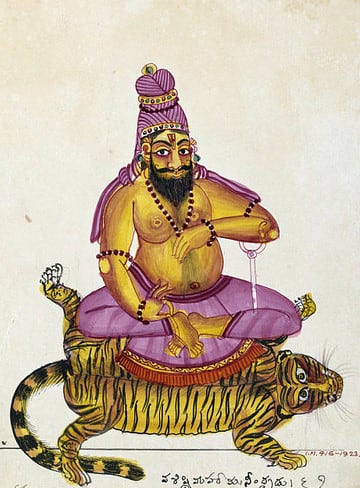
Vasishtha
يتّفقان في: من أنا؟ هل توجد ذات حقيقية؟ · لماذا نتألّم؟ · كيف يُبلَغ التحرّر أو الخلاص؟
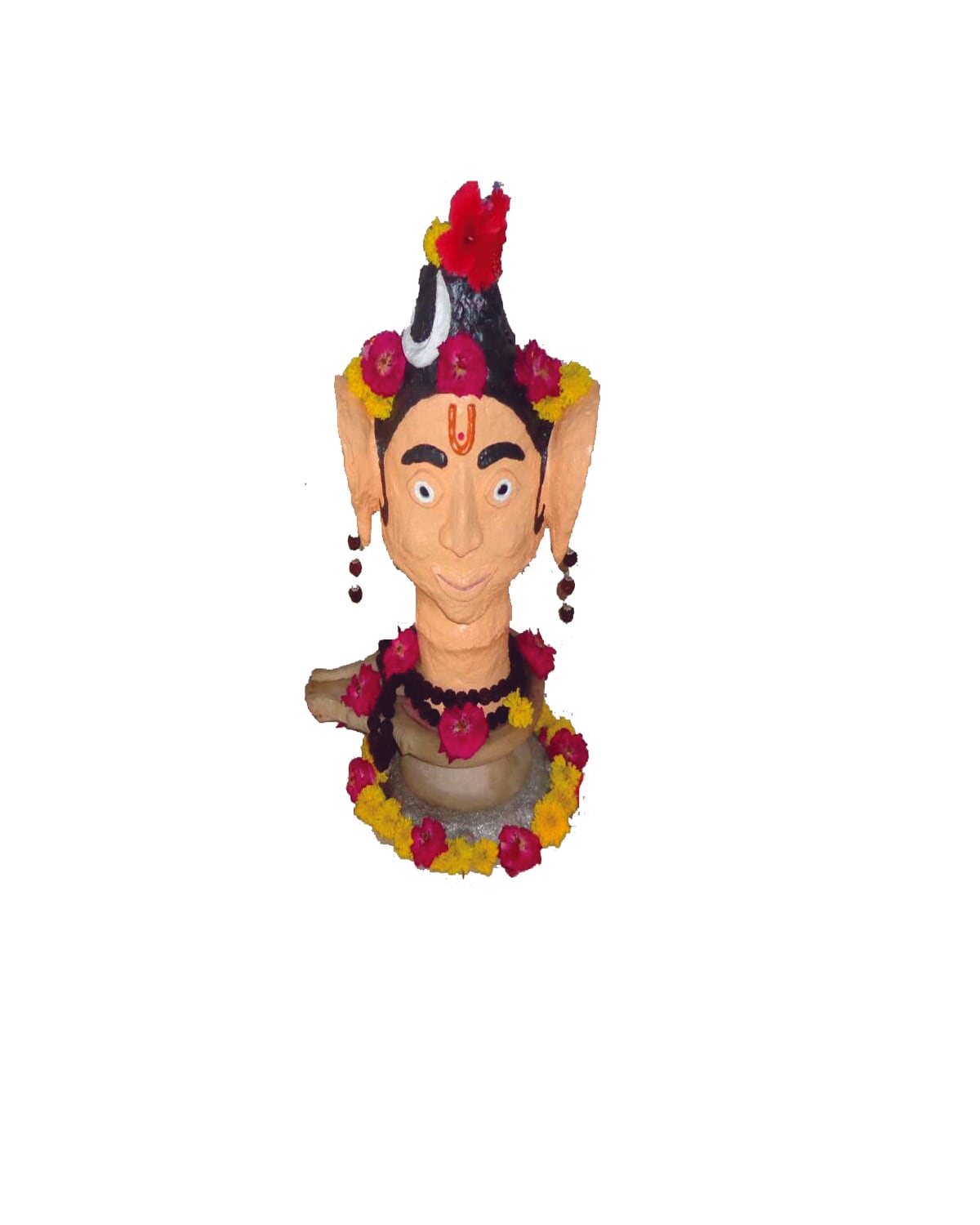
Nisargadatta Maharaj
يتّفقان في: ما المطلق؟ هل الله موجود؟ · من أنا؟ هل توجد ذات حقيقية؟ · لماذا نتألّم؟
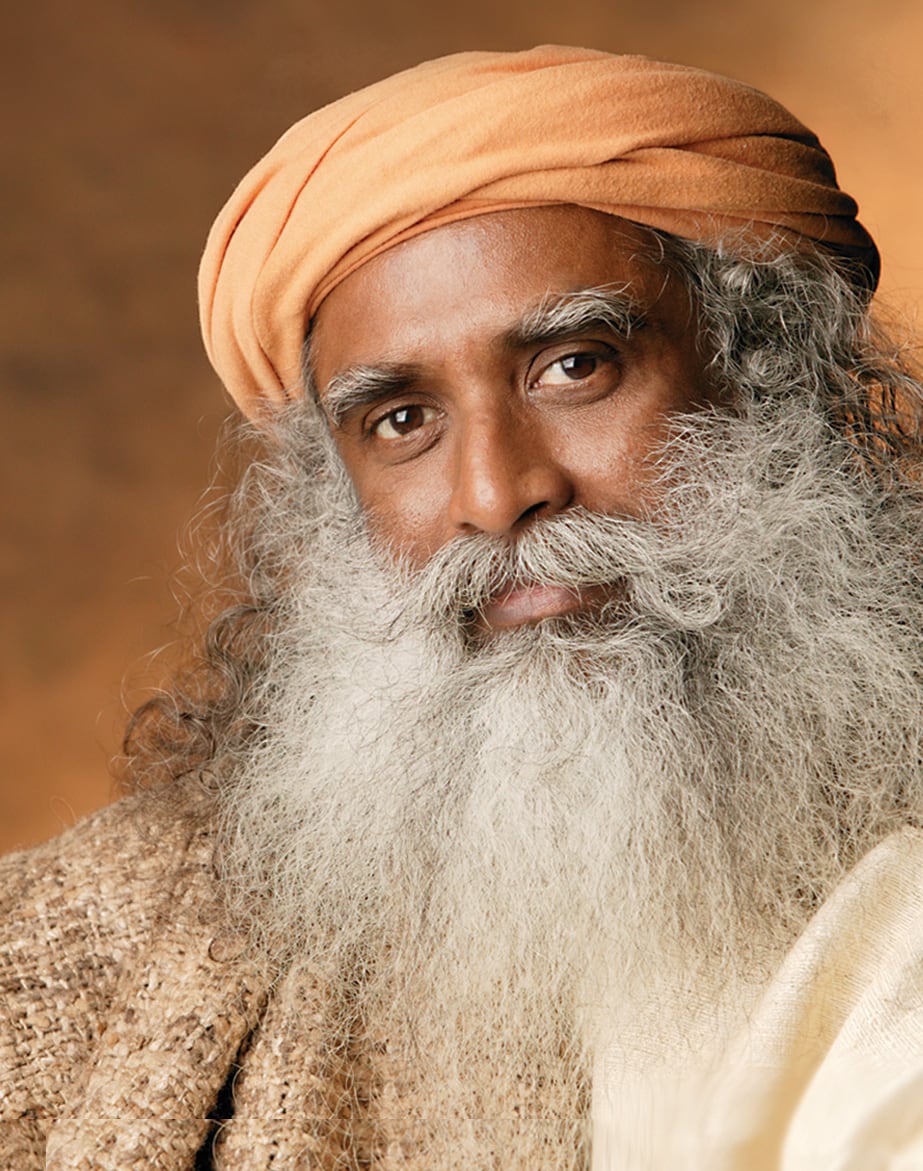
Sadhguru
يتّفقان في: من أنا؟ هل توجد ذات حقيقية؟ · ماذا يحدث بعد الموت؟ · هل العالم حقيقي؟
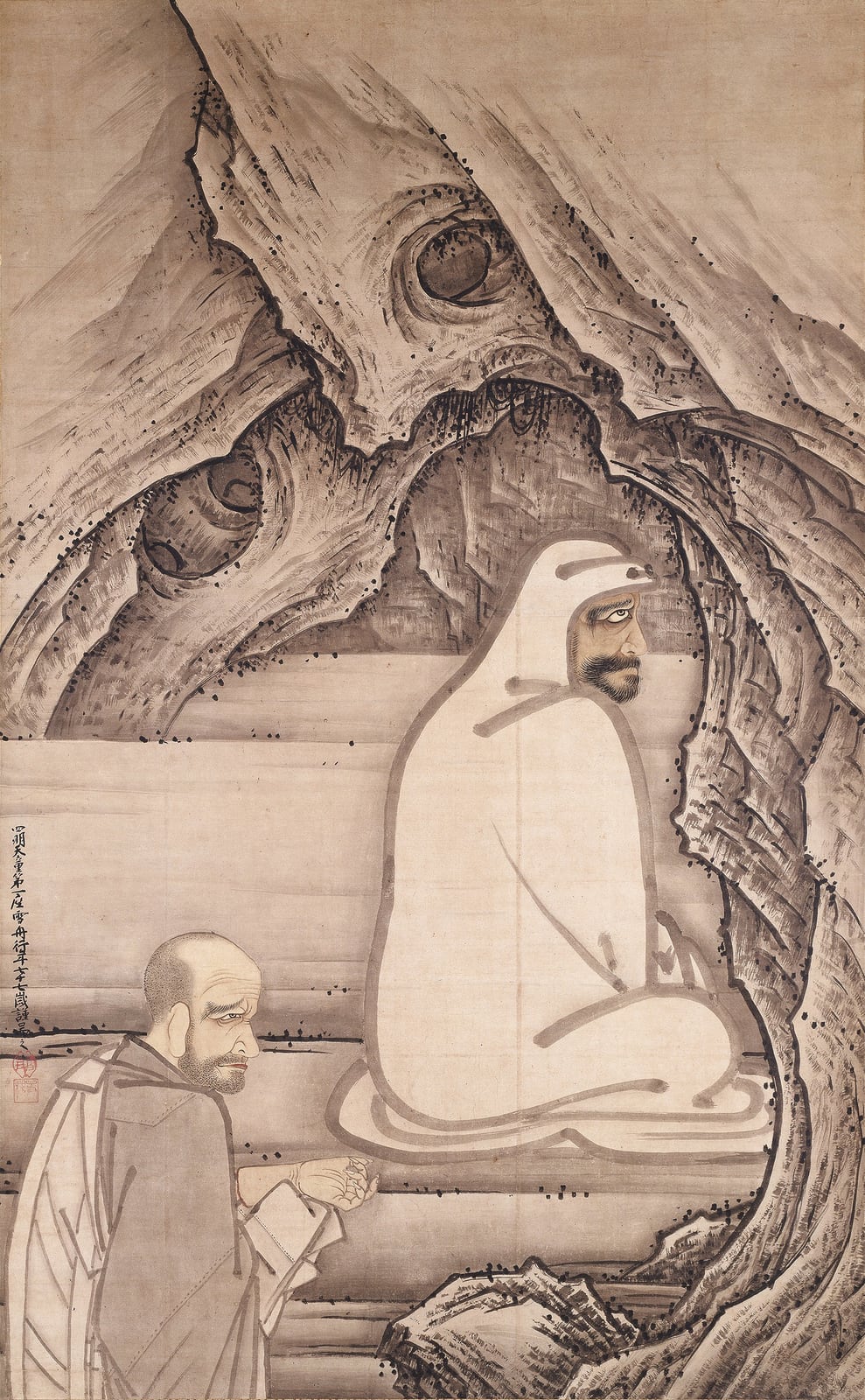
Bodhidharma
يتّفقان في: من أنا؟ هل توجد ذات حقيقية؟ · ماذا يحدث بعد الموت؟ · هل نحن أحرار أم أن كل شيء مقدَّر؟
يبتعد في تفكيره عن
Ignatius of Loyola
يختلفان في: من أنا؟ هل توجد ذات حقيقية؟ · ماذا يحدث بعد الموت؟ · هل العالم حقيقي؟

Teresa of Ávila
يختلفان في: من أنا؟ هل توجد ذات حقيقية؟ · ماذا يحدث بعد الموت؟ · هل العالم حقيقي؟
Jesus of Nazareth
يختلفان في: هل العالم حقيقي؟ · من أنا؟ هل توجد ذات حقيقية؟ · ماذا يحدث بعد الموت؟

Francis of Assisi
يختلفان في: من أنا؟ هل توجد ذات حقيقية؟ · ماذا يحدث بعد الموت؟ · هل العالم حقيقي؟
حكايات وروايات
حكايات وروايات
موثّقépoca védica tardía (ss. VII–VI a. C., según la datación del texto)
The thousand cows with gold on their horns
أصل الرواية: Bṛhadāraṇyaka Upaniṣad 3.1.1–2 (parallel in Śatapatha Brāhmaṇa 11.6.3). "Documented" means here that the story is in the text; it does not imply that the scene is historical.
المصدر: Olivelle, Patrick (ed. y trad.). The Early Upaniṣads: Annotated Text and Translation. Nueva York: Oxford University Press, 1998 (South Asia Research). Introducción (datación, pp. 12–13) y Bṛhadāraṇyaka 2.4, 3.1–3.9, 4.1–4.5, 6.5.
موثّقépoca védica tardía
Gārgī and the two arrows
أصل الرواية: Bṛhadāraṇyaka Upaniṣad 3.6 and 3.8. Later traditions turn her into a philosopher of Janaka's court or, in one manuscript of the Yoga Yājñavalkya, into Yājñavalkya's wife; none of this is in the Upaniṣad.
المصدر: Lindquist, Steven E. «Gender at Janaka's Court: Women in the Bṛhadāraṇyaka Upaniṣad Reconsidered». Journal of Indian Philosophy 36 (2008): 405–426.
موثّقépoca védica tardía
The death of Śākalya
أصل الرواية: Bṛhadāraṇyaka Upaniṣad 3.9 (with a parallel in Śatapatha Brāhmaṇa 11.6.3 and in Jaiminīya Brāhmaṇa 2.76–77, according to Witzel). The analysis is Lindquist's (2011).
المصدر: Lindquist, Steven E. «Literary Lives and a Literal Death: Yājñavalkya, Śākalya, and an Upaniṣadic Death Sentence». Journal of the American Academy of Religion 79, n.º 1 (2011): 33–57.
موثّقépoca védica tardía
"I eat it, provided it is tender"
أصل الرواية: Śatapatha Brāhmaṇa 3.1.2.21 (and 3.8.2.24 for the scene of the grey-haired arms), following Eggeling's translation and Witzel's analysis (2003).
رواية من سِيَر القدّيسينrelato purāṇico (primer milenio d. C.)
The pupil who vomited the Veda
أصل الرواية: Viṣṇu Purāṇa 3.5 and Bhāgavata Purāṇa 12.6. It does not come from the Taittirīya Upaniṣad, as is sometimes said, but from the Purāṇas, which thus explain the names of the two schools of the Yajurveda. The Bṛhadāraṇyaka (6.5.3) says only that the white formulas come from the Sun.
موثّقépoca védica tardía
Janaka offers himself as a slave
أصل الرواية: Bṛhadāraṇyaka Upaniṣad 4.3.1–4.4.23 (the final sentence at 4.4.23). The reading of the relation between king and brahmin is Black's (2007).
المصدر: Black, Brian. The Character of the Self in Ancient India: Priests, Kings, and Women in the Early Upaniṣads. Albany: State University of New York Press, 2007.
التعاليم
التعاليم
المفاهيم التي ينتظم بها فكره، مشروحة في سياقها.
Neti neti ("not this, not this")neti-neti
Bṛhadāraṇyaka 2.3.6, 3.9.26, 4.2.4, 4.4.22, 4.5.15 (Kāṇva recension). Gauḍapāda quotes it in the Māṇḍūkya Kārikā 3.26.
المصدر: Olivelle, Patrick (ed. y trad.). The Early Upaniṣads: Annotated Text and Translation. Nueva York: Oxford University Press, 1998 (South Asia Research). Introducción (datación, pp. 12–13) y Bṛhadāraṇyaka 2.4, 3.1–3.9, 4.1–4.5, 6.5.
Ātman (the self)atman
Bṛhadāraṇyaka 2.4, 3.4–3.7, 4.3–4.5.
المصدر: Olivelle, Patrick (ed. y trad.). The Early Upaniṣads: Annotated Text and Translation. Nueva York: Oxford University Press, 1998 (South Asia Research). Introducción (datación, pp. 12–13) y Bṛhadāraṇyaka 2.4, 3.1–3.9, 4.1–4.5, 6.5.
Karma and rebirthkarman-y-renacimiento
Bṛhadāraṇyaka 3.2.13 and 4.4.2–7; Witzel 2003.
Akṣara (the imperishable)akshara
Bṛhadāraṇyaka 3.8.
المصدر: Olivelle, Patrick (ed. y trad.). The Early Upaniṣads: Annotated Text and Translation. Nueva York: Oxford University Press, 1998 (South Asia Research). Introducción (datación, pp. 12–13) y Bṛhadāraṇyaka 2.4, 3.1–3.9, 4.1–4.5, 6.5.
Antaryāmin (the inner controller)antaryamin
Bṛhadāraṇyaka 3.7.
المصدر: Olivelle, Patrick (ed. y trad.). The Early Upaniṣads: Annotated Text and Translation. Nueva York: Oxford University Press, 1998 (South Asia Research). Introducción (datación, pp. 12–13) y Bṛhadāraṇyaka 2.4, 3.1–3.9, 4.1–4.5, 6.5.
Renunciation (saṃnyāsa)renuncia-samnyasa
Bṛhadāraṇyaka 3.5.1, 4.4.22, 4.5.1; Olivelle 1992.
المصدر: Olivelle, Patrick (trad.). The Saṃnyāsa Upaniṣads: Hindu Scriptures on Asceticism and Renunciation. Nueva York: Oxford University Press, 1992 (incluye la Jābāla y la Yājñavalkya Upaniṣad).
مقاطع الفيديو
مقاطع الفيديو
تسجيلات ومقابلات وأفلام وثائقية. تُشغَّل مقاطع الفيديو من YouTube؛ ولا تُستضاف هنا.
1. Brihadaranyaka Upanishad - Introduction | Swami Sarvapriyananda
محاضرة· EN· 2026· 71 min
Vedanta Society of New Yorkالقناة الرسمية
3. Brihadaranyaka Upanishad - Mantras 2.4.1 to 2.4.5 | Swami Sarvapriyananda
محاضرة· EN· 2026· 73 min
Vedanta Society of New Yorkالقناة الرسمية
4. Brihadaranyaka Upanishad - Mantra 2.4.5 continued | Swami Sarvapriyananda
محاضرة· EN· 2026· 68 min
Vedanta Society of New Yorkالقناة الرسمية
5. Brihadaranyaka Upanishad - Mantra 2.4.6 | Swami Sarvapriyananda
محاضرة· EN· 2026· 75 min
Vedanta Society of New Yorkالقناة الرسمية
Swami Atmajnanananda on "Yajnavalkya and Maitreyi - An Interesting Dialogue"
محاضرة· EN· 2016· 66 min
Austin Vedantaالقناة الرسمية
Swami Yogatmananda - Dialogue on the Self (Yajnavalkya and Maitreyi)
محاضرة· EN· 2021· 58 min
VedantaSTLالقناة الرسمية
Yagnavalkya Upadesham (Brihadaranyaka Upanishad) | Kanchipuram | 2024
محاضرة· TA· 2024· 95 min
Voice of Rishis Swami Ramanacharanatirtha (Nochur)القناة الرسمية
Understanding the Dharma Shastras: A Conversation with Dr. Patrick Olivelle and Dr. Donald Davis
مقابلة· EN· 2022· 113 min
Meru Media
Patrick Olivelle on Law, Religion, and Dharma
محاضرة· EN· 2014· 45 min
Central European Universityالقناة الرسمية
The Central Doctrines of the Upanishads
محاضرة· EN· 2016· 37 min
Vidya-mitraالقناة الرسمية
'Introduction to Shatpath Brahmana' - 100 paths of Moksha; Dr Aparna Dhir Khandelwal
محاضرة· EN· 2021· 31 min
Sattology
Shatapatha Brahmana Parayana in presence of His Holiness
تسجيل أصلي· SA· 2020· 20 min
Sri Kanchi Kamakoti Peetam, Kanchipuramالقناة الرسمية
Yajnavalkya / ಯಾಜ್ಞವಲ್ಕ್ಯ | Upanishat Rushigalu | Vid C G Vijayasimha Acharya
محاضرة· KN· 2021· 12 min
JnanaGamya Prasarana
YAJNAVALKYA: La Búsqueda del Conocimiento Interior y de la Realidad Última. 1
تحليل· ES· 2024· 28 min
Una Historia Pequeña de la Filosofía
La metafísica de los Upanishad. José Carlos Fernández
محاضرة· ES· 2021· 60 min
Nueva Acrópolis Españaالقناة الرسمية
المعرض
المعرض
صور بترخيص متحقَّق منه. كل منها تحتفظ بمؤلّفها ونسبتها.
المخطوطات
المخطوطات
شواهد مخطوطة ونصوص قديمة، مع جهة حفظها وشروط الاطّلاع عليها.
SA · Devanagari · c. ss. VII–VI a. C. (Olivelle)
बृहदारण्यकोपनिषद् (adhyāya 1, folio 3b)
- الشاهد المحفوظ
- Manuscrito en papel sin fecha publicada
- جهة الحفظ
- University of Pennsylvania Libraries (Filadelfia)
- الرقمنة
- commons.wikimedia.org/wiki/File:Brihadaranyaka_u…
SA · Devanagari · c. ss. VIII–VI a. C.
शतपथब्राह्मण (kāṇḍa 14, prapāṭhaka 3–4)
- الشاهد المحفوظ
- Manuscrito del siglo XIII según la descripción de Commons
- الرقمنة
- commons.wikimedia.org/wiki/File:13th-century_Sha…
SA · Escrituras del norte de la India sobre hoja de palma · Fecha discutida (entre el inicio de la era común y el s. XII)
योगयाज्ञवल्क्य
- الشاهد المحفوظ
- Manuscritos en hoja de palma de finales del s. IX o inicios del X y de 1024 d. C., según Wujastyk
- جهة الحفظ
- National Archives of Nepal (Katmandú, NAK 5-696) y British Library (Londres, Or. 3568) · NAK 5-696; BL Or. 3568
العلاقات
العلاقات
تأثيرات وتلمذة وتقارب في الأفكار. تُميَّز العلاقة الموثّقة عن التشابه المستخلَص بالتحليل.
اختلف مع
Debate on the "thread" and the "inner controller" (Bṛhadāraṇyaka 3.7), which Uddālaka loses.
علاقة موثّقة
تلميذ
The Bṛhadāraṇyaka's lists of teachers make him a pupil of Uddālaka Āruṇi: in the list for the mantha rite (6.3.7, Kāṇva recension) and in the final lineage, "Yājñavalkya from Uddālaka; Uddālaka from Aruṇa"; in 3.7 Uddālaka questions him at Janaka's court and falls silent. Witzel regards them as contemporaries.
علاقة موثّقة
معلّم
Janaka de Videha
King of Videha, organizer of the contest and Yājñavalkya's pupil in Bṛhadāraṇyaka 4.1–4.4 and Śatapatha 11.6.2.
علاقة موثّقة
التقى بـ
Gārgī Vācaknavī
His interlocutor in Bṛhadāraṇyaka 3.6 and 3.8.
علاقة موثّقة
من عائلة
Maitreyī
One of his two wives, together with Kātyāyanī; recipient of the dialogue on the ātman (Bṛhadāraṇyaka 2.4 and 4.5).
علاقة موثّقة
أثّر في
Śaṅkara wrote an extensive commentary on the Bṛhadāraṇyaka and based much of his doctrine of the ātman and of renunciation on Yājñavalkya's dialogues.
علاقة موثّقة
أثّر في
The Māṇḍūkya Kārikā (3.26) quotes the Bṛhadāraṇyaka's "neti neti" as proof that scripture denies all difference.
علاقة موثّقة
تأثّر بـ
According to the Purāṇas, Yājñavalkya was a pupil of Vaiśaṃpāyana, himself a pupil of Vyāsa, who is said to have divided the Veda. This is a traditional lineage, not a historical fact.
تشابه مستخلَص بالتحليل
أفكار قريبة من
The Yājñavalkya of the Mahābhārata (12.298 ff.) expounds to Janaka the Sāṃkhya doctrine that tradition attributes to Kapila.
تشابه مستخلَص بالتحليل
أفكار قريبة من
The Yoga Yājñavalkya expands the eight-limbed yoga of the Yoga Sūtras (ten restraints and ten observances instead of five and five).
تشابه مستخلَص بالتحليل
أفكار قريبة من
Ramana's "Who am I?" inquiry and his description of the self as an objectless witness recall "neti neti" and the ātman that sees without being seen.
تشابه مستخلَص بالتحليل
أفكار قريبة من
His method of denying identification with body and mind has a clear precedent in "not this, not this".
تشابه مستخلَص بالتحليل
أفكار قريبة من
A classic comparison in comparative philosophy (Rudolf Otto, among others) between Eckhart's negative way and the ungraspable ātman of the Upaniṣads.
تشابه مستخلَص بالتحليل
المصادر
المصادر
المراجع والفهارس التي رُوجعت لهذه الصفحة.
- Wikidata, «Yajnavalkya», QID Q1423663.
- Olivelle, Patrick (ed. y trad.). The Early Upaniṣads: Annotated Text and Translation. Nueva York: Oxford University Press, 1998 (South Asia Research). Introducción (datación, pp. 12–13) y Bṛhadāraṇyaka 2.4, 3.1–3.9, 4.1–4.5, 6.5.
- Olivelle, Patrick (trad.). Upaniṣads. Oxford World's Classics. Oxford: Oxford University Press, 1996.
- Müller, F. Max (trad.). The Upanishads, Part II (Sacred Books of the East, vol. 15). Oxford: Clarendon Press, 1884. Incluye la Bṛhadāraṇyaka Upaniṣad.
- Eggeling, Julius (trad.). The Śatapatha-Brāhmaṇa according to the Text of the Mādhyandina School, 5 vols. (Sacred Books of the East, vols. 12, 26, 41, 43, 44). Oxford: Clarendon Press, 1882–1900.
- Witzel, Michael. «Yājñavalkya as Ritualist and Philosopher, and His Personal Language». En Siamak Adhami (ed.), Paitimāna: Essays in Iranian, Indo-European, and Indian Studies in Honor of Hanns-Peter Schmidt. Costa Mesa: Mazda Publishers, 2003, pp. 103–143.
- Brereton, Joel P. «The Composition of the Maitreyī Dialogue in the Bṛhadāraṇyaka Upaniṣad». Journal of the American Oriental Society 126, n.º 3 (2006): 323–345.
- Black, Brian. The Character of the Self in Ancient India: Priests, Kings, and Women in the Early Upaniṣads. Albany: State University of New York Press, 2007.
- Lindquist, Steven E. «Literary Lives and a Literal Death: Yājñavalkya, Śākalya, and an Upaniṣadic Death Sentence». Journal of the American Academy of Religion 79, n.º 1 (2011): 33–57.
- Olivelle, Patrick (ed. y trad.). Yājñavalkya: A Treatise on Dharma. Murty Classical Library of India 20. Cambridge (Mass.): Harvard University Press, 2019. Introducción, pp. vii–xxxvii.
- Mohan, A. G., con Ganesh Mohan (trad.). Yoga Yājñavalkya. 2.ª ed. Singapur: Svastha Yoga, 2013.
- Dutt, Manmatha Nath (trad.). A Prose English Translation of Vishnupuranam. Calcuta, 1896; libro III, cap. 5 (la historia de Yājñavalkya y Vaiśaṃpāyana). Project Gutenberg n.º 66208. Véase también H. H. Wilson, The Vishńu Puráńa, Londres, 1840.
- Mahābhārata, Śāntiparvan 12.298 y ss. (edición crítica de Poona): diálogo de Yājñavalkya y Janaka (Daivarāti). Trad. inglesa de Kisari Mohan Ganguli, The Mahabharata of Krishna-Dwaipayana Vyasa, Calcuta, 1883–1896.
- Wikipedia (en inglés), «Yajnavalkya», consultada el 26 de octubre de 2026.
- Hume, Robert Ernest (trad.). The Thirteen Principal Upanishads. Londres: Oxford University Press, 1921.
- Herold, A.-Ferdinand (trad.). L'Upanishad du grand Aranyaka (Bṛhadāraṇyakopaniṣad). París: Librairie de l'art indépendant, 1894.
- Wikisource en sánscrito, «बृहदारण्यकोपनिषद्» (texto sánscrito, seis adhyāya).
- Röer, Edward, y W. A. Montriou (trads.). Hindu Law and Judicature from the Dharma-Sástra of Yájnavalkya. Calcuta, 1859. Project Gutenberg n.º 21918.
- Divanji, Prahlad Chandrashekhar (ed.). Yoga-Yājñavalkya: A Treatise on Yoga as Taught by Yogī Yājñavalkya. Bombay: Bombay Branch of the Royal Asiatic Society, 1954.
- Wikipedia (en inglés), «Yoga Yajnavalkya» y «Yajnavalkya Smriti» (resumen de las dataciones de Divanji, Mohan, White, Wujastyk y Olivelle), consultadas el 26 de octubre de 2026.
- Ilárraz, Félix G., y Óscar Pujol (trads.). La sabiduría del bosque: antología de las principales Upaniṣad. Madrid: Trotta, 2003.
- Martín, Consuelo (trad.). Gran Upaniṣad del Bosque (Bṛhadāraṇyaka Upaniṣad), con el comentario advaita de Śaṅkara. Madrid: Trotta, 2002.
- Wikisource en sánscrito, «याज्ञवल्क्यस्मृतिः» (texto de la Yājñavalkya Smṛti por prakaraṇa).
- Wikisource en sánscrito, «शतपथब्राह्मणम्» (texto del Śatapatha Brāhmaṇa por kāṇḍa).
- Deussen, Paul (trad.). Sechzig Upanishad's des Veda. Leipzig: F. A. Brockhaus, 1897.
- Wikimedia Commons, ficheros y metadatos de licencia consultados mediante la API (imageinfo/extmetadata).
- Olivelle, Patrick (trad.). The Saṃnyāsa Upaniṣads: Hindu Scriptures on Asceticism and Renunciation. Nueva York: Oxford University Press, 1992 (incluye la Jābāla y la Yājñavalkya Upaniṣad).
- Dvivedi, Manilal N. (trad.). The Māṇḍūkyopanishad with Gauḍapāda's Kārikās and the Bhāshya of Śaṅkara. Bombay: Tookaram Tatya, 1894 (Kārikā 3.26).
- Lindquist, Steven E. «Gender at Janaka's Court: Women in the Bṛhadāraṇyaka Upaniṣad Reconsidered». Journal of Indian Philosophy 36 (2008): 405–426.
- صاحب الحقوق
- Los textos sánscritos (Śatapatha Brāhmaṇa, Bṛhadāraṇyaka, Yājñavalkya Smṛti, Yoga Yājñavalkya) son de dominio público. Las traducciones modernas tienen derechos propios: Oxford University Press (Olivelle; Hume hasta 2029 en España), Harvard University Press (Olivelle 2019), Trotta (Ilárraz y Pujol; Consuelo Martín), Penguin (Roebuck), Svastha Yoga (Mohan). Las de Müller (1884), Eggeling (1882–1900), Herold (1894), Deussen (1897), Stenzler (1849), Röer y Montriou (1859) y Vidyarnava (1918) son de dominio público.
في انتظار التأكيد
ما لم تتمكّن هذه الصفحة من حسمه بعد. نفضّل أن نقول ذلك على أن نملأ الفراغ.
- Mahābhārata: confirmar en la edición crítica de Poona el final del diálogo de Yājñavalkya y Janaka (empieza en 12.298) y la equivalencia con las secciones de Ganguli; confirmar el año del volumen de Ganguli (Śānti Parva).
- Bṛhad Yogi Yājñavalkya Smṛti: confirmar año y responsables de la edición de Kaivalyadhama y localizar el estudio de 2017 que revisa la tesis de White sobre la autoría común con el Yoga Yājñavalkya.
- Yoga Yājñavalkya: comprobar en el libro la atribución a T. K. V. Desikachar de la edición del Krishnamacharya Yoga Mandiram (ISBN 9788187847007); Open Library no indica traductor.
- Ediciones: buscar ISBN de traducciones al español, alemán, italiano, ruso e hindi de la Bṛhadāraṇyaka y de la Yājñavalkya Smṛti; confirmar el ISBN de la edición de Motilal de Deussen (Sixty Upanishads).
- Sala de lectura: no se ha encontrado en Internet Archive un escaneo con OCR de Deussen, Sechzig Upanishad's des Veda (1897); no hay texto español de dominio público de la Bṛhadāraṇyaka en es.wikisource.
- Relaciones: los slugs janaka-de-videha, gargi-vachaknavi y maitreyi no existen todavía en el Atlas.
- Isibhāsiyāiṃ: localizar el capítulo exacto de «Jannavakka» en la edición de Schubring.
- Vídeos: no se ha encontrado una clase universitaria monográfica en español ni un documental de televisión pública sobre Yājñavalkya.
بُحث بتاريخ 2026-10-26