الهندوسية · أدفايتا فيدانتا
Gaudapada
गौडपाद
شخصية موثّقة تاريخيًا
فيلسوفٌ هنديّ، مؤلّف «ماندوكيا كاريكا» أو «آغاما شاسترا»، أقدم رسالة منهجية في «الأدفايتا فيدانتا» وصلت إلينا، أُلِّفت نحو القرنين السادس والسابع للميلاد. يشرح في أربعة فصول «ماندوكيا أوبانيشاد»، ويسوّي بين اليقظة والحلم، ويدافع عن مذهب اللاتكوّن (أجاتيفادا): لم يولد شيءٌ قطّ. يجعله التقليد معلّمًا لمعلّم شانكارا، ويختلف النقّاد في مدى دَينه للبوذية في مدرستَي المادهياماكا واليوغاتشارا. أمّا حياته فمجهولة، ولا نكاد نعرف عنها شيئًا يُعتدّ به.
- مؤلَّفًا
- 10مؤلَّفًا
- طبعة
- 19طبعة
- اقتباسًا
- 11اقتباسًا
- مقطع فيديو
- 14مقطع فيديو
- صورة
- 7صورة
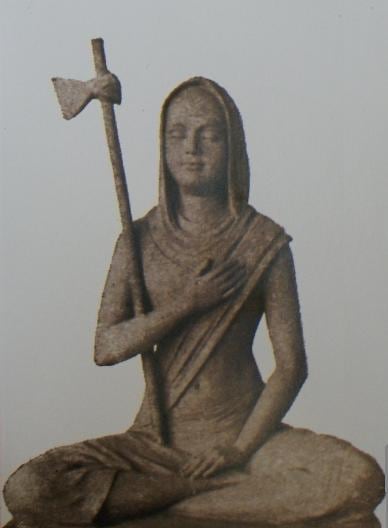
Estatua de Gauḍapāda · Public domain
بكلماته
«There is no dissolution and no origination, no one bound and no one striving, no seeker of liberation and no one liberated: this is the highest truth.»Māṇḍūkya Kārikā 2.32 (traducción propia); la estrofa reaparece en la Amṛtabindu y la Brahmabindu Upaniṣad
فكرته المحورية
Ajātivāda (the doctrine of non-origination): The central thesis of the Kārikā: in truth nothing is born.
السيرة
3 دقيقة قراءة
ترجمة مُعانة من الأصل الإسباني، بانتظار مراجعة مترجم من أهل اللغة.
مؤلِّفٌ أخيرًا
على خلاف الحكماء الفيديين الذين يضعه التقليد إلى جانبهم، غاودابادا مؤلِّفٌ تاريخيّ: هو الاسم الذي يثبته التقليد في ذيل رسالةٍ من 215 مقطعًا شعريًّا، هي «ماندوكيا كاريكا»، وتُسمّى أيضًا «آغاما شاسترا» أو «غاودابادييا كاريكا». وهي أقدم رسالة منهجية في «الأدفايتا فيدانتا» وصلت إلينا. غير أنّنا لا نعرف عن حياته شيئًا يُذكر: لا مكان مولده، ولا تواريخه، ولا اسم معلّمه. بل إنّ الاسم نفسه لغز؛ فقد اقتُرح أنّ «الموقَّر من غاودا» يشير إلى البنغال، لكنّ ذلك مجرّد ظنّ. وما نعرفه عنه مصدره عمله، واستشهادات المؤلّفين الآخرين، وتقليد أديرة الأدفايتا.
مؤرَّخٌ بقرّائه
تُستنبط التواريخ من القرائن. فالـ«كاريكا» تعرف مذاهب «المادهياماكا» عند ناغارجونا و«اليوغاتشارا»، مدرسة «الوعي وحده» البوذية التي نُظِّمت في القرن الرابع، فهي إذن لاحقة لهما. وفي المقابل، يستشهد المفكّر البوذي بهافافيفيكا، في القرن السادس، بمقاطع منها في كتابه «مادهياماكاهريدايا» حين يعرض المذهب الفيدانتي، ويفعل ذلك شانتاراكشيتا وكامالاشيلا في القرن الثامن. ولهذا يضعه كارل بوتر نحو سنة 500 للميلاد؛ ويؤثر مؤلّفون آخرون القرن السادس أو السابع، أمّا من يأخذون قرابته الروحية بشانكارا، الذي يؤرّخه التقليد بين 788 و820، على ظاهرها، فيؤخّرونه إلى القرن الثامن. ورأى هاجيمي ناكامورا أنّ الفصول الأربعة لم تُؤلَّف في وقت واحد، وأنّ الأول والثالث يحملان أفكارًا أقدم من الرابع.
أربعة فصول
يشرح الفصل الأول، «آغاما»، «ماندوكيا أوبانيشاد»، وينقل جُملها النثرية الاثنتي عشرة مع المقاطع الشعرية: للآتمان أربعة «أرباع»، هي أحوال اليقظة والحلم والنوم العميق الثلاث، ورابعٌ هو «توريا»، ليس حالًا، بل هو ما تظهر فيه الأحوال الأخرى، ويعبّر عنه المقطع «أوم» بأصواته الثلاثة وصمته. ويحتجّ الثاني، «فايتاثيا»، أي «اللاواقعية»، بأنّ موضوعات اليقظة لا تقلّ لاواقعيةً عن موضوعات الحلم، لأنّ ما لا وجود له في البدء ولا في النهاية لا وجود له في الوسط أيضًا. ويشرح الثالث، «أدفايتا»، العلاقة بين الآتمان والأفراد بصورة الفضاء المحبوس في الجِرار، ويصف «يوغا اللامسّ» (أسبارشا-يوغا) التي يهابها حتى اليوغيون. ويشبّه الرابع، «آلاتاشانتي»، أي «انطفاء الجمرة»، العالمَ بالأشكال التي ترسمها في الهواء جمرةٌ مُلوَّح بها، ويفكّك، واحدةً بعد أخرى، نظريات السببية.
لم يولد شيءٌ قطّ
أكثر مذاهب غاودابادا جذريةً هو مذهب اللاتكوّن، «أجاتيفادا». فلو كان المعلول عين علّته لما وُلد شيءٌ جديد؛ ولو كان غيرها لما فُهم كيف ينشأ منها؛ وما لا وجود له لا يمكن أن يولد، كما لا يولد ابن العاقر. وتتكثّف النتيجة في مقطعٍ ردّده التقليد اللاحق في عدد من الأوبانيشادات المتأخرة: «لا فناء ولا نشأة، لا مُقيَّد ولا ساعٍ، لا طالب للتحرّر ولا متحرّر: تلك هي الحقيقة العليا». فالتحرّر ليس تغيّرًا، بل إدراكٌ أنّ الآتمان لم يولد قطّ ولم يكن مقيّدًا قطّ. وقد بيّن مايكل كومانز كيف ورث شانكارا وتلاميذه هذا المنهج، الذي ينطلق من أحوال الوعي، وكيف حوّلوه.
ظلّ بوذا
يطرح الفصل الرابع المسألة الأكثر إثارةً للجدل. فهو يُفتتح بتحيّة إلى «أفضل ذوات القدمين»، الذي «استيقظ» (سامبودها) على طبيعة الظواهر؛ ويستعمل المعجم التقنيّ للبوذية، «دارما» و«سامفريتي» و«اهتزاز الوعي»، ويُختتم بالقول: «هذا لم يعلّمه بوذا». وقد خلص فيدهوشيكهارا بهاتاتشاريا، في نشرته عام 1943، إلى أنّ غاودابادا تمثّل المادهياماكا واليوغاتشارا تمثّلًا عميقًا، بل ذهب إلى أنّ «ماندوكيا أوبانيشاد» نفسها مشتقّة من المقاطع. فردّ عليه ر. د. كارماركار عام 1953 مدافعًا عن قراءة فيدانتية خالصة. ورأى ت. ر. ف. مورتي في الـ«كاريكا» محاولةً لتأويل الفيدانتا في ضوء البوذية من غير التخلّي عن الآتمان الذي تنكره البوذية، ووضع ريتشارد كينغ، عام 1995، العمل في سياقه الماهاياني، ورأى من الممكن أن يكون للفصل الرابع أصلٌ آخر، إذ قلّما يستشهد به المؤلّفون الفيدانتيون اللاحقون.
معلّم معلّم شانكارا
يجعل تقليد الأدفايتا غاودابادا معلّمًا لغوفيندا بهاغافاتبادا، معلّمِ شانكارا، ويدرجه في سلسلةٍ ترتقي إلى فياسا وابنه شوكا. ويستشهد شانكارا بمقاطعه في شرحه على «براهما سوترا» ناسبًا إياها إلى «المعلّمين العارفين بتقليد الفيدانتا»، وينتهي الشرح على الـ«كاريكا» المنسوب إليه، وأصالته موضع خلاف، بتحيّةٍ إلى «معلّمه الأعلى» (باراماغورو). ويستشهد سوريشفارا، تلميذ شانكارا، بالـ«كاريكا» أيضًا، ويذكر «الغاوديين» بإجلال. وتروي سِيَر شانكارا المتأخرة لقاءً بينهما في الهيمالايا، يجعله التسلسل الزمنيّ مستبعدًا.
ما يُنسب إليه
تُتداول تحت اسمه أعمالٌ أخرى مشكوكٌ في نسبتها. أشهرها شرحٌ على «سانكهيا كاريكا» لإيشفاراكريشنا، ترجمه كولبروك وويلسون إلى الإنجليزية عام 1837؛ ويرى جيرالد لارسون وكارل بوتر أنّه يبعد أن يكون للمؤلّف نفسه، بسبب أسلوبه وصلته الوثيقة بشروح أخرى على السانكهيا. ويُنسب إليه أيضًا شرحٌ على «أوتارا غيتا»، وأعمالٌ من التقليد التانتريّ «شريفيديا»، هي النشيد «سوبهاغودايا» و«شريفيدياراتناسوترا»، وشروحٌ على «ديفي ماهاتميا» وعلى أوبانيشادات أخرى، من غير أدلّة تسمح بقبولها.
الإرث
حظيت الـ«كاريكا» بالاحترام حتى لدى المدارس الفيدانتية المنافسة: فقد عدّ مادهفا وتقليد «فيشيشتادفايتا» جزءًا من مقاطع الفصل الأول وحيًا منزّلًا. وفي غوا، يحافظ دير كافالي، أقدم أديرة جماعة الغاودا ساراسفات، على سلسلةٍ من الرؤساء الروحيين الذين يحملون لقب «غاودابادآتشاريا». وصدرت أول ترجمة إنجليزية، بقلم مانيلال دفيفيدي، عام 1894، ومنذ ذلك الحين صار مذهب اللاتكوّن مرجعًا في اللاثنائية المعاصرة، التي تقدّمه بوصفه التعليم الأقصى للفيدانتا.
المصادر: Bhattacharya, Vidhushekhara (ed. y trad.). The Āgamaśāstra of Gauḍapāda. Calcuta: University of Calcutta, 1943. Reimpr. Delhi: Motilal Banarsidass, 1989, con prólogo de Christian Lindtner. · King, Richard. Early Advaita Vedānta and Buddhism: The Mahāyāna Context of the Gauḍapādīya-kārikā. Albany: State University of New York Press, 1995. · Karmarkar, Raghunath Damodar (ed. y trad.). Gauḍapāda-Kārikā. Poona: Bhandarkar Oriental Research Institute, 1953 (Government Oriental Series, B 9). · Nakamura, Hajime. A History of Early Vedānta Philosophy, Part Two. Trad. de Trevor Leggett et al. Delhi: Motilal Banarsidass, 2004 (original japonés, 1950–1956). · Potter, Karl H. (ed.). Encyclopedia of Indian Philosophies, vol. III: Advaita Vedānta up to Śaṃkara and His Pupils. Princeton: Princeton University Press / Delhi: Motilal Banarsidass, 1981 (sección sobre Gauḍapāda).
الخط الزمني
الحياة عامًا بعد عام
كل نقطة حدث موثّق. انقر لتقرأه مع مصدره ودرجة اليقين فيه.
القرن IV
Background: Madhyamaka and Yogācāra
The Kārikā presupposes the doctrines of Nāgārjuna (second–third centuries) and of the Yogācāra of Asaṅga and Vasubandhu (fourth century); it is therefore later than them.
مرجَّحKing, Richard. Early Advaita Vedānta and Buddhism: The Mahāyāna Context of the Gauḍapādīya-kārikā. Albany: State University of New York Press, 1995.
القرن IV
Background: Madhyamaka and Yogācāra
The Kārikā presupposes the doctrines of Nāgārjuna (second–third centuries) and of the Yogācāra of Asaṅga and Vasubandhu (fourth century); it is therefore later than them.
مرجَّح
القرن V – 600
Composition of the Māṇḍūkya Kārikā
Potter places Gauḍapāda around 500; others in the sixth or seventh century. Nakamura believes the chapters took shape at different times.
مرجَّح
القرن VI
Bhāvaviveka quotes the Kārikā
The Mādhyamika Bhāvaviveka records verses from the work when setting out Vedānta in his Madhyamakahṛdaya: this is the date before which it must have been composed.
مرجَّح
القرن VII
Teacher of Govinda Bhagavatpāda (according to tradition)
The Advaita genealogy makes Gauḍapāda the teacher of Govinda, Śaṅkara's teacher. It may be a relation of lineage rather than a direct one.
تقليد
القرن VIII
Śaṅkara calls him "supreme teacher"
Śaṅkara quotes the Kārikā in his Brahmasūtra commentary; the commentary on the Kārikā attributed to him pays homage to Gauḍapāda as paramaguru. Śaṅkara's date is debated (seventh–ninth centuries).
مرجَّح
1837
The Sāṃkhya Kārikā commentary in English
Colebrooke and Wilson publish the Sāṃkhya Kārikā with the bhāṣya attributed to Gauḍapāda.
موثّق
1894
First English translation of the Kārikā
Manilal N. Dvivedi translates the Māṇḍūkya Upaniṣad with Gauḍapāda's verses and Śaṅkara's commentary.
موثّق
1943
Bhattacharya's edition
Vidhushekhara Bhattacharya publishes The Āgamaśāstra of Gauḍapāda and opens the modern debate on Buddhist influence.
موثّق
1953
Karmarkar's reply
R. D. Karmarkar publishes his edition and translation with a Vedāntic interpretation that disputes Bhattacharya's.
موثّق
1995
Richard King's study
Early Advaita Vedānta and Buddhism places the Kārikā in its Mahāyāna context.
موثّق
المؤلَّفات
المؤلَّفات الأساسية
المؤلَّفات التي لا يُفهم إرثه من دونها.

مؤلَّف مكتوب · القرن VI
Māṇḍūkya Kārikā (Āgama Śāstra, Gauḍapāda's Verses)
माण्डूक्यकारिका / आगमशास्त्र / गौडपादीयकारिका
A treatise in 215 verses divided into four chapters (prakaraṇa): Āgama (29), Vaitathya (38), Advaita (48) and Alātaśānti (100). It comments on the Māṇḍūkya Upaniṣad — whose twelve prose paragraphs it transmits interspersed in the first chapter — and develops from it a complete philosophy: the four states of the ātman and the syllable Om, the unreality of the waking world compared with dream, the non-duality of the ātman and individuals, the "yoga of no contact" and the doctrine of non-origination (ajātivāda). It is the oldest systematic text of Advaita Vedānta and the only one earlier than Śaṅkara to survive complete.
12 طبعة
جميع مؤلَّفاته (10)
Gaudapada
Āgama Prakaraṇa (chapter I: the revealed tradition)
The Conscious LibraryĀgama Prakaraṇa (chapter I: the revealed tradition)
550
Gaudapada
Vaitathya Prakaraṇa (chapter II: unreality)
The Conscious LibraryVaitathya Prakaraṇa (chapter II: unreality)
550
Gaudapada
Advaita Prakaraṇa (chapter III: non-duality)
The Conscious LibraryAdvaita Prakaraṇa (chapter III: non-duality)
550
Gaudapada
Alātaśānti Prakaraṇa (chapter IV: the quenching of the firebrand)
The Conscious LibraryAlātaśānti Prakaraṇa (chapter IV: the quenching of the firebrand)
575
Gaudapada
Commentary on the Sāṃkhya Kārikā (Gauḍapāda-bhāṣya)
The Conscious LibraryCommentary on the Sāṃkhya Kārikā (Gauḍapāda-bhāṣya)
Gaudapada
Commentary on the Uttara Gītā
The Conscious LibraryCommentary on the Uttara Gītā
Gaudapada
Subhagodaya (hymn of the Śrīvidyā tradition)
The Conscious LibrarySubhagodaya (hymn of the Śrīvidyā tradition)
Gaudapada
Śrīvidyāratnasūtra
The Conscious LibraryŚrīvidyāratnasūtra
Gaudapada
Other attributed commentaries (Devīmāhātmya, Nṛsiṃha-uttara-tāpanīya, Anugītā, Bṛhadāraṇyaka)
The Conscious LibraryOther attributed commentaries (Devīmāhātmya, Nṛsiṃha-uttara-tāpanīya, Anugītā, Bṛhadāraṇyaka)
الأقوال
أقوال محدَّدة الموضع في مؤلَّف بعينه. كل منها يحمل مصدره ودرجة الثقة به.
There is no dissolution and no origination, no one bound and no one striving, no seeker of liberation and no one liberated: this is the highest truth.न निरोधो न चोत्पत्तिर्न बद्धो न च साधकः । न मुमुक्षुर्न वै मुक्त इत्येषा परमार्थता ॥
متحقَّق منهMāṇḍūkya Kārikā 2.32 (traducción propia); la estrofa reaparece en la Amṛtabindu y la Brahmabindu Upaniṣad
الكلمات الأخيرة
لا توجد سجلات يمكن التحقق منها لكلماته الأخيرة.
There is no record of his death or of his last words. Śaṅkara's much later hagiographies present him alive at Badarikāśrama in the Himalayas, without narrating his end.
المصدر: Potter, Karl H. (ed.). Encyclopedia of Indian Philosophies, vol. III: Advaita Vedānta up to Śaṃkara and His Pupils. Princeton: Princeton University Press / Delhi: Motilal Banarsidass, 1981 (sección sobre Gauḍapāda).
اسأل
بماذا يجيب أثره
اثنا عشر سؤالًا كبيرًا من أسئلة الإنسانية، وما تتيح نصوصه الإجابة به عنها، مع المراجع. ولا نقوّله ما لم يقل أبدًا.
ما المطلق؟ هل الله موجود؟
The only reality is the fourth, turīya: non-dual, unborn, without mark
مطلق غير شخصييقوله صراحةً
In the Māṇḍūkya Kārikā Gauḍapāda identifies the Absolute with the ātman in its «fourth» state, turīya, which is neither waking, nor dream, nor deep sleep, but the non-dual ground in which all three appear. He calls it the lord who puts an end to all suffering, immutable and all-pervading (1.10), but this language does not designate a creator: the first chapter reviews the theories of creation and sets them aside, and the third explains that the Upaniṣadic accounts of the world's origin are only a teaching device (3.15). Since the Absolute admits no attributes, the Kārikā points to it by negation, following the formula «not this, not this» (3.26). What has never been born has no prior source and no separate world to govern.
قارن هذا السؤال مع معلّمين آخرينمن أنا؟ هل توجد ذات حقيقية؟
Individuals are the one ātman, like the space inside jars
الذات هي المطلقيقوله صراحةً
For Gauḍapāda the true self is not a part of the Absolute but the Absolute itself. He explains it with the image of space and jars, developed in the third chapter of the Kārikā: space seems to be divided inside each vessel, with its shape, size and name, and if one jar fills with smoke the others are not soiled; but space was not born of them nor really divided, and when they break it goes nowhere (3.3–3.7). So individuals are the ātman apparently limited by bodies. What we call «I», with its states of waking, dream and deep sleep, appears on that non-dual ground, the fourth or turīya, which never ceases to be what it is.
قارن هذا السؤال مع معلّمين آخرينلماذا نتألّم؟
We suffer asleep in a beginningless illusion that imagines duality
الجهل بما نحن عليهيقوله صراحةً
For Gauḍapāda suffering is born of an imagining: the agitated mind sees itself as subject and object, like the firebrand that, when moved, seems to trace lines and circles (4.47). The individual is asleep in a beginningless illusion and, until he wakes, lives waking life as one more dream, full of births, losses and fears; when he wakes he knows the unborn, without sleep or dream, non-dual (1.16). The fourth state, turīya, is therefore «the lord who puts an end to all suffering» (1.10). The Kārikā dwells on fear: even yogis fear the yoga of non-contact, seeing danger where there is none (3.39). Pain is not removed by improving the dreamt world, but by ceasing to imagine that it exists apart.
قارن هذا السؤال مع معلّمين آخرينماذا يحدث بعد الموت؟
Nothing whatsoever is born; therefore nothing dies
ما أنا عليه لا يولد ولا يموتيقوله صراحةً
Gauḍapāda's answer is the most radical possible: the question presupposes a birth that has not in truth taken place. His doctrine of non-origination (ajātivāda) holds that no living being is born and that there is no cause of its birth: that is the supreme truth (3.48, repeated in 4.71). The existent cannot be born because it already exists, nor can the non-existent, just as the son of a barren woman is not born. If there is no birth, death and passage to another life belong to the same dream as waking: what does not exist at the beginning or at the end does not exist in the present either (2.6). Gauḍapāda does not deny that, in ordinary experience, people speak of being born and dying, but he treats it as an appearance, like the figures of the whirling firebrand.
قارن هذا السؤال مع معلّمين آخرينكيف يُبلَغ التحرّر أو الخلاص؟
Waking to the unborn, and finding that no one was ever bound
بالمعرفة المباشرةيقوله صراحةً
Gauḍapāda proposes liberation through knowledge, but takes it to its paradoxical conclusion. When the individual, asleep in a beginningless illusion, wakes, he knows the unborn and non-dual (1.16); when, through understanding the truth of the ātman, the mind ceases to imagine, it reaches the state of no-mind (3.32). That stillness is the yoga of non-contact (asparśa), which demands patient effort, like emptying the ocean drop by drop with a blade of grass (3.41). But from the ultimate standpoint there is no liberation to achieve: there is no dissolution and no origin, no one bound and no one striving, no one seeking liberation and no one liberated; that is the supreme truth (2.32). The path serves to stop believing in bondage, not to escape from it.
قارن هذا السؤال مع معلّمين آخرينهل نحتاج إلى معلّم؟
He does not discuss the teacher: he relies on revelation and reasoning
لم يُبدِ رأيًا
The Māṇḍūkya Kārikā devotes no passage to the need for a teacher. Its authority comes from two sources it names expressly: revelation (āgama), which gives the first chapter its title, and reasoning (upapatti), by which the following chapters demonstrate the unreality of duality and non-origination. It does mention the sages free from passion, fear and anger, versed in the Veda, who have seen this truth (2.35), and it opens the fourth chapter with a salutation to the «best of bipeds», who awoke to phenomena like the sky (4.1). Advaita tradition later made him a link in its lineage, as the teacher of Śaṅkara's teacher, but that genealogy is later and says nothing about what he taught concerning the guru.
قارن هذا السؤال مع معلّمين آخرينهل العالم حقيقي؟
Waking is like dreaming: a city of gandharvas in the sky
ظاهرٌ فوق الحقيقة الواحدةيقوله صراحةً
Gauḍapāda holds the strongest thesis in Vedānta on the unreality of the world. The second chapter of the Kārikā, titled precisely «Unreality», equates waking with dreaming: in both objects are perceived, in both they seem effective, and both vanish; what does not exist at the beginning or at the end does not exist in the present either (2.6). As a dream, a magic show or a city of gandharvas in the sky are seen, so the wise see this universe (2.31). The fourth chapter adds the image of the firebrand: agitated consciousness seems to produce subject and object, and appearances neither come out of it nor enter it (4.47–4.52). And since nothing has been born, the world is not even a real effect of Brahman, but an appearance without origin.
قارن هذا السؤال مع معلّمين آخرينما الحب؟
He does not treat love; his yoga is offered for the good of all beings
لم يُبدِ رأيًا
The Māṇḍūkya Kārikā is a metaphysical treatise on the states of consciousness, the unreality of duality and non-origination, and it says nothing about love, human or divine. The closest it comes are two features of tone. At the start of the fourth chapter it salutes the yoga of non-contact as a teaching that brings happiness and good to all beings, without dispute and without contradiction (4.2). And in the third it holds that non-duality is not in conflict with the dualists, who quarrel among themselves, because it includes them all (3.17–3.18). From this a benevolence without enemies may be inferred, but not a doctrine of love. Devotion (upāsanā) appears in the Kārikā as the path of those who still think that Brahman has been born (3.1).
قارن هذا السؤال مع معلّمين آخرينهل نحن أحرار أم أن كل شيء مقدَّر؟
No one bound, no one striving: the agent belongs to the dream
لا يوجد فاعليُستنتج من تعاليمه
Gauḍapāda does not frame the problem in terms of freedom and determinism, because from his standpoint both assumptions fail. If nothing has been born, there is no agent who chooses and no causal chain that determines him: the Kārikā examines causation and concludes that the effect can be neither identical with nor different from its cause, so that the cause-effect relation is as imaginary as birth (ch. IV). Hence the formula of 2.32: there is no one bound, no one striving, no one seeking liberation and no one liberated. The experience of choosing and suffering consequences belongs to waking, which the Kārikā equates with dreaming; within it, talk of action makes sense, but not in the light of the unborn.
قارن هذا السؤال مع معلّمين آخرينلماذا نتأمّل أو نصلّي؟
Om leads to turīya; once the truth is understood, the mind stops imagining
رؤية الواقع كما هويقوله صراحةً
The Kārikā proposes two practices that culminate in an understanding. In the first chapter it asks one to fix the mind on the syllable Om, whose parts correspond to waking, dream and deep sleep, and whose final silence is turīya: Om is fearless Brahman, and whoever meditates on it thus fears nothing (1.24–1.29). In the third it describes the yoga of non-contact (asparśa): when, through understanding the truth of the ātman, the mind ceases to imagine objects, it reaches no-mind (3.32). Gauḍapāda carefully distinguishes that state from deep sleep and from the enjoyment of absorption (rasāsvāda), which is to be avoided (3.44–3.45). Meditation does not seek an experience, but to see that nothing has been born; devotion that worships a born Brahman seems to him a path of narrow minds (3.1).
قارن هذا السؤال مع معلّمين آخرينهل يستطيع العقل أن يعرف الحقيقة القصوى؟
Revelation teaches it and reasoning demonstrates it
النصّ المقدّس والاستدلاليقوله صراحةً
Gauḍapāda trusts reason more than almost any other author in Vedānta. The Kārikā is built on two pillars: the first chapter comments on revelation, the Māṇḍūkya Upaniṣad, and the following three argue. The second demonstrates the unreality of the world by comparing waking with dream; the third announces that non-duality will be established by scripture and by reasoning, and the fourth dialectically examines every theory of causation until it concludes that nothing can be born. Reason, however, does not grasp the ultimate as an object: it clears the way, removing what is imagined, and turīya is pointed to by negation, «not this, not this» (3.26). To reason well is, for the Kārikā, to show that duality does not survive examination.
قارن هذا السؤال مع معلّمين آخرينالانسحاب من العالم أم تغييره؟
The sage, without praise or rites, lives homeless on whatever comes
الانسحاب لكي نجديقوله صراحةً
In a single verse the Kārikā sketches the way of life that follows from its doctrine: whoever has understood non-duality should live without praise, without ritual salutations and without offerings to the ancestors, with body and ātman as his only dwellings, and be content with whatever comes (2.37). It is the ideal of the wandering renouncer, who remains faithful to the truth without being drawn towards the external (2.36, 2.38). Gauḍapāda does not propose transforming the world: if the world is like a dream and nothing has been born, improving it cannot be the goal. Nor, however, does he preach hostility towards others: the teaching of non-contact is offered for the good of all beings, without dispute (4.2).
قارن هذا السؤال مع معلّمين آخرين
التقارب والتوتّر
التقارب والتوتّر
محسوبة سؤالًا سؤالًا انطلاقًا من مواقفه. وسبب كل اتفاق أو اختلاف يظهر بالنقر.
يقترب في تفكيره من
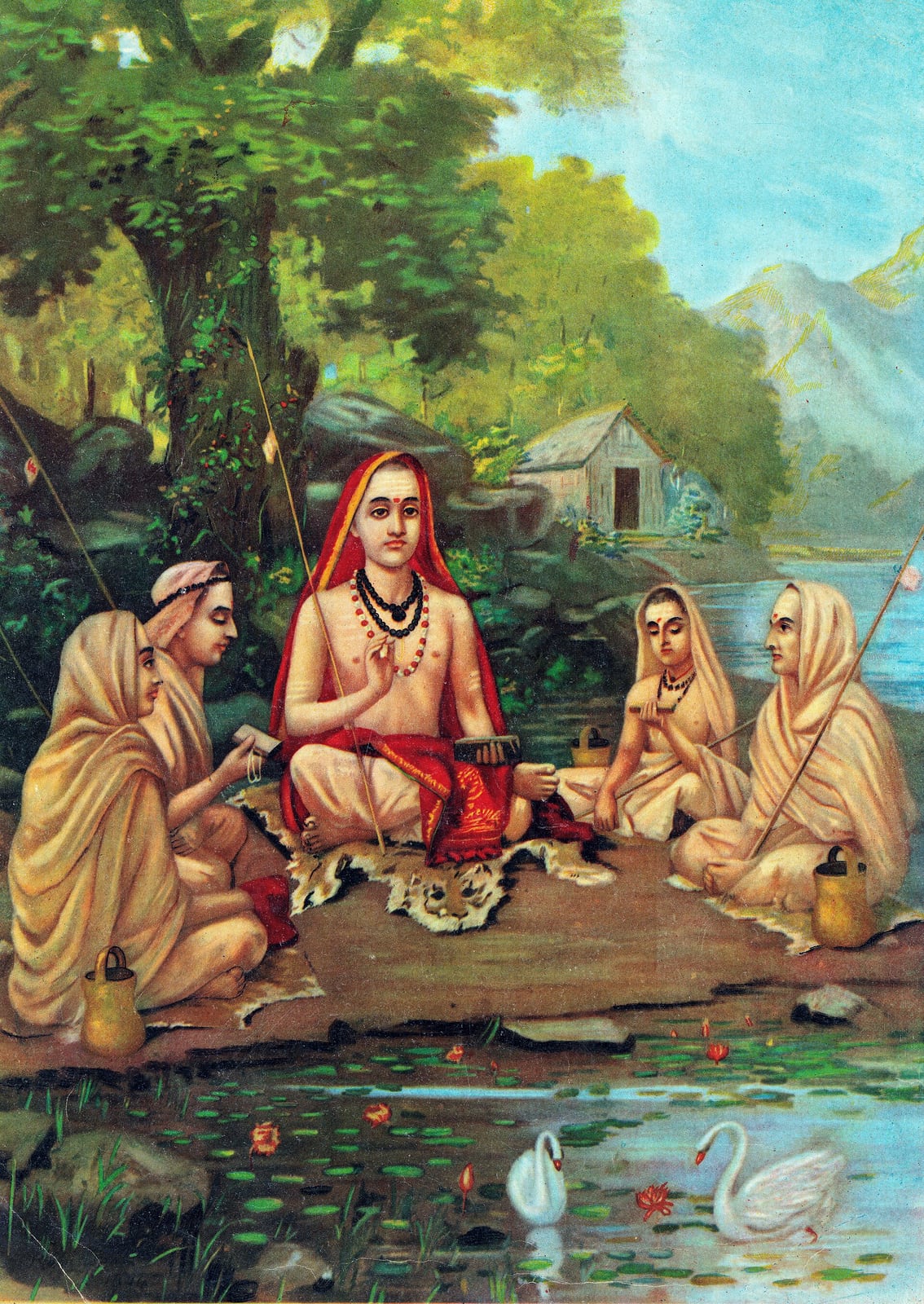
Adi Shankara
يتّفقان في: ما المطلق؟ هل الله موجود؟ · من أنا؟ هل توجد ذات حقيقية؟ · لماذا نتألّم؟

Parmenides
يتّفقان في: ما المطلق؟ هل الله موجود؟ · كيف يُبلَغ التحرّر أو الخلاص؟ · هل العالم حقيقي؟
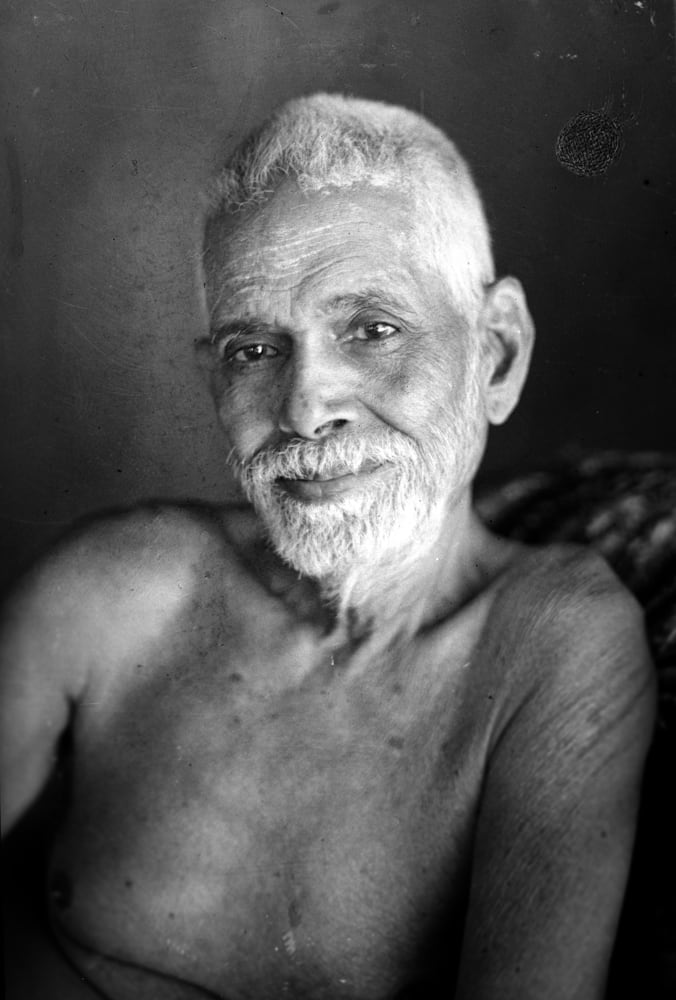
Ramana Maharshi
يتّفقان في: ما المطلق؟ هل الله موجود؟ · هل العالم حقيقي؟ · من أنا؟ هل توجد ذات حقيقية؟
Ashtavakra
يتّفقان في: ما المطلق؟ هل الله موجود؟ · من أنا؟ هل توجد ذات حقيقية؟ · لماذا نتألّم؟
يبتعد في تفكيره عن


حكايات وروايات
حكايات وروايات
موثّقss. VI–VII
The whirling firebrand
أصل الرواية: Māṇḍūkya Kārikā 4.47–52. It is classified as "documented" because it is an image from the text itself, not an event of his life.
المصدر: King, Richard. Early Advaita Vedānta and Buddhism: The Mahāyāna Context of the Gauḍapādīya-kārikā. Albany: State University of New York Press, 1995.
مختلَف فيهss. VII–VIII
The teacher's teacher
أصل الرواية: Closing verses of the Māṇḍūkya-kārikā-bhāṣya ascribed to Śaṅkara; Potter's interpretation (1981). Comans (2000) argues for the Kārikā's direct influence on Śaṅkara from the number of quotations.
المصدر: Potter, Karl H. (ed.). Encyclopedia of Indian Philosophies, vol. III: Advaita Vedānta up to Śaṃkara and His Pupils. Princeton: Princeton University Press / Delhi: Motilal Banarsidass, 1981 (sección sobre Gauḍapāda).
رواية من سِيَر القدّيسينrelato de las hagiografías de Śaṅkara (ss. XIV–XVII)
The meeting at Badarī
أصل الرواية: A tradition recorded in the Śaṅkaradigvijayas; the exact canto has not been located (see "pending"). Swami Nikhilananda, in the introduction to his translation, summarizes the tradition of his retreat at Badarikāśrama.
موثّقss. VI–VIII
Verses in a Buddhist book
أصل الرواية: Potter (1981), Nakamura and King (1995). The exact extent of the overlap with Bhāvaviveka (literal quotation or common source) is debated.
المصدر: Potter, Karl H. (ed.). Encyclopedia of Indian Philosophies, vol. III: Advaita Vedānta up to Śaṃkara and His Pupils. Princeton: Princeton University Press / Delhi: Motilal Banarsidass, 1981 (sección sobre Gauḍapāda).
التعاليم
التعاليم
المفاهيم التي ينتظم بها فكره، مشروحة في سياقها.
Ajātivāda (the doctrine of non-origination)ajativada
Māṇḍūkya Kārikā 2.32, 3.15, 3.48, 4.3–4.23.
المصدر: Wood, Thomas E. The Māṇḍūkya Upaniṣad and the Āgama Śāstra: An Investigation into the Meaning of the Vedānta. Honolulu: University of Hawaii Press, 1990 (Monographs of the Society for Asian and Comparative Philosophy, 8).
Turīya (the fourth)turiya
Māṇḍūkya Upaniṣad 7; Kārikā 1.10–1.29.
Asparśa-yoga (the yoga of no contact)asparsa-yoga
Māṇḍūkya Kārikā 3.31–3.46.
المصدر: Bhattacharya, Vidhushekhara (ed. y trad.). The Āgamaśāstra of Gauḍapāda. Calcuta: University of Calcutta, 1943. Reimpr. Delhi: Motilal Banarsidass, 1989, con prólogo de Christian Lindtner.
Ghaṭākāśa (the space in the jar)ghatakasa
Māṇḍūkya Kārikā 3.3–3.9.
Alāta (the firebrand and the vibration of consciousness)alata-cakra
Māṇḍūkya Kārikā 4.45–4.52; Bhattacharya 1943; King 1995.
المصدر: King, Richard. Early Advaita Vedānta and Buddhism: The Mahāyāna Context of the Gauḍapādīya-kārikā. Albany: State University of New York Press, 1995.
مقاطع الفيديو
مقاطع الفيديو
تسجيلات ومقابلات وأفلام وثائقية. تُشغَّل مقاطع الفيديو من YouTube؛ ولا تُستضاف هنا.
The Essence of All Vedanta (Based on Mandukya Karika - Part One) - Swami Sarvapriyananda
محاضرة· EN· 2021· 74 min
Vedanta Video
The Ultimate Truth (Based on Mandukya Karika - Part Two) - Swami Sarvapriyananda
محاضرة· EN· 2021· 71 min
Vedanta Video
5. Mandukya Upanishad | Chapter 1 Karika 1-5 | Swami Sarvapriyananda
محاضرة· EN· 2020· 97 min
Vedanta Society of New York - Archivesالقناة الرسمية
16. Mandukya Upanishad | Chapter 1 Karika 24-29 | Swami Sarvapriyananda
محاضرة· EN· 2020· 116 min
Vedanta Society of New York - Archivesالقناة الرسمية
24. Mandukya Upanishad | Chapter 2 Karika 16-18 | Swami Sarvapriyananda
محاضرة· EN· 2020· 93 min
Vedanta Society of New York - Archivesالقناة الرسمية
Swami Sarvapriyananda | Mandukya Upanishad, 1 of 6 | Sivananda Ashram
محاضرة· EN· 2020· 56 min
Vivekananda Samiti, IIT Kanpur
"Turiya - Based on Mandukya Upanishad" - 1 - Swami Sarvapriyananda
محاضرة· EN· 2026· 123 min
Ramakrishna Vedanta Ashrama Pittsburghالقناة الرسمية
Gaudapada - Shankaracharya's Guru's Guru | Swami Samarpanananda
محاضرة· EN· 2021· 10 min
Amrit Setu
The doctrine Alatashanti in Gaudapadacarya's Mandukya Karika by Swamini Brahmaprakasananda
محاضرة· EN· 2022· 83 min
Advaita Academy
Māṇḍūkya Upaniṣad and Kārikā (Āgama Prakaraṇa)
محاضرة· EN· 2024· 16 min
Svatantra Institute
Mandukya-Karikas | Swami Paramarthananda
محاضرة· EN· 2020· 48 min
Swami Paramarthananda - Topic
The Shortest Path to the Self | Mandukya Upanishad & Gaudapada Karika – Introduction [#1]
محاضرة· EN· 2026· 18 min
Yes Vedanta - Andre Vas
Mandukya Upanishad pravachan मांडूक्योपनिषद आगम प्रकरण। by Akhandananda Saraswati ji maharaj
محاضرة· HI· 2023· 42 min
Divya Aadhyatmik Gyan
4 - MANDUKYA - CAMINO A LA REALIZACIÓN
تحليل· ES· 2022· 13 min
Vedanta en Español
المعرض
المعرض
صور بترخيص متحقَّق منه. كل منها تحتفظ بمؤلّفها ونسبتها.
المخطوطات
المخطوطات
شواهد مخطوطة ونصوص قديمة، مع جهة حفظها وشروط الاطّلاع عليها.
SA · Devanagari · c. ss. VI–VII
गौडपादकारिका
- الشاهد المحفوظ
- Manuscrito en papel sin fecha publicada
- الرقمنة
- commons.wikimedia.org/wiki/File:Gaudapada_Manduk…
العلاقات
العلاقات
تأثيرات وتلمذة وتقارب في الأفكار. تُميَّز العلاقة الموثّقة عن التشابه المستخلَص بالتحليل.
معلّم
Govinda Bhagavatpāda
According to the Advaita genealogy, Gauḍapāda was the teacher of Govinda, Śaṅkara's teacher. Potter and Comans warn that this may be a relation of lineage rather than a direct one.
تشابه مستخلَص بالتحليل
أثّر في
Śaṅkara quotes the Kārikā in his Brahmasūtra commentary (e.g. 1.16 at 2.1.9) as the work of "the teachers who know the tradition of Vedānta"; the commentary on the Kārikā ascribed to him calls him "supreme teacher".
علاقة موثّقة
تأثّر بـ
Bhattacharya, Murti and King show the Kārikā's debt, especially in the fourth chapter, to Madhyamaka dialectic (non-origination, conventional and ultimate truth).
علاقة موثّقة
تأثّر بـ
The Kārikā (3.26) quotes the Bṛhadāraṇyaka's "neti neti" and relies on its analysis of the states of consciousness.
علاقة موثّقة
تأثّر بـ
The Kārikā (3.15) reinterprets the clay and iron examples of Chāndogya 6.1 as teaching devices for introducing non-duality.
علاقة موثّقة
تأثّر بـ
The traditional Advaita genealogy (Nārāyaṇa, Brahmā, Vasiṣṭha, Śakti, Parāśara, Vyāsa, Śuka, Gauḍapāda, Govinda, Śaṅkara) makes him a disciple of Śuka, Vyāsa's son. It is a devotional, not historical, lineage.
تشابه مستخلَص بالتحليل
تأثّر بـ
Vasiṣṭha appears in the same traditional Advaita genealogy that ends with Gauḍapāda and Śaṅkara.
تشابه مستخلَص بالتحليل
اختلف مع
The fourth chapter of the Kārikā (4.11–4.13) refutes the Sāṃkhya theory of causation, according to which the cause is transformed into the effect. The commentary on the Sāṃkhya Kārikā circulating under Gauḍapāda's name is probably by a namesake.
علاقة موثّقة
أفكار قريبة من
The Avadhūta Gītā and the Avadhūta Upaniṣad, linked to Dattātreya, share the language of non-origination; verse 2.32 of the Kārikā reappears in texts of this milieu.
تشابه مستخلَص بالتحليل
أفكار قريبة من
The Aṣṭāvakra Gītā expresses a radical non-duality, without bondage or liberation, close to that of the Kārikā.
تشابه مستخلَص بالتحليل
أفكار قريبة من
Ramana often presented non-origination (ajātivāda) as the ultimate truth, in terms very close to Gauḍapāda's.
تشابه مستخلَص بالتحليل
أفكار قريبة من
His insistence that one has never been born recalls the doctrine of non-origination.
تشابه مستخلَص بالتحليل
المصادر
المصادر
المراجع والفهارس التي رُوجعت لهذه الصفحة.
- Wikidata, «Gaudapada», QID Q1771062.
- Bhattacharya, Vidhushekhara (ed. y trad.). The Āgamaśāstra of Gauḍapāda. Calcuta: University of Calcutta, 1943. Reimpr. Delhi: Motilal Banarsidass, 1989, con prólogo de Christian Lindtner.
- King, Richard. Early Advaita Vedānta and Buddhism: The Mahāyāna Context of the Gauḍapādīya-kārikā. Albany: State University of New York Press, 1995.
- Karmarkar, Raghunath Damodar (ed. y trad.). Gauḍapāda-Kārikā. Poona: Bhandarkar Oriental Research Institute, 1953 (Government Oriental Series, B 9).
- Nakamura, Hajime. A History of Early Vedānta Philosophy, Part Two. Trad. de Trevor Leggett et al. Delhi: Motilal Banarsidass, 2004 (original japonés, 1950–1956).
- Potter, Karl H. (ed.). Encyclopedia of Indian Philosophies, vol. III: Advaita Vedānta up to Śaṃkara and His Pupils. Princeton: Princeton University Press / Delhi: Motilal Banarsidass, 1981 (sección sobre Gauḍapāda).
- Wood, Thomas E. The Māṇḍūkya Upaniṣad and the Āgama Śāstra: An Investigation into the Meaning of the Vedānta. Honolulu: University of Hawaii Press, 1990 (Monographs of the Society for Asian and Comparative Philosophy, 8).
- Comans, Michael. The Method of Early Advaita Vedānta: A Study of Gauḍapāda, Śaṅkara, Sureśvara and Padmapāda. Delhi: Motilal Banarsidass, 2000.
- Dvivedi, Manilal Nabhubhai (trad.). The Māṇḍūkyopanishad with Gauḍapāda's Kārikās and the Bhāshya of Śaṅkara. Bombay: Tookaram Tatya (Bombay Theosophical Publication Fund), 1894.
- Colebrooke, Henry Thomas, y Horace Hayman Wilson (trads.). The Sánkhya Káriká, or Memorial Verses on the Sánkhya Philosophy, by Íswara Krishńa; also the Bháshya or Commentary of Gaurapáda. Oxford: Oriental Translation Fund, 1837 (reimpr. Bombay, 1887).
- Larson, Gerald James, y Ram Shankar Bhattacharya (eds.). Encyclopedia of Indian Philosophies, vol. IV: Sāṃkhya. A Dualist Tradition in Indian Philosophy. Princeton: Princeton University Press / Delhi: Motilal Banarsidass, 1987 (sobre el Gauḍapāda-bhāṣya).
- Murti, T. R. V. The Central Philosophy of Buddhism: A Study of the Mādhyamika System. Londres: George Allen and Unwin, 1955.
- Wikipedia (en inglés), «Gaudapada», consultada el 26 de octubre de 2026 (obras atribuidas, recepción en Dvaita y Viśiṣṭādvaita, Kavale maṭha, opiniones de Mayeda y Nikhilananda).
- Wikisource en sánscrito, «गौडपादकारिका», texto por prakaraṇa (प्रथमप्रकरणम् – चतुर्थप्रकरणम्), con numeración de estrofas.
- Bouy, Christian (ed. y trad.). Gauḍapāda, L'Āgamaśāstra: un traité vedāntique en quatre chapitres. París: Collège de France, Institut de civilisation indienne, 2000.
- Dalal, Neil. «Śaṅkara». En Edward N. Zalta (ed.), The Stanford Encyclopedia of Philosophy, 2021.
- Wikimedia Commons, ficheros y metadatos de licencia consultados mediante la API (imageinfo/extmetadata).
- Wikidata, «Shri Gaudapadacharya Math» (Kavale maṭha, Goa), QID Q13479755.
- Jones, Richard H. Gauḍapāda: Advaita Vedānta's First Philosopher. Nueva York: Jackson Square Books, 2014.
- Raphael (trad. y coment.). Māṇḍūkyakārikā: The Metaphysical Path of Vedānta. Nueva York: Aurea Vidyā Foundation, 2002.
- صاحب الحقوق
- El texto sánscrito es de dominio público. Las traducciones modernas tienen derechos propios: Advaita Ashrama (Nikhilananda), Motilal Banarsidass (Bhattacharya), University of Hawaii Press (Wood), Aurea Vidyā (Raphael), Central Chinmaya Mission Trust, Biblioteca Nueva, Collège de France (Bouy), E. Richter. Las de Dvivedi (1894) y de Colebrooke y Wilson (1837) son de dominio público.
في انتظار التأكيد
ما لم تتمكّن هذه الصفحة من حسمه بعد. نفضّل أن نقول ذلك على أن نملأ الفراغ.
- Śaṅkaradigvijaya: localizar el canto exacto en que se narra el encuentro de Śaṅkara con Gauḍapāda (edición de Mādhava/Vidyāraṇya) y otras hagiografías que lo recogen.
- Sureśvara: comprobar en la Naiṣkarmyasiddhi (4.41–4.44) las citas de la Kārikā y la mención de «los gauḍa».
- Bhāvaviveka: precisar qué estrofas de la Kārikā coinciden con el capítulo 8 del Madhyamakahṛdaya y si se trata de cita literal o de fuente común (Lindtner, Nakamura, King).
- Edición española de Biblioteca Nueva (ISBN 9788497423670): identificar traductor y comentarista.
- Karmarkar (1953): confirmar la fecha de muerte de R. D. Karmarkar para resolver los derechos de la transcripción de Wikisource.
- Ediciones: buscar ISBN de traducciones al italiano (edición original de Raphael, Āśram Vidyā), ruso e hindi; buscar una traducción española con ISBN además de la de Biblioteca Nueva.
- Relación con Ramana Maharshi: localizar en los Talks o en otras obras documentadas la cita exacta en la que Ramana habla del ajātivāda o de la estrofa 2.32.
- Relaciones: el slug govinda-bhagavatpada no existe todavía en el Atlas (lo usa también adi-shankara).
- Vídeos: no se ha encontrado una clase universitaria ni un documental de televisión pública sobre Gauḍapāda; tampoco una conferencia monográfica en español de una institución solvente.
بُحث بتاريخ 2026-10-26