الهندوسية · اليوغا · التقليد الفيدي · السانكيا
Kapila
कपिल
شخصية أسطورية
حكيمٌ من التقليد الهندي يُنسب إليه تأسيس السانكيا، أي الثنائية بين الوعي (البوروشا) والطبيعة (البراكريتي) التي تشكّل الأساس الميتافيزيقي لليوغا. لم يصلنا أيُّ مؤلَّفٍ له: فأقدم نصوص المدرسة هو «سانكيا كاريكا» لإيشفارا كريشنا (القرنان الرابع والخامس للميلاد)، أما «سانكيا سوترا» التي تحمل اسمه فتعود إلى القرنين الرابع عشر والخامس عشر. وقد جعلت منه البورانات تجسّدًا لفيشنو ومعلّمًا لأمه ديفاهوتي، وجعلت منه الملاحمُ الزاهدَ الذي أحرق أبناء الملك ساغارا الستين ألفًا.
- مؤلَّفًا
- 13مؤلَّفًا
- طبعة
- 22طبعة
- اقتباسًا
- 6اقتباسًا
- مقطع فيديو
- 14مقطع فيديو
- صورة
- 5صورة
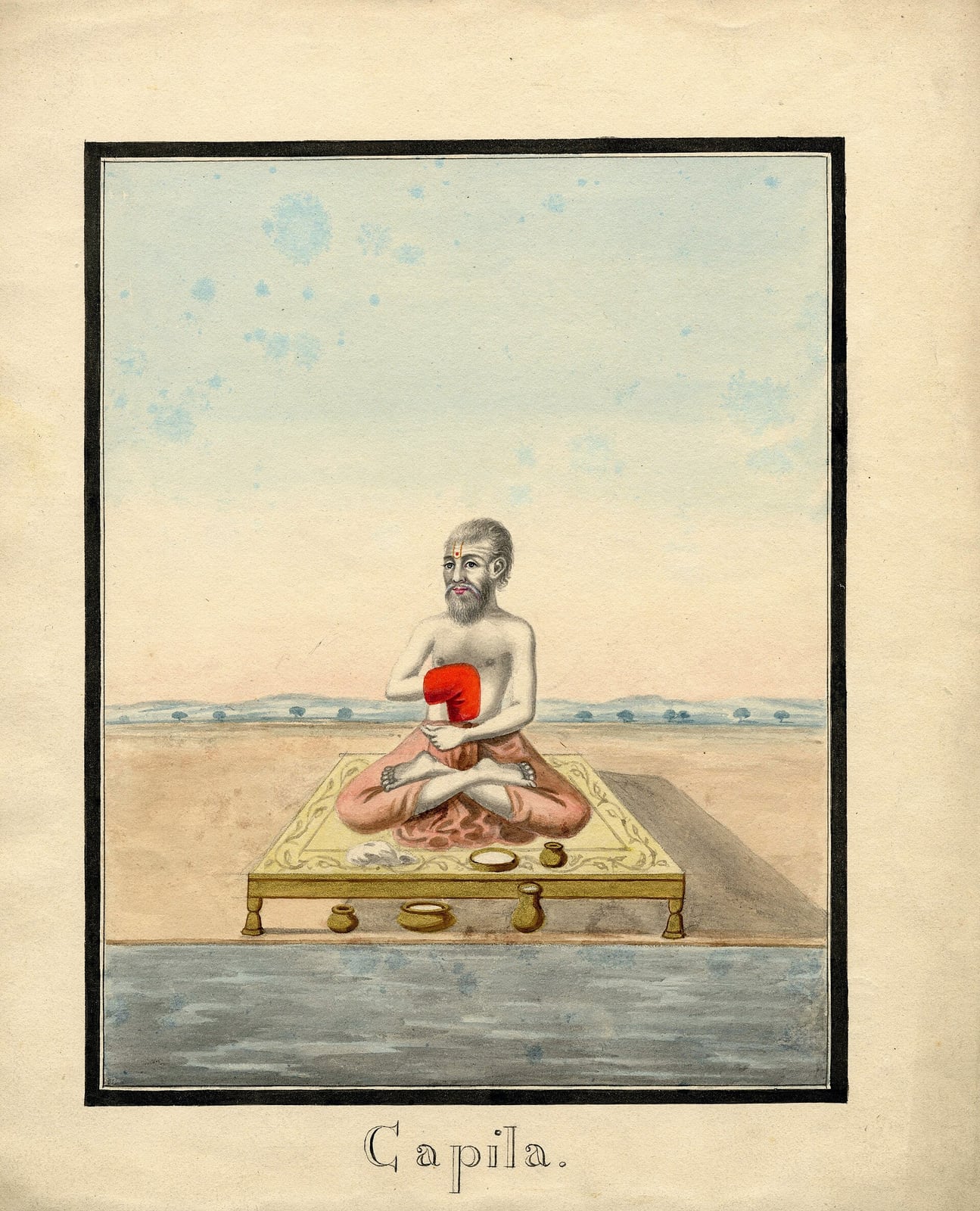
Kapila, sabio védico (pintura de la Company School) · Public domain
بكلماته
«Well, the complete cessation of pain, [which is] of three kinds, is the complete end of man.»Sāṃkhya Sūtra I.1 (obra atribuida, s. XIV–XV); trad. inglesa de Ballantyne (1885, dominio público); versión española del investigador.

فكرته المحورية
Puruṣa (witnessing consciousness): In Sāṃkhya, puruṣa is pure consciousness: it does not act, change or produce anything and has no qualities; it merely witnesses.
السيرة
4 دقيقة قراءة
ترجمة مُعانة من الأصل الإسباني، بانتظار مراجعة مترجم من أهل اللغة.
اسمٌ على عتبة الفلسفة
قلّما حمل اسمٌ من أسماء الهند القديمة كلَّ هذا الثقل بكلِّ هذا القليل من السيرة. فكابيلا في نظر التقليد هو «الحكيم الأول» (ādividvān)، الذي كشف مذهب السانكيا، أقدمَ المدارس الفلسفية البراهمية التي انتظمت في نسقٍ مكتمل؛ أما في نظر التاريخ النقدي فهو قبل كل شيء مرجعيةٌ تستشهد بها نصوصٌ متأخرة عنه كثيرًا. لم يصلنا أيُّ مؤلَّفٍ يمكن نسبته إليه على وجه اليقين، فلا تاريخ لحياته ولا مكان لموته، والاسم نفسه — ومعناه بالسنسكريتية «الأصهب» أو «المائل إلى الحمرة» — يُطلق في الأدب الهندي على شخصياتٍ عدة متمايزة. فما يمكن أن يُروى عنه إذن هو تاريخ ذاكرة: كيف أضفت مدرسةٌ وعبادةٌ وجغرافيا مقدّسة، شيئًا فشيئًا، جسدًا على اسم.
الآثار الأولى
أقدم نصٍّ يُستشهد به عادةً بيتٌ من «شفيتاشفاتارا أوبانيشاد» (5.2) يتحدث عن «رائٍ أصهب» (ṛṣiṃ prasūtaṃ kapilam) وُلد في البدء وغُذّي بالمعارف. ويشكّ فقه اللغة الحديث في أن المقصود شخصٌ بعينه: فلارسون وبهاتاشاريا يقرآن فيه نعتًا للمبدأ الكوني هيرانياغاربها، بل إن شانكارا نبّه منذ القرن الثامن إلى أن النص يذكر «مجرد الاسم» دون أن يبيّن أيَّ كابيلا يقصد. أما «المهابهاراتا» فصريحة: ففي «موكشادهارما»، القسم المخصّص للتحرّر من «شانتي بارفان»، يظهر كابيلا الحكيمَ الأعلى الذي أعلن السانكيا، كما أعلن هيرانياغاربها اليوغا، ويظهر في مناظرةٍ مع الزاهد سيوماراشمي حول قيمة القربان الفيدي في مقابل الزهد واللاعنف.
معلّم آسوري
ثبّتت «سانكيا كاريكا» لإيشفارا كريشنا سلسلةَ التلقّي التي اعترفت بها المدرسة سلسلةً لها، وقد أُلّفت نحو القرنين الرابع والخامس للميلاد، وهي على وجه الدقة أقدم نصٍّ محفوظ من السانكيا الكلاسيكية. وتعلن أبياتها الختامية أن الحكيم لقّن هذا المذهب المطهِّر رحمةً منه لآسوري، وأن آسوري علّمه لبانتشاشيخا، وأن هذا نشره على نطاقٍ واسع، إلى أن لخّصه إيشفارا كريشنا في أبياتٍ على بحر الآريا. ويقتبس الشرح على اليوغا («يوغا بهاشيا») شذرةً منسوبة إلى بانتشاشيخا يظهر فيها كابيلا «العارفَ الأول» الذي اتخذ رحمةً عقلًا مخلوقًا، فأعلن المذهب لآسوري الطالبِ للمعرفة. وفي هذه الصيغة يكمن منذ البدء الالتباس الذي سيلازم كابيلا دائمًا: فهو معلّمٌ من البشر، وهو في الآن نفسه شخصيةٌ كونية تعلّم في مطلع دورةٍ من دورات العالم.
ما كانت تعلّمه السانكيا
المذهب المنسوب إليه ثنائيةٌ صارمة. ففي جانبٍ البوروشا، أي الوعي الخالص، المتعدّد، الساكن، الذي ليس سوى شاهد؛ وفي الجانب الآخر البراكريتي، أي الطبيعة الأولى، الواحدة والدينامية، المنسوجة من ثلاث صفات (غونا) هي الساتفا والراجاس والتاماس، والتي إذا اختلّ توازنها بسطت بالتطوّر مبادئَ العالم (تتفا): العقل، والشعور بالأنا، والذهن، والحواس، والعناصر اللطيفة والعناصر الكثيفة. ويولد الألم من الخلط بين الشاهد وما يشهده؛ ويأتي التحرّر (كايفاليا، أي «الانفراد») مع المعرفة المميِّزة التي تفصل بينهما. ويلخّص أول حِكَم «سانكيا سوترا» ذلك برصانةٍ تكاد تكون طبية: إن الانقطاع التام لأنواع الألم الثلاثة هو الغاية القصوى للإنسان. وعلى هذا الأساس قامت يوغا باتانجالي، التي يعود إطارها الميتافيزيقي في جوهره إلى السانكيا.
كتابٌ متأخر يحمل اسمه
النصوص التي تحمل اليوم اسم كابيلا متأخرةٌ كثيرًا عن أيِّ تاريخٍ معقول لحياته. فـ«سانكيا سوترا»، المسمّاة أيضًا «سانكيا برافاتشانا سوترا»، وهي ما يزيد قليلًا على خمسمئة حكمة في ستة كتب، لا ترد في العرض الذي قدّمه مادهافا للسانكيا في القرن الرابع عشر انطلاقًا من «الكاريكا»، وأول شرّاحها المعروفين أنيرودّها وفيجنانابهيكشو، وهذا الأخير من النصف الثاني من القرن السادس عشر. وقد عدّها غاربه متأخرةً جدًا، ويضعها لارسون وبهاتاشاريا نحو القرنين الرابع عشر والخامس عشر. وأقلُّ يقينًا منها تاريخُ «تتفا ساماسا»، وهو ثبتٌ موجزٌ جدًا للمبادئ رأى فيه ماكس مولر نصًا بالغ القِدم، بينما تعدّه الدراسات اللاحقة متأخرًا هو أيضًا في الصورة التي وصل بها. ولا يمكن قراءة أيٍّ من العملين على أنه كلام كابيلا: إنهما الذاكرة المدرسية لتعليمٍ كان يُنسب إليه.
التجسّد والأم
في أدب البهاكتي صار كابيلا صورةً من صور فيشنو. فـ«بهاغافاتا بورانا» تعدّه من تجسّدات الإله — الخامسَ منها، سيّدَ الكاملين، الذي علّم آسوري السانكيا بعد أن ضاعت بمرور الزمن — وتخصّه في كتابها الثالث بقصةٍ طويلة: فهو ابن الحكيم كارداما وديفاهوتي ابنة مانو، يعلّم أمَّه، بعد أن اعتزل زوجُها إلى حياة الزهد، سانكيا تأليهيةً تبلغ فيها معرفةُ المبادئ ذروتها في التعبّد لله. إنها طبقةٌ مختلفة من التقليد، أُلّفت على الأرجح نحو القرنين التاسع والعاشر، جعلت من فيلسوف الثنائية معلّمًا للبهاكتي. وكانت «البهاغافاد غيتا» قد سبقت إلى هذا التقديس: فبين الكاملين، يقول كريشنا، هو الحكيم كابيلا.
الحكيم الذي أحرق أبناء ساغارا
وجعل تيارٌ قصصي آخر، هو تيار الملاحم، من كابيلا زاهدًا مرهوب الجانب. فبحسب «الرامايانا» و«المهابهاراتا»، حفر أبناء الملك ساغارا الستون ألفًا الأرضَ بحثًا عن فرسِ قربانٍ حتى وجدوه إلى جوار كابيلا، فحسبوه السارق؛ فأحالهم الحكيم رمادًا، ولم يكن لرفاتهم أن تتطهّر إلا بنزول نهر الغانج، الذي ناله بعد أجيالٍ تقشّفُ بهاغيراتا. ومن هذه القصة وُلد الحج إلى غانغاساغار، عند مصبّ الغانج، حيث يستقبل معبدٌ لكابيلا في كل يناير جموعًا غفيرة. وقد استغلّ شانكارا هذه الازدواجية لينفي عن السانكيا أيَّ سلطة فيدية: فالتقليد، كما كتب، يعرف «كابيلا آخر»، هو الذي أحرق أبناء ساغارا.
كابيلافاستو ومواريث أخرى
يربط التقليد البوذي اسمَ كابيلافاستو، مدينة الشاكيا التي نشأ فيها سيدهارتا غوتاما، بصومعة حكيمٍ يُدعى كابيلا: هكذا يروي أشفاغوشا في النشيد الأول من «ساوندراناندا». وهو اشتقاقٌ شعبي غير مؤكد القيمة التاريخية، ينبئ عن مكانة الاسم أكثر مما ينبئ عن الجغرافيا القديمة. وتعرف الجاينية بدورها كابيلا، صاحب «أبيات كابيلا» في «أوتارادهيايانا»، لكنه شخصيةٌ أخرى. وهذا التكاثر في المتسمّين بالاسم، وفي الأنساب المتعارضة — ابن براهما، أو ابن كارداما، أو ابن كاشيابا — وفي الأماكن المقدسة، هو السمة الأوضح في ما خلّفه من أثر بعده.
مرجعيةٌ بلا نص
يبقى في النهاية مرجعٌ بلا مؤلَّف. فقد سمّاه فيفيكاناندا سنة 1897 لعلّه أعظم اسمٍ في تاريخ الهند في ميدان علم النفس والفلسفة، ويرى الباحثون المعاصرون، بقدرٍ أكبر من التحفّظ، في السانكيا أول محاولةٍ هندية كبرى للتفكير في الطبيعة بوصفها مسارًا سببيًا لا يحتاج إلى إلهٍ خالق: فـ«السوترا» نفسها ترفض التسليم بربٍّ «لأنه لم يثبت». كابيلا هو الاسم الذي أطلقته الهند على منبع تلك المحاولة؛ أما الباقي — كلماته وقرنه ووجهه — فيعود إلى الأسطورة أو إلى الصمت.
المصادر: Larson, Gerald James y Ram Shankar Bhattacharya (eds.). Sāṃkhya: A Dualist Tradition in Indian Philosophy. Encyclopedia of Indian Philosophies, vol. IV. Princeton: Princeton University Press / Delhi: Motilal Banarsidass, 1987. · Larson, Gerald James. Classical Sāṃkhya: An Interpretation of its History and Meaning. Delhi: Motilal Banarsidass, 1969; 2.ª ed. revisada, 1979 (ISBN 9788120805033). · Jacobsen, Knut A. Kapila, Founder of Sāṃkhya and Avatāra of Viṣṇu: With a Translation of Kapilāsurisaṃvāda. Nueva Delhi: Munshiram Manoharlal, 2008 (ISBN 9788121511940). · Ballantyne, James Robert (trad.). The Sánkhya Aphorisms of Kapila, with Illustrative Extracts from the Commentaries. 3.ª ed., ed. Fitzedward Hall. Londres: Trübner & Co., 1885 (Trübner's Oriental Series). Texto consultado en el OCR de Internet Archive. · Colebrooke, Henry Thomas (trad.) y Horace Hayman Wilson (trad. y coment.). The Sánkhya Káriká, or Memorial Verses on the Sánkhya Philosophy, by Íswara Krishna; also the Bháshya or Commentary of Gaurapáda. Oxford: Oriental Translation Fund, 1837. Estrofas LXIX–LXXI y comentario de Wilson, pp. 188–191.
الخط الزمني
الحياة عامًا بعد عام
كل نقطة حدث موثّق. انقر لتقرأه مع مصدره ودرجة اليقين فيه.
القرن IV ق.م
A “reddish seer” in the Śvetāśvatara Upaniṣad
Verse 5.2 mentions a ṛṣi kapila begotten in the beginning. The Upaniṣad’s date is uncertain (last centuries BCE) and scholars doubt that the word names a person rather than an epithet of Hiraṇyagarbha.
مختلَف فيهLarson, Gerald James y Ram Shankar Bhattacharya (eds.). Sāṃkhya: A Dualist Tradition in Indian Philosophy. Encyclopedia of Indian Philosophies, vol. IV. Princeton: Princeton University Press / Delhi: Motilal Banarsidass, 1987.
القرن IV ق.م
A “reddish seer” in the Śvetāśvatara Upaniṣad
Verse 5.2 mentions a ṛṣi kapila begotten in the beginning. The Upaniṣad’s date is uncertain (last centuries BCE) and scholars doubt that the word names a person rather than an epithet of Hiraṇyagarbha.
مختلَف فيه
نحو 200 ق.م – 400
Kapila, proclaimer of Sāṃkhya in the Mahābhārata
The Mokṣadharma of the Śāntiparvan presents him as the supreme sage who taught Sāṃkhya and records his dialogues with Āsuri and Syūmaraśmi. The epic took shape between c. 300 BCE and 400 CE; the dating of these sections is approximate.
مرجَّح
القرن I
Kapilavastu, city of the sage Kapila
Aśvaghoṣa relates in the Saundarananda (canto I) that the Śākya princes founded their city beside the hermitage of Kapila Gautama and named it Kapilavastu. It is a folk etymology.
تقليد
نحو 350 – 450
The Sāṃkhya Kārikā fixes the line Kapila–Āsuri–Pañcaśikha
Īśvarakṛṣṇa composes the oldest surviving text of classical Sāṃkhya; stanzas 69–71 ascribe the doctrine to the “sage” who taught it to Āsuri. Before 569 Paramārtha translated it into Chinese with a commentary.
مرجَّح
نحو 400
The “First Knower” in the Yoga-bhāṣya
The commentary on the Yogasūtra (I.25) quotes a fragment of Pañcaśikha: the First Knower, assuming a created mind out of compassion, declared the doctrine to Āsuri.
مرجَّح
القرن VIII
Śaṅkara distinguishes “another Kapila”
In the Brahmasūtra-bhāṣya (II.1.1) Śaṅkara denies Vedic authority to Kapila’s smṛti and recalls that tradition knows another Kapila, the one who burned the sons of Sagara.
موثّق
نحو 900
Kapila, avatar of Viṣṇu and teacher of Devahūti
The Bhāgavata Purāṇa (I.3.10 and III.24–33) counts him as Viṣṇu’s fifth incarnation and narrates his teaching of a devotional Sāṃkhya to his mother. The Purāṇa’s date is debated (c. 9th–10th centuries).
مختلَف فيه
نحو 1400 – 1500
The Sāṃkhya Sūtra
The aphorisms that tradition calls the “sūtras of Kapila” are fixed. Larson and Bhattacharya place them around the 14th–15th centuries; their earliest known commentator is Aniruddha.
مرجَّح
1837
First European translation of the Kārikā
Colebrooke and Wilson publish the Sāṃkhya Kārikā with Gauḍapāda’s commentary in Oxford; Wilson summarises the traditions about Kapila.
موثّق
1852
Ballantyne translates the Sāṃkhya Sūtra
James R. Ballantyne publishes in India his English version of the aphorisms with extracts from the commentaries; the third edition, revised by Fitzedward Hall, appears in London in 1885.
موثّق
1897
Vivekananda praises Kapila
In a lecture in Calcutta he calls him perhaps the greatest name in Indian history in psychology and philosophy.
موثّق
المؤلَّفات
المؤلَّفات الأساسية
المؤلَّفات التي لا يُفهم إرثه من دونها.
نسبة تقليدية · نحو 1400
Sāṃkhya Sūtra (Sāṃkhya-pravacana Sūtra)
सांख्यसूत्र (साङ्ख्यप्रवचनसूत्र)
Some five hundred aphorisms (527 in the Wikisource numbering; editions vary by one or two) in six books: the first sets out the doctrine and the theory of knowledge, the second and third the evolution of nature and the means of liberation, the fourth a series of illustrative parables, the fifth refutes rival schools and the sixth recapitulates. It defends the dualism of puruṣa and prakṛti, the pre-existence of the effect in its cause and the impossibility of proving the existence of a Lord (I.92). It was commented on by Aniruddha (c. 1500), Vijñānabhikṣu (second half of the 16th century), who read it in a theistic and Vedāntic key, and Mahādeva Vedāntin.
6 طبعات

نسبة تقليدية · نحو 900
Kapila’s teaching to Devahūti (Kapila-gītā, Bhāgavata Purāṇa III.25–33)
कपिलगीता (भागवतपुराण ३.२५–३३)
Nine chapters in which Kapila, presented as an incarnation of Viṣṇu, answers his mother Devahūti, who asks him to free her from attachment to the body and to “mine”. He expounds the Sāṃkhya principles, nature and puruṣa, the practice of yoga and meditation on the divine form, the kinds of devotion according to the three qualities, the cycle of transmigration and the fate of those who live for pleasure. Its thesis is that the mind bound to the qualities enslaves and the mind fixed on God liberates. It ends with Devahūti’s liberation.
4 طبعات
Kapila
Tattva Samāsa
نسبة تقليدية
Tattva Samāsa
तत्त्वसमास (तत्त्वसमाससूत्र)
A very brief list of some twenty-two to twenty-five statements that enumerates, without argument, the categories of the system: the eight “producers” (nature, intellect, the sense of self and the five subtle elements), the sixteen modifications, puruṣa, the three qualities, the processes of manifestation and dissolution, the dispositions of the intellect, the forms of error and of perfection, and liberation. It works as a mnemonic index of the doctrine, and its meaning depends entirely on the accompanying commentary.
3 طبعات
جميع مؤلَّفاته (13)

Dialogue of Kapila and Āsuri (Kapilāsurisaṃvāda)
Kapila
Dialogue of Kapila and Syūmaraśmi (Gokapilīya)
The Conscious LibraryDialogue of Kapila and Syūmaraśmi (Gokapilīya)
Kapila
Ṣaṣṭitantra (“Treatise of Sixty Topics”)
The Conscious LibraryṢaṣṭitantra (“Treatise of Sixty Topics”)

Sāṃkhya Kārikā (a work by Īśvarakṛṣṇa, not by Kapila)
350
Kapila
Kapila Purāṇa
The Conscious LibraryKapila Purāṇa
Kapila
Kapila Saṃhitā
The Conscious LibraryKapila Saṃhitā
Kapila
Kapila Smṛti
The Conscious LibraryKapila Smṛti
Kapila
Kapila Pañcarātra
The Conscious LibraryKapila Pañcarātra
Kapila, Founder of Sāṃkhya and Avatāra of Viṣṇu (Knut A. Jacobsen)
2008

Classical Sāṃkhya (Gerald James Larson)
1969
الأقوال
أقوال محدَّدة الموضع في مؤلَّف بعينه. كل منها يحمل مصدره ودرجة الثقة به.
Well, the complete cessation of pain, [which is] of three kinds, is the complete end of man.atha trividhaduḥkhātyantanivṛttir atyantapuruṣārthaḥ
متحقَّق منهSāṃkhya Sūtra I.1 (obra atribuida, s. XIV–XV); trad. inglesa de Ballantyne (1885, dominio público); versión española del investigador.
الكلمات الأخيرة
لا توجد سجلات يمكن التحقق منها لكلماته الأخيرة.
There is no record of Kapila’s last words: he is a legendary figure without a documented biography, and the traditional sources do not narrate his death.
اسأل
بماذا يجيب أثره
اثنا عشر سؤالًا كبيرًا من أسئلة الإنسانية، وما تتيح نصوصه الإجابة به عنها، مع المراجع. ولا نقوّله ما لم يقل أبدًا.
ما المطلق؟ هل الله موجود؟
The existence of a Lord is not proven: there are consciousnesses and nature
لا إله خالقيقوله صراحةً
The Sāṃkhya tradition that goes back to Kapila explains reality by two uncreated principles: consciousness (puruṣa), plural, inactive and witnessing, and primordial nature (prakṛti), single, unconscious and active, from which everything else proceeds. It needs no creator God: nature unfolds by itself for the sake of the consciousnesses, as milk flows for the calf. The Sāṃkhya Sūtras that bear his name dismiss the theistic objection with a terse formula, «because the existence of a Lord is not proven» (1.92), and in book V they examine and reject the arguments for a governor of the world. The ultimate is not a being to be worshipped but pure consciousness, which has never been mixed with what it beholds.
قارن هذا السؤال مع معلّمين آخرينمن أنا؟ هل توجد ذات حقيقية؟
The «I» is a product of nature; the witnessing consciousness is not
الأنا بناءٌ من صنع الفكريقوله صراحةً
In Sāṃkhya, everything we usually call «I» —thinking, deciding, feeling, saying «this is mine»— belongs to nature (prakṛti). The sense of I (ahaṃkāra) is one of its products: it arises from the intellect and gives rise to the mind and the senses. The true self is something else: puruṣa, pure consciousness that does not act or change and merely witnesses, illumining these processes without mixing with them. The fundamental illusion is to ascribe the states of the mind to oneself, and liberating knowledge is formulated as a triple negation: «I am not, nothing is mine, there is no I» (Sāṃkhya Kārikā, verse 64). Unlike non-dual Vedānta, the puruṣas are many, one for each conscious being, and none merges into a common Absolute.
قارن هذا السؤال مع معلّمين آخرينلماذا نتألّم؟
The threefold pain arises from not distinguishing consciousness from nature
الجهل بما نحن عليهيقوله صراحةً
Sāṃkhya begins with pain. The Sāṃkhya Sūtras open by declaring that the complete cessation of pain, which is of three kinds, is the complete end of man (1.1): the pain that arises from oneself, that which comes from other beings and that which proceeds from supernatural forces. Neither ordinary remedies nor Vedic rites remove it, because their effect is temporary. Its cause is lack of discrimination (aviveka): consciousness, which merely witnesses, ascribes to itself the states of nature, in which the quality rajas is activity and pain. As long as puruṣa believes itself the one who suffers, suffering belongs to it; when it recognises that it was never mind or body, nature ceases to act with respect to it.
قارن هذا السؤال مع معلّمين آخرينماذا يحدث بعد الموت؟
The subtle body transmigrates, not consciousness, until discrimination
الولادة من جديد وفق الكارمايقوله صراحةً
The Sāṃkhya tradition accepts rebirth, but explains it with technical precision. What passes from one body to another is the subtle body (liṅga), made up of intellect, the sense of I, mind, senses and subtle elements, which carries acquired dispositions as an actor changes roles (Kārikā, verses 40–42). Consciousness, puruṣa, never transmigrates: strictly speaking, says verse 62, no puruṣa is bound, liberated or wanders from life to life; it is nature that transmigrates, is bound and is freed. When discriminating knowledge matures, the body continues for a time by inertia, like the potter's wheel that keeps turning after the hand is withdrawn (verse 67), and at its fall comes final isolation (kaivalya).
قارن هذا السؤال مع معلّمين آخرينكيف يُبلَغ التحرّر أو الخلاص؟
Through discrimination between consciousness and nature, which leaves the witness alone
بالمعرفة المباشرةيقوله صراحةً
Sāṃkhya is above all a path of knowledge. Since neither ordinary remedies nor Vedic rites end the threefold pain, only discriminating knowledge (viveka) achieves it: understanding that puruṣa is not nature nor any of its products. The Kārikā sums it up in the formula «I am not, nothing is mine, there is no I» (verse 64). The Sāṃkhya Sūtras illustrate it with the parable of the king's son raised among hunters, who knows himself a prince only when someone tells him: discrimination arises from teaching about the truth (4.1). Its purpose fulfilled, nature withdraws like the dancer who has finished her dance (3.69), and consciousness remains in kaivalya, isolated and free from all experience.
قارن هذا السؤال مع معلّمين آخرينهل نحتاج إلى معلّم؟
Discrimination arises from teaching, like the prince unaware he is one
مفيد لكنه ليس ضروريًايُستنتج من تعاليمه
Sāṃkhya grants teaching a decisive role but does not turn it into submission to a person. The Sāṃkhya Sūtras open their fourth book with the parable of the king's son, raised among humble people, who knows himself a prince only when someone reveals his origin: likewise, discrimination between consciousness and nature arises from teaching about the truth (4.1). The school also preserves a lineage of transmission: the Sāṃkhya Kārikā relates that the sage Kapila compassionately imparted this doctrine to Āsuri, he to Pañcaśikha, and from him it spread (verse 70). But taught knowledge must become one's own discernment, and Kapila himself is for the tradition the «first knower», born already with wisdom.
قارن هذا السؤال مع معلّمين آخرينهل العالم حقيقي؟
The world is real: nature unfolding from three qualities
نظام طبيعي في تحوّليقوله صراحةً
For Sāṃkhya the world is neither an illusion nor a divine creation, but the real transformation of primordial nature (prakṛti). Its theory of causation holds that the effect pre-exists in the cause —the oil in the sesame seed, the pot in the clay— so that nothing arises from nothing: the universe is the manifestation of what was latent, and dissolution is its return to that state (Kārikā, verse 9). Nature unfolds in twenty-four principles, from intellect to the gross elements, and its diversity is explained by the varying proportion of three qualities: sattva, rajas and tamas. Unconscious yet ordered, it acts with a purpose: to offer consciousness experience and, afterwards, the discrimination that frees it.
قارن هذا السؤال مع معلّمين آخرينما الحب؟
Sāṃkhya is silent; the Bhāgavata's Kapila makes attachment to saints a door
لم يُبدِ رأيًا
The Sāṃkhya tradition has no doctrine of love. Its theme is the separation of consciousness from nature, and affection appears in it as one more modification of the mind, which belongs to prakṛti and binds as long as consciousness ascribes it to itself. It is otherwise with the Kapila of the Bhāgavata Purāṇa, an avatar of Viṣṇu, who in his teaching to his mother Devahūti says that the mind is the cause of bondage and liberation: attached to the qualities it binds, enamoured of the supreme Person it frees (3.25.15); and that attachment, the unageing chain of the soul, when placed in the saints is the open door to liberation (3.25.20). But that is the voice of a later devotional figure, not of Sāṃkhya.
قارن هذا السؤال مع معلّمين آخرينهل نحن أحرار أم أن كل شيء مقدَّر؟
Nature acts; consciousness only seems an agent through proximity
لا يوجد فاعليقوله صراحةً
In Sāṃkhya action is real, but it does not belong to whom we think. All doing —deciding, desiring, moving the body— is the activity of nature, of its three qualities and of the instruments it produces: intellect, sense of I, mind and senses. Consciousness (puruṣa) is by essence inactive, witnessing and indifferent; through its union with nature, says the Kārikā, the unconscious seems conscious and, although the agent is nature, consciousness seems to be the one who acts (verse 20). The merits, demerits and dispositions that condition each new life reside in the intellect, not in puruṣa. To be liberated is not to conquer free will, but to recognise that the witness was never the author of anything.
قارن هذا السؤال مع معلّمين آخرينلماذا نتأمّل أو نصلّي؟
Meditating in order to discern: seeing that consciousness is not the mind
رؤية الواقع كما هويقوله صراحةً
The Sāṃkhya tradition knows no prayer, since there is no Lord to address, but it does know meditation. The Sāṃkhya Sūtras, in their third book, define it as the means that removes attachment and list a stable and comfortable posture and the performance of one's own duties among its conditions; Patañjali's Yoga, which adopts Sāṃkhya metaphysics, develops these techniques in detail. But in Sāṃkhya meditation serves a knowledge: the discernment (viveka) that puruṣa is not nature nor any of its products. The Kārikā says that through the repeated practice of the true principles there arises a complete, pure and unerring knowledge: «I am not, nothing is mine, there is no I» (verse 64).
قارن هذا السؤال مع معلّمين آخرينهل يستطيع العقل أن يعرف الحقيقة القصوى؟
Perception, inference and testimony: reason reaches the unmanifest
النصّ المقدّس والاستدلاليقوله صراحةً
Sāṃkhya is probably the most rationalist of the classical Indian schools. It admits three means of knowledge: perception, inference and reliable testimony, which includes revelation (Kārikā, verses 4–6). But it gives inference a decisive role: what is not perceived —unmanifest nature, consciousness— is known by reasoning, and the existence of puruṣa is proven because every aggregate exists for another and someone must experience. With the same tool the Sāṃkhya Sūtras deny that a Lord is proven (1.92). Revelation is accepted, but its ritual part is criticised, which the Kārikā judges impure and ineffective (verse 2). The ultimate, liberating discrimination, is a knowledge that ripens with practice, not a leap beyond reason.
قارن هذا السؤال مع معلّمين آخرينالانسحاب من العالم أم تغييره؟
Detachment and isolation: the goal is for nature to cease acting
الانسحاب لكي نجديُستنتج من تعاليمه
Sāṃkhya offers no programme for the world, because its goal is the isolation (kaivalya) of consciousness from nature. The path runs through detachment (vairāgya) and renunciation: the Sāṃkhya Sūtras illustrate in their fourth book, with a series of parables, the wisdom of living without hopes, without distracting company and without accumulating, like the courtesan Piṅgalā, who was happy once she stopped expecting. The Kārikā warns that not even the Vedic rites, which promise better worlds, free from pain (verse 2). Life in the world is not condemned, but it is regarded as a field of experiences that consciousness, once satisfied, leaves behind, like the spectator who has already seen the dance (verse 59).
قارن هذا السؤال مع معلّمين آخرين
التقارب والتوتّر
التقارب والتوتّر
محسوبة سؤالًا سؤالًا انطلاقًا من مواقفه. وسبب كل اتفاق أو اختلاف يظهر بالنقر.
يقترب في تفكيره من

Patañjali
يتّفقان في: ما المطلق؟ هل الله موجود؟ · لماذا نتألّم؟ · ماذا يحدث بعد الموت؟
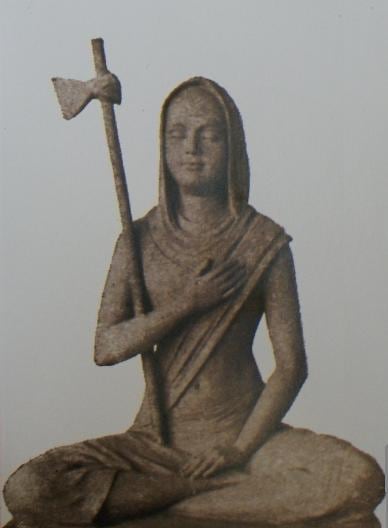
Gaudapada
يتّفقان في: لماذا نتألّم؟ · كيف يُبلَغ التحرّر أو الخلاص؟ · هل نحن أحرار أم أن كل شيء مقدَّر؟

Nāgārjuna
يتّفقان في: كيف يُبلَغ التحرّر أو الخلاص؟ · ما المطلق؟ هل الله موجود؟ · ماذا يحدث بعد الموت؟
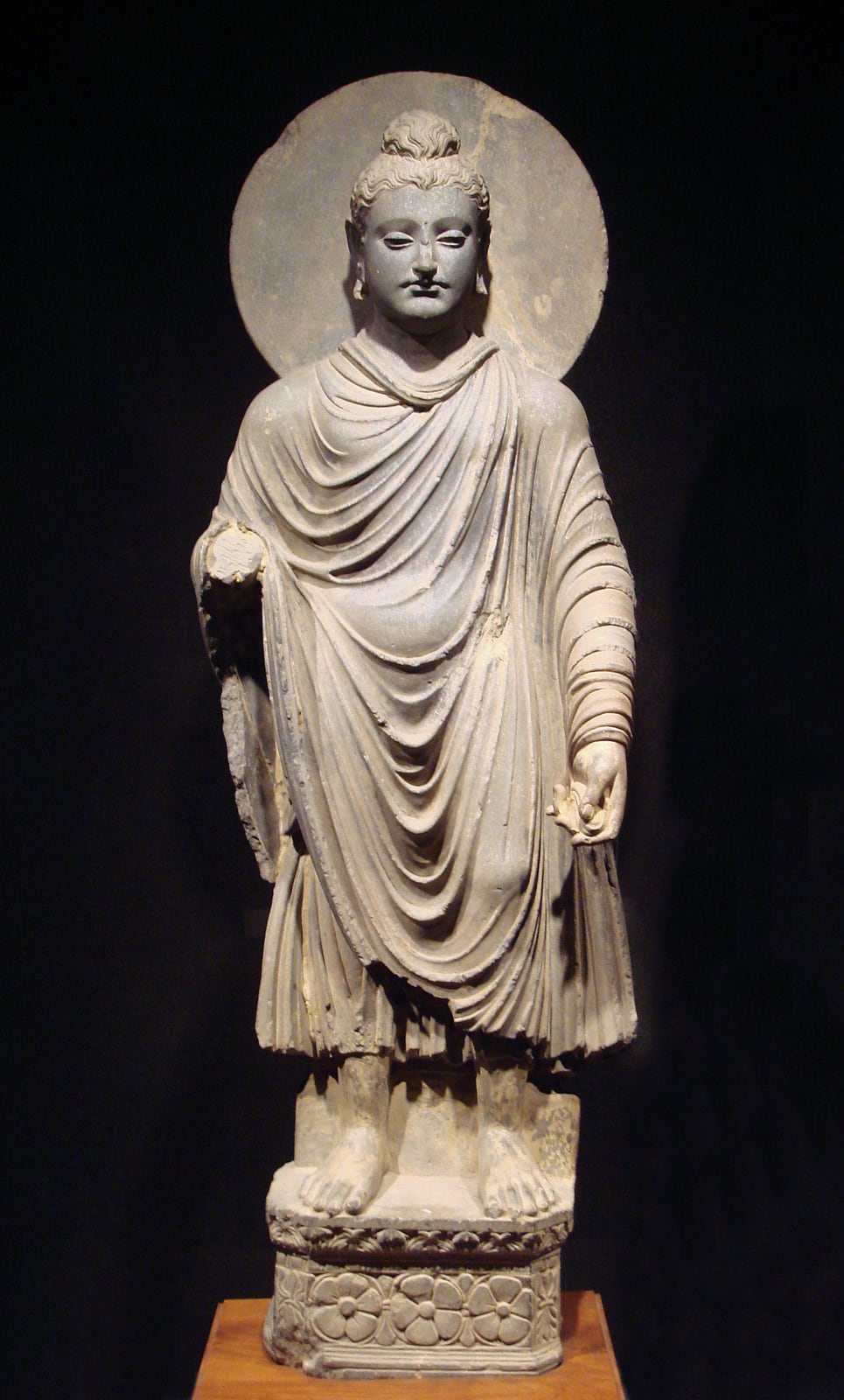
Siddhartha Gautama, the Buddha
يتّفقان في: ما المطلق؟ هل الله موجود؟ · ماذا يحدث بعد الموت؟ · هل نحتاج إلى معلّم؟
يبتعد في تفكيره عن

حكايات وروايات
حكايات وروايات
رواية من سِيَر القدّيسينtiempo mítico
The sixty thousand sons of Sagara
أصل الرواية: An epic narrative of the Rāmāyaṇa (Bālakāṇḍa) and the Mahābhārata (Āraṇyakaparvan), taken up by the Bhāgavata Purāṇa (IX.8). Wilson (1837) already noted that the Rāmāyaṇa identifies this Kapila with Vāsudeva; Śaṅkara (8th c.) distinguished him from the founder of Sāṃkhya. The link with Gaṅgāsāgar is a pilgrimage tradition studied by Jacobsen (2013).
رواية من سِيَر القدّيسينtiempo mítico
The mother who asked to be set free
أصل الرواية: Bhāgavata Purāṇa III.21–33, a devotional text of debated date (c. 9th–10th centuries). Burnouf (1840) already noted that this story is not found elsewhere and turns Kapila into a form of Bhagavat. The identification with Siddhpur is a pilgrimage tradition studied by Jacobsen (2013).
تقليد شفهيtiempo épico
The sage and the sacrificial cow
أصل الرواية: Mahābhārata, Śāntiparvan (Mokṣadharma), the episode called Gokapilīya in the Poona critical edition. It is a didactic epic narrative, not a historical testimony. Kapila’s exact exclamation varies among translations; the content is summarised here without quoting it.
المصدر: The Mahābhārata. Edición crítica, vols. 13–16: Śāntiparvan, ed. S. K. Belvalkar. Poona: Bhandarkar Oriental Research Institute, 1949–1966 (Mokṣadharma; diálogos de Kapila con Syūmaraśmi y con Āsuri; XII.337.60 sobre Kapila como proclamador del Sāṃkhya).
تقليد شفهيs. XIV–XVI (texto y comentario)
The prince raised by a forester
أصل الرواية: Sāṃkhya Sūtra IV.1 (a text ascribed to Kapila, 14th–15th c.) and Vijñānabhikṣu’s commentary (16th c.), in Ballantyne’s translation (1885), pp. 284–285. It is a didactic parable, not an episode in Kapila’s life.
موثّقs. VIII
Śaṅkara and “the other Kapila”
أصل الرواية: Brahmasūtra-bhāṣya II.1.1, in Thibaut’s translation (SBE 34, 1890), checked against the OCR of the volume. Śaṅkara’s date (c. 8th century) is the usual scholarly one.
رواية من سِيَر القدّيسينtiempo legendario (texto del s. I–II)
Kapilavastu, the city beside the hermitage
أصل الرواية: Aśvaghoṣa, Saundarananda, canto I (1st–2nd c. CE), ed. and trans. E. H. Johnston. An aetiological story; the Pali tradition preserves other versions of the origin of the Śākyas.
المصدر: Johnston, E. H. (ed. y trad.). The Saundarananda of Aśvaghoṣa. Oxford University Press / Panjab University, 1928 (texto) y 1932 (traducción). Canto I, sobre la fundación de Kapilavastu junto a la ermita del sabio Kapila Gautama.
رواية من سِيَر القدّيسينépoca de Prasenajit (s. VI–V a. C., según el relato)
The other Kapila: two gold coins
أصل الرواية: Jain commentary on Uttarādhyayana VIII, summarised by Hermann Jacobi in his translation (SBE 45, 1895, p. 31, note 1); verse 17 is the one the story places in Kapila’s mouth before the king. It is included to dispel the homonymy: this is another Kapila.
التعاليم
التعاليم
المفاهيم التي ينتظم بها فكره، مشروحة في سياقها.
Puruṣa (witnessing consciousness)purusha
It is one of the two irreducible principles of Sāṃkhya and the point at which it diverges most from Vedānta, which affirms a single consciousness. Patañjali’s Yoga inherits the notion (as draṣṭṛ, “the seer”).
المصدر: Larson, Gerald James. Classical Sāṃkhya: An Interpretation of its History and Meaning. Delhi: Motilal Banarsidass, 1969; 2.ª ed. revisada, 1979 (ISBN 9788120805033).
Prakṛti (primordial nature)prakriti
The theory of prakṛti was adopted by Yoga, by much of Purāṇic cosmology and by Āyurvedic medicine, although Vedānta reinterpreted it as the power (māyā) of a single Brahman.
المصدر: Larson, Gerald James. Classical Sāṃkhya: An Interpretation of its History and Meaning. Delhi: Motilal Banarsidass, 1969; 2.ª ed. revisada, 1979 (ISBN 9788120805033).
The three qualities (guṇa)gunas
The guṇas already appear in the epic and are systematised in the Kārikā (stanzas 12–13). They are one of the notions most widely shared among Indian schools.
The twenty-five principles (tattva)tattvas
The list of twenty-five principles is the classical form fixed in the Kārikā; in the epic there are different counts (twenty-six or seventeen), a sign of a doctrine still in formation. The Tattva Samāsa is essentially an index of these categories.
المصدر: Larson, Gerald James y Ram Shankar Bhattacharya (eds.). Sāṃkhya: A Dualist Tradition in Indian Philosophy. Encyclopedia of Indian Philosophies, vol. IV. Princeton: Princeton University Press / Delhi: Motilal Banarsidass, 1987.
Satkāryavāda (the effect pre-exists in the cause)satkaryavada
It is one of the logical pillars of the system and the reason why Sāṃkhya can dispense with a creator god. The Sāṃkhya Sūtra defend it in book I.
Viveka and kaivalya (discrimination and isolation)kaivalya
The term kaivalya passed into Patañjali’s Yoga, which names its fourth chapter after it (Kaivalya-pāda). The devotional version of the Bhāgavata replaces isolation with loving union with God.
مقاطع الفيديو
مقاطع الفيديو
تسجيلات ومقابلات وأفلام وثائقية. تُشغَّل مقاطع الفيديو من YouTube؛ ولا تُستضاف هنا.
Kapila of Sāṃkhya: Manifestations and interpretations by Prof. Knut Axel Jacobsen
محاضرة· EN· 93 min
Bhaktivedanta Research Center
Sāṃkhya philosophy and Yoga practice: how are they related? - Dr Mikel Burley
محاضرة· EN· 76 min
SOAS Centre Of Yoga Studiesالقناة الرسمية
Samkhya Karikas (Part 1) - Edwin Bryant
محاضرة· EN· 139 min
Edwin Bryant Officialالقناة الرسمية
Hindu Philosophy Introduction 7: Yoga and Sāṃkhya - Edwin Bryant
محاضرة· EN· 60 min
Edwin Bryant Officialالقناة الرسمية
“Concept of Mind in Yoga and Sankhya Philosophy" Lecture with Dr. N. Ganesh Rao
محاضرة· EN· 75 min
Loyola Marymount University, BCLA Yoga Studiesالقناة الرسمية
Revisiting Sāṃkhya Kārikās 25-31: The Determinative Nature of the Guṇas
محاضرة· EN· 49 min
Loyola Marymount University, BCLA Yoga Studiesالقناة الرسمية
Saga of the Soul 065 - Samkhya Darshan (Kapila School Of Philosophy)
محاضرة· EN· 64 min
Chicago Vedantaالقناة الرسمية
Swami Purnananda explains the 24 elements of the Sankhya philosophy and verses from Katha Upanishad
محاضرة· EN· 60 min
Éire Vedanta Societyالقناة الرسمية
Know our Shastras: Essentials of Sankhya Philosophy
محاضرة· EN· 84 min
MIT IIKS
Samkhya-Sutra, El hilo de oro del Indo, por Ibn Asad y Fernando Sánchez Dragó (1ª Parte - Ponencia)
محاضرة· ES· 56 min
LaDanzaFinaldeKali
Introducción a la filosofía Samkhya. Yogacharya Emiliano Crivellari
محاضرة· ES· 37 min
Emiliano Crivellariالقناة الرسمية
कपिल अवतार और सांख्य शास्त्र के प्रवर्तक कपिल मुनि अलग थे
تحليل· HI· 2 min
Govardhan Math, Puriالقناة الرسمية
सांख्य दर्शन SANKHYA DARSHAN की सरल और व्यावहारिक व्याख्या - DR HIMMAT SINGH SINHA
محاضرة· HI· 14 min
The Quest
সাগরের জল স্পর্শ করে, কপিল মুনির আশীর্বাদের আশা, এর পেছনে পৌরাণিক ঘটনা, শুনব| ABP Ananda
فيلم وثائقي· BN· 2 min
ABP ANANDAالقناة الرسمية
المعرض
المعرض
صور بترخيص متحقَّق منه. كل منها تحتفظ بمؤلّفها ونسبتها.
العلاقات
العلاقات
تأثيرات وتلمذة وتقارب في الأفكار. تُميَّز العلاقة الموثّقة عن التشابه المستخلَص بالتحليل.
اختلف مع
Śaṅkara refuted Sāṃkhya in his Brahmasūtra-bhāṣya (II.1.1 and II.2) and denied Vedic authority to “Kapila’s smṛti”, also distinguishing “another Kapila”, the one who burned the sons of Sagara.
علاقة موثّقة
أثّر في
Patañjali’s Yoga adopts the metaphysical framework of Sāṃkhya (puruṣa, prakṛti, guṇa, kaivalya), and its commentary (Yoga-bhāṣya I.25) quotes the Pañcaśikha fragment presenting Kapila as the “First Knower”.
علاقة موثّقة
أثّر في
The Yoga-bhāṣya, traditionally ascribed to Vyāsa, quotes Kapila’s teaching to Āsuri; the Bhagavad Gītā, in the Mahābhārata ascribed to Vyāsa, names Kapila among the perfected. A textual, not historical, relation.
علاقة موثّقة
أثّر في
A commentary on the Sāṃkhya Kārikā bears Gauḍapāda’s name and quotes a verse counting Kapila among the sons of Brahmā. Whether its author is the Gauḍapāda of the Māṇḍūkya-kārikā is doubtful.
علاقة موثّقة
أثّر في
In 1897 he called him “perhaps the greatest name in the history of India in psychological and philosophical lines” and devoted several lectures to Sāṃkhya.
علاقة موثّقة
أفكار قريبة من
Siddhartha Gautama, the Buddha
Buddhist tradition associates Kapilavastu, the Buddha’s city, with the hermitage of a sage Kapila (a folk etymology). Since Max Müller the Sāṃkhya and Buddhist diagnoses of suffering have been compared, though their paths differ.
تشابه مستخلَص بالتحليل
أفكار قريبة من
The Bhagavad Gītā (10.26) has Kṛṣṇa say in the same verse that among divine sages he is Nārada and among the perfected, Kapila; the Mahābhārata presents Nārada as versed in Sāṃkhya.
تشابه مستخلَص بالتحليل
أفكار قريبة من
Uddālaka’s teaching in the Chāndogya Upaniṣad (VI), with its analysis of effects as modifications of one substance (clay and its pots), anticipates themes of Sāṃkhya’s satkāryavāda.
تشابه مستخلَص بالتحليل
أفكار قريبة من
The figure of the witness that cannot be seen, in Yājñavalkya’s teachings in the Bṛhadāraṇyaka Upaniṣad, is one of the Upaniṣadic antecedents of the notion of puruṣa.
تشابه مستخلَص بالتحليل
أفكار قريبة من
The Gauḍīya tradition founded by Caitanya reads Kapila’s teaching to Devahūti as a devotional Sāṃkhya; Bhaktivedanta Swami’s commentary (Teachings of Lord Kapila) comes from it.
تشابه مستخلَص بالتحليل
المصادر
المصادر
المراجع والفهارس التي رُوجعت لهذه الصفحة.
- Wikidata, «Kapila» (sabio védico de la tradición hindú), QID Q574355; LCCN n50059441; GND 119244233; BnF 11909405v; VIAF 9848428.
- Larson, Gerald James y Ram Shankar Bhattacharya (eds.). Sāṃkhya: A Dualist Tradition in Indian Philosophy. Encyclopedia of Indian Philosophies, vol. IV. Princeton: Princeton University Press / Delhi: Motilal Banarsidass, 1987.
- Larson, Gerald James. Classical Sāṃkhya: An Interpretation of its History and Meaning. Delhi: Motilal Banarsidass, 1969; 2.ª ed. revisada, 1979 (ISBN 9788120805033).
- Jacobsen, Knut A. Kapila, Founder of Sāṃkhya and Avatāra of Viṣṇu: With a Translation of Kapilāsurisaṃvāda. Nueva Delhi: Munshiram Manoharlal, 2008 (ISBN 9788121511940).
- Ballantyne, James Robert (trad.). The Sánkhya Aphorisms of Kapila, with Illustrative Extracts from the Commentaries. 3.ª ed., ed. Fitzedward Hall. Londres: Trübner & Co., 1885 (Trübner's Oriental Series). Texto consultado en el OCR de Internet Archive.
- Colebrooke, Henry Thomas (trad.) y Horace Hayman Wilson (trad. y coment.). The Sánkhya Káriká, or Memorial Verses on the Sánkhya Philosophy, by Íswara Krishna; also the Bháshya or Commentary of Gaurapáda. Oxford: Oriental Translation Fund, 1837. Estrofas LXIX–LXXI y comentario de Wilson, pp. 188–191.
- Woods, James Haughton (trad.). The Yoga-System of Patañjali. Cambridge (Mass.): Harvard University Press, 1914 (Harvard Oriental Series 17). Yoga-bhāṣya I.25, con la cita de Pañcaśikha sobre el «Primer Conocedor».
- Thibaut, George (trad.). The Vedânta-Sûtras with the Commentary by Sankarâkârya, parte I. Oxford: Clarendon Press, 1890 (Sacred Books of the East 34). Brahmasūtra-bhāṣya II.1.1, sobre la «smṛti de Kapila».
- Jacobi, Hermann (trad.). Gaina Sûtras, parte II: The Uttarâdhyayana Sûtra, The Sûtrakritâṅga Sûtra. Oxford: Clarendon Press, 1895 (Sacred Books of the East 45). Lección VIII, «Kapila's Verses», con la nota sobre el relato del comentario.
- Burnouf, Eugène (trad.). Le Bhâgavata Purâna, ou Histoire poétique de Krĭchṇa, tome premier. París: Imprimerie royale, 1840. Libros I–III; prefacio sobre el relato de Kapila y Devahūti; I.3.10 (Kapila, quinta encarnación).
- Wikisource en sánscrito: «साङ्ख्यसूत्राणि» (Sāṃkhya Sūtra, 527 aforismos numerados) y «श्रीमद्भागवतपुराणम्/स्कन्धः ३/अध्यायः २५» (Bhāgavata Purāṇa III.25).
- Arnold, Edwin (trad.). The Song Celestial, or Bhagavad-Gîtâ. Londres: Trübner, 1885. Capítulo X (verso 26: «Kapila of Munis»). Project Gutenberg n.º 2388.
- Vivekananda, Swami. «The Vedanta in all its phases» (Calcuta, 1897), en Lectures from Colombo to Almora; The Complete Works of Swami Vivekananda, vol. 3. Texto en Wikisource.
- Ballantyne, James Robert. A Lecture on the Sánkhya Philosophy, embracing the Text of the Tattwa Samása. Mirzapur: Orphan School Press, 1850.
- Sinha, Nandalal (trad.). The Sāmkhya Philosophy: containing Sāmkhya-pravachana Sūtram, with the Vritti of Aniruddha and the Bhāsya of Vijñāna Bhiksu…; Tattva Samāsa; Sāmkhya Kārikā; Panchaśikha Sūtram. Allahabad: Pāṇini Office, 1915 (Sacred Books of the Hindus 11).
- Johnston, E. H. (ed. y trad.). The Saundarananda of Aśvaghoṣa. Oxford University Press / Panjab University, 1928 (texto) y 1932 (traducción). Canto I, sobre la fundación de Kapilavastu junto a la ermita del sabio Kapila Gautama.
- Garbe, Richard. Die Sâṃkhya-Philosophie: eine Darstellung des indischen Rationalismus. Leipzig: H. Haessel, 1894 (2.ª ed. 1917).
- The Mahābhārata. Edición crítica, vols. 13–16: Śāntiparvan, ed. S. K. Belvalkar. Poona: Bhandarkar Oriental Research Institute, 1949–1966 (Mokṣadharma; diálogos de Kapila con Syūmaraśmi y con Āsuri; XII.337.60 sobre Kapila como proclamador del Sāṃkhya).
- Müller, F. Max. The Six Systems of Indian Philosophy. Londres: Longmans, Green & Co., 1899. Capítulo sobre el Sāṃkhya y el Tattva-samāsa.
- Jacobsen, Knut A. Pilgrimage in the Hindu Tradition: Salvific Space. Londres y Nueva York: Routledge, 2013 (lugares de Kapila, entre ellos Gaṅgāsāgar).
- Wikipedia en inglés, «Kapila» (consultada para la lista de obras menores atribuidas y las genealogías purāṇicas; contrastada con Larson y Bhattacharya, 1987).
- صاحب الحقوق
- Textos sánscritos en dominio público. Las traducciones de Ballantyne (1852, 1885), Colebrooke y Wilson (1837), Burnouf (1840) y Woods (1914) son de dominio público; las ediciones modernas (Routledge, Munshiram Manoharlal, Motilal Banarsidass, Bhaktivedanta Book Trust, Agamat) tienen derechos propios.
في انتظار التأكيد
ما لم تتمكّن هذه الصفحة من حسمه بعد. نفضّل أن نقول ذلك على أن نملأ الفراغ.
- Ediciones en español con ISBN de los Sāṃkhya Sūtra, de la Sāṃkhya Kārikā y del canto III del Bhāgavata (Bhaktivedanta Book Trust): no localizadas en Open Library; Google Books devolvió error 429 durante la investigación.
- Verificar la numeración exacta (edición crítica de Poona) del Gokapilīya y del Kapilāsurisaṃvāda en el Śāntiparvan, y la cita del Mokṣadharma (XII.337.60) sobre Kapila como proclamador del Sāṃkhya.
- Comprobar la fecha de muerte de Nandalal Sinha para decidir el dominio público de su traducción de 1915 en la UE y España.
- Confirmar en Jacobsen (2008, 2013) los datos sobre Siddhpur (Bindu Sarovar) y Gaṅgāsāgar.
- Localizar manuscritos digitalizados de los Sāṃkhya Sūtra con signatura (campo manuscripts vacío).
- Los vídeos no traen año de publicación en oEmbed; se dejó year en null.
بُحث بتاريخ 2026-10-26