المسيحية · التصوف المسيحي · المسيحية الأرثوذكسية
Pavel Florensky
Павел Александрович Флоренский
1882 – 1937شخصية موثّقة تاريخيًا
كاهن أرثوذكسي ولاهوتي وفيلسوف ورياضيّ ومهندس روسي (1882–1937)، يُلقَّب كثيرًا بـ«ليوناردو الروسي». جدّد كتابه «عمود الحقّ وقاعدته» (1914) اللاهوت الأرثوذكسي بصوفيولوجيا ونظرية في النقائض؛ وأسّس كتابا «الإيقونسطاس» و«المنظور المعكوس» فلسفةً للأيقونة. عمل بثوبه الكهنوتي في مشروع الكهربة السوفييتي، ونُفي سنة 1933 إلى معسكرات الغولاغ، وكتب إلى أبنائه من جزر سولوفكي، ثم أعدمته مفوضية الشعب للشؤون الداخلية رميًا بالرصاص في 8 ديسمبر 1937.
- مؤلَّفًا
- 43مؤلَّفًا
- طبعة
- 69طبعة
- اقتباسًا
- 6اقتباسًا
- مقطع فيديو
- 13مقطع فيديو
- صورة
- 7صورة
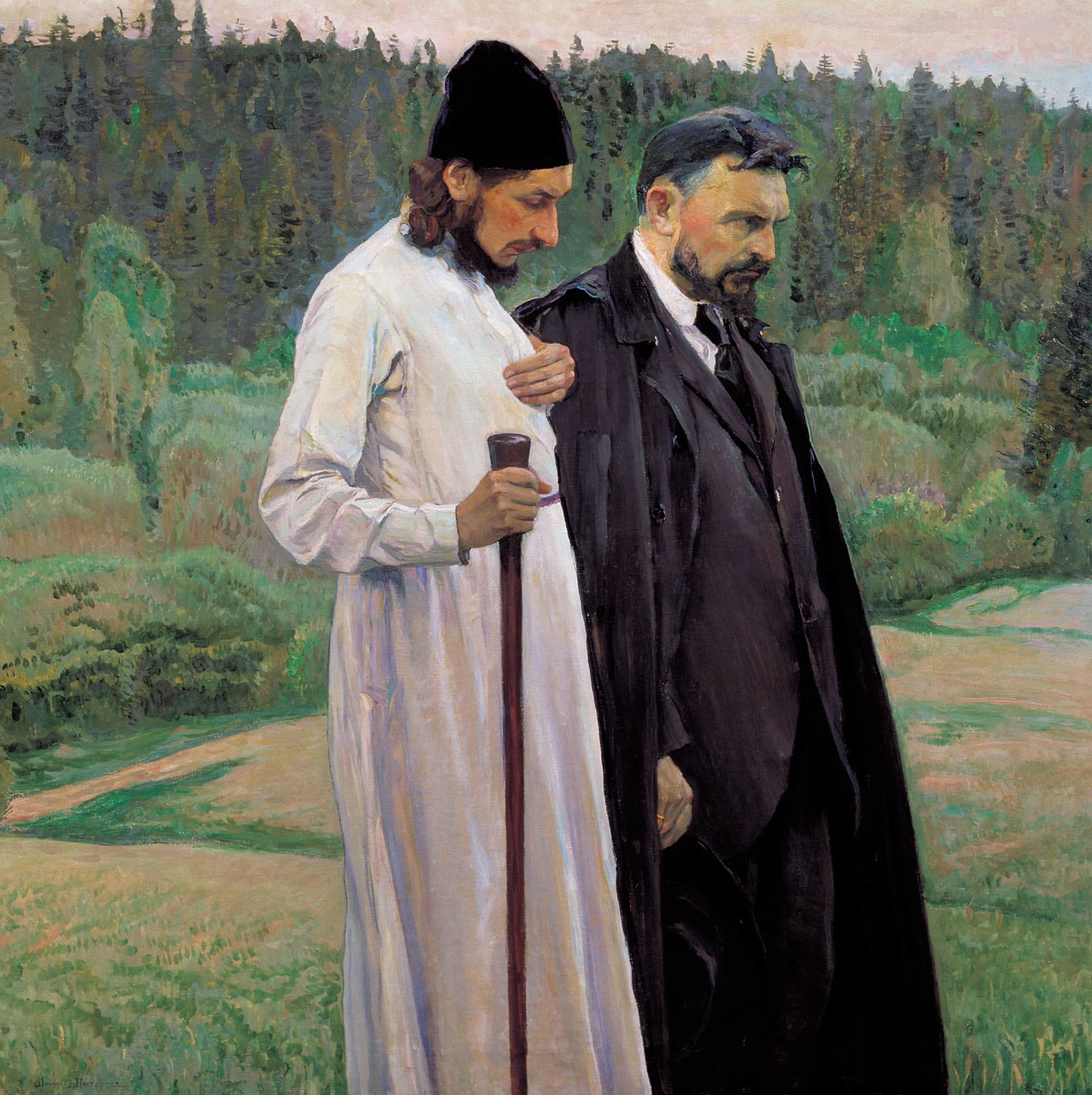
«Filósofos»: Florenski y Bulgákov, por Mijaíl Nésterov · Public domain
بكلماته
«Living religious experience as the sole legitimate way of knowing dogmas.»«Столп и утверждение истины» (1914), «К читателю», primera frase: así resume el autor la intención de todo el libro.
فكرته المحورية
Antinomy: For Florensky religious truth is antinomic: it can be stated only through pairs of contradictory propositions, equally true, which discursive reason cannot reconcile.
السيرة
4 دقيقة قراءة
ترجمة مُعانة من الأصل الإسباني، بانتظار مراجعة مترجم من أهل اللغة.
طفل من القوقاز
وُلد بافل ألكسندروفيتش فلورينسكي في 21 يناير 1882 (9 منه بحسب التقويم اليولياني) في يفلاخ، في أذربيجان الحالية، حيث كان أبوه، ألكسندر إيفانوفيتش، وهو مهندس من أسرة إكليريكية لكنه بعيد عن الكنيسة، يعمل في إنشاء سكة حديد ما وراء القوقاز. أمّا أمّه، أولغا (سالومي) بافلوفنا ساباروفا، فكانت من أسرة أرمنية عريقة من قره باغ. كان البكر بين سبعة إخوة، ونشأ بين تفليس وباطومي في بيت مثقّف لا يبالي بالدين. وسيروي بنفسه في «إلى أبنائي» أنّه عاش طفلًا في «جنّة عدن» من ظواهر الطبيعة — البحر والحجارة والنبات —، وأنّ غوته كان غذاءه الفكري قبل أيّ فيلسوف.
رياضيّ في موسكو
في 1900 أنهى دراسته الثانوية في الغيمنازيوم الثاني في تفليس، والتحق بكلية الفيزياء والرياضيات في جامعة موسكو. وهناك تتلمذ على نيكولاي بوغاييف، وصادق أندريه بيلي، وعن طريقه بريوسوف وبالمونت وآل ميريجكوفسكي وبلوك، ونشر في مجلتَي «نوفي بوت» و«فيسي» مقالات من قبيل «في رموز اللانهاية» (1904)، المخصّصة لنظرية المجموعات عند كانتور. وفي تلك السنوات اجتذبه فلاديمير سولوفيوف والأرشمندريت سيرابيون (ماشكين). وفي 1904 تخرّج بشهادة من الدرجة الأولى، لكنه بدل أن يسلك طريق العلم التحق، ببركة الأسقف أنطونيوس (فلورينسوف)، بالأكاديمية اللاهوتية في موسكو، في سيرغييف بوساد.
الأكاديمية اللاهوتية
في مارس 1906، وهو لا يزال طالبًا، ألقى في كنيسة الأكاديمية عظة ضدّ عقوبة الإعدام بعنوان «صرخة الدم»، طُبعت من غير أن تمرّ على الرقابة؛ فاعتُقل وقضى فترة قصيرة في السجن. وأتمّ دراسته سنة 1908، وبقي في الأكاديمية مدرّسًا لتاريخ الفلسفة. وفي 1910 تزوّج آنا ميخايلوفنا غياتسينتوفا، وأنجب منها خمسة أبناء — فاسيلي وكيريل وأولغا وميخائيل وماريا —، ورُسم كاهنًا سنة 1911. ومن 1912 إلى 1917 تولّى رئاسة تحرير مجلة الأكاديمية «بوغوسلوفسكي فيستنيك» (البشير اللاهوتي)، وخدم كاهنًا في كنيسة ملجأ الصليب الأحمر في سيرغييف بوساد.
عمود الحقّ وقاعدته
في 1914 نشر، في صيغة موسّعة، العمل الذي بدأه طالبًا: «عمود الحقّ وقاعدته: محاولة في الثيوديسيا الأرثوذكسية في اثنتي عشرة رسالة». وقد كُتب على هيئة مراسلة مع صديق، ويمزج اللاهوت بالرياضيات وفقه اللغة وتاريخ الفنّ والتجربة الصوفية. وهو يذهب إلى أنّ الحقّ لا يُبرهَن عليه بل يُعاش في الكنيسة، وأنّ العقيدة نقيضيّة — لا يمكن التعبير عنها إلا في قضايا متعارضة لا يوفّق العقل بينها —، وأنّ الحكمة الإلهية، صوفيا، هي جذر الخليقة. وقد فتن الكتاب، الذي كرّمته الأكاديمية بجائزة، بعضَ القرّاء وأثار سخط آخرين: فقد سمّاه بيردياييف «أرثوذكسية مُؤسلَبة».
ظلّ: قضية بيليس
وفي تلك السنوات نفسها خلّف فلورينسكي كتابات يؤثر المعجبون به نسيانها. فخلال محاكمة مناحيم بيليس سنة 1913، وهو يهودي من كييف اتُّهم زورًا بالقتل الطقسي، أرسل إلى فاسيلي روزانوف مقالتين بلا توقيع يسلّم فيهما بصحّة التهمة؛ فنشرهما روزانوف ملحقًا بكتابه عن علاقة اليهود بالدم. وقد رأى فيهما النقّاد انتقالًا من معاداة مسيحية لليهودية إلى معاداة للسامية ذات طابع عرقي.
الثورة والأيقونات والمنظور
استقبل الثورة بوصفها رؤيا أخروية، ومال إلى ملكية ثيوقراطية، لكنه لم يهاجر. ومن 1918 إلى 1920 كان الأمين العلمي للجنة حماية آثار دير الثالوث والقديس سيرغي (اللافرا)، فصنّف أيقوناته ودافع عن ألّا يتحوّل الدير إلى «متحف ميّت». وآنذاك كتب نصوصه في العبادة والفنّ: «المنظور المعكوس» (1919)، الذي يفسّر فيه منظور الأيقونة بوصفه طريقة أخرى لتمثيل فضاء روحي، و«الإيقونسطاس» (1922)، الذي يرى فيه أنّ الأيقونة نافذة، وأنّ الإيقونسطاس هو الحدّ الفاصل بين العالم المنظور والعالم غير المنظور.
الكاهن المهندس
منذ 1919 عمل عالمًا في خدمة الدولة السوفييتية من غير أن يخلع ثوبه الكهنوتي قطّ: في مصنع «كاربوليت» للّدائن، وفي قسم علم المواد في «غلافينيرغو»، وفي خطة الكهربة «غويلرو». وألّف دراسة في العوازل الكهربائية (1924)، وسجّل براءات اختراع، ودرّس من 1921 إلى 1927 في المحترفات الفنية «فخوتيماس»، وكان من محرّري «الموسوعة التقنية» التي كتب لها نحو مئة وخمسين مقالة. وفي 1922 نشر «المتخيَّلات في الهندسة»، الذي استند فيه إلى دانتي وإلى النسبية دفاعًا عن كوسمولوجيا تجعل الأرض مركز الكون، فهوجم بوصفه ظلاميًا.
سيبيريا وجزر سولوفكي
في 1928 نُفي إلى نيجني نوفغورود؛ وبفضل يكاترينا بيشكوفا تمكّن من العودة، وعُرض عليه أن يهاجر إلى براغ، لكنه آثر البقاء. وفي 26 فبراير 1933 اعتُقل في قضية ملفّقة ضدّ منظمة معادية للثورة مزعومة، وفي 26 يوليو حُكم عليه بعشر سنوات في معسكرات العمل. ومرّ بمعسكر سفوبودني في الشرق الأقصى، وبمحطة التجارب الخاصة بالتربة الصقيعية في سكوفورودينو، ثم نُقل في خريف 1934 إلى جزر سولوفكي، حيث بحث في استخلاص اليود والآغار من الطحالب. ومن هناك كتب إلى زوجته وأمّه وأبنائه أكثر من مئة رسالة تفيض علمًا وشعرًا وحنانًا.
8 ديسمبر 1937
في 25 نوفمبر 1937، إبّان الرعب الكبير، حكمت عليه «ترويكا» تابعة لمفوضية الشعب للشؤون الداخلية (NKVD) في مقاطعة لينينغراد بالإعدام. وفي 8 ديسمبر أُعدم رميًا بالرصاص مع سجناء آخرين نُقلوا من سولوفكي؛ ولم يُعرف مكان الإعدام ولا المقبرة الجماعية، ويُذكر ليفاشوفو وميادين رمي أخرى في ضواحي لينينغراد. وظلّت الأسرة سنوات طويلة تُبلَّغ بتاريخ وفاة زائف هو 15 ديسمبر 1943. ثم جاءت وثائق ملفّ القضية، المحفوظة في أرشيف الأجهزة الأمنية والتي فُتحت بعد البيريسترويكا، لتثبت الحكم وتاريخ الإعدام. ورُدّ إليه الاعتبار سنتَي 1958 و1959.
الإرث
أُعيد اكتشاف فلورينسكي في الستينيات والسبعينيات، حين شرعت مجلة بطريركية موسكو في نشر نصوصه غير المنشورة، وصدرت أعماله الكاملة في روسيا ابتداءً من 1994. وقد أثّرت نظريته في المنظور المعكوس وفلسفته في الأيقونة في تاريخ الفنّ وفي السيميائيات، وجعلت منه جمعُه بين العلم والإيمان رمزًا للإنتلجنسيا الدينية التي أبادها النظام السوفييتي. وقد حرّر حفيده، رئيس الدير أندرونيك (تروباتشيوف)، أعماله، وأسّس المتحف الذي يحمل اسمه في سيرغييف بوساد.
المصادر: Pyman, Avril. Pavel Florensky: A Quiet Genius. The Tragic and Extraordinary Life of Russia's Unknown da Vinci. Nueva York y Londres: Continuum, 2010. · Florenski, P. A. Столп и утверждение истины. Опыт православной феодицеи в двенадцати письмах [La columna y el fundamento de la verdad]. Moscú: Put, 1914. Texto en Azbuka. · Florenski, P. A. Иконостас [El iconostasio] (1922). Богословские труды, n.º 9 (1972), pp. 83–148. Texto en Azbuka. · Florenski, P. A. Письма с Соловков [Cartas desde las Solovkí], en Сочинения в 4 томах, t. 4: Письма с Дальнего Востока и Соловков, ed. igumeno Andronik (Trubachov) et al. Moscú: Mysl, 1998, pp. 139–781. Texto en Azbuka. · Florenski, P. A. Детям моим. Воспоминания прошлых дней [A mis hijos. Recuerdos de días pasados] (1916–1926). Moscú: Moskovski rabochi, 1992. Texto en Azbuka.
الخط الزمني
الحياة عامًا بعد عام
كل نقطة حدث موثّق. انقر لتقرأه مع مصدره ودرجة اليقين فيه.
21 يناير 1882أقل من عامYevlaj
Birth
Born (9 January Old Style), the first of seven children of the railway engineer Alexander Florensky and Olga Saparova.
موثّقWikidata, Q336769: Pavel Florensky (1882–1937). P31=Q5; 47 enlaces entre wikis.
بعد وفاته
- 5 مايو 1958Rehabilitation
- 1972Iconostasis published
21 يناير 1882 · أقل من عام
Birth
Born (9 January Old Style), the first of seven children of the railway engineer Alexander Florensky and Olga Saparova.
موثّق
1900 · 18 عامًا
Moscow University
Finishes at the Second Tiflis Gymnasium and enters Physics and Mathematics at Moscow University.
موثّق
1904 · 22 عامًا
From mathematics to theology
Graduates with a first-class diploma and, with Bishop Antony (Florensov)'s blessing, enters the Moscow Theological Academy. Publishes 'On the Symbols of Infinity'.
موثّق
مارس 1906 · 24 عامًا
'The Cry of Blood'
His sermon against the death penalty, printed without censorship, leads to his arrest and a short spell in prison.
مرجَّح
1908 · 26 عامًا
Academy lecturer
Completes his studies and begins teaching the history of philosophy at the Theological Academy.
موثّق
1910 · 28 عامًا
Marriage
Marries Anna Mikhailovna Giatsintova (1889–1973); they will have five children.
موثّق
1911 · 29 عامًا
Ordination
He is ordained priest; from 1912 to 1917 he edits Bogoslovsky vestnik.
موثّق
1913 · 31 عامًا
The Beilis articles
Sends Rozanov two anonymous articles that treat as true the ritual-murder accusation against Menahem Beilis.
موثّق
1914 · 32 عامًا
The Pillar and Ground of the Truth
The Put publishing house issues his major work, an enlargement of his master's thesis.
موثّق
1918 – 1920 · 36 عامًا
The Lavra Commission
Scientific secretary of the Commission for the Protection of the Monuments of the Trinity–St Sergius Lavra (1918–1920).
موثّق
1919 · 37 عامًا
Reverse Perspective and scientific work
Writes 'Reverse Perspective' and begins working as a scientist at the Karbolit plant and then at Glavenergo.
موثّق
1921 – 1927 · 39 عامًا
Professor at VKhUTEMAS
At Vladimir Favorsky's recommendation he teaches at the VKhUTEMAS art workshops until 1927.
موثّق
1922 · 40 عامًا
Iconostasis and Imaginaries in Geometry
Writes Iconostasis (published 1972) and publishes Imaginaries in Geometry at his own expense.
موثّق
1924 · 42 عامًا
Dielectrics
Publishes Dielectrics and Their Technical Application.
موثّق
1927 · 45 عامًا
Technical Encyclopedia
Joins the editorial board of the Technical Encyclopedia, for which he writes some 150 articles.
موثّق
1928 · 46 عامًا
Exile and refusal to emigrate
Exiled to Nizhny Novgorod; thanks to Ekaterina Peshkova he returns and is offered emigration to Prague, but decides to stay.
موثّق
26 فبراير 1933 · 51 عامًا
Arrest
Arrested by the OGPU; on 26 July he is sentenced to ten years in a labour camp.
موثّق
1 ديسمبر 1933 · 51 عامًا
Svobodny camp
Arrives at the BAMLAG camp at Svobodny; in February 1934 he moves to the experimental permafrost station at Skovorodino.
موثّق
15 نوفمبر 1934 · 52 عامًا
Solovki
Begins work at the iodine factory of the Solovki camp, to which he had been moved in the autumn.
موثّق
18 يونيو 1937 · 55 عامًا
Last surviving letter
Date of letter no. 103 to his wife, the last of those published in his Letters from Solovki.
مرجَّح
25 نوفمبر 1937 · 55 عامًا
Death sentence
A special NKVD troika of the Leningrad region sentences him to death.
موثّق
8 ديسمبر 1937 · 55 عامًا
Execution
Shot by the NKVD; the site of the grave remains unestablished. The family was given a false date (15 December 1943).
موثّق
5 مايو 1958
Rehabilitation
Rehabilitated for the 1933 conviction; on 5 March 1959, for that of 1937.
موثّق
1972
Iconostasis published
Bogoslovskie trudy, a journal of the Moscow Patriarchate, publishes Iconostasis, fifty years after it was written.
موثّق
المؤلَّفات
المؤلَّفات الأساسية
المؤلَّفات التي لا يُفهم إرثه من دونها.

مؤلَّف مكتوب · 1914
The Pillar and Ground of the Truth: An Essay in Orthodox Theodicy in Twelve Letters
Столп и утверждение истины. Опыт православной феодицеи в двенадцати письмах
His capital work, published by Put in 1914. Twelve letters to a friend — doubt, the Trinity, the light of truth, the Comforter, contradiction, sin, Gehenna, the creature, Sophia, friendship and jealousy — with extensive mathematical, philological and iconographic appendices. It holds that truth is reached by living religious experience rather than deduction; that dogma is antinomic; that the Trinity is the foundation of all truth; that Sophia is the root of creation; and that friendship, the 'we' of two, is the cell of the Church. It influenced Bulgakov and Losev and was criticised by Berdyaev and Florovsky.
8 طبعات

مؤلَّف نُشر بعد الوفاة · 1922
Iconostasis
Иконостас
Written in 1922 and published in 1972 in Bogoslovskie trudy. Starting from the experience of dreams, which separate and join two worlds, it defines the icon as a window onto the invisible and the iconostasis as the boundary between the visible and invisible worlds, formed by the saints themselves. It defends the technique of the icon — egg tempera, gold, construction in layers of light — as the expression of an ontology of light, against the oil painting and perspective of Western art.
5 طبعات
Pavel Florensky
Imaginaries in Geometry
مؤلَّف مكتوب · 1922
Imaginaries in Geometry
Мнимости в геометрии. Расширение области двухмерных образов геометрии (Опыт нового истолкования мнимостей)
A short treatise published at the author's expense in 1922. It proposes interpreting imaginary numbers as the reverse side of a surface, and applies this to relativity: beyond the speed of light an 'imaginary' space, the invisible world, would begin. Drawing on Dante's Paradiso, it defends a geocentric cosmology and places the boundary between Earth and Heaven between the orbits of Uranus and Neptune. Its cover was designed by Vladimir Favorsky.
3 طبعات

مراسلات · 1998
Letters from the Far East and Solovki
Письма с Дальнего Востока и Соловков
Letters written between 1933 and 1937 from the camps of Svobodny, Skovorodino and Solovki to his wife, his mother and his five children, to whom he gave lessons in physics, chemistry, botany, poetry and music. Published in part from the 1980s and complete in 1998 (vol. 4 of his Works). They are one of the great spiritual testimonies of the Gulag.
6 طبعات
جميع مؤلَّفاته (43)
Pavel Florensky
The Idea of Discontinuity as an Element of a Worldview
The Conscious LibraryThe Idea of Discontinuity as an Element of a Worldview
1904
Pavel Florensky
On the Symbols of Infinity (An Essay on the Ideas of G. Cantor)
The Conscious LibraryOn the Symbols of Infinity (An Essay on the Ideas of G. Cantor)
1904
Pavel Florensky
On One Premise of a Worldview
The Conscious LibraryOn One Premise of a Worldview
1904
Pavel Florensky
Spiritualism as Anti-Christianity
The Conscious LibrarySpiritualism as Anti-Christianity
1904
Pavel Florensky
The Cry of Blood
The Conscious LibraryThe Cry of Blood
1906

Salt of the Earth: A Narrative on the Life of the Elder of Gethsemane Skete, Hieromonk Abba Isidore
1909
Pavel Florensky
Anthony of the Novel and Anthony of Tradition
The Conscious LibraryAnthony of the Novel and Anthony of Tradition
1907
Pavel Florensky
The Author of Life
The Conscious LibraryThe Author of Life
1907
Pavel Florensky
Joy Forever
The Conscious LibraryJoy Forever
1907
Pavel Florensky
In the Eternal Azure
The Conscious LibraryIn the Eternal Azure
1907
Pavel Florensky
The Cosmological Antinomies of Immanuel Kant
The Conscious LibraryThe Cosmological Antinomies of Immanuel Kant
1909
Pavel Florensky
The Universal Human Roots of Idealism
The Conscious LibraryThe Universal Human Roots of Idealism
1909
Pavel Florensky
On Spiritual Truth: An Essay in Orthodox Theodicy
The Conscious LibraryOn Spiritual Truth: An Essay in Orthodox Theodicy
1912
Pavel Florensky
The Meaning of Idealism
The Conscious LibraryThe Meaning of Idealism
1914
Pavel Florensky
Reason and Dialectic
The Conscious LibraryReason and Dialectic
1914
Pavel Florensky
Articles on the Beilis Case
The Conscious LibraryArticles on the Beilis Case
1913
Pavel Florensky
Did Not Count It Robbery (Towards a Judgement on Mysticism)
The Conscious LibraryDid Not Count It Robbery (Towards a Judgement on Mysticism)
1916
Pavel Florensky
Around Khomyakov: Critical Notes
The Conscious LibraryAround Khomyakov: Critical Notes
1916
Pavel Florensky
The Reduction of Numbers
The Conscious LibraryThe Reduction of Numbers
1916
Pavel Florensky
To My Children: Memories of Days Past
The Conscious LibraryTo My Children: Memories of Days Past
1992
Pavel Florensky
The Philosophy of Cult
The Conscious LibraryThe Philosophy of Cult
1977
Pavel Florensky
The Trinity–St Sergius Lavra and Russia
The Conscious LibraryThe Trinity–St Sergius Lavra and Russia
1919

Reverse Perspective
1919
Pavel Florensky
Celestial Signs (On the Symbolism of Colours)
The Conscious LibraryCelestial Signs (On the Symbolism of Colours)
1919
الأقوال
أقوال محدَّدة الموضع في مؤلَّف بعينه. كل منها يحمل مصدره ودرجة الثقة به.
Living religious experience as the sole legitimate way of knowing dogmas.Живой религиозный опыт, как единственный законный способ познания догматов.
متحقَّق منه«Столп и утверждение истины» (1914), «К читателю», primera frase: así resume el autor la intención de todo el libro.
الكلمات الأخيرة
لا توجد سجلات يمكن التحقق منها لكلماته الأخيرة.
His last words are not known. He was shot by the NKVD on 8 December 1937, together with other prisoners transferred from Solovki, at an unestablished place outside Leningrad; there were no witnesses who left an account. His last known letter to his family, no. 103 in the 1998 edition, is dated 18 June 1937: it speaks of the lack of work in the Solovki Kremlin, of his corner with a view of the sea in the monastery museum and of how much he would regret leaving the sea.
المصدر: Florenski, P. A. Письма с Соловков [Cartas desde las Solovkí], en Сочинения в 4 томах, t. 4: Письма с Дальнего Востока и Соловков, ed. igumeno Andronik (Trubachov) et al. Moscú: Mysl, 1998, pp. 139–781. Texto en Azbuka.
اسأل
بماذا يجيب أثره
اثنا عشر سؤالًا كبيرًا من أسئلة الإنسانية، وما تتيح نصوصه الإجابة به عنها، مع المراجع. ولا نقوّله ما لم يقل أبدًا.
ما المطلق؟ هل الله موجود؟
The truth that proves itself is the Trinity, and the icon bears witness to it
إله شخصييقوله صراحةً
Florensky starts, in The Pillar and Ground of the Truth, from living religious experience as the only legitimate way of knowing dogmas. In the letter on doubt he follows scepticism to its end and concludes that only a truth that is at once subject and relation, an I that gives itself to a Thou and recognises itself in a He, can stand: the Trinity. His God is personal and tri-personal, and his inner life is self-giving love. To this speculative path he adds an aesthetic one: in Iconostasis he asserts that, since Rublev's Trinity exists, God exists, and presents this as the most convincing proof, one the textbooks never mention. For him the icon does not illustrate an idea: it is a window through which the invisible lets itself be seen.
قارن هذا السؤال مع معلّمين آخرينمن أنا؟ هل توجد ذات حقيقية؟
The self finds itself only in love and in friendship
ذات تُصقَل في العلاقةيقوله صراحةً
Florensky criticises the identity of the self conceived as the logical law A is A. In The Pillar and Ground of the Truth, such closed self-affirmation is the very form of sin and death: a self that only repeats itself becomes empty. True personal identity is reached by going out of oneself, when the self gives itself to another and receives itself from him; its model is Trinitarian life, in which each person is what it is through its relation to the others. That is why he devotes an entire letter to friendship, which he understands from the tradition of spiritual brotherhood in the early Church, as the experience in which two persons become consubstantial without being confused. The self is real and immortal, but it is found only in communion.
قارن هذا السؤال مع معلّمين آخرينلماذا نتألّم؟
Sin is self-assertion that disintegrates; the true gift is paid for in pain
الانفصال عن اللهيقوله صراحةً
In The Pillar and Ground of the Truth, Florensky defines sin as the self-assertion of an I that shuts itself into its empty identity and breaks communion; its consequence is inner disintegration, the loss of the person's integrity, and its end is gehenna, the loneliness of one who can no longer go out of himself. Suffering is the fruit of that separation, but love also includes it: in the letter on Sophia he writes that love eternally takes away in order eternally to give, and puts to death in order to bring to life. His own life confirmed it: from Solovki, shortly before he was shot, he wrote to his wife that the more selfless the gift, the harsher the persecution and the more severe the suffering, and called this the law of life.
قارن هذا السؤال مع معلّمين آخرينماذا يحدث بعد الموت؟
Before gehenna, an antinomy: salvation of all and eternal damnation at once
الحياة الأبدية والقيامةيقوله صراحةً
Florensky addresses what happens after death in the letter on gehenna in The Pillar and Ground of the Truth, and he does so with his method of antinomy. On one hand, God's love demands that all be saved; on the other, the creature's freedom makes eternal damnation possible. Neither thesis can be eliminated without betraying faith, and reason must accept holding them together. His solution points to a distinction within the person: what in it is the image of God is saved, while what sin has built, its caricature, burns and is separated. Beyond speculation, his faith in the resurrection is that of the Orthodox Church, which he lived until his execution in 1937, as his letters from Solovki show.
قارن هذا السؤال مع معلّمين آخرينكيف يُبلَغ التحرّر أو الخلاص؟
Salvation is lived in the Church: ascesis, sacrament and transfiguring love
بالنعمة والمحبةيقوله صراحةً
Florensky presents salvation as incorporation into the life of truth, reached not by reasoning but by experience: the living religious experience he defines at the start of The Pillar and Ground of the Truth as the only legitimate path to the dogmas. That experience is given in the Church, through ascesis, which restores the integrity of the person broken up by sin, through the sacraments and through brotherly love. Its fruit is transfiguration: in the letter on the light of truth he reproduces the passage where Motovilov sees Seraphim illumined, as an example of what grace does in the flesh. In The Philosophy of Cult he adds that liturgical worship is the place where the human and the divine meet and where the whole of reality is sanctified.
قارن هذا السؤال مع معلّمين آخرينهل نحتاج إلى معلّم؟
Truth is received in the Church and in the spiritual fatherhood of an elder
الجماعة والتقليديقوله صراحةً
Florensky came to faith as an adult, from science, and his path was marked by concrete figures: Bishop Antony Florensov, whom he regarded as his spiritual father, and the elder Isidore of Gethsemane, to whom he devoted The Salt of the Earth, a portrait of an elder's simple holiness. His theology holds that truth is not passed on as information, but by incorporation into the living experience of the Church, its sacraments, its worship and its saints. In The Pillar and Ground of the Truth, written as letters to a friend, the genre itself expresses this conviction: truth is sought in dialogue and friendship, not in self-sufficient solitude. The teacher is necessary, but within a community of faith that precedes and sustains him.
قارن هذا السؤال مع معلّمين آخرينهل العالم حقيقي؟
The creature is rooted in God through Sophia; the visible borders the invisible
خلقٌ صالح وحقيقييقوله صراحةً
Florensky, theologian and scientist at once, does not doubt the reality of the created world, but thinks of it as open from above. In The Pillar and Ground of the Truth he devotes one letter to the creature and another to Sophia, which he defines as the great root of all creation, through which the creature enters Trinitarian life and receives eternal life. The world is good because it is rooted in God. In Iconostasis he describes the boundary between the visible and the invisible world, which dreams, art and liturgy allow one to cross, and the icon as its witness. In Imaginaries in Geometry he went so far as to propose, on the basis of relativity, a model of the cosmos in which the visible world borders a space of another nature.
قارن هذا السؤال مع معلّمين آخرينما الحب؟
Love is consubstantiality: it takes in order to give and makes two one unconfused
محبة الله والقريبيقوله صراحةً
In The Pillar and Ground of the Truth, love is the key to Trinitarian life and therefore to truth itself: God is love because each divine person gives itself to the others. Florensky describes it with paradoxical formulas: love eternally takes away in order eternally to give, eternally puts to death in order eternally to give life. In the letter on friendship and the letter on jealousy he studies it in its most concrete human form, friendship between two persons, which the early Church blessed with a rite of brother-making of its own, and which makes two one without confusing them, in the image of the Trinity's consubstantiality. Jealousy, in this sense, can be the face of love defending its unique object. Love of neighbour in general is first learned in love for one concrete friend.
قارن هذا السؤال مع معلّمين آخرينهل نحن أحرار أم أن كل شيء مقدَّر؟
Freedom and grace form an antinomy that reason does not solve but accepts
إرادة حرة حقيقيةيُستنتج من تعاليمه
Florensky does not treat freedom as an isolated problem, but as one of the cases of antinomy he considers proper to all religious truth. In the letter on contradiction in The Pillar and Ground of the Truth he holds that truth, seen from finite reason, appears as a pair of opposed affirmations that must be held together: providence that disposes all things and freedom that responds, grace that saves and human effort. In the letter on gehenna he applies the same scheme: God's love wills the salvation of all, but the creature's freedom can refuse it, and both theses are true. Human freedom is therefore real, and the human being answers for his acts, though his relation to providence cannot be reduced to a formula.
قارن هذا السؤال مع معلّمين آخرينلماذا نتأمّل أو نصلّي؟
Worship is the root of culture and the place where reality is sanctified
الطقس وتهذيب الذاتيقوله صراحةً
Florensky, a priest as well as a scientist, thought of prayer above all from liturgical worship. In the lectures gathered as The Philosophy of Cult he maintains that worship is the centre from which all culture springs, as the word itself indicates, and that in it material reality, water, bread, oil, word and gesture, is sanctified and opened to the divine. In Church Ritual as a Synthesis of the Arts and in Iconostasis he describes the liturgy as a total work of art involving architecture, candlelight, incense smoke, chant and the icon, and the icon as a window onto the invisible world. His interest in the divine name, in the context of the name-glorifying controversy, shows that personal prayer is not separated from rite.
قارن هذا السؤال مع معلّمين آخرينهل يستطيع العقل أن يعرف الحقيقة القصوى؟
Religious truth is antinomic: reason touches it only as contradiction
الحقيقة القصوى وراء العقليقوله صراحةً
Florensky was a mathematician by training and never despised reason: he studied Cantor's set theory, wrote on the infinite and worked as an engineer. Precisely for that reason he knew its limits. In The Pillar and Ground of the Truth he holds that reason, governed by the law of identity, cannot by itself find a truth that proves itself: it leads to scepticism. And when it approaches the mysteries of faith, it meets them as antinomies, pairs of contradictory affirmations equally true, such as God's unity and trinity or freedom and grace. The letter on contradiction makes antinomy the seal of religious truth. Knowledge of the ultimate is possible only through living religious experience, in which reason is transfigured without being abolished.
قارن هذا السؤال مع معلّمين آخرينالانسحاب من العالم أم تغييره؟
A priest in a cassock at the technical office: serving through science without leaving faith
التأمّل في الفعليُستنتج من تعاليمه
Florensky embodied a singular way of living in the world. After the revolution, when the Theological Academy closed, he neither emigrated nor withdrew: he worked on the commission for the protection of the monuments of the Lavra of Saint Sergius and later on the country's electrification plan, where he attended meetings in cassock and pectoral cross. He published studies on dielectrics and wrote articles for the technical encyclopaedia. Deported to Solovki, he researched the extraction of iodine and agar from seaweed. In his letters to his children from the camp he teaches them to observe nature attentively and to work well, as a form of service. Science, art and liturgy were for him expressions of one and the same vision of the world, and none required renouncing the others.
قارن هذا السؤال مع معلّمين آخرين
التقارب والتوتّر
التقارب والتوتّر
محسوبة سؤالًا سؤالًا انطلاقًا من مواقفه. وسبب كل اتفاق أو اختلاف يظهر بالنقر.
يقترب في تفكيره من
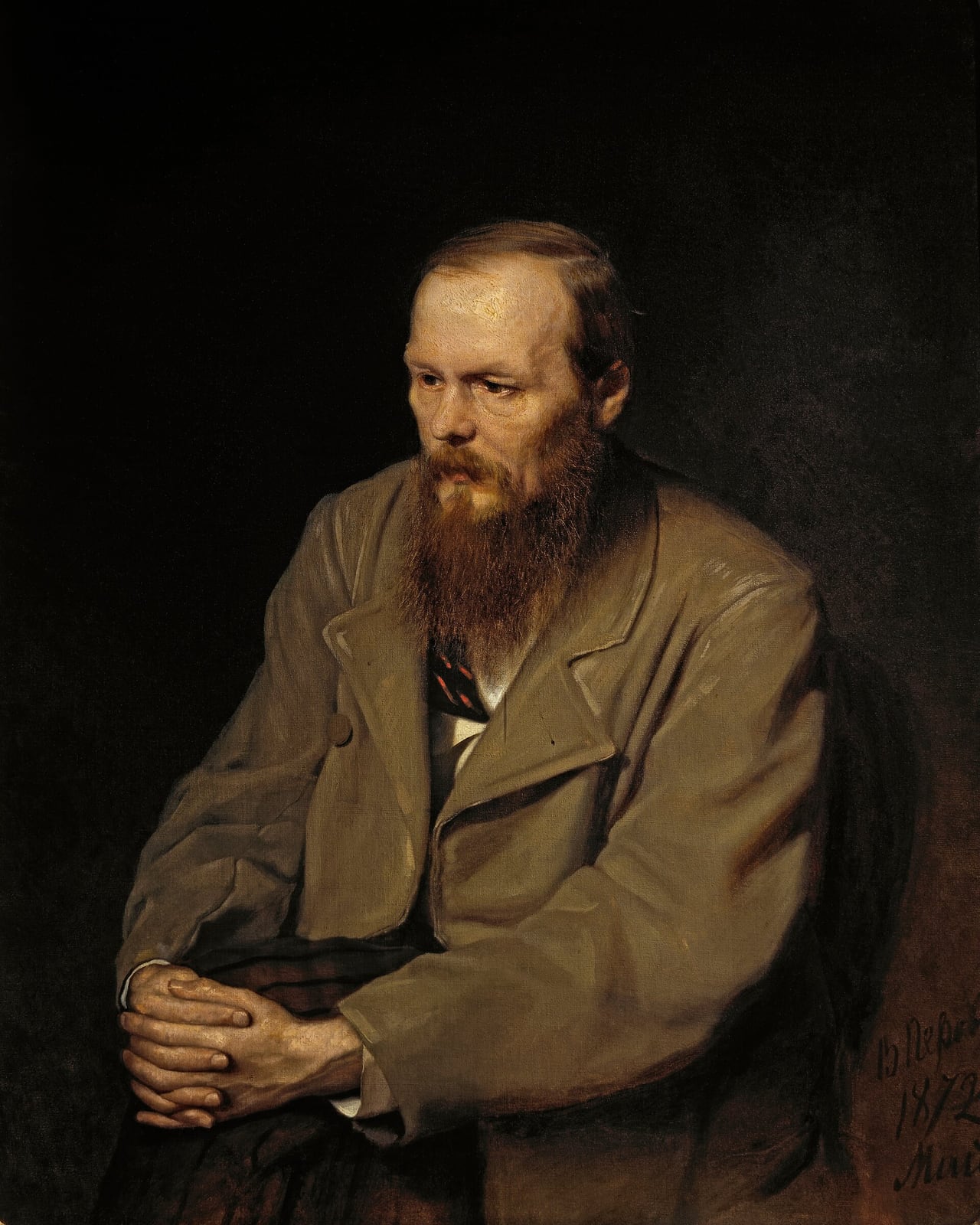
Fyodor Dostoevsky
يتّفقان في: ما المطلق؟ هل الله موجود؟ · لماذا نتألّم؟ · ماذا يحدث بعد الموت؟

Francis of Assisi
يتّفقان في: ما المطلق؟ هل الله موجود؟ · لماذا نتألّم؟ · ماذا يحدث بعد الموت؟
Hildegard of Bingen
يتّفقان في: ما المطلق؟ هل الله موجود؟ · ماذا يحدث بعد الموت؟ · كيف يُبلَغ التحرّر أو الخلاص؟
Seraphim of Sarov
يتّفقان في: ما المطلق؟ هل الله موجود؟ · لماذا نتألّم؟ · ماذا يحدث بعد الموت؟


حكايات وروايات
حكايات وروايات
موثّقmarzo de 1906
The cry of blood
أصل الرواية: The sermon and the prosecution are recorded in his biographies; the detail of the sentence imposed and its remission comes from the Ekzeget.ru biography. That the sermon responded specifically to the execution of Lieutenant Pyotr Schmidt (March 1906) is held by several biographers but has not been verified here.
تقليد شفهي1919–1946
The head of St Sergius
أصل الرواية: It comes from late memories transmitted in the Florensky family and by Ekaterina Vasilchikova, Olsufyev's niece, and by Archbishop Sergei (Golubtsov); it was published in the 1990s. The opening of the relics on 11 April 1919 is documented; the substitution of the head has no independent documentary confirmation. A later legend even attributes Florensky's death sentence to his refusal to reveal the hiding place, without any evidence.
موثّق1928
Staying
أصل الرواية: Recorded in the Russian Wikipedia biography and in A. Pyman's biography, on the basis of the Political Red Cross and family documentation.
موثّق1934–1937
Chemistry lessons from Solovki
أصل الرواية: The letters themselves, published in full in vol. 4 of his Works (Mysl, 1998).
موثّق1937–1989
An invented date of death
أصل الرواية: The sentence, the date of execution and the falsity of the date given to the family are recorded in the case-file documents published after perestroika; the research on the burial site is that of Anatoly Razumov (Leningradsky martirolog).
التعاليم
التعاليم
المفاهيم التي ينتظم بها فكره، مشروحة في سياقها.
Antinomyantinomia
Sixth letter ('Contradiction') of The Pillar and Ground of the Truth; antecedents in The Cosmological Antinomies of Kant (1909).
Sophia and sophiologysofia
Heir to Solovyov; in critical dialogue with Böhme's sophiology, which Berdyaev compared with the Russian one in 1930.
Reverse perspectiveperspectiva-invertida
Later developed in the VKhUTEMAS course on spatiality (1924–1925).
The icon and the iconostasisicono
Written in 1922, at the height of the Soviet campaign against the Church; published in 1972.
Imaginaries and the space beyondimaginarios
It joins his mathematical training with his theology of the icon and of the boundary between worlds.
The name and the magic of the wordnombre
Part of his 'concrete metaphysics' of the 1920s.
مقاطع الفيديو
مقاطع الفيديو
تسجيلات ومقابلات وأفلام وثائقية. تُشغَّل مقاطع الفيديو من YouTube؛ ولا تُستضاف هنا.
«Почаще смотрите на звёзды»
فيلم وثائقي· RU
ТК ТОНУС
Жизнь замечательных семей. Флоренский
فيلم وثائقي· RU
Радость мояالقناة الرسمية
о. Павел Флоренский
فيلم وثائقي· RU
Игорь Штернбергالقناة الرسمية
Павел Флоренский. От геометрии мнимостей к топологии духа (часть 1)
محاضرة· RU· 2018
Калининградская областная научная библиотекаالقناة الرسمية
Обратная перспектива в эстетике и космологии отца Павла Флоренского. Лекция Оксаны Седых
محاضرة· RU· 2020
nffedorov
Reverse Perspective, the Politics of Space, and Contemporary Art Practice
محاضرة· EN
IWMVienna (Institut für die Wissenschaften vom Menschen)القناة الرسمية
Philosophy of Love in the Context of Russian Philosophy. V. Solovyov and P. Florensky
محاضرة· EN
Studium Europy Wschodniej (Universidad de Varsovia)القناة الرسمية
Ciclo de Charlas — Pavel Florenski: filósofo, historiador del arte, matemático y sacerdote ruso
محاضرة· ES
cursosoficialesderusoالقناة الرسمية
Vita e pensiero di Pavel Florenskij — Prof.ssa A. Marcuccini
محاضرة· IT
Filippo Tassi
Nulla va perduto. L'esperienza di Pavel Florenskij
محاضرة· IT· 2013
Filosofia Tor Vergataالقناة الرسمية
Il respiro della vita. Pavel A. Florenskij testimone della verità (con Massimo Cacciari)
محاضرة· IT
icaroplay
La testimonianza di Pavel Florenskij
فيلم وثائقي· IT
12Porteالقناة الرسمية
Benedetto XVI cita Florenskij: «Quando avrete un peso nell'animo, guardate le stelle…»
تسجيل من طرف ثالث· IT
raffaellablogpapa1
المعرض
المعرض
صور بترخيص متحقَّق منه. كل منها تحتفظ بمؤلّفها ونسبتها.
العلاقات
العلاقات
تأثيرات وتلمذة وتقارب في الأفكار. تُميَّز العلاقة الموثّقة عن التشابه المستخلَص بالتحليل.
تأثّر بـ
In his university years he was drawn to Solovyov's teaching, and his sophiology, in the tenth letter of The Pillar and Ground of the Truth, starts from Solovyov's, which he corrects with Russian liturgy and iconography. He belongs to the generation that made Solovyov its starting point.
علاقة موثّقة
اختلف مع
Berdyaev reviewed The Pillar and Ground of the Truth harshly in 'Stylised Orthodoxy' (1914) and argued against 'Around Khomyakov' (1916); in Self-Knowledge he would call him 'alien and hostile', a 'refined reactionary' indifferent to ethics. For him Florensky represented the aesthetic and magical Orthodoxy that freedom had to overcome.
علاقة موثّقة
تأثّر بـ
In The Pillar and Ground of the Truth he quotes, in the fourth letter, 'The Light of Truth', Seraphim's conversation with Motovilov on the acquisition of the Holy Spirit, and in the tenth, 'Sophia', he recalls that the saint called the icon of Tenderness, the only one in his cell, 'Joy of all joys'.
علاقة موثّقة
تأثّر بـ
He devoted to Plato his lectures 'The Universal Human Roots of Idealism' (1909) and 'The Meaning of Idealism' (1914), in which he interprets the doctrine of ideas as the philosophical elaboration of a universal religious and magical experience. In To My Children he describes his youthful search for Goethe's 'primal phenomenon' in an ontological density 'after Plato'.
علاقة موثّقة
معاصر لـ
In To My Children he recalls that as an adolescent he read Tolstoy's philosophical writings and found them 'mostly tedious', though he was interested in Carpenter's article on science translated by Tolstoy; Merezhkovsky's study of Tolstoy and Dostoevsky marked him more.
علاقة موثّقة
أفكار قريبة من
No detailed influence is recorded, but Florensky draws on Dostoevsky in Iconostasis — Stavrogin's 'mask' as a face petrified by passion — and shares with him the vision of the elder and of Russian holiness as the centre of spiritual life.
تشابه مستخلَص بالتحليل
أفكار قريبة من
Berdyaev, in 'The Doctrine of Sophia and the Androgyne in J. Böhme and the Russian Sophiological Currents' (1930), compared Böhme's Sophia with that of Russian sophiology, from Solovyov to Florensky and Bulgakov, and noted their differences: in Böhme Sophia is virginity and freedom; in the Russians, a more cosmic and Platonic idea.
علاقة موثّقة
المصادر
المصادر
المراجع والفهارس التي رُوجعت لهذه الصفحة.
- Wikidata, Q336769: Pavel Florensky (1882–1937). P31=Q5; 47 enlaces entre wikis.
- «Флоренский, Павел Александрович». Wikipedia en ruso (biografía, «Столп», caso Beilis, arresto y fusilamiento, publicaciones).
- Pyman, Avril. Pavel Florensky: A Quiet Genius. The Tragic and Extraordinary Life of Russia's Unknown da Vinci. Nueva York y Londres: Continuum, 2010.
- Florenski, P. A. Столп и утверждение истины. Опыт православной феодицеи в двенадцати письмах [La columna y el fundamento de la verdad]. Moscú: Put, 1914. Texto en Azbuka.
- Florenski, P. A. Иконостас [El iconostasio] (1922). Богословские труды, n.º 9 (1972), pp. 83–148. Texto en Azbuka.
- Florenski, P. A. Письма с Соловков [Cartas desde las Solovkí], en Сочинения в 4 томах, t. 4: Письма с Дальнего Востока и Соловков, ed. igumeno Andronik (Trubachov) et al. Moscú: Mysl, 1998, pp. 139–781. Texto en Azbuka.
- Florenski, P. A. Детям моим. Воспоминания прошлых дней [A mis hijos. Recuerdos de días pasados] (1916–1926). Moscú: Moskovski rabochi, 1992. Texto en Azbuka.
- Open Library, autor OL54367A: Pavel Florensky (1882–1937), obras y ediciones.
- Berdiáyev, N. A. «Стилизованное православие (о. Павел Флоренский)». Русская мысль, 1914, n.º 1. Texto en la Biblioteca «Vejí».
- Razumov, Anatoli Ya. (entrevista). «Соловецкие этапы. Где расстрелян священник Павел Флоренский?». Radio Grad Petrov, 2017 (archivada en Internet Archive). Razumov es el compilador del «Ленинградский мартиролог» de la Biblioteca Nacional de Rusia.
- «Павел Флоренский, священник». Ekzeget.ru (biografía: el sermón de 1906, la detención de 1933, las Solovkí).
- Berdiáyev, N. A. «Из этюдов о Я. Беме. Этюд II: Учение о Софии и андрогине Я. Беме и русские софиологические течения». Путь, 1930, n.º 21, pp. 34–62.
- «Pavel Florensky». Wikipedia en inglés (traslado desde las Solovkí y ejecución, con referencias a A. Maccioni, eSamizdat, 2007).
- صاحب الحقوق
- Florenski murió en 1937: sus obras publicadas en vida son de dominio público en EE. UU. (anteriores a 1930), en la UE (desde 2008) y en España (desde 2018). Las obras póstumas publicadas desde 1967 pueden estar protegidas en EE. UU.; en Rusia, por su rehabilitación póstuma, el plazo se cuenta desde 1958. Las traducciones pertenecen a sus traductores y editoriales.
في انتظار التأكيد
ما لم تتمكّن هذه الصفحة من حسمه بعد. نفضّل أن نقول ذلك على أن نملأ الفراغ.
- Edición española de «Los imaginarios en geometría» y de «Los nombres»: no localizadas.
- Confirmar la vinculación del sermón «El clamor de la sangre» (marzo de 1906) con la ejecución del teniente Piotr Schmidt, y la pena exacta impuesta.
- Confirmar fechas y revistas de «El sentido del idealismo» (1914), «Razón y dialéctica» (1914), «Signos celestes» y «La acción del templo» (en «Makovets», 1922).
- Registrar uno por uno sus artículos de la «Enciclopedia técnica» (unos 150), sus escritos teológicos publicados en «Bogoslovskie trudy» (1972–2007) y sus poemas; hoy figuran agrupados o sólo los principales.
- Lugar de la ejecución y de la fosa: no establecido (Levashovo, polígono de Rzhevka/Koirangakangas o una fosa del campo de Lodéinoye Pole, según las hipótesis de A. Razumov y A. Maccioni).
- Contenido exacto de «Early Religious Writings, 1903–1909» (Eerdmans, 2017): no se ha asignado a obras concretas.
- Verificar en el texto de su «Testamento» la frase sobre mirar las estrellas que citó Benedicto XVI (no se ha podido cotejar).
- Duración y año de la mayoría de los vídeos: oEmbed no los proporciona.
بُحث بتاريخ 2026-10-25