الأفلاطونية
Plato
Πλάτων
نحو 428 ق.م – نحو 348 ق.مشخصية موثّقة تاريخيًا
فيلسوف أثيني من القرن الرابع قبل الميلاد، تلميذ سقراط وأستاذ أرسطو ومؤسس الأكاديمية. وصلت إلينا أعماله كاملة، وهي محاورات يتولّى فيها سقراط الكلام في أغلب الأحيان، ويعرض فيها أفلاطون نظرية المُثُل، وخلود النفس، والصعود بالحب نحو الجمال، وفكرة مدينة يحكمها الذين يعرفون الخير. وقد فكّرت الفلسفة الغربية كلها تقريبًا، وقسط وافر من التصوّف المسيحي واليهودي والإسلامي، في حوار دائم معه، أخذًا وردًّا.
- مؤلَّفًا
- 57مؤلَّفًا
- طبعة
- 358طبعة
- اقتباسًا
- 19اقتباسًا
- مقطع فيديو
- 15مقطع فيديو
- صورة
- 11صورة
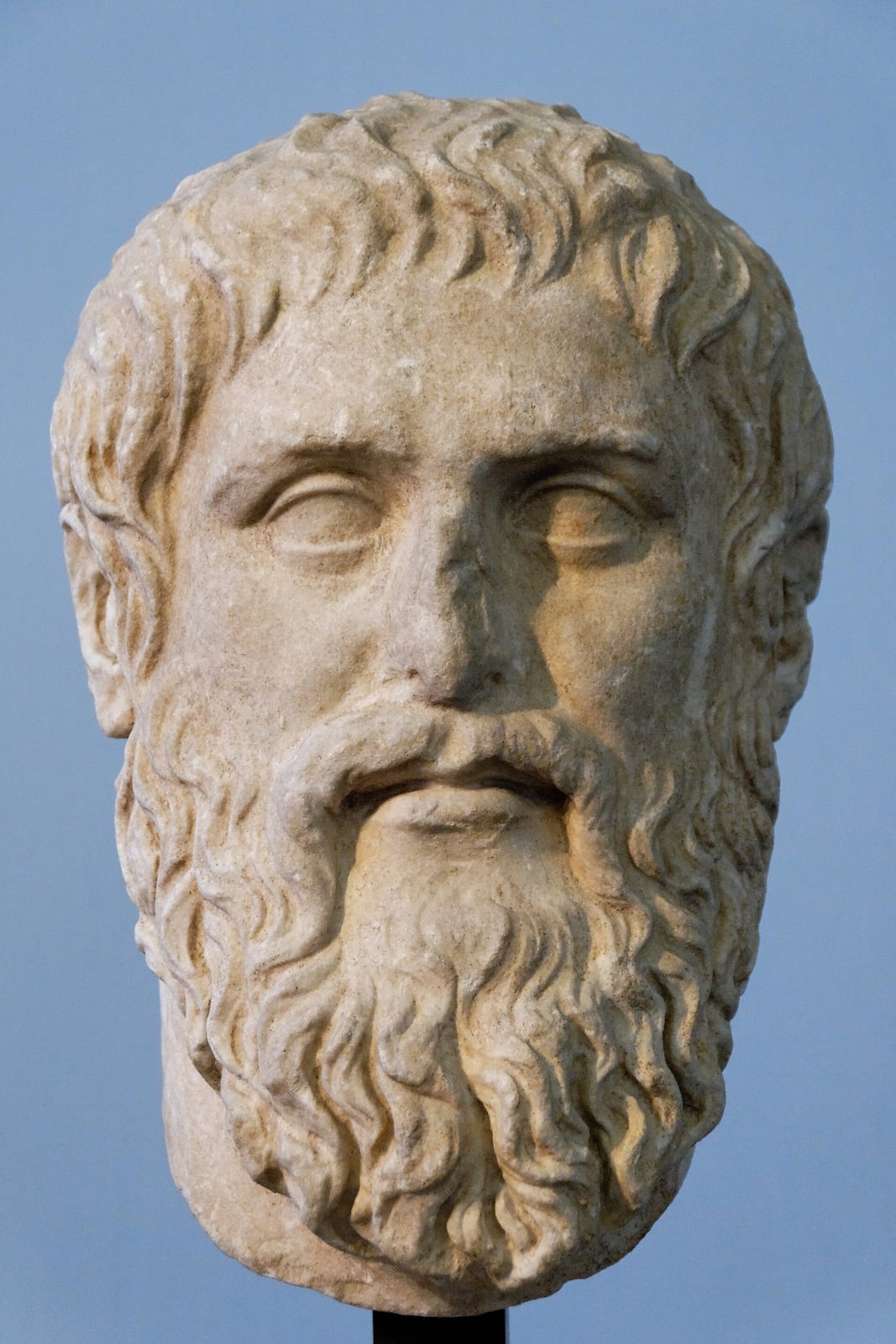
Busto de Platón (Museos Capitolinos, MC 1377) · CC BY 2.5
بكلماته
«He knows nothing, and thinks that he knows; I neither know nor think that I know.»Apología de Sócrates 21d (habla Sócrates). Español: traducción literal propia desde el griego (ed. Burnet). Inglés: Jowett, 1892 (dominio público).

فكرته المحورية
Theory of Forms (Ideas): Plato holds that, besides sensible things, which are many and changing, there exist intelligible realities, eternal and unchanging — the Forms or Ideas (eidos, idea) — such as the Beautiful itself, the Just itself or the Equal itself.
السيرة
4 دقيقة قراءة
ترجمة مُعانة من الأصل الإسباني، بانتظار مراجعة مترجم من أهل اللغة.
أرستقراطي في أثينا زمنَ الحرب
وُلد أفلاطون في أثينا نحو سنة 428 أو 427 ق.م، في السنوات الأولى من الحرب البيلوبونيسية، في واحدة من أعرق أسر المدينة. كان أبوه أريستون ينتسب إلى الملك كودروس، وكانت أمه بيريكتيوني تمتّ بالقرابة إلى سولون. وكان له أخوان أكبر منه، أديمانتوس وغلوكون، سيمنحهما الكلام في «الجمهورية»، وأخت هي بوتوني، أمّ خليفته سبيوسيبوس. وبعد وفاة أريستون تزوّجت بيريكتيوني خالَها بيريلامبيس، صديق بريكليس. وهكذا نشأ الفتى بين أناس اعتادوا الحكم: فكريتياس، ابن خال أمه، وخارميدس، خاله، سيصبحان من الوجوه البارزة في النظام الأوليغارشي المعروف بحكم «الثلاثين».
أما تكوينه فلا يُعرف عنه إلا القليل على وجه اليقين. يروي ديوجانس اللائرتي، الذي كتب بعده بستة قرون، أن اسمه الحقيقي كان أرسطوكليس، وأن «أفلاطون» لقب أُطلق عليه لعرض كتفيه أو جبهته؛ وأنه مارس المصارعة والرسم والشعر؛ وأنه أحرق مآسيه بعد أن سمع سقراط. وهذه أخبار رواها كتّاب سِيَر هلنستيون كانوا يمزجون الموروث بما يستنتجونه من المحاورات وبالاختلاق المحض، ويتعامل معها النقد الحديث بحذر.
جرح سنة 399
أما ما يبدو ثابتًا فهو أن أفلاطون كان في شبابه من حلقة سقراط، وأن هذه الصلة حسمت مسار حياته. فـ«الرسالة السابعة»، التي يُختلف في صحة نسبتها لكن كثيرًا من المتخصصين يقبلونها، تروي أنه كان يعتزم في شبابه الانصراف إلى السياسة، وأن «الثلاثين» دعوه إلى الانضمام إليهم، وأن عنفهم —ومنه محاولة توريط سقراط في القبض على مواطن ليُعدم— أبعده عنهم. وبعد عودة الديمقراطية، في سنة 399 ق.م، ساق الحكّام الجدد سقراط إلى المحاكمة بتهمة الكفر وإفساد الشباب، فحُكم عليه بشرب السمّ (الشوكران).
وقد حضر أفلاطون المحاكمة، كما يذكر هو نفسه في «الدفاع»، وإن كانت محاورة «فيدون» تقول إنه غاب يوم الموت لمرضه. وبحسب الرسالة، قادته تلك الخاتمة إلى النتيجة التي تسري في عمله كله: لن تكفّ المدن عن الشقاء بشرورها حتى يحكم الفلاسفة أو يتفلسف الحكّام تفلسفًا حقيقيًا. وبعد الإعدام لجأ مدة إلى ميغارا، عند السقراطي إقليدس.
الأسفار والأكاديمية
تنسب إليه المصادر القديمة بعد ذلك أسفارًا إلى قورينا، وإلى إيطاليا الفيثاغوريين، وإلى مصر. ولا يثبت منها على نحو موثّق إلا اتصاله بالفيثاغوريين: ففي نحو الأربعين من عمره زار جنوب إيطاليا، وصادق أرخيتاس التارنتي، ثم انتقل إلى سيراقوسة حيث عرف ديون، صهر الطاغية ديونيسيوس الأول. أما حكاية أن الطاغية أمر ببيعه عبدًا في إيجينا وأن رجلًا من قورينا افتداه، فمصدرها كتّاب سِيَر متأخرون، ولا ترد في «الرسالة السابعة».
ولمّا عاد إلى أثينا، نحو سنة 387 ق.م، أسّس مدرسته بجوار ملعب الأكاديمية، وهو بستان مشجّر مكرَّس للبطل أكاديموس في شمال غرب المدينة. ولم تكن جامعة بالمعنى الحديث، بل جماعة للدرس والعيش المشترك، تُبحث فيها الرياضيات والفلك والجدل والنظرية السياسية، وعمل فيها رياضيون مثل ثياتيتوس وأودوكسوس. وقد التحق بها أرسطو سنة 367 ق.م وهو في السابعة عشرة، ومكث فيها نحو عشرين عامًا. بل إن ديوجانس اللائرتي يذكر بين تلاميذه امرأتين، هما أكسيوثيا الفليوسية ولاستينيا المانتينية.
إغواء صقلية
خضعت فلسفة أفلاطون السياسية لامتحان حقيقي. ففي سنة 367 ق.م، بعد موت ديونيسيوس الأول، طلب منه ديون أن يأتي لتربية الطاغية الجديد ديونيسيوس الثاني، أملًا في أن يجعل منه الحاكم الفيلسوف الذي ترسمه «الجمهورية». وانتهت التجربة بنفي ديون وعودة أفلاطون إلى أثينا. ونحو سنة 361 رجع إلى سيراقوسة محاولًا المصالحة بينهما، فاحتُجز رغمًا عنه، ولم يتمكّن من المغادرة إلا بفضل أرخيتاس. وفي سنة 357 أطاح ديون بديونيسيوس بمساعدة أعضاء من الأكاديمية، ثم اغتاله سنة 354 كاليبوس، وهو أثيني من حلقته نفسها. وتقدّم «الرسالة السابعة» و«الرسالة الثامنة» نفسيهما حصيلةً لذلك الإخفاق.
المحاورات
خلافًا لجلّ الفلاسفة السابقين، الذين لا نعرف أعمالهم إلا شذرات، حُفظ لأفلاطون كل ما نسبته إليه العصور القديمة: خمس وثلاثون محاورة ومجموعة من ثلاث عشرة رسالة، رتّبها ثراسيلوس في القرن الأول للميلاد في تسع رباعيات، إضافة إلى حفنة من الأعمال عُرف منذ ذلك الحين أنها منحولة. ولا يتكلّم أفلاطون فيها قطّ بضمير المتكلم؛ فسقراط هو الذي يقود الحوار في الغالب، وفي المحاورات المتأخرة يتنازل عن هذا الدور للغريب الإيلي، أو لطيماوس، أو للغريب الأثيني.
والتسلسل الزمني محلّ جدل، لكن ثمة اتفاقًا على مخطّط عام. فالمحاورات القصيرة، مثل «لاخيس» و«أوثيفرون»، تفحص فضيلة واحدة وتنتهي دون جواب. وتعرض «فيدون» و«المأدبة» و«الجمهورية» و«فايدروس» نظرية المُثُل وخلود النفس وصعود الحب نحو الجمال. أما «بارمنيدس» و«ثياتيتوس» و«السفسطائي» و«طيماوس» و«فيليبوس» و«النواميس»، وهي عمل تركه عند موته دون أن يبيّضه، فتُخضع تلك الأفكار للنقد وتمدّها إلى علم الكون والتشريع.
وتضيف «فايدروس» و«الرسالة السابعة» تحذيرًا من الكتابة نفسها: فأهم الأشياء لا يُنقل في الكتب، بل يتّقد في النفس بعد طول معاشرة. ويلمّح أرسطو إلى «تعاليم غير مكتوبة» لأستاذه، أما المحاضرة العامة الشهيرة «في الخير»، التي تحدّث فيها أفلاطون عن الرياضيات وانتهى إلى أن الخير هو الواحد، فقد تركت سامعيه في حيرة. ولا يزال السؤال عن مقدار ما بقي من فكره خارج المحاورات واحدًا من كبرى مسائل الدراسات الأفلاطونية.
الموت والميراث
مات أفلاطون في أثينا سنة 348 أو 347 ق.م، وقد ناهز الثمانين، ودُفن في الأكاديمية. ولا تتفق المصادر على ملابسات موته: وليمة عرس، أو الانكباب على الكتابة، أو ليلة حمّى قضاها يصغي إلى ناي. وخلفه ابن أخته سبيوسيبوس، وبقيت المدرسة، مع تحوّلات عميقة، قائمةً قرونًا.
ووصل النص إلى المطبعة بفضل المخطوطات البيزنطية —وأقدم ما يحفظ منها الرباعيات الست الأولى كاملة، المخطوط المعروف بـ«كلاركيانوس» في المكتبة البودلية، نُسخ سنة 895—، وفي سنة 1578 نشر هنري إتيان في جنيف الطبعة التي لا يزال ترقيم صفحاتها معتمدًا في الاستشهاد به: فـ«الجمهورية 514a» تحيل إلى الصفحة 514، القسم a، من ذلك المجلد. وبالإسبانية قدّم باتريسيو دي أثكاراتي بين سنتي 1871 و1872 أول ترجمة لأعماله الكاملة.
ولا نظير لتأثيره. فقد عدّ أفلوطين نفسه شارحًا له وأسّس الأفلاطونية المحدثة؛ واعترف أوغسطينوس أسقف هيبو بأن الكتب الأفلاطونية فتحت له الطريق إلى الإله المسيحي؛ وظلت «طيماوس» باللاتينية قرونًا تكاد تكون كل ما قرأه الغرب له، وتلقّته الفلسفة الإسلامية واللاهوت اليهودي في العصر الوسيط بطرقهما الخاصة. ثم أعادته ترجمة مارسيليو فيتشينو اللاتينية الكاملة، سنة 1484، إلى قلب الثقافة الأوروبية. وقد لخّص ألفرد نورث وايتهد هذا الدَّين حين كتب أن التقليد الفلسفي الأوروبي ليس سوى سلسلة من الحواشي على أفلاطون.
المصادر: Diógenes Laercio, Vidas y opiniones de los filósofos ilustres, libro III (Platón), s. III d. C. Trad. inglesa de R. D. Hicks, Loeb Classical Library, Harvard University Press, 1925 (texto en Wikisource). · Platón (atribuida), Carta VII, 324a–352a, en Platonis Opera, ed. John Burnet, vol. V, Oxford Classical Texts, 1907; trad. española de Juan Zaragoza y Pilar Gómez Cardó en Platón, Diálogos VII, Madrid, Gredos (Biblioteca Clásica Gredos 162), 1992. · Cooper, John M. (ed.) y Hutchinson, D. S. (ed. asociado), Plato: Complete Works, Indianápolis, Hackett, 1997 (introducción del editor sobre el corpus, las tetralogías de Trasilo y la autenticidad de cada obra). · Nails, Debra, The People of Plato: A Prosopography of Plato and Other Socratics, Indianápolis, Hackett, 2002 (entrada «Plato» y apéndices cronológicos). · Riginos, Alice Swift, Platonica: The Anecdotes Concerning the Life and Writings of Plato, Leiden, Brill (Columbia Studies in the Classical Tradition 3), 1976.
الخط الزمني
الحياة عامًا بعد عام
كل نقطة حدث موثّق. انقر لتقرأه مع مصدره ودرجة اليقين فيه.
نحو 428 ق.مأقل من عامAtenas (o Egina, según otra tradición)
Birth
Born into an aristocratic Athenian family: his father, Ariston, claimed descent from King Codrus; his mother, Perictione, from Solon's family. Diogenes Laertius dates the birth to the 88th Olympiad (428/427 BC), and Apollodorus has it coincide with Apollo's birthday. He had two brothers, Adeimantus and Glaucon, and a sister, Potone.
مرجَّحDiógenes Laercio, Vidas y opiniones de los filósofos ilustres, libro III (Platón), s. III d. C. Trad. inglesa de R. D. Hicks, Loeb Classical Library, Harvard University Press, 1925 (texto en Wikisource).
بعد وفاته
- نحو 347 ق.مSpeusippus heads the Academy
- نحو 14 ق.مThrasyllus' tetralogies
- 895The Codex Clarkianus
- 1484Ficino's Latin translation
- 1578The Stephanus edition
- 1871 – 1872Complete works in Spanish
نحو 428 ق.م · أقل من عام
Birth
Born into an aristocratic Athenian family: his father, Ariston, claimed descent from King Codrus; his mother, Perictione, from Solon's family. Diogenes Laertius dates the birth to the 88th Olympiad (428/427 BC), and Apollodorus has it coincide with Apollo's birthday. He had two brothers, Adeimantus and Glaucon, and a sister, Potone.
مرجَّح
نحو 423 ق.م · 5 أعوام
His mother marries Pyrilampes
After Ariston's death, Perictione marries her uncle Pyrilampes, a friend of Pericles; from this marriage is born Antiphon, Plato's half-brother, who appears in the Parmenides.
مرجَّح
نحو 408 ق.م · 20 عامًا
With Socrates
According to Diogenes Laertius, at twenty he began to frequent Socrates; tradition adds that he then burned his tragedies. The date and the burning episode are traditional.
تقليد
404 ق.م · 24 عامًا
The Thirty Tyrants
After Athens' defeat, an oligarchic government including Critias, his mother's cousin, and Charmides, his uncle, invites the young Plato to collaborate. According to the Seventh Letter, its violence — and its attempt to involve Socrates in an unjust arrest — turned him away.
مرجَّح
399 ق.م · 29 عامًا
Trial and death of Socrates
Socrates is condemned to death for impiety and corrupting the young. Plato attends the trial, as he states in the Apology (34a, 38b), but according to the Phaedo (59b) he was not present at the death because he was ill.
موثّق
نحو 399 ق.م · 29 عامًا
Withdrawal to Megara
After the execution, with other Socratics, he takes refuge for a while in Megara with Euclides, according to Hermodorus as cited by Diogenes Laertius.
مرجَّح
نحو 395 ق.م · 33 عامًا
Journeys of study
Ancient tradition credits him with journeys to Cyrene, to the mathematician Theodorus, to the Pythagoreans of Italy and to Egypt. Only the contact with the Pythagoreans is well attested; the Egyptian journey is doubtful.
تقليد
نحو 388 ق.م · 40 عامًا
First journey to Sicily
Around the age of forty (Seventh Letter, 324a) he visits Italy, where he befriends Archytas of Tarentum, and the court of Dionysius I in Syracuse, where he meets the young Dion. Later tradition relates that the tyrant had him sold as a slave in Aegina.
مرجَّح
نحو 387 ق.م · 41 عامًا
Founding of the Academy
He acquires land near the gymnasium of the Academy, north-west of Athens, and founds the community of study that will take its name. Mathematics, astronomy, dialectic and politics are studied there; it will survive, with transformations, for several centuries.
مرجَّح
367 ق.م · 61 عامًا
Aristotle enters the Academy
Aristotle, aged seventeen, arrives from Stagira and remains in the Academy for some twenty years, until Plato's death.
موثّق
نحو 367 ق.م – 365 ق.م · 61 عامًا
Second journey to Sicily
After Dionysius I's death, Dion calls him to educate the new tyrant, Dionysius II. The experiment fails: Dion is exiled and Plato returns to Athens.
مرجَّح
نحو 361 ق.م – 360 ق.م · 67 عامًا
Third journey to Sicily
He returns to Syracuse at Dionysius II's request, hoping to reconcile him with Dion. Held against his will, he manages to leave thanks to the intervention of Archytas of Tarentum.
مرجَّح
357 ق.م · 71 عامًا
Dion's expedition
Dion, with support from members of the Academy, overthrows Dionysius II. In 354 BC he is murdered by Callippus, an Athenian of his circle. Letters VII and VIII present themselves as written after his death.
مرجَّح
نحو 348 ق.م · 80 عامًا
Death
He dies in Athens in the first year of the 108th Olympiad (348/347 BC), aged about eighty or eighty-one, according to Hermippus as cited by Diogenes Laertius. He is buried in the Academy. He leaves the Laws not yet fair-copied.
مرجَّح
نحو 347 ق.م
Speusippus heads the Academy
He is succeeded by his nephew Speusippus, son of his sister Potone. Aristotle leaves Athens.
موثّق
نحو 14 ق.م
Thrasyllus' tetralogies
In the first century AD, the astrologer Thrasyllus, close to Tiberius, arranges the works in nine tetralogies, the order in which the corpus has come down to us.
مرجَّح
895
The Codex Clarkianus
John the Calligrapher copies for Arethas of Caesarea the codex now preserved in the Bodleian Library, the main witness for the first six tetralogies.
موثّق
1484
Ficino's Latin translation
Marsilio Ficino publishes the first complete Latin translation of the dialogues, commissioned by Cosimo de' Medici, which restores Plato to the centre of European thought.
موثّق
1578
The Stephanus edition
Henri Estienne publishes the Greek text in three volumes with Jean de Serres' Latin translation; its pagination becomes the universal system of reference.
موثّق
1871 – 1872
Complete works in Spanish
Patricio de Azcárate publishes the first Spanish translation of the complete works (11 volumes, 1871–1872).
موثّق
المؤلَّفات
المؤلَّفات الأساسية
المؤلَّفات التي لا يُفهم إرثه من دونها.
مؤلَّف مكتوب · نحو 395 ق.م
Apology of Socrates
Ἀπολογία Σωκράτους
A recreation of the defence speech Socrates delivered in 399 BC before the Athenian popular jury, accused of not recognising the city's gods and of corrupting the young. Socrates explains the Delphic oracle, his mission of examining those who think they know, and his conscious ignorance; after the verdict he ironically proposes to be maintained in the Prytaneum, and accepts death declaring that the unexamined life is not worth living. Plato was present at the trial (34a, 38b). It is the classic doorway into philosophy.
8 طبعات

مؤلَّف مكتوب · نحو 380 ق.م
Phaedo
Φαίδων
Phaedo of Elis tells Echecrates of Socrates' last hours in prison: the conversation on why the philosopher does not fear death, the arguments for the immortality of the soul (from opposites, recollection, affinity with the invisible, participation in Forms), the closing myth on the fate of souls, and the calm death by hemlock. Here the theory of Forms appears explicitly, as does the definition of philosophy as practice for dying. Plato is said to have been absent through illness (59b).
9 طبعات

مؤلَّف مكتوب · نحو 380 ق.م
Symposium
Συμπόσιον
At the house of the poet Agathon, celebrating his victory in the tragic contest of 416 BC, the guests deliver speeches in honour of Eros: Phaedrus, Pausanias, the physician Eryximachus, Aristophanes with the myth of spherical beings cut in two, Agathon, and Socrates, who relays the teaching of the priestess Diotima on the ladder of love, from one beautiful body to Beauty itself. It closes with the entry of a drunken Alcibiades, who delivers a eulogy of Socrates. A literary masterpiece and source of the whole Western mysticism of love.
9 طبعات

مؤلَّف مكتوب · نحو 375 ق.م
Republic
Πολιτεία
In the Piraeus, after a festival, Socrates discusses what justice is. To see it writ large he imagines an ideal city with three classes, ruled by philosophers whose education culminates in knowledge of the Form of the Good. Its ten books contain the critique of poetry, the equal education of women guardians, the images of the sun, the line and the cave, the typology of degenerate regimes and the myth of Er on the choice of lives. Plato's central work and that of political philosophy.
13 طبعة
جميع مؤلَّفاته (57)
Euthyphro
395
Crito
395

Cratylus
385

Theaetetus
368

Sophist
360

Statesman
360

Parmenides
370

Philebus
355
Phaedrus
370
Alcibiades I
Alcibiades II
Hipparchus
Rival Lovers (Lovers)
Theages

Charmides
390
Laches
390

Lysis
390
Euthydemus
385

Protagoras
390

Gorgias
387

Meno
385
Hippias Major
390
Hippias Minor
395
Ion
395
الأقوال
أقوال محدَّدة الموضع في مؤلَّف بعينه. كل منها يحمل مصدره ودرجة الثقة به.
He knows nothing, and thinks that he knows; I neither know nor think that I know.οὗτος μὲν οἴεταί τι εἰδέναι οὐκ εἰδώς, ἐγὼ δέ, ὥσπερ οὖν οὐκ οἶδα, οὐδὲ οἴομαι.
متحقَّق منهApología de Sócrates 21d (habla Sócrates). Español: traducción literal propia desde el griego (ed. Burnet). Inglés: Jowett, 1892 (dominio público).
أقوال منحولة أو مختلَف في نسبتها (2)
«'Let no one ignorant of geometry enter.'»
An inscription attributed to the Academy's door that appears only in sixth-century AD commentators; it is not found in any work of Plato or in sources of his time.
«'Only the dead have seen the end of war.'»
A widespread false attribution: it appears in no work of Plato. It comes from George Santayana, Soliloquies in England (1922), the soliloquy 'Tipperary'; General Douglas MacArthur popularised it as Platonic in an address at West Point (1962).
الكلمات الأخيرة
لا توجد سجلات يمكن التحقق منها لكلماته الأخيرة.
No final words of Plato survive. The ancient sources disagree even on the circumstances of his death: Hermippus, cited by Diogenes Laertius (III 2), says he died at a wedding feast; Cicero (On Old Age 13) that he died while writing, at eighty-one; and the Herculaneum papyrus of Philodemus' Index Academicorum, which goes back through Neanthes to Philip of Opus, relates that on his last night, feverish, he received a Chaldean visitor and that a Thracian girl played the flute while he marked the rhythm for her with a gesture. None of these versions records a sentence.
المصدر: Riginos, Alice Swift, Platonica: The Anecdotes Concerning the Life and Writings of Plato, Leiden, Brill (Columbia Studies in the Classical Tradition 3), 1976.
اسأل
بماذا يجيب أثره
اثنا عشر سؤالًا كبيرًا من أسئلة الإنسانية، وما تتيح نصوصه الإجابة به عنها، مع المراجع. ولا نقوّله ما لم يقل أبدًا.
ما المطلق؟ هل الله موجود؟
A Good beyond being and a good craftsman who willed the world
شخصي وغير شخصي معًايُستنتج من تعاليمه
In Plato two faces of the ultimate coexist. In the Republic the Good is the source from which things receive being and knowability, and it is not essence but still beyond essence: an impersonal principle named only by analogy with the sun. In the Timaeus, by contrast, a good demiurge, free of envy, wills that everything become as like him as possible and orders the cosmos looking to an eternal model. The Laws add gods who care for small things as much as great and punish impiety. Plato does not explicitly unify the two levels; the later tradition read them as degrees of a single divine reality.
قارن هذا السؤال مع معلّمين آخرينمن أنا؟ هل توجد ذات حقيقية؟
The immortal soul, akin to the Forms, imprisoned in the body
روح مخلوقة خالدةيقوله صراحةً
Plato identifies the human being with the soul and devotes his most famous proofs to it. In the Phaedo the soul is like the divine, immortal, intelligible and always the same as itself, while the body resembles the mortal and changing; to philosophise is to separate it from the body. The Phaedrus defines it as a self-moving principle of motion that therefore is neither born nor dies. In the Timaeus the demiurge fashions the immortal part of the human soul from the same mixture as the world soul and entrusts it to the lesser gods. Its destiny is to become like God as far as possible. Yet Plato also ascribes successive reincarnations to this soul.
قارن هذا السؤال مع معلّمين آخرينلماذا نتألّم؟
Injustice is a civil war in the soul, and the body feeds it
الفوضى الاجتماعية والأخلاقيةيقوله صراحةً
Plato gives two complementary explanations. In the Phaedo the body fills the soul with loves, desires, fears and images, and from its needs arise wars, revolts and fights over money. In the Republic evil is thought of as disorder: the soul has three parts, reason, spirit and appetite, and justice consists in each doing its own work under reason's rule; injustice is an inner uprising, a sickness of the soul. The same holds for the city, whose degenerate forms correspond to disordered souls. We suffer when order is inverted and appetite rules, in the soul and in the city.
قارن هذا السؤال مع معلّمين آخرينماذا يحدث بعد الموت؟
The immortal soul is judged and reborn until philosophy frees it
الولادة من جديد وفق الكارمايقوله صراحةً
Plato upholds the immortality of the soul with arguments and describes it with myths. In the Phaedo philosophy is a practice of dying, because it prepares the soul to separate from the body; souls attached to it are reincarnated according to their habits, as asses, wolves or bees, while those purified by philosophy live with the gods. The Phaedrus tells of a ten-thousand-year cycle in which only the philosopher's soul regains its wings sooner. In the myth of Er, at the end of the Republic, judged souls choose their next life and drink from the river of forgetfulness. Plato warns that the form of the tale is approximate but that the risk of believing it is worth taking.
قارن هذا السؤال مع معلّمين آخرينكيف يُبلَغ التحرّر أو الخلاص؟
Turning the whole soul towards what is and becoming like God
بالمعرفة المباشرةيقوله صراحةً
For Plato liberation is a conversion of knowledge. The allegory of the cave presents humans chained before shadows; education does not consist in putting knowledge into the soul but in turning it whole, away from what becomes, until it can bear the contemplation of what is and of the Good. The way passes through mathematics and culminates in dialectic. The Phaedo calls philosophy purification and a practice of dying; the Symposium describes an ascent of love from beautiful bodies to Beauty itself; the Theaetetus sums up the goal as flight from here to there, which is becoming like God by becoming just and holy with understanding.
قارن هذا السؤال مع معلّمين آخرينهل نحتاج إلى معلّم؟
Truth catches after long companionship, like a spark that leaps
الجماعة والتقليديقوله صراحةً
Plato founded the Academy, a community of study and life, and in his dialogues learning always happens between persons. The Seventh Letter, of disputed authenticity but very old, states the idea precisely: the essential cannot be put into words like other studies, but after long companionship with the matter itself and a shared life, it is suddenly born in the soul like a light kindled from a leaping spark. The Phaedrus criticises writing because it cannot answer the questioner and prefers the living word sown in a suitable soul. In the cave, someone has to unchain the prisoner and force him upward. Knowledge is passed on in a prolonged relationship, not in a book.
قارن هذا السؤال مع معلّمين آخرينهل العالم حقيقي؟
The sensible always becomes and never fully is: an image of what is
ظاهرٌ فوق الحقيقة الواحدةيقوله صراحةً
Plato distinguishes what always is and never becomes, grasped by thought, from what always becomes and never fully is, the object of opinion and the senses. In the allegory of the cave the prisoners take projected shadows for reality; the divided line grades the levels of reality from images up to the Forms. But the sensible world is not nothing: in the Timaeus it is the work of a good craftsman, the most beautiful of generated things, an image of the intelligible which the dialogue's last sentence calls a perceptible god. The world is real as an image; the fully real are the Forms and, above them, the Good.
قارن هذا السؤال مع معلّمين آخرينما الحب؟
Eros ascends from beautiful bodies to Beauty itself
الشوق والوصاليقوله صراحةً
Plato makes love a force of ascent. In the Symposium, Diotima explains that Eros is not a god but an intermediary, child of Resource and Poverty, always lacking and always seeking; he desires the beautiful because he desires the good and immortality. Rightly guided, he climbs by degrees: from one beautiful body to all, from bodies to souls, to laws, to sciences, until suddenly beholding Beauty itself, the moment when, if ever, life is worth living. The Phaedrus describes love as divine madness: the sight of the beloved reminds the soul of the beauty it beheld before birth and makes its wings grow. To love is to remember the origin and return to it.
قارن هذا السؤال مع معلّمين آخرينهل نحن أحرار أم أن كل شيء مقدَّر؟
The responsibility is the chooser's; the god is not responsible
الكارما والاختياريقوله صراحةً
The myth of Er, at the end of the Republic, is Plato's great image on this question. Souls, before being reborn, choose their next life from many patterns; a prophet proclaims that virtue has no master, that each will have more or less of it as he honours or scorns it, and that the responsibility is the chooser's, not the god's. But the choice is not neutral: most choose according to the habits of their former life, and once made, the Fates render it irrevocable. The Laws likewise hold that God left to our wills the causes of our being one way or another. The past conditions choice but does not replace it.
قارن هذا السؤال مع معلّمين آخرينلماذا نتأمّل أو نصلّي؟
Turning the soul towards what is until it contemplates the Good
رؤية الواقع كما هويقوله صراحةً
Plato proposes no meditation techniques, but contemplation is the centre of his philosophy. True education consists in turning the whole soul from what becomes until it can bear the sight of what is; the ascent of the Symposium culminates in the sudden contemplation of Beauty itself; the Phaedo describes philosophy as the soul's gathering into itself, away from the senses, to see the truth. Nor does Plato neglect prayer: the Timaeus opens with the remark that everyone with a little sense invokes the divine at the start of any undertaking. But the goal is to see: to know reality as it is.
قارن هذا السؤال مع معلّمين آخرينهل يستطيع العقل أن يعرف الحقيقة القصوى؟
After dialectic, the ultimate is born in the soul like a leaping spark
الحقيقة القصوى وراء العقليقوله صراحةً
Plato trusts reason as few have: dialectic is the only method that ascends to the unhypothetical principle. But at the summit language falls short. The Good is beyond essence, and Socrates in the Republic declines to say what it is and offers only an image, the sun. In the Symposium Beauty itself is beheld suddenly at the end of the ascent. And the Seventh Letter states that the most serious matters cannot be put into words like other studies, but after long companionship with the subject, are born suddenly in the soul, like light kindled from a spark. Reason prepares the way; the ultimate is seen, not proved.
قارن هذا السؤال مع معلّمين آخرينالانسحاب من العالم أم تغييره؟
Until philosophers rule, there will be no respite from evils for cities
تنظيم المجتمعيقوله صراحةً
Plato sought to transform the world through government. The Republic holds that there will be no respite from evils for cities until philosophers rule or kings truly philosophise; the philosopher who has left the cave and beheld the Good is obliged to go back down to govern, though he would prefer contemplation. The Seventh Letter relates how the young Plato, disillusioned with Athenian politics after Socrates' death, reached that conviction, and his journeys to Syracuse attempted to put it into practice. The Laws, his last work, design a possible city in detail. Wisdom is realised in the good order of the city and the soul.
قارن هذا السؤال مع معلّمين آخرين
التقارب والتوتّر
التقارب والتوتّر
محسوبة سؤالًا سؤالًا انطلاقًا من مواقفه. وسبب كل اتفاق أو اختلاف يظهر بالنقر.
يقترب في تفكيره من
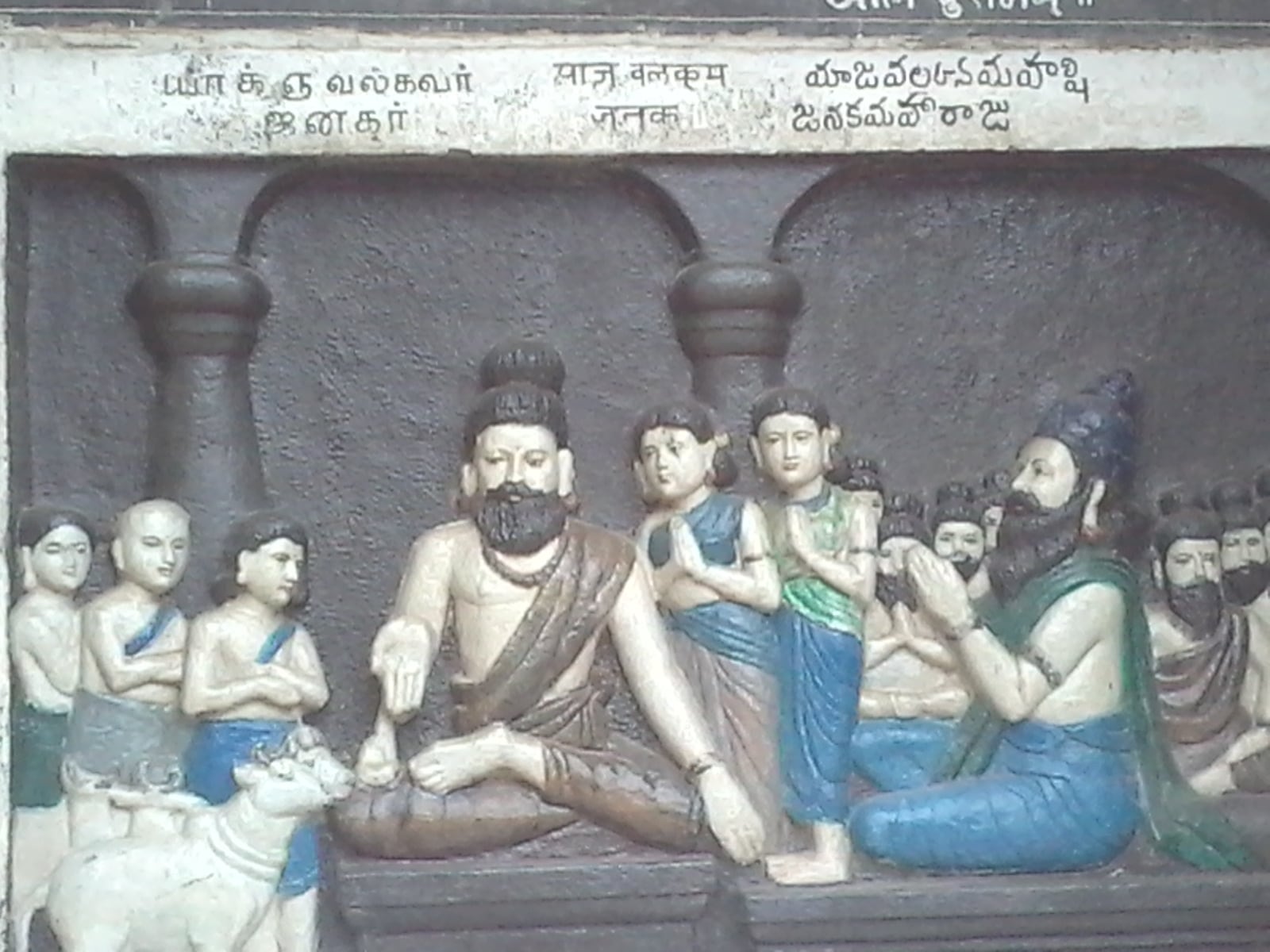
Yajnavalkya
يتّفقان في: ماذا يحدث بعد الموت؟ · كيف يُبلَغ التحرّر أو الخلاص؟ · هل نحتاج إلى معلّم؟
Meher Baba
يتّفقان في: ما المطلق؟ هل الله موجود؟ · ماذا يحدث بعد الموت؟ · هل العالم حقيقي؟
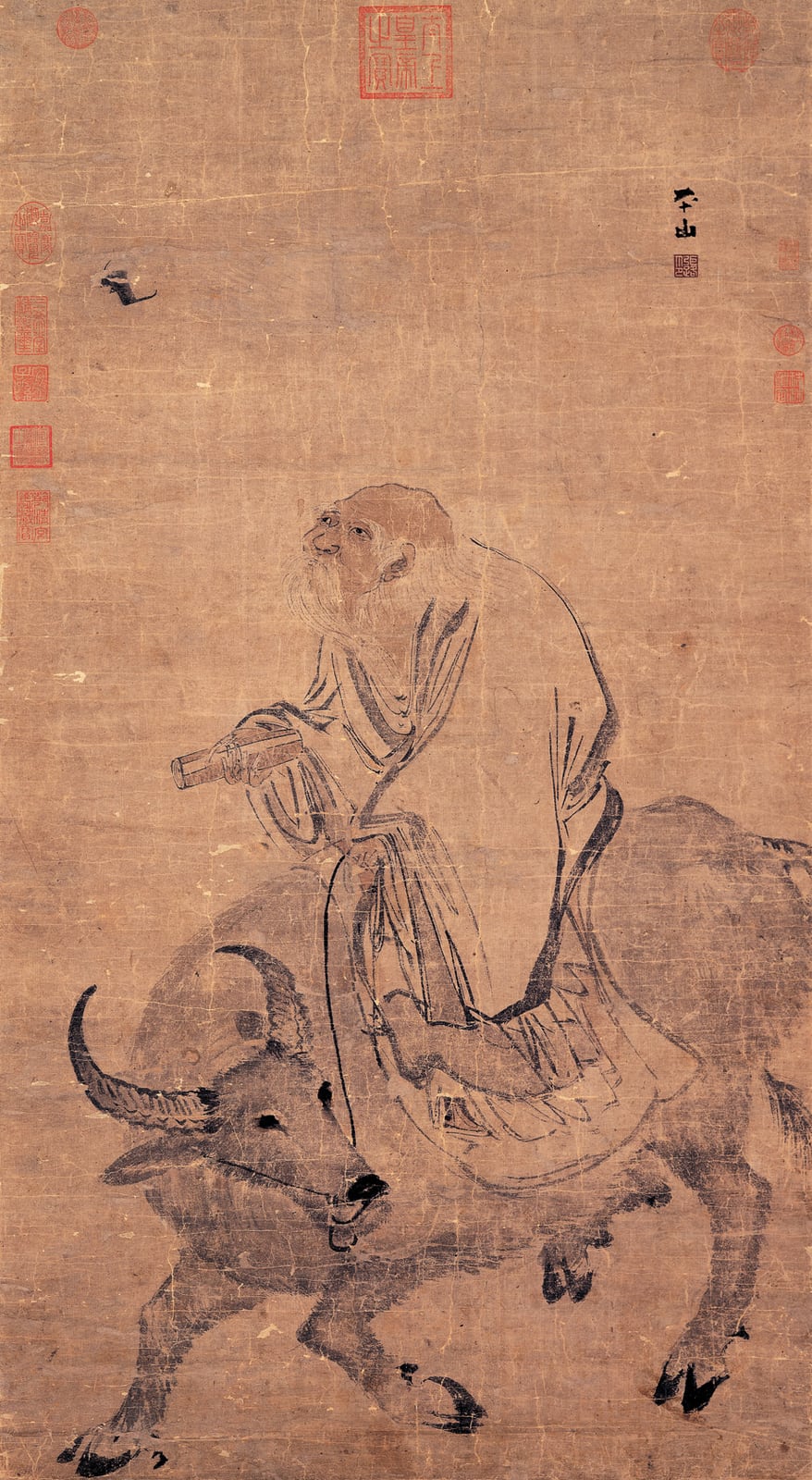
Laozi
يتّفقان في: لماذا نتألّم؟ · الانسحاب من العالم أم تغييره؟ · لماذا نتأمّل أو نصلّي؟

Parmenides
يتّفقان في: كيف يُبلَغ التحرّر أو الخلاص؟ · هل العالم حقيقي؟


حكايات وروايات
حكايات وروايات
مختلَف فيهc. 410 a. C.
The name Plato
أصل الرواية: Diogenes Laertius III 4, citing Alexander's Successions and Neanthes. Riginos (Platonica, 1976) and Nails (2002) treat it as a probable biographical invention.
تقليد شفهيc. 408 a. C.
The tragedies in the fire
أصل الرواية: Diogenes Laertius III 5; Aelian, Varia Historia II 30. The line parodies Iliad XVIII 392. Riginos classes it among the literary conversion anecdotes.
المصدر: Riginos, Alice Swift, Platonica: The Anecdotes Concerning the Life and Writings of Plato, Leiden, Brill (Columbia Studies in the Classical Tradition 3), 1976.
رواية من سِيَر القدّيسينc. 408 a. C.
The dream of the swan
أصل الرواية: Diogenes Laertius III 5; also Pausanias I 30.3, Apuleius (On Plato I 1) and Olympiodorus. Riginos (1976) places it in the Apollonian cycle of Plato's biography.
مختلَف فيهc. 387 a. C.
Sold as a slave in Aegina
أصل الرواية: Diogenes Laertius III 18–21; Diodorus Siculus XV 7; Plutarch, Dion 5. Absent from the Seventh Letter. Riginos and Nails discuss its plausibility.
شهادةs. IV a. C.
The lecture 'On the Good'
أصل الرواية: Aristoxenus, Elementa harmonica II 30–31, who transmits it as a story Aristotle often told. It is second-hand but close testimony: Aristoxenus was Aristotle's direct pupil.
لا يمكن التحقق منهs. IV a. C. (atribuido)
'Let no one ignorant of geometry enter'
أصل الرواية: First mentions in sixth-century AD Alexandrian Neoplatonic commentaries (John Philoponus, In De anima; Elias, In Categorias), and in a scholion on Aelius Aristides. Riginos (1976) considers it a late invention.
المصدر: Riginos, Alice Swift, Platonica: The Anecdotes Concerning the Life and Writings of Plato, Leiden, Brill (Columbia Studies in the Classical Tradition 3), 1976.
تقليد شفهيs. IV a. C.
Plato's man
أصل الرواية: Diogenes Laertius VI 40. The definition 'featherless biped' also appears in the pseudo-Platonic Definitions (415a). The anecdote circulated as a Cynic chreia, not as testimony.
التعاليم
التعاليم
المفاهيم التي ينتظم بها فكره، مشروحة في سياقها.
Theory of Forms (Ideas)teoria-de-las-formas
It answers Heraclitus (the flux of the sensible) and Parmenides (only what is can be known), and Socrates' search for definitions.
The Form of the Goodidea-del-bien
It crowns the central images of the Republic (sun, line, cave).
The allegory of the cavealegoria-de-la-caverna
It completes the images of the sun and the divided line; it is the most commented page of Western philosophy.
Recollection (anamnesis)anamnesis
It has Pythagorean roots (immortality and transmigration of the soul).
Immortality and parts of the soulinmortalidad-del-alma
It takes up Orphic and Pythagorean inheritances and subjects them to philosophical argument.
Eros and the ladder of beautyeros
Expressed as the teaching of a priestess, at a banquet, among speeches; the later 'Platonic love' greatly simplifies the doctrine.
The philosopher-ruler and justicefilosofo-rey
It arises from the experience of Socrates' condemnation by the democracy and of the tyranny of the Thirty; it has been read as utopia, as critique and, in the twentieth century (Popper), as the seed of totalitarianism.
Becoming like God (homoiosis theoi)homoiosis-theo
It is the bridge between Plato's philosophy and the spirituality of later Platonisms.
مقاطع الفيديو
مقاطع الفيديو
تسجيلات ومقابلات وأفلام وثائقية. تُشغَّل مقاطع الفيديو من YouTube؛ ولا تُستضاف هنا.
2. Socratic Citizenship: Plato's Apology
محاضرة· EN· 2006· 46 min
YaleCoursesالقناة الرسمية
3. Socratic Citizenship: Plato's Crito
محاضرة· EN· 2006· 47 min
YaleCoursesالقناة الرسمية
4. Philosophers and Kings: Plato's Republic, I-II
محاضرة· EN· 2006· 47 min
YaleCoursesالقناة الرسمية
5. Philosophers and Kings: Plato's Republic, III-IV
محاضرة· EN· 2006· 47 min
YaleCoursesالقناة الرسمية
6. Philosophers and Kings: Plato's Republic, V
محاضرة· EN· 2006· 45 min
YaleCoursesالقناة الرسمية
Great Minds - Part 1 - Plato's Republic I: Justice, Power, and Knowledge
محاضرة· EN· 46 min
Michael Sugrueالقناة الرسمية
Plato's Symposium: The Dialectic of Reason, Love, and Wisdom
محاضرة· EN· 49 min
Michael Sugrueالقناة الرسمية
Socrates & Plato's Philosophy - Myles Burnyeat & Bryan Magee (1987)
مقابلة· EN· 1987· 44 min
Philosophy Overdose
Plato and Aristotle: Crash Course History of Science #3
تحليل· EN· 2018· 12 min
CrashCourseالقناة الرسمية
PHILOSOPHY - The Good Life: Plato [HD]
تحليل· EN· 6 min
Wireless Philosophyالقناة الرسمية
Who did Plato (not) Love? Oxford Abridged Short Talks
محاضرة· EN· 12 min
University of Oxfordالقناة الرسمية
Mentira la verdad IV: Platón, Apología de Sócrates - Canal Encuentro
تحليل· ES· 27 min
Canal Encuentroالقناة الرسمية
01-03-2013. Timeo: El mito de Platón y la creación científica del mundo.
فيلم وثائقي· ES· 2013· 27 min
UNEDالقناة الرسمية
La alegoría de la caverna de Platón - Alex Gendler
تحليل· ES· 5 min
Sé Curioso — TED-Edالقناة الرسمية
La filosofía helenística (IV): El neoplatonismo · La March
محاضرة· ES· 59 min
Fundación Juan Marchالقناة الرسمية
المعرض
المعرض
صور بترخيص متحقَّق منه. كل منها تحتفظ بمؤلّفها ونسبتها.
المخطوطات
المخطوطات
شواهد مخطوطة ونصوص قديمة، مع جهة حفظها وشروط الاطّلاع عليها.
GRC · Greek minuscule · s. IV a. C.
Πλάτωνος διάλογοι (tetralogías I–VI)
- الشاهد المحفوظ
- Codex Clarkianus (sigla B), pergamino, año 895
- جهة الحفظ
- Bodleian Library, Oxford · MS. E. D. Clarke 39
- الرقمنة
- digital.bodleian.ox.ac.uk/…
GRC · Greek minuscule · s. IV a. C. (espurios, ss. IV–I a. C.)
Πλάτωνος διάλογοι (tetralogías VIII–IX y espurios)
- الشاهد المحفوظ
- Codex Parisinus graecus 1807 (sigla A), pergamino, s. IX
- جهة الحفظ
- Bibliothèque nationale de France, París · Grec 1807
- الرقمنة
- gallica.bnf.fr/…
GRC · Greek majuscule (bookhand) · s. IV a. C.
Πολιτεία (fragmentos)
- الشاهد المحفوظ
- P. Oxy. LII 3679, papiro, s. III d. C.
- جهة الحفظ
- Sackler Library / Egypt Exploration Society, Oxford · P. Oxy. 3679
- الرقمنة
- commons.wikimedia.org/wiki/File:POxy3679_Parts_P…
العلاقات
العلاقات
تأثيرات وتلمذة وتقارب في الأفكار. تُميَّز العلاقة الموثّقة عن التشابه المستخلَص بالتحليل.
تلميذ
He was his companion for about ten years, attended his trial and made him the protagonist of almost all his dialogues. Distinguishing the historical Socrates from the Platonic one is one of the classic problems of ancient philosophy.
علاقة موثّقة
معلّم
Aristotle studied and taught in the Academy for some twenty years (367–347 BC) and developed his own philosophy in critical discussion with the Platonic theory of Forms.
علاقة موثّقة
تأثّر بـ
Aristotle (Metaphysics I 6) states that Plato followed the Pythagoreans in many things; his friendship with Archytas of Tarentum, the role of mathematics and the doctrine of the immortal soul confirm it.
علاقة موثّقة
تأثّر بـ
According to Aristotle (Metaphysics I 6), Plato became familiar in his youth with Cratylus and the Heraclitean doctrines of flux, and concluded from them that there is no knowledge of sensible things.
علاقة موثّقة
تأثّر بـ
The distinction between unchanging being and becoming, and the requirement that what is known must be, come from Parmenides, to whom Plato devotes a dialogue and with whom he breaks in the Sophist ('parricide').
علاقة موثّقة
أثّر في
Plotinus (3rd century AD) regarded himself as a mere interpreter of Plato; Neoplatonism arose from his reading of the Parmenides, the Timaeus, the Republic and the Symposium.
علاقة موثّقة
أثّر في
In the Confessions (VII 9) and the City of God (VIII) Augustine acknowledges that the 'books of the Platonists' opened his way to the Christian God; through him Platonism passed into Latin theology.
علاقة موثّقة
تأثّر بـ
The theory of the four elements that the Timaeus reworks geometrically comes from Empedocles.
تشابه مستخلَص بالتحليل
اختلف مع
Diogenes Laertius (VI 40, 53–54) transmits several gibes by the Cynic against Plato, such as the plucked chicken presented as 'Plato's man'; they are anecdotes of late tradition.
علاقة موثّقة
أفكار قريبة من
The ascent of the soul towards a principle beyond being and conceptual knowledge has Platonic and Neoplatonic echoes in Rhineland mysticism.
تشابه مستخلَص بالتحليل
أثّر في
Simone Weil read Plato as a mystic and devoted studies to him in Intimations of Christianity among the Ancient Greeks.
تشابه مستخلَص بالتحليل
أفكار قريبة من
The distinction between unchanging reality and the changing world of appearances invites comparison with Advaita, though without historical contact.
تشابه مستخلَص بالتحليل
مرتبط من صفحات أخرى
- Aristotle · تلميذ
- Plotinus · تأثّر بـ
- Socrates · معلّم
- Heraclitus · أثّر في
- Marcus Aurelius · تأثّر بـ
- Simone Weil · تأثّر بـ
- Epicurus · اختلف مع
- Zeno of Citium · اختلف مع
- Nikolai Berdyaev · اختلف مع
- Empedocles · أثّر في
- Diogenes of Sinope · اختلف مع
- Epictetus · تأثّر بـ
- Parmenides · أثّر في
- Pavel Florensky · تأثّر بـ
- Pythagoras · أثّر في
- Vladimir Solovyov · تأثّر بـ
- Augustine of Hippo · تأثّر بـ
المصادر
المصادر
المراجع والفهارس التي رُوجعت لهذه الصفحة.
- Wikidata, «Plato» (Q859): identidad, fechas y nombre en griego (Πλάτων).
- Diógenes Laercio, Vidas y opiniones de los filósofos ilustres, libro III (Platón), s. III d. C. Trad. inglesa de R. D. Hicks, Loeb Classical Library, Harvard University Press, 1925 (texto en Wikisource).
- Platón (atribuida), Carta VII, 324a–352a, en Platonis Opera, ed. John Burnet, vol. V, Oxford Classical Texts, 1907; trad. española de Juan Zaragoza y Pilar Gómez Cardó en Platón, Diálogos VII, Madrid, Gredos (Biblioteca Clásica Gredos 162), 1992.
- Kraut, Richard, «Plato», Stanford Encyclopedia of Philosophy (primera versión 2004; revisión sustantiva 2022), ed. Edward N. Zalta.
- Cooper, John M. (ed.) y Hutchinson, D. S. (ed. asociado), Plato: Complete Works, Indianápolis, Hackett, 1997 (introducción del editor sobre el corpus, las tetralogías de Trasilo y la autenticidad de cada obra).
- Nails, Debra, The People of Plato: A Prosopography of Plato and Other Socratics, Indianápolis, Hackett, 2002 (entrada «Plato» y apéndices cronológicos).
- Riginos, Alice Swift, Platonica: The Anecdotes Concerning the Life and Writings of Plato, Leiden, Brill (Columbia Studies in the Classical Tradition 3), 1976.
- Guthrie, W. K. C., A History of Greek Philosophy, vol. IV: Plato, the Man and his Dialogues: Earlier Period (1975) y vol. V: The Later Plato and the Academy (1978), Cambridge University Press.
- Burnet, John (ed.), Platonis Opera, 5 vols., Oxford Classical Texts, Oxford, Clarendon Press, 1900–1907 (texto griego citado por la paginación de Stephanus; edición digital en Perseus).
- Open Library: obras y ediciones de Platón (búsqueda por autor, título e ISBN).
- Lledó Íñigo, Emilio, «Introducción general», en Platón, Diálogos I, Madrid, Gredos (Biblioteca Clásica Gredos 37), 1981; y plan de la serie de Diálogos I–IX de la Biblioteca Clásica Gredos (1981–1999).
- Jowett, Benjamin (trad.), The Dialogues of Plato, 3.ª ed., 5 vols., Oxford, Clarendon Press, 1892 (textos en Project Gutenberg).
- Azcárate, Patricio de (trad.), Obras completas de Platón, 11 vols., Madrid, Medina y Navarro, 1871–1872 (edición digital en el Proyecto Filosofía en español y en Wikisource).
- Burnyeat, Myles y Frede, Michael, The Pseudo-Platonic Seventh Letter, ed. Dominic Scott, Oxford University Press, 2015.
- Kahn, Charles H., Plato and the Socratic Dialogue: The Philosophical Use of a Literary Form, Cambridge University Press, 1996.
- Dorandi, Tiziano (ed.), Filodemo. Storia dei filosofi: Platone e l'Academia (PHerc. 1021 e 164), Nápoles, Bibliopolis, 1991.
- Bodleian Library, Oxford, MS. E. D. Clarke 39 (Codex Clarkianus, año 895): ficha y reproducción digital en Digital Bodleian.
- Aristóxeno, Elementa harmonica II 30–31 (testimonio de la lección «Sobre el Bien»), citado y comentado en Kraut, «Plato», SEP, y en Guthrie, HGP V.
- Bibliothèque nationale de France, Département des Manuscrits, Grec 1807 (Codex Parisinus graecus 1807, s. IX), en Gallica.
- Suzanne, Bernard, «Did Plato write “Only the dead have seen the end of war”?», Plato and his dialogues (FAQ), 2002; cf. Santayana, George, Soliloquies in England and Later Soliloquies, 1922, n.º 25 «Tipperary».
- Whitehead, Alfred North, Process and Reality: An Essay in Cosmology, Nueva York, Macmillan, 1929, parte II, cap. 1, sección 1 («a series of footnotes to Plato»).
- صاحب الحقوق
- Los textos griegos de Platón (s. IV a. C.) son de dominio público, como las traducciones antiguas (Jowett, 1892; Burges, 1854–1855; Azcárate, 1871–1872). Las traducciones, introducciones y notas modernas pertenecen a sus traductores y editoriales (Gredos/RBA, Alianza, Akal, Cátedra, Hackett, Harvard University Press, Penguin, Oxford University Press, Cambridge University Press, entre otras).
في انتظار التأكيد
ما لم تتمكّن هذه الصفحة من حسمه بعد. نفضّل أن نقول ذلك على أن نملأ الفراغ.
- Confirmar el índice exacto de Gredos, Diálogos VII (BCG 162, 1992): se ha asumido que contiene Alcibíades I y II, Hiparco, Amantes, Teages, Clitofonte, Minos, Epínomis, los apócrifos (Definiciones, Sobre la justicia, Sobre la virtud, Demódoco, Sísifo, Erixias, Axíoco) y las Cartas; no se ha visto el índice en un catálogo. Alción no se ha asignado a ese volumen.
- Traductores de cada diálogo en los volúmenes I–III, V y VI de Gredos: no consignados por no haberlos verificado en catálogo (solo República, Eggers Lan; vol. VII, Zaragoza y Gómez Cardó).
- Ediciones con ISBN en español e inglés de varios dudosos y espurios fuera de los volúmenes generales (Hiparco, Teages, Minos, Demódoco, Sísifo, Alción): solo figuran en Gredos VII y Hackett Complete Works. Localizar el volumen Loeb XII (Charmides, Alcibiades I–II, Hipparchus, Lovers, Theages, Minos, Epinomis, LCL 201) y el X (Laws I–VI, LCL 187), cuyos ISBN no aparecieron en Open Library.
- Alción y Demódoco/Sísifo no tienen texto castellano de dominio público localizado; Alción tampoco en inglés (está en el corpus de Luciano: buscar traducción antigua de dominio público).
- Ediciones en francés (Belles Lettres/Budé, GF Flammarion), alemán (Schleiermacher, de dominio público) e italiano: no registradas en esta versión.
- Fechas de composición: se dan años aproximados de la cronología convencional (Kahn, Kraut); no son datos documentados. Los dudosos y espurios quedan sin año salvo Epínomis y las Cartas IV, VII y VIII.
- Contenido de las páginas «Primer Alcibíades», «Ion», «Lisis» y demás de Wikisource en español: comprobado que existen; la de Protágoras figura «en desarrollo».
- Traductor «Mr. Knight» de Alcibíades II y Erixias en la edición de Jowett: identificar nombre completo y fecha de muerte (Jowett solo le llama «my friend and secretary, Mr. Knight»).
- Imagen del Codex Clarkianus: la reproducción procede de la Bodleiana vía Commons; enlazar la ficha exacta de Digital Bodleian del MS. E. D. Clarke 39 en manuscripts[].digitization_url (ahora apunta a la portada del portal). Ídem Gallica para el Parisinus graecus 1807.
- Vídeos: año exacto de los de Michael Sugrue, Wireless Philosophy, Oxford, Canal Encuentro, TED-Ed y Fundación Juan March (no consignado). Solo tres vídeos en español de canales institucionales; buscar más (RTVE, Fundación Juan March, universidades).
- Sin programas de afiliación verificados para ninguna de las editoriales registradas.
بُحث بتاريخ 2026-10-25