الفلسفة ما قبل السقراطية
Empedocles
Ἐμπεδοκλῆς ὁ Ἀκραγαντῖνος
نحو 494 ق.م – نحو 434 ق.مشخصية موثّقة تاريخيًا
فيلسوف وطبيب وسياسي من أكراغاس في صقلية (نحو 494–434 ق.م)، صاحب قصيدتين على البحر السداسي، «في الطبيعة» و«التطهيرات»، بقي منهما نحو خمسمئة بيت وبردية ستراسبورغ. علّم أن كل شيء مركّب من أصول أربعة أزلية، تمزجها المحبة وتفرّقها الغلبة، وأن النفس، المنفية بسبب الدم المسفوك، تتناسخ في كل صور الأحياء. وجعلت منه أسطورة قفزه في بركان إتنا شخصية أدبية.
- مؤلَّفًا
- 11مؤلَّفًا
- طبعة
- 25طبعة
- اقتباسًا
- 14اقتباسًا
- مقطع فيديو
- 10مقطع فيديو
- صورة
- 7صورة
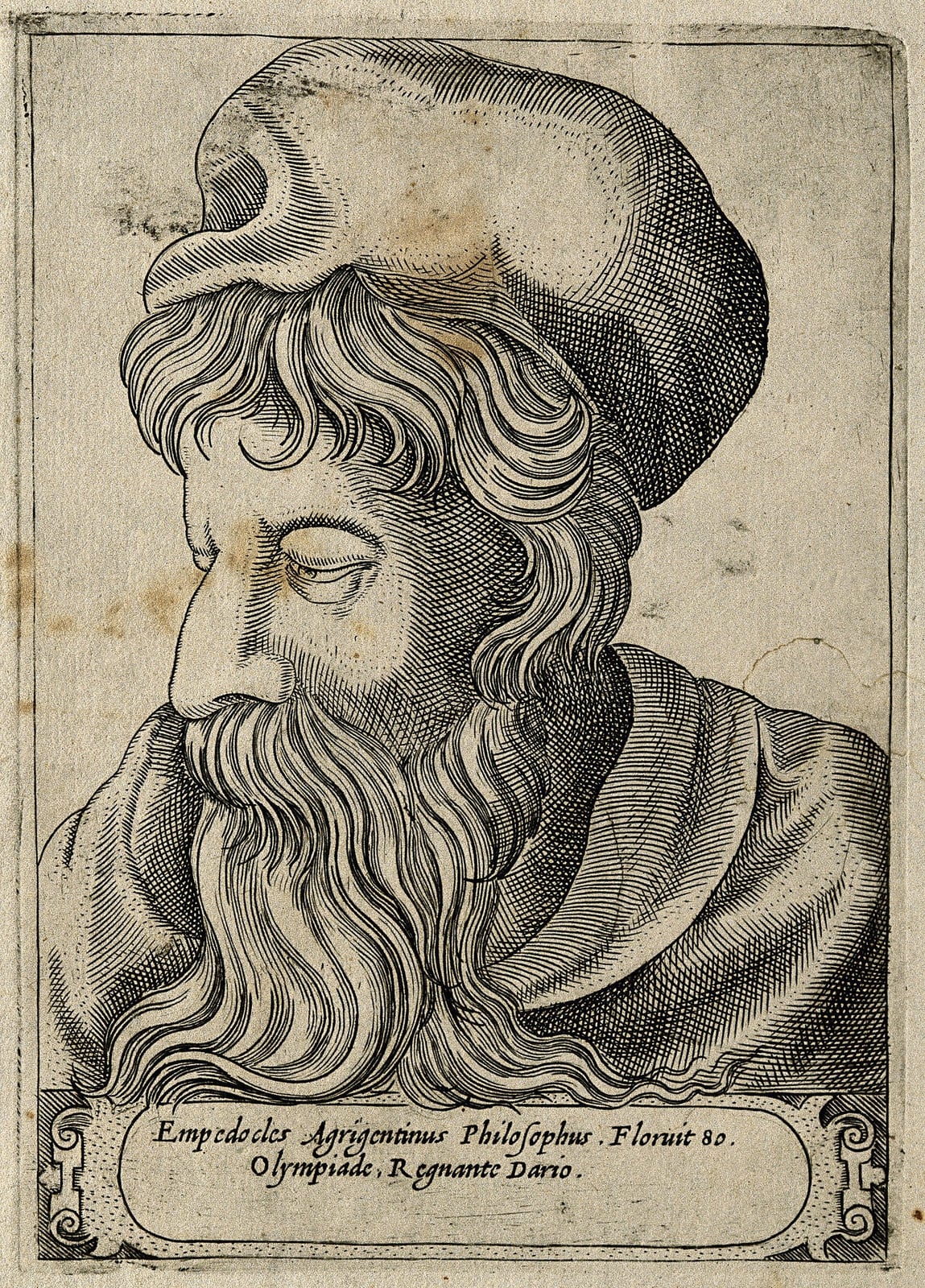
Empédocles, grabado de 1580 · CC BY 4.0
بكلماته
«For straitened are the powers that are spread over their bodily parts.»DK 31 B2.1, en Sexto Empírico, Contra los matemáticos VII 123. Griego: texto de Fairbanks (1898), basado en la edición de Stein; numeración Diels-Kranz. Inglés: John Burnet, Early Greek Philosophy (1908). Español: traducción propia.

فكرته المحورية
The four roots (rhizomata): Empedocles accepts with Parmenides that nothing comes from what is not or is annihilated, but he does not give up explaining change.
السيرة
4 دقيقة قراءة
ترجمة مُعانة من الأصل الإسباني، بانتظار مراجعة مترجم من أهل اللغة.
الفيلسوف الذي قال إنه إله
لم يبقَ من أيّ فيلسوف سابق على سقراط من الأبيات ما بقي من أنبادقليس: قرابة خمسمئة بيت، أضافت إليها بردية ستراسبورغ سنة 1999 بضع عشرات أخرى. وقد كتب، كبرمانيدس، على البحر السداسي، وكان في آن واحد عالمًا بالطبيعة وطبيبًا وخطيبًا وسياسيًا ديمقراطيًا ونبيًّا للطهارة وصانع عجائب. وظلت نظريته في «الأصول» الأربعة — النار والهواء والماء والتراب — التي تحركها المحبة والغلبة، مهيمنةً على العلم الأوروبي ألفي عام؛ أما إعلانه أنه «إله خالد، لا فانٍ بعد اليوم»، وأسطورة قفزه في بركان إتنا، فقد جعلاه من أكثر شخصيات العصور القديمة شبهًا بأبطال الروايات. وسمّاه أرسطو مخترع الخطابة، وعاب عليه في الوقت نفسه أنه ليس له من الشاعر إلا الوزن.
أكراغاس
وُلد في أكراغاس، أغريجنتو اليوم، أغنى مدن صقلية اليونانية، التي لا تزال معابدها الدورية تشرف على الوادي. كان أبوه يُدعى ميتون، وفاز جدّه، واسمه أنبادقليس أيضًا، بسباق الخيل في أولمبيا سنة 496 ق.م، بحسب أرسطو فيما ينقله عنه إراتوستينس. وجعل أبولودوروس ذروته في 444–443 ق.م، سنة تأسيس ثوريوي التي زارها بحسب غلاوكوس الريجيومي؛ وكان أرسطو يقول إنه مات في الستين. وقد لخّص برنت ما يمكن معرفته: كان طفلًا في عهد الطاغية ثيرون، ونشط في أكراغاس بعد سنة 472، حين سقط ابن ثيرون ثراسيدايوس واستعادت المدينة حكمًا حرًّا، ومات بعد 444. ومن هنا التواريخ المعتادة، نحو 494–434 ق.م.
الديمقراطي
كان المؤرخ الصقلي تيمايوس، الذي كتب بعده بقرن ونصف جامعًا الروايات المحلية، يروي أن مسيرته السياسية بدأت في مأدبة: إذ تصرّف فيها أحد الحكّام تصرّف طاغية ناشئ، فجرّه أنبادقليس في اليوم التالي إلى المحكمة واستصدر عليه حكمًا بالإعدام. وعارض كذلك أن يمنح المجلسُ الطبيبَ أكرون أرضًا لقبر أبيه، وحلّ مجلس الألف، الذي لعله كان جمعية أوليغارشية. وأضاف أرسطو أنه رفض المُلك حين عُرض عليه. وبحسب تيمايوس، منع أحفادُ أعدائه عودتَه فيما بعد، فمات أنبادقليس منفيًّا في البيلوبونيز.
طبيب وخطيب وساحر
وضعه جالينوس، مع فيليستيون وبوسانياس، في أصل المدرسة الطبية الإيطالية المنافسة لمدرستي قوس وكنيدوس. وكان تلميذه غورجياس الليونتيني، السفسطائي الكبير، يروي بحسب ساتيروس أنه رآه يمارس السحر؛ وحكى هيراقليدس البنطي كيف أبقى امرأة على قيد الحياة ثلاثين يومًا بلا نَفَس ولا نبض. وسمّاه تيمايوس «حابس الرياح» لأنه علّق جلود الحمير ليصدّ الرياح الإتيسية، ونسب إليه آخرون تجفيف مستنقعات سيلينونتي. ولاحظ برنت أن جلّ هذه العجائب مستنبطة من أبياته هو، إذ يعد فيها تلميذه بوسانياس بأدوية للشيخوخة، وبسلطان على الرياح والمطر، بل بالقدرة على إعادة ميت من هاديس.
قصيدتان
ينسب ديوجانس اللائرتي إلى قصيدتيه الكبريين، «في الطبيعة» و«التطهيرات»، نحو خمسة آلاف بيت. الأولى، المهداة إلى بوسانياس، تعرض علمًا للطبيعة: لا شيء يُولد ولا شيء يموت، وإنما تمتزج وتنفصل أصول أربعة أزلية يمنحها أسماء آلهة — زيوس وهيرا وأيدونيوس ونستيس — بتأثير متناوب للمحبة التي تجمع والغلبة التي تفرّق. وهكذا يتأرجح الكون بين الوحدة التامة للكُرة (السفايروس) والتشتت الكامل، وفي المراحل الوسطى تنشأ الكائنات الحية، أولًا أعضاءً متفرقة — رؤوسًا بلا أعناق وأذرعًا بلا أكتاف — تتألف اتفاقًا. أما القصيدة الثانية، الموجهة إلى مواطنيه في أكراغاس، فتتحدث عن دايمون نُفي ثلاثين ألف فصل لأنه سفك الدم، فهو يتناسخ في كل الصور الفانية؛ ومن هنا تحريم أكل اللحم وذبح الحيوانات قرابين.
وظل النقد الحديث قرنًا كاملًا يتجادل: هل القصيدتان متوافقتان — عالم طبيعة آلي ونبي ديني — أم أنهما في الحقيقة قصيدة واحدة؟ وذهب براد إنوود وآخرون إلى حدّ القول إنهما كانتا عملًا واحدًا؛ وأكدت كاثرين أوسبورن الاستمرارية بين الطبيعيات والدين.
بردية ستراسبورغ
في سنة 1904 اقتنت المكتبة الوطنية والجامعية في ستراسبورغ من مصر قطعًا من البردي مصدرها بانوبوليس (أخميم)، ظلت بلا تعرّف تسعين عامًا. وفي سنة 1994 تعرّف فيها عالم البرديات ألان مارتان على أبيات لأنبادقليس، ونشرها سنة 1999 مع أوليفر بريمافيزي. وهي منسوخة في أواخر القرن الأول للميلاد، وتضم بقايا نحو أربعة وسبعين بيتًا، بعضها لم يكن معروفًا، من الكتاب الأول في الطبيعة، مع علامة تشير إلى البيت الثلاثمئة. وقد كشف الاكتشاف أن الدورة الكونية كانت في ذلك الكتاب تجاور مراثيَ على «اليوم القاسي» الذي أُكل فيه اللحم، أي أن الطبيعيات وعقيدة الإثم كانتا أشد تشابكًا مما كان يُظن.
إتنا وصنوف الموت الأخرى
يجمع ديوجانس اللائرتي روايات متنافرة عن نهايته. فكان هيراقليدس البنطي يروي أنه اختفى ليلًا بعد قربان؛ وسمع خادمٌ صوتًا يناديه ورأى نورًا في السماء، فأمر بوسانياس بأن يُكرَّم كإله. وأضاف هيبوبوتوس أنه ألقى بنفسه في فوهة إتنا ليظنه الناس خالدًا، لكن البركان لفظ أحد صندليه البرونزيين. وأنكر تيمايوس ذلك: فقد رحل أنبادقليس إلى البيلوبونيز ولم يعد قط. وقال نيانثيس إنه مات إثر سقوطه من عربته، وقال آخرون إنه شنق نفسه. وثبّت هوراس للأجيال اللاحقة رواية إتنا. وقد بيّنت آفا تشيتوود أن هذه الميتات، كما في حالة هرقليطس، صُنعت من قصائده: فمن أعلن نفسه إلهًا خالدًا وجعل النار أصلًا من أصول العالم كان لا بد أن يموت مؤلَّهًا أو تلتهمه النار.
الإرث
تبنّى أرسطو أسطقساته الأربعة، وأضاف إليها الأثير، ومعها طبّ الأخلاط الأربعة؛ وألمح أفلاطون إلى «ربّات الفن الصقليات»، وأثنى عليه لوكريتيوس بوصفه أعظم أبناء صقلية. وفي العصر الحديث كتب هولدرلين، من غير أن يتمّها، مأساة «موت أنبادقليس» (1797–1800)؛ وكتب ماثيو أرنولد القصيدة الدرامية «أنبادقليس على إتنا» (1852)؛ ورأى فرويد في المحبة والغلبة سابقةً لتقابله بين إيروس ودافع الموت. ولا يزال أوضح مثال على أن الفلسفة اليونانية، في نشأتها، لم تكن تفصل بين العلم والشعر والخلاص.
المصادر: Diógenes Laercio. Vidas y opiniones de los filósofos ilustres VIII 51–77 (Empédocles), s. III d. C. Trad. inglesa de C. D. Yonge, Bohn, Londres, 1853 (Project Gutenberg n.º 57342); trad. inglesa de R. D. Hicks, Loeb, 1925 (Wikisource). · Diels, Hermann y Kranz, Walther. Die Fragmente der Vorsokratiker, 6.ª ed. Weidmann, Berlín, 1951–1952, cap. 31 (Empedokles), A (testimonios) y B 1–154. · Kirk, G. S., Raven, J. E. y Schofield, M. The Presocratic Philosophers, 2.ª ed. Cambridge University Press, 1983, cap. X (Empedocles of Acragas). Trad. esp. de Jesús García Fernández, Gredos, 1987. · Burnet, John. Early Greek Philosophy, 2.ª ed. A. and C. Black, Londres, 1908, cap. V (Empedokles of Akragas), §§ 98–105 y traducción de los fragmentos (Project Gutenberg n.º 67097). · Martin, Alain y Primavesi, Oliver. L'Empédocle de Strasbourg (P. Strasb. gr. Inv. 1665–1666): introduction, édition et commentaire. Walter de Gruyter / Bibliothèque Nationale et Universitaire de Strasbourg, Berlín, Nueva York y Estrasburgo, 1999.
الخط الزمني
الحياة عامًا بعد عام
كل نقطة حدث موثّق. انقر لتقرأه مع مصدره ودرجة اليقين فيه.
496 ق.مOlimpia
His grandfather's Olympic victory
His grandfather Empedocles wins the horse race at the 71st Olympiad (496 BCE), according to Eratosthenes citing Aristotle (Diogenes Laertius VIII 51). Years BCE are expressed as negative numbers.
مرجَّحDiógenes Laercio. Vidas y opiniones de los filósofos ilustres VIII 51–77 (Empédocles), s. III d. C. Trad. inglesa de C. D. Yonge, Bohn, Londres, 1853 (Project Gutenberg n.º 57342); trad. inglesa de R. D. Hicks, Loeb, 1925 (Wikisource).
بعد وفاته
- 427 ق.مGorgias in Athens
- نحو 90 ق.مCopy of the Strasbourg papyrus
- نحو 55 ق.مLucretius praises him
- نحو 1798Hölderlin's Death of Empedocles
- 1852Matthew Arnold's Empedocles on Etna
- 1994Identification of the papyrus
- 1999L'Empédocle de Strasbourg
496 ق.م
His grandfather's Olympic victory
His grandfather Empedocles wins the horse race at the 71st Olympiad (496 BCE), according to Eratosthenes citing Aristotle (Diogenes Laertius VIII 51). Years BCE are expressed as negative numbers.
مرجَّح
نحو 494 ق.م · أقل من عام
Birth
Born at Acragas, son of Meton, of a wealthy and distinguished family. The date is inferred from his death at sixty (Aristotle) and his activity after 472; Wikidata records 494, 492 and 490.
مرجَّح
نحو 471 ق.م · 23 عامًا
Fall of Thrasydaeus and free government
After Theron's death (472 BCE), his son Thrasydaeus is defeated by Hieron of Syracuse and expelled; Acragas recovers a free government in which Empedocles will be a democratic leader.
موثّق
نحو 460 ق.م
Dissolution of the assembly of the Thousand
According to Timaeus (in Diogenes Laertius VIII 64–66), he prosecutes two magistrates with tyrannical airs, opposes Acron's funerary privilege and dissolves the assembly of the Thousand. He refuses the kingship offered to him (Aristotle). Dates unknown.
تقليد
نحو 450 ق.م
Composition of the poems
He composes On Nature, dedicated to Pausanias, and the Purifications, addressed to the people of Acragas. The date and order of composition are conjectural.
مختلَف فيه
444 ق.م
Visit to Thurii
Glaucus of Rhegium relates that he came to Thurii shortly after its foundation (444–443 BCE); Apollodorus fixed his prime in that year.
مرجَّح
نحو 440 ق.م
Exile
According to Timaeus, the descendants of his enemies oppose his return to Acragas and he withdraws to the Peloponnese. Date unknown.
تقليد
نحو 434 ق.م · 60 عامًا
Death
Dies at about sixty (Aristotle in Diogenes Laertius VIII 52 and 74). The versions of the manner and place—vanishing after a sacrifice, leaping into Etna, falling from his chariot, dying in the Peloponnese—are contradictory.
مختلَف فيه
427 ق.م
Gorgias in Athens
His pupil Gorgias of Leontini comes to Athens as ambassador and dazzles with an artistic prose that, according to Diels, owed much to Empedocles' style.
موثّق
نحو 90 ق.م
Copy of the Strasbourg papyrus
A scribe copies the first book of Empedocles' physics on a roll; its remains, reused in a funerary ornament, are the only direct witness to the poem.
موثّق
نحو 55 ق.م
Lucretius praises him
In De rerum natura (I 716–733) Lucretius celebrates Empedocles as the most admirable man Sicily produced, though he criticises his theory of elements.
موثّق
نحو 1798
Hölderlin's Death of Empedocles
Friedrich Hölderlin writes three unfinished versions of the tragedy Der Tod des Empedokles (1797–1800).
موثّق
1852
Matthew Arnold's Empedocles on Etna
Matthew Arnold publishes the dramatic poem Empedocles on Etna, and Other Poems.
موثّق
1994
Identification of the papyrus
Alain Martin identifies as lines of Empedocles the fragments P. Strasb. gr. Inv. 1665–1666, acquired in 1904.
موثّق
1999
L'Empédocle de Strasbourg
Alain Martin and Oliver Primavesi publish the edition of the papyrus, adding some seventy-four lines, partly new, to the corpus.
موثّق
المؤلَّفات
المؤلَّفات الأساسية
المؤلَّفات التي لا يُفهم إرثه من دونها.
مؤلَّف مكتوب · نحو 450 ق.م
On Nature
Περὶ φύσεως (Φυσικά)
A didactic poem in hexameters setting out Empedocles' physics. Nothing is born or perishes: four eternal roots—Zeus, Hera, Aidoneus and Nestis, that is, fire, air or earth, and water depending on the interpretation—are only mixed and separated under Love, which unites, and Strife, which separates. The cosmos alternates between the unity of the Sphere and dispersion, and in the intermediate phases living beings arise, first as loose limbs combining at random. It includes a theory of perception through effluences and pores, the comparison of breathing with the clepsydra and a physiology of the blood as the seat of thought.
12 طبعة · amazon.com

مؤلَّف مكتوب · نحو 445 ق.م
Purifications
Καθαρμοί
A poem addressed to the "friends who dwell in the great city by yellow Acragas", to whom Empedocles presents himself as "an immortal god, no longer mortal", followed by crowds asking for oracles and cures. It sets out the oracle of Necessity: the daimon who stains his hands with blood is banished for thirty thousand seasons and reborn in every mortal form; the poet himself has been boy, girl, bush, bird and fish. Hence the condemnation of animal sacrifice and meat-eating—the father who kills his transformed son without recognising him—and the evocation of a golden age under Cypris when no altar was stained with bulls' blood. Favorinus relates that the rhapsode Cleomenes recited it at Olympia.
9 طبعات · amazon.com

مخطوطة · نحو 90
Strasbourg papyrus (fragments of On Nature, book I)
P. Strasb. gr. Inv. 1665–1666
Remains of a papyrus roll from Panopolis (Akhmim, Egypt), acquired in 1904 by the Strasbourg library and reused in antiquity, according to its editors, for a funerary ornament. Its fragments—52, according to the editors—fall into several ensembles; the main one (a) contains lines 233–300 of the first book, identified by a stichometric mark (the letter gamma, 300), and connects with fragment B17. Besides new details of the cosmic cycle and zoogony, it includes first-person lines on the "pitiless day" on which the crime of eating flesh was committed, forcing a rethinking of the separation between the two poems.
4 طبعات · amazon.com
جميع مؤلَّفاته (11)
Empedocles
The Crossing of Xerxes (lost)
The Conscious LibraryThe Crossing of Xerxes (lost)
Empedocles
Proem to Apollo (lost)
The Conscious LibraryProem to Apollo (lost)
Empedocles
Tragedies (disputed attribution)
The Conscious LibraryTragedies (disputed attribution)
Empedocles
Political writings (lost)
The Conscious LibraryPolitical writings (lost)
Empedocles
Medical Discourse (lost)
The Conscious LibraryMedical Discourse (lost)
Empedocles
Epigrams (doubtful attribution)
The Conscious LibraryEpigrams (doubtful attribution)
Empedocles
The Sphere (spurious)
The Conscious LibraryThe Sphere (spurious)
Empedocles
Book of the Five Substances and other Arabic texts (spurious)
The Conscious LibraryBook of the Five Substances and other Arabic texts (spurious)
الأقوال
أقوال محدَّدة الموضع في مؤلَّف بعينه. كل منها يحمل مصدره ودرجة الثقة به.
For straitened are the powers that are spread over their bodily parts.στεινωποὶ μὲν γὰρ παλάμαι κατὰ γυῖα κέχυνται.
متحقَّق منهDK 31 B2.1, en Sexto Empírico, Contra los matemáticos VII 123. Griego: texto de Fairbanks (1898), basado en la edición de Stein; numeración Diels-Kranz. Inglés: John Burnet, Early Greek Philosophy (1908). Español: traducción propia.
أقوال منحولة أو مختلَف في نسبتها (3)
«Everything is composed of four elements: earth, water, air and fire.»
The doctrine is his, but not the vocabulary: Empedocles speaks of "roots" (rhizomata) and names them after gods. The term "elements" (stoicheia) comes from Plato and Aristotle.
«The nature of God is a circle whose centre is everywhere and whose circumference is nowhere.»
Often ascribed to Empedocles, it comes from the Book of the Twenty-Four Philosophers (12th century), proposition II, and was spread by Alan of Lille, Meister Eckhart, Nicholas of Cusa and Pascal.
«The people of Acragas indulge in pleasure as if they were to die tomorrow, and build their houses as if they were to live for ever.»
Diogenes Laertius (VIII 63) puts it in Empedocles' mouth, but Aelian (Varia Historia XII 29) ascribes an almost identical saying to Plato. It is a wandering apophthegm with no secure source.
الكلمات الأخيرة
لا توجد سجلات يمكن التحقق منها لكلماته الأخيرة.
No record of his last words survives. The versions of his death collected by Diogenes Laertius (VIII 67–75) are contradictory and legendary; in Heraclides of Pontus' version the only thing heard is a voice calling him in the night.
المصدر: Diógenes Laercio. Vidas y opiniones de los filósofos ilustres VIII 51–77 (Empédocles), s. III d. C. Trad. inglesa de C. D. Yonge, Bohn, Londres, 1853 (Project Gutenberg n.º 57342); trad. inglesa de R. D. Hicks, Loeb, 1925 (Wikisource).
اسأل
بماذا يجيب أثره
اثنا عشر سؤالًا كبيرًا من أسئلة الإنسانية، وما تتيح نصوصه الإجابة به عنها، مع المراجع. ولا نقوّله ما لم يقل أبدًا.
ما المطلق؟ هل الله موجود؟
A holy and ineffable mind, with neither head nor human limbs
مطلق غير شخصييقوله صراحةً
Empedocles fills his physics with divine names: the four roots are called Zeus, Hera, Aidoneus and Nestis, and the two forces that join and separate them are Love and Strife. When Love prevails, everything fuses in the Sphere, round and rejoicing in its solitude, which fragments B27–29 treat as a god. But in fragment B134 he explicitly rejects the anthropomorphic image: the divine has no human head upon its limbs, no arms or feet, but is only a holy and ineffable mind that darts through the whole cosmos with swift thoughts. The ultimate is thus divine and intelligent, yet faceless: a principle that thinks the world, not a lord who governs it from outside.
قارن هذا السؤال مع معلّمين آخرينمن أنا؟ هل توجد ذات حقيقية؟
A daimon exiled from the gods, wandering through many forms
روح في تطوّريقوله صراحةً
In the Purifications Empedocles speaks of himself as one of the long-lived daimons who, for having stained their hands with blood and trusted in Strife, have been exiled far from the blessed for thrice ten thousand seasons, being born in all kinds of mortal forms. He claims to have been already a boy and a girl, a bush, a bird and a mute fish of the sea, and describes the weeping of the newcomer to an unfamiliar place. The end of the journey is return: the best become seers, poets, physicians and leaders, and from there they spring up as gods, table companions of the immortals. The true self is that daimon passing through lives until it recovers its divine condition.
قارن هذا السؤال مع معلّمين آخرينلماذا نتألّم؟
We suffer because Strife exiled us from the blessed
الانفصال عن اللهيقوله صراحةً
In the Purifications suffering has a precise origin. Empedocles counts himself among the daimons who, for having shed blood and trusted in raging Strife, were cast far from the gods and condemned to be born in mortal forms. The world they reach is a joyless place of murder, wrath and disease, and he himself says he wept on seeing the unfamiliar place. The slaughter continues: humans sacrifice and eat animals without seeing that they devour one another, and a father slaughters among prayers his son changed in form. Pain is exile, and its causes are bloodshed and the dominion of Strife over Love.
قارن هذا السؤال مع معلّمين آخرينماذا يحدث بعد الموت؟
There is no birth or death, only mixture; the daimon transmigrates until it returns
الولادة من جديد وفق الكارمايقوله صراحةً
Empedocles answers in two registers. In On Nature he denies that there is properly birth or death of mortal things: there is only mixture and exchange of what is mixed, and “birth” is a name humans give them. In the Purifications the exiled daimon passes for thrice ten thousand seasons through every kind of form — boy and girl, bush, bird and fish — and that is why eating meat is killing a kinsman. At the end of the cycle, the purified are born as seers, poets, physicians and leaders, and from there rise as gods, free of human pains and table companions of the immortals. Death is a step in the journey home.
قارن هذا السؤال مع معلّمين آخرينكيف يُبلَغ التحرّر أو الخلاص؟
Abstain from blood, purify oneself and reach divine thoughts
بالممارسة المنضبطةيقوله صراحةً
The poem tradition calls the Purifications offers a way for the exiled daimon to return among the gods. Its core is an ethic of non-violence: to stop shedding blood, because the sacrificed animal may be a kinsman changed in form, and to abstain from certain foods, including beans and laurel. Knowledge is added to that discipline: blessed is he who has gained the wealth of divine thoughts, and wretched he who holds a dark opinion about the gods. The purified ascend through the highest callings — seers, poets, physicians, leaders — until they spring up as gods. It is a way of practice and sustained purification.
قارن هذا السؤال مع معلّمين آخرينهل نحتاج إلى معلّم؟
A sage who speaks as a god passes a guarded knowledge to his disciple
لا غنى عنهيُستنتج من تعاليمه
On Nature is addressed to a disciple, Pausanias, and Empedocles asks him to keep what he hears in his silent heart. He promises him knowledge of remedies against ills and old age, of stilling the winds and bringing a dead man back from Hades: a knowledge only he can impart. In the Purifications he presents himself to the citizens of Acragas as an immortal god, followed by crowds asking for oracles and cures. At the same time he acknowledges the limits of mortal knowledge and entreats the Muse. The figure that emerges is that of an inspired sage whose word is the necessary vehicle of truth, though the disciple must test it with all his senses.
قارن هذا السؤال مع معلّمين آخرينهل العالم حقيقي؟
Four roots that Love unites and Strife divides, in an endless cycle
نظام طبيعي في تحوّليقوله صراحةً
Empedocles accepts from Parmenides that nothing comes from nothing nor is annihilated, but he saves the reality of the sensible world: what there is are four eternal roots — fire, air, earth and water — which mix and separate. Two forces move them: Love, which unites, and Strife, which divides. The account is double: sometimes everything comes together into one through Love, sometimes each thing is borne apart by the hatred of Strife, and this alternating change never ceases. Living beings, including the strange creatures of a primitive zoogony, arise from these combinations. The world is real and is a cyclical process of union and separation.
قارن هذا السؤال مع معلّمين آخرينما الحب؟
Love gathers what is separated until it fuses all in the Sphere
الشوق والوصاليقوله صراحةً
In Empedocles Love (Philotes, also called Aphrodite or Cypris) is one of the two forces moving the cosmos. It unites the separated roots and, when it rules completely, everything gathers in the Sphere, a round god rejoicing in its solitude, in which there is no strife. Humans know that force in their own limbs, he says, when they think loving thoughts and perform works of concord, but they do not see that it is the same one that whirls in the universe. In the Purifications the reign of Cypris is the golden age when no blood was shed. Love is thus the cosmic force returning what is scattered to the original unity, the exiled soul included.
قارن هذا السؤال مع معلّمين آخرينهل نحن أحرار أم أن كل شيء مقدَّر؟
A decree of Necessity punishes shed blood, but purification is possible
الكارما والاختياريقوله صراحةً
Empedocles opens fragment B115 with an oracle of Necessity, an ancient decree of the gods, eternal and sealed with broad oaths: when one of the daimons stains his limbs with blood or swears falsely following Strife, he wanders far from the blessed for thrice ten thousand seasons. There is thus a cosmic law binding faults to their consequences over many lives. But that law does not cancel responsibility: Empedocles urges his hearers to leave off slaughter and abstain from the impure, and states that the purified ascend until they become gods. The past conditions; the present can change the course.
قارن هذا السؤال مع معلّمين آخرينلماذا نتأمّل أو نصلّي؟
A bloodless worship and a pure mind contemplating what it has learned
الطقس وتهذيب الذاتيقوله صراحةً
The Purifications propose a reform of worship. In the golden age, when Cypris reigned, humans honoured the goddess with painted images, perfumes, myrrh and incense, and the altar was not drenched with the blood of bulls, which was the greatest abomination. The religious practice Empedocles defends consists in abstaining from slaughter and certain foods, purifying oneself and leading a pure life. In On Nature he adds a form of contemplation: if you fix these teachings in your firm mind and contemplate them with goodwill and pure meditation, they will stay with you all your life and grow. Purified rite and attention to doctrine form a single practice.
قارن هذا السؤال مع معلّمين آخرينهل يستطيع العقل أن يعرف الحقيقة القصوى؟
The means of knowing are narrow: the Muse helps the mortal mind
الإيمان والعقل يتعاونانيقوله صراحةً
Empedocles opens On Nature with a warning about human limits: narrow are the means of knowing spread through the limbs, many the miseries that blunt thought, and humans, having seen a small part of life, think they have found the whole. He asks the gods to turn madness from his tongue and the Muse to grant him what is lawful for ephemeral beings to hear. And he advises the disciple not to trust one sense more than another, but to consider each thing by every way it becomes evident. Observation, reasoning and divine inspiration cooperate in a knowledge aware of its limits, though it promises divine thoughts.
قارن هذا السؤال مع معلّمين آخرينالانسحاب من العالم أم تغييره؟
Physician, orator and democrat who refused kingship and toured the cities
الانخراط في العالميُستنتج من تعاليمه
Empedocles lived in the midst of his city. According to Diogenes Laertius, drawing on Timaeus and Aristotle, he championed democracy in Acragas, helped dissolve an oligarchic assembly and refused the kingship offered to him; he was famed as a physician and Aristotle considered him the inventor of rhetoric. His own verses show him touring the cities, followed by thousands asking him the way to profit, oracles and remedies for disease. And the summit he promises the purified is not isolation but the callings that serve humans: seers, poets, physicians and leaders. Wisdom proves itself in service to the community.
قارن هذا السؤال مع معلّمين آخرين
التقارب والتوتّر
التقارب والتوتّر
محسوبة سؤالًا سؤالًا انطلاقًا من مواقفه. وسبب كل اتفاق أو اختلاف يظهر بالنقر.
يقترب في تفكيره من
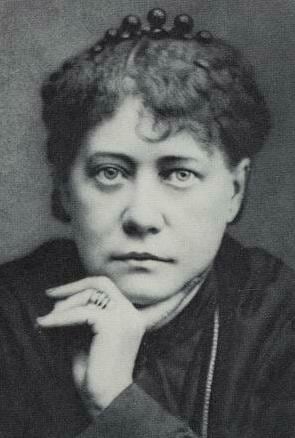
Helena Blavatsky
يتّفقان في: ما المطلق؟ هل الله موجود؟ · من أنا؟ هل توجد ذات حقيقية؟ · ماذا يحدث بعد الموت؟
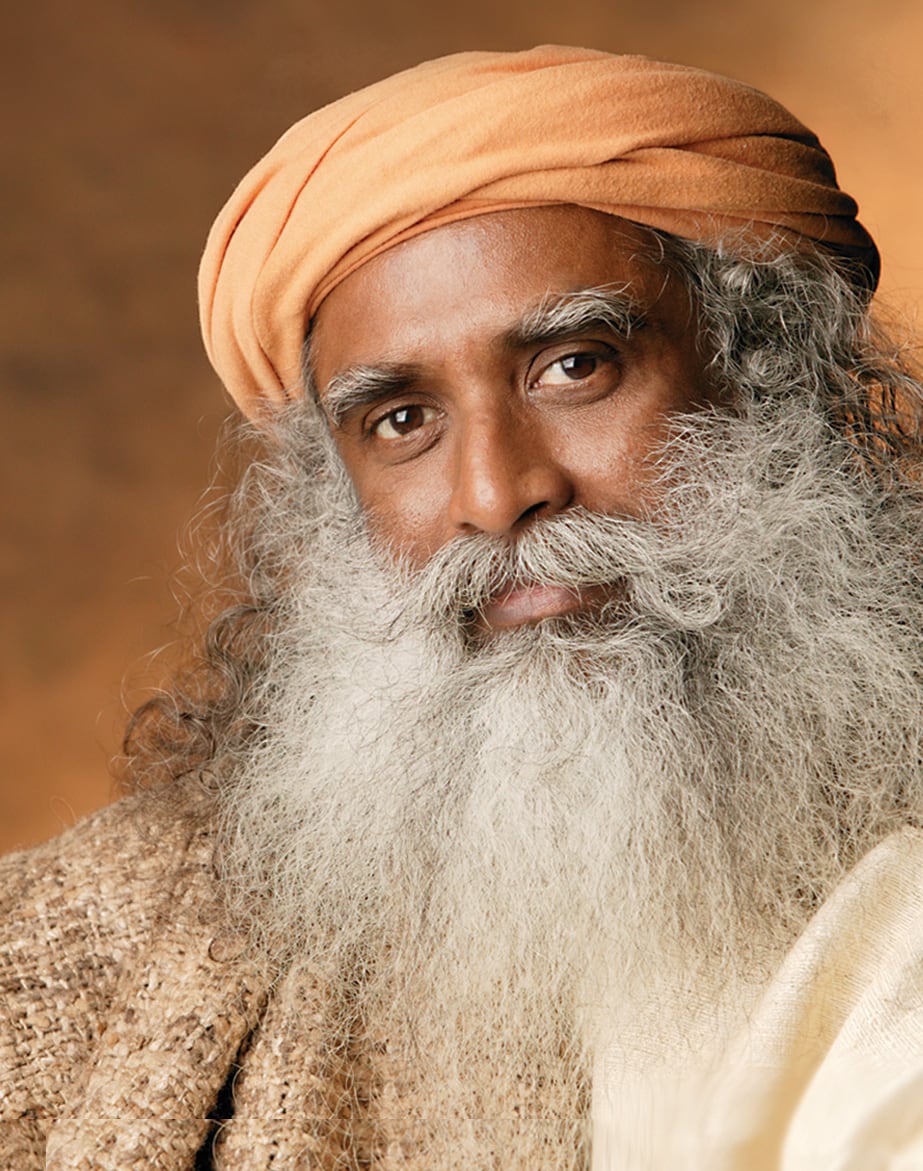
Sadhguru
يتّفقان في: ما المطلق؟ هل الله موجود؟ · ماذا يحدث بعد الموت؟ · كيف يُبلَغ التحرّر أو الخلاص؟
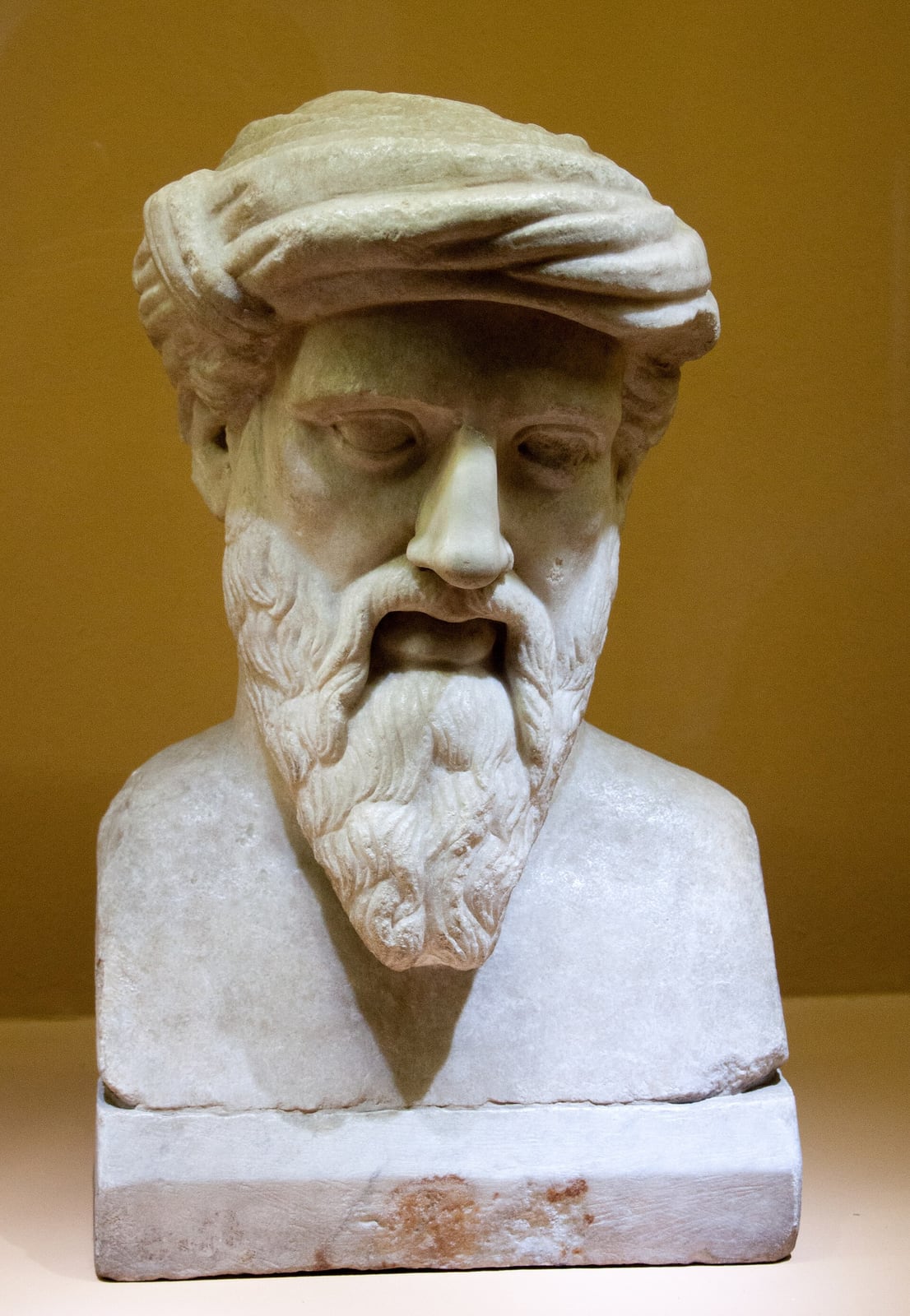
Pythagoras
يتّفقان في: ما المطلق؟ هل الله موجود؟ · من أنا؟ هل توجد ذات حقيقية؟ · ماذا يحدث بعد الموت؟
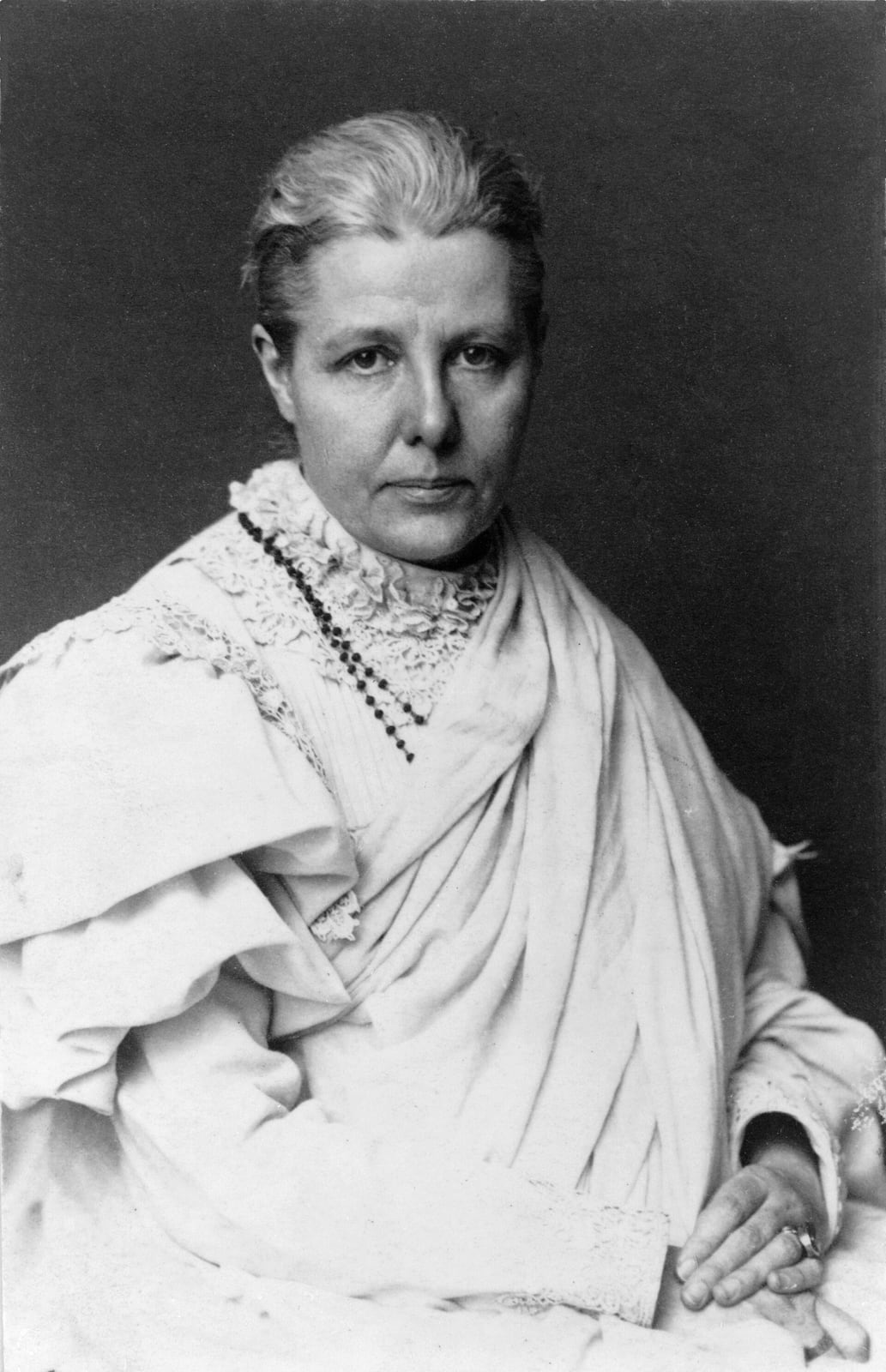
Annie Besant
يتّفقان في: من أنا؟ هل توجد ذات حقيقية؟ · ماذا يحدث بعد الموت؟ · كيف يُبلَغ التحرّر أو الخلاص؟

حكايات وروايات
حكايات وروايات
مختلَف فيهc. 434 a. C. (tradicional)
The bronze sandal of Etna
أصل الرواية: Diogenes Laertius VIII 67–75, with the versions of Heraclides of Pontus, Hippobotus, Diodorus of Ephesus, Timaeus, Neanthes and Demetrius of Troezen. Horace (Ars poetica 463–466) fixed the Etna version. Ava Chitwood (2004) analyses how they derive from the poems.
المصدر: Chitwood, Ava. Death by Philosophy: The Biographical Tradition in the Life and Death of the Archaic Philosophers Empedocles, Heraclitus, and Democritus. University of Michigan Press, Ann Arbor, 2004.
رواية من سِيَر القدّيسينs. V a. C. (tradicional)
The breathless woman
أصل الرواية: Diogenes Laertius VIII 60–61 and 67–69 (Heraclides of Pontus, Hermippus). Heraclides' treatise, lost, was a literary work of a medico-philosophical kind, not a clinical record.
لا يمكن التحقق منهs. V a. C. (tradicional)
The wind-stopper
أصل الرواية: Diogenes Laertius VIII 60 (Timaeus); Plutarch, Against Colotes 1126b and On Curiosity 515c. Burnet (Early Greek Philosophy, § 100) considers it deduced from B111.
تقليد شفهيc. 470–460 a. C.
The magistrate's banquet
أصل الرواية: Diogenes Laertius VIII 64–66, quoting Timaeus of Tauromenium (4th–3rd century BCE). Burnet (§ 99) considers them genuine local traditions gathered a century and a half later, though confused in their details.
شهادةs. V a. C.
The refused crown
أصل الرواية: Diogenes Laertius VIII 63 (Aristotle, probably in the Sophist; Xanthus) and VIII 73 (the attire). It is one of the few reports going back to Aristotle.
مختلَف فيهs. V a. C. (tradicional)
The marshes of Selinus
أصل الرواية: Diogenes Laertius VIII 70 (Diodorus of Ephesus). The Selinus coins showing the drainage (Head's Historia Numorum) prove the event, not Empedocles' involvement.
لا يمكن التحقق منهs. V a. C. (tradicional)
Expelled by the Pythagoreans
أصل الرواية: Diogenes Laertius VIII 54–55 (Timaeus, Neanthes). Fragment B129 is quoted by Porphyry (Life of Pythagoras 30) and Iamblichus (On the Pythagorean Life 67) as referring to Pythagoras.
التعاليم
التعاليم
المفاهيم التي ينتظم بها فكره، مشروحة في سياقها.
The four roots (rhizomata)cuatro-raices
Fragments B6, B8, B12, B17, B21, B23; reception in Aristotle, Metaphysics A 3–4.
المصدر: Kirk, G. S., Raven, J. E. y Schofield, M. The Presocratic Philosophers, 2.ª ed. Cambridge University Press, 1983, cap. X (Empedocles of Acragas). Trad. esp. de Jesús García Fernández, Gredos, 1987.
Love (Philotes) and Strife (Neikos)amor-y-discordia
Fragments B17, B20, B22, B26, B35; Aristotle, Metaphysics A 4, 985a21–b4.
The cosmic cycle and the Sphereciclo-cosmico
Fragments B17, B26–B31, B35; Strasbourg papyrus, ensemble a.
المصدر: Martin, Alain y Primavesi, Oliver. L'Empédocle de Strasbourg (P. Strasb. gr. Inv. 1665–1666): introduction, édition et commentaire. Walter de Gruyter / Bibliothèque Nationale et Universitaire de Strasbourg, Berlín, Nueva York y Estrasburgo, 1999.
The exiled daimon and transmigrationdaimon-y-transmigracion
Fragments B112, B115, B117, B136–B137, B146–B147.
المصدر: Zuntz, Günther. Persephone: Three Essays on Religion and Thought in Magna Graecia. Clarendon Press, Oxford, 1971.
Effluences and pores: perception and thoughtefluvios-y-poros
Fragments B84, B89, B100, B105, B109; Plato, Meno 76c–d; Theophrastus, On the Senses 7–24.
Zoogony: wandering limbs and combinationszoogonia
Fragments B57–B62; Aristotle, Physics II 8, 198b29–32.
مقاطع الفيديو
مقاطع الفيديو
تسجيلات ومقابلات وأفلام وثائقية. تُشغَّل مقاطع الفيديو من YouTube؛ ولا تُستضاف هنا.
Empedocles – Autobiography of a Demon
محاضرة· EN· 2020· 19 min
Jackman Humanities Instituteالقناة الرسمية
HoP 011 - All You Need Is Love, and Five Other Things - Empedocles
محاضرة· EN· 2020· 17 min
history of philosophy without any gapsالقناة الرسمية
4) The Pluralists and The Sophists
محاضرة· EN· 2016· 74 min
Adam Rosenfeldالقناة الرسمية
3-5 Empedocles
محاضرة· EN· 2026· 12 min
Nicholaos Jonesالقناة الرسمية
Aristotle, Metaphysics (Empedocles, love, and final causes) - Introduction to Philosophy
تحليل· EN· 2013· 64 min
Gregory B. Sadler - That Philosophy Guyالقناة الرسمية
Empédocles de Agrigento
فيلم وثائقي· ES· 2018· 27 min
UNEDالقناة الرسمية
Conferencia David Hernández Castro "Empédocles"
محاضرة· ES· 2018· 88 min
Hercritia-Cátedra de Hermenéutica Críticaالقناة الرسمية
Heráclito, Empédocles y Anaxágoras | Historia de la filosofía (7/61)
محاضرة· ES· 2017· 68 min
Ernesto Castroالقناة الرسمية
EMPÉDOCLE – De l'un au multiple - Sur les traces du présocratique (France Culture, 1997)
فيلم وثائقي· FR· 1997· 85 min
ÉCLAIR BRUT
EMPÉDOCLE d'Agrigente – Un présocratique en terre arabe (France Culture, 2007)
مقابلة· FR· 2007· 46 min
ÉCLAIR BRUT
المعرض
المعرض
صور بترخيص متحقَّق منه. كل منها تحتفظ بمؤلّفها ونسبتها.
المخطوطات
المخطوطات
شواهد مخطوطة ونصوص قديمة، مع جهة حفظها وشروط الاطّلاع عليها.
GRC · Escritura libraria griega sobre papiro · Poema compuesto en el s. V a. C.; copia de finales del s. I d. C.
P. Strasb. gr. Inv. 1665–1666
- الشاهد المحفوظ
- Fragmentos de un rollo de papiro (52 según los editores), con restos de unos 74 versos
- جهة الحفظ
- Bibliothèque nationale et universitaire de Strasbourg · P. Strasb. gr. Inv. 1665–1666
- الرقمنة
- commons.wikimedia.org/wiki/File:Empedokles_fragm…
العلاقات
العلاقات
تأثيرات وتلمذة وتقارب في الأفكار. تُميَّز العلاقة الموثّقة عن التشابه المستخلَص بالتحليل.
أفكار قريبة من
The alternation of Love and Strife extends, in another key, the Heraclitean tension between harmony and war.
تشابه مستخلَص بالتحليل
تأثّر بـ
Theophrastus calls him an "emulator and imitator" of Parmenides (Diogenes Laertius VIII 55); he accepts that nothing comes to be or perishes and writes, like him, in hexameters.
علاقة موثّقة
تأثّر بـ
Timaeus and Neanthes make him a pupil of the Pythagoreans; Porphyry and Iamblichus refer the praise of B129 to Pythagoras. He shares with Pythagoreanism transmigration and abstinence from meat.
علاقة موثّقة
تأثّر بـ
Jenófanes
Hermippus, according to Diogenes Laertius (VIII 56), considered him an imitator of Xenophanes, with whom he supposedly lived; the report is isolated.
تشابه مستخلَص بالتحليل
معاصر لـ
Anaxágoras
Aristotle (Metaphysics A 3, 984a11) says Anaxagoras was older than Empedocles but later in his works; both explain change as mixture.
علاقة موثّقة
معاصر لـ
Zenón de Elea
Alcidamas, according to Diogenes Laertius (VIII 56), made them fellow pupils of Parmenides.
تشابه مستخلَص بالتحليل
معلّم
Gorgias de Leontinos
Satyrus, probably following Alcidamas, makes him Empedocles' pupil (Diogenes Laertius VIII 58); Plato ascribes to Gorgias the Empedoclean theory of effluences (Meno 76c).
علاقة موثّقة
معلّم
Pausanias de Gela
Physician, pupil and beloved of Empedocles, addressee of On Nature (B1).
علاقة موثّقة
أثّر في
He alludes to the "Sicilian muses" (Sophist 242d–243a), ascribes his theory of effluences to Gorgias (Meno 76c) and adopts the four elements in the Timaeus.
علاقة موثّقة
أثّر في
He adopts the four roots as elements, calls him the inventor of rhetoric and discusses his zoogony (Physics II 8) and his causes (Metaphysics A 4).
علاقة موثّقة
أثّر في
Lucrecio
In De rerum natura (I 716–733) he praises him as Sicily's most admirable man and takes from him the model of the physical poem.
علاقة موثّقة
أفكار قريبة من
Approximate contemporaries: the doctrine of transmigration through all living forms and the refusal to kill animals bring the Purifications close to Jain ethics, without known historical contact.
تشابه مستخلَص بالتحليل
أثّر في
Sigmund Freud
In Analysis Terminable and Interminable (1937) he recognises in Empedocles' Love and Strife a precedent of his theory of Eros and the death drive.
علاقة موثّقة
المصادر
المصادر
المراجع والفهارس التي رُوجعت لهذه الصفحة.
- Wikidata, entidad Q83375 «Empedocles» (107 enlaces entre wikis; P31=Q5). Registra varios años de nacimiento (494, 492, 490 a. C.) y de muerte (444, 434, 432, 430 a. C.), Acragante como lugar de nacimiento y el Etna o el Peloponeso como lugar de muerte.
- Diógenes Laercio. Vidas y opiniones de los filósofos ilustres VIII 51–77 (Empédocles), s. III d. C. Trad. inglesa de C. D. Yonge, Bohn, Londres, 1853 (Project Gutenberg n.º 57342); trad. inglesa de R. D. Hicks, Loeb, 1925 (Wikisource).
- Diels, Hermann y Kranz, Walther. Die Fragmente der Vorsokratiker, 6.ª ed. Weidmann, Berlín, 1951–1952, cap. 31 (Empedokles), A (testimonios) y B 1–154.
- Kirk, G. S., Raven, J. E. y Schofield, M. The Presocratic Philosophers, 2.ª ed. Cambridge University Press, 1983, cap. X (Empedocles of Acragas). Trad. esp. de Jesús García Fernández, Gredos, 1987.
- Kingsley, K. Scarlett y Parry, Richard. «Empedocles». The Stanford Encyclopedia of Philosophy, ed. Edward N. Zalta y Uri Nodelman; primera publicación el 26 de septiembre de 2019, revisión sustancial del 25 de septiembre de 2024.
- Burnet, John. Early Greek Philosophy, 2.ª ed. A. and C. Black, Londres, 1908, cap. V (Empedokles of Akragas), §§ 98–105 y traducción de los fragmentos (Project Gutenberg n.º 67097).
- Martin, Alain y Primavesi, Oliver. L'Empédocle de Strasbourg (P. Strasb. gr. Inv. 1665–1666): introduction, édition et commentaire. Walter de Gruyter / Bibliothèque Nationale et Universitaire de Strasbourg, Berlín, Nueva York y Estrasburgo, 1999.
- Laks, André y Most, Glenn W. (eds. y trads.). Early Greek Philosophy, vol. V: Western Greek Thinkers, Part 2. Loeb Classical Library 528, Harvard University Press, 2016.
- Inwood, Brad. The Poem of Empedocles: A Text and Translation with an Introduction, ed. revisada. University of Toronto Press, Toronto, 2001 (1.ª ed. 1992).
- Wright, M. R. Empedocles: The Extant Fragments. Yale University Press, New Haven, 1981 (reed. Bristol Classical Press, 1995).
- Chitwood, Ava. Death by Philosophy: The Biographical Tradition in the Life and Death of the Archaic Philosophers Empedocles, Heraclitus, and Democritus. University of Michigan Press, Ann Arbor, 2004.
- Aristóteles. Metafísica A 3, 984a8–11, y A 4, 985a21–b4; Poética 1, 1447b17–20; Física II 8, 198b29–32; Sobre el alma I 2, 404b11–15; fragmentos del Sofista y de Sobre los poetas citados por Diógenes Laercio VIII 57 y 63. Trad. inglesa de W. D. Ross y otros (Internet Classics Archive, MIT).
- Kingsley, Peter. Ancient Philosophy, Mystery, and Magic: Empedocles and Pythagorean Tradition. Clarendon Press, Oxford, 1995.
- Zuntz, Günther. Persephone: Three Essays on Religion and Thought in Magna Graecia. Clarendon Press, Oxford, 1971.
- Lucrecio. De rerum natura I 716–733 (elogio de Empédocles), s. I a. C.
- Horacio. Arte poética 463–466 («deus immortalis haberi / dum cupit Empedocles, ardentem frigidus Aetnam / insiluit»).
- Hölderlin, Friedrich. Der Tod des Empedokles (tres versiones, 1797–1800); Arnold, Matthew, Empedocles on Etna, and Other Poems, B. Fellowes, Londres, 1852 (Internet Archive).
- Leonard, William Ellery (trad.). The Fragments of Empedocles, Translated into English Verse. Open Court, Chicago, 1908 (Internet Archive).
- Fairbanks, Arthur (ed. y trad.). The First Philosophers of Greece. Kegan Paul, Trench, Trübner, Londres, 1898, cap. X (Empedokles), texto griego según la edición de H. Stein (1852) (Project Gutenberg n.º 78670).
- «Empedocles», Wikipedia en inglés, y «Empédocles», Wikipedia en español (consultadas para contrastar datos y bibliografía; texto propio).
- Open Library (Internet Archive): ediciones de los fragmentos de Empédocles verificadas por ISBN.
- De Smet, Daniel. Empedocles Arabus. Une lecture néoplatonicienne tardive. Paleis der Academiën (Koninklijke Academie voor Wetenschappen, Letteren en Schone Kunsten van België), Bruselas, 1998.
- Eggers Lan, Conrado (dir.), Cordero, Néstor Luis, Olivieri, Francisco J., La Croce, Ernesto y Santa Cruz, María Isabel. Los filósofos presocráticos II. Biblioteca Clásica Gredos 24, Gredos, Madrid, 1979 (Empédocles, trad. de Ernesto La Croce).
- Bollack, Jean. Empédocle, 3 vols. (4 tomos). Éditions de Minuit, París, 1965–1969; reed. Gallimard (Tel), 1992.
- Platón. Menón 76c–d (efluvios y poros); Sofista 242d–243a (las «musas sicilianas»). Trad. inglesa de Benjamin Jowett, 1892 (Project Gutenberg n.º 1643, Meno).
- Galeno. De methodo medendi I 1 (X 5–6 Kühn): la escuela médica itálica de Filistión, Empédocles y Pausanias.
- Primavesi, Oliver. Empedokles Physika I: eine Rekonstruktion des zentralen Gedankengangs. Archiv für Papyrusforschung, Beiheft 22, Walter de Gruyter, Berlín, 2008.
- Osborne, Catherine. «Empedocles Recycled». The Classical Quarterly, 37 (1987), pp. 24–50; y Trépanier, Simon, Empedocles: An Interpretation, Routledge, Nueva York, 2004.
- Freud, Sigmund. «Die endliche und die unendliche Analyse». Internationale Zeitschrift für Psychoanalyse, 23 (1937), sección VI (Empédocles, el Amor y la Discordia).
- صاحب الحقوق
- Textos antiguos en dominio público; cada traducción y edición crítica pertenece a su traductor o editorial
في انتظار التأكيد
ما لم تتمكّن هذه الصفحة من حسمه بعد. نفضّل أن نقول ذلك على أن نملأ الفراغ.
- Fechas: se adopta c. 494–434 a. C. (muerte a los sesenta años según Aristóteles y actividad posterior al 472, Burnet); Apolodoro situaba la madurez en 444–443 y Wikidata registra varios años alternativos.
- Ediciones españolas específicas de Empédocles (aparte de Gredos, Kirk-Raven-Schofield y Bernabé): no verificadas en catálogo en esta sesión (la API de Google Books agotó su cuota).
- «La esfera» pseudoempedoclea: verificar la edición de 1898 (probablemente E. Maass, Commentariorum in Aratum reliquiae) antes de citarla con detalle.
- Papiro de Estrasburgo: comprobar si la BNU de Estrasburgo ofrece digitalización completa y sus condiciones; fecha exacta de adquisición (1904 o 1905).
- Texto griego de las citas tomado de Fairbanks (edición de Stein, 1852); cotejar con Diels-Kranz (diferencias menores señaladas en B6 y B117).
- Vídeos: diez verificados; faltan clases universitarias en español dedicadas monográficamente al papiro de Estrasburgo.
- Programas de afiliación: ninguno verificado. Lista vacía.
- Año de los vídeos: el de la grabación cuando la descripción lo indica y, si no, el de publicación en YouTube.
بُحث بتاريخ 2026-10-25