الفلسفة ما قبل السقراطية
Parmenides
Παρμενίδης ὁ Ἐλεάτης
نحو 515 ق.م – ?شخصية موثّقة تاريخيًا
فيلسوف من إيليا في اليونان الكبرى (وُلد نحو 515 ق.م)، صاحب قصيدة على البحر السداسي بقي منها نحو مئة وستين بيتًا. وفيها تعلّم إلهةٌ أن «ما هو موجود» وحده يمكن أن يُفكَّر فيه ويُقال، وأنه غير مكوَّن ولا فاسد، واحد ساكن؛ ويعرض القسم الثاني آراء الفانين. وهو مؤسس المدرسة الإيلية، ومعلّم زينون، وبحسب الرواية مشرّع مدينته، وقد طبعت حجته الفلسفة اللاحقة كلها.
- مؤلَّفًا
- 5مؤلَّفًا
- طبعة
- 22طبعة
- اقتباسًا
- 14اقتباسًا
- مقطع فيديو
- 12مقطع فيديو
- صورة
- 5صورة
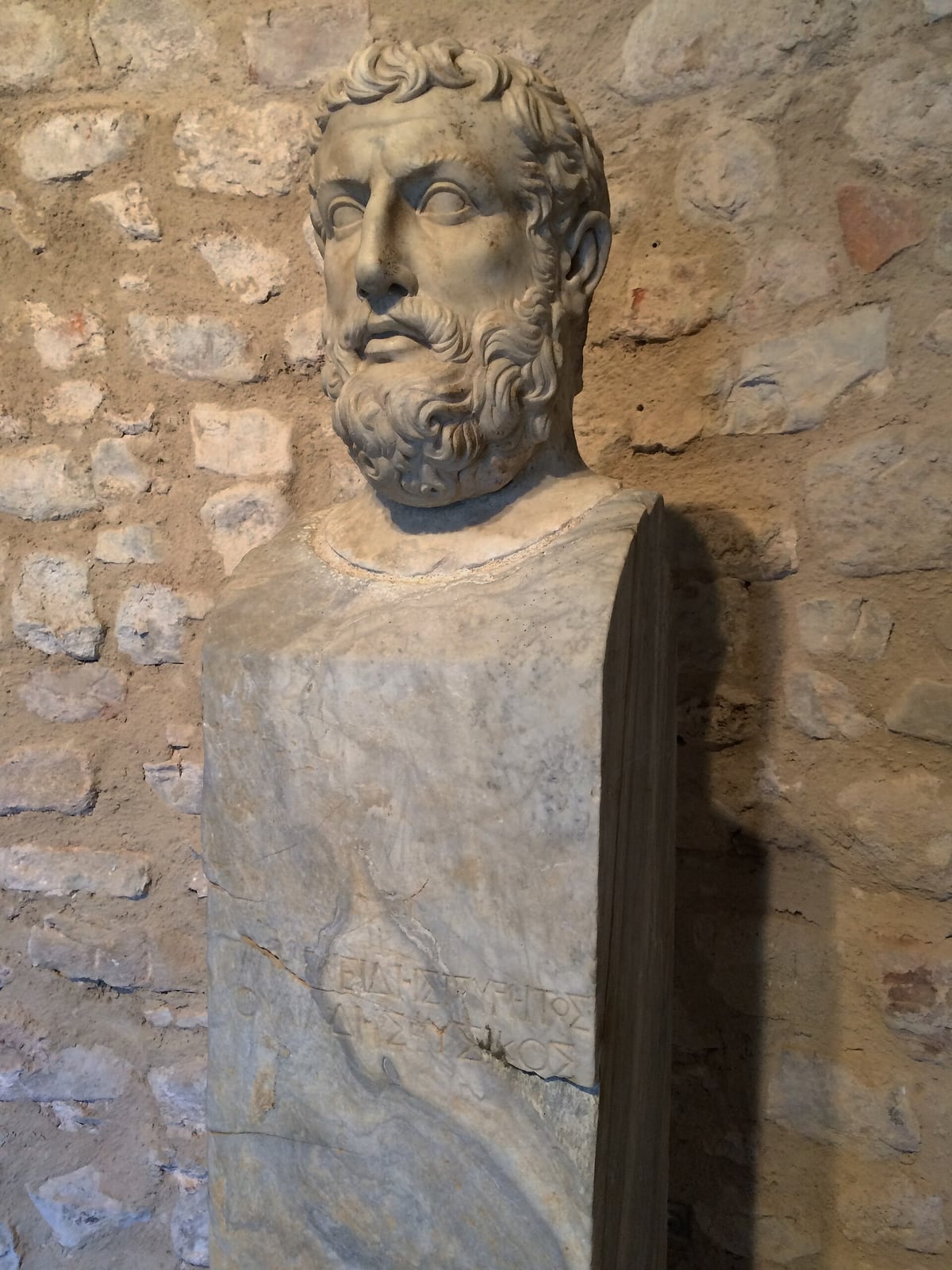
Cabeza identificada con Parménides (Velia) · CC BY-SA 4.0
بكلماته
«Meet it is that thou shouldst learn all things, as well the unshaken heart of well-rounded truth, as the opinions of mortals in which is no true belief at all.»DK 28 B1.28–30, en Sexto Empírico, Contra los matemáticos VII 111, y Simplicio, Comentario al Sobre el cielo 557. Griego: Diels-Kranz; inglés: John Burnet, Early Greek Philosophy (1908); español: traducción propia.

فكرته المحورية
What is (to eon): The poem turns on a single word, the Greek verb *esti*, "is", often without an expressed subject.
السيرة
4 دقيقة قراءة
ترجمة مُعانة من الأصل الإسباني، بانتظار مراجعة مترجم من أهل اللغة.
قصيدة الطريق الواحد
كتب برمانيدس قصيدة واحدة على البحر السداسي، وهو وزن أوميروس وهسيودوس، بقي منها نحو مئة وستين بيتًا بفضل استشهادات سكستوس أمبيريقوس وسنبليقيوس وبرقلس وفلوطرخس وغيرهم. وهي أول نص في الفلسفة اليونانية يحتجّ خطوة فخطوة، وأول نص يسأل عمّا يعنيه أن نقول عن شيء إنه «موجود». وقد وصفه أفلاطون بأنه «جليل ومَهيب»، وخصّه بمحاورة، وصوّر القطيعة مع مذهبه بأنها «قتلٌ للأب»؛ وناقش أرسطو أطروحاته في مستهل «السماع الطبيعي». ويمكن أن تُقرأ فلسفة الطبيعة اللاحقة كلها، من أنبادقليس إلى الذريين، على أنها ردّ على إنكاره للكون والفساد.
إيليا
كانت إيليا — «هيلي» عند مؤسسيها و«فيليا» عند الرومان — مستعمرة فتية على ساحل البحر التيراني، جنوب بوسيدونيا. وقد أسّسها نحو سنة 540 ق.م أهل فوقية الفارّون من الزحف الفارسي على أيونية، كما يروي هيرودوت. ويجعل ديوجانس اللائرتي برمانيدس ابنًا لبيريس، من أسرة نبيلة ثرية، ويضع ذروته، متابعًا أبولودوروس، في الأولمبياد التاسع والستين (504–501 ق.م)، مما يجعل مولده نحو 540. أما أفلاطون فيروي في محاورة «برمانيدس» أن الفيلسوف زار أثينا وهو في نحو الخامسة والستين، حين كان سقراط شابًا جدًا، مما يجعل مولده نحو 515. وقد ارتاب برنت في أن أبولودوروس جعل ذروته توافق تأسيس إيليا؛ ويفضّل كثير من المختصين التأريخ الأفلاطوني، وإن كان مشهد المحاورة على الأرجح من نسج الخيال الأدبي؛ وكان برنت، الذي عدّه تاريخيًا، من القلائل الذين دافعوا عنه.
معلّمون وتلاميذ وقوانين
نسب إليه القدماء عدة معلّمين. فأرسطو ينقل أنه كان يقال إنه تلميذ أكسانوفانس، الشاعر الفيلسوف الذي انتقد آلهة أوميروس وعاش هو أيضًا في الغرب اليوناني؛ وربطه ثاوفرسطس بأنكسيمندريس. وكان سوتيون أدقّ، فروى أن فيثاغوريًا فقيرًا لكنه نبيل، هو أمينياس بن ديوخايتاس، هو الذي قاده إلى حياة الدرس الهادئة، وأن برمانيدس أقام له بعد موته مزارًا كما يُقام للأبطال. وكان اسبوسيبس، ابن أخت أفلاطون، يؤكد أنه وضع لمدينته قوانينها، ويضيف فلوطرخس أن حكّام إيليا كانوا يقسمون كل عام على التزامها؛ وينسب سترابون حُسن تدبير المدينة إلى برمانيدس وإلى زينون، أشهر تلاميذه.
وفي سنة 1962 كشفت الحفريات في فيليا عن تمثال نصفي (هِرمة) بلا رأس من القرن الأول للميلاد، عليه نقش: «برمانيدس بن بيريس، أولياديس، الفيلسوف الطبيعي». وتكرّم نقوش أخرى من المبنى نفسه أطباء بلقب أولياديس، الذي يحيل إلى أبولون أوليوس، الشافي. ويوحي هذا الخبر بأن مدرسة طبية في إيليا كانت، بعد قرون، تنتسب إلى برمانيدس. وقد اقترح بيتر كينغزلي أن يُرى فيه إياترومانتيس، أي كاهن شافٍ يمارس الاستشفاء بالرؤيا في المعابد، وأن تُقرأ القصيدة على أنها رواية لتجربة كشفية؛ والفرضية مثيرة، لكنها لا تستند إلى أدلة مباشرة، ويعدّها أكثر المختصين ضربًا من التخمين.
الرحلة
تبدأ القصيدة برحلة. فتى تحمله عربة تجرّها أفراس حكيمات، تقودها بنات الشمس اللواتي غادرن دار الليل؛ والمحاور تصرّ في صُرَر العجلات. ويبلغون أبواب طرق الليل والنهار، التي تحفظ مفاتيحها العدالةُ المنتقمة؛ فتستميلها العذارى، وتنفتح الأبواب. وفي الجهة الأخرى تأخذ إلهةٌ لا اسم لها بيد الفتى اليمنى، وتعلن له أن عليه أن يتعلم كل شيء: «قلب الحقيقة المستديرة الذي لا يضطرب»، وآراء الفانين التي ليس فيها يقين صادق. وقد قرأ سكستوس أمبيريقوس، الذي حفظ لنا هذا المطلع، الرحلةَ رمزًا للمعرفة؛ ورأى فيها فالتر بوركرت نزولًا إلى العالم السفلي، ورأى فيها آخرون طقس تكريس.
طريق الحقيقة
تعلّم الإلهة أن ليس ثمة إلا طريقان للبحث يمكن تصوّرهما: أنه «موجود» ولا يمكن ألا يكون، وأنه «غير موجود» ولا بدّ ألا يكون. والثاني طريق لا يُسلك، لأن ما ليس موجودًا لا يمكن معرفته ولا قوله؛ «فالفكر والوجود شيء واحد» (B3). غير أن الفانين يتيهون في درب ثالث: «ذوو رأسين»، بلا تمييز، يظنون الوجود واللاوجود شيئًا واحدًا وليسا شيئًا واحدًا. والشذرة الثامنة الطويلة، التي نسخها سنبليقيوس في القرن السادس لأن الكتاب، كما يقول، صار نادرًا، تستنبط «علامات» الموجود: فهو غير مكوَّن ولا فاسد، لأنه لا يمكن أن يأتي مما ليس موجودًا؛ وهو تام، واحد، ساكن، كامل؛ «لم يكن ولن يكون، لأنه الآن كلّه معًا، واحد، متصل»؛ وهو محدود من كل جهة، أشبه بكتلة كرة تامة الاستدارة.
وما «الموجود» على وجه الدقة لا يزال موضع جدل. ففي التفسير التقليدي ينكر برمانيدس الكثرة والتغيّر في العالم؛ وقرأ فيه ج. إ. ل. أوين أطروحة عن كل ما يمكن أن يكون موضوعًا للفكر؛ وأبرز ألكسندر موريلاتوس وتشارلز كان المعنى الإسنادي والمعنى الدالّ على الصدق في الفعل اليوناني؛ ودافع جون بالمر عن «أحادية سخية» يصف برمانيدس بموجبها ما هو موجود بالضرورة من غير أن ينكر وجود أشياء أخرى.
طريق الظن
بعد أن تختم الإلهة «قولها الموثوق»، تعرض «النظام الخادع» لآراء الفانين: عالمًا مبنيًا من صورتين، النور أو النار الأثيرية والليل الكثيف، لم يبقَ لنا منه إلا أبيات قليلة. وفيها حديث عن حلقات سماوية، وعن إلهة تدبّر كل شيء وابتدعت إيروس أول الآلهة جميعًا، وعن القمر الذي يضيء «بنور مستعار» ناظرًا أبدًا إلى أشعة الشمس، وعن تكوّن الجنين، وعن الفكر بحسب امتزاج الأعضاء. ونُسب إلى برمانيدس أنه أدرك أن نجم الصباح ونجم المساء كوكب واحد، وأن الأرض كروية، وإن كانت الأخبار نفسها تُروى عن فيثاغورس. أما لماذا تعلّم إلهةٌ بالتفصيل كوسمولوجيا تعلن أنها باطلة، فذلك أحد ألغاز القصيدة.
إرث إيليا
دافع زينون، تلميذه، عن المذهب بمفارقات تكشف ما في الكثرة والحركة من محالات؛ وأعاد مليسوس الساموسي صياغته نثرًا. وقبل أنبادقليس وأنكساغوراس ولوقيبوس وديمقراطيس أن لا شيء يتكوّن من العدم ولا يفنى إليه، وفسّروا التغيّر بأنه امتزاج عناصر لا تتغير وانفصالها. واضطر أفلاطون، في «السفسطائي»، إلى «التجرّؤ على الأب برمانيدس» ليمنح اللاوجود معنى بوصفه غيرية. أما موته فلا يُعرف عنه شيء. وقد ضاعت قصيدته كتابًا، لكنها بقيت في الشروح الأفلاطونية المحدثة، وهي اليوم من أكثر نصوص العصور القديمة دراسةً.
المصادر: Diógenes Laercio. Vidas y opiniones de los filósofos ilustres IX 21–23 (Parménides), 25 (Zenón) y 24 (Meliso), s. III d. C. Trad. inglesa de C. D. Yonge, Bohn, Londres, 1853 (Project Gutenberg n.º 57342); trad. inglesa de R. D. Hicks, Loeb, 1925 (Wikisource). · Diels, Hermann y Kranz, Walther. Die Fragmente der Vorsokratiker, 6.ª ed. Weidmann, Berlín, 1951–1952, cap. 28 (Parmenides), A (testimonios) y B 1–19. Texto griego consultado en la transcripción de Wikisource en griego («Περί φύσεως (Παρμενίδης)»). · Kirk, G. S., Raven, J. E. y Schofield, M. The Presocratic Philosophers, 2.ª ed. Cambridge University Press, 1983, cap. VIII (Parmenides of Elea). Trad. esp. de Jesús García Fernández, Gredos, 1987. · Burnet, John. Early Greek Philosophy, 2.ª ed. A. and C. Black, Londres, 1908, cap. IV (Parmenides of Elea), §§ 84–97 (Project Gutenberg n.º 67097). · Coxon, A. H. The Fragments of Parmenides: A Critical Text with Introduction and Translation, the Ancient Testimonia and a Commentary. Van Gorcum, Assen, 1986; ed. revisada por Richard McKirahan, Parmenides Publishing, Las Vegas, 2009.
الخط الزمني
الحياة عامًا بعد عام
كل نقطة حدث موثّق. انقر لتقرأه مع مصدره ودرجة اليقين فيه.
نحو 540 ق.مElea (Hyele), Campania
Foundation of Elea
Phocaeans fleeing the Persian advance found Hyele on the Tyrrhenian coast after the battle of Alalia (Herodotus I 163–167). Years BCE are expressed as negative numbers.
مرجَّحHeródoto. Historias I 163–167 (los focenses y la fundación de Hyele/Elea), s. V a. C. Trad. inglesa de G. C. Macaulay, Macmillan, Londres, 1890 (Project Gutenberg n.º 2707).
نحو 540 ق.م
Foundation of Elea
Phocaeans fleeing the Persian advance found Hyele on the Tyrrhenian coast after the battle of Alalia (Herodotus I 163–167). Years BCE are expressed as negative numbers.
مرجَّح
نحو 515 ق.م · أقل من عام
Birth
Born in Elea, son of Pyres, of a noble and wealthy family. The date is inferred from Plato (Parmenides 127b); Apollodorus' chronology would place his birth around 540.
مرجَّح
نحو 504 ق.م
Floruit according to Apollodorus
Diogenes Laertius (IX 23) places his prime in the 69th Olympiad (504–501 BCE), the same as Heraclitus'.
تقليد
نحو 490 ق.م
Ameinias and the contemplative life
According to Sotion (in Diogenes Laertius IX 21), the Pythagorean Ameinias turns him to the life of study; at his death Parmenides dedicates a hero-shrine to him. Date unknown.
تقليد
نحو 480 ق.م
Composition of the poem
He composes his hexameter poem, traditionally called On Nature. The date is an estimate; the poem seems to respond to Heraclitus and precedes Empedocles and Zeno.
مختلَف فيه
نحو 470 ق.م
Lawgiver of Elea
Speusippus (in Diogenes Laertius IX 23) and Plutarch (Against Colotes 1126a) credit him with Elea's laws, which magistrates swore each year to obey. Date unknown.
تقليد
نحو 450 ق.م · 65 عامًا
Visit to Athens with Zeno
According to Plato's Parmenides (127a–c), he attends the Great Panathenaea with Zeno, stays in the Ceramicus and converses with a very young Socrates. The meeting is probably a literary fiction; Athenaeus (XI 505f) already doubted it.
مختلَف فيه
نحو 370 ق.م
Plato writes the Parmenides and the Sophist
Plato makes Parmenides the protagonist of a dialogue and, in the Sophist (241d), presents the critique of his thesis on not-being as "parricide".
مرجَّح
نحو 530
Simplicius copies fragment 8
In his commentary on Aristotle's Physics, Simplicius transcribes long passages of the poem "because of the rarity of the book" (In Phys. 144.25). Without him the way of truth would be unknown.
موثّق
1897
Diels's Parmenides Lehrgedicht
Hermann Diels publishes the critical edition of the poem with German translation, the basis of the DK 28 numbering.
موثّق
1962
Discovery of the Velia herm
Excavations bring to light a headless herm of the 1st century CE inscribed «Παρμενείδης Πύρητος Οὐλιάδης φυσικός», alongside others dedicated to Ouliad physicians.
موثّق
1965
Tarán's edition
Leonardo Tarán publishes Parmenides: A Text with Translation, Commentary and Critical Essays, one of the standard twentieth-century editions.
موثّق
المؤلَّفات
المؤلَّفات الأساسية
المؤلَّفات التي لا يُفهم إرثه من دونها.
مؤلَّف مكتوب · نحو 480 ق.م
On Nature (poem)
Περὶ φύσεως (título convencional)
A didactic poem in dactylic hexameters, divided into a proem and two parts. In the proem (B1) a youth travels by chariot to the gates of Night and Day and is received by a goddess who promises to teach him the truth and the opinions of mortals. The way of truth (B2–B8.49) argues that only "what is" can be thought and said, and deduces that it is unborn, imperishable, one, continuous, unmoving and like a sphere. The way of opinion (B8.50–B19) sets out a cosmology of two principles, light and night, with theories of the stars, the moon, generation and thought. It is the founding text of Western ontology.
18 طبعة · amazon.es
مؤلَّف مكتوب · نحو 480 ق.م
Way of Truth (B2–B8.49)
Ἀλήθεια (DK 28 B2–B8.49)
The goddess's central teaching. It presents two ways of inquiry—"is" and "is not"—, rules out the second because what is not can be neither thought nor said, and censures the "two-headed" mortals who confuse being and not-being. In B8 it deduces the properties of what is: unborn and imperishable, whole and single, unmoving, without past or future, continuous, bounded and like a well-rounded sphere. It is the first extended deductive argument in Greek philosophy.
4 طبعات
الأقوال
أقوال محدَّدة الموضع في مؤلَّف بعينه. كل منها يحمل مصدره ودرجة الثقة به.
Meet it is that thou shouldst learn all things, as well the unshaken heart of well-rounded truth, as the opinions of mortals in which is no true belief at all.χρεὼ δέ σε πάντα πυθέσθαι / ἠμὲν Ἀληθείης εὐκυκλέος ἀτρεμὲς ἦτορ / ἠδὲ βροτῶν δόξας, ταῖς οὐκ ἔνι πίστις ἀληθής.
متحقَّق منهDK 28 B1.28–30, en Sexto Empírico, Contra los matemáticos VII 111, y Simplicio, Comentario al Sobre el cielo 557. Griego: Diels-Kranz; inglés: John Burnet, Early Greek Philosophy (1908); español: traducción propia.
أقوال منحولة أو مختلَف في نسبتها (4)
«Nothing comes from nothing (ex nihilo nihil fit).»
The idea is in B8.7–10, but the Latin formula is not his: it comes from Lucretius (I 150, "nil posse creari de nilo") and scholasticism. It is ascribed to him through textbook summary.
«Being is and non-being is not.»
A textbook formula condensing B2 and B6, but not found as such in the poem. Parmenides says "is" with no expressed subject, and the nominalised "Being" is a later interpretation.
«Change is an illusion.»
A modern paraphrase. The poem says that coming to be, perishing, changing place and colour are "names" mortals have given believing them true (B8.38–41); it does not speak of illusion.
«If the one is not, nothing is.»
The conclusion of Plato's dialogue Parmenides (166c), spoken by the character Parmenides. It is a Platonic construction, not a quotation from the historical philosopher.
الكلمات الأخيرة
لا توجد سجلات يمكن التحقق منها لكلماته الأخيرة.
No record of his last words or of the circumstances of his death survives.
اسأل
بماذا يجيب أثره
اثنا عشر سؤالًا كبيرًا من أسئلة الإنسانية، وما تتيح نصوصه الإجابة به عنها، مع المراجع. ولا نقوّله ما لم يقل أبدًا.
ما المطلق؟ هل الله موجود؟
What is: one, ungenerated, imperishable and complete like a sphere
مطلق غير شخصييُستنتج من تعاليمه
Parmenides does not speak of God in the Way of Truth. What his poem presents as ultimate is “what is”: that which cannot not be, which is neither born nor perishes, which is all at once, one and continuous, and complete on every side like the bulk of a well-rounded sphere. It is held within its limits by Justice and Necessity, divine figures that in the poem function almost as names of logical law. The revelation itself is spoken by a nameless goddess who welcomes the youth in the proem. What the text allows us to affirm is an absolute without personal features, accessible only to thought, from which all genesis, change and plurality are excluded.
قارن هذا السؤال مع معلّمين آخرينمن أنا؟ هل توجد ذات حقيقية؟
The poem does not treat the self: only being and thinking
لم يُبدِ رأيًا
The surviving fragments of Parmenides contain no doctrine of the self or of the individual soul. The Way of Truth deals with “what is” and its relation to thought — the same is thinking and being, says B3 — but this thinking is not presented as the consciousness of a subject. In the Way of Opinion, B16 explains that the mind of humans depends on the mixture of their limbs at each moment, a physical psychology the goddess herself has labelled the opinion of mortals. The figure of the youth brought before the goddess in the proem is narrative. Readings that see in B3 an identity between consciousness and being belong to the later tradition.
قارن هذا السؤال مع معلّمين آخرينلماذا نتألّم؟
The poem deals with mortals' error, not their pain
لم يُبدِ رأيًا
Parmenides does not ask why we suffer. What his poem diagnoses is something else: the straying of “two-headed” mortals, who know nothing, wander deaf and blind, and take being and not-being as the same and not the same (B6). That error is cognitive, not moral or existential, and the remedy the goddess offers is to judge by reason and not be carried along by the habit of the senses (B7). Neither the Way of Truth nor the remains of the Way of Opinion, devoted to cosmology and physiology, treat human pain as a problem. Attributing a doctrine of suffering to him would be inventing it.
قارن هذا السؤال مع معلّمين آخرينماذا يحدث بعد الموت؟
What is is neither born nor dies; the poem ignores the individual
لم يُبدِ رأيًا
The fragments of Parmenides do not deal with what happens to the person after death. The Way of Truth holds that what is is ungenerated and imperishable, because from what is not nothing can come and into it nothing can go; Justice does not loosen her fetters to let it be born or perish. But that argument concerns being as such, not the individual soul, and applying it to the soul would be an extrapolation. The Way of Opinion, which contains the cosmology, mentions a divinity that governs birth and the union of the sexes, but the surviving remains say nothing of a destiny after death.
قارن هذا السؤال مع معلّمين آخرينكيف يُبلَغ التحرّر أو الخلاص؟
A journey from night to light to learn well-rounded truth
بالمعرفة المباشرةيُستنتج من تعاليمه
Parmenides' proem narrates a journey: mares carry the youth, “the man who knows”, along the road of the goddess; the daughters of the Sun leave the halls of Night and open for him the gates guarded by Justice. There the goddess promises to teach him everything: both the unshaken heart of well-rounded truth and the opinions of mortals, in which there is no true belief. The rest of the poem is that teaching, and its condition is to judge by reason and not by the unseeing eye or the echoing ear. If one can speak of liberation in Parmenides, it is that of thought leaving the path of mortals.
قارن هذا السؤال مع معلّمين آخرينهل نحتاج إلى معلّم؟
A goddess teaches, but asks that her proof be judged by reason
مفيد لكنه ليس ضروريًايُستنتج من تعاليمه
Parmenides' poem takes the form of teaching: a nameless goddess welcomes the youth, takes his right hand and promises to teach him the truth and the opinions of mortals. It might seem a revelation accepted on authority. Yet the goddess asks for no faith: she urges him not to be carried by the habit of the senses and to judge by reason the much-contested refutation she sets before him (B7). The divine guide opens the way, but assent depends on the disciple's reasoning. The fragments say nothing of human teachers; tradition makes Parmenides a pupil of Xenophanes and of the Pythagorean Ameinias, and teacher of Zeno of Elea.
قارن هذا السؤال مع معلّمين آخرينهل العالم حقيقي؟
Only what is is; the world of mortals is name and opinion
ظاهرٌ فوق الحقيقة الواحدةيقوله صراحةً
The Way of Truth proves that what is can neither come to be nor perish, nor move, nor be divided, because that would mean admitting what is not. It follows that the world the senses perceive — birth, death, change of place, alteration of colour — consists of names mortals have laid down trusting them to be true. Yet the goddess does not simply dismiss that world: in the second part of the poem she sets out a complete cosmology, based on light and night, so that no mortal may outstrip him in knowledge, although she warns that its arrangement is deceptive. The world has the consistency of appearance; only what is is fully real.
قارن هذا السؤال مع معلّمين آخرينما الحب؟
Eros appears only in the cosmogony, as the first of the gods
لم يُبدِ رأيًا
Parmenides does not treat love as a human experience or as a path. In the Way of Opinion, devoted to the cosmology of mortals, a divinity who governs all things drives the union of female and male (B12), and of her it is said that she devised Eros, first of all the gods (B13), a line Plato quotes in the Symposium. It is a cosmogonic force explaining generation, not a doctrine of love as a bond between persons or as longing for the divine. Moreover, the goddess presents that whole section of the poem as the opinion of mortals. On love in an ethical or mystical sense, Parmenides is silent.
قارن هذا السؤال مع معلّمين آخرينهل نحن أحرار أم أن كل شيء مقدَّر؟
Necessity binds being, but the poem says nothing of human action
لم يُبدِ رأيًا
In Parmenides' poem Necessity and Justice appear often, but not as forces governing human life. In the Way of Truth mighty Necessity holds what is in the bonds of the limit, and Justice does not loosen her fetters to let it come to be or perish: they are figures of the immutability of being. In the cosmology, Necessity binds the heaven to hold the limits of the stars (B10). None of the fragments asks whether humans choose their acts or whether everything is determined. Ancient tradition made Parmenides lawgiver of Elea, but his laws do not survive. On this question he is silent.
قارن هذا السؤال مع معلّمين آخرينلماذا نتأمّل أو نصلّي؟
The proem's journey is no method of prayer or meditation
لم يُبدِ رأيًا
The fragments of Parmenides contain no teachings on prayer or meditative practices. The proem narrates a chariot journey to a goddess and is full of religious imagery — the daughters of the Sun, Justice holding the keys, the gates of the paths of Night and Day —, but its function in the poem is to introduce a teaching that must be judged by reason. A recent line of interpretation, represented by Peter Kingsley, has linked Parmenides with Apollo's healer-priests at Elea and with incubation practices; it rests on inscriptions found at Velia, not on the poem. Attributing a doctrine of prayer to him would go beyond the texts.
قارن هذا السؤال مع معلّمين آخرينهل يستطيع العقل أن يعرف الحقيقة القصوى؟
A goddess reveals the truth, but demands it be judged by reason alone
الإيمان والعقل يتعاونانيُستنتج من تعاليمه
Parmenides is at once the thinker of revelation and the founder of deductive argument. His poem puts the truth in the mouth of a goddess, reached by a journey far from the paths of men; but what the goddess teaches is rigorous reasoning, and her watchword is not to be carried by the habit of the senses but to judge by reason the refutation she proposes. For Parmenides thought does reach the ultimate: thinking and being are the same, and what is not cannot be thought or said. Divine revelation and reason do not compete: the first provides the frame, the second the proof; the senses are relegated to opinion.
قارن هذا السؤال مع معلّمين آخرينالانسحاب من العالم أم تغييره؟
The poem does not treat social life; tradition made him a lawgiver
لم يُبدِ رأيًا
The fragments of Parmenides' poem contain no reflection on how to live among humans, whether to withdraw or act in the city. The proem's journey takes the youth far from the paths of men, but that distance is one of knowledge, not a programme of life. Reports of his public life come from other sources: Speusippus, according to Diogenes Laertius, said he gave laws to his fellow citizens of Elea, and Plutarch adds that magistrates swore each year to observe them. If so, Parmenides would have been an active citizen; but his laws do not survive and cannot be connected with his doctrine. On this question his work is silent.
قارن هذا السؤال مع معلّمين آخرين
التقارب والتوتّر
التقارب والتوتّر
محسوبة سؤالًا سؤالًا انطلاقًا من مواقفه. وسبب كل اتفاق أو اختلاف يظهر بالنقر.
يقترب في تفكيره من
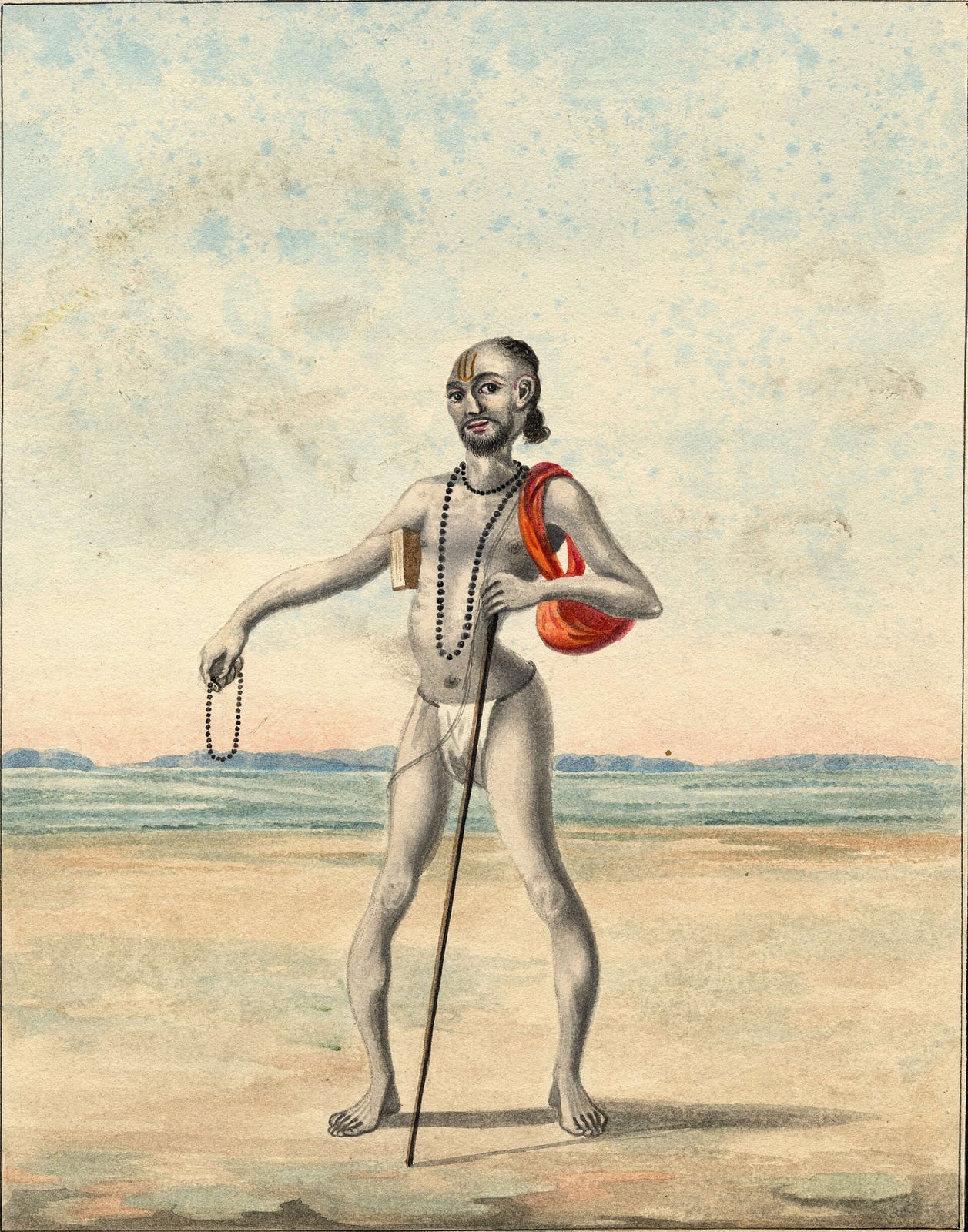
Ashtavakra
يتّفقان في: ما المطلق؟ هل الله موجود؟ · كيف يُبلَغ التحرّر أو الخلاص؟ · هل نحتاج إلى معلّم؟
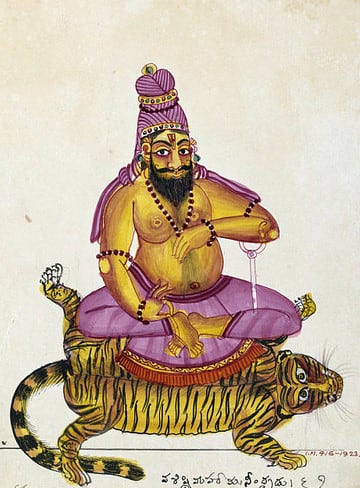
Vasishtha
يتّفقان في: ما المطلق؟ هل الله موجود؟ · كيف يُبلَغ التحرّر أو الخلاص؟ · هل نحتاج إلى معلّم؟
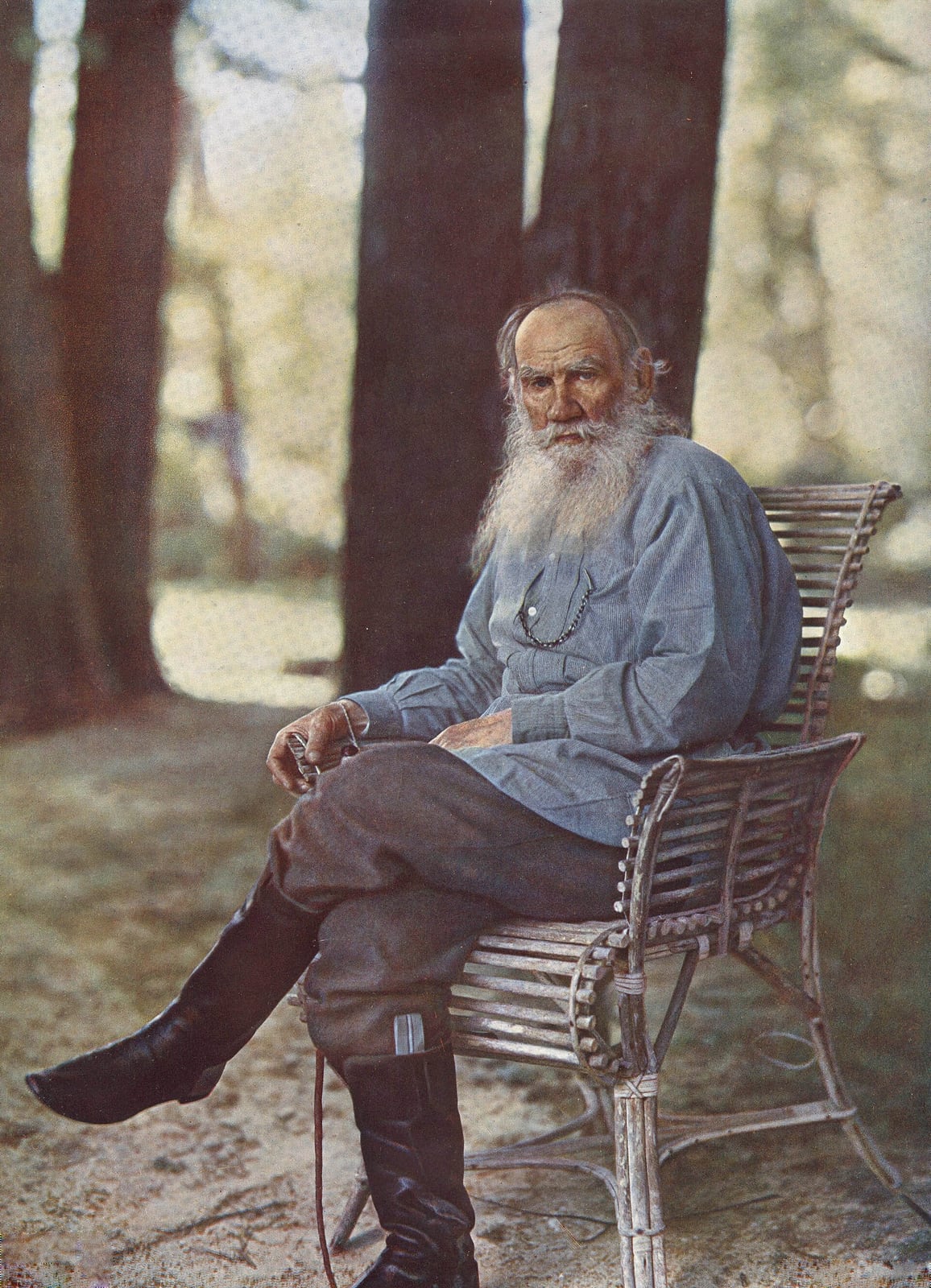
Leo Tolstoy
يتّفقان في: ما المطلق؟ هل الله موجود؟ · هل نحتاج إلى معلّم؟ · هل يستطيع العقل أن يعرف الحقيقة القصوى؟
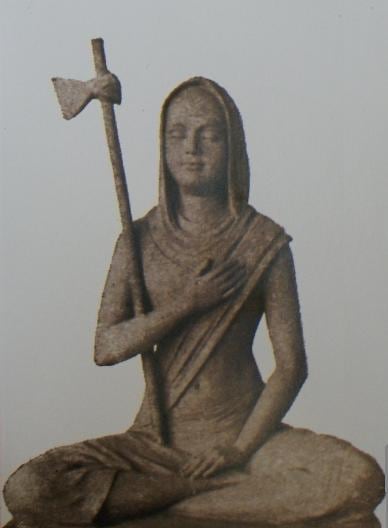
Gaudapada
يتّفقان في: ما المطلق؟ هل الله موجود؟ · كيف يُبلَغ التحرّر أو الخلاص؟ · هل العالم حقيقي؟


حكايات وروايات
حكايات وروايات
مختلَف فيهc. 500–490 a. C. (incierto)
Ameinias' shrine
أصل الرواية: Diogenes Laertius IX 21, quoting Sotion of Alexandria (2nd century BCE). There is no other source. Burnet (Early Greek Philosophy, § 84) considers it plausible.
شهادةs. V a. C.
The magistrates' oath
أصل الرواية: Speusippus in Diogenes Laertius IX 23; Plutarch, Against Colotes 1126a–b; Strabo VI 1.1. The three sources are independent of one another, though none is contemporary.
المصدر: Plutarco. Contra Colotes 1126a–b; Estrabón, Geografía VI 1.1; Espeusipo citado por Diógenes Laercio IX 23.
مختلَف فيهc. 450 a. C.
The meeting with the young Socrates
أصل الرواية: Plato, Parmenides 127a–c; Theaetetus 183e; Sophist 217c. Athenaeus, Deipnosophists XI 505f, considers it anachronistic. It is a literary testimony without independent confirmation.
موثّقs. I d. C. (inscripción); 1962 (hallazgo)
"Parmenides, son of Pyres, Ouliades, natural philosopher"
أصل الرواية: Packard Humanities Institute, inscription no. 301222 (Apollo 2, 1962, 125–136; SEG 38.1020). Reading "Ouliades" as the title of a medical school is the most widespread interpretation; Peter Kingsley developed it into his hypothesis of Parmenides the healer.
مختلَف فيهs. V a. C.
The evening star and the morning star
أصل الرواية: Diogenes Laertius IX 21 and 23 (Theophrastus, Favorinus); VIII 14 and 48 ascribe the same to Pythagoras. Fragments B14 and B15 are transmitted by Plutarch.
موثّقc. 530 d. C.
Simplicius and the rarity of the book
أصل الرواية: Simplicius, Commentary on Aristotle's Physics 144.25–28 (ed. Diels, 1882). The commentator himself states his motive.
المصدر: Simplicio. In Aristotelis Physicorum libros commentaria, ed. Hermann Diels, Commentaria in Aristotelem Graeca IX, Reimer, Berlín, 1882, pp. 144–146 (transcripción de B8 «por la rareza del libro»).
التعاليم
التعاليم
المفاهيم التي ينتظم بها فكره، مشروحة في سياقها.
What is (to eon)lo-que-es
The core of the way of truth (B2, B6, B8).
The two ways of inquirylas-dos-vias
Fragments B2, B6, B7 and B8.1–2.
المصدر: Mourelatos, Alexander P. D. The Route of Parmenides. Yale University Press, New Haven, 1970 (ed. revisada, Parmenides Publishing, 2008); y Palmer, John, Parmenides and Presocratic Philosophy, Oxford University Press, 2009.
Thinking and beingpensar-y-ser
Fragments B3 and B8.34–36; reception in Plotinus (Enneads V 1, 8).
Truth (aletheia) and opinion (doxa)verdad-y-opinion
Fragments B1.28–32, B8.50–61, B9–B19.
المصدر: Kirk, G. S., Raven, J. E. y Schofield, M. The Presocratic Philosophers, 2.ª ed. Cambridge University Press, 1983, cap. VIII (Parmenides of Elea). Trad. esp. de Jesús García Fernández, Gredos, 1987.
The well-rounded sphereesfera
Fragment B8.42–49.
The journey of the proemel-viaje-del-proemio
Fragment B1; testimony of Sextus Empiricus (Against the Mathematicians VII 111–114).
المصدر: Sexto Empírico. Contra los matemáticos VII 111–114 (cita y alegoría del proemio, B1.1–30). Trad. inglesa de R. G. Bury, Loeb Classical Library, 1935.
مقاطع الفيديو
مقاطع الفيديو
تسجيلات ومقابلات وأفلام وثائقية. تُشغَّل مقاطع الفيديو من YouTube؛ ولا تُستضاف هنا.
Parmenides: Pre-Socratic Philosophy
محاضرة· EN· 2022· 47 min
Philosophy Overdose
The Eleatic Monists (Parmenides & Zeno)
محاضرة· EN· 2017· 73 min
Adam Rosenfeldالقناة الرسمية
Parmenides of Elea | Being and Non-Being | Philosophy Core Concepts
تحليل· EN· 2019· 14 min
Gregory B. Sadler - That Philosophy Guyالقناة الرسمية
4. All is One: Parmenides & Zeno on Being and Nothingness
محاضرة· EN· 2014· 46 min
Mark Thorsbyالقناة الرسمية
Parmenides of Elea
محاضرة· EN· 2021· 30 min
Michael Wiitalaالقناة الرسمية
Gadamer on Parmenides & the Birth of Philosophy
مقابلة· DE· 2021· 8 min
Philosophy Overdose
Parménides de Elea
فيلم وثائقي· ES· 2017· 28 min
UNEDالقناة الرسمية
Conferencia José Luis Díaz Arroyo "Parménides"
محاضرة· ES· 2018· 135 min
Hercritia-Cátedra de Hermenéutica Críticaالقناة الرسمية
Parménides | Historia de la filosofía (6/61)
محاضرة· ES· 2017· 80 min
Ernesto Castroالقناة الرسمية
Filosofía más allá de la academia. Ciclo de filosofía antigua. Parménides y Heráclito
محاضرة· ES· 2022· 88 min
Universidad Nacional Abierta y a Distancia UNADالقناة الرسمية
Le Parménide historique et le «Parménide» de Platon — Francesco Fronterotta
محاضرة· FR· 2019· 94 min
Andrea Cirla
Parménide avec Lambros Couloubaritsis
مقابلة· FR· 2016· 44 min
Résonance[s]
المعرض
المعرض
صور بترخيص متحقَّق منه. كل منها تحتفظ بمؤلّفها ونسبتها.
العلاقات
العلاقات
تأثيرات وتلمذة وتقارب في الأفكار. تُميَّز العلاقة الموثّقة عن التشابه المستخلَص بالتحليل.
تلميذ
Jenófanes
Aristotle (Metaphysics A 5) records that he "is said" to have been his pupil, and Diogenes Laertius states it; the relationship is traditional and disputed.
تشابه مستخلَص بالتحليل
تأثّر بـ
According to Sotion, it was the Pythagorean Ameinias who led him to the life of study; the link with Pythagoreanism is indirect.
تشابه مستخلَص بالتحليل
معاصر لـ
Contemporaries; many read in B6 ("two-headed mortals… for whom the path of all things turns back on itself") a polemical allusion to Heraclitus.
تشابه مستخلَص بالتحليل
معلّم
Zenón de Elea
His pupil and, according to Plato, his beloved; he defended his doctrine with the paradoxes against plurality and motion.
علاقة موثّقة
معلّم
Meliso de Samos
Diogenes Laertius (IX 24) makes him a pupil of Parmenides; he reformulated the Eleatic thesis in prose, with what is as infinite.
علاقة موثّقة
أثّر في
Theophrastus, quoted by Diogenes Laertius (VIII 55), calls him an "emulator and imitator" of Parmenides in his poems; Empedocles accepts that nothing comes to be or perishes.
علاقة موثّقة
التقى بـ
Plato narrates a meeting in Athens around 450 BCE (Parmenides 127a–c; Theaetetus 183e; Sophist 217c); many consider it fictitious, though Burnet accepted it as historical.
تشابه مستخلَص بالتحليل
أثّر في
He devotes the dialogue Parmenides to him and, in the Sophist, presents his own theory of not-being as "parricide" against him.
علاقة موثّقة
أثّر في
He discusses the Eleatic thesis at the start of the Physics (I 2–3) and in the Metaphysics (A 5), and explains the pluralists as a response to it.
علاقة موثّقة
أثّر في
In the Enneads (V 1, 8) he quotes B3 and presents Parmenides as a forerunner of the identity of Intellect and being.
علاقة موثّقة
أفكار قريبة من
The affirmation of a single reality, unborn and unchanging, against apparent multiplicity has led to comparisons between the way of truth and Advaita Vedanta; there is no historical contact.
تشابه مستخلَص بالتحليل
المصادر
المصادر
المراجع والفهارس التي رُوجعت لهذه الصفحة.
- Wikidata, entidad Q125551 «Parmenides» (112 enlaces entre wikis; P31=Q5). Registra nacimiento en 515 a. C. y muerte en 470 a. C. (esta última incompatible con la cronología platónica) y Elea como lugar de nacimiento.
- Diógenes Laercio. Vidas y opiniones de los filósofos ilustres IX 21–23 (Parménides), 25 (Zenón) y 24 (Meliso), s. III d. C. Trad. inglesa de C. D. Yonge, Bohn, Londres, 1853 (Project Gutenberg n.º 57342); trad. inglesa de R. D. Hicks, Loeb, 1925 (Wikisource).
- Diels, Hermann y Kranz, Walther. Die Fragmente der Vorsokratiker, 6.ª ed. Weidmann, Berlín, 1951–1952, cap. 28 (Parmenides), A (testimonios) y B 1–19. Texto griego consultado en la transcripción de Wikisource en griego («Περί φύσεως (Παρμενίδης)»).
- Kirk, G. S., Raven, J. E. y Schofield, M. The Presocratic Philosophers, 2.ª ed. Cambridge University Press, 1983, cap. VIII (Parmenides of Elea). Trad. esp. de Jesús García Fernández, Gredos, 1987.
- Palmer, John. «Parmenides». The Stanford Encyclopedia of Philosophy, ed. Edward N. Zalta y Uri Nodelman; primera publicación el 8 de febrero de 2008, revisión sustancial del 4 de marzo de 2025.
- Burnet, John. Early Greek Philosophy, 2.ª ed. A. and C. Black, Londres, 1908, cap. IV (Parmenides of Elea), §§ 84–97 (Project Gutenberg n.º 67097).
- Coxon, A. H. The Fragments of Parmenides: A Critical Text with Introduction and Translation, the Ancient Testimonia and a Commentary. Van Gorcum, Assen, 1986; ed. revisada por Richard McKirahan, Parmenides Publishing, Las Vegas, 2009.
- Laks, André y Most, Glenn W. (eds. y trads.). Early Greek Philosophy, vol. V: Western Greek Thinkers, Part 2. Loeb Classical Library 528, Harvard University Press, 2016.
- Graham, Daniel W. (ed. y trad.). The Texts of Early Greek Philosophy, 2 vols. Cambridge University Press, 2010.
- Eggers Lan, Conrado y otros (introd., trad. y notas). Los filósofos presocráticos I. Biblioteca Clásica Gredos 12, Gredos, Madrid, 1978.
- Platón. Parménides 127a–128b; Teeteto 183e–184a; Sofista 237a, 241d–242a; Banquete 178b. Trad. inglesa de Benjamin Jowett, The Dialogues of Plato, 3.ª ed., Clarendon Press, Oxford, 1892 (Project Gutenberg n.º 1687, Parmenides).
- Aristóteles. Metafísica A 5, 986b18–987a2; Física I 2–3, 184b–187a; Sobre la generación y la corrupción I 8, 325a. Trad. inglesa de W. D. Ross y R. P. Hardie (Internet Classics Archive, MIT).
- Simplicio. In Aristotelis Physicorum libros commentaria, ed. Hermann Diels, Commentaria in Aristotelem Graeca IX, Reimer, Berlín, 1882, pp. 144–146 (transcripción de B8 «por la rareza del libro»).
- Sexto Empírico. Contra los matemáticos VII 111–114 (cita y alegoría del proemio, B1.1–30). Trad. inglesa de R. G. Bury, Loeb Classical Library, 1935.
- Packard Humanities Institute, Searchable Greek Inscriptions, n.º 301222: herma acéfala de mármol blanco de Velia, s. I d. C., «Παρμενείδης Πύρητος Οὐλιάδης φυσικός»; primera publicación en Apollo 2 (1962) 125–136; SEG 38.1020 y 53.1114.
- Kingsley, Peter. In the Dark Places of Wisdom. Golden Sufi Center, Inverness (California), 1999.
- Plutarco. Contra Colotes 1126a–b; Estrabón, Geografía VI 1.1; Espeusipo citado por Diógenes Laercio IX 23.
- Cordero, Néstor Luis. Siendo, se es. La tesis de Parménides. Biblos, Buenos Aires, 2005.
- Tarán, Leonardo. Parmenides: A Text with Translation, Commentary and Critical Essays. Princeton University Press, Princeton, 1965.
- Gallop, David. Parmenides of Elea: Fragments. A Text and Translation with an Introduction. University of Toronto Press (Phoenix, suppl. vol. 18), Toronto, 1984.
- Davidson, Thomas. «The Fragments of Parmenides». Journal of Speculative Philosophy, 4 (1870); separata, E. P. Gray, St. Louis, 1869 (Wikisource).
- Fairbanks, Arthur (ed. y trad.). The First Philosophers of Greece. Kegan Paul, Trench, Trübner, Londres, 1898 (Project Gutenberg n.º 78670).
- «Parmenides», Wikipedia en inglés, y «Parménides», Wikipedia en español (consultadas para contrastar datos y bibliografía; texto propio).
- Open Library (Internet Archive): ediciones del poema de Parménides verificadas por ISBN.
- Heródoto. Historias I 163–167 (los focenses y la fundación de Hyele/Elea), s. V a. C. Trad. inglesa de G. C. Macaulay, Macmillan, Londres, 1890 (Project Gutenberg n.º 2707).
- Bernabé, Alberto (ed. y trad.) y Pérez de Tudela, Jorge (introd., notas y comentarios). Parménides. Poema. Fragmentos y tradición textual, epílogo de Néstor-Luis Cordero. Istmo (Fundamentos), Madrid, 2007.
- Mourelatos, Alexander P. D. The Route of Parmenides. Yale University Press, New Haven, 1970 (ed. revisada, Parmenides Publishing, 2008); y Palmer, John, Parmenides and Presocratic Philosophy, Oxford University Press, 2009.
- Owen, G. E. L. «Eleatic Questions». The Classical Quarterly, 10 (1960), pp. 84–102.
- Plotino. Enéadas V 1, 8 (Parménides y la identidad de pensar y ser). Trad. inglesa de Stephen MacKenna, 1917–1930.
- صاحب الحقوق
- Textos antiguos en dominio público; cada traducción y edición crítica pertenece a su traductor o editorial
في انتظار التأكيد
ما لم تتمكّن هذه الصفحة من حسمه بعد. نفضّل أن نقول ذلك على أن نملأ الفراغ.
- Muerte: no hay ningún dato antiguo sobre su fecha o lugar; Wikidata da 470 a. C., incompatible con la visita a Atenas a los 65 años que narra Platón. Se deja como «unknown».
- Nacimiento: se adopta c. 515 a. C. (Platón, Parménides 127b; Wikidata); la cronología de Apolodoro (madurez en 504–501) lo situaría hacia el 540.
- Edición de Akal (Básica de Bolsillo, 2008): traductor no verificado en catálogo. Tarán (Princeton, 1965): ISBN no verificado.
- Traducción española de dominio público del poema: no localizada en línea con URL estable.
- Manuscritos: el poema depende de los códices de Simplicio y Sexto Empírico; falta identificar signaturas y digitalizaciones fiables.
- Programas de afiliación: ninguno verificado. Lista vacía.
- Año de los vídeos: el de la grabación cuando la descripción lo indica y, si no, el de publicación en YouTube.
بُحث بتاريخ 2026-10-25