الأفلاطونية · الأفلاطونية المحدثة
Plotinus
Πλωτῖνος
نحو 205 – 270شخصية موثّقة تاريخيًا
فيلسوف يوناني وُلد في مصر (نحو 205–270م)، ويُعدّ مؤسّس الأفلاطونية المحدثة. تتلمذ على أمونيوس سكّاس في الإسكندرية، وعلّم في روما منذ سنة 244، ولم يبدأ الكتابة إلا في الخمسين. ورسائله الأربع والخمسون، التي رتّبها تلميذه فرفوريوس في ست مجموعات من تسع هي «التاسوعات»، تعرض كوناً يفيض عن الواحد، عبر العقل والنفس، ويمكن للنفس أن تعود إليه بالتأمّل. وكان أثره في التصوّف الوثني والمسيحي والإسلامي بالغاً.
- مؤلَّفًا
- 59مؤلَّفًا
- طبعة
- 184طبعة
- اقتباسًا
- 9اقتباسًا
- مقطع فيديو
- 11مقطع فيديو
- صورة
- 8صورة
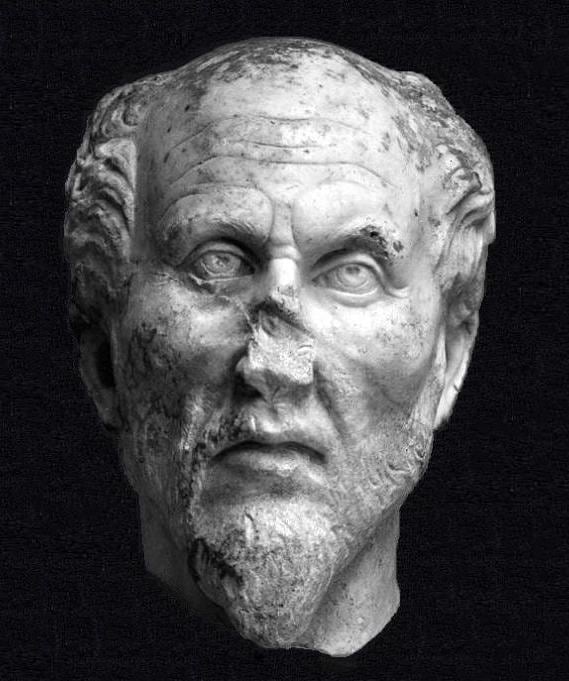
Cabeza de mármol identificada con Plotino (Ostia, inv. 436) · Public domain
بكلماته
«Let us flee then to the beloved Fatherland.»Enéadas I 6 [1], 8 (citando la Ilíada). Griego: Wikisource; inglés: Stephen MacKenna; español: traducción propia.

فكرته المحورية
The One (the Good): Plotinus' first principle is the One, which he also calls the Good.
السيرة
4 دقيقة قراءة
ترجمة مُعانة من الأصل الإسباني، بانتظار مراجعة مترجم من أهل اللغة.
فيلسوف يستحيي من أن يكون له جسد
«أفلوطين، فيلسوف زماننا، كان يبدو كأنه يستحيي من كونه في جسد». بهذه العبارة يفتتح فرفوريوس حياة أفلوطين، التي كتبها بعد ثلاثين سنة من موت أستاذه مقدّمةً لنشرة مؤلفاته. ومنها يأتي كلّ ما نعرفه تقريباً عن الرجل: فقد صحبه فرفوريوس ست سنوات في روما، وأكمل ذكرياته بذكريات تلاميذ آخرين، ولا سيّما الطبيب أوستوخيوس. إنها صورة يغلب عليها الإعجاب، وتقترب أحياناً من سِيَر القدّيسين، لكنها غنية بالمعطيات الدقيقة، وتزداد قيمتها لأن أفلوطين لم يكن يتحدّث قطّ عن أسرته ولا عن موطنه ولا عن تاريخ مولده. ولم يرضَ أن يجلس أمام رسّام: «ألا يكفي أن أحمل هذه الصورة التي ألبستنا إيّاها الطبيعة، حتى أرضى فوق ذلك بأن أترك صورةً للصورة؟».
الإسكندرية
يحسب فرفوريوس أنه وُلد نحو سنة 205م، لأنه مات سنة 270 في السادسة والستين؛ ويذكر المؤرّخ يونابيوس، بعد قرن، أنه وُلد في ليكوبوليس (أسيوط) بصعيد مصر، وهو خبر لا سبيل إلى التحقّق منه. وكانت لغته وثقافته يونانيتين. وفي الثامنة والعشرين أقبل على الفلسفة في الإسكندرية، لكنه كان يخرج من دروس أشهر المعلّمين حزيناً محبَطاً، إلى أن اصطحبه صديق ليستمع إلى أمونيوس سكّاس، وهو مفكّر أفلاطوني لم يكتب شيئاً. فقال عند خروجه: «هذا هو الذي كنت أبحث عنه». ولازمه إحدى عشرة سنة.
ودفعته الرغبة في معرفة فلسفة الفرس والهنود إلى الانضمام سنة 242 إلى حملة الإمبراطور غورديان الثالث على فارس. ومات غورديان في بلاد ما بين النهرين سنة 244، فنجا أفلوطين بشقّ الأنفس إلى أنطاكية. وفي السنة نفسها، في عهد الإمبراطور فيليب العربي، وهو في الأربعين، استقرّ في روما، حيث قضى بقية حياته.
مدرسة روما
ظلّ عشر سنين يعلّم مشافهةً فقط، وفاءً لعهد قطعه مع تلميذين آخرين من تلاميذ أمونيوس، هما هيرينيوس وأوريجانوس، ألّا يذيعوا تعاليم أستاذهم؛ فلمّا نقضه الآخران رأى نفسه هو أيضاً في حِلّ منه. وكانت دروسه محاورات مفتوحة: تُقرأ فيها شروح لأفلاطونيين ومشّائين — سيفيروس وكرونيوس ونومينيوس والإسكندر الأفروديسي — ثم يتكلّم أفلوطين ليبسط فكره الخاص، ويقبل الأسئلة حتى تعمّ الفوضى. وكان يحضر للاستماع إليه أعضاء في مجلس الشيوخ مثل روغاتيانوس، الذي تخلّى عن منصب البريتور وعن أمواله؛ وأطبّاء مثل أوستوخيوس؛ ونساء مثل جيمينا، التي كان يسكن في دارها، وابنتها. وكانت أسر كثيرة تعهد إليه بالوصاية على أبنائها اليتامى، فكان يراجع حساباتهم بدقّة. وأكرمه الإمبراطور غالينوس وزوجته سالونينا، فطلب إليهما أن يعيدا إعمار مدينة خربة في كامبانيا ليؤسّس فيها «أفلاطونوبوليس» تُحكم بقوانين أفلاطون؛ لكن دسائس البلاط أحبطت المشروع.
أربع وخمسون رسالة
بدأ الكتابة نحو سنة 253، في الخمسين من عمره، في السنة الأولى من حكم غالينوس. وحين وصل فرفوريوس إلى روما سنة 263 كان قد كتب إحدى وعشرين رسالة؛ وفي السنوات الست التالية، وقد حفّزته أسئلة فرفوريوس وأميليوس، كتب أربعاً وعشرين أخرى، منها الحلقة الكبرى في الردّ على الغنوصيين؛ ثم كتب، وهو مريض وفرفوريوس في صقلية، تسعاً أخيرة. وكان يكتب دفعة واحدة، كمن ينقل من كتاب ما سبق أن فكّر فيه، من غير أن يعيد القراءة لضعف بصره، ومن غير أن يعبأ بالإملاء؛ ولذلك عهد إلى فرفوريوس بمراجعتها. ونحو سنة 301 نشر فرفوريوس الرسائل الأربع والخمسين مرتّبةً لا بحسب تاريخها بل بحسب موضوعاتها، في ست مجموعات من تسع — التاسوعات —، من الأخلاق إلى الواحد؛ وحفظ فوق ذلك، في الحياة، القائمة الزمنية التي يمكن بفضلها تتبّع تطوّر فكر أفلوطين.
كون يفيض عن الواحد
كان أفلوطين يعدّ نفسه شارحاً لأفلاطون، لكن قراءته أنجبت شيئاً جديداً. ففي قمّة الوجود يضع الواحد أو الخير، البسيط بإطلاق، المتعالي على الوجود والفكر، الذي لا يمكن أن يُقال عنه شيء على الحقيقة. ومن امتلائه يفيض، دون أن ينقص الواحد شيئاً أو يريد ذلك، العقلُ، الذي يحوي جميع المُثُل ويعقل ذاته؛ ومن العقل تفيض النفس، التي تهب العالمَ المحسوس الحياةَ والنظام. أما المادّة، في الطرف الأدنى، فهي لاتعيّن محض، ويجعلها أفلوطين هي الشرّ. وكلّ موجود يفيض عن مبدئه وينزع إلى العودة إليه بتأمّله: والعودة ممكنة للنفس الإنسانية لأن جزءاً منها، كما يقرّر أفلوطين، لم يهبط قطّ هبوطاً تامّاً، بل يظلّ مقيماً في العالم المعقول.
تجربة الاتحاد
تبدأ الرسالة في هبوط النفس باعتراف فريد في الفلسفة اليونانية: «كثيراً ما أستيقظ إلى ذاتي خارجاً من جسدي…»، يقول المؤلف إنه رأى جمالاً عجيباً واتّحد بالإلهي. ويؤكّد فرفوريوس أن أفلوطين بلغ، في السنوات الست التي قضاها معه، الاتحادَ بالإله الذي يعلو العقل أربع مرات. ورأى بيير هادو في هذه التجربة مركز عمله: الفلسفة تحويلٌ للنظر، وتبسيطٌ باطني يبلغ ذروته في «فرار الوحيد إلى الوحيد» الذي تُختم به رسالة في الخير أو الواحد.
الموت في كامبانيا
في سنواته الأخيرة أصيب بمرض عضال بحّ صوتَه وأغشى بصرَه وملأ يديه وقدميه بالقروح؛ ويصفه فرفوريوس بالتفصيل، وقد ترجم ستيفن ماكينا اسمه بـ«الدفتيريا الخبيثة». فانقطع أصدقاؤه عن زيارته، واعتزل في ضيعة صديقه الراحل زيثوس في كامبانيا. وروى أوستوخيوس، الذي وصل متأخّراً من بوتيولي، لفرفوريوس أن أفلوطين قال له إنه ما زال ينتظره، وإنه يجتهد في أن يُصعِد ما فينا من إلهيّ إلى ما في الكلّ من إلهيّ؛ وفي تلك اللحظة انسلّت حيّة تحت السرير واختفت في ثقب في الجدار، وأسلم أفلوطين الروح. كان ذلك سنة 270.
الأثر اللاحق
جعل تلاميذه وتلاميذ تلاميذه — فرفوريوس ويامبليخوس وبرقلس ودمسقيوس — من الأفلاطونية المحدثة آخر مدرسة فلسفية وثنية كبرى. وقرأ أوغسطين أسقف هيبّو في ميلانو «كتب الأفلاطونيين» بترجمة ماريوس فيكتورينوس اللاتينية، واعترف بأنها كانت حاسمة في اهتدائه، وكانت على الأرجح رسائل لأفلوطين وفرفوريوس. ونقلت صياغةٌ عربية للتاسوعات من الرابع إلى السادس، نُسبت إلى أرسطو بعنوان أثولوجيا، فكرَه إلى الفلسفة الإسلامية. وفي سنة 1492 نشر مارسيليو فيتشينو في فلورنسا الترجمة اللاتينية الكاملة، التي فتحت أمامه أبواب أوروبا الحديثة.
المصادر: Porfirio. Vida de Plotino y orden de sus libros (Περὶ τοῦ Πλωτίνου βίου καὶ τῆς τάξεως τῶν βιβλίων αὐτοῦ). Texto griego en la ed. de R. Volkmann (Teubner, 1883), en Wikisource en griego; trad. inglesa de Stephen MacKenna (1917), en Wikisource en inglés. · Plotino. Enéadas. Texto griego en Wikisource en griego; trad. inglesa de Stephen MacKenna (vols. 1–4, 1917–1926) y de MacKenna y B. S. Page (vol. 5, 1930), en Wikisource en inglés. · Hadot, Pierre. Plotin ou la simplicité du regard. París: Plon, 1963. Trad. inglesa: Plotinus or the Simplicity of Vision, University of Chicago Press, 1993. · Igal, Jesús. «Introducción general», en Porfirio, Vida de Plotino; Plotino, Enéadas I–II. Biblioteca Clásica Gredos, 57. Madrid: Gredos, 1982. · Gerson, Lloyd P. (ed.). The Cambridge Companion to Plotinus. Cambridge: Cambridge University Press, 1996.
الخط الزمني
الحياة عامًا بعد عام
كل نقطة حدث موثّق. انقر لتقرأه مع مصدره ودرجة اليقين فيه.
نحو 205أقل من عام¿Licópolis (Egipto)?
Birth
Porphyry infers the year (the thirteenth of Septimius Severus) from his age at death; Plotinus never revealed the day or month. Eunapius gives Lycopolis as his homeland.
مرجَّحPorfirio. Vida de Plotino y orden de sus libros (Περὶ τοῦ Πλωτίνου βίου καὶ τῆς τάξεως τῶν βιβλίων αὐτοῦ). Texto griego en la ed. de R. Volkmann (Teubner, 1883), en Wikisource en griego; trad. inglesa de Stephen MacKenna (1917), en Wikisource en inglés.
بعد وفاته
- نحو 301Porphyry publishes the Enneads
- 386Augustine reads the Platonists
- نحو 840The "Theology of Aristotle"
- 1492Ficino's Latin translation
- 1580Greek editio princeps
- 1917 – 1930First complete English translation
نحو 205 · أقل من عام
Birth
Porphyry infers the year (the thirteenth of Septimius Severus) from his age at death; Plotinus never revealed the day or month. Eunapius gives Lycopolis as his homeland.
مرجَّح
نحو 232 · 28 عامًا
Meeting Ammonius Saccas
At twenty-eight, dissatisfied with the teachers of Alexandria, he hears Ammonius and exclaims: "This is the man I was looking for." He studies with him for eleven years.
موثّق
نحو 242 – 244 · 38 عامًا
Gordian III's expedition
He joins Gordian III's army against Persia to learn the philosophy of the Persians and Indians. After the emperor's death (244) he flees to Antioch.
موثّق
نحو 244 · 40 عامًا
Arrival in Rome
Under Philip the Arab he settles in Rome, where he teaches orally for ten years without writing, because of a pact with Herennius and Origen.
موثّق
نحو 246 · 42 عامًا
Amelius arrives
Amelius Gentilianus joins the school, where he will remain for twenty-four years; he compiles nearly a hundred books of notes from the lectures.
موثّق
نحو 253 · 49 عامًا
He begins writing
In the first year of Gallienus' reign he begins writing treatises; the first, according to Porphyry, is "On Beauty" (I.6).
موثّق
263 – 268 · 59 عامًا
Porphyry arrives
Porphyry of Tyre joins the school in the tenth year of Gallienus, when Plotinus has written twenty-one treatises. In the following six years he will write twenty-four more (22–45), including the cycle against the Gnostics (30–33).
موثّق
نحو 265 · 61 عامًا
The Platonopolis project
He asks Gallienus and Salonina to restore a ruined city in Campania to found Platonopolis, governed by Plato's Laws. Opposition at court prevents it.
موثّق
نحو 268 · 64 عامًا
Porphyry to Sicily
Plotinus notices that Porphyry is tempted by suicide and advises him to travel; Porphyry leaves for Sicily. Plotinus sends him there the last nine treatises (46–54).
موثّق
270 · 66 عامًا
Death
Dies on Zethus' estate in Campania at the end of the second year of Claudius II, attended by Eustochius.
موثّق
نحو 301
Porphyry publishes the Enneads
Porphyry edits the fifty-four treatises in six Enneads, prefaced by the Life of Plotinus and the chronological list.
مرجَّح
386
Augustine reads the Platonists
Augustine reads in Milan the "books of the Platonists" translated by Marius Victorinus, decisive for his conversion (Confessions VII.9).
مرجَّح
نحو 840
The "Theology of Aristotle"
In al-Kindi's circle an Arabic paraphrase of Enneads IV–VI attributed to Aristotle is produced, transmitting Neoplatonism to Islamic philosophy.
مرجَّح
1492
Ficino's Latin translation
Marsilio Ficino publishes the complete Latin translation of the Enneads, dedicated to Lorenzo de' Medici.
موثّق
1580
Greek editio princeps
Pietro Perna prints in Basel the first Greek text of the Enneads, together with Ficino's version.
موثّق
1917 – 1930
First complete English translation
Stephen MacKenna publishes the first volume of his translation, completed in 1930 with the collaboration of B. S. Page.
موثّق
المؤلَّفات
المؤلَّفات الأساسية
المؤلَّفات التي لا يُفهم إرثه من دونها.
مجموعة لاحقة · نحو 301
Enneads
Ἐννεάδες
The complete works of Plotinus. Porphyry arranged them from the simplest subject to the most exalted: Ennead I deals with ethics and man; II with the physical world; III with providence, fate, time and love; IV with the soul; V with Intellect; VI with the kinds of being and the One. Each treatise carries in brackets its number in the chronological order that Porphyry himself preserved in the Life (4–6), which allows three periods to be distinguished: treatises 1–21 (up to 263), 22–45 (263–268) and 46–54 (268–270). It is the source of ancient Neoplatonism and one of the foundational texts of Western mysticism.
16 طبعة
دراسة أكاديمية · نحو 301
Life of Plotinus (by Porphyry)
Περὶ τοῦ Πλωτίνου βίου καὶ τῆς τάξεως τῶν βιβλίων αὐτοῦ
"On the life of Plotinus and the arrangement of his books", written around 301, when Porphyry was sixty-eight. It narrates the Alexandrian youth, the Persian expedition, the school in Rome, the circle of pupils, the Platonopolis project, the mystical unions and the death in Campania; it transcribes Apollo's oracle on Plotinus' soul and gives the chronological list of the treatises with their distribution into enneads. It is one of the richest biographies of philosophers from antiquity.
5 طبعات
مؤلَّف مكتوب · نحو 253
Ennead I.6 [1]: On beauty
Περὶ τοῦ καλοῦ
The first treatise he wrote and one of the most widely read. It refutes the view that beauty consists in symmetry: the beautiful is the presence of form in matter. It rises from beautiful bodies to beautiful pursuits, to the beauty of the soul and to intelligible Beauty, and invites the reader to "chisel his own statue", since no eye ever saw the sun without becoming sunlike. It contains the exhortation "let us flee to the beloved fatherland".
3 طبعات

مؤلَّف مكتوب · نحو 253
Ennead IV.8 [6]: On the descent of the soul into bodies
Περὶ τῆς εἰς τὰ σώματα καθόδου τῆς ψυχῆς
It opens with the famous autobiographical confession: "Many times, waking up to myself out of the body…". It reconciles Plato's apparently contradictory texts on the soul's descent—a fault in the Phaedo and the Phaedrus, a cosmic mission in the Timaeus—and argues that a part of our soul does not descend but remains in the intelligible.
3 طبعات

مؤلَّف مكتوب · نحو 253
Ennead V.1 [10]: On the three primary hypostases
Περὶ τῶν τριῶν ἀρχικῶν ὑποστάσεων
A programmatic exposition of his system. It opens with the question why souls have forgotten their father, God, and answers with their audacity (tolma) and their desire to belong to themselves. It invites the reader to recall the soul's dignity and presents the One, Intellect and Soul, relying on Plato's Parmenides and Second Letter and on earlier philosophers.
3 طبعات
مؤلَّف مكتوب · نحو 253
Ennead VI.9 [9]: On the Good or the One
Περὶ τἀγαθοῦ ἢ τοῦ ἑνός
Every being is what it is by being one. After ascending through soul and Intellect, Plotinus shows that the One is none of the things and is reached only by a presence superior to knowledge, when the soul strips itself of all form. He describes union as the meeting of centre with centre and ends with the formula that sums up Plotinian mysticism: the flight of the alone to the Alone. Porphyry placed it at the end of the Enneads.
3 طبعات
جميع مؤلَّفاته (59)
Ennead I.1 [53]: What is the living being, and what is man?
268
Ennead I.2 [19]: On virtues
253
Ennead I.3 [20]: On dialectic
253
Ennead I.4 [46]: On happiness (well-being)
268
Ennead I.5 [36]: Whether happiness increases with time
263
Ennead I.7 [54]: On the primal good and the other goods
268
Ennead I.8 [51]: On what are and whence come evils
268
Ennead I.9 [16]: On going out of the body
253
Ennead II.1 [40]: On the cosmos (or on heaven)
263
Ennead II.2 [14]: On the movement of heaven
253
Ennead II.3 [52]: Whether the stars are causes
268
Ennead II.4 [12]: On matter (or on the two matters)
253
Ennead II.5 [25]: On what exists potentially and what actually
263
Ennead II.6 [17]: On quality and form (or on substance and quality)
253
Ennead II.7 [37]: On complete transfusion
263
Ennead II.8 [35]: On sight, or how distant objects appear small
263
Ennead II.9 [33]: Against the Gnostics
263
Ennead III.1 [3]: On fate
253
Ennead III.2 [47]: On providence, I
268
Ennead III.3 [48]: On providence, II
268
Ennead III.4 [15]: On our allotted guardian spirit
253
Ennead III.5 [50]: On love
268
Ennead III.6 [26]: On the impassibility of the bodiless
263
Ennead III.7 [45]: On eternity and time
263
الأقوال
أقوال محدَّدة الموضع في مؤلَّف بعينه. كل منها يحمل مصدره ودرجة الثقة به.
Let us flee then to the beloved Fatherland.Φεύγωμεν δὴ φίλην ἐς πατρίδα.
متحقَّق منهEnéadas I 6 [1], 8 (citando la Ilíada). Griego: Wikisource; inglés: Stephen MacKenna; español: traducción propia.
أقوال منحولة أو مختلَف في نسبتها (1)
«Beauty is the light that plays over the symmetry of things, rather than the symmetry itself.»
A free and widely circulated paraphrase of Enneads VI.7 [38].22, where Plotinus says that beauty is rather what shines upon the symmetry than the symmetry itself. It circulates as a literal quotation, but it is not one; the original passage should be quoted.
الكلمات الأخيرة
رواية لاحقة عن شهود
«"I have still been waiting for you." And he said he was striving to bring back the divine in us to the divine in the All.»σὲ ἔτι περιμένω […] πειρᾶσθαι τὸ ἐν ἡμῖν θεῖον ἀνάγειν πρὸς τὸ ἐν τῷ παντὶ θεῖον.
Porphyry, Life of Plotinus 2. Porphyry was not present—he was at Lilybaeum in Sicily—; he tells it from the account of the physician Eustochius, who arrived late from Puteoli and was the only pupil present at the death. The second sentence is in indirect speech, so it is not certain that it reproduces literal words. Some editors read "the divine in you" (hymin) instead of "in us" (hēmin), in which case the sentence would be an exhortation to the disciples; MacKenna's translation reads "the Divine in myself". Porphyry adds that at that moment a snake passed under the bed and hid in a hole in the wall, and Plotinus breathed his last.
المصدر: Porfirio. Vida de Plotino y orden de sus libros (Περὶ τοῦ Πλωτίνου βίου καὶ τῆς τάξεως τῶν βιβλίων αὐτοῦ). Texto griego en la ed. de R. Volkmann (Teubner, 1883), en Wikisource en griego; trad. inglesa de Stephen MacKenna (1917), en Wikisource en inglés.
اسأل
بماذا يجيب أثره
اثنا عشر سؤالًا كبيرًا من أسئلة الإنسانية، وما تتيح نصوصه الإجابة به عنها، مع المراجع. ولا نقوّله ما لم يقل أبدًا.
ما المطلق؟ هل الله موجود؟
The One, beyond being and thought, can only be spoken of by negation
ما لا يُسمّىيقوله صراحةً
For Plotinus the principle of all is the One, or the Good, from which Intellect and Soul proceed without it being diminished. Precisely because it is the principle of all things it is none of them: it is beyond being, form and thought, and does not even think itself. Hence the name “One” describes nothing: it is a negation of multiplicity, and Plotinus warns that we do not say what it is but what it is not. We speak of it from what comes after it, and only union, when the soul is alone with it, reaches it. The last sentence of treatise V 3 sums up the method: take away everything.
قارن هذا السؤال مع معلّمين آخرينمن أنا؟ هل توجد ذات حقيقية؟
A part of the soul never descended: we remain above, in Intellect
الذات هي المطلقيقوله صراحةً
For Plotinus what we call “we” is stretched between two levels. The compound of body and lower soul feels, suffers and desires; but the true human being is the reasoning soul and, higher, the Intellect in which it shares. In the treatise on the soul's descent he holds, against the common Platonist view, that not all of our soul has come down: a part always remains in the intelligible. He himself recounts that he often woke to himself out of the body and saw a marvellous beauty. To know oneself is to climb back from the scattered self to that undescended part and, from there, to union with the One.
قارن هذا السؤال مع معلّمين آخرينلماذا نتألّم؟
Souls forgot their father through the audacity of wanting to belong to themselves
الانفصال عن اللهيقوله صراحةً
Treatise V 1 opens by asking what has made souls forget their father, God, and be ignorant of themselves and of him. The answer is audacity: the wish to belong to themselves, the pleasure in moving on their own account, which took them so far from their origin that they ended up admiring things here and despising themselves. Elsewhere Plotinus places the origin of evil in matter, the absolute privation of good, towards which the soul inclines in descending. Suffering is thus distance: that of a soul that has turned outward and forgotten itself. The remedy is return, and the image summing it up is Odysseus going back to his beloved homeland.
قارن هذا السؤال مع معلّمين آخرينماذا يحدث بعد الموت؟
The soul is immortal, and what we truly are never left the intelligible
ما أنا عليه لا يولد ولا يموتيقوله صراحةً
One of Plotinus' earliest treatises argues against Stoics and Epicureans that the soul is neither a body nor the harmony of a body, and therefore cannot perish: it belongs to the nature of the divine and eternal. What dies is the compound, the living being that feels and suffers. Since a part of the soul has never descended, death does not affect what we truly are. Plotinus also admits, following Plato, that souls that have identified with the lower are reborn in human or animal bodies according to their life. Porphyry relates that his last words were an effort to raise the divine in us to the divine in the all.
قارن هذا السؤال مع معلّمين آخرينكيف يُبلَغ التحرّر أو الخلاص؟
Return to oneself, be purified and ascend to union with the One
بالمعرفة المباشرةيقوله صراحةً
Plotinus describes an ascent in several stages. The civic virtues order life; the purificatory virtues separate the soul from the body's passions; dialectic raises it to Intellect, where it knows itself as part of the intelligible. In the treatise on beauty, the watchword is to turn inward and carve one's own statue until the radiance of virtue shines, because the eye does not see the sun without becoming like it. But the final step exceeds knowledge: union with the One is not seeing an object but coinciding with it, and Plotinus compares it to two centres touching. Porphyry states that he attained it four times while Porphyry was with him.
قارن هذا السؤال مع معلّمين آخرينهل نحتاج إلى معلّم؟
Teaching only shows the road; the vision belongs to whoever wants to see
المعلّم في الداخليقوله صراحةً
Porphyry relates that Plotinus, at twenty-eight, searched in vain among the schools of Alexandria until, on hearing Ammonius Saccas, he exclaimed that this was the man he was looking for, and stayed with him eleven years. The teacher was thus decisive in his life. But in the Enneads teaching has a precise limit: we speak and write to point towards the One and to wake from reasonings to vision, like someone showing the road to one who wishes to travel; the contemplation itself is the task of whoever wishes to see. What is sought is not outside: the One is present to all, and whoever turns inward finds it. The teacher points; the true guide is the divine in the soul.
قارن هذا السؤال مع معلّمين آخرينهل العالم حقيقي؟
The visible world is the last level of a procession from the One
مستويات من الوجوديقوله صراحةً
Plotinus conceives reality as a hierarchy. From the One proceeds Intellect, where the intelligible forms are; from Intellect, Soul, which animates the cosmos; and at the extreme, matter, which in itself is nothing and receives forms like a mirror. The sensible world is real as image and work of Soul: in the treatise against the Gnostics he defends its beauty and order against those who despise it, and calls it the best possible image of the intelligible. But authentic being lies above, and each lower level is a weaker contemplation of the higher. The visible is one plane of a graded reality, upheld in its entirety by the One.
قارن هذا السؤال مع معلّمين آخرينما الحب؟
The soul loves the Good as a lover; in union, two become one
الشوق والوصاليقوله صراحةً
For Plotinus everything that proceeds from the One keeps the desire to return to it, and in the soul that desire is love. The treatise on love interprets Plato's Eros as the activity of the soul tending towards the good. In the treatise on the Good or the One he compares the soul to a maiden who, separated from her father by earthly marriages, returns to him and knows true love; when she reaches him, nothing stands between them, and they are no longer two but one. Treatise VI 7 describes the soul receiving an outflow from the Good and seized by burning love. Love is the movement of return to the origin.
قارن هذا السؤال مع معلّمين آخرينهل نحن أحرار أم أن كل شيء مقدَّر؟
We are free when we act from intellect, not from passions
إرادة حرة حقيقيةيقوله صراحةً
Plotinus rejects astrological and Stoic determinism in his treatise on fate: if everything were fixed by external causes, it would not be we who act. But his notion of freedom is demanding. In treatise VI 8 he asks what depends on us and answers that it is not enough to do what we want: whoever acts carried away by passions or ignorance is not free. Only the soul acting from intellect and towards the good is, because it then acts according to its own nature. And freedom in the full sense belongs to the One, which is what it wills to be. In the treatises on providence he also admits a justice fulfilled across several lives.
قارن هذا السؤال مع معلّمين آخرينلماذا نتأمّل أو نصلّي؟
Return to yourself and look: prayer is reaching out alone to the Alone
العودة إلى منبع الأنايقوله صراحةً
For Plotinus the way to the divine is a return inward. In the treatise on beauty the watchword is to return to oneself and look, and to keep carving one's own statue until it shines. In V 1 he explains that the soul must gather itself, turn its gaze from the external and listen to the voices from above, like someone awaiting a beloved voice. Before speaking of the supreme principle he invokes God, not with spoken words, but stretching the soul in prayer towards him, alone to the Alone. The goal is to find the source: the centre of the soul coincides with the centre of all, and whoever sees himself in his purity meets the One.
قارن هذا السؤال مع معلّمين آخرينهل يستطيع العقل أن يعرف الحقيقة القصوى؟
The One is beyond thought: it is reached by presence, not by science
الحقيقة القصوى وراء العقليقوله صراحةً
Plotinus grants reason enormous reach: Intellect knows all that is intelligible, and the reasoning soul can rise to it. But the supreme principle lies beyond: the One is not an object of thought, because all thinking implies a duality between the thinker and the thought. Hence, he says in VI 9, the apprehension of the One comes not through science or intellection, like that of other intelligibles, but through a presence superior to science. We speak of it to orient, but we do not state it; dialectic and virtue prepare, and the last step is to leave even thought behind. The watchword closing V 3 sums it up: take away everything.
قارن هذا السؤال مع معلّمين آخرينالانسحاب من العالم أم تغييره؟
Present at once to himself and to others, without slackening contemplation
التأمّل في الفعليقوله صراحةً
Plotinus' doctrine places contemplation above everything: action is a weakened contemplation, a detour for those unable to contemplate directly. But his life, as Porphyry tells it, was that of a man in the world. He taught in Rome, acted as arbiter in disputes, was guardian to orphans whose property he managed scrupulously, and even asked the emperor Gallienus for a city in Campania to govern by Plato's laws. Porphyry stresses that, while attending to others, he never interrupted his inner attention: he was present at once to himself and to others. The heart turned to the essential does not exclude service.
قارن هذا السؤال مع معلّمين آخرين
التقارب والتوتّر
التقارب والتوتّر
محسوبة سؤالًا سؤالًا انطلاقًا من مواقفه. وسبب كل اتفاق أو اختلاف يظهر بالنقر.
يقترب في تفكيره من
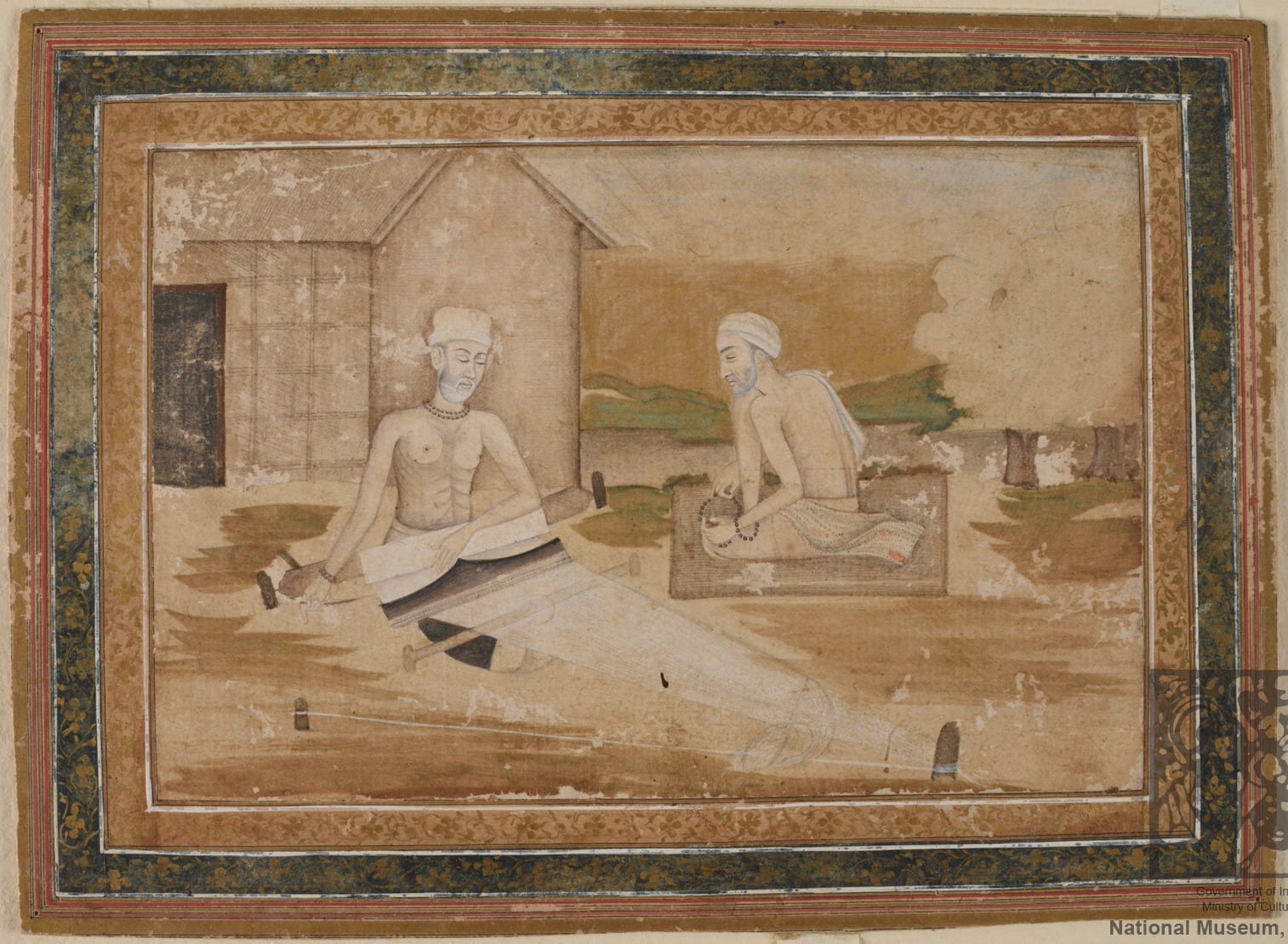
Kabir
يتّفقان في: ما المطلق؟ هل الله موجود؟ · من أنا؟ هل توجد ذات حقيقية؟ · لماذا نتألّم؟
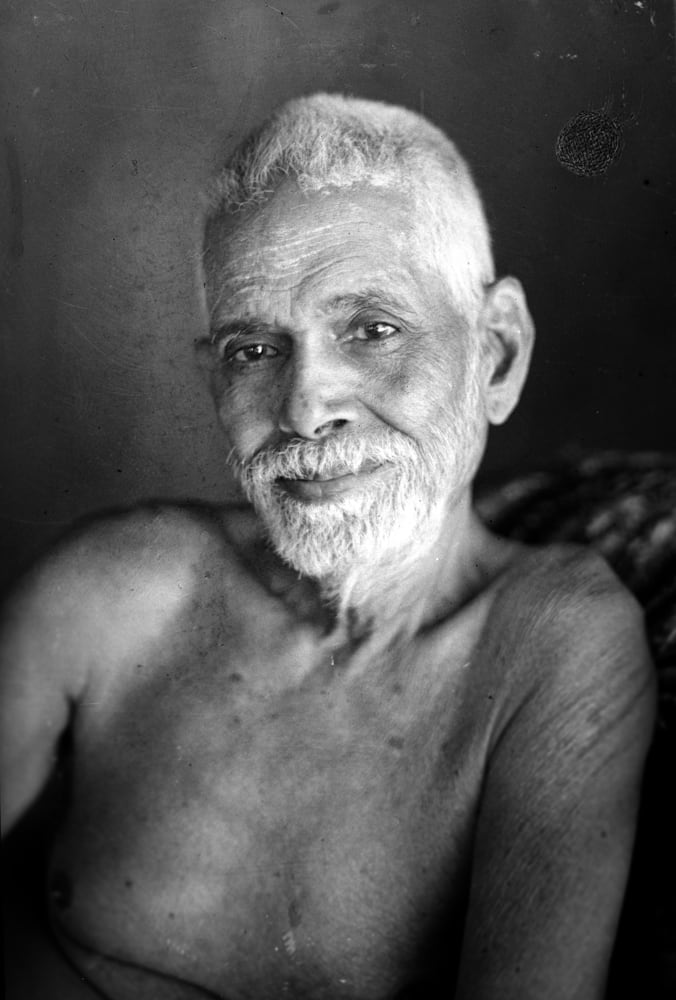
Ramana Maharshi
يتّفقان في: من أنا؟ هل توجد ذات حقيقية؟ · ماذا يحدث بعد الموت؟ · كيف يُبلَغ التحرّر أو الخلاص؟

Nisargadatta Maharaj
يتّفقان في: ما المطلق؟ هل الله موجود؟ · من أنا؟ هل توجد ذات حقيقية؟ · ماذا يحدث بعد الموت؟
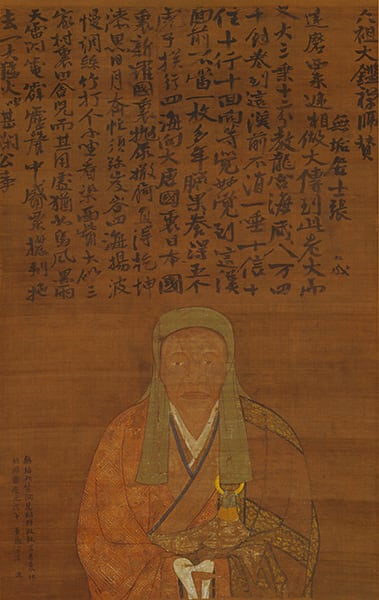
Huineng
يتّفقان في: من أنا؟ هل توجد ذات حقيقية؟ · ماذا يحدث بعد الموت؟ · كيف يُبلَغ التحرّر أو الخلاص؟



حكايات وروايات
حكايات وروايات
شهادةc. 232
"This is the man I was looking for"
أصل الرواية: Porphyry, Life of Plotinus 3, who says he heard it from Plotinus himself in conversation.
شهادةc. 250–265
The image of the image
أصل الرواية: Porphyry, Life of Plotinus 1. The heads from Ostia sometimes identified as Plotinus have no proven connection with this portrait.
شهادةc. 260–268
Platonopolis
أصل الرواية: Porphyry, Life of Plotinus 12. There is no other source; the ruined "city of philosophers" has not been identified.
رواية من سِيَر القدّيسينc. 255–268
The god in the Iseum
أصل الرواية: Porphyry, Life of Plotinus 10, in the same section in which he tells how the spells of Olympius of Alexandria rebounded on their caster. It is a marvellous tale that Porphyry transmits as proof of his master's superiority.
شهادةc. 268
The advice to Porphyry
أصل الرواية: Porphyry, Life of Plotinus 11, in the first person.
شهادة263–268
Union four times
أصل الرواية: Porphyry, Life of Plotinus 22–23. It is the direct testimony of a pupil, but about an experience that by definition only Plotinus himself knew.
التعاليم
التعاليم
المفاهيم التي ينتظم بها فكره، مشروحة في سياقها.
The One (the Good)el-uno
It unites the Good of the Republic, beyond essence, with the One of the first hypothesis of the Parmenides. It is the root of the negative theology of Pseudo-Dionysius and of medieval mysticism.
المصدر: Kalligas, Paul. «Plotinus». Stanford Encyclopedia of Philosophy, ed. Edward N. Zalta (2024).
The three hypostasestres-hipostasis
The term "hypostasis" for the three principles comes from the title Porphyry gave to V.1; the doctrine influenced Greek Trinitarian theology, though with essential differences (in Plotinus there is hierarchy).
المصدر: Kalligas, Paul. «Plotinus». Stanford Encyclopedia of Philosophy, ed. Edward N. Zalta (2024).
Procession and reversionprocesion-y-conversion
The scheme of remaining, procession and reversion was systematised by Proclus and transmitted to the Middle Ages by Pseudo-Dionysius and the Book of Causes.
المصدر: Kalligas, Paul. «Plotinus». Stanford Encyclopedia of Philosophy, ed. Edward N. Zalta (2024).
All things are contemplationcontemplacion
It opens the great treatise against the Gnostics (III.8, V.8, V.5, II.9): against the idea of an evil demiurge, Plotinus presents a cosmos produced by contemplation.
The undescended soulalma-no-descendida
It contrasts with the Phaedo and the Phaedrus, which speak of a fall, and reconciles those texts with the Timaeus; it is central in IV.8 and IV.3–4.
المصدر: Kalligas, Paul. «Plotinus». Stanford Encyclopedia of Philosophy, ed. Edward N. Zalta (2024).
Beautybelleza
It develops the ladder of Plato's Symposium; through Ficino, I.6 and V.8 decisively influenced Renaissance art theory.
Union with the Oneunion-mistica
Pierre Hadot considered it the centre of his thought; it shaped Christian (Pseudo-Dionysius, Eckhart) and Sufi mysticism, although in Plotinus no grace or revelation intervenes.
المصدر: Hadot, Pierre. Plotin ou la simplicité du regard. París: Plon, 1963. Trad. inglesa: Plotinus or the Simplicity of Vision, University of Chicago Press, 1993.
مقاطع الفيديو
مقاطع الفيديو
تسجيلات ومقابلات وأفلام وثائقية. تُشغَّل مقاطع الفيديو من YouTube؛ ولا تُستضاف هنا.
La filosofía helenística (IV): El neoplatonismo · La March
محاضرة· ES· 2022· 59 min
Fundación Juan Marchالقناة الرسمية
9. Plotino y el Neoplatonismo
محاضرة· ES· 2022· 203 min
Fundación Universitaria Españolaالقناة الرسمية
John Cooper: Platonist Philosophy as a Way of Life: Plotinus
محاضرة· EN· 2013· 61 min
McCoy Family Center for Ethics in Societyالقناة الرسمية
Ep. 18 - Awakening from the Meaning Crisis - Plotinus and Neoplatonism
محاضرة· EN· 2019· 54 min
John Vervaeke’s Lectern
What is Neoplatonism?
تحليل· EN· 2022· 56 min
Let's Talk Religion
Antonio Gargano - Plotino
محاضرة· IT· 2020· 83 min
IISF • Istituto Italiano per gli Studi Filosoficiالقناة الرسمية
Giovanni Reale | Enneadi di Plotino | festivalfilosofia 2011
محاضرة· IT· 2011· 50 min
Festivalfilosofiaالقناة الرسمية
Fuga dal mondo ed estasi nel pensiero di Plotino - Franco Ferrari
محاضرة· IT· 2023· 58 min
Fondazione Collegio San Carloالقناة الرسمية
Relire Plotin avec Michel Cazenave, Luc Brisson et Jean-François Pradeau
مقابلة· FR· 2013· 60 min
Résonance[s]
Plotin - Begründer des Neoplatinismus
محاضرة· DE· 2023· 48 min
Akademisches Forum Albertus Magnusالقناة الرسمية
Fabian Völker - Einführung in den Neuplatonismus - Plotin - I/II
محاضرة· DE· 2022· 90 min
Fabian Völker
المعرض
المعرض
صور بترخيص متحقَّق منه. كل منها تحتفظ بمؤلّفها ونسبتها.
المخطوطات
المخطوطات
شواهد مخطوطة ونصوص قديمة، مع جهة حفظها وشروط الاطّلاع عليها.
GRC · Minúscula griega · Tratados de 253–270; copia de c. 1460
Πλωτίνου Ἐννεάδες
- الشاهد المحفوظ
- Ejemplar de trabajo de Marsilio Ficino para su traducción latina, con sus anotaciones marginales
- جهة الحفظ
- Bibliothèque nationale de France · Grec 1816
LA · Humanística · Traducción terminada en 1486; copia de finales del s. XV
Plotini Enneades, interprete Marsilio Ficino
- الشاهد المحفوظ
- Manuscrito iluminado por Attavante degli Attavanti para Lorenzo de Médici
- جهة الحفظ
- Biblioteca Medicea Laurenziana, Florencia · Plut. 82.10
العلاقات
العلاقات
تأثيرات وتلمذة وتقارب في الأفكار. تُميَّز العلاقة الموثّقة عن التشابه المستخلَص بالتحليل.
تأثّر بـ
He celebrated Socrates' traditional birthday, like Plato's, with a sacrifice and a banquet (Life 2).
علاقة موثّقة
تأثّر بـ
He regarded himself as an interpreter of Plato, whom he calls "the divine Plato" (IV.8.1); nearly all his treatises start from a Platonic passage (Republic, Parmenides, Timaeus, Symposium, Phaedrus). He celebrated Plato's traditional birthday with a sacrifice (Life 2).
علاقة موثّقة
تأثّر بـ
Porphyry says Aristotle's Metaphysics is condensed in his writings and that the Peripatetic commentators were read in class (Life 14). Plotinus adopts the Aristotelian noetics of the intellect thinking itself and criticises his categories (VI.1–3).
علاقة موثّقة
تأثّر بـ
In V.1.8 he presents Parmenides as a forerunner for identifying being and thinking, and reads the first hypothesis of Plato's Parmenides as a doctrine of the One.
علاقة موثّقة
اختلف مع
He criticises the theses of the school Zeno founded: the corporeal soul (IV.7), total blending (II.7) and the Stoic categories (VI.1). Porphyry notes, however, that his writings are full of latent Stoic doctrines (Life 14).
علاقة موثّقة
اختلف مع
He rejects atomism and the denial of providence: in II.9.15 he reproaches Epicurus for abolishing providence and the Gnostics for being even worse.
علاقة موثّقة
أثّر في
Augustine read in Milan "books of the Platonists" in Marius Victorinus' translation (Confessions VII.9; VIII.2) and expressly quotes Plotinus in The City of God (IX.17; X.14).
علاقة موثّقة
أفكار قريبة من
He does not mention him. Both conceive philosophy as an exercise of inner conversion: Marcus' "retire into yourself" and Plotinus' "withdraw into yourself and look" (I.6.9).
تشابه مستخلَص بالتحليل
أفكار قريبة من
He does not mention him. They agree in locating freedom in what is up to us, a theme Plotinus carries up to the One in VI.8; Simplicius, a Neoplatonist, later commented on Epictetus' Handbook.
تشابه مستخلَص بالتحليل
المصادر
المصادر
المراجع والفهارس التي رُوجعت لهذه الصفحة.
- Wikidata, entidad Q134189 «Plotinus» (103 enlaces entre wikis; P31=Q5). Registra nacimiento hacia el 205 (Licópolis o Asiut) y muerte en el 270 en Campania.
- Porfirio. Vida de Plotino y orden de sus libros (Περὶ τοῦ Πλωτίνου βίου καὶ τῆς τάξεως τῶν βιβλίων αὐτοῦ). Texto griego en la ed. de R. Volkmann (Teubner, 1883), en Wikisource en griego; trad. inglesa de Stephen MacKenna (1917), en Wikisource en inglés.
- Plotino. Enéadas. Texto griego en Wikisource en griego; trad. inglesa de Stephen MacKenna (vols. 1–4, 1917–1926) y de MacKenna y B. S. Page (vol. 5, 1930), en Wikisource en inglés.
- Kalligas, Paul. «Plotinus». Stanford Encyclopedia of Philosophy, ed. Edward N. Zalta (2024).
- Hadot, Pierre. Plotin ou la simplicité du regard. París: Plon, 1963. Trad. inglesa: Plotinus or the Simplicity of Vision, University of Chicago Press, 1993.
- Igal, Jesús. «Introducción general», en Porfirio, Vida de Plotino; Plotino, Enéadas I–II. Biblioteca Clásica Gredos, 57. Madrid: Gredos, 1982.
- Gerson, Lloyd P. (ed.). The Cambridge Companion to Plotinus. Cambridge: Cambridge University Press, 1996.
- Armstrong, A. H. (trad.). Plotinus, 7 vols. Loeb Classical Library 440–445 y 468. Cambridge (Mass.): Harvard University Press, 1966–1988.
- Eunapio. Vidas de los filósofos y sofistas, «Plotino». Trad. inglesa de W. C. Wright, Loeb Classical Library 134. Londres: Heinemann, 1921.
- «Plotinus» y «Enneads», Wikipedia en inglés; «Plotino», Wikipedia en español (consultadas para hechos verificables, la tabla cronológica y bibliografía; texto propio).
- Edwards, Mark (trad.). Neoplatonic Saints: The Lives of Plotinus and Proclus by their Students. Liverpool: Liverpool University Press, 2000.
- Agustín de Hipona. Confesiones, VII 9 y VIII 2; La ciudad de Dios, IX–X. Trad. inglesa de J. G. Pilkington y Marcus Dods, Nicene and Post-Nicene Fathers, serie I, vols. I–II, 1886–1887.
- Adamson, Peter. The Arabic Plotinus: A Philosophical Study of the «Theology of Aristotle». Londres: Duckworth, 2002.
- Ficino, Marsilio (trad.). Plotini Platonicorum facile coryphaei Opera. Florencia: Antonio Miscomini, 1492.
- Moore, Edward. «Plotinus (204/5–270 C.E.)». Internet Encyclopedia of Philosophy.
- Henry, Paul, y Hans-Rudolf Schwyzer (eds.). Plotini Opera, 3 vols. Oxford Classical Texts. Oxford: Clarendon Press, 1964–1982.
- Guthrie, Kenneth Sylvan (trad.). Plotinos: Complete Works, in Chronological Order, Grouped in Four Periods, 4 vols. Alpine (Nueva Jersey): Platonist Press, 1918 (texto en Project Gutenberg).
- Bibliothèque nationale de France, ms. Grec 1816 (Enéadas, copiado en Florencia hacia 1460 por Juan Escutariotes, con notas de Marsilio Ficino); reproducción en Wikimedia Commons.
- Biblioteca Medicea Laurenziana, Plut. 82.10 (traducción latina de Ficino, ejemplar de dedicatoria a Lorenzo de Médici, iluminado por Attavante); reproducción en Wikimedia Commons.
- صاحب الحقوق
- Textos antiguos en dominio público; cada traducción y edición moderna pertenece a su traductor o editorial
في انتظار التأكيد
ما لم تتمكّن هذه الصفحة من حسمه بعد. نفضّل أن نقول ذلك على أن نملأ الفراغ.
- MacKenna, vol. 5 (Enéada VI, 1930, con B. S. Page, m. 1993): dominio público solo en EE. UU.; para la UE se ofrece Guthrie (1918). Antes de publicar el texto de la Enéada VI en la sala de lectura, decidir según la jurisdicción de la plataforma.
- Títulos griegos de los tratados: se siguen las cabeceras de Wikisource (edición transcrita); los títulos varían entre la lista de Porfirio y los manuscritos. Cotejar con Henry–Schwyzer.
- Loeb vol. IV (ISBN 9780674994881): Open Library no indica el número de volumen; confirmar LCL 443. Años de primera edición de los vols. Loeb tomados de la bibliografía general.
- Losada, «Enéadas» (2006, ISBN 9789500393911): falta el nombre del traductor.
- Edwards, «Neoplatonic Saints» (2000) y Adamson, «The Arabic Plotinus» (2002): ISBN no verificados.
- Manuscritos: falta registrar los principales testimonios griegos (familias de los códices Laurentianus 87, 3, Parisinus gr. 1976, Marcianus gr. 209, etc.) y verificar las digitalizaciones de BnF Grec 1816 (Gallica) y Laurenziana Plut. 82.10.
- Ediciones en alemán (Harder, Meiner) e italiano (Faggin, Bompiani; Reale) con ISBN no registradas.
- Últimas palabras: confirmar en Henry–Schwyzer la lectura ἡμῖν/ὑμῖν de Vida 2, 26.
- Sin programa de afiliación verificado ni titular de derechos: autor antiguo; las editoriales citadas no se han comprobado como programas de afiliados.
بُحث بتاريخ 2026-10-25