الهندوسية · بهاكتي · التقليد الفيدي
Valmiki
वाल्मीकि · Vālmīki · रामायण · வால்மீகி
شخصية أسطورية
شاعر أسطوري ينسب إليه التراث «رامايانا» ويسمّيه «آديكافي»، أي «الشاعر الأول». كل ما يُعرف عنه مصدره القصيدة نفسها، التي يظهر فيها حكيمًا يحوّل حزنه على طائر كركي مقتول إلى شعر، وحاميًا لسيتا ومعلّمًا لابنيها، وأساطيرُ متأخرة مثل أسطورة قاطع الطريق التائب. ويؤرّخ فقه اللغة نواة الملحمة بين القرنين الثامن والخامس قبل الميلاد، ويعدّ الكتابين الأول والأخير متأخرين. وتُنسب إليه أيضًا رواية «يوغا فاسيشتا».
- مؤلَّفًا
- 12مؤلَّفًا
- طبعة
- 24طبعة
- اقتباسًا
- 4اقتباسًا
- مقطع فيديو
- 14مقطع فيديو
- صورة
- 8صورة
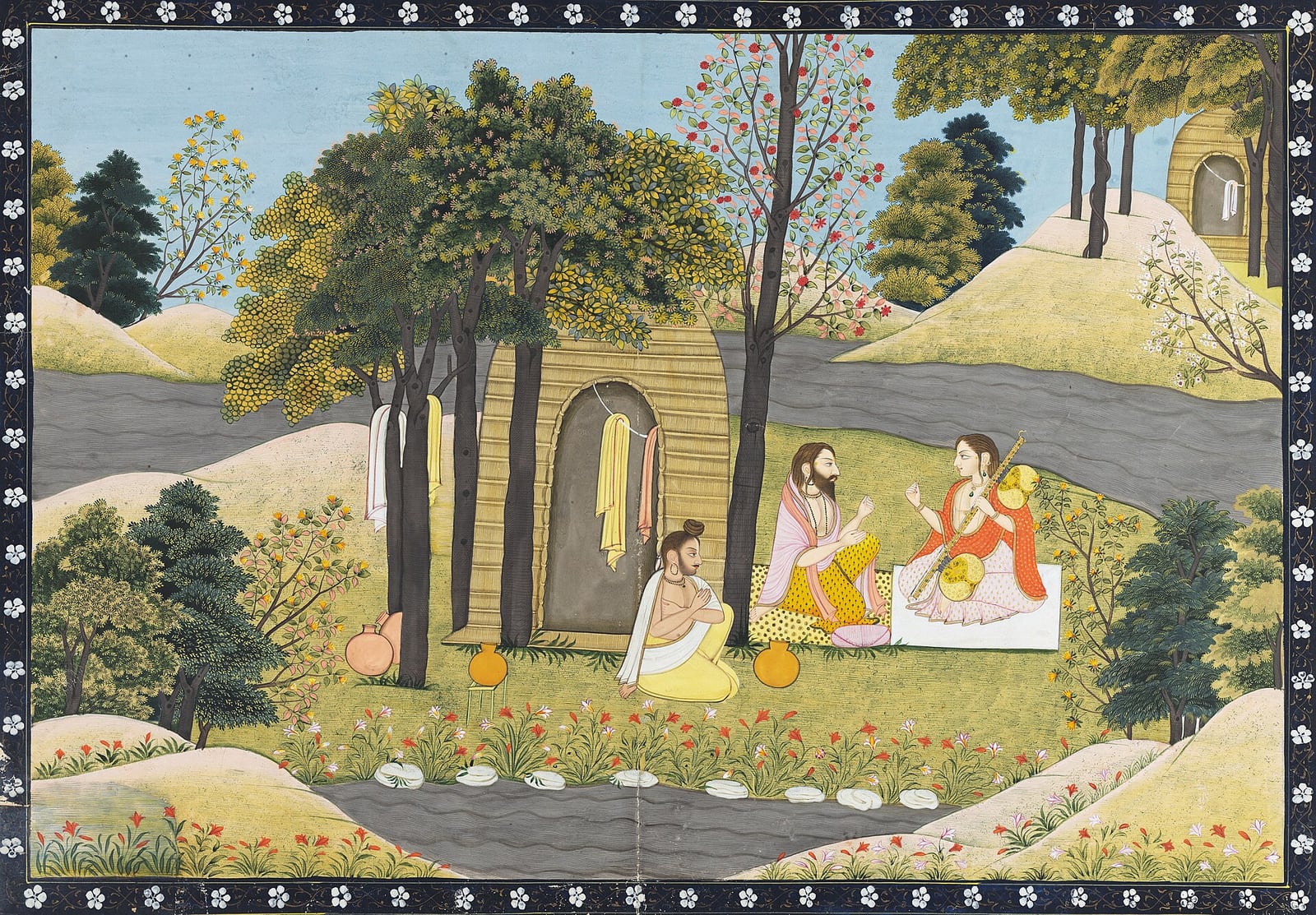
Nārada en la ermita de Vālmīki · Public domain
بكلماته
«No fame be thine for endless time, / Because, base outcast, of thy crime, / Whose cruel hand was fain to slay / One of this gentle pair at play!»Rāmāyaṇa, Bālakāṇḍa, canto II (1.2.14 de la edición crítica); trad. en verso de R. T. H. Griffith (1870, dominio público); versión española del investigador

فكرته المحورية
Śloka (the stanza born of grief): The śloka is the stanza of two lines of sixteen syllables, divided into four feet of eight (anuṣṭubh), which became the metre par excellence of the epic and of classical Sanskrit literature.
السيرة
3 دقيقة قراءة
ترجمة مُعانة من الأصل الإسباني، بانتظار مراجعة مترجم من أهل اللغة.
الشاعر الأول
يسمّي التراث الهندي فالميكي «آديكافي»، أي «الشاعر الأول»، ويسمّي «رامايانا» التي نظمها «آديكافيا»، أي «القصيدة الأولى»: العمل الذي يُقال إن الشعر العالِم بالسنسكريتية وُلد معه. وهذا قول في أصل جنس أدبي، لا في سيرة رجل. فليس لفالميكي أيّ وثيقة من خارج النصوص؛ وكل ما يُعرف عنه مصدره القصيدة نفسها، التي يظهر فيها شخصيةً من شخصياتها، وأساطير متأخرة عنها كثيرًا. ويتعامل علم فقه اللغة معه بوصفه الاسم الذي أطلقه التراث على مؤلف — أو مؤلفي — ملحمة نُظمت ووُسّعت على مدى قرون عدة.
قصيدة تروي مولدها
تُستهلّ «رامايانا» بحكاية عن نفسها. يسأل فالميكي الحكيم نارادا هل في العالم رجل فاضل شجاع صادق رحيم، فيلخّص له نارادا سيرة راما. وبعد قليل، على ضفة نهر تاماسا، يرى الشاعر صيّادًا يقتل الذكر من زوج من طيور الكركي «كرونشا»، بينما تصيح الأنثى إلى جوار الجثة. فيتأثّر ويلعن الصياد، فتخرج كلماته موزونة، في بيتين تتألف تفاعيلهما من ثمانية مقاطع: لقد صار الحزن («شوكا») بيتًا من الشعر («شلوكا»). ثم يتجلّى له براهما ويأمره أن يروي قصة راما على هذا الوزن. وقد بيّن روبرت غولدمان أن هذه الأناشيد الأولى إطار متأخر يجعل من الملحمة أسطورةً لنشأة الشعر؛ وبعد قرون سيرى أناندافاردهانا في هذا المشهد الدليل على أن روح الشعر هي العاطفة.
شخصية في عمله
في الكتاب الأخير، «أوتاراكاندا»، يدخل الشاعر في الحكاية. فراما، وقد صار ملكًا في أيودهيا، ينبذ سيتا بسبب أقاويل الناس، فتلجأ وهي حامل إلى صومعة فالميكي، حيث يولد ابناها التوأمان كوشا ولافا. ويربّيهما الحكيم ويعلّمهما القصيدة، التي سينشدها الفتيان أمام راما نفسه في أثناء القربان الكبير للحصان. عندئذ يقود فالميكي سيتا إلى المجلس ويُقسم بنسكه على براءتها: «أنا الابن العاشر لبراتشيتاس، والكذب لا ينبت حتى في ذهني». فتسأل سيتا الأرض أن تحتضنها إن كانت وفيّة، فتنشقّ الأرض. وهكذا يغدو الشاعر شاهدًا على صدق روايته وحاميًا له وضامنًا.
نصّ من قرون كثيرة
تضمّ «رامايانا» نحو أربعة وعشرين ألف بيت بحسب التراث، موزّعة على سبعة كتب («كاندا»)، وقد انتقلت في روايتين كبيرتين، شمالية وجنوبية، مع اختلافات إقليمية كثيرة. وبين عامَي 1960 و1975 أصدر المعهد الشرقي في بارودا طبعتها النقدية، التي تسعى إلى إعادة بناء أقدم نص يمكن بلوغه. وثمة اتفاق على أن الكتب من الثاني إلى السادس تشكّل النواة، وأن الأول والسابع إضافتان لاحقتان: فقد كتب رالف غريفيث منذ عام 1874 أن «أوتاراكاندا» «ليس سوى ملحق». وتتباين التواريخ بحسب الباحثين: فغولدمان يضع نظم النواة بين القرنين الثامن والسادس قبل الميلاد؛ ويصف جون بروكينغتون عملية نموّ تمتد من القرن الخامس قبل الميلاد إلى القرون الأولى بعده. فإن كان ثمة فالميكي تاريخي، فهو شاعر تلك النواة، الذي يتعذّر اليوم تحديد هويته.
قاطع الطريق الذي صار قدّيسًا
أشهر أسطورة عن فالميكي ليست في «رامايانا». فبحسب نصوص تعبّدية لاحقة، مثل «أدهياتما رامايانا»، كان قاطع طريق اكتشف، حين التقى بعض الحكماء، أن أسرته لن تشاركه وزر جرائمه؛ ولمّا عجز عن النطق باسم راما، أُمر بأن يردّد «مارا»، التي تعطي الاسم إذا قُلبت، فتأمّل ساكنًا زمنًا طويلًا حتى غطّاه بيت نمل («فالميكا»)، ومن هنا جاء اسمه. وقد درست جوليا ليزلي كيف تصطدم قصة التوبة هذه، بعد أن صارت قانونية، بتعبّد الجماعات التي تبجّل فالميكي مرشدًا روحيًا لها وترفض صورة قاطع الطريق.
سلطة الاسم
كما هي الحال مع فياسا، استُخدم اسم فالميكي لإضفاء السلطة على أعمال أخرى. فتُنسب إليه رواية «يوغا فاسيشتا»، الحوار الوسيط الكبير الذي يعلّم فيه فاسيشتا راما؛ و«أدبهوتا رامايانا» و«أناندا رامايانا»، وهما إعادتا كتابة متأخرتان لقصة راما، وبعض الأناشيد مثل «غانغاشتاكا». وجعل منه الكتّاب المسرحيون شخصية: فبهافابهوتي، في القرن الثامن، يجعله يؤلّف مسرحية داخل مسرحيته «أوتاراراماتشاريتا».
الأثر
«رامايانا» فالميكي هي مصدر مئات الصيغ بلغات الهند وجنوب شرق آسيا، من صيغة كامبان بالتاميلية إلى «رامتشاريتماناس» لتولسيداس بلغة الأوادهي، ومصدر تقليد تصويري طويل: فقد زيّنتها المراسم المغولية بالمنمنمات في أواخر القرن السادس عشر. وفي عام 1881 كتب رابندراناث طاغور الشاب «فالميكي براتيبها» («عبقرية فالميكي»)، وهي أوبرا عن توبة الشاعر، وأدّى دوره فيها بنفسه. وكانت أول ترجمة إنجليزية شعرية ترجمةَ رالف غريفيث (1870–1874)، التي أغفلت الكتاب الأخير؛ أما ترجمة مانماثا ناث دوت (1891–1894)، النثرية، فقد ضمّته؛ وأما ترجمة جامعة برينستون، بإشراف روبرت وسالي غولدمان، فقد اكتملت عام 2016 بمجلّد «أوتاراكاندا»، بعد أربعة عقود من العمل.
ما يمكن الجزم به
يستطيع المؤرخ أن يقرّر أن ملحمة كبرى عن راما، نُظمت بالسنسكريتية على مدى قرون عدة قبل بداية التقويم الميلادي وبعدها، قد انتقلت تحت اسم فالميكي، وأن إطارها السردي جعل من هذا الاسم اسمَ مبتكر الشعر. أما الرجل، إن كان قد وُجد، فلم يبقَ منه شيء يمكن التحقّق منه: لا تواريخ، ولا مكان، ولا عمل يمكن فصله على وجه اليقين عن الأيدي التي وسّعته.
المصادر: Goldman, Robert P. (trad. e introd.). The Rāmāyaṇa of Vālmīki: An Epic of Ancient India. Vol. I: Bālakāṇḍa. Princeton: Princeton University Press, 1984. Introducción (autor, fecha, el episodio de las grullas y el marco del poema). · Brockington, John. The Sanskrit Epics. Leiden: Brill, 1998 (Handbuch der Orientalistik, 2. Abt., Bd. 12). Capítulos sobre el Rāmāyaṇa: transmisión, recensiones, estratos y datación. · Brockington, John. Righteous Rāma: The Evolution of an Epic. Delhi: Oxford University Press, 1984. · Griffith, Ralph T. H. (trad.). The Rámáyan of Válmíki, translated into English verse. 5 vols. Londres: Trübner; Benarés: E. J. Lazarus, 1870–1874. Project Gutenberg n.º 24869 (cantos I–II del libro I; nota sobre el Uttarakáṇḍa). · Bhatt, G. H., y U. P. Shah (eds. gen.). The Vālmīki-Rāmāyaṇa: Critical Edition. 7 vols. Baroda: Oriental Institute, 1960–1975.
الخط الزمني
الحياة عامًا بعد عام
كل نقطة حدث موثّق. انقر لتقرأه مع مصدره ودرجة اليقين فيه.
نحو 500 ق.م – 100 ق.مNorte de la India
The core of the Rāmāyaṇa
Composition of books II to VI, the core of the epic, orally transmitted. Brockington describes growth in stages from the fifth century BCE; Goldman proposes older dates for the core (eighth to sixth centuries BCE). If there was a historical Vālmīki, he would be its poet.
مختلَف فيهBrockington, John. The Sanskrit Epics. Leiden: Brill, 1998 (Handbuch der Orientalistik, 2. Abt., Bd. 12). Capítulos sobre el Rāmāyaṇa: transmisión, recensiones, estratos y datación.
نحو 500 ق.م – 100 ق.م
The core of the Rāmāyaṇa
Composition of books II to VI, the core of the epic, orally transmitted. Brockington describes growth in stages from the fifth century BCE; Goldman proposes older dates for the core (eighth to sixth centuries BCE). If there was a historical Vālmīki, he would be its poet.
مختلَف فيه
نحو 100 – 300
The first and last books are added
The Bālakāṇḍa, with the account of the birth of poetry, and the Uttarakāṇḍa, where Vālmīki shelters Sītā and teaches the poem to her sons, are incorporated as late strata. Griffith already considered the last book an appendix in 1874.
مختلَف فيه
1597 – 1605
The illustrated Freer Rāmāyaṇa
Painters of the Mughal workshop illustrate a Persian manuscript of Vālmīki's Rāmāyaṇa, now in the Freer Gallery in Washington, with scenes such as that of the hunter and the cranes.
موثّق
1870 – 1874
Griffith's verse translation
Ralph T. H. Griffith publishes in five volumes the first English verse translation of the first six books, with a summary of the Uttarakāṇḍa.
موثّق
1881
Tagore's Vālmīki Pratibhā
Rabindranath Tagore writes and performs Vālmīki Pratibhā, a Bengali opera on the conversion of the bandit into a poet.
موثّق
1891 – 1894
M. N. Dutt's prose translation
Manmatha Nath Dutt publishes the complete English prose translation, including the Uttarakāṇḍa (1894).
موثّق
1900
Vivekananda speaks on the Rāmāyaṇa
Swami Vivekananda devotes a lecture to the Rāmāyaṇa before an American audience and presents Vālmīki as India's first poet.
موثّق
1960 – 1975
The critical edition
The Oriental Institute of Baroda publishes in seven volumes the critical edition of Vālmīki's Rāmāyaṇa, based on the collation of the northern and southern recensions.
موثّق
1984 – 2016
The Princeton translation
The first volume of the annotated translation directed by Robert P. Goldman, based on the critical edition, appears; the seventh, the Uttarakāṇḍa, completes the work in 2016.
موثّق
المؤلَّفات
المؤلَّفات الأساسية
المؤلَّفات التي لا يُفهم إرثه من دونها.
نسبة تقليدية · نحو 500 ق.م
Rāmāyaṇa (The Journey of Rāma)
रामायण (Rāmāyaṇa)
Sanskrit epic of some twenty-four thousand stanzas, according to tradition, in seven books: Bāla, Ayodhyā, Araṇya, Kiṣkindhā, Sundara, Yuddha and Uttara. It narrates the life of Rāma, prince of Ayodhyā: his fourteen-year exile, the abduction of his wife Sītā by Rāvaṇa, king of Laṅkā, the alliance with the monkeys and with Hanumān, the war and the return to the throne. A model of learned poetry (kāvya) and of the ideal of dharma, it is the source of hundreds of versions across Asia.
12 طبعة

نسبة تقليدية · نحو 1100
Yoga Vāsiṣṭha (Mahārāmāyaṇa)
योगवासिष्ठ (Yogavāsiṣṭha), también महारामायण
A great philosophical dialogue in six books in which Vasiṣṭha teaches the young Rāma that the world is a projection of the mind and that liberation is possible in life. Vālmīki appears as narrator within a chain of frames, which made it possible to present the work as a 'Great Rāmāyaṇa' complementing the epic poem. Its main entry is under Vasiṣṭha.
طبعتان
جميع مؤلَّفاته (12)

Bālakāṇḍa (Book of Childhood)
Valmiki
Ayodhyākāṇḍa (Book of Ayodhyā)
The Conscious LibraryAyodhyākāṇḍa (Book of Ayodhyā)
Valmiki
Araṇyakāṇḍa (Book of the Forest)
The Conscious LibraryAraṇyakāṇḍa (Book of the Forest)

Kiṣkindhākāṇḍa (Book of Kiṣkindhā)
Valmiki
Sundarakāṇḍa (The Beautiful Book)
The Conscious LibrarySundarakāṇḍa (The Beautiful Book)
Valmiki
Yuddhakāṇḍa (Book of the War)
The Conscious LibraryYuddhakāṇḍa (Book of the War)
Valmiki
Uttarakāṇḍa (The Last Book)
The Conscious LibraryUttarakāṇḍa (The Last Book)
Valmiki
Adbhuta Rāmāyaṇa (The Wondrous Rāmāyaṇa)
The Conscious LibraryAdbhuta Rāmāyaṇa (The Wondrous Rāmāyaṇa)
Valmiki
Ānanda Rāmāyaṇa
The Conscious LibraryĀnanda Rāmāyaṇa
Valmiki
Gaṅgāṣṭaka (Eight Stanzas to the Ganges)
The Conscious LibraryGaṅgāṣṭaka (Eight Stanzas to the Ganges)
الأقوال
أقوال محدَّدة الموضع في مؤلَّف بعينه. كل منها يحمل مصدره ودرجة الثقة به.
No fame be thine for endless time, / Because, base outcast, of thy crime, / Whose cruel hand was fain to slay / One of this gentle pair at play!mā niṣāda pratiṣṭhāṃ tvam agamaḥ śāśvatīḥ samāḥ / yat krauñcamithunād ekam avadhīḥ kāmamohitam
متحقَّق منهRāmāyaṇa, Bālakāṇḍa, canto II (1.2.14 de la edición crítica); trad. en verso de R. T. H. Griffith (1870, dominio público); versión española del investigador
أقوال منحولة أو مختلَف في نسبتها (1)
«Mother and motherland are greater than heaven (jananī janmabhūmiś ca svargād api garīyasī).»
It is constantly quoted as a verse of Vālmīki's, spoken by Rāma before Laṅkā, but it does not appear in the Baroda critical edition; it circulates in some late versions and anthologies. It should be regarded as of doubtful attribution.
الكلمات الأخيرة
لا توجد سجلات يمكن التحقق منها لكلماته الأخيرة.
There is no record of his death. Vālmīki is a legendary figure whose only 'biography' comes from the Rāmāyaṇa and later legends; none of them narrates his end.
المصدر: Goldman, Robert P. (trad. e introd.). The Rāmāyaṇa of Vālmīki: An Epic of Ancient India. Vol. I: Bālakāṇḍa. Princeton: Princeton University Press, 1984. Introducción (autor, fecha, el episodio de las grullas y el marco del poema).
اسأل
بماذا يجيب أثره
اثنا عشر سؤالًا كبيرًا من أسئلة الإنسانية، وما تتيح نصوصه الإجابة به عنها، مع المراجع. ولا نقوّله ما لم يقل أبدًا.
ما المطلق؟ هل الله موجود؟
The gods act in history, and Rāma is finally revealed as Viṣṇu
إله شخصييُستنتج من تعاليمه
The Rāmāyaṇa does not formulate a theology, but its world is peopled by personal gods who deliberate, ask for help and grant boons: Brahmā grants Rāvaṇa invulnerability against gods and demons, and the gods turn to Viṣṇu so that he may be born as a man and kill him. In the Bālakāṇḍa that incarnation is explicit, and in the Yuddhakāṇḍa, after Sītā's ordeal by fire, Brahmā reveals to Rāma that he is Nārāyaṇa. The divine thus appears as someone who intervenes to restore dharma. The core of the poem, however, tells the life of a prince who suffers, doubts and weeps as a man, and its opening question is not who God is, but whether there exists in the world a fully virtuous man.
قارن هذا السؤال مع معلّمين آخرينمن أنا؟ هل توجد ذات حقيقية؟
The poem shows characters and duties, not a doctrine of the self
لم يُبدِ رأيًا
The Rāmāyaṇa does not ask who the self is. Its interest lies in what a person does with his position and his word: Rāma accepts exile so that his father may not break a promise, Sītā keeps her fidelity in captivity, Bharata rules in his brother's name with his sandals on the throne. The self that appears in the poem is that of a character tested in duty and in grief, not a substance to be discovered. When later tradition sought to give Rāma's story a doctrine of the Self, it did so in other texts: the Adhyātma Rāmāyaṇa or the Yoga Vāsiṣṭha, in which Vālmīki appears only as narrator and the teaching on the Self is given by Vasiṣṭha.
قارن هذا السؤال مع معلّمين آخرينلماذا نتألّم؟
Pain comes when dharma is broken; the poem is born of grief
الفوضى الاجتماعية والأخلاقيةيُستنتج من تعاليمه
The Rāmāyaṇa begins with grief: Vālmīki sees a hunter kill one of a pair of cranes and, moved, utters a curse that comes out metrical; he calls it śloka because it was born of śoka, sorrow. The whole poem rests on that emotion. The misfortunes it narrates almost always originate in a breach of order: the promise Kaikeyī extracts from Daśaratha, Sītā's abduction by Rāvaṇa. Daśaratha attributes his own death to an old fault, the accidental killing of an ascetic's son. Rāma, consoling his brother Bharata, adds a sober teaching: all that is accumulated is exhausted, every union ends in separation and every life in death. The remedy is to restore dharma, and Rāma's Ayodhyā is the image of a kingdom where no one weeps.
قارن هذا السؤال مع معلّمين آخرينماذا يحدث بعد الموت؟
Every life ends in death; what matters is keeping one's word
صمت أو تحفّظيُستنتج من تعاليمه
The Rāmāyaṇa is full of deaths, funeral rites and heavens, but it develops no doctrine of the beyond. Its most explicit teaching on death is given by Rāma to Bharata, who comes to the forest after their father's death to ask him to return: everything accumulated is exhausted, everything raised falls, every union ends in separation and every life in death; man is not his own master, and grieving for the dead is useless. The consequence is not speculation about the fate of the dead, but a demand on the living: Rāma refuses to return, so that his father's word may not be broken. The poem takes for granted that the virtuous reach heaven, and the last book ends with Rāma entering the river Sarayū and returning to the form of Viṣṇu.
قارن هذا السؤال مع معلّمين آخرينكيف يُبلَغ التحرّر أو الخلاص؟
The ideal is the virtuous man who never strays from dharma
بالفضيلة والانسجاميُستنتج من تعاليمه
The Rāmāyaṇa is not about liberation from the cycle of rebirth, but about how to live rightly. Its opening question, which Vālmīki addresses to Nārada, is whether there exists in the world a man who is virtuous, brave, truthful, firm in his vows, grateful and benevolent to every creature (Bālakāṇḍa 1). Rāma is the answer: he accepts exile so that his father may not break his word, treats allies and enemies with respect, and places his duty as king above his own happiness. What the poem proposes is not to flee the world, but to embody dharma in it, and the reward it promises the virtuous is heaven and fame. In the frame of the Yoga Vāsiṣṭha, which tradition has him narrate, the sage Agastya says that knowledge and action lead to the goal like the two wings of a bird.
قارن هذا السؤال مع معلّمين آخرينهل نحتاج إلى معلّم؟
The word is received, learned by heart and sung to others
الجماعة والتقليديُستنتج من تعاليمه
The Rāmāyaṇa presents itself as the fruit of a transmission. Vālmīki receives Rāma's story from Nārada, Brahmā commissions him to compose it, and he teaches it to Kuśa and Lava, Sītā's twin sons who grow up in his hermitage, who later recite it before the assembly and before Rāma himself (Bālakāṇḍa 1–4). The poem is also full of teachers: Vasiṣṭha, preceptor of the royal house, and Viśvāmitra, who instructs Rāma in arms and entrusts him with secret knowledge. Knowledge, in this world, passes from mouth to mouth within a community of sages, reciters and disciples. The text does not ask whether one can do without a teacher; what it shows is that what is valuable is learned from another and sung to others.
قارن هذا السؤال مع معلّمين آخرينهل العالم حقيقي؟
The poem celebrates the visible world, but does not ask whether it is real
لم يُبدِ رأيًا
The Rāmāyaṇa does not raise the question of the world's reality. On the contrary, it is one of the great poems of the visible: it describes in detail forests, rivers, the seasons —the coming of the rains and of autumn in Kiṣkindhā—, cities, palaces and the emotions of its characters, and Indian poetics took it as the model of cultivated poetry precisely for that richness. Its world is a real stage, governed by dharma and by time, in which acts have consequences. The thesis that the world is an appearance is developed by the Yoga Vāsiṣṭha, which tradition has Vālmīki narrate, but there the doctrine is Vasiṣṭha's, not the poet's.
قارن هذا السؤال مع معلّمين آخرينما الحب؟
Poetry is born of compassion for a wounded crane
رحمة بلا حدوديُستنتج من تعاليمه
The Rāmāyaṇa places an act of compassion at the origin of poetry. Vālmīki sees a hunter shoot one of two cranes in love, hears the female's lament and, moved, utters a stanza that becomes the first śloka. The whole epic is thus marked by love and separation: that of Rāma and Sītā, parted by abduction, exile and finally repudiation, and Rāma's grief for his lost wife, which fills entire books. Its hero answers Vālmīki's opening question about a man «benevolent to every creature», and his dealings with allies of other species —the vulture Jaṭāyu, the monkeys, the demon Vibhīṣaṇa— extend that benevolence beyond his own.
قارن هذا السؤال مع معلّمين آخرينهل نحن أحرار أم أن كل شيء مقدَّر؟
Fate brings the blows; keeping dharma is each person's task
القدر والمسؤوليةيُستنتج من تعاليمه
The Rāmāyaṇa dramatises the debate between fate and effort at the moment Rāma learns of his exile. Lakṣmaṇa, furious, argues that only the weak submit to fate and proposes seizing the kingdom by force; Rāma replies that what has happened, Kaikeyī's sudden demand, can only be explained by fate (daiva), and that no one can oppose it. Later, consoling Bharata, he adds that man is not his own master and that time drags him hither and thither. But this acceptance exempts him from nothing: what Rāma does control is his conduct, and he chooses to keep his father's word though no one compels him. Circumstances are given; the rectitude with which one responds to them is one's own responsibility.
قارن هذا السؤال مع معلّمين آخرينلماذا نتأمّل أو نصلّي؟
Sacrifice, austerity and daily rites order the life of the poem
الطقس وتهذيب الذاتيُستنتج من تعاليمه
The Rāmāyaṇa teaches no meditation technique, but its world is organised by religious practice. Daśaratha obtains his sons through a sacrifice; Rāma and Lakṣmaṇa perform the dawn and dusk rites; the forest sages live devoted to austerity (tapas), and Rāma comes to defend their hermitages from the demons who defile their rites. Vālmīki himself appears as an ascetic by the river Tamasā, and the poem ends with Rāma's great horse sacrifice (aśvamedha), during which his sons recite the epic. Practice here is not an inner path to transform consciousness, but the cultivation of order: rite, asceticism and right conduct sustain both the person and the world.
قارن هذا السؤال مع معلّمين آخرينهل يستطيع العقل أن يعرف الحقيقة القصوى؟
Rāma rejects the reasoning that mocks the Veda and dharma
النصّ المقدّس والاستدلاليُستنتج من تعاليمه
The Rāmāyaṇa is not a treatise, but it contains an episode in which it confronts sceptical reason. In the Ayodhyākāṇḍa, the brahmin Jābāli tries to persuade Rāma to return and reign with materialist arguments: ties of kinship are fleeting, there is no other world, offerings to the dead are a waste, and the precepts of the texts were invented by clever men to obtain gifts. Rāma rejects him harshly: whoever abandons truth and dharma for such reasonings is lost, and he will not break his father's word. The poem places authority in the Veda, in dharma and in the promised truth; the reasoning that undermines them is, for it, a straying.
قارن هذا السؤال مع معلّمين آخرينالانسحاب من العالم أم تغييره؟
Rāma's kingdom: wisdom is realised in good government
تنظيم المجتمعيُستنتج من تعاليمه
The Rāmāyaṇa is, among other things, a treatise in narrative form on the just king. Rāma places duty above happiness, protects ascetics, keeps his father's word and, once restored to the throne, governs in such a way that his reign becomes proverbial: the poem describes a kingdom without weeping widows, without disease or thieves, where rain falls in its season and no one dies before their time. Tradition calls Rāma maryādā-puruṣottama, the best of men in respecting limits. Withdrawal appears in the poem —the exile, the hermitages, Vālmīki's own hermitage—, but as trial or refuge, not as goal: the ideal is a just order embodied in the ruler.
قارن هذا السؤال مع معلّمين آخرين
التقارب والتوتّر
التقارب والتوتّر
محسوبة سؤالًا سؤالًا انطلاقًا من مواقفه. وسبب كل اتفاق أو اختلاف يظهر بالنقر.
يقترب في تفكيره من
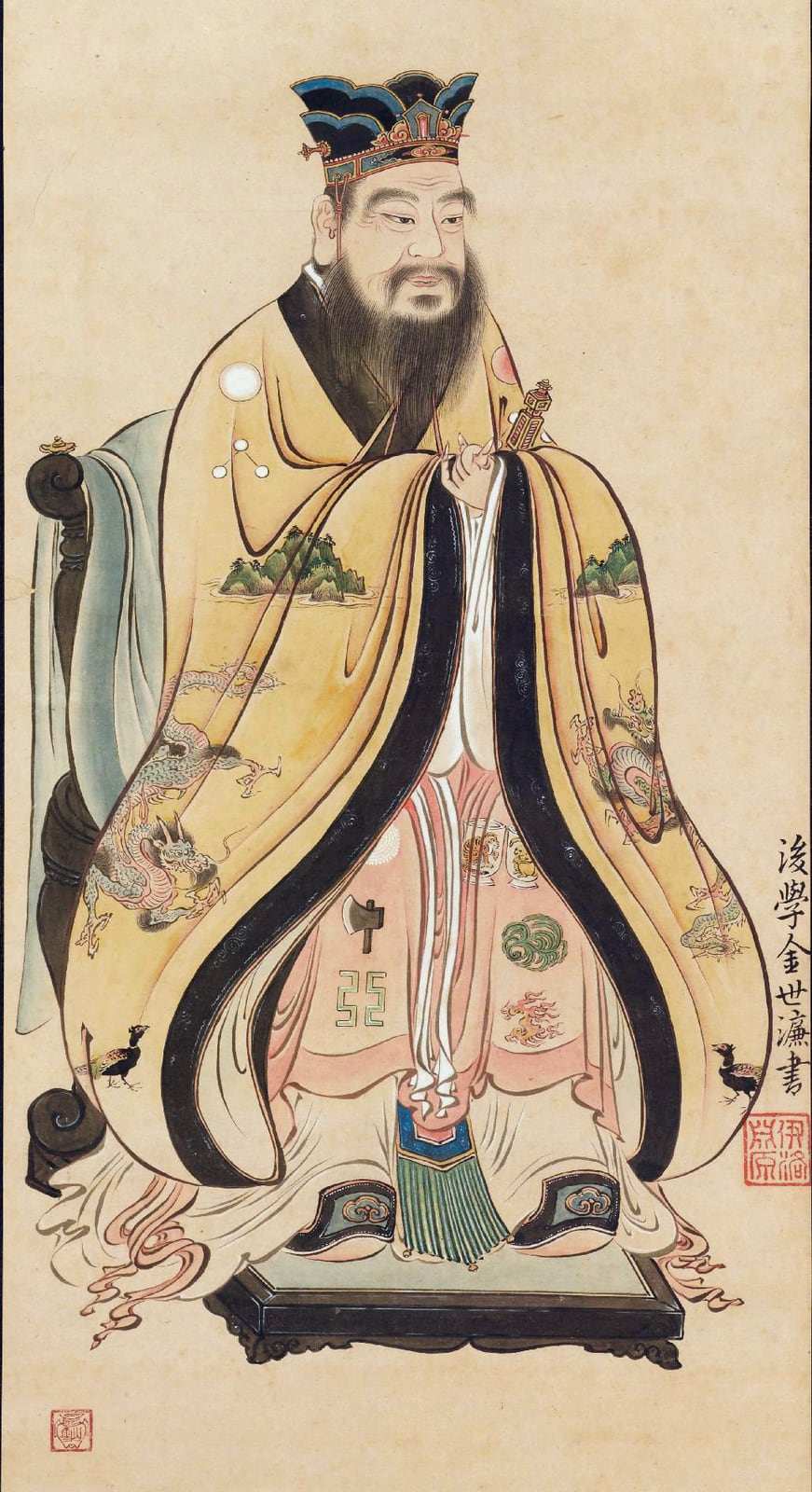
Confucius
يتّفقان في: لماذا نتألّم؟ · ماذا يحدث بعد الموت؟ · كيف يُبلَغ التحرّر أو الخلاص؟
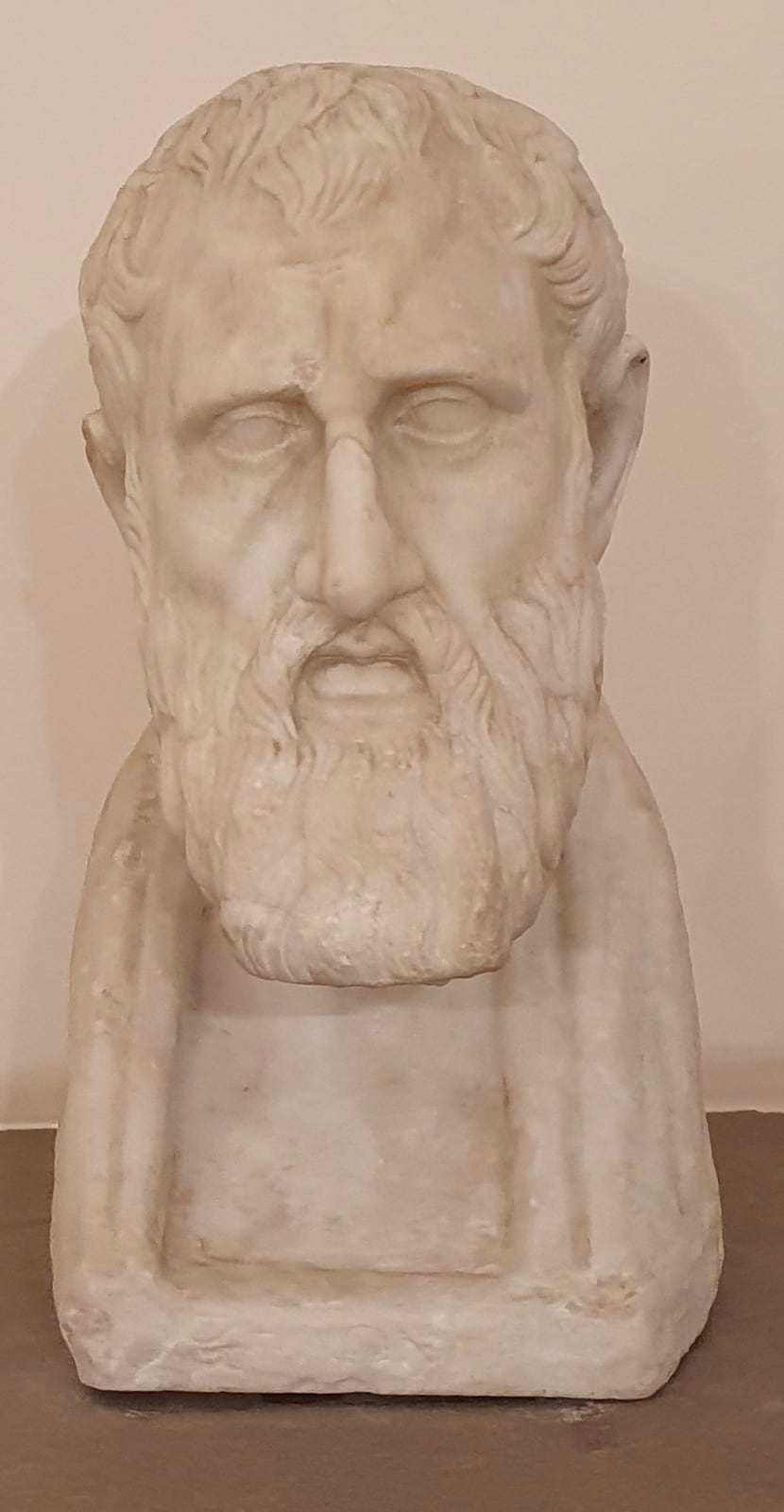
Zeno of Citium
يتّفقان في: لماذا نتألّم؟ · ماذا يحدث بعد الموت؟ · كيف يُبلَغ التحرّر أو الخلاص؟
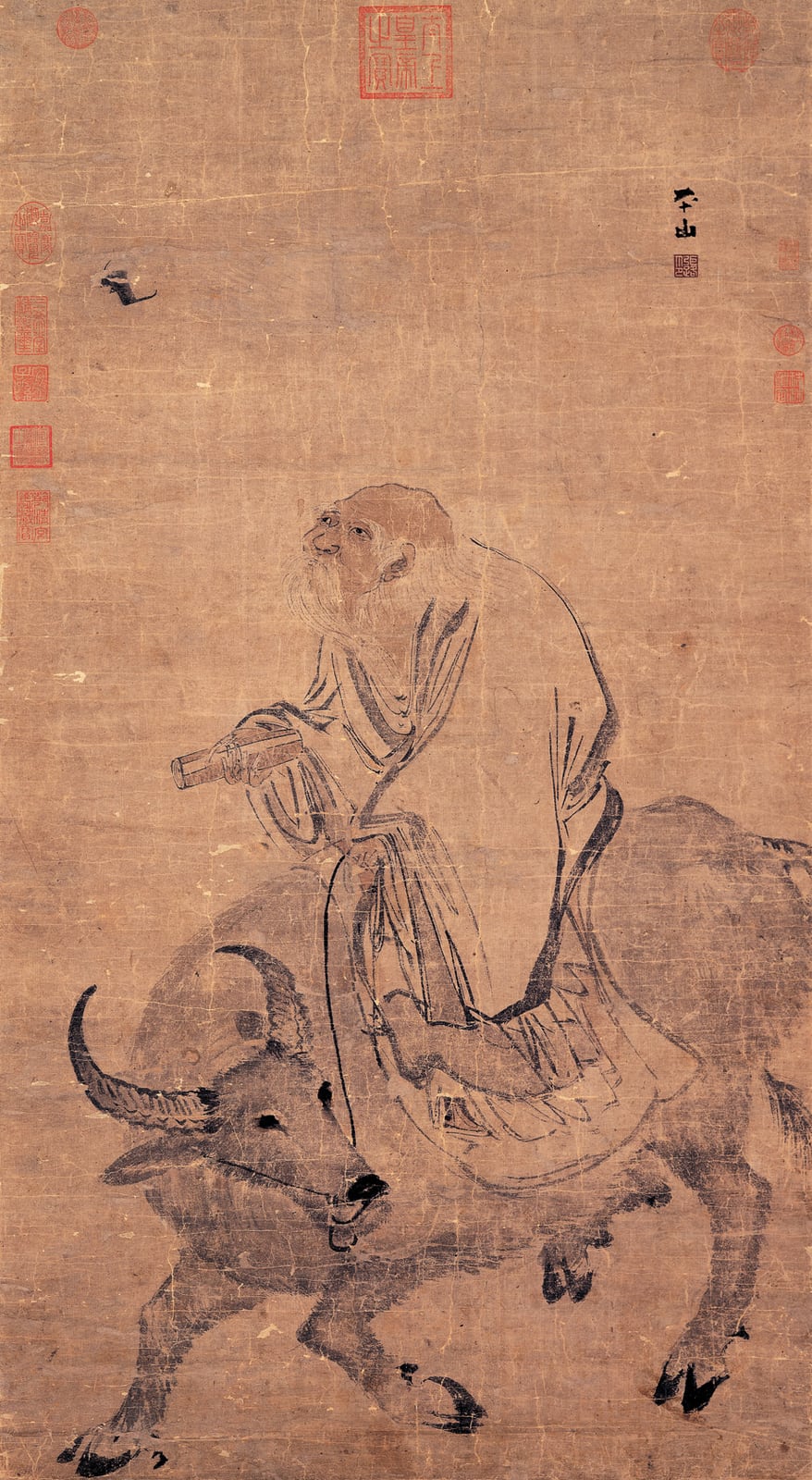
Laozi
يتّفقان في: لماذا نتألّم؟ · ماذا يحدث بعد الموت؟ · كيف يُبلَغ التحرّر أو الخلاص؟

Emanuel Swedenborg
يتّفقان في: ما المطلق؟ هل الله موجود؟ · كيف يُبلَغ التحرّر أو الخلاص؟ · لماذا نتأمّل أو نصلّي؟
يبتعد في تفكيره عن
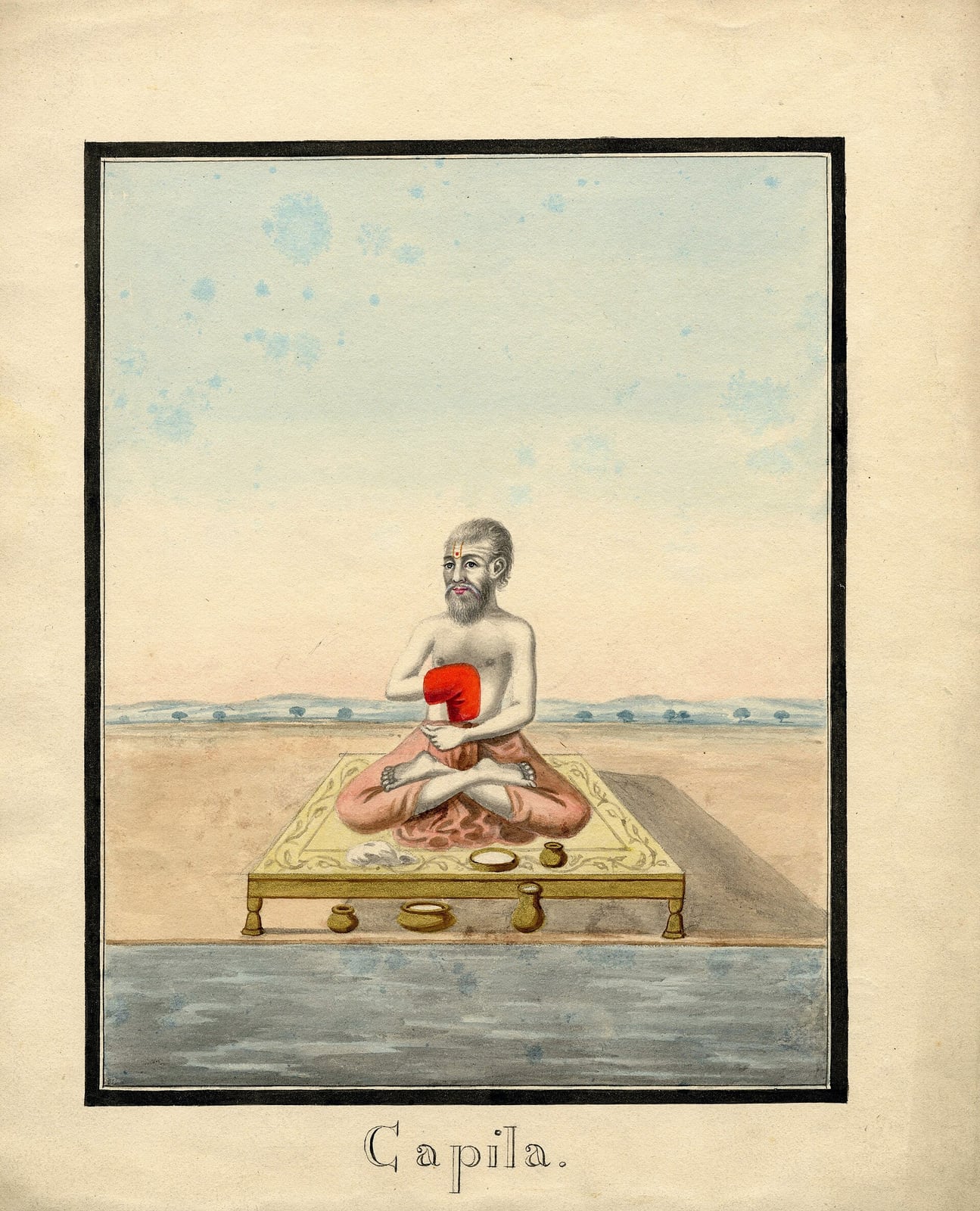
Kapila
يختلفان في: ما المطلق؟ هل الله موجود؟
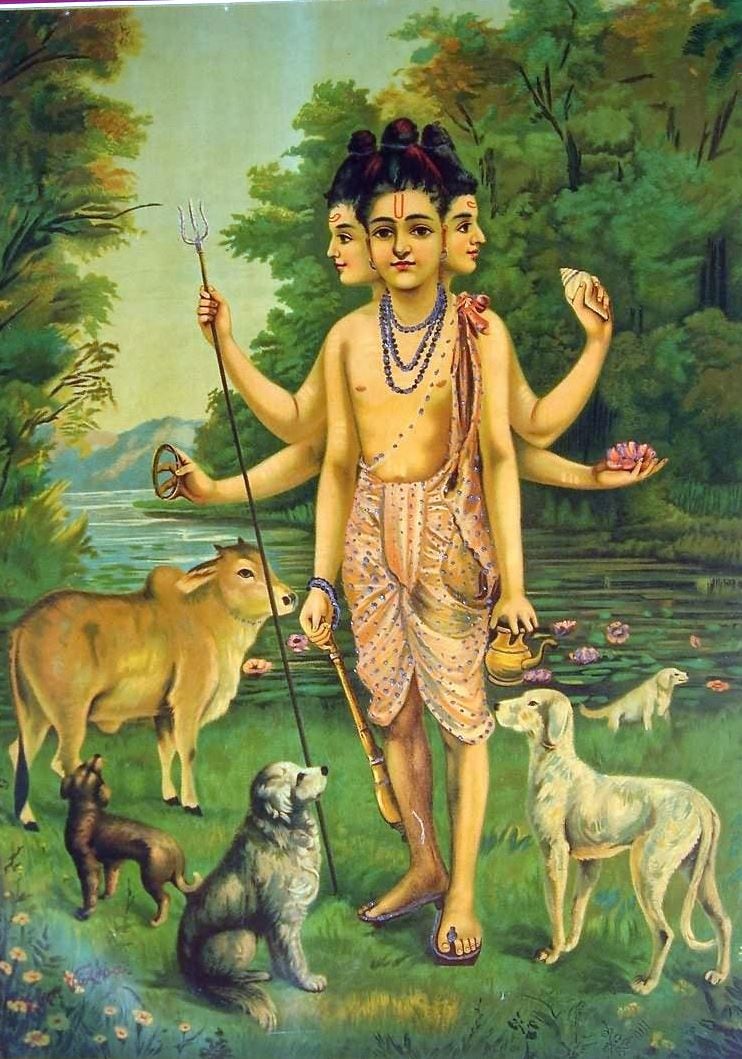
Dattatreya
يختلفان في: ما المطلق؟ هل الله موجود؟ · لماذا نتألّم؟ · ماذا يحدث بعد الموت؟
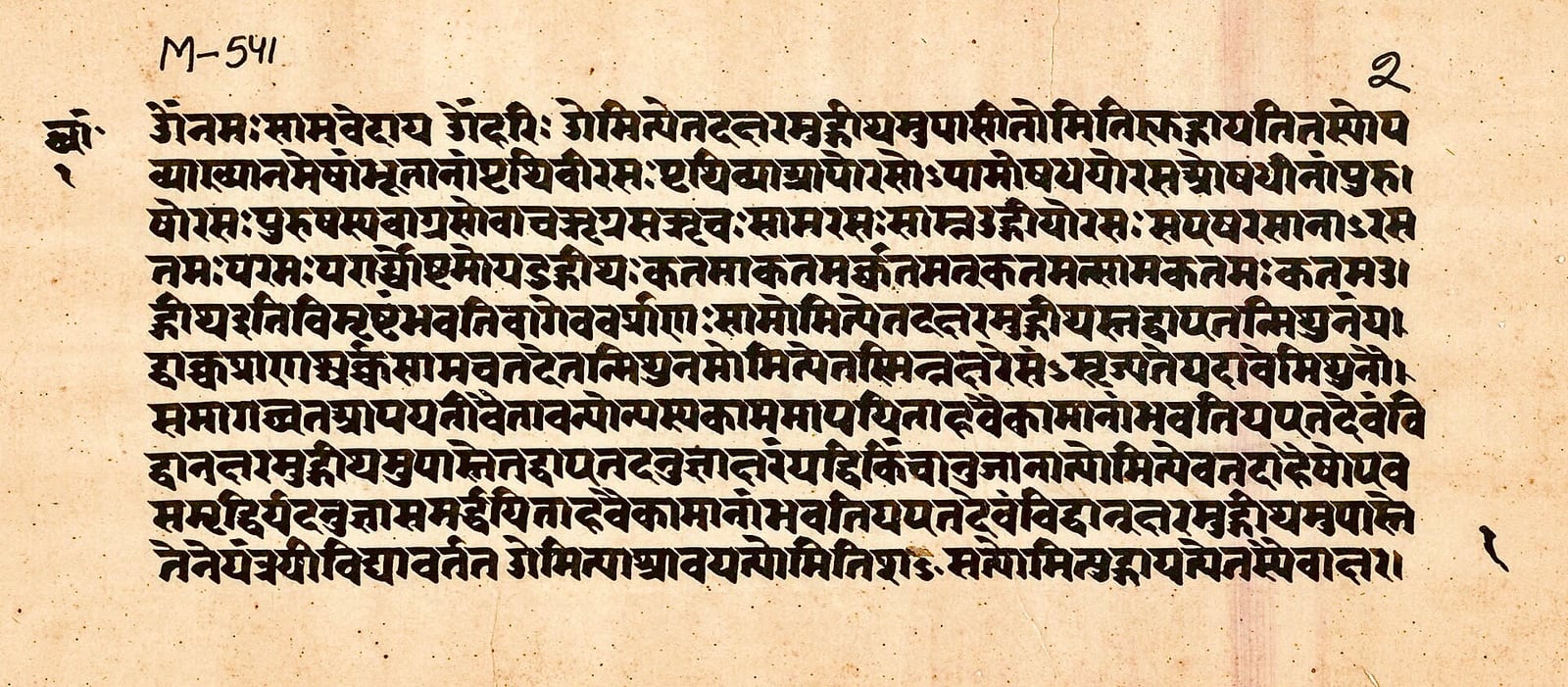
Uddalaka Aruni
يختلفان في: ما المطلق؟ هل الله موجود؟ · ماذا يحدث بعد الموت؟ · كيف يُبلَغ التحرّر أو الخلاص؟
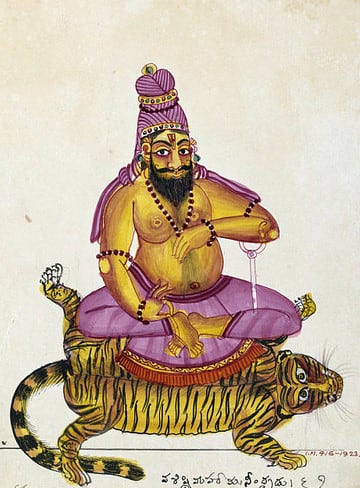
Vasishtha
يختلفان في: ما المطلق؟ هل الله موجود؟ · لماذا نتألّم؟ · ماذا يحدث بعد الموت؟
حكايات وروايات
حكايات وروايات
رواية من سِيَر القدّيسينrelato épico
The grief that became verse
أصل الرواية: Rāmāyaṇa, Bālakāṇḍa, sarga 2 (Griffith's translation, canto II). Goldman regards it as part of the poem's late frame. Ānandavardhana (9th c.) cites it in the Dhvanyāloka as an example that the soul of poetry is emotion.
رواية من سِيَر القدّيسينrelato épico
The question to Nārada
أصل الرواية: Rāmāyaṇa, Bālakāṇḍa, sarga 1 (Griffith's translation, canto I). It belongs to the poem's late frame.
رواية من سِيَر القدّيسينrelato épico
The hermitage that sheltered Sītā
أصل الرواية: Rāmāyaṇa, Uttarakāṇḍa (Dutt's translation, vol. 4). It is a late stratum of the poem, which philology regards as an addition.
رواية من سِيَر القدّيسينrelato épico
The poet's oath
أصل الرواية: Rāmāyaṇa, Uttarakāṇḍa, section CIX of M. N. Dutt's translation (1894), checked against the text.
رواية من سِيَر القدّيسينleyenda medieval y moderna
The bandit of the anthill
أصل الرواية: It does not appear in Vālmīki's Rāmāyaṇa. It is documented in the Adhyātma Rāmāyaṇa (Ayodhyākāṇḍa) and in later texts and vernacular versions; the name Ratnākara belongs to late versions. Julia Leslie (2003) studied its history and its rejection by the Vālmīki community.
المصدر: Leslie, Julia. Authority and Meaning in Indian Religions: Hinduism and the Case of Vālmīki. Aldershot: Ashgate, 2003.
موثّق1881
Tagore in the role of Vālmīki
أصل الرواية: A fact documented by the history of Bengali theatre and by the photograph of the performance (Commons, from Indira Devi Chaudhurani's memoirs, Visva-Bharati, 1974). The exact date of the premiere should be confirmed in a Tagore biography.
التعاليم
التعاليم
المفاهيم التي ينتظم بها فكره، مشروحة في سياقها.
Śloka (the stanza born of grief)sloka
Sanskrit metrics; Bālakāṇḍa, sarga 2.
Ādikāvya and ādikavi (the first poem, the first poet)adikavya
Sanskrit poetics and literary genres.
المصدر: Goldman, Robert P. (trad. e introd.). The Rāmāyaṇa of Vālmīki: An Epic of Ancient India. Vol. I: Bālakāṇḍa. Princeton: Princeton University Press, 1984. Introducción (autor, fecha, el episodio de las grullas y el marco del poema).
Karuṇa rasa (the compassionate sentiment)karuna-rasa
Ānandavardhana's Dhvanyāloka (9th c.), 1.5.
المصدر: Goldman, Robert P. (trad. e introd.). The Rāmāyaṇa of Vālmīki: An Epic of Ancient India. Vol. I: Bālakāṇḍa. Princeton: Princeton University Press, 1984. Introducción (autor, fecha, el episodio de las grullas y el marco del poema).
The recensions and the critical editionrecensiones-ramayana
Textual criticism of the Rāmāyaṇa.
المصدر: Bhatt, G. H., y U. P. Shah (eds. gen.). The Vālmīki-Rāmāyaṇa: Critical Edition. 7 vols. Baroda: Oriental Institute, 1960–1975.
Rāma, the ideal man of dharmamaryada-purushottama
Ethics and theology of the Rāmāyaṇa.
المصدر: Brockington, John. Righteous Rāma: The Evolution of an Epic. Delhi: Oxford University Press, 1984.
مقاطع الفيديو
مقاطع الفيديو
تسجيلات ومقابلات وأفلام وثائقية. تُشغَّل مقاطع الفيديو من YouTube؛ ولا تُستضاف هنا.
Robert Goldman sings from the Ramayana
محاضرة· SA· 2016· 2 min
UC Berkeleyالقناة الرسمية
Famous Ramayana epic now in modern English
فيلم وثائقي· EN· 2016· 4 min
UC Berkeleyالقناة الرسمية
CMTC workshop (02.06.2021) Mary Brockington (Oriental Studies, Oxford)
محاضرة· EN· 2021· 53 min
CMTC Media
Reading Ramayana in the 21st Century | Arshia Sattar | India ki Khoj
محاضرة· EN· 2019· 52 min
IIT Gandhinagarالقناة الرسمية
A critical edition of the Valmiki Ramayana
محاضرة· HI· 2025· 11 min
Pandulipi Sanvadah
Bharat Ek Khoj | Episode-7 | Ramayana, Part-I
فيلم وثائقي· HI· 1988· 48 min
Prasar Bharati Archivesالقناة الرسمية
Bharat Ek Khoj | Episode-8 | Ramayana, Part II
فيلم وثائقي· HI· 1988· 44 min
Prasar Bharati Archivesالقناة الرسمية
Mewar Ramayana brought alive
فيلم وثائقي· EN· 2014· 5 min
Chhatrapati Shivaji Maharaj Vastu Sangrahalayaالقناة الرسمية
Ramayana Storytelling Performance
تسجيل من طرف ثالث· EN· 2016· 93 min
Asian Art Museumالقناة الرسمية
Rama and the Ramayana: Crash Course World Mythology #27
تحليل· EN· 2017· 13 min
CrashCourseالقناة الرسمية
Complete Chant of SundaraKanda from Valmiki Ramayanam in Sanskrit
تسجيل من طرف ثالث· SA· 2021· 693 min
The Sanskrit Channel
Life and Teachings of Maharishi Valmiki, Author of Ramayana also known as Adi Kavi
تحليل· HI· 2020· 21 min
StudyIQ IAS
RAMAYANA
تسجيل من طرف ثالث· ES· 2020· 18 min
Casa de la India in Spainالقناة الرسمية
Râmâyana : la légende de Rama, avatar de Vishnou - Mythologie hindoue
تحليل· FR· 2020· 20 min
Arcana les Mystères du Monde
المعرض
المعرض
صور بترخيص متحقَّق منه. كل منها تحتفظ بمؤلّفها ونسبتها.
المخطوطات
المخطوطات
شواهد مخطوطة ونصوص قديمة، مع جهة حفظها وشروط الاطّلاع عليها.
FA · Nastaʿlīq (persa) · Texto épico sánscrito (s. V a. C.–III d. C. aprox.); traducción persa de época de Akbar
Rāmāyaṇa de Vālmīki (traducción persa), copia ilustrada conocida como «Freer Ramayana»
- الشاهد المحفوظ
- Manuscrito ilustrado de 1597–1605
- جهة الحفظ
- Freer Gallery of Art, Smithsonian National Museum of Asian Art (Washington) · F1907.271
- الرقمنة
- www.asia.si.edu/collections/singleObject.cfm?Obj…
العلاقات
العلاقات
تأثيرات وتلمذة وتقارب في الأفكار. تُميَّز العلاقة الموثّقة عن التشابه المستخلَص بالتحليل.
التقى بـ
In the first canto of the Rāmāyaṇa, Nārada answers Vālmīki's question and tells him the life of Rāma. A textual, not a historical, relation.
علاقة موثّقة
معاصر لـ
In the Rāmāyaṇa, Vasiṣṭha is the purohita of Ayodhyā in Rāma's time; the Yoga Vāsiṣṭha puts in Vālmīki's mouth the narration of Vasiṣṭha's dialogue with Rāma. A literary relation.
علاقة موثّقة
أفكار قريبة من
The two 'authors' of the Sanskrit epics are at once characters in their works and names that authorise whole corpora; tradition pairs them as the first poet and the compiler of history.
تشابه مستخلَص بالتحليل
أثّر في
In 1900 Vivekananda devoted a lecture to the Rāmāyaṇa, in which he presents Vālmīki as India's first poet.
علاقة موثّقة
أثّر في
Tulsīdās
Tulsīdās's Rāmcaritmānas (16th c.), in Awadhi, is the great devotional rewriting of the story told in the Rāmāyaṇa; it also draws on the Adhyātma Rāmāyaṇa.
علاقة موثّقة
أفكار قريبة من
The repetition of Rāma's name as a path of salvation, central to the late legend of Vālmīki, is also the core of Kabīr's devotion; the affinity is thematic.
تشابه مستخلَص بالتحليل
مرتبط من صفحات أخرى
المصادر
المصادر
المراجع والفهارس التي رُوجعت لهذه الصفحة.
- Wikidata, «Valmiki», QID Q715607 (LCCN n80036601; GND 118840274; BnF 11927528q; VIAF 288016626).
- Goldman, Robert P. (trad. e introd.). The Rāmāyaṇa of Vālmīki: An Epic of Ancient India. Vol. I: Bālakāṇḍa. Princeton: Princeton University Press, 1984. Introducción (autor, fecha, el episodio de las grullas y el marco del poema).
- Brockington, John. The Sanskrit Epics. Leiden: Brill, 1998 (Handbuch der Orientalistik, 2. Abt., Bd. 12). Capítulos sobre el Rāmāyaṇa: transmisión, recensiones, estratos y datación.
- Brockington, John. Righteous Rāma: The Evolution of an Epic. Delhi: Oxford University Press, 1984.
- Griffith, Ralph T. H. (trad.). The Rámáyan of Válmíki, translated into English verse. 5 vols. Londres: Trübner; Benarés: E. J. Lazarus, 1870–1874. Project Gutenberg n.º 24869 (cantos I–II del libro I; nota sobre el Uttarakáṇḍa).
- Bhatt, G. H., y U. P. Shah (eds. gen.). The Vālmīki-Rāmāyaṇa: Critical Edition. 7 vols. Baroda: Oriental Institute, 1960–1975.
- Goldman, Robert P., y Sally J. Sutherland Goldman (trads.). The Rāmāyaṇa of Vālmīki: An Epic of Ancient India. Vol. VII: Uttarakāṇḍa. Princeton: Princeton University Press, 2016; edición completa en un volumen: The Rāmāyaṇa of Vālmīki: The Complete English Translation, 2021.
- Leslie, Julia. Authority and Meaning in Indian Religions: Hinduism and the Case of Vālmīki. Aldershot: Ashgate, 2003.
- Dutt, Manmatha Nath (trad.). The Rāmāyaṇa. 4 vols. Calcuta: edición y publicación del traductor, 1891–1894. Vol. 4: Uttara Kāṇḍa, sección CIX (el juramento de Vālmīki). Project Gutenberg n.º 57265, 57826, 60188, 62496.
- Wikipedia (inglés), «Valmiki», sobre la leyenda de Ratnākara en el Adhyātma Rāmāyaṇa y otras fuentes tardías, y sobre la comunidad que lo venera.
- Mitra, Vihari-Lala (trad.). The Yoga-Vásishtha Mahárámáyana of Válmiki. 4 vols. en 7 partes. Calcuta: Bonnerjee & Co., 1891–1899. Project Gutenberg n.º 71326 y siguientes.
- Smithsonian, National Museum of Asian Art, Freer Gallery of Art: Rāmāyaṇa de Vālmīki ilustrado (la «Freer Ramayana»), taller mogol, 1597–1605, F1907.271.
- Wikipedia (inglés), «Valmiki Pratibha» (ópera de Rabindranath Tagore, 1881) y «Uttararamacharita» (drama de Bhavabhūti, s. VIII).
- Vivekananda, Swami. «The Ramayana», conferencia en Pasadena, 31 de enero de 1900. The Complete Works of Swami Vivekananda, vol. 4 (Wikisource).
- صاحب الحقوق
- Texto sánscrito de dominio público. Traducciones con derechos propios: Princeton University Press (Goldman et al.), Penguin India (Debroy; Sattar), Gallimard (Pléiade), Diederichs, Clásicos Bergua, Iberia. Son de dominio público las de Griffith (1870–1874), Dutt (1891–1894) y Fauche (1854–1858).
في انتظار التأكيد
ما لم تتمكّن هذه الصفحة من حسمه بعد. نفضّل أن نقول ذلك على أن نملأ الفراغ.
- Fechas: no hay nacimiento ni muerte; la línea de tiempo usa las fechas de la composición del Rāmāyaṇa. Precisar con la introducción de Goldman (1984) la horquilla que propone para el núcleo y con Brockington (1998) las etapas.
- Ediciones en español: las de Clásicos Bergua (2001), Iberia (1990) y Juventud (1984) no indican traductor en Open Library; identificarlo y comprobar si son traducciones íntegras o adaptaciones. Buscar ediciones en italiano, ruso e hindi (Gita Press) con ISBN.
- Obras atribuidas (Adbhuta Rāmāyaṇa, Ānanda Rāmāyaṇa, Gaṅgāṣṭaka): falta fuente académica propia y ediciones; precisar fechas.
- Anécdota de Vālmīki Pratibhā: confirmar la fecha exacta del estreno (febrero de 1881) en una biografía de Tagore.
- Cita apócrifa «jananī janmabhūmiś ca…»: localizar en qué manuscritos o versiones aparece y citar el aparato de la edición crítica.
- Mitra (Yoga Vāsiṣṭha): fecha de muerte del traductor sin verificar (caution en la sala de lectura).
- Manuscritos: añadir el Rāmāyaṇa de Mewar (British Library y CSMVS, s. XVII) con signaturas verificadas.
بُحث بتاريخ 2026-10-26