الرواقية
Zeno of Citium
Ζήνων ὁ Κιτιεύς
نحو 334 ق.م – نحو 262 ق.مشخصية موثّقة تاريخيًا
فيلسوف يوناني وُلد في كيتيون بقبرص (نحو 334–262 ق.م)، مؤسس المذهب الرواقي. تاجر وصل إلى أثينا بعد غرق سفينته، فتتلمذ على أقراطيس الكلبي وعلى الميغاريين والأكاديميين، وبدأ نحو سنة 300 ق.م يعلّم في «الرواق المزيَّن»، الذي أعطى المدرسة اسمها. وعرّف غاية الحياة بأنها العيش على وفاق، وقسم الفلسفة إلى منطق وطبيعيات وأخلاق. وقد ضاعت مؤلفاته، وأولها «الجمهورية»: وإنما نعرفها من شذرات وشهادات.
- مؤلَّفًا
- 28مؤلَّفًا
- طبعة
- 24طبعة
- اقتباسًا
- 10اقتباسًا
- مقطع فيديو
- 10مقطع فيديو
- صورة
- 5صورة
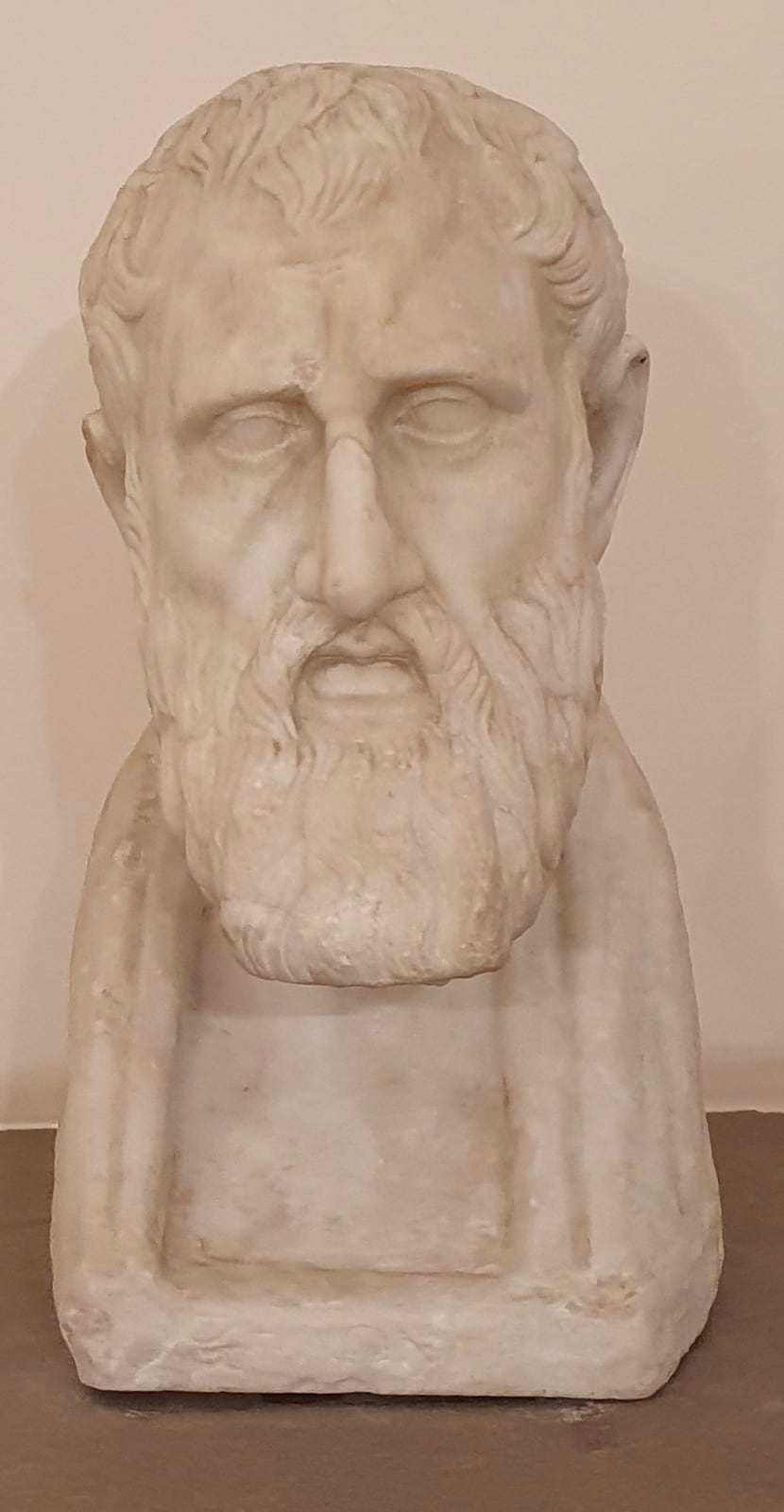
Busto de Zenón de Citio (colección Farnese, Nápoles) · CC BY-SA 4.0
بكلماته
«I made a prosperous voyage when I suffered shipwreck.»Diógenes Laercio VII 4; Laercio advierte que otros sitúan el dicho en la época en que seguía a Crates. Griego: Diógenes Laercio VII, ed. de Wikisource griega; inglés: R. D. Hicks (Loeb, 1925, dominio público); español: traducción propia.

فكرته المحورية
Living in agreement (homologia): The end (*telos*) of human life, according to Zeno, is "living in agreement".
السيرة
4 دقيقة قراءة
ترجمة مُعانة من الأصل الإسباني، بانتظار مراجعة مترجم من أهل اللغة.
مؤسس بلا كتب
أسّس زينون الكيتيوني إحدى أعظم مدارس العصور القديمة أثرًا، ولا نملك منه صفحة واحدة. فقد ضاعت كتبه التي تزيد على العشرين، ولعل ذلك، كما يمكن أن نفترض، لأن رسائل خليفته الثالث خروسيبوس أغنت المدرسة نفسها عنها. وما نعرفه يأتي من الكتاب السابع من «سِيَر» ديوجانس اللائرتي، الذي يجمع نوادر ومرسومًا أثينيًا وثبتًا بمؤلفاته، ومن مئات الاستشهادات وإعادات الصياغة عند شيشرون وفلوطرخس وستوبايوس وسكستوس أمبيريقوس وأثينايوس، جمعها هانز فون أرنيم سنة 1905 في المجلد الأول من «شذرات الرواقيين القدامى». وكثيرًا ما تتحدث هذه المصادر عن «الرواقيين» دون أن تميّز المؤسس من تلاميذه، فيصبح تمييز ما هو له عملًا دقيقًا.
تاجر كيتيون
وُلد نحو سنة 334 ق.م في كيتيون، على الساحل الجنوبي لقبرص، وهي مدينة يونانية كثيرة السكان الفينيقيين؛ وكان خصومه يسمّونه «الفينيقي»، ولم يُخفِ هو أصله قط. وكان ابنًا لمناسياس، وهو تاجر كان، بحسب ديمتريوس المغنيسي، يجلب له وهو طفل كتبًا سقراطية من أثينا. ويصفه اللائرتي نحيلًا، طويلًا، أسمر، مائل العنق، مولعًا بالتين الأخضر وبالشمس. ونحو سنة 312، وهو في الثانية والعشرين تقريبًا بحسب تلميذه برسايوس، غرقت سفينته بشحنة من الأرجوان قرب بيرايوس. فصعد إلى أثينا، وجلس في دكّان ورّاق، وقرأ الكتاب الثاني من «المذكرات» لكسينوفون؛ ثم سأل أين يمكن أن يُلقى رجال مثل سقراط، فأشار له الورّاق إلى أقراطيس الكلبي، وكان مارًّا من هناك: «اتبع هذا».
التتلمذ: الكلب وميغارا والأكاديمية
تعلّم عند أقراطيس عدم الاكتراث بالأعراف، وإن كان، كما يروي اللائرتي، أشدّ حياءً من أن يطيق وقاحة الكلبيين: فقد أمره المعلّم بأن يحمل قدرًا من حساء العدس عبر الكيراميكوس، فلما حاول زينون إخفاءها، كسرها بضربة من عصاه. ثم لازم ستيلبون الميغاري، وديودوروس كرونوس، وبوليمون رئيس الأكاديمية، الذي كان يعيب عليه أنه يتسلل من باب البستان ليسرق مذاهبه ثم يلبسها ثوبًا فينيقيًا. وبعد سنوات كان يقول إنه أبحر إبحارًا حسنًا يوم غرقت سفينته. ومن هذا التكوين المتعدد خرج مذهب خاص به: أخلاق الكلبيين في الاكتفاء بالذات والفضيلة، وجدل الميغاريين، والإرث السقراطي والأفلاطوني.
«الجمهورية» المكتوبة «على ذيل الكلب»
كتب أشهر أعماله، «الجمهورية»، وهو لا يزال تلميذًا لأقراطيس، فكان بعضهم يقول مازحًا إنه كتبها «على ذيل الكلب». وكانت ردًّا على أفلاطون وامتدادًا لديوجانس الكلبي: جماعة من الحكماء، هم وحدهم المواطنون الحقيقيون، أصدقاء أحرار، بلا معابد ولا محاكم ولا جمنازيومات، وبلا نقود، مع شيوعية النساء ولباس واحد للرجال والنساء. ولخّص فلوطرخس مثاله الأعلى: ألّا نعيش مقسَّمين إلى مدن وأحياء لكلٍّ منها قوانينها، بل أن نعدّ الناس جميعًا مواطنين لنا، كقطيع يرعى في ظل ناموس مشترك. وقد خجل خلفاؤه أحيانًا من الكتاب؛ ودافع خروسيبوس عن صحة نسبته، وبلغ الأمر بأحد أمناء مكتبة برغامس أن اقتطع من مؤلفاته المواضع المحرجة.
الرواق المزيَّن
نحو سنة 300 ق.م بدأ يعلّم وهو يتمشّى في «الرواق المزيَّن» (ستوا بويكيلي)، رواق الأغورا الذي زيّنه بوليغنوتوس، وحيث أُعدم في زمن الطغاة الثلاثين ألف وأربعمئة مواطن. وهناك كان الناس يأتون لسماعه، وصار أتباعه، الذين سُمّوا أولًا الزينونيين، يُعرفون بالرواقيين، أي «أصحاب الرواق». وكان يتكلم بإيجاز وخشونة، ويتجنب الجموع، ويعيش في تقشّف صار مضرب المثل: خبز وعسل وقليل من النبيذ ورداء رقيق؛ وكان يقال في أثينا «أعفّ من زينون الفيلسوف»، وكان شعراء الملهاة يسخرون من فلسفة تعلّم الجوع. وكان أنتيغونوس غوناتاس، ملك مقدونيا، يحضر دروسه حين يكون في أثينا، ودعاه إلى بلاطه؛ فأرسل إليه زينون، وقد شاخ، تلميذيه برسايوس وفيلونيدس.
المنطق والطبيعيات والأخلاق
كان زينون، بحسب اللائرتي، أول من قسم الفلسفة إلى منطق وطبيعيات وأخلاق. وعرّف غاية الحياة بأنها «العيش على وفاق»، أي وفقًا لعقل متسق؛ ويقال إن خليفته كليانثس أضاف «مع الطبيعة»، وإن كانت مصادر أخرى تنسب الصيغة الكاملة إلى زينون نفسه. وأدخل مصطلح كاثيكون، أي اللائق أو الواجب، وعرّف الانفعال بأنه حركة للنفس مخالفة للعقل، ونزوع مفرط، له أربعة أجناس: الحزن والخوف والشهوة واللذة. وفي الطبيعيات، العالم كائن حيّ عاقل، مؤلَّف من مبدأ فاعل هو اللوغوس أو الإله، ومبدأ منفعل هو المادة؛ والنفس نَفَس حار. ويحفظ لنا شيشرون الإشارة التي كان يشرح بها المعرفة: فاليد المبسوطة هي التصوّر، والأصابع المثنية قليلًا هي التصديق، والقبضة المغلقة هي الإدراك، والقبضة التي تشدّ عليها اليد الأخرى هي العلم الذي لا يملكه إلا الحكيم.
موتٌ رواقي
مات نحو سنة 262 ق.م. وبحسب اللائرتي، تعثّر عند خروجه من المدرسة فكُسر إصبع من أصابع قدمه؛ فضرب الأرض بيده، وتمثّل ببيت من «نيوبي» لتيموثاوس — «ها أنا آتٍ، فلمَ تناديني؟» — ومات في الحال حابسًا نفَسه. وتقول رواية أخرى إنه امتنع عن الطعام. وكان برسايوس يجعل عمره اثنين وسبعين عامًا، ومصادر أخرى ثمانية وتسعين. وقرر الأثينيون، الذين كانوا قد ائتمنوه على مفاتيح الأسوار، أن يتوّجوه بإكليل من ذهب وأن يدفنوه على نفقة المدينة في الكيراميكوس، لأنه حثّ الشباب على الفضيلة وكانت حياته مثالًا لما يعلّمه. ولما بلغ الخبر أنتيغونوس قال إنه فقد جمهوره.
ميراث الرواق
خلفه كليانثس الأسّي، ثم خروسيبوس السولي، الذي حوّل حدوسه إلى مذهب بلغ من الاكتمال حدًّا جعل المدرسة تكفّ عن قراءة المؤسس. وعبر الرواق خمسة قرون، وانتقل إلى روما مع باناييتيوس وبوسيدونيوس، وبلغ ذروته عند سينيكا وإبكتيتوس وماركوس أوريليوس؛ وكان إبكتيتوس يدعو المرء إلى أن يسأل نفسه، أمام أيّ صاحب سلطان، ماذا كان سقراط أو زينون سيفعلان. وغذّت فكرته عن ناموس ومواطنة مشتركين بين جميع الكائنات العاقلة القانونَ الطبيعي والنزعة العالمية في العصر الحديث. وفي لارنكا، كيتيون القديمة، تُكرّم المدينة اليوم أشهر أبنائها.
المصادر: Diógenes Laercio. Vidas y opiniones de los filósofos ilustres, libro VII, 1–160 (Zenón y la doctrina estoica), s. III d. C. Trad. inglesa de R. D. Hicks, Loeb Classical Library 185, 1925 (Wikisource en inglés); texto griego en Wikisource griega; trad. de C. D. Yonge, Bohn, 1853 (Project Gutenberg n.º 57342). · Diógenes Laercio. Los diez libros de Diógenes Laercio sobre las vidas, opiniones y sentencias de los filósofos más ilustres, trad. de José Ortiz y Sanz, tomo II (libros VI–X). Imprenta Real, Madrid, 1792 (Internet Archive). · Arnim, Hans von (ed.). Stoicorum veterum fragmenta, vol. I: Zeno et Zenonis discipuli. Teubner, Leipzig, 1905 (Internet Archive). · Pearson, Alfred C. (ed.). The Fragments of Zeno and Cleanthes, with Introduction and Explanatory Notes. C. J. Clay, Londres, 1891 (Internet Archive). · Cappelletti, Ángel J. (introd., trad. y notas). Los estoicos antiguos: Zenón, Aristón, Apolófanes, Herilo, Dionisio de Heraclea, Perseo, Cleantes, Esfero. Gredos (Biblioteca Clásica Gredos, 230), Madrid, 1996.
الخط الزمني
الحياة عامًا بعد عام
كل نقطة حدث موثّق. انقر لتقرأه مع مصدره ودرجة اليقين فيه.
نحو 334 ق.مأقل من عامCitio (Chipre)
Birth
Born at Citium, son of Mnaseas (or Demeas). The date is inferred from Persaeus' chronology (arrival in Athens at 22, death at 72) and the Athenian decree of the archonship of Arrhenides (262/261 BCE). Wikidata records 334. Years BCE are expressed as negative numbers.
مرجَّحDiógenes Laercio. Vidas y opiniones de los filósofos ilustres, libro VII, 1–160 (Zenón y la doctrina estoica), s. III d. C. Trad. inglesa de R. D. Hicks, Loeb Classical Library 185, 1925 (Wikisource en inglés); texto griego en Wikisource griega; trad. de C. D. Yonge, Bohn, 1853 (Project Gutenberg n.º 57342).
بعد وفاته
- نحو 230 ق.مChrysippus heads the Stoa
- نحو 50 ق.مPhilodemus, On the Stoics
- 1891Pearson edits the fragments
- 1905Stoicorum veterum fragmenta, vol. I
نحو 334 ق.م · أقل من عام
Birth
Born at Citium, son of Mnaseas (or Demeas). The date is inferred from Persaeus' chronology (arrival in Athens at 22, death at 72) and the Athenian decree of the archonship of Arrhenides (262/261 BCE). Wikidata records 334. Years BCE are expressed as negative numbers.
مرجَّح
نحو 312 ق.م · 22 عامًا
Shipwreck and meeting with Crates
He is shipwrecked with a cargo of purple near Piraeus, reads Xenophon's Memorabilia in an Athenian bookshop and becomes a pupil of Crates the Cynic (Diogenes Laertius VII 2–3). Laertius also gives the age of thirty.
تقليد
نحو 310 ق.م
The Republic
While still a pupil of Crates he writes the Republic, inspired by that of Diogenes of Sinope; it was jokingly said that he had written it "on the dog's tail" (Diogenes Laertius VII 4).
مرجَّح
نحو 305 ق.م
With Stilpo, Diodorus and Polemo
He leaves Crates and studies with the Megarian Stilpo, the dialectician Diodorus Cronus and Polemo, head of the Academy; according to Laertius, for some twenty years (VII 2, 4, 16, 25).
مرجَّح
نحو 300 ق.م
Begins teaching in the Painted Stoa
He begins teaching in the Stoa Poikile in the agora; his followers, first called Zenonians, come to be called Stoics (Diogenes Laertius VII 5).
مرجَّح
نحو 276 ق.م
Antigonus Gonatas' invitation
Antigonus Gonatas, king of Macedon from 277/276, who attended his lectures, invites him to his court; Zeno sends Persaeus and Philonides. Laertius copies the exchange of letters, of disputed authenticity (VII 6–9).
مرجَّح
نحو 262 ق.م · 72 عامًا
Death and public honours
He dies after tripping as he left the school (Diogenes Laertius VII 28). An Athenian decree of the archonship of Arrhenides grants him a golden crown and a tomb in the Ceramicus at public expense (VII 10–12).
مرجَّح
نحو 262 ق.م
Cleanthes, second scholarch
Cleanthes of Assos succeeds him at the head of the school; Zeno compared him to hard wax tablets, hard to write on but retaining what is written (Diogenes Laertius VII 37).
موثّق
نحو 230 ق.م
Chrysippus heads the Stoa
Chrysippus of Soli heads the school around 230–206 BCE and systematises the doctrine; his treatises displace Zeno's.
موثّق
نحو 50 ق.م
Philodemus, On the Stoics
Philodemus of Gadara discusses the Republics of Zeno and Diogenes and the Stoic attempts to disown them (PHerc. 155 and 339).
موثّق
1891
Pearson edits the fragments
Alfred C. Pearson publishes The Fragments of Zeno and Cleanthes, the first annotated edition of Zeno's fragments.
موثّق
1905
Stoicorum veterum fragmenta, vol. I
Hans von Arnim collects in the first volume of the SVF the fragments and testimonies of Zeno and his immediate pupils; its numbering remains the standard reference.
موثّق
المؤلَّفات
المؤلَّفات الأساسية
المؤلَّفات التي لا يُفهم إرثه من دونها.
مؤلَّف مكتوب · نحو 310 ق.م
Republic (Politeia)
Πολιτεία
Zeno's most famous work, written in his youth while he still followed Crates. According to the critics cited by Diogenes Laertius (VII 32–33), it declared ordinary education useless, called those who are not virtuous enemies and strangers to one another and reserved for the good the status of citizens, friends and free men; it established community of wives, forbade building temples, law courts and gymnasia, dispensed with coinage and ordered men and women to dress alike. Plutarch sums it up as the project of a single way of life and a single order for all men, like a herd under a common law. It is the founding text of Stoic cosmopolitanism.
5 طبعات · amazon.com
مؤلَّف مكتوب
On Impulse, or On Human Nature
Περὶ ὁρμῆς ἢ περὶ ἀνθρώπου φύσεως
In this treatise, according to Diogenes Laertius (VII 87), Zeno was the first to designate as the end of life "living in agreement with nature", which amounts to living according to virtue, since nature leads us to it. The double title indicates that the work studied impulse (horme), the tendency that moves animals and that in man should be governed by reason. Other sources (Stobaeus) credit Zeno with the short formula "living in agreement" and Cleanthes with the addition "with nature"; the contradiction between the two testimonies is still debated.
4 طبعات
مجموعة لاحقة · 1905
Fragments and testimonies
Ζήνωνος ἀποσπάσματα (SVF I 1–332)
The only form in which Zeno can be read today. It comprises the life and sayings in Diogenes Laertius VII 1–38—the shipwreck, the pot of lentils, "a friend is another self", "we have two ears and one mouth to listen more and speak less"—the doctrines the sources expressly attribute to him in logic (comprehension illustrated with the hand), physics (the two principles, fire, the soul as warm breath) and ethics (the end, the appropriate, the passions), and the testimonies on his Republic. Von Arnim's edition numbers 332 fragments of Zeno.
11 طبعة · amazon.com
جميع مؤلَّفاته (28)
Zeno of Citium
On Life according to Nature
The Conscious LibraryOn Life according to Nature
Zeno of Citium
On the Passions
The Conscious LibraryOn the Passions
Zeno of Citium
On the Appropriate (Duty)
The Conscious LibraryOn the Appropriate (Duty)
Zeno of Citium
On Law
The Conscious LibraryOn Law
Zeno of Citium
On Greek Education
The Conscious LibraryOn Greek Education
Zeno of Citium
On Vision
The Conscious LibraryOn Vision
Zeno of Citium
On the Whole (the Universe)
The Conscious LibraryOn the Whole (the Universe)
Zeno of Citium
On Signs
The Conscious LibraryOn Signs
Zeno of Citium
Pythagorean Questions
The Conscious LibraryPythagorean Questions
Zeno of Citium
Universals (General Questions)
The Conscious LibraryUniversals (General Questions)
Zeno of Citium
On Diction
The Conscious LibraryOn Diction
Zeno of Citium
Homeric Problems (5 books)
The Conscious LibraryHomeric Problems (5 books)
Zeno of Citium
On Listening to Poetry
The Conscious LibraryOn Listening to Poetry
Zeno of Citium
Art (Handbook of Rhetoric)
The Conscious LibraryArt (Handbook of Rhetoric)
Zeno of Citium
Solutions
The Conscious LibrarySolutions
Zeno of Citium
Refutations (2 books)
The Conscious LibraryRefutations (2 books)
Zeno of Citium
Memoirs of Crates
The Conscious LibraryMemoirs of Crates
Zeno of Citium
Ethics
The Conscious LibraryEthics
Zeno of Citium
On Reason (Discourse)
The Conscious LibraryOn Reason (Discourse)
Zeno of Citium
On Substance
The Conscious LibraryOn Substance
Zeno of Citium
On the Soul
The Conscious LibraryOn the Soul
Zeno of Citium
Art of Love
The Conscious LibraryArt of Love
Zeno of Citium
Diatribes (Interludes)
The Conscious LibraryDiatribes (Interludes)
Zeno of Citium
Chreiai (Anecdotes)
The Conscious LibraryChreiai (Anecdotes)
الأقوال
أقوال محدَّدة الموضع في مؤلَّف بعينه. كل منها يحمل مصدره ودرجة الثقة به.
I made a prosperous voyage when I suffered shipwreck.Νῦν εὐπλόηκα, ὅτε νεναυάγηκα.
مرجَّحDiógenes Laercio VII 4; Laercio advierte que otros sitúan el dicho en la época en que seguía a Crates. Griego: Diógenes Laercio VII, ed. de Wikisource griega; inglés: R. D. Hicks (Loeb, 1925, dominio público); español: traducción propia.
أقوال منحولة أو مختلَف في نسبتها (2)
«Man conquers the world by conquering himself.»
It circulates online attributed to Zeno of Citium without any reference. It does not appear in Diogenes Laertius nor in the fragments collected by Pearson and von Arnim.
«We have two ears and one mouth so that we can listen twice as much as we speak.»
A modern, arithmetical version of the saying genuinely transmitted by Diogenes Laertius (VII 23), which says only "that we may listen more and talk less". The "twice as much" form is not in the ancient text.
الكلمات الأخيرة
روايات متضاربة
«"I come, I come, why dost thou call for me?"»Ἔρχομαι· τί μ' αὔεις;
Diogenes Laertius VII 28: leaving the school he tripped and broke a toe; striking the ground with his hand, he recited this line from the poet Timotheus' Niobe, addressed to the earth or to death, and died on the spot by holding his breath. At VII 31 Laertius himself records the variant "I come of my own accord; why then call me?" and another tradition according to which he died by ceasing to eat, with no final words. English: R. D. Hicks; Spanish: own translation.
المصدر: Diógenes Laercio. Vidas y opiniones de los filósofos ilustres, libro VII, 1–160 (Zenón y la doctrina estoica), s. III d. C. Trad. inglesa de R. D. Hicks, Loeb Classical Library 185, 1925 (Wikisource en inglés); texto griego en Wikisource griega; trad. de C. D. Yonge, Bohn, 1853 (Project Gutenberg n.º 57342).
اسأل
بماذا يجيب أثره
اثنا عشر سؤالًا كبيرًا من أسئلة الإنسانية، وما تتيح نصوصه الإجابة به عنها، مع المراجع. ولا نقوّله ما لم يقل أبدًا.
ما المطلق؟ هل الله موجود؟
God is the reason pervading matter, and its substance is the whole cosmos
مطلق غير شخصييقوله صراحةً
Only testimonies and fragments of Zeno survive, but they already contain the core of Stoic theology. According to Diogenes Laertius, Zeno distinguished two principles of the whole, a passive one, unqualified matter, and an active one, the reason in it, which is god; and he held that the substance of god is the whole cosmos and the heaven. God is thus immanent, corporeal in the Stoic sense, craftsman and seminal reason of all that exists, and may be given the names of Zeus or of fate. It is not a separate being creating from outside but the rational order of the world, conceived as a craftsmanlike fire proceeding methodically towards generation.
قارن هذا السؤال مع معلّمين آخرينمن أنا؟ هل توجد ذات حقيقية؟
A soul of warm breath, citizen of a single human community
ذات تُصقَل في العلاقةيُستنتج من تعاليمه
For Zeno, according to the testimonies, the soul is a warm, corporeal breath that holds the living being together and has a ruling part where impression, assent and impulse reside. The human end is to live in agreement with nature, which is to live according to virtue, and that nature is rational and therefore common. His Republic, known from Plutarch's summary, drew the political consequence: not to live apart in cities with their own laws, but to regard all humans as fellow citizens under a single law. The Stoic self is not an isolated substance: it discovers itself in its kinship with the other rational beings.
قارن هذا السؤال مع معلّمين آخرينلماذا نتألّم؟
Passion is an excessive impulse, against right reason and nature
الفوضى الاجتماعية والأخلاقيةيقوله صراحةً
According to the testimonies, Zeno defined passion as an irrational movement of the soul contrary to nature, or an excessive impulse. The four basic passions — desire, fear, pleasure and distress — are not blows from outside: they arise from hasty judgements about what is good or bad, to which the soul gives its assent. Since the human end is to live in agreement with nature, which is to live according to virtue, suffering appears when impulse overflows rational measure. The anecdote of the shipwreck that led him to philosophy sums up the other side: a setback is no evil if reason is in order.
قارن هذا السؤال مع معلّمين آخرينماذا يحدث بعد الموت؟
The soul is corporeal and not eternal: it lasts a while and dissolves
صمت أو تحفّظيُستنتج من تعاليمه
The testimonies about Zeno are scarce on this point. According to Diogenes Laertius, for him the soul is warm breath, that is, a body, and the Stoic school held that it survives death, but not for ever. The known variants belong to his successors: Cleanthes thought all souls last until the conflagration that closes each cosmic cycle, and Chrysippus, only those of the wise. No source attributes to Zeno a description of the beyond or a personal reward. The ethics he founded rests not on what is to come but on living now in agreement with nature; death is an indifferent, neither good nor bad.
قارن هذا السؤال مع معلّمين آخرينكيف يُبلَغ التحرّر أو الخلاص؟
To live in agreement with nature, which is to live by virtue
بالفضيلة والانسجاميقوله صراحةً
Diogenes Laertius attributes to Zeno the formula that defined Stoicism: the end is to live in agreement with nature, which amounts to living according to virtue, since nature leads us to it. Virtue suffices for happiness, and all else — health, wealth, fame, even life — is indifferent. The sage, who possesses virtue, is free, a king and happy even in chains. There is no leap and no grace: the good is reached little by little, says a saying Laertius attributes to him, but it is no little thing. Zeno's own conversion, who came to philosophy after a shipwreck, became an example of that slow transformation.
قارن هذا السؤال مع معلّمين آخرينهل نحتاج إلى معلّم؟
He learned from several masters and founded a school open in a portico
مفيد لكنه ليس ضروريًايُستنتج من تعاليمه
According to Diogenes Laertius, Zeno reached Athens after a shipwreck, read Xenophon in a bookshop and asked where he could find men like Socrates; the bookseller pointed to Crates, who was passing by, and he became his disciple. Afterwards he studied with Stilpo, Polemo and the dialectician Diodorus, some twenty years in all, and only then founded his own school in the Painted Portico, a public place. The path shows the teacher as a guide, not as the exclusive holder of truth: Zeno took from each what seemed right to him. His doctrine places the weight on each person's reason, which the sage embodies perfectly.
قارن هذا السؤال مع معلّمين آخرينهل العالم حقيقي؟
The cosmos is god's body, a craftsmanlike fire that generates all
تجلٍّ للإلهييقوله صراحةً
For Zeno, according to the testimonies, the world is real and corporeal, and penetrated through and through by divine reason. God is the active principle acting in matter, and his substance is the whole cosmos and the heaven; nature is a craftsmanlike fire proceeding methodically towards generation. This rational cosmos is a living being, ensouled and intelligent, and periodically resolves into fire in a conflagration from which the same order is born again. There is no distance between the divine and the world: the world is the divine visible and at work, and each thing bears a seminal reason within it. To understand it is to understand fate.
قارن هذا السؤال مع معلّمين آخرينما الحب؟
Eros is the god of friendship and of the city's concord
إحسان منظَّميُستنتج من تعاليمه
Only scattered reports about love survive from Zeno, but they are significant. Athenaeus relates that, in his Republic, he presented Eros as the god of friendship and freedom, and also as the author of the city's concord. The Stoic definition of love transmitted by Diogenes Laertius — an impulse to form a friendship aroused by visible beauty — points the same way: the sage's love seeks not the union of bodies but friendship. Asked what a friend is, Zeno replied: “Another self.” His ideal of a single human community under a common law extends that bond to all humans, though with an order marked by reason.
قارن هذا السؤال مع معلّمين آخرينهل نحن أحرار أم أن كل شيء مقدَّر؟
“It was fated that I should steal.” “And that you should be flogged”
القدر والمسؤوليةيقوله صراحةً
The Stoics held that everything happens according to fate, a chain of causes coinciding with the divine reason governing the cosmos, and Diogenes Laertius' report already places Zeno in that line. But they did not therefore exempt humans from responsibility. The best-known anecdote sums it up: to a slave caught stealing, who claimed it was fated that he should steal, Zeno replied that it was also fated that he should be flogged. Fate is no excuse: the assent we give to our impressions is our own work, and we answer for it. The formula attributed to the school — fate leads the willing and drags the unwilling — expresses that reconciliation.
قارن هذا السؤال مع معلّمين آخرينلماذا نتأمّل أو نصلّي؟
His Republic would have no temples; no testimony of his practice remains
لم يُبدِ رأيًا
No teaching of Zeno on prayer or meditation survives, nor any report of how he practised them. The only thing the sources transmit is a controversial thesis of his Republic: in the ideal city no temples should be built, because it is not fitting to hold sacred a work of builders and craftsmen, which is worth little. Plutarch records it to reproach the Stoics for inconsistency, since they attended the rites. The thesis suggests that the sacred lies in reason rather than in buildings, but it is not enough to attribute a doctrine of prayer to him. The spiritual exercises now associated with Stoicism belong to later authors.
قارن هذا السؤال مع معلّمين آخرينهل يستطيع العقل أن يعرف الحقيقة القصوى؟
From assent to knowledge: the sage's clenched fist
الدراسة والتعلّميقوله صراحةً
Zeno founded the Stoic theory of knowledge, according to which reason can grasp reality with certainty. Cicero relates how he explained it with a gesture: the open hand with fingers outstretched was impression; the fingers slightly bent, assent; the closed fist, comprehension; and the fist gripped by the other hand, knowledge, which only the sage possesses. There are “cognitive” impressions that cannot be false, and on them a firm knowledge is built. Since the cosmos is governed by reason, human reason can know its order. That knowledge is reached through long study of logic, physics and ethics, which the school taught as a whole.
قارن هذا السؤال مع معلّمين آخرينالانسحاب من العالم أم تغييره؟
A single human community under a common law, like a herd grazing together
تنظيم المجتمعيقوله صراحةً
Zeno's Republic, written according to tradition while he still followed Crates, was a political manifesto. Plutarch summarises it thus: that we should not live apart in cities and villages, each with its own laws, but regard all humans as fellow citizens, and that there be one life and one order, like a herd grazing together under a common law. Other testimonies add provocative traits: no temples, no law courts, no coinage, community of wives among the wise. More than a programme of immediate government, it is the image of a just order founded on shared reason. The later Stoic school held that the sage takes part in politics if nothing prevents him.
قارن هذا السؤال مع معلّمين آخرين
التقارب والتوتّر
التقارب والتوتّر
محسوبة سؤالًا سؤالًا انطلاقًا من مواقفه. وسبب كل اتفاق أو اختلاف يظهر بالنقر.
يقترب في تفكيره من
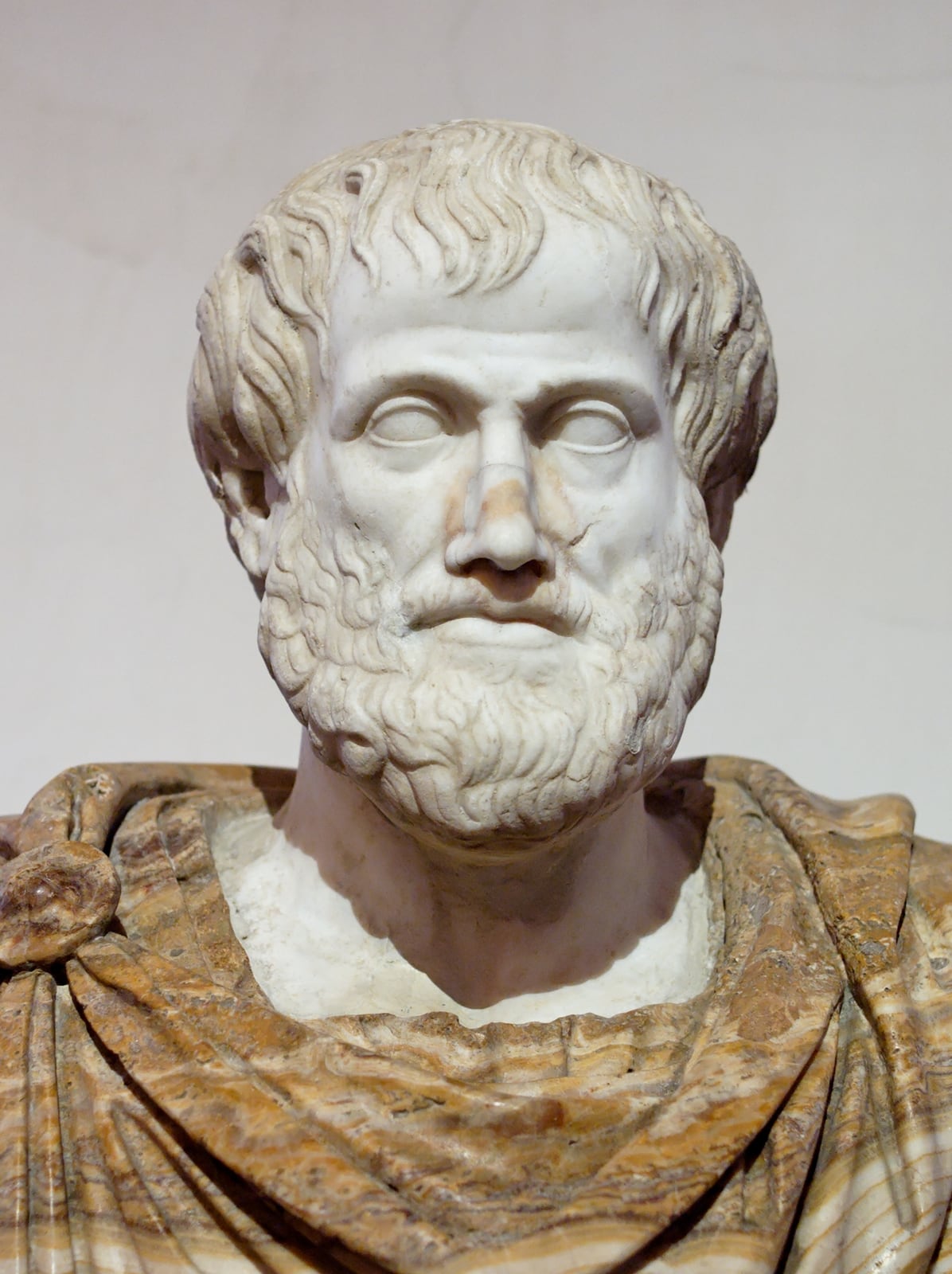
Aristotle
يتّفقان في: ما المطلق؟ هل الله موجود؟ · من أنا؟ هل توجد ذات حقيقية؟ · لماذا نتألّم؟
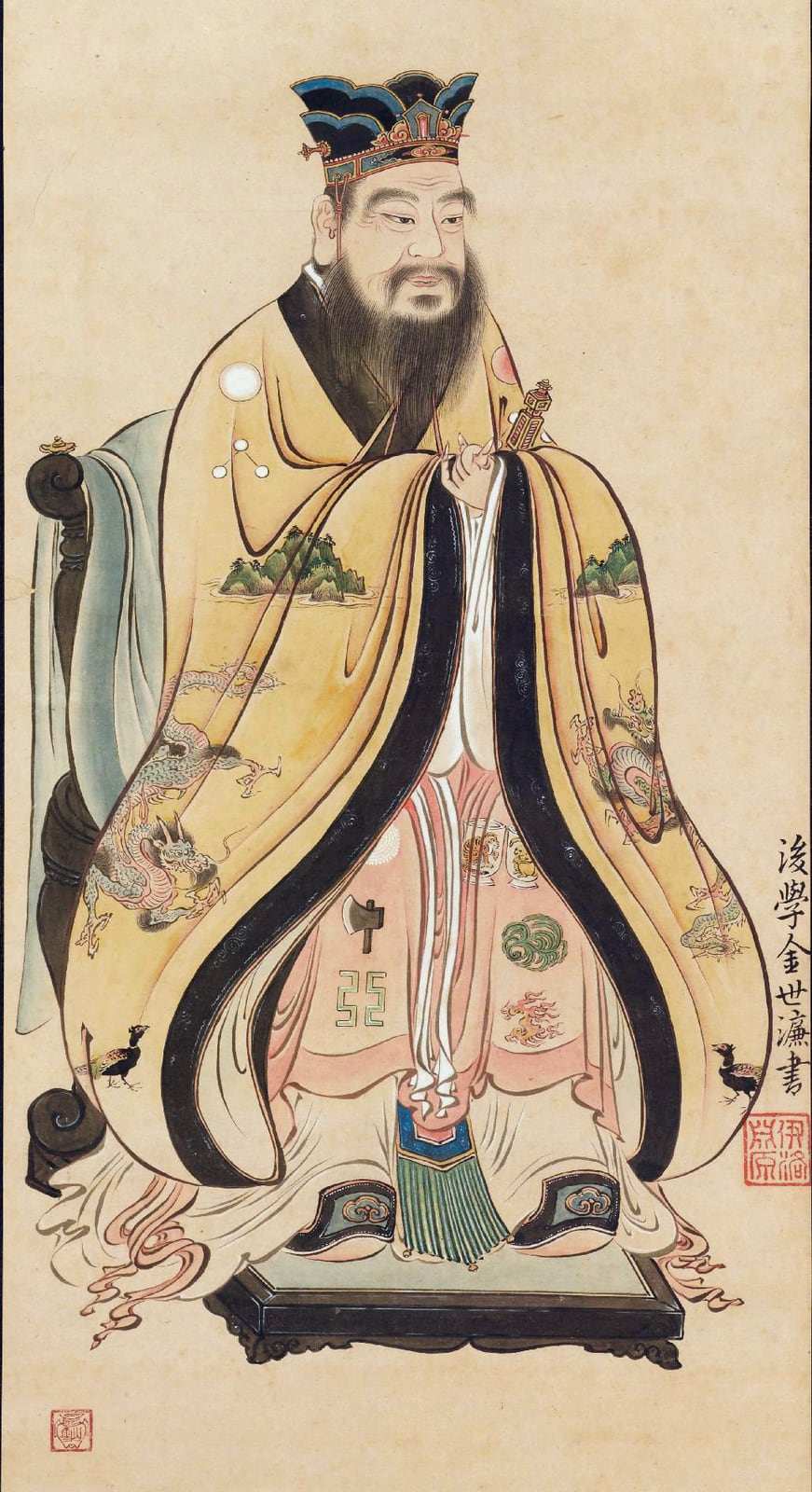
Confucius
يتّفقان في: من أنا؟ هل توجد ذات حقيقية؟ · لماذا نتألّم؟ · ماذا يحدث بعد الموت؟
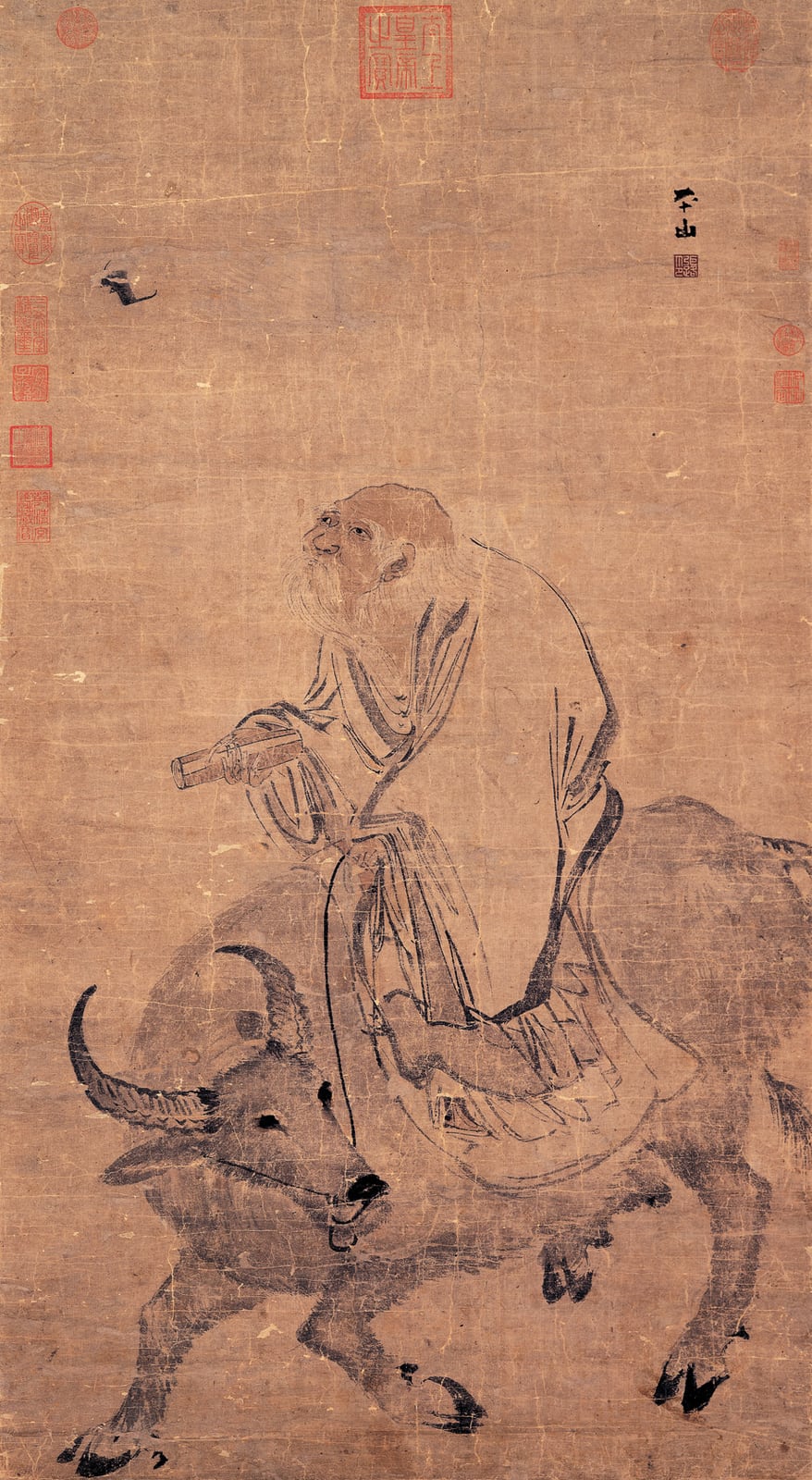
Laozi
يتّفقان في: لماذا نتألّم؟ · ماذا يحدث بعد الموت؟ · كيف يُبلَغ التحرّر أو الخلاص؟
Valmiki
يتّفقان في: لماذا نتألّم؟ · ماذا يحدث بعد الموت؟ · كيف يُبلَغ التحرّر أو الخلاص؟
يبتعد في تفكيره عن
Yajnavalkya
يختلفان في: ما المطلق؟ هل الله موجود؟ · من أنا؟ هل توجد ذات حقيقية؟ · لماذا نتألّم؟
Maimonides
يختلفان في: ما المطلق؟ هل الله موجود؟ · من أنا؟ هل توجد ذات حقيقية؟ · لماذا نتألّم؟

Al-Hallaj
يختلفان في: ما المطلق؟ هل الله موجود؟ · من أنا؟ هل توجد ذات حقيقية؟ · لماذا نتألّم؟

Rabia al-Adawiyya
يختلفان في: ما المطلق؟ هل الله موجود؟ · لماذا نتألّم؟ · ماذا يحدث بعد الموت؟
حكايات وروايات
حكايات وروايات
تقليد شفهيc. 312 a. C.
The shipwreck and the bookshop
أصل الرواية: Diogenes Laertius VII 2–5 and 31–32, with several contradictory versions (Hecato, Apollonius of Tyre, Demetrius of Magnesia). The story has the shape of an exemplary conversion and was probably embellished in the school; Zeno's mercantile background and his arrival in Athens with Crates are, by contrast, plausible.
تقليد شفهيc. 312–310 a. C.
The pot of lentil soup
أصل الرواية: Diogenes Laertius VII 3, with no named source. It is a chreia of school tradition; it reflects the relationship between Cynicism and Stoicism well, but cannot be taken as verified fact.
شهادةc. 300–262 a. C.
Zeno's hand
أصل الرواية: Cicero, Academica II (Lucullus) 145, voiced by the Academic Cicero criticising Zeno and Antiochus; a report transmitted more than two centuries later, but consistent with the terminology other sources attribute to Zeno (katalepsis, phantasia kataleptike).
موثّقc. 262 a. C.
The keys of the city and the golden crown
أصل الرواية: Diogenes Laertius VII 6, 10–12 and 15, who copies the decree. Some scholars believe the transmitted text conflates two different decrees (one during his life and one posthumous); no one doubts that Athens officially honoured Zeno.
مختلَف فيهc. 276–262 a. C.
Zeno and Antigonus
أصل الرواية: Diogenes Laertius VII 6–9 and 13–15 (the letters, from Apollonius of Tyre); Epictetus, Discourses II 13. The friendship between king and philosopher is well attested; the letters are generally regarded as later compositions.
مختلَف فيهc. 262 a. C.
"I come"
أصل الرواية: Diogenes Laertius VII 28 and 31, with two versions of the death. Timotheus' Niobe was a well-known dithyramb; the gesture of striking the ground addresses the earth or the underworld. On the "reasonable exit" (eulogos exagoge), see Diogenes Laertius VII 130.
التعاليم
التعاليم
المفاهيم التي ينتظم بها فكره، مشروحة في سياقها.
Living in agreement (homologia)homologia
Diogenes Laertius VII 87; Stobaeus, Eclogae II 7 (LS 63B). It is the founding definition of Stoic ethics, taken up by Seneca, Epictetus and Marcus Aurelius.
The appropriate (kathekon)kathekon
Diogenes Laertius VII 25 and 107–109.
The passions (pathe)pathe
Diogenes Laertius VII 110–111 (citing Zeno's On the Passions).
Presentation and comprehension (katalepsis)katalepsis
Cicero, Academica II 145 and I 40–42; Diogenes Laertius VII 46–54.
The two principles: logos and matterlogos-y-materia
Diogenes Laertius VII 134, 136, 142 and 157 (On Substance, On the Whole, On the Soul).
The world-city (cosmopolis)cosmopolis
Diogenes Laertius VII 32–34; Plutarch, Moralia 329a–b; Schofield (1991).
المصدر: Schofield, Malcolm. The Stoic Idea of the City. Cambridge University Press, Cambridge, 1991.
Virtue and indifferentsadiaphora
Diogenes Laertius VII 101–105 and 160 (Ariston); Cicero, De finibus III–IV.
مقاطع الفيديو
مقاطع الفيديو
تسجيلات ومقابلات وأفلام وثائقية. تُشغَّل مقاطع الفيديو من YouTube؛ ولا تُستضاف هنا.
La filosofía helenística (III): El estoicismo · La March
محاضرة· ES· 2022· 59 min
Fundación Juan Marchالقناة الرسمية
La filosofía helenística (I) · La March
محاضرة· ES· 2022· 57 min
Fundación Juan Marchالقناة الرسمية
Diógenes, Epicuro y Crisipo | Historia de la filosofía (8/61)
محاضرة· ES· 2017· 87 min
Ernesto Castro
Cynics, Stoics, Epicureans
محاضرة· EN· 2021· 46 min
Gresham Collegeالقناة الرسمية
A History of Philosophy | 16 Stoicism
محاضرة· EN· 2015· 64 min
wheatoncollegeالقناة الرسمية
Stoicon 2018: Tony Long "Stoicism Ancient and Modern"
محاضرة· EN· 2018· 50 min
Modern Stoicismالقناة الرسمية
Stoics vs. Skeptics vs. Epicureans | AA Long on Hellenistic Philosophy
مقابلة· EN· 2025· 86 min
Johnathan Bi
The philosophy of Stoicism - Massimo Pigliucci
تحليل· EN· 2017· 6 min
TED-Edالقناة الرسمية
Introducing... The Early and Middle Stoics
محاضرة· EN· 2020· 107 min
Dan Taylor
Geschichte der Philosophie (5): Stoa, Epikureer und pyrrhonische Skepsis, Prof. Dr. Torsten Wilholt
محاضرة· DE· 2013· 76 min
InstPhilالقناة الرسمية
المعرض
المعرض
صور بترخيص متحقَّق منه. كل منها تحتفظ بمؤلّفها ونسبتها.
المخطوطات
المخطوطات
شواهد مخطوطة ونصوص قديمة، مع جهة حفظها وشروط الاطّلاع عليها.
GRC · Mayúscula griega (papiro) · s. I a. C.
Φιλοδήμου Περὶ τῶν Στωικῶν (PHerc. 155 y 339)
- الشاهد المحفوظ
- Rollos carbonizados de la Villa de los Papiros de Herculano.
- جهة الحفظ
- Biblioteca Nazionale «Vittorio Emanuele III», Officina dei Papiri Ercolanesi, Nápoles · PHerc. 155; PHerc. 339
العلاقات
العلاقات
تأثيرات وتلمذة وتقارب في الأفكار. تُميَّز العلاقة الموثّقة عن التشابه المستخلَص بالتحليل.
تلميذ
Crates de Tebas
His first teacher in Athens (Diogenes Laertius VII 2–4); Zeno wrote Memoirs of Crates.
علاقة موثّقة
تأثّر بـ
Through Crates, Diogenes' pupil, he inherited Cynic ethics; his Republic continues Diogenes', as Philodemus notes, and it was said he wrote it "on the dog's tail" (Diogenes Laertius VII 4).
علاقة موثّقة
تأثّر بـ
He came to philosophy by reading Xenophon's Memorabilia of Socrates (Diogenes Laertius VII 3); Epictetus names them together as models (Encheiridion 33).
علاقة موثّقة
اختلف مع
He studied with Polemo, head of the Academy (VII 2, 25); his Republic and his corporeal physics oppose Plato's, and his pupil Persaeus wrote against the Laws (VII 36).
علاقة موثّقة
معاصر لـ
Zeno was born around 334, when Aristotle was teaching at the Lyceum; no direct relationship is recorded. The Athenian decree in his honour was also to be inscribed at the Lyceum (Diogenes Laertius VII 11).
تشابه مستخلَص بالتحليل
معاصر لـ
They taught at the same time in Athens, the Stoa and the Garden; Epicurus mentions in his letters Zeno's followers called Stoics and Persaeus and Philonides at Antigonus' court (Diogenes Laertius VII 5, 9).
علاقة موثّقة
معلّم
Cleantes de Aso
Pupil and successor at the head of the school (Diogenes Laertius VII 37, 168–176).
علاقة موثّقة
أثّر في
Crisipo de Solos
Third scholarch, he systematised the doctrine and defended the authenticity of Zeno's Republic (Diogenes Laertius VII 34).
علاقة موثّقة
أثّر في
Epictetus holds up Zeno as an example of freedom before Antigonus (Discourses II 13) and advises asking what Socrates or Zeno would have done (Encheiridion 33).
علاقة موثّقة
أثّر في
The last great representative of the Stoa that Zeno founded; the Meditations do not name him, but develop his ethics of agreement with nature and the idea of the universal city.
علاقة موثّقة
التقى بـ
Antígono Gonatas
The king of Macedon attended his lectures, invited him to his court and asked for him to be buried in the Ceramicus (Diogenes Laertius VII 6–9, 15).
علاقة موثّقة
أفكار قريبة من
A typological parallel: both conceive virtue as the harmony of the individual with a rational world order and make ethics the basis of public life; there is no historical contact.
تشابه مستخلَص بالتحليل
المصادر
المصادر
المراجع والفهارس التي رُوجعت لهذه الصفحة.
- Wikidata, entidad Q171303 «Zeno of Citium» (91 enlaces entre wikis; P31=Q5). Registra nacimiento en 334 a. C. y muerte en 263 a. C.; lugar de nacimiento, Citio.
- Diógenes Laercio. Vidas y opiniones de los filósofos ilustres, libro VII, 1–160 (Zenón y la doctrina estoica), s. III d. C. Trad. inglesa de R. D. Hicks, Loeb Classical Library 185, 1925 (Wikisource en inglés); texto griego en Wikisource griega; trad. de C. D. Yonge, Bohn, 1853 (Project Gutenberg n.º 57342).
- Diógenes Laercio. Los diez libros de Diógenes Laercio sobre las vidas, opiniones y sentencias de los filósofos más ilustres, trad. de José Ortiz y Sanz, tomo II (libros VI–X). Imprenta Real, Madrid, 1792 (Internet Archive).
- Arnim, Hans von (ed.). Stoicorum veterum fragmenta, vol. I: Zeno et Zenonis discipuli. Teubner, Leipzig, 1905 (Internet Archive).
- Pearson, Alfred C. (ed.). The Fragments of Zeno and Cleanthes, with Introduction and Explanatory Notes. C. J. Clay, Londres, 1891 (Internet Archive).
- Cappelletti, Ángel J. (introd., trad. y notas). Los estoicos antiguos: Zenón, Aristón, Apolófanes, Herilo, Dionisio de Heraclea, Perseo, Cleantes, Esfero. Gredos (Biblioteca Clásica Gredos, 230), Madrid, 1996.
- Durand, Marion; Shogry, Simon; Baltzly, Dirk. «Stoicism». The Stanford Encyclopedia of Philosophy, ed. Edward N. Zalta; primera publicación del 20 de enero de 2023.
- Schofield, Malcolm. The Stoic Idea of the City. Cambridge University Press, Cambridge, 1991.
- Dorandi, Tiziano. «Filodemo, Gli Stoici (PHerc. 155 e 339)». Cronache Ercolanesi 12 (1982).
- Cicerón. Académicos II (Lúculo) 145, 45 a. C. Trad. inglesa de C. D. Yonge, The Academic Questions, Treatise De Finibus, and Tusculan Disputations, Bohn, Londres, 1853 (Project Gutenberg n.º 29247).
- Plutarco. Sobre la fortuna o la virtud de Alejandro I 6 (Moralia 329a–b), s. I–II d. C. Texto griego en Wikisource griega.
- Epicteto. Disertaciones II 13 y Enquiridión 33, c. 108 d. C. Trad. inglesa de George Long, A Selection from the Discourses of Epictetus with the Encheiridion (Project Gutenberg n.º 10661).
- Long, A. A. y Sedley, D. N. The Hellenistic Philosophers, vol. 1. Cambridge University Press, Cambridge, 1987 (Estobeo, Églogas II 7 sobre el fin: LS 63B).
- Sellars, John. Stoicism. Acumen, Chesham, 2006 (Ancient Philosophies, 1).
- Inwood, Brad y Gerson, Lloyd P. (trads.). The Stoics Reader: Selected Writings and Testimonia. Hackett, Indianápolis, 2008.
- «Zeno of Citium», Wikipedia en inglés, y «Zenón de Citio», Wikipedia en español (consultadas para contrastar datos y bibliografía; texto propio).
- Open Library (Internet Archive): ediciones de los estoicos antiguos y de Diógenes Laercio verificadas por ISBN.
- Inwood, Brad (ed.). The Cambridge Companion to the Stoics. Cambridge University Press, Cambridge, 2003.
- صاحب الحقوق
- Textos antiguos en dominio público; cada traducción y edición moderna pertenece a su traductor o editorial
في انتظار التأكيد
ما لم تتمكّن هذه الصفحة من حسمه بعد. نفضّل أن نقول ذلك على أن نملأ الفراغ.
- Fechas: se adopta c. 334–262 a. C. (cronología de Perseo y decreto del arcontado de Arrénides, 262/261); Wikidata da la muerte en 263. Laercio da también 98 años de vida y una llegada a Atenas a los 30.
- Numeración SVF: comprobar los números de fragmento de la República y de cada tratado en SVF I (se ha citado solo el total, 1–332, para Zenón).
- Edición española de Gredos de 2001 (ISBN 9788424925918): confirmar si es reedición del volumen de Cappelletti (BCG 230) o una obra distinta.
- Traducción española de dominio público de los fragmentos de Zenón: no localizada; solo la de Diógenes Laercio por Ortiz y Sanz (1792).
- Manuscritos: no hay manuscritos de obras de Zenón; se registra el papiro de Filodemo. Verificar su digitalización.
- Imágenes: la estatua moderna de Zenón en Lárnaca (Plaza de Europa) existe en Commons, pero no se ha incluido por ser una escultura moderna que puede estar protegida por derechos de autor; revisar su licencia y la libertad de panorama en Chipre.
- Programas de afiliación: ninguno verificado. Lista vacía.
- Vídeos: no se ha encontrado un documental de televisión pública dedicado a Zenón en canal oficial; los vídeos son lecciones generales sobre el estoicismo antiguo.
بُحث بتاريخ 2026-10-25