الفلسفة ما قبل السقراطية
Heraclitus
Ἡράκλειτος ὁ Ἐφέσιος
نحو 535 ق.م – نحو 475 ق.مشخصية موثّقة تاريخيًا
فيلسوف من أفسس (نحو 535–475 ق.م) كتب كتابًا واحدًا ضاع، ولم يبقَ منه إلا نحو مئة وثلاثين عبارة استشهد بها مؤلفون آخرون. علّم أن لوغوسًا مشتركًا يحكم الأشياء كلها، وأن الأضداد تؤلف وحدة متوترة، وأن العالم نار حيّة أبدًا تشتعل بمقدار وتخبو بمقدار. ولُقّب بـ«الغامض» لأسلوبه الشبيه بالوحي، أما سيرته القديمة فتكاد تكون كلها أسطورة استُنبطت من شذراته هو نفسه.
- مؤلَّفًا
- 4مؤلَّفًا
- طبعة
- 25طبعة
- اقتباسًا
- 17اقتباسًا
- مقطع فيديو
- 12مقطع فيديو
- صورة
- 7صورة
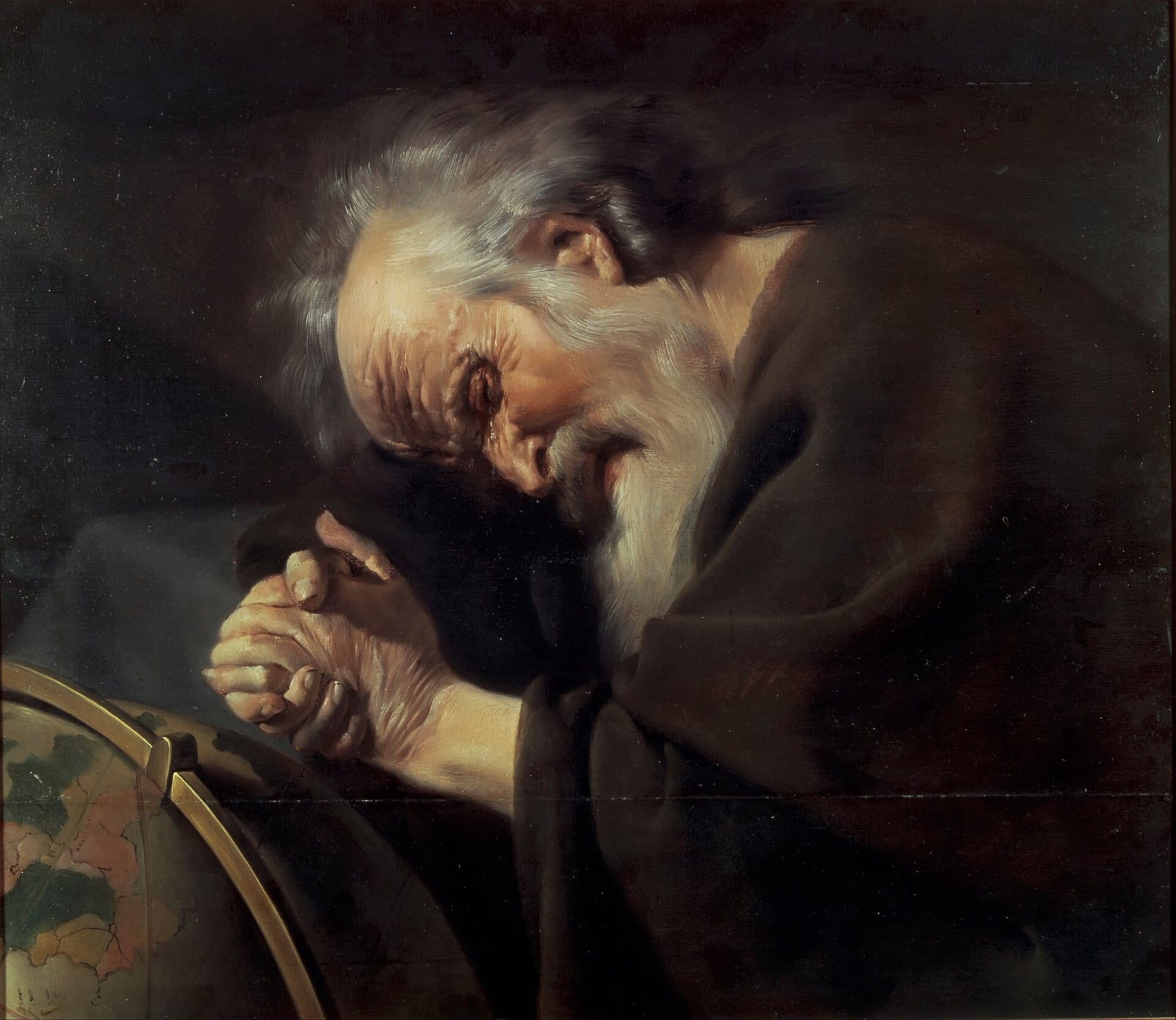
Heráclito, de Johannes Moreelse · Public domain
بكلماته
«Though this Word is true evermore, yet men are as unable to understand it when they hear it for the first time as before they have heard it at all. For, though all things come to pass in accordance with this Word, men seem as if they had no experience of them, when they make trial of words and deeds such as I set forth, dividing each thing according to its nature and showing how it truly is. But other men know not what they are doing when awake, even as they forget what they do in sleep.»DK 22 B1, transmitido por Sexto Empírico, Contra los matemáticos VII 132; Aristóteles (Retórica III 5) lo cita como comienzo del libro. Griego: Diels-Kranz; inglés: John Burnet, Early Greek Philosophy (1908), fr. 2 de la numeración de Bywater; español: traducción propia.

فكرته المحورية
Logos: In sixth-century Greek, *logos* means word and discourse, but also account, reckoning and proportion.
السيرة
5 دقيقة قراءة
ترجمة مُعانة من الأصل الإسباني، بانتظار مراجعة مترجم من أهل اللغة.
الغامض الأفسسي
لم يصلنا من هرقليطس أيّ مؤلَّف كامل. فقد كتب كتابًا واحدًا بالنثر الأيوني ظلّ متداولًا في العصر الهلنستي ثم ضاع؛ وما نقرؤه اليوم نحوُ مئة وثلاثين عبارة قصيرة استشهد بها مؤلفون آخرون، حرفيًّا حينًا ومن الذاكرة حينًا آخر، على امتداد أكثر من ألف عام: أفلاطون وأرسطو، وفلوطرخس، وسكستوس أمبيريقوس، وماركوس أوريليوس، وكليمنضس الإسكندري، وهيبوليتس الرومي، وديوجانس اللائرتي، وستوبايوس. ومنذ نشرة هرمان ديلز (1903) يُستشهد بها برقم يسبقه الرمز DK 22 B. وهي على هيئة الوحي والحكمة السائرة، وقد وجدها القدماء أنفسهم عسيرة: فسمّاه تيمون الفليوسي «صاحب الألغاز»، ولقّبته الرواية اللاحقة بـ«الغامض».
أفسس نحو سنة 500
يجعله ديوجانس اللائرتي، الذي كتب في القرن الثالث للميلاد متّبعًا تأريخ أبولودوروس، ابنًا لبلوسون — أو لهيراكون في رواية أخرى — ويضع ذروة عطائه في الأولمبياد التاسع والستين (504–501 ق.م). وهذا التاريخ عرفٌ جرى عليه المؤرخون القدماء، إذ كانوا يجعلون ذروة المؤلف في نحو الأربعين من عمره، وهو يسمح بوضع مولده نحو 540–535 ق.م. وكانت مدينته إحدى كبريات المدن الأيونية على ساحل آسيا الصغرى، خاضعة لفارس منذ منتصف القرن السادس، وذائعة الصيت بمعبد أرتميس، أحد أعظم معابد العالم اليوناني. وكون هرقليطس يذكر فيثاغورس وأكسانوفانس بصيغة الماضي، وكون برمانيدس يبدو كأنه يردّ عليه، يؤكدان تأريخًا يقع بين القرنين السادس والخامس.
وكلّ ما عدا ذلك تقريبًا موضع شك. فأنتيسثينس الرودسي، الذي ينقل عنه ديوجانس، يروي أنه كان من الأسرة الملكية في أفسس، وأنه تنازل لأخيه عن لقب الباسيليوس، الذي كان لا يزال في زمنه يحتفظ بوظائف دينية وتشريفية. ورأى جون برنت أن هذا ربما يكون الخبر الوحيد عن حياته الذي يمكن قبوله؛ أما الباقي، كما سنرى، فحكايات استُنبطت من عباراته هو نفسه.
كتاب في المعبد
بحسب ديوجانس، كان كتابه «في الطبيعة»، وكان مقسومًا إلى ثلاثة أقوال: في الكون، وفي السياسة، وفي الإلهيات؛ وقد أودعه معبد أرتميس، وتعمّد أن يكتبه بأسلوب غامض كي لا يدنو منه إلا القادرون. وليس العنوان ولا التقسيم بمؤكَّدين: فقد كان القدماء يذكرونه أيضًا باسم «ربّات الفنون» أو «الدفّة الهادية في مسار الحياة»، ولعلّ القسمة الثلاثية تعكس الترتيب الذي أعطاه إياه شُرّاحه. أما ما تكشفه الشذرات بوضوح فهو أسلوب مقصود، قوامه الجمل المتناظرة والتلاعب بالألفاظ والمفارقات، على صورة إله دلفي الذي «لا يقول ولا يكتم، بل يومئ» (B93).
على الحكماء وعلى مدينته
يتحدث هرقليطس عن الجميع تقريبًا بازدراء. فكثرة المعارف لا تعلّم الفهم، كما يكتب، وإلا لعلّمته هسيودوس وفيثاغورس وأكسانوفانس وهيكاتيوس (B40). وأوميروس جدير بأن يُطرد من المباريات ويُجلد، وأرخيلوخوس كذلك (B42)؛ وهسيودوس، معلّم أكثر الناس، لم يكن يعلم أن النهار والليل شيء واحد (B57). ولا يرحم مواطنيه أيضًا: فخيرٌ للبالغين من أهل أفسس أن يشنقوا أنفسهم جميعًا ويتركوا المدينة للفتيان، لأنهم نفوا هرمودوروس، أفضلهم (B121). ويقابل هذا الصوتَ الأرستقراطي، الذي يرى أن الواحد يعدل عشرة آلاف إن كان الأفضل (B49)، أخلاقٌ صارمة: على الشعب أن يقاتل دفاعًا عن القانون كما يقاتل دفاعًا عن سوره (B44).
ما تعلّمه الشذرات
مركز فكره هو اللوغوس، وهي كلمة تعني في اليونانية القول والحساب والنسبة في آن معًا. والشذرة التي كان الكتاب يُفتتح بها على الأرجح (B1) تقرّر أن هذا اللوغوس كائن أبدًا، لكن الناس لا يفهمونه لا قبل أن يسمعوه ولا بعد أن يسمعوه، ويعيشون كالنائمين. ومن أصغى لا إلى الكاتب بل إلى اللوغوس، كما تقول B50، فمن الحكمة أن يُقرّ بأن الأشياء كلها واحد. وليست هذه الوحدة سكونًا، بل توترًا بين الأضداد: فما يتخالف يتوافق مع ذاته، كالقوس والقيثارة (B51)؛ والطريق صعودًا ونزولًا طريق واحد بعينه (B60)؛ والحرب أبو الأشياء جميعًا (B53)، والعدل نزاع (B80). والعالم، وهو واحد للجميع، لم يصنعه إله ولا إنسان: بل كان ولا يزال وسيظل نارًا حيّة أبدًا، تشتعل بمقدار وتخبو بمقدار (B30).
ومن هنا جاءت صورة النهر. فالذين ينزلون في الأنهار نفسها تجري عليهم مياه أخرى دائمًا (B12): يبقى النهر لأن الماء يتغيّر. وقد لخّص أفلاطون المذهب في عبارة «كل شيء يتحرك ولا شيء يبقى» (أقراطيلس 402a)، وجعلت منه الرواية شعار بانتا ريه، أي «كل شيء يجري»، الذي لا يرد في أي شذرة. ومنذ ج. س. كيرك (1954) يرى كثير من المختصين أن السيلان الكلي قراءة أفلاطونية، وأن هرقليطس كان يؤكد بالأحرى الثبات الذي يولد من التغيّر الموزون؛ في حين يدافع آخرون، مثل دانيال و. غراهام، عن أن السيلان كان جزءًا من مذهبه فعلًا. وللنفس مكانة خاصة: فحدودها لا تُدرك ولو سلك المرء كل طريق، لفرط عمق لوغوسها (B45)؛ والنفس الجافة أحكم النفوس (B118)؛ ويكتب هرقليطس نفسه: «لقد بحثت عن نفسي» (B101).
الأسطورة
يورد ديوجانس اللائرتي سيرة أقرب إلى الرواية. فهرقليطس، كما يقال، أبى أن يضع للأفسسيين قوانينهم، واعتزل في معبد أرتميس يلعب بالكعاب مع الصبيان؛ وكان مبغضًا للبشر، فعاش في الجبال يقتات على الأعشاب، وأصابه الاستسقاء، فسأل الأطباء ملغزًا هل يستطيعون أن يحيلوا المطر جفافًا، فلما لم يفهموه طمر نفسه بالروث ليجفّ بحرارته. ومات في الستين؛ ودُفن في الأغورا بحسب هرميبوس، أما نيانثيس الكوزيكي فيروي أن الكلاب افترسته وهو لا يُعرف تحت الروث. وقد بيّن برنت، ثم آفا تشيتوود بتفصيل أوفى، أن هذه الحكايات صُنعت من الشذرات نفسها: فموت النفس حين تصير ماءً (B36) أنتج الاستسقاء؛ والجثث التي ينبغي أن تُلقى أولى من الروث (B96) أنتجت الروث؛ والزمن طفلًا يلعب (B52) أنتج الكعاب.
وجعلت منه رواية أخرى، هلنستية الأصل نشرها سينيكا ويوفيناليس ولوقيانوس، الفيلسوفَ الذي يبكي أمام حماقة البشر، في مقابل ديمقراطيس الذي يضحك منها؛ ثم جعل عصر النهضة والباروك من هذين الاثنين موضوعًا للتصوير. ومتأخرة كذلك الرسائل التسع التي تداولها الناس باسمه، ومنها جوابه للملك داريوس يعتذر فيه عن القدوم إلى بلاطه: فهي من أوساط كلبية تعود إلى القرن الأول قبل الميلاد والقرن الأول بعده. وأوثق منها المشهد الذي يرويه أرسطو: فقد رأى بعض الزائرين هرقليطس يتدفأ عند الفرن فترددوا في الدخول، فقال لهم أن يدخلوا، لأن هنا أيضًا آلهة.
الإرث
كان أثره فوريًّا ودائمًا. يروي أرسطو أن أفلاطون صحب في شبابه أقراطيلس، الهرقليطي المتطرف، وأخذ عنه الاقتناع بأن المحسوس في سيلان دائم؛ وجعل الرواقيون النار واللوغوس مركز طبيعياتهم، وكتب كليانثس شرحًا لكتابه. واستشهد به المؤلفون المسيحيون مادحين حينًا ومهاجمين حينًا: وبفضل هيبوليتس الرومي، الذي قدّمه بوصفه منبع بدعة نويتوس، نعرف كثيرًا من أهم الشذرات. وفي العصر الحديث صرّح هيغل بأنه لا توجد عبارة لهرقليطس لم يُدخلها في كتابه «علم المنطق»؛ وأُعجب به نيتشه؛ وخصّه هايدغر بمحاضراته في عامي 1943 و1944 وبحلقة دراسية مع أويغن فينك في 1966–1967. ولا يزال أكثر الفلاسفة السابقين على سقراط قراءةً، ربما لأن عباراته، المتفرقة المصقولة، تدعو كل عصر إلى أن يرى نفسه فيها.
المصادر: Jung, Carl Gustav. Psychologische Typen. Rascher, Zúrich, 1921, cap. XI, «Definiciones», s. v. «Enantiodromie». · Diógenes Laercio. Vidas y opiniones de los filósofos ilustres, libro IX, 1–17 (Heráclito), y II 22, VII 174, s. III d. C. Trad. inglesa de C. D. Yonge, Bohn, Londres, 1853 (Project Gutenberg n.º 57342); trad. inglesa de R. D. Hicks, Loeb Classical Library, 1925 (Wikisource). · Diels, Hermann y Kranz, Walther. Die Fragmente der Vorsokratiker, 6.ª ed., 3 vols. Weidmann, Berlín, 1951–1952; cap. 22 (Heraklit), A (testimonios) y B (fragmentos 1–126, más los dudosos y espurios). Texto griego de los fragmentos B consultado en la transcripción de Wikisource en griego. · Kirk, G. S., Raven, J. E. y Schofield, M. The Presocratic Philosophers: A Critical History with a Selection of Texts, 2.ª ed. Cambridge University Press, Cambridge, 1983, cap. VI (Heraclitus of Ephesus). Trad. esp. de Jesús García Fernández, Los filósofos presocráticos, Gredos, Madrid, 1987. · Kahn, Charles H. The Art and Thought of Heraclitus: An Edition of the Fragments with Translation and Commentary. Cambridge University Press, Cambridge, 1979.
الخط الزمني
الحياة عامًا بعد عام
كل نقطة حدث موثّق. انقر لتقرأه مع مصدره ودرجة اليقين فيه.
نحو 535 ق.مأقل من عامÉfeso (Jonia)
Birth
Born in Ephesus, son of Bloson (or of Heracon, according to others). The date is inferred from the floruit Apollodorus sets in the 69th Olympiad; Wikidata records 535 BCE. Years BCE are expressed as negative numbers.
مرجَّحDiógenes Laercio. Vidas y opiniones de los filósofos ilustres, libro IX, 1–17 (Heráclito), y II 22, VII 174, s. III d. C. Trad. inglesa de C. D. Yonge, Bohn, Londres, 1853 (Project Gutenberg n.º 57342); trad. inglesa de R. D. Hicks, Loeb Classical Library, 1925 (Wikisource).
بعد وفاته
- نحو 385 ق.مPlato's Cratylus
- نحو 260 ق.مCleanthes comments on his book
- نحو 225 ق.مHippolytus quotes his fragments
- 1877Bywater's edition
- 1903Diels fixes the numbering
- 1943Heidegger lectures on Heraclitus
- 1979The Art and Thought of Heraclitus
نحو 535 ق.م · أقل من عام
Birth
Born in Ephesus, son of Bloson (or of Heracon, according to others). The date is inferred from the floruit Apollodorus sets in the 69th Olympiad; Wikidata records 535 BCE. Years BCE are expressed as negative numbers.
مرجَّح
نحو 504 ق.م · 31 عامًا
Floruit according to Apollodorus
Diogenes Laertius (IX 1), following Apollodorus' chronology, places his prime in the 69th Olympiad (504–501 BCE), in the reign of Darius I.
تقليد
نحو 500 ق.م
He cedes the royal title
According to Antisthenes of Rhodes (in Diogenes Laertius IX 6), he cedes to his brother the title of basileus, with religious functions. Date unknown; Burnet considers it the most plausible biographical fact.
تقليد
499 ق.م
The Ionian Revolt
The Ionian cities revolt against Persia (499–494 BCE); Ephesus remains in the Persian orbit. It is the political setting of the civic tensions reflected in his fragments.
موثّق
نحو 490 ق.م
Banishment of Hermodorus
The Ephesians banish his friend Hermodorus, "the best man among them", and Heraclitus rebukes them (B121). The date is unknown: Zeller placed it after 478 BCE and Burnet thought it possible under Persian rule.
مختلَف فيه
نحو 480 ق.م
The book deposited in the Artemision
According to Diogenes Laertius (IX 6), he deposits his book in the temple of Artemis. The report is late, though dedicating writings in sanctuaries was a known practice.
تقليد
نحو 475 ق.م · 60 عامًا
Death
Dies at about sixty, according to Diogenes Laertius (IX 3). The circumstances (dropsy, dung, dogs) are legendary and derived from his fragments.
تقليد
نحو 385 ق.م
Plato's Cratylus
Plato ascribes to Heraclitus the view that "everything moves and nothing stays" and that one cannot step twice into the same river (402a); Aristotle reports that Plato knew the Heraclitean Cratylus in his youth.
مرجَّح
نحو 260 ق.م
Cleanthes comments on his book
The Stoic Cleanthes writes Explanations of Heraclitus in four books (Diogenes Laertius VII 174); the Stoics adopt fire and logos.
موثّق
نحو 225 ق.م
Hippolytus quotes his fragments
In the Refutation of All Heresies (IX 9–10), Hippolytus of Rome transcribes a series of fragments (B1, B50–B67) to show that Noetus' heresy derives from Heraclitus.
موثّق
1877
Bywater's edition
Ingram Bywater publishes Heracliti Ephesii reliquiae, the first standard modern critical edition.
موثّق
1903
Diels fixes the numbering
Hermann Diels publishes Die Fragmente der Vorsokratiker; his numbering, revised by Walther Kranz (5th ed., 1934–1937; 6th, 1951–1952), is the one used today (DK 22 B).
موثّق
1943
Heidegger lectures on Heraclitus
Martin Heidegger devotes his summer-semester courses of 1943 and 1944 to Heraclitus; in winter 1966–1967 he leads a seminar on the fragments with Eugen Fink.
موثّق
1979
The Art and Thought of Heraclitus
Charles H. Kahn publishes an annotated edition that rearranges the fragments and argues for the book's literary unity and deliberate ambiguity.
موثّق
المؤلَّفات
المؤلَّفات الأساسية
المؤلَّفات التي لا يُفهم إرثه من دونها.
مؤلَّف مكتوب · نحو 500 ق.م
On Nature (lost book)
Περὶ φύσεως (título convencional)
A book in Ionic prose, written around 500 BCE and, by tradition, deposited in the temple of Artemis at Ephesus. It was read and commented on for centuries—Theophrastus, Cleanthes, Sphaerus and several grammarians explained it—and was lost in late antiquity. Its content is reconstructed from some hundred and thirty quotations: the doctrine of the common logos, the unity and tension of opposites, the ever-living fire kindling and going out in measures, the soul and its depth, the critique of Homer, Hesiod and Pythagoras, mystery religion and the political life of Ephesus. The original order of the sentences is unknown; each editor proposes his own.
15 طبعة · amazon.com

طبعة محقَّقة · 1903
Fragments (Diels-Kranz 22 B 1–126)
Ἡρακλείτου ἀποσπάσματα (DK 22 B)
The corpus of verbatim quotations that modern philology ascribes to Heraclitus, some 125 sentences grouped as DK 22 B, together with the indirect testimonies (DK 22 A). They come from authors who quoted them for their own purposes: Hippolytus of Rome (who transmits B1 and the series B50–B67), Clement of Alexandria, Plutarch, Sextus Empiricus, Diogenes Laertius, Stobaeus, Marcus Aurelius, Porphyry, Origen and others. Each quotation raises problems of delimitation—where Heraclitus' sentence ends and paraphrase begins—and of dialect. Later editions (Marcovich 1967, Kahn 1979, Mouraviev 1999–2011, Laks and Most 2016) rearrange the material, but the DK reference remains universal.
7 طبعات · amazon.com

الأقوال
أقوال محدَّدة الموضع في مؤلَّف بعينه. كل منها يحمل مصدره ودرجة الثقة به.
Though this Word is true evermore, yet men are as unable to understand it when they hear it for the first time as before they have heard it at all. For, though all things come to pass in accordance with this Word, men seem as if they had no experience of them, when they make trial of words and deeds such as I set forth, dividing each thing according to its nature and showing how it truly is. But other men know not what they are doing when awake, even as they forget what they do in sleep.τοῦ δὲ λόγου τοῦδ᾽ ἐόντος ἀεὶ ἀξύνετοι γίνονται ἄνθρωποι καὶ πρόσθεν ἢ ἀκοῦσαι καὶ ἀκούσαντες τὸ πρῶτον· γινομένων γὰρ πάντων κατὰ τὸν λόγον τόνδε ἀπείροισιν ἐοίκασι, πειρώμενοι καὶ ἐπέων καὶ ἔργων τοιούτων, ὁκοίων ἐγὼ διηγεῦμαι κατὰ φύσιν διαιρέων ἕκαστον καὶ φράζων ὅκως ἔχει· τοὺς δὲ ἄλλους ἀνθρώπους λανθάνει ὁκόσα ἐγερθέντες ποιοῦσιν, ὅκωσπερ ὁκόσα εὕδοντες ἐπιλανθάνονται.
متحقَّق منهDK 22 B1, transmitido por Sexto Empírico, Contra los matemáticos VII 132; Aristóteles (Retórica III 5) lo cita como comienzo del libro. Griego: Diels-Kranz; inglés: John Burnet, Early Greek Philosophy (1908), fr. 2 de la numeración de Bywater; español: traducción propia.
أقوال منحولة أو مختلَف في نسبتها (5)
«Everything flows (panta rhei).»
The formula appears in no fragment. It sums up Plato's reading of Heraclitus ("everything moves and nothing stays", Cratylus 402a), and the literal expression πάντα ῥεῖ comes from late commentators such as Simplicius. Many scholars think Heraclitus stressed the stability resulting from measured change, not universal flux.
«No man ever steps in the same river twice, for it is not the same river and he is not the same man.»
A modern expansion combining B12, B91 and the disputed B49a ("we step and do not step into the same rivers, we are and are not"). The second half, about the man no longer being the same, is in no ancient source.
«The only constant is change.»
Widespread in business books and social media. It has no ancient source; it is a modern paraphrase of the flux commonplace.
«The soul becomes dyed with the colour of its thoughts.»
Frequently attributed to Heraclitus, it is by Marcus Aurelius, Meditations V 16, six centuries later.
«Out of every one hundred men, ten shouldn't even be there, eighty are just targets, nine are the real fighters… but one is a warrior.»
It circulates in military circles and online under Heraclitus' name. It appears in no collection of fragments and in no ancient author.
الكلمات الأخيرة
لا توجد سجلات يمكن التحقق منها لكلماته الأخيرة.
No record of his last words survives. Diogenes Laertius (IX 3) only transmits the riddle he supposedly put to the doctors—whether they could turn a downpour into drought—within an account of his death that scholars regard as derived from his own fragments (B36).
المصدر: Diógenes Laercio. Vidas y opiniones de los filósofos ilustres, libro IX, 1–17 (Heráclito), y II 22, VII 174, s. III d. C. Trad. inglesa de C. D. Yonge, Bohn, Londres, 1853 (Project Gutenberg n.º 57342); trad. inglesa de R. D. Hicks, Loeb Classical Library, 1925 (Wikisource).
اسأل
بماذا يجيب أثره
اثنا عشر سؤالًا كبيرًا من أسئلة الإنسانية، وما تتيح نصوصه الإجابة به عنها، مع المراجع. ولا نقوّله ما لم يقل أبدًا.
ما المطلق؟ هل الله موجود؟
A common logos and an ever-living fire that no god made
مطلق غير شخصييقوله صراحةً
For Heraclitus the ultimate is the logos, the measure according to which everything happens, and the ever-living fire that is kindled and quenched in measures. Fragment B30 explicitly denies that any of the gods or of men made the cosmos: it always was, is and will be. The divine here has no face of craftsman or father. Yet Heraclitus does not abandon religious language: B32 says that the one, the only wise thing, is unwilling and willing to be called by the name of Zeus, and B67 calls god the unity of opposites, day and night, winter and summer, war and peace. It is an impersonal and intelligent principle that the traditional name of the god only half designates.
قارن هذا السؤال مع معلّمين آخرينمن أنا؟ هل توجد ذات حقيقية؟
The soul has no limits: its measure is the common logos
الذات هي المطلقيُستنتج من تعاليمه
Heraclitus says of himself that he searched himself (B101) and that it belongs to all humans to know themselves and to be sound of mind (B116). But what he finds in searching himself is not a private interiority: you would not find the limits of the soul though you travelled every road, so deep is its logos (B45). That logos is common to all, as thinking is common (B113), and the error of the many lies in living as if they had a private understanding (B2). The soul is moreover fiery and changing: it comes from water and dies into water (B36). His work suggests that the depth of the self coincides with the measure governing the cosmos, though he never states an identity.
قارن هذا السؤال مع معلّمين آخرينلماذا نتألّم؟
Sickness makes health sweet: whoever misses the logos suffers
الجهل بما نحن عليهيُستنتج من تعاليمه
Heraclitus devotes no fragment to the cause of suffering, but his work allows an attitude to be reconstructed. Opposites are inseparable: sickness makes health pleasant, hunger satiety, weariness rest (B111), and it would not be better for humans to get all they wish (B110). For god all things are beautiful, good and just; it is humans who have taken some things as unjust and others as just (B102). War itself is common and justice is strife (B80). Pain thus arises from a partial view: from those who do not grasp the logos although everything happens according to it (B1) and who live as if asleep.
قارن هذا السؤال مع معلّمين آخرينماذا يحدث بعد الموت؟
At death things await humans that they neither expect nor imagine
صمت أو تحفّظيُستنتج من تعاليمه
Heraclitus speaks of death in several fragments, always in his enigmatic style, and none offers a description of the beyond. B27 says that at death things await humans that they neither expect nor imagine; B62, that immortals and mortals live each other's death; B36 places the soul in the cycle of elements, for to souls it is death to become water. B25 promises greater portions to greater deaths, perhaps those of the fallen in battle. Together they suggest that death is one more transformation within the flux governed by the logos, and that what comes after does not match usual expectations; they do not allow us to affirm personal survival or to deny it.
قارن هذا السؤال مع معلّمين آخرينكيف يُبلَغ التحرّر أو الخلاص؟
The wise is one thing: to know the thought that steers all through all
بالمعرفة المباشرةيُستنتج من تعاليمه
Heraclitus speaks not of salvation but of waking up. Humans live as if asleep, not understanding the logos although everything happens according to it (B1), and each turns towards a private world. The wise, says B41, is one thing: to know the thought that steers all things through all things. That understanding is not given by much learning, which did not teach Hesiod or Pythagoras (B40), but by listening to the logos and agreeing that all is one (B50). B112 joins knowledge and conduct: sound thinking is the greatest virtue, and wisdom is to speak the truth and act according to nature, heeding it. What frees is grasping the common measure.
قارن هذا السؤال مع معلّمين آخرينهل نحتاج إلى معلّم؟
Not to me but to the logos: borrowed learning gives no understanding
لا سلطة روحيةيقوله صراحةً
Heraclitus is perhaps the Greek thinker most hostile to the authority of recognised sages. Much learning does not teach understanding, says B40; otherwise it would have taught Hesiod, Pythagoras, Xenophanes and Hecataeus. Homer deserves to be thrown out of the contests and flogged, and Hesiod, teacher of most, did not know that day and night are one. He does not even claim authority for himself: it is wise, listening not to him but to the logos, to agree that all is one (B50). And against any school he sets his own method: I searched myself (B101). No one can grasp for another the logos that is common to all.
قارن هذا السؤال مع معلّمين آخرينهل العالم حقيقي؟
Ever-living fire, kindled and quenched in measures
نظام طبيعي في تحوّليقوله صراحةً
For Heraclitus the world is real and in perpetual transformation. B30 describes it as an ever-living fire kindled and quenched in measures, which no one made and which always was, is and will be. Upon those who step into the same rivers, other and other waters flow (B12): the identity of things holds through change, like that of the river. Opposites are joined in tension, as in the bow and the lyre (B51), and war is the father of all things (B53). But the flux is not chaos: the sun will not overstep its measures (B94). The real is the changing course of things, ordered by a logos to which the wise attune themselves.
قارن هذا السؤال مع معلّمين آخرينما الحب؟
No fragment speaks of love; the uniting force is tension
لم يُبدِ رأيًا
Among Heraclitus' surviving fragments there is none devoted to love, either erotic or as goodwill. What joins things in his work is not attraction but the tension of opposites: what differs agrees with itself, a harmony of opposing tensions, as in the bow and the lyre (B51). War is the father of all (B53) and justice is strife (B80). Heraclitus even reproaches Homer for wishing strife would vanish from among gods and men, since without it there would be no harmony (A22). It would be forced to extract a doctrine of love from this; the closest is hidden harmony, which is better than the manifest (B54).
قارن هذا السؤال مع معلّمين آخرينهل نحن أحرار أم أن كل شيء مقدَّر؟
Character is a human being's destiny
القدر والمسؤوليةيقوله صراحةً
Heraclitus' most quoted fragment on this question is B119: character is a human being's destiny, his daimon. The sentence can be read in two senses that do not exclude each other: each person's destiny is not an alien power but is identified with his way of being; and, at the same time, that character works as a force that guides him. Elsewhere Heraclitus states that everything happens according to the logos (B1) and through strife and necessity (B80), and that the sun will not overstep its measures, for the Erinyes, helpers of Justice, would find it out (B94). There is an order governing everything, but the centre of gravity of human destiny lies in conduct.
قارن هذا السؤال مع معلّمين آخرينلماذا نتأمّل أو نصلّي؟
Praying to statues is talking to walls: one must grasp the logos
رؤية الواقع كما هويُستنتج من تعاليمه
Heraclitus sharply criticises the religious forms of his time. Those who purify themselves by defiling themselves with blood are like someone who, having stepped into mud, would wash it off with mud; and they pray to statues as if one were to converse with houses, knowing nothing of gods or heroes (B5). Mystery rites, as practised, are unholy (B14). What he proposes instead is a form of attention: to listen to the logos and not to him (B50), to wake from the sleep in which most live (B1) and to search oneself (B101). The aim is not to gain favours but to see what is, the common logos that nature, which loves to hide, conceals.
قارن هذا السؤال مع معلّمين آخرينهل يستطيع العقل أن يعرف الحقيقة القصوى؟
Nature loves to hide; the logos is common, but few grasp it
معرفة باطنيةيُستنتج من تعاليمه
Heraclitus believes the logos can be understood — it is common to all, as thinking is (B113) — but that almost no one does. Nature loves to hide (B123), invisible harmony is better than visible (B54), and the lord whose oracle is at Delphi neither speaks nor conceals but gives signs (B93), just like his own enigmatic style, which earned him the nickname “the Obscure”. Eyes and ears are bad witnesses for those with barbarian souls (B107), and much learning does not give understanding (B40). Unless one expects the unexpected, one will not find it (B18). The ultimate is accessible but requires deciphering the signs; truth is in plain sight, hidden from those who cannot look.
قارن هذا السؤال مع معلّمين آخرينالانسحاب من العالم أم تغييره؟
The people must fight for the law as for its city wall
تنظيم المجتمعيقوله صراحةً
Ancient biography relates that Heraclitus renounced hereditary kingship in favour of his brother, refused to give laws to Ephesus and ended up living in the mountains, feeding on herbs. But these anecdotes, transmitted by Diogenes Laertius, are largely regarded as inferences from his fragments. The fragments themselves speak otherwise: the people must fight for the law as for the wall (B44); those who speak with understanding must rely on what is common to all, as a city on its law, and far more strongly, for all human laws are nourished by one, the divine (B114). Wisdom thus has a civic dimension: just law reflects the logos.
قارن هذا السؤال مع معلّمين آخرين
التقارب والتوتّر
التقارب والتوتّر
محسوبة سؤالًا سؤالًا انطلاقًا من مواقفه. وسبب كل اتفاق أو اختلاف يظهر بالنقر.
يقترب في تفكيره من
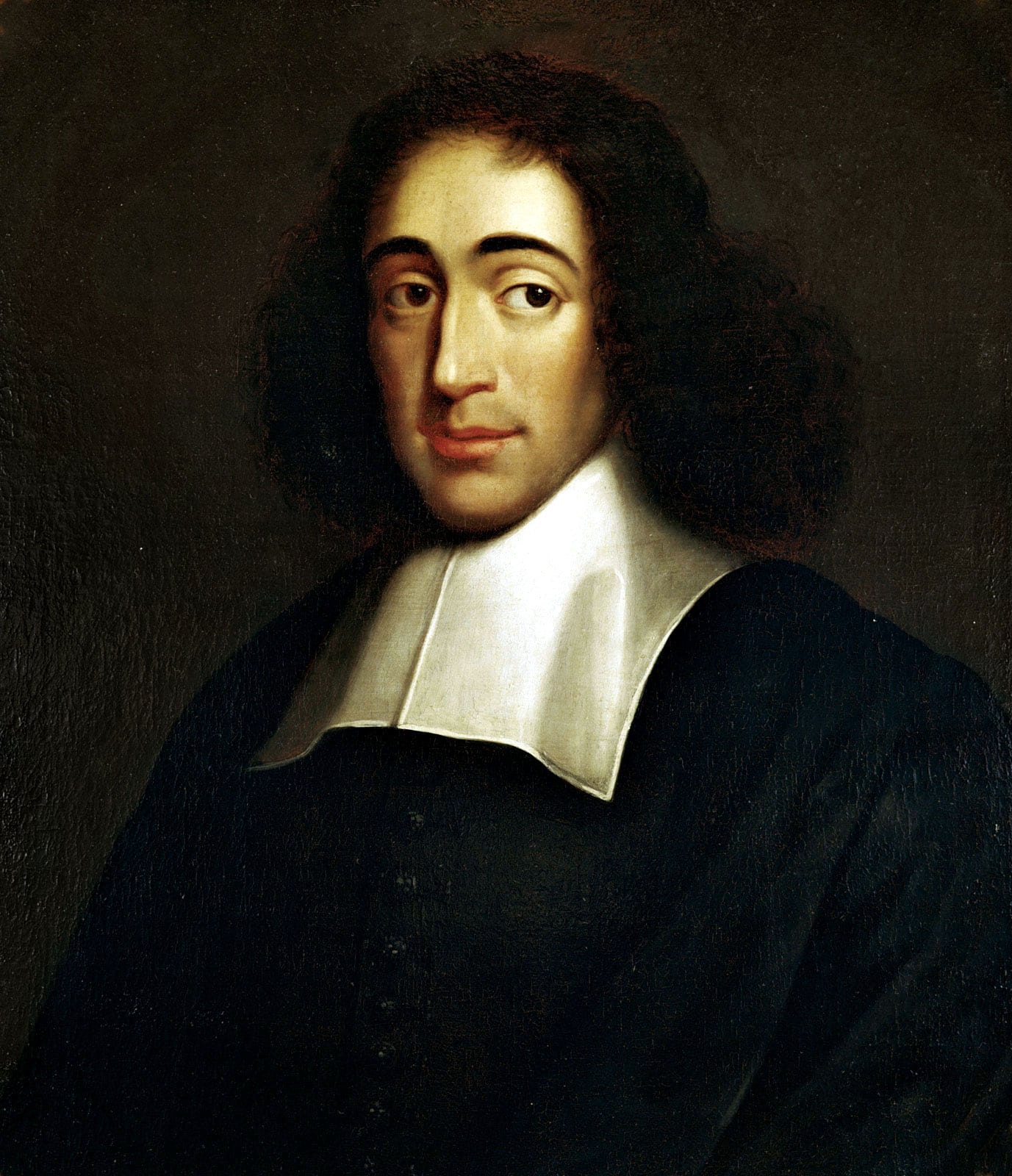
Baruch Spinoza
يتّفقان في: ما المطلق؟ هل الله موجود؟ · من أنا؟ هل توجد ذات حقيقية؟ · لماذا نتألّم؟
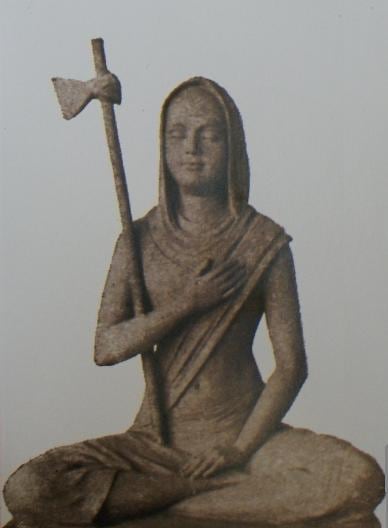
Gaudapada
يتّفقان في: ما المطلق؟ هل الله موجود؟ · من أنا؟ هل توجد ذات حقيقية؟ · لماذا نتألّم؟
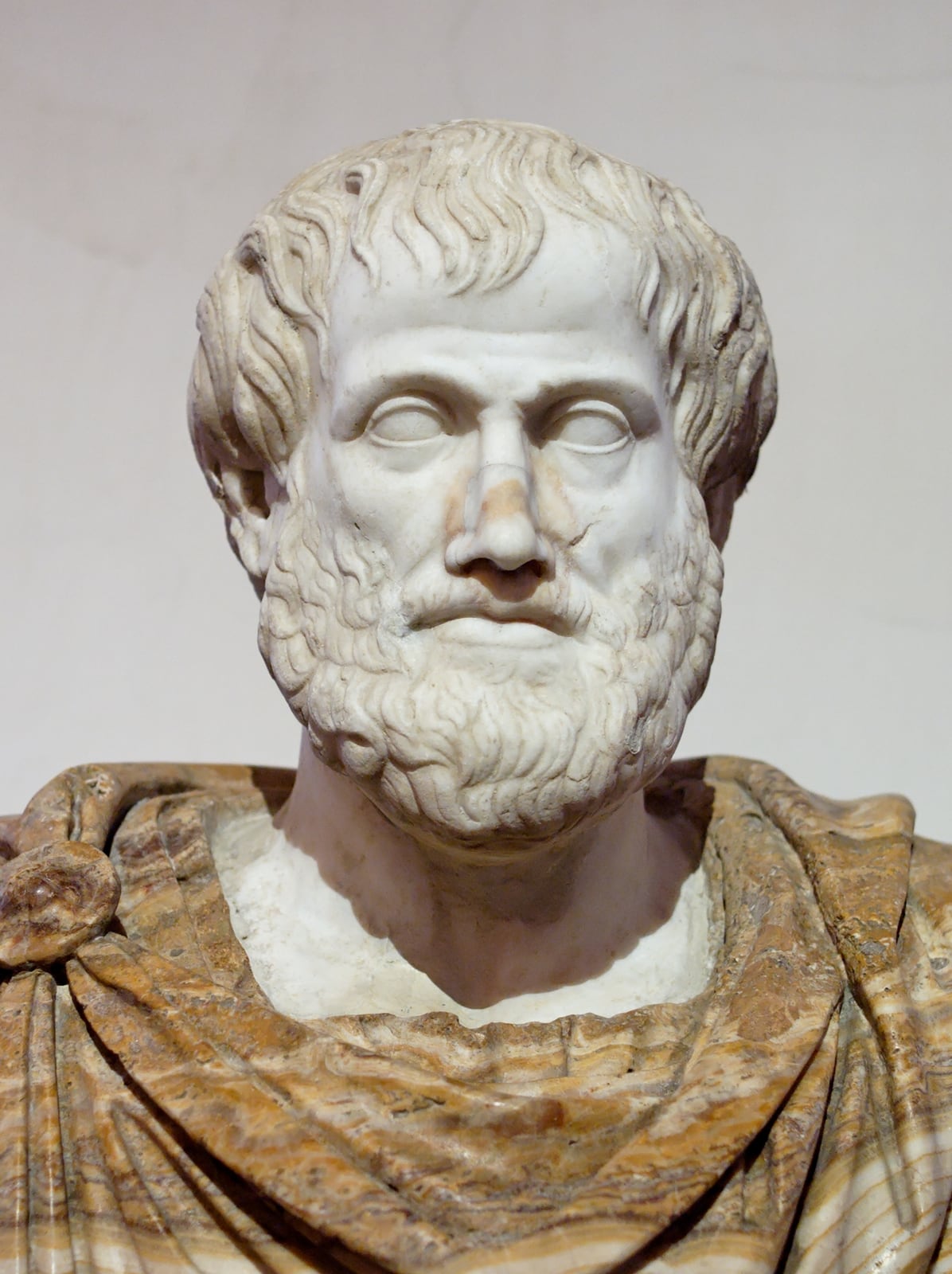
Aristotle
يتّفقان في: ما المطلق؟ هل الله موجود؟ · ماذا يحدث بعد الموت؟ · هل العالم حقيقي؟
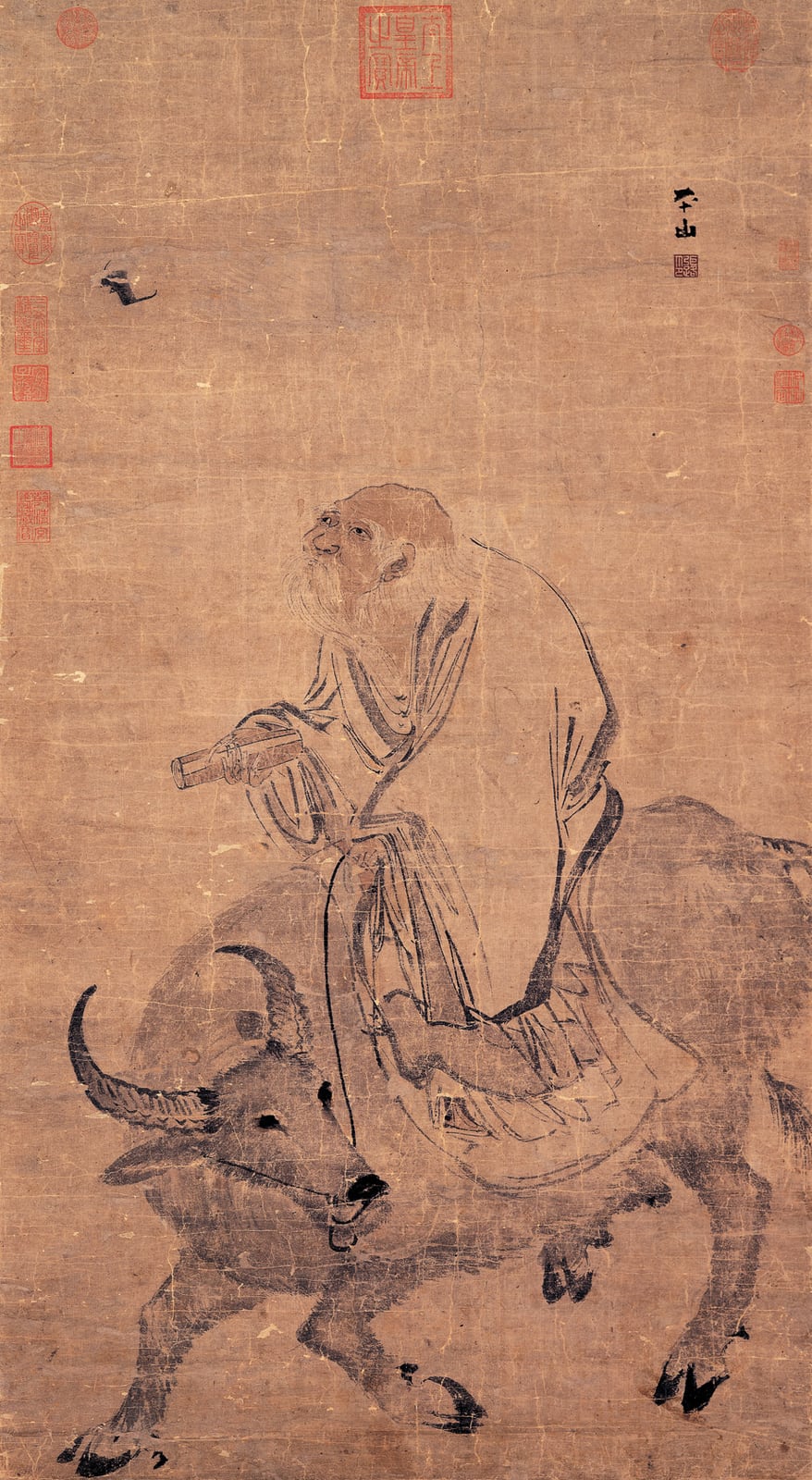
Laozi
يتّفقان في: ماذا يحدث بعد الموت؟ · هل العالم حقيقي؟ · الانسحاب من العالم أم تغييره؟
يبتعد في تفكيره عن


حكايات وروايات
حكايات وروايات
شهادةc. 500 a. C. (incierto)
"There are gods here too"
أصل الرواية: Aristotle, Parts of Animals I 5, 645a17–23, who introduces it with "it is said". It is the oldest testimony to an anecdote about Heraclitus and does not come from the late biographical tradition, though Aristotle writes a century and a half later.
مختلَف فيهc. 500 a. C.
The king who gave up the throne
أصل الرواية: Diogenes Laertius IX 6, quoting the Successions of Antisthenes of Rhodes (2nd century BCE). Strabo (XIV 1.3) confirms that the descendants of Androclus, founder of Ephesus, kept the royal title and its honours.
لا يمكن التحقق منهc. 490–480 a. C. (tradicional)
Knucklebones in the temple of Artemis
أصل الرواية: Diogenes Laertius IX 2–3 (3rd century CE), without a named source. Burnet (Early Greek Philosophy, § 63, n. 324) and Chitwood (Death by Philosophy, 2004) show how the biographical tradition derived these scenes from the fragments.
لا يمكن التحقق منهs. V a. C. (tradicional)
The Delian diver
أصل الرواية: Diogenes Laertius II 22 (life of Socrates, quoting Ariston) and IX 11–12 (quoting Seleucus the grammarian and Croton). It is not found in Plato or Xenophon.
مختلَف فيهc. 475 a. C. (tradicional)
Death under the dung
أصل الرواية: Diogenes Laertius IX 3–5, with the versions of Hermippus, Neanthes, Ariston and Hippobotus. Ava Chitwood (Death by Philosophy, 2004), and Burnet before her, showed that the story is built from his fragments: water as the death of soul (B36), corpses more fit to be thrown out than dung (B96), contempt for doctors (B58). The versions contradict one another.
المصدر: Chitwood, Ava. Death by Philosophy: The Biographical Tradition in the Life and Death of the Archaic Philosophers Empedocles, Heraclitus, and Democritus. University of Michigan Press, Ann Arbor, 2004.
لا يمكن التحقق منهtópico helenístico y romano
The weeping philosopher
أصل الرواية: Seneca, On Anger II 10.5 and On Tranquillity of Mind 15.2; Juvenal, Satires X 28–32; Lucian, Philosophies for Sale 13–14. The word "melancholy" comes from Theophrastus according to Diogenes Laertius IX 6. It is a literary commonplace, not a biographical fact.
المصدر: Séneca. De ira II 10.5 y De tranquillitate animi 15.2; Juvenal, Sátiras X 28–32; Luciano, Subasta de vidas 13–14 (el tópico de Heráclito que llora y Demócrito que ríe).
مختلَف فيهc. 500 a. C. (tradicional)
The book deposited in the temple
أصل الرواية: Diogenes Laertius IX 6; Theophrastus quoted in the same passage. Kahn (1979) and Burnet discuss the report without wholly rejecting it.
التعاليم
التعاليم
المفاهيم التي ينتظم بها فكره، مشروحة في سياقها.
Logoslogos
The book's central concept, present in B1, B2, B45, B50, B72 and B115.
المصدر: Kahn, Charles H. The Art and Thought of Heraclitus: An Edition of the Fragments with Translation and Commentary. Cambridge University Press, Cambridge, 1979.
Unity of oppositesunidad-de-los-contrarios
A doctrine transmitted chiefly by Hippolytus (B51–B67), who links it to Noetus' theology.
المصدر: Kirk, G. S., Raven, J. E. y Schofield, M. The Presocratic Philosophers: A Critical History with a Selection of Texts, 2.ª ed. Cambridge University Press, Cambridge, 1983, cap. VI (Heraclitus of Ephesus). Trad. esp. de Jesús García Fernández, Los filósofos presocráticos, Gredos, Madrid, 1987.
Ever-living firefuego-siempre-vivo
The cosmology of fragments B30, B31, B64, B66, B90.
المصدر: Kirk, G. S. Heraclitus: The Cosmic Fragments. Cambridge University Press, Cambridge, 1954.
The river and fluxel-rio
Fragments B12, B49a and B91; testimonies of Plato (Cratylus 402a) and Aristotle (Metaphysics Γ 5, 1010a10–15).
Polemos: war and justicepolemos
Fragments B53, B80 and A22 (Aristotle, Eudemian Ethics VII 1, 1235a25).
المصدر: Kirk, G. S., Raven, J. E. y Schofield, M. The Presocratic Philosophers: A Critical History with a Selection of Texts, 2.ª ed. Cambridge University Press, Cambridge, 1983, cap. VI (Heraclitus of Ephesus). Trad. esp. de Jesús García Fernández, Los filósofos presocráticos, Gredos, Madrid, 1987.
The soul (psyche)psyche
Fragments B36, B45, B77, B85, B101, B115–B119.
المصدر: Kahn, Charles H. The Art and Thought of Heraclitus: An Edition of the Fragments with Translation and Commentary. Cambridge University Press, Cambridge, 1979.
مقاطع الفيديو
مقاطع الفيديو
تسجيلات ومقابلات وأفلام وثائقية. تُشغَّل مقاطع الفيديو من YouTube؛ ولا تُستضاف هنا.
Heraclitus: Pre-Socratic Philosophy
محاضرة· EN· 2022· 28 min
Philosophy Overdose
HoP 005 - Old Man River - Heraclitus
محاضرة· EN· 2020· 18 min
history of philosophy without any gapsالقناة الرسمية
2) The Pre-Socratics: Xenophanes and Heraclitus
محاضرة· EN· 2016· 74 min
Adam Rosenfeldالقناة الرسمية
Prof. Richard Capobianco: Heidegger's Readings of Heraclitus: The Metaphysical and Spiritual Import
محاضرة· EN· 2023· 33 min
Stonehill Collegeالقناة الرسمية
Heraclitus of Ephesus | The Logos | Philosophy Core Concepts
تحليل· EN· 2020· 19 min
Gregory B. Sadler - That Philosophy Guyالقناة الرسمية
Heraclitus of Ephesus | Strife, Opposition, and Harmony | Philosophy Core Concepts
تحليل· EN· 2020· 20 min
Gregory B. Sadler - That Philosophy Guyالقناة الرسمية
Heráclito de Éfeso
فيلم وثائقي· ES· 2016· 22 min
UNEDالقناة الرسمية
Conferencia Teresa Oñate "Heráclito"
محاضرة· ES· 2018· 134 min
Hercritia-Cátedra de Hermenéutica Críticaالقناة الرسمية
Heráclito, Empédocles y Anaxágoras | Historia de la filosofía (7/61)
محاضرة· ES· 2017· 68 min
Ernesto Castroالقناة الرسمية
Filosofía más allá de la academia. Ciclo de filosofía antigua. Parménides y Heráclito
محاضرة· ES· 2022· 88 min
Universidad Nacional Abierta y a Distancia UNADالقناة الرسمية
Héraclite avec André Laks
مقابلة· FR· 2010· 56 min
Résonance[s]
Hans-Georg Gadamer über Heraklit/on Heraclitus (full, 1989)
مقابلة· DE· 1989· 50 min
PhilosophieKanal
المعرض
المعرض
صور بترخيص متحقَّق منه. كل منها تحتفظ بمؤلّفها ونسبتها.
المخطوطات
المخطوطات
شواهد مخطوطة ونصوص قديمة، مع جهة حفظها وشروط الاطّلاع عليها.
GRC · Minúscula griega · c. 222–235 d. C.; copia del s. XIV
Ἱππολύτου κατὰ πασῶν αἱρέσεων ἔλεγχος (Refutatio omnium haeresium), libros IV–X
- الشاهد المحفوظ
- Códice en papel, único testigo de los libros IV–X; atribuido a Orígenes hasta mediados del s. XIX
- جهة الحفظ
- Bibliothèque nationale de France, París · Supplément grec 464
العلاقات
العلاقات
تأثيرات وتلمذة وتقارب في الأفكار. تُميَّز العلاقة الموثّقة عن التشابه المستخلَص بالتحليل.
اختلف مع
He criticises him in B40 among the learned without understanding; B129, of disputed authenticity, accuses him of appropriating others' writings and calls his wisdom "artful knavery".
علاقة موثّقة
اختلف مع
Jenófanes
He names him in B40 alongside Hesiod, Pythagoras and Hecataeus. Sotion made him Xenophanes' pupil, a report Burnet considers improbable.
علاقة موثّقة
اختلف مع
Homero
B42 calls for him to be thrown out of the contests and flogged; B56 cites him as an example of how men are deceived about what is visible.
علاقة موثّقة
اختلف مع
Hesíodo
"Teacher of most", he did not know that day and night are one (B57); he also appears in B40 and B106.
علاقة موثّقة
معاصر لـ
They were contemporaries. Many scholars read in Parmenides B6 ("two-headed mortals… for whom the path of all things turns back on itself") a polemical allusion to Heraclitus; others deny it.
تشابه مستخلَص بالتحليل
أثّر في
Diogenes Laertius (II 22) tells that Euripides lent him Heraclitus' book and that he asked for "a Delian diver" to understand it; the anecdote has no contemporary confirmation.
تشابه مستخلَص بالتحليل
أثّر في
According to Aristotle (Metaphysics A 6), he knew the Heraclitean Cratylus in his youth and kept the conviction that sensible things flow; he discusses the doctrine in the Cratylus and the Theaetetus.
علاقة موثّقة
أثّر في
He quotes and criticises him: he accuses him of denying the principle of non-contradiction (Metaphysics Γ 3), comments on the ambiguity of his prose (Rhetoric III 5) and transmits the anecdote of the oven.
علاقة موثّقة
أثّر في
The Stoics, from Zeno and Cleanthes—author of Explanations of Heraclitus—adopted fire as principle and logos as the reason of the cosmos.
علاقة موثّقة
أثّر في
The Meditations quote and paraphrase Heraclitus (IV 46, VI 42); fragments DK B71–B76 come from them.
علاقة موثّقة
أثّر في
He took from Heraclitus the term "enantiodromia"—the turning of something into its opposite—and defined it in Psychological Types (1921).
علاقة موثّقة
أفكار قريبة من
Empedocles' Love and Strife extend, in another key, the Heraclitean tension between harmony and war.
تشابه مستخلَص بالتحليل
أفكار قريبة من
The complementarity of opposites, the praise of the hidden and water as an image of change bring the Daodejing close to Heraclitus' fragments; the comparison has been common since the nineteenth century, without historical contact.
تشابه مستخلَص بالتحليل
أفكار قريبة من
Siddhartha Gautama, the Buddha
Approximate contemporaries, both made continual change a key to reality, though the Buddha understood it as liberating impermanence and Heraclitus as ordering measure.
تشابه مستخلَص بالتحليل
المصادر
المصادر
المراجع والفهارس التي رُوجعت لهذه الصفحة.
- Jung, Carl Gustav. Psychologische Typen. Rascher, Zúrich, 1921, cap. XI, «Definiciones», s. v. «Enantiodromie».
- Wikidata, entidad Q41155 «Heraclitus» (146 enlaces entre wikis; P31=Q5). Registra nacimiento en 535 a. C. y muerte en 470 a. C., ambos en Éfeso.
- Diógenes Laercio. Vidas y opiniones de los filósofos ilustres, libro IX, 1–17 (Heráclito), y II 22, VII 174, s. III d. C. Trad. inglesa de C. D. Yonge, Bohn, Londres, 1853 (Project Gutenberg n.º 57342); trad. inglesa de R. D. Hicks, Loeb Classical Library, 1925 (Wikisource).
- Diels, Hermann y Kranz, Walther. Die Fragmente der Vorsokratiker, 6.ª ed., 3 vols. Weidmann, Berlín, 1951–1952; cap. 22 (Heraklit), A (testimonios) y B (fragmentos 1–126, más los dudosos y espurios). Texto griego de los fragmentos B consultado en la transcripción de Wikisource en griego.
- Kirk, G. S., Raven, J. E. y Schofield, M. The Presocratic Philosophers: A Critical History with a Selection of Texts, 2.ª ed. Cambridge University Press, Cambridge, 1983, cap. VI (Heraclitus of Ephesus). Trad. esp. de Jesús García Fernández, Los filósofos presocráticos, Gredos, Madrid, 1987.
- Kahn, Charles H. The Art and Thought of Heraclitus: An Edition of the Fragments with Translation and Commentary. Cambridge University Press, Cambridge, 1979.
- Burnet, John. Early Greek Philosophy, 2.ª ed. Adam and Charles Black, Londres, 1908, cap. III (Herakleitos of Ephesos), §§ 63–80 (Project Gutenberg n.º 67097).
- Graham, Daniel W. «Heraclitus». The Stanford Encyclopedia of Philosophy, ed. Edward N. Zalta y Uri Nodelman; primera publicación el 8 de febrero de 2007, revisión sustancial del 8 de diciembre de 2023.
- Laks, André y Most, Glenn W. (eds. y trads.). Early Greek Philosophy, vol. III: Early Ionian Thinkers, Part 2. Loeb Classical Library 526, Harvard University Press, Cambridge (Mass.), 2016.
- Graham, Daniel W. (ed. y trad.). The Texts of Early Greek Philosophy: The Complete Fragments and Selected Testimonies of the Major Presocratics, 2 vols. Cambridge University Press, Cambridge, 2010.
- Eggers Lan, Conrado y Juliá, Victoria E. (introd., trad. y notas). Los filósofos presocráticos I. Biblioteca Clásica Gredos 12, Gredos, Madrid, 1978 (incluye Heráclito).
- Chitwood, Ava. Death by Philosophy: The Biographical Tradition in the Life and Death of the Archaic Philosophers Empedocles, Heraclitus, and Democritus. University of Michigan Press, Ann Arbor, 2004.
- Aristóteles. Partes de los animales I 5, 645a17–23 (la anécdota del horno); Metafísica A 6, 987a29–b1 (Platón y Crátilo) y Γ 3, 1005b23–25; Retórica III 5, 1407b11–18 (la puntuación de B1). Trad. inglesa de W. Ogle (1882) y W. D. Ross (1908), Internet Classics Archive (MIT).
- Platón. Crátilo 402a; Teeteto 152d–e y 160d; Sofista 242d–e; Banquete 187a. Trad. inglesa de Benjamin Jowett, The Dialogues of Plato, 3.ª ed., Clarendon Press, Oxford, 1892 (Project Gutenberg n.º 1616, Cratylus).
- Attridge, Harold W. First-Century Cynicism in the Epistles of Heraclitus. Harvard Theological Studies 29, Scholars Press, Missoula, 1976; y Malherbe, Abraham J. (ed.), The Cynic Epistles: A Study Edition, Scholars Press, Missoula, 1977.
- Séneca. De ira II 10.5 y De tranquillitate animi 15.2; Juvenal, Sátiras X 28–32; Luciano, Subasta de vidas 13–14 (el tópico de Heráclito que llora y Demócrito que ríe).
- Fairbanks, Arthur (ed. y trad.). The First Philosophers of Greece: An Edition and Translation of the Remaining Fragments of the Pre-Sokratic Philosophers. Kegan Paul, Trench, Trübner, Londres, 1898 (Project Gutenberg n.º 78670).
- Bywater, Ingram (ed.). Heracliti Ephesii reliquiae. Clarendon Press, Oxford, 1877; y Patrick, G. T. W., The Fragments of the Work of Heraclitus of Ephesus on Nature, translated from the Greek text of Bywater, N. Murray, Baltimore, 1889 (Internet Archive).
- «Heraclitus», Wikipedia en inglés, y «Heráclito», Wikipedia en español (consultadas para contrastar datos y bibliografía; texto propio).
- Open Library (Internet Archive): ediciones de los fragmentos de Heráclito y de las colecciones de presocráticos verificadas por ISBN.
- Bibliothèque nationale de France. Hippolyte, Réfutation de toutes les hérésies (notice de titre conventionnel), y manuscrito Supplément grec 464 (s. XIV), único testigo de los libros IV–X; ed. M. Marcovich, Hippolytus. Refutatio omnium haeresium, De Gruyter, Berlín, 1986.
- Mondolfo, Rodolfo. Heráclito. Textos y problemas de su interpretación. Siglo XXI, México, 1966 (reed. 2007).
- García Calvo, Agustín. Razón común. Edición crítica, ordenación, traducción y comentario de los restos del libro de Heraclito. Lucina, Madrid, 1985 (Lecturas presocráticas II).
- Marcovich, Miroslav. Heraclitus. Greek Text with a Short Commentary. Editio maior. Universidad de los Andes, Mérida (Venezuela), 1967.
- Kirk, G. S. Heraclitus: The Cosmic Fragments. Cambridge University Press, Cambridge, 1954.
- Marco Aurelio. Meditaciones IV 46 y V 16. Trad. inglesa de George Long, 1862 (Project Gutenberg n.º 2680).
- صاحب الحقوق
- Textos antiguos en dominio público; cada traducción y edición crítica pertenece a su traductor o editorial
في انتظار التأكيد
ما لم تتمكّن هذه الصفحة من حسمه بعد. نفضّل أن نقول ذلك على أن نملأ الفراغ.
- Fechas: se adopta c. 535–475 a. C. (Wikidata y uso común); Diógenes Laercio solo da la madurez en la 69.ª olimpiada (504–501) y la edad de sesenta años al morir (así traduce Hicks; la versión de Yonge dice «setenta», probablemente por error).
- Ediciones con ISBN no verificado en catálogo: Diels-Kranz (Weidmann; los ISBN de la reimpresión de 2005 no indican volumen), Marcovich (Mérida, 1967, sin ISBN) y Mouraviev (solo se ha verificado una parte).
- Traducción española de dominio público de los fragmentos: no localizada en línea con URL estable.
- Manuscrito BnF Supplément grec 464: no se ha localizado digitalización en Gallica; añadir el enlace si existe.
- Imagen de la moneda de Éfeso: licencia «Public domain» según Commons sin plantilla específica; revisar la ficha si se usa como principal.
- Programas de afiliación: ninguno verificado (Gredos, Alianza, Cambridge, Harvard). Lista vacía.
- Año de los vídeos: el de la grabación cuando la descripción lo indica y, si no, el de publicación en YouTube.
بُحث بتاريخ 2026-10-25