الهندوسية · بهاكتي
Chaitanya Mahaprabhu
শ্রীচৈতন্য মহাপ্রভু · चैतन्य महाप्रभु
1486 – نحو 1533شخصية موثّقة تاريخيًا
مصلحٌ ديني بنغالي (1486–1533/1534)، يعدّه أتباعه تجسّدًا جامعًا لرادها وكريشنا، ويُعَدّ مؤسّس الفيشنوية الغاودية. كان نحويًّا ثم صار من أهل الوجد بعد تلقينه في غايا، فأشاع الإنشاد الجماعي للأسماء الإلهية، وقضى سنواته الثماني عشرة الأخيرة في بوري، ولم يترك مكتوبًا، في رأي النقاد، سوى المقاطع الثمانية من «شيكشاشتاكا». ولا تُعرف حياته إلا من سِيَر تقديسية متأخرة، ولا سيما «تشايتانيا بهاغافاتا» و«تشايتانيا تشاريتامريتا».
- مؤلَّفًا
- 13مؤلَّفًا
- طبعة
- 21طبعة
- اقتباسًا
- 7اقتباسًا
- مقطع فيديو
- 11مقطع فيديو
- صورة
- 7صورة

Chaitanya danza entre sus seguidores · Public domain
بكلماته
«Victory to the congregational chanting of Krishna, which cleanses the mirror of the mind and puts out the great forest fire of existence; which sheds moonlight on the white lotus of the good and is the life of the bride that is knowledge; which swells the ocean of bliss, gives at every step a taste of the full nectar and bathes the whole self.»Shikshashtaka, estrofa 1 (Chaitanya Charitamrita, Antya-lila 20.12). Traducción propia.

فكرته المحورية
Congregational chanting of the name (nama-sankirtana): For Chaitanya and his school, Krishna's name is not a sign pointing to God but God himself present in sound, endowed with all his power, as the second stanza of the Shikshashtaka states.
السيرة
4 دقيقة قراءة
ترجمة مُعانة من الأصل الإسباني، بانتظار مراجعة مترجم من أهل اللغة.
فتى نافادفيبا
وُلد فيشفامبهارا ميشرا في نافادفيبا، مدينة البانديتات على ضفاف نهر بهاغيراتهي، في بنغالٍ كان يحكمها السلاطين آنذاك. وتجعل الرواية مولده في ليلة البدر من شهر فالغونا سنة 1486 — أي في 18 فبراير بحسب التحويل الأكثر تداولًا —، وكانت ليلةَ خسوف يروي كتّاب سيرته أن المدينة كلها كانت تترنّم فيها بالأسماء الإلهية. وكان أبوه جاغاناتها ميشرا برهميًّا قدم من سيلهت، وأمه شاتشي ابنةَ العالم نيلامبارا تشاكرافارتي. ولم يبقَ من أولاد الزوجين على قيد الحياة إلا اثنان: فيشفاروبا، الذي هجر البيت ليصير زاهدًا متجرّدًا، والأصغر، الذي سمَّوه نيماي، ولقّبوه غاورا لبياض بشرته. ولا بدّ من قول ذلك منذ البداية: كل ما نعرفه عنه مصدره سِيَرٌ تقديسية كتبها مريدون كانوا يرونه كريشنا نفسه، ولا يذكره في حياته أيّ مصدر من خارج جماعته.
نحويٌّ مزهوّ بنفسه
ترسم سِيَر الأربعينيات والخمسينيات من القرن السادس عشر صورةَ شابٍّ متّقد الذكاء حادّ اللسان. درس النحو السنسكريتي و«المنطق الجديد» (نافيا-نيايا) الذي صنع شهرة نافادفيبا، وفتح مدرسته الخاصة، واشتهر مناظرًا يُرهب خصومه: إذ ينسب إليه فريندافانا داسا انتصارًا على العالم الكشميري كيشافا. ولما توفي أبوه صار ربَّ الأسرة. وتزوّج لاكشميبريا، التي ماتت من لدغة أفعى وهو يعلّم في شرق البنغال، ثم تزوّج، نزولًا عند رغبة أمه، فيشنوبريا ابنةَ أحد بانديتات البلاط. وليس في هذه الصورة ما يُنبئ بعدُ بالقدّيس؛ وعلى هذا التباين بالذات يُلحّ كتّاب سيرته.
غايا: المنعطف
نحو سنة 1508 سافر إلى غايا ليؤدّي شعائر الجنازة عن أبيه. وهناك لقي إيشفارا بوري، تلميذ الزاهد الفيشنوي مادهافيندرا بوري، فتلقّى منه التلقين في مانترا لكريشنا. وعاد إنسانًا آخر: صار يبكي إذا سمع اسم كريشنا، ويقع في الوجد، ويغيب عمّا حوله. فأغلق مدرسته. وفي فناء جاره شريفاسا أخذ يجمع ليلًا حلقةً تتّسع يومًا بعد يوم، يترنّمون بالأسماء الإلهية على قرع الطبول والصنوج. وانضمّ إليه نيتياناندا، وهو «أفادهوتا» جوّال سيغدو رفيقه الذي لا يفارقه؛ وأدفايتا آتشاريا، البرهمي الشيخ من شانتيبور؛ وهاريداسا، المهتدي ذو الأصل المسلم؛ والطبيب موراري غوبتا، الذي تُعدّ مدوّناته السنسكريتية أقدم شهادة على تلك السنوات، وإن رأى فريق من الباحثين أن صيغتها الحالية متأخرة عن وفاة المعلّم.
الإنشاد يخرج إلى الشارع
سرعان ما فاض «الكيرتان» عن البيوت. يروي فريندافانا داسا أن قاضي نافادفيبا منع الإنشاد، فردّ فيشفامبهارا بأن قاد موكبًا ليليًّا من الآلاف حتى باب القاضي، الذي انتهى به الأمر إلى التراجع؛ ويروي كذلك هداية جاغاي ومادهاي، الأخوين العنيفين. إنها أخبار من صنع السيرة التقديسية، لكنها تقول شيئًا صادقًا عن الحركة: إنشادٌ مفتوح لكل طبقة، يُمارَس في العلن لا في المعبد. وفي مطلع سنة 1510، وهو في الرابعة والعشرين، أخذ نذور الزهد (السَّنياسا) في كاتوا على يد كيشافا بهاراتي، الذي سمّاه كريشنا تشايتانيا. وسألته أمه ألّا يبتعد كثيرًا، فاختار بوري، مدينة جاغاناتها، في أوريسا.
بوري وطرق الجنوب
في بوري كسب إلى صفّه فاسوديفا سارفابهاوما، كبير أساتذة المنطق والفيدانتا في البلاط. وبين سنتي 1510 و1512 جال في جنوب الهند؛ وعلى ضفاف نهر غودافاري دار بينه وبين رامانندا راي، الحاكم في خدمة ملك أوريسا، الحوارُ الذي سيجعل منه كريشناداسا كافيراجا أطمحَ عرضٍ للاهوت الحب، وحصل في رحلته على نسخ من «براهما-سامهيتا» و«كريشنا-كارنامريتا». وفي سنة 1514 مرّ براماكيلي، قرب عاصمة سلطان البنغال، حيث تعرّف إلى أخوين كانا من كبار موظفي حسين شاه: روبا وساناتانا. وفي السنة التالية بلغ فريندافان أخيرًا؛ وفي طريق العودة لقّن روبا في براياغ وساناتانا في بنارس، وكلّفهما أن يكتشفا من جديد مواضع كريشنا المقدسة وأن يكتبا. ومن ذلك التكليف سيولد لاهوت الغوسوامين.
الغامبهيرا
قضى سنواته الثماني عشرة الأخيرة في بوري. وكان الملك براتابارودرا، الذي رفض في البدء أن يستقبله لأنه رجل دنيا، قد ظفر برضاه حين رآه يكنس، كما يكنس الخادم، طريقَ عربة جاغاناتها. وكان كل صيف يرقص أمام تلك العربة مع الحجّاج القادمين من البنغال. غير أن السِّيَر تصف قبل كل شيء باطنًا يزداد اضطرامًا: معتكفًا في حجرة ضيقة من بيت كاشي ميشرا، هي الغامبهيرا، بصحبة كاتبه سفاروبا دامودارا ورامانندا راي، اللذين كانا يقرآن عليه جاياديفا وتشانديداسا، كان يحيا أحوالًا من فراق كريشنا يسمّيها كريشناداسا «الجنون الإلهي». كان يضرب وجهه بالجدران، ويُغشى عليه، ويختفي في الليل. وبحسب كريشناداسا، كان في تلك الليالي يتلو المقاطع الثمانية التي تعرفها الرواية باسم «شيكشاشتاكا».
نهاية بلا شهود
مات في بوري سنة 1533 أو 1534، وله نحو ثمانية وأربعين عامًا، ولا يعلم أحد كيف. أما كريشناداسا كافيراجا، كاتب سيرته المعتمد، فيصمت. ويروي جايانندا أنه جرح قدمه بآجرّة وهو يرقص في عيد العربة، ومات بالحمّى بعد أيام قليلة؛ ويروي لوتشانا داسا أنه دخل المعبد وذاب في تمثال جاغاناتها؛ وتجعله روايات أوريسية يختفي في تمثال توتا غوبيناتها. وأما الفرضيات الحديثة عن اغتياله على أيدي كهنة المعبد فواسعة الانتشار ولا تستند إلى أي وثيقة. وهذا الصمت جزء من صورته: لقد آثرت الرواية الاختفاءَ على الجثمان.
ثمانية مقاطع ومدرسة
لم يكتب تشايتانيا رسائل ولا مصنّفات. ولا ينسب إليه النقد على وجه اليقين إلا «شيكشاشتاكا»، التي جمع روبا غوسوامي مقاطعها أولًا في مختاراته «باديافالي»، ثم ضمّها كريشناداسا في خاتمة كتابه. أما المذهب الذي يحمل اسمه فقد صاغه غيره: روبا في «بهاكتي-راسامريتا-سيندهو»، وساناتانا، وجيفا غوسوامي قبل الجميع، الذي صاغ مقولة «الاختلاف واللااختلاف اللذين يتعذّر إدراكهما» (أتشينتيا-بهيدابهيدا). ثم جاءت السِّيَر الكبرى: «تشايتانيا بهاغافاتا» لفريندافانا داسا، نحو 1540–1550، و«تشايتانيا تشاريتامريتا» لكريشناداسا، التي اكتملت بحسب التأريخ الأرجح نحو 1612–1615، ويسمّيها توني ك. ستيوارت «الكلمة الأخيرة» في الرواية. وفي القرن التاسع عشر جدّد بهاكتيفينودا ثاكورا الحركة؛ وأسّس ابنه بهاكتيسيدهانتا «غاوديا ماث»، ثم أنشأ أحدُ تلاميذ هذا الأخير، أ. تش. بهاكتيفيدانتا سوامي، في نيويورك سنة 1966 «الجمعية الدولية لوعي كريشنا»، التي حملت ترنيمة مانترا «هاري كريشنا» إلى شوارع العالم.
المصادر: Majumdar, A. K. Caitanya: His Life and Doctrine. A Study in Vaiṣṇavism. Bombay: Bharatiya Vidya Bhavan, 1969. · Kṛṣṇadāsa Kavirāja. Caitanya Caritāmṛta of Kṛṣṇadāsa Kavirāja: A Translation and Commentary. Trad. de Edward C. Dimock Jr.; introd. de Edward C. Dimock Jr. y Tony K. Stewart; ed. de Tony K. Stewart. Harvard Oriental Series 56. Cambridge (Mass.): Dept. of Sanskrit and Indian Studies, Harvard University, 1999. ISBN 9780674002852. · Vṛndāvana Dāsa. Śrī Caitanya-bhāgavata (bengalí, c. 1540-1550). Trad. inglesa de Bhūmipati Dāsa, ed. de Puṇḍarīka Vidyānidhi Dāsa. Vṛndāvana: Vrajraj Press, 2000-2005 (varios volúmenes). · Stewart, Tony K. The Final Word: The Caitanya Caritāmṛta and the Grammar of Religious Tradition. Nueva York: Oxford University Press, 2010. ISBN 9780195392722. · Kennedy, Melville T. The Chaitanya Movement: A Study of the Vaishnavism of Bengal. Calcuta: Association Press; Londres: Oxford University Press, 1925.
الخط الزمني
الحياة عامًا بعد عام
كل نقطة حدث موثّق. انقر لتقرأه مع مصدره ودرجة اليقين فيه.
18 فبراير 1486أقل من عامNavadvipa (Nadia), Bengala
Birth of Vishvambhara
Born on the full moon of Phalguna, during a lunar eclipse, according to the hagiographies. 18 February is the most repeated conversion; some sources give the 27th.
تقليدStewart, Tony K. «Chaitanya, Sri». En Banglapedia: The National Encyclopedia of Bangladesh, ed. en línea. Dhaka: Asiatic Society of Bangladesh, 2012.
بعد وفاته
- عقد 1540The Chaitanya Bhagavata
- نحو 1612The Chaitanya Charitamrita
- يوليو 1966Founding of ISKCON
18 فبراير 1486 · أقل من عام
Birth of Vishvambhara
Born on the full moon of Phalguna, during a lunar eclipse, according to the hagiographies. 18 February is the most repeated conversion; some sources give the 27th.
تقليد
نحو 1500
Grammar teacher and first marriage
After studying grammar and logic he opens his own school and marries Lakshmipriya, who will die of a snakebite; he then marries Vishnupriya.
تقليد
نحو 1508 · 22 عامًا
Initiation by Ishvara Puri
On the journey for his father's funeral rites he is initiated by Ishvara Puri and returns to Navadvipa in a state of ecstatic devotion.
مرجَّح
نحو 1509 · 23 عامًا
The kirtan at Shrivasa's house
He closes his school and leads nightly congregational chanting with Nityananda, Advaita, Haridasa and Murari Gupta. The hagiographies place the challenge to the qadi here.
تقليد
نحو 1510 · 24 عامًا
Vows of renunciation
Receives sannyasa from Keshava Bharati and the name Krishna Chaitanya; at his mother's wish he settles in Puri.
مرجَّح
1510 · 24 عامًا
Vasudeva Sarvabhauma
Wins over to devotion the Vedanta master of the Orissan court, a central episode of the Chaitanya Charitamrita.
تقليد
نحو 1510 – 1512 · 24 عامًا
Southern pilgrimage and dialogue with Ramananda Raya
Two years of travel in the south; conversation with Ramananda Raya on the degrees of love for Krishna, and discovery of the Brahma-samhita and the Krishnakarnamrita.
مرجَّح
نحو 1514 · 28 عامًا
Meeting with Rupa and Sanatana
Meets two high officials of Sultan Husain Shah who, renouncing their posts, will become the first Gosvamis of Vrindavan.
مرجَّح
نحو 1515 · 29 عامًا
Vrindavan and the teachings to Rupa and Sanatana
Visits Krishna's land and, on the way back, instructs Rupa at Prayag and Sanatana at Benares: the seed of Gaudiya theology.
مرجَّح
نحو 1516 – 1533 · 30 عامًا
The Gambhira years
Lives in Puri until his death; dances before Jagannatha's chariot and, according to Krishnadasa, passes through states of 'divine madness' in separation from Krishna.
مرجَّح
نحو 1533 · 47 عامًا
Death or disappearance
Dies in 1533 or 1534; the sources disagree on the circumstances (injury and fever, merging with Jagannatha or with Tota Gopinatha) and the canonical biographer is silent.
مختلَف فيه
عقد 1540
The Chaitanya Bhagavata
Vrindavana Dasa composes in Bengali the first great biography, centred on the Navadvipa years.
مرجَّح
نحو 1612
The Chaitanya Charitamrita
Krishnadasa Kaviraja completes the theological biography that will become the canonical version; the date is debated (others propose 1581).
مختلَف فيه
يوليو 1966
Founding of ISKCON
A. C. Bhaktivedanta Swami, of Bhaktisiddhanta Sarasvati's line, founds the International Society for Krishna Consciousness.
موثّق
المؤلَّفات
المؤلَّفات الأساسية
المؤلَّفات التي لا يُفهم إرثه من دونها.
مؤلَّف مكتوب
Shikshashtaka (Eight Stanzas of Instruction)
शिक्षाष्टकम्
Eight Sanskrit stanzas summing up Chaitanya's path. The first celebrates the congregational chanting of Krishna's name as the cleansing of the mirror of the mind; the second laments one's own lack of attachment despite the grace of the name; the third sets the singer's attitude, humbler than grass and more patient than a tree; the fourth asks for motiveless devotion; the last four shift to the voice of the separated lover, up to the final stanza, in which Radha accepts whatever the beloved chooses to do with her. It is the most recited prayer of Gaudiya Vaishnavism.
5 طبعات · amazon.com

مجموعة لاحقة · نحو 1612
Chaitanya Charitamrita (Krishnadasa Kaviraja)
শ্রীচৈতন্যচরিতামৃত
In three parts —Adi, Madhya and Antya— it narrates childhood and the Navadvipa years summarily and dwells on the Puri period, the journeys and the final "divine madness". It integrates the theology of the Gosvamis: Chaitanya as Radha and Krishna in one body, the doctrine of divine energy, the degrees of love. Tony K. Stewart has shown how it fixed a canonical version that absorbed and displaced earlier biographies. It is the work any reader looks for when approaching Chaitanya.
4 طبعات · amazon.com
Chaitanya Mahaprabhu
Chaitanya Bhagavata (Vrindavana Dasa)
مجموعة لاحقة · عقد 1540
Chaitanya Bhagavata (Vrindavana Dasa)
শ্রীচৈতন্যভাগবত
It vividly narrates childhood, studies, the Gaya conversion, the kirtan at Shrivasa's house, the challenge to the qadi, the conversion of Jagai and Madhai and the first period after renunciation. It presents Chaitanya as Krishna descended with his companions to teach the chanting of the name, and gives great prominence to Nityananda. It remained incomplete regarding the Puri years, which Krishnadasa would cover.
طبعتان · amazon.com
جميع مؤلَّفاته (13)
Chaitanya Mahaprabhu
Stanzas attributed to Chaitanya in the Padyavali
The Conscious LibraryStanzas attributed to Chaitanya in the Padyavali

Murari Gupta's notes (Śrīkṛṣṇacaitanyacaritāmṛtam)
Chaitanya Mahaprabhu
Chaitanya Charitamrita Mahakavya (Kavi Karnapura)
The Conscious LibraryChaitanya Charitamrita Mahakavya (Kavi Karnapura)
1542
Chaitanya Mahaprabhu
Chaitanya Chandrodaya (Kavi Karnapura)
The Conscious LibraryChaitanya Chandrodaya (Kavi Karnapura)
1572
Chaitanya Mahaprabhu
Chaitanya Mangala (Lochana Dasa)
The Conscious LibraryChaitanya Mangala (Lochana Dasa)
1560
Chaitanya Mahaprabhu
Chaitanya Mangala (Jayananda)
The Conscious LibraryChaitanya Mangala (Jayananda)
1560

Teachings of Lord Chaitanya (A. C. Bhaktivedanta Swami)
1968
Chaitanya Mahaprabhu
Chaitanya and His Age (Dinesh Chandra Sen)
The Conscious LibraryChaitanya and His Age (Dinesh Chandra Sen)
1922
Chaitanya Mahaprabhu
The Chaitanya Movement (Melville T. Kennedy)
The Conscious LibraryThe Chaitanya Movement (Melville T. Kennedy)
1925

The Final Word (Tony K. Stewart)
2010
الأقوال
أقوال محدَّدة الموضع في مؤلَّف بعينه. كل منها يحمل مصدره ودرجة الثقة به.
Victory to the congregational chanting of Krishna, which cleanses the mirror of the mind and puts out the great forest fire of existence; which sheds moonlight on the white lotus of the good and is the life of the bride that is knowledge; which swells the ocean of bliss, gives at every step a taste of the full nectar and bathes the whole self.चेतोदर्पणमार्जनं भवमहादावाग्निनिर्वापणम् श्रेयः कैरवचन्द्रिकावितरणं विद्यावधू जीवनम् । आनंदाम्बुधिवर्धनं प्रतिपदं पूर्णामृतास्वादनम् सर्वात्मस्नपनं परं विजयते श्रीकृष्ण संकीर्तनम् ॥१॥
مرجَّحShikshashtaka, estrofa 1 (Chaitanya Charitamrita, Antya-lila 20.12). Traducción propia.
أقوال منحولة أو مختلَف في نسبتها (1)
«"The moment you say you love God, all human beings will be your brethren: there will be no Brahmin, no Sudra."»
It circulates in English as a quotation from Chaitanya on the basis of Dinesh Chandra Sen's synthesis (Chaitanya and His Age, 1922). It is a modern paraphrase of the tradition's spirit; it has not been located in that form in the Chaitanya Bhagavata or the Chaitanya Charitamrita.
الكلمات الأخيرة
لا توجد سجلات يمكن التحقق منها لكلماته الأخيرة.
No last words are recorded. The Chaitanya Charitamrita ends with the master reciting the Shikshashtaka stanzas at night but does not narrate his death; Jayananda (injury and fever), Lochana Dasa (merging with Jagannatha) and Oriya traditions (disappearance into Tota Gopinatha) give incompatible versions and none records a final utterance.
المصدر: Kennedy, Melville T. The Chaitanya Movement: A Study of the Vaishnavism of Bengal. Calcuta: Association Press; Londres: Oxford University Press, 1925.
اسأل
بماذا يجيب أثره
اثنا عشر سؤالًا كبيرًا من أسئلة الإنسانية، وما تتيح نصوصه الإجابة به عنها، مع المراجع. ولا نقوّله ما لم يقل أبدًا.
ما المطلق؟ هل الله موجود؟
Krishna is God in person; formless Brahman is his radiance
إله شخصييقوله صراحةً
Chaitanya wrote almost nothing; his theology reaches us through his biographers, above all Krishnadasa Kaviraja’s Chaitanya Charitamrita, which puts long teachings to Rupa and Sanatana Gosvami in his mouth. According to that text the Absolute Truth is known in three ways: as impersonal Brahman, as Paramatma in the heart and as Bhagavan, the personal Lord, its fullest aspect. That Lord is Krishna, and formless Brahman is only the radiance of his body. The relation between God, his energies and souls is formulated as inconceivable oneness and difference (achintya-bhedabheda). Chaitanya argues with Shankara’s followers and rejects the idea that the personal is an appearance: the ultimate is someone to be loved and served.
قارن هذا السؤال مع معلّمين آخرينمن أنا؟ هل توجد ذات حقيقية؟
The soul is Krishna’s eternal servant, one with and distinct from Him
روح مخلوقة خالدةيقوله صراحةً
According to the Chaitanya Charitamrita, Chaitanya taught Sanatana Gosvami that the constitutional nature of the living being is to be Krishna’s eternal servant. The soul (jiva) is a minute part of God’s energy, the so-called marginal energy, situated between the spiritual and the material: it can turn towards Krishna or towards illusion. It is eternal and was not created in time, but it never becomes identical with God: the relation between them is one of inconceivable oneness and difference. The ego that thinks itself lord of the world is an identity lent by maya; the true self is discovered in the relation of love and service. His own self-description as servant of the servant of Krishna’s servants sums up this idea of the self.
قارن هذا السؤال مع معلّمين آخرينلماذا نتألّم؟
The soul forgot Krishna, and maya gives it the world’s pain
الانفصال عن اللهيقوله صراحةً
According to the Chaitanya Charitamrita, Chaitanya explained to Sanatana Gosvami that the soul, having turned away from Krishna since beginningless time, falls under the sway of maya, which imposes on it the suffering of material existence. Pain therefore comes not from a specific sin but from forgetting one’s own relation to God. Yet Chaitanya’s tradition also knows another pain, that of loving separation (vipralambha), which it considers the highest form of love: in the Shikshashtaka a blink of the eye becomes an age and the whole world is empty in Govinda’s absence. The first suffering takes one away from God; the second is the most intense way of being united with Him.
قارن هذا السؤال مع معلّمين آخرينماذا يحدث بعد الموت؟
The devotee does not merge into God: he serves Him forever in His abode
الحياة الأبدية والقيامةيقوله صراحةً
Chaitanya’s tradition accepts rebirth for the soul still forgetful of Krishna, but its attention is on another goal. According to the Chaitanya Charitamrita, liberation understood as impersonal merging with Brahman is undesirable for the devotee, who regards it as inferior to love. The ultimate end (prayojana) is prema, pure love of Krishna, and the soul that attains it lives eternally in the spiritual world, in the transcendent Vrindavan, serving Radha and Krishna in a personal relationship. In the Shikshashtaka Chaitanya asks not for liberation but for unmotivated devotion in every one of his lives. Eternal life here is not bodily resurrection but endless loving service.
قارن هذا السؤال مع معلّمين آخرينكيف يُبلَغ التحرّر أو الخلاص؟
Chanting Krishna’s Name, with the humility of grass
بالتعبّد والتسليميقوله صراحةً
Chaitanya’s central teaching, condensed in the Shikshashtaka, is the collective chanting of Krishna’s Name (nama-sankirtana): it cleans the mirror of the mind and puts out the fire of existence, as the first stanza says. The third stanza sets the attitude: humbler than grass, more patient than a tree, seeking no honour and honouring others. The goal is not liberation in the Advaita sense but prema, pure love of Krishna, which the devotee prefers to any other reward. The Chaitanya Charitamrita presents this path as the one suited to the present age (kali yuga), open to all regardless of caste. The grace of Krishna and his devotees accompanies every step.
قارن هذا السؤال مع معلّمين آخرينهل نحتاج إلى معلّم؟
The guru is Krishna’s mercy in person
لا غنى عنهيقوله صراحةً
Chaitanya received initiation from Ishvara Puri in Gaya, and his life changed after that meeting, as his biographers recount. The Chaitanya Charitamrita teaches that the soul wandering in the cycle of births receives the seed of devotion through the grace of Krishna and the guru; the guru is a manifestation of Krishna’s mercy and must be honoured as such. To that figure is added the company of devotees (sadhu-sanga), which the text regards as the root of bhakti. Chaitanya, however, presented himself as servant of the servants, and the Shikshashtaka’s demand for humility reaches the teacher too: no one owns devotion; it is received.
قارن هذا السؤال مع معلّمين آخرينهل العالم حقيقي؟
The world is Krishna’s real energy, not an appearance
تجلٍّ للإلهييقوله صراحةً
In the debate with the Advaita scholar Sarvabhauma Bhattacharya, narrated in the Chaitanya Charitamrita, Chaitanya rejects Shankara’s reading whereby the world is an appearance superimposed on Brahman. For him the world is a real transformation of Krishna’s energy: not false, though temporary. Material energy (maya) is one of God’s potencies, distinct from the spiritual energy and from souls, and with all of them it holds a relation of inconceivable oneness and difference. What deceives is not the world’s existence but the belief that it exists by itself or for one’s own enjoyment. Seen as Krishna’s energy, the world can be used in his service.
قارن هذا السؤال مع معلّمين آخرينما الحب؟
Prema: pure love of Krishna, whose summit is separation
الشوق والوصاليقوله صراحةً
Chaitanya’s tradition makes love of Krishna (prema) the supreme goal of life, above even liberation. In the Shikshashtaka he asks for unmotivated devotion seeking neither wealth, followers nor beauty, and in the last stanza the lover declares that whether he embraces her or tramples her, Krishna will remain the lord of her life. The Gosvamis classified that love into relationships or flavours (rasas): servitude, friendship, parental affection and conjugal love, the last the highest, embodied in Radha. For his devotees Chaitanya was Radha and Krishna in one body, and his life in Puri, consumed by the pain of separation, showed the summit of that love.
قارن هذا السؤال مع معلّمين آخرينهل نحن أحرار أم أن كل شيء مقدَّر؟
He does not theorise freedom: the soul turned to maya and can return
لم يُبدِ رأيًا
The teachings the Chaitanya Charitamrita attributes to Chaitanya do not expressly address the problem of freedom and fate. They explain that the soul, forgetful of Krishna since beginningless time, is subject to maya and karma, and that through Krishna’s grace and a meeting with a devotee it may receive the seed of devotion. This narrative presupposes that the soul turns away and can return, but does not clarify how the soul’s initiative and divine grace are shared out. The doctrine of the soul’s ‘minute independence’, which answers this, is an elaboration of later, largely modern, Gaudiya theology. Attributing it to Chaitanya would be anachronistic.
قارن هذا السؤال مع معلّمين آخرينلماذا نتأمّل أو نصلّي؟
Chanting the Name cleans the mirror of the mind
صداقة مع اللهيقوله صراحةً
The prayer Chaitanya made popular is not silent: it is the collective chanting of Krishna’s Name, with drums and cymbals, through the streets of Navadvip and Puri. The first stanza of the Shikshashtaka sums up its effects: it cleans the mirror of the mind, puts out the fire of existence and swells the ocean of bliss. The second adds that Krishna has placed all his powers in his names and set no rules of time for remembering them. To pray this way is not to ask for favours but to cultivate a personal relationship with Krishna, which tradition describes in flavours: servant, friend, parent or lover. The aim of chanting is love, not liberation.
قارن هذا السؤال مع معلّمين آخرينهل يستطيع العقل أن يعرف الحقيقة القصوى؟
The Bhagavata is the authority; reason interprets it, but God is inconceivable
النصّ المقدّس والاستدلاليقوله صراحةً
According to the Chaitanya Charitamrita, Chaitanya was a brilliant scholar in his youth, a teacher of grammar in Navadvip, and never gave up reasoned argument: the text narrates his debates with the Vedantin Sarvabhauma Bhattacharya in Puri and with Prakashananda Sarasvati in Benares. In them he holds that revealed scripture, and in particular the Bhagavata Purana, which he considers the natural commentary on the Vedanta Sutras, is the source of knowledge about God, and that reason must interpret it without forcing it. But the central principle of his theology, inconceivable (achintya) oneness and difference, marks the limit: there are truths about God that reason cannot reconcile, accepted only through scripture and lived in love.
قارن هذا السؤال مع معلّمين آخرينالانسحاب من العالم أم تغييره؟
He renounced, but asked others for inner devotion without display
التأمّل في الفعليقوله صراحةً
Chaitanya took renunciant vows at twenty-four and spent the rest of his life in Puri, devoted to chanting and devotional ecstasy. Yet the Chaitanya Charitamrita relates that when the young Raghunatha Dasa wished to leave his wealthy family to follow him, he advised him to go home, make no show of renunciation and keep devotion within while living as an ordinary man. His movement of collective chanting, open to all castes, was moreover a public phenomenon that filled the streets of Bengal. The Gaudiya tradition has since combined renunciants and householders, and holds that love of Krishna can be lived in any state of life.
قارن هذا السؤال مع معلّمين آخرين
التقارب والتوتّر
التقارب والتوتّر
محسوبة سؤالًا سؤالًا انطلاقًا من مواقفه. وسبب كل اتفاق أو اختلاف يظهر بالنقر.
يقترب في تفكيره من
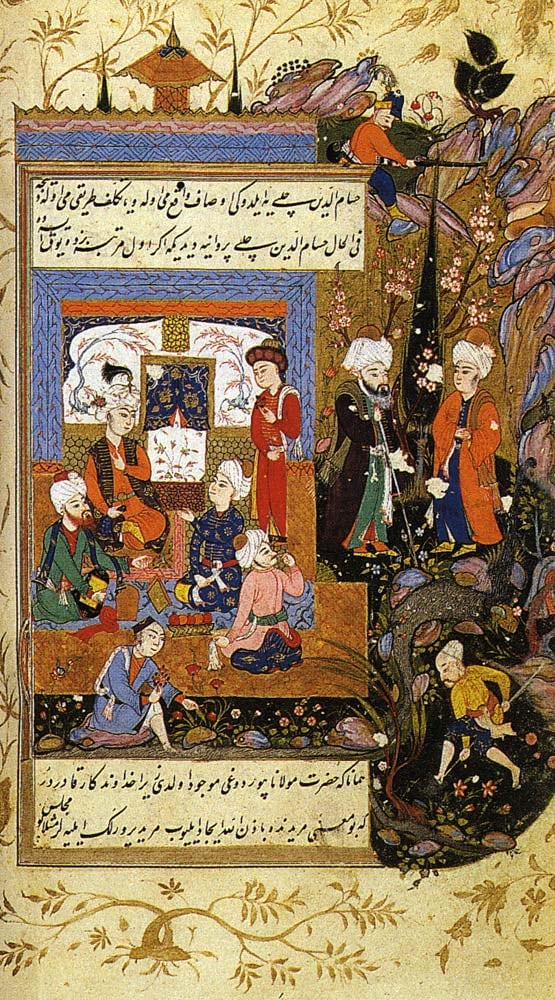
Rumi
يتّفقان في: ما المطلق؟ هل الله موجود؟ · من أنا؟ هل توجد ذات حقيقية؟ · لماذا نتألّم؟

Mirabai
يتّفقان في: ما المطلق؟ هل الله موجود؟ · لماذا نتألّم؟ · كيف يُبلَغ التحرّر أو الخلاص؟

Rabia al-Adawiyya
يتّفقان في: ما المطلق؟ هل الله موجود؟ · لماذا نتألّم؟ · ماذا يحدث بعد الموت؟
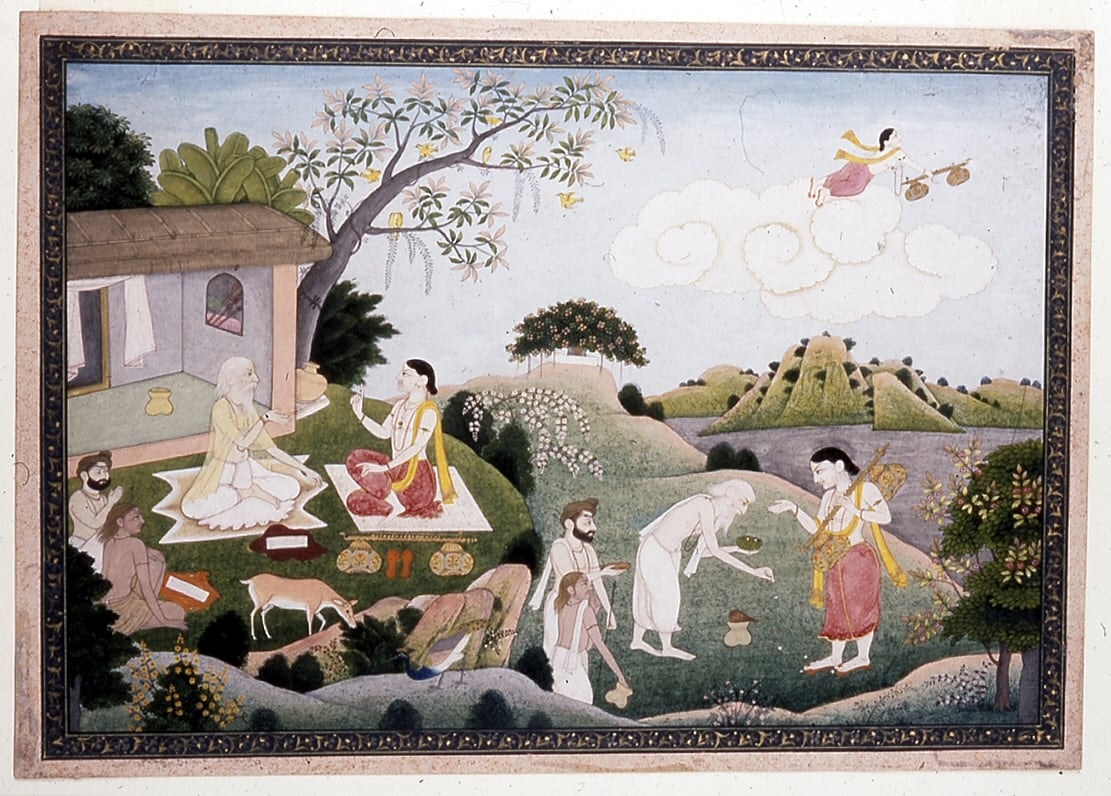
Narada
يتّفقان في: ما المطلق؟ هل الله موجود؟ · لماذا نتألّم؟ · كيف يُبلَغ التحرّر أو الخلاص؟
يبتعد في تفكيره عن

Patañjali
يختلفان في: ما المطلق؟ هل الله موجود؟ · من أنا؟ هل توجد ذات حقيقية؟ · ماذا يحدث بعد الموت؟

Pema Chödrön
يختلفان في: ما المطلق؟ هل الله موجود؟ · من أنا؟ هل توجد ذات حقيقية؟ · ماذا يحدث بعد الموت؟

Nāgārjuna
يختلفان في: ما المطلق؟ هل الله موجود؟ · من أنا؟ هل توجد ذات حقيقية؟ · ماذا يحدث بعد الموت؟

Epicurus
يختلفان في: ما المطلق؟ هل الله موجود؟ · من أنا؟ هل توجد ذات حقيقية؟ · ماذا يحدث بعد الموت؟
حكايات وروايات
حكايات وروايات
رواية من سِيَر القدّيسينc. 1509
Jagai and Madhai
أصل الرواية: Narrated by Vrindavana Dasa in the Chaitanya Bhagavata (Madhya-khanda) and taken up by Krishnadasa; no external source.
المصدر: Vṛndāvana Dāsa. Śrī Caitanya-bhāgavata (bengalí, c. 1540-1550). Trad. inglesa de Bhūmipati Dāsa, ed. de Puṇḍarīka Vidyānidhi Dāsa. Vṛndāvana: Vrajraj Press, 2000-2005 (varios volúmenes).
رواية من سِيَر القدّيسينc. 1509
The procession against the qadi
أصل الرواية: Chaitanya Bhagavata, Madhya-khanda 23, and Chaitanya Charitamrita, Adi-lila 17. Local tradition identifies his tomb in Mayapur.
المصدر: Vṛndāvana Dāsa. Śrī Caitanya-bhāgavata (bengalí, c. 1540-1550). Trad. inglesa de Bhūmipati Dāsa, ed. de Puṇḍarīka Vidyānidhi Dāsa. Vṛndāvana: Vrajraj Press, 2000-2005 (varios volúmenes).
رواية من سِيَر القدّيسين1510
Vasudeva Sarvabhauma
أصل الرواية: Chaitanya Charitamrita, Madhya-lila 6; also in Kavi Karnapura. Sarvabhauma's existence as a scholar at Prataparudra's court is plausible; the details of the debate are a theological construction.
المصدر: Kṛṣṇadāsa Kavirāja. Caitanya Caritāmṛta of Kṛṣṇadāsa Kavirāja: A Translation and Commentary. Trad. de Edward C. Dimock Jr.; introd. de Edward C. Dimock Jr. y Tony K. Stewart; ed. de Tony K. Stewart. Harvard Oriental Series 56. Cambridge (Mass.): Dept. of Sanskrit and Indian Studies, Harvard University, 1999. ISBN 9780674002852.
رواية من سِيَر القدّيسينc. 1511
"That is external; go further"
أصل الرواية: Chaitanya Charitamrita, Madhya-lila 8 (the "Ramananda-samvada"). Kavi Karnapura mentions the meeting; the doctrinal development is Krishnadasa's.
المصدر: Kṛṣṇadāsa Kavirāja. Caitanya Caritāmṛta of Kṛṣṇadāsa Kavirāja: A Translation and Commentary. Trad. de Edward C. Dimock Jr.; introd. de Edward C. Dimock Jr. y Tony K. Stewart; ed. de Tony K. Stewart. Harvard Oriental Series 56. Cambridge (Mass.): Dept. of Sanskrit and Indian Studies, Harvard University, 1999. ISBN 9780674002852.
رواية من سِيَر القدّيسينc. 1512-1513
The king who swept the road
أصل الرواية: Chaitanya Charitamrita, Madhya-lila 11-14. The king's ritual sweeping of the road (chhera pahanra) is a documented practice of the Puri festival that is still performed.
المصدر: Kṛṣṇadāsa Kavirāja. Caitanya Caritāmṛta of Kṛṣṇadāsa Kavirāja: A Translation and Commentary. Trad. de Edward C. Dimock Jr.; introd. de Edward C. Dimock Jr. y Tony K. Stewart; ed. de Tony K. Stewart. Harvard Oriental Series 56. Cambridge (Mass.): Dept. of Sanskrit and Indian Studies, Harvard University, 1999. ISBN 9780674002852.
لا يمكن التحقق منهc. 1500
The commentary thrown into the river
أصل الرواية: It is repeated in modern devotional and popular biographies without citing an early source; it has not been located in the sixteenth-century hagiographies.
المصدر: Sen, Dinesh Chandra. Chaitanya and His Age. Calcuta: University of Calcutta, 1922.
التعاليم
التعاليم
المفاهيم التي ينتظم بها فكره، مشروحة في سياقها.
Congregational chanting of the name (nama-sankirtana)nama-sankirtana
It inherits the theology of the name from the Bhagavata tradition and earlier Vaishnavas; Jiva and Rupa Gosvamin systematised it.
المصدر: Bryant, Edwin F. (ed.). Krishna: A Sourcebook. Nueva York: Oxford University Press, 2007. ISBN 9780195148916 (en especial N. Delmonico, «Chaitanya Vaishnavism and the Holy Names», y S. Dasa, «The Six Sandarbhas of Jiva Gosvami»).
Divine love (prema) as the supreme goalprema-bhakti
Developed by Rupa Gosvamin in the Bhaktirasamrtasindhu and the Ujjvalanilamani.
المصدر: Kṛṣṇadāsa Kavirāja. Caitanya Caritāmṛta of Kṛṣṇadāsa Kavirāja: A Translation and Commentary. Trad. de Edward C. Dimock Jr.; introd. de Edward C. Dimock Jr. y Tony K. Stewart; ed. de Tony K. Stewart. Harvard Oriental Series 56. Cambridge (Mass.): Dept. of Sanskrit and Indian Studies, Harvard University, 1999. ISBN 9780674002852.
Inconceivable difference and non-difference (achintya-bhedabheda)achintya-bhedabheda
Gaudiya Vedanta school; Jiva Gosvamin (sixteenth century); Baladeva Vidyabhushana wrote the Gaudiya commentary on the Brahma-sutras in the eighteenth century.
المصدر: Bryant, Edwin F. (ed.). Krishna: A Sourcebook. Nueva York: Oxford University Press, 2007. ISBN 9780195148916 (en especial N. Delmonico, «Chaitanya Vaishnavism and the Holy Names», y S. Dasa, «The Six Sandarbhas of Jiva Gosvami»).
Radha and Krishna in one bodyradha-krishna-en-un-cuerpo
Chaitanya Charitamrita, Adi-lila 1 and 4; theology of the Gosvamis and the Navadvipa devotees.
المصدر: Stewart, Tony K. The Final Word: The Caitanya Caritāmṛta and the Grammar of Religious Tradition. Nueva York: Oxford University Press, 2010. ISBN 9780195392722.
Love in separation (vipralambha)vipralambha
Rasa poetics; Bengali Vaishnava lyric (padavali); Rupa Gosvamin, Ujjvalanilamani.
المصدر: Kṛṣṇadāsa Kavirāja. Caitanya Caritāmṛta of Kṛṣṇadāsa Kavirāja: A Translation and Commentary. Trad. de Edward C. Dimock Jr.; introd. de Edward C. Dimock Jr. y Tony K. Stewart; ed. de Tony K. Stewart. Harvard Oriental Series 56. Cambridge (Mass.): Dept. of Sanskrit and Indian Studies, Harvard University, 1999. ISBN 9780674002852.
مقاطع الفيديو
مقاطع الفيديو
تسجيلات ومقابلات وأفلام وثائقية. تُشغَّل مقاطع الفيديو من YouTube؛ ولا تُستضاف هنا.
Sri Chaitanya - In Love with God | Swami Sarvapriyananda
محاضرة· EN· 78 min
Vedanta Society of New Yorkالقناة الرسمية
Śikṣāṣṭakam and Q&A Session - Edwin Bryant
محاضرة· EN· 122 min
Edwin Bryant Officialالقناة الرسمية
Lord Chaitanya Mahaprabhu the Golden Avatar - (ENGLISH)
فيلم وثائقي· EN· 1986· 29 min
Hare Krishna Film Classics
The Gift of Śrī Caitanya Mahāprabhu – Full Feature Film
فيلم وثائقي· EN· 2022· 109 min
The Gift of Śrī Caitanya Mahāprabhuالقناة الرسمية
Sri Chaitanya Mahaprabhu | CC Adi Lila 1.4 | Mayapur, India | Srila Prabhupada
تسجيل أصلي· EN· 18 min
The Acharya
Nilachaley Mahprabhu, 1957, Full Length Film, With English Subtitles
تسجيل من طرف ثالث· BN· 1957· 133 min
Krishna Chandra Dasa
চৈতন্যদের এবং প্রেম সংকীর্তন || নৃসিংহপ্রসাদ ভাদুড়ী
محاضرة· BN· 68 min
Nrisingha Prasad Bhaduriالقناة الرسمية
Chaitanyer Jagannath || History of Rathayatra || Nrisingha Prasad Bhaduri
محاضرة· BN· 12 min
Nrisingha Prasad Bhaduriالقناة الرسمية
Chaitanya Mahaprabhu Biography - चैतन्य महाप्रभु का जीवन
تحليل· HI· 19 min
StudyIQ IAS
Sri Shikshashtakam - written by Chaitanya Mahaprabhu
تسجيل من طرف ثالث· SA· 5 min
Vedic Vigyan
Breve biografía de Sri Caitanya Mahaprabhu, el avatar dorado (1)
محاضرة· ES· 57 min
Gastón Castro 108
المعرض
المعرض
صور بترخيص متحقَّق منه. كل منها تحتفظ بمؤلّفها ونسبتها.
العلاقات
العلاقات
تأثيرات وتلمذة وتقارب في الأفكار. تُميَّز العلاقة الموثّقة عن التشابه المستخلَص بالتحليل.
أثّر في
Ramakrishna venerated Chaitanya as a divine incarnation and practised Vaishnava devotion; his biographer Saradananda reports a vision of Gauranga's kirtan.
علاقة موثّقة
أفكار قريبة من
Contemporaries and devotees of Krishna; both embody the bhakti of the separated lover. No meeting is recorded; the legend of Mira in Vrindavan links her with Jiva Gosvamin, not with Chaitanya.
تشابه مستخلَص بالتحليل
معاصر لـ
Contemporaries (Nanak, 1469-1539). The janamsakhis take Nanak to Puri, but no meeting with Chaitanya is recorded.
تشابه مستخلَص بالتحليل
أفكار قريبة من
Both placed the divine name at the centre of practice and relativised caste, although Kabir rejected the images and the personal Krishna Chaitanya worshipped.
تشابه مستخلَص بالتحليل
أفكار قريبة من
A frequent analogy: a mysticism of love, music and ecstatic dance as a way to God. No historical connection.
تشابه مستخلَص بالتحليل
أفكار قريبة من
Both traditions read the relationship with God in the language of lovers and value the night of absence. No historical connection.
تشابه مستخلَص بالتحليل
المصادر
المصادر
المراجع والفهارس التي رُوجعت لهذه الصفحة.
- Majumdar, A. K. Caitanya: His Life and Doctrine. A Study in Vaiṣṇavism. Bombay: Bharatiya Vidya Bhavan, 1969.
- Kṛṣṇadāsa Kavirāja. Caitanya Caritāmṛta of Kṛṣṇadāsa Kavirāja: A Translation and Commentary. Trad. de Edward C. Dimock Jr.; introd. de Edward C. Dimock Jr. y Tony K. Stewart; ed. de Tony K. Stewart. Harvard Oriental Series 56. Cambridge (Mass.): Dept. of Sanskrit and Indian Studies, Harvard University, 1999. ISBN 9780674002852.
- Vṛndāvana Dāsa. Śrī Caitanya-bhāgavata (bengalí, c. 1540-1550). Trad. inglesa de Bhūmipati Dāsa, ed. de Puṇḍarīka Vidyānidhi Dāsa. Vṛndāvana: Vrajraj Press, 2000-2005 (varios volúmenes).
- Stewart, Tony K. The Final Word: The Caitanya Caritāmṛta and the Grammar of Religious Tradition. Nueva York: Oxford University Press, 2010. ISBN 9780195392722.
- Stewart, Tony K. «Chaitanya, Sri». En Banglapedia: The National Encyclopedia of Bangladesh, ed. en línea. Dhaka: Asiatic Society of Bangladesh, 2012.
- Kennedy, Melville T. The Chaitanya Movement: A Study of the Vaishnavism of Bengal. Calcuta: Association Press; Londres: Oxford University Press, 1925.
- Sen, Dinesh Chandra. Chaitanya and His Age. Calcuta: University of Calcutta, 1922.
- De, Sushil Kumar. Early History of the Vaishnava Faith and Movement in Bengal, from Sanskrit and Bengali Sources. Calcuta: General Printers and Publishers, 1942 (2.ª ed., Calcuta: Firma K. L. Mukhopadhyay, 1961).
- Sarkar, Jadunath (trad.). Chaitanya's Life and Teachings, from His Contemporary Bengali Biography the Chaitanya-charit-amrita. 2.ª ed. Calcuta: M. C. Sarkar & Sons, 1922 (1.ª ed. con el título Chaitanya's Pilgrimages and Teachings, 1913). Edición digital: Project Gutenberg, n.º 38016.
- Wikidata, «Chaitanya Mahaprabhu» (Q870262).
- Rūpa Gosvāmin. The Padyāvalī: An Anthology of Vaiṣṇava Verses in Sanskrit. Ed. crítica de Sushil Kumar De. Dacca: University of Dacca, 1934.
- Valpey, Kenneth. «Caitanya». En Knut A. Jacobsen et al. (eds.), Brill's Encyclopedia of Hinduism Online. Leiden: Brill, 2018.
- Murāri Gupta. Śrī Caitanya-carita-mahākāvya (Śrīkṛṣṇacaitanyacaritāmṛtam). Trad. de Swami Bhakti Vedanta Bhagavata Maharaja, ed. de Pūrṇaprajña Dāsa. Vṛndāvana: Rasbihari Lal & Sons, 2006. ISBN 9788184030068.
- Bhaktivedanta Swami, A. C. (trad. y coment.). Śrī Caitanya-caritāmṛta of Kṛṣṇadāsa Kavirāja Gosvāmī. 17 vols. Nueva York / Los Ángeles: Bhaktivedanta Book Trust, 1973-1975. ISBN del primer volumen 9780912776507.
- Bryant, Edwin F. (ed.). Krishna: A Sourcebook. Nueva York: Oxford University Press, 2007. ISBN 9780195148916 (en especial N. Delmonico, «Chaitanya Vaishnavism and the Holy Names», y S. Dasa, «The Six Sandarbhas of Jiva Gosvami»).
- «शिक्षाष्टकम्» (Śikṣāṣṭakam), texto sánscrito. Wikisource en sánscrito.
- Saradananda, Swami. Sri Ramakrishna, the Great Master. Trad. de Swami Jagadananda. Madrás: Sri Ramakrishna Math, 1952 (orig. bengalí Śrīśrīrāmakṛṣṇalīlāprasaṅga, 1909-1919).
- صاحب الحقوق
- Las estrofas de Chaitanya y las hagiografías de los siglos XVI-XVII son de dominio público. Las traducciones modernas tienen titulares propios: la de Dimock y Stewart, la Harvard Oriental Series; la de A. C. Bhaktivedanta Swami, el Bhaktivedanta Book Trust.
في انتظار التأكيد
ما لم تتمكّن هذه الصفحة من حسمه بعد. نفضّل أن نقول ذلك على أن نملأ الفراغ.
- No se localizó una edición española independiente del Shikshashtaka con ISBN; solo dentro de la edición española del Chaitanya Charitamrita (BBT).
- Faltan ediciones bengalíes críticas con ISBN del Chaitanya Charitamrita y del Chaitanya Bhagavata (p. ej., la de Radhagovinda Nath) y traducciones de Lochana Dasa, Jayananda y Kavi Karnapura.
- Confirmar la editorial y el año de la edición del Chaitanya Bhagavata con ISBN 9788187216117 (la ficha de Open Library no los consigna) y el año de las ediciones españolas del BBT Argentina.
- La fecha de muerte (1533 o 1534) y sus circunstancias no pueden cerrarse con las fuentes disponibles.
- La traducción de Sarkar queda con cautela hasta 2039 (derechos en España).
بُحث بتاريخ 2026-10-25