المسيحية · التصوف المسيحي · الكاثوليكية
John of the Cross
1542 – 1591شخصية موثّقة تاريخيًا
راهب كرملي قشتالي (1542–1591)، شارك تريزا الأفيلية في تأسيس الرهبنة الكرملية الحافية، وهو من أعظم شعراء اللغة الإسبانية. ابنُ نسّاجة أرملة، عرف الفقر، وسجنَ رهبنته نفسها في طليطلة، والإقصاءَ في آخر حياته. وتصف قصائده — «النشيد الروحي» و«الليل المظلم» و«شعلة الحب الحيّة» — والمؤلفاتُ النثرية التي تشرحها طريقَ النفس إلى الاتحاد بالله عبر «اللاشيء» وعبر الليل. أُعلنت قداسته سنة 1726، وأُعلن ملفانًا للكنيسة سنة 1926.
- مؤلَّفًا
- 29مؤلَّفًا
- طبعة
- 125طبعة
- اقتباسًا
- 9اقتباسًا
- مقطع فيديو
- 14مقطع فيديو
- صورة
- 5صورة
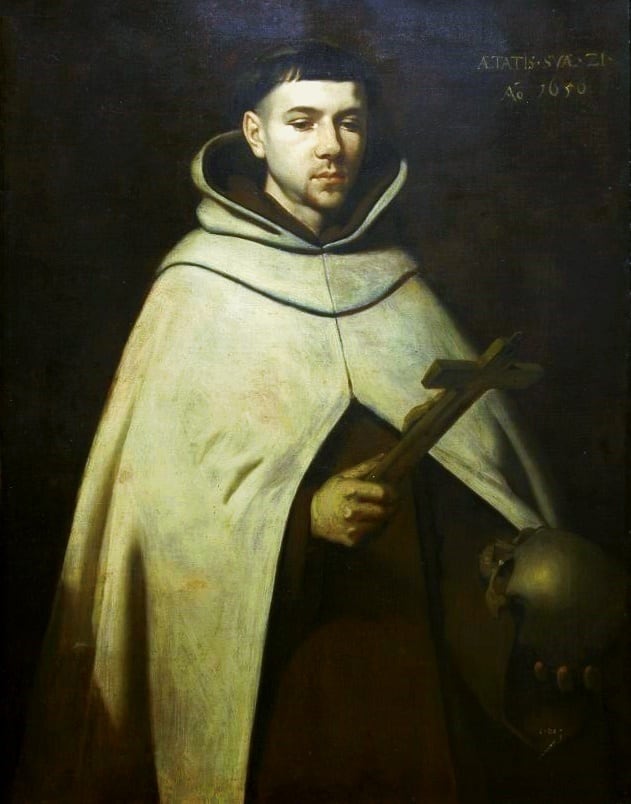
Retrato de san Juan de la Cruz (atribuido a Zurbarán) · Public domain
بكلماته
«One dark night, fired with love's urgent longings, ah, the sheer grace!, I went out unseen, my house being now all stilled.»Noche oscura, estrofa 1

فكرته المحورية
The dark night: The 'night' is John's name for the whole process of purification by which the soul passes from attachment to creatures to union with God.
السيرة
4 دقيقة قراءة
ترجمة مُعانة من الأصل الإسباني، بانتظار مراجعة مترجم من أهل اللغة.
طفل فقير من قشتالة
وُلد خوان دي يِبِس ألباريث سنة 1542 في فونتيبيروس، وهي بلدة نسّاجين في إقليم المورانيا التابع لأبلة؛ أما تاريخ 24 حزيران/يونيو فمتوارث بالتقليد. كان أبوه غونثالو دي يِبِس من أسرة طليطلية ميسورة حرمته من الميراث لأنه تزوّج كاتالينا ألباريث، وهي نسّاجة فقيرة. ومات غونثالو نحو سنة 1545، فطلبت الأرملة، ومعها ثلاثة أبناء، العون عبثًا من الأقارب الأغنياء في طليطلة وتوريخوس. ومات الابن الثاني، لويس، جوعًا أو مرضًا. وهاجرت الأسرة إلى أريبالو، ثم نحو سنة 1551 إلى مدينة ديل كامبو، مدينة الأسواق الكبرى في قشتالة.
وفي مدينة ديل كامبو التحق خوان بـ«كوليخيو دي لا دوكترينا»، وهو ملجأ للأطفال الفقراء يتعلّمون فيه القراءة وحرفة من الحرف؛ فجرّب، دون توفيق، النجارة والخياطة والحفر على الخشب والرسم. ثم عمل ممرّضًا في مستشفى «لا كونسبثيون» المخصّص لمرضى الزهري، فسمح له مديره بدراسة الآداب الإنسانية لدى اليسوعيين بين 1559 و1563. وهناك اكتسب اللاتينية والتكوين البلاغي اللذين تُستشفّ آثارهما في نثره.
راهبٌ ومُصلح
في سنة 1563 لبس ثوب الرهبنة في دير الكرمل بمدينة ديل كامبو باسم الأخ خوان دي سانتو ماتيّا، ودرس بين 1564 و1568 الفنون واللاهوت في جامعة سلمنقة، مقيمًا في المعهد الكرملي للقديس أندراوس. وبعد رسامته كاهنًا سنة 1567 كان يفكّر في الانتقال إلى الرهبنة الكرتوزية، حين أقنعته تريزا ليسوع في خريف تلك السنة، وكانت تؤسّس ديرًا في المدينة، بأن يبدأ معها إصلاح فرع الرهبان. وقد وصفته تريزا في إحدى رسائلها بأنه صغير القامة لكنه «عظيم في عيني الله».
وفي 28 تشرين الثاني/نوفمبر 1568 افتتح مع أنطونيو دي إيريديا، في بيت ريفي في دورويلو، أول دير للكرمليين الحفاة، واتّخذ اسم يوحنا الصليب (خوان دي لا كروث). وكان معلّمًا للمبتدئين في مانثيرا وباسترانا، ورئيسًا لمعهد ألكالا، ثم منذ 1572 مُعرِّفًا لراهبات دير التجسّد في أبلة، الذي كانت تريزا رئيسته. وهناك رسم، بحسب التقليد إثر رؤيا، صورة المسيح المصلوب الصغيرة المنظور إليها من علٍ، التي ألهمت سلفادور دالي سنة 1951.
سجن طليطلة
أوقع الإصلاحُ الحفاةَ والمنتعلين في نزاع على الولاية بين السفير البابوي والرئيس العام للرهبنة والملك. وفي ليلة 2–3 كانون الأول/ديسمبر 1577 اعتقل المنتعلون خوان في أبلة واقتادوه إلى دير الكرمل في طليطلة. وعلى مدى تسعة أشهر تقريبًا عاش في حُجيرة لا يكاد يدخلها ضوء، وجُلد علنًا في قاعة الطعام، وضُغط عليه ليتخلّى عن الإصلاح. وفي تلك الزنزانة نظم من ذاكرته معظم «النشيد الروحي»، والقصيدة القصصية (الرومانث) في مقدمة إنجيل يوحنا، والأنشودة «Qué bien sé yo la fonte» («ما أعرفني بذلك الينبوع»)، ثم دوّنها لاحقًا في دفتر أمدّه به سجّان جديد.
وفي منتصف آب/أغسطس 1578 فرّ ليلًا متدلّيًا من نافذة بشرائط قدّها من أغطيته، ولجأ إلى دير الكرمليات الحافيات في طليطلة، حيث تلا الأبيات التي نظمها في السجن. وقد أضاف شهود دعاوى التطويب إلى الرواية أنوارًا وحمايات عجائبية من العذراء؛ أما واقعة الفرار وظروفها المادية فمشهود لها شهادةً حسنة.
الأندلس والمؤلَّفات الكبرى
قضى السنوات التالية في الأندلس: رئيسًا لدير الكالباريو في جبال جيّان، ومُعرِّفًا للكرمليات الحافيات في بياس، ورئيسًا لمعهد بياثا، ثم منذ 1582 رئيسًا لدير الشهداء في غرناطة. ولكي يجيب عن أسئلة الرهبان والراهبات بدأ يشرح قصائده نثرًا: فوُلد هكذا «صعود جبل الكرمل» و«الليل المظلم»، وكلاهما لم يكتمل، وشرح «النشيد الروحي» الذي أتمّه سنة 1584 لآنا دي خيسوس، و«شعلة الحب الحيّة» التي كتبها للأرملة آنا دي بينيالوسا. ثم أعاد لاحقًا صياغة «النشيد» و«الشعلة»، وقد نوقشت صحة هاتين الصيغتين الثانيتين في القرن العشرين إلى أن قبلها جمهور النقاد.
وإلى جانب المؤلَّفات الكبرى كتب نصوصًا قصيرة للإرشاد الروحي: «أقوال في النور والمحبة»، وهي حِكَم كان يسلّمها في أوراق متفرقة، ولا تزال منها نسخة بخطّ يده في أندوخار؛ و«التحذيرات» و«نصائح إلى راهب»؛ وتقييمًا لروح إحدى الراهبات؛ وبضع عشرات من الرسائل، كثير منها إلى الكرمليات الحافيات في بياس وغرناطة وشقوبية. ورسم أيضًا لراهبات بياس «جُبَيل الكمال»، وهو مخطط لجبل الكرمل يقول دربه الأوسط «لا شيء، لا شيء، لا شيء»، ويُقرأ في قمته أنه «لم يعد هنا طريق». وقد ضاع قسم كبير من مراسلاته أو أُتلف في سنوات اضطهاد 1591.
وتُختصر عقيدته في مفارقة: لكي تبلغ امتلاك كل شيء، لا تُرِد أن تمتلك شيئًا. فالنفس تعبر «ليلًا» فاعلًا ومنفعلًا للحسّ والروح، يُفرغ فيه الإيمانُ والرجاءُ والمحبةُ العقلَ والذاكرةَ والإرادةَ من كل سند ليس هو الله، حتى تبلغ الاتحاد المحوِّل، الذي يصفه بخشبة تخلّلتها النار.
وجمع يوحنا، بوصفه شاعرًا، بين قالب «الليرا» ذي الأصل الإيطالي عند غارثيلاسو، والغنائية الشعبية المحوَّلة «إلى الإلهي»، ونشيد الأناشيد، في لغة ذات كثافة لا سابق لها. وقد درس داماسو ألونسو هذا التركيب، وأشارت لوثي لوبيث-بارالت إلى أوجه تواز مع التصوف الإسلامي لا تزال موضع نقاش.
السنوات الأخيرة
كان نائبًا إقليميًّا على الأندلس، ثم صار سنة 1588 رئيسًا لدير شقوبية ومستشارًا في الإدارة المركزية للرهبنة في عهد نيكولاس دوريا، الذي اصطدم به بسبب معاملته لخيرونيمو غراثيان وللراهبات. وفي مجمع مدريد في حزيران/يونيو 1591 جُرِّد من كل مناصبه؛ ولمّا أُرسل إلى لا بينيويلا أصابته الحمّى وقروح في إحدى ساقيه، فنُقل إلى أوبيدا، حيث استقبله رئيس الدير بجفاء، بينما كان أحد الزائرين القانونيين يجمع الشهادات ضده. ومات عند منتصف الليل بين 13 و14 كانون الأول/ديسمبر 1591.
نُقل جثمانه سرًّا إلى شقوبية سنة 1593. وطُبعت مؤلفاته النثرية في ألكالا سنة 1618 من دون «النشيد الروحي»، الذي ظهر في ترجمة فرنسية سنة 1622، وبالقشتالية في بروكسل سنة 1627. وطُوِّب سنة 1675، وأُعلنت قداسته سنة 1726، وأعلنه البابا بيوس الحادي عشر ملفانًا (معلّمًا) للكنيسة سنة 1926؛ وفي سنة 1952 أُعلن شفيعًا للشعراء الإسبان.
وفي القرن العشرين انتقل أثره من الروحانية إلى الأدب والفلسفة: فقد درسه جان باروزي بوصفه مسألة في التجربة الصوفية، وخصّته إديث شتاين بكتابها «علم الصليب»، وأعاد ت. س. إليوت صياغة «الصعود» في قصيدة «إيست كوكر»، وعدّه شعراء مثل خورخي غيين وكلاوديو رودريغيث معلّمًا لهم.
المصادر: San Juan de la Cruz. Obras completas. Ed. José Vicente Rodríguez; introducciones y notas doctrinales de Federico Ruiz Salvador. Madrid: Editorial de Espiritualidad, 1980 (ed. revisada 2008, ISBN 9788470683459). · Ruiz Salvador, Federico (dir.). Dios habla en la noche: vida, palabra, ambiente de San Juan de la Cruz. Madrid: Editorial de Espiritualidad, 1990. · Crisógono de Jesús Sacramentado, O.C.D. Vida de San Juan de la Cruz. Madrid: BAC, 1946; ed. revisada por Matías del Niño Jesús en San Juan de la Cruz, Vida y obras (BAC 15), 1964. · John of the Cross. The Collected Works of St. John of the Cross. Trad. Kieran Kavanaugh y Otilio Rodriguez. Ed. revisada. Washington, D.C.: ICS Publications, 1991 (ISBN 9780935216936). · Alonso, Dámaso. La poesía de San Juan de la Cruz (desde esta ladera). Madrid: CSIC, 1942.
الخط الزمني
الحياة عامًا بعد عام
كل نقطة حدث موثّق. انقر لتقرأه مع مصدره ودرجة اليقين فيه.
1542أقل من عامFontiveros (Ávila)
Birth
Juan de Yepes Álvarez is born to Gonzalo de Yepes and the weaver Catalina Álvarez. The date of 24 June is traditional.
موثّقCrisógono de Jesús Sacramentado, O.C.D. Vida de San Juan de la Cruz. Madrid: BAC, 1946; ed. revisada por Matías del Niño Jesús en San Juan de la Cruz, Vida y obras (BAC 15), 1964.
بعد وفاته
- 1618First edition of his works
- 27 ديسمبر 1726Canonisation
- 24 أغسطس 1926Doctor of the Church
- 1952Patron of Spanish poets
1542 · أقل من عام
Birth
Juan de Yepes Álvarez is born to Gonzalo de Yepes and the weaver Catalina Álvarez. The date of 24 June is traditional.
موثّق
نحو 1545 · 3 أعوام
Death of his father
Gonzalo de Yepes dies; the family's destitution begins.
مرجَّح
نحو 1551 · 9 أعوام
Move to Medina del Campo
After a stay in Arévalo, the family settles in Medina; Juan enters the Colegio de la Doctrina.
مرجَّح
1559 · 17 عامًا
Studies with the Jesuits
A nurse at the hospital of the Conception, he studies humanities at the Jesuit college (1559–1563).
موثّق
1563 · 21 عامًا
Takes the Carmelite habit
He enters the Carmel of Medina as Fray Juan de Santo Matía.
موثّق
1564 · 22 عامًا
Studies at Salamanca
He studies arts and theology at the University of Salamanca (1564–1568).
موثّق
1567 · 25 عامًا
Meeting with Teresa of Jesus
Newly ordained, he is won over by Teresa to the reform of the friars.
موثّق
28 نوفمبر 1568 · 26 عامًا
First Discalced friary
With Antonio de Heredia he inaugurates the friary at Duruelo and takes the name John of the Cross.
موثّق
1572 · 30 عامًا
Confessor at the Incarnation
Confessor at the monastery of the Incarnation, where Teresa is prioress (1572–1577).
موثّق
2 ديسمبر 1577 · 35 عامًا
Imprisonment in Toledo
Seized by the Calced Carmelites on the night of 2–3 December and imprisoned in their Toledo convent; there he composes much of the Canticle.
موثّق
أغسطس 1578 · 36 عامًا
Escape
He escapes at night through a window and takes refuge with the Discalced nuns of Toledo.
موثّق
1579 · 37 عامًا
Rector of the college at Baeza
He founds and directs the Discalced college beside the University of Baeza (1579–1582).
موثّق
1582 · 40 عامًا
Prior of Los Mártires
Prior in Granada (1582–1588); he writes most of his treatises.
موثّق
1584 · 42 عامًا
Spiritual Canticle in prose
He completes the commentary on the Canticle dedicated to Ana de Jesús (first redaction).
موثّق
1588 · 46 عامًا
Prior of Segovia
Prior of Segovia and councillor of the Consulta governing the order under Nicolás Doria.
موثّق
يونيو 1591 · 49 عامًا
Loss of office
The general chapter leaves him without office; he is sent to La Peñuela.
موثّق
14 ديسمبر 1591 · 49 عامًا
Death
He dies at midnight in the convent of San Miguel, Úbeda.
موثّق
1618
First edition of his works
The prose works are printed, without the Spiritual Canticle.
موثّق
27 ديسمبر 1726
Canonisation
Benedict XIII canonises him.
موثّق
24 أغسطس 1926
Doctor of the Church
Pius XI declares him a Doctor of the universal Church.
موثّق
1952
Patron of Spanish poets
He is proclaimed patron of Spanish-language poets.
موثّق
المؤلَّفات
المؤلَّفات الأساسية
المؤلَّفات التي لا يُفهم إرثه من دونها.
مؤلَّف مكتوب · نحو 1585
The Ascent of Mount Carmel
Subida del Monte Carmelo
A commentary, soon abandoning the poem, on the 'Dark Night' as an active night: what the soul can do to empty the senses of appetites (book I) and the intellect, memory and will through faith, hope and charity (books II–III). It contains the verses 'to come to enjoy everything', the critique of visions and revelations and the claim that in Christ God has said everything.
9 طبعات · amazon.com
مؤلَّف مكتوب · نحو 1585
The Dark Night
Noche oscura (declaración de las canciones)
A treatise on the passive night, what God does in the soul: the night of sense, with the signs for leaving discursive meditation and passing to contemplation, and the night of the spirit, a painful purification by infused contemplation, a 'ray of darkness'. Its description of dryness and abandonment has given it relevance beyond Christian spirituality.
9 طبعات · amazon.com

مؤلَّف مكتوب · 1584
Spiritual Canticle (redaction A)
Declaración de las canciones que tratan del ejercicio de amor entre el alma y el Esposo Cristo (Cántico A)
A stanza-by-stanza commentary on the poem, reading the Bride's itinerary as the passage from the purgative to the illuminative and unitive ways, with long meditations on the beauty of creatures as the Beloved's trace. It is the most lyrical of his treatises.
4 طبعات · amazon.es

مؤلَّف مكتوب · نحو 1586
The Living Flame of Love (commentary)
Declaración de las canciones que tratan de la muy íntima y calificada unión y transformación del alma en Dios (Llama de amor viva)
A commentary on the poem's four stanzas describing transforming union from within: the soul as a log already turned to fire, the action of the Holy Spirit, the 'lamps of fire' of the divine attributes and God's awakening in the soul. It includes a stern warning against bad spiritual directors.
6 طبعات · amazon.com
جميع مؤلَّفاته (29)

Spiritual Canticle (poem)
1578
Dark Night (poem)
1579
Living Flame of Love (poem)
1585
Song of the Soul that Rejoices in Knowing God through Faith ('How well I know the fount')
1578
Romances on the Gospel 'In principio erat Verbum'
1578
Romance on the Psalm 'Super flumina Babylonis'
1578
Stanzas Concerning an Ecstasy Experienced in High Contemplation ('I entered into unknowing')
1580
Stanzas of the Soul that Suffers with Longing to See God ('I live, but not in myself')
1580
'Upon a quest of love' (stanzas a lo divino)
1580
'A lone young shepherd lived in pain'
1584
Gloss 'Without support and with support'
1580
Gloss 'Not for all of beauty'
1580
'With the divine Word' (Christmas song)
1585
Summary of Perfection ('Forgetfulness of creation')
1585
John of the Cross
'My soul is detached' (attributed stanzas)
The Conscious Library'My soul is detached' (attributed stanzas)
1600

Spiritual Canticle (redaction B)
1586

Sayings of Light and Love
1585
The Precautions
1580
Counsels to a Religious on How to Reach Perfection
1585
Censure and Opinion on the Spirit of a Nun
1588
The Mount of Perfection (drawing of Mount Carmel)
1579
Letters
1591
Points of Love Gathered at Beas
1580
John of the Cross
Spiritual Maxims and Sentences (later collections)
The Conscious LibrarySpiritual Maxims and Sentences (later collections)
1700
الأقوال
أقوال محدَّدة الموضع في مؤلَّف بعينه. كل منها يحمل مصدره ودرجة الثقة به.
One dark night, fired with love's urgent longings, ah, the sheer grace!, I went out unseen, my house being now all stilled.En una noche oscura, / con ansias, en amores inflamada, / ¡oh dichosa ventura!, / salí sin ser notada, / estando ya mi casa sosegada.
متحقَّق منهNoche oscura, estrofa 1
أقوال منحولة أو مختلَف في نسبتها (2)
«In the evening of life we shall be judged on love.»
A widespread modern paraphrase of the authentic saying 'In the evening you will be examined in love' (Sayings of Light and Love). It is not false in meaning, but it is not his wording.
«To reach a point you do not know, you must take a road you do not know.»
A free version of Ascent I,13,11 ('To come to what you know not, you must go by a way you know not'), circulating without reference and with its meaning shifted towards self-help.
الكلمات الأخيرة
رواية لاحقة عن شهود
«Into your hands, Lord, I commend my spirit.»In manus tuas, Domine, commendo spiritum meum.
He died in Úbeda at midnight on 13–14 December 1591, surrounded by friars of the convent. According to the testimonies gathered at the beatification processes, shortly before he asked that the commendation of the soul not be read to him but the Song of Songs, remarking 'What precious pearls!'; on hearing the bell for matins he said he was going to say them in heaven, and he died uttering the words of Psalm 30 that Jesus repeated on the cross. The witnesses agree on the essentials and vary in the details.
المصدر: Procesos de beatificación y canonización de San Juan de la Cruz. Ed. Silverio de Santa Teresa, O.C.D. Biblioteca Mística Carmelitana, vol. 14. Burgos: El Monte Carmelo, 1931 (vol. 5 de las Obras).
اسأل
بماذا يجيب أثره
اثنا عشر سؤالًا كبيرًا من أسئلة الإنسانية، وما تتيح نصوصه الإجابة به عنها، مع المراجع. ولا نقوّله ما لم يقل أبدًا.
ما المطلق؟ هل الله موجود؟
God is the Beloved who hides and gives himself in dark faith
إله شخصييقوله صراحةً
For John of the Cross, God is the Beloved: someone who wounds, hides, calls and finally unites himself to the soul. The Spiritual Canticle opens with the question «Where have you hidden, Beloved?», and the Living Flame of Love describes the soul's transformation in the Holy Spirit, who works in it as a flame. The Trinity lies at the centre of union: in the commentary on the Flame, the soul shares in the life of the Father, the Son and the Spirit. At the same time, no concept or image reaches this God: the Ascent of Mount Carmel teaches that the only means proportionate to union with him is faith, which is dark to the intellect. The Absolute is thus personal and loving, but known in darkness, through love rather than representation.
قارن هذا السؤال مع معلّمين آخرينمن أنا؟ هل توجد ذات حقيقية؟
The soul is a creature that can become God by participation
روح مخلوقة خالدةيقوله صراحةً
John of the Cross thinks of the self as a created soul, with its faculties —intellect, memory and will— and a «centre» that is God himself. The Ascent of Mount Carmel offers the decisive image: a clean window, struck by a ray of sunlight, looks like the ray itself without ceasing to be a window; so the soul, once purified, «seems more God than soul, and is even God by participation», though its natural being remains distinct from God's. The path requires emptying the faculties of every appetite and every possession, including that of spiritual experiences. The self is not dissolved: it is transformed by love without losing its creaturely condition.
قارن هذا السؤال مع معلّمين آخرينلماذا نتألّم؟
The dark night hurts because it purifies for union
الانفصال عن اللهيقوله صراحةً
John of the Cross distinguishes two kinds of suffering. The first comes from the appetites: in the Ascent of Mount Carmel he describes how they weary, torment, darken, defile and weaken the soul, because they bind it to what is not God. The second is that of the dark night, which God himself works: infused contemplation, entering a still impure soul, is darkness and torment to it, as excessive light blinds a diseased eye. That pain —feeling abandoned, dry, undone— is not punishment but purification. Suffering arises from the distance between the soul and God and is also the path by which that distance is cancelled.
قارن هذا السؤال مع معلّمين آخرينماذا يحدث بعد الموت؟
I die because I do not die: death is meeting the Beloved
الحياة الأبدية والقيامةيقوله صراحةً
John of the Cross awaits eternal life as the consummation of the union of love. In the stanzas «I live without living in myself» the present life is exile and the soul dies because it does not die, longing to see God. The first stanza of the Living Flame of Love asks God to tear the veil of this sweet encounter, that is, the mortal life that separates the soul from vision; and its commentary states that the death of those who have reached this state, though natural, is far sweeter and gentler than their life, for they die in impulses and encounters of love. Death is not an end: it is the passage to seeing God face to face.
قارن هذا السؤال مع معلّمين آخرينكيف يُبلَغ التحرّر أو الخلاص؟
The soul disposes itself in the night; God works the union
بالنعمة والمحبةيقوله صراحةً
John of the Cross describes liberation as union with God through love, and distinguishes two movements. In the active night, treated in the Ascent of Mount Carmel, the soul does what it can: it denies its appetites, empties its faculties and walks by faith, hope and charity, with the watchword of desiring to taste nothing in order to come to taste everything. But the decisive purification is passive: the Dark Night shows that it is God who, through infused contemplation, purges what the soul cannot reach. In the Living Flame of Love he insists that the principal agent and guide is the Holy Spirit. Effort prepares; union is a gift.
قارن هذا السؤال مع معلّمين آخرينهل نحتاج إلى معلّم؟
A good director helps; the principal guide is the Holy Spirit
مفيد لكنه ليس ضروريًايقوله صراحةً
John of the Cross attaches great importance to spiritual direction and, at the same time, criticises it harshly. In the Sayings of Light and Love he compares the soul that is alone and without a master, even if virtuous, to a burning coal left alone, which cools rather than kindles. But in the Living Flame of Love he devotes severe pages to spiritual masters who, not understanding the ways of contemplation, force the soul to go on meditating when God is already leading it by another path, and compares them to blacksmiths who only know how to hammer. He recalls that the principal agent and guide of souls is the Holy Spirit; the human director must serve him, not hinder him.
قارن هذا السؤال مع معلّمين آخرينهل العالم حقيقي؟
God passed through the groves and left them clothed in beauty
خلقٌ صالح وحقيقييقوله صراحةً
John of the Cross holds at once the beauty of the world and its nothingness before God. In the Ascent of Mount Carmel, compared with God's infinite being, all creatures are nothing, and the soul that binds itself to them becomes like what it loves; hence one must pass through the night of sense. But the Spiritual Canticle sings of creatures as traces of the Beloved: pouring out a thousand graces, he passed through these groves in haste and, looking at them, left them clothed in beauty by his gaze alone. In consummated union, the soul knows creatures from God and finds them more beautiful. The world is good; what hinders is possession.
قارن هذا السؤال مع معلّمين آخرينما الحب؟
Living flame of love: the longing that wounds and unites
الشوق والوصاليقوله صراحةً
John of the Cross is, in the Spanish language, the great poet of love as longing for union. In the Spiritual Canticle the soul is the wounded bride who goes out after the Beloved, seeks him over mountains and riverbanks and rests only in union; the Dark Night recounts the beloved's going forth, «inflamed with love», until she lies with her face reclined upon the Beloved. The Living Flame of Love describes consummated love as the fire of the Holy Spirit wounding tenderly in the soul's deepest centre. That love is also a criterion of life: in the evening, says one of his sayings, you will be examined on love. And in a letter he advises putting love where there is none in order to draw love out.
قارن هذا السؤال مع معلّمين آخرينهل نحن أحرار أم أن كل شيء مقدَّر؟
Union is the conformity of two free wills
إرادة حرة حقيقيةيُستنتج من تعاليمه
John of the Cross does not treat the problem of determinism, but his whole doctrine presupposes a free will. In the Ascent of Mount Carmel he defines the union he seeks not as substantial union but as union of likeness, which occurs when two wills, the soul's and God's, are conformed in one, with nothing in the one repugnant to the other. To reach it, the soul must freely deny its voluntary appetites: not the natural ones, which do not depend on it, but those it consents to. In the passive night, God works where the soul cannot reach, but the will goes on cooperating through its consent and its love.
قارن هذا السؤال مع معلّمين آخرينلماذا نتأمّل أو نصلّي؟
From meditation to loving attentiveness in God
صداقة مع اللهيقوله صراحةً
John of the Cross distinguishes two moments of prayer. At the beginning, discursive meditation is fitting, using images and reasoning to fall in love with God. But a time comes when that meditation dries up, and the Ascent of Mount Carmel gives three signs to recognise it: one can no longer reason, one has no desire to fix the imagination on other things, and the soul delights in remaining alone with loving attentiveness to God, without particular considerations. Then reasoning must be set aside and one should remain in that loving, quiet and passive knowledge. Prayer culminates in a communication of love between the soul and the Beloved, which the Spiritual Canticle describes as the intimacy of spouses.
قارن هذا السؤال مع معلّمين آخرينهل يستطيع العقل أن يعرف الحقيقة القصوى؟
Transcending all knowledge: God is reached by dark faith
الحقيقة القصوى وراء العقليقوله صراحةً
John of the Cross, trained at the University of Salamanca, does not despise theology, but denies that the intellect can reach God by its own powers. In the Ascent of Mount Carmel he maintains that nothing the imagination and intellect can conceive is a proximate means to union, because God falls under no distinct form or knowledge; the only proportionate means is faith, which is dark night for the soul. His stanzas «I entered where I did not know» sing it: whoever truly arrives there faints from himself, and remains unknowing, transcending all knowledge. Reason serves to discern and to avoid deception; union takes place beyond it.
قارن هذا السؤال مع معلّمين آخرينالانسحاب من العالم أم تغييره؟
Forgetting the created, remembering the Creator
الانسحاب لكي نجديقوله صراحةً
John of the Cross is the master of solitude and nakedness. His brief Summary of Perfection condenses it into four lines: forgetfulness of the created, remembrance of the Creator, attention to what is within, and remaining in love with the Beloved. The Precautions advise the religious to guard against the world, the devil and the flesh, and not to meddle in what is not his concern. The Spiritual Canticle sings of solitude: in solitude the dove lived, and in solitude her beloved guides her alone. Yet John did not live in a cave: he was a reformer, prior, confessor, tireless traveller and prisoner. The withdrawal he asks for is above all inward: detachment from everything, so that nothing takes God's place.
قارن هذا السؤال مع معلّمين آخرين
التقارب والتوتّر
التقارب والتوتّر
محسوبة سؤالًا سؤالًا انطلاقًا من مواقفه. وسبب كل اتفاق أو اختلاف يظهر بالنقر.
يقترب في تفكيره من

Rabia al-Adawiyya
يتّفقان في: ما المطلق؟ هل الله موجود؟ · لماذا نتألّم؟ · ماذا يحدث بعد الموت؟
Seraphim of Sarov
يتّفقان في: ما المطلق؟ هل الله موجود؟ · من أنا؟ هل توجد ذات حقيقية؟ · لماذا نتألّم؟
Ignatius Brianchaninov
يتّفقان في: ما المطلق؟ هل الله موجود؟ · من أنا؟ هل توجد ذات حقيقية؟ · لماذا نتألّم؟
Teresa of Ávila
يتّفقان في: ما المطلق؟ هل الله موجود؟ · من أنا؟ هل توجد ذات حقيقية؟ · لماذا نتألّم؟
يبتعد في تفكيره عن

Pema Chödrön
يختلفان في: ما المطلق؟ هل الله موجود؟ · من أنا؟ هل توجد ذات حقيقية؟ · ماذا يحدث بعد الموت؟

Nāgārjuna
يختلفان في: ما المطلق؟ هل الله موجود؟ · من أنا؟ هل توجد ذات حقيقية؟ · ماذا يحدث بعد الموت؟

Tsongkhapa
يختلفان في: ما المطلق؟ هل الله موجود؟ · من أنا؟ هل توجد ذات حقيقية؟ · ماذا يحدث بعد الموت؟
Śāntideva
يختلفان في: ما المطلق؟ هل الله موجود؟ · من أنا؟ هل توجد ذات حقيقية؟ · ماذا يحدث بعد الموت؟
حكايات وروايات
حكايات وروايات
تقليد شفهي1567–1568
'A friar and a half'
أصل الرواية: Teresa of Jesus, Foundations 3 and 13–14 and letter to Francisco de Salcedo (September 1568). The phrase 'a friar and a half' comes from later Carmelite tradition.
المصدر: Teresa de Jesús. Libro de las fundaciones, caps. 3 y 13–14, y carta a Francisco de Salcedo (Valladolid, septiembre de 1568), en Obras completas, ed. Efrén de la Madre de Dios y Otger Steggink. Madrid: BAC, 1962.
شهادةagosto de 1578
The escape from Toledo
أصل الرواية: Statements at the beatification processes (BMC 14) and accounts by Inocencio de San Andrés and Magdalena del Espíritu Santo; critical synthesis in Crisógono de Jesús (1946).
رواية من سِيَر القدّيسينc. 1572–1577
The Christ drawn at the Incarnation
أصل الرواية: The drawing is kept in the monastery of the Incarnation in Ávila; the vision comes from testimony at the processes. The connection with Dalí is documented by the painter himself and by Father Bruno.
المصدر: Ruiz Salvador, Federico (dir.). Dios habla en la noche: vida, palabra, ambiente de San Juan de la Cruz. Madrid: Editorial de Espiritualidad, 1990.
شهادةc. 1589
'To suffer and be despised for you'
أصل الرواية: Statement by Francisco de Yepes at the beatification processes (BMC 14). It is second-hand testimony of an inner experience.
شهادةseptiembre–diciembre de 1591
The last days in Úbeda
أصل الرواية: Beatification processes (BMC 14); Crisógono de Jesús (1946).
التعاليم
التعاليم
المفاهيم التي ينتظم بها فكره، مشروحة في سياقها.
The dark nightnoche-oscura
Scholastic mystical theology and the Dionysian tradition of divine darkness.
المصدر: San Juan de la Cruz. Obras completas. Ed. José Vicente Rodríguez; introducciones y notas doctrinales de Federico Ruiz Salvador. Madrid: Editorial de Espiritualidad, 1980 (ed. revisada 2008, ISBN 9788470683459).
All and nothingnada
Christian ascetic renunciation and negative theology; a possible echo of Rhineland mysticism through Tauler.
المصدر: San Juan de la Cruz. Obras completas. Ed. José Vicente Rodríguez; introducciones y notas doctrinales de Federico Ruiz Salvador. Madrid: Editorial de Espiritualidad, 1980 (ed. revisada 2008, ISBN 9788470683459).
Transforming unionunion-de-amor
Nuptial mysticism (Bernard of Clairvaux), Trinitarian theology and the Thomist doctrine of grace as participation.
المصدر: San Juan de la Cruz. Obras completas. Ed. José Vicente Rodríguez; introducciones y notas doctrinales de Federico Ruiz Salvador. Madrid: Editorial de Espiritualidad, 1980 (ed. revisada 2008, ISBN 9788470683459).
Infused contemplation and the three signscontemplacion-infusa
Sixteenth-century debate on mental prayer and Illuminism; the tradition of medieval mystical theology.
المصدر: San Juan de la Cruz. Obras completas. Ed. José Vicente Rodríguez; introducciones y notas doctrinales de Federico Ruiz Salvador. Madrid: Editorial de Espiritualidad, 1980 (ed. revisada 2008, ISBN 9788470683459).
The theological virtues as night of the facultiesfe-esperanza-caridad
The Augustinian psychology of the three faculties and Salamancan scholastic theology.
المصدر: San Juan de la Cruz. Obras completas. Ed. José Vicente Rodríguez; introducciones y notas doctrinales de Federico Ruiz Salvador. Madrid: Editorial de Espiritualidad, 1980 (ed. revisada 2008, ISBN 9788470683459).
مقاطع الفيديو
مقاطع الفيديو
تسجيلات ومقابلات وأفلام وثائقية. تُشغَّل مقاطع الفيديو من YouTube؛ ولا تُستضاف هنا.
Paisaje con figuras: Juan de la Cruz
فيلم وثائقي· ES· 1984· 44 min
RTVE Archivoالقناة الرسمية
«Y véante mis ojos». El cielo de San Juan de la Cruz. Aula Pedro Fabro
محاضرة· ES· 2024· 52 min
Universidad Pontificia Comillasالقناة الرسمية
Isabel Ordaz, «La poesía de San Juan de la Cruz. El nombre que multiplica los nombres»
محاضرة· ES· 2026· 49 min
Carmelitas Descalzos Úbedaالقناة الرسمية
Silvia Bara Bancel: «San Juan de la Cruz, lector del Maestro Eckhart»
محاضرة· ES· 2026· 109 min
Centro de Estudios de Hermenéuticaالقناة الرسمية
Poesía «Noche oscura» de San Juan de la Cruz
تسجيل أصلي· ES· 2015· 2 min
Carmelitas Descalzosالقناة الرسمية
Adónde te escondiste
تسجيل من طرف ثالث· ES· 2016· 3 min
Amancio Pradaالقناة الرسمية
José María Rodero lee a San Juan de la Cruz
تسجيل من طرف ثالث· ES· 2014· 5 min
SCM1974spain
John of the Cross: A Mystic's Poetry with Keith Egan
محاضرة· EN· 2014· 70 min
Lumen Christi Instituteالقناة الرسمية
Carmelite Authors 101: St. John of the Cross
محاضرة· EN· 2018· 68 min
Boston College Clough School of Theology and Ministryالقناة الرسمية
The Dark Night of the Soul
تحليل· EN· 2021· 41 min
Bishop Robert Barronالقناة الرسمية
Gottes Gegenwart erfahren: Die Mystik des Johannes vom Kreuz
محاضرة· DE· 2023· 55 min
CTS Hochschule Münsterالقناة الرسمية
Licht – geboren aus der Nacht. Die „Dunkle Nacht“ des Johannes vom Kreuz – Sr. Veronika E. Schmitt
محاضرة· DE· 2025· 58 min
CTS Hochschule Münsterالقناة الرسمية
Iain Matthew ocd – Giovanni della Croce per i giovani?
محاضرة· IT· 2018· 51 min
Pontificia Facoltà Teologica Teresianum – Romaالقناة الرسمية
La Chiesa ricorda San Giovanni della Croce
فيلم وثائقي· IT· 2018· 14 min
Tv2000itالقناة الرسمية
المعرض
المعرض
صور بترخيص متحقَّق منه. كل منها تحتفظ بمؤلّفها ونسبتها.
المخطوطات
المخطوطات
شواهد مخطوطة ونصوص قديمة، مع جهة حفظها وشروط الاطّلاع عليها.
ES · Latina (cursiva castellana del s. XVI) · c. 1585–1587
Dichos de luz y amor (autógrafo)
- الشاهد المحفوظ
- Autógrafo parcial (códice de Andújar)
- جهة الحفظ
- Carmelitas descalzas de Andújar (Jaén)
ES · Latina · 1584
Cántico espiritual (manuscrito de Sanlúcar de Barrameda)
- الشاهد المحفوظ
- Redacción A con anotaciones del autor
- جهة الحفظ
- Carmelitas descalzas de Sanlúcar de Barrameda (Cádiz)
ES · Latina · c. 1586–1591 (copia)
Cántico espiritual y poesías (manuscrito de Jaén)
- الشاهد المحفوظ
- Testigo principal de la redacción B
- جهة الحفظ
- Carmelitas descalzas de Jaén
ES · — · c. 1572–1577
Cristo crucificado (dibujo)
- الشاهد المحفوظ
- Dibujo original a pluma
- جهة الحفظ
- Monasterio de la Encarnación, Ávila
العلاقات
العلاقات
تأثيرات وتلمذة وتقارب في الأفكار. تُميَّز العلاقة الموثّقة عن التشابه المستخلَص بالتحليل.
التقى بـ
They met at Medina del Campo in 1567; Teresa won him over to the reform, recounted the foundation of Duruelo in her Foundations and had him as confessor at the Incarnation (1572–1577).
علاقة موثّقة
تأثّر بـ
From Teresa he received the project of the male reform and the Discalced way of life; his teaching systematises in another register the experience of prayer she describes.
علاقة موثّقة
تأثّر بـ
His work is Christocentric: in Ascent II,22 he states that in Christ God has said everything, and his drawing of the crucified and the poem of the young shepherd express his meditation on the Passion.
علاقة موثّقة
تأثّر بـ
Rhineland mysticism reached sixteenth-century Spain through works attributed to Tauler, Eckhart's disciple. John has been studied as an indirect reader of Eckhart in the doctrine of nothingness and the ground of the soul; the exact route of transmission is unproven.
تشابه مستخلَص بالتحليل
أفكار قريبة من
John's 'nada' and the Franciscan 'without anything of one's own' share the idea of total dispossession, material and spiritual, as the condition of love.
تشابه مستخلَص بالتحليل
أفكار قريبة من
Both are at once mystics and first-rank poets or musicians, but their paths are opposite: Hildegard's symbolic, prophetic vision versus John's distrust of visions and his way of dark faith.
تشابه مستخلَص بالتحليل
أفكار قريبة من
Luce López-Baralt has pointed to parallels of symbols and vocabulary between John's poetry and Andalusian Sufi mysticism (night, fount, wine, the solitary bird); the hypothesis of a Morisco transmission remains debated.
تشابه مستخلَص بالتحليل
أثّر في
Merton studied and commented on John of the Cross as a master of contemplation; it is a relation of reception.
تشابه مستخلَص بالتحليل
المصادر
المصادر
المراجع والفهارس التي رُوجعت لهذه الصفحة.
- Wikidata, Q190388 «John of the Cross» (P31=Q5; 82 enlaces entre wikis; P569 1542-06-24, P570 1591-12-14).
- San Juan de la Cruz. Obras completas. Ed. José Vicente Rodríguez; introducciones y notas doctrinales de Federico Ruiz Salvador. Madrid: Editorial de Espiritualidad, 1980 (ed. revisada 2008, ISBN 9788470683459).
- Ruiz Salvador, Federico (dir.). Dios habla en la noche: vida, palabra, ambiente de San Juan de la Cruz. Madrid: Editorial de Espiritualidad, 1990.
- Crisógono de Jesús Sacramentado, O.C.D. Vida de San Juan de la Cruz. Madrid: BAC, 1946; ed. revisada por Matías del Niño Jesús en San Juan de la Cruz, Vida y obras (BAC 15), 1964.
- Procesos de beatificación y canonización de San Juan de la Cruz. Ed. Silverio de Santa Teresa, O.C.D. Biblioteca Mística Carmelitana, vol. 14. Burgos: El Monte Carmelo, 1931 (vol. 5 de las Obras).
- John of the Cross. The Collected Works of St. John of the Cross. Trad. Kieran Kavanaugh y Otilio Rodriguez. Ed. revisada. Washington, D.C.: ICS Publications, 1991 (ISBN 9780935216936).
- Alonso, Dámaso. La poesía de San Juan de la Cruz (desde esta ladera). Madrid: CSIC, 1942.
- Baruzi, Jean. Saint Jean de la Croix et le problème de l'expérience mystique. París: Alcan, 1924 (trad. esp.: Valladolid, Junta de Castilla y León, 1991).
- López-Baralt, Luce. San Juan de la Cruz y el Islam. México: El Colegio de México, 1985 (reed. Madrid: Hiperión, 1990).
- Thompson, Colin P. St John of the Cross: Songs in the Night. Londres: SPCK, 2002.
- Wikisource en español, página «Autor:Juan de la Cruz» (poemas mayores, glosas, cantares y romances).
- Open Library, registros de edición de las obras de Juan de la Cruz (consultados por ISBN y por obra).
- Obras de San Juan de la Cruz, Doctor de la Iglesia. Ed. Silverio de Santa Teresa, O.C.D. 5 vols. Burgos: El Monte Carmelo, 1929–1931 (Biblioteca Mística Carmelitana 10–14).
- The Complete Works of Saint John of the Cross, of the Order of Our Lady of Mount Carmel. Trad. David Lewis; prefacio del cardenal Wiseman. 2 vols. Londres: Longman, 1864.
- Bara Bancel, Silvia. «San Juan de la Cruz, lector del Maestro Eckhart». Conferencia, Centro de Estudios de Hermenéutica, 2026.
- Stein, Edith. Kreuzeswissenschaft. Studie über Johannes a Cruce (1942). Lovaina / Friburgo: Nauwelaerts / Herder, 1950 (Edith Steins Werke I).
- Teresa de Jesús. Libro de las fundaciones, caps. 3 y 13–14, y carta a Francisco de Salcedo (Valladolid, septiembre de 1568), en Obras completas, ed. Efrén de la Madre de Dios y Otger Steggink. Madrid: BAC, 1962.
- صاحب الحقوق
- Dominio público (obra del siglo XVI). Las ediciones críticas, traducciones y aparatos modernos están sujetos a los derechos de sus editores (Editorial de Espiritualidad, Monte Carmelo, Alianza, BAC, ICS Publications, Herder…).
- الموقع الرسمي
- www.carmelitaniscalzi.com/es/
في انتظار التأكيد
ما لم تتمكّن هذه الصفحة من حسمه بعد. نفضّل أن نقول ذلك على أن نملأ الفراغ.
- Localizar en una fuente apta (Wikisource o equivalente con capítulos) el texto en prosa de la Subida, la Noche, el Cántico, la Llama, los Dichos y las Cartas: Wikisource en español solo tiene los poemas; se han registrado los volúmenes de Silverio (1929) y Gerardo (1912) en Internet Archive, cuyo OCR hay que revisar.
- Identificar al traductor de The Dark Night of the Soul (J. M. Watkins, 1905) para retirar la marca de precaución.
- Fijar con la edición crítica la numeración del dicho «A la tarde te examinarán en el amor» (59, 60 o 64 según las ediciones) y la redacción exacta de la carta a María de la Encarnación de 6 de julio de 1591.
- Añadir ISBN de la edición de la BAC (Vida y obras / Obras completas, Lucinio Ruano) y de una edición francesa de conjunto (Cerf): no localizadas en Open Library.
- Confirmar signaturas y digitalizaciones de los manuscritos de Sanlúcar, Jaén y Andújar.
- Las fechas de los vídeos se han deducido de la fecha relativa que muestra YouTube; el programa de RTVE «Paisaje con figuras» se fecha de forma aproximada.
- Programas de afiliación: ninguno verificado.
بُحث بتاريخ 2026-10-25