التانترا · البوذية · ماهايانا · البوذية التبتية
Milarepa
རྗེ་བཙུན་མི་ལ་རས་པ། · rje btsun mi la ras pa
نحو 1052 – نحو 1135شخصية موثّقة تاريخيًا
يوغي وناسك وشاعر تبتي من القرن الحادي عشر، وشخصية مؤسِّسة في سلالة الكاغيو. تقول سيرته إنه انتقم لأسرته بالسحر، ثم كفّر عن جرائمه في امتحانات ماربا المترجم القاسية، وبلغ اليقظة في حياة عزلة في كهوف الهيمالايا، لا يلبس سوى القطن ولا يقتات إلا بالقرّاص. و«أغانيه المئة ألف» في التحقّق الروحي، التي ثبّت نصّها تسانغنيون هيروكا عام 1488، هي أحبّ كتاب إلى أهل التبت.
- مؤلَّفًا
- 7مؤلَّفًا
- طبعة
- 26طبعة
- اقتباسًا
- 3اقتباسًا
- مقطع فيديو
- 11مقطع فيديو
- صورة
- 9صورة
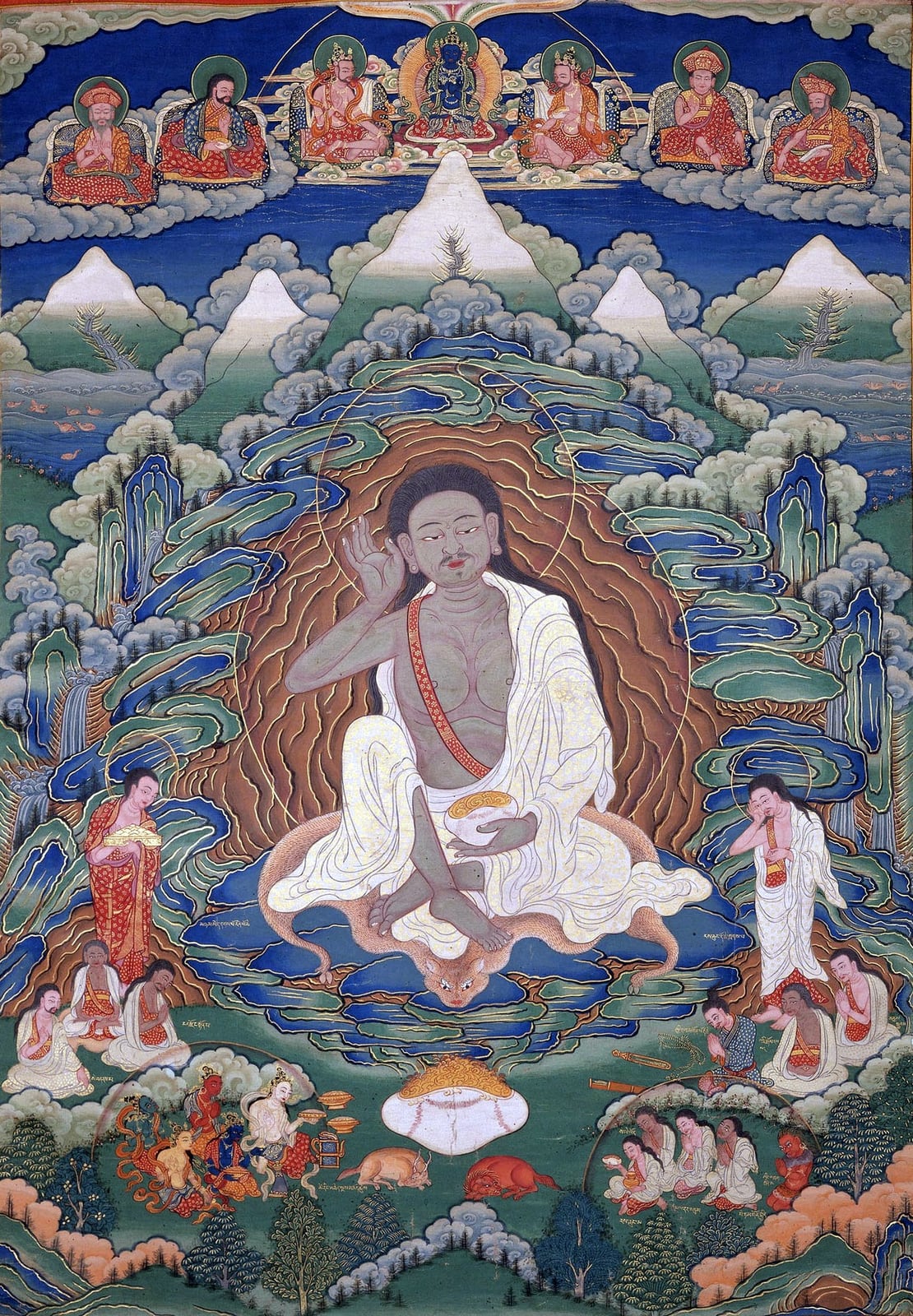
Tangka butanés de Milarepa, finales del s. XIX – principios del XX · Public domain
بكلماته
«Seeing this Life, one is freed from the eight worldly concerns. Hearing it, faith arises of itself. Recollecting it, entanglements are severed at the root.»Versos de cierre del Namthar; son palabras del compilador Tsangnyön Heruka sobre el libro, no de Milarepa, y así deben presentarse. Quintman (2010), pp. 233–234, citado en Quintman (2023)

فكرته المحورية
A single human life, however grave the guilt, suffices to reach awakening: Milarepa's story exists to show that a killer can become a buddha “in one body and one lifetime”, the promise of the tantric path as against the aeons of the gradual path.
السيرة
5 دقيقة قراءة
ترجمة مُعانة من الأصل الإسباني، بانتظار مراجعة مترجم من أهل اللغة.
ما يُعرف وما يُروى
لا يكاد يمكن الجزم بشيء عن ميلاريبا، أحبّ اليوغيين إلى قلوب أهل التبت، على وجه اليقين التاريخي. فأمّا أنه وُجد، وأنه كان تلميذ ماربا المترجم ومعلّم غامبوبا، وأنه عاش ناسكًا في الجبال المتاخمة لنيبال، وأنه علّم بالغناء، فذلك ما تُقرّ به التقاليد كلها ويقبله البحث الحديث. أما الحياة التي يعرفها الجميع — الانتقام، والأبراج، والقرّاص، والسمّ — فمصدرها كتاب واحد، هو «النامثار» أي «التحرّر الكامل»، الذي ألّفه عام 1488 تسانغنيون هيروكا، «مجنون تسانغ»، بعد الأحداث بثلاثة قرون ونصف، اعتمادًا على سِيَر أقدم استُعيد بعضها اليوم. وحتى التواريخ ليست في مأمن: فالتقليد السائد يقول 1052–1135، وكان علماء الكاغيو في القرن الثامن عشر يفضّلون 1028–1111، ويأخذ كثير من الباحثين المعاصرين بـ1040–1123. وتتبع هذه البطاقة تأريخ «النامثار» وتسمّيه باسمه: سيرةُ قداسة، أي حياةٌ كُتبت لتكون قدوة.
ابن آل ميلا
وُلد، بحسب تلك الرواية، في كيا نغاتسا، بوادي غونغثانغ، في أقصى الجنوب الغربي من التبت، لأسرة من التجار الموسرين من عشيرة ميلا. وسمّاه أبوه، شيراب غيالتسن، «ثوباغا»، أي «بهجة السمع»، لأن الطفل كان حسن الغناء. وحين مات الأب كان ثوباغا في السابعة؛ وكانت الوصية قد عهدت بالأملاك إلى عمّه وعمّته حتى يبلغ الوارث رشده، فاستوليا عليها. فصارت الأرملة، نيانغتسا كارغين، وولداها، ثوباغا وبيتا، خدمًا في البيت الذي كان بيتهم. ولما بلغ الفتى الخامسة عشرة جمعت الأم ما بقي لها لتقيم مأدبة طالبت فيها بالميراث علنًا، فأذلّها العمّ والعمّة أمام القرية. عندئذ باعت آخر حقل لها لترسل ابنها يتعلّم السحر.
وما يلي هو الجزء من الرواية الذي لم يشأ التقليد قط أن يلطّفه: فقد تعلّم ثوباغا، ونجح ما تعلّمه. ففي أثناء عرس الابن الأكبر للعمّ انهار البيت ومات خمسة وثلاثون شخصًا، ونجا العمّ والعمّة ليريا ما فقداه. ولما أرادت القرية الانتقام طلبت الأم المزيد، فأرسل الابن البَرَد على المحاصيل. ولا يخفّف «النامثار» من الجرائم لأنه يحتاج إليها: فقدّيس التبت، قبل كل شيء، قاتل.
ماربا والأبراج
جاء الندم ببطء، في صورة خوف من الموت ومن الولادة الجديدة في الجحيم. فبحث ثوباغا عن معلّم؛ فقال له لاما من مدرسة «الكمال العظيم» إن تعليمه يحرّر بلا جهد، فأخذ التلميذ الكلام على ظاهره واستسلم للنوم. عندئذ أرسله اللاما إلى لهودراك، إلى ماربا تشوكي لودرو، المترجم الذي سافر إلى الهند ثلاث مرات ليجلب تعاليم ناروبا. وكان ماربا، الرجل الواسع العلم السيّئ الطبع، قد عرف في المنام من القادم، لكنه استقبله كأجير: فأمره ببناء برج ثم هدمه، وببناء آخر في موضع آخر ثم هدمه أيضًا، وبإعادة كل حجر إلى مكانه، ثم أخيرًا برفع برج سيكهار غوتوك ذي الطبقات التسع، الذي لا يزال قائمًا. وفي تلك الأثناء كان يمنعه التلقينات، ويطرده بالضرب من الطقوس التي يحضرها تلاميذ آخرون، ويتركه وظهره قرحة دامية. فأشفقت عليه زوجة ماربا، داغميما، وأرسلته برسالة مزوّرة إلى معلّم آخر، هو نغوكبا؛ ولما انكشفت الحيلة شرح ماربا باكيًا أن كل امتحان كان مقصودًا به تطهير جريمة، وأن ميلاريبا لو أتمّها جميعًا لما احتاج إلى أن يولد من جديد، وأن ما بقي سيطهّره التأمل. كان في الثامنة والثلاثين حين وصل إلى لهودراك، وفي الرابعة والأربعين حين غادرها، باسم التلقين «جيبا دورجي» وبتعاليم الحرارة الباطنية، «التومو»، و«الختم العظيم»، «الماهامودرا».
لابس القطن
عاد إلى قريته فوجد البيت خرابًا، وفي داخله عظام أمه. وفي تلك الليلة، كما يقول النص، أدرك دفعةً واحدة اللادوام الذي كان يدرسه منذ سنين، فمضى إلى الجبال ولم يعد. وفي كهف دراكار تاسو، «ناب الحصان في الصخرة البيضاء»، تأمّل سنوات كاملة لا طعام له سوى القرّاص النابت عند المدخل، حتى اخضرّ جلده وشعره كذلك؛ ولما وجدته أخته بيتا ظنّت أنها ترى شبحًا، وعابت عليه حياةً بدت لها أسوأ من حياة المتسوّل. فأجابها ميلاريبا غناءً. وخجل بيتا من عُريه، واللصوص الذين يدخلون الكهف ليلًا فلا يجدون ما يسرقونه، واللبن الرائب الذي لا يحتاج إليه اليوغي بفضل قوة «التومو»: كل حلقة من هذه تعليمٌ في صورة مشهد. ولم يكن يلبس سوى قطعة من القطن، فصار «الريبا»، أي «لابس القطن»، وبهذا الاسم عرفته الهيمالايا.
ومن هنا تصير السيرة جغرافيا: لابتشي، وتشوار، وجبل كايلاش — حيث غلب، بحسب «مغور بوم»، كاهنَ البون نارو بونتشونغ في مبارزة قوى بصعوده إلى القمة ممتطيًا شعاعًا من الشمس —، وكهوف في نيبال وغرب التبت لا تزال تُزار. وكان يعلّم كل من يقترب منه، رعاةً وصيادين وشياطين وغيشي عالمًا، ويفعل ذلك بأغانٍ مرتجلة، «المغور»، جمعها التقليد في مجموعة «المئة ألف». ومن بين تلاميذه رسم اثنان المستقبل: ريتشونغبا، «ابن القلب»، الذي جاء طفلًا وعاد من الهند بالتعاليم المنقولة شفاهًا؛ وغامبوبا، الراهب الطبيب الذي تكوّن في مدرسة الكادام، فصبّ تجربة اليوغي في القالب الرهباني، ومن تلاميذه نشأت فروع الكاغيو الأربعة الكبرى، ومنها فرع الكارمابا.
السمّ والذهب
مات، بحسب «النامثار» دائمًا، في الرابعة والثمانين، في تشوار، بوادي درين. فقد أرسل إليه غيشي حسود، يُدعى تساكبوا، لبنًا رائبًا مسمومًا بواسطة محظية وعدها بفيروزة؛ وتناوله ميلاريبا، وهو يعلم ذلك، لأن أجله قد حان، وقبل موته جعل الغيشي يذوق في جسده الألم الذي سبّبه، ثم صفح عنه وهداه. وجمع تلاميذه، وأعطاهم وصاياه الأخيرة — أن يزهدوا في الهموم الدنيوية الثمانية، وأن يتأملوا في العزلة — وأخبرهم أن تحت الموقد ذهبًا. فلما بحثوا عنه وجدوا قطعة قماش وسكينًا وكتلة سكّر وورقة تقول: من زعم أن ميلاريبا كان يملك ذهبًا فليملأ فمه برازًا. ويقال إن الجسد اختفى من المحرقة، حملته «الداكيني»، وتنازع التلاميذ على ذخائر لا وجود لها.
صناعة قدّيس
لا شيء من هذا قابل للتحقق، والمثير هو مقدار ما نعرفه الآن عن كيفية بنائه. فقد كتب السِّيَر الأولى، في القرن الثاني عشر، تلاميذ مباشرون مثل غامبوبا ونغيندزونغ ريبا؛ وفي القرون التالية جُمعت في دورات — «التلاميذ الاثنا عشر الكبار»، و«الكنز الأسود» للكارمابا — وسّعت الرواية بالأغاني. ثم أعاد تسانغنيون هيروكا كتابتها على هيئة سيرة لبوذا بصيغة تبتية، وقسمها إلى كتابين، «الحياة» و«مئة ألف أغنية»، و— وهذا هو الحاسم — طبعهما بالقوالب الخشبية في زمن كانت فيه الطباعة لا تزال جديدة في وسط التبت: ومن هنا انتشارهما في كل مكان. ثم إن طبعات غونغثانغ في أعوام 1538 و1540 و1550–1555 — المحفوظ بعضها في مجموعة ويلكم والمكتبة البريطانية — ثبّتت صورته: جالسًا، يده اليمنى عند أذنه، يغنّي. وقد ترجمه جاك باكو إلى الفرنسية عام 1925، ونشره إيفانز-وينتز بالإنجليزية عام 1928؛ وترجم غارما تشانغ الأغاني عام 1962، ولوبسانغ لهالونغبا السيرة عام 1977، ثم أعاد ترجمتها عام 2010 أندرو كوينتمان، الذي أعاد بناء هذه العملية كلها. وما يبقى في النهاية ليس حياةً يمكن التحقق منها، بل شيئًا أندر: نموذجًا للحياة وجده قرّاء تسعة قرون جديرًا بالتصديق.
المصادر: Tsangnyön Heruka. The Life of Milarepa. Trad. Andrew Quintman; introducción de Donald S. Lopez Jr. Nueva York: Penguin Classics, 2010. ISBN 9780143106227. · Tsangnyön Heruka. The Life of Milarepa. Trad. Lobsang P. Lhalungpa. Nueva York: E. P. Dutton, 1977; Boston: Shambhala, 1985. ISBN 9780877732815. · Chang, Garma C. C. (trad. y anot.). The Hundred Thousand Songs of Milarepa. 2 vols. New Hyde Park (NY): University Books / Oriental Studies Foundation, 1962; reed. Boulder: Shambhala, 1977 y 1999 (ISBN 9781570624766). Vol. 1 digitalizado en Wikimedia Commons. · Quintman, Andrew. The Yogin and the Madman: Reading the Biographical Corpus of Tibet's Great Saint Milarepa. Nueva York: Columbia University Press, 2014. ISBN 9780231164153. · Evans-Wentz, W. Y. (ed.). Tibet's Great Yogī Milarepa: A Biography from the Tibetan. Trad. Lāma Kazi Dawa-Samdup. Londres: Oxford University Press, 1928. Digitalizado en Internet Archive.
الخط الزمني
الحياة عامًا بعد عام
كل نقطة حدث موثّق. انقر لتقرأه مع مصدره ودرجة اليقين فيه.
نحو 1052أقل من عامKya Ngatsa, Gungthang
Birth of Mila Thöpaga
According to the Namthar he is born in a water-dragon year to a prosperous family of the Mila clan; his father, Mila Sherab Gyaltsen, names him Thöpaga, “delightful to hear”. The dominant tradition says 1052; other sources give 1040 or 1028.
تقليدTsangnyön Heruka. The Life of Milarepa. Trad. Andrew Quintman; introducción de Donald S. Lopez Jr. Nueva York: Penguin Classics, 2010. ISBN 9780143106227.
بعد وفاته
- 1488Tsangnyön Heruka composes the Namthar and the Mgur 'bum
- 1538 – 1555The earliest surviving reprints
- 1928Arrival in the West: Bacot (1925) and Evans-Wentz (1928)
- 1962Garma C. C. Chang translates the Hundred Thousand Songs
- 2010 – 2014Quintman: new translation and study of the biographical corpus
نحو 1052 · أقل من عام
Birth of Mila Thöpaga
According to the Namthar he is born in a water-dragon year to a prosperous family of the Mila clan; his father, Mila Sherab Gyaltsen, names him Thöpaga, “delightful to hear”. The dominant tradition says 1052; other sources give 1040 or 1028.
تقليد
نحو 1059 · 7 أعوام
Death of his father and ruin of the family
His father dies leaving the estate in the care of the paternal uncle and aunt, who seize it and reduce the widow Nyangtsa Kargyen, Mila and his sister Peta to servitude.
تقليد
نحو 1067 · 15 عامًا
Apprenticeship in sorcery and the revenge
At his mother's urging he learns black magic and the art of hail-casting; he brings down his uncle's house during a wedding, killing thirty-five people, and destroys the village harvest with hail.
تقليد
نحو 1090 – 1096 · 38 عامًا
Marpa's disciple: the towers
Repentant, he seeks the Dharma; after a Dzogchen teacher who does him no good he reaches Marpa Chökyi Lodrö, who refuses to teach him and makes him build and tear down several stone towers before raising the nine-storey tower of Sekhar Gutok. Only then does he receive initiations and instructions (tummo, mahāmudrā, the oral transmissions).
تقليد
نحو 1096 – 1108 · 44 عامًا
The retreat years
After returning to his village and finding his mother's bones, he withdraws to the cave of Drakar Taso (“White Rock Horse Tooth”), where he meditates for years living on nettles until his skin turns green. He then wanders the mountains as a repa, “cotton-clad one”, and attains realisation.
تقليد
نحو 1110 · 58 عامًا
Meeting with Gampopa
The monk and physician Gampopa (1079–1153), trained in the Kadam school, becomes his chief disciple; from him the four great Kagyu branches will descend. Rechungpa (1085–1161), his “heart disciple”, has accompanied him since youth.
تقليد
نحو 1135 · 84 عامًا
Death by poisoning
The Namthar relates that the envious geshe Tsakpuwa sent him poisoned curd through a concubine; Milarepa, knowing what he did, took it, gave his final teachings and died aged eighty-four. His testament revealed that the “gold” he claimed to keep was a scrap of cloth and a lump of sugar.
تقليد
1488
Tsangnyön Heruka composes the Namthar and the Mgur 'bum
The “Madman of Tsang” (1452–1507) fixes the canonical version of the life and songs from earlier biographies (Gampopa, Ngendzong Repa, the Twelve Great Disciples, the Black Treasury cycle) and has it woodblock-printed: the origin of the saint's universal fame.
موثّق
1538 – 1555
The earliest surviving reprints
Printing of the Namthar at Ron Wosel Puk (1538) under Tokden Chökyi Gyatso; of the Mgur 'bum at Lende Langpuk (1540, folio in the Wellcome Collection) and at Drakar Taso (1550–1555, folio in the British Library, OPB 19999a3), which fixes Milarepa's iconography with his hand to his ear.
موثّق
1928
Arrival in the West: Bacot (1925) and Evans-Wentz (1928)
Jacques Bacot publishes in French the first European translation of the Namthar; three years later Oxford University Press issues Kazi Dawa-Samdup's English version edited by W. Y. Evans-Wentz, which for half a century was Western readers' gateway.
موثّق
1962
Garma C. C. Chang translates the Hundred Thousand Songs
First complete translation of the Mgur 'bum into a Western language (University Books, 2 vols.), reissued by Shambhala in 1977 and 1999; the basis of nearly all versions into other languages until Christopher Stagg's new translation (2017).
موثّق
2010 – 2014
Quintman: new translation and study of the biographical corpus
Andrew Quintman publishes the Penguin Classics translation (2010) and The Yogin and the Madman (2014), the first systematic study of the biographies prior to Tsangnyön; with him the figure passes from devotional tale to the history of its own construction.
موثّق
المؤلَّفات
المؤلَّفات الأساسية
المؤلَّفات التي لا يُفهم إرثه من دونها.
نسبة تقليدية · 1488
The Life of Milarepa (Namthar)
རྗེ་བཙུན་མི་ལ་རས་པའི་རྣམ་ཐར། (rje btsun mi la ras pa'i rnam thar)
The canonical biography, divided into twelve chapters between “worldly deeds” (birth, ruin, revenge by sorcery) and “supreme deeds” (the trials with Marpa, the retreat at Drakar Taso, the teaching and the death by poison). Written as a life of the Buddha in a Tibetan key, it is at once a novel of formation, a practice manual and Tibet's most widely read book; its woodblock circulation from the late fifteenth century explains the figure's ubiquity.
10 طبعات · amazon.com
جميع مؤلَّفاته (7)

The Hundred Thousand Songs of Milarepa (Mgur 'bum)
1488

Drinking the Mountain Stream: Songs of Tibet's Beloved Saint
1978
Milarepa
Sixty Songs of Milarepa
The Conscious LibrarySixty Songs of Milarepa
1966

The Yogin and the Madman
2014
Milarepa
Milarepa: Lessons from the Life and Songs of Tibet's Great Yogi
The Conscious LibraryMilarepa: Lessons from the Life and Songs of Tibet's Great Yogi
2017
Milarepa
Miraculous Journey: Further Stories and Songs of Milarepa
The Conscious LibraryMiraculous Journey: Further Stories and Songs of Milarepa
1986
الأقوال
أقوال محدَّدة الموضع في مؤلَّف بعينه. كل منها يحمل مصدره ودرجة الثقة به.
Whoever says that Milarepa possessed gold, let him fill his mouth with excrement.(tibetano; traducción libre del investigador a partir de Lhalungpa 1977 y Quintman 2010)
مرجَّحNamthar (Tsangnyön Heruka, 1488), capítulo final («Nirvana»): la nota hallada bajo el hogar junto a un trozo de tela, un cuchillo y un terrón de azúcar, tras anunciar a los discípulos que allí había oro
الأفكار الجوهرية (خلاصة تحريرية)
احترامًا لحقوق المؤلف، تُلخَّص هذه الأفكار بكلماتنا ولا تُقدَّم بوصفها اقتباسات حرفية.
- A single human life, however grave the guilt, suffices to reach awakening: Milarepa's story exists to show that a killer can become a buddha “in one body and one lifetime”, the promise of the tantric path as against the aeons of the gradual path.
- The suffering imposed by the teacher is not cruelty but purification: each tower raised and razed for Marpa corresponds to a crime, and the devotion that endures the trial is the true initiation, prior to any ritual.
- Mountain solitude is the place of practice, not an escape: in the cave one finds what village, monastery and books do not give, and voluntary poverty—a cloth, a staff, nettles—is freedom, not lack.
- Death is certain and its hour uncertain; therefore every delay is a loss. The songs return again and again to impermanence not as consolation but as a goad: there is no time for the affairs of the world.
- Realisation is taught by singing: the improvised song (mgur) does not embellish doctrine, it embodies it, because what has been understood in the body comes out in verse and in plain speech, within reach of shepherds and hunters.
- Inner heat (tummo) and the Great Seal (mahāmudrā) are two faces of one experience: the body that needs no shelter and the mind that recognises its own nature; the cotton-clad repa in the snow is the visible proof of the invisible.
أقوال منحولة أو مختلَف في نسبتها (3)
«My religion is to live and die without regret.»
Milarepa's most quoted sentence in the West, used as an epigraph by Shambhala and on countless pages, could not be located in that wording either in the Namthar (Lhalungpa, Quintman) or in the Mgur 'bum (Chang). It faithfully conveys the sense of his final teaching but is recorded as unverified.
«In the beginning nothing comes, in the middle nothing stays, at the end nothing goes.»
Circulates as a Milarepa song on the nature of mind; it could not be found in the Chang or Stagg translations. It may derive from genuine Mgur 'bum verses on the mind as “unborn, unabiding and unceasing”, reworded in popular literature.
«Hasten slowly and you shall soon arrive.»
Attributed to Milarepa in quotation anthologies; it is a variant of the Latin adage “festina lente”. Not found in any Tibetan source consulted.
الكلمات الأخيرة
نسبة تقليدية
«Do as I have done: give up the eight worldly concerns, homeland and kin, and meditate in the solitude of the mountains until realisation is firm. That is my final instruction; I have no other.»Hagiographic, not historical. The final chapter of Tsangnyön Heruka's Namthar (1488) has Milarepa, at Chuwar and already poisoned, deliver a last discourse and a last song to his disciples: he asks them to give up worldly concerns and practise in solitude, and declares that his only possessions are his cotton robe, his staff and a cup; then he enters meditation and dies. What is offered here is a free rendering of the sense of that instruction, written by the researcher from the Lhalungpa and Quintman translations, not a literal quotation from either. The Namthar was composed three and a half centuries after the events on the basis of earlier biographies; there is no contemporary testimony.
المصدر: Tsangnyön Heruka. The Life of Milarepa. Trad. Andrew Quintman; introducción de Donald S. Lopez Jr. Nueva York: Penguin Classics, 2010. ISBN 9780143106227.
اسأل
بماذا يجيب أثره
اثنا عشر سؤالًا كبيرًا من أسئلة الإنسانية، وما تتيح نصوصه الإجابة به عنها، مع المراجع. ولا نقوّله ما لم يقل أبدًا.
ما المطلق؟ هل الله موجود؟
He seeks no creator: the ultimate is the nature of one's own mind
لا إله خالقيُستنتج من تعاليمه
In the sources on Milarepa — the biography (namthar) and the Hundred Thousand Songs compiled by Tsangnyön Heruka in the fifteenth century — the question of a creator God does not arise as a problem. The horizon is tantric Buddhism of the Kagyü school: what must be recognised is the nature of mind, empty and luminous, which the songs describe again and again as impossible to grasp with concepts, without centre or limit. The meditation deities and dakinis who people his songs are not creators of the world but presences and manifestations on the path, and in the logic of Mahamudra they do not exist apart from mind. Liberation depends not on the grace of a God but on practice in solitude, devotion to the master Marpa and direct recognition. His work therefore falls within the non-theistic field.
قارن هذا السؤال مع معلّمين آخرينمن أنا؟ هل توجد ذات حقيقية؟
Sought for, the self is not found: mind is empty and luminous
لا توجد ذات دائمةيُستنتج من تعاليمه
The songs attributed to Milarepa in Tsangnyön Heruka's compilation return again and again to the search for mind and self: examined, they are found neither inside nor outside, and have no shape, colour or location. What follows is not nothingness but the nature of mind according to the Mahamudra of the Kagyü school: empty of a substantial self and at the same time clear and aware. Attachment to a self, by contrast, is the root of the passions and of the cycle of rebirth that Milarepa's biography narrates starkly, from his youthful crimes to his purification. Spiritual work consists in recognising this absence of self in one's own experience, in solitude and under the master's guidance, until the idea of a solid self no longer governs one's life.
قارن هذا السؤال مع معلّمين آخرينلماذا نتألّم؟
Evil done returns: his trials under Marpa purified a terrible karma
الكارما وتعلّم الروحيقوله صراحةً
Milarepa's biography is itself a lesson on the origin of suffering. According to the namthar compiled by Tsangnyön Heruka, as a young man, urged by his mother to take revenge on the relatives who had dispossessed them, he learned black magic and caused the deaths of many people. Remorse and fear of the karmic consequences of those acts led him to seek the dharma. His master Marpa subjected him to very harsh trials — building and tearing down stone towers again and again — which the tradition interprets as purification of that karma. In the songs, Milarepa insistently recalls impermanence, the imminence of death and the sufferings of samsara as reasons to practise without delay. Pain is the fruit of past acts and, at the same time, the spur that drives towards liberation.
قارن هذا السؤال مع معلّمين آخرينماذا يحدث بعد الموت؟
Fear of a bad rebirth drove him to liberation in a single life
الولادة من جديد وفق الكارمايقوله صراحةً
In the Life of Milarepa, composed by Tsangnyön Heruka in the fifteenth century, rebirth according to karma is the engine of the whole narrative. Having caused deaths through black magic out of revenge, Milarepa is terrified at the prospect of rebirth in the hells, and that fear leads him to Marpa, to the trials of the tower and to years of solitary meditation. The songs of the tradition insist on impermanence: death comes without warning, the body is borrowed, and the only thing that accompanies the dead are their deeds; whoever does not practise now will be reborn dragged along by them. At the same time, the narrative presents Milarepa as proof that liberation is possible in a single life through Mahamudra and the yogas of Naropa, which include preparation for the intermediate state (bardo). For the realised yogi, dying is an occasion to recognise the nature of mind.
قارن هذا السؤال مع معلّمين آخرينكيف يُبلَغ التحرّر أو الخلاص؟
Extreme purification under the master and years of solitary meditation: liberation in one lifetime
بالممارسة المنضبطةيقوله صراحةً
According to the Life of Milarepa compiled by Tsangnyön Heruka in the fifteenth century, Milarepa's path begins with heavy negative karma (the killings committed through black magic) and passes through two phases. First, purification: his master Marpa makes him build and demolish towers for years before transmitting the instructions. Then meditation in high mountain caves, with extreme asceticism, until realisation. The biography thus presents liberation as possible in a single life for whoever combines the transmission of a lineage, faith in the master and uncompromising perseverance. The songs gathered in The Hundred Thousand Songs insist on the same: renounce worldly concerns and practise without delay in the face of the certainty of death.
قارن هذا السؤال مع معلّمين آخرينهل نحتاج إلى معلّم؟
Without Marpa and his transmission no liberation: faith in the guru sustains everything
لا غنى عنهيقوله صراحةً
The Life of Milarepa is, to a large extent, the story of a relationship of discipleship. After a first teacher who cannot help him, Milarepa is sent to Marpa the Translator, who for years subjects him to apparently arbitrary trials, such as building and demolishing towers, and withholds teaching. The hagiography presents those humiliations as the necessary purification of his bad karma, and Milarepa's unshakeable obedience and faith as the condition for receiving the lineage's instructions. Only with that transmission can he then meditate fruitfully in solitude. The work thus reflects the Vajrayana conception of the guru as the source of blessings and of the efficacy of practice: without him, the path does not open.
قارن هذا السؤال مع معلّمين آخرينهل العالم حقيقي؟
Appearances are like a dream or a magical illusion: empty and luminous
شبكة أسباب بلا جوهريُستنتج من تعاليمه
In the songs attributed to Milarepa, the nature of the world is approached from the meditative experience of the Mahamudra tradition. Appearances are compared to a dream, a mirage or a magical illusion: they appear vividly but lack inherent existence. That emptiness is not presented as nothingness but as inseparable from the clarity of mind: appearance and emptiness are a unity. For Milarepa the error is not that there are phenomena but clinging to them as solid and pursuing worldly occupations as though they were lasting. Impermanence and death, constant themes in his songs, show that nothing in the world can be held on to, and therefore invite practice.
قارن هذا السؤال مع معلّمين آخرينما الحب؟
Breaking the bonds of worldly affection so that compassion for all may arise
رحمة بلا حدوديقوله صراحةً
The Life of Milarepa shows two kinds of love in tension. On the one hand, family affection: the love for his mother, which drove him to revenge, and that of his sister Peta, who visits him in the cave and reproaches him for his poverty. When he returns to his village and finds the house in ruins and his mother's bones, Milarepa experiences that attachment as a source of pain and decides to renounce everything. On the other hand, the songs present him cultivating bodhicitta, the mind of awakening that seeks to free all beings, as the root of practice: compassion towards beings, whom the Tibetan tradition teaches one to see as former mothers, replaces attachment to one's own. Towards his persecutors, such as the lama Tsakpuhwa who ends up poisoning him, the tradition credits him with compassion rather than resentment.
قارن هذا السؤال مع معلّمين آخرينهل نحن أحرار أم أن كل شيء مقدَّر؟
The repentant murderer who purifies his karma in a single lifetime
الكارما والاختياريقوله صراحةً
In Tibetan tradition Milarepa's life is the supreme example that karma conditions but does not condemn. According to the *Namthar*, the young Thöpaga learns black magic to avenge his mother and causes the death of dozens of people; terrified by the consequences of those acts, he seeks the Dharma. Marpa makes him build and tear down towers again and again, trials the tradition reads as purification of the evil committed, and only then gives him the instructions. Milarepa attains realisation in that same life through years of retreat. The story does not deny the law of karma —fear of its fruits is what moves him— but shows that present action, sustained with extreme effort, can change its course.
قارن هذا السؤال مع معلّمين آخرينلماذا نتأمّل أو نصلّي؟
Meditating in the cave because death comes: recognising the nature of mind
رؤية الواقع كما هويقوله صراحةً
According to the *Namthar* and the *Hundred Thousand Songs*, Milarepa's meditation has an explicit driver: awareness of impermanence and death, which makes any worldly occupation a waste of time. After receiving the instructions from Marpa, he withdraws for years to high caves, lives on nettles and practises inner heat (*tummo*) and meditation on the nature of mind, in the line the Kagyu tradition would call *mahāmudrā*. His songs to disciples and visitors insist on two ideas: everything compounded falls apart, and the mind, looked at directly, is empty and luminous. To meditate is to see reality as it is until that seeing becomes continuous.
قارن هذا السؤال مع معلّمين آخرينهل يستطيع العقل أن يعرف الحقيقة القصوى؟
The cave yogi against the scholar: practice, not books
الحقيقة القصوى وراء العقليقوله صراحةً
Milarepa's tradition often contrasts the meditator's realisation with bookish learning. In the *Namthar*, one of the last episodes pits the yogi against the scholar Geshe Tsakpuhwa, who tries to humiliate him with questions of logic and doctrine and, envious of his prestige, ends up having him poisoned. The *Hundred Thousand Songs* contain several answers to monks and scholars in which Milarepa declares that he has forgotten the words of the texts because he has become familiar with their meaning, and that the nature of mind is reached not by reasoning but by direct experience received from the master and matured in meditation. The ultimate is not proven: it is recognised.
قارن هذا السؤال مع معلّمين آخرينالانسحاب من العالم أم تغييره؟
The cave and total renunciation, without house, goods or family
الانسحاب لكي نجديقوله صراحةً
Milarepa is the model of the solitary yogi in Tibetan Buddhism. According to his Life, after completing the trials imposed by Marpa he withdrew for years to Himalayan caves, living on nettles until his skin turned greenish, without possessions and declining the offers of marriage or a comfortable life made to him. When his sister Peta reproaches him for his poverty and asks him to live like decent people, he answers with songs that set the eight worldly concerns — gain and loss, pleasure and pain, praise and blame, fame and disrepute — against the freedom of the practitioner. The tradition presents this renunciation as the condition of awakening in a single life. Yet it is not a fruitless isolation: in his maturity Milarepa receives disciples, such as Gampopa and Rechungpa, and teaches in song to herders, hunters and villagers.
قارن هذا السؤال مع معلّمين آخرين
التقارب والتوتّر
التقارب والتوتّر
محسوبة سؤالًا سؤالًا انطلاقًا من مواقفه. وسبب كل اتفاق أو اختلاف يظهر بالنقر.
يقترب في تفكيره من
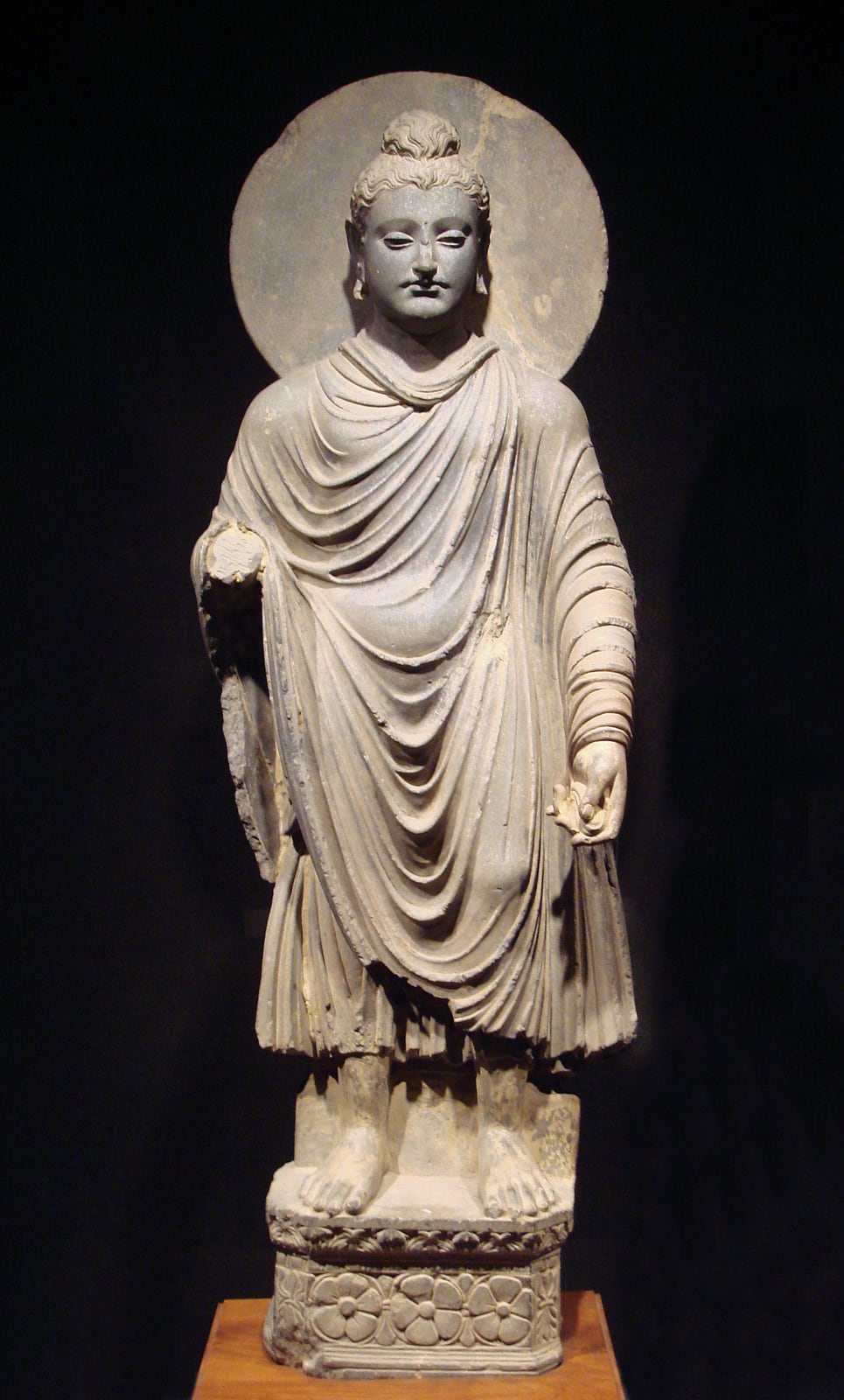
Siddhartha Gautama, the Buddha
يتّفقان في: ما المطلق؟ هل الله موجود؟ · من أنا؟ هل توجد ذات حقيقية؟ · ماذا يحدث بعد الموت؟
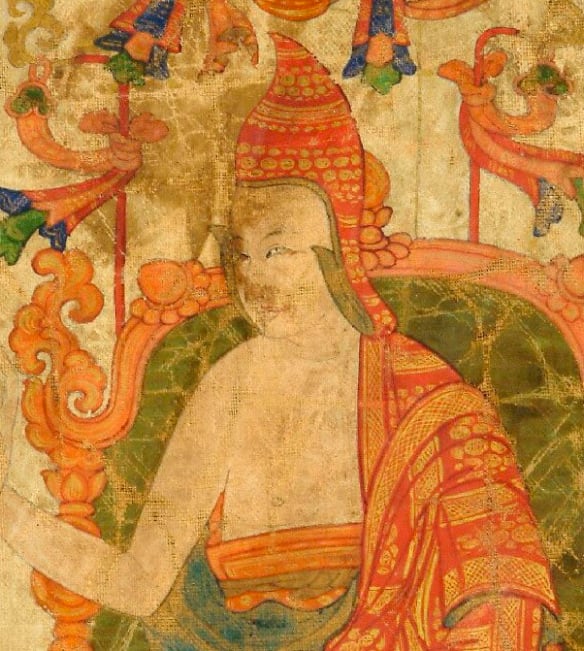
Śāntideva
يتّفقان في: ما المطلق؟ هل الله موجود؟ · من أنا؟ هل توجد ذات حقيقية؟ · ماذا يحدث بعد الموت؟
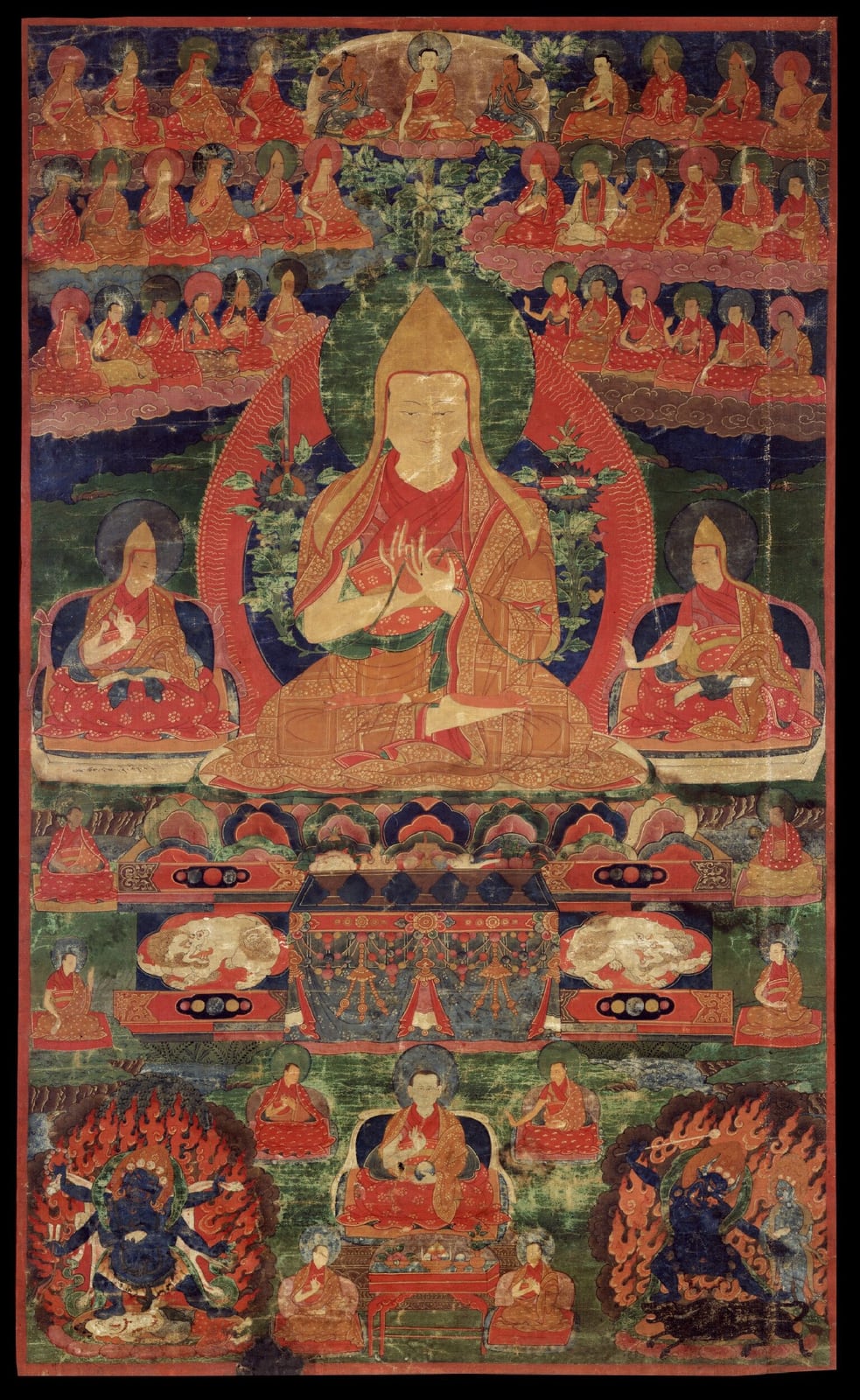
Tsongkhapa
يتّفقان في: ما المطلق؟ هل الله موجود؟ · من أنا؟ هل توجد ذات حقيقية؟ · ماذا يحدث بعد الموت؟

Dōgen
يتّفقان في: ما المطلق؟ هل الله موجود؟ · من أنا؟ هل توجد ذات حقيقية؟ · ماذا يحدث بعد الموت؟
يبتعد في تفكيره عن

Francis of Assisi
يختلفان في: ما المطلق؟ هل الله موجود؟ · من أنا؟ هل توجد ذات حقيقية؟ · ماذا يحدث بعد الموت؟
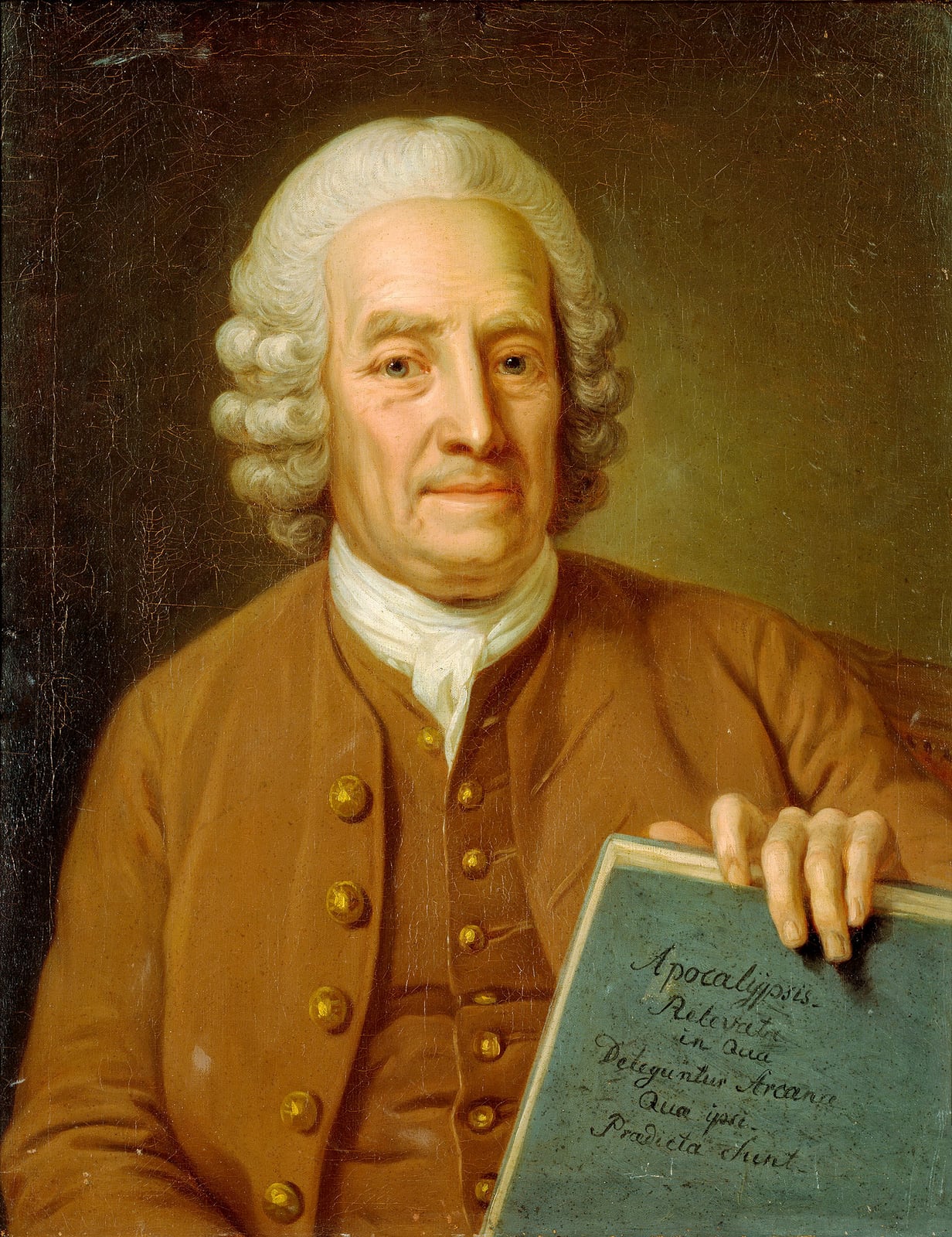
Emanuel Swedenborg
يختلفان في: ما المطلق؟ هل الله موجود؟ · من أنا؟ هل توجد ذات حقيقية؟ · ماذا يحدث بعد الموت؟

Theophan the Recluse
يختلفان في: ما المطلق؟ هل الله موجود؟ · من أنا؟ هل توجد ذات حقيقية؟ · ماذا يحدث بعد الموت؟
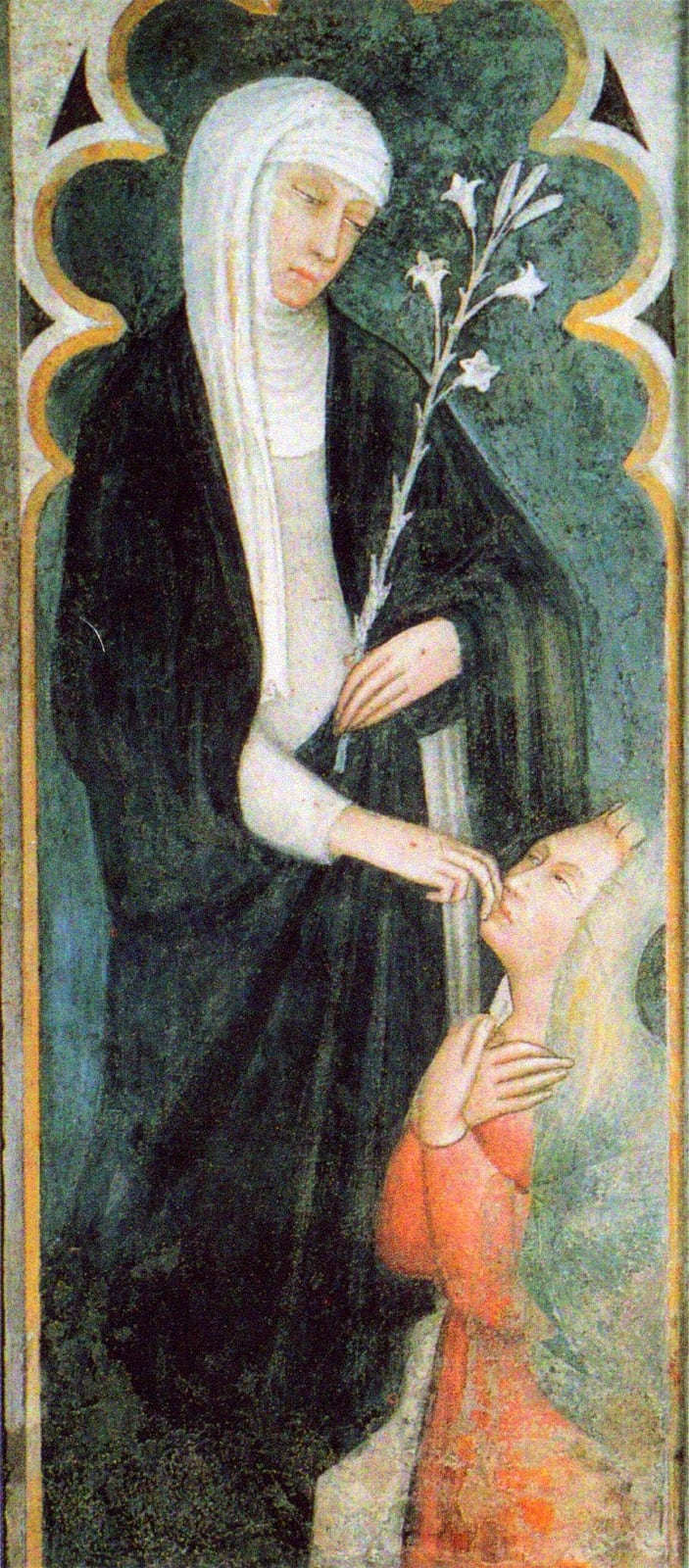
Catherine of Siena
يختلفان في: ما المطلق؟ هل الله موجود؟ · من أنا؟ هل توجد ذات حقيقية؟ · ماذا يحدث بعد الموت؟
يختلفان فيتناقض ظاهري
Milarepa · The 14th Dalai Lama (Tenzin Gyatso)
Total obedience in the cave or critical discernment in the world: the guru in Tibet
لماذا: The contradiction is apparent for two reasons. The first is genre: the Life of Milarepa is a fifteenth-century hagiography composed to exalt the Kagyu lineage, and its portrait of the perfect disciple is not a manual for choosing a master; the Dalai Lama speaks in public teachings, before global audiences exposed to unscrupulous teachers. The second is stage: the Tibetan tradition itself asks that the master be examined before acceptance and fully trusted afterwards, so the Dalai Lama's advice precedes the moment the Life recounts. Withdrawal and engagement, for their part, answer to different vocations, and Milarepa himself ended up teaching herdsmen, hunters and villagers.
يتّفقان في
Milarepa · Teresa of Ávila
Suffering that purifies: Marpa's towers and the trials of the sixth dwelling places
لماذا: The affinity is comparative: there is no relation between the eleventh-century Tibetan yogi and the sixteenth-century Castilian Carmelite. They converge because their traditions share an ascetic anthropology: the human being is bound by something that must be undone, and that undoing hurts. The explanation of pain, however, differs. In the Life of Milarepa suffering is the fruit of past actions and is exhausted through purification under a master; in Teresa it is participation in the cross of Christ and preparation for a union that God grants by grace. It should also be remembered that the Life is a fifteenth-century hagiography, whereas Teresa writes in the first person about what she lived.
حكايات وروايات
حكايات وروايات
رواية من سِيَر القدّيسينc. 1067
The house that collapsed at the wedding
أصل الرواية: Tsangnyön Heruka's Namthar (1488), chapter 3 (“worldly deeds”); the episode already appears in the earlier biographies of the Twelve Great Disciples cycle.
رواية من سِيَر القدّيسينc. 1090–1096
Marpa's towers
أصل الرواية: Namthar, chapters 5–6 (Quintman, 2010); the tower is a documented real building (photograph by H. E. Richardson, 1950, on Commons), and Quintman's essay (2023) describes it with its 1200–1250 mural.
رواية من سِيَر القدّيسينc. 1096–1105
The nettles of Drakar Taso
أصل الرواية: Namthar, chapters 9–10; Quintman's essay (2023) confirms the site's identification and its later history as a printery.
رواية من سِيَر القدّيسينc. 1100–1120
The hunter, the doe and the dog
أصل الرواية: Mgur 'bum (Tsangnyön Heruka), chapter “Milarepa and the hunter” (Chang, 1962, vol. 1, ch. 26, “The Hunter and the Deer”). The painting by Chöying Dorje, Tenth Karmapa (1613), is on Commons described as “Milarepa, Gonpo Dorje, the deer and the dog”.
رواية من سِيَر القدّيسينc. 1100–1120
The contest on Kailash
أصل الرواية: Mgur 'bum, chapter “Milarepa's meeting with Naro Bönchung on Kailash” (Chang, 1962, vol. 1). A religious-polemical narrative with no verifiable historical basis.
رواية من سِيَر القدّيسينc. 1110–1112
The last teaching to Gampopa
أصل الرواية: Mgur 'bum, chapter “Milarepa's meeting with Gampopa” (Chang, 1962, vol. 2, ch. 41, “The Meeting with Gampopa”); also in Gampopa's own biography.
رواية من سِيَر القدّيسينc. 1135
The geshe's poison and the gold that did not exist
أصل الرواية: Namthar, chapter 12 (“Nirvana”); also summarised in Lion's Roar (m14) from Quintman. No contemporary source for the death exists.
التعاليم
التعاليم
المفاهيم التي ينتظم بها فكره، مشروحة في سياقها.
Songs of realisation (mgur)mgur
Indian tantric poetry (dohā) and the Tibetan song tradition; Kagyu literature.
Mahāmudrā (phyag rgya chen po), the Great Sealmahamudra
Vajrayāna; Kagyu lineage (Tilopa–Nāropa–Marpa–Milarepa–Gampopa); Indian mahāsiddhas.
Tummo (gtum mo), inner heattummo
Six yogas of Nāropa; Hevajra and Cakrasaṃvara tantras; completion stage of Anuttarayoga.
Guru devotion and purification through trialdevocion-al-guru
Vajrayāna guru-yoga; doctrine of karma; oral-transmission lineages (bka' brgyud).
Mountain retreat (ri khrod) and the life of the repari-khrod
Tantric asceticism; the mahāsiddha tradition; Kagyu hermitages of the Himalaya.
Awakening “in one body and one lifetime”una-vida-un-cuerpo
Vajrayāna versus gradual Mahāyāna; Tibetan hagiography (rnam thar); Lopez, introduction to Quintman 2010.
الخلوات
خلوات ومراكز
أماكن ولقاءات مرتبطة بتعليمه. نضعك على تواصل مع من ينظّمها.
Woodstock, Nueva York · Estados Unidos
Karma Triyana Dharmachakra (KTD), Woodstock
Karma Triyana Dharmachakra
Karma Triyana Dharmachakra is a traditional Tibetan monastery in the Catskill Mountains above Woodstock and the North American seat of the 17th Gyalwang Karmapa Ogyen Trinley Dorje. It keeps daily practices, a weekly meditation class and retreats ranging from one-day calm-abiding sessions to eight-day retreats and Nyungne fasting practices; it also accepts personal retreats of up to two weeks and runs online study groups. Like every Kagyu centre, it regards itself as heir to the chain of transmission that runs through Tilopa, Naropa, Marpa and Milarepa, whose songs of realisation are recited and taught in the tradition.
Eskdalemuir, Dumfries and Galloway · Reino Unido
Kagyu Samye Ling, Scotland
Kagyu Samye Ling Monastery and Tibetan Centre
Samye Ling, founded in 1967 in the hills of southern Scotland, was the first Tibetan Buddhist centre in the West and is one of the great monasteries of the Kagyu lineage outside Tibet. That lineage, known as the lineage of oral transmission, descends directly from Marpa the Translator and his disciple Milarepa, whose songs and life of retreat in Himalayan caves remain the model of Kagyu practice. The centre offers meditation courses, teachings by masters of the tradition and retreats, along with a Tibetan-style temple and a monastic community that keeps up daily practice.
Saint-Léon-sur-Vézère, Dordoña · Francia
Dhagpo Kagyu Ling, Dordogne
Dhagpo Kagyu Ling
Dhagpo Kagyu Ling is the European seat of the Karma Kagyu lineage, in the Vézère valley in the French Dordogne, under the spiritual direction of the 17th Karmapa Thaye Dorje. It describes itself as a place to understand and live Buddhism, with teachings, retreats, a progressive cycle of study and meditation, regular practices and activities for young people, both in person and online. The Kagyu lineage counts Milarepa among its founding fathers: his life, from guilt to realisation through effort and devotion to his teacher Marpa, is one of the stories most often studied within the tradition.
مقاطع الفيديو
مقاطع الفيديو
تسجيلات ومقابلات وأفلام وثائقية. تُشغَّل مقاطع الفيديو من YouTube؛ ولا تُستضاف هنا.
Andrew Quintman: The Yogin and the Madman
محاضرة· EN
Yale University
The Making of Milarepa: Reading & Writing the Life of Tibet's Great Saint
محاضرة· EN
CU Boulder Libraries
The Making of Milarepa with Andrew Quintman
محاضرة· EN
Shantideva Center, FPMT
Andrew Quintman, Judy Lief, Tenzing Lamsang, Nikko Odiseos | Milarepa: The Master and His Teachings
تحليل· EN
Jaipur Literature Festival
The Life of Jetsun Milarepa
محاضرة· EN
LamaJampaThaye
Songs of Milarepa: Session 1
محاضرة· EN
Kagyu Samye Dzong Edinburgh
H.E. Sangye Nyenpa Rinpoche sings the Milarepa's Aspiration Song
تسجيل أصلي· BO
Benchen Library
Jetsün MILARÉPA – Une Vie, une Œuvre : Un voyage de la magie à l'illumination (France Culture, 1993)
فيلم وثائقي· FR· 1993
ÉCLAIR BRUT
Milarépa // Entretien avec Matthieu Ricard
مقابلة· FR
Jupiter Films
Vida de Milarepa. El gran Yogui del Tibet. Escuela de Filosofía Nueva Acrópolis
محاضرة· ES
Nueva Acrópolis España
Carla Gianotti: "Vita di Milarepa"
محاضرة· IT
JAMTSE LING Centro Rimé
المعرض
المعرض
صور بترخيص متحقَّق منه. كل منها تحتفظ بمؤلّفها ونسبتها.
المخطوطات
المخطوطات
شواهد مخطوطة ونصوص قديمة، مع جهة حفظها وشروط الاطّلاع عليها.
BO · Tibetano (dbu can), xilografía · 1488
rje btsun mi la ras pa'i rnam thar
- الشاهد المحفوظ
- Impresión xilográfica de 1538, Ron Wosel Puk (Gungthang): la edición impresa más antigua conservada del Namthar; folios de 8 × 44 cm con ilustraciones marginales de Milarepa, Rechungpa, Gampopa y Zhiwa Ö
- جهة الحفظ
- No indicado en la fuente (reproducido en el catálogo «Bod kyi shing spar lag rtsal gyi byung rim mdor bsdus», Lhasa, 2013)
BO · Tibetano (dbu can), xilografía · c. 1488
rje btsun mi la ras pa'i rnam thar rgyas par phye ba mgur 'bum
- الشاهد المحفوظ
- Primer folio de la impresión de Lende Langpuk, 1540 (3½ × 19 in.), con Milarepa en gesto de cantar, la mano izquierda alzada
- جهة الحفظ
- Wellcome Collection, Londres · Imagen L0025571 (signatura del objeto no localizada; véase pending)
- الرقمنة
- commons.wikimedia.org/wiki/File:Tibetan_Manuscri…
BO · Tibetano (dbu can), xilografía · c. 1488
mi la ras pa'i mgur 'bum
- الشاهد المحفوظ
- Impresión de Drakar Taso, 1550–1555; primer folio (4⅛ × 20 in.) con Milarepa en la postura que se haría canónica: mano derecha en la oreja, cráneo-copa en la izquierda
- جهة الحفظ
- British Library, Londres · OPB 19999a3
BO · Tibetano (dbu can), xilografía en bloque · c. 1488 (impresión posterior)
mi la ras pa'i mgur 'bum
- الشاهد المحفوظ
- Xilografía de Pekín, 342 folios, en un volumen
- جهة الحفظ
- Biblioteca Nacional de Mongolia (Ulán Bator); escaneo del Asian Classics Input Project y BDRC · BDRC bdr:MW1KG1252 (obra bdr:WA1KG1252; escaneo bdr:W1KG1252, volumen bdr:I1KG1274)
- الرقمنة
- library.bdrc.io/show/bdr:MW1KG1252…
BO · Tibetano (dbu can), manuscrito con ilustraciones · Siglos XIII–XV (copia de los siglos XVII–XVIII)
Biografía ilustrada de Milarepa (ciclo del Tesoro Negro / Doce Grandes Discípulos)
- الشاهد المحفوظ
- Manuscrito de 245 folios (4 × 23 in.), tinta y colores sobre papel, con personajes que recorren el texto
- جهة الحفظ
- Newark Museum of Art (Nueva Jersey) · 36.280.1.1–245
BO · Tibetano (dbu can), manuscrito ilustrado · Siglo XVI (copia)
Manuscrito del Tesoro Negro (mdzod nag ma): el Sueño de los Cuatro Pilares
- الشاهد المحفوظ
- Folios de 8 × 42,5 cm, tinta y pigmentos sobre papel; Milarepa ante Marpa relatando la visión profética de los cuatro pilares
- جهة الحفظ
- Tibet Museum / Fondation Alain Bordier, Gruyères (Suiza) · ABS 039
العلاقات
العلاقات
تأثيرات وتلمذة وتقارب في الأفكار. تُميَّز العلاقة الموثّقة عن التشابه المستخلَص بالتحليل.
تلميذ
Marpa Chökyi Lodrö (Marpa el Traductor)
His root guru according to the whole tradition; the trials of the towers and the transmission of tummo and mahāmudrā are the core of the Namthar.
علاقة موثّقة
معلّم
Gampopa (Dakpo Lhaje, 1079–1153)
His chief disciple, from whose students the four great Kagyu branches descend; author of one of the oldest biographies of Milarepa.
علاقة موثّقة
معلّم
Rechungpa Dorje Drakpa (1085–1161)
The “heart disciple”, the narrative addressee of the Namthar and bearer of the oral transmissions brought from India.
علاقة موثّقة
أفكار قريبة من
Both figures, according to Quintman, transformed the sacred geography of the Himalaya through their life stories; there is no historical relation (Padmasambhava belongs to the eighth century) nor a direct doctrinal one.
تشابه مستخلَص بالتحليل
أفكار قريبة من
Radical voluntary poverty, preaching to animals (the hunter's doe and dog; the wolf of Gubbio) and teaching in song; both born to merchant families. A parallel identified by the researcher, with no historical relation.
تشابه مستخلَص بالتحليل
أفكار قريبة من
Religious poetry sung in the vernacular, outside institutions and addressed to ordinary people; in both cases the corpus was fixed centuries later and mixes voices.
تشابه مستخلَص بالتحليل
أفكار قريبة من
Mysticism expressed in verse and later commented on; night and mountain as places of the path. A typological, not historical, parallel.
تشابه مستخلَص بالتحليل
المصادر
المصادر
المراجع والفهارس التي رُوجعت لهذه الصفحة.
- Wikidata, «Milarepa», QID Q58431 (VIAF 173200978; LCCN n80034328); BDRC bdr:P1853; Treasury of Lives P1853.
- Quintman, Andrew. «A Tibetan Liberation Tale Illustrated in Print and Manuscript: Earliest Extant Printed Edition of Milarepa's Life Story (Ron Wosel Puk, Gungtang, 1538)». Project Himalayan Art, Rubin Museum of Art, 2023.
- Tsangnyön Heruka. The Life of Milarepa. Trad. Andrew Quintman; introducción de Donald S. Lopez Jr. Nueva York: Penguin Classics, 2010. ISBN 9780143106227.
- Tsangnyön Heruka. The Life of Milarepa. Trad. Lobsang P. Lhalungpa. Nueva York: E. P. Dutton, 1977; Boston: Shambhala, 1985. ISBN 9780877732815.
- Chang, Garma C. C. (trad. y anot.). The Hundred Thousand Songs of Milarepa. 2 vols. New Hyde Park (NY): University Books / Oriental Studies Foundation, 1962; reed. Boulder: Shambhala, 1977 y 1999 (ISBN 9781570624766). Vol. 1 digitalizado en Wikimedia Commons.
- Quintman, Andrew. The Yogin and the Madman: Reading the Biographical Corpus of Tibet's Great Saint Milarepa. Nueva York: Columbia University Press, 2014. ISBN 9780231164153.
- Quintman, Andrew. «Wrinkles in Time: On the Vagaries of Mi la ras pa's Dates». Acta Orientalia 74 (2013): 3–26.
- Quintman, Andrew. «Milarepa». The Treasury of Lives (biografía académica en línea), P1853.
- Wikipedia (en). «Milarepa». Usada como índice de ediciones y de la bibliografía secundaria; contrastada con m2, m3 y m6.
- Buddhist Digital Resource Center (BDRC). «mi la ras pa'i mgur 'bum» (rje btsun mi la ras pa'i rnam thar rgyas par phye ba mgur 'bum), obra bdr:WA1KG1252; xilografía de Pekín bdr:MW1KG1252, 342 ff., escaneada en la Biblioteca Nacional de Mongolia (bdr:W1KG1252).
- Evans-Wentz, W. Y. (ed.). Tibet's Great Yogī Milarepa: A Biography from the Tibetan. Trad. Lāma Kazi Dawa-Samdup. Londres: Oxford University Press, 1928. Digitalizado en Internet Archive.
- Wikimedia Commons, API imageinfo (licencia, autor, fecha y descripción de cada fichero citado en images[]).
- Open Library (Internet Archive). Registros de ISBN de cada edición citada en works[].
- Lion's Roar staff. «The Life of Milarepa» (adaptado de Buddhadharma, invierno de 2010; cita las traducciones de Quintman y Lhalungpa).
- Tsangnyön Heruka. The Hundred Thousand Songs of Milarepa: A New Translation. Trad. Christopher Stagg (Nitartha Translation Network), bajo la dirección de Dzogchen Ponlop Rinpoche. Boulder: Shambhala, 2017. ISBN 9781559394482.
- Bacot, Jacques (trad.). Le poète tibétain Milarépa: ses crimes, ses épreuves, son nirvāna. París: Bossard, 1925 (reed. Fayard, 1971). Trad. española: Vida de Milarepa, Palma: José J. de Olañeta, 2013, ISBN 9788497166492.
- Sernesi, Marta. «A Continuous Stream of Merit: The Early Reprints of gTsang smyon Heruka's Hagiographical Works». Zentralasiatische Studien 40 (2011): 179–237.
- Wellcome Collection, Londres. Xilografía tibetana «rje btsun mi la ras pa'i rnam thar… mgur 'bum» (primer folio, impresión de Lende Langpuk, 1540), imagen L0025571, CC BY 4.0, vía Wikimedia Commons.
- Preciado Idoeta, Iñaki (trad.). Vida de Milarepa. Barcelona: Anagrama, 1994 (col. Argumentos). ISBN 9788433906564.
- YouTube: conferencias de Andrew Quintman (Yale University, CU Boulder Libraries, Shantideva Center FPMT, Jaipur Literature Festival) y canales de centros Kagyu (Kagyu Samye Dzong Edinburgh, Benchen Library, Lama Jampa Thaye); verificados por oEmbed el 2026-10-22.
- صاحب الحقوق
- Obra original en dominio público (siglos XI–XV). Las traducciones modernas tienen derechos propios: Penguin Random House (Quintman 2010; Lhalungpa 1977/1984), Shambhala Publications (Chang 1962/1999, Stagg 2017, Trungpa 2017), Wisdom Publications (Kunga Rinpoche y Cutillo 1978), Anagrama (Preciado 1994), José J. de Olañeta (Bacot), Fayard (Lamothe), Yug (Cantos de Milarepa), Dover.
في انتظار التأكيد
ما لم تتمكّن هذه الصفحة من حسمه بعد. نفضّل أن نقول ذلك على أن نملأ الفراغ.
- Las fechas 1052–1135 son las de la tradición hagiográfica dominante (Tsangnyön Heruka); los eruditos Kagyu de los siglos XVIII (Situ Panchen, Katok Tsewang Norbu) y Quintman (2023) usan c. 1028–1111, y buena parte de la erudición moderna 1040–1123. Ninguna es verificable; revisar si el Atlas decide unificar criterio.
- Custodio actual y signatura de los folios de la impresión de 1538 (Ron Wosel Puk): el ensayo de Quintman los reproduce a partir de un catálogo tibetano de 2013 (Bod kyi shing spar lag rtsal gyi byung rim mdor bsdus) sin indicar institución.
- Signatura (shelfmark) de la xilografía de 1540 en la Wellcome Collection: Commons solo da el número de imagen L0025571; el catálogo de Wellcome responde 403 a clientes automáticos.
- No se localizó en catálogo abierto ISBN de ediciones italianas modernas de los cantos (p. ej. «I centomila canti di Milarepa») ni de la edición de Diederichs en alemán; solo se incluyen las verificadas (Adelphi 1991; Norbu 2014).
- Las citas de Milarepa están en dominio público, pero las traducciones inglesas (Chang, Lhalungpa, Quintman, Stagg) no: las versiones en es/en de quotes[] son traducciones propias del investigador a partir del sentido del texto; revisar contra el tibetano antes de publicarlas como literales.
- Duraciones de los vídeos: la API oEmbed no las devuelve; quedan en null.
- Treasury of Lives (m8) devolvió 403 a las peticiones automáticas; su contenido se ha usado a través de las citas que hacen de él Wikipedia y el ensayo del Rubin, no por lectura directa.
- Sala de lectura (2026-10-25): «Tibet's Great Yogī Milarepa» (Evans-Wentz, 1928) NO se registra: la traducción de Kazi Dawa-Samdup (m. 1922) es libre, pero el libro lleva la edición, introducción y notas de W. Y. Evans-Wentz (m. 1965), protegidas en la UE hasta 2035 y en España hasta 2045 (solo es libre en EE. UU.). Lo mismo vale para Jacques Bacot (1925; m. 1965). Chang (1962), Lhalungpa (1977) y Quintman (2010) tienen derechos vigentes. No se ha encontrado el texto tibetano en Wikisource; existe en BDRC, que el importador no lee.
- Sala de lectura: comprobar si «Aus den Geschichten und Liedern des Milaraspa» (Berthold Laufer, Viena, Denkschriften der Kaiserlichen Akademie der Wissenschaften, 1902) está digitalizado con OCR limpio; sería otro texto libre en todas partes.
بُحث بتاريخ 2026-10-22