البوذية · ماهايانا · البوذية التبتية
Śāntideva
शान्तिदेव · ཞི་བ་ལྷ། · zhi ba lha · 寂天
نحو 685 – نحو 763شخصية موثّقة تاريخيًا
راهب وشاعر هندي من القرن الثامن الميلادي، ارتبط اسمه بدير نالاندا وبمدرسة المادهياماكا. وهو مؤلف «بوديتشارياأفاتارا»، أكثر القصائد دراسةً في البوذية التبتية عن طريق البوديساتفا، و«شيكشاساموتشايا»، وهي مختارات من سوترات الماهايانا حفظت نصوصًا كثيرة ضاع أصلها السنسكريتي. ولا تُعرف حياته إلا من سِيَر قدسية متأخرة؛ وقد كشف البحث الحديث في دونهوانغ عن نسخة من قصيدته أقصر وأقدم من النسخة المعتمدة المتداولة اليوم.
- مؤلَّفًا
- 11مؤلَّفًا
- طبعة
- 33طبعة
- اقتباسًا
- 7اقتباسًا
- مقطع فيديو
- 14مقطع فيديو
- صورة
- 3صورة
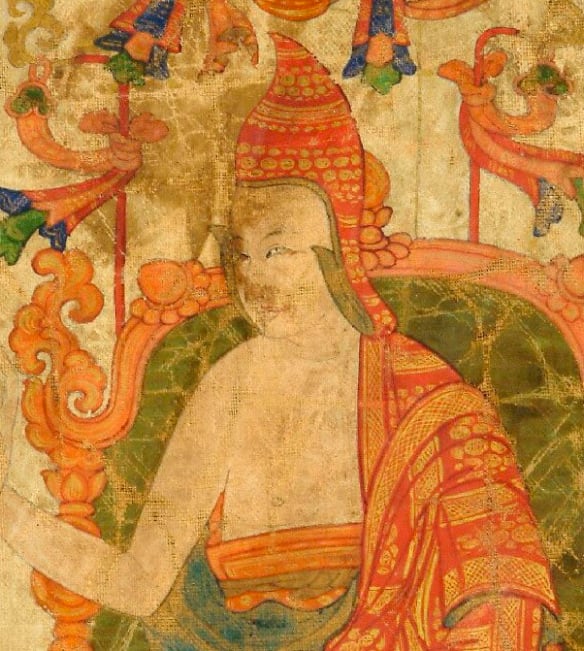
Śāntideva, pintura del siglo XIX · Public domain
بكلماته
«For as long as space endures and as long as the world endures, may I too endure, to destroy the sufferings of beings.»Bodhicaryāvatāra 10.55. Es la estrofa con que el Dalái Lama cerró su conferencia del Nobel (1989). Traducción propia del sánscrito, cotejada con Crosby y Skilton (1996) y Wallace (1997).
فكرته المحورية
The mind of awakening (bodhicitta) is the centre of all practice: whoever generates it, though still bound to the world, becomes a child of the buddhas; its worth depends not on what is done but on the intention to free all beings.
السيرة
4 دقيقة قراءة
ترجمة مُعانة من الأصل الإسباني، بانتظار مراجعة مترجم من أهل اللغة.
اسم وكتابان وأسطورة
لم يحفظ التاريخ إلا النزر اليسير عن شانتيديفا، الشاعر الذي تقرؤه البوذية التبتية كما تُتلى الصلاة: اسمًا يعني «إله السلام»، وديرًا هو نالاندا، الجامعة البوذية الكبرى في بيهار، وعملين لا ينازع أحد في نسبتهما إليه، هما «بوديتشارياأفاتارا» و«شيكشاساموتشايا». وكل ما عدا ذلك مصدره سِيَرٌ كُتبت بعده بخمسة قرون أو تسعة. أما التاريخان المتداولان، 685–763، فإعادة بناء متأخرة؛ ويؤثر الباحثون أن يضعوه، من غير تدقيق أكثر، في النصف الأول من القرن الثامن الميلادي، قبل أن تُترجَم أبياته إلى التبتية في أواخر ذلك القرن نفسه. والذي يهمّ منه، على وجه الدقة، ليس حياةً، بل قصيدة ومختارات.
الأمير الذي رأى مانجوشري في المنام
تُقرأ سيرته الأسطورية في ثلاثة مصادر: تاريخ البوذية الذي وضعه بوتون (1322)، وتاريخ تاراناثا (1608)، وسيرة سنسكريتية موجزة محفوظة في مخطوطة نيبالية من القرن الرابع عشر درسها ج. و. دي يونغ سنة 1975. وهي تتفق في الجوهر. فشانتيديفا، كما تروي، وُلد أميرًا في مملكة من غرب الهند — ساوراشترا في أكثر الروايات — ورأى في المنام عشية تتويجه أن العرش قد جلس عليه مانجوشري، بوديساتفا الحكمة، وهو يقول له: «هذا مجلسي». ففرّ من القصر، وتلقّى العلم على معلمين في الغابة، ثم خدم حينًا، بحسب تاراناثا وبوتون، وزيرًا لملك في شرق الهند، متقلّدًا سيفًا من خشب أعمى بصرَ من نظر إليه حين جُرِّد من غمده. وهي حلقات تجري على قالب مألوف: الزهد في العرش، وحماية البوديساتفا، والخوارق.
كسول نالاندا
في نالاندا رسّمه رئيس الدير جاياديفا راهبًا ومنحه الاسم الذي عُرف به. وهناك، كما تقول الأسطورة، كان الرهبان يزدرونه لأنه لم يكن يبدو أنه يفعل غير ثلاثة أشياء: الأكل والنوم والانصراف إلى الخلاء — وهي بالسنسكريتية bhuñjāna وsupta وkuṭiṃ gataḥ — ومن هنا جاءه لقب «بوسوكو». وأرادوا إذلاله، فطلبوا إليه أن يتلو نصًّا أمام الجماعة كلها جالسًا على عرش عالٍ. فسألهم شانتيديفا أيريدون شيئًا معروفًا أم شيئًا جديدًا، ثم شرع يتلو «بوديتشارياأفاتارا». فلما بلغ البيت من الفصل التاسع الذي يقول إن الذهن، إذا لم يبقَ أمامه وجود ولا عدم، سكن بلا سند، ارتفع في الهواء حتى توارى، ولم يُسمع إلا صوته يُتمّ القصيدة. ثم علموا بعد ذلك أنه ترك في صومعته كتابين آخرين، «شيكشاساموتشايا» و«سوتراساموتشايا». والقصة تفسّر على طريقتها واقعة أدبية: أن القصيدة تداولتها الأيدي في نسخ مختلفة.
الدخول في سلوك البوديساتفا
«بوديتشارياأفاتارا»، أي «الدخول في سلوك اليقظة»، قصيدة سنسكريتية من نحو تسعمئة بيت في عشرة فصول. تُفتتح بمدح «البوديتشيتا»، أي الذهن الذي يتطلّع إلى اليقظة لخير الكائنات جميعًا، ثم تمضي إلى الاعتراف بالذنوب وأخذ النذر، وتطوف بعد ذلك بكمالات البوديساتفا: اليقظة والانتباه، والصبر — وهو الفصل السادس، تحليل لا هوادة فيه للغضب — والجهد المبتهج، والتأمل، وفيه يعلّم المؤلف أن يسوّي المرء نفسه بغيره وأن يضع نفسه موضع الآخرين، ثم الحكمة، وهي رسالة مكثّفة في فلسفة المادهياماكا تجادل البوذيين الواقعيين وأتباع اليوغاتشارا ومذهب السانكهيا. ويختمها إهداء طويل صار من أكثر الأدعية ترديدًا في بوذية الماهايانا. وما يجعل الكتاب استثنائيًا هو نبرته: فهو يتكلم بضمير المتكلم، يلوم نفسه، ويشكّ، ويحثّ نفسه؛ هو في آنٍ واحد دليل واعتراف وقصيدة.
قصيدتان في قصيدة
جاء أهم كشف في البحث الحديث من كهوف دونهوانغ. فبين المخطوطات التبتية التي سُدّ عليها هناك نحو سنة 1000، تعرّف أكيرا سايتو في تسعينيات القرن العشرين إلى نسخة أقصر من القصيدة: نحو 700 بيت في تسعة فصول، لأن الفصلين الثاني والثالث من النسخة المعتمدة يؤلّفان فيها فصلًا واحدًا، مع مادة أقل بكثير في فصلي التأمل والحكمة. وأحد حواشي الختام ينسبها إلى أكشاياماتي، الذي كان التقليد يعدّه اسمًا آخر للمؤلف؛ ويسجّل الفهرس الإمبراطوري التبتي من مطلع القرن التاسع النصَّ بحجم يوافق هذه النسخة القصيرة. فالنسخة الطويلة، وهي نحو 913 بيتًا، توسعة لاحقة، وهي التي ترجمها إلى التبتية رينتشن زانغبو ومعاونوه في القرن الحادي عشر، ثم راجعها لودن شيراب. وكان تاراناثا يعلم بوجود ثلاث روايات للنص، ولعل أسطورة الراهب الذي يختفي وهو يتلو هي الطريقة التي فسّر بها التقليد هذه الفروق. أما الترجمة الصينية الوحيدة، العائدة إلى أواخر القرن العاشر، فما زالت تنسب النص إلى ناغارجونا.
المختارات
أما «شيكشاساموتشايا»، أي «جامع التعليم»، فأمر آخر: سبعة وعشرون بيتًا للحفظ تُبسط في تسعة عشر فصلًا من النثر، هي في معظمها اقتباسات من أكثر من مئة سوترا من سوترات الماهايانا، ضاع كثير منها في أصله السنسكريتي ولم يُعرف إلا بفضله. وهو محفوظ في مخطوطة سنسكريتية وحيدة، نشرها سيسيل بندال بين 1897 و1902 وترجمها إلى الإنكليزية مع و. هـ. د. راوس سنة 1922؛ ونشر تشارلز غودمان سنة 2016 أول ترجمة حديثة كاملة له. والقصيدة نفسها تحيل إلى هذه المختارات وإلى «سوتراساموتشايا» من أراد معرفة قواعد البوديساتفا؛ وهذا الأخير لم يصل إلينا، ولا ينبغي الخلط بينه وبين الجامع الذي يحمل الاسم نفسه ويُنسب إلى ناغارجونا.
من التبت إلى العالم
تلقّت القصيدة في الهند شروحًا، أوسعها شرح براجناكاراماتي، من نحو سنة 1000. غير أنها صارت نصًّا مركزيًا في التبت: فقد شرحها غيالتساب جي — تلميذ تسونغكابا — وتوغمي زانغبو وميفام، الذي أشعل شرحه للفصل التاسع جدلًا دام عقودًا، وظلّ باترول رينبوتشي الجوّال يعظ بها بلا كلل في القرن التاسع عشر. والدالاي لاما الرابع عشر يدرّسها منذ عقود، ونشر شروحًا عليها كلها وعلى فصل الصبر وفصل الحكمة؛ وختم محاضرة نوبل التي ألقاها سنة 1989 بالبيت الذي يسأل البقاء «ما دام الفضاء باقيًا» للتخفيف من ألم العالم. وقد ترجمها إلى الفرنسية لويس دو لا فاليه بوسان سنة 1907 ولويس فينو سنة 1920، وإلى الإنكليزية ليونيل بارنيت سنة 1909 ثم كثيرون بعده، فوجدت القصيدة قرّاءً أيضًا بين فلاسفة الأخلاق، الذين رأوا في حججها على الأنانية أخلاقًا لخير الجميع صيغت قبل أخلاق النفعيين بألف عام. وأيًّا كان مؤلفها، فقد عاش العمل أطول من اسمه.
المصادر: Śāntideva. The Bodhicaryāvatāra. Trad., introd. y notas de Kate Crosby y Andrew Skilton; introducción general de Paul Williams. Oxford: Oxford University Press (Oxford World's Classics), 1996. ISBN 0192829793. · Śāntideva. A Guide to the Bodhisattva Way of Life (Bodhicaryāvatāra). Trad. del sánscrito y del tibetano de Vesna A. Wallace y B. Alan Wallace. Ithaca (NY): Snow Lion, 1997. ISBN 1559390611. · Saito, Akira. A Study of Akṣayamati (= Śāntideva)'s Bodhisattvacaryāvatāra as Found in the Tibetan Manuscripts from Tun-huang. Mie (Japón): Mie University, 1993 (informe de investigación). · Goodman, Charles (trad.). The Training Anthology of Śāntideva: A Translation of the Śikṣā-samuccaya. Nueva York: Oxford University Press, 2016. ISBN 9780199391356. · Bendall, Cecil y W. H. D. Rouse (trads.). Śikshā-samuccaya: A Compendium of Buddhist Doctrine, compiled by Śāntideva chiefly from earlier Mahāyāna Sūtras. Londres: John Murray (Indian Texts Series), 1922.
الخط الزمني
الحياة عامًا بعد عام
كل نقطة حدث موثّق. انقر لتقرأه مع مصدره ودرجة اليقين فيه.
نحو 685أقل من عامSaurāṣṭra (Guyarat), según la leyenda
Birth, according to traditional chronology
The dates 685–763 come from late chronologies; hagiography has him born a prince in Saurāṣṭra (western India). Scholarship only affirms that he lived in the first half of the eighth century.
تقليدWikidata, «Shantideva», QID Q445460 (VIAF 23444930; LCCN n80102717).
بعد وفاته
- نحو 790First Tibetan translation (short version)
- نحو 812The Ldan dkar ma catalogue records the poem
- نحو 985Chinese translation attributed to Nāgārjuna
- نحو 1000Prajñākaramati's commentary
- نحو 1020Tibetan revision of the long version
- 1322Biography in Butön's History
- 1608Biography in Tāranātha's History
- 1897 – 1902Bendall edits the Śikṣāsamuccaya
- 1907First European translations
- 11 ديسمبر 1989The Dalai Lama closes his Nobel lecture with Śāntideva
- 1993Saito identifies the Dunhuang version
نحو 685 · أقل من عام
Birth, according to traditional chronology
The dates 685–763 come from late chronologies; hagiography has him born a prince in Saurāṣṭra (western India). Scholarship only affirms that he lived in the first half of the eighth century.
تقليد
نحو 705
Renunciation of the throne
On the eve of his coronation he dreams that Mañjuśrī occupies his throne and flees to the forest. Hagiographic episode.
تقليد
نحو 720 – 750
Monk at Nālandā: the Bodhicaryāvatāra and the Śikṣāsamuccaya
Ordained by abbot Jayadeva, he composes his two surviving works. The recitation before the assembly and the vanishing belong to legend.
مرجَّح
نحو 790
First Tibetan translation (short version)
Sarvajñādeva and Paltseg translate into Tibetan a recension of some 700 stanzas in nine chapters, the one preserved in the Dunhuang manuscripts.
مرجَّح
نحو 812
The Ldan dkar ma catalogue records the poem
The early ninth-century Tibetan imperial catalogue records the text at a length that fits the short version.
مرجَّح
نحو 985
Chinese translation attributed to Nāgārjuna
Tianxizai translates the poem into Chinese as Putixing jing (Taishō 1662), in eight chapters and under Nāgārjuna's name.
مرجَّح
نحو 1000
Prajñākaramati's commentary
Around 1000 the Bodhicaryāvatārapañjikā, the longest surviving Indian commentary, is written.
مرجَّح
نحو 1020
Tibetan revision of the long version
Dharmaśrībhadra, Rinchen Zangpo and Śākya Lodrö translate the ten-chapter version; Sumatikīrti and Loden Sherab later revise it: this is the canonical text.
مرجَّح
1322
Biography in Butön's History
Butön Rinchen Drub includes Śāntideva's legendary life in his history of Buddhism.
موثّق
1608
Biography in Tāranātha's History
Tāranātha expands the legend and records the existence of three versions of the poem.
موثّق
1897 – 1902
Bendall edits the Śikṣāsamuccaya
Cecil Bendall publishes in St Petersburg, in instalments until 1902, the edition of the only Sanskrit manuscript; with W. H. D. Rouse he will translate it into English in 1922.
موثّق
1907
First European translations
Louis de La Vallée Poussin translates the poem into French (1907); Barnett follows in English (1909) and Finot in French (1920).
موثّق
11 ديسمبر 1989
The Dalai Lama closes his Nobel lecture with Śāntideva
In Oslo, on 11 December 1989, the Fourteenth Dalai Lama ends his lecture with stanza 10.55 of the Bodhicaryāvatāra.
موثّق
1993
Saito identifies the Dunhuang version
Akira Saito publishes his study of the Tibetan Dunhuang manuscripts, which preserve an earlier and shorter recension attributed to Akṣayamati.
موثّق
المؤلَّفات
المؤلَّفات الأساسية
المؤلَّفات التي لا يُفهم إرثه من دونها.

مؤلَّف مكتوب · نحو 720
Entering the Way of the Bodhisattva (Bodhicaryāvatāra)
बोधिचर्यावतार (Bodhicaryāvatāra; también Bodhisattvacaryāvatāra) · tib. བྱང་ཆུབ་སེམས་དཔའི་སྤྱོད་པ་ལ་འཇུག་པ། (byang chub sems dpa'i spyod pa la 'jug pa) · chino 入菩薩行論 / 菩提行經
A Sanskrit poem in ten chapters tracing the bodhisattva's path: praise of the mind of awakening (bodhicitta), confession, taking the vow, mindfulness and vigilance, patience, effort, meditation—with the practice of equalising and exchanging self and others—, wisdom (a Madhyamaka exposition arguing with realists, Yogācāra and Sāṃkhya) and dedication. Written in the first person, it blends exhortation, confession and argument; it is the most studied Mahāyāna text in Tibetan Buddhism and one of the most translated into Western languages.
18 طبعة

مؤلَّف مكتوب · نحو 720
The Training Anthology (Śikṣāsamuccaya)
शिक्षासमुच्चय (Śikṣāsamuccaya) · tib. བསླབ་པ་ཀུན་ལས་བཏུས་པ། (bslab pa kun las btus pa) · chino 大乘集菩薩學論
Twenty-seven mnemonic stanzas (kārikā) commented on in nineteen prose chapters that consist mostly of quotations from more than a hundred Mahāyāna sūtras, many lost in Sanskrit. It organises the bodhisattva's ethics around protecting, purifying and increasing one's body, possessions and merit in order to give them to beings. It is a first-rate source for lost Mahāyāna literature and the doctrinal complement to the Bodhicaryāvatāra.
4 طبعات
جميع مؤلَّفاته (11)
Śāntideva
The short Dunhuang recension of the Bodhicaryāvatāra
The Conscious LibraryThe short Dunhuang recension of the Bodhicaryāvatāra
790
Śāntideva
Verses of the Training Anthology
The Conscious LibraryVerses of the Training Anthology
720
Śāntideva
Compendium of Sūtras (lost)
The Conscious LibraryCompendium of Sūtras (lost)
Śāntideva
Caryāpada songs signed by Bhusuku
The Conscious LibraryCaryāpada songs signed by Bhusuku
Śāntideva
Prajñākaramati's commentary on the Bodhicaryāvatāra
The Conscious LibraryPrajñākaramati's commentary on the Bodhicaryāvatāra
1000

A Flash of Lightning in the Dark of Night (Dalai Lama)
1994

The Nectar of Manjushri's Speech (Kunzang Pelden)
2007

No Time to Lose (Pema Chödrön)
2005
Śāntideva
Altruism and Reality (Paul Williams)
The Conscious LibraryAltruism and Reality (Paul Williams)
1998
الأقوال
أقوال محدَّدة الموضع في مؤلَّف بعينه. كل منها يحمل مصدره ودرجة الثقة به.
For as long as space endures and as long as the world endures, may I too endure, to destroy the sufferings of beings.ākāśasya sthitir yāvad yāvac ca jagataḥ sthitiḥ | tāvan mama sthitir bhūyāj jagadduḥkhāni nighnataḥ ||
متحقَّق منهBodhicaryāvatāra 10.55. Es la estrofa con que el Dalái Lama cerró su conferencia del Nobel (1989). Traducción propia del sánscrito, cotejada con Crosby y Skilton (1996) y Wallace (1997).
الأفكار الجوهرية (خلاصة تحريرية)
احترامًا لحقوق المؤلف، تُلخَّص هذه الأفكار بكلماتنا ولا تُقدَّم بوصفها اقتباسات حرفية.
- The mind of awakening (bodhicitta) is the centre of all practice: whoever generates it, though still bound to the world, becomes a child of the buddhas; its worth depends not on what is done but on the intention to free all beings.
- Pain has no owner: if there is no substantial self who suffers, there is no reason to prefer relieving one's own pain over another's. The argument against selfishness is metaphysical before it is moral.
- Anger is the inner enemy that destroys in an instant the merit of aeons; the adversary who harms us is in fact the occasion to practise patience, and so deserves gratitude.
- One cannot cover the world so that it does not wound, but one can guard one's own mind: mindfulness (smṛti) and vigilance (saṃprajanya) are the true discipline.
- The wisdom of emptiness is not a theoretical add-on to compassion but its foundation: all the preceding perfections exist for its sake.
أقوال منحولة أو مختلَف في نسبتها (1)
«If a problem can be solved, why worry? If it cannot be solved, worrying will do no good.»
It is authentic Śāntideva (Bodhicaryāvatāra 6.10), but circulates massively attributed to the Dalai Lama or the Buddha by quotation sites; it is recorded here to correct the attribution, not the quotation.
الكلمات الأخيرة
لا توجد سجلات يمكن التحقق منها لكلماته الأخيرة.
There is no record of his death. Hagiography (Butön, Tāranātha, the Sanskrit biography) narrates not an end but a disappearance: the monk rises into the air while reciting stanza 9.34 and is seen no more; later versions have him reappear in south India. The dates 685–763 are a late reconstruction.
المصدر: de Jong, J. W. «La légende de Śāntideva». Indo-Iranian Journal 16 (1975): 161–182.
اسأل
بماذا يجيب أثره
اثنا عشر سؤالًا كبيرًا من أسئلة الإنسانية، وما تتيح نصوصه الإجابة به عنها، مع المراجع. ولا نقوّله ما لم يقل أبدًا.
ما المطلق؟ هل الله موجود؟
He refutes the creator god; buddhas do not create the world, they teach the path
لا إله خالقيقوله صراحةً
In chapter 9 of the Bodhicaryāvatāra, devoted to wisdom, Śāntideva expressly discusses the thesis of a creator god (Īśvara) and rejects it: if it were an eternal and independent cause, it could not produce effects that arise and cease; if it depended on other conditions, it would no longer be the origin of everything. In the same section he refutes the primordial matter of the Sāṃkhya school. What he upholds instead is the Madhyamaka analysis: nothing has its own existence, and when neither being nor non-being remains before the mind, it comes to rest without support (9.34). This does not make his work a cold text: chapters 2 and 3 are of veneration and offering to the buddhas and bodhisattvas. But those awakened beings neither create nor govern the world; they teach the path.
قارن هذا السؤال مع معلّمين آخرينمن أنا؟ هل توجد ذات حقيقية؟
The self is like a row or an army: an aggregate without an owner
لا توجد ذات دائمةيقوله صراحةً
Śāntideva approaches the self by two complementary paths in the Bodhicaryāvatāra. In chapter 9 he searches for it in body and mind, part by part, and finds it in none: neither the teeth, nor the hair, nor the sensations, nor consciousness are the self, and there is no self apart from them either. In chapter 8 he draws an ethical consequence from this. The continuum and the collection are unreal like a row or an army, so there is no owner of suffering who would justify protecting oneself alone; therefore one must meditate on the equality of self and others, who feel pain and joy equally (8.90). The absence of self is not, for him, a philosophical curiosity: it is the rational foundation of compassion.
قارن هذا السؤال مع معلّمين آخرينلماذا نتألّم؟
All who suffer suffer from desiring their own happiness
التعلّق والشهوةيقوله صراحةً
Śāntideva's answer is at once psychological and moral. In the Bodhicaryāvatāra he states that all who suffer in the world suffer from desiring their own happiness, and all who are happy are so from desiring that of others (8.129). Attachment to oneself, the exclusive care for one's own well-being, is the source of pain; hatred is its most destructive form, and therefore there is no evil like it (6.2). Chapter 5 adds an image: one cannot cover the whole earth with leather, but the leather of one's sandals suffices; one cannot subdue the outer world, but one can subdue one's own mind. Behind all this lies the ignorance that believes in a self with its own existence, examined in chapter 9.
قارن هذا السؤال مع معلّمين آخرينماذا يحدث بعد الموت؟
Death comes without warning, and only our deeds follow us
الولادة من جديد وفق الكارمايقوله صراحةً
Śāntideva writes within the Indian framework of rebirth and uses it as a spur. In chapter 2 of the Bodhicaryāvatāra he depicts himself facing death: one must depart leaving everything, friends and enemies fade like a dream, and only the evil deeds committed on their account weigh. Chapter 4 recalls how hard it is to obtain a human birth with freedom to practise, like the blind turtle that finds the yoke in the ocean, and chapter 7 describes the hells to combat laziness. Death is not an end but a passage to another birth conditioned by conduct. The ultimate horizon is broader: the bodhisattva does not aspire to leave the cycle for himself, but to remain as long as there are beings who suffer (10.55).
قارن هذا السؤال مع معلّمين آخرينكيف يُبلَغ التحرّر أو الخلاص؟
Awaken the mind of awakening and practise the perfections, up to wisdom
بالممارسة المنضبطةيقوله صراحةً
The Bodhicaryāvatāra is, from beginning to end, a programme of practice. It starts by awakening the mind of awakening (bodhicitta), the aspiration to be liberated in order to liberate all, and sustains it with the confession and vow of chapters 2 and 3. Then come heedfulness, mindfulness and introspection (chapters 4 and 5), patience (6), effort (7), meditation (8) and wisdom (9). Each perfection corrects a specific obstacle: hatred, laziness, distraction. Śāntideva declares at the beginning of chapter 9 that the Buddha taught all the preceding for the sake of wisdom, which is what cuts the root. But without the prior discipline wisdom does not hold, and without compassion it is not the bodhisattva's.
قارن هذا السؤال مع معلّمين آخرينهل نحتاج إلى معلّم؟
Never abandon the spiritual friend, even at the cost of one's life
لا غنى عنهيقوله صراحةً
Śāntideva gives the spiritual friend (kalyāṇamitra) a central place. In chapter 5 of the Bodhicaryāvatāra he asks that one never abandon, not even to save one's life, the spiritual friend who knows the meaning of the Great Vehicle and keeps the bodhisattva vows, and immediately refers to the sūtras, to the Compendium of Training and to Nāgārjuna's Compendium of Sūtras as guides to conduct. The Compendium of Training indeed gathers passages from the sūtras on how to serve and listen to the master. The spiritual friend is indispensable because he transmits discipline and view; yet the whole work is an exhortation to oneself, written, the author says at the outset, to familiarise his own mind with the teaching.
قارن هذا السؤال مع معلّمين آخرينهل العالم حقيقي؟
Things are like illusions: they lack own-being, yet they function
شبكة أسباب بلا جوهريقوله صراحةً
Chapter 9 of the Bodhicaryāvatāra sets out the Madhyamaka view of the world against other Buddhist and non-Buddhist schools. Śāntideva distinguishes two truths, conventional and ultimate, and warns that what is real in the ultimate sense is beyond the reach of the intellect, which is itself conventional. Things arise from causes and conditions and, on examination, show no nature of their own; they are like a magical illusion, which appears and produces effects without being what it seems. He answers the objection that, if all is illusory, compassion would be meaningless: the illusion keeps operating on its own level, and the suffering of beings, though empty, is undergone. The world is not denied; it is seen without the solidity we attribute to it.
قارن هذا السؤال مع معلّمين آخرينما الحب؟
As long as space endures, may I endure to end suffering
رحمة بلا حدوديقوله صراحةً
Few works have given compassion as accomplished a form as the Bodhicaryāvatāra. Its engine is the mind of awakening: the aspiration to attain buddhahood for the good of all. Chapter 8 grounds it in reasoning: one must meditate on the equality of self and others, since all feel pain and joy equally (8.90), and then on exchange, placing others where one used to place oneself. All who suffer do so from desiring their own happiness, and the happy are so from desiring that of others (8.129). Chapter 10 culminates in the vow the Dalai Lama read on receiving the Nobel Prize: for as long as space endures and the world endures, may I too endure to destroy the sufferings of beings.
قارن هذا السؤال مع معلّمين آخرينهل نحن أحرار أم أن كل شيء مقدَّر؟
No one acts by their will alone, and yet one must strive
الكارما والاختياريقوله صراحةً
Śāntideva holds two claims at once. In chapter 6 of the Bodhicaryāvatāra, on patience, he argues that whoever harms us does so moved by conditions they do not control, just as bile causes illness without wishing to; nothing arises by itself, and so anger at a person has no proper object. But chapter 4, on heedfulness, and chapter 7, on effort, urge insistently that the human birth not be wasted: today's actions determine future births and one's own path depends on diligence. Freedom does not consist in an independent self that chooses, but in the real possibility of changing causes: cultivating mindfulness, patience and the mind of awakening alters what is to come.
قارن هذا السؤال مع معلّمين آخرينلماذا نتأمّل أو نصلّي؟
Mindfulness, introspection and meditation in the service of wisdom
رؤية الواقع كما هويقوله صراحةً
The Bodhicaryāvatāra integrates prayer and meditation into a single path. Chapters 2 and 3 are liturgy: offering, confession, rejoicing in others' good, supplication to the buddhas and taking the bodhisattva vow. Chapter 5 teaches how to guard the mind with mindfulness and introspection, like someone watching over a wild elephant. Chapter 8, devoted to meditation, recommends the solitude of the forest and develops the equality and exchange of self and others. But all of this, he says on opening chapter 9, the Buddha taught for the sake of wisdom, which sees that nothing has its own existence. Meditation is ultimately seeing reality as it is, and that seeing is what frees the mind from its support (9.34).
قارن هذا السؤال مع معلّمين آخرينهل يستطيع العقل أن يعرف الحقيقة القصوى؟
The ultimately real is beyond the reach of the intellect
الحقيقة القصوى وراء العقليقوله صراحةً
At the beginning of chapter 9 of the Bodhicaryāvatāra, Śāntideva concisely formulates his answer: there are two truths, conventional and ultimate, and the ultimately real is not the domain of the intellect, because the intellect itself is conventional (9.2). This does not prevent him from arguing throughout the chapter against other schools, Buddhist and non-Buddhist, with meticulous dialectic: reason serves to dismantle false ideas, such as the permanent self or the creator god. But its function is negative. When neither being nor non-being remains before the mind, there being no other option, it comes to rest without support (9.34). Realisation is not the conclusion of an argument but what remains when all the arguments have done their work.
قارن هذا السؤال مع معلّمين آخرينالانسحاب من العالم أم تغييره؟
Be for beings whatever they need: medicine, food, path, boat
الانخراط في العالميقوله صراحةً
The Bodhicaryāvatāra has two movements. Chapter 8 recommends withdrawing to the forest, far from the company of fools and the craving for gain, as a condition for meditation. But the horizon of the whole poem is service. In chapter 3, on taking the vow, the author wishes to be medicine and physician for the sick, food in times of famine, protector of the destitute, guide for travellers, boat and bridge for those who wish to cross. Chapter 10 ends with the vow to remain as long as the world lasts to end its sufferings. Retreat is a means; the end is to abandon no being. That is why the text has become a reference for contemporary engaged Buddhism.
قارن هذا السؤال مع معلّمين آخرين
التقارب والتوتّر
التقارب والتوتّر
محسوبة سؤالًا سؤالًا انطلاقًا من مواقفه. وسبب كل اتفاق أو اختلاف يظهر بالنقر.
يقترب في تفكيره من
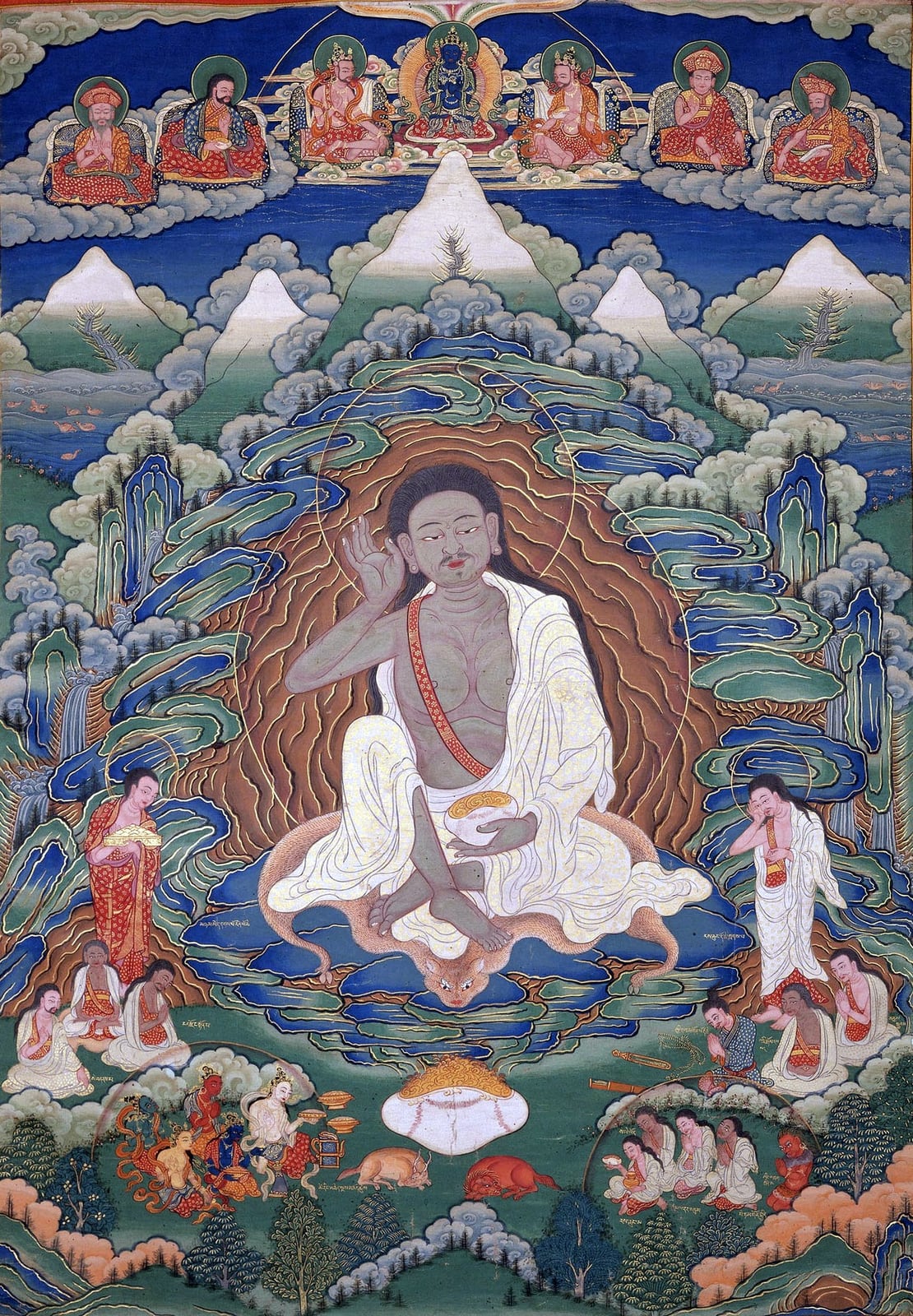
Milarepa
يتّفقان في: ما المطلق؟ هل الله موجود؟ · من أنا؟ هل توجد ذات حقيقية؟ · هل العالم حقيقي؟
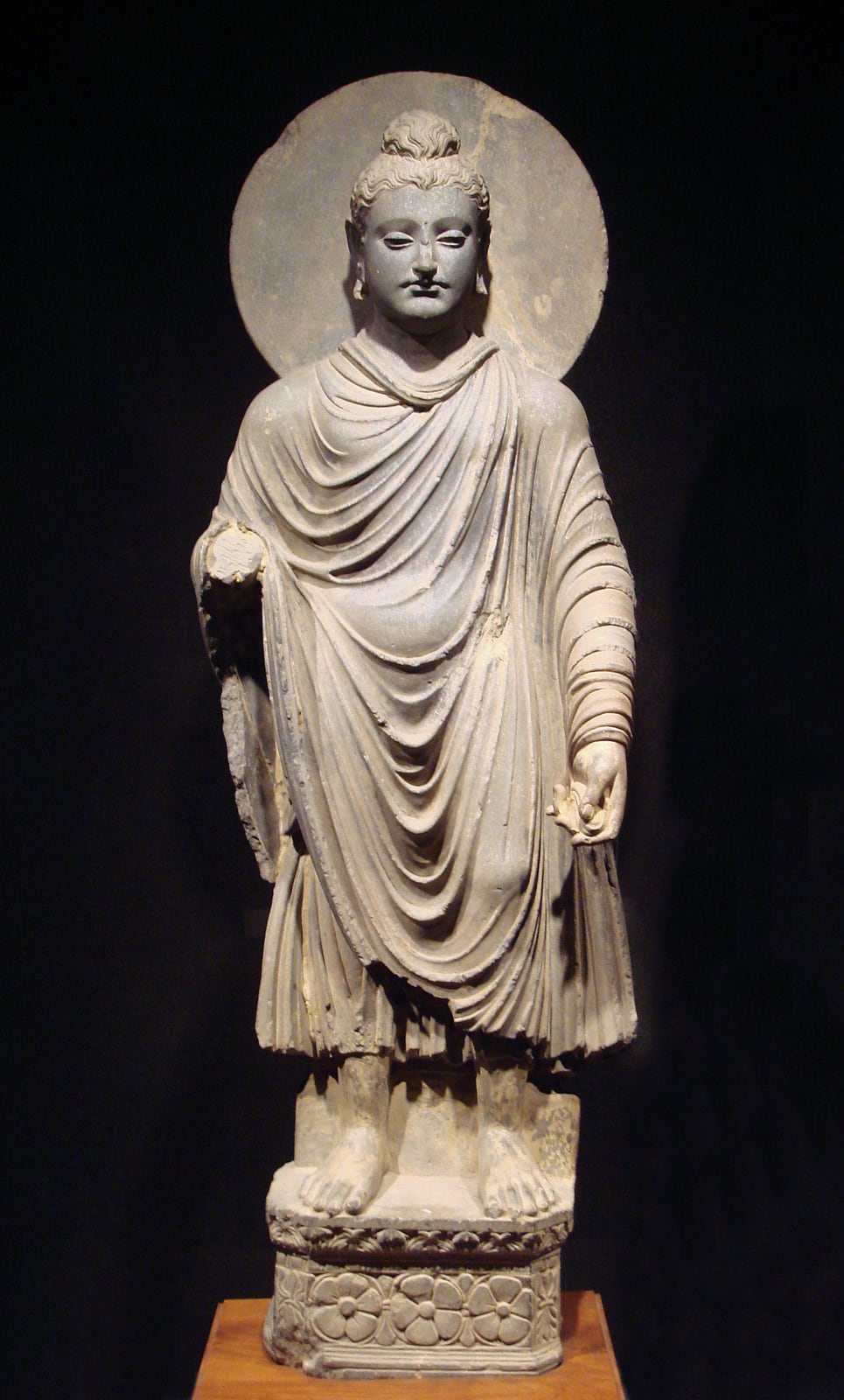
Siddhartha Gautama, the Buddha
يتّفقان في: ما المطلق؟ هل الله موجود؟ · من أنا؟ هل توجد ذات حقيقية؟ · لماذا نتألّم؟
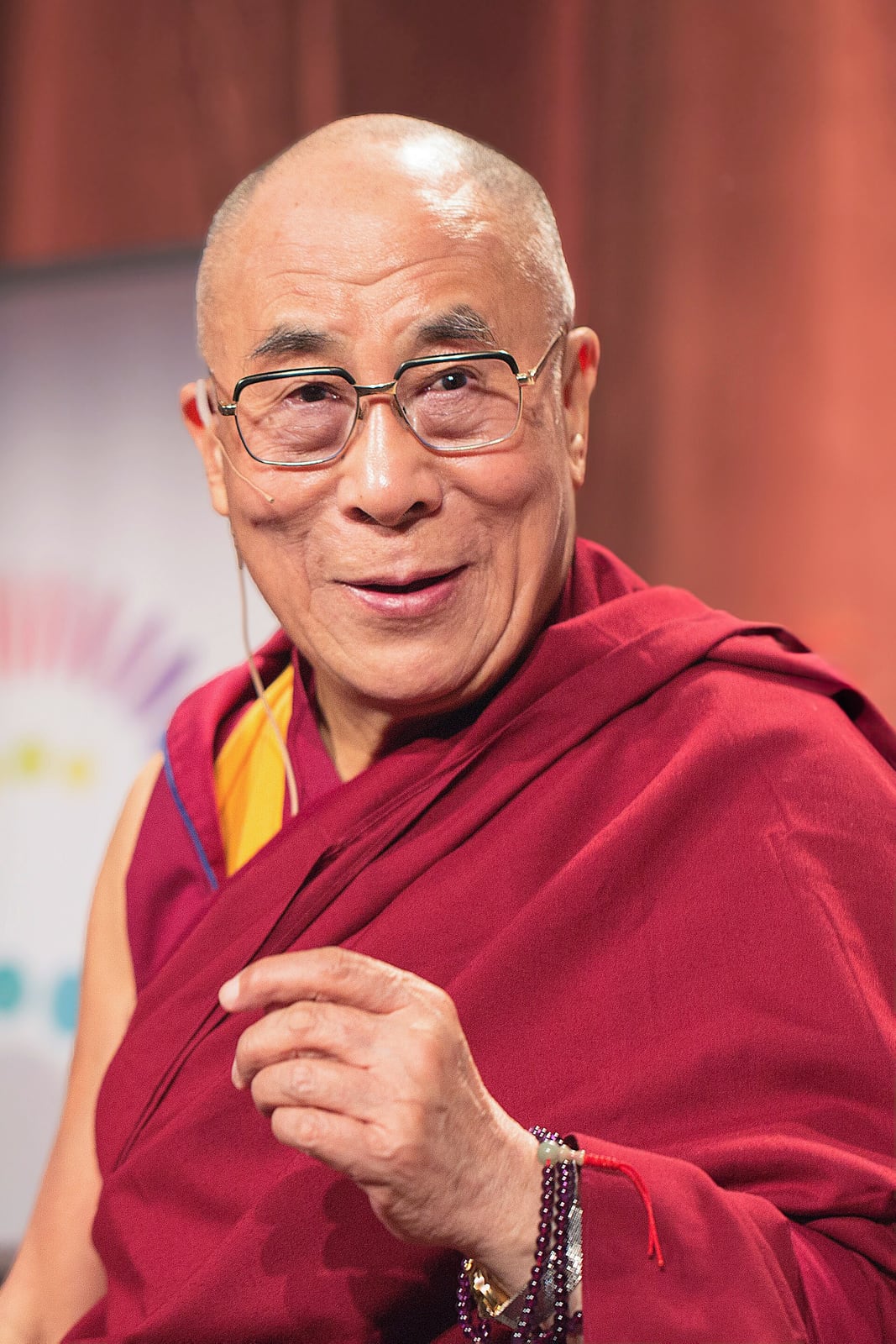
The 14th Dalai Lama (Tenzin Gyatso)
يتّفقان في: ما المطلق؟ هل الله موجود؟ · من أنا؟ هل توجد ذات حقيقية؟ · لماذا نتألّم؟
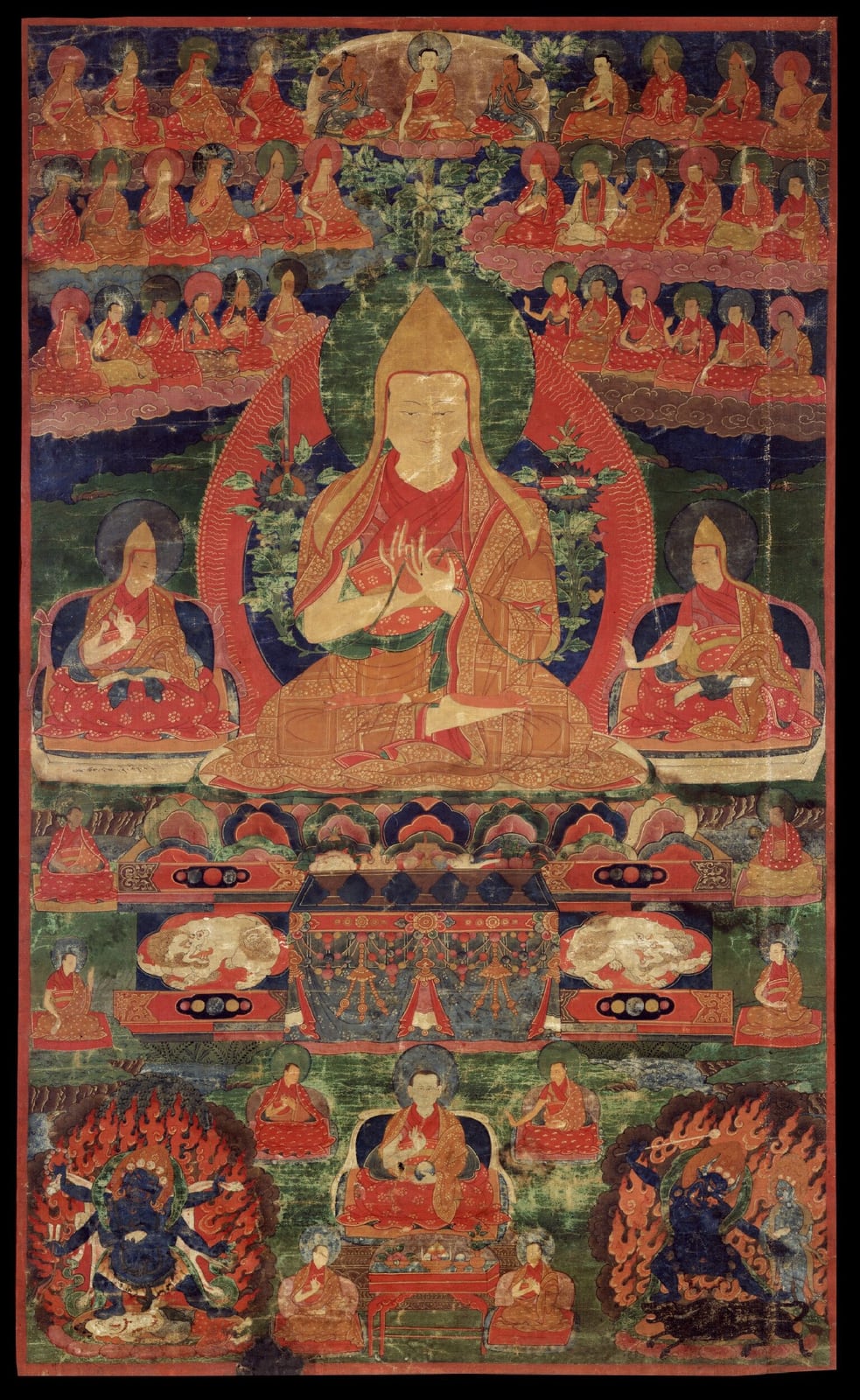
Tsongkhapa
يتّفقان في: ما المطلق؟ هل الله موجود؟ · من أنا؟ هل توجد ذات حقيقية؟ · لماذا نتألّم؟
يبتعد في تفكيره عن

Francis of Assisi
يختلفان في: ما المطلق؟ هل الله موجود؟ · من أنا؟ هل توجد ذات حقيقية؟ · ماذا يحدث بعد الموت؟

Rabia al-Adawiyya
يختلفان في: ما المطلق؟ هل الله موجود؟ · ماذا يحدث بعد الموت؟

Julian of Norwich
يختلفان في: ما المطلق؟ هل الله موجود؟ · من أنا؟ هل توجد ذات حقيقية؟ · ماذا يحدث بعد الموت؟
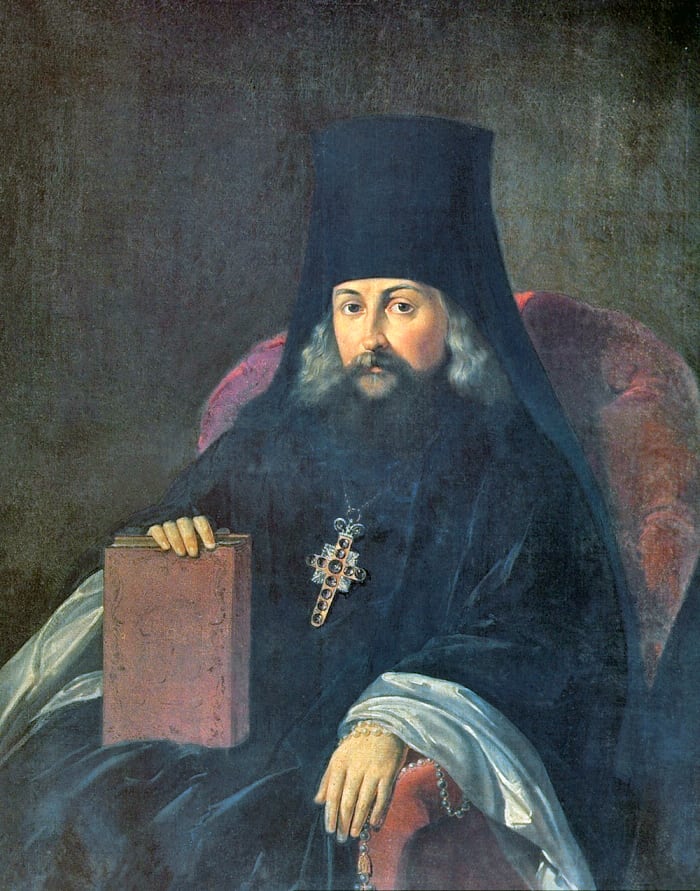
Ignatius Brianchaninov
يختلفان في: ما المطلق؟ هل الله موجود؟ · من أنا؟ هل توجد ذات حقيقية؟ · ماذا يحدث بعد الموت؟
حكايات وروايات
حكايات وروايات
رواية من سِيَر القدّيسينsiglo VIII (según la leyenda)
The occupied throne
أصل الرواية: Butön, History of Buddhism (1322), Tāranātha, History of Buddhism in India (1608), and the Sanskrit biography in a fourteenth-century Nepalese manuscript studied by de Jong (1975). None is less than five centuries later than the life it narrates.
المصدر: Tāranātha. Tāranātha's History of Buddhism in India. Trad. Lama Chimpa y Alaka Chattopadhyaya. Simla: Indian Institute of Advanced Study, 1970.
رواية من سِيَر القدّيسينsiglo VIII (según la leyenda)
The wooden sword
أصل الرواية: Butön, History of Buddhism (1322), Tāranātha, History of Buddhism in India (1608), and the Sanskrit biography in a fourteenth-century Nepalese manuscript studied by de Jong (1975). None is less than five centuries later than the life it narrates.
المصدر: Bu-ston (Butön Rinchen Drub). History of Buddhism (Chos-ḥbyung). Trad. E. Obermiller. Heidelberg: Harrassowitz, 1931–1932, 2 vols.
رواية من سِيَر القدّيسينsiglo VIII (según la leyenda)
The one who ate, slept and went to the latrine
أصل الرواية: Butön, History of Buddhism (1322), Tāranātha, History of Buddhism in India (1608), and the Sanskrit biography in a fourteenth-century Nepalese manuscript studied by de Jong (1975). None is less than five centuries later than the life it narrates.
المصدر: de Jong, J. W. «La légende de Śāntideva». Indo-Iranian Journal 16 (1975): 161–182.
رواية من سِيَر القدّيسينsiglo VIII (según la leyenda)
The vanishing at stanza 9.34 and the three versions
أصل الرواية: Butön and Tāranātha (as summarised by van Schaik, 2014); the connection with the Dunhuang recension is Akira Saito's (1993).
رواية من سِيَر القدّيسينsiglo VIII (según la leyenda)
The bowl that fed five hundred
أصل الرواية: Butön, History of Buddhism (1322), Tāranātha, History of Buddhism in India (1608), and the Sanskrit biography in a fourteenth-century Nepalese manuscript studied by de Jong (1975). None is less than five centuries later than the life it narrates.
المصدر: Bu-ston (Butön Rinchen Drub). History of Buddhism (Chos-ḥbyung). Trad. E. Obermiller. Heidelberg: Harrassowitz, 1931–1932, 2 vols.
شهادة1960s–1989
The Dalai Lama and the master from Kinnaur
أصل الرواية: The Dalai Lama's own account in his public teachings and in the introduction to A Flash of Lightning in the Dark of Night (1994); the Nobel lecture, at nobelprize.org.
المصدر: Dalái Lama XIV (Tenzin Gyatso). A Flash of Lightning in the Dark of Night: A Guide to the Bodhisattva's Way of Life. Trad. Padmakara Translation Group. Boston: Shambhala, 1994. ISBN 0877739714.
التعاليم
التعاليم
المفاهيم التي ينتظم بها فكره، مشروحة في سياقها.
Mind of awakening (bodhicitta)bodhicitta
Indian Mahāyāna; the tradition of “generating the mind” (cittotpāda) in the sūtras.
المصدر: Śāntideva. The Bodhicaryāvatāra. Trad., introd. y notas de Kate Crosby y Andrew Skilton; introducción general de Paul Williams. Oxford: Oxford University Press (Oxford World's Classics), 1996. ISBN 0192829793.
Equalising and exchanging self and othersparatmaparivartana
Chapter 8 (meditation) of the Bodhicaryāvatāra; reception in Tibetan lojong.
المصدر: Williams, Paul. Altruism and Reality: Studies in the Philosophy of the Bodhicaryāvatāra. Richmond (Surrey): Curzon, 1998.
Patience (kṣānti)ksanti
Third of the six perfections (pāramitā).
المصدر: Śāntideva. The Bodhicaryāvatāra. Trad., introd. y notas de Kate Crosby y Andrew Skilton; introducción general de Paul Williams. Oxford: Oxford University Press (Oxford World's Classics), 1996. ISBN 0192829793.
Mindfulness and vigilance (smṛti and saṃprajanya)smrti-samprajanya
Discipline (śīla) in Mahāyāna ethics.
المصدر: Śāntideva. The Bodhicaryāvatāra. Trad., introd. y notas de Kate Crosby y Andrew Skilton; introducción general de Paul Williams. Oxford: Oxford University Press (Oxford World's Classics), 1996. ISBN 0192829793.
The Madhyamaka wisdom of the ninth chaptermadhyamaka-bca9
Indian Madhyamaka; Tibetan reception (Gyaltsab Je, Mipham).
المصدر: Williams, Paul. Altruism and Reality: Studies in the Philosophy of the Bodhicaryāvatāra. Richmond (Surrey): Curzon, 1998.
Dedication of merit (pariṇāmanā)parinamana
Mahāyāna liturgy; prayer recited in Tibetan Buddhism.
مقاطع الفيديو
مقاطع الفيديو
تسجيلات ومقابلات وأفلام وثائقية. تُشغَّل مقاطع الفيديو من YouTube؛ ولا تُستضاف هنا.
Shantideva's "Guide to the Bodhisattva's Way of Life" - Day 1
محاضرة· EN· 2010
Dalai Lamaالقناة الرسمية
Guide to the Bodhisattva's Way of Life - Day 1
محاضرة· EN· 2018
Dalai Lamaالقناة الرسمية
Day 1 - "Shantideva's A Guide to the Bodhisattva's Way of Life" - Chapter 1
محاضرة· EN· 2022
Dalai Lamaالقناة الرسمية
Día 1 - Guía del Modo de Vida de los Bodisatvas de Shantideva - Capítulo 9
محاضرة· ES· 2022
El Dalái Lamaالقناة الرسمية
Stephen Batchelor on Shantideva
محاضرة· EN
Belfast Buddhist
[#1: Jul 13, 2026] How to be Caring: Shantideva's Bodhicaryāvatāra - Jay Garfield
محاضرة· EN· 2026
Shantideva Center, FPMT
Pema Chodron – On Shantideva
مقابلة· EN
Pema Chodron Foundationالقناة الرسمية
The Story of Shantideva with Yongey Mingyur Rinpoche
محاضرة· EN
Yongey Mingyur Rinpocheالقناة الرسمية
The Way of the Bodhisattva with Yongey Mingyur Rinpoche
محاضرة· EN
Yongey Mingyur Rinpocheالقناة الرسمية
Chapter 6: Patience (Intro) - Shantideva's Guide to the Bodhisattva's Way of Life with Ven. Jamyang
محاضرة· EN
Tushita Mahayana Meditation Centre Delhiالقناة الرسمية
Shantideva's Bodhicharyavatara | Swami Yogatmananda
محاضرة· EN
Vedanta Society of New York
Bodhicharyavatara de Shantideva, clase 1
محاضرة· ES
Carlo R. Carranza
Enseñanzas de Shantideva - Capítulo de la dedicación del Bodhicharyavatara
محاضرة· ES
Druk Manjushri
Full Audio-Book: The Path of Light: The Bodhicaryavatara by ShantiDeva
تسجيل من طرف ثالث· EN
Global Well-Being
المعرض
المعرض
صور بترخيص متحقَّق منه. كل منها تحتفظ بمؤلّفها ونسبتها.
المخطوطات
المخطوطات
شواهد مخطوطة ونصوص قديمة، مع جهة حفظها وشروط الاطّلاع عليها.
SA · Escritura nepalesa (bhujimol/newari) · Siglo VIII
Śikṣāsamuccaya
- الشاهد المحفوظ
- Único manuscrito sánscrito completo conocido, base de la edición de Bendall (1897–1902)
- جهة الحفظ
- Cambridge University Library (colección Wright)
BO · Tibetano (dbu can) · Siglo VIII (traducción tibetana de finales del VIII)
byang chub sems dpa'i spyod pa la 'jug pa (recensión breve)
- الشاهد المحفوظ
- Copia completa repartida entre IOL Tib J 628 y Pelliot tibétain 794; copia parcial (c. 60 %) IOL Tib J 629; copia del capítulo de la dedicatoria IOL Tib J 630
- جهة الحفظ
- British Library (Londres) y Bibliothèque nationale de France (París) · IOL Tib J 628, 629, 630; Pelliot tibétain 794
- الرقمنة
- idp.bl.uk/…
العلاقات
العلاقات
تأثيرات وتلمذة وتقارب في الأفكار. تُميَّز العلاقة الموثّقة عن التشابه المستخلَص بالتحليل.
تأثّر بـ
The ninth chapter expounds Nāgārjuna's middle way, and the poem itself (5.106) refers to a compendium attributed to him.
علاقة موثّقة
تأثّر بـ
Siddhartha Gautama, the Buddha
The Śikṣāsamuccaya is an anthology of more than a hundred sūtras attributed to the Buddha.
علاقة موثّقة
أثّر في
Tsongkhapa and his disciple Gyaltsab Je read the ninth chapter as a Prāsaṅgika text and commented on it; Paul Williams studies that reading.
علاقة موثّقة
أثّر في
The 14th Dalai Lama (Tenzin Gyatso)
The poem is the axis of his public teaching: he has commented on it in full and by chapters, and closed his Nobel lecture with it (1989).
علاقة موثّقة
أثّر في
Author of a commentary on the poem, No Time to Lose (2005).
علاقة موثّقة
أفكار قريبة من
The Kagyu tradition joins the yogi's renunciation to the bodhisattva ethics Gampopa took from the Kadam school, where the Bodhicaryāvatāra was a central text.
تشابه مستخلَص بالتحليل
أفكار قريبة من
Both ground practice in the interdependence of one's own and others' suffering; Thich Nhat Hanh called it “interbeing”.
تشابه مستخلَص بالتحليل
معاصر لـ
Rough contemporaries at the two ends of Asia: while the poem was being composed at Nālandā, the legend of the sixth Chan patriarch was taking shape in south China.
تشابه مستخلَص بالتحليل
أفكار قريبة من
Hakuin insisted that awakening without the vow to save beings is incomplete (“post-satori practice”), an idea close to the primacy of bodhicitta.
تشابه مستخلَص بالتحليل
أفكار قريبة من
Both treat practice as an everyday attitude rather than an achievement; a thematic coincidence, with no documented influence.
تشابه مستخلَص بالتحليل
المصادر
المصادر
المراجع والفهارس التي رُوجعت لهذه الصفحة.
- van Schaik, Sam. «The original Bodhicaryāvatāra». early Tibet (blog), 4 de febrero de 2014; revisado el 21 de julio de 2021.
- Wikidata, «Shantideva», QID Q445460 (VIAF 23444930; LCCN n80102717).
- Śāntideva. The Bodhicaryāvatāra. Trad., introd. y notas de Kate Crosby y Andrew Skilton; introducción general de Paul Williams. Oxford: Oxford University Press (Oxford World's Classics), 1996. ISBN 0192829793.
- Śāntideva. A Guide to the Bodhisattva Way of Life (Bodhicaryāvatāra). Trad. del sánscrito y del tibetano de Vesna A. Wallace y B. Alan Wallace. Ithaca (NY): Snow Lion, 1997. ISBN 1559390611.
- de Jong, J. W. «La légende de Śāntideva». Indo-Iranian Journal 16 (1975): 161–182.
- Saito, Akira. A Study of Akṣayamati (= Śāntideva)'s Bodhisattvacaryāvatāra as Found in the Tibetan Manuscripts from Tun-huang. Mie (Japón): Mie University, 1993 (informe de investigación).
- Goodman, Charles (trad.). The Training Anthology of Śāntideva: A Translation of the Śikṣā-samuccaya. Nueva York: Oxford University Press, 2016. ISBN 9780199391356.
- Bendall, Cecil y W. H. D. Rouse (trads.). Śikshā-samuccaya: A Compendium of Buddhist Doctrine, compiled by Śāntideva chiefly from earlier Mahāyāna Sūtras. Londres: John Murray (Indian Texts Series), 1922.
- Bendall, Cecil (ed.). Çikshāsamuccaya: A Compendium of Buddhistic Teaching compiled by Çāntideva chiefly from earlier Mahāyāna-sūtras. San Petersburgo: Academia Imperial de Ciencias (Bibliotheca Buddhica I), 1897–1902.
- Bu-ston (Butön Rinchen Drub). History of Buddhism (Chos-ḥbyung). Trad. E. Obermiller. Heidelberg: Harrassowitz, 1931–1932, 2 vols.
- Tāranātha. Tāranātha's History of Buddhism in India. Trad. Lama Chimpa y Alaka Chattopadhyaya. Simla: Indian Institute of Advanced Study, 1970.
- Lele, Amod. «Śāntideva». Internet Encyclopedia of Philosophy, 2009.
- Pezzali, Amalia. Śāntideva, mystique bouddhiste des VIIe et VIIIe siècles. Florencia: Vallecchi, 1968.
- NTI Reader. «菩提行經 (Putixing jing), Taishō n.º 1662», trad. china atribuida a Nāgārjuna, traducida por Tianxizai (天息災), dinastía Song del Norte.
- Dalái Lama XIV (Tenzin Gyatso). A Flash of Lightning in the Dark of Night: A Guide to the Bodhisattva's Way of Life. Trad. Padmakara Translation Group. Boston: Shambhala, 1994. ISBN 0877739714.
- Williams, Paul. Altruism and Reality: Studies in the Philosophy of the Bodhicaryāvatāra. Richmond (Surrey): Curzon, 1998.
- Finot, Louis (trad.). La Marche à la lumière (Bodhicaryāvatāra), poème sanskrit de Çāntideva. París: Bossard (Les Classiques de l'Orient), 1920. Texto validado en Wikisource.
- La Vallée Poussin, Louis de (trad.). Bodhicaryāvatāra. Introduction à la pratique des futurs Bouddhas, poème de Çāntideva. París: Bloud, 1907.
- Barnett, Lionel D. (trad.). The Path of Light, rendered for the first time into English from the Bodhi-charyāvatāra of Śānti-Deva: A Manual of Mahā-yāna Buddhism. Londres: John Murray (Wisdom of the East), 1909.
- Kværne, Per. An Anthology of Buddhist Tantric Songs: A Study of the Caryāgīti. Oslo: Universitetsforlaget, 1977.
- The Nobel Prize. «The 14th Dalai Lama — Nobel Lecture», Oslo, 11 de diciembre de 1989; la conclusión con la estrofa de Śāntideva se reproduce en CBS News, «Almanac: The Dalai Lama».
- Chödrön, Pema. No Time to Lose: A Timely Guide to the Way of the Bodhisattva. Boston: Shambhala, 2005. ISBN 1590301358.
- Prajñākaramati. Bodhicaryāvatārapañjikā. Ed. Louis de La Vallée Poussin. Calcuta: Asiatic Society of Bengal (Bibliotheca Indica), 1901–1914.
- صاحب الحقوق
- Obra original en dominio público (siglo VIII). Las traducciones modernas tienen derechos propios: Oxford University Press (Crosby y Skilton; Goodman), Shambhala Publications (Padmakara; Karma Choephel; comentarios del Dalái Lama, Kunzang Pelden y Pema Chödrön), Snow Lion (Wallace), Wisdom Publications, Tharpa Publications, Ediciones Dharma, Miraguano.
في انتظار التأكيد
ما لم تتمكّن هذه الصفحة من حسمه بعد. نفضّل أن نقول ذلك على أن نملأ الفراغ.
- Fechas: 685–763 es la cronología tradicional que recoge Wikidata; la erudición solo afirma «primera mitad del siglo VIII». Se han mantenido como aproximadas y marcadas «traditional».
- Signatura del manuscrito sánscrito único del Śikṣāsamuccaya en la Cambridge University Library (colección Wright): no se ha podido confirmar en un catálogo accesible.
- Traductores de las ediciones españolas de Ediciones Dharma (2008) y Miraguano (2015): no constan en Open Library; comprobar en el colofón.
- Obras tántricas atribuidas a un «Śāntideva» en el Tengyur (rituales del ciclo Guhyasamāja): no se han podido verificar los números Tōhoku; si se confirman, añadir como «attributed» con nota de homonimia probable.
- No hay texto sánscrito del Bodhicaryāvatāra en Wikisource; las ediciones de Vaidya (1960) y Bhattacharya (1960) están en Internet Archive solo como escaneo.
- Barnett (1909) y Bendall-Rouse (1922) registrados con caution: true (derechos en la UE/España hasta 2031/2041).
- Duraciones y años de varios vídeos: oEmbed no los devuelve; se han dejado en null salvo los del canal oficial del Dalái Lama.
بُحث بتاريخ 2026-10-25