المسيحية · التصوف المسيحي · الكاثوليكية
Julian of Norwich
نحو 1342 – نحو 1416شخصية موثّقة تاريخيًا
حبيسة وكاتبة إنجليزية (نحو 1342م – بعد 1416م). في مايو/أيار 1373م، وهي على فراش مرض شديد، تلقّت ستة عشر كشفًا عن آلام المسيح وعن محبة الله، دوّنتها في روايتين: نصّ قصير، ثم نصّ طويل بعد عقود من التأمّل هو «كشوفات الحب الإلهي»، أقدم كتاب وصلنا كتبته امرأة بالإنجليزية. عاشت حبيسةً عند كنيسة القديس جوليان في نورويتش. وقد جعلها لاهوتها في الثقة — «كل شيء سيكون على ما يرام» —، وفي إله بلا غضب، وفي أمومة المسيح، كاتبةً كلاسيكية.
- مؤلَّفًا
- 3مؤلَّفًا
- طبعة
- 14طبعة
- اقتباسًا
- 8اقتباسًا
- مقطع فيديو
- 13مقطع فيديو
- صورة
- 5صورة
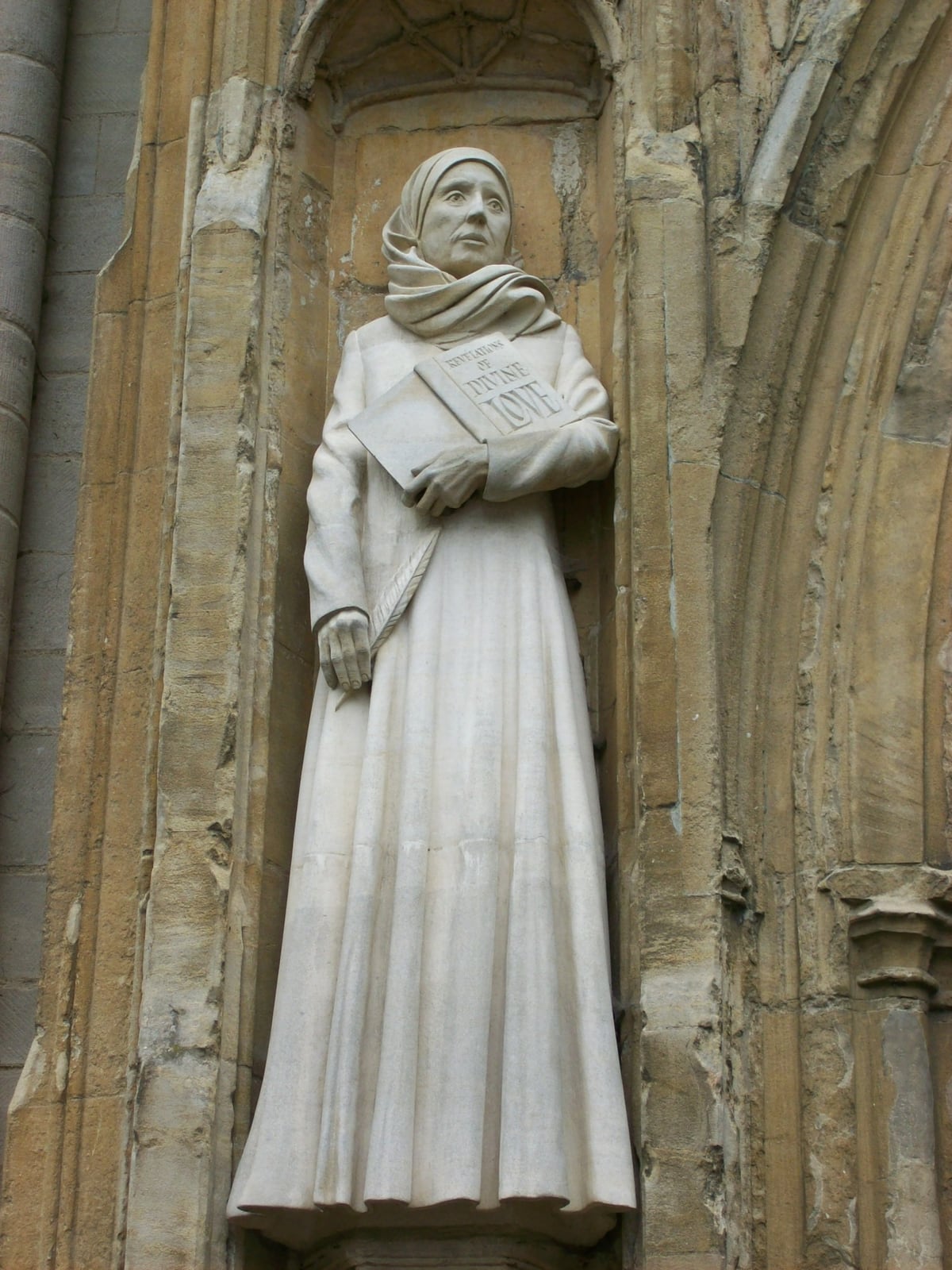
Estatua de Juliana en la fachada oeste de la catedral de Norwich (David Holgate) · CC0
بكلماته
«It behoved that there should be sin; but all shall be well, and all shall be well, and all manner of thing shall be well.»Texto largo según la versión modernizada del Sloane 2499 de Grace Warrack (1901), cap. 27 (decimotercera mostración)
فكرته المحورية
'All shall be well': behovely sin: In the thirteenth showing Julian asks why God in his wisdom did not prevent sin, which, she thinks, would have left everything well.
السيرة
4 دقيقة قراءة
ترجمة مُعانة من الأصل الإسباني، بانتظار مراجعة مترجم من أهل اللغة.
امرأة بلا اسم خاص
لا نعرف عن مؤلفة أقدم كتاب وصلنا كتبته امرأة بالإنجليزية اسمَ معموديتها، ولا اسمَي والديها، ولا الموضعَ الدقيق لمولدها. ونسمّيها جوليانا لأن الوصايا والنسّاخ يذكرونها بهذا الاسم، ولأنها عاشت حبيسةً في صومعة ملاصقة لكنيسة القديس جوليان في كونيسفورد بمدينة نورويتش؛ وربما اتخذت اسم القديس شفيع الكنيسة، كما فعل حبساء آخرون. أما ما نعرفه يقينًا فتحكيه هي نفسها: ففي مايو/أيار 1373م، وقد بلغت «ثلاثين شتاءً ونصفًا»، تلقّت سلسلة من الرؤى في أثناء مرض أوشك أن يودي بها. ومن ذلك يُستنتج أنها وُلدت نحو أواخر سنة 1342م.
وكانت نورويتش يومئذ من أكثر مدن إنجلترا سكانًا، ومركزًا لتجارة الصوف، فيها عشرات من كنائس الرعايا، وأديرة للرهبانيات المتسوّلة الأربع، ودير بندكتي ملحق بالكاتدرائية. وتزامن صبا جوليانا مع الطاعون الأسود الذي ضرب المدينة سنة 1349م وعاد في العقود التالية، ومع حرب المئة عام، ثم مع ثورة الفلاحين سنة 1381م التي قمعها الأسقف هنري ديسبنسر في نورفولك بقسوة. لا يظهر شيء من ذلك صراحةً في كتابها، لكن قرّاءً كثيرين سمعوا في إلحاحها على أن «كل شيء سيكون على ما يرام» جوابًا على عالم جريح.
النِّعَم الثلاث والمرض
تروي جوليانا أنها سألت الله في صباها ثلاث نِعَم: ذكرى حيّة لآلام المسيح، كأنها وقفت عند أقدام الصليب مع مريم المجدلية؛ ومرضًا جسديًّا شديدًا في الثلاثين من عمرها؛ وثلاثة «جراح»: الندامة الحقّة، والرأفة، والشوق إلى الله. أما الطلبتان الأوليان فنسيتهما، وأما الثالثة فظلّت تحفظها دائمًا. وفي الثلاثين ونصفها مرضت. وتدهورت حالها ثلاثة أيام وثلاث ليالٍ، فنالت الأسرار الأخيرة، وكانت أمها بين من يسهرون عليها. ووضع كاهن الرعية أمامها صليبًا وقال لها أن تنظر إلى صورة خالقها ومخلّصها وتتعزّى بها. فأظلم بصرها إلا حول الصليب.
ستة عشر كشفًا
وعندئذ، في الثامن أو الثالث عشر من مايو/أيار 1373م — إذ تختلف المخطوطات —، رأت إكليل الشوك ينزف، وبهذه الرؤيا بدأت سلسلة من ستة عشر «كشفًا» (shewings): خمسة عشر منها بين الرابعة فجرًا ومنتصف العصر، والأخير في الليلة التالية. وهي تجمع بين صور من آلام المسيح ذات واقعية جسدية مدهشة — الدم الذي يتساقط كقطرات المطر من حافة السقف، والوجه الذي يجفّ ويتبدّل لونه —، وكلمات باطنية، و«رؤى روحية» لا صورة فيها. وفي إحداها ترى في راحة يدها شيئًا في حجم البندقة: «إنه كل ما خُلق»، وهو يبقى لأن الله يحبّه. ولما تحسّنت حالها قالت لأحد الرهبان إنها كانت «تهذي»، ثم ندمت فورًا على إنكارها ما رأت؛ وفي تلك الليلة تعرّضت لهجوم رؤيا شيطانية، وتلقّت الكشف الأخير الذي ثبّت ما سبقه.
كتابان
وبعد قليل كتبت رواية أولى تُعرف اليوم بـ«النص القصير»، تسرد فيها الرؤى ومعناها الأقرب. ثم ظلّت عقودًا تتأمّلها. وتحكي أنها بعد «خمس عشرة سنة وأكثر» تلقّت الجواب عن سؤالها عن معنى ذلك كله: «كان الحبّ مقصده». وبعد عشرين سنة من الرؤى إلا ثلاثة أشهر، فهمت مثل السيّد والخادم، وهو مثل كانت قد أغفلته في روايتها الأولى. وكانت الثمرة «النص الطويل»، ستة وثمانون فصلًا تحوّل التجربة إلى لاهوت: الخطيئة التي «لا بدّ منها» ومع ذلك لا جوهر لها؛ وإله لا ترى فيه غضبًا؛ وأمومة المسيح؛ والصلاة التي «توحّد النفس بالله». وقد اقترح نيكولاس واتسون تأخير كتابة النص القصير إلى ثمانينيات القرن الرابع عشر، ومدّ كتابة الطويل إلى عمق القرن الخامس عشر.
حبيسة القديس جوليان
لا نعرف متى انحبست في الصومعة الملاصقة لكنيسة القديس جوليان، التي كانت تتبع دير الراهبات البندكتيات في كارو. وأول ذكر لها في الوثائق يعود إلى سنة 1394م: إذ توصي لها وصية روجر ريد، كاهن رعية القديس ميخائيل في كوسلاني، بشلنين. وتلي ذلك هبات أخرى في السنوات 1404م و1415م و1416م، وآخرها من إيزابيل أفورد، كونتيسة سافوك. وكانت الحبيسة تعيش طوال حياتها في غرفة أو غرفتين، لها نافذة على الكنيسة لمتابعة القداس وأخرى على الشارع لإسداء النصح لمن يقصدها، وتتولّى خادمة أو اثنتان شؤون معاشها. وقد رُجّح أنها كانت قبل ذلك راهبة في كارو، أو أرملة وأمًّا، لدقّة حديثها عن تربية الأطفال؛ وكلا الأمرين ظنّ.
مارجري كيمب عند النافذة
نحو سنة 1413م زارتها مارجري كيمب، المتصوّفة المضطربة من كينغز لين، لتستشيرها في ما إذا كانت دموعها وإلهاماتها من عند الله. ويذكر «كتاب مارجري كيمب»، الذي أُملي بعد نحو عشرين سنة، أن «السيدة جوليانا» أصغت إليها أيامًا عدّة، ونصحتها بأن تطيع الله، وتثق بصلاحه، ولا تقلق من تكذيب الآخرين، لأن من يشكّ دائمًا يشبه موج البحر. وهي الصورة الوحيدة لجوليانا التي رسمها أحد عرفها. وفي السنة نفسها، 1413م، كانت مؤلفة النص القصير ما تزال حيّة بحسب العنوان التمهيدي لمخطوطته؛ أما وفاتها، بعد سنة 1416م، فلم تترك أثرًا في الوثائق.
نقل هشّ
بقي النص القصير في مخطوطة واحدة نُسخت في منتصف القرن الخامس عشر، هي المعروفة بمخطوطة أمهرست (المكتبة البريطانية، Add. MS 37790). أما الطويل فقد وصلنا بفضل الراهبات البندكتيات الإنجليزيات اللواتي عشن في المنفى في كامبريه وباريس في القرن السابع عشر، فنسخنه وحفظنه: ومن تلك البيئة جاءت مخطوطة باريس (المكتبة الوطنية الفرنسية، Fonds anglais 40) ومخطوطتا سلون 2499 و3705 في المكتبة البريطانية. وطبعه الراهب البندكتي سيرينوس كريسي سنة 1670م. ثم أعادته طبعة غريس وارّاك سنة 1901م إلى القرّاء، وثبّتت الطبعة النقدية لإدموند كوليدج وجيمس والش (1978م) نصّ الروايتين كلتيهما.
لاهوتية الثقة
جعل منها القرن العشرون كاتبةً كلاسيكية. فقد ختم ت. س. إليوت قصيدة «ليتل جيدنغ»، آخر «الرباعيات الأربع»، بكلماتها عن الخطيئة التي «لا بدّ منها» وعن أن كل شيء سيكون على ما يرام؛ وتحيي كنيسة إنجلترا ذكراها في الثامن من مايو/أيار، وخصّها البابا بنديكتوس السادس عشر بمقابلة عامة سنة 2010م. وأُعيد بناء كنيسة القديس جوليان، التي دمّرها القصف الألماني سنة 1942م، ومعها صومعة تستقبل الحجّاج اليوم. ووراء النعوت التي أُلصقت بها — نسوية، خلاصية شاملة، بيئية — يبقى صوت قدّمت صاحبته نفسها بوصفها «مخلوقة بسيطة أمّية»، وكتبت بدقة لاهوتية نادرة في عصرها، جامعةً بين تعليم الكنيسة ورؤيا لله لم تجد فيها غضبًا.
المصادر: Colledge, Edmund, y James Walsh (eds.). A Book of Showings to the Anchoress Julian of Norwich. 2 vols. Studies and Texts 35. Toronto: Pontifical Institute of Mediaeval Studies, 1978. · Watson, Nicholas, y Jacqueline Jenkins (eds.). The Writings of Julian of Norwich: A Vision Showed to a Devout Woman and A Revelation of Love. University Park: Pennsylvania State University Press / Turnhout: Brepols, 2006. · Warrack, Grace (ed.). Revelations of Divine Love Recorded by Julian, Anchoress at Norwich, Anno Domini 1373. Londres: Methuen, 1901 (Project Gutenberg n.º 52958). · Windeatt, Barry (trad. e intr.). Julian of Norwich: Revelations of Divine Love. Oxford World's Classics. Oxford: Oxford University Press, 2015. · The Book of Margery Kempe. Ed. Sanford Brown Meech y Hope Emily Allen. Early English Text Society, o.s. 212. Londres: Oxford University Press, 1940, cap. 18.
الخط الزمني
الحياة عامًا بعد عام
كل نقطة حدث موثّق. انقر لتقرأه مع مصدره ودرجة اليقين فيه.
نحو 1342أقل من عامProbablemente Norwich o Norfolk
Birth
Date inferred from her own statement that she was 'thirty winters and a half' old in May 1373 (Long Text, ch. 3). Her baptismal name and family are unknown.
مرجَّحColledge, Edmund, y James Walsh (eds.). A Book of Showings to the Anchoress Julian of Norwich. 2 vols. Studies and Texts 35. Toronto: Pontifical Institute of Mediaeval Studies, 1978.
بعد وفاته
- نحو 1450The Amherst manuscript is copied
- 1670First printed edition
- 1901Grace Warrack's edition
- يونيو 1942St Julian's church destroyed
- 1978Critical edition
- 1 ديسمبر 2010Benedict XVI's audience
نحو 1342 · أقل من عام
Birth
Date inferred from her own statement that she was 'thirty winters and a half' old in May 1373 (Long Text, ch. 3). Her baptismal name and family are unknown.
مرجَّح
1349 · 7 أعوام
The Black Death in Norwich
The epidemic decimates the city; new waves in 1361–1362 and 1369. The context of her childhood.
موثّق
مايو 1373 · 30 عامًا
The sixteen showings
Gravely ill, she receives fifteen visions between early morning and afternoon and the sixteenth the following night. The manuscripts give 8 or 13 May.
موثّق
نحو 1380 – 1388 · 38 عامًا
The Short Text
Writing of the first account of the visions; the traditional date (soon after 1373) was challenged by Nicholas Watson, who places it in the 1380s.
مختلَف فيه
نحو 1388 · 45 عامًا
'Love was his meaning'
'Fifteen years after and more' she receives the understanding that closes the book: love is the meaning of all the showings (Long Text, ch. 86).
موثّق
نحو 1393 · 50 عامًا
The example of the lord and the servant
'Twenty years after the time of the showing, save three months' she understands the parable of the lord and the servant (Long Text, ch. 51), the core of the Long Text.
موثّق
مارس 1394 · 51 عامًا
First mention as an anchoress
The will of Roger Reed, rector of St Michael Coslany, leaves two shillings to 'Julian anakorite'.
موثّق
1404 · 61 عامًا
Bequest of Thomas Emund
A chantry priest of Aylsham leaves a bequest to the anchoress of St Julian's and to her servant Sara.
موثّق
نحو 1413 · 70 عامًا
Margery Kempe's visit
Margery Kempe consults her over several days about her experiences (Book of Margery Kempe, ch. 18). The rubric of the Amherst manuscript states she was alive in 1413.
موثّق
1416 · 73 عامًا
Last mention: the will of Isabel Ufford
The Countess of Suffolk leaves twenty shillings to 'Julian recluse a Norwich'. It is the last document mentioning her alive; the date of her death is unknown.
موثّق
نحو 1450
The Amherst manuscript is copied
A scribe copies the Short Text into an anthology of contemplative texts (British Library, Add. MS 37790), the only witness to that version.
مرجَّح
1670
First printed edition
The Benedictine Serenus Cressy publishes XVI Revelations of Divine Love from a Long Text manuscript related to the Paris one.
موثّق
1901
Grace Warrack's edition
Methuen publishes Grace Warrack's modernised version of Sloane 2499, which popularises the work.
موثّق
يونيو 1942
St Julian's church destroyed
German bombing destroys the church; it is rebuilt in 1953 with a chapel on the site of the cell.
موثّق
1978
Critical edition
Edmund Colledge and James Walsh publish the critical edition of both versions (Pontifical Institute of Mediaeval Studies).
موثّق
1 ديسمبر 2010
Benedict XVI's audience
Benedict XVI devotes his general audience catechesis to Julian.
موثّق
المؤلَّفات
المؤلَّفات الأساسية
المؤلَّفات التي لا يُفهم إرثه من دونها.
مخطوطة · نحو 1385
The Short Text: A Vision Showed to a Devout Woman
A Vision Showed to a Devout Woman
The first version of the account of the visions of May 1373, in twenty-five chapters. It narrates the three gifts requested, the illness, the crucifix and the sixteen showings in a more personal and immediate tone than the long version: Julian presents herself as a woman and apologises for teaching ('Should I believe, because I am a woman, that I ought not to tell you of the goodness of God?'). It does not yet contain the example of the lord and the servant or the theology of Christ's motherhood. It is the earliest surviving English text known to be by a woman.
5 طبعات · amazon.com

مخطوطة · نحو 1393
The Long Text: Revelations of Divine Love
A Revelation of Love (Revelations of Divine Love)
A reworking of the same visions in eighty-six chapters, the fruit of twenty years or more of meditation. Besides expanding each showing, it adds theological chapters: the example of the lord and the servant (ch. 51), in which Adam and Christ are both the servant who falls in serving; the teaching that there is no wrath in God and that sin is 'behovely' but has no substance; the 'substance' and 'sensuality' of the soul; and the motherhood of Christ and of the Trinity (chs. 58–63). It closes with the answer received 'fifteen years after and more': 'Love was his meaning'. It is the major work of medieval English mysticism.
9 طبعات · amazon.com
الأقوال
أقوال محدَّدة الموضع في مؤلَّف بعينه. كل منها يحمل مصدره ودرجة الثقة به.
It behoved that there should be sin; but all shall be well, and all shall be well, and all manner of thing shall be well.متحقَّق منهTexto largo según la versión modernizada del Sloane 2499 de Grace Warrack (1901), cap. 27 (decimotercera mostración)
أقوال منحولة أو مختلَف في نسبتها (1)
«Be a gardener. Dig a ditch, toil and sweat, and turn the earth upside down…»
It circulates online and on devotional cards as a quotation from Julian. It does not appear in that form in either version: it is a free reworking of the image of the servant labouring as a gardener in the example of the lord and the servant (Long Text, ch. 51).
الكلمات الأخيرة
لا توجد سجلات يمكن التحقق منها لكلماته الأخيرة.
Neither the date nor the circumstances of her death are known. The last document mentioning her alive is the will of Isabel Ufford, Countess of Suffolk (1416); no source transmits final words.
المصدر: Tanner, Norman P. The Church in Late Medieval Norwich, 1370–1532. Studies and Texts 66. Toronto: Pontifical Institute of Mediaeval Studies, 1984 (testamentos de Norwich con legados a anacoretas).
اسأل
بماذا يجيب أثره
اثنا عشر سؤالًا كبيرًا من أسئلة الإنسانية، وما تتيح نصوصه الإجابة به عنها، مع المراجع. ولا نقوّله ما لم يقل أبدًا.
ما المطلق؟ هل الله موجود؟
God is Trinitarian love, Father and also Mother
إله شخصييقوله صراحةً
Julian of Norwich does not argue for God's existence: she describes what was «shown» to her in sixteen revelations during an illness in 1373. In them God is Trinity and is love: in the final chapter of the Long Text she sums up that the meaning of everything shown was love. This God is courteous, homely, rejoices in creatures and holds them in being, like the hazelnut that lasts because God loves it. Her most original contribution is to call God Mother with the same truth with which he is called Father, and to ascribe that motherhood especially to Christ, the second Person. The Absolute is for her a Thou who loves without wrath, whose love precedes creation and never lessens.
قارن هذا السؤال مع معلّمين آخرينمن أنا؟ هل توجد ذات حقيقية؟
Our substance is in God; our sensuality awaits union with it
روح مخلوقة خالدةيقوله صراحةً
Julian of Norwich distinguishes in the human being the «substance», the highest part, which was never separated from God, and the «sensuality», the embodied, temporal life where sin and pain occur. In chapter 54 of the Long Text she states that she saw no difference between God and our substance, as if it were all God, and yet understood that our substance is a creature in God. In the parable of the lord and the servant (ch. 51), the soul's fall arises not from malice but from haste to serve. The true self is a created soul, loved forever and kept in God, which is reconciled with itself when substance and sensuality are united through Christ.
قارن هذا السؤال مع معلّمين آخرينلماذا نتألّم؟
Sin was behovely, but all shall be well
الانفصال عن اللهيقوله صراحةً
Julian of Norwich asked why, if God is love, he did not prevent sin, which is the cause of all pain. The answer shown to her is one of the most famous sentences of English mysticism: sin was behovely, but all shall be well, and all manner of thing shall be well. She did not see sin, because she believes it has no substance, and knew it only by the pain it causes. In the parable of the lord and the servant, the fall appears as the stumbling of a servant running to do his lord's will. Suffering arises from separation, but God does not look on it with wrath, and every pain will be turned to honour.
قارن هذا السؤال مع معلّمين آخرينماذا يحدث بعد الموت؟
A great deed at the end will make all things well
الحياة الأبدية والقيامةيقوله صراحةً
Julian of Norwich's revelations were born at the edge of death: she was thirty and a half, received the last rites, and the priest held a crucifix before her, before which the visions began. Her hope is the Church's: eternal life in God, joy and bliss. But she adds something of her own: in chapter 32 she is shown that there is a great deed that the Trinity will do on the last day, hidden from every creature, by which all shall be well. Julian acknowledges the tension with the Church's teaching on damnation and does not resolve it: she holds it in faith and in the promise that what is impossible for her is not so for God.
قارن هذا السؤال مع معلّمين آخرينكيف يُبلَغ التحرّر أو الخلاص؟
God is the ground of our beseeching
بالنعمة والمحبةيقوله صراحةً
Julian of Norwich sees salvation as the work of God's love that precedes everything: in chapter 41 of the Long Text she is shown that God is the ground of our beseeching, that it is he who makes us desire and ask for what he wishes to give us. The human role is real but humble: to pray, to trust, not to despair of one's own sin, and to remain in the faith of the Church. In chapter 68 she receives the promise that the soul will not be overcome, though it be tossed and afflicted. Liberation consists in Christ, our Mother, restoring us to the union of substance and sensuality, and keeping us in a love that never withdraws.
قارن هذا السؤال مع معلّمين آخرينهل نحتاج إلى معلّم؟
What was shown is received within the Church's common faith
الجماعة والتقليديُستنتج من تعاليمه
Julian of Norwich does not raise the question of the spiritual teacher; she received her revelations directly and spent some twenty years meditating on them. But she refuses to make them a separate authority. In chapter 9 of the Long Text she declares that she is not good because of the visions, but only if she loves God more, and that what she saw she believes according to the teaching of Holy Church. In chapter 80 she sums up the three things by which a human being stands in this life: the use of natural reason, the common teaching of the Church and the inward working of the Holy Spirit. Her text, moreover, is addressed to all her «fellow Christians», not to disciples.
قارن هذا السؤال مع معلّمين آخرينهل العالم حقيقي؟
All creation fits in a hazelnut and lasts because God loves it
خلقٌ صالح وحقيقييقوله صراحةً
Julian of Norwich's best-known image answers this question. In the first revelation, God shows her in the palm of her hand a little thing, the size of a hazelnut, round as a ball, and she is told that it is all that is made. Julian marvels that it can last, for it seems that, in its littleness, it might suddenly fall into nothing; and she is answered that it lasts and ever shall because God loves it. In that vision she understands three things: that God made it, that God loves it and that God keeps it. The world is real, fragile and small before its Creator, and good because it is loved.
قارن هذا السؤال مع معلّمين آخرينما الحب؟
Love was the meaning of everything shown
محبة الله والقريبيقوله صراحةً
Julian of Norwich's Long Text ends with the answer to the question she had asked herself for fifteen years: what the Lord's meaning was in what he showed her. She was answered that it was love: who showed it to her, love; what he showed her, love; why he showed it, for love. Julian adds that she saw with certainty that God loved us before he made us and that this love has never diminished nor ever shall. Love is God's essence, and from it proceeds the love creatures have for one another: her text is addressed to all her fellow Christians, because what was shown was for all, and in loving them she sees the concrete form of loving God.
قارن هذا السؤال مع معلّمين آخرينهل نحن أحرار أم أن كل شيء مقدَّر؟
God does all that is done; the how remains a secret
لم يُبدِ رأيًا
Julian of Norwich does not treat human freedom as a problem. What is shown to her points elsewhere: in the third revelation she sees God in a point and understands that he is in all things and does all that is done; nothing happens by chance, but by God's foreseeing wisdom. That raises for her the question of sin, which is no deed, and she resolves it by trusting that all that is done is well done. She neither denies human responsibility —she speaks of repentance, prayer and the fall— nor theorises about predestination: she leaves the how in God's secret, who in his time will make all things well.
قارن هذا السؤال مع معلّمين آخرينلماذا نتأمّل أو نصلّي؟
Prayer unites the soul to God, who is its ground
صداقة مع اللهيقوله صراحةً
Julian of Norwich devotes several chapters of the Long Text to prayer. There she is told that God is the ground of beseeching: it is he who makes us desire what he wants to give, and so prayer is never in vain, even when it seems dry or fruitless. Prayer unites the soul to God: although the soul is always like God in nature, it is often unlike him through sin, and prayer makes it like him in will. She distinguishes beseeching, which asks, from contemplation, in which the soul can no longer ask but only behold and give thanks. The tone is one of homely trust: God is courteous and wants to be spoken to with the simplicity of a child with its mother.
قارن هذا السؤال مع معلّمين آخرينهل يستطيع العقل أن يعرف الحقيقة القصوى؟
Natural reason, the Church's teaching and the Spirit's work
الإيمان والعقل يتعاونانيقوله صراحةً
Julian of Norwich presents herself as an «unlettered creature», but her work shows great theological intelligence, and she gives reason an explicit place. In chapter 80 of the Long Text she lists the three things by which the human being stands in this life and by which God is honoured: the use of natural reason, the common teaching of Holy Church and the inward gracious working of the Holy Spirit, and adds that all three come from one God. The revelations do not replace reason: Julian spent twenty years meditating on them in order to understand them, and the Long Text is the fruit of that reflection. Reason helps; faith and grace complete.
قارن هذا السؤال مع معلّمين آخرينالانسحاب من العالم أم تغييره؟
An anchoress who writes for all her fellow Christians
الانسحاب لكي نجديُستنتج من تعاليمه
Julian of Norwich lived as an anchoress, enclosed in a cell attached to the church of Saint Julian in Norwich, from which she probably takes her name; wills of the period mention her as an anchorite in the early fifteenth century. Her form of life was thus the strictest withdrawal known to the medieval Church. But her work does not argue for enclosure or despise those who live in the world: she declares that what was shown is not only for her but for all her fellow Christians, and her theology of God's love addresses ordinary life, the falling and falling again of anyone. From the cell, the window opened onto the street.
قارن هذا السؤال مع معلّمين آخرين
التقارب والتوتّر
التقارب والتوتّر
محسوبة سؤالًا سؤالًا انطلاقًا من مواقفه. وسبب كل اتفاق أو اختلاف يظهر بالنقر.
يقترب في تفكيره من
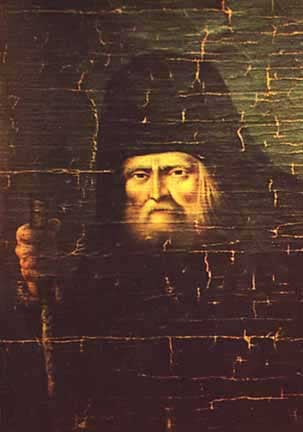
Seraphim of Sarov
يتّفقان في: ما المطلق؟ هل الله موجود؟ · من أنا؟ هل توجد ذات حقيقية؟ · لماذا نتألّم؟

Francis of Assisi
يتّفقان في: ما المطلق؟ هل الله موجود؟ · من أنا؟ هل توجد ذات حقيقية؟ · لماذا نتألّم؟

Teresa of Ávila
يتّفقان في: ما المطلق؟ هل الله موجود؟ · من أنا؟ هل توجد ذات حقيقية؟ · لماذا نتألّم؟
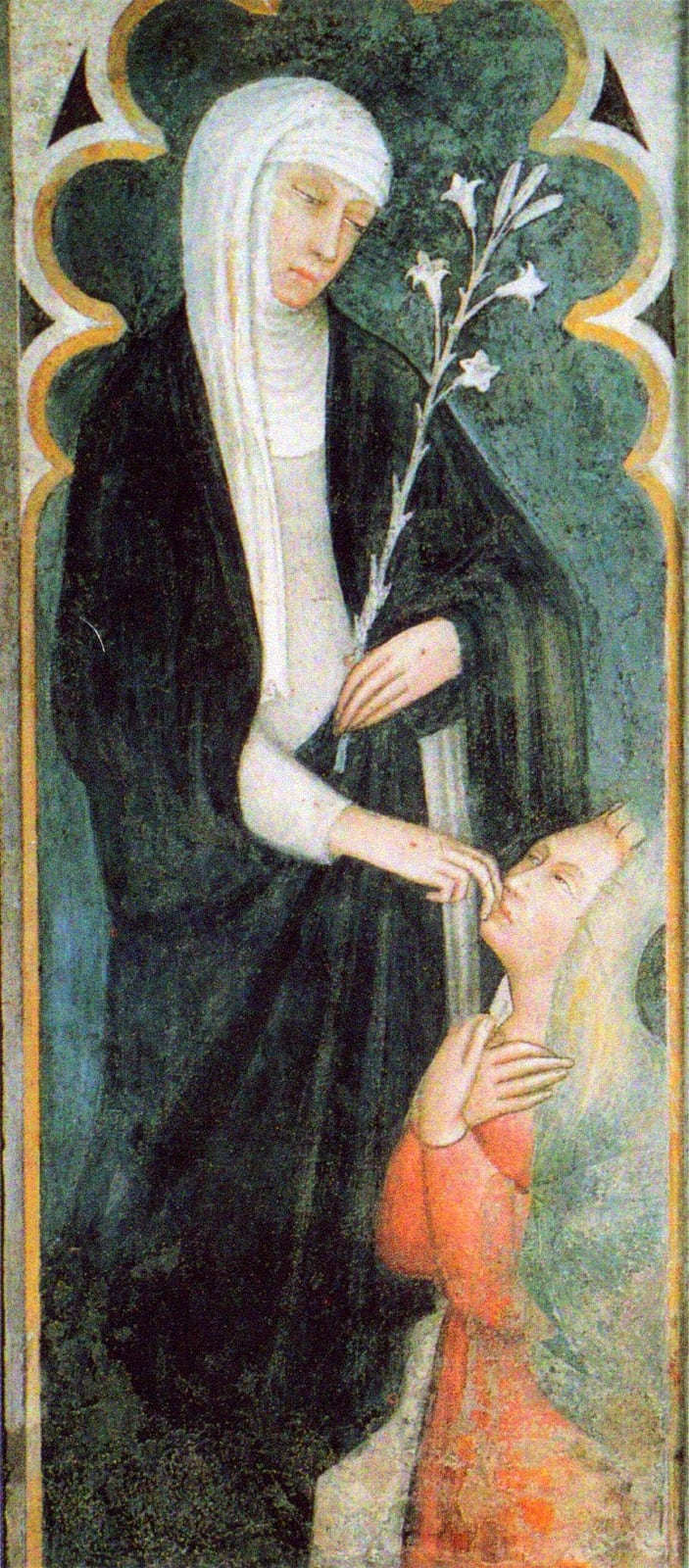
Catherine of Siena
يتّفقان في: ما المطلق؟ هل الله موجود؟ · من أنا؟ هل توجد ذات حقيقية؟ · لماذا نتألّم؟
يبتعد في تفكيره عن

Pema Chödrön
يختلفان في: ما المطلق؟ هل الله موجود؟ · من أنا؟ هل توجد ذات حقيقية؟ · ماذا يحدث بعد الموت؟

Nāgārjuna
يختلفان في: ما المطلق؟ هل الله موجود؟ · من أنا؟ هل توجد ذات حقيقية؟ · ماذا يحدث بعد الموت؟
Śāntideva
يختلفان في: ما المطلق؟ هل الله موجود؟ · من أنا؟ هل توجد ذات حقيقية؟ · ماذا يحدث بعد الموت؟

Sadhguru
يختلفان في: من أنا؟ هل توجد ذات حقيقية؟ · ماذا يحدث بعد الموت؟ · هل العالم حقيقي؟
حكايات وروايات
حكايات وروايات
شهادةmayo de 1373
The parish priest's crucifix
أصل الرواية: Julian's own account in the Short Text (chs. 2–3) and the Long Text (chs. 3–4).
شهادةmayo de 1373
'I said I had raved'
أصل الرواية: Long Text, chs. 66–67; the episode also appears in the Short Text (chs. 21–22).
موثّقc. 1413
Margery Kempe at the cell window
أصل الرواية: The Book of Margery Kempe, book I, ch. 18, dictated c. 1436–1438. The meeting is known only from this account.
المصدر: The Book of Margery Kempe. Ed. Sanford Brown Meech y Hope Emily Allen. Early English Text Society, o.s. 212. Londres: Oxford University Press, 1940, cap. 18.
لا يمكن التحقق منهs. XX (tradición)
The anchoress's cat
أصل الرواية: The rule comes from the Ancrene Wisse (part VIII). The attribution of a cat to Julian has no medieval source and spread with modern iconography.
المصدر: Jantzen, Grace M. Julian of Norwich: Mystic and Theologian. Londres: SPCK, 1987 (nueva ed. 2000).
موثّقs. XVII
The nuns of Cambrai
أصل الرواية: Watson and Jenkins (2006) and Colledge and Walsh (1978) study the provenance of the Long Text manuscripts in the milieu of the Cambrai and Paris communities.
المصدر: Watson, Nicholas, y Jacqueline Jenkins (eds.). The Writings of Julian of Norwich: A Vision Showed to a Devout Woman and A Revelation of Love. University Park: Pennsylvania State University Press / Turnhout: Brepols, 2006.
التعاليم
التعاليم
المفاهيم التي ينتظم بها فكره، مشروحة في سياقها.
'All shall be well': behovely sintodo-ira-bien
Late medieval debate on predestination and salvation, in the England of Wyclif and Langland.
المصدر: Colledge, Edmund, y James Walsh (eds.). A Book of Showings to the Anchoress Julian of Norwich. 2 vols. Studies and Texts 35. Toronto: Pontifical Institute of Mediaeval Studies, 1978.
A God without wrathdios-sin-ira
Contrast with fourteenth-century penitential preaching and with the image of judgement in scholastic theology.
المصدر: Jantzen, Grace M. Julian of Norwich: Mystic and Theologian. Londres: SPCK, 1987 (nueva ed. 2000).
The example of the lord and the servantsenor-y-siervo
Medieval multi-layered exegesis and the tradition of parable as a form of theological teaching.
المصدر: Watson, Nicholas, y Jacqueline Jenkins (eds.). The Writings of Julian of Norwich: A Vision Showed to a Devout Woman and A Revelation of Love. University Park: Pennsylvania State University Press / Turnhout: Brepols, 2006.
The motherhood of Christ and of Godmaternidad-de-cristo
Medieval tradition of Jesus as mother (Anselm, Bernard of Clairvaux, William of Saint-Thierry).
المصدر: Jantzen, Grace M. Julian of Norwich: Mystic and Theologian. Londres: SPCK, 1987 (nueva ed. 2000).
Substance and sensualitysustancia-y-sensualidad
Augustinian anthropology of the image and the English contemplative tradition (Hilton, The Cloud of Unknowing).
المصدر: Watson, Nicholas, y Jacqueline Jenkins (eds.). The Writings of Julian of Norwich: A Vision Showed to a Devout Woman and A Revelation of Love. University Park: Pennsylvania State University Press / Turnhout: Brepols, 2006.
The courtesy and homeliness of Godcortesia-de-dios
The courtly language of fourteenth-century England applied to theology.
المصدر: Windeatt, Barry (trad. e intr.). Julian of Norwich: Revelations of Divine Love. Oxford World's Classics. Oxford: Oxford University Press, 2015.
مقاطع الفيديو
مقاطع الفيديو
تسجيلات ومقابلات وأفلام وثائقية. تُشغَّل مقاطع الفيديو من YouTube؛ ولا تُستضاف هنا.
2024 Julian Festival Lecture, Julian and the Trinity, Archbishop Rowan Williams
محاضرة· EN· 2024· 89 min
Julian of Norwichالقناة الرسمية
Julian of Norwich: mother, mystic, radical
محاضرة· EN· 2023· 81 min
Jesus College, Cambridgeالقناة الرسمية
Julian of Norwich: Revelations of Divine Love - Robert Fruehwirth
محاضرة· EN· 2016· 61 min
St Paul's Cathedralالقناة الرسمية
Prayer in the Teachings of Julian of Norwich: A Journey of Desire | Philip Sheldrake
محاضرة· EN· 2019· 84 min
Oblate School of Theologyالقناة الرسمية
How to Read Julian of Norwich / Ryan McAnnally-Linz
محاضرة· EN· 2024· 54 min
Yale Center for Faith & Cultureالقناة الرسمية
Julian of Norwich and the English Mystics: A Lecture by Fr. Groeschel
محاضرة· EN· 2019· 73 min
International Institute for Culture
Cecilia Twinch: Julian of Norwich: All manner of things shall be well
محاضرة· EN· 2023· 42 min
Ibn 'Arabi Societyالقناة الرسمية
Revelations of Divine Love by Julian of NORWICH read by David Barnes | Full Audio Book
تسجيل من طرف ثالث· EN· 2018· 441 min
LibriVox Audiobooks
3º clase - Javier Melloni sj expone sobre Juliana de Norwich, teóloga de su propia experiencia
محاضرة· ES· 2022· 113 min
Fraternidad del Santo Nombre
Juliana de Norwich, Mística de la cortesía de Dios - El primer documental español
فيلم وثائقي· ES· 2026· 15 min
Radio Monastero Interiore
El Papa dedica la audiencia general a Juliana de Norwich, mística inglesa
تسجيل من طرف ثالث· ES· 2010· 3 min
ROME REPORTS en Españolالقناة الرسمية
Juliana de Norwich
محاضرة· ES· 2026· 104 min
Cruzando Fronteras con Fernando Cordero sscc
Giuliana di Norwich, Mistica della cortesia di Dio - il primo documentario italiano
فيلم وثائقي· IT· 2025· 16 min
Radio Monastero Interiore
المعرض
المعرض
صور بترخيص متحقَّق منه. كل منها تحتفظ بمؤلّفها ونسبتها.
المخطوطات
المخطوطات
شواهد مخطوطة ونصوص قديمة، مع جهة حفظها وشروط الاطّلاع عليها.
ENM · Gótica cursiva inglesa (tipo no verificado) · Texto: c. 1373–1390; copia: c. 1435–1450
A Vision Showed to a Devout Woman (Texto breve), en antología contemplativa
- الشاهد المحفوظ
- Único testimonio del Texto breve, dentro de una antología de textos contemplativos (Rolle, Ruusbroec, Suso, entre otros). La rúbrica afirma que la autora seguía viva en 1413.
- جهة الحفظ
- British Library, Londres · Add. MS 37790 (manuscrito Amherst)
ENM · Cursiva (tipo no verificado) · Copia de finales del s. XVI
Revelations of Divine Love (Texto largo), copia de París
- الشاهد المحفوظ
- Texto largo completo con el explicit «Explicit liber revelationum Julyane anatorite Norwyche»; texto próximo al de la edición de Cressy (1670).
- جهة الحفظ
- Bibliothèque nationale de France, París · Fonds anglais 40
ENM · Cursiva del s. XVII · Mediados del s. XVII
Revelations of Divine Love (Texto largo), Sloane 2499
- الشاهد المحفوظ
- Texto largo completo con ortografía arcaizante; base de las ediciones de Warrack (1901), Glasscoe (1976) y Crampton (1993).
- جهة الحفظ
- British Library, Londres · Sloane MS 2499
ENM · Cursiva del s. XVIII · S. XVIII
Revelations of Divine Love (Texto largo), Sloane 3705
- الشاهد المحفوظ
- Copia tardía del Texto largo, con ortografía modernizada.
- جهة الحفظ
- British Library, Londres · Sloane MS 3705
ENM · Gótica cursiva inglesa (tipo no verificado) · c. 1500
Extractos del Texto largo (manuscrito de Westminster)
- الشاهد المحفوظ
- Antología de pasajes del Texto largo junto a comentarios a los salmos; el testimonio más antiguo de esa versión.
- جهة الحفظ
- Westminster Cathedral Treasury, Londres · MS 4
العلاقات
العلاقات
تأثيرات وتلمذة وتقارب في الأفكار. تُميَّز العلاقة الموثّقة عن التشابه المستخلَص بالتحليل.
تأثّر بـ
The sixteen showings centre on Christ's passion, which Julian had asked to behold 'as if she had been there', and her whole theology is built around him as servant, mother and saviour.
علاقة موثّقة
أفكار قريبة من
Julian works within the Augustinian horizon (fall, original sin, grace, God's image in the soul), but her vision of a God who does not blame departs from the rigour of the late Augustine. No direct reading is documented.
تشابه مستخلَص بالتحليل
معاصر لـ
Exact contemporaries (Catherine was born in 1347 and Julian had her visions in 1373), both laywomen without Latin learning who dictated or wrote theology in the vernacular. There was no contact.
تشابه مستخلَص بالتحليل
أفكار قريبة من
Two women who wrote of their experience of God in domestic language and with a theological sharpness that exceeded their 'unlettered' status. Teresa did not know Julian's work.
تشابه مستخلَص بالتحليل
أفكار قريبة من
Both visionaries received visions in sickness and interpreted them over years; but Hildegard was an abbess, prophetic and cosmological, and Julian a recluse and introspective. No documented relation.
تشابه مستخلَص بالتحليل
أفكار قريبة من
Affective devotion to the suffering humanity of Christ, spread in fourteenth-century England by Franciscan spirituality, forms the background of her visions of the passion. No direct relation.
تشابه مستخلَص بالتحليل
أفكار قريبة من
Julian's 'substance' of the soul ever united to God recalls Eckhart's 'ground' of the soul, but her language is narrative and concrete, not speculative. There is no sign that she knew Rhineland mysticism.
تشابه مستخلَص بالتحليل
مرتبط من صفحات أخرى
المصادر
المصادر
المراجع والفهارس التي رُوجعت لهذه الصفحة.
- Wikidata, Q236699 «Juliana de Norwich / Julian of Norwich» (P31=Q5; 45 enlaces entre wikis).
- Colledge, Edmund, y James Walsh (eds.). A Book of Showings to the Anchoress Julian of Norwich. 2 vols. Studies and Texts 35. Toronto: Pontifical Institute of Mediaeval Studies, 1978.
- Watson, Nicholas, y Jacqueline Jenkins (eds.). The Writings of Julian of Norwich: A Vision Showed to a Devout Woman and A Revelation of Love. University Park: Pennsylvania State University Press / Turnhout: Brepols, 2006.
- Warrack, Grace (ed.). Revelations of Divine Love Recorded by Julian, Anchoress at Norwich, Anno Domini 1373. Londres: Methuen, 1901 (Project Gutenberg n.º 52958).
- Windeatt, Barry (trad. e intr.). Julian of Norwich: Revelations of Divine Love. Oxford World's Classics. Oxford: Oxford University Press, 2015.
- The Book of Margery Kempe. Ed. Sanford Brown Meech y Hope Emily Allen. Early English Text Society, o.s. 212. Londres: Oxford University Press, 1940, cap. 18.
- Jantzen, Grace M. Julian of Norwich: Mystic and Theologian. Londres: SPCK, 1987 (nueva ed. 2000).
- Benedicto XVI. Audiencia general del 1 de diciembre de 2010: Juliana de Norwich. Libreria Editrice Vaticana.
- Spearing, Elizabeth (trad.), y A. C. Spearing (intr. y notas). Julian of Norwich: Revelations of Divine Love (Short Text and Long Text). Londres: Penguin Books, 1998.
- Watson, Nicholas. «The Composition of Julian of Norwich's Revelation of Love». Speculum 68, n.º 3 (1993), pp. 637–683.
- Ward, Benedicta. «Julian the Solitary». En Kenneth Leech y Benedicta Ward, Julian Reconsidered. Oxford: SLG Press, 1988.
- Glasscoe, Marion (ed.). Julian of Norwich: A Revelation of Love. Exeter Medieval English Texts. Exeter: University of Exeter, 1976 (ed. del Sloane 2499).
- Beer, Frances (ed.). Julian of Norwich's Revelations of Divine Love: The Shorter Version Ed. from B. L. Add. MS 37790. Heidelberg: Carl Winter, 1978.
- Open Library (Internet Archive), registros de edición consultados por ISBN para las ediciones listadas.
- Eliot, T. S. «Little Gidding» (1942), en Four Quartets. Londres: Faber & Faber, 1944, sección V.
- Tanner, Norman P. The Church in Late Medieval Norwich, 1370–1532. Studies and Texts 66. Toronto: Pontifical Institute of Mediaeval Studies, 1984 (testamentos de Norwich con legados a anacoretas).
- The Julian Shrine, St Julian's Church, Norwich: historia de la iglesia y de la celda reconstruida.
- Friends of Julian of Norwich (asociación que mantiene el Julian Centre y promueve su lectura).
- Holloway, Julia Bolton, Anna Maria Reynolds et al. (eds.). Julian of Norwich, Showing of Love: Extant Texts and Translation. Florencia: SISMEL – Edizioni del Galluzzo, 2001.
- Wikisource en inglés: Revelations of Divine Love (Grace Warrack, ed. de 1907), transcripción con subpáginas por capítulo.
- صاحب الحقوق
- Dominio público (obra del siglo XIV). Las ediciones críticas, traducciones y modernizaciones posteriores a 1955 (PIMS, Penn State, Penguin, Oxford, Paulist Press, Trotta…) están sujetas a los derechos de sus editores.
- الموقع الرسمي
- www.julianshrine.org/
في انتظار التأكيد
ما لم تتمكّن هذه الصفحة من حسمه بعد. نفضّل أن نقول ذلك على أن نملأ الفراغ.
- Confirmar la fecha de muerte de Dundas Harford (n. 1858) para liberar su edición del Texto breve (1911) en la sala de lectura; hasta entonces queda con caution.
- Comprobar la calidad del OCR de la reimpresión de 1843 de la edición de Cressy en Internet Archive.
- Localizar el traductor de la edición española de Trotta (Libro de visiones y revelaciones, 2002; ISBN 9788481645590), que Open Library no registra, y buscar otras ediciones españolas con ISBN (Revelaciones del amor divino).
- Localizar ISBN de ediciones francesa, alemana e italiana: Open Library no devuelve registros fiables.
- Verificar si el manuscrito de París (BnF, Fonds anglais 40) y los Sloane 2499 y 3705 están digitalizados (Gallica; British Library Digitised Manuscripts, afectado por la caída del servicio de la BL desde 2023).
- Fijar con Colledge–Walsh y con Tanner (1984) las cuantías y fechas exactas de cada legado testamentario (Reed 1394, Emund 1404, Plumpton 1415, Ufford 1416).
- No hay traducción española de dominio público conocida; la sala de lectura queda solo en inglés.
- Programas de afiliación: ninguno verificado.
بُحث بتاريخ 2026-10-25