البوذية · ماهايانا · زن / تشان
Hakuin Ekaku
白隠慧鶴 · はくいん えかく
1686 – 1769شخصية موثّقة تاريخيًا
راهب زن ياباني من عصر إيدو، يُعدّ مجدّد مدرسة الرينزاي، إذ تعود إليه سلاسلها الحالية كلها. نظّم الممارسة بالكوان، وابتكر كوان «صوت يد واحدة»، وألحّ على الممارسة بعد اليقظة وعلى نذر العمل من أجل الآخرين، وكتب للرهبان بالصينية وللفلاحين بيابانية بسيطة، وترك آلاف اللوحات والأعمال الخطية التي تضعه في مصاف كبار فناني عصره، حتى صار في نظر المتاحف اليوم واحدًا من أبرز رسّامي اليابان في القرن الثامن عشر.
- مؤلَّفًا
- 31مؤلَّفًا
- طبعة
- 45طبعة
- اقتباسًا
- 5اقتباسًا
- مقطع فيديو
- 11مقطع فيديو
- صورة
- 5صورة
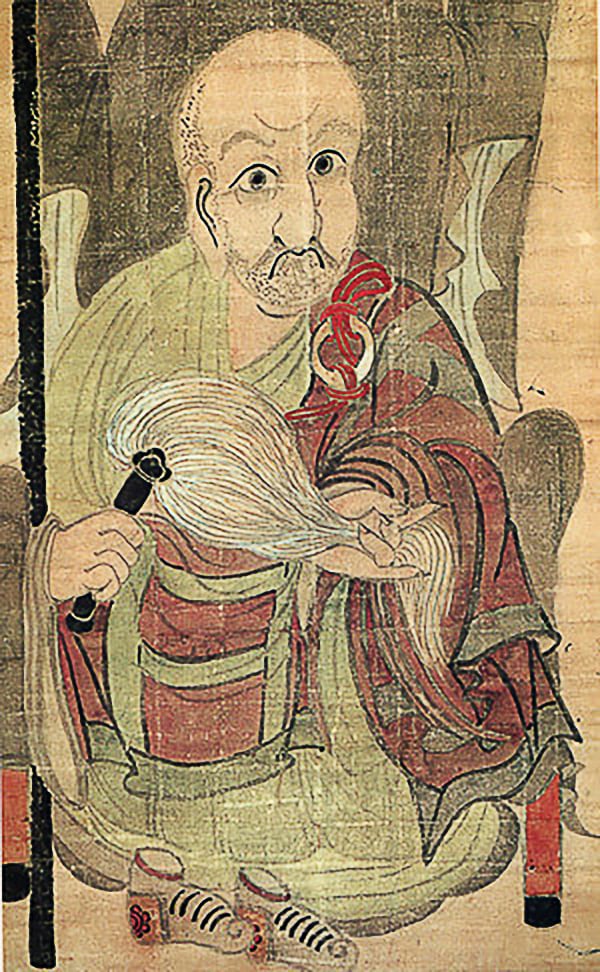
Autorretrato de Hakuin (1767) · Public domain
بكلماته
«Beings are buddha from the beginning, like water and ice: without water there is no ice, and outside beings there is no buddha.»Zazen wasan, versos iniciales. Traducción propia del japonés.
فكرته المحورية
Initial awakening (kenshō) is not the end but the beginning: what is decisive is the practice that follows, which consists in working for the good of others with the bodhisattva's four great vows.
السيرة
4 دقيقة قراءة
ترجمة مُعانة من الأصل الإسباني، بانتظار مراجعة مترجم من أهل اللغة.
راهب هارا
«في سوروغا شيئان أكبر منها: جبل فوجي، وهاكوين هارا». هذا المثل، الذي ما زال يتردّد في اليابان، يلخّص مفارقة هاكوين إيكاكو: فمجدّد زن الرينزاي، الرجل الذي تعود إليه اليوم سلاسل هذه المدرسة كلها، قضى حياته كلها تقريبًا في معبد فقير في قرية من محطات البريد على طريق توكايدو، عند سفح فوجي. وعلى خلاف شانتيديفا أو هوي نينغ، نعرف عنه الكثير، ونعرف كثيرًا منه من فمه هو: فقد كتب بلا انقطاع، ولا سيما في سنواته الخمس عشرة الأخيرة، وترك سيرة ذاتية عنوانها «إيتسومادِغوسا» أتمّها تلميذه توري بتسلسل زمني. غير أنه هو أيضًا روى حياته على أنها درس، وقد تعلّم النقد أن يقرأها بالحذر نفسه الذي يقرأ به سِيَر القديسين.
الخوف من الجحيم
وُلد في 19 يناير 1686 في هارا، في إقليم سوروغا، ثالثَ أبناء آل ناغاساوا، وهي أسرة من تجار محطة البريد؛ وكان اسمه في صغره إيواجيرو. وكانت أمه من أتباع مدرسة نيتشيرين المتعبّدين، وكان هاكوين نفسه يروي أنه سمع في طفولته موعظة عن الجحيمات الملتهبة فامتلأ رعبًا لم يفارقه بعد ذلك: فكان الحمّام الساخن يذكّره باللهب. وفي الخامسة عشرة أذن له أبواه بأن يترهّب في شوين-جي، معبد الزن في القرية، حيث منحه رئيس الدير تانري اسم إيكاكو. وخيّبت أمله قراءة «سوترا اللوتس»، التي كان معلّموه من أتباع نيتشيرين يجلّونها: فقد بدت له مجموعة من الأمثال عن الأسباب والنتائج.
سنوات الترحال
كانت السنوات التالية سنوات أزمة وأسفار. ففي زنسو-جي، وهو في التاسعة عشرة، قرأ أن المعلم الصيني الكبير يانتو مات صارخًا على أيدي قطّاع طرق، ففقد الإيمان بأن الزن قادر على إنقاذه من الجحيم، وانصرف إلى الشعر والخط. وأعاده إلى الممارسة كتاب سحبه اتفاقًا من كومة مجلدات وُضعت للتهوية في فناء: مختارات صينية من عهد مينغ عن مجاهدة المعلمين القدامى، فيها راهب كان يغرز مخرزًا في فخذه كي لا ينام. وفي سنة 1708، في إيغان-جي بتاكادا في إقليم إتشيغو، وبعد أيام من العمل على كوان «مو» لتشاوتشو، أحدث فيه صوت جرس بعيد يقظة بلغت من الشدة أنه ظن أن أحدًا لم يعرف مثلها منذ ثلاثمئة عام. ولم يدم كبرياؤه طويلًا: فقد نعته الناسك دوكيو إيتان، «شيخ شوجو»، بأنه «راهب زن قابع في جحره»، ورماه من رواق صومعته في إيياما، وأعطاه كوانات عسيرة. ولم يمكث هاكوين عنده إلا ثمانية أشهر، لكنه انتهى إلى أن عدّه معلّمه الحقيقي.
مرض الزن
أمرضه الجهد المفرط. ففي «ياسِنكانّا»، الذي نُشر سنة 1757، وصف «مرض الزن» — حرارة في الرأس وبرودة في الساقين وقلق وأرق — الذي زعم أن ناسكًا طاويًّا من تلال كيوتو، اسمه هاكويو، شفاه منه بتقنيتين: التأمل الباطني («نايكان»)، الذي يسوق الطاقة الحيوية إلى أسفل البطن، وتخيّل كرة من الزبدة تذوب نازلةً من قمة الرأس. ولقي الكتاب نجاحًا هائلًا بين العامة ولم تنقطع طباعته قط. غير أن الباحثين يقرؤونه بوصفه تأليفًا أدبيًا جمع فيه هاكوين معارف عصره الطبية وممارساته التأملية تحت صورة حكيم الجبل.
المعبد والصرصور
في سنة 1716 عاد إلى شوين-جي، وكان معبدًا يكاد يكون خرابًا، وفي سنة 1718 سُجّل رئيسًا له بأدنى رتبة، رتبة «الراهب الأول» في ميوشين-جي؛ وفي ذلك الحين اتخذ اسم هاكوين، أي «المستتر في البياض». ولن يغادره بعد ذلك أبدًا. وجاءت اليقظة التي عدّها نهائية سنة 1726، في عامه الثاني والأربعين بحسب الحساب الياباني: فبينما كان يقرأ ليلًا فصل الأمثال من «سوترا اللوتس»، النص الذي ازدراه في شبابه، سمع صرصورًا ففهم دفعة واحدة ما أراد شوجو أن يقوله له. فاليقظة الفردية لا تكفي: المهم هو «الممارسة بعد الساتوري»، أي ذهن اليقظة الذي يعمل لخير الآخرين. ومنذ ذلك الحين صار نذر البوديساتفا محور تعليمه.
معلّم الرهبان والفلاحين
أخذ الرهبان يقصدون شوين-جي من أنحاء اليابان كلها، وينزلون في البيوت والمعابد المجاورة. وفي سنة 1740 جمعت دروسه في أقوال المعلم الصيني شوتانغ بضع مئات من المستمعين، وكان منها كتاب «سوكّوروكو كايِن-فوسيتسو». وحارب هاكوين «زن اللافعل»، أي السكون الفارغ الذي كان ينسبه إلى كثير من معلمي عصره، ونظّم الممارسة بالكوان؛ وفي سنواته الأخيرة ابتكر كوانه الخاص: «أصغِ إلى صوت يد واحدة»، الذي كان يراه أنجع من «مو» في إثارة الشك العظيم. وفي الوقت نفسه خاطب عامة الناس بيابانية بسيطة: رسائل إلى الإقطاعيين في حسن الحكم، مثل «هيبيإيتشيغو»؛ ومواعظ للنساء والفلاحين؛ وأغاني الطاحون وأغاني المهد؛ و«زازن واسان»، نشيد التأمل جلوسًا الذي ما زالت معابد الرينزاي تتلوه كل يوم.
الرسّام في الستين
نحو الستين بدأ يرسم بجدّ، وفعل ذلك بحرية لا سابقة لها في رسم الزن. وتُنسب إليه آلاف الأعمال: صور لبوديدارما بعينين جاحظتين، وهيئات لهوتي بكيسه، وكانّون، ومشاهد شعبية، ورسوم ساخرة لنفسه، وحروف خطية كبيرة مثل «الموت» أو «الفضيلة». ولم تكن تحفًا للاقتناء، بل مواعظ مرئية كان يهديها لزوّاره، وأكثرهم أمّيّون. وقد أثّرت ضربة ريشته الخرقاء عن عمد، التي درسها يوشيزاوا كاتسوهيرو وفكّ نقوشها نقشًا نقشًا، في رسّامين غريبي الأطوار جاؤوا بعده، وجعلت من هاكوين، في نظر متاحف القرن الحادي والعشرين، واحدًا من كبار فناني عصر إيدو.
الإرث
توفي في شوين-جي في اليوم الحادي عشر من الشهر الثاني عشر من السنة الخامسة من عهد ميوا، الموافق 18 يناير 1769، عن أربعة وثمانين عامًا بحسب الحساب الياباني. ومنحه الإمبراطور في السنة نفسها لقب شينكي دوكوميو زنجي، ثم لقب شوشو كوكوشي سنة 1884. ولم يتلقَّ قط نقلًا رسميًا للدارما، وهو أمر يكاد يكون هرطقة في مدرسة شديدة العناية بالسلاسل؛ لكن تلاميذه، ولا سيما توري إنجي، ومن خلاله غاسان جيتو ووريثاه إنزان وتاكوجو، نظّموا منهاج الكوان الذي تتبعه اليوم فروع الرينزاي كلها. وعن طريق د. ت. سوزوكي وياسوتاني هاكوون بلغ إلحاحه على «الكينشو» زنَ الغرب في القرن العشرين.
المصادر: Hakuin Ekaku. Wild Ivy: The Spiritual Autobiography of Zen Master Hakuin (Itsumadegusa). Trad. Norman Waddell. Boston: Shambhala, 1999. ISBN 1570624356. · Yampolsky, Philip B. (trad.). The Zen Master Hakuin: Selected Writings. Nueva York: Columbia University Press, 1971. ISBN 0231034636. · Waddell, Norman (trad.). The Essential Teachings of Zen Master Hakuin: A Translation of the Sokkō-roku Kaien-fusetsu. Boston: Shambhala, 1994. ISBN 0877739722. · Seo, Audrey Yoshiko y Stephen Addiss. The Sound of One Hand: Paintings and Calligraphy by Zen Master Hakuin. Boston: Shambhala, 2010. ISBN 1590305787. · Yoshizawa Katsuhiro. The Religious Art of Zen Master Hakuin. Ed. y trad. Norman Waddell. Berkeley: Counterpoint, 2009. ISBN 9781582434544.
الخط الزمني
الحياة عامًا بعد عام
كل نقطة حدث موثّق. انقر لتقرأه مع مصدره ودرجة اليقين فيه.
19 يناير 1686أقل من عامHara (Numazu, Shizuoka)
Birth at Hara
Born on 19 January (25th day of the 12th month of Jōkyō 2) at Hara, Suruga province, into the Nagasawa family; his childhood name is Iwajirō.
موثّقKotobank, «白隠» (artículos de Nihon daihyakka zensho, Sekai daihyakka jiten y Britannica Kokusai daihyakka jiten).
بعد وفاته
- 1884Title Shōshū Kokushi
- 2010 – 2011“The Sound of One Hand” exhibition
19 يناير 1686 · أقل من عام
Birth at Hara
Born on 19 January (25th day of the 12th month of Jōkyō 2) at Hara, Suruga province, into the Nagasawa family; his childhood name is Iwajirō.
موثّق
1700 · 14 عامًا
Ordination at the Shōin-ji
At fifteen (Japanese count) he becomes a monk under abbot Tanrei Soden, who gives him the name Ekaku.
موثّق
نحو 1704
Crisis at the Zensō-ji and return to practice
The story of Yantou's violent death makes him lose faith; reading a Ming anthology on the masters' efforts brings him back to practice.
موثّق
1708
Awakening at the Eigan-ji and meeting with Shōju
The sound of a bell brings his first great awakening with the kōan mu; he then spends eight months with Dōkyō Etan at Iiyama.
موثّق
1710
Hakuyū and the Zen sickness
According to Yasenkanna, he visits the hermit Hakuyū at Shirakawa (Kyoto) to be cured; the account is partly literary.
مختلَف فيه
1716
Return to the Shōin-ji
He returns to his village temple, almost in ruins, from which he will never again part.
موثّق
1718
Abbot and new name: Hakuin
He registers as abbot with the rank of “first monk” of the Myōshin-ji and adopts the name Hakuin, “hidden in white”.
موثّق
1726
The cricket and the Lotus Sūtra
Definitive awakening reading the third chapter of the Lotus Sūtra: post-satori practice and bodhicitta move to the centre of his teaching.
موثّق
1740
Lectures on Xutang's record
Several hundred monks attend his talks at the Shōin-ji, published as Sokkōroku kaien-fusetsu.
موثّق
1749
Orategama
He publishes the letters of Orategama; his most prolific period as a writer in Japanese for lay people begins.
موثّق
نحو 1753
The sound of one hand
He presents his own kōan in writing, which he prefers to mu for beginners.
مرجَّح
1757
Publication of Yasenkanna
Yasenkanna, his most widely circulated book, appears in Kyoto.
موثّق
نحو 1758
Founding of the Ryūtaku-ji
He restores as founder the Ryūtaku-ji temple near Mishima, to be headed by Tōrei; sources give 1758 or 1763.
مختلَف فيه
1766
Itsumadegusa
At eighty he writes his spiritual autobiography.
موثّق
18 يناير 1769 · 83 عامًا
Death at the Shōin-ji
He dies on 18 January (11th day of the 12th month of Meiwa 5) aged eighty-four (Japanese count). That year he receives the posthumous title Shinki Dokumyō Zenji.
موثّق
1884
Title Shōshū Kokushi
Emperor Meiji grants him the title Shōshū Kokushi, “national master of the true school”.
موثّق
2010 – 2011
“The Sound of One Hand” exhibition
The Japan Society in New York (2010) and LACMA (2011) present the first major Western show of his painting and calligraphy.
موثّق
المؤلَّفات
المؤلَّفات الأساسية
المؤلَّفات التي لا يُفهم إرثه من دونها.
Hakuin Ekaku
The Embossed Tea Kettle (Orategama)
مراسلات · 1749
The Embossed Tea Kettle (Orategama)
遠羅天釜 (Orategama) y 遠羅天釜続集 (Orategama zokushū)
Letter-treatises on practice in the midst of activity, meditation on the kōan, the naikan remedy for Zen sickness and the relation between Zen and invoking Amida's name. The title, “embossed tea kettle”, alludes to a rough, useful object. It is the classic gateway to his teaching for lay people.
4 طبعات · amazon.com
Hakuin Ekaku
Idle Talk on a Night Boat (Yasenkanna)
مؤلَّف مكتوب · 1757
Idle Talk on a Night Boat (Yasenkanna)
夜船閑話 (Yasenkanna)
An account of the young Hakuin's “Zen sickness” and its cure through inner contemplation (naikan), which brings the vital energy down to the lower belly, and the butter-egg method. It blends Chinese medicine, Daoism and Zen; it was his most widely read book among lay people and still circulates as a health manual.
4 طبعات · amazon.com

مؤلَّف مكتوب · 1766
Wild Ivy (Itsumadegusa)
壁生草 (Itsumadegusa)
A first-person account of his childhood fear of hell, the Zensō-ji crisis, the awakening of 1708, the months with Shōju, the Zen sickness and the definitive awakening. It is the main source for his biography and at the same time a teaching piece: every episode is chosen to exhort the reader.
3 طبعات · amazon.com
Hakuin Ekaku
Song in Praise of Zazen (Zazen wasan)
مؤلَّف مكتوب
Song in Praise of Zazen (Zazen wasan)
白隠禅師坐禅和讃 (Hakuin Zenji zazen wasan)
It begins “all beings are buddha from the beginning, like water and ice” and ends “this very place is the lotus land, this very body is the buddha”. It sums up Hakuin's doctrine in some forty lines and is the text recited daily in Rinzai temples in Japan and in many Western Zen centres.
طبعتان · amazon.com

مجموعة لاحقة · نحو 1719
Painting and calligraphy
白隠禅画墨蹟 (Hakuin zenga bokuseki)
Portraits of Bodhidharma, Hotei, Kannon and ancient masters, self-portraits, popular scenes and caricatures, and large characters—“death”, “virtue”, “the sound of one hand”—with inscriptions that are themselves sermons. Given to visitors and patrons, they are now kept in temples (Ryūtaku-ji, Shōin-ji, Eisei Bunko) and in museums worldwide.
4 طبعات · amazon.com
جميع مؤلَّفاته (31)
Hakuin Ekaku
The Sound of One Hand (Sekishu onjō)
The Conscious LibraryThe Sound of One Hand (Sekishu onjō)
1753

Introductory Talks on the Record of Sokkō (Sokkōroku kaien-fusetsu)
1743
Hakuin Ekaku
Poison Blossoms from a Thicket of Thorn (Keisō dokuzui)
The Conscious LibraryPoison Blossoms from a Thicket of Thorn (Keisō dokuzui)
1758
Hakuin Ekaku
Words from the Land of Kaian (Kaiankokugo)
The Conscious LibraryWords from the Land of Kaian (Kaiankokugo)
1750

Poison Words on the Heart Sūtra (Dokugo shingyō)
Hakuin Ekaku
An Icchantika's Notes on the Poems of Hanshan
The Conscious LibraryAn Icchantika's Notes on the Poems of Hanshan
1746
Hakuin Ekaku
Treasure Left to the Cold Forest (Kanrin ihō)
The Conscious LibraryTreasure Left to the Cold Forest (Kanrin ihō)
Hakuin Ekaku
Reflections Left by the Precious Mirror (Hōkan ishō)
The Conscious LibraryReflections Left by the Precious Mirror (Hōkan ishō)
Hakuin Ekaku
Spear Flower (Yabukōji)
The Conscious LibrarySpear Flower (Yabukōji)
1753
Hakuin Ekaku
Snake Strawberries (Hebiichigo)
The Conscious LibrarySnake Strawberries (Hebiichigo)
1754
Hakuin Ekaku
Thistle (Oniazami)
The Conscious LibraryThistle (Oniazami)
1751
Hakuin Ekaku
Goosegrass (Yaemugura)
The Conscious LibraryGoosegrass (Yaemugura)
1759
Hakuin Ekaku
Sashimogusa
The Conscious LibrarySashimogusa
Hakuin Ekaku
Miraculous Tales of the Ten-Phrase Kannon Sūtra
The Conscious LibraryMiraculous Tales of the Ten-Phrase Kannon Sūtra
Hakuin Ekaku
Kana Sermons on Causes and Conditions
The Conscious LibraryKana Sermons on Causes and Conditions
Hakuin Ekaku
Kana Goosegrass (Kanamugura)
The Conscious LibraryKana Goosegrass (Kanamugura)
Hakuin Ekaku
Tales of Spurring On for Beginners
The Conscious LibraryTales of Spurring On for Beginners
Hakuin Ekaku
Record of the Filial Piety of Takatsuka's Fourth Daughter
The Conscious LibraryRecord of the Filial Piety of Takatsuka's Fourth Daughter
Hakuin Ekaku
The Tale of Heishirō of Ihara and Other Tales
The Conscious LibraryThe Tale of Heishirō of Ihara and Other Tales

Record of the Precious Mirror Cave
Hakuin Ekaku
Grinding songs, lullabies, weeding songs and riddles
The Conscious LibraryGrinding songs, lullabies, weeding songs and riddles
Hakuin Ekaku
Letters
The Conscious LibraryLetters
Hakuin Ekaku
Rōhatsu Exhortations
The Conscious LibraryRōhatsu Exhortations
Hakuin Ekaku
Secret Notes on the Blue Cliff Record
The Conscious LibrarySecret Notes on the Blue Cliff Record
1916
الأقوال
أقوال محدَّدة الموضع في مؤلَّف بعينه. كل منها يحمل مصدره ودرجة الثقة به.
Beings are buddha from the beginning, like water and ice: without water there is no ice, and outside beings there is no buddha.衆生本来仏なり 水と氷の如くにて 水を離れて氷なく 衆生の外に仏なし
متحقَّق منهZazen wasan, versos iniciales. Traducción propia del japonés.
الأفكار الجوهرية (خلاصة تحريرية)
احترامًا لحقوق المؤلف، تُلخَّص هذه الأفكار بكلماتنا ولا تُقدَّم بوصفها اقتباسات حرفية.
- Initial awakening (kenshō) is not the end but the beginning: what is decisive is the practice that follows, which consists in working for the good of others with the bodhisattva's four great vows.
- The great doubt is the engine of Zen: the kōan serves to accumulate it until it bursts; the greater the doubt, the greater the awakening.
- Empty quietude is not Zen: sitting without doing anything, without doubt or effort, is dozing; true practice is sustained in the midst of activity.
- Body and mind are not separate: whoever forces meditation falls ill, and the vital energy must settle in the lower belly for practice to be sustainable.
- All beings are buddha from the beginning: the problem is not arriving but ceasing to seek far away what is near.
أقوال منحولة أو مختلَف في نسبتها (1)
«“Is that so?” (the story of the pregnant girl and the child)»
The reply “Is that so?” Hakuin supposedly gave when falsely accused of fathering a child is his best-known saying in the West, but it comes from 101 Zen Stories (Senzaki and Reps, 1939) and has not been found in his writings or in Tōrei's chronology.
الكلمات الأخيرة
لا توجد سجلات يمكن التحقق منها لكلماته الأخيرة.
No reliable record of his last words was found in the sources consulted. He died at the Shōin-ji on the eleventh day of the twelfth month of Meiwa 5 (18 January 1769). A large calligraphy of the character 死 (“death”) with an inscription circulates as his “death poem”, but it is a teaching work whose connection with his deathbed is undocumented; a New Year verse from his last months, thanking the sound-of-one-hand kōan for his longevity, is also quoted.
المصدر: Kotobank, «白隠» (artículos de Nihon daihyakka zensho, Sekai daihyakka jiten y Britannica Kokusai daihyakka jiten).
اسأل
بماذا يجيب أثره
اثنا عشر سؤالًا كبيرًا من أسئلة الإنسانية، وما تتيح نصوصه الإجابة به عنها، مع المراجع. ولا نقوّله ما لم يقل أبدًا.
ما المطلق؟ هل الله موجود؟
Beings are buddha from the beginning; there is nothing to seek outside
لا إله خالقيقوله صراحةً
Hakuin does not speculate about a creator. His hymn in praise of seated meditation, the Zazen wasan, opens with the formula that sums up his position: beings are buddha from the beginning, like water and ice, and apart from beings there is no buddha. The ultimate is not a separate being to be addressed, but one's own nature, which is to be seen (kenshō); the hymn compares whoever seeks it far away to someone standing in water and crying out with thirst. Hakuin also preached to lay devotees of Kannon and Amida and did not despise those devotions, but in the letters gathered in Orategama he places them within the same path: invocation is worthwhile if it leads to seeing one's own nature.
قارن هذا السؤال مع معلّمين آخرينمن أنا؟ هل توجد ذات حقيقية؟
To see one's own nature is to see that this nature is no nature
لا توجد ذات دائمةيقوله صراحةً
Hakuin speaks constantly of seeing one's own nature (kenshō) and of the original face, which might suggest a hidden true self. But his Zazen wasan specifies that when one turns inwards and bears witness to one's own nature, that nature turns out to be no nature at all: the gate then opens in which cause and effect are one. What is found is not a substantial subject but the identity of beings with the buddha, like water and ice. In the Yasenkanna he gives that expression a bodily sense: the lower belly, the waist, the legs and the soles of the feet are the original face. The self to be broken through is the one that clings; what remains is not another self.
قارن هذا السؤال مع معلّمين آخرينلماذا نتألّم؟
We wander through the six realms through the darkness of our own ignorance
الجهل بما نحن عليهيقوله صراحةً
Hakuin's Zazen wasan puts it in an image: beings, not knowing that the buddha is near, seek it far away, like someone in water crying out with thirst, or like the son of a rich man lost among the poor. The cause of circling through the six realms of rebirth is the darkness of one's own ignorance, and from darkness into darkness the path goes on. We suffer, then, because we do not see what we already are. Hakuin also knew another suffering, which he recounts in the Yasenkanna and in Itsumadegusa: the «Zen sickness», physical and nervous exhaustion caused by forced practice, which he cured with the inward contemplation that brought energy down to the lower belly.
قارن هذا السؤال مع معلّمين آخرينماذا يحدث بعد الموت؟
One must die the great death on the cushion to stop fearing the other
الموت كل يوم عن المعلوميُستنتج من تعاليمه
Death shaped Hakuin's vocation. In Itsumadegusa he tells how as a child, on hearing a sermon about the hells, he was terrified and sought in religious life a way to escape them. His mature answer is not a description of the hereafter but kōan practice, which leads to great doubt until the practitioner, as the traditional formula he makes his own says, finds under great doubt the great awakening. The Zen tradition calls that breakthrough the «great death»: the end of the clinging self, here and now. Hakuin, who painted and brushed the character «death», presented the urgency of death as the driving force of practice, without abandoning the framework of the six realms that the Zazen wasan takes for granted.
قارن هذا السؤال مع معلّمين آخرينكيف يُبلَغ التحرّر أو الخلاص؟
Under great doubt lies great awakening, and practice continues after it
بالممارسة المنضبطةيقوله صراحةً
Hakuin teaches a path of intense effort centred on the kōan. The practitioner must concentrate on a case, Zhaozhou's mu or the one he himself devised, the sound of one hand, until great doubt forms, a mass of perplexity that absorbs the whole mind; under great doubt lies great awakening, he repeats, with a formula he makes his own. In Sekishu onjō he explains why he prefers his kōan for arousing that doubt in beginners. But kenshō is not the end: Hakuin insists on the practice that follows awakening, which deepens understanding and turns it into compassion, and he fiercely attacks the Zen of quietude that settles for a state of calm.
قارن هذا السؤال مع معلّمين آخرينهل نحتاج إلى معلّم؟
He thought he had awakened until his teacher showed him otherwise
لا غنى عنهيقوله صراحةً
Hakuin learned the need for a teacher at first hand. In Itsumadegusa he tells how after his first awakening, in 1708, he thought himself the greatest practitioner in three hundred years, until old Shōju, with whom he spent a few months, dismantled his pride with mockery, blows and kōans he could not resolve. From then on he considered it indispensable for awakening to be tested by an authentic teacher, and criticised those who considered themselves realised without that verification. In Kaiankokugo he champions the line of transmission of Daiō, Daitō and Kanzan as authentic Japanese Zen, to which he tied his own teaching. He trained many disciples, and his kōan system, transmitted from teacher to disciple, is still in use in Rinzai.
قارن هذا السؤال مع معلّمين آخرينهل العالم حقيقي؟
This very place is the lotus land; this very body is the buddha
تجلٍّ للإلهييقوله صراحةً
Hakuin does not deny the world in order to seek another. His Zazen wasan ends with the formula that condenses his vision: this very place is the lotus land and this very body is the buddha. The Pure Land is not elsewhere, and the world of confusion, seen from awakening, turns out to be the same one in which the way is realised. The hymn prepares this by affirming that when one bears witness to one's own nature, which is no-nature, the gate opens in which cause and effect are one, and the form of no-form is taken as form. Hakuin made that affirmation of the everyday world part of his teaching to lay people, with popular songs, paintings and stories that carry the doctrine into daily life.
قارن هذا السؤال مع معلّمين آخرينما الحب؟
Awakening is proved in compassion: practice continues to save others
رحمة بلا حدوديُستنتج من تعاليمه
For Hakuin, kenshō that stays within oneself is incomplete. He insists on post-awakening practice, whose meaning is the bodhisattva mind: working tirelessly for the good of all beings. His own life shows it. He devoted his last decades to teaching monks and lay people with means within anyone's reach: paintings, calligraphy, songs for grinding grain and lullabies. In Hebiichigo he addresses rulers to warn them about greed, luxury and the suffering of peasants, and in Yabukōji he defends meditation for those who govern. Compassion is for him not a feeling but the necessary consequence of having seen one's own nature.
قارن هذا السؤال مع معلّمين آخرينهل نحن أحرار أم أن كل شيء مقدَّر؟
Karma is real, but awakening opens the gate where cause and effect are one
الكارما والاختياريُستنتج من تعاليمه
Hakuin wrote no treatise on freedom, but his teaching takes the framework of karma for granted and uses it for moral ends. His childhood terror of hell, which he recounts in Itsumadegusa, arose from a sermon on the consequences of actions, and in his stories for lay people, such as that of the filial piety of the Takatsuka daughter, he extols virtue and warns against evil. At the same time, the Zazen wasan presents awakening as the moment when the gate opens in which cause and effect are one, and the path of karma ceases to bind. Freedom does not consist in escaping causality but in realising it awake; and getting there requires the determined effort of practice.
قارن هذا السؤال مع معلّمين آخرينلماذا نتأمّل أو نصلّي؟
Concentrate on the kōan until great doubt bursts open
العودة إلى منبع الأنايقوله صراحةً
For Hakuin, meditation is not stillness but intense inquiry. The practitioner takes a kōan, Zhaozhou's mu or the sound of one hand, and holds it at the centre of attention, seated or in the midst of any activity, until great doubt forms: a total perplexity in which the questioner and the question fuse. When that mass breaks apart, one sees one's own nature. Hakuin fiercely attacked the Zen of quietude that is content with a state of calm, and in Orategama he holds that practice in the midst of activity is worth far more than practice in repose. For the practitioner's health he also prescribed naikan, a contemplation that brings energy down to the lower belly.
قارن هذا السؤال مع معلّمين آخرينهل يستطيع العقل أن يعرف الحقيقة القصوى؟
Intellect does not reach it: it must be broken in great doubt
الحقيقة القصوى وراء العقليقوله صراحةً
Hakuin knew the texts well: he read and commented on the Chinese masters, wrote in classical Chinese and glossed the Heart Sutra and the Blue Cliff Record. But his method starts from the premise that discursive understanding does not reach one's own nature. The kōan, especially the sound of one hand, is built so that reason cannot solve it: the practitioner must exhaust his resources until great doubt forms and, when it breaks, a direct knowing appears. In Dokugo shingyō he comments on the Heart Sutra with biting remarks that do not explain but shake the reader. Study has its place, but subordinate to the experience of awakening and to its testing by the teacher.
قارن هذا السؤال مع معلّمين آخرينالانسحاب من العالم أم تغييره؟
Practice amid activity far surpasses practice in repose
التأمّل في الفعليقوله صراحةً
Hakuin, who spent most of his life in a small rural temple at Hara, did not preach flight from the world. In Orategama, written as letters to a feudal lord, to a sick monk and to other correspondents, he holds that practice in the midst of activity is worth far more than practice done in repose, and that the kōan must be sustained while working, governing or looking after the household. He addressed rulers in Hebiichigo to warn them about the suffering of peasants, and ordinary people with work songs and paintings. He trained monks rigorously, but his ideal was not the closed monastery, but awakening lived out in any occupation.
قارن هذا السؤال مع معلّمين آخرين
التقارب والتوتّر
التقارب والتوتّر
محسوبة سؤالًا سؤالًا انطلاقًا من مواقفه. وسبب كل اتفاق أو اختلاف يظهر بالنقر.
يقترب في تفكيره من

Dōgen
يتّفقان في: ما المطلق؟ هل الله موجود؟ · من أنا؟ هل توجد ذات حقيقية؟ · كيف يُبلَغ التحرّر أو الخلاص؟
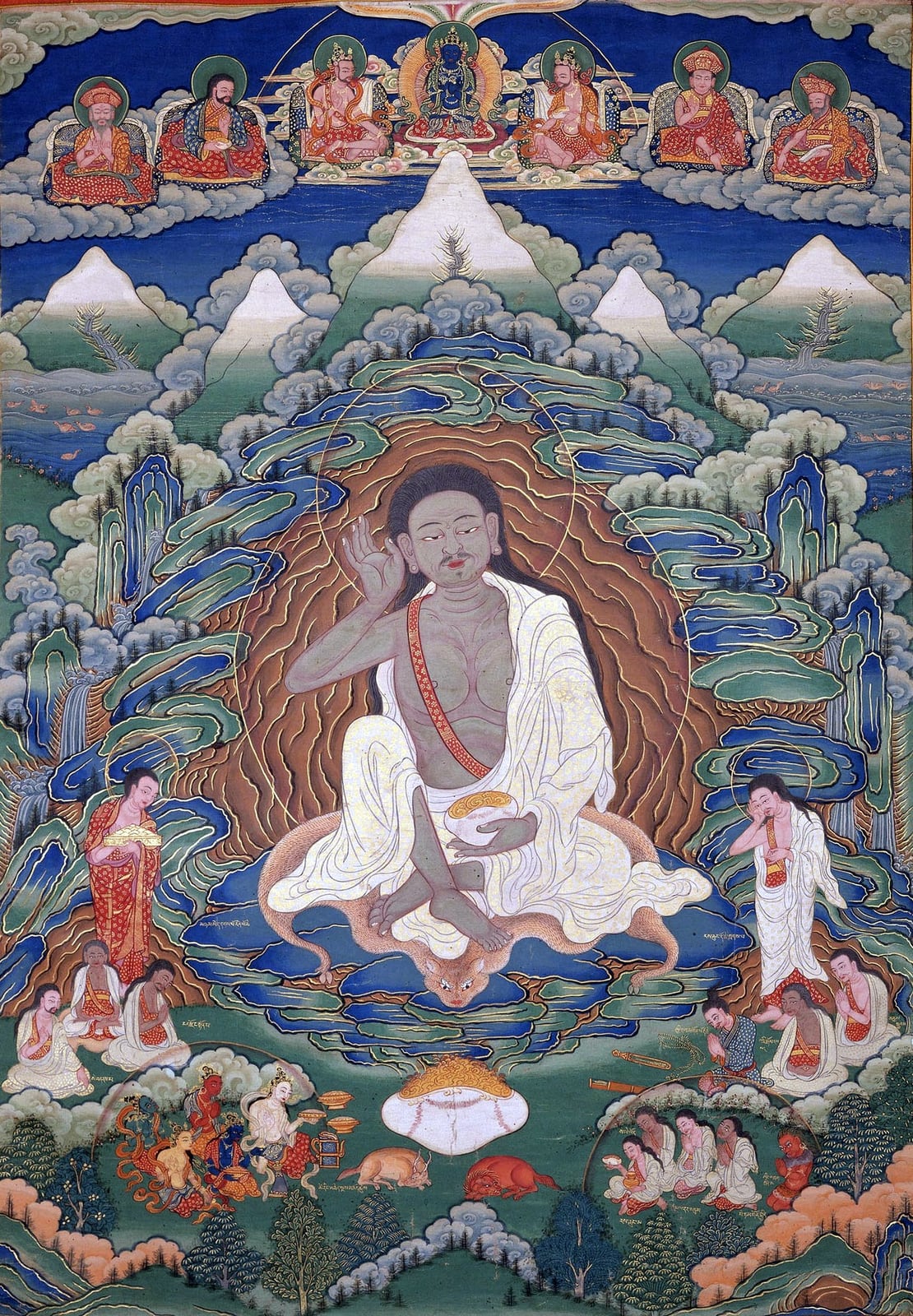
Milarepa
يتّفقان في: ما المطلق؟ هل الله موجود؟ · من أنا؟ هل توجد ذات حقيقية؟ · كيف يُبلَغ التحرّر أو الخلاص؟
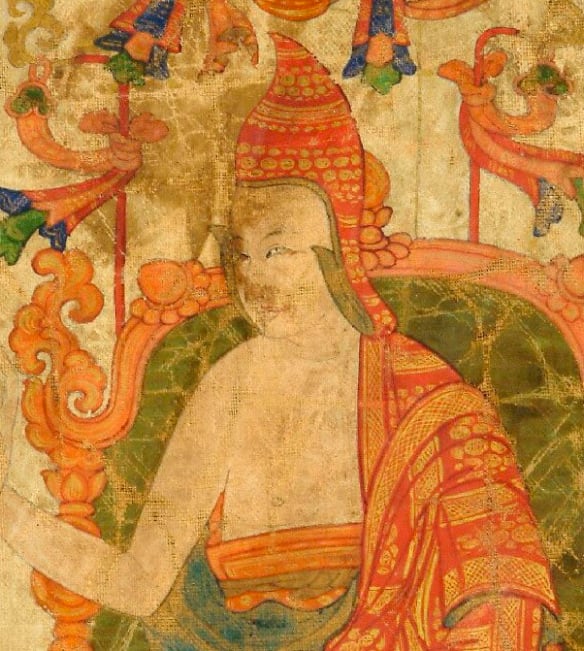
Śāntideva
يتّفقان في: ما المطلق؟ هل الله موجود؟ · من أنا؟ هل توجد ذات حقيقية؟ · كيف يُبلَغ التحرّر أو الخلاص؟
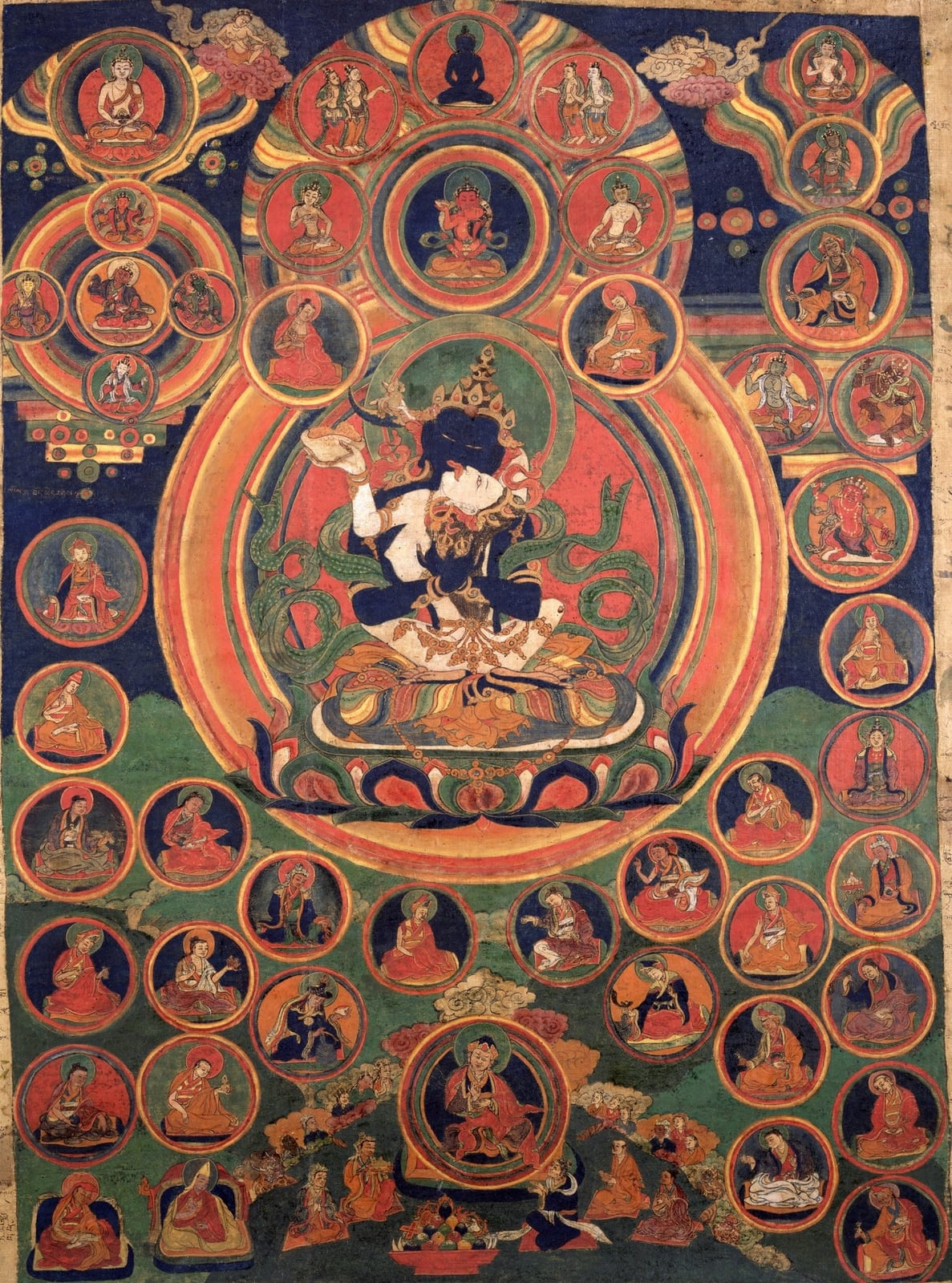
Padmasambhava
يتّفقان في: من أنا؟ هل توجد ذات حقيقية؟ · لماذا نتألّم؟ · هل نحتاج إلى معلّم؟
يبتعد في تفكيره عن
Emanuel Swedenborg
يختلفان في: ما المطلق؟ هل الله موجود؟ · من أنا؟ هل توجد ذات حقيقية؟

Julian of Norwich
يختلفان في: ما المطلق؟ هل الله موجود؟ · من أنا؟ هل توجد ذات حقيقية؟
Ignatius Brianchaninov
يختلفان في: ما المطلق؟ هل الله موجود؟ · من أنا؟ هل توجد ذات حقيقية؟
Catherine of Siena
يختلفان في: ما المطلق؟ هل الله موجود؟ · من أنا؟ هل توجد ذات حقيقية؟
حكايات وروايات
حكايات وروايات
شهادةdécada de 1690
The boy who feared hell
أصل الرواية: Autobiographical account in Itsumadegusa (1766), written by Hakuin at eighty with exemplary intent; also recorded in Tōrei's chronology.
المصدر: Hakuin Ekaku. Wild Ivy: The Spiritual Autobiography of Zen Master Hakuin (Itsumadegusa). Trad. Norman Waddell. Boston: Shambhala, 1999. ISBN 1570624356.
شهادة1708
The bell of Eigan-ji and the old man of Shōju
أصل الرواية: Autobiographical account in Itsumadegusa (1766), written by Hakuin at eighty with exemplary intent; also recorded in Tōrei's chronology.
المصدر: Hakuin Ekaku. Wild Ivy: The Spiritual Autobiography of Zen Master Hakuin (Itsumadegusa). Trad. Norman Waddell. Boston: Shambhala, 1999. ISBN 1570624356.
شهادة1708
The old woman's broom
أصل الرواية: Autobiographical account in Itsumadegusa (1766), written by Hakuin at eighty with exemplary intent; also recorded in Tōrei's chronology.
المصدر: Hakuin Ekaku. Wild Ivy: The Spiritual Autobiography of Zen Master Hakuin (Itsumadegusa). Trad. Norman Waddell. Boston: Shambhala, 1999. ISBN 1570624356.
مختلَف فيه1710
The hermit Hakuyū and the butter egg
أصل الرواية: Yasenkanna (preface dated 1757), with the date of the visit (Hōei 7, 1710) in the text itself; critical assessment by Katō Shōshun as cited by Waddell.
المصدر: Waddell, Norman (trad.). «Hakuin's Yasenkanna». The Eastern Buddhist, nueva serie, 34, n.º 1 (2002).
شهادة1726
The cricket and the Lotus Sūtra
أصل الرواية: Autobiographical account in Itsumadegusa (1766), written by Hakuin at eighty with exemplary intent; also recorded in Tōrei's chronology.
المصدر: Hakuin Ekaku. Wild Ivy: The Spiritual Autobiography of Zen Master Hakuin (Itsumadegusa). Trad. Norman Waddell. Boston: Shambhala, 1999. ISBN 1570624356.
لا يمكن التحقق منهsiglo XVIII (sin fecha)
“Is that so?”
أصل الرواية: 101 Zen Stories (Senzaki and Reps, 1939), included in Zen Flesh, Zen Bones (1957). Not found in Itsumadegusa or in Tōrei's chronology.
المصدر: Senzaki, Nyogen y Paul Reps (comps.). 101 Zen Stories. Filadelfia: David McKay, 1939; incluido en Reps, Zen Flesh, Zen Bones, 1957.
التعاليم
التعاليم
المفاهيم التي ينتظم بها فكره، مشروحة في سياقها.
The sound of one hand (sekishu onjō)sekishu-onjo
Rinzai kōan system (Hakuin school).
المصدر: Yoshizawa Katsuhiro 芳澤勝弘 (ed. y anot.). Hakuin Zenji hōgo zenshū 白隠禅師法語全集. Kioto: Zen Bunka Kenkyūsho, 1999–2003, 14 vols. e índice. ISBN del primer volumen 4881821318.
The great doubt (daigi)daigi
Kōan practice (kanna Zen).
المصدر: Waddell, Norman (trad.). The Essential Teachings of Zen Master Hakuin: A Translation of the Sokkō-roku Kaien-fusetsu. Boston: Shambhala, 1994. ISBN 0877739722.
Post-satori practice (gogo no shugyō)gogo-no-shugyo
Bodhisattva ethics in Rinzai Zen.
المصدر: Hakuin Ekaku. Wild Ivy: The Spiritual Autobiography of Zen Master Hakuin (Itsumadegusa). Trad. Norman Waddell. Boston: Shambhala, 1999. ISBN 1570624356.
Inner contemplation and Zen sickness (naikan, zenbyō)naikan
Chinese medicine and inner alchemy in Edo-period Zen.
المصدر: Waddell, Norman (trad.). «Hakuin's Yasenkanna». The Eastern Buddhist, nueva serie, 34, n.º 1 (2002).
Seeing one's nature (kenshō)kensho
Doctrine of buddha-nature; Rinzai kōan curriculum.
المصدر: Yampolsky, Philip B. (trad.). The Zen Master Hakuin: Selected Writings. Nueva York: Columbia University Press, 1971. ISBN 0231034636.
Painting as sermon (zenga)zenga
Edo-period Zen painting.
المصدر: Yoshizawa Katsuhiro. The Religious Art of Zen Master Hakuin. Ed. y trad. Norman Waddell. Berkeley: Counterpoint, 2009. ISBN 9781582434544.
مقاطع الفيديو
مقاطع الفيديو
تسجيلات ومقابلات وأفلام وثائقية. تُشغَّل مقاطع الفيديو من YouTube؛ ولا تُستضاف هنا.
Lecture by Masaki Matsubara: Revisiting Japanese Zen Master Hakuin
محاضرة· EN· 2017
Brown Universityالقناة الرسمية
The Sound of One Hand: Paintings and Calligraphy by Zen Master Hakuin
فيلم وثائقي· EN· 2010
JapanSocietyNYCالقناة الرسمية
The Sound of One Hand: Paintings and Calligraphy by Zen Master Hakuin
فيلم وثائقي· EN· 2011
Los Angeles County Museum of Artالقناة الرسمية
Zenga: A New History
محاضرة· EN· 2024
JapanSocietyNYCالقناة الرسمية
白隠禅画「観音三幅対」 解説:芳澤勝弘
تحليل· JA
臨済宗 建仁寺派 神勝禅寺القناة الرسمية
Bunkamura「白隠展 HAKUIN 禅画に込めたメッセージ」紹介 ロングver
فيلم وثائقي· JA· 2013
Bunkamurachannelالقناة الرسمية
正宗国師白隠禅師坐禅和讃
تسجيل أصلي· JA
建長寺القناة الرسمية
Zen Master Hakuin #1
محاضرة· EN
Rochester Zen Centerالقناة الرسمية
Hakuin Ekaku - Zen's Japanese Ancestors
محاضرة· EN
Great Mountain Zen Centerالقناة الرسمية
Hakuin's Sound of One Hand
محاضرة· EN
Great Mountain Zen Centerالقناة الرسمية
Zazen Wasan de Hakuin Zenji
تسجيل من طرف ثالث· ES· 2007
semillas de bambu
المعرض
المعرض
صور بترخيص متحقَّق منه. كل منها تحتفظ بمؤلّفها ونسبتها.
المخطوطات
المخطوطات
شواهد مخطوطة ونصوص قديمة، مع جهة حفظها وشروط الاطّلاع عليها.
JA · Japonés (inscripción en chino) · 1767
白隠自画像 (autorretrato)
- الشاهد المحفوظ
- Pintura con tinta y color sobre papel, 133,3 × 57 cm
- جهة الحفظ
- Ryūtaku-ji (Mishima, Shizuoka)
- الرقمنة
- commons.wikimedia.org/wiki/File:Zen-Master-Hakui…
JA · Japonés · 1751
達磨図 (Daruma-zu), Shōshū-ji
- الشاهد المحفوظ
- Gran retrato de Daruma de más de 220 cm de altura
- جهة الحفظ
- Shōshū-ji, Toyohashi (Aichi)
العلاقات
العلاقات
تأثيرات وتلمذة وتقارب في الأفكار. تُميَّز العلاقة الموثّقة عن التشابه المستخلَص بالتحليل.
تلميذ
Dōkyō Etan (Shōju Rōjin, 1642–1721)
Eight months of training in 1708; Hakuin regarded him as his true teacher, though he received no formal transmission from him.
علاقة موثّقة
معلّم
Tōrei Enji (1721–1792)
His closest disciple, author of his chronology and first abbot of the Ryūtaku-ji.
علاقة موثّقة
تأثّر بـ
A central figure of his painting: he painted Daruma hundreds of times as an emblem of Zen determination.
علاقة موثّقة
تأثّر بـ
His Rinzai lineage goes back to the sixth patriarch through Linji, and the kenshō he demands is the Platform Sūtra's “seeing the nature”.
تشابه مستخلَص بالتحليل
أفكار قريبة من
They represent the two poles of Japanese Zen: the kōan and sudden awakening versus Dōgen's practice-realisation of zazen; Hakuin belongs to the Rinzai school and Dōgen to the Sōtō.
تشابه مستخلَص بالتحليل
اختلف مع
Bankei Yōtaku (1622–1693)
Hakuin criticised “do-nothing Zen” and the Zen of the Unborn associated with Bankei's followers.
تشابه مستخلَص بالتحليل
أفكار قريبة من
Both place bodhicitta—the vow to work for all beings—above any personal attainment.
تشابه مستخلَص بالتحليل
أفكار قريبة من
His Sōtō “beginner's mind” contrasts with Hakuin's great doubt, but both place everyday practice above extraordinary experiences.
تشابه مستخلَص بالتحليل
أفكار قريبة من
Both heirs of the Linji lineage, they share the idea that awakening is proven in service to others.
تشابه مستخلَص بالتحليل
أثّر في
D. T. Suzuki
His writings spread Hakuin's idea of kenshō and the kōan in the West.
تشابه مستخلَص بالتحليل
مرتبط من صفحات أخرى
المصادر
المصادر
المراجع والفهارس التي رُوجعت لهذه الصفحة.
- Wikidata, «Hakuin Ekaku», QID Q177059 (VIAF 32794627; LCCN n80037860).
- Hakuin Ekaku. Wild Ivy: The Spiritual Autobiography of Zen Master Hakuin (Itsumadegusa). Trad. Norman Waddell. Boston: Shambhala, 1999. ISBN 1570624356.
- Yampolsky, Philip B. (trad.). The Zen Master Hakuin: Selected Writings. Nueva York: Columbia University Press, 1971. ISBN 0231034636.
- Waddell, Norman (trad.). The Essential Teachings of Zen Master Hakuin: A Translation of the Sokkō-roku Kaien-fusetsu. Boston: Shambhala, 1994. ISBN 0877739722.
- Seo, Audrey Yoshiko y Stephen Addiss. The Sound of One Hand: Paintings and Calligraphy by Zen Master Hakuin. Boston: Shambhala, 2010. ISBN 1590305787.
- Yoshizawa Katsuhiro. The Religious Art of Zen Master Hakuin. Ed. y trad. Norman Waddell. Berkeley: Counterpoint, 2009. ISBN 9781582434544.
- Katō Shōshun 加藤正俊. Hakuin Oshō nenpu 白隠和尚年譜 (edición anotada de la cronología de Tōrei Enji). Kioto, 1985.
- Yoshizawa Katsuhiro 芳澤勝弘 (ed. y anot.). Hakuin Zenji hōgo zenshū 白隠禅師法語全集. Kioto: Zen Bunka Kenkyūsho, 1999–2003, 14 vols. e índice. ISBN del primer volumen 4881821318.
- Gotō Kōson 後藤光村 (ed.). Hakuin Oshō zenshū 白隠和尚全集. Tokio: Ryūginsha, 1934–1935, 8 vols.
- Hakuin Ekaku. Poison Blossoms from a Thicket of Thorn (Keisō dokuzui). Trad. Norman Waddell. Berkeley: Counterpoint, 2014. ISBN 1619023121.
- Waddell, Norman (trad.). Hakuin's Precious Mirror Cave: A Zen Miscellany. Berkeley: Counterpoint, 2009. ISBN 9781582434759.
- Waddell, Norman (trad.). Beating the Cloth Drum: Letters of Zen Master Hakuin. Boston: Shambhala, 2012. ISBN 1590309480.
- Waddell, Norman (trad.). Zen Words for the Heart: Hakuin's Commentary on the Heart Sutra (Dokugo shingyō). Boston: Shambhala, 1996. ISBN 1570621659.
- Shaw, R. D. M. (trad.). The Embossed Tea Kettle: Orate Gama and Other Works of Hakuin Zenji. Londres: George Allen & Unwin, 1963.
- Senzaki, Nyogen y Paul Reps (comps.). 101 Zen Stories. Filadelfia: David McKay, 1939; incluido en Reps, Zen Flesh, Zen Bones, 1957.
- Kotobank, «白隠» (artículos de Nihon daihyakka zensho, Sekai daihyakka jiten y Britannica Kokusai daihyakka jiten).
- Waddell, Norman (trad.). «Hakuin's Yasenkanna». The Eastern Buddhist, nueva serie, 34, n.º 1 (2002).
- Tanahashi, Kazuaki. Penetrating Laughter: Hakuin's Zen and Art. Woodstock (NY): Overlook Press, 1984. ISBN 0879519525.
- Wikisource en japonés: 夜船閑話 (texto de Hakuin según Shaku Dokutan, Hakuin Zenji hōgoroku, Ōshima Seishindō, 1916).
- Wikipedia en japonés, «白隠慧鶴» (consultada para la lista de obras, los discípulos y las obras pictóricas fechadas).
- Shaw, R. D. M. y Wilhelm Schiffer (trads.). «Yasen Kanna: A Chat on a Boat in the Evening». Monumenta Nipponica 13 (1956).
- صاحب الحقوق
- Textos originales de Hakuin (m. 1769) en dominio público. Traducciones y ediciones modernas con derechos: Shambhala (Waddell; Seo y Addiss; Low), Counterpoint (Waddell; Yoshizawa), Columbia University Press (Yampolsky), Zen Bunka Kenkyūsho (Yoshizawa). Las pinturas son propiedad de templos, museos y coleccionistas.
في انتظار التأكيد
ما لم تتمكّن هذه الصفحة من حسمه بعد. نفضّل أن نقول ذلك على أن نملأ الفراغ.
- No se ha encontrado ninguna edición española de las obras de Hakuin con ISBN verificable (ni Orategama, ni Yasenkanna, ni Itsumadegusa, ni el Zazen wasan); buscar en el ISBN de España y en editoriales como Kairós, Siruela, Olañeta o Miraguano.
- Fechas de varias obras (Dokugo shingyō, Zazen wasan, Kanrin ihō, Hōkan ishō, Sashimogusa, Kana innen hōgo, Kanamugura, Enmei jikku Kannon-gyō reigenki) no verificadas; las demás son aproximadas según la bibliografía secundaria. Cotejar con la cronología de Katō Shōshun (1985) y con Yoshizawa.
- Contenido de Kanrin ihō, Hōkan ishō, Sashimogusa, Oniazami y Yaemugura: no se ha podido consultar; las descripciones son deliberadamente neutras.
- Fundación del Ryūtaku-ji: 1758 (Kotobank, MyPedia) o 1763 (Wikipedia en japonés).
- Sala de lectura: solo Yasenkanna está transcrito en Wikisource. Las traducciones inglesas (Shaw 1963, Yampolsky 1971, Waddell) tienen derechos; la versión de D. T. Suzuki del Zazen wasan (Manual of Zen Buddhism, 1935) está protegida en la UE hasta 2037. El texto japonés de las demás obras existe en la Biblioteca Nacional de la Dieta (escaneos), que el importador no lee.
- Texto exacto de la caligrafía «死» que circula como poema de despedida y del verso de Año Nuevo de 1769: no localizados en una fuente primaria verificable.
- Relaciones con dokyo-etan, torei-enji, bankei y dt-suzuki: no son slugs del catálogo; se han usado como identificadores provisionales.
بُحث بتاريخ 2026-10-25