البوذية · ماهايانا · زن / تشان
Bodhidharma
菩提達摩 · 菩提達磨 · 達磨 · 달마
تاريخيّته موضع جدل
راهب هندي أو من آسيا الوسطى عاش في أواخر القرن الخامس ومطلع السادس، تبجّله تقاليد التشان والزن والسون بوصفه مؤسسها وبطريركها الصيني الأول. ويؤكد مصدران قديمان أن معلّمًا للتأمّل بهذا الاسم عاش في شمال الصين وعلّم «التأمّل أمام الجدار» لهويكه وداويو؛ أما كل ما عدا ذلك تقريبًا — الإمبراطور وو، والسنوات التسع أمام جدار شاولين، وذراع هويكه، والكونغ فو — فأسطورة تكوّنت بين القرنين الثامن والسابع عشر.
- مؤلَّفًا
- 10مؤلَّفًا
- طبعة
- 9طبعة
- اقتباسًا
- 5اقتباسًا
- مقطع فيديو
- 12مقطع فيديو
- صورة
- 7صورة
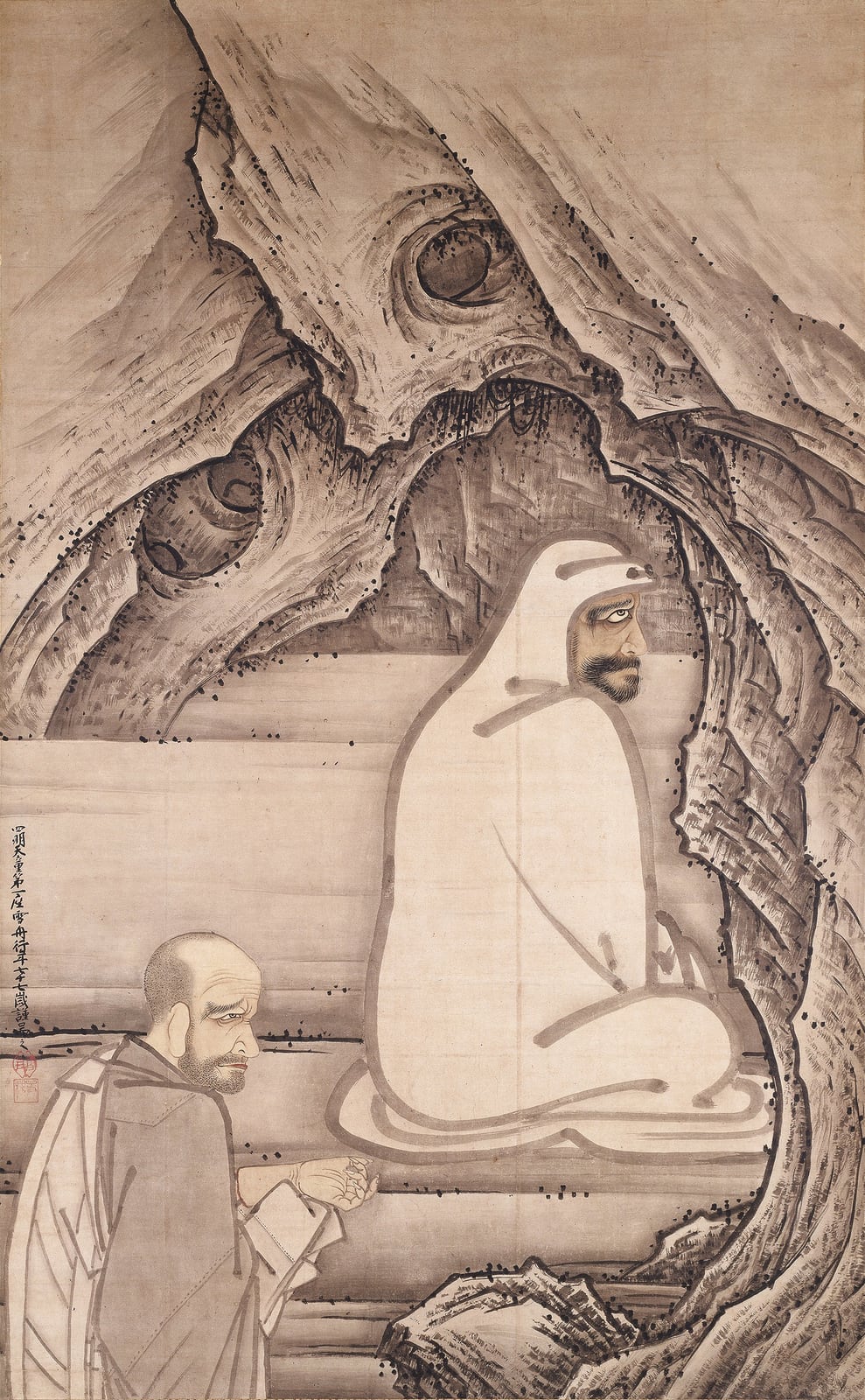
Huike ofrece su brazo a Bodhidharma, de Sesshū Tōyō (1496) · Public domain
بكلماته
«There are many paths for entering the Way, but in essence they are no more than two: entrance by principle and entrance by practice.»Tratado de las dos entradas y las cuatro prácticas, inicio (texto del Xinzuan Xu zangjing en Wikisource; traducción del investigador)
فكرته المحورية
Wall contemplation (biguan): Biguan (壁觀) is the name Tanlin and Daoxuan give to the 'method of pacifying the mind' that Bodhidharma taught, and it is the oldest term associated with his meditation.
السيرة
4 دقيقة قراءة
ترجمة مُعانة من الأصل الإسباني، بانتظار مراجعة مترجم من أهل اللغة.
غريبٌ أمام الباغودا
أول ما يظهر اسم بوديدارما مكتوبًا لا يظهر في نصّ من نصوص الزن، بل في دليلٍ يفيض حنينًا إلى أديرة لويانغ، عاصمة سلالة وي الشمالية، وضعه الموظف يانغ شيوانتشي سنة 547، حين كانت المدينة قد صارت أطلالًا. فعند وصفه الباغودا الكبرى في دير يونغنينغ، التي شُيّدت سنة 516 وأتى عليها حريق سنة 534، يذكر يانغ أن راهبًا من الأقاليم الغربية يُدعى بوديدارما، «أعجميٌّ من فارس»، وقف مبهورًا أمام أجراسها الذهبية، وصرّح بأنه، وقد بلغ مئة وخمسين عامًا وجاب البلدان كلها، لم يرَ لها مثيلًا قطّ؛ وظلّ أيامًا قائمًا أمامها ضامًّا كفّيه، يردّد «نامو». إنها شهادة تكاد تكون معاصرة له، لكنها لا تقول شيئًا عن تأمّل ولا عن تلاميذ.
معلّم التأمّل أمام الجدار
أما المصدر الثاني فمن داخل حلقته. فقد كتب تلميذ يُدعى تانلين مقدمة قصيرة لـ«رسالة المدخلين والممارسات الأربع»، وفي سنة 645 أدرجها الراهب المؤرخ داوشيوان، بنصّها تقريبًا، في سيرته لبوديدارما ضمن «تكملة سِيَر الرهبان الأجلاء». وبحسب هذه النصوص، كان بوديدارما برهميًّا من جنوب الهند — ويقول تانلين إنه الابن الثالث لملك — «عبر الجبال والبحار» فبلغ أراضي سلالة سونغ في جنوب الصين، ثم انتقل شمالًا إلى مملكة وي، حيث علّم التأمّل. فانتقده معلّمو العقيدة، وكانت لهم الغلبة يومئذ؛ ولم يتبعه سوى راهبين شابّين، داويو وهويكه، طوال أربع سنوات أو خمس.
وما علّمهما إياه، بحسب داوشيوان، «طريقةٌ لتسكين الذهن»: «التأمّل أمام الجدار» (بيغوان)، الذي يُختلف في معناه الدقيق — أهو ذهن ثابت ثبات الجدار، أم تأمّل في مواجهة الجدار — والمدخلان: مدخل المبدأ ومدخل الممارسة. ويُروى أنه أودعهما أيضًا «سوترا لانكافاتارا» في نسختها ذات الأسفار الأربعة، قائلًا: «لقد تأمّلتُ أرض الهان فلم أجد فيها إلا هذه السوترا؛ فإن عملتم بها نجوتم». ويضيف داوشيوان أن بوديدارما كان يقول إنه جاوز المئة والخمسين عامًا، وأن أحدًا لم يعرف كيف كانت نهايته؛ غير أنه يذكر في سيرة هويكه أنه مات على ضفاف نهر لوه.
اختراع بطريرك
طوال أكثر من قرن لم يُسنِد أحدٌ إلى هذا المعلّم دورًا خاصًّا. ثم كان بين أواخر القرن السابع ومطلع الثامن أن رسم تلاميذ هونغرن وشينشيو، رغبةً منهم في أن يمنحوا مدرستهم التأمّلية نسبًا لا يقلّ نبلًا عن نسب مدارس العقيدة، سلسلةَ انتقالٍ تبدأ ببوديدارما وتمرّ بهويكه وسنغتسان وداوشين وهونغرن. فجعلت منه حوليات ذلك العصر، مثل «سجلّ انتقال كنز الدارما»، «البطريرك الأول»؛ أما «سجلّ معلّمي اللانكا وتلاميذهم» فيقدّم عليه غونابهادرا، مترجم السوترا. ثم جاء جدال شينهوي ضد المدرسة الشمالية، و«سوترا المنصّة» للبطريرك السادس هوينينغ، فكيّفا السلسلة على مقاس مصالحهما، ومدّها كتاب «باولين جوان» (801) إلى الوراء حتى جعل بوديدارما البطريرك الهندي الثامن والعشرين بعد البوذا.
ومع السلسلة جاءت الحكايات. فمنذ القرن الثامن تظهر المقابلة مع الإمبراطور وو من سلالة ليانغ، الذي يسأله كم من الثواب نال ببناء المعابد فيتلقّى جواب «لا شيء»، ثم يسأله من الذي يقف أمامه فيسمع «لا أدري». وقد ثبّت «سجلّ انتقال المصباح في عهد جينغده» (1004) الرواية المعتمدة: عبور نهر اليانغتسي على قصبة، والسنوات التسع من التأمّل أمام جدار كهف قريب من شاولين، وهويكه منتظرًا في الثلج ثم قاطعًا ذراعه برهانًا على صدقه، والحوار الذي «يسكّن» فيه المعلّم ذهنه، وتسليم الرداء والوعاء، ومحاولات التسميم الست، والقبر في جبل شيونغ أر، والمسافر سونغ يون الذي يلقاه في جبال البامير وفي يده نعل واحدة، وقد كان الناس يحسبونه مدفونًا.
ولا أساس لأيٍّ من هذه الحكايات في المصادر القديمة، بل إن بعضها يناقضها: فبحسب داوشيوان فقد هويكه ذراعه على أيدي قطّاع طرق، واحتمل جرحه من غير شكوى. وكما بيّن برنار فور، أدّت شخصية بوديدارما وظيفة «النموذج النصّي»: موضعٌ فارغ دوّن فيه كل جيل من أجيال المدرسة ما كان يحتاج إلى قوله عن نفسه.
النصوص
من الأعمال المنسوبة إليه، لا يملك سندًا يرجع إلى حلقته إلا «رسالة المدخلين والممارسات الأربع». وتضعها مخطوطات دونهوانغ في صدر مجموعة أكبر تُعرف بـ«اللفافة الطويلة»، فيها أقوال معلّمين من القرن السابع. أما المواعظ المتداولة اليوم باسمه — موعظة سلسلة الدم، وموعظة اليقظة، وموعظة كسر الأشكال — فهي أعمال تشانيّة لاحقة؛ والأخيرة منها هي في الحقيقة «رسالة تأمّل الذهن» لشينشيو. والمجموعة التي تضمّها، «الأبواب الستة لشاوشي»، تعود إلى عهد سونغ أو بعده. وأحدث من ذلك كله شهرته مؤسسًا للكونغ فو: فـ«كتاب تبديل الأوتار»، الذي يقدّمه معلّمًا للتمارين البدنية، كتبه طاويٌّ في مطلع القرن السابع عشر.
من الراهب إلى الأيقونة
والحصيلة واحدة من أكثر الشخصيات تصويرًا في الفن الآسيوي. ففي اليابان، حيث يُسمّى داروما، صوّره رسّامو الزن، من سيشو إلى هاكوين، بعينين جاحظتين ولحية أعجمية؛ وصارت الدمى المصنوعة من عجينة الورق، بلا ذراعين ولا ساقين، والتي تستحضر سنوات تأمّله الساكن، تمائمَ للمثابرة. وتستحضره مدارس التشان والزن والسون والتيين أصلًا لـ«الانتقال الخاص خارج النصوص» الذي، بحسب صيغة من عهد سونغ، «لا يستند إلى الكلمات، ويشير مباشرة إلى الذهن، ويُري المرء طبيعته الذاتية ليصير بوذا». أما ما يسمح التاريخ بتأكيده فأقلّ من ذلك بكثير: أن راهبًا غريبًا علّم، نحو سنة 500، في شمال الصين، تأمّلًا صارمًا مستندًا إلى «لانكافاتارا» لحفنة من التلاميذ، وأن من تلك الحفنة خرج، عبر دروب لم يكن ليتخيّلها، تقليد الزن.
المصادر: Yang Xuanzhi. Luoyang qielan ji (Memoria de los monasterios budistas de Luoyang), 547, cap. 1, «Monasterio de Yongning». Texto chino en Wikisource; trad. inglesa: Yi-t'ung Wang, A Record of Buddhist Monasteries in Lo-yang, Princeton University Press, 1984 (ISBN 9780691054032). · Daoxuan. Xu gaoseng zhuan (Continuación de las biografías de monjes eminentes), 645 (ampliada hasta 667), cap. 16: biografías de Bodhidharma y de Huike (Taishō 2060). Texto chino en Wikisource. · Tanlin (atrib.). Prefacio al «Tratado de las dos entradas y las cuatro prácticas» (菩提達磨大師略辨大乘入道四行觀), según el Xinzuan Xu zangjing. Texto chino en Wikisource. · Broughton, Jeffrey L. The Bodhidharma Anthology: The Earliest Records of Zen. Berkeley: University of California Press, 1999. ISBN 9780520219724. · McRae, John R. Seeing Through Zen: Encounter, Transformation, and Genealogy in Chinese Chan Buddhism. Berkeley: University of California Press, 2003. ISBN 9780520237988.
الخط الزمني
الحياة عامًا بعد عام
كل نقطة حدث موثّق. انقر لتقرأه مع مصدره ودرجة اليقين فيه.
عقد 470China meridional (territorio de los Song)
Arrival in China
According to Daoxuan he first reached the territory of the Song dynasty (420–479) in the south and later went north. Late tradition places it in 527, in Canton.
تقليدDaoxuan. Xu gaoseng zhuan (Continuación de las biografías de monjes eminentes), 645 (ampliada hasta 667), cap. 16: biografías de Bodhidharma y de Huike (Taishō 2060). Texto chino en Wikisource.
عقد 470
Arrival in China
According to Daoxuan he first reached the territory of the Song dynasty (420–479) in the south and later went north. Late tradition places it in 527, in Canton.
تقليد
نحو 520
Before the Yongning pagoda
Yang Xuanzhi describes him admiring the Yongning pagoda (built 516, burned 534) and claiming to be a hundred and fifty years old.
موثّق
نحو 520
Teaching Daoyu and Huike
He teaches wall contemplation and the two entrances to his two disciples for four or five years and gives Huike the Laṅkāvatāra.
مرجَّح
527
Interview with Emperor Wu (legend)
The date tradition gives for the dialogue on merit with Emperor Wu of the Liang; the episode appears in the eighth century.
تقليد
نحو 528
Nine years facing the wall (legend)
Late tradition places him meditating for nine years facing the wall of a cave near Shaolin.
تقليد
536
Death (traditional date)
Daoxuan only says that he died by the Luo river and that no one knew how he ended; 536 is the most widespread traditional date.
تقليد
547
First written mention
Yang Xuanzhi completes the Record of the Buddhist Monasteries of Luoyang, with the notice on Bodhidharma.
موثّق
645
Daoxuan's biography
Daoxuan includes his biography and Huike's in the Continued Biographies of Eminent Monks.
موثّق
نحو 716
First patriarch
The chronicles of the meditation school (Chuan fabao ji, Lengqie shizi ji) make him the first patriarch of a line of transmission.
موثّق
801
Twenty-eighth Indian patriarch
The Baolin zhuan extends the genealogy back to the Buddha and makes him the twenty-eighth Indian patriarch.
موثّق
1004
The Transmission of the Lamp
The Jingde chuandeng lu fixes the canonical version of his legend.
موثّق
1496
Sesshū paints Huike and Bodhidharma
Sesshū Tōyō paints the scene of Huike offering his arm.
موثّق
1624
The Yijin jing
Date of the preface of the Sinew-Changing Classic, falsely attributed to Bodhidharma, the origin of his fame as founder of Shaolin kung fu.
موثّق
المؤلَّفات
المؤلَّفات الأساسية
المؤلَّفات التي لا يُفهم إرثه من دونها.

تعليم شفهي مدوَّن
Treatise on the Two Entrances and the Four Practices
二入四行論 (菩提達磨大師略辨大乘入道四行觀)
A short teaching that sums up the path in two 'entrances': entrance by principle (理入), which consists in deep faith that all beings share one true nature, hidden by the dust of thoughts, and in 'abiding firmly in wall contemplation'; and entrance by practice (行入), unfolded in four practices: accepting suffering as the fruit of past deeds, adapting to circumstances, seeking nothing, and acting in accord with the Dharma. It is the core of what can be attributed to Bodhidharma with any plausibility.
3 طبعات · amazon.com
نسبة تقليدية · القرن XI
The Bloodstream Sermon (Xuemai lun)
達磨大師血脈論
A question-and-answer dialogue that opens by stating that buddhas are transmitted 'from mind to mind, without relying on written words' and holds that seeking the buddha outside one's own nature is useless: 'whoever wishes to see the buddha must see his nature'. It already sets out the mature Chan doctrine of sudden awakening and the critique of external practices.
طبعة واحدة · amazon.com
نسبة تقليدية · القرن XI
The Wake-up Sermon (Wuxing lun)
達磨大師悟性論
A short treatise on awakening to one's own nature: enlightenment is reached not by accumulating merit or by study but by seeing that the mind itself is empty and free. Included in the Shaoshi liumen, it is among the texts most widely read in the West as 'words of Bodhidharma', thanks to Red Pine's translation.
طبعة واحدة · amazon.com
جميع مؤلَّفاته (10)
The 'Long Scroll': Dunhuang Compilation around the Two Entrances
700
The Breakthrough Sermon (Poxiang lun)
700
Bodhidharma
The Dharma Gate of Pacifying the Mind (Anxin famen)
The Conscious LibraryThe Dharma Gate of Pacifying the Mind (Anxin famen)
Bodhidharma
Verses on the Heart Sūtra (Xinjing song)
The Conscious LibraryVerses on the Heart Sūtra (Xinjing song)
Bodhidharma
The Six Gates of Shaoshi (Shaoshi liumen)
The Conscious LibraryThe Six Gates of Shaoshi (Shaoshi liumen)
Bodhidharma
Sinew-Changing Classic (Yijin jing)
The Conscious LibrarySinew-Changing Classic (Yijin jing)
1624
Bodhidharma
Marrow-Washing Classic (Xisui jing)
The Conscious LibraryMarrow-Washing Classic (Xisui jing)
1650
الأقوال
أقوال محدَّدة الموضع في مؤلَّف بعينه. كل منها يحمل مصدره ودرجة الثقة به.
There are many paths for entering the Way, but in essence they are no more than two: entrance by principle and entrance by practice.夫入道多途,要而言之,不出二種:一是理入、二是行入。
مرجَّحTratado de las dos entradas y las cuatro prácticas, inicio (texto del Xinzuan Xu zangjing en Wikisource; traducción del investigador)
أقوال منحولة أو مختلَف في نسبتها (3)
«A special transmission outside the scriptures, not relying on words and letters, pointing directly to the human mind, seeing one's nature and becoming a buddha.»
A four-line formula (教外別傳,不立文字,直指人心,見性成佛) that tradition attributes to Bodhidharma. Its elements appear in Chan texts of the ninth and tenth centuries and the complete formula took shape in the Song period (eleventh–twelfth centuries); it is found in no sixth- or seventh-century source.
«The three realms arise together and return to a single mind. Buddhas before and after transmit from mind to mind, without relying on writing.»
Opening of the 'Bloodstream Sermon' (三界混起,同歸一心,前佛後佛,以心傳心,不立文字), a late-attributed text with ninth- and tenth-century Chan vocabulary; it was circulating by 1153.
«Vast emptiness, nothing holy.»
The reply (廓然無聖) legend puts in his mouth before Emperor Wu when the latter asks about the highest meaning of the holy truth. The dialogue appears in the eighth century and is fixed in the Jingde chuandeng lu (1004) and the Biyan lu (case 1); it has no support in the early sources.
الكلمات الأخيرة
نسبة تقليدية
«I came to this land originally to transmit the Dharma and save the deluded. One flower will open five petals, and the fruit will ripen of itself.»吾本來茲土,傳法救迷情。一華開五葉,結果自然成。
A transmission verse that the Jingde chuandeng lu (1004) attributes to Bodhidharma on taking leave of his disciples: after asking them what they had understood and telling them they had obtained his skin, his flesh, his bones and, in Huike's case, his marrow, he gives Huike the robe and the Laṅkāvatāra and recites these lines. The 'five petals' were read as a prophecy of the following five patriarchs or of the five houses of Chan. It is a composition of the late tradition; the early sources (Daoxuan) say no one knew how he ended.
المصدر: Daoyuan. Jingde chuandeng lu (Registro de la transmisión de la lámpara de la era Jingde), 1004, cap. 3 (Taishō 2076). CBETA.
اسأل
بماذا يجيب أثره
اثنا عشر سؤالًا كبيرًا من أسئلة الإنسانية، وما تتيح نصوصه الإجابة به عنها، مع المراجع. ولا نقوّله ما لم يقل أبدًا.
ما المطلق؟ هل الله موجود؟
One and the same true nature in all beings, hidden by dust
مطلق غير شخصييُستنتج من تعاليمه
The only work with any chance of being his, the Treatise on the Two Entrances and Four Practices, does not speak of God. It speaks of a «principle» (li) and of a «true nature» that all living beings share and that is hidden only by the adventitious dust of deluded thoughts. Entering by principle means returning from the false to the true through wall contemplation, until silently according with it, without self or other, the ordinary person and the sage being equal. That nature is not someone: it does not know, will or relate to the creature. It is the common, formless ground that Chinese Buddhism called buddha-nature. The closest key is that of an impersonal Absolute, with the proviso that the text never calls it so.
قارن هذا السؤال مع معلّمين آخرينمن أنا؟ هل توجد ذات حقيقية؟
Beneath deluded thoughts, a shared true nature, without self or other
الذات هي المطلقيُستنتج من تعاليمه
The Treatise on the Two Entrances, the only work that can be traced to Bodhidharma's circle, does not speak of the self as a soul or a person. It speaks of a true nature that all living beings share and that the adventitious dust of deluded thoughts covers. Whoever abandons the false and returns to the true, steadfast in wall contemplation, is left «without self or other»: the ordinary person and the sage are equal. The text thus joins two statements that seem opposed. The particular self, with its gains and losses, is not what we are; what we are is that common nature, which belongs to no one. The fourth practice, in accord with the Dharma, adds that in the Dharma there is no self, because it is free of the stain of self.
قارن هذا السؤال مع معلّمين آخرينلماذا نتألّم؟
To seek is to suffer; to seek nothing is peace
التعلّق والشهوةيقوله صراحةً
The Treatise on the Two Entrances and Four Practices answers soberly. The third practice, «seeking nothing», starts from the fact that dwelling long in the three worlds is like living in a burning house: all that has a body suffers. Worldly people, deluded, attach themselves to one thing after another and call this seeking; the sage understands that all seeking brings suffering and that ceasing to seek brings joy. The first practice adds a karmic reading: present pain is the fruit of past deeds, committed over countless lives, and must be accepted without resentment. The second asks one to adapt to circumstances: gain and loss depend on them, and the mind that is not moved by the wind of joy silently accords with the Way.
قارن هذا السؤال مع معلّمين آخرينماذا يحدث بعد الموت؟
Present pain comes from past lives: it is accepted without resentment
الولادة من جديد وفق الكارمايُستنتج من تعاليمه
The Treatise on the Two Entrances and Four Practices does not speak of what happens at death, but it takes rebirth for granted. The first practice, that of «requiting injury», asks the sufferer to consider that, over countless aeons, he has abandoned the essential for the incidental and wandered through all forms of existence, causing hatred and harm; what he suffers now is the ripened fruit of those deeds, not something imposed by heaven or men. This awareness of previous lives serves to accept pain without resentment. The third practice presents the three worlds as a burning house from which only ceasing to seek frees one. The framework is the common Buddhist one; the text adds no doctrine of its own about death.
قارن هذا السؤال مع معلّمين آخرينكيف يُبلَغ التحرّر أو الخلاص؟
Two entrances: by principle, contemplating the wall, and by four practices
بالممارسة المنضبطةيقوله صراحةً
The Treatise on the Two Entrances and Four Practices sums up the path in its first sentence: many are the ways, but in essence they are two, entrance by principle and entrance by practice. The first consists in trusting deeply that all beings share a true nature and remaining steadfast in wall contemplation until silently according with it. The second unfolds in four practices: accepting suffering as the fruit of past deeds, adapting to circumstances without letting gain or loss move the mind, seeking nothing, and acting in accord with the Dharma, practising the perfections without attachment. It is a sober programme, joining a vision and a daily discipline of the mind.
قارن هذا السؤال مع معلّمين آخرينهل نحتاج إلى معلّم؟
He hands over a sūtra and a practice: «you yourselves will be saved»
مفيد لكنه ليس ضروريًايُستنتج من تعاليمه
The oldest sources present Bodhidharma as a master with few disciples, Huike and Daoyu among them, according to Tanlin's preface. But what they transmit of him is not the idea of dependence on the master. According to Daoxuan's biography of Huike, when he handed him the four-fascicle Laṅkāvatāra he told him that in the land of the Han there was only this sūtra and that, if they practised it, they themselves would be saved. The Treatise on the Two Entrances adds that, steadfast in wall contemplation, one no longer follows the letter of the teachings: access is inward. The master guides and hands over a text and a method; the work belongs to the disciple. The image of the patriarch transmitting awakening from mind to mind is later.
قارن هذا السؤال مع معلّمين آخرينهل العالم حقيقي؟
Gain and loss depend on circumstances; forms are empty
شبكة أسباب بلا جوهريُستنتج من تعاليمه
The Treatise on the Two Entrances sets out no cosmology, but it shows how it looks at the world. The second practice states that beings have no self and that all that happens to them, gain or loss, honour or disgrace, depends on circumstances: when these are exhausted, it disappears, and there is no reason to rejoice or grieve. The fourth practice calls Dharma the principle of the purity of nature, and says that in it all forms are empty, without stain or attachment, without this or that. The third adds the existential side: the three worlds are a burning house. The world thus appears as a web of conditions without substance, before which the practitioner remains unmoved, neither rejecting nor pursuing it.
قارن هذا السؤال مع معلّمين آخرينما الحب؟
He does not define love; he practises the perfections for his own and others' benefit
لم يُبدِ رأيًا
The Treatise on the Two Entrances and Four Practices contains no reflection on love. The closest thing is in the fourth practice, acting in accord with the Dharma: whoever understands that in pure nature there is neither self nor other practises generosity without avarice towards one's body, life or goods, and offers it without attachment, to eliminate delusion, benefiting oneself and others. The other perfections are practised in the same way. The text presupposes the bodhisattva ideal of Chinese Buddhism, in which compassion is central, but its emphasis lies on purifying one's own mind and on equanimity in circumstances, not on the affective bond. Attributing a doctrine of love to it would be forcing it.
قارن هذا السؤال مع معلّمين آخرينهل نحن أحرار أم أن كل شيء مقدَّر؟
What one suffers is the fruit of the past; how one receives it, a present decision
الكارما والاختياريقوله صراحةً
The first two practices of the Treatise on the Two Entrances formulate a very concrete ethics of karma. The first asks that, in the face of suffering, one consider it the ripened fruit of deeds committed in past lives, not something imposed by heaven or men, and accept it without complaint or resentment. The second adds that beings have no self and that everything, gain or loss, honour or disgrace, depends on circumstances, so that when these are exhausted it disappears. The past determines what comes; what remains in the practitioner's hands is not to be moved: the mind neither grows nor wanes, the wind of joy does not move it, and so it silently accords with the Way. Freedom lies in the response, not in the event.
قارن هذا السؤال مع معلّمين آخرينلماذا نتأمّل أو نصلّي؟
Contemplating the wall: returning from the false to the true nature
العودة إلى منبع الأنايُستنتج من تعاليمه
The meditation associated with Bodhidharma in the oldest sources is wall contemplation (biguan), which Tanlin and Daoxuan present as his method for pacifying the mind. The Treatise on the Two Entrances places it within entrance by principle: whoever trusts that all beings share a true nature, hidden by deluded thoughts, abandons the false, returns to the true and remains steadfast, unmoving, without self or other, until silently according with the principle. The exact meaning of «wall» is debated: it may be the mind firm as a wall or literally sitting before one. What is clear is the direction: not observing phenomena one by one, but returning to the source that thoughts cover.
قارن هذا السؤال مع معلّمين آخرينهل يستطيع العقل أن يعرف الحقيقة القصوى؟
Steadfast before the wall, one no longer follows the letter of the teachings
الحقيقة القصوى وراء العقليقوله صراحةً
The Treatise on the Two Entrances does not belittle the scriptures: entrance by principle begins by relying on them to trust in the true nature common to all beings. But the decisive step goes beyond them. Whoever remains steadfast in wall contemplation, without self or other, no longer follows the letter of the teachings, and silently accords with the principle. Ultimate understanding is neither conceptual nor discursive: it is a silent conformity. According to Daoxuan, Bodhidharma handed Huike a sūtra, the Laṅkāvatāra, as sufficient guidance for China, which shows that the written word had its place. Reason and text prepare; the ultimate is realised directly, in the silence of a mind that has stopped moving.
قارن هذا السؤال مع معلّمين آخرينالانسحاب من العالم أم تغييره؟
Seek nothing in a burning house; steadfast before the wall
الانسحاب لكي نجديُستنتج من تعاليمه
The Treatise on the Two Entrances proposes an attitude of distance towards the world. The third practice, seeking nothing, starts from the fact that the three worlds are a burning house in which all that has a body suffers; the sage, unlike deluded people, stops pursuing and clings to nothing. Wall contemplation requires remaining steadfast and unmoving. But the second practice qualifies this: it is not a matter of fleeing circumstances but of adapting to them without letting gain or loss move the mind, and the fourth asks one to practise generosity for one's own and others' benefit. Withdrawal is inward before it is geographical: detachment in the midst of what happens, rather than abandonment of the world.
قارن هذا السؤال مع معلّمين آخرين
التقارب والتوتّر
التقارب والتوتّر
محسوبة سؤالًا سؤالًا انطلاقًا من مواقفه. وسبب كل اتفاق أو اختلاف يظهر بالنقر.
يقترب في تفكيره من

Siddhartha Gautama, the Buddha
يتّفقان في: لماذا نتألّم؟ · ماذا يحدث بعد الموت؟ · كيف يُبلَغ التحرّر أو الخلاص؟
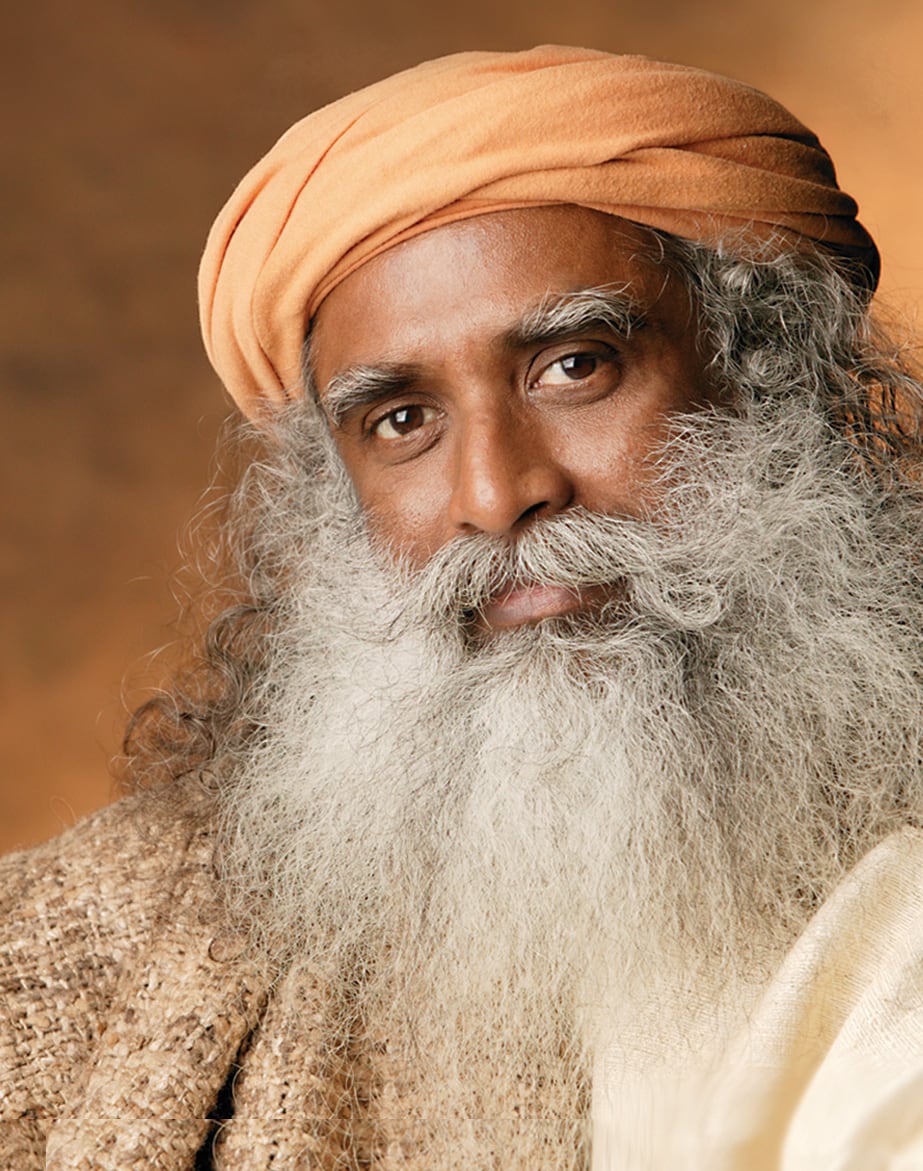
Sadhguru
يتّفقان في: ما المطلق؟ هل الله موجود؟ · من أنا؟ هل توجد ذات حقيقية؟ · ماذا يحدث بعد الموت؟
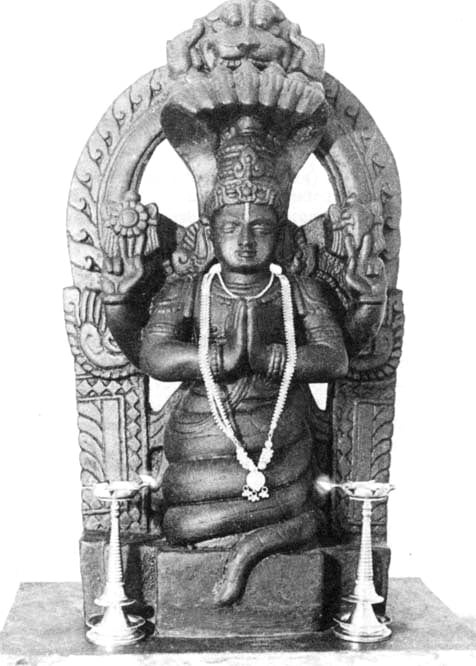
Patañjali
يتّفقان في: من أنا؟ هل توجد ذات حقيقية؟ · ماذا يحدث بعد الموت؟ · كيف يُبلَغ التحرّر أو الخلاص؟
Mahāvīra
يتّفقان في: ماذا يحدث بعد الموت؟ · كيف يُبلَغ التحرّر أو الخلاص؟ · هل نحتاج إلى معلّم؟
يبتعد في تفكيره عن

Francis of Assisi
يختلفان في: من أنا؟ هل توجد ذات حقيقية؟ · ماذا يحدث بعد الموت؟

Chaitanya Mahaprabhu
يختلفان في: من أنا؟ هل توجد ذات حقيقية؟ · ماذا يحدث بعد الموت؟

Emanuel Swedenborg
يختلفان في: من أنا؟ هل توجد ذات حقيقية؟ · ماذا يحدث بعد الموت؟

Theophan the Recluse
يختلفان في: من أنا؟ هل توجد ذات حقيقية؟ · ماذا يحدث بعد الموت؟
حكايات وروايات
حكايات وروايات
موثّقc. 516–534
The monk who admired the pagoda
أصل الرواية: Yang Xuanzhi, Luoyang qielan ji (547), ch. 1, entry on Yongning monastery (Chinese text on Wikisource). Some scholars doubt that the 'Persian' monk is the same Bodhidharma as Daoxuan's; most accept it.
رواية من سِيَر القدّيسين527 (fecha tradicional)
'I do not know'
أصل الرواية: Earliest versions in texts from Shenhui's circle and in the Platform Sūtra (eighth century); canonical form in the Jingde chuandeng lu (1004), ch. 3, and the Biyan lu (1125), case 1. McRae and Faure analyse it as a creation of the school.
مختلَف فيهs. VI (narrado en el s. VIII y fijado en 1004)
Huike's arm
أصل الرواية: Daoxuan, Xu gaoseng zhuan (645), ch. 16, biography of Huike: '遭賊斫臂' (bandits cut off his arm). The self-sacrifice version: eighth-century Chan texts and the Jingde chuandeng lu (1004), ch. 3.
رواية من سِيَر القدّيسينs. VI (narrado desde el s. VIII)
Pacifying the mind
أصل الرواية: Jingde chuandeng lu (1004), ch. 3; Wumen guan (1228), case 41. The term 安心 comes from Tanlin and Daoxuan.
رواية من سِيَر القدّيسينs. VI (narrado desde el s. VIII)
The sandal of the Pamirs
أصل الرواية: Jingde chuandeng lu (1004), ch. 3, and earlier Chan sources; the account of Song Yun's journey survives in the Luoyang qielan ji itself (ch. 5), with no mention of Bodhidharma. Faure (1986) analyses the borrowing of the Daoist motif.
لا يمكن التحقق منهleyenda formada desde 1624
The founder of kung fu
أصل الرواية: Shahar, The Shaolin Monastery (2008), chapter on the Yijin jing. The attribution to Bodhidharma has no basis before the seventeenth century; today it circulates mostly through martial-arts cinema.
المصدر: Shahar, Meir. The Shaolin Monastery: History, Religion, and the Chinese Martial Arts. Honolulu: University of Hawai'i Press, 2008.
التعاليم
التعاليم
المفاهيم التي ينتظم بها فكره، مشروحة في سياقها.
Wall contemplation (biguan)biguan
Early Chan meditation; reinterpreted in the Sōtō tradition (Dōgen).
The two entrances and the four practicesdos-entradas
Sixth-century Chinese Mahāyāna; buddha-nature (tathāgatagarbha) doctrine.
The Laṅkāvatāra Sūtralankavatara
Yogācāra and tathāgatagarbha; the earliest Chan school.
The lineage of patriarchslinaje-patriarcal
Chan historiography (Chuan fabao ji, Lengqie shizi ji, Baolin zhuan, Jingde chuandeng lu).
المصدر: McRae, John R. Seeing Through Zen: Encounter, Transformation, and Genealogy in Chinese Chan Buddhism. Berkeley: University of California Press, 2003. ISBN 9780520237988.
Transmission outside the scripturestransmision-fuera-escrituras
Song-period Chan; Japanese Zen.
المصدر: McRae, John R. Seeing Through Zen: Encounter, Transformation, and Genealogy in Chinese Chan Buddhism. Berkeley: University of California Press, 2003. ISBN 9780520237988.
مقاطع الفيديو
مقاطع الفيديو
تسجيلات ومقابلات وأفلام وثائقية. تُشغَّل مقاطع الفيديو من YouTube؛ ولا تُستضاف هنا.
[Prof. Mario Poceski - Lecture 1] "The Story of Chan: History, Literature, Teachings and Practices"
محاضرة· EN· 121 min
HKUCBSالقناة الرسمية
CHAN BUDDHISM IN THE TANG DYNASTY / Dr. Alan Cole
محاضرة· EN· 51 min
UArizona Center for Buddhist Studiesالقناة الرسمية
Bodhidharma by Prof Charles Willemen
محاضرة· EN· 60 min
Boon Litsavanh
A Monk I Bodhidharma I Documentary
فيلم وثائقي· EN· 62 min
Doordarshan Nationalالقناة الرسمية
Bodhidharma: Founder of Zen, from India to Shaolin
فيلم وثائقي· EN· 21 min
Biographics
What is Zen Buddhism?
تحليل· EN· 45 min
Let's Talk Religion
Red Pine: Travels, Hermits and Zen (Full Version)
فيلم وثائقي· EN· 77 min
John Blofeld Documentary Project
Bodhidharma and the Two Entrances
محاضرة· EN· 20 min
Thousand Harbours Zen
La Historia de Bodhidharma ~Sommer
تسجيل من طرف ثالث· ES· 21 min
·SOMMER·
El Sermón del Despertar del Primer Patriarca Zen - Bodhidharma | Budismo Zen
تسجيل من طرف ثالث· ES· 56 min
KarunaPura
Bodhidharma Sermones sobre el Zen
تسجيل من طرف ثالث· ES· 87 min
Cosas del Zen
高僧傳奇 達摩祖師 第001集
تسجيل من طرف ثالث· ZH· 23 min
十方法界基金會
المعرض
المعرض
صور بترخيص متحقَّق منه. كل منها تحتفظ بمؤلّفها ونسبتها.
المخطوطات
المخطوطات
شواهد مخطوطة ونصوص قديمة، مع جهة حفظها وشروط الاطّلاع عليها.
ZH · Chino · Siglos VII–VIII
二入四行論長卷子 (manuscritos de Dunhuang)
- الشاهد المحفوظ
- Varios manuscritos de Dunhuang, entre ellos copias de la colección Stein (British Library) y Pelliot (BnF), editados por Yanagida Seizan y traducidos por Broughton
- جهة الحفظ
- British Library (colección Stein) y Bibliothèque nationale de France (colección Pelliot)
العلاقات
العلاقات
تأثيرات وتلمذة وتقارب في الأفكار. تُميَّز العلاقة الموثّقة عن التشابه المستخلَص بالتحليل.
التقى بـ
Emperador Wu de los Liang (r. 502–549)
A legendary meeting, attested only from the eighth century.
تشابه مستخلَص بالتحليل
أفكار قريبة من
Shenxiu (m. 706)
The Breakthrough Sermon attributed to Bodhidharma is in fact Shenxiu's Guanxin lun.
تشابه مستخلَص بالتحليل
تأثّر بـ
Siddhartha Gautama, the Buddha
According to the Chan genealogy fixed in the Baolin zhuan (801), twenty-eighth patriarch in the 'mind-to-mind' transmission begun by the Buddha; a legendary filiation.
علاقة موثّقة
تأثّر بـ
In the Chan list of twenty-eight Indian patriarchs Nāgārjuna is the fourteenth; the filiation is a genealogical construction of the eighth and ninth centuries, not a historical relationship.
علاقة موثّقة
أثّر في
The Platform Sūtra presents Huineng as sixth patriarch of the line beginning with Bodhidharma and attributes to him the dialogue with Emperor Wu on merit.
علاقة موثّقة
أثّر في
Dōgen (1200–1253), founder of Japanese Sōtō Zen, placed himself in the line of transmission going back to Bodhidharma and wrote about him in the Shōbōgenzō; the Sōtō practice of sitting facing the wall recalls the legend of the nine years before the wall.
علاقة موثّقة
أفكار قريبة من
A parallel identified by the researcher: two masters of Indian origin, recognised founders of foreign traditions (Chan and Nyingma), whose biography is mostly later legend. In eighth-century Tibet Chan and Great Perfection teachings coexisted, as the Dunhuang manuscripts show.
تشابه مستخلَص بالتحليل
معلّم
Dazu Huike (487–593)
His principal disciple according to Tanlin and Daoxuan, to whom he is said to have given the Laṅkāvatāra; second patriarch of Chan.
علاقة موثّقة
معلّم
Daoyu
The other disciple mentioned by Tanlin and Daoxuan.
علاقة موثّقة
معلّم
Tanlin
Author of the preface to the Treatise on the Two Entrances, in which he presents himself as a disciple.
علاقة موثّقة
المصادر
المصادر
المراجع والفهارس التي رُوجعت لهذه الصفحة.
- Wikidata, «Bodhidharma», QID Q187172 (VIAF 29565694; LCCN n79095450).
- Yang Xuanzhi. Luoyang qielan ji (Memoria de los monasterios budistas de Luoyang), 547, cap. 1, «Monasterio de Yongning». Texto chino en Wikisource; trad. inglesa: Yi-t'ung Wang, A Record of Buddhist Monasteries in Lo-yang, Princeton University Press, 1984 (ISBN 9780691054032).
- Daoxuan. Xu gaoseng zhuan (Continuación de las biografías de monjes eminentes), 645 (ampliada hasta 667), cap. 16: biografías de Bodhidharma y de Huike (Taishō 2060). Texto chino en Wikisource.
- Tanlin (atrib.). Prefacio al «Tratado de las dos entradas y las cuatro prácticas» (菩提達磨大師略辨大乘入道四行觀), según el Xinzuan Xu zangjing. Texto chino en Wikisource.
- Broughton, Jeffrey L. The Bodhidharma Anthology: The Earliest Records of Zen. Berkeley: University of California Press, 1999. ISBN 9780520219724.
- McRae, John R. Seeing Through Zen: Encounter, Transformation, and Genealogy in Chinese Chan Buddhism. Berkeley: University of California Press, 2003. ISBN 9780520237988.
- Faure, Bernard. «Bodhidharma as Textual and Religious Paradigm». History of Religions 25.3 (1986): 187–198.
- Red Pine (Bill Porter), trad. The Zen Teaching of Bodhidharma. San Francisco: North Point Press, 1989 (1.ª ed. Empty Bowl, 1987). ISBN 9780865473997.
- Wikipedia (en). «Bodhidharma». Usada como índice de fuentes y bibliografía secundaria; contrastada con b2–b7.
- Dumoulin, Heinrich. Zen Buddhism: A History. Vol. 1: India and China. Nueva York: Macmillan, 1988; reed. Bloomington: World Wisdom, 2005.
- Daoyuan. Jingde chuandeng lu (Registro de la transmisión de la lámpara de la era Jingde), 1004, cap. 3 (Taishō 2076). CBETA.
- Yampolsky, Philip B. (trad.). The Platform Sutra of the Sixth Patriarch. Nueva York: Columbia University Press, 1967.
- Shahar, Meir. The Shaolin Monastery: History, Religion, and the Chinese Martial Arts. Honolulu: University of Hawai'i Press, 2008.
- CBETA. Shaoshi liumen (少室六門), Taishō vol. 48, n.º 2009.
- Wikimedia Commons, API imageinfo (licencia, autor, fecha y descripción de cada fichero de images[]).
- Open Library (Internet Archive). Registros de ISBN de cada edición citada en works[].
- YouTube: conferencias y documentales verificados por oEmbed el 2026-10-25 (detalle en videos[]).
- Ren Zhe. Prefacio al «Sermón de la línea de sangre» (達磨血脈論序), fechado en 1153 (紹興癸酉). Texto chino en Wikisource.
- صاحب الحقوق
- Los textos chinos (siglos VI–XVII) son de dominio público. Las traducciones tienen derechos propios: Red Pine / Farrar, Straus & Giroux (North Point Press), University of California Press (Broughton; McRae), Kier (versión española de Broughton), Princeton University Press (Yang Xuanzhi, trad. Wang).
في انتظار التأكيد
ما لم تتمكّن هذه الصفحة من حسمه بعد. نفضّل أن نقول ذلك على أن نملأ الفراغ.
- Sala de lectura: los textos chinos están en Wikisource (cuatro registrados). No se ha encontrado una traducción inglesa o española de dominio público en los tres territorios: la de D. T. Suzuki (Manual of Zen Buddhism, 1935; m. 1966) y las posteriores tienen derechos. El Sermón del despertar (悟性論) no tiene página propia en Wikisource; solo está dentro del Shaoshi liumen.
- Ediciones españolas: solo se ha verificado con ISBN la Antología del Bodhidharma (Kier, 2003). Existen otras versiones españolas de los sermones (a partir de Red Pine) que no se han podido confirmar en catálogo.
- Fechas: ni el nacimiento ni la muerte tienen base documental; 536 es la fecha tradicional. Wikidata da 483 o 440 para el nacimiento y 540 para la muerte, sin fundamento en las fuentes antiguas.
- Las fuentes del siglo VIII (Chuan fabao ji, Lengqie shizi ji, textos de Shenhui) se citan a través de McRae (b6) y Faure (b7), no por lectura directa.
- Identidad del «monje persa» de Yang Xuanzhi con el Bodhidharma de Daoxuan: aceptada por la mayoría de los estudiosos, discutida por algunos.
- Manuscritos: no se han identificado las signaturas concretas de los manuscritos de Dunhuang del «Rollo largo» (Broughton las da en su introducción).
- Relación con Tsongkhapa: solo indirecta (crítica tibetana del «chan súbito» de Heshang Moheyan); se registra en la ficha de Tsongkhapa, no aquí.
بُحث بتاريخ 2026-10-25