الهندوسية · اليوغا
Patañjali
पतञ्जलि · Patañjali · पातञ्जलयोगशास्त्र · பதஞ்சலி
تاريخيّته موضع جدل
اسم مؤلف «باتانجالا يوغا شاسترا»، الرسالة التي تضمّ «يوغا سوترا»، النص المؤسس لمدرسة اليوغا الكلاسيكية، واسم النحويّ الذي كتب «مهابهاشيا»، الشرح الكبير على بانيني. تعدّهما التقاليد شخصًا واحدًا، تجسّدًا للأفعى شيشا، وتنسب إليه فوق ذلك مؤلفات في الطب؛ أما النقد العلمي فيميّز بين النحويّ (القرن الثاني ق.م) ومؤلف اليوغا، الذي يؤرّخه فيليب ماس بين عامَي 325 و425 م. ولا تُعرف سيرة أيٍّ منهما.
- مؤلَّفًا
- 11مؤلَّفًا
- طبعة
- 30طبعة
- اقتباسًا
- 9اقتباسًا
- مقطع فيديو
- 13مقطع فيديو
- صورة
- 6صورة

Patañjali como encarnación de Ādiśeṣa (imagen de culto) · CC BY-SA 3.0
بكلماته
«Now the exposition of yoga [is to be made].»Yogasūtra 1.1; trad. inglesa de James Haughton Woods (1914, dominio público); versión española del investigador

فكرته المحورية
Stilling of the movements of the mind (cittavṛttinirodha): This is the definition of yoga in the second aphorism.
السيرة
4 دقيقة قراءة
ترجمة مُعانة من الأصل الإسباني، بانتظار مراجعة مترجم من أهل اللغة.
اسمٌ في ذيل كتاب
قليلةٌ هي آثار الهند القديمة التي عرفت امتدادًا في الأجيال اللاحقة كالذي عرفته «يوغا سوترا»، وأقلّ منها ما كان مؤلّفه غامضًا إلى هذا الحدّ. فباتانجالي، قبل كل شيء، اسمٌ في ذيل نصّ: اسمُ من صنّف، بحسب خواتيم المخطوطات، «رسالة باتانجالي في اليوغا» (باتانجالا يوغا شاسترا). وقد صنعت التقاليد الهندية من هذا الاسم شخصيةً ثلاثية — النحويّ الذي شرح بانيني، ومعلّم اليوغا، والطبيب الذي نقّح رسالة تشاراكا — ثم ألّهتها بوصفها تجسّدًا لشيشا، الأفعى الكونية التي يستريح عليها فيشنو. وأول مصدر يجمع هذه الوجوه الثلاثة في شخص واحد هو شرح الملك بهوجا، ملك دهارا، في القرن الحادي عشر؛ أما النقد الحديث فقد فكّك هذه الوحدة كلّها تقريبًا.
النحويّ في القرن الثاني قبل الميلاد
أوثقُ من يمكن تأريخه ممن حملوا اسم باتانجالي هو مؤلف «مهابهاشيا»، أي «الشرح الكبير» على نحو بانيني وعلى ملاحظات كاتيايانا (فارتيكا). وهو نثرٌ حواريّ قائم على الاعتراض والجواب، يُفتتح بعبارة «والآن، تعليمُ الألفاظ»، ويتأمّل في غايات النحو، وفي العلاقة بين اللفظ ومعناه، وفي أزلية اللغة. وتتسرّب من أمثلته النحوية أحداثُ زمانه: «هنا نُقيم القربان لبوشياميترا»، و«حاصر اليونانيُّ ساكيتا». وقد حكم بوشياميترا، مؤسس السلالة الشونغية، نحو 185–149 ق.م، ويشير الحصار إلى غزوات الإغريق الهنود في تلك السنوات؛ ولذلك يضع النقد العلمي الكتاب في منتصف القرن الثاني قبل الميلاد. ويذكر بهارتريهاري، في القرن الخامس، أن دراسة «مهابهاشيا» أوشكت أن تندثر قبل أن تُحيا من جديد، ومنذ ذلك الحين غدا الكتاب المرجع الأعلى في نحو السنسكريتية.
باتانجالي واحد؟
أن يكون النحويّ ومؤلف اليوغا شخصًا واحدًا قناعةٌ من قناعات التقاليد، لا معطًى ثابت. فقد خلص جيمس هوتون وودز، في أول ترجمة علمية كاملة (1914)، إلى أنه لا شيء في «مهابهاشيا» يُلزم بقبول هذا التطابق، ثم رفضه لوي رونو عام 1940 بعد أن قارن معجم النصّين؛ أما سوريندراناث داسغوبتا فمال إليه. ويميّز معظم المتخصصين اليوم بين مؤلفَين تفصل بينهما قرون عدة. ولاحظ وودز فضلًا عن ذلك أن «يوغا سوترا» تجادل مذهبًا مثاليًا يبدو أنه مذهب الفيجنانافادا البوذي، وهو ما يجعلها لاحقة للقرن الرابع؛ ويذكّر إدوين براينت بأن باحثين آخرين اقترحوا تواريخ أقدم، وأن المسألة لم تُحسم بعد.
كتابٌ واحد: الحِكَم وشرحها
غيّرت أبحاث العقود الأخيرة صيغة السؤال نفسه. فحين أعدّ فيليب ماس أول طبعة نقدية للفصل الأول (2006)، تبيّن له أن المخطوطات تنقل الحِكَم وشرحها بوصفهما عملًا واحدًا، هو باتانجالا يوغا شاسترا، الذي يُسمّى أحيانًا أيضًا «عرض السانكهيا» (سانكهيا برافاتشانا). أما نسبة الشرح إلى مؤلف آخر هو فياسا فلا تظهر إلا في مصادر لاحقة. وتبعًا لاقتراح من يوهانس برونكهورست، يرى ماس أن باتانجالي جمع حِكَمًا آتيةً من تقاليد سابقة وكتب شرحها بنفسه، ويؤرّخ العمل كلّه بين عامَي 325 و425 للميلاد. ولا يزال كثير من المترجمين يحتفظون بالتمييز التقليدي بين سوترات باتانجالي وبهاشيا فياسا؛ وهذه المادة تُثبت الموقفين كليهما.
ما يعلّمه النص
تتألف «يوغا سوترا» من 195 أو 196 حكمة بحسب الطبعات، موزّعة على أربعة فصول (بادا): التركيز (سمادهي)، والوسائل (سادهانا)، والقوى (فيبهوتي)، والانعزال (كايفاليا). وتقدّم الحكمة الثانية التعريف الذي جاب العالم: اليوغا هي إيقاف حركات الذهن. فإذا سكنت، استقرّ الرائي في صورته الخاصة؛ وما دامت لم تسكن، اختلط بها. ولبلوغ ذلك يقترح النص المداومة على الممارسة والزهد، ويصف الشوائب (كليشا) التي تغذّي الألم، وينظّم الطريق في ثمانية أطراف، من الامتناعات الأخلاقية إلى الاستغراق التام. والميتافيزيقا ثنائية قريبة من السانكهيا: وعيٌ خالص (بوروشا) في مقابل طبيعة فاعلة (براكريتي)، وإيشفارا، وهو بوروشا خاصّ لم تمسّه الشوائب قطّ، يمكن أن يتّجه إليه التسليم. ويتحاور معجم النص مع معجم المدرسيّة البوذية، وتتطابق الامتناعات الخمسة — عدم الإيذاء، وعدم الكذب، وعدم السرقة، والعفّة، وعدم التملّك — مع النذور الكبرى في الجاينية.
أما الجلسة فلا يقول النص عنها إلا القليل: أن تكون «ثابتة ومريحة». وسلاسل الوضعيات في اليوغا الحديثة آتية من تقاليد أخرى، ولا سيما الهاثا يوغا في العصور الوسطى وثقافة الرياضة البدنية في القرن العشرين.
الأسطورة
نشأت حول الاسم سيرةٌ قدسية متأخرة. فاشتقاقٌ شعبيّ يفسّره بأنه «الساقط (باتا) في الكفّين المضمومتين (أنجالي)» لامرأةٍ كانت تقدّم الماء للشمس؛ وتجعله رواية معبد تشيدامبارام، مع الحكيم فياغرابادا، شاهدًا على رقصة شيفا ناتاراجا؛ أما «باتانجالي تشاريتا» لرامابهادرا ديكشيتا، وهي قصيدة نُظمت في بلاط تانجور أواخر القرن السابع عشر، فتصوّره يعلّم النحو لألف تلميذ من وراء ستار، كي لا يروا رؤوسه الألف الأفعوانية. إنها حكايات تعبّدية تعبّر عن تبجيل المؤلف، ولا تقدّم معطيات عن حياته.
مصير النص
ظلّ باتانجالا يوغا شاسترا قرونًا نصًّا مرجعيًا في الفلسفة. فقد شرحه فاتشاسباتي ميشرا، والملك بهوجا، ومؤلف «فيفارانا» المنسوب إلى شنكرا، وفيجنانابهيكشو، ونقله العالِم الفارسي البيروني إلى العربية نحو عام 1030 بعنوان «كتاب باتنجل». وقد بيّن ديفيد غوردون وايت أنه فقد بعد ذلك وزنه في الممارسة الحيّة، وأن شهرته الراهنة حديثة في جانب كبير منها: فأول ترجمة إنجليزية جزئية، بقلم جيمس بالانتين، صدرت عام 1852؛ وفي عام 1896 ضمّنه سوامي فيفيكاناندا كتابه «راجا يوغا»، الذي قدّمه إلى الغرب بوصفه علم اليوغا، ثم رسّخته طبعة وودز (1914) في الجامعة. وهو اليوم النص المؤسِّس الذي تستند إليه مدارس اليوغا في العالم كلّه، وإن كان كثير منها يعلّم شيئًا مختلفًا تمامًا عمّا يصفه.
المصادر: Maas, Philipp André. Samādhipāda. Das erste Kapitel des Pātañjalayogaśāstra zum ersten Mal kritisch ediert / The First Chapter of the Pātañjalayogaśāstra for the First Time Critically Edited. Aachen: Shaker, 2006 (Geisteskultur Indiens 9). · Woods, James Haughton (trad.). The Yoga-System of Patañjali, or the Ancient Hindu Doctrine of Concentration of Mind, embracing the Mnemonic Rules, called Yoga-sūtras, of Patañjali, and the Comment, called Yoga-bhāshya, attributed to Veda-Vyāsa, and the Explanation, called Tattva-vāiçāradī, of Vāchaspati-Miçra. Cambridge (Mass.): Harvard University Press, 1914 (Harvard Oriental Series 17). Introducción, §§ 3–5, sobre la identidad de los dos Patañjali y las fechas. · Bryant, Edwin F. The Yoga Sūtras of Patañjali: A New Edition, Translation, and Commentary with Insights from the Traditional Commentators. Nueva York: North Point Press, 2009. ISBN 9780865477360. · White, David Gordon. The Yoga Sutra of Patanjali: A Biography. Princeton: Princeton University Press, 2014 (Lives of Great Religious Books). ISBN 9780691143774. · Cardona, George. Pāṇini: A Survey of Research. La Haya / París: Mouton, 1976 (reimpr. Delhi: Motilal Banarsidass, 1980 y 1997); sobre la fecha del Mahābhāṣya y su transmisión.
الخط الزمني
الحياة عامًا بعد عام
كل نقطة حدث موثّق. انقر لتقرأه مع مصدره ودرجة اليقين فيه.
نحو 150 ق.مNorte de la India (reino Śuṅga)
The Mahābhāṣya of Patañjali the grammarian
Composition of the great commentary on Pāṇini and Kātyāyana. Its examples allude to the sacrifice of Puṣyamitra Śuṅga (c. 185–149 BCE) and to the Indo-Greek siege of Sāketa, which date it to the mid-second century BCE.
مرجَّحCardona, George. Pāṇini: A Survey of Research. La Haya / París: Mouton, 1976 (reimpr. Delhi: Motilal Banarsidass, 1980 y 1997); sobre la fecha del Mahābhāṣya y su transmisión.
نحو 150 ق.م
The Mahābhāṣya of Patañjali the grammarian
Composition of the great commentary on Pāṇini and Kātyāyana. Its examples allude to the sacrifice of Puṣyamitra Śuṅga (c. 185–149 BCE) and to the Indo-Greek siege of Sāketa, which date it to the mid-second century BCE.
مرجَّح
نحو 325 – 425
Composition of the Pātañjalayogaśāstra
Date proposed by Philipp Maas for the complete work (aphorisms and commentary) of the yoga Patañjali. Woods (1914) proposed 300–500 for the sūtras; Bryant notes that other scholars argue for earlier dates.
مختلَف فيه
نحو 450
Bhartṛhari and the restoration of the Mahābhāṣya
The grammarian-philosopher Bhartṛhari (5th c.) relates in the Vākyapadīya that the study of the Mahābhāṣya had declined almost to extinction and was then restored; from that time on it is the authority of the grammatical school.
مرجَّح
نحو 850
Vācaspati Miśra's Tattvavaiśāradī
The first great surviving sub-commentary on the Pātañjalayogaśāstra, translated by Woods together with the text in 1914. Vācaspati's date ranges, according to different scholars, from the mid-ninth to the late tenth century.
مرجَّح
نحو 1030
Al-Bīrūnī renders the yoga text into Arabic
The Persian scholar al-Bīrūnī, who accompanied Maḥmūd of Ghazni in India, composes the Kitāb Bātanjal, an Arabic adaptation of the text with a commentary, before completing his book on India (c. 1030).
موثّق
نحو 1040
Bhoja and the threefold Patañjali
In the opening verse of his Rājamārtaṇḍa commentary, King Bhoja of Dhārā compares himself to "the lord of serpents" for having written on grammar, yoga and medicine: it is the first source that presupposes a single Patañjali as author in all three fields.
موثّق
نحو 1575
Vijñānabhikṣu's Yogavārttika
Vijñānabhikṣu, in the sixteenth century, comments on the text from a Vedāntic synthesis; it is the last great premodern exegesis.
مرجَّح
نحو 1690
The Patañjalicarita
Rāmabhadra Dīkṣita, a poet at the Tanjore court under Śāhajī I (1683–1712), composes a poem in eight cantos on Patañjali's legendary life as an incarnation of Śeṣa.
مرجَّح
1852
First English translation
James R. Ballantyne publishes at Allahabad an English translation of the first two chapters of the aphorisms with extracts from Bhoja's commentary.
موثّق
1896
Vivekananda's Raja Yoga
Swami Vivekananda publishes Raja Yoga in London and New York, with his annotated translation of the aphorisms; the book makes the text the reference work of yoga in the West.
موثّق
1914
Woods's translation
James Haughton Woods publishes in the Harvard Oriental Series the first complete scholarly translation of the aphorisms, the commentary and Vācaspati Miśra's gloss, and argues against identifying the two Patañjalis.
موثّق
2006
The first critical edition
Philipp Maas publishes the critical edition of the first chapter, based on more than twenty manuscripts, and argues that aphorisms and commentary form a single work by one author.
موثّق
المؤلَّفات
المؤلَّفات الأساسية
المؤلَّفات التي لا يُفهم إرثه من دونها.
مؤلَّف مكتوب · نحو 325
Yoga Sūtras (The Aphorisms of Yoga)
योगसूत्र (Yogasūtra), en los colofones पातञ्जलयोगशास्त्र (Pātañjalayogaśāstra)
A treatise in 195 or 196 aphorisms (the number varies in the third chapter) divided into four pādas: Samādhi (51), Sādhana (55), Vibhūti (55 or 56) and Kaivalya (34). It defines yoga as the stilling of the movements of the mind and describes the states of concentration, the afflictions that cause suffering, the eight-limbed path, the powers that accompany absorption and the final isolation of consciousness from nature. It is the base text of the Yoga school, one of the six orthodox "views", and today the founding work invoked by yoga schools throughout the world.
20 طبعة

نسبة تقليدية · نحو 325
Yogabhāṣya (Commentary on the Yoga)
योगभाष्य (Yogabhāṣya, también Vyāsabhāṣya)
The prose commentary that accompanies the aphorisms in all manuscripts and without which many of them are unintelligible. It develops the psychology of mental states and latent impressions, quotes earlier masters of Sāṃkhya and yoga such as Pañcaśikha and Jaigīṣavya, and argues with the Buddhist schools. All later exegesis —Vācaspati Miśra, the Vivaraṇa, Vijñānabhikṣu— in fact comments on the combined aphorisms and commentary.
4 طبعات
Patañjali
Mahābhāṣya (The Great Commentary)
نسبة تقليدية · نحو 150 ق.م
Mahābhāṣya (The Great Commentary)
व्याकरणमहाभाष्य (Vyākaraṇa-Mahābhāṣya)
A commentary in dialogic prose on Pāṇini's grammar (Aṣṭādhyāyī) and on Kātyāyana's critical remarks. It discusses the aims of grammatical study, the eternity of the word, the relation between word and meaning and the notion of sphoṭa, and defends or corrects hundreds of rules. Its examples are a historical source on Śuṅga India. It was the supreme authority of Sanskrit grammar, commented on by Bhartṛhari, Kaiyaṭa and Nāgeśa.
3 طبعات
جميع مؤلَّفاته (11)
Patañjali
Samādhipāda (Chapter on Concentration)
The Conscious LibrarySamādhipāda (Chapter on Concentration)
Patañjali
Sādhanapāda (Chapter on Means)
The Conscious LibrarySādhanapāda (Chapter on Means)
Patañjali
Vibhūtipāda (Chapter on Powers)
The Conscious LibraryVibhūtipāda (Chapter on Powers)
Patañjali
Kaivalyapāda (Chapter on Isolation)
The Conscious LibraryKaivalyapāda (Chapter on Isolation)
Patañjali
Revision of Caraka's treatise (lost)
The Conscious LibraryRevision of Caraka's treatise (lost)
Patañjali
Pātañjalatantra (medical treatise)
The Conscious LibraryPātañjalatantra (medical treatise)
Patañjali
Nidānasūtra (aphorisms on Vedic metre)
The Conscious LibraryNidānasūtra (aphorisms on Vedic metre)

Paramārthasāra (The Essence of Supreme Truth)
الأقوال
أقوال محدَّدة الموضع في مؤلَّف بعينه. كل منها يحمل مصدره ودرجة الثقة به.
Now the exposition of yoga [is to be made].atha yogānuśāsanam
متحقَّق منهYogasūtra 1.1; trad. inglesa de James Haughton Woods (1914, dominio público); versión española del investigador
أقوال منحولة أو مختلَف في نسبتها (2)
«When you are inspired by some great purpose, some extraordinary project, all your thoughts break their bonds: your mind transcends limitations, and you discover yourself to be a great person by far.»
It is the line most often quoted under his name on English quotation sites, but it corresponds to no aphorism of the Yogasūtra nor to any passage of the commentary: it does not appear in the complete translations of Woods or Bryant, and its vocabulary ("project", "great person") belongs to modern self-help literature. Its first appearance has not been traced.
«I bow to Patañjali, the noblest of sages, who removed the impurities of the mind by yoga, of speech by grammar and of the body by medicine.»
A Sanskrit verse (yogena cittasya padena vācāṃ…) recited at the start of many yoga classes as if it were an ancient invocation. It is not by Patañjali but in praise of him, and it is late: Meulenbeld places it in a tradition that begins with King Bhoja's commentary (11th c.), the first source to unite the three disciplines in a single person.
الكلمات الأخيرة
لا توجد سجلات يمكن التحقق منها لكلماته الأخيرة.
There is no record of his last words or of his death. The biography of none of the authors named Patañjali is known; the Tamil traditions that point to the place of his "samādhi" (Rameswaram, Tirupattur, Chidambaram) are devotional and late.
المصدر: White, David Gordon. The Yoga Sutra of Patanjali: A Biography. Princeton: Princeton University Press, 2014 (Lives of Great Religious Books). ISBN 9780691143774.
اسأل
بماذا يجيب أثره
اثنا عشر سؤالًا كبيرًا من أسئلة الإنسانية، وما تتيح نصوصه الإجابة به عنها، مع المراجع. ولا نقوّله ما لم يقل أبدًا.
ما المطلق؟ هل الله موجود؟
Ishvara is a special purusha, not a creator; liberation is isolation
لا إله خالقيقوله صراحةً
The Yoga Sutras start from Samkhya dualism: there are pure consciousnesses (purusha) and a nature (prakriti) that nobody created. Within that frame Patanjali introduces Ishvara in I.23–26 as a special purusha, untouched by the afflictions, by karma and its fruits, the seed of omniscience, teacher even of the ancients and designated by the syllable OM. But Ishvara does not create the world nor is he the ground from which souls proceed, and surrender to him is presented as one path among others: sutra I.23 begins with an ‘or’. The goal, kaivalya, is not union with God but the isolation of consciousness, which rests in its own form. Classical yoga thus admits a Lord worthy of devotion without making either the cosmos or liberation depend on him.
قارن هذا السؤال مع معلّمين آخرينمن أنا؟ هل توجد ذات حقيقية؟
I am the seer: pure consciousness, distinct from the mind it observes
الذات هي المطلقيقوله صراحةً
For the Yoga Sutras the true self is purusha, the seer (drashtri): pure consciousness that does not change, does not act and does not mix with the contents of the mind. What we ordinarily call the self is a confusion: the sense of ‘I am’ (asmita), one of the five afflictions, consists in identifying the power that sees with the instrument through which it sees (II.6). The mind (citta) belongs to nature and is in itself unconscious; it only seems conscious because it reflects purusha. When its movements cease, the seer rests in its own form (I.3). That rest is the goal of yoga and Patanjali’s answer to the question: I am the witness, not the witnessed.
قارن هذا السؤال مع معلّمين آخرينلماذا نتألّم؟
The root of pain is avidya: confusing the seer with the seen
الجهل بما نحن عليهيقوله صراحةً
The Yoga Sutras offer one of the most precise aetiologies of suffering in ancient India. There are five afflictions (kleshas): ignorance, sense of self, attachment, aversion and clinging to life (II.3). Ignorance is the field of the others (II.4) and consists in taking the impermanent, impure, painful and not-self for permanent, pure, pleasant and self (II.5). For the discerning, everything is painful, because of change, anxiety and the impressions it leaves (II.15). But future pain can be avoided (II.16), and its cause is the conjunction of seer and seen (II.17), whose origin is ignorance (II.24). When ignorance ceases through discernment, that conjunction ceases too: that is isolation (kaivalya).
قارن هذا السؤال مع معلّمين آخرينماذا يحدث بعد الموت؟
The store of karma ripens as birth, lifespan and experience
الولادة من جديد وفق الكارمايقوله صراحةً
The Yoga Sutras presuppose rebirth and explain it with technical precision. The store of karma (karmashaya), rooted in the afflictions, is experienced in visible and invisible births (II.12); while the root exists, it ripens into three fruits: the type of birth, the length of life and the experience of pleasure or pain (II.13). Among the afflictions is clinging to life (abhinivesha), present even in the wise (II.9), which Vyasa interprets as the trace of previous deaths. Latent impressions (vasanas) persist through lives (IV.8–10). Only when discernment burns the seeds of the afflictions does the cycle cease, and consciousness attains isolation.
قارن هذا السؤال مع معلّمين آخرينكيف يُبلَغ التحرّر أو الخلاص؟
Constant practice and detachment: the eight limbs of yoga
بالممارسة المنضبطةيقوله صراحةً
The Yoga Sutras are above all a manual of practice. The stilling of the mind’s movements is achieved through practice (abhyasa) and detachment (vairagya) (I.12), and practice becomes firm when cultivated for a long time, without interruption and with devotion (I.14). The second book sets out the eight limbs: ethical restraints (non-harming, truthfulness, non-stealing, chastity, non-possession), observances, posture, regulation of breath, withdrawal of the senses, concentration, meditation and absorption (II.29). Surrender to Ishvara is also offered as a path (I.23), but within a programme of discipline. The fruit is discernment between consciousness and nature, which leads to isolation.
قارن هذا السؤال مع معلّمين آخرينهل نحتاج إلى معلّم؟
He names only Ishvara, as teacher of the ancients
لم يُبدِ رأيًا
The Yoga Sutras do not deal with the relationship between human master and disciple. The only mention of a teacher is theological: Ishvara, unlimited by time, is the guru even of the ancients (I.26). The text presupposes, without saying so, the context of oral transmission in classical India, in which a sutra was studied with a teacher’s explanation; its very form, aphorisms almost unintelligible without commentary, requires it. Among the observances is study (svadhyaya), which Vyasa’s commentary understands as recitation and study of texts of liberation. But Patanjali does not say whether there is a path without a human teacher; anyone wishing to attribute a doctrine of the guru to him must look for it in later tradition.
قارن هذا السؤال مع معلّمين آخرينهل العالم حقيقي؟
Nature is real and changing, and exists for the seer
نظام طبيعي في تحوّليقوله صراحةً
The Yoga Sutras are realist: the seen, nature (prakriti) made up of the three qualities (gunas), truly exists and undergoes constant transformation. Its purpose is the experience and liberation of the seer (II.18): nature unfolds for the sake of purusha. When a consciousness is freed, the seen ceases to exist for it, but does not disappear, because it remains common to others (II.22). In the fourth book Patanjali argues against those who reduce objects to mind: the same object is perceived differently by different minds, so it does not depend on a single mind (IV.15–16). The world is not an illusion but a real process to be understood in order to disengage from it.
قارن هذا السؤال مع معلّمين آخرينما الحب؟
Friendliness, compassion, joy and equanimity clear the mind
رحمة بلا حدوديقوله صراحةً
The Yoga Sutras do not treat love as a theme, but they propose cultivating four attitudes towards others: friendliness to the happy, compassion to those who suffer, gladness at the virtuous and equanimity towards wrongdoers. Through them, says sutra I.33, the mind becomes clear and serene. These are the same four abodes known to Buddhism. The first ethical restraint, non-harming (ahimsa), has an effect described in sutra II.35: in the presence of one firmly established in it, hostility ceases. Attachment (raga), by contrast, is listed among the afflictions (II.7). The love that counts for Patanjali is therefore a benevolence without attachment.
قارن هذا السؤال مع معلّمين آخرينهل نحن أحرار أم أن كل شيء مقدَّر؟
Impressions condition, but future pain can be avoided
الكارما والاختياريقوله صراحةً
The Yoga Sutras describe in detail how the past conditions the present: actions leave impressions (samskaras) and latent tendencies (vasanas) that ripen into birth, lifespan and experience (II.13), and persist even when separated by time, place or birth (IV.9). But the whole system presupposes that this conditioning can be broken. Pain not yet come can be avoided (II.16), constant practice creates new impressions that counteract the old, and discernment burns the seeds of the afflictions until they no longer sprout. The yogi’s karma, says IV.7, is neither white nor black. Freedom is the goal, and practice the means of winning it.
قارن هذا السؤال مع معلّمين آخرينلماذا نتأمّل أو نصلّي؟
Concentration, meditation and absorption until the seer is discerned
رؤية الواقع كما هويقوله صراحةً
For the Yoga Sutras meditation is the heart of the method. The last three limbs of yoga, concentration (dharana), meditation (dhyana) and absorption (samadhi), together form samyama (III.1–4). Samadhi has degrees: with and without an object as support, with and without discursive thought (I.17–18, I.42–51). Its fruit is truth-bearing wisdom (I.48) and, above all, discernment (viveka-khyati) between pure consciousness and nature, which is the means of removing ignorance (II.26). Meditation does not serve to obtain pleasant states, nor even the powers listed in the third book, which it regards as obstacles: it serves to see exactly what the seer is and what it is not.
قارن هذا السؤال مع معلّمين آخرينهل يستطيع العقل أن يعرف الحقيقة القصوى؟
Perception, inference and testimony are movements of the mind
الحقيقة القصوى وراء العقليقوله صراحةً
The Yoga Sutras recognise three valid means of knowledge: perception, inference and reliable testimony or scripture (I.7). But they classify them among the movements of the mind (vrittis) that yoga sets out to still (I.6). Above them they place a wisdom that arises in the purest absorption, truth-bearing (ritambhara prajna), whose object differs from that of inference and testimony because it concerns the particular rather than the general (I.48–49). The supreme knowledge is discernment, culminating in an omniscience born of discrimination (III.54). Reason and scripture are valid in their domain, but the ultimate is known only when the mind is stilled.
قارن هذا السؤال مع معلّمين آخرينالانسحاب من العالم أم تغييره؟
Detachment, withdrawal of the senses and final isolation
الانسحاب لكي نجديُستنتج من تعاليمه
The Yoga Sutras do not speak of society or politics, nor do they expressly prescribe leaving family life. But their logic is one of withdrawal: detachment (vairagya) is, together with practice, the fundamental means (I.12–16); withdrawal of the senses (pratyahara) draws the mind away from its objects (II.54); and the goal is called kaivalya, isolation, the definitive separation of consciousness from nature. The ethical rules (yamas), such as non-harming or non-possession, have a social reach, but are presented as personal disciplines and, when observed without exception of place, time or circumstance, as a great vow (II.31). Classical yoga looks inward, not towards transforming the world.
قارن هذا السؤال مع معلّمين آخرين
التقارب والتوتّر
التقارب والتوتّر
محسوبة سؤالًا سؤالًا انطلاقًا من مواقفه. وسبب كل اتفاق أو اختلاف يظهر بالنقر.
يقترب في تفكيره من
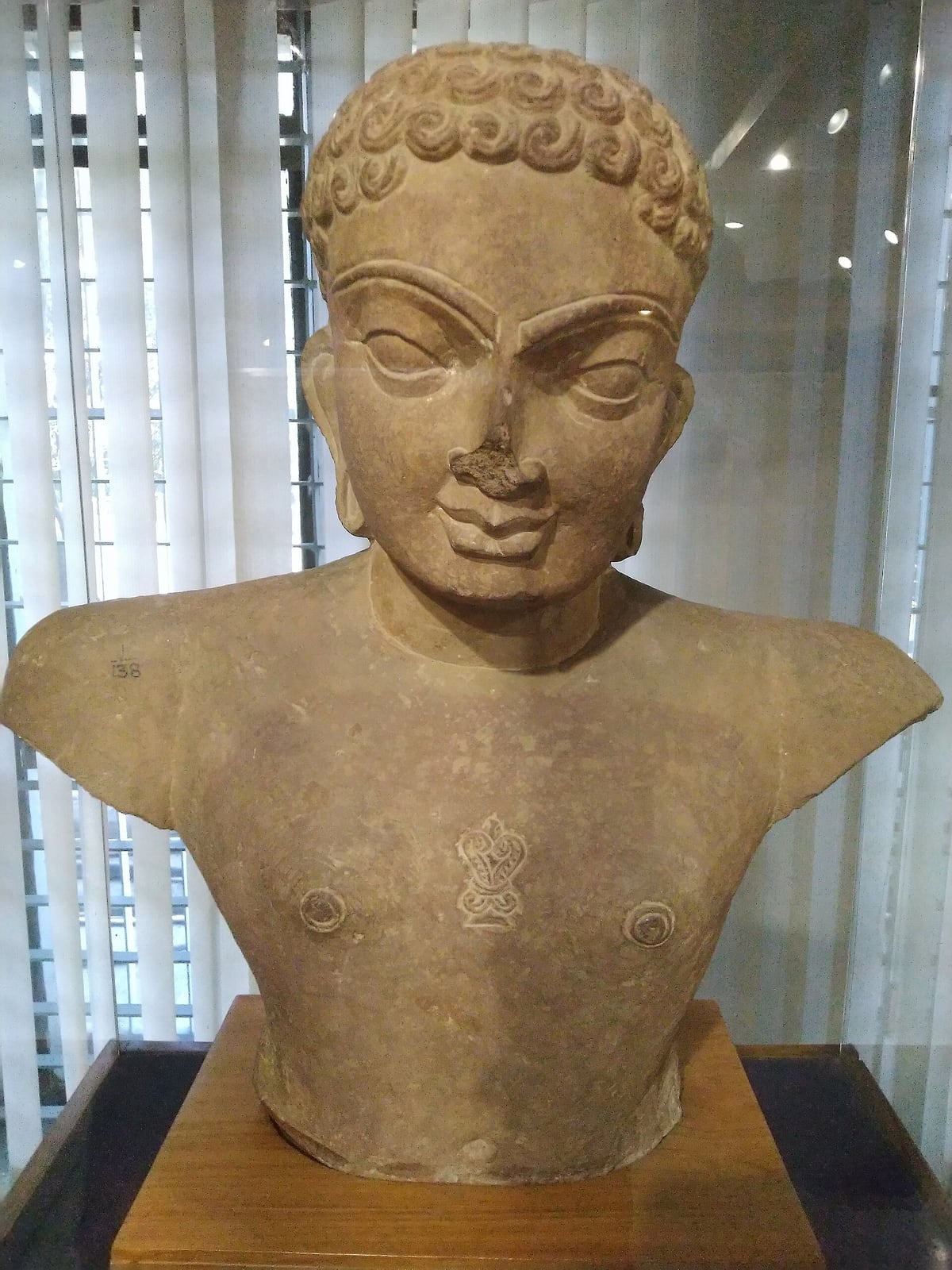
Mahāvīra
يتّفقان في: ما المطلق؟ هل الله موجود؟ · ماذا يحدث بعد الموت؟ · كيف يُبلَغ التحرّر أو الخلاص؟
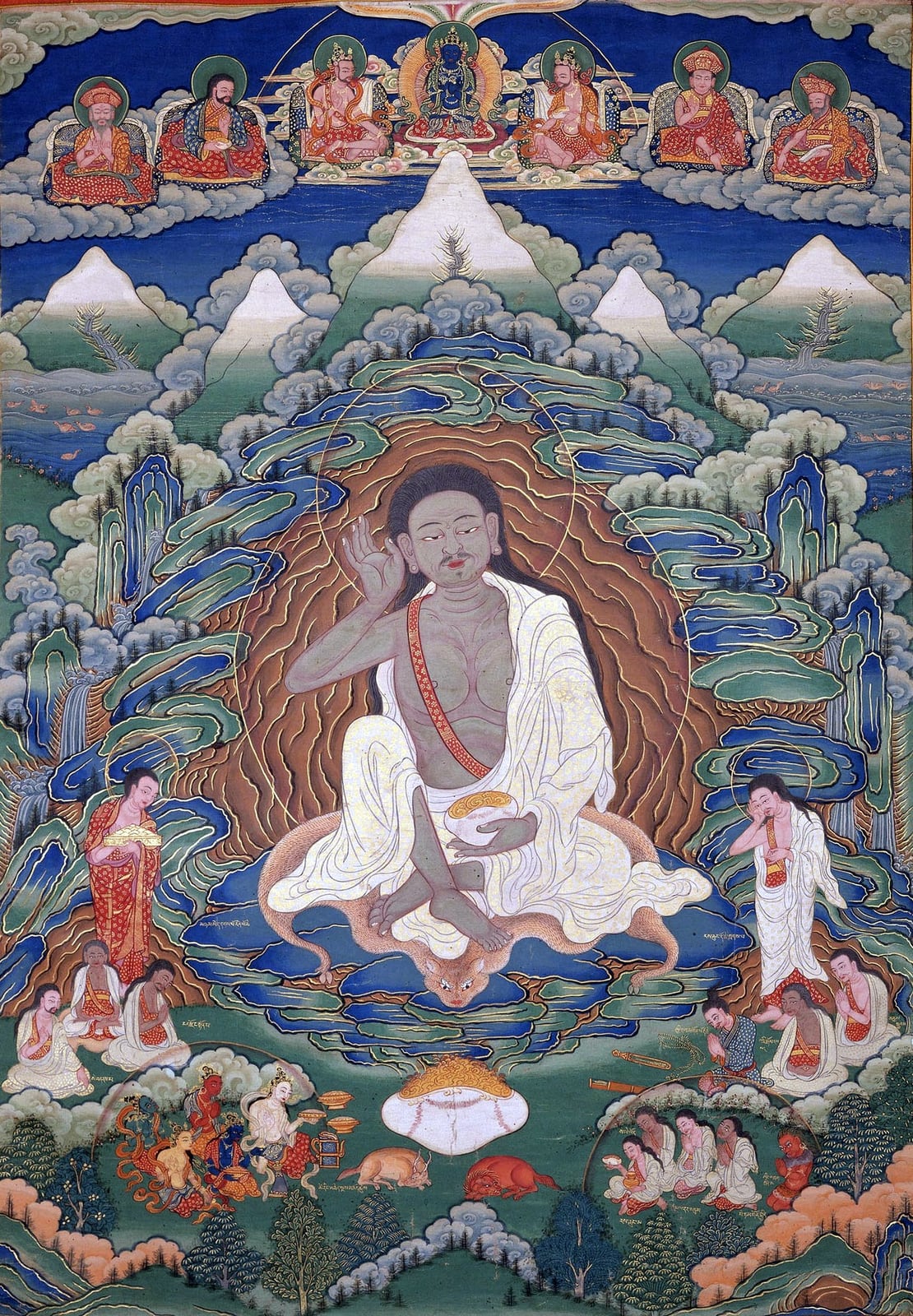
Milarepa
يتّفقان في: ما المطلق؟ هل الله موجود؟ · ماذا يحدث بعد الموت؟ · كيف يُبلَغ التحرّر أو الخلاص؟
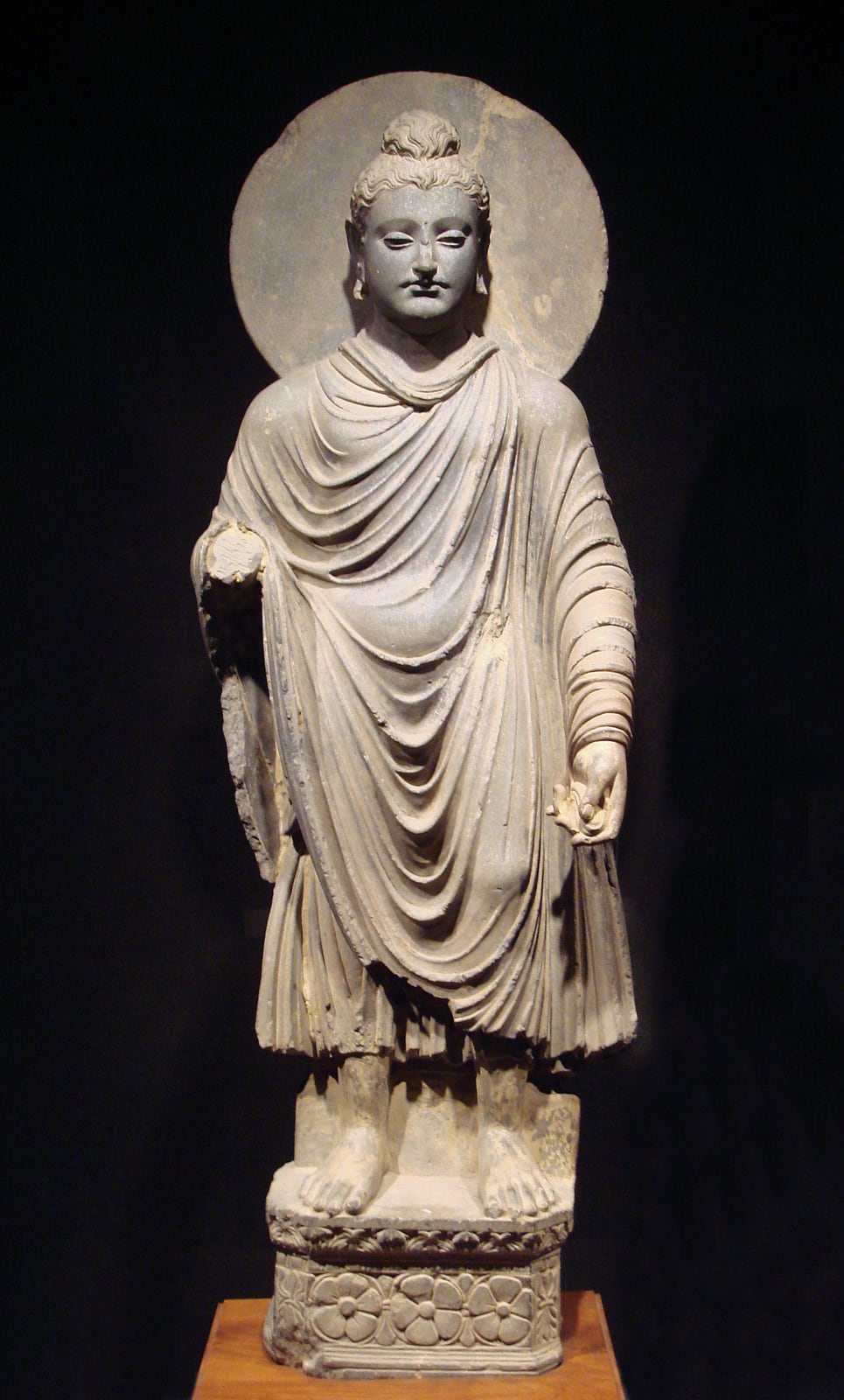
Siddhartha Gautama, the Buddha
يتّفقان في: ما المطلق؟ هل الله موجود؟ · ماذا يحدث بعد الموت؟ · كيف يُبلَغ التحرّر أو الخلاص؟
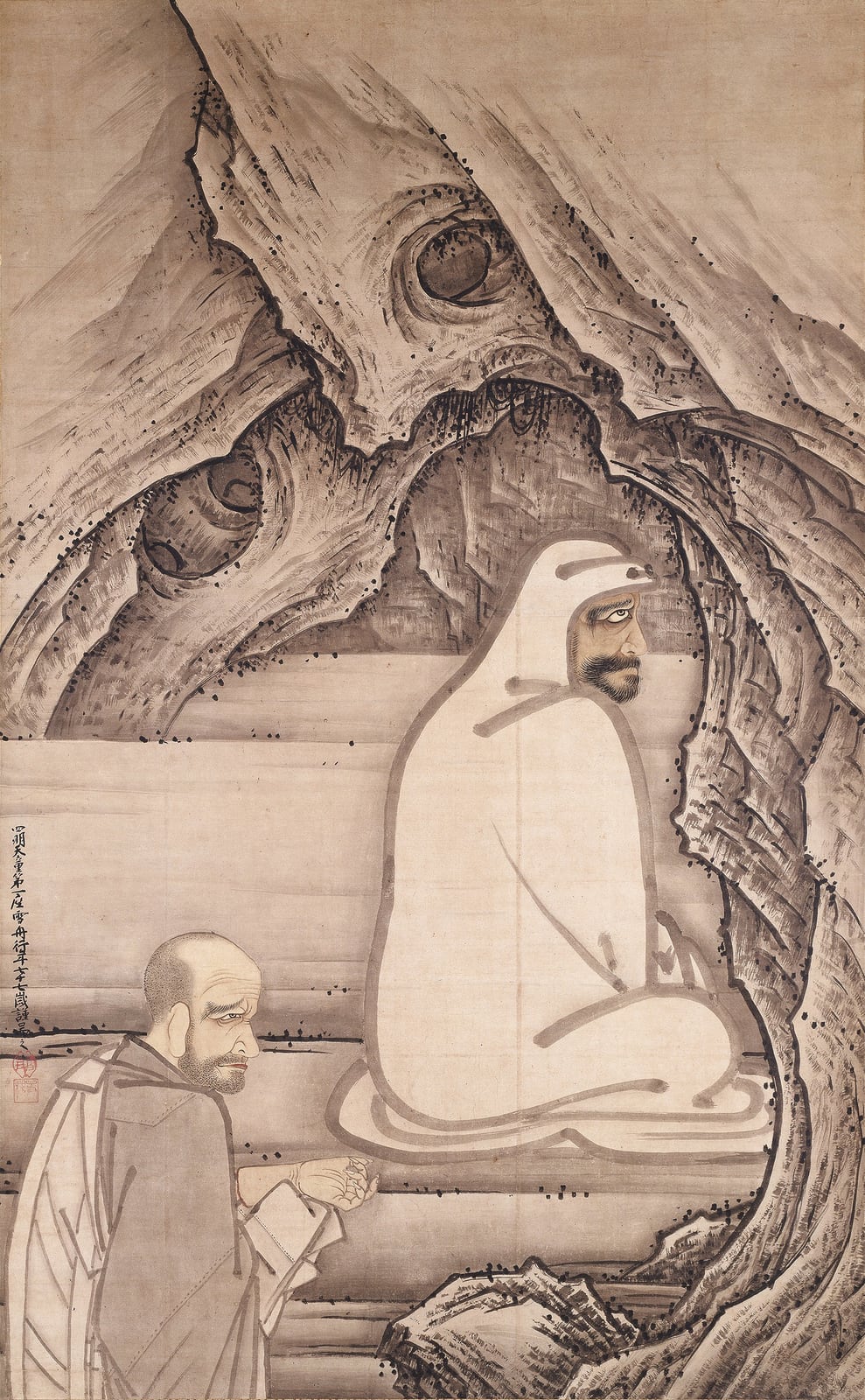
Bodhidharma
يتّفقان في: من أنا؟ هل توجد ذات حقيقية؟ · ماذا يحدث بعد الموت؟ · كيف يُبلَغ التحرّر أو الخلاص؟
يبتعد في تفكيره عن

Francis of Assisi
يختلفان في: ما المطلق؟ هل الله موجود؟ · من أنا؟ هل توجد ذات حقيقية؟ · ماذا يحدث بعد الموت؟

Chaitanya Mahaprabhu
يختلفان في: ما المطلق؟ هل الله موجود؟ · من أنا؟ هل توجد ذات حقيقية؟ · ماذا يحدث بعد الموت؟

Theophan the Recluse
يختلفان في: ما المطلق؟ هل الله موجود؟ · من أنا؟ هل توجد ذات حقيقية؟ · ماذا يحدث بعد الموت؟
Emanuel Swedenborg
يختلفان في: ما المطلق؟ هل الله موجود؟ · من أنا؟ هل توجد ذات حقيقية؟ · ماذا يحدث بعد الموت؟
حكايات وروايات
حكايات وروايات
موثّقmediados del s. II a. C.
The Greek who besieged Sāketa
أصل الرواية: Examples from the Mahābhāṣya itself (commentary on Pāṇini 3.2.111 and 3.2.123 in Kielhorn's edition), discussed by Cardona as a dating argument.
المصدر: Cardona, George. Pāṇini: A Survey of Research. La Haya / París: Mouton, 1976 (reimpr. Delhi: Motilal Banarsidass, 1980 y 1997); sobre la fecha del Mahābhāṣya y su transmisión.
تقليد شفهيsin fecha
Fallen into the cupped hands
أصل الرواية: A devotional story of modern circulation (biographies of teachers and yoga schools) based on a popular etymology of the name. It has not been located in ancient Sanskrit sources; the Mahābhāṣya quotes a Gonikāputra as an authority distinct from its author, and the identification with him is late and uncertain. The identification of Patañjali with Śeṣa is, however, presupposed in Bhoja's verse (11th c.).
المصدر: White, David Gordon. The Yoga Sutra of Patanjali: A Biography. Princeton: Princeton University Press, 2014 (Lives of Great Religious Books). ISBN 9780691143774.
رواية من سِيَر القدّيسينsin fecha (textos medievales)
The dance at Chidambaram
أصل الرواية: The foundation myth of the Chidambaram temple, transmitted in medieval Sanskrit and Tamil texts praising the temple, studied by David Smith (1996). It has no documentary connection with the author of the Mahābhāṣya or that of the Yogasūtra.
المصدر: Smith, David. The Dance of Siva: Religion, Art and Poetry in South India. Cambridge: Cambridge University Press, 1996. ISBN 9780521482349 (sobre los mitos del templo de Chidambaram, Patañjali y Vyāghrapāda).
رواية من سِيَر القدّيسينrelato compuesto a finales del s. XVII
A thousand disciples behind a curtain
أصل الرواية: The Patañjalicarita of Rāmabhadra Dīkṣita (Tanjore court, late 17th c.; Kāvyamālā 51). Specialists on the Indology list point out that it is the only written source linking Gauḍapāda with Patañjali. A literary legend with no biographical value.
موثّقc. 1017–1030
Yoga in Arabic
أصل الرواية: Arabic text preserved in an Istanbul manuscript, edited by Hellmut Ritter (Oriens, 1956) and translated and studied by Shlomo Pines and Tuvia Gelblum (BSOAS, 1966–1989).
المصدر: Pines, Shlomo, y Tuvia Gelblum. «Al-Bīrūnī's Arabic Version of Patañjali's Yogasūtra: A Translation of his First Chapter and a Comparison with Related Sanskrit Texts». Bulletin of the School of Oriental and African Studies 29, n.º 2 (1966): 302–325; continuado en BSOAS 40 (1977), 46 (1983) y 52 (1989).
موثّق1895–1896
Raja Yoga, New York, 1896
أصل الرواية: Preface and text of Raja Yoga (1896) and White's analysis (2014).
المصدر: White, David Gordon. The Yoga Sutra of Patanjali: A Biography. Princeton: Princeton University Press, 2014 (Lives of Great Religious Books). ISBN 9780691143774.
التعاليم
التعاليم
المفاهيم التي ينتظم بها فكره، مشروحة في سياقها.
Stilling of the movements of the mind (cittavṛttinirodha)citta-vritti-nirodha
Yogasūtra 1.2–1.11 and commentary; foundation of the whole classical school.
Practice and detachment (abhyāsa and vairāgya)abhyasa-vairagya
Yogasūtra 1.12–1.16 and commentary.
Afflictions (kleśa)klesha
Yogasūtra 2.2–2.11; the Buddhist parallels are discussed by Maas and Bryant.
المصدر: Bryant, Edwin F. The Yoga Sūtras of Patañjali: A New Edition, Translation, and Commentary with Insights from the Traditional Commentators. Nueva York: North Point Press, 2009. ISBN 9780865477360.
The eight limbs (aṣṭāṅga)ashtanga-yoga
Yogasūtra 2.28–3.8; on the Jain parallel, Chapple (2003).
المصدر: Chapple, Christopher Key. Reconciling Yogas: Haribhadra's Collection of Views on Yoga. Albany: State University of New York Press, 2003. ISBN 9780791458990.
Īśvara, the lordishvara
Yogasūtra 1.23–1.29, 2.1, 2.32, 2.45.
المصدر: Bryant, Edwin F. The Yoga Sūtras of Patañjali: A New Edition, Translation, and Commentary with Insights from the Traditional Commentators. Nueva York: North Point Press, 2009. ISBN 9780865477360.
Absorption (samādhi)samadhi
Yogasūtra 1.17–1.51 and 3.3.
Isolation (kaivalya)kaivalya
Yogasūtra 2.25–2.26, 3.50–3.55 and 4.25–4.34.
مقاطع الفيديو
مقاطع الفيديو
تسجيلات ومقابلات وأفلام وثائقية. تُشغَّل مقاطع الفيديو من YouTube؛ ولا تُستضاف هنا.
The Yoga Sutras of Patanjali | Prof. Edwin Bryant
محاضرة· EN· 2018· 106 min
Vedanta Society of New Yorkالقناة الرسمية
YSP 11 Philipp Maas | The Pātañjalayogaśāstra and its Textual History
مقابلة· EN· 2021· 99 min
Yogic Studies
The Yoga Sutras in Depth - Dr. Philipp Maas
مقابلة· EN· 2022· 51 min
Keen on Yoga
Once More on Postures in the Pātañjala Yogaśāstra by Philipp Maas
محاضرة· EN· 2016· 53 min
Loyola Marymount University, BCLA Yoga Studiesالقناة الرسمية
Thinking with the Yoga Sūtra, Opening by Dr Christopher Key Chapple, Chair
محاضرة· EN· 2016· 39 min
Loyola Marymount University, BCLA Yoga Studiesالقناة الرسمية
MIPodcast #13: What's the "Yoga Sutra of Patanjali," featuring David Gordon White
مقابلة· EN· 2015· 67 min
Maxwell Instituteالقناة الرسمية
Historical, Popular, and Scholarly Constructions of Yoga with David Gordon White
مقابلة· EN· 2016· 37 min
Religious Studies Project
What is Yoga?
تحليل· EN· 2024· 50 min
Let's Talk Religion
Lecturas en Español. De los Aforismos de Yoga de Patañjali
محاضرة· ES· 2017· 87 min
Instituto Cervantes Rio de Janeiroالقناة الرسمية
Los Yoga Sutras de Patamjali | Conferencia | 21/11/2024
محاضرة· ES· 2024· 58 min
Instituto Cervantes Nueva Delhiالقناة الرسمية
Les Yogas-Sutras - Erik Sablé : Les yoga-sutras de Patanjali - Jeudis Philo
محاضرة· FR· 2022· 138 min
Ancrages Éditions
Mahābhāṣya of Patañjali, Samarthāhnikam: Lecture-1, Part-2
محاضرة· EN· 2019· 116 min
RKMVERI - Deemed Universityالقناة الرسمية
Ancient grammatical puzzle solved after 2,500 years
فيلم وثائقي· EN· 2022· 6 min
Cambridge Universityالقناة الرسمية
المعرض
المعرض
صور بترخيص متحقَّق منه. كل منها تحتفظ بمؤلّفها ونسبتها.
المخطوطات
المخطوطات
شواهد مخطوطة ونصوص قديمة، مع جهة حفظها وشروط الاطّلاع عليها.
SA · Devanagari · c. 325–425 d. C. (Maas)
पातञ्जलयोगशास्त्र (Yogasūtra con bhāṣya)
- الشاهد المحفوظ
- Manuscrito sin fecha, anterior a 1900
- جهة الحفظ
- National Library of India, Rare Books Division (Calcuta) · Th 217
SA · Devanagari · mediados del s. II a. C. (Mahābhāṣya); s. XI (Pradīpa)
व्याकरणमहाभाष्य with महाभाष्यप्रदीप (Mahābhāṣya con el Pradīpa de Kaiyaṭa)
- الشاهد المحفوظ
- Copia sin fecha en formato de «doble libro»
- جهة الحفظ
- University of Pennsylvania, Kislak Center for Special Collections · Ms. Coll. 390
العلاقات
العلاقات
تأثيرات وتلمذة وتقارب في الأفكار. تُميَّز العلاقة الموثّقة عن التشابه المستخلَص بالتحليل.
تأثّر بـ
Pāṇini
The grammarian Patañjali's Mahābhāṣya is the great commentary on Pāṇini's grammar.
علاقة موثّقة
تأثّر بـ
Kātyāyana
The Mahābhāṣya discusses one by one Kātyāyana's critical remarks (vārttika) on Pāṇini.
علاقة موثّقة
أفكار قريبة من
Siddhartha Gautama, the Buddha
The yoga text shares vocabulary and schemes with scholastic Buddhism (afflictions, absorptions, the four attitudes of friendliness, compassion, joy and equanimity) and argues against an idealist Buddhist school; the exact debt is debated (Maas, Bryant).
تشابه مستخلَص بالتحليل
أفكار قريبة من
The five restraints of aphorism 2.30 (non-harming, truthfulness, non-stealing, chastity, non-possession) coincide with the five great vows of Jain monasticism, and the text calls them the "great vow" when kept without exception; Chapple (2003) studies this kinship.
تشابه مستخلَص بالتحليل
معاصر لـ
Woods (1914) noted that Nāgārjuna does not mention Patañjali although he knew a school of yoga; if the Yogasūtra are later than Buddhist idealism, as Woods and Maas argue, Patañjali wrote after him. No contact is documented.
تشابه مستخلَص بالتحليل
أثّر في
Tradition ascribes to Śaṅkara a sub-commentary on the Pātañjalayogaśāstra (the Vivaraṇa), whose authorship is disputed; in the Brahmasūtra commentary (2.1.3) Śaṅkara refutes the dualist metaphysics of yoga while accepting its techniques.
علاقة موثّقة
أثّر في
He translated and commented on the aphorisms in Raja Yoga (1896), the book that made the text known in the West.
علاقة موثّقة
أثّر في
In Autobiography of a Yogi (1946, ch. 26) he quotes the aphorisms on kriyāyoga and breath control to present his lineage's Kriya Yoga as a continuation of Patañjali.
علاقة موثّقة
أثّر في
Al-Bīrūnī
He adapted the text into Arabic as the Kitāb Bātanjal (c. 1030).
علاقة موثّقة
أثّر في
Vācaspati Miśra
Author of the Tattvavaiśāradī, the great classical sub-commentary, translated by Woods.
علاقة موثّقة
أثّر في
Bhoja de Dhārā
King and author of the Rājamārtaṇḍa commentary (11th c.), first source of the threefold Patañjali.
علاقة موثّقة
أثّر في
Vijñānabhikṣu
Author of the Yogavārttika (16th c.), a Vedāntic reading of the text.
علاقة موثّقة
أثّر في
Bhartṛhari
He commented on the Mahābhāṣya and related its decline and restoration (5th c.).
علاقة موثّقة
مرتبط من صفحات أخرى
- Carl Gustav Jung · تأثّر بـ
- Osho · تأثّر بـ
- Swami Vivekananda · تأثّر بـ
- Mahāvīra · أفكار قريبة من
- Dattatreya · أفكار قريبة من
- Nāgārjuna · معاصر لـ
- Kapila · أثّر في
- Paramahansa Yogananda · تأثّر بـ
- Sri Yukteswar · تأثّر بـ
- Vasishtha · أفكار قريبة من
- Vyasa · تأثّر بـ
- Yajnavalkya · أفكار قريبة من
- Alice A. Bailey · تأثّر بـ
المصادر
المصادر
المراجع والفهارس التي رُوجعت لهذه الصفحة.
- Wikidata, «Patanjali», QID Q231680 (descrito como «autor o autores» de la gramática, del yoga y de tratados médicos; LCCN n80044780; GND 119387077; BnF 121635181).
- Maas, Philipp A. «A Concise Historiography of Classical Yoga Philosophy». En Eli Franco (ed.), Periodization and Historiography of Indian Philosophy. Viena: Sammlung de Nobili, 2013, pp. 53–90.
- Maas, Philipp André. Samādhipāda. Das erste Kapitel des Pātañjalayogaśāstra zum ersten Mal kritisch ediert / The First Chapter of the Pātañjalayogaśāstra for the First Time Critically Edited. Aachen: Shaker, 2006 (Geisteskultur Indiens 9).
- Woods, James Haughton (trad.). The Yoga-System of Patañjali, or the Ancient Hindu Doctrine of Concentration of Mind, embracing the Mnemonic Rules, called Yoga-sūtras, of Patañjali, and the Comment, called Yoga-bhāshya, attributed to Veda-Vyāsa, and the Explanation, called Tattva-vāiçāradī, of Vāchaspati-Miçra. Cambridge (Mass.): Harvard University Press, 1914 (Harvard Oriental Series 17). Introducción, §§ 3–5, sobre la identidad de los dos Patañjali y las fechas.
- Bryant, Edwin F. The Yoga Sūtras of Patañjali: A New Edition, Translation, and Commentary with Insights from the Traditional Commentators. Nueva York: North Point Press, 2009. ISBN 9780865477360.
- White, David Gordon. The Yoga Sutra of Patanjali: A Biography. Princeton: Princeton University Press, 2014 (Lives of Great Religious Books). ISBN 9780691143774.
- Bronkhorst, Johannes. «Patañjali and the Yoga sūtras». Studien zur Indologie und Iranistik 10 (1984 [1985]): 191–212.
- Cardona, George. Pāṇini: A Survey of Research. La Haya / París: Mouton, 1976 (reimpr. Delhi: Motilal Banarsidass, 1980 y 1997); sobre la fecha del Mahābhāṣya y su transmisión.
- Meulenbeld, G. Jan. A History of Indian Medical Literature, vol. IA. Groninga: Egbert Forsten, 1999 (sobre los Patañjali médicos y la estrofa de Bhoja).
- Larson, Gerald James, y Ram Shankar Bhattacharya (eds.). Encyclopedia of Indian Philosophies, vol. XII: Yoga: India's Philosophy of Meditation. Delhi: Motilal Banarsidass, 2008.
- Vivekananda, Swami. Raja Yoga, or Conquering the Internal Nature. Londres / Nueva York: Longmans, Green and Co., 1896. Texto en The Complete Works of Swami Vivekananda, vol. 1 (Wikisource).
- Pines, Shlomo, y Tuvia Gelblum. «Al-Bīrūnī's Arabic Version of Patañjali's Yogasūtra: A Translation of his First Chapter and a Comparison with Related Sanskrit Texts». Bulletin of the School of Oriental and African Studies 29, n.º 2 (1966): 302–325; continuado en BSOAS 40 (1977), 46 (1983) y 52 (1989).
- Renou, Louis. «On the Identity of the Two Patañjalis». En Narendra Nath Law (ed.), Louis de La Vallée Poussin Memorial Volume. Calcuta, 1940.
- Kielhorn, Franz (ed.). The Vyâkaraṇa-Mahâbhâshya of Patañjali. 3 vols. Bombay: Government Central Book Depôt, 1880–1885 (Bombay Sanskrit Series).
- Johnston, Charles (trad.). The Yoga Sutras of Patanjali: «The Book of the Spiritual Man». Nueva York, 1912. Project Gutenberg n.º 2526.
- Dvivedi, Manilal Nabhubhai (trad.). The Yoga-Sutra of Patanjali. Bombay: Bombay Theosophical Publication Fund, 1890.
- Pujol, Óscar (trad.). Yogasūtra. Los aforismos del yoga. Barcelona: Kairós, 2021. ISBN 9788499884981.
- Yogananda, Paramahansa. Autobiography of a Yogi. Nueva York: The Philosophical Library, 1946, cap. 26, «The Science of Kriya Yoga».
- Chapple, Christopher Key. Reconciling Yogas: Haribhadra's Collection of Views on Yoga. Albany: State University of New York Press, 2003. ISBN 9780791458990.
- The Pandit Project, «Rāmabhadra Dīkṣita» (ficha biográfica: nacido en la segunda mitad del siglo XVII cerca de Kumbakonam, protegido de Śāhajī I de Tanjore); el Patañjalicarita está impreso en la serie Kāvyamālā (n.º 51), Bombay, Nirṇaya Sāgara Press.
- Angot, Michel (ed. y trad.). Le Yoga-Sūtra de Patañjali. Le Yoga-Bhāṣya de Vyāsa, avec des extraits du Yoga-Vārttika de Vijñāna-Bhikṣu. París: Les Belles Lettres, 2008. ISBN 9782251720500.
- Ritter, Hellmut. «Al-Bīrūnī's Übersetzung des Yoga-Sūtra des Patañjali». Oriens 9, n.º 2 (1956): 165–200 (edición del texto árabe).
- Wikimedia Commons, ficheros de imagen citados en images[] (licencias comprobadas por la API imageinfo el 2026-10-25).
- Mallinson, James, y Mark Singleton (trads. y eds.). Roots of Yoga. Londres: Penguin Classics, 2017. ISBN 9780241253045.
- Smith, David. The Dance of Siva: Religion, Art and Poetry in South India. Cambridge: Cambridge University Press, 1996. ISBN 9780521482349 (sobre los mitos del templo de Chidambaram, Patañjali y Vyāghrapāda).
- Bhatnagar, K. N. (ed.). Nidāna-sūtra of Patañjali. Delhi: Meharchand Lachhmandas, 1971.
- Danielson, Henrik (trad.). Ādiśeṣa: The Essence of Supreme Truth (Paramārthasāra). Leiden: E. J. Brill, 1980. ISBN 9789004061736.
- Open Library (openlibrary.org), fichas por ISBN y búsquedas por autor y título consultadas el 2026-10-25 para verificar las ediciones.
- صاحب الحقوق
- Textos sánscritos en dominio público (s. II a. C. y s. IV–V d. C.). Las traducciones modernas tienen derechos propios: Kairós (Pujol; Iyengar), Debate (Bahm), Edaf (Desikachar), Oniro (Hartranft), North Point Press / Farrar, Straus and Giroux (Bryant), SUNY Press (Hariharānanda Āraṇya), Les Belles Lettres (Angot), Integral Yoga Publications (Satchidananda), Vedanta Press (Prabhavananda e Isherwood). Las de Woods (1914), Johnston (1912), Vivekananda (1896) y Dvivedi (1890) son de dominio público.
في انتظار التأكيد
ما لم تتمكّن هذه الصفحة من حسمه بعد. نفضّل أن نقول ذلك على أن نملأ الفراغ.
- Fechas: no hay fecha de nacimiento ni de muerte para ningún Patañjali; se dejan como «unknown» y la línea de tiempo usa las fechas de las obras (Mahābhāṣya, mediados del s. II a. C.; Pātañjalayogaśāstra, c. 325–425 según Maas).
- Comprobar en el texto de Renou (1940) la paginación exacta del artículo «On the Identity of the Two Patañjalis».
- Sala de lectura: la traducción de M. N. Dvivedi (1890) en Internet Archive (b28119411) tiene un OCR inservible (reconocido como devanagari); buscar otro escaneo limpio. El Mahābhāṣya de Kielhorn (1880–1885) solo existe en escaneos con OCR deficiente del devanagari. No se ha encontrado ningún texto en español de dominio público (es.wikisource no tiene ninguno).
- Ediciones: falta ISBN de la edición crítica de Maas (Shaker, 2006) y de las traducciones del Mahābhāṣya de Joshi y Roodbergen; buscar ediciones con ISBN en alemán, italiano, ruso e hindi. La edición española de Raja Yoga (Kier, ISBN 9789501701210) no indica fecha ni traductor en Open Library.
- Obras: Meulenbeld menciona otros textos médicos y alquímicos puestos bajo el nombre de Patañjali que no se han podido verificar; cotejar con su History of Indian Medical Literature, vol. IA.
- Vídeo CS2vRfWeFw4 (Instituto Cervantes Nueva Delhi): identificar al ponente.
- Anécdota del nacimiento en el «añjali» de Gonikā: localizar su primera fuente escrita.
بُحث بتاريخ 2026-10-25