الثيوصوفية · اللاثنائية المعاصرة · التأمل العلماني
Jiddu Krishnamurti
జిడ్డు కృష్ణమూర్తి
1895 – 1986شخصية موثّقة تاريخيًا
مفكّر وخطيب هندي (1895–1986). نشّأته الجمعية الثيوصوفية ليكون «معلّم العالم» المنتظر، لكنه حلّ عام 1929 الجماعة التي أُنشئت من أجله، ورفض كل سلطة روحية، بما فيها سلطته هو. وتحدّث طوال ما يقرب من ستين عامًا في أنحاء العالم عن الاشتراط والفكر والخوف والحرية، بلا منهج ولا عقيدة، وترك مدارس ومؤسسات وأرشيفًا استثنائيًّا من المحاضرات والحوارات، منها حواراته مع الفيزيائي ديفيد بوم.
- مؤلَّفًا
- 93مؤلَّفًا
- طبعة
- 190طبعة
- اقتباسًا
- 8اقتباسًا
- مقطع فيديو
- 14مقطع فيديو
- صورة
- 8صورة
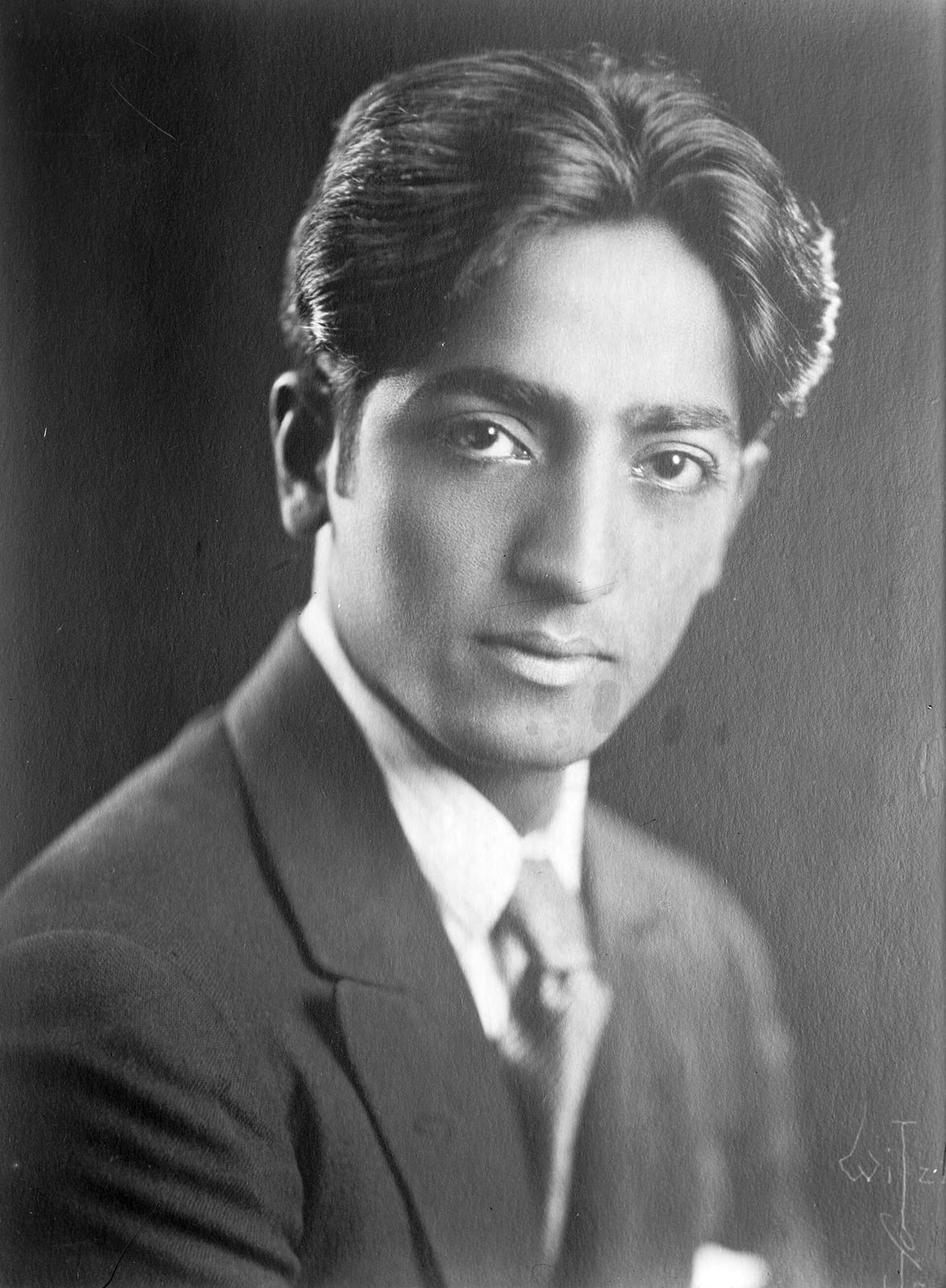
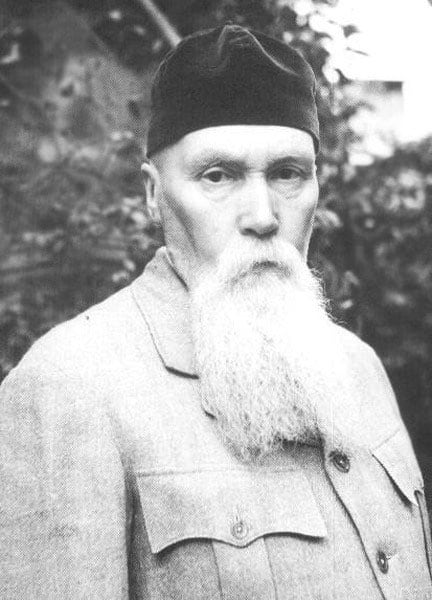
Retrato de Jiddu Krishnamurti (Bain News Service, años veinte) · Public domain
بكلماته
«I maintain that Truth is a pathless land, and you cannot approach it by any path whatsoever, by any religion, by any sect.»Discurso de disolución de la Orden de la Estrella, Ommen (Países Bajos), 3 de agosto de 1929; publicado en International Star Bulletin, septiembre de 1929

فكرته المحورية
Every human being is conditioned by nation, religion, class, education and personal memory. The point is not to replace one conditioning with a better one but to see it whole, without justifying or condemning it; that seeing is already the beginning of freedom, not a reward obtained at the end of a path.
السيرة
4 دقيقة قراءة
ترجمة مُعانة من الأصل الإسباني، بانتظار مراجعة مترجم من أهل اللغة.
فتى على شاطئ أديار
وُلد جيدو كريشنامورتي في 11 مايو 1895 في مادانابالي، وهي بلدة صغيرة في ولاية أندرا براديش الحالية، ثامنَ أبناء أسرة براهمية ناطقة بالتيلوغوية. كان أبوه، جيدو ناريانيا، موظفًا في الإدارة البريطانية وعضوًا في الجمعية الثيوصوفية، أما أمه، سانجيفاما، فتوفيت عام 1905. ولما تقاعد ناريانيا حصل على وظيفة متواضعة في مقر الجمعية في أديار، على أطراف مدراس، فاستقر هناك مع أبنائه عام 1909.
وفي ربيع ذلك العام لفت نظرَ تشارلز وبستر ليدبيتر، الثيوصوفي الذي كان ينسب إلى نفسه بصيرة كشفية، فتى نحيل شارد الذهن يسبح مع أطفال آخرين على الشاطئ. وبحسب روايته هو، استوقفته هالةٌ من نكران الذات لا مثيل لها. وكان الثيوصوفيون ينتظرون مجيء «معلّم العالم»، الميتريا، الذي سيتجلّى في «مَركَبة» بشرية. فقرّر ليدبيتر وآني بيزانت، رئيسة الجمعية منذ عام 1907، أن ذلك الطفل، الذي كان معلّموه في المدرسة يعدّونه بليدًا، هو المختار. فأُطعم وكُسي وعُلّم الإنجليزية، وأُخضع مع أخيه الأصغر نيتياناندا لانضباطٍ في الطهارة الجسدية والخُلقية لا صلة له بطفولته.
معلّم العالم
في عام 1910 انتزعت بيزانت من ناريانيا الوصاية القانونية على الأخوين. وفي العام نفسه صدر كتاب «عند قدمَي المعلّم»، بتوقيع «ألكيوني»، وهو دليل موجز في السلوك قُدّم على أنه تعاليم تلقّاها في المنام من المعلّم كوتهومي؛ وقد ثار الجدل منذ البداية حول تأليفه ومدى تدخّل ليدبيتر فيه. وفي عام 1911 أُسّست «جماعة نجمة الشرق» لتهيئة العالم للمجيء المنتظر، وجُعل كريشنامورتي رئيسها الاسمي. ورفع الأب، وقد أقلقه نفوذ ليدبيتر، دعوى عام 1912 لاستعادة ابنيه؛ فخسرت بيزانت القضية في مدراس وكسبتها عام 1914 أمام المجلس الخاص في لندن.
وقضى سنوات تكوينه في إنجلترا وفرنسا. فقد رسب كريشنامورتي مرارًا في امتحان القبول بجامعة لندن، وعاش الحرب العالمية الأولى بين المربّين الخصوصيين والأرستقراطيين الثيوصوفيين وكآبةٍ لا تخفيها رسائله. وفي عام 1922 وصل الأخوان إلى كاليفورنيا بحثًا عن مناخ ملائم لمرض السلّ الذي أصاب نيتيا. وفي أغسطس، في بيت صغير بوادي أوهاي، بدأ ما ستسمّيه الحلقة «العملية»: آلام حادة في القفا والعمود الفقري، وحالات من شبه الإغماء، وتجربةٌ وصفها كريشنامورتي نفسه في رسالة بأنها رحمة لا حدّ لها وسلام بلا موضوع. وتكرّرت هذه النوبات، التي شهد عليها نيتيا وروزاليند ويليامز والثيوصوفي أ. ب. وارينغتون، سنوات عدة. أما طبيعتها — يقظة صوفية، أو أزمة عصبية، أو صحوة «الكونداليني» — فتبقى مسألة تأويل لا مسألة واقع.
حلّ الجماعة
في 13 نوفمبر 1925 توفي نيتيا في أوهاي بينما كان كريشنامورتي مسافرًا إلى الهند، واثقًا من أن «المعلّمين» لن يسمحوا بتلك الوفاة. ويصف الشهود أيامًا من البكاء خرج في آخرها رجل آخر. وفي عام 1927 أعلنت بيزانت أن معلّم العالم قد جاء؛ وكان كريشنامورتي آنذاك يتحدث بصوت خاص به أربك التراتبية الثيوصوفية.
وفي 3 أغسطس 1929، في مخيّم أومن (هولندا)، وأمام بيزانت وآلاف الأعضاء، حلّ «جماعة النجمة». وقال: «الحقيقة أرضٌ بلا دروب»، فلا منظمة ولا عقيدة ولا معلّم يستطيع أن يقود إليها. وردّ الأملاك والأموال الموهوبة، وفي عام 1930 ترك الجمعية الثيوصوفية. تلك هي الحركة التي يقوم عليها كل ما جاء بعدها: رجلٌ أُعدّ عشرين عامًا ليكون موضع تبجيل يرفض أن يكون سلطة روحية لأيّ أحد.
خمسون عامًا من الكلام
منذ ذلك الحين تحدّث علنًا أكثر من نصف قرن، في الهند وأوروبا والولايات المتحدة وأستراليا، دون أن ينتمي إلى أيّ تقليد. واستقرّ في أوهاي، حيث تولّى د. راجاغوبال، العضو السابق في الجماعة، تنظيم نشر محاضراته. وأبقته الحرب العالمية الثانية في كاليفورنيا، في صمت يكاد يكون تامًّا؛ ومن تلك السنوات تعود صداقته لألدوس هكسلي، الذي شجّعه على الكتابة وقدّم لكتابه «الحرية الأولى والأخيرة» (1954). ومنذ عام 1947 صار يعود كل شتاء إلى الهند، حيث خالط ساسةً ومثقفين مثل بوبول جاياكار، التي ستكتب سيرته لاحقًا.
ويصعب تلخيص تعليمه. فقد كان يرى أن الإنسان مشروطٌ بثقافته ودينه وجنسيته وذاكرته الخاصة؛ وأن الفكر، بطبيعته، قديم ومجزّأ؛ وأن «الأنا» التي تزعم أنها تريد التغيّر ليست شيئًا آخر غير ما تريد تغييره — «المراقِب هو المراقَب» —؛ وأن التحوّل لا يأتي عن طريق المناهج ولا الرياضات الروحية ولا المعلّمين الروحيين، بل عن طريق انتباهٍ بلا اختيار إلى ما يجري، لحظةً بلحظة. ورفض التأمل بوصفه تقنية، ورفض التعبّد لشخصه؛ وكان في سنواته الأخيرة يتحدث عن نفسه بوصفه «المتحدّث».
ومنذ عام 1961 حاور الفيزيائي ديفيد بوم، وقرّبته هذه الحوارات، التي جُمعت في كتاب «The Ending of Time» («نهاية الزمن»، 1985)، من العلماء والمعالجين النفسيين. وفي عام 1984 تحدّث في مختبر لوس ألاموس الوطني، وفي عام 1985 أمام جمعية «Pacem in Terris» في الأمم المتحدة.
مدارس ومؤسسات ودعاوى
كان التعليم عمله الآخر. فقد كان وراء إنشاء مدرسة ريشي فالي، قرب مسقط رأسه، ومدرسة راجغات في بنارس؛ وفي عام 1969 افتُتحت مدرسة بروكوود بارك في هامبشير، وفي عام 1975 مدرسة أوك غروف في أوهاي. وبين عامي 1968 و1970 تأسّست المؤسسات التي تصون تراثه اليوم: صندوق مؤسسة كريشنامورتي في إنجلترا، ومؤسسة كريشنامورتي الأمريكية، ومؤسسة كريشنامورتي الهندية. وأفضت القطيعة مع راجاغوبال، الذي احتفظ بحقوق وأرشيفات وأملاك، إلى دعاوى قضائية امتدت إلى ما بعد وفاته.
وفي عام 1991 نشرت رادها راجاغوبال سلوس، ابنة راجاغوبال، أن كريشنامورتي أقام طوال عقود علاقة غرامية مع أمها، روزاليند. فردّت ماري لوتينز، كاتبة سيرته المعتمدة، بكتاب آخر. وتنتمي هذه الواقعة إلى ميدان الشهادات المتعارضة لا إلى ميدان الحقائق الثابتة، وهكذا ينبغي أن تُقرأ.
الموت في أوهاي
ألقى آخر محاضرة عامة له في مدراس في 4 يناير 1986. وعاد مريضًا إلى أوهاي، حيث شُخّص بسرطان البنكرياس. وفي 7 فبراير سجّل تصريحًا عن «الطاقة الهائلة» التي رأى أنها سرت في جسده سبعين عامًا وأنها سترحل معه. وتوفي في «باين كوتيج» في 17 فبراير 1986، بعد منتصف الليل بدقائق. ولم تُقم، بناءً على رغبته، أيّ مراسم، ووُزّع رماده بين أوهاي وبروكوود والهند.
الموثّق والمنقول
بقي من كريشنامورتي أرشيف استثنائي: آلاف المحاضرات والحوارات المفرّغة كتابةً والمسجّلة صوتيًّا، ومنذ الستينيات مرئيًّا أيضًا، وهي منشورة اليوم في «الأعمال الكاملة» وعلى موقع المؤسسات. هذه وثائق. أما ما ينتمي إلى ميدان الشهادة فهو بصيرة ليدبيتر الكشفية، و«معلّمو» الثيوصوفية، والمعنى الأخير لـ«العملية»، والقراءة التي قدّمها المقرّبون منه لحالته الباطنية. وتقتضي سيرته الإبقاء على العمودين منفصلين: عمود الرجل الذي تكلّم، وكلماته متاحة للقراءة، وعمود الأسطورة التي بناها آخرون حوله ونذر هو حياته لتفكيكها.
المصادر: Sloss, Radha Rajagopal. Lives in the Shadow with J. Krishnamurti. Londres: Bloomsbury, 1991. · Vernon, Roland. Star in the East: Krishnamurti, the Invention of a Messiah. Londres: Constable, 2000. · Lutyens, Mary. Krishnamurti: The Years of Awakening. Londres: John Murray, 1975. · Lutyens, Mary. Krishnamurti: The Years of Fulfilment. Londres: John Murray, 1983. · Lutyens, Mary. Krishnamurti: The Open Door. Londres: John Murray, 1988.
الخط الزمني
الحياة عامًا بعد عام
كل نقطة حدث موثّق. انقر لتقرأه مع مصدره ودرجة اليقين فيه.
11 مايو 1895أقل من عامMadanapalle
Birth
Eighth child of Jiddu Narianiah and Sanjeevamma, a Telugu-speaking Brahmin family. Official sources give 11 May; some catalogues give the 12th because he was born just after midnight.
موثّقKrishnamurti Foundation of America. The Life of Krishnamurti — cronologías 1895–1986.
11 مايو 1895 · أقل من عام
Birth
Eighth child of Jiddu Narianiah and Sanjeevamma, a Telugu-speaking Brahmin family. Official sources give 11 May; some catalogues give the 12th because he was born just after midnight.
موثّق
1905 · 10 أعوام
Death of his mother
Sanjeevamma dies when Krishnamurti, a sickly and withdrawn child, is about ten.
موثّق
نحو 1909 · 14 عامًا
Leadbeater 'discovers' him on the beach
The family settles at the Theosophical headquarters. C. W. Leadbeater claims to have seen an exceptional aura in the boy and declares him the vehicle of the coming World Teacher.
موثّق
1910 · 15 عامًا
Annie Besant's guardianship and 'At the Feet of the Master'
Narianiah transfers guardianship of Krishnamurti and Nityananda to Besant. At the Feet of the Master appears under the name 'Alcyone'.
موثّق
يناير 1911 · 15 عامًا
Founding of the Order of the Star in the East
The Order is created to prepare for the World Teacher's coming, with Krishnamurti as its head. That year he travels to England for the first time.
موثّق
1914 · 19 عامًا
Privy Council ruling
His father had sued Besant in 1912 to recover his sons; the Madras High Court found for him, but in 1914 the Privy Council ruled for Besant.
موثّق
17 أغسطس 1922 · 27 عامًا
'The process' begins
In a cottage in the Ojai Valley, intense pain and altered states which Krishnamurti describes by letter as an experience of compassion and peace; they will recur for years.
موثّق
13 نوفمبر 1925 · 30 عامًا
Death of Nityananda
His brother dies of tuberculosis while he is travelling to India. The loss breaks his trust in the promises of the Theosophical hierarchy.
موثّق
3 أغسطس 1929 · 34 عامًا
Dissolution of the Order of the Star
Speech 'Truth is a Pathless Land'. He returns properties and funds; in 1930 he leaves the Theosophical Society.
موثّق
نحو 1938 · 43 عامًا
Friendship with Aldous Huxley
He meets Huxley, who encourages him to write and will preface The First and Last Freedom.
موثّق
1947 · 52 عامًا
Return to India
After the war and independence he returns to India, where he will speak every winter for nearly forty years.
موثّق
1954 · 59 عامًا
The First and Last Freedom
Published with a foreword by Aldous Huxley; his first widely read book outside Theosophical circles.
موثّق
1961 · 66 عامًا
First meeting with David Bohm
The physicist, who had read The First and Last Freedom, writes to him and they meet in London; a twenty-five-year dialogue begins.
موثّق
1968 · 73 عامًا
Krishnamurti Foundation Trust
The English foundation is set up; the American (1969) and Indian ones follow. The break with Rajagopal opens lawsuits over rights and archives.
موثّق
1969 · 74 عامًا
Brockwood Park School
His European school opens, which will also be his residence in England.
موثّق
1975 · 80 عامًا
Oak Grove School
The Ojai school opens at Arya Vihara.
موثّق
1980 · 85 عامًا
'The Ending of Time' dialogues
A series of recorded conversations with David Bohm, published in 1985.
موثّق
أبريل 1985 · 89 عامًا
Talk at the United Nations
He speaks before the Pacem in Terris Society at UN headquarters.
موثّق
4 يناير 1986 · 90 عامًا
Last public talk
Third Madras talk; the official channel preserves its ending as 'his last public words'.
موثّق
17 فبراير 1986 · 90 عامًا
Death
Dies of pancreatic cancer at Pine Cottage, just after midnight. No ceremony; ashes divided between Ojai, Brockwood and India.
موثّق
المؤلَّفات
المؤلَّفات الأساسية
المؤلَّفات التي لا يُفهم إرثه من دونها.
مجموعة لاحقة · 1954
The First and Last Freedom
Twenty-one chapters and thirty-eight questions covering the whole of his mature thought: the individual and society, self-knowledge, belief, fear, relationship, the thinker and the thought, time and transformation. Huxley's foreword presented it to the educated English-speaking public as a radical critique of symbols and ideologies. It was the book that led David Bohm to seek him out and remains the most cited gateway to his work.
6 طبعات · amazon.com

مؤلَّف مكتوب · 1956
Commentaries on Living
Short prose pieces combining the description of a landscape (an Indian river, a California wood) with a conversation with someone who comes with a problem: a politician, a grieving mother, a sannyasi, an ambitious man. The dialogue gradually dismantles the initial question. It is his most literary work and the one that best shows the method of joint inquiry; many readers consider it the best introduction to his tone.
7 طبعات · amazon.com

محاضرات منشورة · 1964
Think on These Things
First published as This Matter of Culture (1964): talks to students, teachers and parents at the schools in India, edited by D. Rajagopal. In some thirty short chapters it treats freedom and discipline, ambition, religion, fear, relationship with nature and the meaning of education. Its clarity and school origin have made it one of his most read books and a common first reading.
طبعتان · amazon.com

مجموعة لاحقة · 1969
Freedom from the Known
Sixteen chapters setting out continuously the core of his teaching: the rejection of all spiritual authority, conditioning, pleasure and fear, violence, relationship, time and death, the observer and the observed, meditation. Lutyens removed the repetitions of the talks and produced a fluent text that works as a synthesis. It is probably his most translated book; in Spanish it circulates as Libérese del pasado.
7 طبعات · amazon.com
جميع مؤلَّفاته (93)

At the Feet of the Master
1910

The Kingdom of Happiness
1927

The Immortal Friend
1928

Truth is a Pathless Land
1929

Education and the Significance of Life
1953

Life Ahead
1963

The Only Revolution
1970

The Urgency of Change
1970

The Flight of the Eagle
1971

You Are the World
1972

The Awakening of Intelligence
1973

Beginnings of Learning
1975

Krishnamurti's Notebook
1976

Truth and Actuality
1977

The Wholeness of Life
1978

Meditations
1979

Exploration into Insight
1979

Letters to the Schools
1981

Krishnamurti's Journal
1982

The Network of Thought
1982

The Ending of Time
1985

The Future of Humanity
1986

Last Talks at Saanen 1985
1986

Krishnamurti to Himself
1987
الأقوال
أقوال محدَّدة الموضع في مؤلَّف بعينه. كل منها يحمل مصدره ودرجة الثقة به.
I maintain that Truth is a pathless land, and you cannot approach it by any path whatsoever, by any religion, by any sect.متحقَّق منهDiscurso de disolución de la Orden de la Estrella, Ommen (Países Bajos), 3 de agosto de 1929; publicado en International Star Bulletin, septiembre de 1929
الأفكار الجوهرية (خلاصة تحريرية)
احترامًا لحقوق المؤلف، تُلخَّص هذه الأفكار بكلماتنا ولا تُقدَّم بوصفها اقتباسات حرفية.
- Every human being is conditioned by nation, religion, class, education and personal memory. The point is not to replace one conditioning with a better one but to see it whole, without justifying or condemning it; that seeing is already the beginning of freedom, not a reward obtained at the end of a path.
- Thought is the response of memory and is therefore always old, limited and fragmentary. It is indispensable for technology and practical life, but in the psychological field it manufactures the 'I' and its divisions, and so it cannot resolve the conflicts it produces.
- Fear is less the fear of something particular than a movement of thought that projects the past onto the future. Observed without running away from it, without naming it and without trying to overcome it, it loses the continuity thought lends it.
- Meditation is not a technique, nor the repetition of a formula, nor a concentration that excludes everything else. It is complete attention to one's own life — how one speaks, eats, judges — in which no one remains who meditates in order to obtain something.
- Relationship is the mirror in which one discovers oneself as one is. The images each person builds of the other, made of accumulated hurts and pleasures, take the place of actual relationship; while those images rule, what we call relationship is a dealing between memories.
- Education should not produce obedient technicians or citizens adjusted to society but whole human beings, free of fear, able to think for themselves and to see life as a whole. In his schools teacher and pupil were to learn together, without comparison or punishment.
- Every identification that divides — national, religious, ideological — breeds violence. Whoever wishes to understand violence cannot belong, psychologically, to any country or creed, because each human being is responsible for the state of the whole world.
- No master, guru, interpreter or organisation can lead to truth, and he himself was to be no exception: he asked that no one speak in his name or present themselves as his successor. Each must be a light to oneself.
- Dying each day to the known — to memories, attachments, the image of oneself — is the only way to live with a fresh mind. Death is not something separate from life waiting at the end, but the ending of the continuity of the self.
- Love is not pleasure, desire, attachment or duty. Where there is jealousy, possession or comparison there is no love; it appears when self-centred activity ceases, and it alone gives meaning to intelligence and knowledge.
أقوال منحولة أو مختلَف في نسبتها (1)
«It is no measure of health to be well adjusted to a profoundly sick society.»
It is the most widely circulated sentence under his name and has not been found in any of his books or in the foundations' archive of talks. Its earliest known attestation is The Eden Express (1975), Mark Vonnegut's memoir, which attributes it to Krishnamurti without giving a source (p. 208). It may summarise an idea of his, but the wording is undocumented.
الكلمات الأخيرة
كلمات مشهودة وموثّقة
«"But nobody has done it. Nobody. And so that's that."»But nobody has done it. Nobody. And so that's that.
No 'last words' in the strict sense survive: Krishnamurti died at Pine Cottage (Ojai) at 12:10 a.m. on 17 February 1986, attended by friends and medical staff, and no witness recorded a final sentence. What is documented is his last recorded statement, of 7 February 1986, ten days before his death: Scott Forbes captured it on tape at Pine Cottage and Mary Lutyens transcribed and discussed it in The Open Door (1988) and The Life and Death of Krishnamurti (1990); the Krishnamurti Foundation of America holds the recording. In it, already greatly weakened by pancreatic cancer, he says that nobody has understood the extraordinary energy and intelligence that, in his view, had acted through his body for seventy years; that this consciousness would end with his death and would not appear again for many centuries; and that others might perhaps come close to it by living the teaching, though nobody had done so. The sentence given here closes that passage. The statement is under copyright (KFT/KFA), so it is described in our own words and only a brief fragment is quoted.
المصدر: Lutyens, Mary. Krishnamurti: The Open Door. Londres: John Murray, 1988.
اسأل
بماذا يجيب أثره
اثنا عشر سؤالًا كبيرًا من أسئلة الإنسانية، وما تتيح نصوصه الإجابة به عنها، مع المراجع. ولا نقوّله ما لم يقل أبدًا.
ما المطلق؟ هل الله موجود؟
The God of thought is invented; the sacred appears only when thought falls silent
ما لا يُسمّىيقوله صراحةً
Jiddu Krishnamurti rejects both belief and disbelief in God, since both are products of thought, and thought, he holds, is conditioned memory: whatever it imagines about the divine is a projection of its own fear and desire for security. In his speech dissolving the Order of the Star (1929) he states that truth is a pathless land, to which no religion, sect or authority leads. At the same time, in his talks and in the diary known as Krishnamurti's Notebook he speaks of the immeasurable, the sacred, an «otherness» that appears when the mind is completely still, without seeking it. On this he refuses to build doctrine: to name it would be to bring it back into the field of the known. The ultimate exists, but no word, image or belief reaches it.
قارن هذا السؤال مع معلّمين آخرينمن أنا؟ هل توجد ذات حقيقية؟
The self is a bundle of memories; the observer is the observed
الأنا بناءٌ من صنع الفكريقوله صراحةً
Jiddu Krishnamurti holds that the psychological «I» is a construction of thought: a bundle of memories, images, hurts, pleasures and conclusions that thought accumulates and then treats as a central entity. That centre presents itself as the observer who judges, controls and wishes to change, but, according to him, the observer is not separate from the observed: whoever tries to master anger is made of the same stuff as the anger. Understanding this, not as an idea but in the very act of observing, ends inner conflict. Krishnamurti also rejects the search for a higher Self or a soul, which he regards as another projection of thought seeking security. What he proposes is not to discover a true self but to see the structure of the self with choiceless awareness; in that seeing, he says, freedom begins.
قارن هذا السؤال مع معلّمين آخرينلماذا نتألّم؟
Thought creates fear and sorrow by projecting past and future
الفكر والزمن النفسييقوله صراحةً
For Jiddu Krishnamurti, psychological suffering is the work of thought. Thought is memory, and by projecting itself into time it creates fear: fear of losing what one has, of not becoming what one wants, of death. Sorrow over a loss, he holds, is mostly self-pity and the self's sense of loneliness, clinging to its image of the other and to its own continuity. He distinguishes physical pain, which is a fact, from psychological suffering, which thought prolongs by comparing, remembering and anticipating. His proposal is not to console oneself or flee into explanations, but to remain with suffering without moving away from it, to look at it completely without the observer who wants to escape. In that total attention, he claims, suffering ends, and with its ending comes passion, which he also calls compassion.
قارن هذا السؤال مع معلّمين آخرينماذا يحدث بعد الموت؟
Dying to the known every day: there is no other serious question about death
الموت كل يوم عن المعلوميقوله صراحةً
Krishnamurti refuses to answer what lies after death and shifts the question. For him, the desire to know whether one continues is the desire for the self to continue, that is, memory, attachments and accumulated images; beliefs in reincarnation or heaven are consolations of thought in the face of its own end. What he proposes is to die now, while living: to end each day with everything one has accumulated — pleasures, grudges, knowledge about oneself — without arguing with death or postponing it. Only in that psychological ending, he holds, is there renewal, something new, and in it life, love and death are not separate. To someone who asks about reincarnation he replies that, if one believes in it, the consistent thing would be to live with complete rectitude today, since what one is now is what would continue.
قارن هذا السؤال مع معلّمين آخرينكيف يُبلَغ التحرّر أو الخلاص؟
Truth is a pathless land: no method, master or organisation leads to it
بلا منهج: الانتباه الكامليقوله صراحةً
Jiddu Krishnamurti formulated his position in 1929, when he dissolved the Order of the Star in the East that had been built around him: truth is a pathless land and cannot be reached through any religion, sect or organisation. From then on he held for six decades that every method, practice or discipline produces new conditioning, because it springs from the same thought that seeks a result. Freedom is not an end reached through time; it lies at the beginning: in the immediate, choiceless perception of what one is, of one's fears, desires and conflicts, observed without condemnation or justification. That observation, if it is total, by itself brings about a transformation that no effort can manufacture.
قارن هذا السؤال مع معلّمين آخرينهل نحتاج إلى معلّم؟
Following another destroys freedom: he wanted no disciples or followers
لا سلطة روحيةيقوله صراحةً
Jiddu Krishnamurti is the most radical example of this position, and his life explains it. Raised from childhood by the Theosophical Society to be the World Teacher, in 1929 he dissolved the organisation built around him and declared that he wanted no followers, because following someone means ceasing to seek truth for oneself. For the rest of his life he held that psychological authority, that of the guru, the priest or the sacred book, is incompatible with freedom: it creates dependence, fear and imitation. He did distinguish technical authority, that of the doctor or scientist, which is legitimate. Inwardly, each must be a light to oneself, and he did not present himself as an authority.
قارن هذا السؤال مع معلّمين آخرينهل العالم حقيقي؟
Thought manufactures the psychological world; you are the world
شبكة أسباب بلا جوهريُستنتج من تعاليمه
Jiddu Krishnamurti does not deny physical reality: the tree, the mountain or the river are not creations of thought. What he examines is the psychological and social world, which he regards as the product of conditioned thought: the self, national and religious divisions, conflicts. In the dialogues with the physicist David Bohm collected in Truth and Actuality he distinguishes reality, everything thought can touch and build, from truth, which thought does not reach. He repeats that the individual is the world and the world is the individual: society is the projection of what each person is. There is thus no permanent substance behind the self, but a conditioned process of memory and reaction.
قارن هذا السؤال مع معلّمين آخرينما الحب؟
Where the self is, love is not: love is not attachment, jealousy or pleasure
ما يظهر حين تتوقّف الأنايقوله صراحةً
Krishnamurti refuses to define love positively and proceeds by negation. Love is not attachment, which fears loss; it is not jealousy, possession or dependence; it is not pleasure, which thought remembers and wishes to repeat; it is not duty or respectability. All of that, he holds, is the activity of the self, of the centre that protects and prolongs itself. When one sees clearly what love is not, without rejecting or cultivating it, what it is may appear. That is why love cannot be practised or learned like a technique: there is no path to it, because every path is walked by the self. In Freedom from the Known and in the anthology On Love and Loneliness he links it with compassion and intelligence, and states that without love no social reform changes anything.
قارن هذا السؤال مع معلّمين آخرينهل نحن أحرار أم أن كل شيء مقدَّر؟
Choosing is not freedom: the one who chooses is a product of conditioning
لا يوجد فاعليقوله صراحةً
Krishnamurti turns the question around. The freedom of choice we usually defend is, in his view, an illusion of the conditioned mind: the one who chooses is the «self», a bundle of inherited memories, fears and desires, so that its choice always repeats the past. Hence he speaks of choiceless awareness, in which conditioning is observed without an observer judging it. When one sees that the observer is the observed, the conflict between what I am and what I should be ends, and in that ending, not in a decision, lies freedom. In *The First and Last Freedom* and *Freedom from the Known* freedom is not something reached at the end of a path, but what is there at the beginning, when the choosing centre ceases.
قارن هذا السؤال مع معلّمين آخرينلماذا نتأمّل أو نصلّي؟
Meditation is not a method: it is attention without a centre or effort
التأمّل ليس تقنيةيقوله صراحةً
Krishnamurti rejects every meditation system: repeating a mantra, controlling the breath or following a teacher's steps only produces a mechanical, dulled mind, and also strengthens the self that wants to achieve something. Meditation, as he describes it in *Freedom from the Known*, *The Only Revolution* and his journals, is not something practised for a while each day but a quality of attention that observes every thought and feeling without condemning or justifying it, without an observer who chooses. From that attention a silence arises that has not been sought. It is not a path to a goal: it is self-understanding in the act of living, and it begins by seeing one's own mind as it is.
قارن هذا السؤال مع معلّمين آخرينهل يستطيع العقل أن يعرف الحقيقة القصوى؟
Thought is born of memory and can never touch the new
الفكر محدوديقوله صراحةً
Krishnamurti is the reference for this key. His analysis, constant from *The First and Last Freedom* to his dialogues with the physicist David Bohm collected in *The Ending of Time* (1985), holds that thought is the response of memory, and memory is the result of accumulated experience; therefore thought is always limited and old, and cannot touch what is new, the immeasurable. Useful in the technical sphere, it becomes a source of conflict when it claims to reach truth or to build a self. In his 1929 speech dissolving the Order of the Star he declared that truth is a pathless land, unreachable by any organisation, creed or method. Only when thought sees its own limit and falls quiet can another perception arise.
قارن هذا السؤال مع معلّمين آخرينالانسحاب من العالم أم تغييره؟
You are the world: without transforming consciousness, every reform repeats the conflict
الثورة داخليةيقوله صراحةً
Krishnamurti rejects both withdrawal and conventional activism. He holds that the individual is not separate from society: you are the world, and the violence, greed and division seen outside are projections of each person's consciousness. Political revolutions, economic reforms and religious organisations change the surface but leave the centre untouched, and that is why conflict reappears in another form. The only real revolution is the radical transformation of the mind, which is not achieved by following a leader or a system. Consistently, in 1929 he dissolved the Order of the Star, created for him, declaring that truth is a pathless land. He did not preach withdrawal: he lived travelling and speaking in public, and founded schools in India, England and the United States to educate children free of fear and competition.
قارن هذا السؤال مع معلّمين آخرين
التقارب والتوتّر
التقارب والتوتّر
محسوبة سؤالًا سؤالًا انطلاقًا من مواقفه. وسبب كل اتفاق أو اختلاف يظهر بالنقر.
يقترب في تفكيره من
Osho
يتّفقان في: من أنا؟ هل توجد ذات حقيقية؟ · لماذا نتألّم؟ · كيف يُبلَغ التحرّر أو الخلاص؟
- BKByron Katie
Byron Katie
يتّفقان في: من أنا؟ هل توجد ذات حقيقية؟ · لماذا نتألّم؟ · ما الحب؟
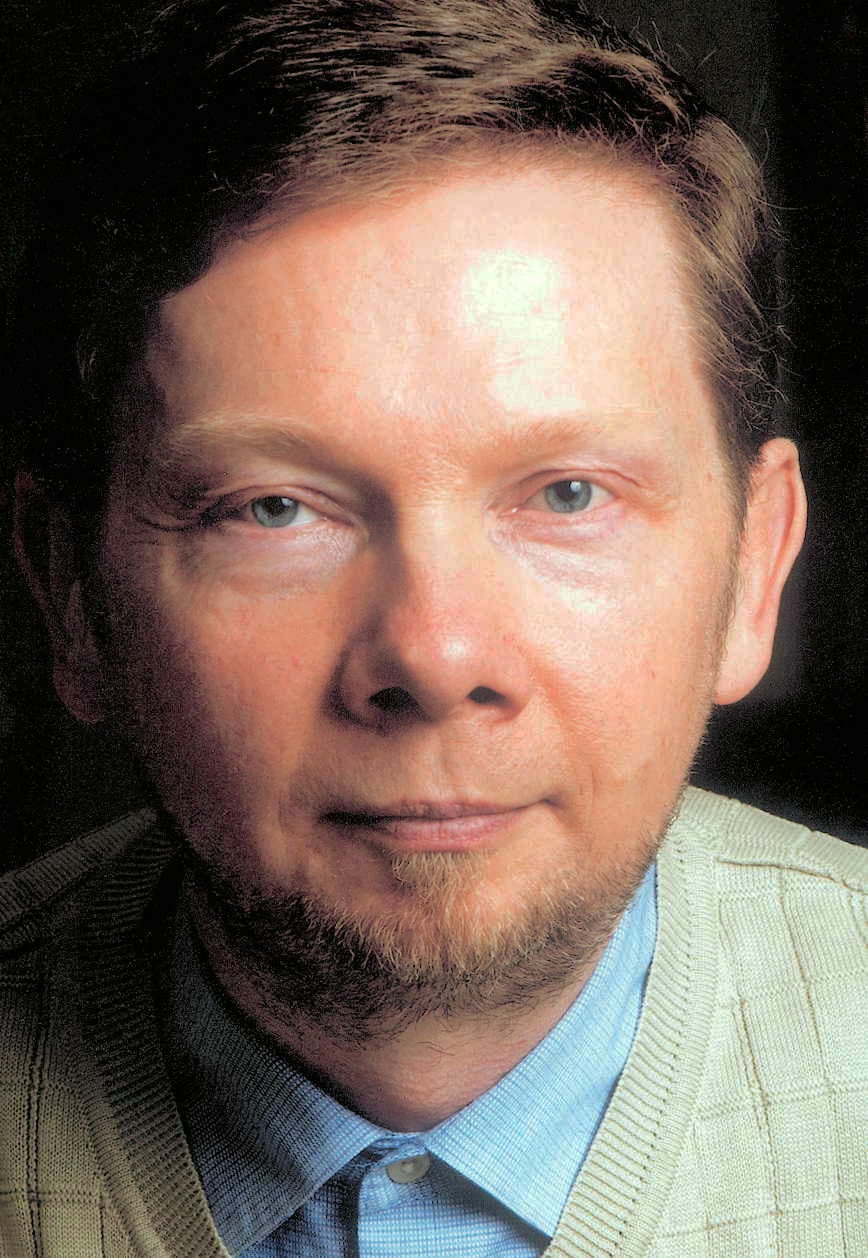
Eckhart Tolle
يتّفقان في: من أنا؟ هل توجد ذات حقيقية؟ · لماذا نتألّم؟ · كيف يُبلَغ التحرّر أو الخلاص؟
Alan Watts
يتّفقان في: لماذا نتألّم؟ · كيف يُبلَغ التحرّر أو الخلاص؟ · هل نحتاج إلى معلّم؟

يختلفان فيخلاف جوهري
Jiddu Krishnamurti · Annie Besant
The adoptive mother and the Teacher who refused the role: the master as path or as obstacle
لماذا: The contradiction is real and also biographical. Besant, together with Charles Leadbeater, had adopted and raised Krishnamurti as the vehicle of the World Teacher: her doctrine of discipleship needed precisely a master who would embody the Hierarchy. Krishnamurti rejected from within the role that doctrine assigned him, after having lived it, and his critique of spiritual authority is largely a response to that upbringing. They speak on the same plane, the seeker's path, and exclude each other: she affirms transmission and hierarchy; he holds that transmission itself is the obstacle. Besant remained at the head of the Theosophical Society until her death in 1933.
يختلفان فيتناقض ظاهري
Jiddu Krishnamurti · Thich Nhat Hanh
No method versus daily practice: two ways of not turning attention into a technique
لماذا: The contradiction is largely apparent: both fight meditation understood as a technique for obtaining a state. Krishnamurti, raised in the occult disciplines of the Theosophical Society, attacks the word method because it implies time, imitation and a progressing self. Thich Nhat Hanh keeps the language of practice because he teaches monastic and lay communities that need a shared discipline, but he insists that peace is not the goal of the path but the path itself. The real difference lies in pedagogy: one trusts immediate perception; the other, the habit that makes it possible. There is no record that they ever met.
يتّفقان في
Jiddu Krishnamurti · Laozi
What can be said is not it: the nameless Way and the pathless land
لماذا: There is no record that Krishnamurti engaged with the Daodejing; the affinity is structural. Both react against an excess of form: the Chinese text, against the proliferation of virtues, rites and learning in the schools of its time; Krishnamurti, against organisations, beliefs and spiritual methods, starting with those of the Theosophical Society that raised him. Hence the same gesture of subtraction. The difference lies in context and aim: the Daodejing also addresses the ruler and seeks a natural order of the community; Krishnamurti speaks to individuals and seeks a mutation of consciousness. One contemplates the return of things to their root; the other, the movement of thought.
يختلفان فيخلاف جوهري
Jiddu Krishnamurti · David R. Hawkins
A ladder of levels versus a pathless land
لماذا: The contradiction is real, though it starts from a shared diagnosis. Hawkins, trained as a psychiatrist and a reader of devotional traditions, offers his readers a map that lets them locate themselves and orient inner work, and his way is surrender. Krishnamurti, raised in the Theosophical Society, with its doctrine of initiations and grades, rejected precisely every spiritual hierarchy: a map of levels would seem to him the subtlest form of ambition. One sees the scale as an aid to letting go; the other, as a trap that turns letting go into another achievement. They agree that no one can do the work for another and that thought is not the goal.
يختلفان فيخلاف جوهري
Jiddu Krishnamurti · G. I. Gurdjieff
Both see man as conditioned; one demands a school and effort, the other forbids them
لماذا: The contradiction is real and comes from two opposite experiences of teaching. Gurdjieff presents himself as a seeker of an ancient knowledge transmitted in schools of Central Asia, and believes that this knowledge, scarce and almost material, can pass only from one who has it to one who works. Krishnamurti was raised precisely within an esoteric organisation with masters, grades and initiations, and his break in 1929 made the rejection of all authority the centre of his teaching. Both distrust comfortable spirituality and inherited beliefs; they part over whether directed effort awakens or lulls.
يتّفقان في
Jiddu Krishnamurti · Eckhart Tolle
Suffering needs time: thought projecting past and future
لماذا: No relationship between them is documented in this library, although Tolle writes in a milieu that knew Krishnamurti's work well, published and circulated for decades. The differences are real. Krishnamurti rejects any metaphysics of a true Being, which he considers another projection of thought, and any exercise, which he considers a method; Tolle affirms a presence or formless consciousness he calls Being, proposes concrete exercises such as feeling the inner body and adds the notion of the pain-body. Krishnamurti speaks harshly of conditioning and revolution; Tolle, in a tone of accompaniment. They agree on the diagnosis of psychological time, not on what they find on the other side.
يتّفقان في
Jiddu Krishnamurti · Siddhartha Gautama, the Buddha
A bundle of processes without a centre: no-self and the observer who is the observed
لماذا: The relationship is documented in a precise sense: in the late 1970s Krishnamurti held conversations at Brockwood Park with the monk and scholar Walpola Rahula and other Buddhists, later published as Can Humanity Change?, in which they discussed whether his teaching coincided with the Buddha's. Rahula saw a great affinity; Krishnamurti declined any comparison, because comparing seemed to him another form of authority. The real difference lies in the path: the canon proposes a gradual path of ethics, concentration and wisdom, with teacher and community, while Krishnamurti rejects every method. The diagnosis of the self brings them close; pedagogy separates them.
يتّفقان في
Jiddu Krishnamurti · Ramana Maharshi
No outer authority: the question who am I and the observer who is the observed
لماذا: The affinity is comparative: there is no record that they met. It is explained by a shared distrust of institutional religion and of learning, which in Ramana stems from an early experience lived without teacher or study, and in Krishnamurti from his break with the Theosophical organisation that had formed him. The underlying difference is metaphysical. Ramana speaks from Advaita and affirms a Self that is the Absolute, and accepts devotion and surrender as a path; Krishnamurti rejects any doctrine of the Self, which he sees as another projection of thought seeking security, and every tradition. One enquires in order to find what has always been; the other observes so that what thought manufactures comes to an end.
يختلفان فيخلاف جوهري
Jiddu Krishnamurti · Sadhguru
Inner technology with initiation versus an attention without method or guru
لماذا: The contradiction is real and reflects two ideas of tradition. Sadhguru belongs to the yogic line that trusts body, energy and breath as vehicles of transformation, and the relationship with the guru as what makes it possible; hence his organisation transmits techniques by initiation. Krishnamurti, formed in an organisation with masters and disciplines, concluded that every practice aimed at a result arises from the very thought it claims to overcome. Sadhguru would say that cultivating body and mind is not pursuing meditation but creating the conditions for it to flower; Krishnamurti would see in those conditions another form of time and seeking.
حكايات وروايات
حكايات وروايات
شهادةabril de 1909
The boy on the beach at Adyar
أصل الرواية: The meeting itself is documented; the perception of the aura comes solely from Leadbeater's testimony, recorded by Mary Lutyens in Krishnamurti: The Years of Awakening (1975) and examined by Roland Vernon (Star in the East, 2000). Ernest Wood's judgement comes from his own recollections, quoted by the same biographers.
المصدر: Lutyens, Mary. Krishnamurti: The Years of Awakening. Londres: John Murray, 1975.
شهادةagosto–octubre de 1922
The 'process' under the pepper tree at Ojai
أصل الرواية: It comes from Krishnamurti's letter to Annie Besant and Leadbeater and from the report written by Nitya, both of 1922, which Mary Lutyens published in Krishnamurti: The Years of Awakening (1975, chs. 18–21) and summarised in The Years of Fulfilment (1983, p. 170). There are witnesses to the symptoms, not to the inner experience, which is known only from his account.
المصدر: Lutyens, Mary. Krishnamurti: The Years of Awakening. Londres: John Murray, 1975.
موثّقnoviembre de 1925
The death of Nitya
أصل الرواية: The date and cause of death are documented. Krishnamurti's reaction comes from witnesses on the voyage recorded by Mary Lutyens (The Years of Awakening, 1975) and from Pupul Jayakar's interpretation (Krishnamurti: A Biography, 1986).
المصدر: Lutyens, Mary. Krishnamurti: The Years of Awakening. Londres: John Murray, 1975.
موثّق3 de agosto de 1929
Ommen, 3 August 1929: the dissolution of the Order
أصل الرواية: The speech survives in writing: it was published in the International Star Bulletin of September 1929 and the foundations circulate it under the title 'Truth is a Pathless Land'. The return of property is documented by Mary Lutyens (The Years of Awakening, 1975, pp. 276–284). Leadbeater's remark is second-hand testimony.
موثّق1938–1954
Huxley, the war and the silence of Ojai
أصل الرواية: The friendship and the encouragement to write are documented by Mary Lutyens (The Years of Fulfilment, 1983); Huxley's role with Harper is added by Radha Rajagopal Sloss (1991). The 1954 foreword is a published text (source s9). The remark about the war years comes from later statements by Krishnamurti recorded by Lutyens.
المصدر: Lutyens, Mary. Krishnamurti: The Years of Fulfilment. Londres: John Murray, 1983.
موثّق1959–1986
A physicist in the audience at Wimbledon
أصل الرواية: Bohm's prior reading of the book and the 1961 meeting at Wimbledon are recorded by Mary Lutyens (The Years of Fulfilment, 1983, pp. 188 and 208) and in Basil Hiley's biographical memoir for the Royal Society (1997, p. 124). The later estrangement is related by F. David Peat (Infinite Potential, 1997). The dialogues are published (source s16).
موثّق1960–1996
Rajagopal and the lawsuits
أصل الرواية: The litigation is documented in Erna Lilliefelt's account for the Krishnamurti Foundation of America (1995) and, from the foundation's side, by Mary Lutyens (Krishnamurti and the Rajagopals, 1996). The Rajagopal family's version is in Radha Rajagopal Sloss (Lives in the Shadow with J. Krishnamurti, 1991). The two sides disagree about motives and responsibility.
المصدر: Lilliefelt, Erna. Formation of the Krishnamurti Foundation of America and the Lawsuits Which Took Place Between 1968 and 1986 to Recover Assets for Krishnamurti's Work. Ojai: Krishnamurti Foundation of America, 1995.
التعاليم
التعاليم
المفاهيم التي ينتظم بها فكره، مشروحة في سياقها.
Truth is a pathless landpathless-land
It arose against the Theosophical framework in which he was raised, with its hierarchy of Masters, initiations and paths of discipleship; hence its most famous formulation is a speech of rupture rather than a treatise.
Choiceless awarenesschoiceless-awareness
The phrase became common in the talks of the 1940s and 1950s and gives its title to a 1992 anthology. It echoes Buddhist mindfulness, but Krishnamurti explicitly refused to turn it into a methodical practice.
المصدر: Krishnamurti, J. The First and Last Freedom. Prólogo de Aldous Huxley. Nueva York: Harper & Brothers; Londres: Victor Gollancz, 1954.
The observer is the observedobserver-is-the-observed
It already appears in The First and Last Freedom (1954) as the relation between the thinker and the thought (ch. XV) and is developed in Freedom from the Known (ch. 12). It has been compared with the Buddhist critique of a permanent self and with Advaita, though Krishnamurti appeals to no metaphysics.
المصدر: Krishnamurti, J. Freedom from the Known. Ed. Mary Lutyens. Nueva York: Harper & Row; Londres: Gollancz, 1969.
The ending of psychological timepsychological-time
The distinction is clearly formulated in Freedom from the Known (ch. 9), where he defines psychological time as the interval between idea and action, and it runs through the 1980 dialogues with Bohm.
المصدر: Krishnamurti, J., y David Bohm. The Ending of Time. San Francisco: Harper & Row; Londres: Gollancz, 1985.
The religious mindreligious-mind
It is set out in the last chapter of Freedom from the Known (1969) and in the talks of the 1970s; Krishnamurti's Notebook (1976) records the lived side of the idea.
المصدر: Krishnamurti, J. Freedom from the Known. Ed. Mary Lutyens. Nueva York: Harper & Row; Londres: Gollancz, 1969.
Conditioning and the limits of thoughtconditioning-and-thought
It runs through his whole work, from Education and the Significance of Life (1953) to The Network of Thought (1982) and The Limits of Thought (1999), and was the meeting ground with scientists and psychotherapists.
المصدر: Krishnamurti, J. Freedom from the Known. Ed. Mary Lutyens. Nueva York: Harper & Row; Londres: Gollancz, 1969.
You are the worldyou-are-the-world
The idea is already in The First and Last Freedom (1954) — the transformation of the world comes through that of oneself — and gives its title to the talks at American universities published in 1972.
المصدر: Krishnamurti, J. The First and Last Freedom. Prólogo de Aldous Huxley. Nueva York: Harper & Brothers; Londres: Victor Gollancz, 1954.
الخلوات
خلوات ومراكز
أماكن ولقاءات مرتبطة بتعليمه. نضعك على تواصل مع من ينظّمها.
Ojai, California · Estados Unidos
Krishnamurti Retreat and Pine Cottage, Ojai
Krishnamurti Foundation of America
Ojai was Krishnamurti's Californian home for decades, and there the Krishnamurti Foundation of America keeps two places open to the public. The Krishnamurti Retreat occupies eleven acres of nature where one may withdraw to enquire, with in-person programmes, silent retreats and an annual gathering. Pine Cottage, the house where he lived, now hosts the Krishnamurti Center and Library, dedicated to the study of his teachings, with a library and daily video screenings. The foundation also offers multi-day online dialogue programmes for those unable to travel, keeping the spirit of open enquiry at the centre.
Bramdean, Hampshire · Reino Unido
The Krishnamurti Centre, Brockwood Park
Krishnamurti Foundation Trust
The Krishnamurti Centre is the retreat house built beside Brockwood Park School, in the South Downs National Park, at Krishnamurti's own wish. Its motto sums it up: a place of no authority, where nothing is imposed. Group retreats are built on dialogue and supported by the teacher's recordings and texts to enquire into a particular aspect of the teachings; there are also silent retreats, longer gatherings and individual stays with access to the library, video room and quiet room. It offers single en-suite rooms and vegetarian meals, and outside group retreats there is no structured guidance.
Chennai, Tamil Nadu (sede) y otros centros en la India · India
Vasanta Vihar and the KFI centres
Krishnamurti Foundation India
Vasanta Vihar in Chennai was Krishnamurti's home in India and is now the headquarters of Krishnamurti Foundation India and a retreat and study centre. The foundation organises residential retreats and stays on campus intended, in its own words, for stepping away from routine and observing without plunging into new knowledge. KFI also has retreat centres in Uttarkashi, in the Himalaya, and in Jalna, study centres in Mumbai, Kolkata and Cuttack, and the schools he founded, such as Rishi Valley and Rajghat, whose study centres also host guests interested in the teachings.
مقاطع الفيديو
مقاطع الفيديو
تسجيلات ومقابلات وأفلام وثائقية. تُشغَّل مقاطع الفيديو من YouTube؛ ولا تُستضاف هنا.
Krishnamurti reading ‘Truth is a Pathless Land’ – Ojai, 1930
تسجيل أصلي· EN· 1930· 5 min
The Life of Krishnamurtiالقناة الرسمية
Krishnamurti – Short interview in New York City, 1928
مقابلة· EN· 1928· 1 min
The Life of Krishnamurtiالقناة الرسمية
Krishnamurti - Historical footage in Ommen (Netherlands) in 1924 & 1926, and Adyar (India) in 1925
تسجيل أصلي· EN· 1926· 35 min
The Life of Krishnamurtiالقناة الرسمية
Newsreel of Krishnamurti in Sydney, 1934
تسجيل أصلي· EN· 1934· 1 min
The Life of Krishnamurtiالقناة الرسمية
Krishnamurti | Historical footage | 1935 Latin America Tour - A Silent Film Documentary
المشاهدة على YouTube
لا يسمح هذا الفيديو بالتضمين؛ وسيُفتح على YouTube.
Krishnamurti | Historical footage | 1935 Latin America Tour - A Silent Film Documentary
فيلم وثائقي· 1935· 44 min
Krishnamurti Foundation Trustالقناة الرسمية
J Krishnamurti - The Real Revolution - 1. Where are we going?
محاضرة· EN· 1966· 29 min
J. Krishnamurti - Official Channelالقناة الرسمية
Audio | J. Krishnamurti & David Bohm - Ojai 1980 - The Ending of Time - Conversation 1
تسجيل أصلي· EN· 1980· 81 min
J. Krishnamurti - Official Channelالقناة الرسمية
J. Krishnamurti - New York 1985 - United Nations Talk - Why can't man live peacefully on the earth?
محاضرة· EN· 1985· 67 min
J. Krishnamurti - Official Channelالقناة الرسمية
J. Krishnamurti - The challenge of change
فيلم وثائقي· EN· 77 min
J. Krishnamurti - Official Channelالقناة الرسمية
J. Krishnamurti - 1989 Documentary - Krishnamurti: With a silent mind
فيلم وثائقي· EN· 1989· 105 min
J. Krishnamurti - Official Channelالقناة الرسمية
Krishnamurti's Last Year at Brockwood Park (1985)
فيلم وثائقي· EN· 1985· 26 min
Brockwood Park Schoolالقناة الرسمية
Krishnamurti's Last Public Words
تسجيل أصلي· EN· 1986· 9 min
Krishnamurti Foundation Trustالقناة الرسمية
Krishnamurti - El darse cuenta
تسجيل أصلي· ES· 3 min
FKLatinoamericana
Anders Leben – Gespräch 1: Wissen & die Umwandlung des Menschen
مقابلة· DE· 1974· 59 min
J. Krishnamurti – offizieller deutscher Kanalالقناة الرسمية
المعرض
المعرض
صور بترخيص متحقَّق منه. كل منها تحتفظ بمؤلّفها ونسبتها.
العلاقات
العلاقات
تأثيرات وتلمذة وتقارب في الأفكار. تُميَّز العلاقة الموثّقة عن التشابه المستخلَص بالتحليل.
تلميذ
President of the Theosophical Society, she obtained his legal guardianship in 1910, confirmed by the Privy Council in 1914, and presented him as the vehicle of the World Teacher. She was present at the dissolution of the Order in 1929 and kept her affection for him until her death in 1933.
علاقة موثّقة
تلميذ
Charles Webster Leadbeater
He 'discovered' him on the beach at Adyar in 1909, declared him the vehicle of the Maitreya and directed his early education and supposed occult training. After the dissolution of the Order they grew apart.
علاقة موثّقة
تأثّر بـ
They never overlapped (Blavatsky died in 1891), but Krishnamurti was raised within the Theosophical Society she founded and in the doctrine of the Masters and the World Teacher derived from her work; his break of 1929 was precisely with that framework.
علاقة موثّقة
من عائلة
Jiddu Nityananda
His younger brother and inseparable companion from Adyar to Ojai; witness and chronicler of the 1922 'process'. His death in 1925 broke Krishnamurti's trust in the Theosophical hierarchy.
علاقة موثّقة
أثّر في
David Bohm
The physicist met him in 1961 after reading The First and Last Freedom and talked with him for twenty-five years; those dialogues produced The Ending of Time (1985) and The Limits of Thought (1999), and his reflections on the fragmentation of thought and on dialogue owe much to them.
علاقة موثّقة
التقى بـ
Aldous Huxley
Friends from 1938 in California; Huxley encouraged him to write, introduced him to his publisher, Harper, and wrote the foreword to The First and Last Freedom (1954).
علاقة موثّقة
اختلف مع
Desikacharya Rajagopal
Editor and manager of his publications from 1930, he lived with him at Ojai. The break over control of rights, archives and property led to litigation formally begun in 1971 and settled in 1986.
علاقة موثّقة
أفكار قريبة من
Siddhartha Gautama, the Buddha
The critique of a permanent self, attention to what arises without clinging and the rejection of scriptural authority bring his teaching close to early Buddhism; Krishnamurti, however, rejected every method and every gradual path.
تشابه مستخلَص بالتحليل
أفكار قريبة من
Contemporaries from South India who distrusted outer authority and pointed to direct observation of the self; there is no record that they met.
تشابه مستخلَص بالتحليل
أفكار قريبة من
Non-judgemental observation of thought and the critique of psychological time reappear, in another language, in Tolle's teaching, which names Krishnamurti among its references.
تشابه مستخلَص بالتحليل
أفكار قريبة من
Both denied the need for cumulative practices and pointed to seeing what one is not; Nisargadatta commented in I Am That on Krishnamurti's thesis that the guru is unnecessary.
تشابه مستخلَص بالتحليل
مرتبط من صفحات أخرى
- Annie Besant · معلّم
- Alan Watts · أفكار قريبة من
- Eckhart Tolle · أفكار قريبة من
- Ramana Maharshi · معاصر لـ
- Sri Aurobindo · معاصر لـ
- Osho · معاصر لـ
- Helena Blavatsky · أثّر في
- Rudolf Steiner · اختلف مع
- G. I. Gurdjieff · أفكار قريبة من
- Nisargadatta Maharaj · أفكار قريبة من
- Anandamayi Ma · التقى بـ
- Alice A. Bailey · معاصر لـ
المصادر
المصادر
المراجع والفهارس التي رُوجعت لهذه الصفحة.
- Sloss, Radha Rajagopal. Lives in the Shadow with J. Krishnamurti. Londres: Bloomsbury, 1991.
- Vernon, Roland. Star in the East: Krishnamurti, the Invention of a Messiah. Londres: Constable, 2000.
- Lutyens, Mary. Krishnamurti: The Years of Awakening. Londres: John Murray, 1975.
- Lutyens, Mary. Krishnamurti: The Years of Fulfilment. Londres: John Murray, 1983.
- Lutyens, Mary. Krishnamurti: The Open Door. Londres: John Murray, 1988.
- Lutyens, Mary. The Life and Death of Krishnamurti. Londres: John Murray, 1990 (resumen en un volumen de la biografía en tres tomos; pp. 159–160 para la declaración del 7 de febrero de 1986).
- Jayakar, Pupul. Krishnamurti: A Biography. San Francisco: Harper & Row, 1986.
- Krishnamurti, J. «Truth is a Pathless Land». Discurso de disolución de la Orden de la Estrella, Ommen, 3 de agosto de 1929; publicado en International Star Bulletin, septiembre de 1929. Texto en jkrishnamurti.org.
- Krishnamurti, J. The First and Last Freedom. Prólogo de Aldous Huxley. Nueva York: Harper & Brothers; Londres: Victor Gollancz, 1954.
- Krishnamurti, J. Freedom from the Known. Ed. Mary Lutyens. Nueva York: Harper & Row; Londres: Gollancz, 1969.
- Wikidata: Jiddu Krishnamurti (Q179266).
- Krishnamurti Foundation Trust / Krishnamurti Foundation of America. J. Krishnamurti Online (archivo oficial de textos, audio y vídeo).
- Krishnamurti Foundation of America. The Life of Krishnamurti — cronologías 1895–1986.
- J. Krishnamurti – Official Channel (YouTube), gestionado por la Krishnamurti Foundation Trust y la Krishnamurti Foundation of America.
- Vonnegut, Mark. The Eden Express. Nueva York: Praeger, 1975, p. 208 (primera atestación conocida de la frase sobre la «sociedad profundamente enferma»).
- Krishnamurti, J., y David Bohm. The Ending of Time. San Francisco: Harper & Row; Londres: Gollancz, 1985.
- Krishnamurti, J. Krishnamurti's Notebook. Londres: Gollancz; Nueva York: Harper & Row, 1976.
- Open Library (Internet Archive): registros de obra y edición de J. Krishnamurti, consultados el 2026-10-23.
- Wikiquote: Jiddu Krishnamurti (comprobación de atribuciones dudosas).
- Lutyens, Mary. Krishnamurti and the Rajagopals. Ojai: Krishnamurti Foundation of America, 1996.
- Wikipedia (en). «Jiddu Krishnamurti bibliography» (listado de obras por periodos, con referencias de catálogo).
- Open Library: búsqueda por autor y fichas de edición por ISBN (comprobado el 2026-10-25).
- Krishnamurti, J. Education and the Significance of Life. Nueva York: Harper & Brothers, 1953 (cap. 1).
- Peat, F. David. Infinite Potential: The Life and Times of David Bohm. Reading (Massachusetts): Addison-Wesley, 1997.
- Lilliefelt, Erna. Formation of the Krishnamurti Foundation of America and the Lawsuits Which Took Place Between 1968 and 1986 to Recover Assets for Krishnamurti's Work. Ojai: Krishnamurti Foundation of America, 1995.
- Wikipedia (en), «Jiddu Krishnamurti» (versión consultada el 2026-10-25; contraste de fechas del «proceso», la muerte de Nityananda, la amistad con Huxley y los pleitos, con remisión a Lutyens, Jayakar, Vernon y Sloss).
- Hiley, Basil J. «David Joseph Bohm. 20 December 1917 – 27 October 1992». Biographical Memoirs of Fellows of the Royal Society 43 (1997): 106–131 (p. 124 para el encuentro con Krishnamurti).
- صاحب الحقوق
- Krishnamurti Foundation Trust Ltd (Brockwood Park, Inglaterra) y Krishnamurti Foundation of America (Ojai), titulares de los derechos de autor de las obras, grabaciones y archivos de J. Krishnamurti; la Krishnamurti Foundation India gestiona las ediciones y los derechos en la India. Las traducciones publicadas por editoriales comerciales se hacen bajo licencia de estas fundaciones.
- الموقع الرسمي
- www.jkrishnamurti.org/
في انتظار التأكيد
ما لم تتمكّن هذه الصفحة من حسمه بعد. نفضّل أن نقول ذلك على أن نملأ الفراغ.
- Commerce: no se ha localizado ninguna edición de Krishnamurti en Edhasa (Open Library y búsqueda web); no se incluye. Sin programas de afiliación verificados para las fundaciones.
- Obras: quedan fuera, a propósito, los «Authentic Reports» y «Verbatim Reports» de charlas (decenas de cuadernos de la Star Publishing Trust, Krishnamurti Writings Inc. y la KFI, 1930–1985) y los folletos de 1927–1931 («Who Brings the Truth?», «Let Understanding Be the Law», «Life the Goal», «The Path», «War Abolished», 1943): su contenido está en The Collected Works y en jkrishnamurti.org (fuente s12, s21).
- Obras: no se registran como obras las antologías que reempaquetan libros ya listados (The Penguin Krishnamurti Reader, 1970; The Second Penguin Krishnamurti Reader, 1973; Freedom, Love, and Action, Shambhala, 1994; The Pocket Krishnamurti; Sayings of J. Krishnamurti, Chetana, 1986) ni las recopilaciones recientes de la KFI sobre educación (School Without Fear, 2016; Unconditioning and Education, 2017–2018; Insights into Education, 2018): confirmar su contenido antes de añadirlas.
- Obras: «A Flame of Learning» (diálogos con profesores; Mirananda, 2001 en Open Library) y «Things of the Mind» (Philosophical Library, 1985) sin confirmar año de primera edición ni autoría editorial; no añadidas.
- Obras: «Talks with American Students» figura en catálogo desde 1988 (Shambhala); comprobar si hubo una edición anterior de 1970.
- Obras: «Questions and Answers» registrado con año aproximado (1982, Krishnamurti Foundation Trust); en catálogo solo consta la reedición de la KFI de 2009.
- Sala de lectura (2026-10-25): no se registra ningún texto de Krishnamurti. Murió en 1986, así que su obra no es de dominio público en la UE ni en España hasta 2057/2067. «At the Feet of the Master» (1910) y «Education as Service» (1912) son libres en EE. UU. por fecha, pero no en Europa mientras se atribuyan a él; si algún día se registran, debe ser con "caution": true.
- Obras (2026-10-25): cotejadas con «Jiddu Krishnamurti bibliography» (s21) y Open Library. Siguen sin añadirse «Krishnamurti at Los Alamos 1984» (folleto de la KFA, OCLC 33022899, coherente con la exclusión de folletos), «The Last Talks» (KFI, 1989; probablemente las mismas charlas de Madrás que «The Future Is Now») y «The First Step is the Last Step» (KFI, 2004; reedición de «Krishnamurti in India 1970–71», sin ISBN verificado en catálogo).
- Vídeos: la fecha y el año de «El darse cuenta» (FKLatinoamericana) no constan en la ficha del vídeo; queda en null.
- Citas (2026-10-25): la de Education and the Significance of Life se localiza por capítulo (cap. 1), no por página: no se ha podido consultar una edición paginada. Las de Freedom from the Known siguen la paginación de Harper & Row (Perennial Library); las de The First and Last Freedom, la de Gollancz 1954.
- Anécdotas (2026-10-25): la obtención del libro por Bohm (en qué biblioteca y quién lo encontró) circula en versiones distintas; solo se afirma que lo leyó antes de las charlas de Wimbledon de 1961. Confirmar en Peat (1997) el detalle.
- Relaciones (2026-10-25): charles-webster-leadbeater, jiddu-nityananda, david-bohm, aldous-huxley y d-rajagopal no tienen ficha propia en el catálogo; se usan como slugs provisionales con target_name.
بُحث بتاريخ 2026-10-23