الهندوسية · البوذية · المسيحية الأرثوذكسية · الثيوصوفية
Nicholas Roerich
Николай Константинович Рерих
1874 – 1947شخصية موثّقة تاريخيًا
نيكولاس رويريتش (1874–1947) رسّام وكاتب وعالم آثار ومصمّم مسرحي روسي، وأحد كبار الرمزيين في بلاده: صمّم مع سترافينسكي «طقوس الربيع»، ورسم أكثر من سبعة آلاف عمل — كثير منها عن الهيمالايا —، وقاد «بعثة آسيا الوسطى» (1925–1928). وألهم «ميثاق رويريتش» (1935)، وهو من أوائل المعاهدات لحماية التراث الثقافي في زمن الحرب، وأسس مع زوجته يلينا تعليم «أغني يوغا». وتوفي في وادي كولو بالهند.
- مؤلَّفًا
- 33مؤلَّفًا
- طبعة
- 77طبعة
- اقتباسًا
- 6اقتباسًا
- مقطع فيديو
- 15مقطع فيديو
- صورة
- 10صورة
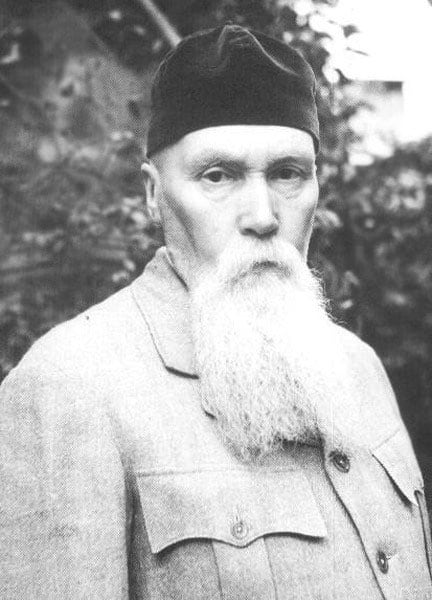
Nicolás Roerich en la India, década de 1940 · Public domain
بكلماته
«Simplicity — Beauty — Fearlessness: so it is ordained! Fearlessness is our guide. Beauty is the ray of comprehension and upliftment.»Shambhala (Nueva York: Stokes, 1930), ensayo «Star of the Mother of the World» (Talai-Pho-Brang, 1924), p. 141

فكرته المحورية
Peace through Culture: A formula summing up Roerich's public programme from the 1920s on: culture—art, science, education, heritage—is not an ornament of civilisation but its moral foundation, and defending it is the surest road to peace between peoples.
السيرة
5 دقيقة قراءة
ترجمة مُعانة من الأصل الإسباني، بانتظار مراجعة مترجم من أهل اللغة.
أرشيفٌ من الحجارة والأساطير
وُلد نيكولاي كونستانتينوفيتش ريريخ — المعروف في الغرب باسم نيكولاس رويريتش — في سانت بطرسبورغ في 9 أكتوبر 1874 (27 سبتمبر بحسب التقويم اليولياني)، بكرًا للموثّق كونستانتين ريريخ، ذي الأصل الألماني البلطيقي، ولماريا كالاشنيكوفا، المنحدرة من أسرة تجار. وفي بيت الأسرة وفي ضيعة إيزفارا جنوب العاصمة جمع الفتى المعادن والنقود، ورافق وهو في التاسعة عالمَ آثار في التنقيب عن تلال الدفن في تلك الناحية: وسيغدو الماضي المطمور مادةَ عمله كله. وفي 1893 التحق في آن واحد بكلية الحقوق في جامعة سانت بطرسبورغ وبالأكاديمية الإمبراطورية للفنون الجميلة، ومنذ 1895 عمل في مرسم رسّام المناظر الطبيعية أرخيب كوينجي.
وفي 1897 أنهى دراسته في الأكاديمية بلوحة الرسول، وهي مشهد من روسيا القديمة الأولى اشتراه بافل تريتياكوف لمتحفه. وبحسب الرواية التي كتبها رويريتش نفسه بعد ذلك بعقود، أرسله الناقد فلاديمير ستاسوف حينئذ لزيارة ليف تولستوي، فنصحه بأن يوجّه القارب دائمًا إلى ما فوق النقطة التي يريد بلوغها، لأن التيار يجرف. وفي الوقت نفسه كان ينقّب في محافظات سانت بطرسبورغ ونوفغورود وتفير وينشر تقاريره الميدانية الأولى؛ ومجموعته من قطع العصر الحجري، التي تجاوزت في النهاية ثلاثين ألف قطعة، محفوظة اليوم في متحف الإرميتاج.
رسّام روسيا القديمة
وفي 1901 تزوج يلينا إيفانوفنا شابوشنيكوفا، ابنة مهندس معماري تمتّ بصلة قرابة إلى موسورغسكي من جهة أمها، وكانت عازفة بيانو وقارئة نهمة، وستغدو شريكته في كل شيء؛ وفي 1902 وُلد يوري (جورج)، عالم التبتيات في المستقبل، وفي 1904 سفياتوسلاف، الذي صار رسامًا هو الآخر. وبين 1903 و1904 جال الزوجان في أكثر من أربعين مدينة روسية قديمة؛ وخرجت من تلك الرحلة نحو تسعين دراسة معمارية وحملة رائدة للدفاع عن كنائس وأسوار وأيقونات مهملة. ومنذ 1906 أدار مدرسة الجمعية الإمبراطورية لتشجيع الفنون، فجعلها مشغلًا يجمع الفنون كلها تحت سقف واحد، وفي 1910 تولّى رئاسة جماعة «مير إسكوستفا» («عالم الفن»).
وجاءته شهرته الأوروبية من المسرح. فلفرقة «الباليه الروسي» التي أسسها سيرغي دياغيليف صمّم سنة 1909 «الرقصات البولوفتسية» من أوبرا الأمير إيغور، وفي 1913 ديكور طقوس الربيع وأزياءها، وكان قد ابتكر حبكتها — قربانٌ طقسي في روسيا الوثنية — بالاشتراك مع إيغور سترافينسكي. وانتهى العرض الأول في 29 مايو 1913 على مسرح الشانزليزيه بصخب وشغب. وعمل كذلك للمعابد: الجدارية والفسيفساء في كنيسة الروح القدس التي أنشأتها الأميرة ماريا تينيشيفا في تالاشكينو، والزجاج المعشّق في المعبد البوذي في سانت بطرسبورغ.
الحرب والتحوّل نحو الشرق
نحو 1905 تظهر في مقالاته ولوحاته موضوعات الهند. فقد كان آل رويريتش يقرؤون راماكريشنا وفيفيكاناندا، والبهاغافاد غيتا، وطاغور، والأدب الثيوصوفي؛ وستترجم يلينا بعد سنوات العقيدة السرية لبلافاتسكي إلى الروسية. وفي 1916، وقد أصيب بالتهاب رئوي، انتقل مع أسرته إلى سيردوبول (سورتافالا) في كاريليا الفنلندية؛ وبعد ثورة أكتوبر، التي كان يخشى عنفها خاصةً على مصير التراث الفني، وجدت الأسرة نفسها على الجانب الفنلندي من الحدود ولم تعد قط.
وعن طريق السويد وصلوا إلى لندن سنة 1919، حيث عمل رويريتش مصمّمًا للمناظر المسرحية لدى توماس بيتشام. وهناك، في ربيع 1920، بدأت جلسات أرواحية عائلية — بالطاولة وبالكتابة التلقائية — تجلّى فيها، بحسب آل رويريتش، المهاتما موريا: وتلك نواة ما سيصير «أغني يوغا» أو «الأخلاق الحيّة»، التي ستتلقاها يلينا لاحقًا بـ«السمع الباطني». وصدرت في برلين سنة 1921 مجموعته الشعرية زهور موريا، التي بدأ كتابتها سنة 1907. وكما أعاد ألكسندر أندرييف بناءه انطلاقًا من دفاترهم، صارت تلك الرسائل منذ ذلك الحين توجّه قرارات الأسرة.
نيويورك والبعثة إلى آسيا الوسطى
بدعوة من معهد الفنون في شيكاغو وصل رويريتش إلى الولايات المتحدة في أكتوبر 1920 بمعرض طاف أرجاء البلاد. وفي نيويورك أسس «معهد الفنون المتحدة» (1921)، ومركز «كورونا موندي» (1922)، وفي نوفمبر 1923 أول «متحف رويريتش»، بتمويل من سمسار البورصة لويس هورش؛ وفي 1929 انتقلت هذه المؤسسات كلها إلى «ماستر بيلدينغ»، وهو ناطحة سحاب في شارع ريفرسايد درايف. وفي مايو 1923 رحلت الأسرة إلى الهند واستقرت في دارجيلنغ.
وبين 1925 و1928 جاب آل رويريتش كشمير ولاداخ وتركستان الصينية والألتاي ومنغوليا والتبت فيما عُرف بـ«بعثة آسيا الوسطى». وقد قُدّمت على أنها مشروع فني وعلمي تحت العلم الأمريكي، لكنها كانت تسعى إلى غاية خاصة بها: «اتحاد الشرق المقدّس»، وهو اتحاد بوذي لآسيا الداخلية يبشّر به مجيء مايتريا ومملكة شامبالا. وفي صيف 1926 توقف رويريتش في موسكو، وسلّم مفوضية الشعب للشؤون الخارجية رسالة منسوبة إلى المهاتمات وصندوقًا فيه تراب من الهيمالايا مخصّصًا لضريح لينين، وطلب الدعم للمشروع؛ فمنحه السوفييت تسهيلات، لكنهم لم يلتزموا بشيء. وفي أكتوبر 1927 أوقفت السلطات التبتية القافلة شمال ناغتشو: فأمضت خمسة أشهر في خيام صيفية على ارتفاع نحو أربعة آلاف وخمسمئة متر، ومات خمسة من أفرادها.
الميثاق والقطيعة الأمريكية
في 1928 استقرت الأسرة في وادي كولو، في ناغار، حيث أسست «معهد أوروسفاتي للدراسات الهيمالايية». وفي السنة التالية قدّم رويريتش، مع الحقوقيين جورج شكلافير وألبير دو لا براديل، مسودة معاهدة لحماية الآثار والمؤسسات الثقافية في زمن الحرب، لها شعار خاص بها هو «راية السلام»: ثلاث كرات داخل دائرة. وفي 15 أبريل 1935، في البيت الأبيض، وقّعت الولايات المتحدة وعشرون جمهورية أمريكية أخرى «معاهدة حماية المؤسسات الفنية والعلمية والآثار التاريخية»، المعروفة بـ«ميثاق رويريتش». ورُشّح صاحب المبادرة لجائزة نوبل للسلام في 1929 و1932 و1935.
وكلّفه وزير الزراعة هنري أ. والاس، وكان من المعجبين به، في 1934–1935 ببعثة إلى منشوريا ومنغوليا الداخلية لجمع بذور نباتات مقاومة للجفاف. وانتهت المهمة بتوترات دبلوماسية؛ فقطع والاس صلته به سنة 1935، وفي العام نفسه أقصاه لويس هورش ومديرون آخرون عن مؤسساته في نيويورك؛ ثم منحتهم دعوى قضائية ملكية «ماستر بيلدينغ». أما الرسائل التي كان والاس يخاطب فيها رويريتش بـ«عزيزي الغورو»، والتي نشرتها الصحافة سنة 1948، فقد طاردت السياسيَّ في أثناء حملته الرئاسية.
كولو
منذ أواخر 1935 لم يغادر رويريتش الهند قط. وفي ناغار رسم آلاف الدراسات للهيمالايا وسلاسل من اللوحات عن شامبالا والتبت وكولو. ونشر مجموعات من المقالات في ريغا وفي الهند — أبواب إلى المستقبل، وما لا يُهدَم، وهيمافات، والهيمالايا، مسكن النور — وكتب كل يوم تقريبًا «أوراق يومياته». وفي 1942 استقبل جواهر لال نهرو وابنته إنديرا. أما طلباته العودة إلى الاتحاد السوفييتي، التي كرّرها منذ 1936، فلم تلقَ جوابًا. وتوفي في ناغار في 13 ديسمبر 1947، وأُحرق جثمانه بعد يومين؛ ويُعلّم المكانَ حجرٌ منقوش.
الموثَّق والمتناقَل
الموثَّق هو رسّام تجاوزت أعماله سبعة آلاف، وعالم آثار ومصمّم مسرحي من الطراز الأول في روسيا مطلع القرن، ومؤسس لا يكلّ للمؤسسات، وملهم واحدة من أولى المعاهدات الدولية المخصّصة للتراث الثقافي. أما ما تتناقله الحركات الرويريتشية — من أن المهاتما موريا كان يوجّه خطاه، وأن البعثة كانت تبحث عن شامبالا، أو أن بعض اللامات عرفوا فيه تجسّدًا للدالاي لاما الخامس — فمصدره يوميات الأسرة وأتباعها؛ والبحث الحديث يدرسه بوصفه جزءًا من سيرته دون أن يعدّه أمرًا ثابتًا. وتتوزع لوحاته اليوم بين نيويورك وموسكو وسانت بطرسبورغ والهند ولاتفيا وبلغاريا.
المصادر: Decter, Jacqueline (con el Nicholas Roerich Museum). Nicholas Roerich: The Life and Art of a Russian Master. Rochester (Vermont): Park Street Press, 1989. · McCannon, John. Nicholas Roerich: The Artist Who Would Be King. Pittsburgh: University of Pittsburgh Press, 2022. · Andreyev, Alexandre. The Myth of the Masters Revived: The Occult Lives of Nikolai and Elena Roerich. Leiden/Boston: Brill, 2014 (Aries Book Series, 18). · Znamenski, Andrei. Red Shambhala: Magic, Prophecy, and Geopolitics in the Heart of Asia. Wheaton (Illinois): Quest Books, 2011. · Roerich, Nicholas. Altai-Himalaya: A Travel Diary. Introducción de Claude Bragdon. Nueva York: Frederick A. Stokes, 1929.
الخط الزمني
الحياة عامًا بعد عام
كل نقطة حدث موثّق. انقر لتقرأه مع مصدره ودرجة اليقين فيه.
9 أكتوبر 1874أقل من عامSan Petersburgo
Birth
Nikolai Konstantinovich Rerikh is born, son of the notary Konstantin Rerikh and Maria Kalashnikova. The date corresponds to 27 September in the Julian calendar.
موثّقNicholas Roerich Museum (Nueva York). «Nicholas Roerich: biographical outline» (Early Years, The Theatrical Years, The Clouds of War, Travel to Other Shores, America, India).
بعد وفاته
- 1949The museum refounded
9 أكتوبر 1874 · أقل من عام
Birth
Nikolai Konstantinovich Rerikh is born, son of the notary Konstantin Rerikh and Maria Kalashnikova. The date corresponds to 27 September in the Julian calendar.
موثّق
1893 · 18 عامًا
Law and Fine Arts
He enrols simultaneously in the University's Faculty of Law and the Imperial Academy of Arts; from 1895 he studies in Arkhip Kuindzhi's studio.
موثّق
1897 · 23 عامًا
The Messenger
His graduation picture, The Messenger, is bought by Pavel Tretyakov. According to his own later account, he visits Leo Tolstoy on Stasov's advice.
موثّق
28 أكتوبر 1901 · 27 عامًا
Marriage to Helena Shaposhnikova
He marries Helena Ivanovna Shaposhnikova in the church of the Academy of Arts (date in the Julian calendar). Their sons Yuri (1902) and Svetoslav (1904) will follow.
موثّق
1903 – 1904 · 28 عامًا
Journey through ancient Russia
With Helena he visits more than forty historic towns, paints some ninety architectural studies and begins his campaign for the preservation of monuments.
موثّق
1906 · 31 عامًا
Director of the School of the Society for the Encouragement of the Arts
He takes over the school, reorganising it with workshops for icons, ceramics, weaving and engraving; he will direct it until the revolution.
موثّق
29 مايو 1913 · 38 عامًا
Premiere of The Rite of Spring
The Ballets Russes premiere at the Théâtre des Champs-Élysées the ballet whose scenario he conceived with Stravinsky and whose sets and costumes he designed. The performance ends in uproar.
موثّق
1916 · 41 عامًا
Move to Karelia
Ill with pneumonia, he settles with his family on the shore of Lake Ladoga. After the October Revolution the family remains on the Finnish side and will never return to Russia.
موثّق
مارس 1920 · 45 عامًا
Beginning of Agni Yoga
In family spiritualist sessions the first messages attributed to the Mahatma Morya are recorded—the origin of the Living Ethics teaching.
موثّق
أكتوبر 1920 · 46 عامًا
Arrival in the United States
Invited by the Art Institute of Chicago, he begins a touring exhibition across the country. In 1921 he founds the Master Institute of United Arts.
موثّق
نوفمبر 1923 · 49 عامًا
Founding of the Roerich Museum
The first museum devoted to his work opens on Riverside Drive, financed by Louis Horch. The family had already left for India in May.
موثّق
1925 – 1928 · 50 عامًا
The Central Asian Expedition
The family's crossing of Inner Asia begins; it will last until 1928 and Roerich will narrate it in Altai-Himalaya and Heart of Asia.
موثّق
يونيو 1926 · 51 عامًا
The Moscow visit
He hands the Soviet authorities a message attributed to the Mahatmas and a casket of Himalayan earth for Lenin's tomb, and seeks support for his project of a Buddhist federation in Asia.
موثّق
6 أكتوبر 1927 · 52 عامًا
Detention in Tibet
The Tibetan authorities halt the caravan; it spends five months in summer tents at high altitude and five of its members die. In March 1928 it is allowed to leave for Sikkim.
موثّق
يوليو 1928 · 53 عامًا
The Urusvati Institute
The family settles in the Kullu valley and founds the Urusvati Himalayan Research Institute, directed by their son George.
موثّق
1929 · 54 عامًا
Draft Pact and Nobel nomination
He presents the draft treaty for the protection of cultural heritage, prepared with Georges Chklaver and Albert de La Pradelle. He is nominated for the Nobel Peace Prize, and will be again in 1932 and 1935.
موثّق
1934 – 1935 · 59 عامًا
The Manchurian expedition
He leads, for the US Department of Agriculture, an expedition in search of drought-resistant plants commissioned by Henry A. Wallace. It ends in diplomatic friction.
موثّق
15 أبريل 1935 · 60 عامًا
Signing of the Roerich Pact
The United States and twenty other American republics sign the Treaty on the Protection of Artistic and Scientific Institutions and Historic Monuments, in the presence of Franklin D. Roosevelt.
موثّق
1935 · 61 عامًا
Break with Louis Horch and with Wallace
The trustees of his New York institutions, led by Horch, remove him from them; a later lawsuit gives them ownership of the Master Building. Wallace also breaks with him.
موثّق
1942 · 67 عامًا
Visit of Nehru and Indira
He receives Jawaharlal Nehru and his daughter Indira in Kullu; they discuss an Indo-Russian cultural association.
موثّق
13 ديسمبر 1947 · 73 عامًا
Death
He dies at his house in Naggar. He is cremated on 15 December; an inscribed stone marks the place of cremation.
موثّق
1949
The museum refounded
Sina Fosdick and other associates open the Nicholas Roerich Museum on West 107th Street, which remains open.
موثّق
المؤلَّفات
المؤلَّفات الأساسية
المؤلَّفات التي لا يُفهم إرثه من دونها.
مؤلَّف مكتوب · 1927
Altai-Himalaya
Алтай — Гималаи (Мысли на коне и в шатре)
Travel diary of the Central Asian Expedition from the voyage to India (1923) to Mongolia (1926), written 'on horseback and in the tent'. It alternates landscape notes, observations on monasteries, legends of Shambhala and Maitreya, stories of Issa gathered in Ladakh, political remarks and reflections on culture. It is the main source for reconstructing Roerich's itinerary and thought in those years, and contains his description of the shining object the caravan saw in the sky over Kukunor on 5 August 1927.
7 طبعات · amazon.com

مؤلَّف مكتوب · 1929
Heart of Asia
Сердце Азии
A concise account of the Central Asian Expedition written after it ended: the route from Sikkim to Tibet, the detention at Chunargen, the monasteries, the prophecies of Shambhala and Maitreya that Roerich gathered among Buddhists and Old Believers, and a closing essay on the teaching of Shambhala. Shorter and more orderly than Altai-Himalaya, it was the book with which Roerich presented to Western readers the meaning he gave his journey. It was translated into English and Spanish in 1930.
6 طبعات · amazon.com

مؤلَّف مكتوب · 1930
Shambhala
A book of essays dated between 1925 and 1929 at the places of the expedition, opened by 'Shambhala the Resplendent', a dialogue with a lama about the hidden kingdom of the Kalachakra tradition, and followed by texts on Tibetan Buddhism and art, the 'subterranean dwellers', the 'Star of the Mother of the World', the Urusvati institute, the gods of Kullu and the guru. It is the text in which Roerich sets out most clearly his reading of Shambhala as both symbol and reality, and the one that fixed the Western image of the subject for decades. It should be read as the work of a believer, not as a study of Tibetan Buddhism.
6 طبعات · amazon.com

مؤلَّف مكتوب · 1921
Flowers of Morya
Цветы Мории
Roerich's only book of poetry: short unrhymed poems grouped in cycles—one of them 'To the Boy'—written between pre-war Russia and emigration. Their tone is that of parable and exhortation; already present are the inner master, the path, the light and the expectation of a new era that would later dominate Agni Yoga. The title alludes to Morya, the Mahatma to whom the family attributed its communications. It has been included in anthologies of Russian free verse.
5 طبعات · amazon.com
جميع مؤلَّفاته (33)

Realm of Light
1931
Nicholas Roerich
Gates into the Future
The Conscious LibraryGates into the Future
1936

The Invincible
1936

Himavat: Diary Leaves
1946

Himalayas — Abode of Light
1947

Beautiful Unity
1946

Fiery Stronghold
1932

Adamant
1923

Paths of Blessing
1924
Nicholas Roerich
Sacred Vigil
The Conscious LibrarySacred Vigil
1934
Nicholas Roerich
Banner of Peace
The Conscious LibraryBanner of Peace
1934
Nicholas Roerich
To the Woman's Heart
The Conscious LibraryTo the Woman's Heart
1931
Nicholas Roerich
Maitreya
The Conscious LibraryMaitreya
1932
Nicholas Roerich
The Joy of Art
The Conscious LibraryThe Joy of Art
1928
Nicholas Roerich
Collected Works, Book One
The Conscious LibraryCollected Works, Book One
1914
Nicholas Roerich
The Rite of Spring (scenario)
The Conscious LibraryThe Rite of Spring (scenario)
1913
Nicholas Roerich
Violators of Art
The Conscious LibraryViolators of Art
1919
Nicholas Roerich
Tales and Parables
The Conscious LibraryTales and Parables
1916
Nicholas Roerich
Art and Archaeology
The Conscious LibraryArt and Archaeology
1898
Nicholas Roerich
Some Antiquities of the Shelon Pyatina and the Bezhetsk End
The Conscious LibrarySome Antiquities of the Shelon Pyatina and the Bezhetsk End
1899
Nicholas Roerich
The 1899 Excursion of the Archaeological Institute and the Finnic Burials of Saint Petersburg Province
The Conscious LibraryThe 1899 Excursion of the Archaeological Institute and the Finnic Burials of Saint Petersburg Province
1900
Nicholas Roerich
Some Antiquities of the Derevskaya and Bezhetsk Pyatinas
The Conscious LibrarySome Antiquities of the Derevskaya and Bezhetsk Pyatinas
1903
Nicholas Roerich
Through the Old Days
The Conscious LibraryThrough the Old Days
1904
Nicholas Roerich
The Stone Age on Lake Piros
The Conscious LibraryThe Stone Age on Lake Piros
1905
الأقوال
أقوال محدَّدة الموضع في مؤلَّف بعينه. كل منها يحمل مصدره ودرجة الثقة به.
Simplicity — Beauty — Fearlessness: so it is ordained! Fearlessness is our guide. Beauty is the ray of comprehension and upliftment.متحقَّق منهShambhala (Nueva York: Stokes, 1930), ensayo «Star of the Mother of the World» (Talai-Pho-Brang, 1924), p. 141
أقوال منحولة أو مختلَف في نسبتها (1)
«'Art will unify all humanity.'»
A widely circulated phrase, used by the Nicholas Roerich Museum itself in its presentation, but quoted without reference to a specific work. It has not been found in the texts consulted (Altai-Himalaya, Shambhala, Heart of Asia, Himalayas—Abode of Light); it is recorded as of unverified origin until the source essay is found.
الكلمات الأخيرة
لا توجد سجلات يمكن التحقق منها لكلماته الأخيرة.
There is no reliable record of his last words. He died at his house in Naggar on 13 December 1947 surrounded by his family; what survives from those days are Helena Roerich's letters, which describe the day of the cremation—windless, the mountains freshly covered in snow—and the inscription on the stone raised at the spot.
المصدر: «Nicholas Roerich», Wikipedia en inglés (Biography, Asian expedition, Manchurian expedition, Later life, Cultural legacy), revisión consultada el 2026-10-25.
اسأل
بماذا يجيب أثره
اثنا عشر سؤالًا كبيرًا من أسئلة الإنسانية، وما تتيح نصوصه الإجابة به عنها، مع المراجع. ولا نقوّله ما لم يقل أبدًا.
ما المطلق؟ هل الله موجود؟
He does not theorise about God: he speaks of Beauty, Knowledge and the mahatmas
لم يُبدِ رأيًا
Nicholas Roerich left no explicit doctrine of the Absolute. His essays in Shambhala, Altai-Himalaya or Heart of Asia speak of Beauty as a ray of understanding and elevation, of Knowledge, of the mahatmas said to have lived in Sikkim and of the expectation of Maitreya, and they treat Orthodox saints, Tibetan Buddhism and Hindu traditions with equal respect. The question of God's nature is, in his work, absorbed into a religiosity of culture and sacred landscape. The metaphysical formulation of the family circle belongs to Agni Yoga, written down by his wife Helena and presented as dictated by the mahatma Morya; ascribing that theology to Nicholas would go beyond what he signed.
قارن هذا السؤال مع معلّمين آخرينمن أنا؟ هل توجد ذات حقيقية؟
He left no doctrine of the self; his work looks to culture and landscape
لم يُبدِ رأيًا
Nicholas Roerich did not address the question of the self systematically. His books of essays and travel diaries, such as Altai-Himalaya, Heart of Asia or Shambhala, collect legends, conversations with lamas and reflections on art, beauty and peace, but do not propose an anthropology. He shares with his wife the general framework of Theosophy and Agni Yoga, in which the human being is a soul evolving through many lives, and he mentions Asian beliefs in rebirth as a matter of course; but that doctrine is formulated in Helena's books, not in his. The nearest thing to an answer of his own is his insistence that the human being is raised by beauty and culture, which he considers the way to the best in oneself.
قارن هذا السؤال مع معلّمين آخرينلماذا نتألّم؟
Ignorance and the destruction of culture breed war and pain
الفوضى الاجتماعية والأخلاقيةيُستنتج من تعاليمه
Nicholas Roerich did not elaborate a theory of individual suffering, but he did offer a diagnosis of collective pain. A witness of the First World War and the revolution, he attributed barbarism to ignorance and to the loss of the sense of beauty and the sacred, and saw in culture, which he understood as the cult of light, the remedy against violence. From that conviction arose his campaign for an international treaty protecting monuments, museums and scientific institutions in wartime, with the Banner of Peace as its emblem, signed in 1935 as the Roerich Pact. His essays, gathered in books such as Banner of Peace, repeat that where culture degrades, hatred and destruction grow. Suffering is, in his work, above all a disorder of civilisation.
قارن هذا السؤال مع معلّمين آخرينماذا يحدث بعد الموت؟
He wrote no doctrine of the afterlife; he leaves it to Agni Yoga
لم يُبدِ رأيًا
Nicholas Roerich devoted no writings of his own to explaining what happens after death. In his travel diaries through Central Asia he records with interest Tibetan and Mongolian beliefs about rebirth, reincarnated lamas and subtle worlds, and his painting often depicts saints, ascetics and heavenly dwellings; but these are the materials of a chronicler and an artist, not a systematic teaching. The doctrinal framework in which the family moved, that of Theosophy and Agni Yoga, teaches reincarnation according to karma and life in the subtle and fiery worlds, and it is formulated in the books Helena Roerich wrote down. Ascribing that doctrine to him as a position he wrote would go beyond what his texts allow us to state.
قارن هذا السؤال مع معلّمين آخرينكيف يُبلَغ التحرّر أو الخلاص؟
He does not speak of personal salvation: his horizon is raising human culture
لم يُبدِ رأيًا
Nicholas Roerich formulated no doctrine of liberation or individual salvation. His essays speak of elevation, of ascent towards light and of a better future, which he associates with the coming of Maitreya and the tradition of Shambhala, but that hope is collective and bound up with culture, beauty and peace among peoples. Labour, simplicity and fearlessness appear as virtues of the way, and beauty as a ray of understanding, without being ordered into a method. The disciplines of thought and heart the family followed are set out in Agni Yoga, written down by Helena Roerich. His painting and writings prefer to show the horizon rather than trace the path.
قارن هذا السؤال مع معلّمين آخرينهل نحتاج إلى معلّم؟
He reveres the Asian figure of the Teacher and the mahatmas of the Himalaya
لا غنى عنهيُستنتج من تعاليمه
In his travel books and essays, Nicholas Roerich treats with reverence the relation between teacher and disciple as he saw it in India, Tibet and Mongolia, and proposes it as a model against Western individualism. His pages on Sikkim recall that the mahatmas were said to have been there, and the Central Asian Expedition was presented in part as a mission connected with them; Helena and he regarded themselves as disciples of the mahatma Morya, from whom the teaching of Agni Yoga was said to come. He also admired the Russian saintly teachers, such as Sergius of Radonezh, whom he painted repeatedly. His work sets out no theory of initiation, but it takes for granted that the highest knowledge is received from those who guard it and is not improvised.
قارن هذا السؤال مع معلّمين آخرينهل العالم حقيقي؟
Behind the visible mountains lies a subtler reality: Shambhala
مستويات من الوجوديُستنتج من تعاليمه
Nicholas Roerich's painting and writing present the visible world as the veil of a subtler one. His Himalayan pictures, with almost transparent mountains and figures of saints and messengers, and his books Shambhala and Heart of Asia, which gather Tibetan and Mongolian legends about a hidden kingdom of sages, suggest a reality in planes, in which the highest exists but reveals itself only to those who are prepared. In Altai-Himalaya he also records phenomena he interpreted as signs of that other reality. He built no cosmology of his own: the framework of planes of existence he takes from Theosophy and Agni Yoga. His contribution is that of an artist who sought to show the invisible through the visible, without denying the latter its beauty and worth.
قارن هذا السؤال مع معلّمين آخرينما الحب؟
He left no reflection of his own on love; he speaks of beauty, peace and brotherhood
لم يُبدِ رأيًا
Nicholas Roerich did not write on love as a theme of its own. His essays insist on related values, beauty that unites, peace among peoples, respect for the work and culture of others, the brotherhood of those who seek the light, and his campaign for the Pact that bears his name can be read as a form of care for humanity's common heritage. But his books contain no doctrine of love like those of the mystics or the philosophers of his generation, nor any reflection on personal love. Agni Yoga, written down by his wife, treats the heart and love as energy, and its book Brotherhood develops the idea of community, but these are Helena's texts, not Nicholas's.
قارن هذا السؤال مع معلّمين آخرينهل نحن أحرار أم أن كل شيء مقدَّر؟
He did not address the question; his work speaks of duty, labour and fearlessness
لم يُبدِ رأيًا
Nicholas Roerich did not write on the problem of freedom and determinism. His essays constantly urge action, work, fearlessness and the building of a better future, which presupposes a practical confidence in the human capacity to choose and transform one's surroundings; and his idea that the past is good as long as it does not hinder the future expresses that orientation. At the same time, he shares with Theosophy and Agni Yoga the belief in a cosmic plan and in the law of karma, which his wife sets out in the books she wrote down. There is no attempt in his writings to articulate the two, nor any reflection on individual destiny. The question lies outside his field, which is culture.
قارن هذا السؤال مع معلّمين آخرينلماذا نتأمّل أو نصلّي؟
He painted ascetics and saints, but did not write on prayer or meditation
لم يُبدِ رأيًا
Nicholas Roerich depicted many people at prayer in his painting: Saint Sergius of Radonezh, Himalayan ascetics, Tibetan monks, lamas in meditation. In his travel diaries he describes Central Asian monasteries, rites and practices with respect. But he left no reflection of his own on the meaning of prayer or meditation, nor did he prescribe practices. His essays suggest that the contemplation of beauty, nature and art raises the human being, and that the thought of beauty is so powerful it cannot be kept in silence, but that idea does not become a doctrine of prayer. The indications on communion with the Master and the discipline of the heart belong to Agni Yoga, written down by his wife.
قارن هذا السؤال مع معلّمين آخرينهل يستطيع العقل أن يعرف الحقيقة القصوى؟
Beauty and knowledge united; the highest knowledge is kept by hidden sages
معرفة باطنيةيُستنتج من تعاليمه
Nicholas Roerich placed great value on knowledge: he was an archaeologist, founded educational and scientific institutions, such as the Himalayan research institute Urusvati, and in his essays joined science, art and spirituality in a single quest. In Heart of Asia he notes that in Asia, if one speaks in the name of Beauty and Knowledge, one is immediately asked which Beauty and which Knowledge: not just any learning, but the kind that elevates. His books on Shambhala gather the tradition of a kingdom of sages who guard a higher knowledge, and he regarded himself as the bearer of a teaching received from the mahatmas. He wrote no theory of knowledge, but his work assumes that ultimate knowledge exists, is transmitted and can be verified through inner experience.
قارن هذا السؤال مع معلّمين آخرينالانسحاب من العالم أم تغييره؟
Peace through culture: the Roerich Pact and the Banner of Peace
الانخراط في العالميقوله صراحةً
Nicholas Roerich made cultural action his way of transforming the world. From 1929 he promoted an international treaty to protect monuments, museums and scientific and artistic institutions in time of war and peace, with its own emblem, the Banner of Peace: three spheres within a circle. The Roerich Pact was signed in Washington in 1935 by some twenty American countries and is one of the precedents of the Hague Convention of 1954. His essays, gathered in books such as Banner of Peace or Fiery Stronghold, argue that culture is the path to peace among peoples. He also founded museums, schools and a research institute in the Himalaya. His spirituality did not draw him away from the world: it committed him to the preservation of its beauty.
قارن هذا السؤال مع معلّمين آخرين
التقارب والتوتّر
التقارب والتوتّر
محسوبة سؤالًا سؤالًا انطلاقًا من مواقفه. وسبب كل اتفاق أو اختلاف يظهر بالنقر.
يقترب في تفكيره من
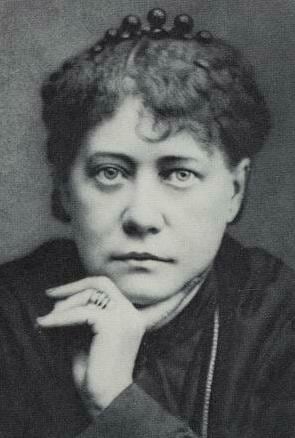
Helena Blavatsky
يتّفقان في: هل العالم حقيقي؟ · هل نحتاج إلى معلّم؟ · هل يستطيع العقل أن يعرف الحقيقة القصوى؟
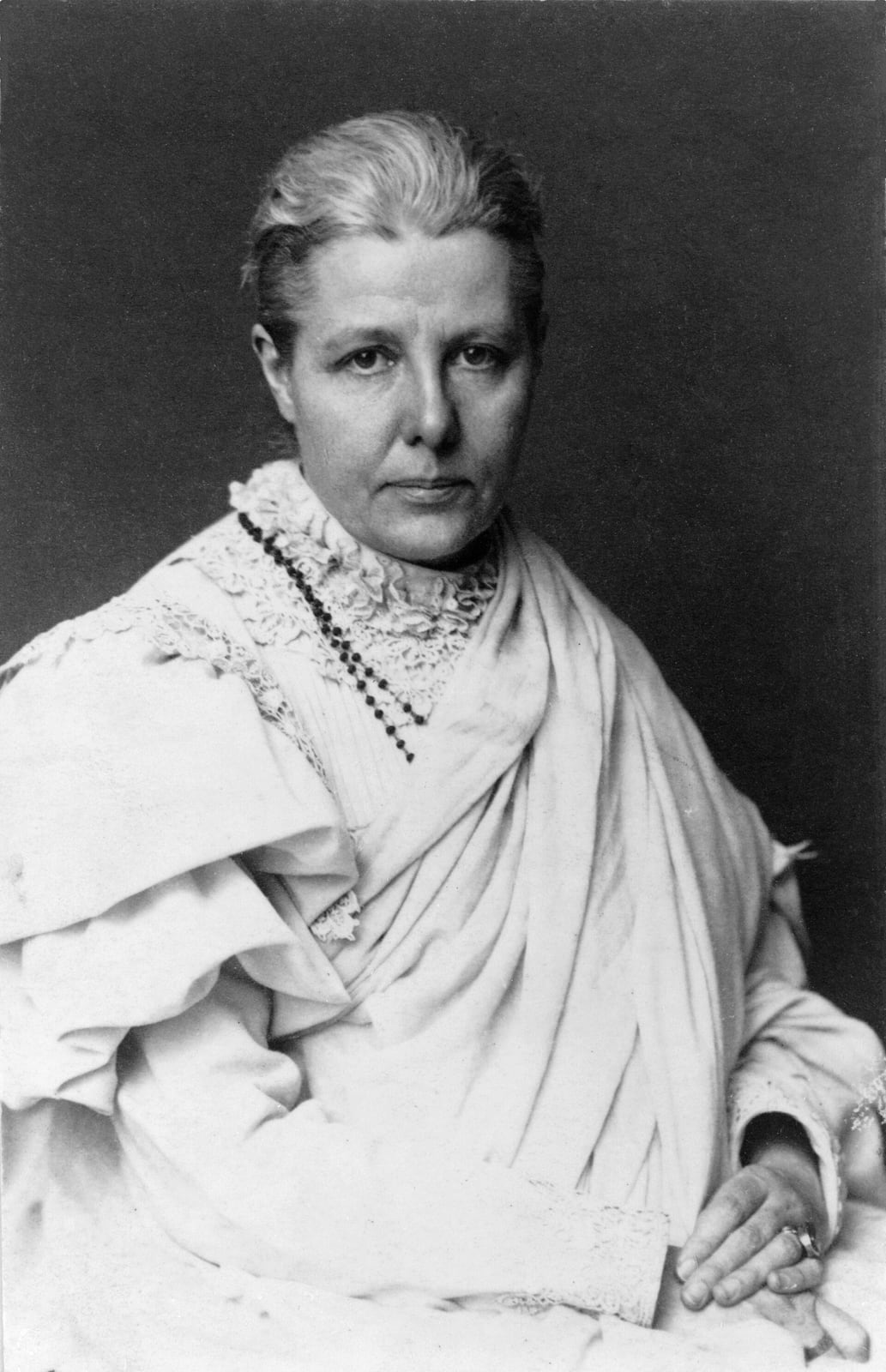
Annie Besant
يتّفقان في: هل العالم حقيقي؟ · هل نحتاج إلى معلّم؟ · هل يستطيع العقل أن يعرف الحقيقة القصوى؟
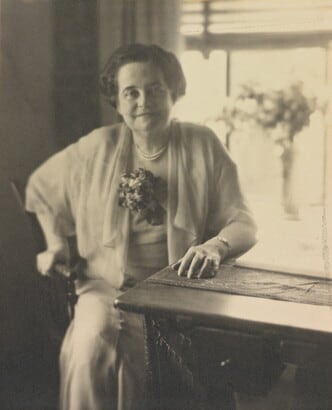
Alice A. Bailey
يتّفقان في: هل نحتاج إلى معلّم؟ · هل العالم حقيقي؟ · هل يستطيع العقل أن يعرف الحقيقة القصوى؟
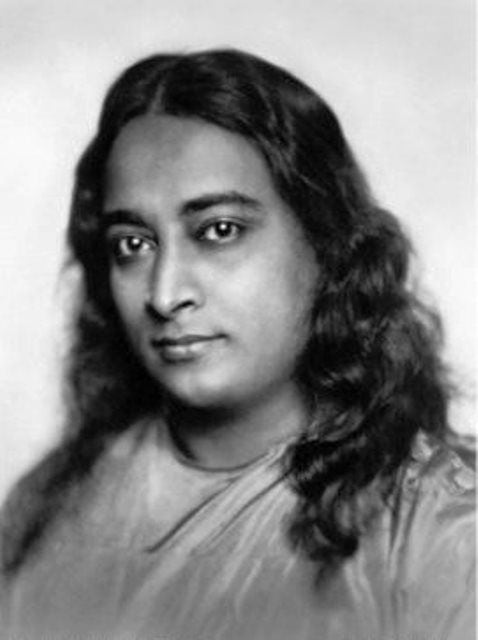
Paramahansa Yogananda
يتّفقان في: هل نحتاج إلى معلّم؟ · هل العالم حقيقي؟ · هل يستطيع العقل أن يعرف الحقيقة القصوى؟
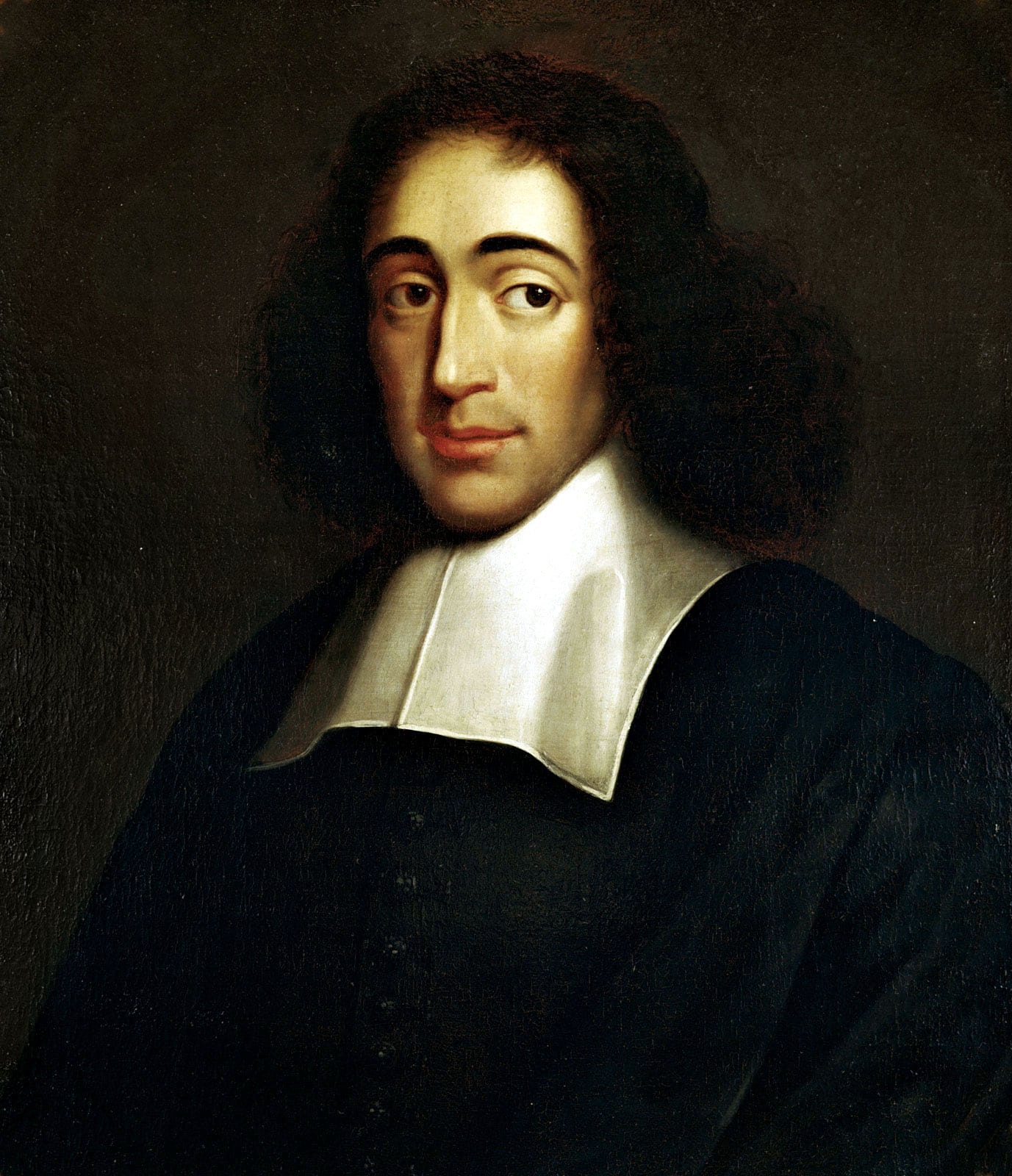

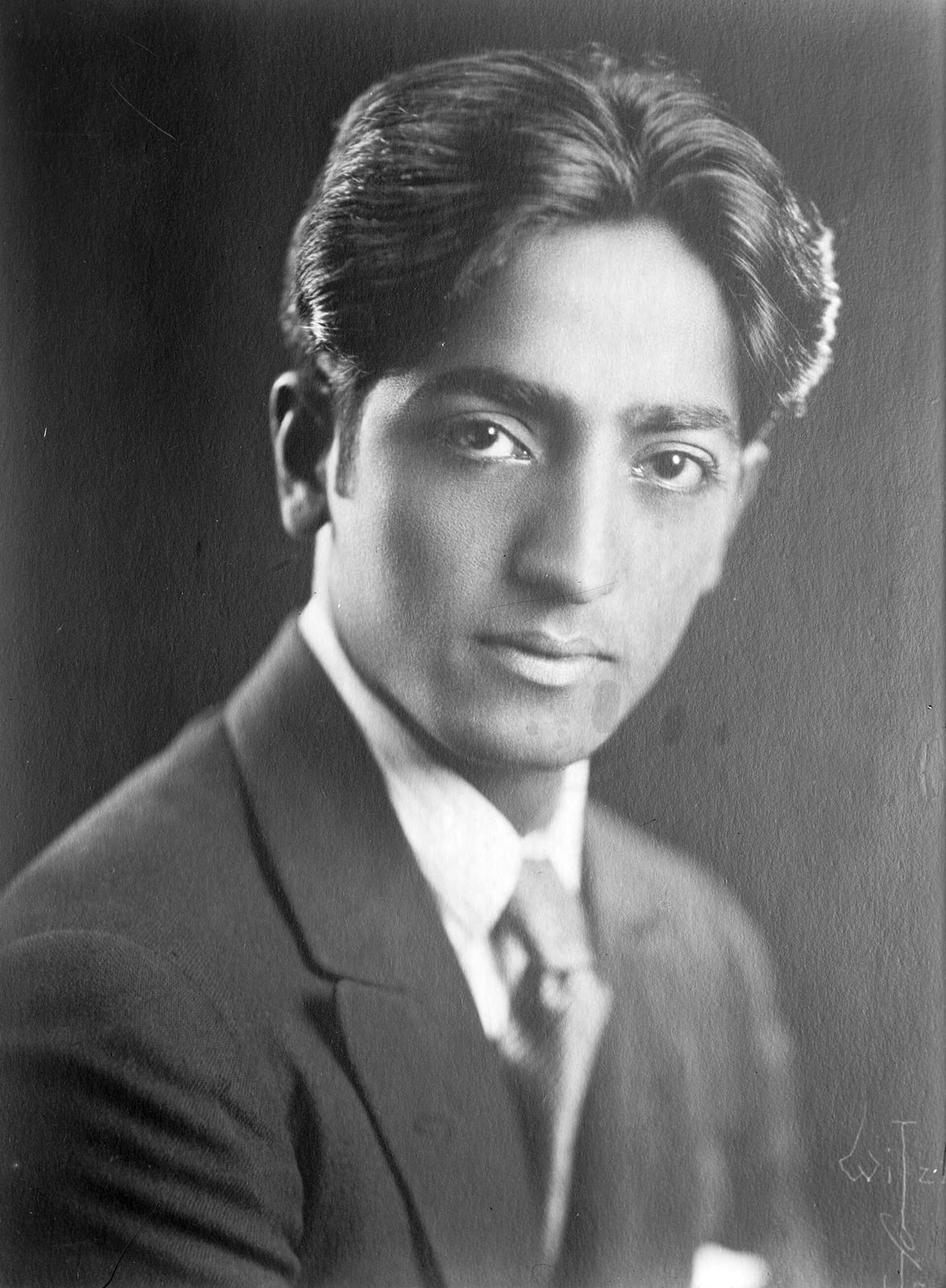
حكايات وروايات
حكايات وروايات
شهادة1897
'Steer higher': the visit to Tolstoy
أصل الرواية: We know it only from Roerich's own account, written decades later in his autobiographical essays and repeated by his biographers (Belikov and Kniazeva, 1972). There is no testimony from Tolstoy or third parties about the conversation; the visit itself is plausible and dated to 1897.
موثّق1911–1913
The premiere of The Rite
أصل الرواية: The uproar at the premiere is documented by the Paris press and numerous witnesses. The shared authorship of the scenario has been debated ever since: Taruskin (1996) reconstructs the collaboration from the correspondence; Roerich's reflection comes from his writings, quoted by the Nicholas Roerich Museum.
المصدر: Taruskin, Richard. Stravinsky and the Russian Traditions: A Biography of the Works through Mavra. 2 vols. Berkeley: University of California Press, 1996.
موثّق1926
A casket for Lenin's tomb
أصل الرواية: Documented in the Soviet archives and studied by Rosov (2002–2004), Andreyev (2014), Znamenski (2011) and McCannon (2022). The text of the Mahatmas' message has been published; the Roerich movements dispute its political interpretation.
المصدر: Znamenski, Andrei. Red Shambhala: Magic, Prophecy, and Geopolitics in the Heart of Asia. Wheaton (Illinois): Quest Books, 2011.
شهادة1927
The shining oval over Kukunor
أصل الرواية: Altai-Himalaya (1929), p. 361, entry for 5 August. It is the only written testimony; since the 1950s UFO literature has presented it as a 'flying saucer' sighting, an interpretation not found in the text.
موثّق1927–1928
Five months at Chunargen
أصل الرواية: Telegram of 24 May 1928 reproduced in the publisher's note to Altai-Himalaya (1929) and George N. Roerich's detailed account in Trails to Inmost Asia (1931). The figure of five dead comes from those family sources.
مختلَف فيه1925
The legends of Issa in Ladakh
أصل الرواية: Roerich tells it in Altai-Himalaya (1929) and Heart of Asia (1929–1930). The source of the story is Notovitch's book (1894), refuted by Max Müller (The Nineteenth Century, 1894) and J. Archibald Douglas (The Nineteenth Century, 1896). That Roerich heard oral versions in Ladakh does not prove the manuscript existed.
موثّق1929–1948
'Dear Guru'
أصل الرواية: Culver and Hyde, American Dreamer (2000), reconstruct the episode from the correspondence and the press of the time; Wallace never fully denied authorship of the letters.
المصدر: Culver, John C., y John Hyde. American Dreamer: The Life and Times of Henry A. Wallace. Nueva York: W. W. Norton, 2000.
التعاليم
التعاليم
المفاهيم التي ينتظم بها فكره، مشروحة في سياقها.
Peace through Culturepaz-por-la-cultura
Set out in Realm of Light, Fiery Stronghold and Gates into the Future; its legal expression is the Roerich Pact.
المصدر: McCannon, John. Nicholas Roerich: The Artist Who Would Be King. Pittsburgh: University of Pittsburgh Press, 2022.
Roerich Pact and Banner of Peacepacto-roerich
Legal culmination of the 'Peace through Culture' programme; text in the ICRC database.
Shambhalashambhala
Central theme of Shambhala (1930), Heart of Asia and Altai-Himalaya.
المصدر: Znamenski, Andrei. Red Shambhala: Magic, Prophecy, and Geopolitics in the Heart of Asia. Wheaton (Illinois): Quest Books, 2011.
Maitreya and the 'Great Plan'maitreya-gran-plan
Reconstructed by Rosov, Andreyev, Znamenski and McCannon from Russian and American archives.
المصدر: Znamenski, Andrei. Red Shambhala: Magic, Prophecy, and Geopolitics in the Heart of Asia. Wheaton (Illinois): Quest Books, 2011.
Unity of the artssintesis-de-las-artes
Developed in Adamant and Beautiful Unity.
مقاطع الفيديو
مقاطع الفيديو
تسجيلات ومقابلات وأفلام وثائقية. تُشغَّل مقاطع الفيديو من YouTube؛ ولا تُستضاف هنا.
«Рерих. Искусство возрождать» (documental)
فيلم وثائقي· RU· 2026· 27 min
Третьяковская галерея (Galería Tretiakov)القناة الرسمية
Интервью с куратором выставки Николая Рериха
مقابلة· RU· 43 min
Третьяковская галерея (Galería Tretiakov)القناة الرسمية
«Неизвестный художник Николай Рерих»: «Чудо» (1923)
محاضرة· RU· 38 min
Музей Востока (Museo Estatal de Arte Oriental, Moscú)القناة الرسمية
«Неизвестный художник Николай Рерих. Священный дар (1924)»
محاضرة· RU· 38 min
Музей Востока (Museo Estatal de Arte Oriental, Moscú)القناة الرسمية
Онлайн-лекция «Мемориальный кабинет Н. К. Рериха»
محاضرة· RU· 43 min
Музей Востока (Museo Estatal de Arte Oriental, Moscú)القناة الرسمية
Круглый стол «Актуальность пакта Рериха в XXI веке»
محاضرة· RU· 56 min
Музей Востока (Museo Estatal de Arte Oriental, Moscú)القناة الرسمية
Honoring a Legacy of Peace: The 90th Anniversary of the Roerich Pact
محاضرة· EN· 2025· 25 min
Nicholas Roerich Museum - New Yorkالقناة الرسمية
Street scenes — Nicholas Roerich in Darjeeling, West Bengal, India, 1928
تسجيل أصلي· 1928· 5 min
Nicholas Roerich Museum - New Yorkالقناة الرسمية
Николай Рерих. Фильм (1976)
فيلم وثائقي· RU· 1976· 54 min
Международный Центр Рерихов
Roerich. The Call of Cosmic Evolution (2013)
فيلم وثائقي· EN· 2013· 69 min
Международный Центр Рериховالقناة الرسمية
Фильм Татьяны Борщ «Николай Рерих. Под Знаменем Мира» (2019)
فيلم وثائقي· RU· 2019· 51 min
Международный Центр Рериховالقناة الرسمية
Nicholas Roerich (UNED, emitido en TVE-2)
فيلم وثائقي· ES· 2008· 23 min
UNED Documentosالقناة الرسمية
SER Historia: Nicolás Roerich, un místico pacifista
تحليل· ES· 110 min
SER Podcast (Cadena SER)القناة الرسمية
Shambhala. Nicholas Roerich and the Tibetan Buddhism (Guido Ferrari, 2012)
فيلم وثائقي· EN· 2012· 58 min
Guido Ferrari
«Николай и Елена Рерих. Больше, чем любовь»
المشاهدة على YouTube
لا يسمح هذا الفيديو بالتضمين؛ وسيُفتح على YouTube.
«Николай и Елена Рерих. Больше, чем любовь»
فيلم وثائقي· RU· 39 min
Телеканал Культураالقناة الرسمية
المعرض
المعرض
صور بترخيص متحقَّق منه. كل منها تحتفظ بمؤلّفها ونسبتها.
المخطوطات
المخطوطات
شواهد مخطوطة ونصوص قديمة، مع جهة حفظها وشروط الاطّلاع عليها.
1897–1901
«Гонец» (1897) y la serie «Начало Руси. Славяне» (1901)
- الشاهد المحفوظ
- Cuadros de historia de la Rus primitiva: «El mensajero», «Huéspedes de ultramar» y otros.
- جهة الحفظ
- Galería Tretiakov, Moscú (también Museo Estatal Ruso, San Petersburgo, para otras obras de la serie)
- الرقمنة
- commons.wikimedia.org/wiki/Category:Paintings_by…
1903–1904
Архитектурные этюды (1903–1904)
- الشاهد المحفوظ
- Unos noventa estudios de iglesias, monasterios y fortalezas pintados durante el viaje por más de cuarenta ciudades antiguas de Rusia.
- جهة الحفظ
- Repartidos entre museos rusos; custodia actual no verificada
1910–1914
Fresco «Царица Небесная» y mosaico «Спас Нерукотворный», iglesia del Espíritu Santo de Talashkino (1910–1914)
- الشاهد المحفوظ
- Pintura mural y mosaico del pórtico.
- جهة الحفظ
- In situ: iglesia del Espíritu Santo, Flyónovo, cerca de Talashkino (región de Smolensk)
- الرقمنة
- commons.wikimedia.org/wiki/Category:Holy_Spirit_…
1924–1925
Серия «Знамёна Востока» (Banners of the East, 1924–1925)
- الشاهد المحفوظ
- Diecinueve lienzos sobre maestros de las tradiciones religiosas —Buda, Moisés, san Sergio, Confucio, Mahoma en el monte Hira, Milarepa, Lao-Tse, Tsongkhapa, Padmasambhava, la «Madre del Mundo», los «Signos de Cristo»—, enumerados por el propio Roerich en «Altái-Himalaya».
- جهة الحفظ
- Mayoritariamente en Moscú, en la colección vinculada al Centro Internacional de los Roerich; tras el cierre de su museo en 2017, la custodia ha sido objeto de litigio
1925
Серия «Майтрейя» (1925)
- الشاهد المحفوظ
- Ocho lienzos sobre la venida de Maitreya, el buda futuro.
- جهة الحفظ
- Museo Estatal de Arte de Nizhni Nóvgorod
c. 1933–1947
Серия «Гималаи» (1933–1947) y series «Шамбала», «Тибет», «Кулута»
- الشاهد المحفوظ
- Más de dos mil estudios de montaña del periodo indio, además de series temáticas sobre Shambhala, el Tíbet y el valle de Kullu.
- جهة الحفظ
- Museo Estatal de Arte Oriental, Moscú (y su filial Museo de los Roerich); Nicholas Roerich Museum, Nueva York; Karnataka Chitrakala Parishath, Bangalore (36 estudios); Roerich Hall, Naggar
- الرقمنة
- www.roerich.org/museum-paintings-catalogue.php…
1900–1947
Colección del Nicholas Roerich Museum (Nueva York)
- الشاهد المحفوظ
- Obras de todos los periodos, con especial peso del americano y el indio, como «Madonna Oriflamma» (1932); archivo de cartas, fotografías, filmaciones de 1928 y primeras ediciones.
- جهة الحفظ
- Nicholas Roerich Museum, 319 West 107th Street, Nueva York
- الرقمنة
- www.roerich.org/museum-paintings-catalogue.php…
العلاقات
العلاقات
تأثيرات وتلمذة وتقارب في الأفكار. تُميَّز العلاقة الموثّقة عن التشابه المستخلَص بالتحليل.
من عائلة
His wife from 1901 and collaborator in all his undertakings; co-founder of Agni Yoga, of which she was the recipient and writer.
علاقة موثّقة
من عائلة
Sviatoslav Roerich
Younger son (1904–1993), a painter; he lived with his parents in India, married the actress Devika Rani and gave part of his father's artistic legacy to the Soviet Union.
علاقة موثّقة
من عائلة
George (Yuri) Roerich
Elder son (1902–1960), a Tibetologist; he took part in the Central Asian expedition, directed the Urusvati Institute and returned to Moscow in 1957.
علاقة موثّقة
تأثّر بـ
Blavatsky's Theosophy—the Mahatmas Morya and Koot Hoomi, the hidden wisdom of Asia—is the main source of the Roerichs' spiritual universe; Helena translated The Secret Doctrine into Russian.
علاقة موثّقة
معاصر لـ
In July 1920, in London, the Roerichs received membership certificates of the Theosophical Society signed by Besant as president; Agni Yoga then developed outside that organisation.
علاقة موثّقة
أفكار قريبة من
Both movements were born from Theosophy in the 1920s and presented books dictated by Himalayan masters—the 'Tibetan' for Bailey, Morya for the Roerichs—with a shared expectation of a new era.
تشابه مستخلَص بالتحليل
التقى بـ
He visited him in 1897 on Stasov's advice; the writer's advice to 'steer higher' is known from Roerich's own account.
علاقة موثّقة
تأثّر بـ
The Roerichs avidly read Vivekananda and Ramakrishna in the years before emigration.
علاقة موثّقة
تأثّر بـ
A key reading for the Roerichs in Saint Petersburg, together with Vivekananda and the Bhagavad Gita.
علاقة موثّقة
التقى بـ
Ígor Stravinski
Together they conceived the scenario of The Rite of Spring (1913), whose designs were Roerich's.
علاقة موثّقة
التقى بـ
Serguéi Diáguilev
Fellow members of Mir iskusstva; Diaghilev commissioned from him the designs for Prince Igor (1909) and The Rite (1913).
علاقة موثّقة
التقى بـ
Rabindranath Tagore
They met in London in 1920 and remained friends; Tagore's grand-niece Devika Rani married Svetoslav Roerich.
علاقة موثّقة
تراسل مع
Henry A. Wallace
The American politician was his admirer and correspondent ('Dear Guru'), commissioned the Manchurian expedition and broke with him in 1935.
علاقة موثّقة
التقى بـ
Jawaharlal Nehru
He visited him in Kullu in 1942 with his daughter Indira.
علاقة موثّقة
مرتبط من صفحات أخرى
المصادر
المصادر
المراجع والفهارس التي رُوجعت لهذه الصفحة.
- Decter, Jacqueline (con el Nicholas Roerich Museum). Nicholas Roerich: The Life and Art of a Russian Master. Rochester (Vermont): Park Street Press, 1989.
- McCannon, John. Nicholas Roerich: The Artist Who Would Be King. Pittsburgh: University of Pittsburgh Press, 2022.
- Andreyev, Alexandre. The Myth of the Masters Revived: The Occult Lives of Nikolai and Elena Roerich. Leiden/Boston: Brill, 2014 (Aries Book Series, 18).
- Znamenski, Andrei. Red Shambhala: Magic, Prophecy, and Geopolitics in the Heart of Asia. Wheaton (Illinois): Quest Books, 2011.
- Wikidata, entidad Q208993 («Nicholas Roerich»): fechas (gregorianas y julianas), lugares, identificadores de autoridad (VIAF 14852765, Open Library OL47610A).
- Nicholas Roerich Museum (Nueva York). «Nicholas Roerich: biographical outline» (Early Years, The Theatrical Years, The Clouds of War, Travel to Other Shores, America, India).
- Nicholas Roerich Museum (Nueva York), Archivo: «Nicholas Roerich's writings / Книги Николая Рериха», reproducciones digitales de las primeras ediciones (1899–1974) y de artículos en revistas (1904–1947).
- Roerich, Nicholas. Altai-Himalaya: A Travel Diary. Introducción de Claude Bragdon. Nueva York: Frederick A. Stokes, 1929.
- Roerich, Nicholas. Shambhala. Nueva York: Frederick A. Stokes, 1930.
- Roerich, Nicholas. Heart of Asia. Nueva York: Roerich Museum Press, 1930 (1.ª ed. rusa: Сердце Азии, Southbury, Alatas, 1929).
- Roerich, Nicholas. Himalayas — Abode of Light. Bombay: Nalanda Publications, 1947.
- Treaty on the Protection of Artistic and Scientific Institutions and Historic Monuments (Roerich Pact). Washington, 15 de abril de 1935. Texto y estados parte en la base de datos de derecho internacional humanitario del Comité Internacional de la Cruz Roja.
- Culver, John C., y John Hyde. American Dreamer: The Life and Times of Henry A. Wallace. Nueva York: W. W. Norton, 2000.
- Open Library, autor Nicholas Roerich (OL47610A): registros de obras y ediciones con ISBN consultados el 2026-10-25.
- «Рерих, Николай Константинович», Wikipedia en ruso (secciones de biografía, «Основные труды», «Наследство» y «Музеи Рериха»), revisión consultada el 2026-10-25.
- «Nicholas Roerich», Wikipedia en inglés (Biography, Asian expedition, Manchurian expedition, Later life, Cultural legacy), revisión consultada el 2026-10-25.
- Rosov, Vladímir A. Николай Рерих — Вестник Звенигорода: экспедиции Н. К. Рериха по окраинам пустыни Гоби. 2 vols. San Petersburgo/Moscú, 2002–2004.
- Belikov, P. F., y V. P. Kniázeva. Рерих. Moscú: Molodaya Gvardiya (serie Жизнь замечательных людей), 1972.
- Roerich, George N. Trails to Inmost Asia: Five Years of Exploration with the Roerich Central Asian Expedition. New Haven: Yale University Press, 1931.
- Taruskin, Richard. Stravinsky and the Russian Traditions: A Biography of the Works through Mavra. 2 vols. Berkeley: University of California Press, 1996.
- Международный Центр Рерихов. «Картины Н. К. Рериха из серии „Знамена Востока“ в экспозиции зала „Живая Этика“» (conferencia en vídeo, YouTube).
- Wikimedia Commons, «Category:Paintings by Nicholas Roerich» y fichas de las obras «Guests from Overseas» (institución: Galería Tretiakov) y «Messenger» (1897).
- Рерих, Н. К. «Алтай — Гималаи. Путевой дневник», texto íntegro en ruso en Lib.ru/Классика (az.lib.ru).
- صاحب الحقوق
- Roerich murió en 1947: su obra es de dominio público en la Unión Europea y en Rusia desde 2018, pero en España (80 años) solo lo será desde el 1 de enero de 2028. Las traducciones inglesas posteriores y las ediciones del Nicholas Roerich Museum (Nueva York), que renovó en Estados Unidos los derechos de varias ediciones, tienen derechos propios; el museo y el Centro Internacional de los Roerich (Moscú) gestionan reproducciones de su pintura.
- الموقع الرسمي
- www.roerich.org/
في انتظار التأكيد
ما لم تتمكّن هذه الصفحة من حسمه بعد. نفضّل أن نقول ذلك على أن نملأ الفراغ.
- Obra pictórica: el contrato de la ficha (SCHEMA.md) no tiene un apartado para pintura; las series principales y sus museos se han registrado en manuscripts[]. Proponer un campo propio (p. ej. artworks[] con serie, fechas, técnica, número de obras y custodio).
- Ediciones en español: solo se ha localizado «El corazón de Asia» (Nueva York, Ediciones del Museo Roerich, 1930), sin ISBN. Open Library, Google Books (cuota agotada) y búsquedas generales no devuelven ediciones españolas modernas de Altái-Himalaya, Shambhala o Flores de Moria; consultar la base del ISBN de España y catálogos argentinos.
- Comprobar «Знамя Мира» (Harbin, 1934) y «Сказки и притчи» (Petrogrado, 1916), que figuran en la Wikipedia rusa pero no en el archivo del Nicholas Roerich Museum.
- Identificar «Roerich Essays: One hundred essays» (2 vols., India, 1937), citado en la Wikipedia rusa; podría coincidir con el manuscrito de «Vigil» (cien ensayos de 1934–1938).
- Los cientos de artículos de revista (el archivo del museo enumera más de trescientos, 1904–1947) no se registran uno a uno: quedan dentro de las colecciones y de «Hojas de diario».
- Fechas y editoriales sin confirmar: año de las ediciones del NRM de «Vigil» y «Diary Leaves»; editorial de «Fiery Stronghold» (1933) y de «Beautiful Unity» (1946); contenido del folleto «Maitreya» (1932).
- Custodia de la serie «Banderas de Oriente» tras el cierre del museo del Centro Internacional de los Roerich (2017); custodia de los estudios de arquitectura de 1903–1904 y de los diseños escénicos.
- Localizar el ensayo original en que Roerich relata la visita a Tolstói (se cita en la Wikipedia rusa y en Belikov y Kniázeva, sin referencia exacta).
- Origen de la frase «Art will unify all humanity», usada por el Nicholas Roerich Museum, sin localizar en las obras consultadas.
- Vídeo de Guido Ferrari (5A5M9EzENNk): comprobar el idioma del audio.
بُحث بتاريخ 2026-10-25