الطريق الرابع
G. I. Gurdjieff
Георгий Иванович Гурджиев · Գեորգի Գյուրջիև
نحو 1872 – 1949شخصية موثّقة تاريخيًا
معلّم روحي وكاتب ومؤلف موسيقي، وُلد في أرمينيا الروسية بين 1866 و1877 تقريبًا، وتوفي في باريس سنة 1949. علّم أن الإنسان يعيش نائمًا كالآلة، وأن اليقظة تقتضي عملًا متزامنًا للجسد والشعور والفكر في قلب الحياة العادية. أسس «معهد التطور المتناغم للإنسان»، وابتكر «الحركات»، وألّف مع توماس دي هارتمان نحو مئتي مقطوعة، وترك ثلاثية «الكلّ وكلّ شيء» التي يتصدّرها كتاب «حكايات بعلزبول لحفيده».
- مؤلَّفًا
- 14مؤلَّفًا
- طبعة
- 60طبعة
- اقتباسًا
- 7اقتباسًا
- مقطع فيديو
- 10مقطع فيديو
- صورة
- 8صورة
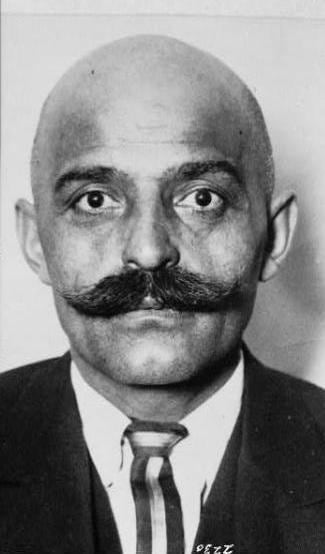
Retrato de G. I. Gurdjieff, 1925 · Public domain
بكلماته
«In life never do as others do.»Beelzebub's Tales to His Grandson, cap. 1, «The Arousing of Thought»: consejo de la abuela moribunda

فكرته المحورية
Ordinary man has no single, permanent I but a multitude of small I's that take turns according to circumstance; each speaks in the name of the whole, which is why no one keeps what he promises.
السيرة
4 دقيقة قراءة
ترجمة مُعانة من الأصل الإسباني، بانتظار مراجعة مترجم من أهل اللغة.
طفلٌ من أرض التخوم
وُلد جورج إيفانوفيتش غوردجييف في ألكسندروبول — غيومري اليوم، في أرمينيا —، وهي مدينة حامية عسكرية في الإمبراطورية الروسية كان يتجاور فيها الأرمن واليونانيون والروس والأكراد والأتراك. ولا تُعرف سنة مولده على وجه اليقين، ومن الأفضل قول ذلك منذ البداية: فجوازات السفر والوثائق الرسمية تذكر سنة 1877، وتجعل يومَ مولده الثامن والعشرين من ديسمبر؛ أما غوردجييف نفسه فتحدّث أمام تلاميذه عن تاريخ يقع نحو 1866 أو 1867، وهو ما تؤيده ابنة أخيه لوبا غوردجييف إيفريت وكاتب سيرته جيمس مور؛ في حين تشير رواية عائلية واللوحة المثبتة على قبره في أفون إلى سنة 1872. وكان يحتفل بعيد ميلاده في الأول من يناير بحسب التقويم اليولياني، أي في الثالث عشر منه بحسب التقويم الغريغوري. وكان أبوه، إيفان إيفانوفيتش جورجيادِس، المنحدر من أسرة يونانية، مربّيَ ماشية أفقره وباءٌ أصاب القطعان، و«آشوغًا»، أي شاعرًا شعبيًا جوّالًا يروي عن ظهر قلب ملاحمَ طويلة؛ وكانت أمه أرمنية، وإن كان بعض الباحثين المحدثين يرونها يونانية هي الأخرى. واستقرت الأسرة في قارص، التي كانت روسيا قد فتحتها حديثًا، وهناك أنشد الفتى في جوقة الكاتدرائية وحظي برعاية العميد بورش، الذي سيخصّه بواحدة من أرقّ الصور في كتاب لقاءات مع رجال استثنائيين.
سنوات البحث
أما ما تلا ذلك، بين 1887 و1911 تقريبًا، فلا نعرفه إلا من روايته هو تقريبًا، وهي رواية رمزية عن قصد. ففي لقاءات مع رجال استثنائيين يقدّم غوردجييف نفسه عضوًا في جماعة من «الباحثين عن الحقيقة» جابت مصر والحبشة وفارس وتركستان وجبال هندوكوش بحثًا عن معرفة قديمة، حتى بلغت ديرَ أخويةٍ تُدعى «سارمونغ» في آسيا الوسطى. ولا تؤكد أيّ وثيقة مستقلة تلك الرحلات ولا وجود تلك الأخوية. ويقرّ المؤرخون — جيمس ويب وجيمس مور — بأنه أكثر من الأسفار، وبأنه عرف عن كثب التصوّف والمسيحية الشرقية وموسيقى القوقاز وآسيا الوسطى ورقصاتهما، لكنهم يقرؤون الكتاب سيرةً ذاتية رمزية، وقد نبّه مؤلفه نفسه إلى أنه ينبغي أن يُقرأ ما بين السطور. وروى كذلك أنه كسب قوته تاجرًا ومنوّمًا مغناطيسيًا ومصلحًا للأشياء وتاجرَ سجاد، بل إنه صبغ عصافير الدوري ليبيعها على أنها كناري أمريكي.
موسكو والثورة والخروج
ونحو سنة 1912 يظهر في موسكو، متزوجًا من يوليا أوستروفسكا، وهي شابة من أصل بولندي، ويبدأ في جمع التلاميذ. وفي 1915 يتعرّف إليه ب. د. أوسبنسكي، الصحفي والكاتب في الموضوعات الرياضية والباطنية، العائد لتوّه من الهند. ولا يزال كتابه شذرات من تعليم مجهول، الصادر سنة 1949، أكثرَ العروض انتظامًا لتعليم تلك السنوات: الإنسان بوصفه آلةً تعيش نائمة، وغياب «أنا» دائمة، والمراكز الثلاثة، وقانون الثلاثة وقانون السبعة، والإنياغرام، وضرورة «تذكّر الذات». وفي 1916 ينضم إليهم المؤلف الموسيقي توماس دي هارتمان وزوجته أولغا. ومع الثورة يقود غوردجييف جماعة صغيرة إلى يسينتوكي في القوقاز؛ وفي 1919 يؤسس في تفليس «معهد التطور المتناغم للإنسان»، الذي ينضم إليه ألكسندر وجان دي سالزمان. وبعد أن يمرّ بالقسطنطينية وبرلين، يصل إلى باريس سنة 1922.
دير أفون
في أكتوبر 1922 ينقل المعهد إلى قصر «بريوريه دي باس لوج» في أفون، قرب فونتينبلو. وبين أعمال زراعية مُضنية وأشغال بناء ومطبخ وتمارين في الانتباه، كانت تُعلَّم هناك «الحركات»، وهي رقصات بالغة الصعوبة قال غوردجييف إنه جمعها في أديرة الشرق وأخوياته. وقضت الكاتبة كاثرين مانسفيلد، المصابة بالسل، أشهرها الأخيرة هناك، وتوفيت في 9 يناير 1923، مما جلب على الدير سمعة فاضحة في الصحافة البريطانية. وفي أواخر 1923 قُدّمت «الحركات» على مسرح الشانزليزيه، وفي 1924 انتقلت إلى نيويورك ومدن أمريكية أخرى. وصار أ. ر. أوراج، رئيس تحرير مجلة The New Age سابقًا، ممثّله في أمريكا.
الحادث والكتابة
في يوليو 1924 تعرّض غوردجييف لحادث سيارة خطير قرب فونتينبلو. ولما تعافى أعلن إغلاق المعهد بصيغته السابقة وانصرف إلى الكتابة. وفي ديسمبر من العام نفسه شرع في حكايات بعلزبول لحفيده، وهي حكاية رمزية كونية هائلة يشرح فيها كائنٌ من منظومة شمسية أخرى لحفيده الطبيعةَ النفسية الغريبة لسكان الأرض. وظل يعمل عليها عقدًا كاملًا، يكتب بالروسية والأرمنية في مقاهي باريس، ويعرض الفصول للقراءة أمام تلاميذه، ثم يعيد كتابتها ليجعلها أعصى على القراءة المتعجّلة. وفي 1925 توفيت أمه، وفي 1926 زوجته. ومن تعاونه مع دي هارتمان، ولا سيما بين 1925 و1927، وُلدت نحو مئتي مقطوعة للبيانو. وأُغلق الدير سنة 1932 تحت وطأة الديون. وفي 1933 طبع طبعةً خاصة كتاب بشير الخير الآتي، وهو الكتاب الوحيد الذي نشره في حياته، ثم سحبه بعد قليل.
باريس و«الحبل» والاحتلال
منذ 1936 سكن شقة في الرقم 6 من شارع الكولونيل رونار. وهناك علّم «الحبل»، وهي جماعة من النساء — جين هيب ومارغريت أندرسون وسوليتا سولانو وكاثرين هيوم —، ومنذ 1940 جماعةَ جان دي سالزمان في سيفر. وفي أثناء الاحتلال حافظ على موائده الطقسية، بأنخابها المرفوعة لأصناف «البُلهاء» المختلفة، وعلى اجتماعاتٍ حُفظت محاضرها. وبعد الحرب عاد تلاميذ قدامى، وجاء تلاميذ أوسبنسكي الذي توفي سنة 1947؛ ورآه ج. ج. بينيت من جديد سنة 1948، بعد خمسة وعشرين عامًا.
الموت والإرث
في 1949، وقد اشتدّ عليه المرض، أعدّ بعلزبول للنشر. وتوفي في 29 أكتوبر 1949 في المستشفى الأمريكي في نويي سور سين، ودُفن في أفون، غير بعيد عن الدير. وصدر الكتاب سنة 1950؛ ولقاءات مع رجال استثنائيين بالفرنسية سنة 1960 وبالإنجليزية سنة 1963؛ والحياة حقيقية فقط حين «أكون» في طبعة خاصة في منتصف السبعينيات. وأسست جان دي سالزمان، التي عهد إليها بنقل التعليم، معهد غوردجييف في باريس، ومؤسسة غوردجييف في نيويورك التي أُنشئت سنة 1953، وجمعية غوردجييف في لندن، ومؤسسة كاراكاس. وعلى هامش هذه الشبكة نشأت سلاسل أخرى، كتلك التي أسسها بينيت أو فيليم نايلاند. ونقل بيتر بروك لقاءات مع رجال استثنائيين إلى السينما سنة 1979.
ولا يزال غوردجييف شخصيةً مُربِكة. فتلاميذه يصفون حضورًا طاغيًا، قادرًا على رحمة عملية جدًا وعلى قسوة محسوبة؛ ونقّاده يصفون رجلًا كان يطلب المال بلا حرج، ويتلاعب بالناس، وأنجب عدة أبناء من تلميذات له. وكلتا الصورتين تسندها الوثائق. أما ما لا خلاف عليه فهو تأثيره: ففكرة أن الإنسان يعيش نائمًا، وأن اليقظة تقتضي العمل في آنٍ واحد بالجسد والشعور والفكر، في قلب الحياة العادية لا خارجها — وهو ما سمّاه أوسبنسكي «الطريق الرابع» —، تسري في قسم كبير من الروحانية الغربية في القرن العشرين.
المصادر: Ouspensky, P. D. In Search of the Miraculous: Fragments of an Unknown Teaching. Nueva York: Harcourt, Brace, 1949. · Moore, James. Gurdjieff: The Anatomy of a Myth. Shaftesbury: Element, 1991. · De Hartmann, Thomas y Olga de Hartmann. Our Life with Mr. Gurdjieff. Nueva York: Cooper Square, 1964 (ed. ampliada, Harper & Row, 1983). · Gurdjieff, G. I. Meetings with Remarkable Men. Londres: Routledge & Kegan Paul, 1963 (ed. francesa: Rencontres avec des hommes remarquables, París: Julliard, 1960). · Gurdjieff, G. I. All and Everything: Beelzebub's Tales to His Grandson. Nueva York: Harcourt, Brace, 1950; Londres: Routledge & Kegan Paul, 1950.
الخط الزمني
الحياة عامًا بعد عام
كل نقطة حدث موثّق. انقر لتقرأه مع مصدره ودرجة اليقين فيه.
نحو 1872أقل من عامAlexandropol (hoy Gyumri, Armenia)
Birth (disputed date)
Born in Alexandropol. Three versions: 1877 (28 December, in passports and official papers); c. 1866–1867 (what he told pupils; supported by his niece Luba Gurdjieff Everitt and James Moore); 1872 (a family recollection and the plaque on his grave at Avon). He celebrated his birthday on 1/13 January.
مختلَف فيهWikipedia (en), «George Gurdjieff», sección sobre la fecha de nacimiento (remite a Churton, Tobias. Deconstructing Gurdjieff, Inner Traditions, 2017, pp. 3–4 y 316–317).
بعد وفاته
- 1950Beelzebub published
- 1953Gurdjieff Foundation
- 1979Peter Brook's film
نحو 1872 · أقل من عام
Birth (disputed date)
Born in Alexandropol. Three versions: 1877 (28 December, in passports and official papers); c. 1866–1867 (what he told pupils; supported by his niece Luba Gurdjieff Everitt and James Moore); 1872 (a family recollection and the plaque on his grave at Avon). He celebrated his birthday on 1/13 January.
مختلَف فيه
نحو 1878
The family in Kars
After his father's ruin the family moves to Kars, newly taken by Russia. He sings in the cathedral choir and is tutored by Dean Borsh (according to Meetings with Remarkable Men).
تقليد
نحو 1887
The years of search
Period of travels (c. 1887–1911) known almost only from his allegorical account: the 'Seekers of Truth', the Sarmoung Brotherhood. No independent documentary confirmation.
تقليد
نحو 1912
First groups in Moscow
He appears in Moscow, married to Julia Ostrowska, and begins to gather pupils in Moscow and St Petersburg.
مرجَّح
1915
Meeting with Ouspensky
P. D. Ouspensky meets him in a Moscow café; from that meeting comes In Search of the Miraculous.
موثّق
1916
The de Hartmanns join
The composer Thomas de Hartmann and his wife Olga become his pupils.
موثّق
1917
Essentuki
With the revolution he withdraws with a small group to Essentuki, where intensive work continues.
موثّق
1919
Institute for the Harmonious Development of Man
He founds the Institute in Tiflis; Alexandre and Jeanne de Salzmann join.
موثّق
أكتوبر 1922
The Prieuré
After Constantinople and Berlin, he installs the Institute at the Château du Prieuré des Basses Loges.
موثّق
9 يناير 1923
Death of Katherine Mansfield
The writer, ill with tuberculosis, dies at the Prieuré after spending her last months there.
موثّق
يناير 1924
The Movements in America
After the Paris demonstrations (December 1923), he presents the Movements in New York and other cities.
موثّق
يوليو 1924
The accident
Serious car accident. On recovering he closes the Institute in its former shape and turns to writing.
موثّق
ديسمبر 1924
Beelzebub begun
He begins writing Beelzebub's Tales to His Grandson, on which he will work for a decade.
موثّق
يونيو 1926
Death of his wife
Julia Ostrowska dies of cancer; his mother had died in 1925.
موثّق
1932
The Prieuré closes
The Prieuré ceases to operate, beset by debts.
موثّق
1933
The Herald of Coming Good
He prints privately the only book published in his lifetime; he soon withdraws it.
موثّق
1936
The Rope
He settles in the flat on rue des Colonels-Renard, where he teaches the women's group 'the Rope'.
موثّق
1940
The Occupation
He begins teaching Jeanne de Salzmann's group at Sèvres; during the Occupation he keeps up meetings and ritual meals.
موثّق
1948
Ouspensky's pupils arrive
After Ouspensky's death (1947), his pupils and J. G. Bennett come to Paris.
موثّق
29 أكتوبر 1949
Death
He dies at the American Hospital in Neuilly; funeral at the Russian Orthodox cathedral on rue Daru and burial at Avon.
موثّق
1950
Beelzebub published
All and Everything: Beelzebub's Tales to His Grandson appears.
موثّق
1953
Gurdjieff Foundation
The Gurdjieff Foundation of New York is established, within the network organised by Jeanne de Salzmann.
موثّق
1979
Peter Brook's film
Release of Meetings with Remarkable Men, directed by Peter Brook in collaboration with Jeanne de Salzmann.
موثّق
المؤلَّفات
المؤلَّفات الأساسية
المؤلَّفات التي لا يُفهم إرثه من دونها.
مؤلَّف نُشر بعد الوفاة · 1950
Beelzebub's Tales to His Grandson
Рассказы Вельзевула своему внуку / Beelzebub's Tales to His Grandson
First series of All and Everything. Beelzebub, a cosmic being travelling on the ship Karnak, tells his grandson Hassein what he observed on Earth over centuries: the history of a humanity that, through a cosmic accident and the atrophy of an organ that let it see reality, lives ruled by vanity, self-love and suggestibility. Beneath outsized humour and an invented vocabulary, the book sets out a complete cosmology—the law of three, the law of seven, the reciprocal feeding of everything that exists—and a relentless critique of religion, science, art and war. Gurdjieff wanted it read three times and in different ways.
14 طبعة · amazon.com

مؤلَّف نُشر بعد الوفاة · 1963
Meetings with Remarkable Men
Встречи с замечательными людьми / Meetings with Remarkable Men
A memoir of youth organised as portraits: the bard father, Dean Borsh, Prince Yuri Lubovedsky, Professor Skridlov, Ekim Bey and other companions among the 'Seekers of Truth', up to the arrival at the monastery of the Sarmoung Brotherhood. It is at once autobiography, adventure story and training manual: each meeting teaches a quality. Critics agree it should not be read as literal chronicle; none of its exotic episodes has independent documentary confirmation. Peter Brook filmed it in 1979.
9 طبعات · amazon.com

مؤلَّف نُشر بعد الوفاة · نحو 1975
Life Is Real Only Then, When 'I Am'
Жизнь реальна только тогда, когда «Я есть» / Life Is Real Only Then, When 'I Am'
Gurdjieff's most personal book: the account of the crisis after the 1924 accident, the decision to 'remember himself' through constant effort, the break with the New York pupils in 1931 and a series of lectures on 'I am', the body and sensation. Fragmentary and sometimes abrupt, it shows the teacher applying his own method to himself and doubting it.
8 طبعات · amazon.com

مؤلَّف مكتوب · 1933
The Herald of Coming Good
A programmatic booklet subtitled 'First appeal to contemporary humanity'. It sets out the history of the Institute, the aims of the work, the plan of the All and Everything trilogy and a long declaration of intent, in a deliberately convoluted style. Its withdrawal made it a rarity; reprinted since 1969, it is a key document for dating the crisis of 1931–1933.
6 طبعات · amazon.com
جميع مؤلَّفاته (14)

Views from the Real World
1973

The Struggle of the Magicians
1957
G. I. Gurdjieff
Gurdjieff–de Hartmann Music for the Piano
The Conscious LibraryGurdjieff–de Hartmann Music for the Piano
1996
G. I. Gurdjieff
Transcripts of Gurdjieff's Meetings 1941–1946
The Conscious LibraryTranscripts of Gurdjieff's Meetings 1941–1946
2008
G. I. Gurdjieff
Gurdjieff's Early Talks 1914–1931
The Conscious LibraryGurdjieff's Early Talks 1914–1931
2014

Paris Meetings 1943
2017

In Search of the Miraculous (P. D. Ouspensky)
1949

Our Life with Mr. Gurdjieff (Thomas and Olga de Hartmann)
1964

The Reality of Being (Jeanne de Salzmann)
2010

In Search of Being
2012
الأقوال
أقوال محدَّدة الموضع في مؤلَّف بعينه. كل منها يحمل مصدره ودرجة الثقة به.
In life never do as others do.متحقَّق منهBeelzebub's Tales to His Grandson, cap. 1, «The Arousing of Thought»: consejo de la abuela moribunda
الأفكار الجوهرية (خلاصة تحريرية)
احترامًا لحقوق المؤلف، تُلخَّص هذه الأفكار بكلماتنا ولا تُقدَّم بوصفها اقتباسات حرفية.
- Ordinary man has no single, permanent I but a multitude of small I's that take turns according to circumstance; each speaks in the name of the whole, which is why no one keeps what he promises.
- Man cannot do: in him everything happens, as it rains or clears. True doing presupposes a unified being, and that unity is not a gift but the result of long work.
- Work on oneself requires conditions of friction: difficult people, uncomfortable tasks, fatigue. Without resistance there is no effort and without effort no transformation.
- Knowledge must be accompanied by an equivalent development of being; knowledge that grows without being becomes theoretical, useless or dangerous.
أقوال منحولة أو مختلَف في نسبتها (1)
«'I leave you all in a fine mess' ('Je vous laisse dans de beaux draps'), as last words.»
It circulates online as Gurdjieff's final words, but it has not been found in the published testimonies of his pupils or in the biographies consulted. No primary source.
الكلمات الأخيرة
روايات متضاربة
«Do everything, even the impossible, to develop what I have brought.»Do everything, even the impossible, to develop what I have brought.
There is no single, unambiguously attested final phrase; several versions of differing weight circulate. (1) Testimony attributed to Jeanne de Salzmann: the phrase above, which she reportedly received as his last words to her; it recurs in the literature on Gurdjieff, but its original publication has not been located (Wikipedia flags it 'citation needed'). (2) Instructions from his last weeks, passed on by de Salzmann and recorded by W. P. Patterson (Struggle of the Magicians, pp. 224–225): publish the first and second series 'as and when you are sure that the time has come', first prepare a nucleus of people, and the third need not be published. These are not last words in the strict sense. (3) J. G. Bennett, who saw him often in 1948–1949, narrated his last months (Witness, 1962; the diaries published as Idiots in Paris), but it has not been verified that he records a final phrase; pending. (4) His American physician William Welch left a testimony on the manner of his death—'he died like a king'—which are not Gurdjieff's words. (5) The phrase 'I leave you all in a fine mess' has no source and is treated as apocryphal.
المصدر: The Gurdjieff Legacy Foundation, «Jeanne de Salzmann» (archivo), que cita a William Patrick Patterson, Struggle of the Magicians, pp. 224–225.
اسأل
بماذا يجيب أثره
اثنا عشر سؤالًا كبيرًا من أسئلة الإنسانية، وما تتيح نصوصه الإجابة به عنها، مع المراجع. ولا نقوّله ما لم يقل أبدًا.
ما المطلق؟ هل الله موجود؟
Our Common Father Endlessness created the universe and suffers for it
إله شخصييقوله صراحةً
G. I. Gurdjieff speaks of God chiefly in Beelzebub's Tales to His Grandson (1950), a cosmic allegory in deliberately strange language. There the creator bears names such as Our Common Father, His Endlessness or Our Lord Sovereign Endlessness; He dwells on the Sun Absolute and creates the universe to counter the destructive action of time, the Heropass, establishing a system of reciprocal exchange of substances. This God has purpose, sends messengers to humanity and, according to the tale, grieves over the state of beings. The aim of inner work is partly to help Him: the conscious human being can lighten the burden of his Creator. Unlike the abstract account transmitted by Ouspensky, here the Absolute is someone with will and feeling, though wrapped in a myth designed to disconcert the reader.
قارن هذا السؤال مع معلّمين آخرينمن أنا؟ هل توجد ذات حقيقية؟
Man is born without a soul or an I: work must form them
لا توجد ذات دائمةيقوله صراحةً
According to G. I. Gurdjieff's teachings as recorded by Ouspensky, ordinary man lacks individuality, a single I and will: he is a plurality of I's following one another mechanically. In one of the Moscow talks reproduced in chapter 2 of In Search of the Miraculous, Gurdjieff compares the human being to a carriage, a horse, a coachman and a master who is absent, and states that man is not born with an immortal soul: he may come to form higher bodies, and with them a permanent I, only through intense work. In Beelzebub's Tales to His Grandson he develops this idea in mythic language, speaking of bodies that a being may or may not crystallise. The self, then, is not a given substance but a possibility that most people do not realise.
قارن هذا السؤال مع معلّمين آخرينلماذا نتألّم؟
The legacy of the organ Kundabuffer: man lives asleep and suffers senselessly
الجهل بما نحن عليهيقوله صراحةً
G. I. Gurdjieff offers in Beelzebub's Tales to His Grandson a mythic explanation of human suffering. According to the tale, at the dawn of humanity higher powers implanted in human beings an organ, the Kundabuffer, which made them perceive reality upside down and prevented them from seeing their true situation; although it was later removed, its properties — vanity, self-love, suggestibility, egoism — were passed down from generation to generation. Hence war, reciprocal destruction and mechanical life, which plunge people into a sleep of which they are unaware. In the teachings transmitted by Ouspensky, this state appears as identification and sleep. Gurdjieff distinguishes mechanical suffering, which serves no purpose, from intentional suffering, consciously accepted, which together with conscious labour is the means of the being's evolution.
قارن هذا السؤال مع معلّمين آخرينماذا يحدث بعد الموت؟
Immortality is not possessed: it is acquired by first dying to oneself
الموت كل يوم عن المعلوميقوله صراحةً
Gurdjieff denies that ordinary man possesses an immortal soul. According to the teaching recorded by Ouspensky in In Search of the Miraculous, man is a machine without a permanent I, and the only thing that could survive death are the higher bodies — the astral and those beyond it — which are formed only through conscious work and voluntary suffering; whoever has not formed them dies completely. In Beelzebub's Tales he speaks of the Kesdjan body and the higher being-body as achievements, not gifts. Hence the importance of an earlier death: Gurdjieff taught that to be born again one must die, and to die one must awaken; what must die is false personality, with its vanity and self-love. The decisive question is not what happens after death, but whether there is already someone capable of surviving it.
قارن هذا السؤال مع معلّمين آخرينكيف يُبلَغ التحرّر أو الخلاص؟
Awakening through conscious effort and voluntary suffering: the Fourth Way in ordinary life
بالعمل الداخلي الواعييقوله صراحةً
George I. Gurdjieff taught that human beings are born without a finished soul and, unless they work on themselves, remain asleep and mechanical. According to Ouspensky's testimony, he distinguished four ways: the fakir's, working on the body; the monk's, on the emotions; the yogi's, on the mind; and a Fourth Way working on all three at once without leaving ordinary life. Its means are self-observation, self-remembering, the movements and dances he designed, and what Beelzebub's Tales to His Grandson calls conscious labours and intentional sufferings. The work requires a teacher who knows and a group; the result is the formation of a real and permanent «I».
قارن هذا السؤال مع معلّمين آخرينهل نحتاج إلى معلّم؟
Only one who knows can wake the sleeper: teacher and school are necessary
لا غنى عنهيقوله صراحةً
According to Ouspensky's testimony, George I. Gurdjieff taught that ordinary human beings cannot escape their sleep alone, because the very means they would use to wake up are asleep. They need someone who is awake, or more awake, who knows the way and enables them to work on themselves; and that knowledge is not invented but received from a source that possesses it. Gurdjieff played that role demandingly, often disconcertingly, with his pupils in Russia and later at the Prieuré in Fontainebleau. In Meetings with Remarkable Men he presents his own formation as a search for teachers and ancient knowledge through Central Asia and the Near East.
قارن هذا السؤال مع معلّمين آخرينهل العالم حقيقي؟
A hierarchical cosmos of laws and matters, where everything feeds on everything
مستويات من الوجوديقوله صراحةً
George I. Gurdjieff taught a cosmology in which the universe is a hierarchy of worlds governed by two fundamental laws, the law of three and the law of seven (the octave). According to Ouspensky's testimony, everything in it is material, though with different degrees of density and vibration, and everything forms part of a reciprocal exchange of substances in which each level feeds others. In Beelzebub's Tales to His Grandson he develops it in mythic form, with a Sun Absolute at the centre and the Earth as a peripheral place where mechanical humanity serves cosmic purposes it does not know. The world is fully real, but ordinary human beings do not see it as it is, because they live asleep.
قارن هذا السؤال مع معلّمين آخرينما الحب؟
Mechanical man cannot love: only one who is conscious truly loves
ما يظهر حين تتوقّف الأنايقوله صراحةً
Gurdjieff denies that ordinary man is capable of loving. According to the teaching recorded by Ouspensky, mechanical man can do nothing, and cannot love either: what he calls love is a mixture of attraction, habit, identification and self-love, which changes with circumstances and easily turns into its opposite. In a talk collected in Views from the Real World he distinguishes love of the body, which depends on type and polarity; love of feeling, which evokes its opposite; and conscious love, which evokes the same in response. In Beelzebub's Tales, vanity and self-love appear as consequences of the organ Kundabuffer and as the main obstacles to development. Real love is possible only for one who, through conscious labour and intentional suffering, has ceased to be governed by those forces.
قارن هذا السؤال مع معلّمين آخرينهل نحن أحرار أم أن كل شيء مقدَّر؟
No one does anything: only one who works on himself gains a will
نحن آلات إلى أن نستيقظيقوله صراحةً
The thesis of human mechanicalness is the core of Gurdjieff's teaching as his pupils recorded it. Man has no self but a multitude of contradictory «I»s; he is not conscious but lives asleep, and what he calls his decisions are reactions of a machine driven by external influences. In his talks collected in *Views from the Real World* and in his major work, *Beelzebub's Tales to His Grandson*, he adds that humanity, being mechanical, serves cosmic purposes it does not understand. Only conscious labour and intentional suffering can create a permanent self and a real will. Freedom is not a birthright but something that must be manufactured.
قارن هذا السؤال مع معلّمين آخرينلماذا نتأمّل أو نصلّي؟
Remembering oneself amid life, through conscious effort
أن تكون حاضرًايقوله صراحةً
For Gurdjieff the human being lives asleep, and all practice has a single aim: to wake up. The main instrument, according to his pupils' testimony, is self-remembering, divided attention that includes the perceiver along with the perceived, exercised amid ordinary activities and not in retreat. To this he added practices of his own: the Movements, sacred dances requiring simultaneous attention of body, emotions and mind, exercises in sensing the body, hard physical work and what he called intentional suffering. In *Life Is Real Only Then, When «I Am»*, his last book, he describes that effort of presence as the condition for a real «I» to arise in man.
قارن هذا السؤال مع معلّمين آخرينهل يستطيع العقل أن يعرف الحقيقة القصوى؟
Real knowledge is scarce, material and transmitted; knowledge without being is useless
معرفة باطنيةيقوله صراحةً
According to Ouspensky's testimony in *In Search of the Miraculous*, Gurdjieff held that there is a true knowledge, preserved by an esoteric circle of humanity and transmitted through schools, and that this knowledge is in a certain sense material and limited: it cannot be shared out to everyone. He insisted on distinguishing knowledge from being: a man may know a great deal and be unable to do anything, and knowledge that grows without the development of being produces only theories. In *Meetings with Remarkable Men* he narrates his youthful search for that knowledge across the East, with the «Seekers of Truth». Ordinary reason belongs to the man-machine; real understanding requires transformation.
قارن هذا السؤال مع معلّمين آخرينالانسحاب من العالم أم تغييره؟
Wars cannot be stopped from outside: mechanical man cannot do
الثورة داخليةيقوله صراحةً
Gurdjieff holds that ordinary man cannot do anything: everything happens to him, as rain happens. According to the 1915 conversation recorded by Ouspensky, when asked in the midst of the world war whether war could be stopped, he answered that it could not, because it is the result of cosmic influences and of the mechanicalness of millions of people, and that only men who had ceased to be machines could change things. In Beelzebub's Tales the periodic «reciprocal destruction» of the beings of the Earth is the most terrible symptom of their lack of consciousness. That is why he proposes no social reforms but work on oneself. Nor withdrawal: his Institute for the Harmonious Development of Man, at the Prieuré in Fontainebleau-Avon, was a community of intense physical work, sacred dances and deliberate friction between people, that is, life in the world used as a school.
قارن هذا السؤال مع معلّمين آخرين
التقارب والتوتّر
التقارب والتوتّر
محسوبة سؤالًا سؤالًا انطلاقًا من مواقفه. وسبب كل اتفاق أو اختلاف يظهر بالنقر.
يقترب في تفكيره من
Nicholas Roerich
يتّفقان في: هل نحتاج إلى معلّم؟ · هل العالم حقيقي؟ · هل يستطيع العقل أن يعرف الحقيقة القصوى؟
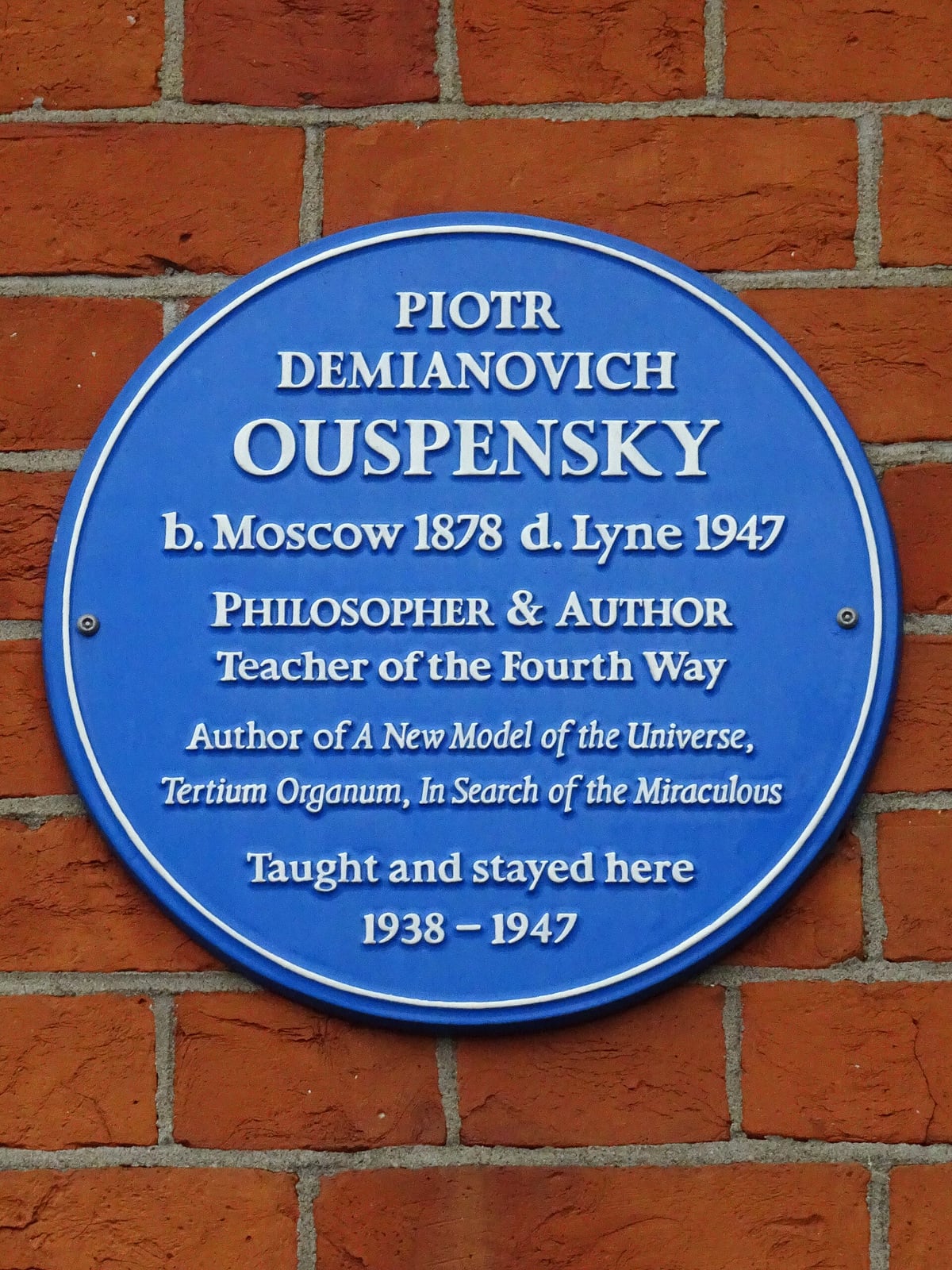
P. D. Ouspensky
يتّفقان في: من أنا؟ هل توجد ذات حقيقية؟ · لماذا نتألّم؟ · كيف يُبلَغ التحرّر أو الخلاص؟
Eckhart Tolle
يتّفقان في: ما الحب؟ · هل نحن أحرار أم أن كل شيء مقدَّر؟ · لماذا نتأمّل أو نصلّي؟
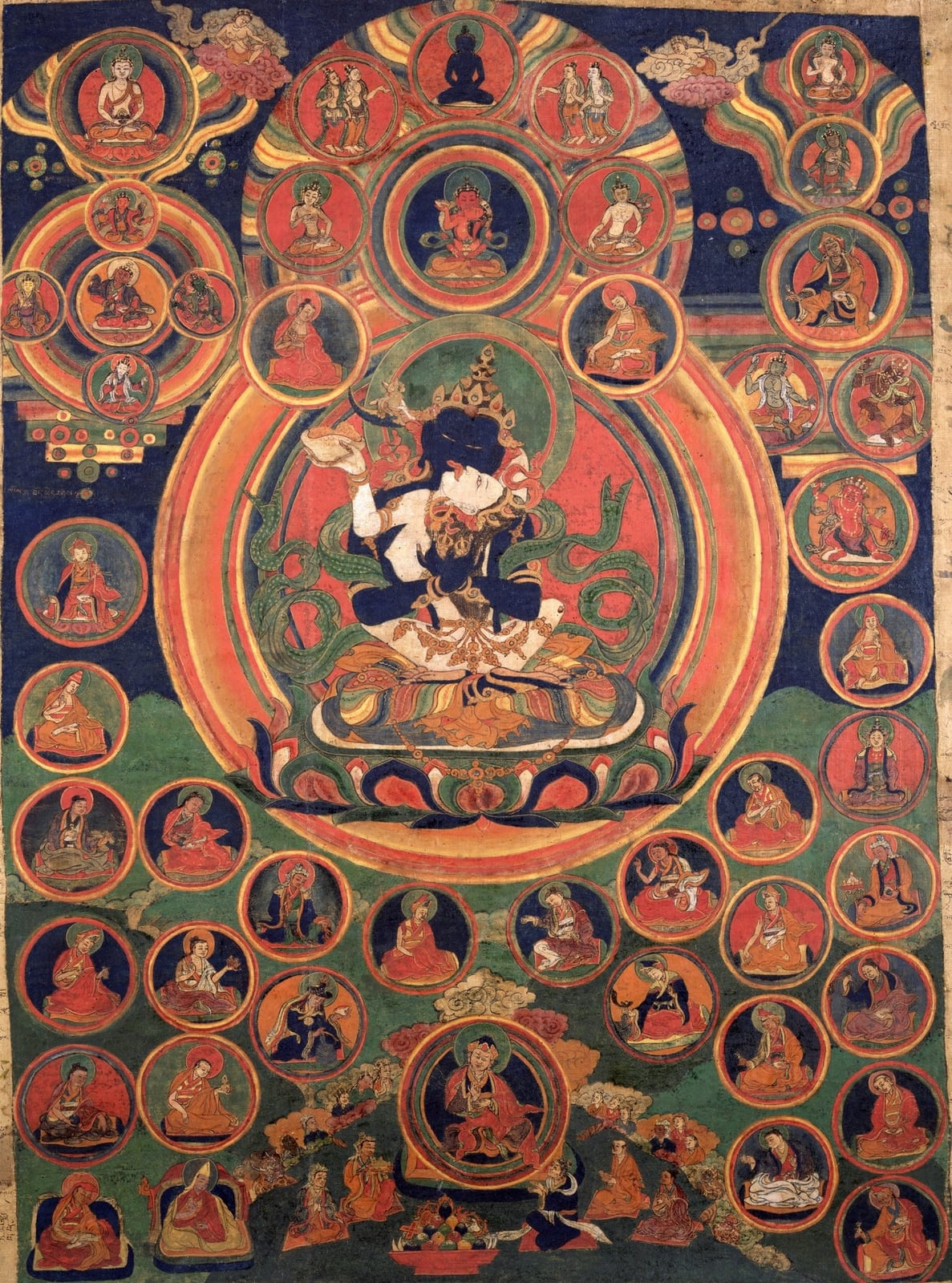
Padmasambhava
يتّفقان في: من أنا؟ هل توجد ذات حقيقية؟ · لماذا نتألّم؟ · هل نحتاج إلى معلّم؟


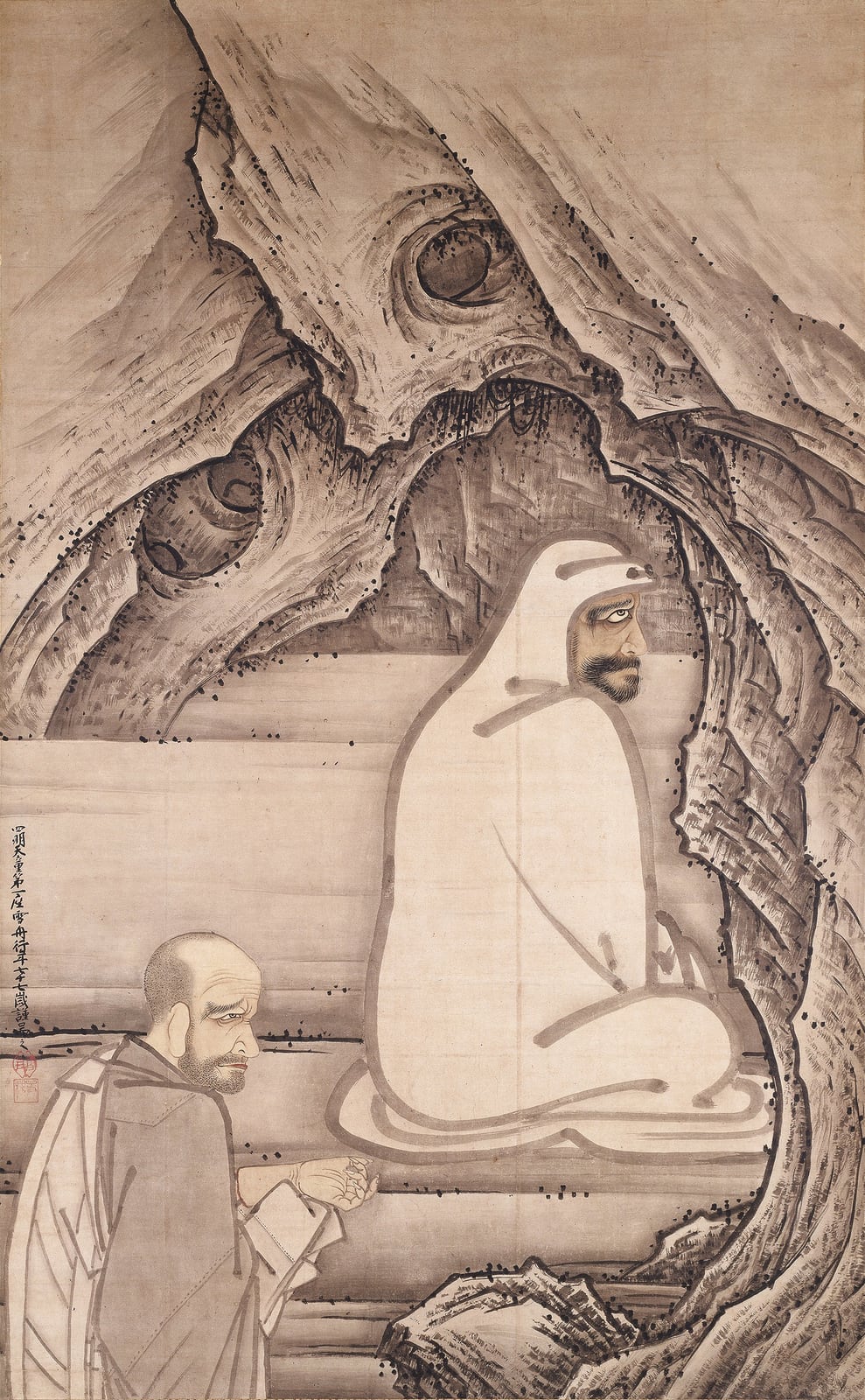
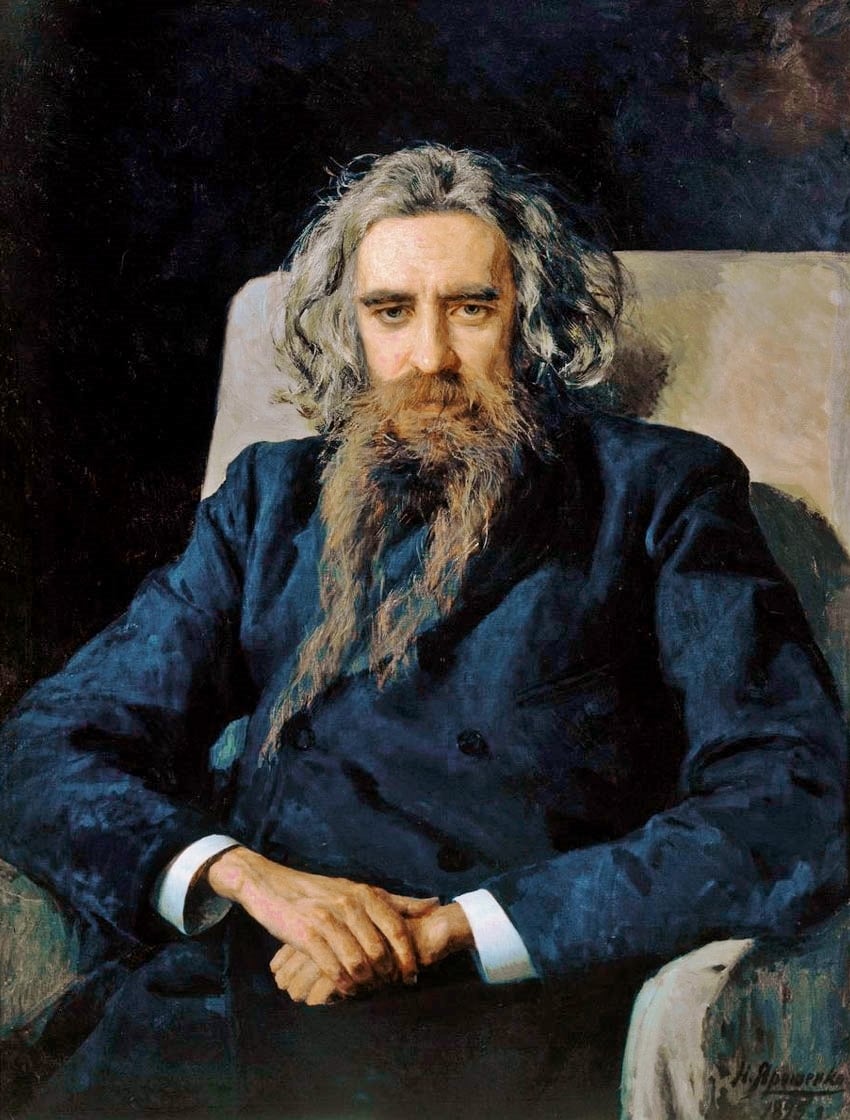
يختلفان فيتناقض ظاهري
G. I. Gurdjieff · Ramana Maharshi
Conscious effort versus being what one already is: a smaller conflict than it seems
لماذا: The contradiction is largely apparent because they speak from different levels. Gurdjieff describes the human being from the side of sleep and the machine, and his effort is the condition for something to awaken; Ramana speaks from the Self, for which effort produces nothing new, and he admits it only as a means of stopping the ego from interfering. Both deny the ordinary doer. A real difference remains, however, and should not be glossed over: for Gurdjieff the permanent self does not exist and must be created; for Ramana it already exists and one need only stop veiling it. In one effort builds; in the other, it clears away.
يتّفقان في
G. I. Gurdjieff · P. D. Ouspensky
Man is a machine: the master and the disciple who systematised his teaching
لماذا: The affinity is that of a master and his most systematic disciple: Ouspensky worked with Gurdjieff in Russia between 1915 and 1918 and transmitted that teaching in In Search of the Miraculous, published posthumously in 1949. The relationship broke down: Ouspensky withdrew in 1918 and definitively in the 1920s, and led his own groups in London, centred on the study of the system rather than on the figure of the master. They agree in doctrine, not in style: Gurdjieff taught in a demanding and disconcerting way, with dances, movements and provoked situations; Ouspensky, intellectually and in an orderly fashion. Hence they part on the question of the master: one deems him indispensable; the other stresses the school.
يختلفان فيخلاف جوهري
G. I. Gurdjieff · Teresa of Ávila
The soul as gift or as achievement: the diamond castle versus an immortality to be manufactured
لماذا: The contradiction is real and touches the core of both anthropologies. Teresa speaks from the Christian doctrine of creation, in which God gives each soul its immortal being and grace precedes effort. Gurdjieff builds a cosmology of his own, of laws and materials, in which immortality is conditional and must be acquired. There is nonetheless a point of contact: both think that most people live outside themselves, in the outer courtyard of the castle or in sleep, and that knowing oneself demands long and painful work. But in Teresa what is unknown is already there, and in Gurdjieff what is unknown is that there is not yet anyone.
يختلفان فيخلاف جوهري
G. I. Gurdjieff · Jiddu Krishnamurti
Both see man as conditioned; one demands a school and effort, the other forbids them
لماذا: The contradiction is real and comes from two opposite experiences of teaching. Gurdjieff presents himself as a seeker of an ancient knowledge transmitted in schools of Central Asia, and believes that this knowledge, scarce and almost material, can pass only from one who has it to one who works. Krishnamurti was raised precisely within an esoteric organisation with masters, grades and initiations, and his break in 1929 made the rejection of all authority the centre of his teaching. Both distrust comfortable spirituality and inherited beliefs; they part over whether directed effort awakens or lulls.
حكايات وروايات
حكايات وروايات
شهادةc. 1870s–1880s
The grandmother's advice
أصل الرواية: It comes from Gurdjieff himself, in chapter 1 of Beelzebub's Tales ('The Arousing of Thought'). There are no independent witnesses; it is an autobiographical account within an allegorical work.
المصدر: Gurdjieff, G. I. All and Everything: Beelzebub's Tales to His Grandson. Nueva York: Harcourt, Brace, 1950; Londres: Routledge & Kegan Paul, 1950.
شهادةc. 1890s
The sparrows of Samarkand
أصل الرواية: Gurdjieff's own account in Meetings with Remarkable Men. No independent confirmation; its parable-like character is obvious.
المصدر: Gurdjieff, G. I. Meetings with Remarkable Men. Londres: Routledge & Kegan Paul, 1963 (ed. francesa: Rencontres avec des hommes remarquables, París: Julliard, 1960).
شهادة1915
Ouspensky in the Moscow café
أصل الرواية: Ouspensky's testimony in chapter 1 of In Search of the Miraculous (1949), written years after the events.
المصدر: Ouspensky, P. D. In Search of the Miraculous: Fragments of an Unknown Teaching. Nueva York: Harcourt, Brace, 1949.
موثّق1922–1923
Katherine Mansfield in the cowshed
أصل الرواية: Documented by Mansfield's letters (ed. Murry, 1928) and by Moore's biographies (Gurdjieff and Mansfield, 1980; The Anatomy of a Myth, 1991).
المصدر: Mansfield, Katherine. The Letters of Katherine Mansfield. Ed. J. Middleton Murry. Londres: Constable, 1928 (cartas desde el Priorato, octubre de 1922 – enero de 1923).
شهادة1920s
Rachmilievitch, the necessary irritant
أصل الرواية: Fritz Peters's testimony in Boyhood with Gurdjieff (1964), written some thirty years later; Gurdjieff's words are the author's reconstruction.
المصدر: Peters, Fritz. Boyhood with Gurdjieff. Nueva York: E. P. Dutton, 1964.
موثّق1924
The 1924 accident
أصل الرواية: The accident is documented (Moore; de Hartmann; WRSP). The details of the cushion and of the recovery come from pupils' testimonies; the interpretation, from Gurdjieff himself.
المصدر: Moore, James. Gurdjieff: The Anatomy of a Myth. Shaftesbury: Element, 1991.
لا يمكن التحقق منهc. 1900
The Sarmoung Brotherhood
أصل الرواية: Sole source: Meetings with Remarkable Men. Webb (The Harmonious Circle) and Moore analyse the hypotheses about its location without finding confirmation.
المصدر: Gurdjieff, G. I. Meetings with Remarkable Men. Londres: Routledge & Kegan Paul, 1963 (ed. francesa: Rencontres avec des hommes remarquables, París: Julliard, 1960).
التعاليم
التعاليم
المفاهيم التي ينتظم بها فكره، مشروحة في سياقها.
Self-rememberingrecuerdo-de-si
Set out in Fragments (ch. 7) and in the Prieuré aphorisms; it runs through every phase of the teaching.
المصدر: Ouspensky, P. D. In Search of the Miraculous: Fragments of an Unknown Teaching. Nueva York: Harcourt, Brace, 1949.
Sleep and man-machinesueno-y-mecanicidad
Core of the Russian teaching (1915–1918) according to Ouspensky; it reappears satirically in Beelzebub.
المصدر: Ouspensky, P. D. In Search of the Miraculous: Fragments of an Unknown Teaching. Nueva York: Harcourt, Brace, 1949.
The three centrestres-centros
Basis of the Institute's name and of the 'fourth way' concept, which works on all three centres at once as against the ways of the fakir, the monk and the yogi.
المصدر: Ouspensky, P. D. In Search of the Miraculous: Fragments of an Unknown Teaching. Nueva York: Harcourt, Brace, 1949.
The law of three and the law of sevenley-de-tres-y-ley-de-siete
Set out by Ouspensky (chs. 4–5 and 7) and developed in mythic key in Beelzebub.
المصدر: Ouspensky, P. D. In Search of the Miraculous: Fragments of an Unknown Teaching. Nueva York: Harcourt, Brace, 1949.
The enneagrameneagrama
Ouspensky transmits it in chapter 14 of Fragments.
المصدر: Ouspensky, P. D. In Search of the Miraculous: Fragments of an Unknown Teaching. Nueva York: Harcourt, Brace, 1949.
The fourth waycuarto-camino
Origin of the tradition's name (fourth-way) in the Atlas.
المصدر: Ouspensky, P. D. In Search of the Miraculous: Fragments of an Unknown Teaching. Nueva York: Harcourt, Brace, 1949.
Conscious labour and intentional sufferingtrabajo-consciente-y-sufrimiento-intencional
Doctrine of the Prieuré period and of Beelzebub.
المصدر: Gurdjieff, G. I. All and Everything: Beelzebub's Tales to His Grandson. Nueva York: Harcourt, Brace, 1950; Londres: Routledge & Kegan Paul, 1950.
الخلوات
خلوات ومراكز
أماكن ولقاءات مرتبطة بتعليمه. نضعك على تواصل مع من ينظّمها.
Nueva York (Upper East Side) · Estados Unidos
Gurdjieff Foundation of New York
The Gurdjieff Foundation of New York
The Gurdjieff Foundation of New York belongs to the network of foundations established after Gurdjieff's death by his pupil Jeanne de Salzmann, together with the Institut Gurdjieff in Paris and the Gurdjieff Society in London. Its first president, Lord Pentland, had been a pupil of Ouspensky before working with Gurdjieff, and many of Ouspensky's pupils joined this work. It offers weekly group meetings led by senior students, classes in the Movements, the sacred dances and exercises Gurdjieff taught, meditation and retreats. Access is gradual and begins with introductory events.
San Francisco y Guerneville (Sonoma), California · Estados Unidos
Gurdjieff Foundation of California
The Gurdjieff Foundation of California
The Gurdjieff Foundation of California was founded in 1955 under the direction of Lord John Pentland, whom Gurdjieff himself had entrusted with the early American groups, and describes itself as the oldest group in California devoted to his teaching of inner development. It is a non-profit voluntary community based in San Francisco, with a second property in Guerneville, Sonoma County, where practical work takes place. It offers group meetings, Movements, sittings, study of the ideas and music, and belongs to the International Association of the Gurdjieff Foundations alongside Paris, New York and London.
Londres · Reino Unido
Gurdjieff Studies, London
Gurdjieff Studies Ltd (organización benéfica registrada)
Gurdjieff Studies is a London charity devoted to the Fourth Way that offers group meetings, reading groups, practical activities, Movements classes and intensive residential stays. It holds that the teaching is passed on from teacher to pupil in direct lines of transmission, and maintains two reference websites: one on Gurdjieff's life and work, with his music, dances and chronology, and another devoted to P. D. Ouspensky, reconstructing his work in England, including the Lyne Place period. It is independent of the network of foundations established by Jeanne de Salzmann.
مقاطع الفيديو
مقاطع الفيديو
تسجيلات ومقابلات وأفلام وثائقية. تُشغَّل مقاطع الفيديو من YouTube؛ ولا تُستضاف هنا.
June 18, 1949 (improvisación al armonio)
تسجيل أصلي· ZXX· 1949· 2 min
G. I. Gurdjieff - Topic
Mme de Salzmann in New York 1988
تسجيل أصلي· EN· 1988· 3 min
Gurdjieff Meetings
Jacob Needleman - Gurdjieff: A Life in the Work
محاضرة· EN· 116 min
CommonwealNewSchoolالقناة الرسمية
'Meetings with Remarkable Men' – An interview with Peter Brook
مقابلة· EN· 10 min
Clarendon Events
The Gurdjieff Work and Gurdjieff Movements – J.G. Bennett at Sherborne, 1973
تسجيل أصلي· EN· 1973· 3 min
Avrom Altman
Gurdjieff: The Rascal Saint – Sadhguru Exclusive
تحليل· EN· 7 min
Sadhguruالقناة الرسمية
Gurdjieff : un maître spirituel unique en son genre
تحليل· FR· 7 min
Sadhguru Françaisالقناة الرسمية
L'avenir de Gurdjieff avec Pierre Schaeffer par Michel Camus
مقابلة· FR· 20 min
Résonance[s]
El Cuarto Camino, Gurdjieff, 1992 (documental de TVE2, La tabla redonda)
فيلم وثائقي· ES· 1992· 56 min
beapuertas
Георгий Гурджиев / George Gurdjieff. Жизнь Замечательных Людей
فيلم وثائقي· RU· 62 min
ЖИЗНЬ ЗАМЕЧАТЕЛЬНЫХ ЛЮДЕЙ
المعرض
المعرض
صور بترخيص متحقَّق منه. كل منها تحتفظ بمؤلّفها ونسبتها.
العلاقات
العلاقات
تأثيرات وتلمذة وتقارب في الأفكار. تُميَّز العلاقة الموثّقة عن التشابه المستخلَص بالتحليل.
معلّم
His pupil from 1915; he separated from him in the 1920s and taught independently in London. His In Search of the Miraculous is the main exposition of the Russian teaching.
علاقة موثّقة
معلّم
Thomas de Hartmann
Composer, pupil from 1916 and collaborator on some two hundred piano pieces until 1929.
علاقة موثّقة
معلّم
Jeanne de Salzmann
Pupil from 1919 in Tiflis; continuer of the teaching and organiser of the foundations after 1949.
علاقة موثّقة
معلّم
J. G. Bennett
Met him in Constantinople in 1920 and studied with him in 1923 and 1948–1949; later founded his own line at Coombe Springs and Sherborne.
علاقة موثّقة
معلّم
A. R. Orage
Editor of The New Age; pupil from 1922 and his representative in New York (1924–1931); collaborated on the translation of Beelzebub.
علاقة موثّقة
التقى بـ
Katherine Mansfield
Spent her last months at the Prieuré (1922–1923).
علاقة موثّقة
أفكار قريبة من
Both presented ancient knowledge transmitted by Eastern masters; Gurdjieff nonetheless mocked Theosophists and parlour occultism.
تشابه مستخلَص بالتحليل
معاصر لـ
Contemporaries in interwar Europe; both gave movement—eurythmy or dance—a central place in spiritual training. No meeting is recorded.
تشابه مستخلَص بالتحليل
أفكار قريبة من
Both insisted on self-observation without illusions about the 'I'; unlike Gurdjieff, Krishnamurti rejected every method and every school.
تشابه مستخلَص بالتحليل
المصادر
المصادر
المراجع والفهارس التي رُوجعت لهذه الصفحة.
- Ouspensky, P. D. In Search of the Miraculous: Fragments of an Unknown Teaching. Nueva York: Harcourt, Brace, 1949.
- Wikidata, «George Gurdjieff» (Q217771).
- Moore, James. Gurdjieff: The Anatomy of a Myth. Shaftesbury: Element, 1991.
- De Hartmann, Thomas y Olga de Hartmann. Our Life with Mr. Gurdjieff. Nueva York: Cooper Square, 1964 (ed. ampliada, Harper & Row, 1983).
- Gurdjieff, G. I. Meetings with Remarkable Men. Londres: Routledge & Kegan Paul, 1963 (ed. francesa: Rencontres avec des hommes remarquables, París: Julliard, 1960).
- Gurdjieff, G. I. All and Everything: Beelzebub's Tales to His Grandson. Nueva York: Harcourt, Brace, 1950; Londres: Routledge & Kegan Paul, 1950.
- Gurdjieff, G. I. Views from the Real World: Early Talks of Gurdjieff. Nueva York: E. P. Dutton, 1973.
- World Religions and Spirituality Project (Virginia Commonwealth University), «Gurdjieff» (perfil y cronología).
- The Gurdjieff Legacy Foundation, «Jeanne de Salzmann» (archivo), que cita a William Patrick Patterson, Struggle of the Magicians, pp. 224–225.
- The Gurdjieff Legacy Foundation, «Final Years» (últimos años, muerte y funeral).
- Wikipedia (en), «George Gurdjieff», sección sobre la fecha de nacimiento (remite a Churton, Tobias. Deconstructing Gurdjieff, Inner Traditions, 2017, pp. 3–4 y 316–317).
- Webb, James. The Harmonious Circle: The Lives and Work of G. I. Gurdjieff, P. D. Ouspensky, and Their Followers. Londres: Thames & Hudson, 1980.
- Peters, Fritz. Boyhood with Gurdjieff. Nueva York: E. P. Dutton, 1964.
- Bennett, J. G. Witness: The Story of a Search. Londres: Hodder & Stoughton, 1962.
- Open Library, registros de autor y ediciones de Georges Ivanovitch Gurdjieff (consultados para los ISBN).
- Gurdjieff Society of Austin, «Aphorisms» (aforismos inscritos en la Study House del Priorato; recogidos en Views from the Real World).
- Mansfield, Katherine. The Letters of Katherine Mansfield. Ed. J. Middleton Murry. Londres: Constable, 1928 (cartas desde el Priorato, octubre de 1922 – enero de 1923).
- Shambhala Publications, ficha de In Search of Being: The Fourth Way to Consciousness, por G. I. Gurdjieff, ed. Stephen A. Grant (2012; reed. 2021).
- صاحب الحقوق
- Derechos vigentes sobre los textos póstumos y sus traducciones. Las ediciones autorizadas en inglés salen bajo el sello Triangle Editions (vinculado a la Gurdjieff Foundation de Nueva York) y Penguin; en francés, las de la red del Institut Gurdjieff. Pendiente de confirmar el titular exacto en cada territorio.
- الموقع الرسمي
- institut-gurdjieff.com/
في انتظار التأكيد
ما لم تتمكّن هذه الصفحة من حسمه بعد. نفضّل أن نقول ذلك على أن نملأ الفراغ.
- Fecha de nacimiento: no resoluble con las fuentes disponibles (1866/1867, 1872, 1877); el campo birth usa 1872 «approx» como valor central, con las tres versiones en la cronología.
- Localizar la publicación original de las palabras «Do everything, even the impossible, to develop what I have brought», atribuidas a Jeanne de Salzmann.
- Comprobar en Witness (Bennett, 1962/1974) y en Idiots in Paris si Bennett recoge una frase final de Gurdjieff.
- Cotejar contra un ejemplar de Views from the Real World la redacción y la página de los aforismos citados (verificados contra la lista de la Gurdjieff Society of Austin).
- ISBN de las ediciones inglesas de Book Studio (Transcripts 1941–1946; Early Talks) y de Paris Meetings 1943; editor de la edición de 2008 de Struggle of the Magicians.
- Ediciones italianas de editoriales establecidas (Incontri con uomini straordinari, Racconti di Belzebù): no localizadas con ISBN en Open Library.
- Titular exacto de los derechos por territorio (Triangle Editions / herederos / Institut Gurdjieff).
- Fechas de fundación del Institut Gurdjieff (París) y de la Gurdjieff Society (Londres): solo se ha confirmado 1953 para Nueva York.
- Obras completas (2026-10-25): cotejado el catálogo de Open Library (OL767343A y variantes). Todo lo publicado de Gurdjieff está registrado; además existen grabaciones de sus improvisaciones al armonio (1948–1949) editadas en disco, que no son libros y no se registran como obras. Las entradas atribuidas a Gurdjieff de Psychology of Man's Possible Evolution, Tertium Organum, A Further Record o The Theory of Conscious Harmony son errores de catálogo (obras de Ouspensky y de Rodney Collin).
- Sala de lectura (2026-10-25): sin textos registrables. Lo único publicado en vida, The Herald of Coming Good (París, 1933, en inglés, traductores no identificados), tiene escaneo en Internet Archive (in.ernet.dli.2015.127965), pero su OCR no es limpio y la obra no cumple los tres derechos: libre en la UE desde 2020 (autor fallecido en 1949), no en España hasta 2030 (80 años) ni en EE. UU. hasta 2029 (obra extranjera de 1933 restaurada por la URAA, 95 años). Las demás obras son póstumas (1950 en adelante) y tienen derechos vigentes de Triangle Editions y de sus traductores. Revisar en 2030.
بُحث بتاريخ 2026-10-23