الثيوصوفية · الطريق الرابع
P. D. Ouspensky
Пётр Демьянович Успенский
1878 – 1947شخصية موثّقة تاريخيًا
بيوتر ديميانوفيتش أوسبنسكي (1878–1947)، المعروف بـ ب. د. أوسبنسكي، صحفي ومفكر روسي انتقل من التأمل في البعد الرابع (Tertium Organum، 1912) إلى أن صار الشارح الأكبر لتعليم ج. إ. غوردجييف، الذي عمل معه بين 1915 و1924. ومن لندن ثم من نيوجيرسي علّم «الطريق الرابع» خمسة وعشرين عامًا لجماعات تخرّج فيها تلاميذ مثل موريس نيكول ورودني كولين. ولا يزال كتابه «شذرات من تعليم مجهول»، الصادر بعد وفاته، أوضحَ عرض لهذه المنظومة.
- مؤلَّفًا
- 17مؤلَّفًا
- طبعة
- 42طبعة
- اقتباسًا
- 8اقتباسًا
- مقطع فيديو
- 11مقطع فيديو
- صورة
- 3صورة
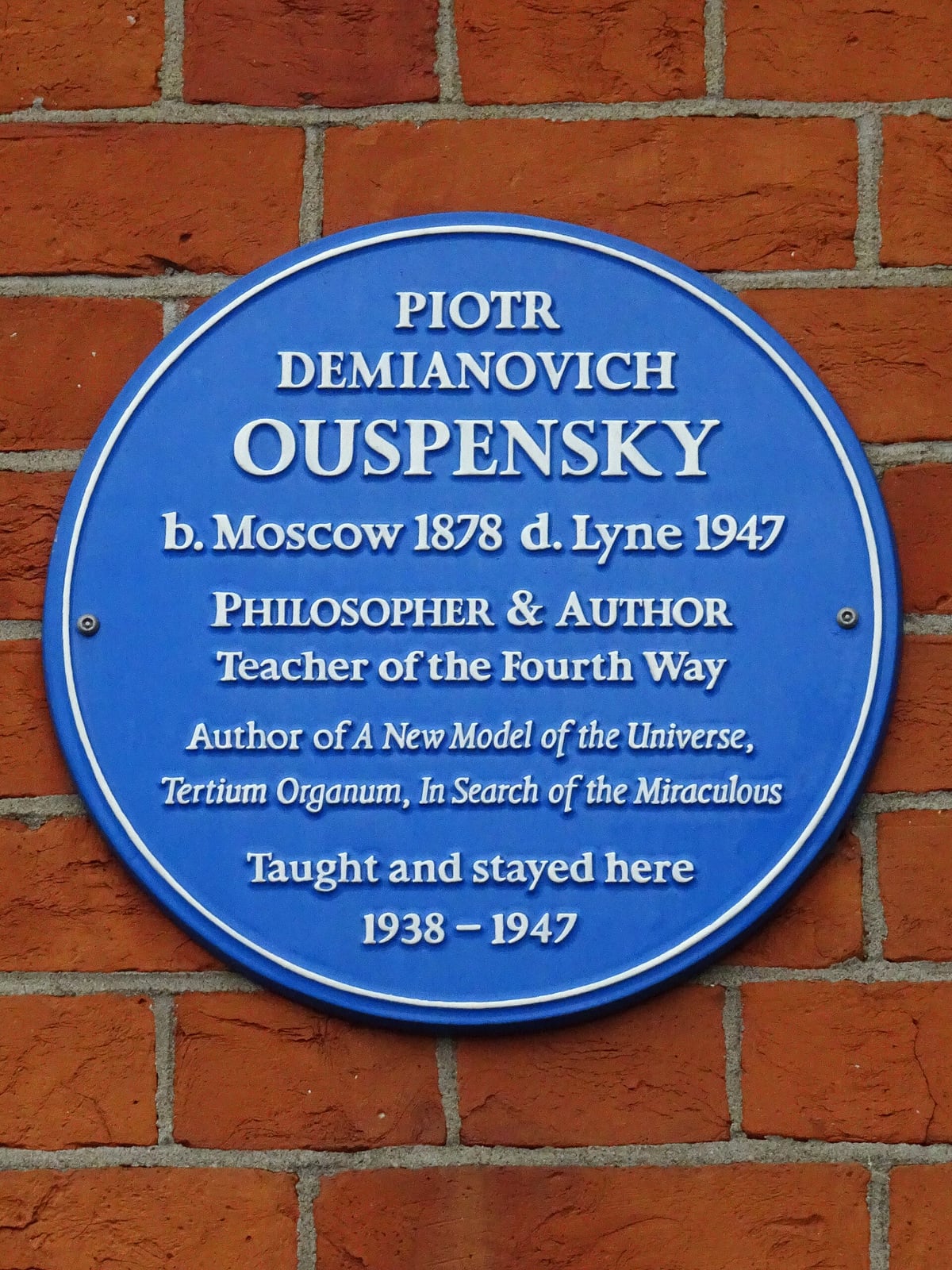
Placa azul de P. D. Ouspensky en Colet House · CC BY-SA 4.0
بكلماته
«Man does not know himself.»The Psychology of Man's Possible Evolution, primera conferencia

فكرته المحورية
Ordinary man does not 'do': everything happens to him, just as wars and revolutions happen to nations. Only one who has achieved inner unity and consciousness can act in the proper sense.
السيرة
3 دقيقة قراءة
ترجمة مُعانة من الأصل الإسباني، بانتظار مراجعة مترجم من أهل اللغة.
عصاميٌّ في موسكو مطلع القرن
وُلد بيوتر ديميانوفيتش أوسبنسكي في موسكو في مارس 1878، في أسرة من صغار الموظفين متواضعة الأصل: كان أبوه يعمل في إدارة المساحة العقارية وفي دار اللقطاء، وكانت أمه ابنة تاجر. وتختلف المصادر في تحديد يوم مولده، لأن التقويم اليولياني كان لا يزال معمولًا به في روسيا. ودرس في الثانوية الثانية بموسكو، التي فُصل منها في نحو السادسة عشرة من عمره — كما تروي كتب سيرته — لأنه خطّ كتابةً على جدار على مرأى من أحد المفتشين. ومنذ ذلك الحين علّم نفسه بنفسه، مدفوعًا بشغف مبكر بالرياضيات وعلم النفس وبالظواهر التي كان علم عصره يتركها خارج دائرته.
صحفيٌّ وباحث
عمل في السنوات الأولى من القرن صحفيًا في موسكو وسانت بطرسبورغ. ونحو سنة 1907 اكتشف الثيوصوفيا، التي كانت حينئذ في أوج انتشارها في روسيا، وفي 1908 قام برحلته الأولى إلى الشرق. وفي السنة التالية نشر البعد الرابع، وهو كُتيّب مدين لتشارلز هوارد هينتون، يكون فيه البعد الرابع امتدادًا للمكان لا يدركه حسّنا. ومن هذا الحدس وُلد كتاب Tertium Organum («الأورغانون الثالث»، 1912)، أول أعماله الكبرى: «قانون ثالث للفكر» بعد الأورغانون لأرسطو والأورغانون الجديد لبيكون، ينكر الحقيقة النهائية للمكان والزمان، ويقترح منطقًا أعلى يكون فيه «أ» هو «أ» و«لا-أ» في آن واحد. وفي الفترة نفسها نشر مقالة عن رمزية التاروت، ومحاضرتين عن «الدائرة الباطنة» وعن الإنسان الأعلى، وكُتيّبًا عن اليوغا، ومحاورات مع الشيطان، ورواية كينيمودراما التي ستصير الحياة الغريبة لإيفان أوسوكين.
وفي 1913–1914 سافر إلى مصر والهند وسيلان بحثًا عن مدرسة حيّة للمعرفة الباطنية؛ وزار مقرّ الجمعية الثيوصوفية في أديار، لكن اندلاع الحرب العالمية الأولى اضطره إلى العودة دون أن يجدها. وفي ربيع 1915 ألقى في سانت بطرسبورغ وموسكو محاضرات عن أسفاره جعل عنوانها، على وجه التحديد، بحثًا عن المعجز.
اللقاء بغوردجييف
وفي العام نفسه، بعد أن تمنّع عن عدة دعوات، قبل أن يلتقي في مقهى صغير بموسكو رجلًا شرقيّ الملامح، أسود الشاربين، نافذ النظرة، بدا له «متنكّرًا»: إنه جورج إيفانوفيتش غوردجييف. وغيّر ذلك الحديث حياته. ففي السنوات التالية انضم أوسبنسكي إلى جماعة سانت بطرسبورغ، ودوّن بدقة متناهية شروح المعلّم عن الإنسان-الآلة، والمراكز، وقانون الثلاثة وقانون السبعة، والإنياغرام، و«تذكّر الذات»، وعاش تجارب سيرويها برصانة صارمة، كالتواصل التخاطري الذي قال إنه جرى بينه وبين غوردجييف في فنلندا في أغسطس 1916.
وشتّتت الثورة الجماعة. فقد تبع أوسبنسكي غوردجييف إلى يسينتوكي سنة 1917، ثم ابتعد عنه في 1918، ونجا من الحرب الأهلية في جنوب روسيا؛ ومن هناك أرسل المراسلات التي نشرها أ. ر. أوراج في لندن، والتي جُمعت لاحقًا بعنوان رسائل من روسيا، 1919. وفي 1920 لجأ إلى القسطنطينية.
لندن والاستقلال
وفي غضون ذلك كان Tertium Organum قد بلغ الولايات المتحدة: فقد ترجمه المعماري كلود براغدون مع نيكولاس بيسارابوف ونشره سنة 1920، فحوّل نجاحه مهاجرًا مغمورًا إلى مؤلف ذائع الصيت. وبدعم من الليدي روثرمير استقر أوسبنسكي في لندن سنة 1921، حيث اجتذبت محاضراته كتّابًا وأطباء وصحفيين؛ وتذكر المصادر من بين مستمعيه ألدوس هكسلي وت. س. إليوت وجيرالد هيرد. وأسهم في جمع الأموال ليفتتح غوردجييف معهده في فونتينبلو، لكنه أعلن سنة 1924 أنه سيمضي وحده. وفي الفصل الأخير من شذرات من تعليم مجهول يعلّل قراره بعبارة نادرة النُّبل: قد يكون طريق غوردجييف أصحَّ من طريقه، لكنه لم يكن طريقه.
وعلى مدى خمسة عشر عامًا علّم في لندن — ومنذ 1938 في «كوليت هاوس» أيضًا — وفي «لاين بليس» بمقاطعة سري، حيث كانت جماعاته تجمع بين دراسة الأفكار والعمل العملي. وفي 1931 صدر نموذج جديد للكون، الذي جمع المقالات التي كتبها قبل لقائه بغوردجييف ووسّعها. وكان من تلاميذه موريس نيكول وكينيث ووكر وروبرت س. دي روب ورودني كولين، وكذلك ج. ج. بينيت لبعض الوقت.
الولايات المتحدة والنهاية
حملته الحرب العالمية الثانية إلى الولايات المتحدة سنة 1941؛ فاستقر هناك مع زوجته صوفيا غريغوريفنا في مزرعة بولاية نيوجيرسي، وواصل إلقاء أحاديثه في نيويورك. ثم عاد وحده إلى إنجلترا سنة 1947 وهو مريض مرضًا شديدًا. وفي اجتماعات تلك الأشهر حيّر تلاميذه بإصراره على أن يبدؤوا من جديد وألّا يثقوا بـ«المنظومة» التي تعلّموها؛ ففهم رودني كولين من ذلك أنه تخلّى عن التعليم، وهي قراءة لا تؤكدها محاضر تلك الاجتماعات بوضوح. وتوفي في «لاين بليس» في 2 أكتوبر 1947، ودُفن في مقبرة كنيسة الثالوث الأقدس في لاين.
عملٌ في زمنين
بُعيد وفاته صدر شذرات من تعليم مجهول — بموافقة غوردجييف نفسه، كما تقول الرواية — وسيكولوجية التطور الممكن للإنسان، وهي خمس محاضرات وُضعت مدخلًا. ثم تلاهما الطريق الرابع (1957) وعدة مجموعات من محاضر الاجتماعات. وهكذا يتوزع عمل أوسبنسكي على زمنين: زمن المفكر الذي كان يبحث عن منطق يتجاوز الحسّ المشترك، وزمن التلميذ الذي دوّن، بدقة الصحفي، تعليمَ رجل آخر. ووضوح هذا التدوين هو ما يفسّر أن «الطريق الرابع» لا يزال يُعرف حتى اليوم، قبل كل شيء، من خلال صوته. وتُحفظ أوراقه في مكتبة جامعة ييل.
المصادر: Lachman, Gary. In Search of P. D. Ouspensky: The Genius in the Shadow of Gurdjieff. Wheaton: Quest Books, 2004. · Ouspensky, P. D. In Search of the Miraculous: Fragments of an Unknown Teaching. Nueva York: Harcourt, Brace & World, 1949; Londres: Routledge & Kegan Paul, 1950. · Ouspensky, P. D. The Psychology of Man's Possible Evolution. Nueva York: Hedgehog Press, 1950. · Webb, James. The Harmonious Circle: The Lives and Work of G. I. Gurdjieff, P. D. Ouspensky, and Their Followers. Nueva York: G. P. Putnam's Sons, 1980. · Ouspensky, P. D. Tertium Organum: The Third Canon of Thought, a Key to the Enigmas of the World. Trad. de Nicholas Bessaraboff y Claude Bragdon. Rochester (NY): Manas Press, 1920.
الخط الزمني
الحياة عامًا بعد عام
كل نقطة حدث موثّق. انقر لتقرأه مع مصدره ودرجة اليقين فيه.
مارس 1878أقل من عامMoscú
Born in Moscow
Pyotr Demyanovich Uspensky is born, son of Demyan Petrovich Uspensky, an official, and Ekaterina Semyonovna Borisova. Sources give 4, 5 or 17 March, depending on the calendar used.
موثّقWikidata, «Peter Demianovich Ouspensky» (Q434266): fechas y lugares de nacimiento y muerte (registra tres fechas de nacimiento: 4, 5 y 17 de marzo de 1878).
بعد وفاته
- 1949In Search of the Miraculous published
مارس 1878 · أقل من عام
Born in Moscow
Pyotr Demyanovich Uspensky is born, son of Demyan Petrovich Uspensky, an official, and Ekaterina Semyonovna Borisova. Sources give 4, 5 or 17 March, depending on the calendar used.
موثّق
نحو 1894 · 16 عامًا
Expelled from the gymnasium
He is expelled from the Second Moscow Gymnasium, tradition says for graffiti painted in view of an inspector. From then on he is self-taught.
مرجَّح
1907 · 29 عامًا
Journalism and Theosophy
He works as a journalist on the Moscow daily Utro (The Morning) and discovers Theosophy, which will shape his first books.
موثّق
1909 · 31 عامًا
The Fourth Dimension
He publishes his first book, on theories of the fourth dimension.
موثّق
1912 · 34 عامًا
Tertium Organum
Tertium Organum appears, his first major work, proposing a higher logic and a theory of cosmic consciousness.
موثّق
1913 – 1914
Journey to the East
He travels to Egypt, India and Ceylon in search of an esoteric school; he visits Adyar. The war forces him back to Russia.
موثّق
فبراير 1915 · 36 عامًا
Lectures 'In Search of the Miraculous'
In February and March he lectures in St Petersburg on his travels under the titles 'In Search of the Miraculous' and 'The Problems of Death'.
موثّق
1915 · 37 عامًا
Meeting Gurdjieff
In a small Moscow café he meets G. I. Gurdjieff and joins his work group.
موثّق
أغسطس 1916 · 38 عامًا
The Finland experiences
By his own account he has telepathic communication with Gurdjieff at a Finnish country house. He himself admits he cannot prove it.
مختلَف فيه
1918 · 40 عامًا
First separation from Gurdjieff
Having followed him to the Caucasus, he decides to leave Gurdjieff and continue the work independently.
موثّق
1919 · 41 عامًا
Letters from Russia
During the civil war he sends dispatches that A. R. Orage publishes in London in The New Age.
موثّق
1920 · 42 عامًا
Exile in Constantinople; Tertium Organum in English
A refugee in Constantinople, he is unaware that in Rochester Claude Bragdon has published Tertium Organum in English with great success.
موثّق
أغسطس 1921 · 43 عامًا
Arrival in London
He leaves Constantinople in August and settles in London with Lady Rothermere's support; he begins lecturing.
موثّق
1924 · 46 عامًا
Final break with Gurdjieff
He announces in London that he will continue teaching independently, apart from Gurdjieff and his Fontainebleau Institute.
موثّق
1931 · 53 عامًا
A New Model of the Universe
The collection of his pre-Gurdjieff essays is published in English.
موثّق
1938 · 60 عامًا
Colet House
He teaches at Colet House, later the home of The Study Society, where a blue plaque now commemorates him.
موثّق
1941 · 63 عامًا
Move to the United States
Because of the war he moves to the United States; with his wife Sophia Grigorievna he settles on a New Jersey farm and lectures in New York.
مرجَّح
2 أكتوبر 1947 · 69 عامًا
Death at Lyne Place
Having returned to England that year, he dies at Lyne Place. He is buried in Holy Trinity churchyard, Lyne.
موثّق
1949
In Search of the Miraculous published
In Search of the Miraculous is published posthumously and becomes the standard account of Gurdjieff's system.
موثّق
المؤلَّفات
المؤلَّفات الأساسية
المؤلَّفات التي لا يُفهم إرثه من دونها.
مؤلَّف مكتوب · 1912
Tertium Organum: A Key to the Enigmas of the World
Tertium Organum. Ключ к загадкам мира
His first major work: after Aristotle's Organon and Bacon's Novum Organum, it proposes a 'third canon of thought' that denies the ultimate reality of space and time, explores cosmic consciousness (Bucke, the mystics) and formulates a higher logic in which A is both A and not-A. It was a success in America in the 1920s.
4 طبعات · amazon.com

مؤلَّف مكتوب · 1931
A New Model of the Universe
A collection of essays on esotericism, the fourth dimension, the superman, Christianity and the New Testament, the Tarot, yoga, dreams, eternal recurrence, sex and evolution, unified by the 'psychological method': examining each problem from the level of consciousness of the one who thinks it.
4 طبعات · amazon.com

مؤلَّف نُشر بعد الوفاة · 1949
In Search of the Miraculous
In Search of the Miraculous: Fragments of an Unknown Teaching
A first-person chronicle of the years with Gurdjieff in Moscow, St Petersburg and the Caucasus and a systematic account of his teaching: man as a machine, the seven categories of man, the centres, self-remembering, the laws of three and seven, the ray of creation, the enneagram. It is the standard introduction to the Fourth Way.
7 طبعات · amazon.com

محاضرات منشورة · 1950
The Psychology of Man's Possible Evolution
The five lectures Ouspensky read to newcomers: man does not know himself, is a machine capable of knowing it, lives in lower states of consciousness and can evolve only through conscious work on himself. It is the shortest and clearest gateway to his teaching.
4 طبعات · amazon.com
جميع مؤلَّفاته (17)
P. D. Ouspensky
The Fourth Dimension
The Conscious LibraryThe Fourth Dimension
1909

The Symbolism of the Tarot
1912
P. D. Ouspensky
The Inner Circle: On the Superman
The Conscious LibraryThe Inner Circle: On the Superman
1913

What Is Yoga?
1913

Strange Life of Ivan Osokin
1915

Talks with a Devil
1916

The Fourth Way
1957

Letters from Russia, 1919
1978

Conscience: The Search for Truth
1979

A Further Record
1986

The Cosmology of Man's Possible Evolution
1989

A Record of Meetings
1992
P. D. Ouspensky
Memory
The Conscious LibraryMemory
1953
الأقوال
أقوال محدَّدة الموضع في مؤلَّف بعينه. كل منها يحمل مصدره ودرجة الثقة به.
Man does not know himself.متحقَّق منهThe Psychology of Man's Possible Evolution, primera conferencia
الأفكار الجوهرية (خلاصة تحريرية)
احترامًا لحقوق المؤلف، تُلخَّص هذه الأفكار بكلماتنا ولا تُقدَّم بوصفها اقتباسات حرفية.
- Ordinary man does not 'do': everything happens to him, just as wars and revolutions happen to nations. Only one who has achieved inner unity and consciousness can act in the proper sense.
- There are four possible states of consciousness — sleep, ordinary waking state, self-consciousness and objective consciousness — and man lives almost always in the first two while believing he has the last two.
- Human evolution is neither automatic nor collective: it is an individual possibility requiring knowledge, conscious effort and the guidance of a school.
- Time is the way we imperfectly perceive a higher dimension of space; hence the possibility that life recurs, an idea he dramatised in Strange Life of Ivan Osokin.
- Every great question of science, religion or art should be examined with a 'psychological method', asking from what level of consciousness it is posed.
الكلمات الأخيرة
لا توجد سجلات يمكن التحقق منها لكلماته الأخيرة.
There is no reliable record of his last words. Accounts of his final months — notably Rodney Collin's and the records of the 1947 meetings — report his insistence that pupils 'start again', but transmit no verifiable final words.
اسأل
بماذا يجيب أثره
اثنا عشر سؤالًا كبيرًا من أسئلة الإنسانية، وما تتيح نصوصه الإجابة به عنها، مع المراجع. ولا نقوّله ما لم يقل أبدًا.
ما المطلق؟ هل الله موجود؟
At the top of the ray of creation, the Absolute, subject to one law
مطلق غير شخصييُستنتج من تعاليمه
P. D. Ouspensky approached the Absolute in two stages. In Tertium Organum (1912), before meeting Gurdjieff, he speculates on higher dimensions of space and on a cosmic consciousness the human being may attain, without appealing to a personal God. In In Search of the Miraculous (1949), where he records what he learned from Gurdjieff, he sets out the ray of creation: a scale of worlds descending from the Absolute, subject to one law, down to the Moon, subject to ninety-six; each level is more mechanical the further it is from the source. The Absolute appears there as the principle from which everything proceeds and whose will reaches directly only the first level, not as someone with whom one has dealings. His interest is not devotional but cosmological and psychological: to understand where the human being stands on that scale.
قارن هذا السؤال مع معلّمين آخرينمن أنا؟ هل توجد ذات حقيقية؟
Man has no permanent I, only many I's taking turns
لا توجد ذات دائمةيقوله صراحةً
P. D. Ouspensky sets out in In Search of the Miraculous (1949) and The Psychology of Man's Possible Evolution (1950) the central thesis of the Fourth Way: the ordinary human being has no single, permanent I. Each thought, desire or sensation says «I» for a moment and is replaced by another; there are hundreds of small I's, often contradictory, taking turns in command without any of them representing the whole. Man in this state is a machine: everything happens to him, he does nothing. Self-observation reveals this multiplicity, and seeing it is the first step. Unlike Buddhist non-self, however, the teaching holds that a real I can come to be formed through long and conscious work; the point is not to discover a Self already given but to create what does not yet exist.
قارن هذا السؤال مع معلّمين آخرينلماذا نتألّم؟
We suffer from identification, imagination and needless negative emotions
الجهل بما نحن عليهيقوله صراحةً
P. D. Ouspensky sets out in The Psychology of Man's Possible Evolution (1950) and The Fourth Way (1957) a psychological explanation of suffering. Ordinary man lives asleep: he identifies with every thought, emotion or circumstance, loses himself in it and believes he is that. To identification are added imagination, which produces uncontrolled scenarios, and the expression of negative emotions, which Ouspensky regards as unnecessary: they have no centre of their own in the organism, are maintained by habit and justified by reasoning. Much human suffering, he holds, comes from this mechanical functioning, which passes for natural. Self-observation, non-identification and ceasing to express negative emotions make it possible to reduce it. The teaching further distinguishes this useless mechanical suffering from the conscious suffering that work on oneself may demand.
قارن هذا السؤال مع معلّمين آخرينماذا يحدث بعد الموت؟
Life repeats itself: eternal recurrence, which only consciousness can change
الولادة من جديد وفق الكارمايقوله صراحةً
Ouspensky defended throughout his life an idea of his own, eternal recurrence, which he sets out in A New Model of the Universe and fictionalises in Strange Life of Ivan Osokin. At death, the human being does not pass into another world or a different body: he is born again into the same life, at the same time and with the same circumstances, because time has more dimensions than we perceive. Most people repeat the same things mechanically; only someone who acquires memory and self-consciousness can introduce changes into the repetition. In In Search of the Miraculous he also records Gurdjieff's doctrine: ordinary man does not have an immortal soul already given, but the possibility of forming higher bodies through work, and only what has crystallised can survive the death of the body.
قارن هذا السؤال مع معلّمين آخرينكيف يُبلَغ التحرّر أو الخلاص؟
Man is a sleeping machine; awakening requires self-remembering within a school
بالعمل الداخلي الواعييقوله صراحةً
Peter D. Ouspensky sets out in In Search of the Miraculous the teaching he received from Gurdjieff between 1915 and 1918, and in The Psychology of Man's Possible Evolution the version he himself taught. The starting point is that ordinary human beings live asleep: each is a machine moved by external influences, without a permanent «I» but with a multitude of small I's succeeding one another. Evolution is neither automatic nor guaranteed; it is only possible for those who undertake it consciously. Its tools are self-observation, «self-remembering», effort against mechanicalness and work with others within a school, because no one can awaken alone. The end of that development is higher states of consciousness.
قارن هذا السؤال مع معلّمين آخرينهل نحتاج إلى معلّم؟
No one awakens alone: a school is needed, with its system and group work
الجماعة والتقليديقوله صراحةً
In In Search of the Miraculous, Peter D. Ouspensky transmitted the idea, received from Gurdjieff, that a sleeping man cannot wake himself: he needs a system of knowledge and other people to remind him of his sleep. That is the reason for schools, organised groups working with rules, with knowledge coming from a higher source and with common tasks. After separating from Gurdjieff in 1918 and definitively in the 1920s, Ouspensky led his own groups in London for decades, centred on studying the system. His emphasis falls more on the school and collective work than on the personal figure of the teacher.
قارن هذا السؤال مع معلّمين آخرينهل العالم حقيقي؟
The ray of creation: worlds of differing density and number of laws
مستويات من الوجوديقوله صراحةً
In In Search of the Miraculous, Peter D. Ouspensky sets out the cosmology he received from Gurdjieff: the ray of creation, a scale of worlds running from the Absolute to the Moon through all worlds, our galaxy, the Sun, the planets and the Earth. Each level is subject to an increasing number of laws, so that the Earth, subject to many, is a place of great mechanicalness. Human beings live in one of the worst places in the universe, in the system's expression, and their possible evolution consists in freeing themselves from some of those laws. Before meeting Gurdjieff, in Tertium Organum, he had already argued that the three-dimensional world is a limited perception of a reality of more dimensions.
قارن هذا السؤال مع معلّمين آخرينما الحب؟
Love is a cosmic phenomenon that can open onto higher consciousness
الشوق والوصاليُستنتج من تعاليمه
In Tertium Organum, P. D. Ouspensky treats love as a cosmic phenomenon not made to the measure of human ends: people use it for reproduction, pleasure or possession, but its nature exceeds all of that and belongs to an order of reality of higher dimensions. That is why, he holds, love can momentarily open a higher perception, akin to the mystical consciousness he studies in the same book, and also why it is degraded when shut up in the personal. In A New Model of the Universe, in the chapter on sex and evolution, he examines sexual energy as a force that can serve inner evolution or be wasted. Later, within the Fourth Way, he would add that mechanical man cannot truly love as long as he lacks a permanent I.
قارن هذا السؤال مع معلّمين آخرينهل نحن أحرار أم أن كل شيء مقدَّر؟
Man is a machine: everything happens to him, he does nothing
نحن آلات إلى أن نستيقظيقوله صراحةً
*In Search of the Miraculous* (1949) records as the starting point of Gurdjieff's teaching the thesis that ordinary man is a machine: he cannot do, everything happens to him, as it rains or clears up. Ouspensky makes it the axis of his own lectures, published as *The Psychology of Man's Possible Evolution*: the human being has no single permanent self but many small «I»s that take turns, and therefore has no will. Freedom is not a given but a possibility. Only through work on oneself, beginning with self-remembering, can a centre capable of doing be formed. Most people, he warns, will never leave mechanicalness.
قارن هذا السؤال مع معلّمين آخرينلماذا نتأمّل أو نصلّي؟
Self-remembering: being present to oneself while acting
أن تكون حاضرًايقوله صراحةً
In the Fourth Way Ouspensky sets out in *In Search of the Miraculous* and *The Fourth Way*, the central practice is neither sitting meditation nor prayer but self-remembering: dividing attention so that, while looking at something, one is at the same time aware of oneself looking. Ouspensky recounts that when he tried it he discovered he almost never remembered himself and that most of his life passed in sleep. To that effort are added non-judgemental self-observation and the struggle against identification and the expression of negative emotions. The aim is to wake from mechanicalness and form a permanent self; self-remembering is the first step towards consciousness.
قارن هذا السؤال مع معلّمين آخرينهل يستطيع العقل أن يعرف الحقيقة القصوى؟
A higher logic and a school knowledge ordinary science cannot reach
معرفة باطنيةيقوله صراحةً
Ouspensky trained as a mathematician and journalist, and his first answer was intellectual: in *Tertium Organum* (1912) he proposed a «third logic» to surpass those of Aristotle and Bacon in order to think about consciousness and the higher dimensions of space. Meeting Gurdjieff in 1915 convinced him that something more was needed: an esoteric knowledge preserved by schools, which, according to *In Search of the Miraculous*, is not transmitted through books but from teacher to pupil, and only to one who has prepared his being to receive it. That knowledge must be verified personally: nothing is to be accepted on faith. The ordinary, mechanical intellect cannot reach it; one developed by work on oneself can.
قارن هذا السؤال مع معلّمين آخرينالانسحاب من العالم أم تغييره؟
The Fourth Way requires no withdrawal: one works in ordinary life
التأمّل في الفعليقوله صراحةً
In In Search of the Miraculous, P. D. Ouspensky sets out Gurdjieff's classification of the traditional ways: that of the fakir, who works on the body; that of the monk, on the emotions; and that of the yogi, on the mind. All three require leaving ordinary life and withdrawing. The Fourth Way, by contrast, does not ask one to go to the desert or the monastery: it is followed in the conditions of ordinary life, which are considered the best possible for work on oneself, and it works at once on body, emotions and mind. The practitioner keeps his trade and his family, but uses them as material for self-remembering and for observing his mechanicalness. Ouspensky led groups for decades, in London and later in the United States, on this basis. As for society, he was sceptical: collective changes, he said, happen mechanically.
قارن هذا السؤال مع معلّمين آخرين
التقارب والتوتّر
التقارب والتوتّر
محسوبة سؤالًا سؤالًا انطلاقًا من مواقفه. وسبب كل اتفاق أو اختلاف يظهر بالنقر.
يقترب في تفكيره من
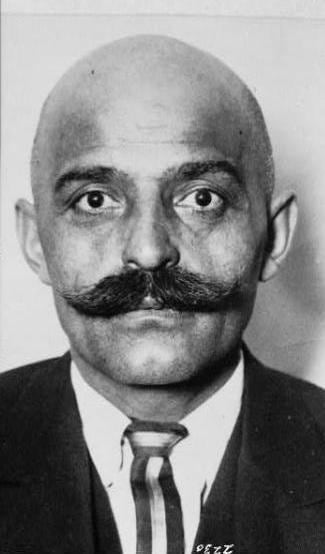
G. I. Gurdjieff
يتّفقان في: من أنا؟ هل توجد ذات حقيقية؟ · لماذا نتألّم؟ · كيف يُبلَغ التحرّر أو الخلاص؟
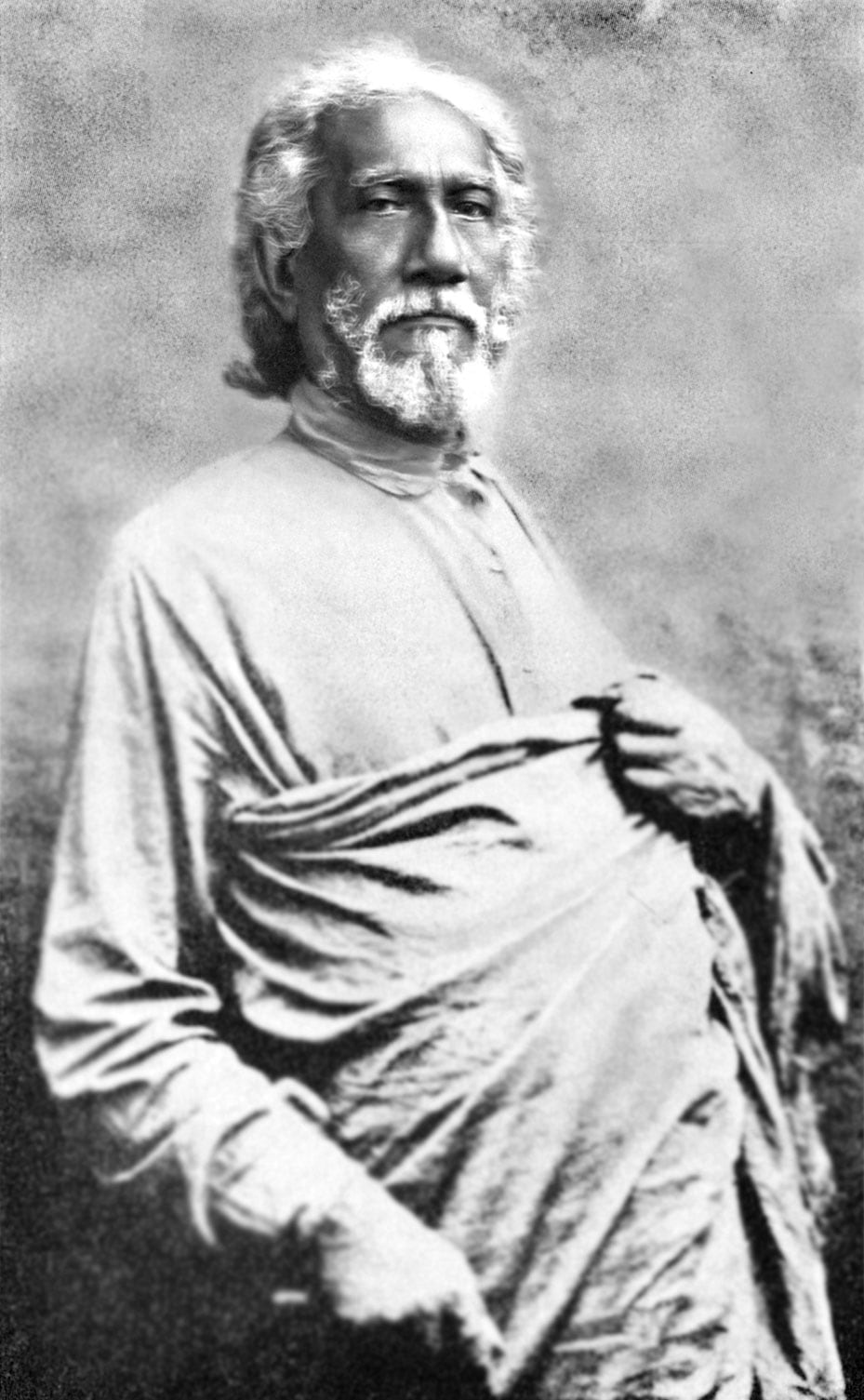
Sri Yukteswar
يتّفقان في: ما المطلق؟ هل الله موجود؟ · لماذا نتألّم؟ · ماذا يحدث بعد الموت؟
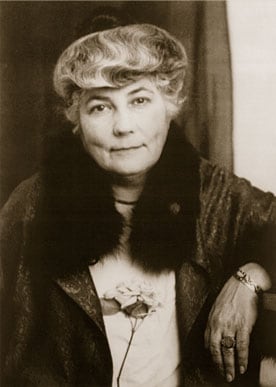
Helena Roerich
يتّفقان في: ما المطلق؟ هل الله موجود؟ · ماذا يحدث بعد الموت؟ · هل العالم حقيقي؟
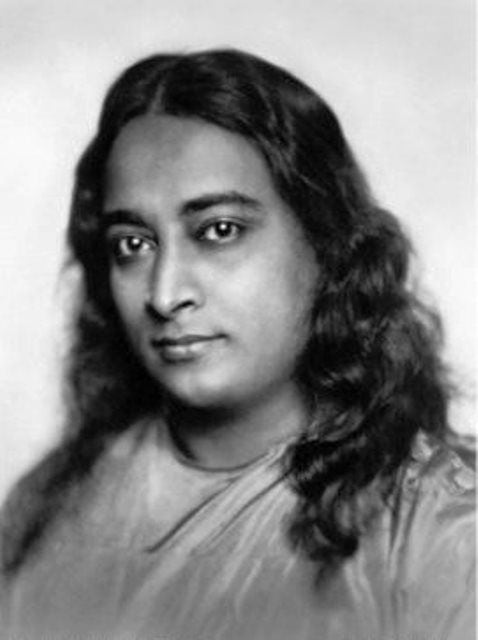
Paramahansa Yogananda
يتّفقان في: ماذا يحدث بعد الموت؟ · هل العالم حقيقي؟ · ما الحب؟
يبتعد في تفكيره عن

Nikolai Berdyaev
يختلفان في: من أنا؟ هل توجد ذات حقيقية؟ · ماذا يحدث بعد الموت؟
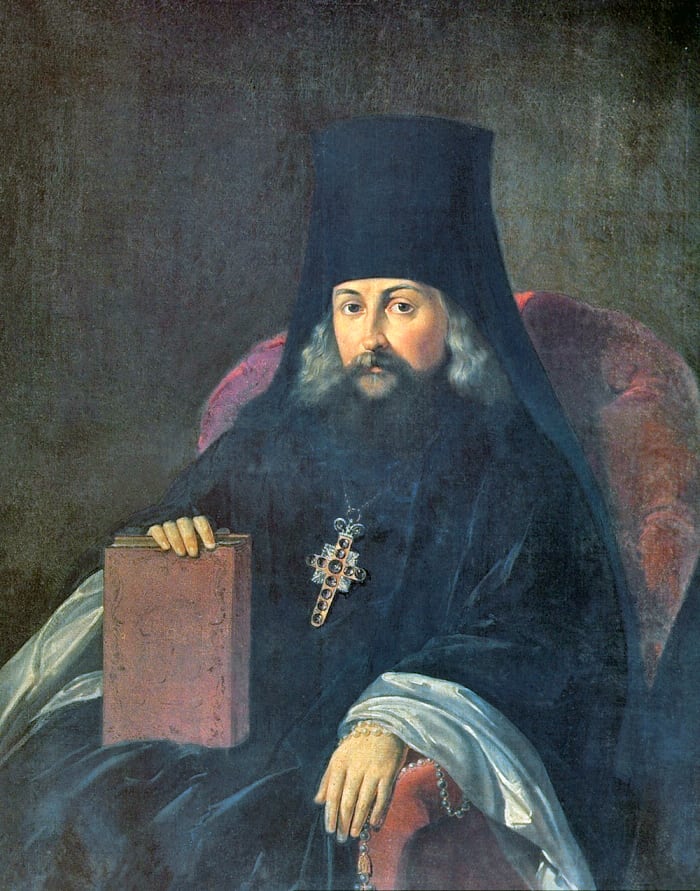
Ignatius Brianchaninov
يختلفان في: من أنا؟ هل توجد ذات حقيقية؟ · ماذا يحدث بعد الموت؟
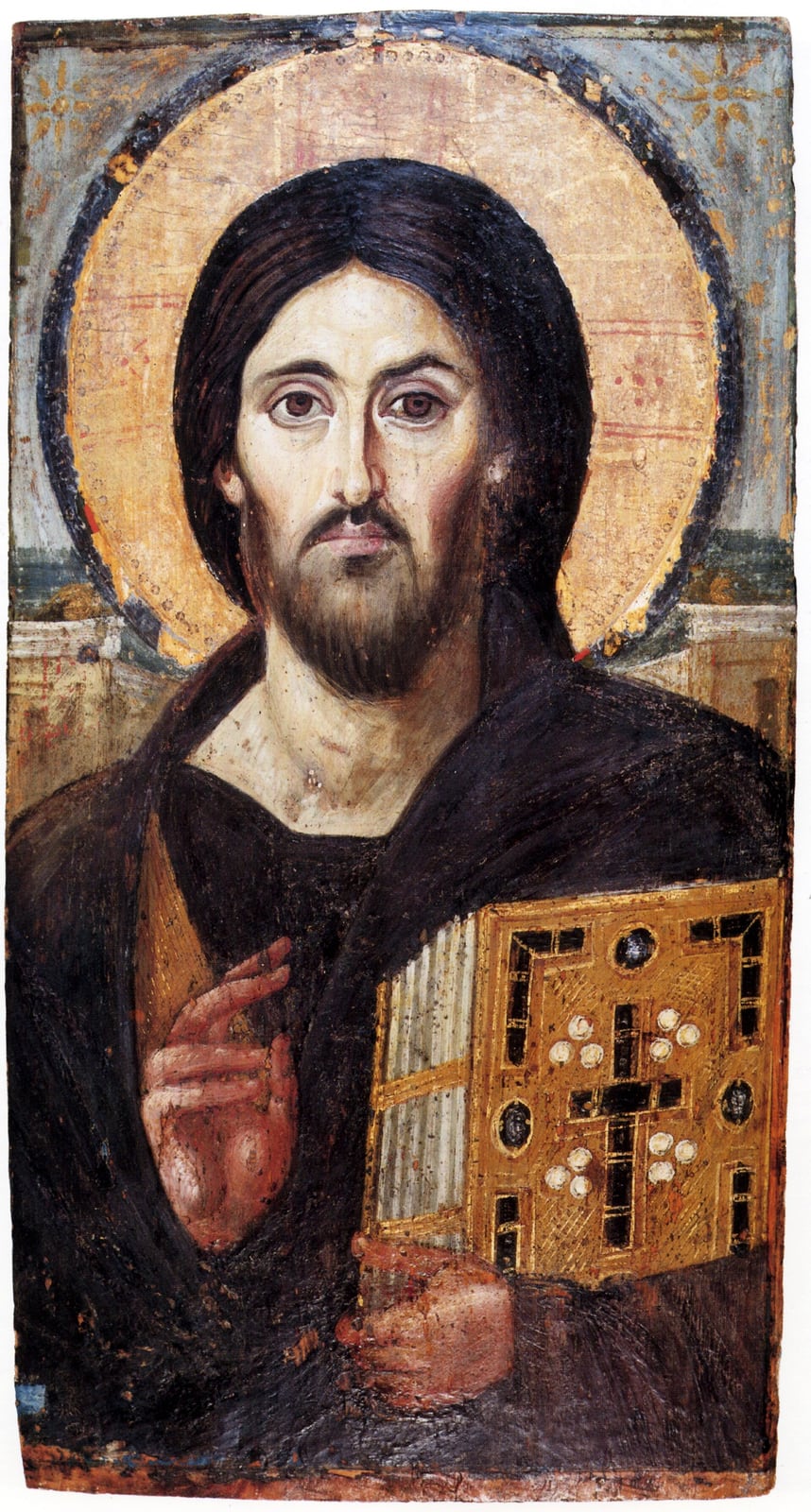
Jesus of Nazareth
يختلفان في: من أنا؟ هل توجد ذات حقيقية؟ · ماذا يحدث بعد الموت؟
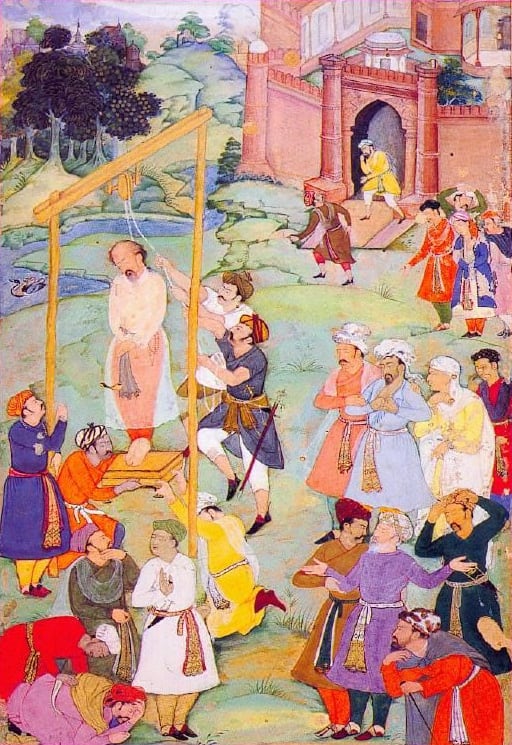
Al-Hallaj
يختلفان في: من أنا؟ هل توجد ذات حقيقية؟ · ماذا يحدث بعد الموت؟
يختلفان فيتناقض ظاهري
P. D. Ouspensky · Ramana Maharshi
Many I's or a single Self: the same word for two levels
لماذا: The contradiction is apparent at the level of diagnosis because they use the word I for different levels: Ouspensky calls I's the psychological states of ordinary man; Ramana reserves the term Self for the awareness that witnesses them all, which is neither a state nor a content. Ramana's ego and Ouspensky's many I's are the same reality seen from two systems. There is a real difference in the goal: the Fourth Way aims to build a permanent I through work, whereas for Ramana the Self is not built but recognised. One starts from a psychology of the machine; the other, from a Vedantic metaphysics.
يتّفقان في
P. D. Ouspensky · G. I. Gurdjieff
Man is a machine: the master and the disciple who systematised his teaching
لماذا: The affinity is that of a master and his most systematic disciple: Ouspensky worked with Gurdjieff in Russia between 1915 and 1918 and transmitted that teaching in In Search of the Miraculous, published posthumously in 1949. The relationship broke down: Ouspensky withdrew in 1918 and definitively in the 1920s, and led his own groups in London, centred on the study of the system rather than on the figure of the master. They agree in doctrine, not in style: Gurdjieff taught in a demanding and disconcerting way, with dances, movements and provoked situations; Ouspensky, intellectually and in an orderly fashion. Hence they part on the question of the master: one deems him indispensable; the other stresses the school.
يتّفقان في
P. D. Ouspensky · Eckhart Tolle
Waking from automatic pilot: self-remembering and the power of now
لماذا: There is no documented relationship between them, although the vocabulary of awakening and automatic pilot found in contemporary spirituality owes much to the Fourth Way. The affinity has clear limits. Self-remembering demands effort, a deliberate division of attention and a system of group work, and its goal is to form a permanent self that does not yet exist; Tolle's presence is presented as something not manufactured or reached in time but recognised as one's own being. Ouspensky writes for a school with discipline and hierarchy; Tolle, for individual readers without a tradition. They agree on the first step, not on the path or the goal.
حكايات وروايات
حكايات وروايات
شهادة1915
The disguised man in the Moscow café
أصل الرواية: In Search of the Miraculous, ch. 1, written by Ouspensky years later from his notes.
شهادة1915–1916
The cigarettes on the Nevsky
أصل الرواية: In Search of the Miraculous, ch. 7. Autobiographical account; there are no other witnesses.
شهادة1916
The voice in the chest: Finland, August 1916
أصل الرواية: In Search of the Miraculous, ch. 13. Ouspensky deliberately omits the content of the questions.
موثّق1920–1921
The book that travelled to America on its own
أصل الرواية: Documented by the Manas Press edition (1920) and recounted by Wikipedia and Lachman (2004).
المصدر: Wikipedia (en), «P. D. Ouspensky» (vida, obras y bibliografía).
مختلَف فيه1947
'Start again': the 1947 meetings
أصل الرواية: English Wikipedia records Collin's view and qualifies it with A Record of Meetings; the detailed version is in Lachman (2004) and the published records.
المصدر: Wikipedia (en), «P. D. Ouspensky» (vida, obras y bibliografía).
التعاليم
التعاليم
المفاهيم التي ينتظم بها فكره، مشروحة في سياقها.
Self-rememberingrecuerdo-de-si
In many respects the functional equivalent of Buddhist mindfulness or the 'watchfulness' of other traditions, though framed in its own psychological vocabulary.
Man as a machinehombre-maquina
It comes from Gurdjieff; Ouspensky made it the core of his introductory exposition.
المصدر: Ouspensky, P. D. The Psychology of Man's Possible Evolution. Nueva York: Hedgehog Press, 1950.
The four states of consciousnessestados-de-conciencia
Ouspensky had already explored 'cosmic consciousness' in Tertium Organum before meeting Gurdjieff.
المصدر: Ouspensky, P. D. The Psychology of Man's Possible Evolution. Nueva York: Hedgehog Press, 1950.
The Fourth Waycuarto-camino
It gives its name to the Atlas's fourth-way tradition.
المصدر: Wikipedia (en), «P. D. Ouspensky» (vida, obras y bibliografía).
Eternal recurrence and the fourth dimensioneterno-retorno
It is in dialogue with Nietzsche, Hinton and early twentieth-century theories of time.
الخلوات
خلوات ومراكز
أماكن ولقاءات مرتبطة بتعليمه. نضعك على تواصل مع من ينظّمها.
Nueva York (Upper East Side) · Estados Unidos
Gurdjieff Foundation of New York
The Gurdjieff Foundation of New York
The Gurdjieff Foundation of New York belongs to the network of foundations established after Gurdjieff's death by his pupil Jeanne de Salzmann, together with the Institut Gurdjieff in Paris and the Gurdjieff Society in London. Its first president, Lord Pentland, had been a pupil of Ouspensky before working with Gurdjieff, and many of Ouspensky's pupils joined this work. It offers weekly group meetings led by senior students, classes in the Movements, the sacred dances and exercises Gurdjieff taught, meditation and retreats. Access is gradual and begins with introductory events.
Barons Court, Londres · Reino Unido
The Study Society, Colet House (London)
The Study Society
The Study Society was registered in 1951, four years after Ouspensky's death, at the initiative of his pupil Dr Francis Roles, to continue his work as a school of the Fourth Way. It is based at Colet House in west London, which presents itself as a spiritual gateway in the centre of the city. Its current programme brings together meditation, the Movements, study groups on the Masnavi and meetings devoted to Rumi, the dervish turning and a Sunday Advaita gathering. Its main website sometimes rejects automated requests; the Colet House site responds normally.
Londres · Reino Unido
Gurdjieff Studies, London
Gurdjieff Studies Ltd (organización benéfica registrada)
Gurdjieff Studies is a London charity devoted to the Fourth Way that offers group meetings, reading groups, practical activities, Movements classes and intensive residential stays. It holds that the teaching is passed on from teacher to pupil in direct lines of transmission, and maintains two reference websites: one on Gurdjieff's life and work, with his music, dances and chronology, and another devoted to P. D. Ouspensky, reconstructing his work in England, including the Lyne Place period. It is independent of the network of foundations established by Jeanne de Salzmann.
مقاطع الفيديو
مقاطع الفيديو
تسجيلات ومقابلات وأفلام وثائقية. تُشغَّل مقاطع الفيديو من YouTube؛ ولا تُستضاف هنا.
Gary Lachman - Gurdjieff, Ouspensky, and the Fourth Way
محاضرة· EN· 80 min
Theosophical Society in England & Wales
Gary Lachman on P.D. Ouspensky — Kensington Central Library
محاضرة· EN· 96 min
Gary Lachman
P. D. Ouspensky and the Gurdjieff Work with Gary Lachman
مقابلة· EN· 83 min
New Thinking Allowed with Jeffrey Mishlove
The Philosophy of the Cosmic Dance 2017 pt1. The Story of Colet House
محاضرة· EN· 57 min
Philip Jacobs
The Strange Life of P.D. Ouspensky
تحليل· EN· 6 min
Theodore Nottingham
С. А. Панин — Семинар: «Эзотерический текст как форма философии. П. Д. Успенский, Tertium Organum»
محاضرة· RU· 2020· 96 min
АИЭМ · ASEM
Шелковников А. Ю. — Пётр Демьянович Успенский — философ эзотеризма
محاضرة· RU· 2026· 27 min
АИЭМ · ASEM
Валерий Бондаренко «Пётр Успенский. Искатель чудесного»
محاضرة· RU· 2019· 127 min
СМИБС
Tertium Organum by P.D. Ouspensky (Book Review)
تحليل· EN· 2026· 32 min
Hermitix Podcast
Gurdjieff in Finland, Pinpointing the Legendary Ouspensky Telepathy Incident
مقابلة· EN· 2022· 7 min
Appleknocker Radio
¿Quién fue P.D. Ouspensky?
تسجيل من طرف ثالث· ES· 2023· 7 min
Vojo Talks
المعرض
المعرض
صور بترخيص متحقَّق منه. كل منها تحتفظ بمؤلّفها ونسبتها.
المخطوطات
المخطوطات
شواهد مخطوطة ونصوص قديمة، مع جهة حفظها وشروط الاطّلاع عليها.
RU · Cyrillic / Latin · 1900–1947
P. D. Ouspensky Memorial Collection
- الشاهد المحفوظ
- Papeles, manuscritos y notas de reuniones (1935–1947)
- جهة الحفظ
- Yale University Library, Manuscripts and Archives · MS 840
- الرقمنة
- hdl.handle.net/10079/fa/mssa.ms.0840…
العلاقات
العلاقات
تأثيرات وتلمذة وتقارب في الأفكار. تُميَّز العلاقة الموثّقة عن التشابه المستخلَص بالتحليل.
تلميذ
Gurdjieff's pupil from 1915 to 1918 in Russia and intermittent collaborator until 1924; author of the most widely read account of his teaching.
علاقة موثّقة
اختلف مع
He separated from him in 1918 and definitively in 1924; in In Search of the Miraculous he explains that Gurdjieff's way was not his.
علاقة موثّقة
تأثّر بـ
Ouspensky was interested in Theosophy from 1907 and visited Adyar in 1913–1914; the influence is that of the Theosophical movement generally, not a personal relationship (Blavatsky had died in 1891).
تشابه مستخلَص بالتحليل
معاصر لـ
Contemporaries from the Theosophical milieu who founded their own esoteric schools in the interwar English-speaking world; no relationship between them is recorded.
تشابه مستخلَص بالتحليل
مرتبط من صفحات أخرى
المصادر
المصادر
المراجع والفهارس التي رُوجعت لهذه الصفحة.
- Lachman, Gary. In Search of P. D. Ouspensky: The Genius in the Shadow of Gurdjieff. Wheaton: Quest Books, 2004.
- Open Library, autor OL2263413A (Uspenskiĭ, Petr Demʹi͡anovich): obras y ediciones con ISBN.
- Ouspensky, P. D. In Search of the Miraculous: Fragments of an Unknown Teaching. Nueva York: Harcourt, Brace & World, 1949; Londres: Routledge & Kegan Paul, 1950.
- Wikidata, «Peter Demianovich Ouspensky» (Q434266): fechas y lugares de nacimiento y muerte (registra tres fechas de nacimiento: 4, 5 y 17 de marzo de 1878).
- Ouspensky, P. D. The Psychology of Man's Possible Evolution. Nueva York: Hedgehog Press, 1950.
- Webb, James. The Harmonious Circle: The Lives and Work of G. I. Gurdjieff, P. D. Ouspensky, and Their Followers. Nueva York: G. P. Putnam's Sons, 1980.
- Ouspensky, P. D. Tertium Organum: The Third Canon of Thought, a Key to the Enigmas of the World. Trad. de Nicholas Bessaraboff y Claude Bragdon. Rochester (NY): Manas Press, 1920.
- Ouspensky, P. D. A New Model of the Universe: Principles of the Psychological Method in Its Application to Problems of Science, Religion, and Art. Londres: Kegan Paul, Trench, Trubner, 1931.
- Wikipedia (en), «P. D. Ouspensky» (vida, obras y bibliografía).
- Wikipedia (ru), «Успенский, Пётр Демьянович» (familia, primeras publicaciones rusas y bibliografía).
- Yale University Library, Manuscripts and Archives. P. D. Ouspensky Memorial Collection (MS 840).
- Wikisource en ruso, «Автор:Пётр Демьянович Успенский» (página de autor con la relación de textos de dominio público: Tertium Organum, Символы Таро, Странная жизнь Ивана Осокина, Разговоры с дьяволом).
- Wikidata, «Nicholas Bessaraboff» (Q26244034): musicólogo estadounidense, cotraductor de Tertium Organum (1894–1973).
- صاحب الحقوق
- Herederos de P. D. Ouspensky y editoriales titulares de cada obra (Knopf/Penguin Random House, Routledge, Harcourt). Fallecido en 1947: dominio público en los países con plazo de 70 años post mortem desde 2018; en EE. UU. siguen protegidas las obras publicadas desde 1931.
في انتظار التأكيد
ما لم تتمكّن هذه الصفحة من حسمه بعد. نفضّل أن نقول ذلك على أن نملأ الفراغ.
- «Obispon invita», en la transcripción original del encargo, podría referirse a P. D. Ouspensky (posible error de dictado de «Ouspensky»); confirmarlo con quien hizo el encargo.
- Día exacto de nacimiento: Wikipedia (en) da el 5 de marzo de 1878, Wikipedia (ru) el 17 de marzo (5 de marzo del calendario juliano) y Wikidata registra además el 4; se deja con precisión de mes.
- Año de la primera edición rusa de Tertium Organum (1911 o 1912) y de El simbolismo del tarot (1912 o 1913); de Kinemadrama / Iván Osokin (1915 o 1917).
- Edición castellana verificada de Conversaciones con el diablo, La cuarta dimensión y de las recopilaciones póstumas (A Further Record, Cosmology, A Record of Meetings).
- Fecha y circunstancias exactas de su traslado a EE. UU. (enero de 1941 según algunas biografías) y del regreso a Inglaterra en 1947.
- Obras menores no registradas como obra: Memory (Stourton Press, 1953), New Horizons (Globe Press, 1990) y las traducciones de Kipling, Bret Harte, Poe, Ouida, Mark Twain, Edward Carpenter y Hinton que Ouspensky hizo al ruso (fuente: Open Library OL2263413A y Wikipedia ru). Los títulos de Kessinger (Superman, What Is Yoga?, etc.) son capítulos sueltos de A New Model of the Universe.
- No hay en Wikimedia Commons un retrato fotográfico de Ouspensky con licencia libre verificada; buscar fotografías anteriores a 1917 en archivos rusos de dominio público.
- Sala de lectura (2026-10-25): los seis textos registrados quedan con caution por la regla española de 80 años (Ouspensky †1947, libre en España el 1 de enero de 2028). Además: la traducción inglesa de Tertium Organum lleva derechos de Bessaraboff (†1973) en la UE y en España; falta la fecha de muerte de R. R. Merton, traductor de A New Model of the Universe (en EE. UU. libre el 1 de enero de 2027); y hay que fijar qué redacción reproducen las páginas rusas de Символы Таро y de Iván Osokin. No registrados: Четвёртое измерение (sin texto en línea fiable localizado) y Letters from Russia 1919 (la copia de Internet Archive lleva la introducción de la edición de 1978, con derechos; el texto original está en The New Age, 1919, en el Modernist Journals Project, en números sueltos).
- Vídeos (2026-10-25): en español solo se ha localizado una semblanza divulgativa breve (Vojo Talks); no hay conferencias académicas en castellano ni documentales de televisión pública sobre Ouspensky en YouTube.
بُحث بتاريخ 2026-10-25